Hizen swords were a domain enterprise: the Nabeshima sent Tadayoshi to study under Umetada Myōju around 1596, then built a licensed school around him. Nine generations carried its famously consistent konuka-hada work into the Meiji era.
 NihontoWatchNihontoWatch
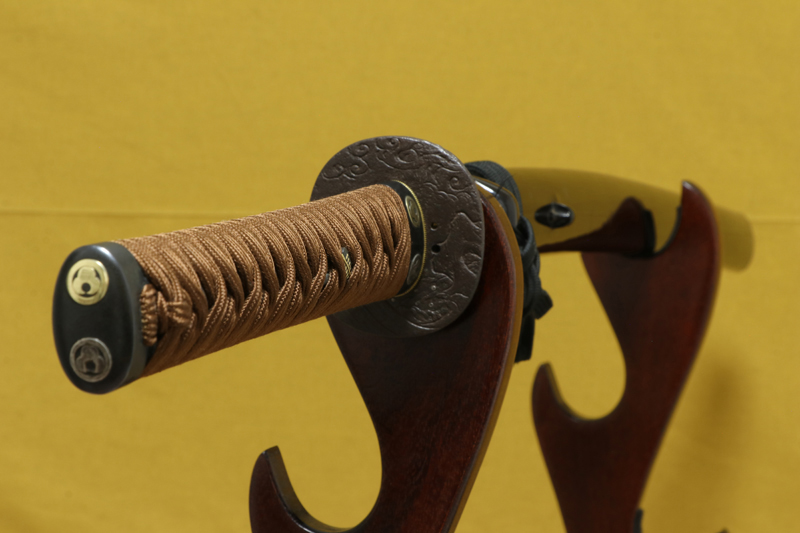
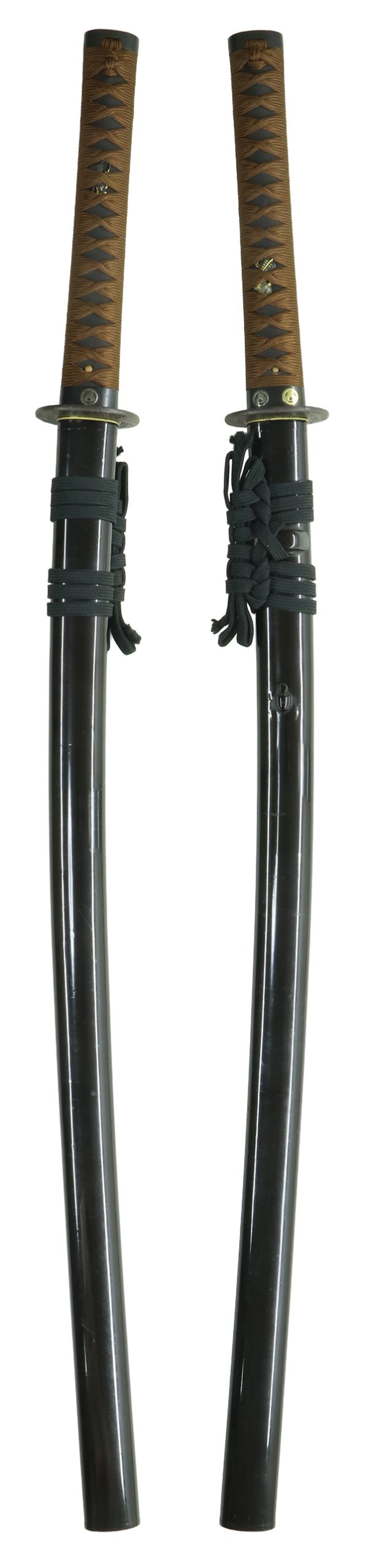
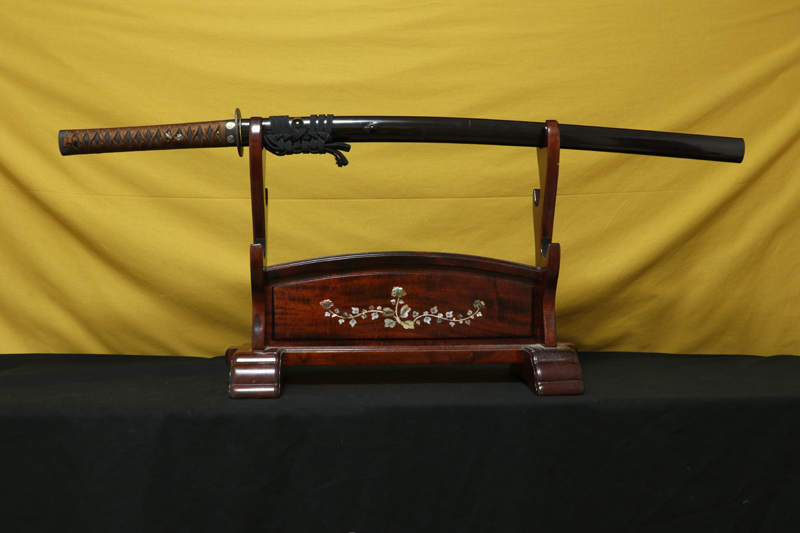
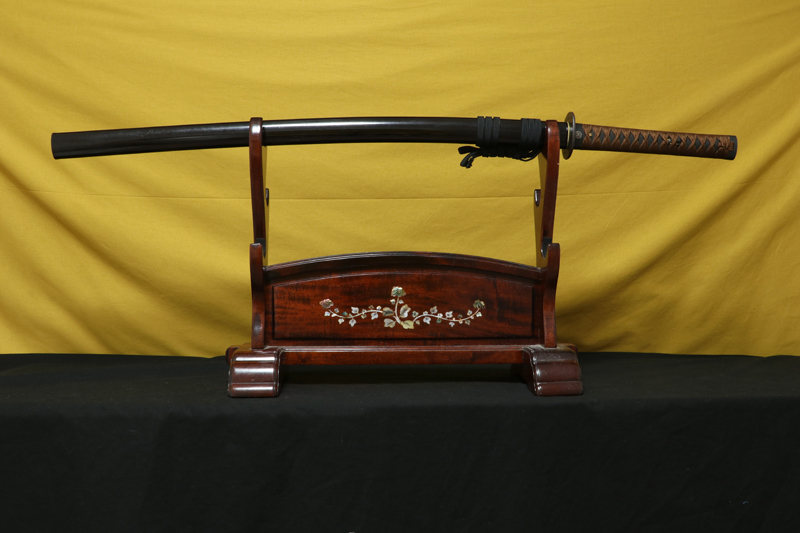
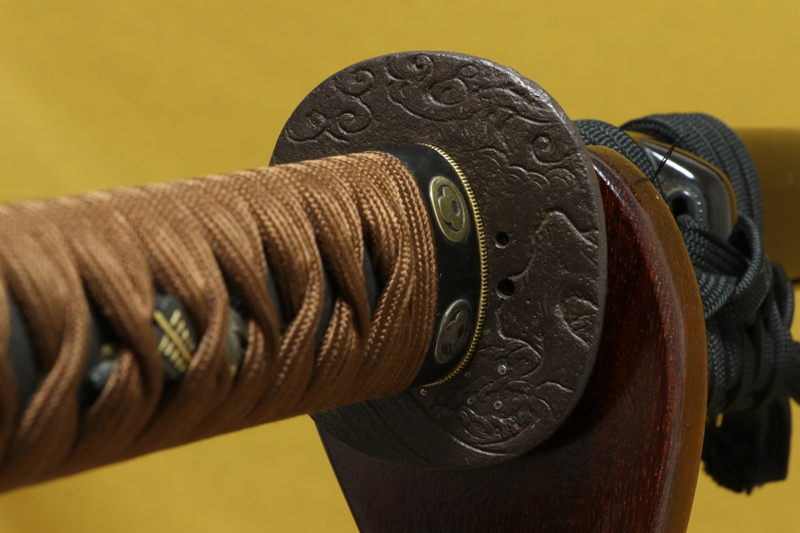
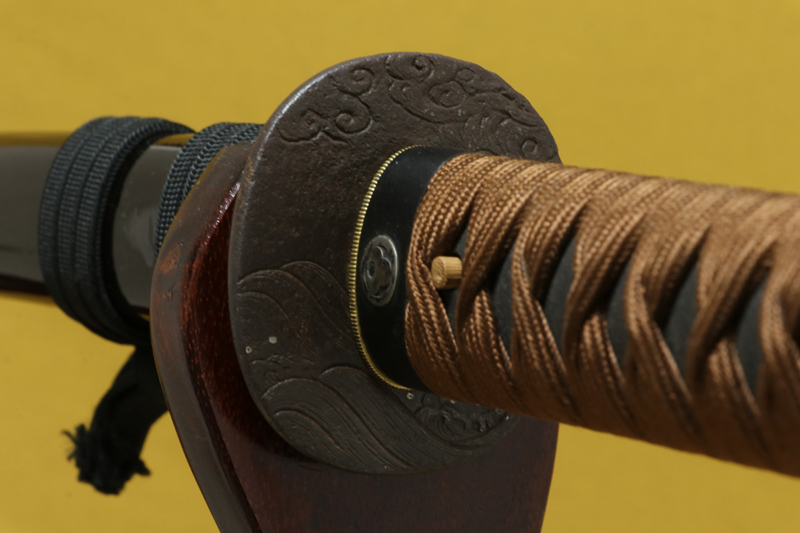
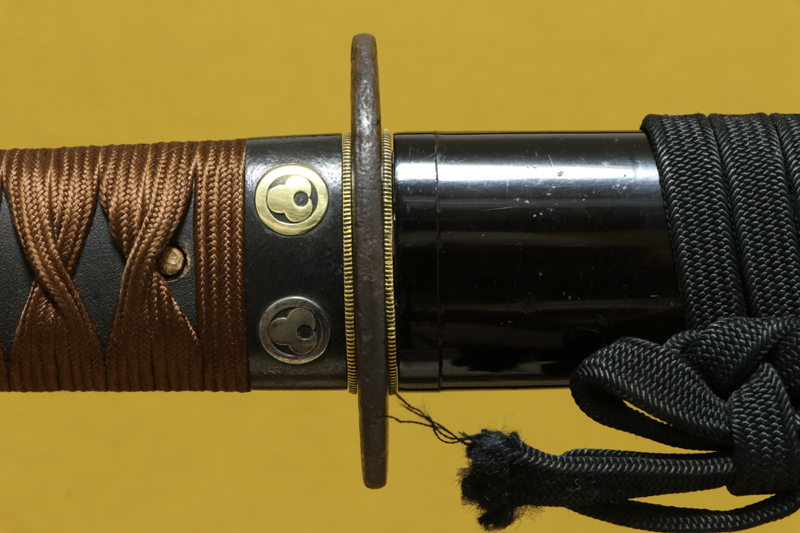
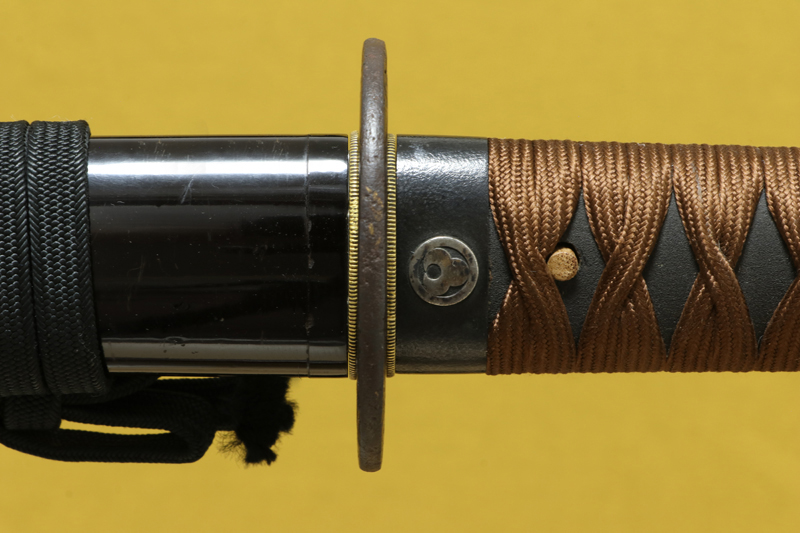
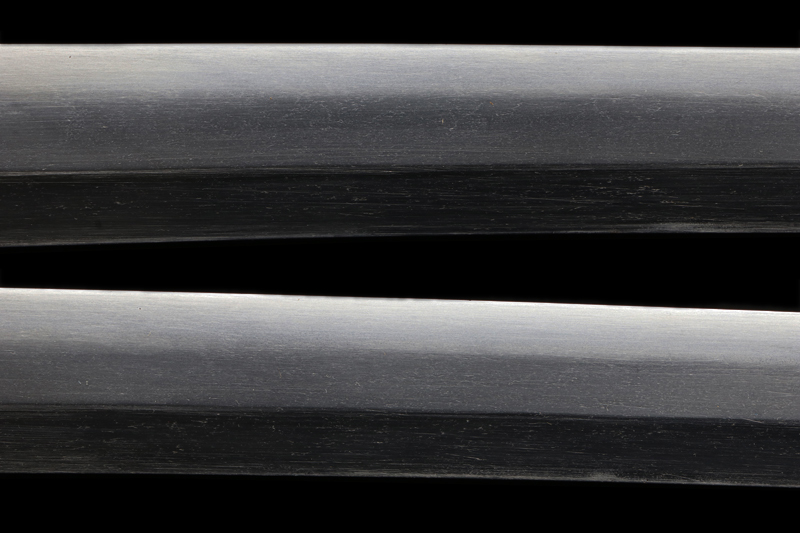
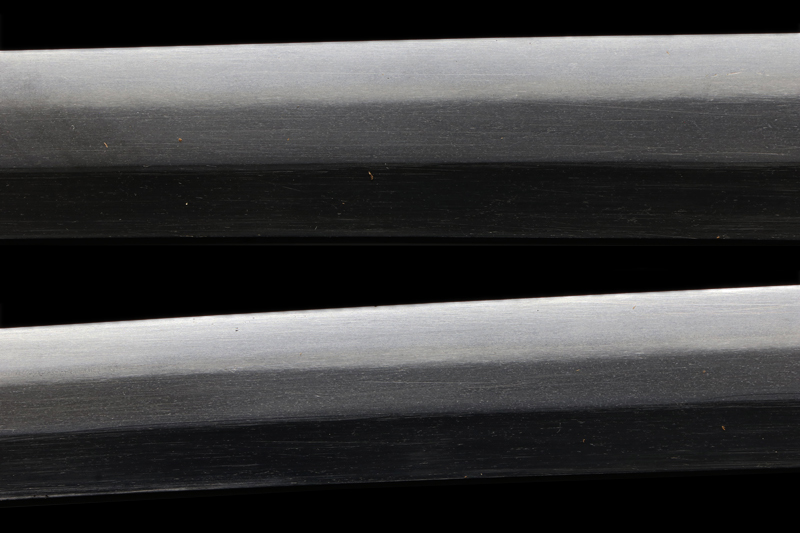
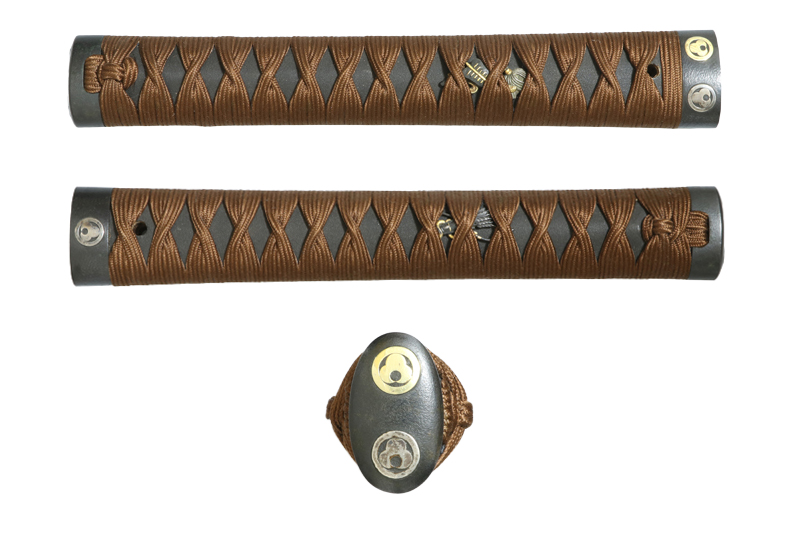
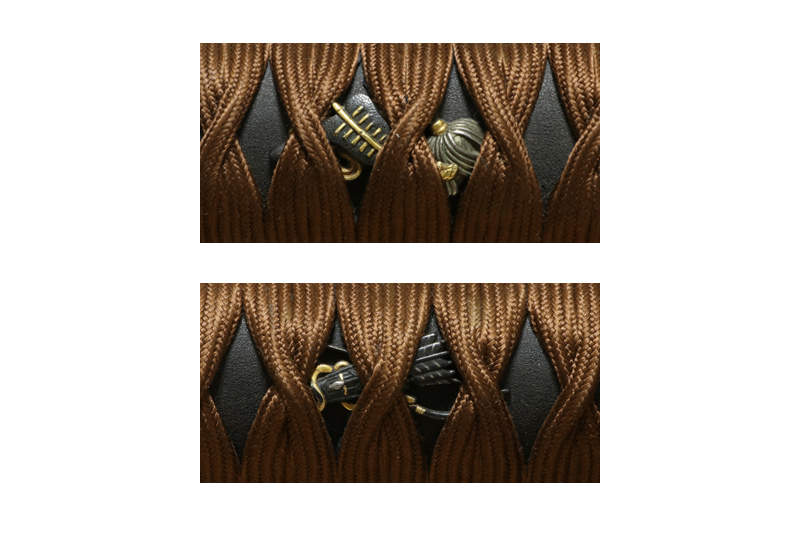
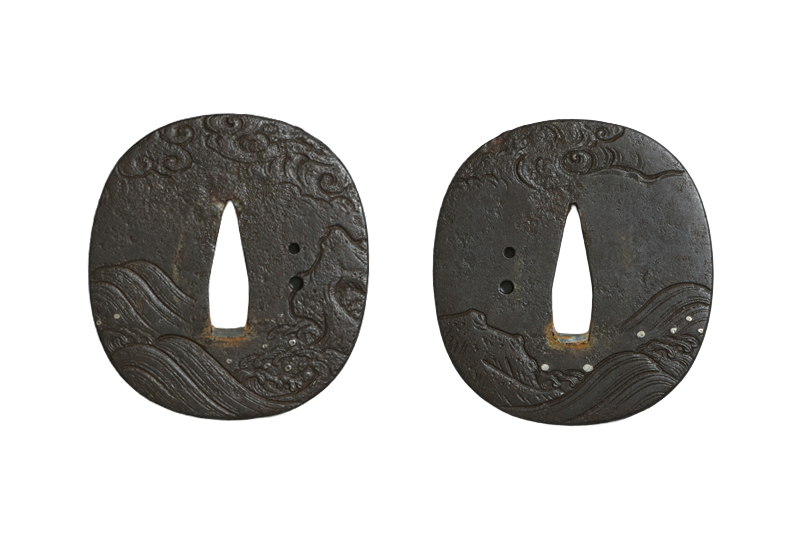
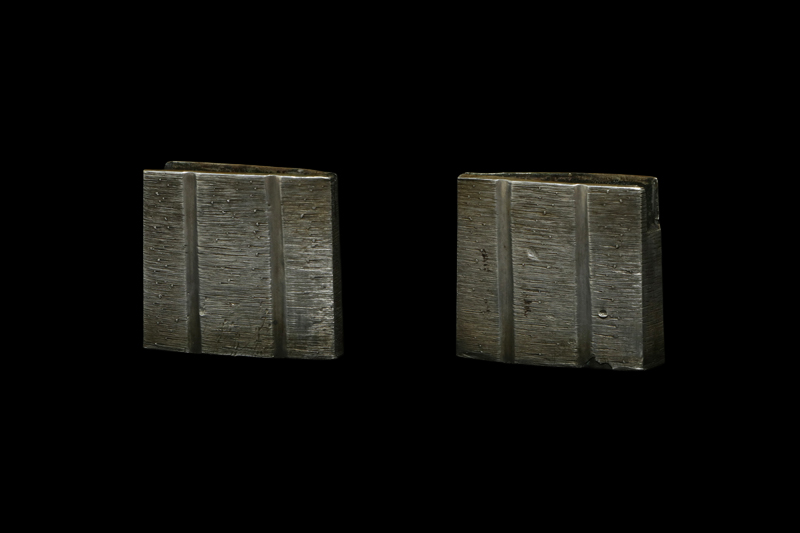
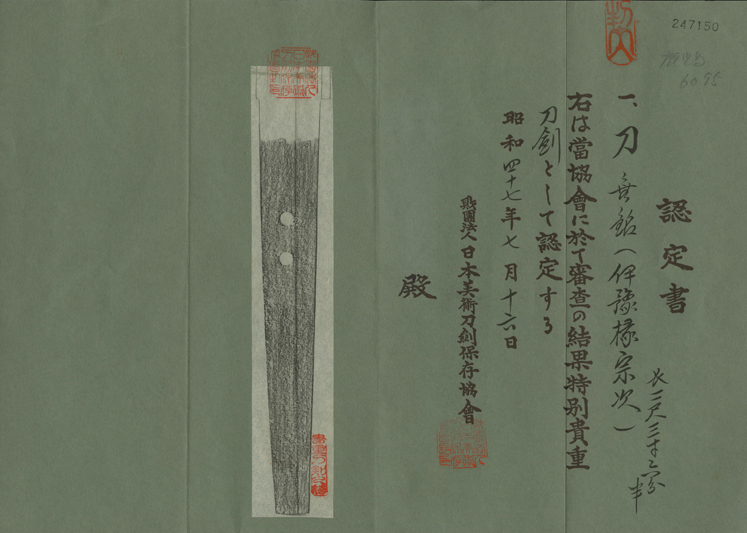
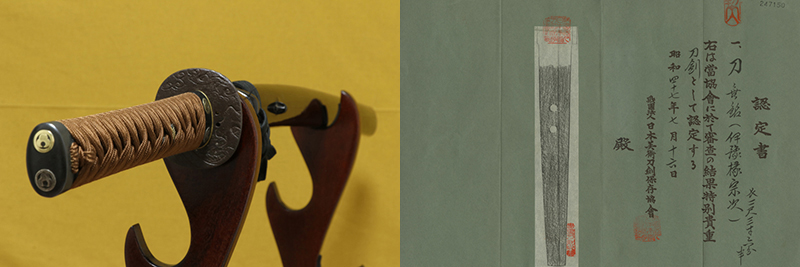
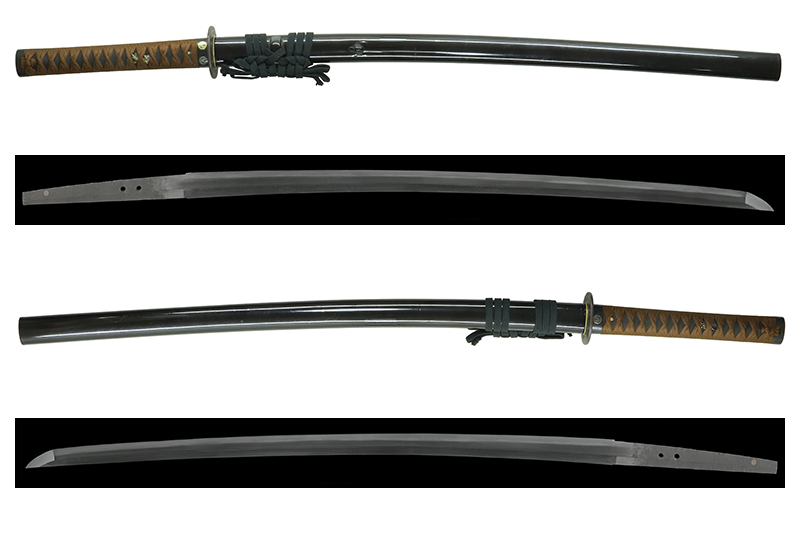
Tokubetsu Kityou Token Shinto josaku Mumei Iyonojo Munetsugu with Satsuma-koshirae. 伊予掾源宗次は鍋島家に仕えた肥前の刀工で、慶長11年(1606)に伊予掾を受領しました。 本作は磨り上げながら宗次の特色をよく残し、状態も良好です。 拵は金銀象嵌の縁頭、鉄地の薩摩鍔、返り角を備えた鞘からなる見事な薩摩拵が付属します。 鹿児島県登録で、薩摩との深い縁を感じさせる魅力的な一振りです。 Iyo-no-jō Minamoto Munetsugu was a Hizen swordsmith who served the Nabeshima clan and received the honorary title Iyo-no-jō in 1606. Although this blade has been shortened (suriage), it retains the distinctive characteristics of Munetsugu’s workmanship and remains in very good condition. It is accompanied by a fine Satsuma koshirae, featuring gold and silver inlaid fuchi-kashira, an iron Satsuma tsuba, and a saya fitted with the distinctive kaerizuno. Registered in Kagoshima Prefecture, this is an appealing sword with a strong connection to Satsuma. 「刀姿 sword figure」 鎬造り庵棟、身幅重尋常、鳥居反り中鋒。茎は大磨り上げで切鑢がかかり、茎尻は一文字に切られる。 Shinogi-zukuri construction with an iori-mune. The blade has a standard width and thickness, with a torii-zori curvature and a chū-kissaki (medium-sized point). The nakago has been greatly shortened (ō-suriage) and bears kiri-yasurime (horizontal file marks), with the nakago-jiri cut straight in an ichimonji shape. 「地鉄 jigane」 地鉄は板目肌に杢目が交り、地沸厚く付く。 The jihada is itame mixed with mokume, with abundant ji-nie forming densely over the surface. 「刃紋 hamon」 刃文は直刃調の湾れ互の目、刃縁沸付き砂流しかかり、刃中は金筋が働く。釯子は刃文成りに入り小丸に返る。 The hamon is a suguha-based notare mixed with gunome, with nie along the habuchi and sunagashi running through it. Kinsuji is active within the ha. The bōshi follows the pattern of the hamon and turns back in komaru. 「特徴 detailed」 肥前国住人 伊予掾源宗次(本名:境三右衛門宗次)。父は境内蔵丞正次で、戦国大名鍋島家の家臣である。 文禄の役では藩主・鍋島直茂に従い、朝鮮に渡海している。 宗次の先祖は平安時代まで遡れるが、鍛冶の初代は執権北条時宗の御家人、堺(境)又八郎源真高に始まる。真高は相州正宗の娘を娶り、その関係で、政宗から十二通りの鍛え、七通りの打ち立て法を伝授された。 この真高の嫡男が肥前国・長瀬に地頭として下り、以後肥前での歴史が始まる。その後、境家の主君は竜造寺家、のちに鍋島家へと変わっていった。 初代宗次は境内蔵丞正次の次男である。長男の真正は武士の道を歩むため、**天正十二年(1584)**に鍛冶稼業を弟の宗次へ譲った。 その後、宗次は慶長十一年(1606)に伊予掾を受領し、同時に掾司ノ頭を拝命する。**慶長十六年(1611)**には知行十四石で鍋島家に召し抱えられ、藩主から多数の注文を受けている。 肥前新刀といえば忠吉家が挙げられるが、実は宗次家の方が少し古い。 本作は磨り上げられているものの、宗次の特徴を持った刀で、コンディションも良好。致命的な欠点となるような傷は見当たりません。 拵は薩摩拵です。縁頭は赤銅地に、変り州浜紋が金・銀で象嵌されたもので、鍔は典型的な鉄地の薩摩鍔。鞘には薩摩拵独特の返り角が付いています。コンディションも良い状態です。 薩摩拵に入った鹿児島県登録の伊予掾宗次は、元々薩摩島津家の家臣の所持品だったのでしょう。 この素晴らしい薩摩拵の刀を、ぜひコレクションに加えてください。 Hizen no Kuni Jūnin Iyo-no-jō Minamoto Munetsugu (Real name: Sakai San’emon Munetsugu) Munetsugu was the son of Sakai Kuranosuke Masatsugu, a retainer of the Nabeshima clan, the powerful daimyō family of Hizen Province. During the Bunroku Campaign (1592–1593), Munetsugu crossed over to Korea in the service of his lord, Nabeshima Naoshige. The ancestry of the Munetsugu family can be traced back as far as the Heian period. The family’s history as swordsmiths, however, is said to have begun with Sakai (Sakai) Matahachirō Minamoto no Masataka, a retainer of the Hōjō regent Hōjō Tokimune. Masataka married a daughter of the celebrated Sōshū master Masamune, and through this connection he is said to have received instruction directly from Masamune in twelve methods of forging and seven methods of sword construction. Masataka’s eldest son later moved to Nagase in Hizen Province as a jitō (land steward), marking the beginning of the family’s history in Hizen. In subsequent generations, the Sakai family first served the Ryūzōji clan and later the Nabeshima clan. The first-generation Munetsugu was the second son of Sakai Kuranosuke Masatsugu. His elder brother, Masazane, chose to pursue the life of a warrior and, in Tenshō 12 (1584), handed the family’s swordsmithing profession over to his younger brother Munetsugu. In Keichō 11 (1606), Munetsugu was granted the honorary title Iyo-no-jō and at the same time was appointed Jōji-no-Kashira. In Keichō 16 (1611), he was formally retained by the Nabeshima clan with a stipend of fourteen koku and subsequently received numerous commissions from his lord. When discussing Hizen Shintō, the Tadayoshi school is naturally the name that comes most readily to mind. However, the Munetsugu lineage actually predates the Tadayoshi school by a small margin. Although this sword has been suriage (shortened), it retains the distinctive characteristics associated with Munetsugu’s workmanship and remains in very good condition. No significant flaws or fatal defects are apparent. The sword is accompanied by a fine Satsuma koshirae. The fuchi-kashira are made of shakudō and decorated with a stylized suhama motif inlaid in gold and silver. The tsuba is a classic Satsuma-style iron guard, while the saya is fitted with the distinctive kaerizuno characteristic of Satsuma mounting. The koshirae itself is also preserved in very good condition. Considering that this Iyo-no-jō Munetsugu is registered in Kagoshima Prefecture and is housed in an excellent Satsuma koshirae, it is quite possible that the sword was once owned by a retainer of the Shimazu clan of Satsuma. This is a highly appealing sword combining the workmanship of Iyo-no-jō Munetsugu with an outstanding Satsuma koshirae—a wonderful piece to add to a serious Japanese sword collection. 「拵 Koshirae」 ハバキ(habaki) :素銅地銀着の変り鎺。 鍔(tsuba) :鉄地丸形波の図(薩摩鍔)。 縁頭(futikasira):赤銅地変り洲浜紋金銀象嵌。 目貫(menuki) :赤銅地武具の図。 柄(tsuka) :柄は下地に黒漆を塗り、柄巻は正絹焦茶色の諸撮み巻。 鞘(saya) :黒呂、薩摩拵独特の返り角が付く。 「刀剣の状態 condition of blade」 研:良好です。 傷:欠点に成るような傷は有りません。
Offered by Giheiya
This piece has sold
Get an email when a new Hizen Munetsugu piece hits the market.


As written by the shop
(Translation unavailable)
Hizen (Iyo no Jo Munetsugu line, out of the Tadayoshi school) · Hizen · around 1596-1615
Fujishiro Jo saku · Tōken Taikan top 26%
2 pieces on the market now
The first-generation Iyo no Jo Minamoto Munetsugu was called Sakai San'emon, and his family is said to have served for generations as priests of the Tenmangu shrine at Nagase village, the birthplace of Tadayoshi. He forged at Nagase-machi in the castle town of Saga and later moved to Isahaya in Hizen. The published sources make him a pupil of the first-generation Tadayoshi and set him beside that founder as "the very pioneer of early-modern Hizen smithing"[[c:1]]. A genealogy of the Iyo no Jo line kept by his descendants places his Iyo no Jo title in Keicho 11, and a surviving work dated Keicho 12 that already bears the title bears it out.
Within the Hizen group he is the exception, and the published sources say so plainly. Hizen swords in general temper the boshi straight and turn it in a small round ko-maru; nearly all of his enter midare-komi and sweep back in hakikake, at times flame-like, so that his work is "not to be confused with other Hizen swords"[[c:2]]. His hamon is a gunome-midare mixed with ko-notare, angular elements and pointed togariba. Ashi and yo enter freely, the nioi is deep and the nie thick, with rough nie gathering in places. Sunagashi runs through nearly every blade and long kinsuji enter many of them. Above the temper appear tobiyaki and yubashiri, and on some pieces muneyaki.
The jigane is an itame that tends to stand, mixed with mokume and flowing grain. The ji-nie is extremely fine and thick, the chikei enter finely and abundantly, and on several blades the steel takes on a slightly dark tone. The forms are broad and robust, often with little taper and a long chu-kissaki or an o-kissaki, and one commentary finds an archaic flavour in the forging itself. Even the tang belongs to the portrait. Perhaps with the Soshu tradition in mind, the texts suggest, he thinned the flesh on the edge side to give a tanago-bara form, and against the usual Hizen practice of signing the ura he cut a bold long signature in a distinctive hand on the sashi-omote.
The published sources name his model as Soshu-den and above all Shizu, "the Shizu manner he most excelled in"[[c:3]]. Within that manner his work runs across a range. On some blades the temper is kept to a smaller, calmer pattern, yet the jiba remain thickly covered in nie, and the small tobiyaki and yubashiri-like effects above the temper carry an old flavour. At the other end stands a broad wakizashi of the Juyo 70th session, its large midare, flame-like boshi and strong nie described as bold and powerful, burning with a fierce intensity. A hira-zukuri wakizashi with a hitatsura-like temper departs further still, and the texts ask whether he took Soshu Tsunahiro as its model. Dated works are very rare. The earlier commentaries regretted that none were known, and a katana dated Kan'ei 7 is valued for exactly that reason.
His place in the school follows from this. Among the Hizen smiths he is the one who "devoted his passion to re-creating the Soshu-den"[[c:4]], where the main line settled into a refined suguha. The name ran for several generations. The published sources read the generation off the tang, assigning blades with reverse sujikai file marks to the second generation, who worked first under the name Muneyasu before taking the Iyo no Jo Munetsugu title.
Fujishiro rates him Jo saku, and fourteen of his blades stand in the Tokubetsu Juyo and Juyo tiers, two in the former and twelve in the latter. The summit of that record is a Tokubetsu Juyo katana dated Kan'ei 11 whose inscription tells its own commission. Nawa Sotan, of the lineage of Nawa Doen, a senior retainer of Tokugawa Yorinobu of Kii, applied part of the silver that the third shogun Iemitsu bestowed on the capital during his visit that year to have Munetsugu forge it. The published sources call it the finest work of his lifetime, its order inscription and date both rare and of great documentary value. Beyond that sword, provenance is not recorded for his blades. For a private collector a signed Munetsugu in the Juyo tier is a realistic, if occasional, encounter, an individual early Hizen hand that surfaces from time to time and rewards patience, while his Tokubetsu Juyo works appear only rarely.
Where Munetsugu stands among comparable artisans: across all of nihontō, and within tradition, era, and period. The tiers (Foremost · Leading · Major · Notable) weigh official designations from the NBTHK and Japan's Agency for Cultural Affairs, together with historical honors of lasting repute such as the Sansaku and Meibutsu-chō.
Select a lens to see how it's measured.
Years he was demonstrably active, proven by signed-and-dated blades
Shinto · Hizen
105 pieces on the market now
The Hizen school began with a single domain commission. In Keicho 1 (1596) the Nabeshima of Hizen ordered Hashimoto Shinzaemon, the smith who would sign Tadayoshi, up to Kyoto with the carver Munenaga; there he entered the gate of Umetada Myoju and studied forging while Munenaga learned the chisel. The two returned to the province in Keicho 3 (1598), and Tadayoshi settled in the castle town below Saga, where under the domain's patronage the line grew into the dominant sword-making house of Kyushu. His own work runs from Keicho 5 (1600) to his death in Kan'ei 9 (1632); in Genna 10 (1624) he received the court title Musashi Daijo, changed his name to Tadahiro, and shifted his clan name from Minamoto to Fujiwara, so that the late Musashi Daijo blades are the founder under a second name. From him the house became a true generational institution: his son the second-generation Omi Daijo Tadahiro carried it forward as its most prolific hand, the third-generation Mutsu no Kami Tadayoshi returned its highest finish, and a Tosa no Kami branch took the founder's signature when he set it aside. Around this main line grew a circle of disciples and collateral hands, the waki-Hizen or Soba-Hizen smiths, several of them, like Yoshiie and Hironori, working as daisaku substitute makers whose own signed pieces are therefore scarce. The school's signature is its steel. Over a ko-itame forged so tightly it shows no slackness, fine ji-nie gathers in minute particles until the surface takes on the rice-bran konuka-hada (also written komenuka-hada) that no other school produces, fine chikei entering throughout and the ji notably clear and bright.
The orthodox temper laid upon it is a chu-suguha or hiro-suguha, sometimes tinged with a shallow notare and ko-gunome, the nioiguchi deep with finely clustered ko-nie and tightened to a bright clarity, the boshi running straight to a quiet ko-maru. The founder aimed this suguha toward the Rai school yet departed from it, his nioiguchi tighter and his forging carrying more vigor; the third generation refined it to what the published sources call the strongest and most precise hand of the first three generations. Against that calm register the house also worked a showier one, the Hizen choji-midare mixing gunome, long ashi, kinsuji and sunagashi, a manner the published sources already find more often in the founder's late Musashi Daijo work than in his Tadayoshi years, and one the second generation made his own. The branches pushed further from the suguha standard: Tadakuni of the Ogi domain ran sunagashi more conspicuously than any other Hizen hand and reached toward old Ichimonji in his o-choji; Masahiro and Yukihiro favored a flamboyant long-ashi choji over the calm main line; and the Iyo no Jo Munetsugu line worked apart in the Soshu-den, building a midareba on notare with a pointed togariba and a jihada that tends to stand and tone slightly blackish. A collector seeks Hizen-to first for that steel, and reads it the same way the appraiser does: a bright suguha lying over a clear, tight konuka-hada identifies the school before the signature is consulted, and the quiet ko-maru boshi on the ura-signed tang confirms the main-line practice. Generation and branch are then told within that frame, the third generation's powerful sugata recalling not his father but his grandfather, the waki-Hizen hands set apart by their irregular temper, their sujikai file marks and a sashi-ura signature, the Munetsugu line by its Soshu togari. The main line, made in real numbers across so long a span, reaches the market more readily than any Kamakura master, so a papered example is within reach of a patient collector, while the founder's own work and the finest konuka-suguha of the third generation come to open hands only from time to time. Provenance runs back through the house the school served, blades recorded to Nabeshima Katsushige and Nabeshima Naomoto and passing onward to the Owari Tokugawa, the Satake and the Imperial families; documentary inscriptions sharpen the picture further, a Myoju soemei attesting the founder's discipleship, Umetada carving adding flowers to brocade on his late blades, and the gold-inlaid cutting tests of Yamano Kanjuro and Yamano Ka'emon, rare on Hizen work, naming the edge as well as the hand. Learn more →
| Smith | Era | Designated |
|---|---|---|
| Tadayoshi忠吉 | 1596-1632 | 155 |
| Tadayoshi忠吉 | 1660-1686 | 61 |
| Tadahiro忠廣 | 1633-1693 | 133 |
| Masahiro正廣 | 1624-1655 | 30 |
| Tadakuni忠國 | 1648-1652 | 32 |
Hizen: a domain enterprise
Hizen swords were a domain enterprise: the Nabeshima sent Tadayoshi to study under Umetada Myōju around 1596, then built a licensed school around him. Nine generations carried its famously consistent konuka-hada work into the Meiji era.
This work carries older NBTHK “Kichō”-era papers, which the NBTHK no longer issues and largely disavows today. To confirm the attribution, submission to an official Japanese examination body (such as the NBTHK or NTHK) for modern certification could be considered.
Within 3 days of the item's arrival, we offer a refund or an exchange. Return shipping and the bank transfer fee for the refund are at the customer's expense.