









The twentieth century nearly killed the craft twice: wartime distortion, then the occupation ban. The NBTHK’s founding in 1948 and licensed forging from 1953 rebuilt the sword as an art, crowned by Living National Treasures and the mukansa rank.
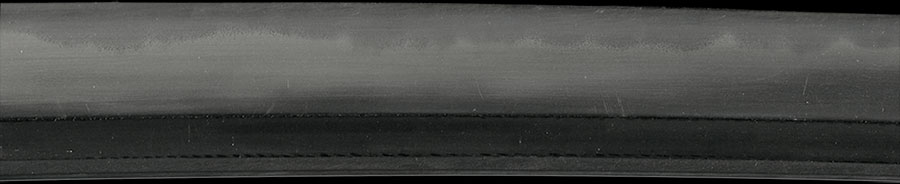
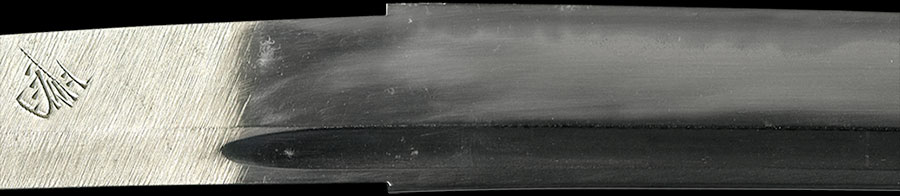
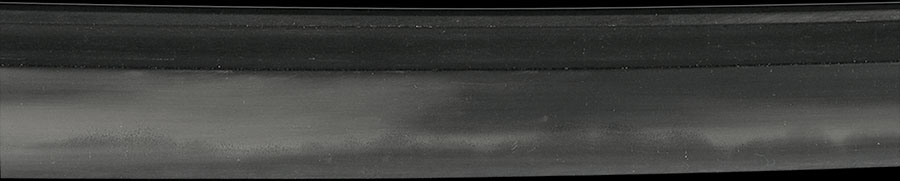
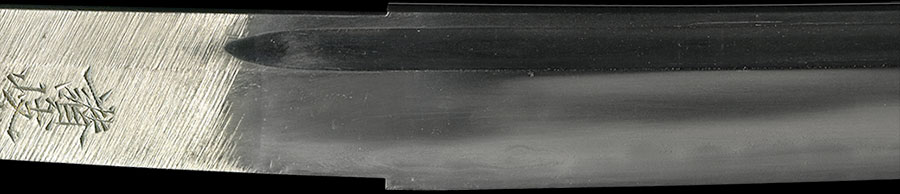
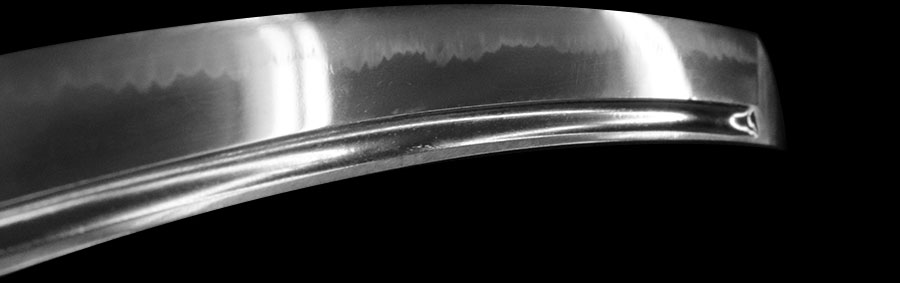
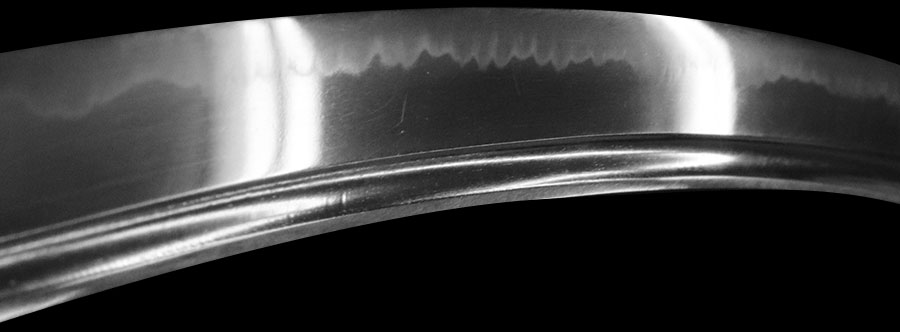
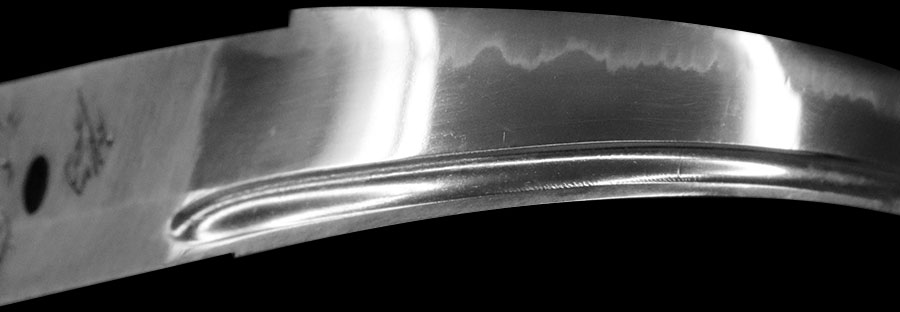
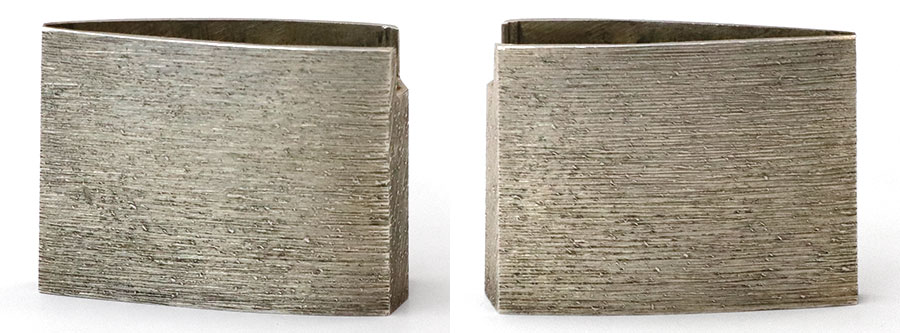
Swordsmith Hidemune, real name Matsubara Ryuhei, was born in Showa 5. He was a student of the 13th generation Kawashima Masahide and Nakada Kanehide. A resident of Seki in Gifu and a member of the All Japan Swordsmith Association, he has achieved numerous prizes at the New Masterpiece Sword Exhibition. Regarding this sword, the son of the famous Soshu Sadamune, who was a disciple of Soshu Masamune, later moved to Goshu (Shiga Prefecture) and produced masterpieces signed as Takagi Sadamune. This is a precious commemorative sword that Mr. Takagi Masateru, a descendant of that Takagi Sadamune, had swordsmith Hidemune produce to honor his ancestor Takagi Sadamune. The sugata of this sword shows a wide motohaba and wide sakihaba with an extended kissaki, representing the sugata of the Nanbokucho period from the time of Takagi Sadamune; the jigane is forged in ko-itame hada, the horimono is a bo-hi kakinagashi, and the hamon is a nie-deki gunome-midare with kinsuji appearing within the ha, firing a wonderfully spirited blade that is a well-made utsushi of Takagi Sadamune. Furthermore, in order to make this sword look like a koto, the polisher applied repeated ingenuity, and the traces of this effort to make it appear as a koto make the togishi's work very interesting. As this has appeared in the world for the first time in an original state, we are offering this masterpiece Takagi Sadamune utsushi at a special bargain price. Please enjoy this sword by swordsmith Hidemune, a famous Takagi Sadamune utsushi.
Hidemune秀宗
Offered by Nipponto
This piece has sold
Get an email when a new Hidemune piece hits the market.


As written by the shop
Machine translation from the shop's Japanese · may contain errors ·
Gifu · around 1926-1989
5 pieces on the market now
Shōwa to the present: destruction and revival
The twentieth century nearly killed the craft twice: wartime distortion, then the occupation ban. The NBTHK’s founding in 1948 and licensed forging from 1953 rebuilt the sword as an art, crowned by Living National Treasures and the mukansa rank.
For returns due to customer circumstances, the cost is the customer's responsibility. For returns due to our mis-shipment or a defective item, we bear the cost.