Noshu Hidemune, whose real name was Matsubara Ryuhei, was born in Nagano Prefecture in Showa 5. The son of the swordsmith Matsubara Kaneyoshi, he became a pupil of the 13th generation swordsmith Kawashima Masahide and the swordsmith Nakata Kanehide to study sword making. He established his name as a master smith by achieving consecutive acceptances in the Tachi, Katana, Wakizashi, Naginata, and Yari categories at the All Japan Swordsmith Association New Masterpiece Sword Exhibition. His mei include Noshu Hidemune saku, Matsubara Ryuhei Hidemune, and others. He currently resides in Sekiguchi, Seki City, Gifu Prefecture.
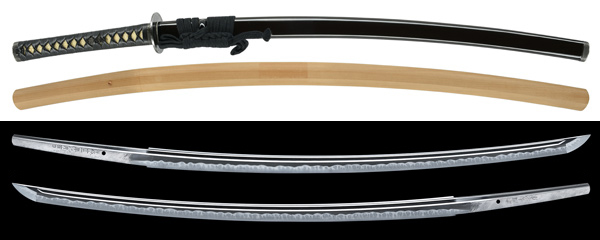
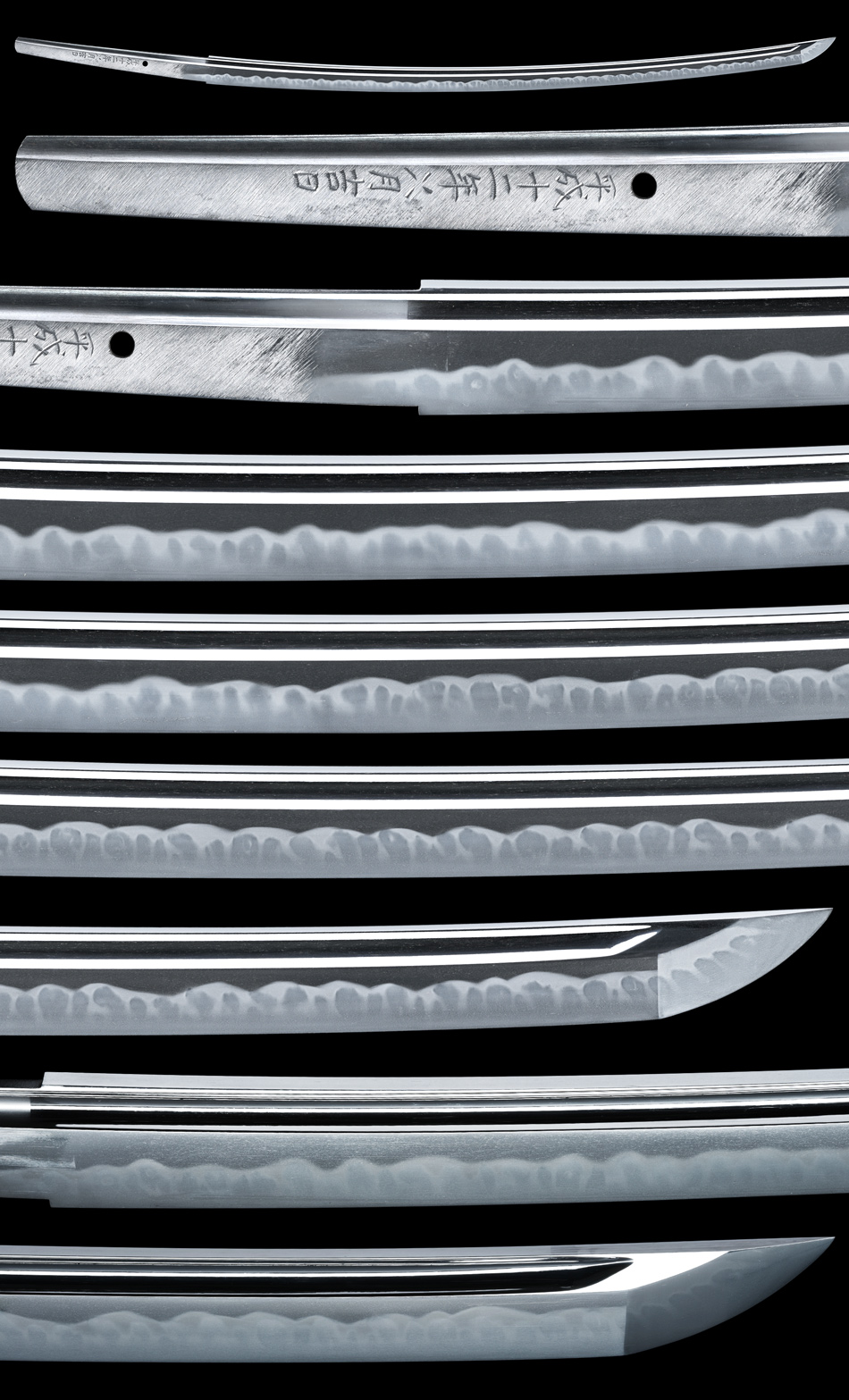
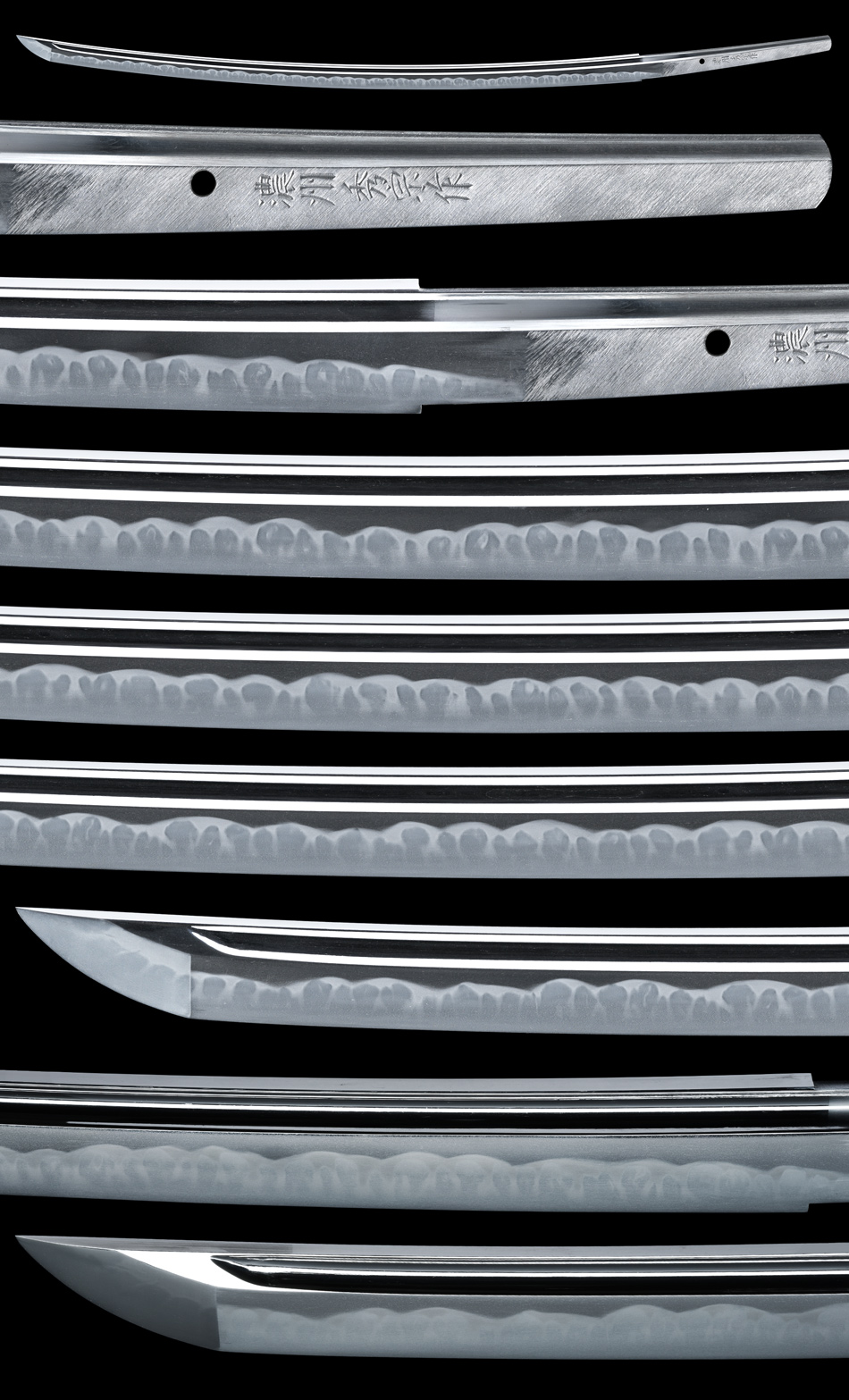
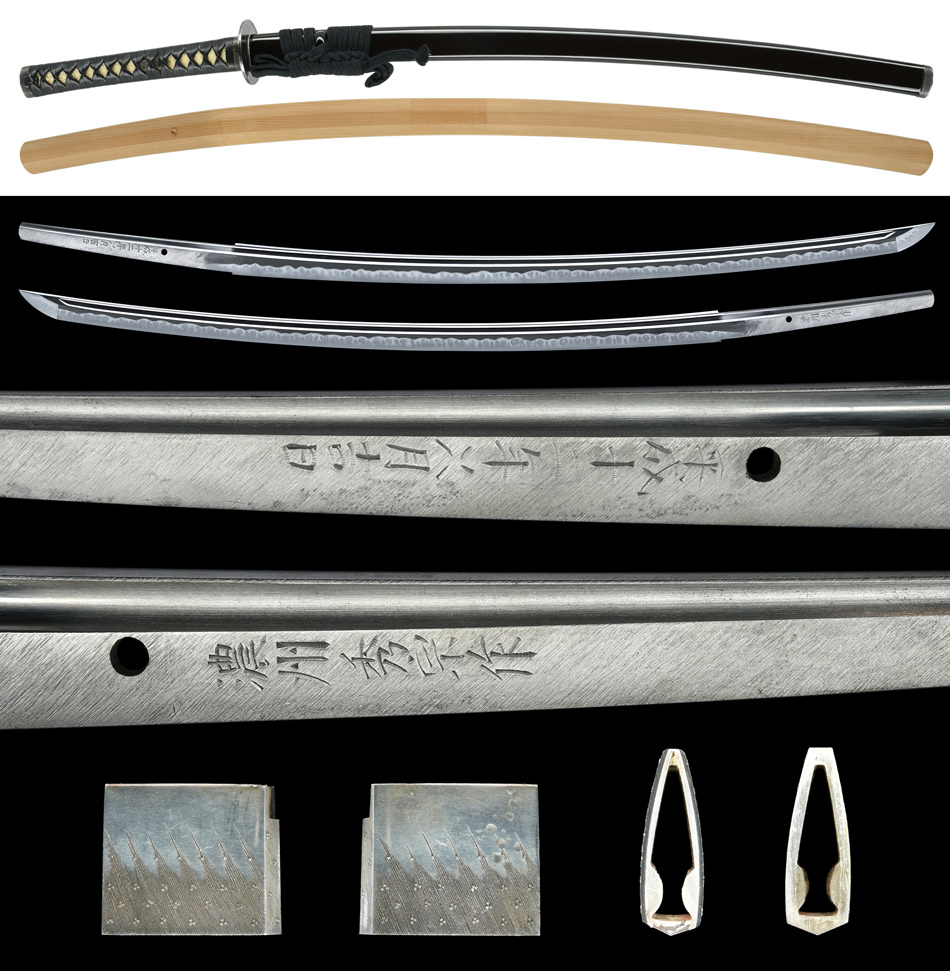
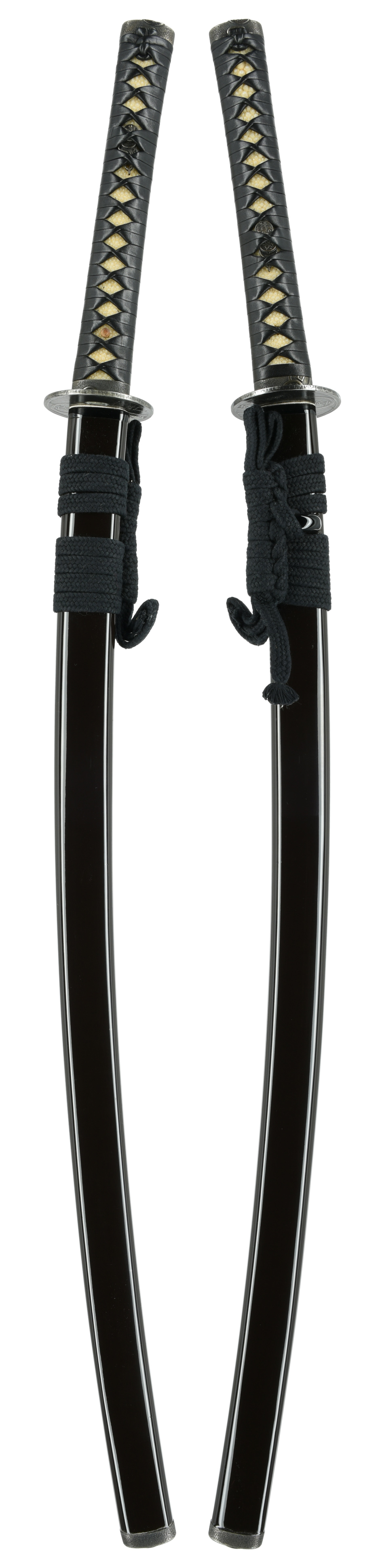
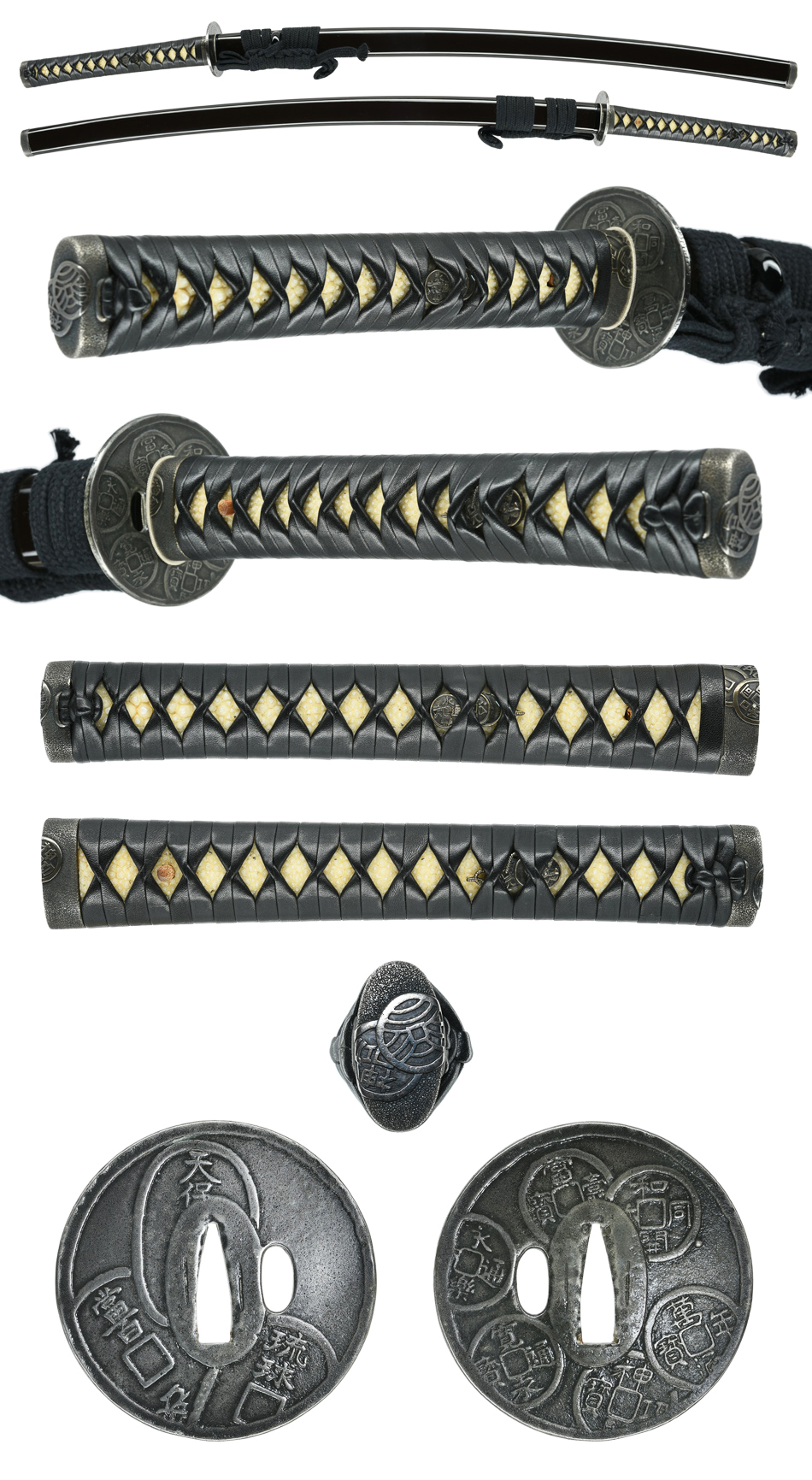
This sword, unlike the Hidemune works commonly seen for Iai use, is a sword produced as an art sword for appreciation. Therefore, rather than the monotonous hamon seen in other works, the jigane is also thoroughly forged and refined without any peculiarities, making it a work that can be appreciated intently. Furthermore, as it is equipped with koshirae, it is also a recommended item as an Iai sword for high-ranking practitioners. The nagasa is 2 shaku 4 sun 2 bu. The mihaba is wide and hi are carved, providing excellent balance when swung. The jitetsu is an itame nereta forge with jinie, resulting in a bright jigane. The hamon is a nioideep, clear Ichimonji juka choji hamon. It is a blade of superior workmanship that draws one in with its flamboyant hamon. The boshi continues as midare and returns to komaru. The nakago is carefully finished with beautiful yasurime, and the mei is crisply carved. This sword is a masterpiece that serves as a representative work of Noshu Matsubara Ryuhei Hidemune. The juka choji hamon, which aims for the Bizen Ichimonji style, is truly flamboyant and gives a deep impression to the viewer.
Machine translation from the shop's Japanese · may contain errors ·
Noshu Hidemune, whose real name was Matsubara Ryuhei, was born in Nagano Prefecture in Showa 5. The son of the swordsmith Matsubara Kaneyoshi, he became a pupil of the 13th generation swordsmith Kawashima Masahide and the swordsmith Nakata Kanehide to study sword making. He established his name as a master smith by achieving consecutive acceptances in the Tachi, Katana, Wakizashi, Naginata, and Yari categories at the All Japan Swordsmith Association New Masterpiece Sword Exhibition. His mei include Noshu Hidemune saku, Matsubara Ryuhei Hidemune, and others. He currently resides in Sekiguchi, Seki City, Gifu Prefecture.
This sword, unlike the Hidemune works commonly seen for Iai use, is a sword produced as an art sword for appreciation. Therefore, rather than the monotonous hamon seen in other works, the jigane is also thoroughly forged and refined without any peculiarities, making it a work that can be appreciated intently. Furthermore, as it is equipped with koshirae, it is also a recommended item as an Iai sword for high-ranking practitioners. The nagasa is 2 shaku 4 sun 2 bu. The mihaba is wide and hi are carved, providing excellent balance when swung. The jitetsu is an itame nereta forge with jinie, resulting in a bright jigane. The hamon is a nioideep, clear Ichimonji juka choji hamon. It is a blade of superior workmanship that draws one in with its flamboyant hamon. The boshi continues as midare and returns to komaru. The nakago is carefully finished with beautiful yasurime, and the mei is crisply carved. This sword is a masterpiece that serves as a representative work of Noshu Matsubara Ryuhei Hidemune. The juka choji hamon, which aims for the Bizen Ichimonji style, is truly flamboyant and gives a deep impression to the viewer.
The twentieth century nearly killed the craft twice: wartime distortion, then the occupation ban. The NBTHK’s founding in 1948 and licensed forging from 1953 rebuilt the sword as an art, crowned by Living National Treasures and the mukansa rank.
No cooling-off period or returns; refund only if the purchased sword is proven fake, capped at purchase price (excludes commission sales, accessories, auction items).


 NihontoWatch