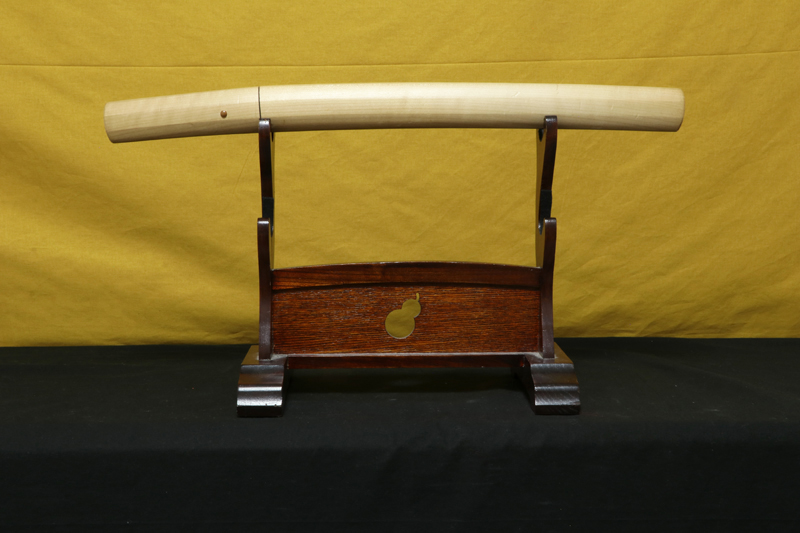
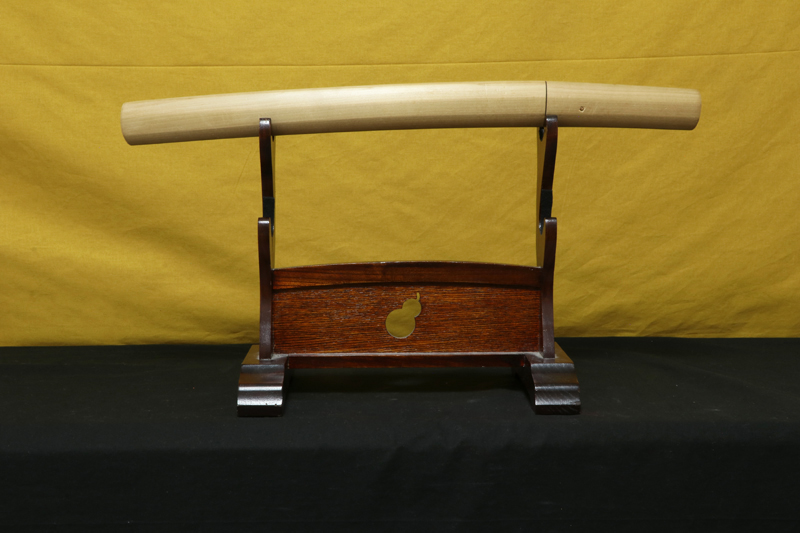
Modern sword Hidemune saku with Shirosaya.
This is a work by the renowned Seki swordsmith Matsubara Hidemune.
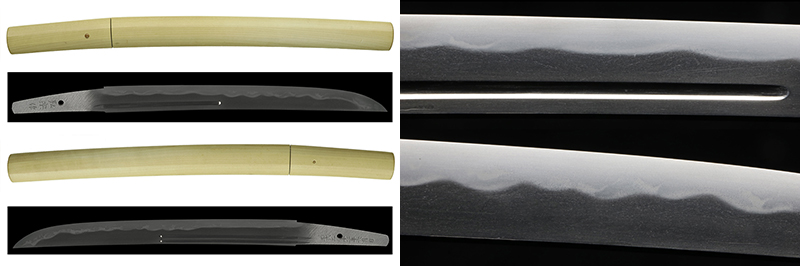
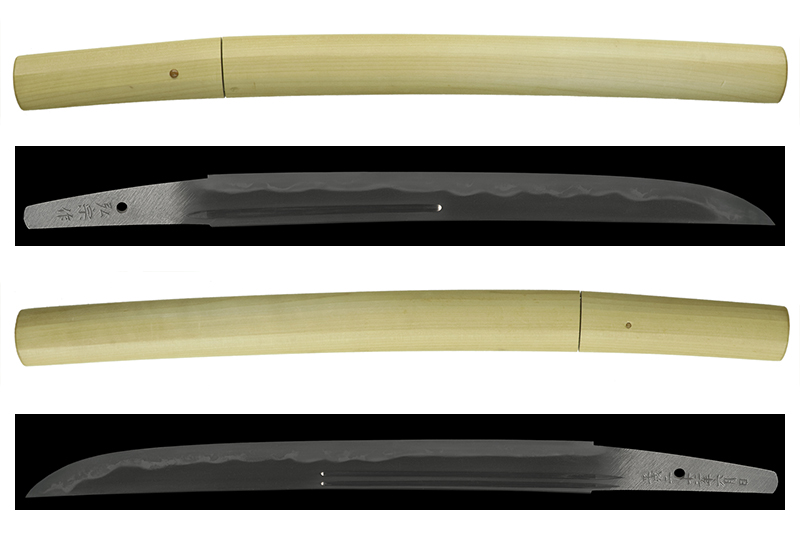
It is an outstanding piece featuring a powerful, large-scale sugata with a wide mihaba, a finely forged itame hada, and a magnificent Soshu-den gunome midare hamon.
It is an ideal work to be used as an omorigatana.
This is a work by the renowned Seki swordsmith Matsubara Hidemune.
It is an outstanding piece featuring a powerful, large-scale sugata with a wide mihaba, a finely forged itame hada, and a magnificent Soshu-den gunome midare hamon.
It is an ideal sword to be carried as a protective talisman.
"Sugata"
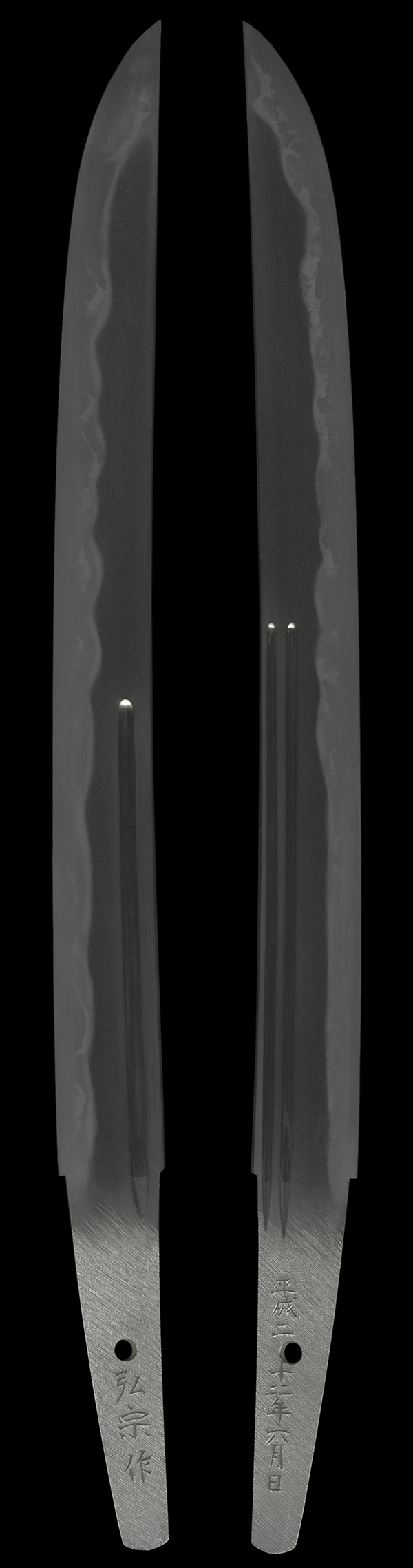
Hira-zukuri, iori-mune, mihaba is somewhat wide, kasane is ordinary, sori is slight, and the fukura is moderately withered. The nakago is ubu, the yasurime are sujikai, and the nakago-jiri is kurijiri.
"Horimono"
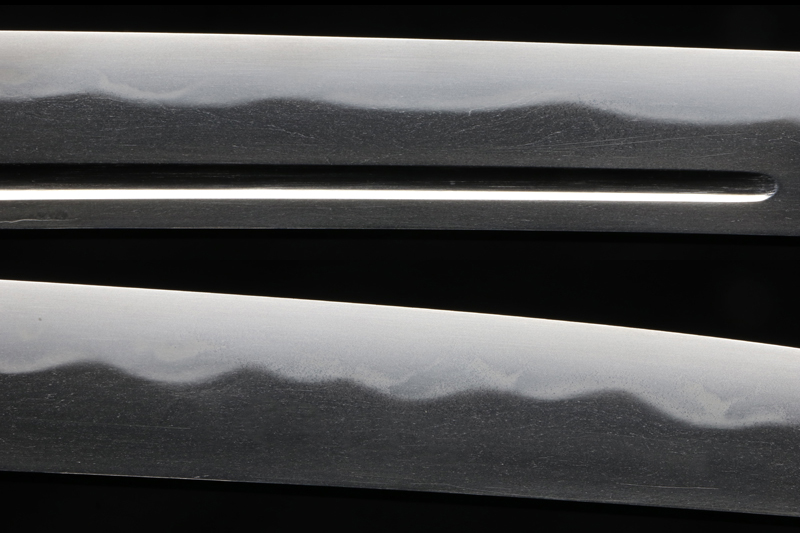
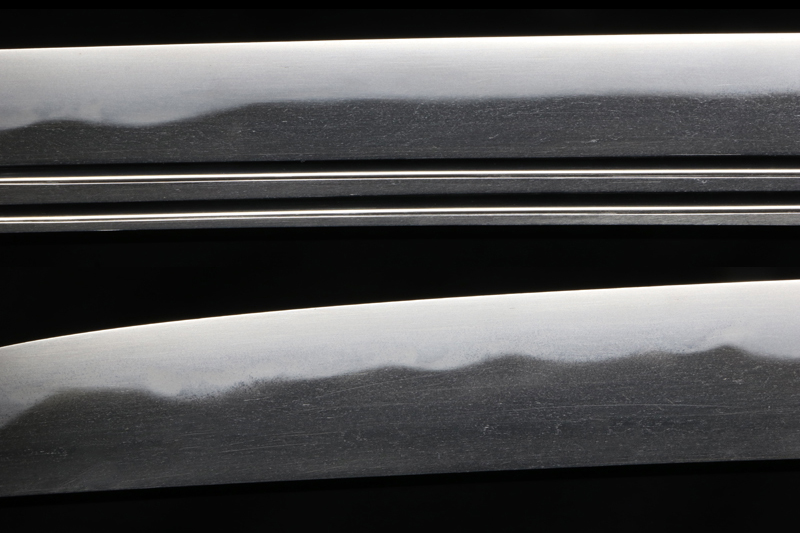
As for horimono, a single hi is carved on the sashi-omote, and gomabashi are carved on the sashi-ura.
"Jigane"
The jigane is itame hada which flows and becomes masame-gokoro with jinie.
"Hamon"
The hamon is gunome midare, the habuchi is covered in nie with sunagashiri. Inside the ha, yo enters and kinsuji works. The boushi is midare-komi and returns in komaru.
"Features"
Swordsmith Hidemune, whose real name is Matsubara Ryuhei, was born in Showa 5 (1930). He studied under the 13th generation swordsmith Kawashima Masahide and the swordsmith Nakata Kanehide. Residing in Seki City, Gifu Prefecture, he has achieved numerous nyusen selections at the Shinsaku Meito Ten as a member of the Zen Nihon Tosho Kai.
This work is a single blade that reproduces a sunnobi tanto of the Keicho Shinto period, featuring a powerful, large-scale sugata with a wide mihaba, a finely forged itame hada, and a magnificent Soshu-den gunome midare hamon.
Swordsmith Hidemune, whose real name is Matsubara Ryuhei, was born in 1930 (Showa 5). He studied under the 13th-generation swordsmith Kawashima Masahide and the swordsmith Nakata Kanehide. He resides in Seki, Gifu Prefecture, and is a member of the All Japan Swordsmith Association. He has achieved numerous selections at the New Sword Exhibition.
This piece is a reproduction of an extended tanto in the Keicho Shinto style. It features a powerful, large-scale sugata with a wide mihaba, a finely forged itame hada, and an impressive Soshu-den gunome midare hamon.
It is an ideal piece to be carried as a protective talisman sword.
"Koshirae"
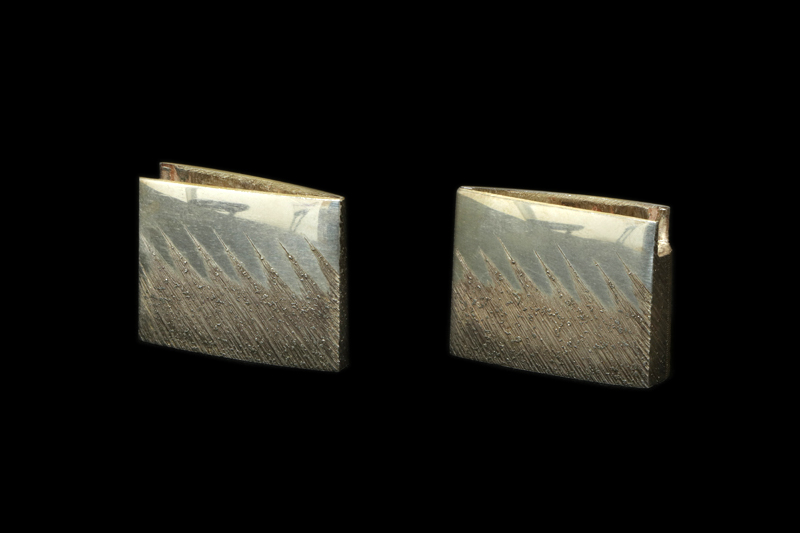
Habaki: Solid silver single-tier koshi-yujo.
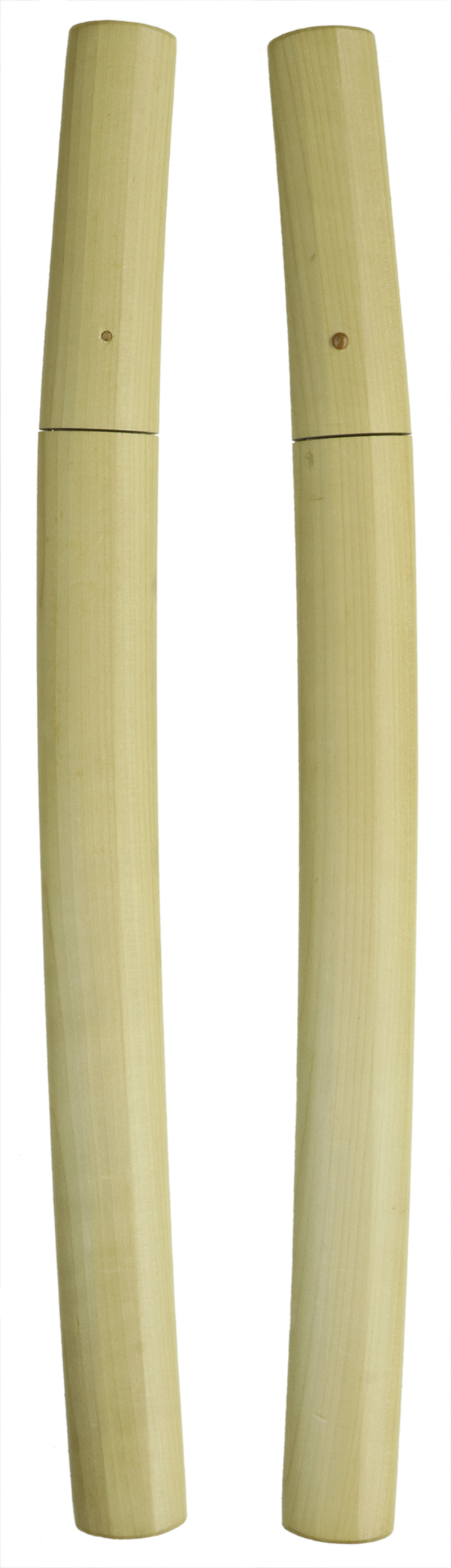
Saya: Shirosaya.
"Condition of blade"
Togi: Generally in good condition.
Kizu: There are no kizu that would constitute a defect.
Machine translation from the shop's Japanese · may contain errors ·
Modern sword Hidemune saku with Shirosaya.
This is a work by the renowned Seki swordsmith Matsubara Hidemune.
It is an outstanding piece featuring a powerful, large-scale sugata with a wide mihaba, a finely forged itame hada, and a magnificent Soshu-den gunome midare hamon.
It is an ideal work to be used as an omorigatana.
This is a work by the renowned Seki swordsmith Matsubara Hidemune.
It is an outstanding piece featuring a powerful, large-scale sugata with a wide mihaba, a finely forged itame hada, and a magnificent Soshu-den gunome midare hamon.
It is an ideal sword to be carried as a protective talisman.
"Sugata"
Hira-zukuri, iori-mune, mihaba is somewhat wide, kasane is ordinary, sori is slight, and the fukura is moderately withered. The nakago is ubu, the yasurime are sujikai, and the nakago-jiri is kurijiri.
"Horimono"
As for horimono, a single hi is carved on the sashi-omote, and gomabashi are carved on the sashi-ura.
"Jigane"
The jigane is itame hada which flows and becomes masame-gokoro with jinie.
"Hamon"
The hamon is gunome midare, the habuchi is covered in nie with sunagashiri. Inside the ha, yo enters and kinsuji works. The boushi is midare-komi and returns in komaru.
"Features"
Swordsmith Hidemune, whose real name is Matsubara Ryuhei, was born in Showa 5 (1930). He studied under the 13th generation swordsmith Kawashima Masahide and the swordsmith Nakata Kanehide. Residing in Seki City, Gifu Prefecture, he has achieved numerous nyusen selections at the Shinsaku Meito Ten as a member of the Zen Nihon Tosho Kai.
This work is a single blade that reproduces a sunnobi tanto of the Keicho Shinto period, featuring a powerful, large-scale sugata with a wide mihaba, a finely forged itame hada, and a magnificent Soshu-den gunome midare hamon.
Swordsmith Hidemune, whose real name is Matsubara Ryuhei, was born in 1930 (Showa 5). He studied under the 13th-generation swordsmith Kawashima Masahide and the swordsmith Nakata Kanehide. He resides in Seki, Gifu Prefecture, and is a member of the All Japan Swordsmith Association. He has achieved numerous selections at the New Sword Exhibition.
This piece is a reproduction of an extended tanto in the Keicho Shinto style. It features a powerful, large-scale sugata with a wide mihaba, a finely forged itame hada, and an impressive Soshu-den gunome midare hamon.
It is an ideal piece to be carried as a protective talisman sword.
"Koshirae"
Habaki: Solid silver single-tier koshi-yujo.
Saya: Shirosaya.
"Condition of blade"
Togi: Generally in good condition.
Kizu: There are no kizu that would constitute a defect.
The twentieth century nearly killed the craft twice: wartime distortion, then the occupation ban. The NBTHK’s founding in 1948 and licensed forging from 1953 rebuilt the sword as an art, crowned by Living National Treasures and the mukansa rank.
Within 3 days of the item's arrival, we offer a refund or an exchange. Return shipping and the bank transfer fee for the refund are at the customer's expense.

 NihontoWatch