Onimaru Kunitsuna
A work by Kunitsuna, a swordsmith of the Kyo Awataguchi school in Yamashiro Province during the early Kamakura period, and the youngest of the six Awataguchi brothers. Kunitsuna was a Goban Kaji for Emperor Go-Toba, and it is said that due to his great skill, he was also invited to Kamakura to forge swords.
The origin of the go "Onimaru" is recorded in the "Taiheiki". According to it, Hojo Tokiyori (or Hojo Tokimasa) was tormented every night by a small oni appearing in his dreams.
One such night, an old man appeared in a dream and said, "I am the incarnation of the tachi by Awataguchi Kunitsuna. However, because I have been held by soiled hands, I have rusted and cannot slide out of my saya. If you wish to quickly exorcise the yokai, have a pure person quickly wipe away my rust," and then vanished.
Immediately, Tokiyori maintained this sword and left it leaning by his bedside unsheathed; it is said the sword fell over and cut off the head of an ornament on a hibachi stand. Looking closely, the legs of that hibachi were in the shape of an oni made of silver, and from then on, the small oni stopped appearing in Tokiyori's dreams, and his physical condition gradually recovered. Due to this incident, it is said this tachi was named "Onimaru".
The maker of this tachi
The swordsmith Fujiyasu Masahira was born in Date-gun, Fukushima Prefecture in Showa 21. In Showa 41, he entered apprenticeship under the late Ningen Kokuho, Master Miyairi Yukihira, a swordsmith in Sakaki-machi, Nagano Prefecture.
In Showa 50, he opened a forge in Tatsukoyama, Fukushima Prefecture and became independent. Since then, through repeated research and practice in sword making, he has received the Nippon Bijutsu Token Hozon Kyokai Excellence Award 3 times, the Encouragement Award 6 times, and the Effort Award 7 times. In Heisei 2, he received the Nippon Bijutsu Token Hozon Kyokai Chairman's Award. In the same year 14, he received the Nippon Bijutsu Token Hozon Kyokai Kanzan Award.
He has performed dedication forging at many shrines such as Owari Atsuta Jingu and Nara Gokoku Jinja, and in Heisei 20, he performed a Japanese sword dedication forging at Hitachi Kashima Jingu for the first time in approximately 1,300 years since the sword making of Sabi no Otamaro in 704.
In the autumn of Showa 59, he also took on the major role of serving in the respectful production of the Goshinho Tachi for the 61st Shikinen Sengu of Ise Jingu, and has also put great effort into supporting the reconstruction of Mikoto Jinja in Minamisoma, Fukushima Prefecture, which suffered great damage in the recent earthquake, serving in the respectful production of a chokuto to become a Goshinho; most recently, he possesses some of the finest sword making techniques among modern Japanese swordsmiths, such as the restoration forging of the large chokuto excavated from the Miyajidake Tumulus in Fukuoka.
Holding a strong desire to reproduce the koto of the Heian and Kamakura periods, he has engaged in research and practice for many years, and possesses abundant knowledge and insight into Kokuho, Juyo Bunkazai, and similar swords, as well as iron sand and iron culture nationwide; whether he works on tachi, katana, tanto, wakizashi, naginata, or ancient chokuto, he creates accurate and beautiful sugata.
The skill of the jitetsu and yakiba is also vivid, boasting a wide range of production abilities, and his nakago-shitate such as the nakago-yasuri and meibun are among the best of modern swordsmiths; after the death of his master Yukihira, he took in his master's biological son, Miyairi Kozaemon Yukihira (Miyairi Megumi), and had him undergo sword forging training as a disciple, which speaks to the deep trust of his master and his high level of skill.
In recent years, he has also engaged in the research and restoration production of Nara period swords such as the chokuto and teboko in the collection of the Nara Shosoin, and it is no exaggeration to say that the yakiba of the aforementioned Mikoto Jinja dedication chokuto reached a divine realm.
He is also known as the modern swordsmith in whom Machii Isao, the proprietor of Toshin (founder of Shushin-ryu Iaijutsu Hyoho, holding 6 Guinness World Records related to Iai), places the most trust; it has been proven on television programs that Masahira swords, in the hands of Machii, have extremely high ability as "rito" (the three essentials: does not break, does not bend, and cuts well), which is the true duty of a Japanese sword, through the cutting of iron pipes and iron plates.
Furthermore, swordsmith Masahira has deep knowledge of bows and kyudo, having a long-standing friendship with the Kyoto bow maker Mr. Shibata Kanjuro, and he also provides instruction in archery in his local Fukushima.
In terms of both character and skill, he is a person who should be recognized as a Ningen Kokuho or Mukansa, but he refuses to enter the public world and remains a pure craftsman-style swordsmith silently devoted to sword making research in Tatsukoyama, Fukushima Prefecture even now. Please see here for further details.
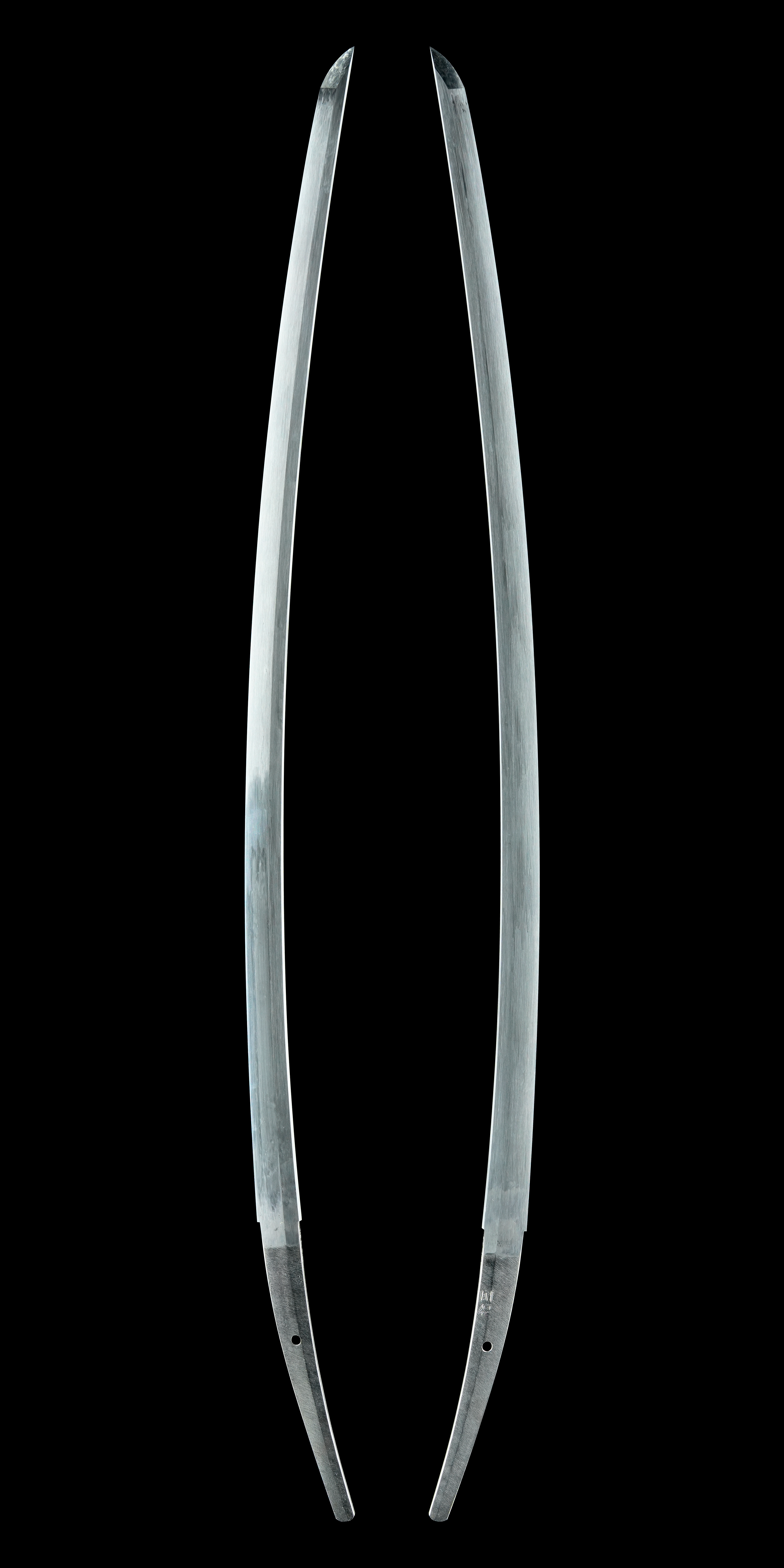
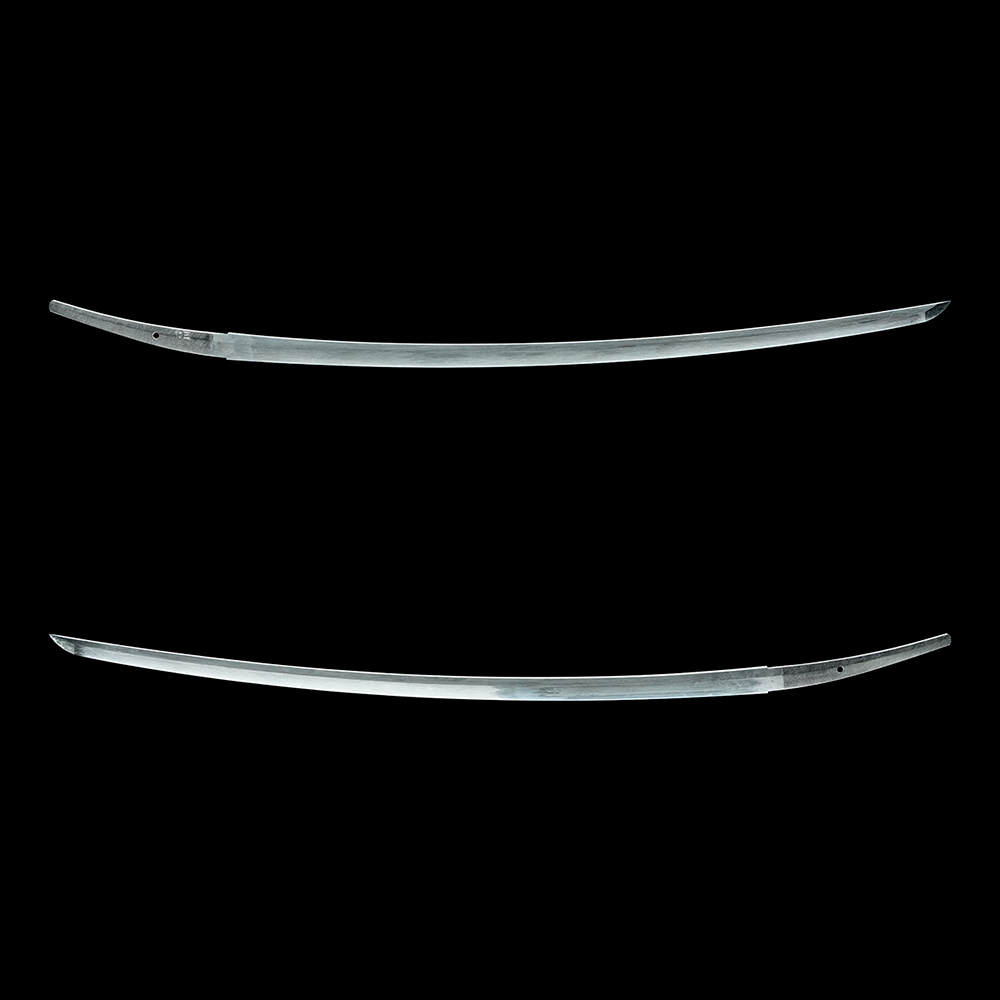
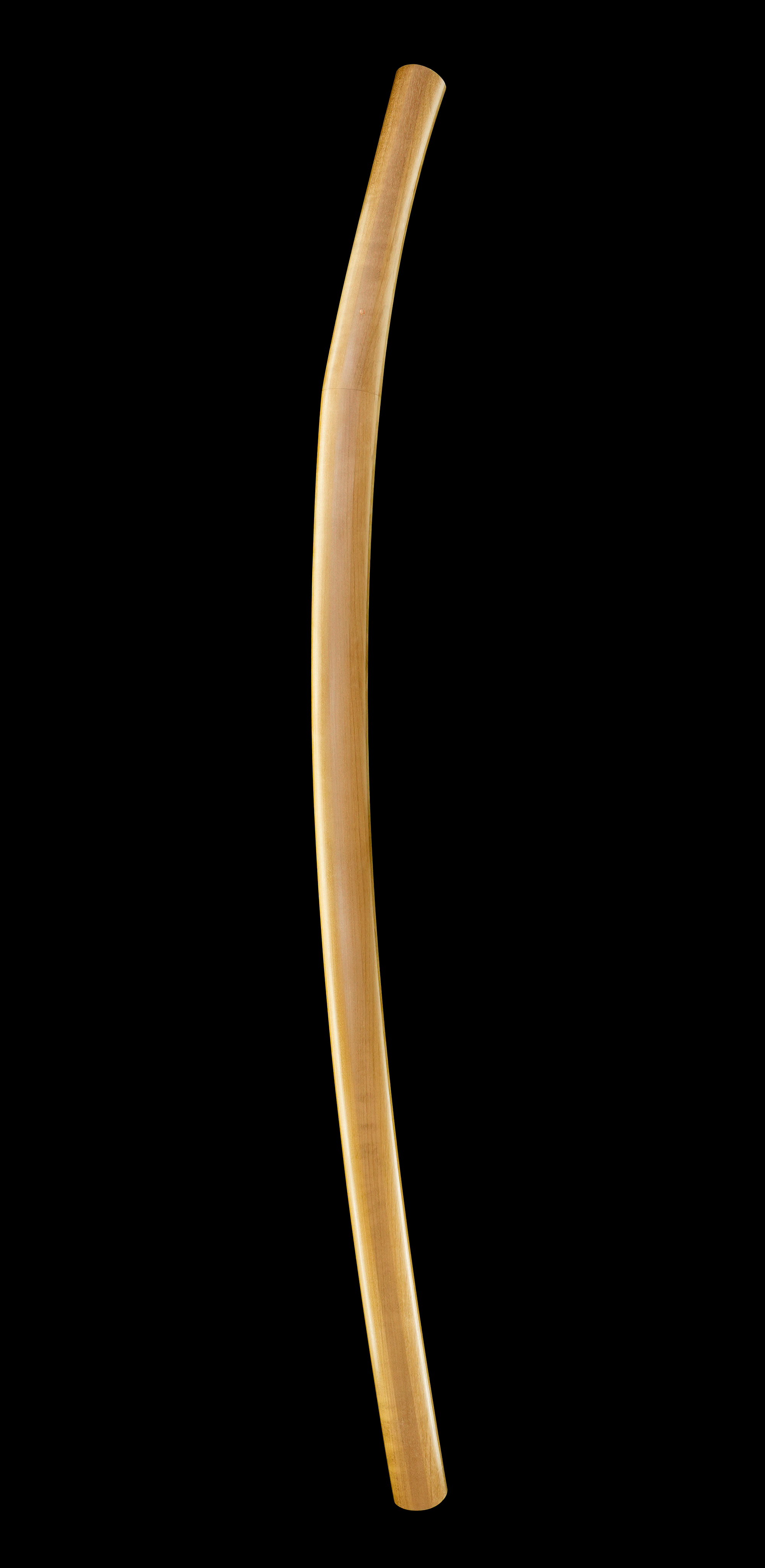
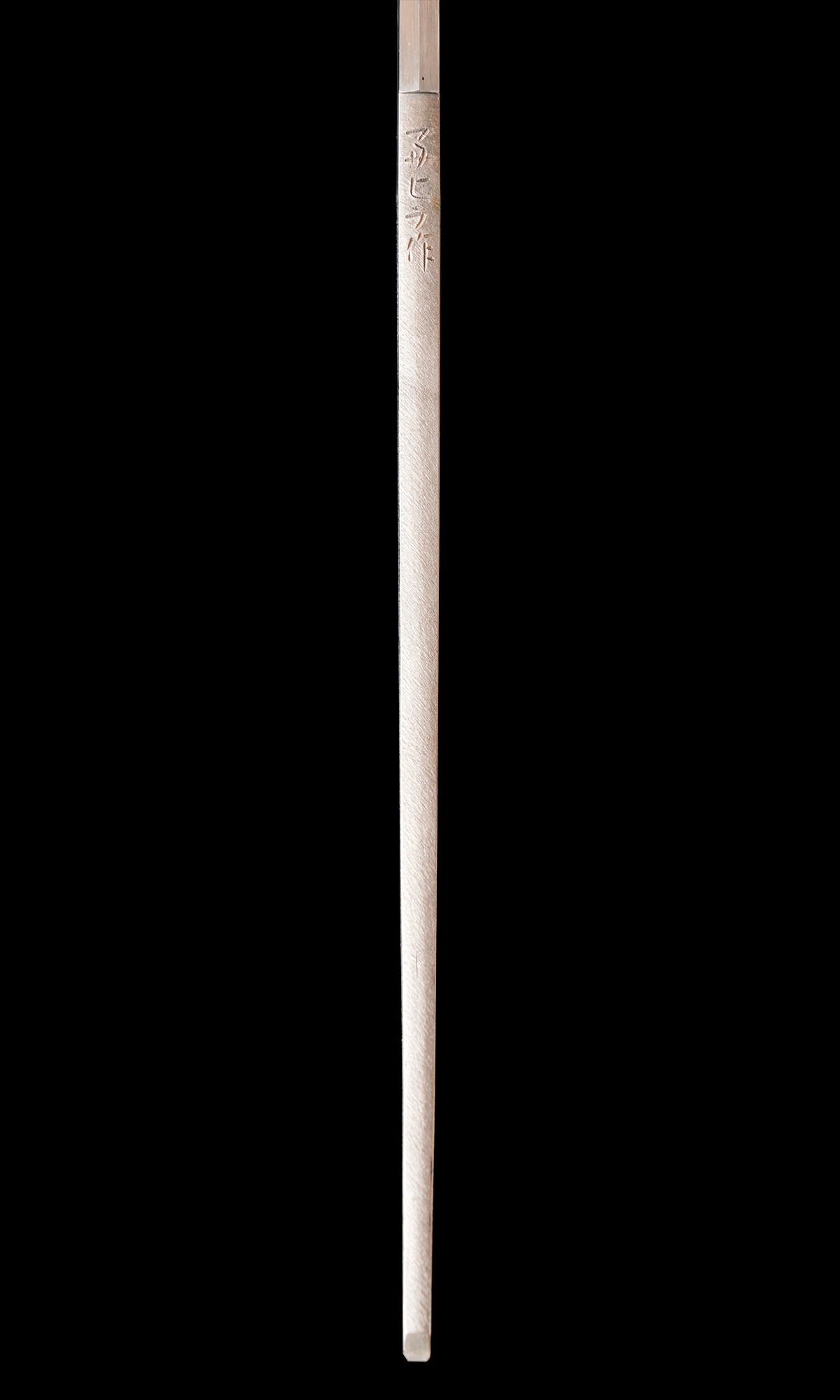
This tachi is, as mentioned above, a utsushi of the "Onimaru Kunitsuna", famous as one of the Tenka Goken. With high sori and an iori-mune, the elegant sugata of the early Kamakura period is magnificently reproduced.
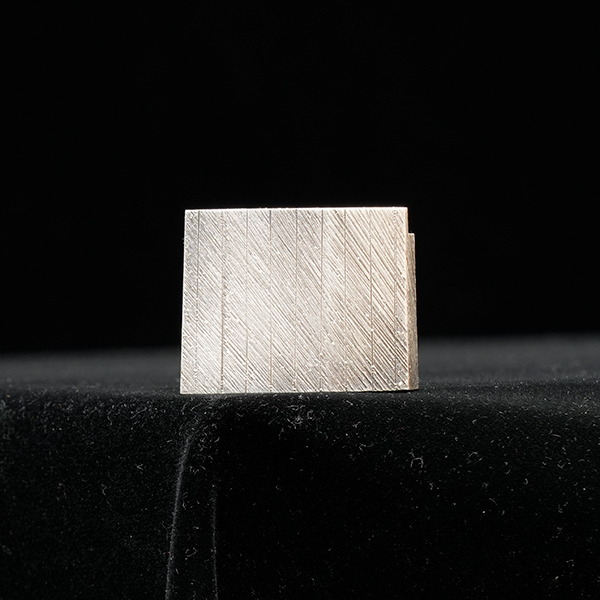
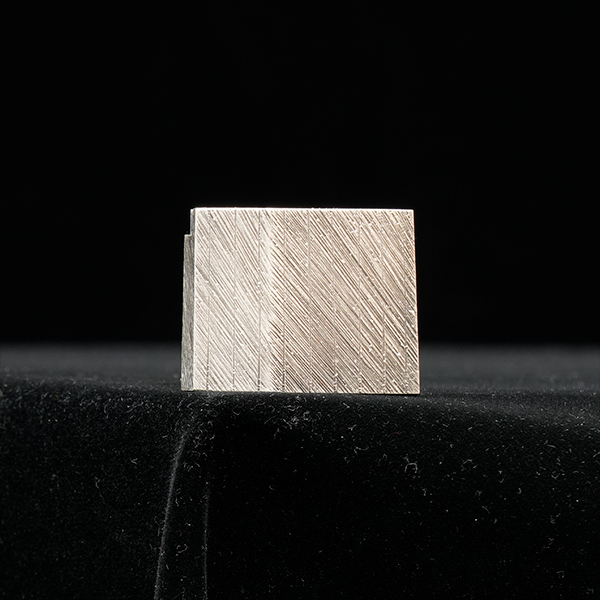
Originally, this is a sword forged in response to the request of the proprietor Machii Isao, and although it is a work from Reiwa 2, the work up to the middle stage has only just been finished. The shirasaya and habaki were crafted by masters who compete for the first or second rank in Japan, and the polishing is also being handled by a skilled person who has received a special prize in competitions sponsored by the Nippon Bijutsu Token Hozon Kyokai.
It is no exaggeration to say that swordsmith Masahira, who continues to challenge the reproduction of koto, has recently reached a state of enlightenment, and one is surprised every time by the quality of every work he handles. This price is possible only now, before the finishing polish. Please take this opportunity to purchase this masterpiece, which is perfectly suitable as a family treasure.
*Finishing polish will be provided for ¥260,000 (tax included)
Machine translation from the shop's Japanese · may contain errors ·
Onimaru Kunitsuna
A work by Kunitsuna, a swordsmith of the Kyo Awataguchi school in Yamashiro Province during the early Kamakura period, and the youngest of the six Awataguchi brothers. Kunitsuna was a Goban Kaji for Emperor Go-Toba, and it is said that due to his great skill, he was also invited to Kamakura to forge swords.
The origin of the go "Onimaru" is recorded in the "Taiheiki". According to it, Hojo Tokiyori (or Hojo Tokimasa) was tormented every night by a small oni appearing in his dreams.
One such night, an old man appeared in a dream and said, "I am the incarnation of the tachi by Awataguchi Kunitsuna. However, because I have been held by soiled hands, I have rusted and cannot slide out of my saya. If you wish to quickly exorcise the yokai, have a pure person quickly wipe away my rust," and then vanished.
Immediately, Tokiyori maintained this sword and left it leaning by his bedside unsheathed; it is said the sword fell over and cut off the head of an ornament on a hibachi stand. Looking closely, the legs of that hibachi were in the shape of an oni made of silver, and from then on, the small oni stopped appearing in Tokiyori's dreams, and his physical condition gradually recovered. Due to this incident, it is said this tachi was named "Onimaru".
The maker of this tachi
The swordsmith Fujiyasu Masahira was born in Date-gun, Fukushima Prefecture in Showa 21. In Showa 41, he entered apprenticeship under the late Ningen Kokuho, Master Miyairi Yukihira, a swordsmith in Sakaki-machi, Nagano Prefecture.
In Showa 50, he opened a forge in Tatsukoyama, Fukushima Prefecture and became independent. Since then, through repeated research and practice in sword making, he has received the Nippon Bijutsu Token Hozon Kyokai Excellence Award 3 times, the Encouragement Award 6 times, and the Effort Award 7 times. In Heisei 2, he received the Nippon Bijutsu Token Hozon Kyokai Chairman's Award. In the same year 14, he received the Nippon Bijutsu Token Hozon Kyokai Kanzan Award.
He has performed dedication forging at many shrines such as Owari Atsuta Jingu and Nara Gokoku Jinja, and in Heisei 20, he performed a Japanese sword dedication forging at Hitachi Kashima Jingu for the first time in approximately 1,300 years since the sword making of Sabi no Otamaro in 704.
In the autumn of Showa 59, he also took on the major role of serving in the respectful production of the Goshinho Tachi for the 61st Shikinen Sengu of Ise Jingu, and has also put great effort into supporting the reconstruction of Mikoto Jinja in Minamisoma, Fukushima Prefecture, which suffered great damage in the recent earthquake, serving in the respectful production of a chokuto to become a Goshinho; most recently, he possesses some of the finest sword making techniques among modern Japanese swordsmiths, such as the restoration forging of the large chokuto excavated from the Miyajidake Tumulus in Fukuoka.
Holding a strong desire to reproduce the koto of the Heian and Kamakura periods, he has engaged in research and practice for many years, and possesses abundant knowledge and insight into Kokuho, Juyo Bunkazai, and similar swords, as well as iron sand and iron culture nationwide; whether he works on tachi, katana, tanto, wakizashi, naginata, or ancient chokuto, he creates accurate and beautiful sugata.
The skill of the jitetsu and yakiba is also vivid, boasting a wide range of production abilities, and his nakago-shitate such as the nakago-yasuri and meibun are among the best of modern swordsmiths; after the death of his master Yukihira, he took in his master's biological son, Miyairi Kozaemon Yukihira (Miyairi Megumi), and had him undergo sword forging training as a disciple, which speaks to the deep trust of his master and his high level of skill.
In recent years, he has also engaged in the research and restoration production of Nara period swords such as the chokuto and teboko in the collection of the Nara Shosoin, and it is no exaggeration to say that the yakiba of the aforementioned Mikoto Jinja dedication chokuto reached a divine realm.
He is also known as the modern swordsmith in whom Machii Isao, the proprietor of Toshin (founder of Shushin-ryu Iaijutsu Hyoho, holding 6 Guinness World Records related to Iai), places the most trust; it has been proven on television programs that Masahira swords, in the hands of Machii, have extremely high ability as "rito" (the three essentials: does not break, does not bend, and cuts well), which is the true duty of a Japanese sword, through the cutting of iron pipes and iron plates.
Furthermore, swordsmith Masahira has deep knowledge of bows and kyudo, having a long-standing friendship with the Kyoto bow maker Mr. Shibata Kanjuro, and he also provides instruction in archery in his local Fukushima.
In terms of both character and skill, he is a person who should be recognized as a Ningen Kokuho or Mukansa, but he refuses to enter the public world and remains a pure craftsman-style swordsmith silently devoted to sword making research in Tatsukoyama, Fukushima Prefecture even now. Please see here for further details.
This tachi is, as mentioned above, a utsushi of the "Onimaru Kunitsuna", famous as one of the Tenka Goken. With high sori and an iori-mune, the elegant sugata of the early Kamakura period is magnificently reproduced.
Originally, this is a sword forged in response to the request of the proprietor Machii Isao, and although it is a work from Reiwa 2, the work up to the middle stage has only just been finished. The shirasaya and habaki were crafted by masters who compete for the first or second rank in Japan, and the polishing is also being handled by a skilled person who has received a special prize in competitions sponsored by the Nippon Bijutsu Token Hozon Kyokai.
It is no exaggeration to say that swordsmith Masahira, who continues to challenge the reproduction of koto, has recently reached a state of enlightenment, and one is surprised every time by the quality of every work he handles. This price is possible only now, before the finishing polish. Please take this opportunity to purchase this masterpiece, which is perfectly suitable as a family treasure.
*Finishing polish will be provided for ¥260,000 (tax included)
The twentieth century nearly killed the craft twice: wartime distortion, then the occupation ban. The NBTHK’s founding in 1948 and licensed forging from 1953 rebuilt the sword as an art, crowned by Living National Treasures and the mukansa rank.
We could not find an authenticity certificate on the seller’s listing. Japanese swords and fittings are normally papered by the NBTHK (or the NTHK). Without one, the attribution is the seller’s own assessment and has not been independently verified — treat it with caution and ask the dealer about certification before buying.
As a rule we do not accept returns, except when we have sent a different item from the one ordered or when there is a significant discrepancy between the description and the item. If you wish to return an item, please contact us within 3 days of its arrival and then send it back.

 NihontoWatch