Swordsmith Fujiyasu Shohei was born in Date-gun, Fukushima Prefecture in Showa 21. In Showa 41, he entered apprenticeship under the late Living National Treasure, master Miyairi Yukihira, a swordsmith of Sakaki-machi, Nagano Prefecture.
In Showa 50, he established a forge in Tatsukoyama, Fukushima Prefecture and became independent. Since then, he has accumulated research and discipline in sword making, receiving the Nihon Bijutsu Token Hozon Kyokai Excellence Award 3 times, the Encouragement Award 6 times, and the Effort Award 7 times. In Heisei 2, he received the Nihon Bijutsu Token Hozon Kyokai Chairman's Award. In the same year 14, he received the Nihon Bijutsu Token Hozon Kyokai Kanzan Award.
He has performed dedicatory forging at many shrines such as Owari Atsuta Jingu and Nara Gokoku Jinja, and in Heisei 20, he performed a Japanese sword dedicatory forging at Hitachi Kashima Jingu for the first time in approximately one thousand three hundred years since the sword making by Sabi no Omaro in 704.
In the autumn of Showa 59, he also undertook the great duty of serving in the respectful production of the Goshinpo tachi for the Ise Jingu 61st Shikinen Sengu, and he exerted great effort in supporting the reconstruction of Okoto Jinja in Minamisoma, Fukushima Prefecture, which suffered great damage in the recent earthquake, serving in the respectful production of a chokuto to become a Goshinpo, and most recently (Naochika), through the reconstruction forging of the large chokuto excavated from the Miyajidake Kofun in Fukuoka, he possesses sword making techniques among the best of contemporary Japanese swordsmiths.
Holding a strong desire for the reproduction of old swords of the Heian and Kamakura periods, he has engaged in research and discipline for many years, and with abundant knowledge and insight into National Treasures, Important Cultural Properties and similar swords, as well as iron sand and iron culture nationwide, he creates accurate and beautiful sugata regardless of whether he handles tachi, katana, tanto, wakizashi, naginata, or ancient chokuto.
The skill of the jigane and yakiba is also vivid, boasting a wide range of production abilities, and the nakago-shitate such as the nakago-yasuri and meibun is also the best among contemporary swordsmiths; from the circumstances of taking in Miyairi Kozaemon Yukihira (Miyairi Kei), the biological son of his master, after the death of his master Yukihira and having him undergo sword forging training as a disciple, his master's trust was deep, which speaks to the high level of his skill.
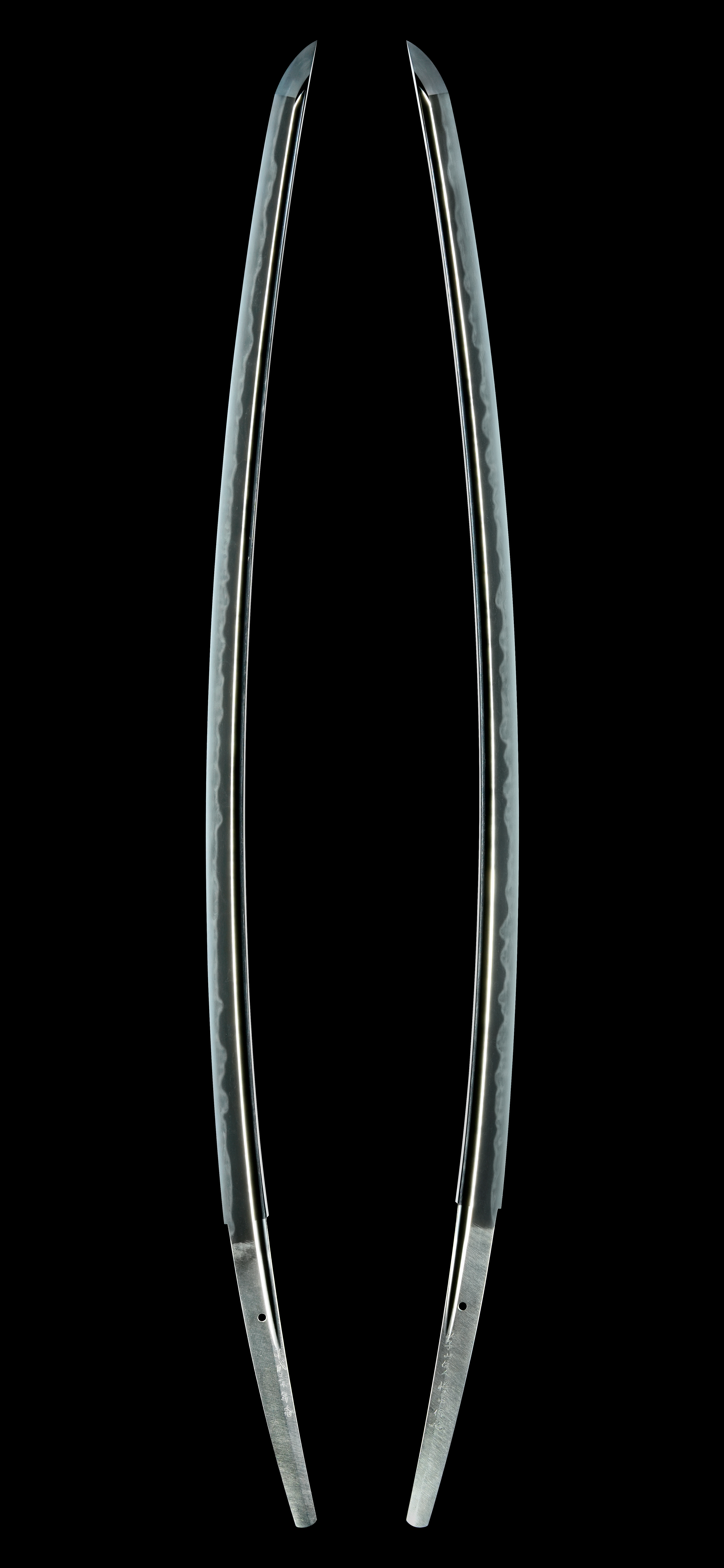
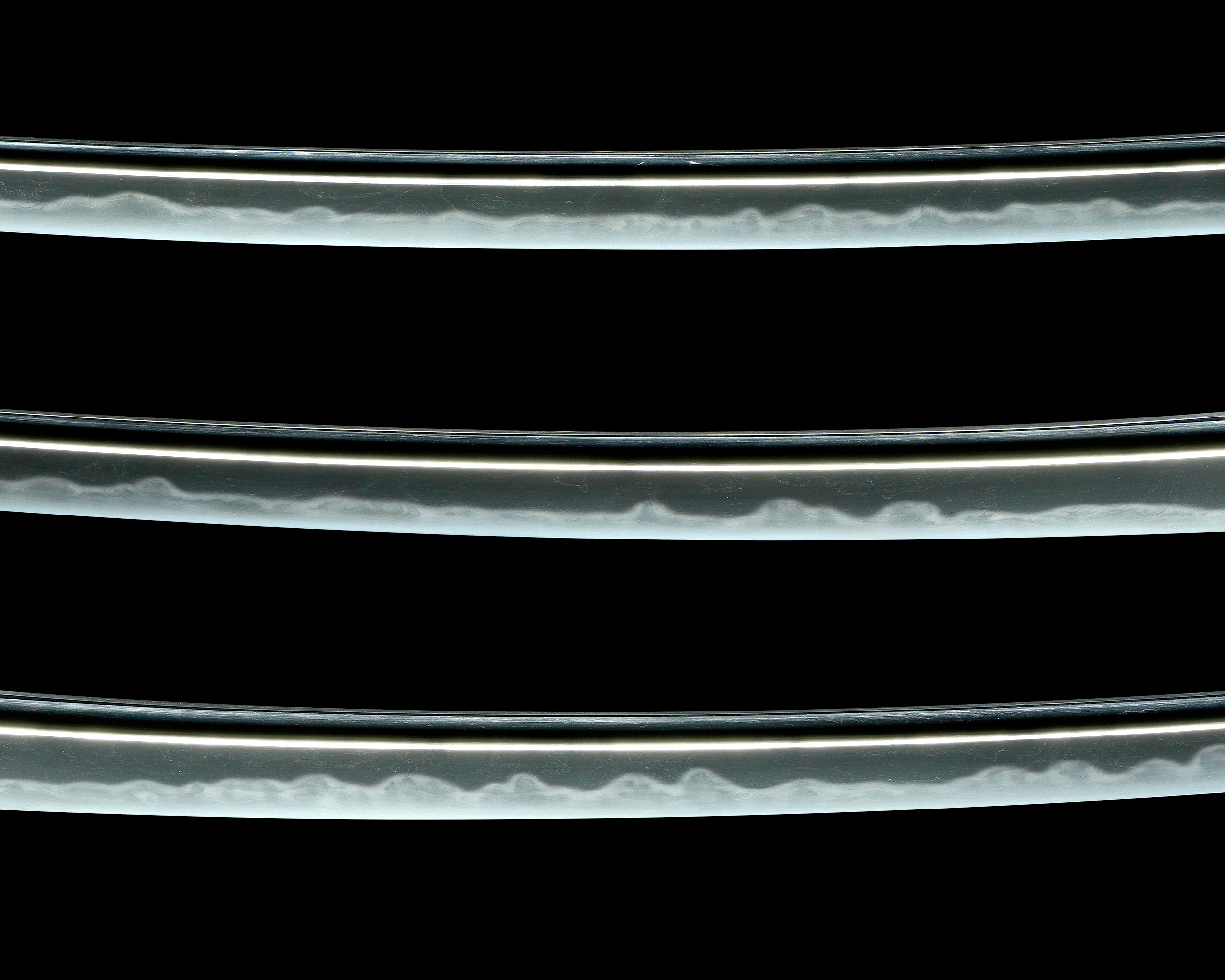
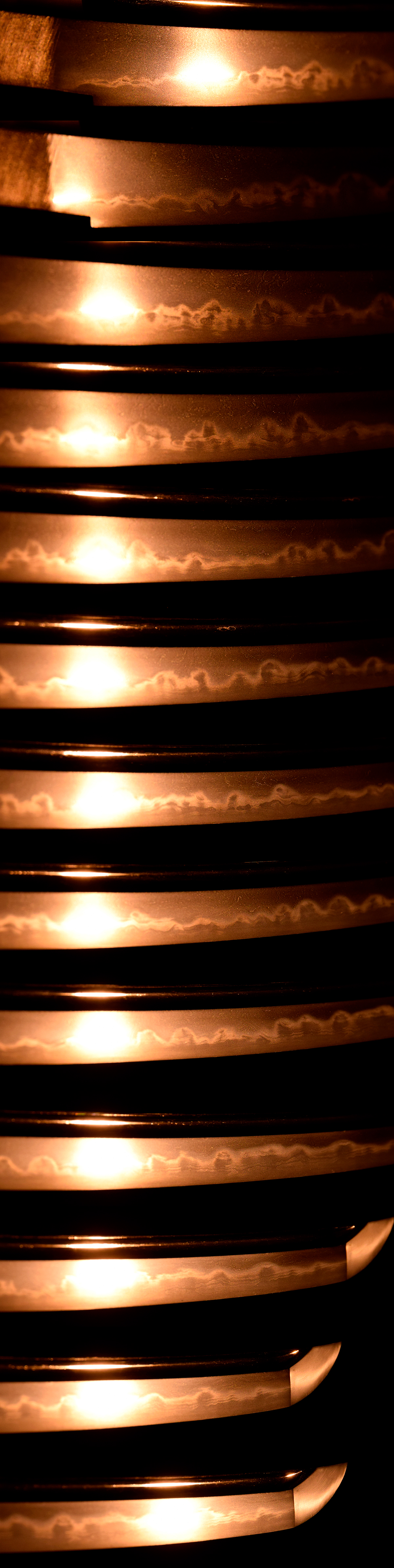
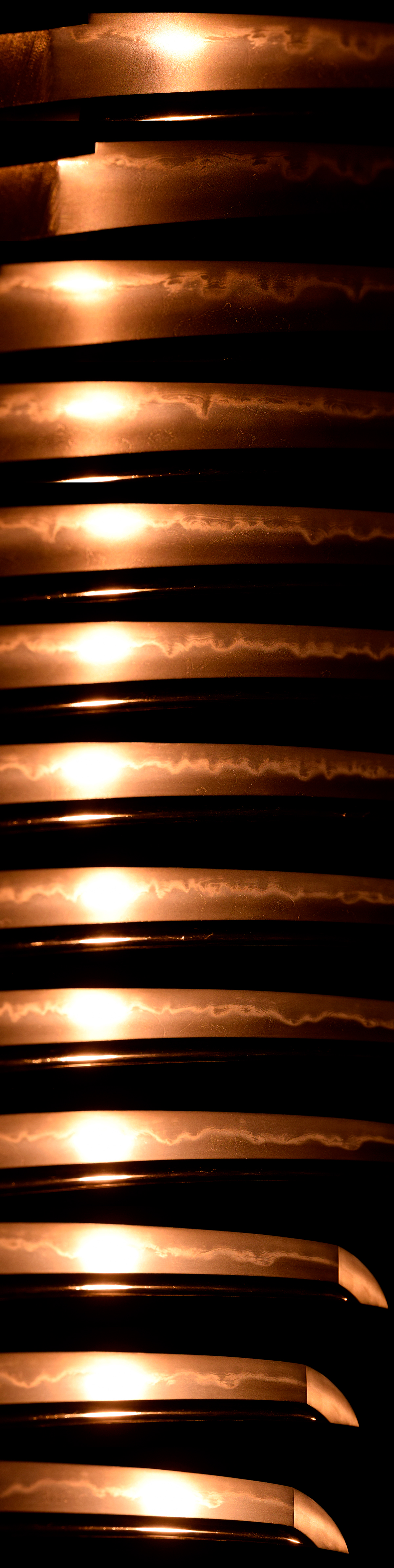
This tachi has a high sori, is in mitsumune, and is a work imitating a grand tachi of the Nanbokucho period with an extended boshi. The jigane is ko-itame mixed with moku, with chikei entering and a faint utsuri-gokoro, the hamon has a bright nioiguchi, in notare style mixed with gunome, gunome-choji, and choji, sunagashi is seen actively at the habuchi, and the boshi is in sugu style mixed with a slight midare-gokoro, with the saki being hakikake and returning maru.
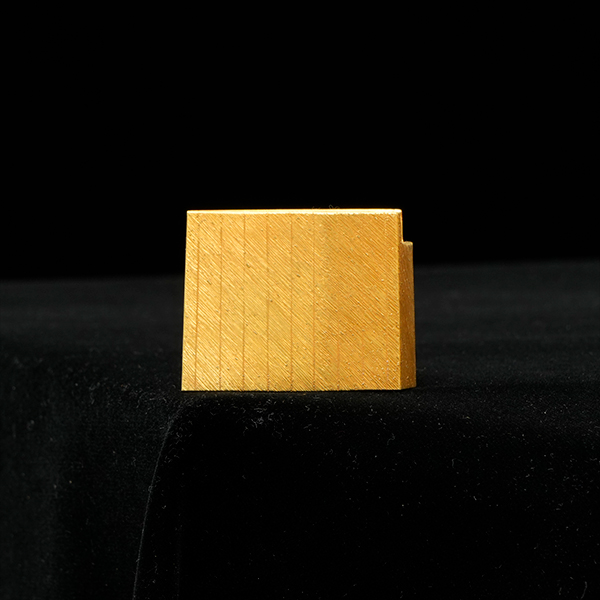
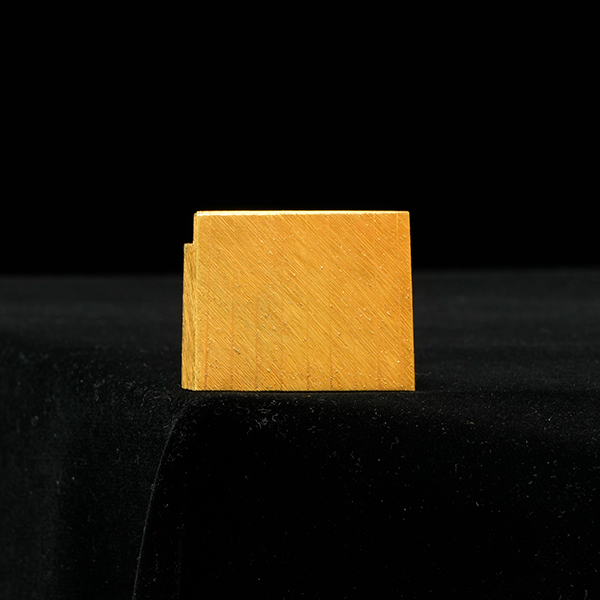
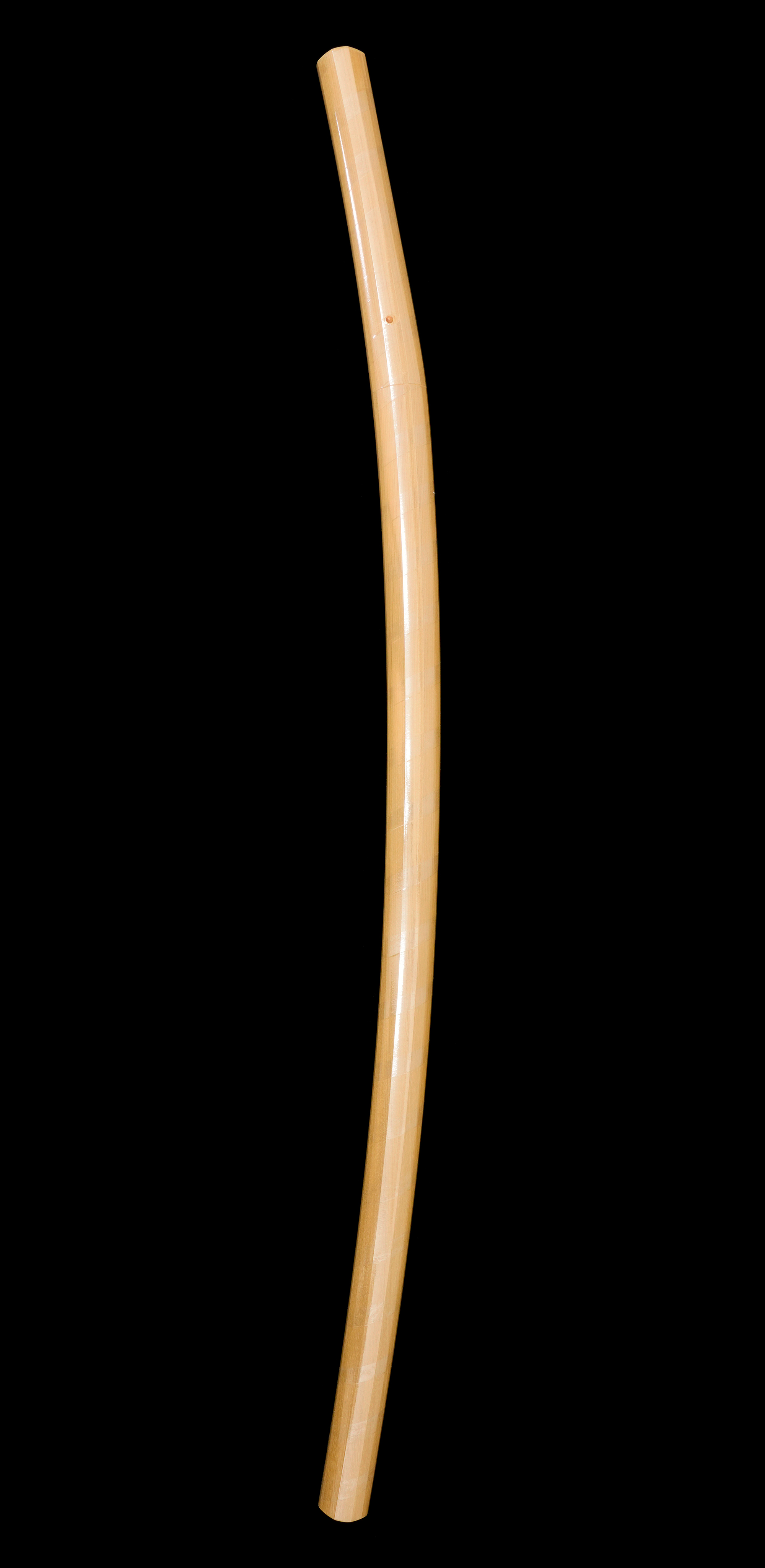
Originally, it is a single sword carefully forged in response to the request of the shop owner Machii Isao, and although it is a work of Heisei 30, all the koshirae work has only just now been completed.
Speaking of Shohei's works, it is one of the characteristics that tanren-kizu always appear, but despite this tachi being of long nagasa, it has almost no kizu, and is a masterpiece perfectly suitable as a family treasure.
Machine translation from the shop's Japanese · may contain errors ·
Swordsmith Fujiyasu Shohei was born in Date-gun, Fukushima Prefecture in Showa 21. In Showa 41, he entered apprenticeship under the late Living National Treasure, master Miyairi Yukihira, a swordsmith of Sakaki-machi, Nagano Prefecture.
In Showa 50, he established a forge in Tatsukoyama, Fukushima Prefecture and became independent. Since then, he has accumulated research and discipline in sword making, receiving the Nihon Bijutsu Token Hozon Kyokai Excellence Award 3 times, the Encouragement Award 6 times, and the Effort Award 7 times. In Heisei 2, he received the Nihon Bijutsu Token Hozon Kyokai Chairman's Award. In the same year 14, he received the Nihon Bijutsu Token Hozon Kyokai Kanzan Award.
He has performed dedicatory forging at many shrines such as Owari Atsuta Jingu and Nara Gokoku Jinja, and in Heisei 20, he performed a Japanese sword dedicatory forging at Hitachi Kashima Jingu for the first time in approximately one thousand three hundred years since the sword making by Sabi no Omaro in 704.
In the autumn of Showa 59, he also undertook the great duty of serving in the respectful production of the Goshinpo tachi for the Ise Jingu 61st Shikinen Sengu, and he exerted great effort in supporting the reconstruction of Okoto Jinja in Minamisoma, Fukushima Prefecture, which suffered great damage in the recent earthquake, serving in the respectful production of a chokuto to become a Goshinpo, and most recently (Naochika), through the reconstruction forging of the large chokuto excavated from the Miyajidake Kofun in Fukuoka, he possesses sword making techniques among the best of contemporary Japanese swordsmiths.
Holding a strong desire for the reproduction of old swords of the Heian and Kamakura periods, he has engaged in research and discipline for many years, and with abundant knowledge and insight into National Treasures, Important Cultural Properties and similar swords, as well as iron sand and iron culture nationwide, he creates accurate and beautiful sugata regardless of whether he handles tachi, katana, tanto, wakizashi, naginata, or ancient chokuto.
The skill of the jigane and yakiba is also vivid, boasting a wide range of production abilities, and the nakago-shitate such as the nakago-yasuri and meibun is also the best among contemporary swordsmiths; from the circumstances of taking in Miyairi Kozaemon Yukihira (Miyairi Kei), the biological son of his master, after the death of his master Yukihira and having him undergo sword forging training as a disciple, his master's trust was deep, which speaks to the high level of his skill.
This tachi has a high sori, is in mitsumune, and is a work imitating a grand tachi of the Nanbokucho period with an extended boshi. The jigane is ko-itame mixed with moku, with chikei entering and a faint utsuri-gokoro, the hamon has a bright nioiguchi, in notare style mixed with gunome, gunome-choji, and choji, sunagashi is seen actively at the habuchi, and the boshi is in sugu style mixed with a slight midare-gokoro, with the saki being hakikake and returning maru.
Originally, it is a single sword carefully forged in response to the request of the shop owner Machii Isao, and although it is a work of Heisei 30, all the koshirae work has only just now been completed.
Speaking of Shohei's works, it is one of the characteristics that tanren-kizu always appear, but despite this tachi being of long nagasa, it has almost no kizu, and is a masterpiece perfectly suitable as a family treasure.
The twentieth century nearly killed the craft twice: wartime distortion, then the occupation ban. The NBTHK’s founding in 1948 and licensed forging from 1953 rebuilt the sword as an art, crowned by Living National Treasures and the mukansa rank.
We could not find an authenticity certificate on the seller’s listing. Japanese swords and fittings are normally papered by the NBTHK (or the NTHK). Without one, the attribution is the seller’s own assessment and has not been independently verified — treat it with caution and ask the dealer about certification before buying.
As a rule we do not accept returns, except when we have sent a different item from the one ordered or when there is a significant discrepancy between the description and the item. If you wish to return an item, please contact us within 3 days of its arrival and then send it back.


 NihontoWatch