Reiwa 2 (2020) The early years Reiwa era
This is a utsushi of the National Treasure "Daihannya Nagamitsu" held by the Tokyo National Museum.
The Daihannya Nagamitsu is a tachi made by Bizen Nagamitsu; because it was valued at six hundred kan in Eiraku-sen coins—an extraordinary price for the Muromachi period—it gained the nickname "Daihannya" after the six hundred volumes of the Daihannya-kyo sutra.
Originally in the possession of the Muromachi Shogun Yoshiteru, it was also called the Kotora no Tachi, but when Yoshiteru was attacked and killed by Matsunaga Hisahide and the Miyoshi Sanninshu on May 19, Eiroku 8 (1565), it came into the possession of Miyoshi Shimotsuke-no-kami Masayasu Nyudo Kensai (one theory also suggests Miyoshi Nagayoshi).
Later, it must have come into the possession of Oda Nobunaga after Kensai and the Miyoshi clan attacked Shogun Yoshiaki, who had returned to Kyoto with Nobunaga's support, in the first month of Eiroku 12 (1569) and were instead defeated.
In June, Genki 1 (1570), during the Battle of Anegawa, Nobunaga presented the Daihannya Nagamitsu to Tokugawa Ieyasu in gratitude for his reinforcements. Okudaira Nobumasa, along with his father Sadano, participated in the Battle of Anegawa in Goshu in June, Genki 1 (1570) as part of Tokugawa Ieyasu's army, but eventually sided with Takeda Shingen and sent his younger brother Senmaru as a hostage. When Shingen died suddenly in April, Tensho 1 (1573), Ieyasu began an attack on Nagashino Castle defended by Suganuma Masasada in July, while simultaneously persuading his former retainer Okudaira Nobumasa to defect back to the Ieyasu side on the condition of an engagement to Ieyasu's 14-year-old eldest daughter, Kamehime. While he wept over the tragic fate of his younger brother Senmaru being crucified, Nobumasa was blessed with the good fortune of being appointed the lord of Nagashino Castle.
To reward Okudaira Nobumasa's merit in holding Nagashino Castle during the Battle of Nagashino, in July, Genki 4 (1576), Ieyasu married his daughter Kamehime to Nobumasa, increased his territory in Totomi (Aichi Prefecture), and gave the Daihannya Nagamitsu to Nobumasa, establishing the foundation of the Okudaira family.
The Daihannya Nagamitsu was inherited by Nobumasa's third son, Okudaira Settsu-no-kami Tadamasa, who became the adopted son of Suganuma Sadatoshi, the lord of the 200,000 koku Yoshii Domain in Kozuke Province (Yoshii-machi, Tano-gun, Gunma Prefecture), and was passed down to his legitimate son, Okudaira Hida-no-kami Tadataka; however, Tadataka died young at age 25 and his son Umu also died in childhood at age 4, so the Suganuma family line ended. Therefore, the Daihannya Nagamitsu was taken over by Tadamasa's younger brother, Matsudaira Shimousa-no-kami Tadaaki. Since Tadaaki's mother was also Ieyasu's eldest daughter, he became Ieyasu's adopted son and was given the Matsudaira surname; in his later years, he became the lord of the 180,000 koku Himeji Domain in Banshu (Hyogo Prefecture), and his descendants reached the Meiji era as lords of the Oshi Domain in Bushu (Gyoda City, Saitama Prefecture).
Afterward, the Daihannya Nagamitsu left the family in the early years of the Taisho era and passed into the hands of Yamashita Kamesaburo of Yamashita Steamship; in the Great Kanto Earthquake of Taisho 12, the storehouse collapsed and it was pinned underneath and became bent, but it was repaired by the polisher Yoshikawa Tsunejiro.
In March, Taisho 13, it was offered at the Yamashita family sale and reached a price of 12,000 yen but was withdrawn by the owner; later, it moved into the hands of Count Ito Miyoji and was designated as an Important Cultural Property (former National Treasure) on December 14, Showa 6.
After the death of Count Ito, in 1939 (Showa 14), it was purchased by the former Imperial Household Museum (now Tokyo National Museum), and the purchase price of 60,000 yen presented at that time became a topic of conversation. In 1941 (Showa 16), it was formally transferred from the bereaved family to the Imperial Household Museum, and it has continued to be held by the Tokyo National Museum after the war. On June 9, 1951 (Showa 26), it was designated as a National Treasure (new National Treasure) based on the Law for the Protection of Cultural Properties, and is currently state-owned and held by the Tokyo National Museum.
Osafune Nagamitsu was relatively prolific for a Kamakura period swordsmith and produced many famous blades for the world. Even among Nagamitsu's masterpieces, the "Daihannya Nagamitsu" and "Tsuda Totomi Nagamitsu" are the foremost and are praised as a pair of rivals. Both blades display a grand style that could be mistaken for his father Mitsutada, with magnificent midare based on flamboyant choji that makes them difficult to rank one above the other; however, while the "Tsuda Totomi Nagamitsu" possesses unparalleled soundness but has lost some of its original tachi sugata with funbari due to being suriage, the "Daihannya Nagamitsu" is said to possess ample dignity, maintaining a heroic tachi sugata with an ubu nakago and ikubi kissaki.
The total number of swords designated as National Treasures reaches 122 blades; Soshu Masamune has the most with 9 blades, followed by Osafune Nagamitsu with 6 blades. Among the 6 blades designated as National Treasures, the four blades "Daihannya Nagamitsu," "Tsuda Totomi Nagamitsu," "Sansho Gongen Nagamitsu," and "Tani Tateki Iai" are the representative works of Osafune Nagamitsu and are widely known as the "Four Great Nagamitsu" or "Nagamitsu's Four Masterpieces."
(Reference material: Reprinted, quoted, and excerpted from the Nihonto Taibyakka Jiten)
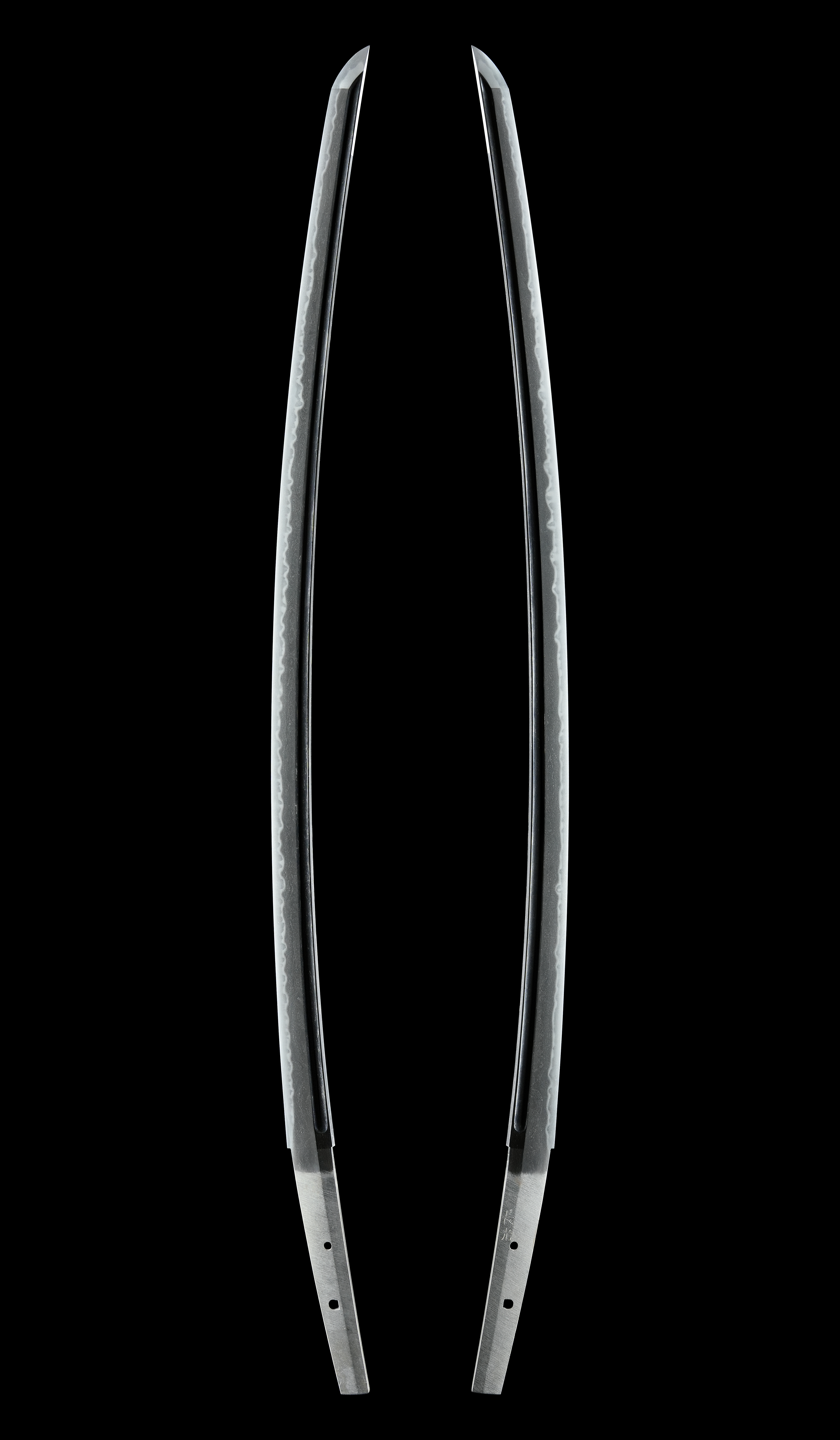
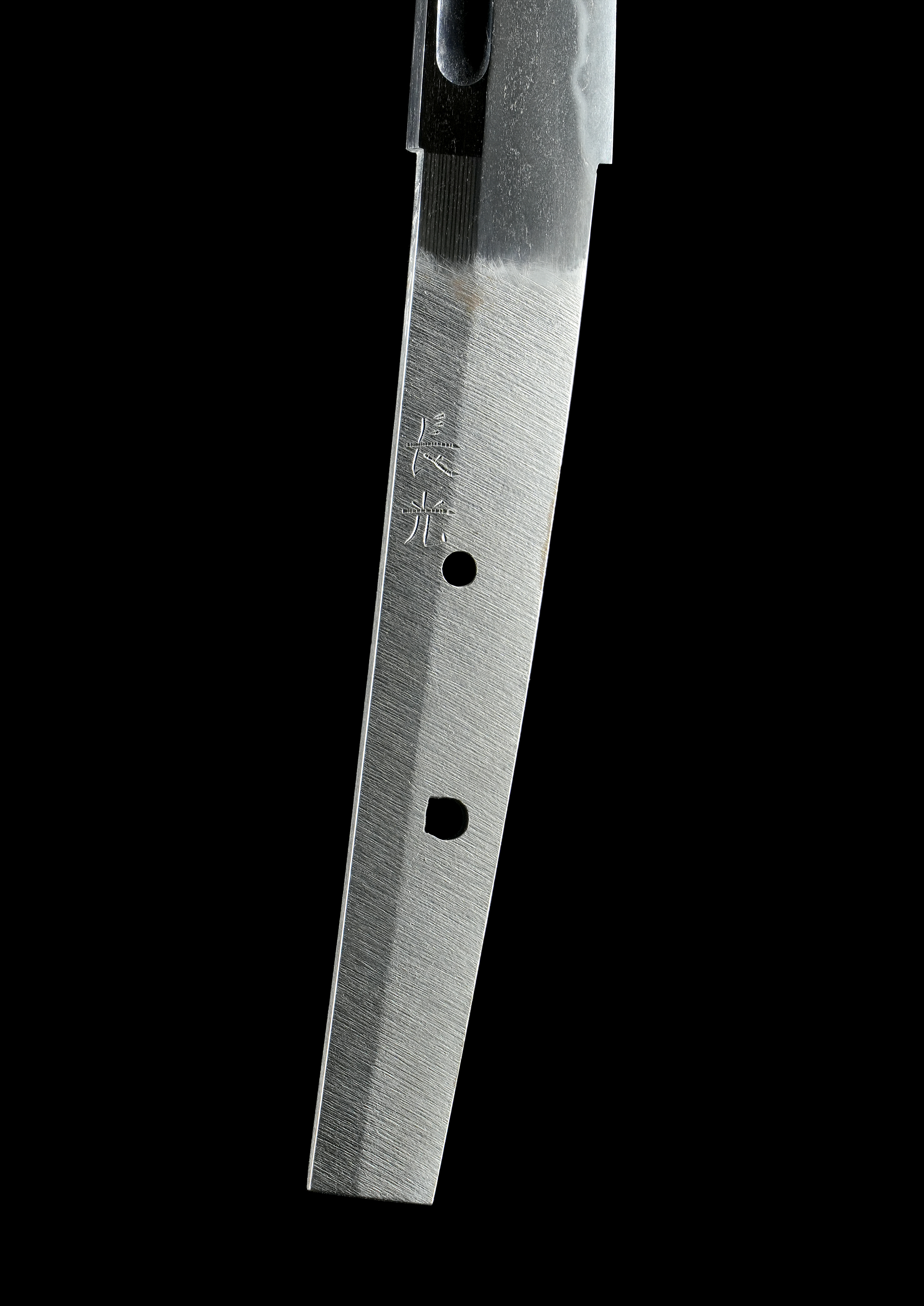
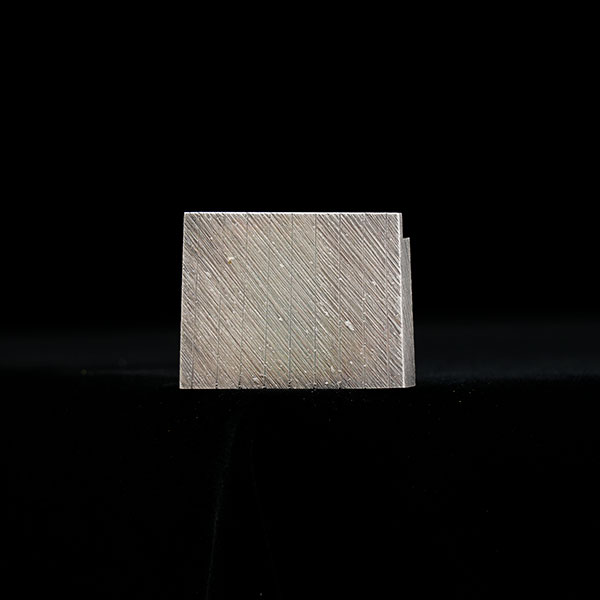
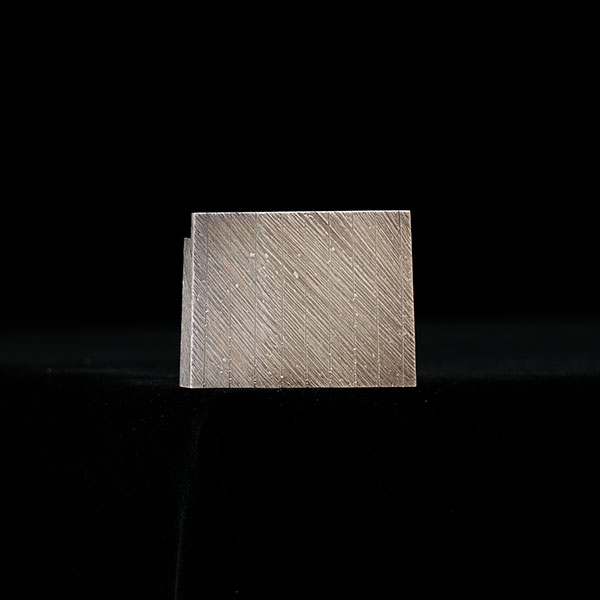
The honka of the Daihannya Nagamitsu has a nagasa of 73.6 cm. Sori of 3.0 cm. Tsukurikomi is shinogi-zukuri, iori-mune. The sugata has high koshi-zori, and the kissaki is a chu-kissaki that is clogged, becoming ikubi. The jitetsu is a tight ko-itame hada with fine ji-nie and midare-utsuri appearing. The hamon is primarily choji-midare with variations in height, mixed with o-choji and gunome, with many ashi and yo, and kinsuji entering in places; overall the nioiguchi is bright. The boshi is midare-komi with the tip returning in ko-maru. Horimono are bo-hi on both sides with maru-dome. The nakago is ubu, with the tip slightly cut. Yasurime are katte-sagari. Two mekugi-ana. There is a two-character mei "Nagamitsu" on the haki-omote.
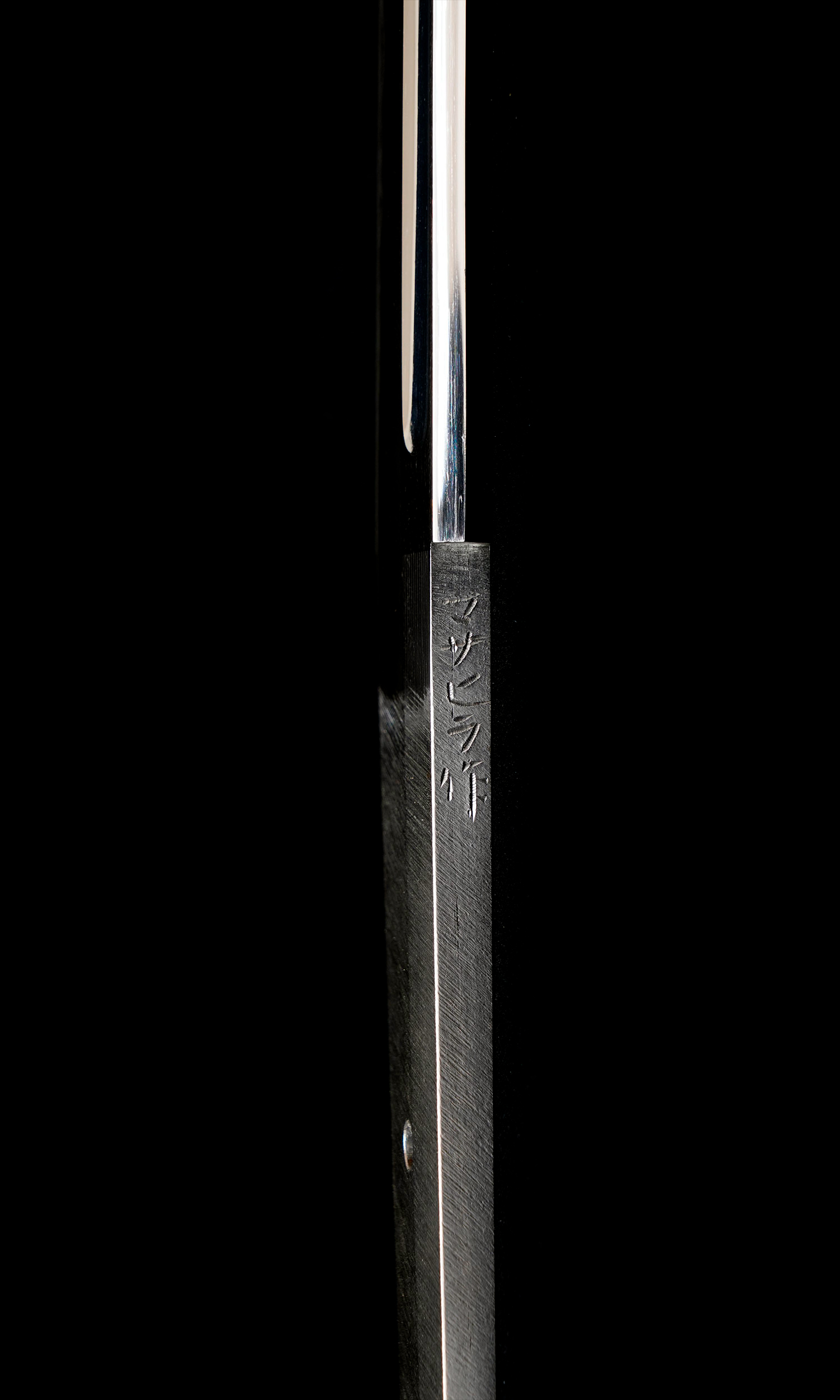
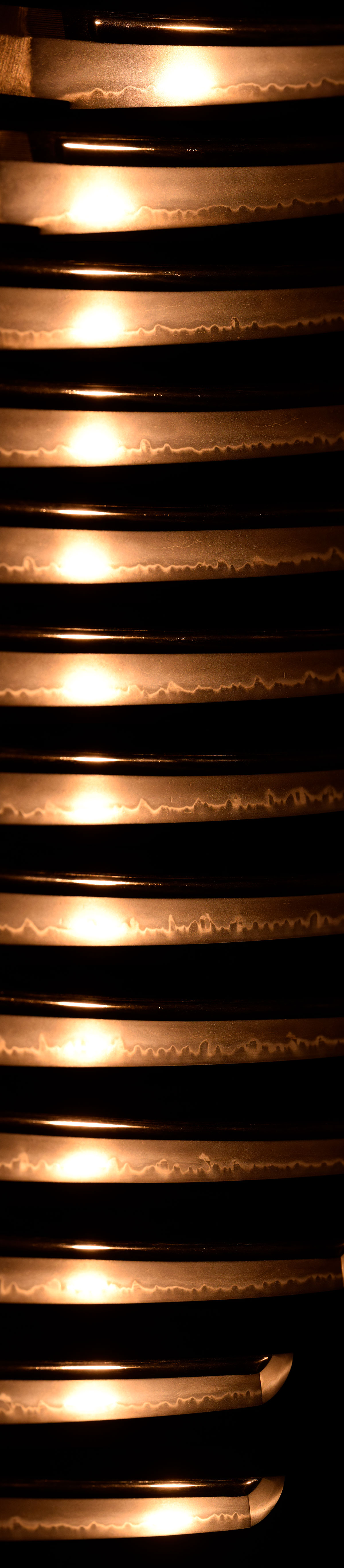
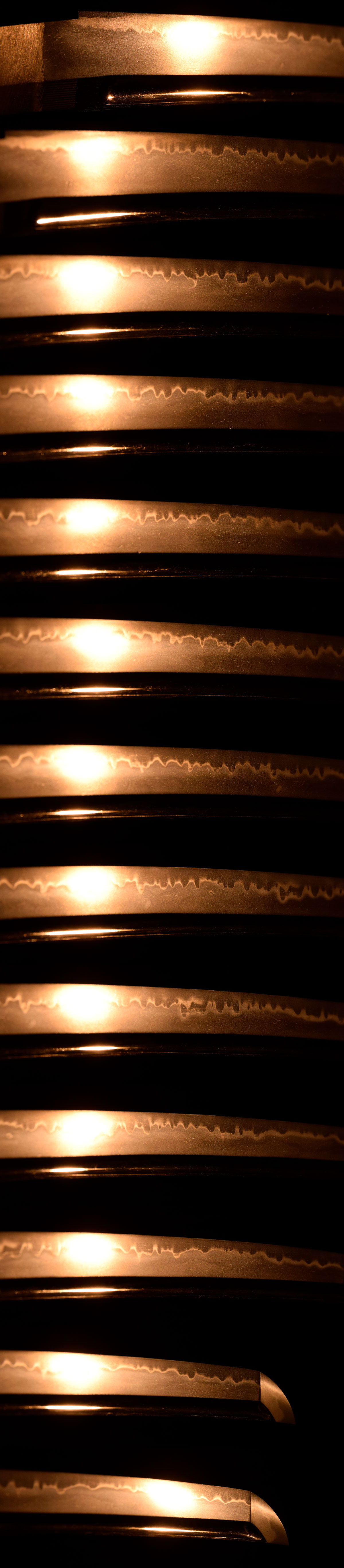
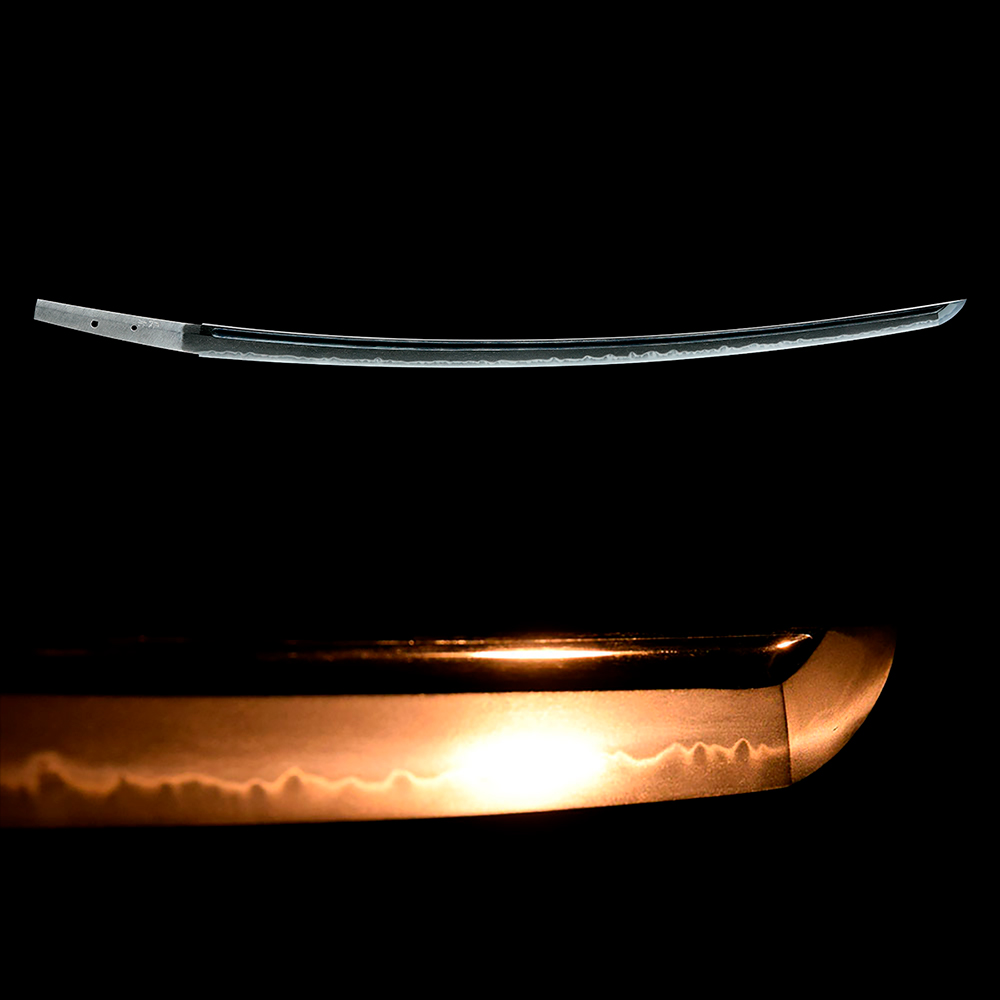
This tachi is a work by the contemporary master smith Fujiyasu Masahira, a leading figure in the reproduction of koto, and is a utsushi of the Daihannya Nagamitsu. The sugata and measurements resemble the honka; although the hada appears prominent in the published photographs, when viewed with the naked eye, the jitetsu is well-forged ko-itame and tight, with fine ji-nie and a faint utsuri appearing. The hamon is primarily a choji-midare with variations in height and a bright, clear nioiguchi, mixed with o-choji and gunome; within the ha, there are ashi, yo, and kinsuji, and the boshi is midare-komi returning in ko-maru just like the honka.
While many contemporary swordsmiths artificially bake the hamon composition using a sketching method from an oshigata during the tsuchidori process, smith Masahira bakes a hamon characteristic of the Daihannya Nagamitsu through his method of forging the jitetsu and natural tsuchi-oki, using his own skill, flame, and water. Therefore, from the eyes of someone who insists on the ha-dori composition being the exact same shape as the honka, it might feel insufficient as a utsushi, but from the eyes of a connoisseur of the sword hobby, it is a workmanship that would make experts groan, wondering if it is a kageuchi tachi of the Daihannya Nagamitsu.
In Masahira's works, it is almost a given that forging flaws (kizu) appear, but it is no exaggeration to say that this work is a masterpiece with almost no forging flaws.
Because our shop's photography techniques cannot fully express the high quality of this tachi, it is a superior item that we would certainly like you to take in hand and truly experience its quality and the high level of reproduction.
Machine translation from the shop's Japanese · may contain errors ·
Reiwa 2 (2020) The early years Reiwa era
This is a utsushi of the National Treasure "Daihannya Nagamitsu" held by the Tokyo National Museum.
The Daihannya Nagamitsu is a tachi made by Bizen Nagamitsu; because it was valued at six hundred kan in Eiraku-sen coins—an extraordinary price for the Muromachi period—it gained the nickname "Daihannya" after the six hundred volumes of the Daihannya-kyo sutra.
Originally in the possession of the Muromachi Shogun Yoshiteru, it was also called the Kotora no Tachi, but when Yoshiteru was attacked and killed by Matsunaga Hisahide and the Miyoshi Sanninshu on May 19, Eiroku 8 (1565), it came into the possession of Miyoshi Shimotsuke-no-kami Masayasu Nyudo Kensai (one theory also suggests Miyoshi Nagayoshi).
Later, it must have come into the possession of Oda Nobunaga after Kensai and the Miyoshi clan attacked Shogun Yoshiaki, who had returned to Kyoto with Nobunaga's support, in the first month of Eiroku 12 (1569) and were instead defeated.
In June, Genki 1 (1570), during the Battle of Anegawa, Nobunaga presented the Daihannya Nagamitsu to Tokugawa Ieyasu in gratitude for his reinforcements. Okudaira Nobumasa, along with his father Sadano, participated in the Battle of Anegawa in Goshu in June, Genki 1 (1570) as part of Tokugawa Ieyasu's army, but eventually sided with Takeda Shingen and sent his younger brother Senmaru as a hostage. When Shingen died suddenly in April, Tensho 1 (1573), Ieyasu began an attack on Nagashino Castle defended by Suganuma Masasada in July, while simultaneously persuading his former retainer Okudaira Nobumasa to defect back to the Ieyasu side on the condition of an engagement to Ieyasu's 14-year-old eldest daughter, Kamehime. While he wept over the tragic fate of his younger brother Senmaru being crucified, Nobumasa was blessed with the good fortune of being appointed the lord of Nagashino Castle.
To reward Okudaira Nobumasa's merit in holding Nagashino Castle during the Battle of Nagashino, in July, Genki 4 (1576), Ieyasu married his daughter Kamehime to Nobumasa, increased his territory in Totomi (Aichi Prefecture), and gave the Daihannya Nagamitsu to Nobumasa, establishing the foundation of the Okudaira family.
The Daihannya Nagamitsu was inherited by Nobumasa's third son, Okudaira Settsu-no-kami Tadamasa, who became the adopted son of Suganuma Sadatoshi, the lord of the 200,000 koku Yoshii Domain in Kozuke Province (Yoshii-machi, Tano-gun, Gunma Prefecture), and was passed down to his legitimate son, Okudaira Hida-no-kami Tadataka; however, Tadataka died young at age 25 and his son Umu also died in childhood at age 4, so the Suganuma family line ended. Therefore, the Daihannya Nagamitsu was taken over by Tadamasa's younger brother, Matsudaira Shimousa-no-kami Tadaaki. Since Tadaaki's mother was also Ieyasu's eldest daughter, he became Ieyasu's adopted son and was given the Matsudaira surname; in his later years, he became the lord of the 180,000 koku Himeji Domain in Banshu (Hyogo Prefecture), and his descendants reached the Meiji era as lords of the Oshi Domain in Bushu (Gyoda City, Saitama Prefecture).
Afterward, the Daihannya Nagamitsu left the family in the early years of the Taisho era and passed into the hands of Yamashita Kamesaburo of Yamashita Steamship; in the Great Kanto Earthquake of Taisho 12, the storehouse collapsed and it was pinned underneath and became bent, but it was repaired by the polisher Yoshikawa Tsunejiro.
In March, Taisho 13, it was offered at the Yamashita family sale and reached a price of 12,000 yen but was withdrawn by the owner; later, it moved into the hands of Count Ito Miyoji and was designated as an Important Cultural Property (former National Treasure) on December 14, Showa 6.
After the death of Count Ito, in 1939 (Showa 14), it was purchased by the former Imperial Household Museum (now Tokyo National Museum), and the purchase price of 60,000 yen presented at that time became a topic of conversation. In 1941 (Showa 16), it was formally transferred from the bereaved family to the Imperial Household Museum, and it has continued to be held by the Tokyo National Museum after the war. On June 9, 1951 (Showa 26), it was designated as a National Treasure (new National Treasure) based on the Law for the Protection of Cultural Properties, and is currently state-owned and held by the Tokyo National Museum.
Osafune Nagamitsu was relatively prolific for a Kamakura period swordsmith and produced many famous blades for the world. Even among Nagamitsu's masterpieces, the "Daihannya Nagamitsu" and "Tsuda Totomi Nagamitsu" are the foremost and are praised as a pair of rivals. Both blades display a grand style that could be mistaken for his father Mitsutada, with magnificent midare based on flamboyant choji that makes them difficult to rank one above the other; however, while the "Tsuda Totomi Nagamitsu" possesses unparalleled soundness but has lost some of its original tachi sugata with funbari due to being suriage, the "Daihannya Nagamitsu" is said to possess ample dignity, maintaining a heroic tachi sugata with an ubu nakago and ikubi kissaki.
The total number of swords designated as National Treasures reaches 122 blades; Soshu Masamune has the most with 9 blades, followed by Osafune Nagamitsu with 6 blades. Among the 6 blades designated as National Treasures, the four blades "Daihannya Nagamitsu," "Tsuda Totomi Nagamitsu," "Sansho Gongen Nagamitsu," and "Tani Tateki Iai" are the representative works of Osafune Nagamitsu and are widely known as the "Four Great Nagamitsu" or "Nagamitsu's Four Masterpieces."
(Reference material: Reprinted, quoted, and excerpted from the Nihonto Taibyakka Jiten)
The honka of the Daihannya Nagamitsu has a nagasa of 73.6 cm. Sori of 3.0 cm. Tsukurikomi is shinogi-zukuri, iori-mune. The sugata has high koshi-zori, and the kissaki is a chu-kissaki that is clogged, becoming ikubi. The jitetsu is a tight ko-itame hada with fine ji-nie and midare-utsuri appearing. The hamon is primarily choji-midare with variations in height, mixed with o-choji and gunome, with many ashi and yo, and kinsuji entering in places; overall the nioiguchi is bright. The boshi is midare-komi with the tip returning in ko-maru. Horimono are bo-hi on both sides with maru-dome. The nakago is ubu, with the tip slightly cut. Yasurime are katte-sagari. Two mekugi-ana. There is a two-character mei "Nagamitsu" on the haki-omote.
This tachi is a work by the contemporary master smith Fujiyasu Masahira, a leading figure in the reproduction of koto, and is a utsushi of the Daihannya Nagamitsu. The sugata and measurements resemble the honka; although the hada appears prominent in the published photographs, when viewed with the naked eye, the jitetsu is well-forged ko-itame and tight, with fine ji-nie and a faint utsuri appearing. The hamon is primarily a choji-midare with variations in height and a bright, clear nioiguchi, mixed with o-choji and gunome; within the ha, there are ashi, yo, and kinsuji, and the boshi is midare-komi returning in ko-maru just like the honka.
While many contemporary swordsmiths artificially bake the hamon composition using a sketching method from an oshigata during the tsuchidori process, smith Masahira bakes a hamon characteristic of the Daihannya Nagamitsu through his method of forging the jitetsu and natural tsuchi-oki, using his own skill, flame, and water. Therefore, from the eyes of someone who insists on the ha-dori composition being the exact same shape as the honka, it might feel insufficient as a utsushi, but from the eyes of a connoisseur of the sword hobby, it is a workmanship that would make experts groan, wondering if it is a kageuchi tachi of the Daihannya Nagamitsu.
In Masahira's works, it is almost a given that forging flaws (kizu) appear, but it is no exaggeration to say that this work is a masterpiece with almost no forging flaws.
Because our shop's photography techniques cannot fully express the high quality of this tachi, it is a superior item that we would certainly like you to take in hand and truly experience its quality and the high level of reproduction.
The twentieth century nearly killed the craft twice: wartime distortion, then the occupation ban. The NBTHK’s founding in 1948 and licensed forging from 1953 rebuilt the sword as an art, crowned by Living National Treasures and the mukansa rank.
We could not find an authenticity certificate on the seller’s listing. Japanese swords and fittings are normally papered by the NBTHK (or the NTHK). Without one, the attribution is the seller’s own assessment and has not been independently verified — treat it with caution and ask the dealer about certification before buying.
As a rule we do not accept returns, except when we have sent a different item from the one ordered or when there is a significant discrepancy between the description and the item. If you wish to return an item, please contact us within 3 days of its arrival and then send it back.

 NihontoWatch