Mukansa sword smith.
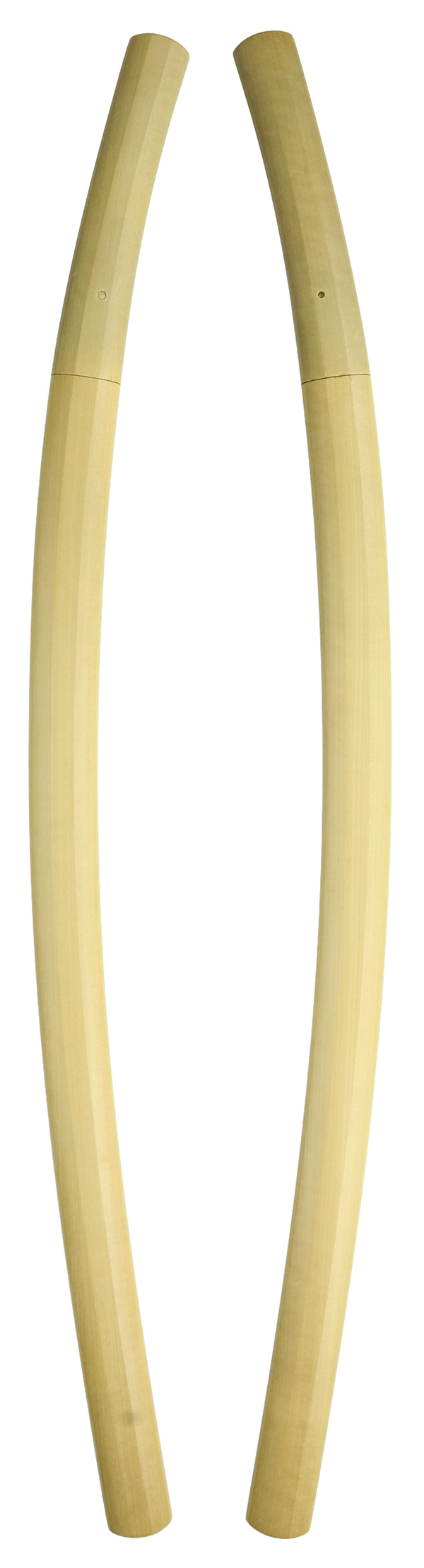
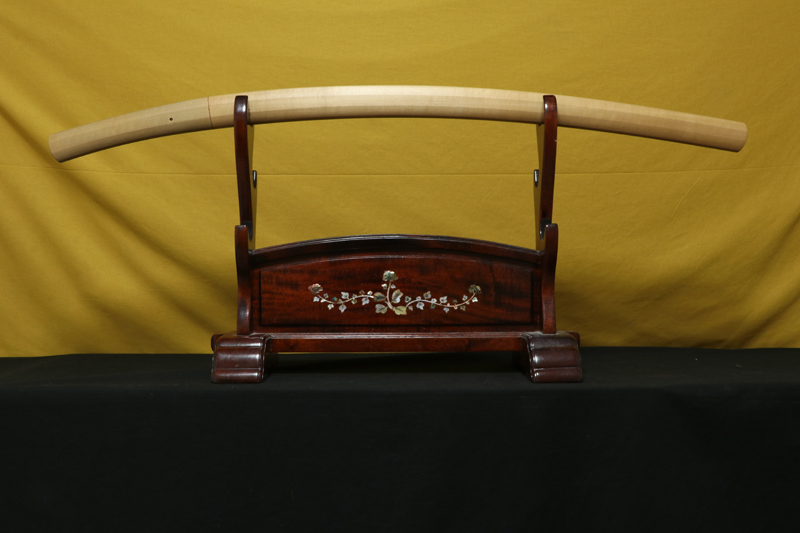
Modern sword Chikuzen ju Seto Yoshihiro saku with Shirosaya.
無鑑査刀匠・瀬戸吉廣の最高傑作といえる、一文字写しの太刀である。
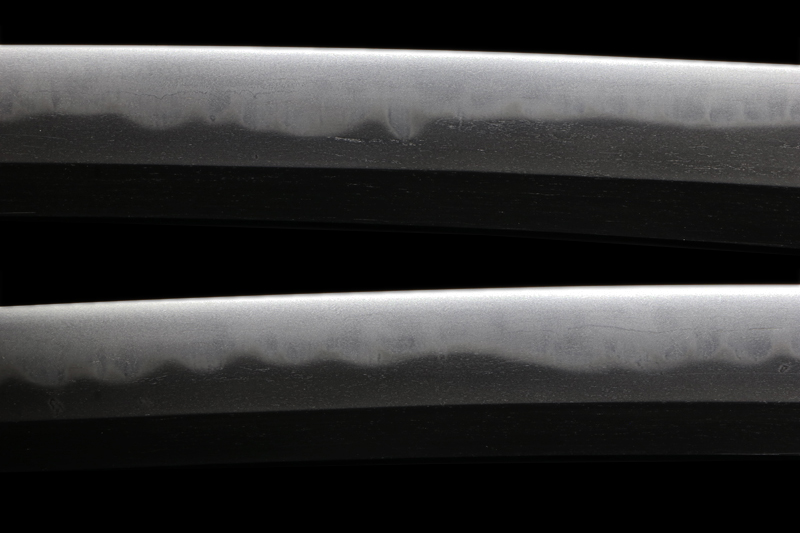
乱れ映りが立つ精緻な地鉄に、焼き幅に高低差をつけた華やかで躍動感のある重花丁子刃を焼いた、素晴らしい太刀である。
This is a tachi in the style of Ichimonji, which may be regarded as one of the finest masterpieces by the Mukansa swordsmith Seto Yoshihiro.
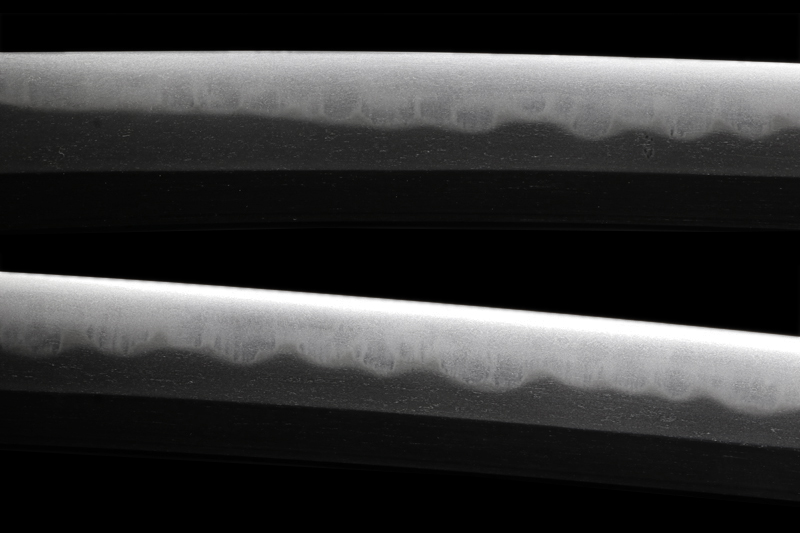
It is a superb tachi, featuring a finely forged jihada with vivid midare-utsuri, and a brilliant, dynamic juka-choji hamon with pronounced variations in the width of the hardened edge.
「刀姿 sword figure」
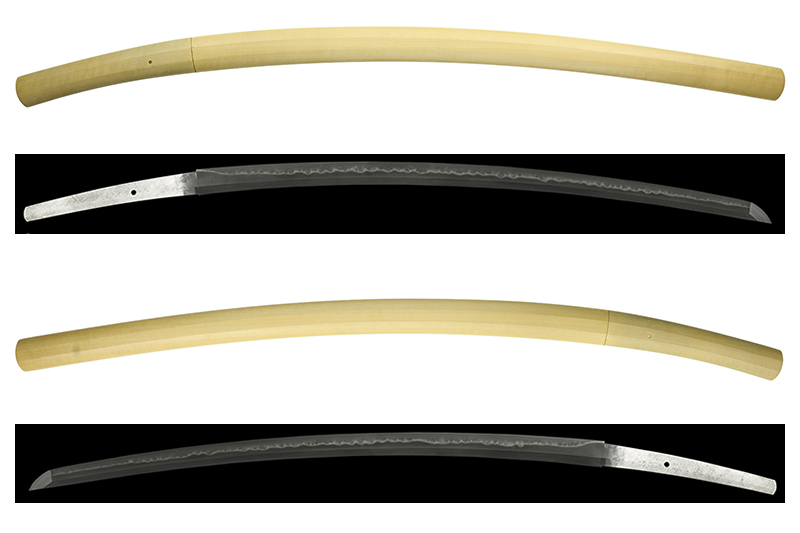
鎬造り庵棟、身幅太く重尋常、腰反り小鋒。茎は生で鑢目は筋違い、茎尻は栗尻。
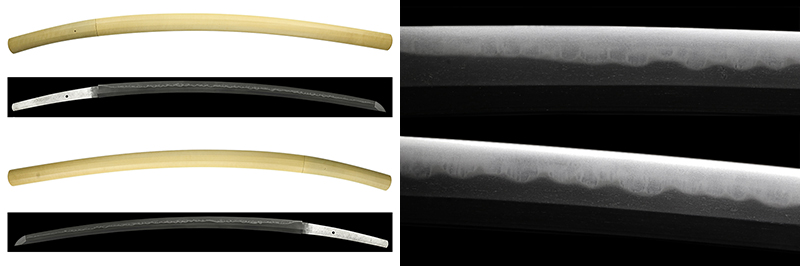
Shinogi-zukuri, iori-mune; wide blade, standard thickness, koshi-zori, and ko-kissaki. The nakago is ubu with sujikai-yasurime, and the nakago-jiri is kuri-jiri.
「地鉄 jigane」
地鉄は板目肌が良く練れて丁子刃文に沿うように乱れ映りが立つ。
The jigane is a well-kneaded itame-hada, with a midare-utsuri that appears to follow along the chōji hamon.
「刃紋 hamon」
刃紋は重花丁子刃で、互の目丁子乱れ、大房丁子、小丁子が複式に入り乱れる、刃中は足と葉が盛んに働いて砂流し掛かり金線が入る。帽子は乱れ込み先尖り心で小丸へと返る。
「特徴 detailed」
筑前住吉廣作、本名は瀬戸吉廣。昭和20年、福岡県に生まれる。昭和46年、25歳で隅谷正峯に師事し、昭和52年に作刀承認を受けて独立した。新作名刀展において、寒山賞・日本美術刀剣保存協会会長賞・文化庁長官賞などの特賞を連続受賞し、平成8年には刀匠の最高位である無鑑査に認定された。
現在は福岡県前原市にて、一文字の再現に挑戦し続ける名匠の一人として、「刀はどうあるべきか」を常に念頭に置き、備前伝の豪壮華麗な古名刀の再現に取り組んでいる。その作域により、無鑑査刀匠としての地位を揺るぎないものとしている。
本作は、無鑑査に認定された後の平成14年に制作された作品である。鎌倉時代の古名刀である福岡一文字を再現した太刀姿を示し、小板目肌が精緻によく詰み、刃文は高低差のある重花丁子刃をすこぶる明るく焼き上げている。
この素晴らしい太刀を、ぜひコレクションにお加えいただきたい。
Chikuzen ju Seto Yoshihiro saku, whose real name is Seto Yoshihiro, was born in Fukuoka Prefecture in 1945. In 1971, at the age of 25, he became a pupil of Sumiya Masamine, and in 1977, after receiving official approval to make swords, he became independent. At the New Masterpiece Sword Exhibition, he won a succession of special prizes, including the Kanzan Prize, the Chairman’s Prize of the Nihon Bijutsu Token Hozon Kyokai, and the Commissioner for Cultural Affairs Award. In 1996, he was certified as Mukansa, the highest rank for a swordsmith.
Today, in Maebaru City, Fukuoka Prefecture, he continues to challenge himself in recreating the Ichimonji style. As one of the master swordsmiths devoted to this pursuit, he constantly keeps in mind the question of what a sword should be, and works to reproduce the magnificent and elegant classical masterpieces of the Bizen tradition. Through this body of work, he has firmly established his position as a Mukansa swordsmith.
This work was made in 2002, after he had been certified as Mukansa. It displays a magnificent tachi form that recreates the Fukuoka Ichimonji, one of the famed classical masterpieces of the Kamakura period. The jihada shows a finely forged and tightly packed ko-itame grain, while the hamon is a brilliantly tempered, undulating juka-choji pattern with pronounced variations in height.
We sincerely invite you to add this superb tachi to your collection.
「拵 Koshirae」
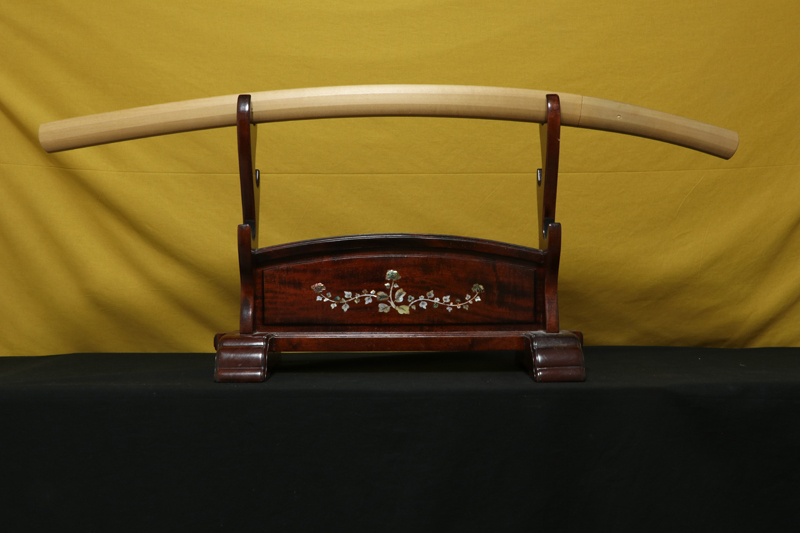
白鞘 Shirosaya
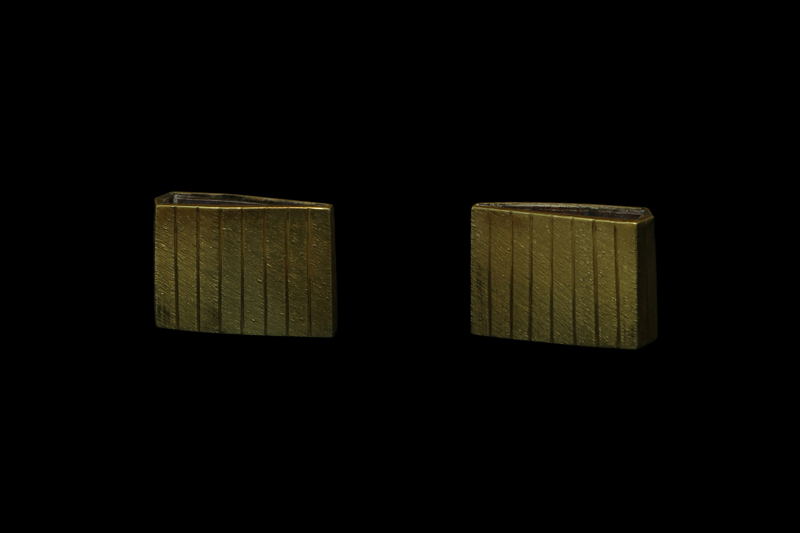
ハバキ(habaki) :素銅地金着一重の太刀鎺。A tachi habaki made of unrefined copper covered in gold foil, single-layer.
「刀剣の状態 condition of blade」
研:良好です。
傷:傷は有りません。


 NihontoWatch