Mukansa sword smith.
Modern sword Chikuzen ju Seto Yoshihiro saku with Shirosaya.
This is a masterpiece by the Mukansa swordsmith Seto Yoshihiro, a tachi in the style of an Ichimonji copy.
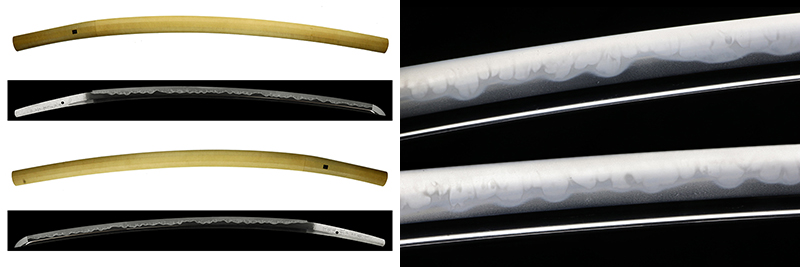
It is a wonderful tachi, featuring an exquisite jitetsu where midare-utsuri stands out, and a gorgeous, dynamic jukachoji hamon that reaches the shinogi.
This is Mukansa swordsmith Seto Yoshihiro’s masterpiece, a tachi of the Ichimonji copy.
This is a wonderful tachi , with its exquisite Jitetsu with a random reflection, and the gorgeous and dynamic Jukachoji-ha that reaches all the way to Shinogi.
"sword figure"
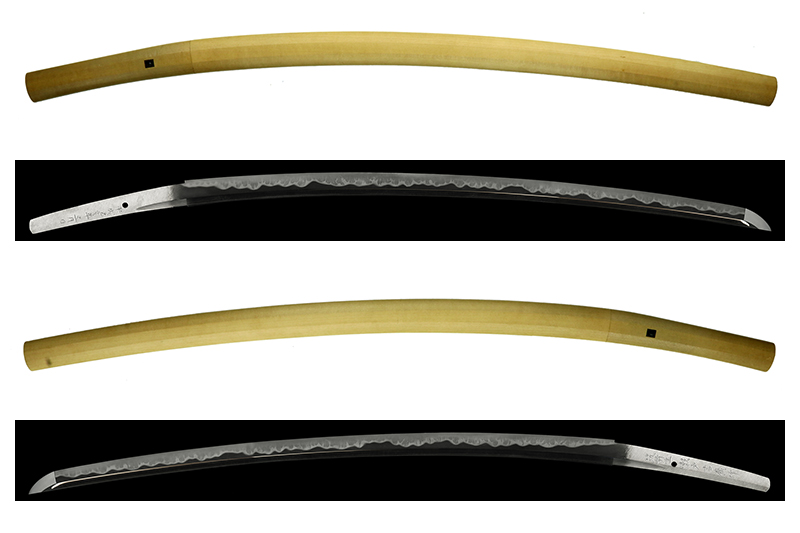
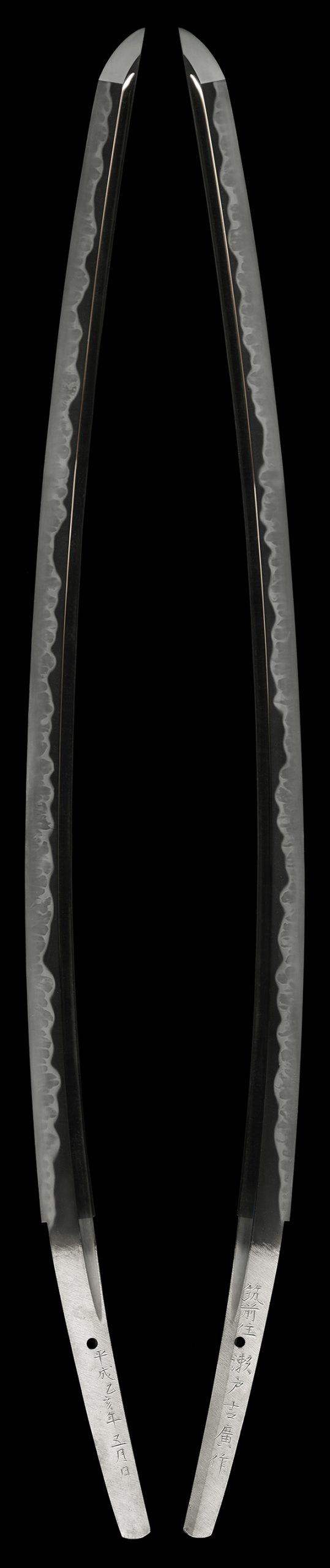
Shinogi-zukuri, iori-mune, wide mihaba and standard kasane, koshi-zori, ko-kissaki. The nakago is ubu, the yasurime are sujikai, and the nakago-jiri is kuri-jiri.
"carving"
A bo-hi with kata-chiri is carved, ending in kakinagashi halfway down the nakago.
"jigane"
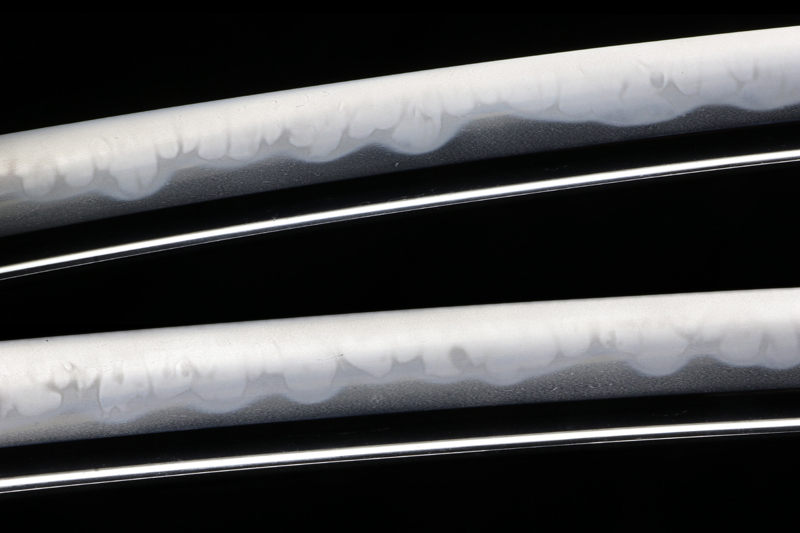
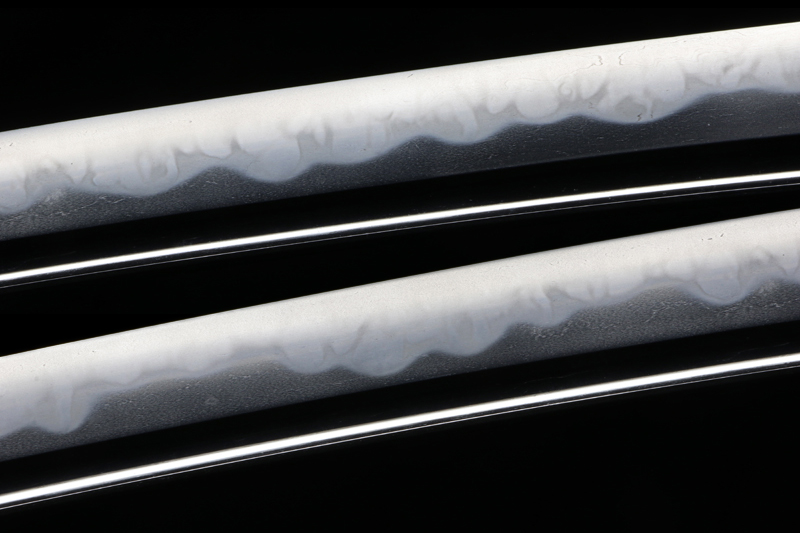
The jigane is a well-kneaded itame-hada, with midare-utsuri appearing as if following the choji hamon.
"hamon"
The hamon is jukachoji, with gunome-choji midare, obusa-choji, and ko-choji mixed in a complex manner; inside the ha, ashi and yo work actively, with sunagashi and kinsen appearing. The boshi is midare-komi, with a slightly pointed tip returning to ko-maru.
"detailed"
Chikuzen ju Yoshihiro saku, real name Seto Yoshihiro, born in Fukuoka Prefecture in Showa 20. In Showa 46 at the age of 25, he apprenticed under Sumitani Masamine. In Showa 52, he received approval for sword making and became independent. At the Shinsaku Meito Ten, he consecutively won special prizes such as the Kanzan Sho, the Nihon Bijutsu Token Hozon Kyokai Chairman's Award, and the Commissioner for Cultural Affairs Award, and in Heisei 8, he was designated as Mukansa, the highest rank for a swordsmith. Currently in Maebaru City, Fukuoka Prefecture, as one of the master smiths who continues to challenge the reproduction of Ichimonji, he always keeps in mind what a sword should be, working on reproducing the grand and magnificent old masterpieces of the Bizen-den, and has made his position as a Mukansa swordsmith unshakable.
This work was made on the eve of his designation as Mukansa; it is a grand tachi figure reproducing the Fukuoka Ichimonji masterpieces of the Kamakura period, with a finely packed ko-itame-hada and a jukachoji hamon with high and low variations fired extremely brightly.
"Koshirae"
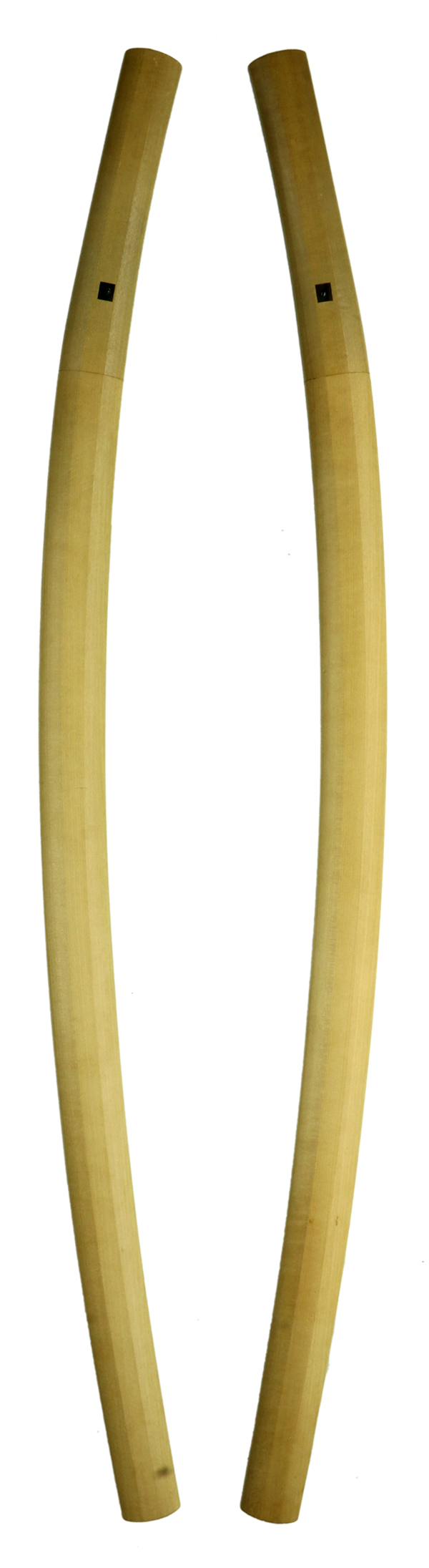
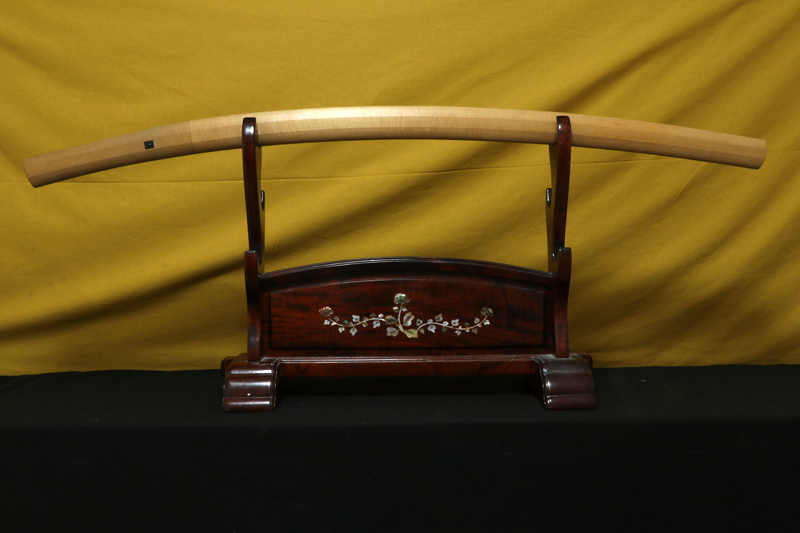
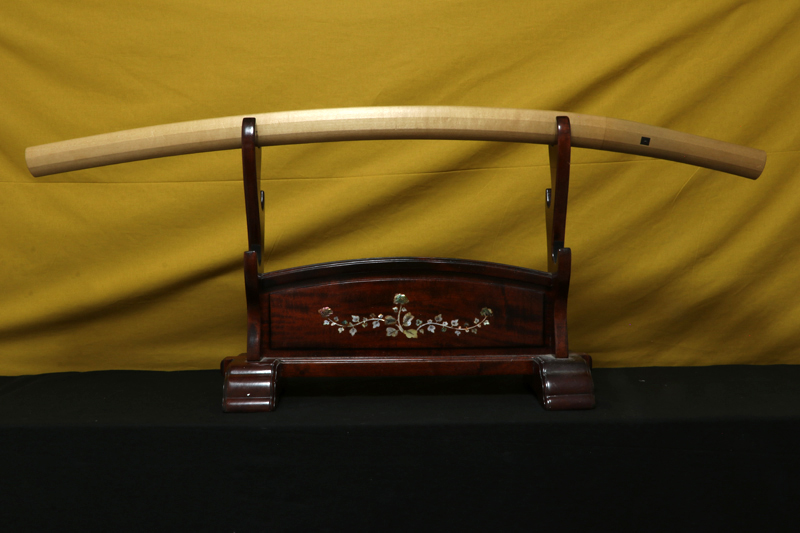
Shirosaya
habaki: Su-akagane-ji kin-paku-niju.
"condition of blade"
Togi: Good.
Kizu: There are no kizu.
Machine translation from the shop's Japanese · may contain errors ·
Mukansa sword smith.
Modern sword Chikuzen ju Seto Yoshihiro saku with Shirosaya.
This is a masterpiece by the Mukansa swordsmith Seto Yoshihiro, a tachi in the style of an Ichimonji copy.
It is a wonderful tachi, featuring an exquisite jitetsu where midare-utsuri stands out, and a gorgeous, dynamic jukachoji hamon that reaches the shinogi.
This is Mukansa swordsmith Seto Yoshihiro’s masterpiece, a tachi of the Ichimonji copy.
This is a wonderful tachi , with its exquisite Jitetsu with a random reflection, and the gorgeous and dynamic Jukachoji-ha that reaches all the way to Shinogi.
"sword figure"
Shinogi-zukuri, iori-mune, wide mihaba and standard kasane, koshi-zori, ko-kissaki. The nakago is ubu, the yasurime are sujikai, and the nakago-jiri is kuri-jiri.
"carving"
A bo-hi with kata-chiri is carved, ending in kakinagashi halfway down the nakago.
"jigane"
The jigane is a well-kneaded itame-hada, with midare-utsuri appearing as if following the choji hamon.
"hamon"
The hamon is jukachoji, with gunome-choji midare, obusa-choji, and ko-choji mixed in a complex manner; inside the ha, ashi and yo work actively, with sunagashi and kinsen appearing. The boshi is midare-komi, with a slightly pointed tip returning to ko-maru.
"detailed"
Chikuzen ju Yoshihiro saku, real name Seto Yoshihiro, born in Fukuoka Prefecture in Showa 20. In Showa 46 at the age of 25, he apprenticed under Sumitani Masamine. In Showa 52, he received approval for sword making and became independent. At the Shinsaku Meito Ten, he consecutively won special prizes such as the Kanzan Sho, the Nihon Bijutsu Token Hozon Kyokai Chairman's Award, and the Commissioner for Cultural Affairs Award, and in Heisei 8, he was designated as Mukansa, the highest rank for a swordsmith. Currently in Maebaru City, Fukuoka Prefecture, as one of the master smiths who continues to challenge the reproduction of Ichimonji, he always keeps in mind what a sword should be, working on reproducing the grand and magnificent old masterpieces of the Bizen-den, and has made his position as a Mukansa swordsmith unshakable.
This work was made on the eve of his designation as Mukansa; it is a grand tachi figure reproducing the Fukuoka Ichimonji masterpieces of the Kamakura period, with a finely packed ko-itame-hada and a jukachoji hamon with high and low variations fired extremely brightly.
"Koshirae"
Shirosaya
habaki: Su-akagane-ji kin-paku-niju.
"condition of blade"
Togi: Good.
Kizu: There are no kizu.
The twentieth century nearly killed the craft twice: wartime distortion, then the occupation ban. The NBTHK’s founding in 1948 and licensed forging from 1953 rebuilt the sword as an art, crowned by Living National Treasures and the mukansa rank.
Within 3 days of the item's arrival, we offer a refund or an exchange. Return shipping and the bank transfer fee for the refund are at the customer's expense.

 NihontoWatch