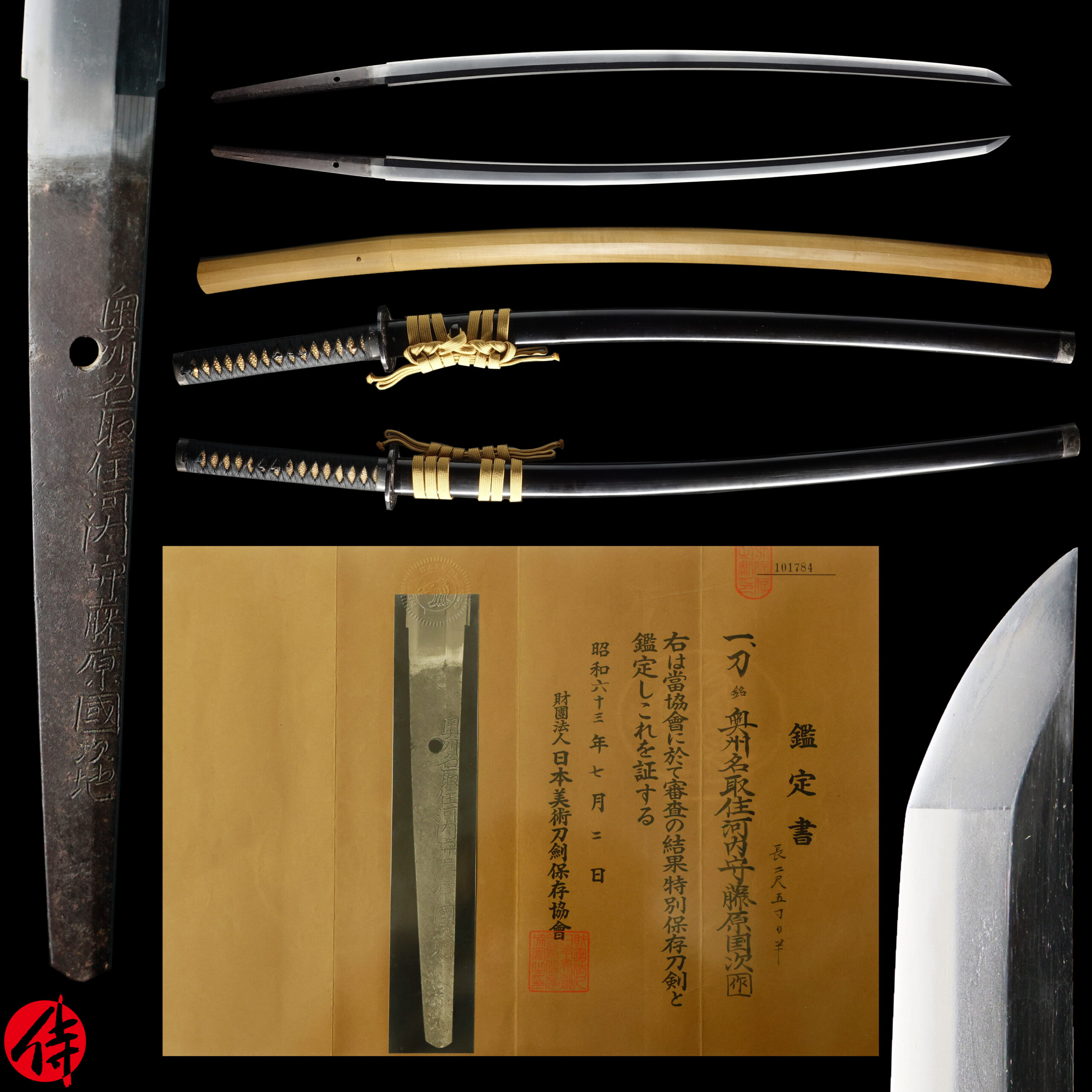
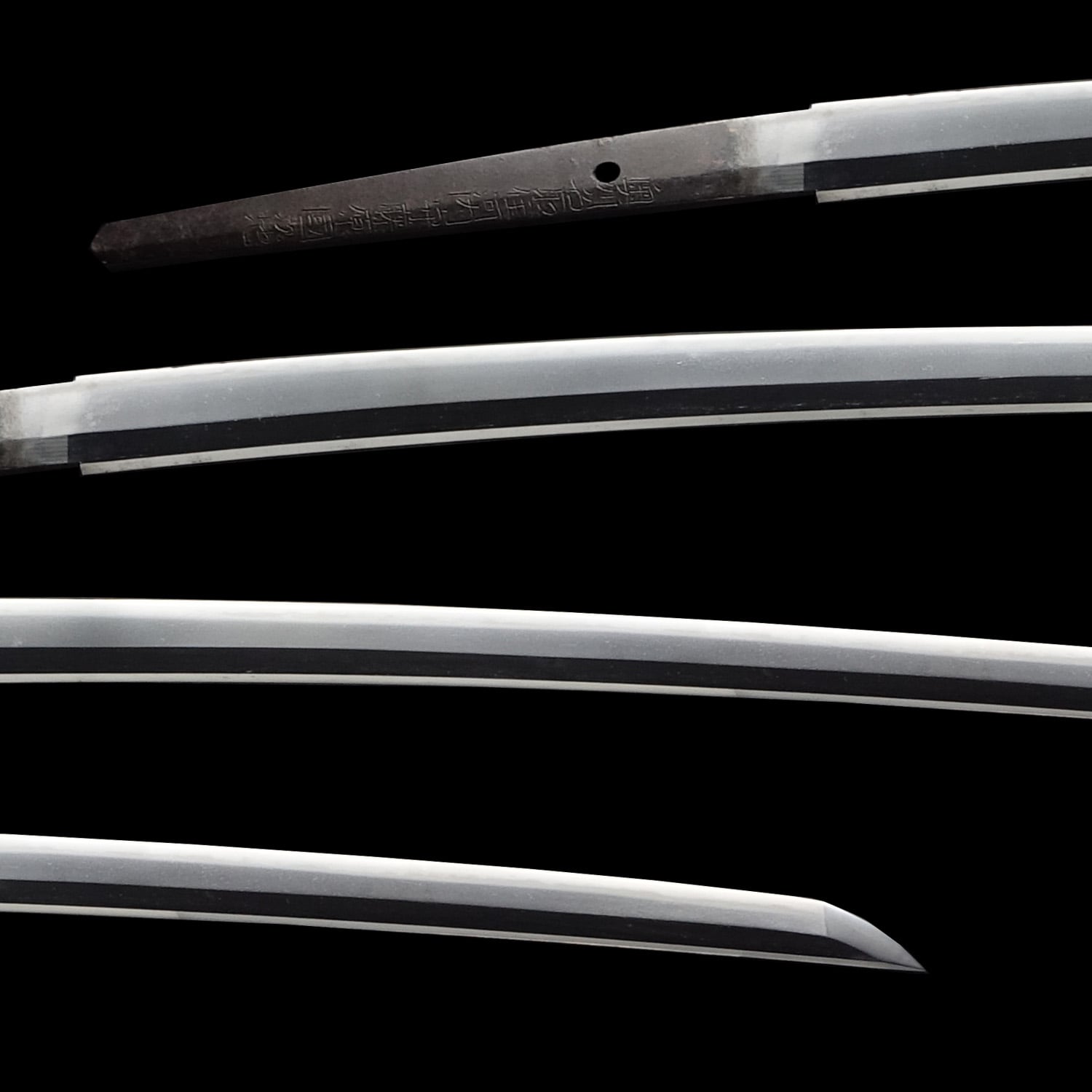
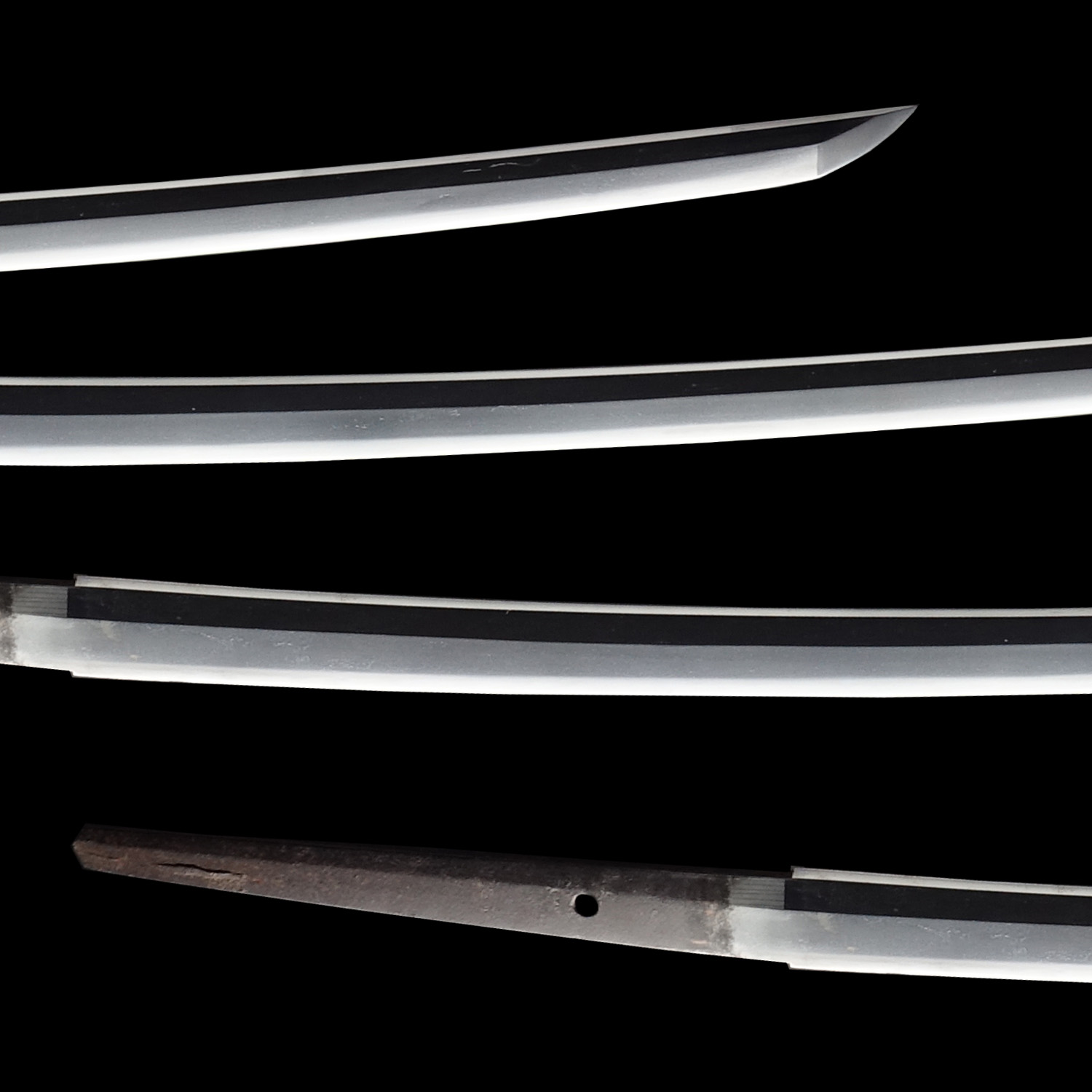
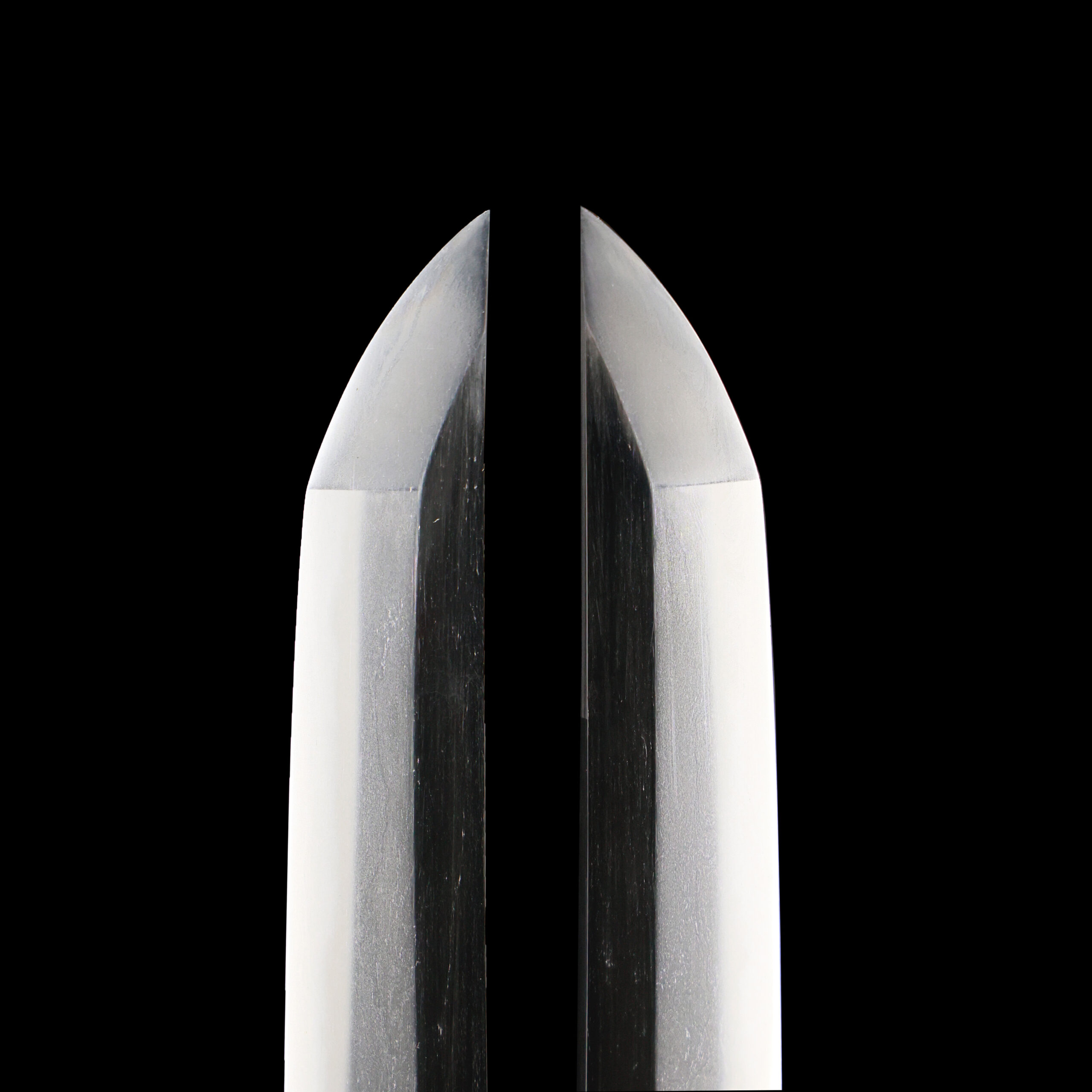
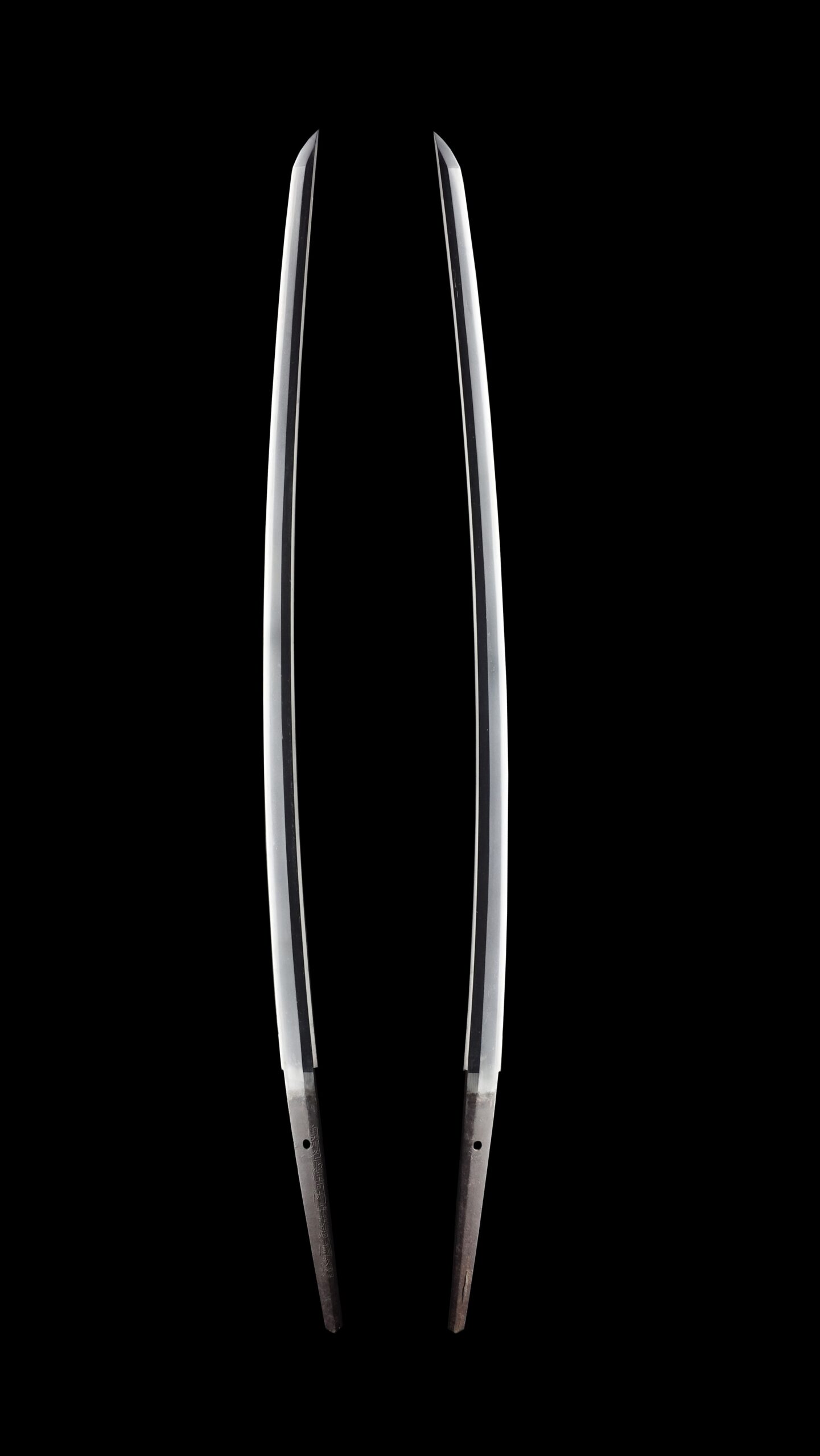
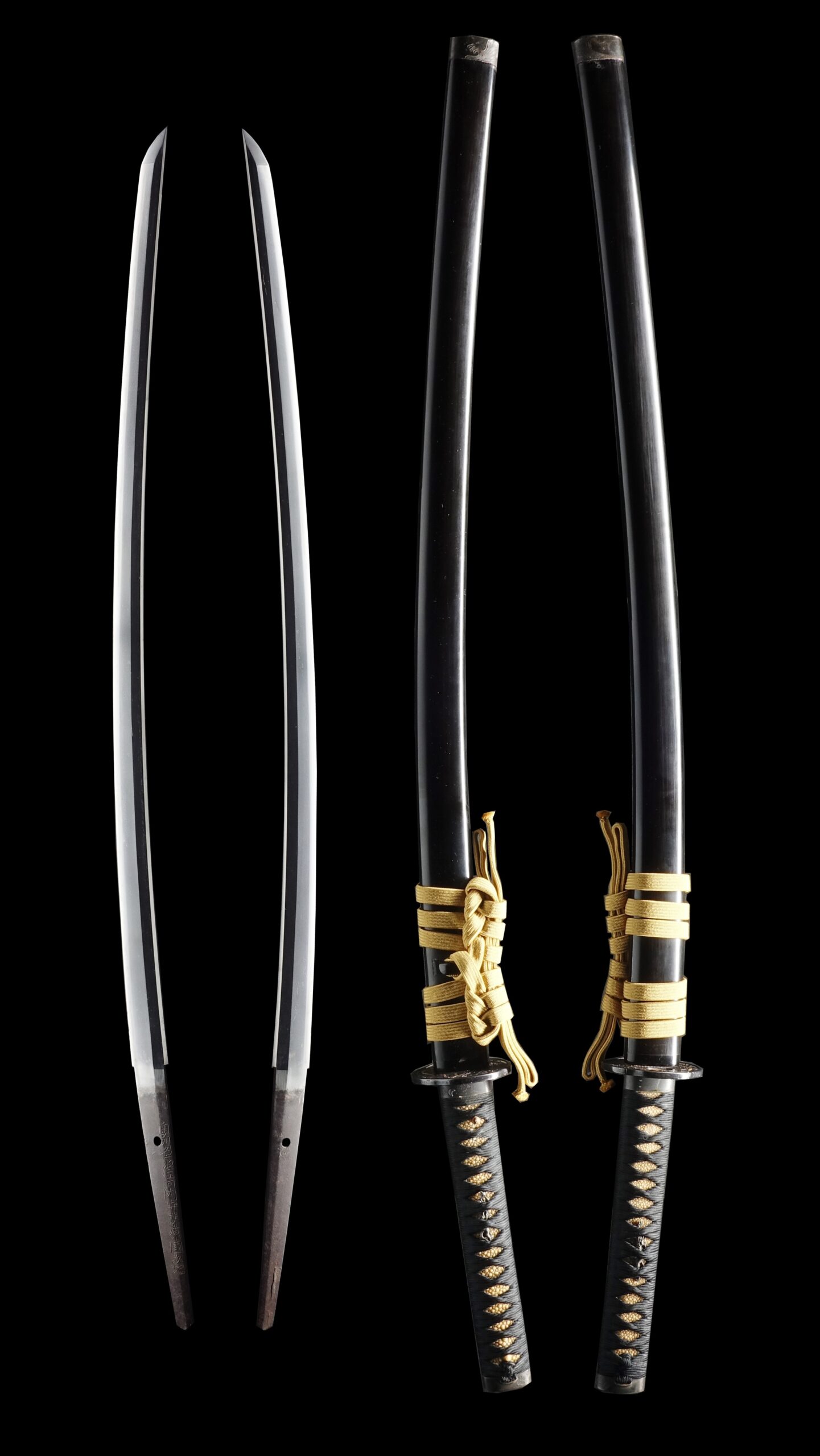
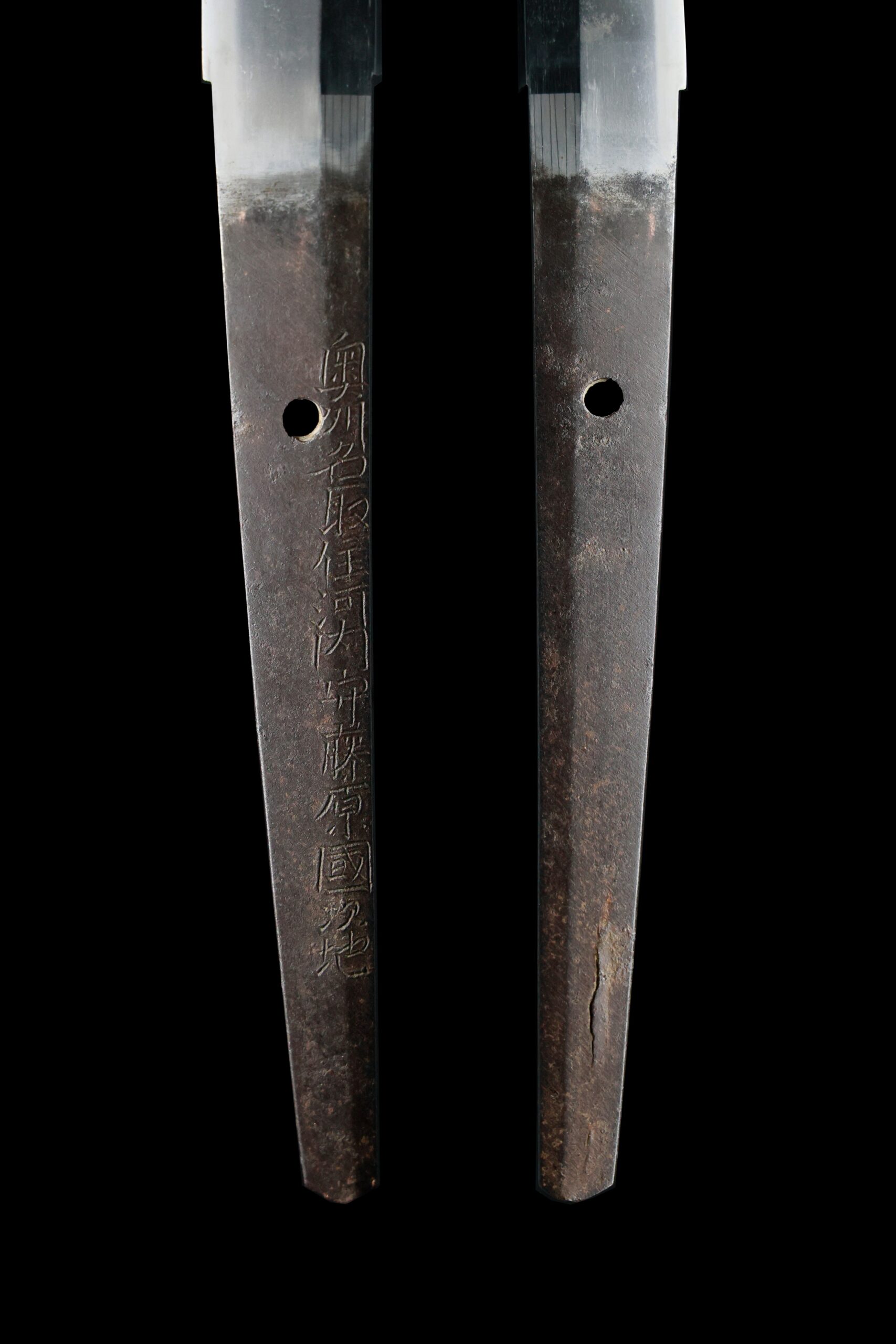
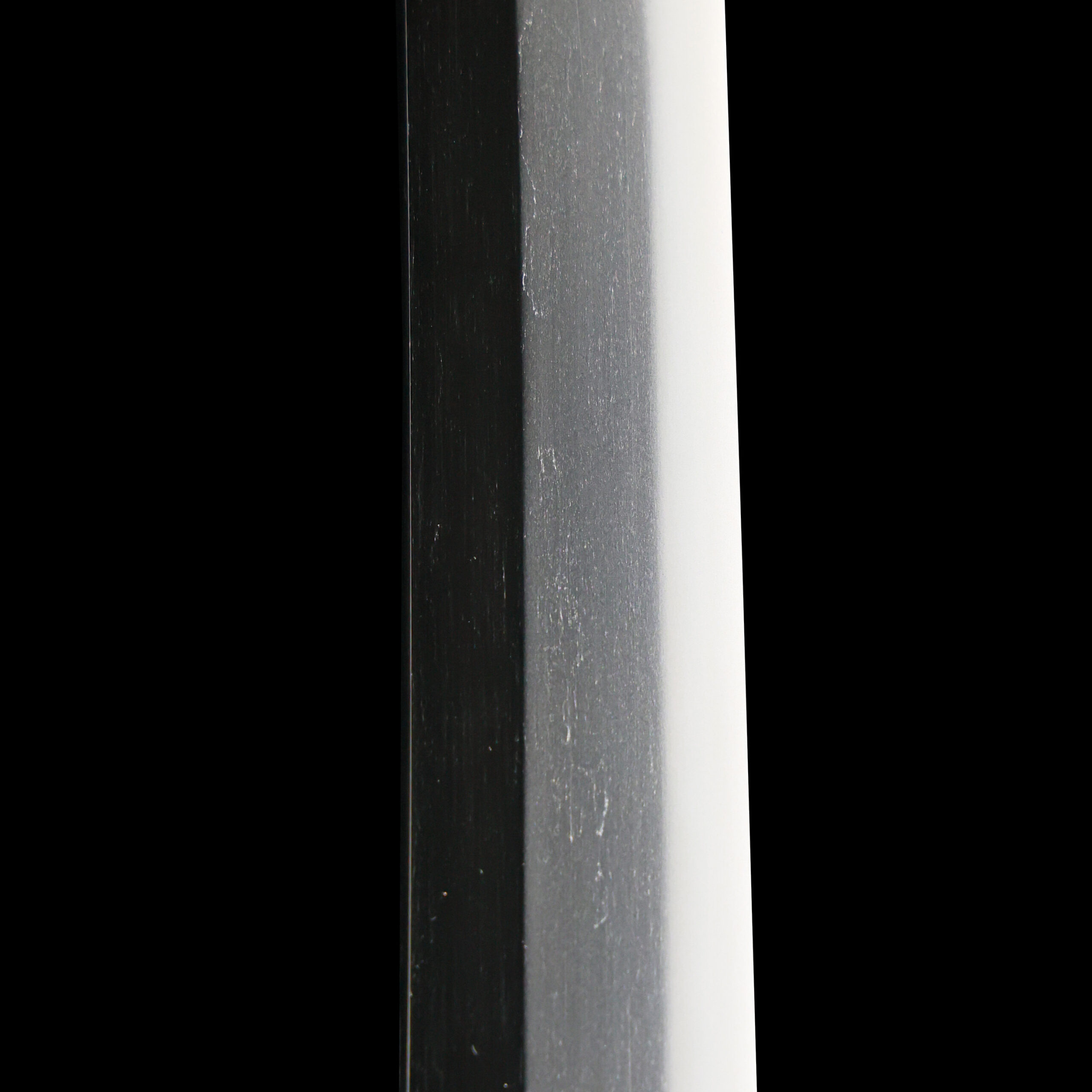
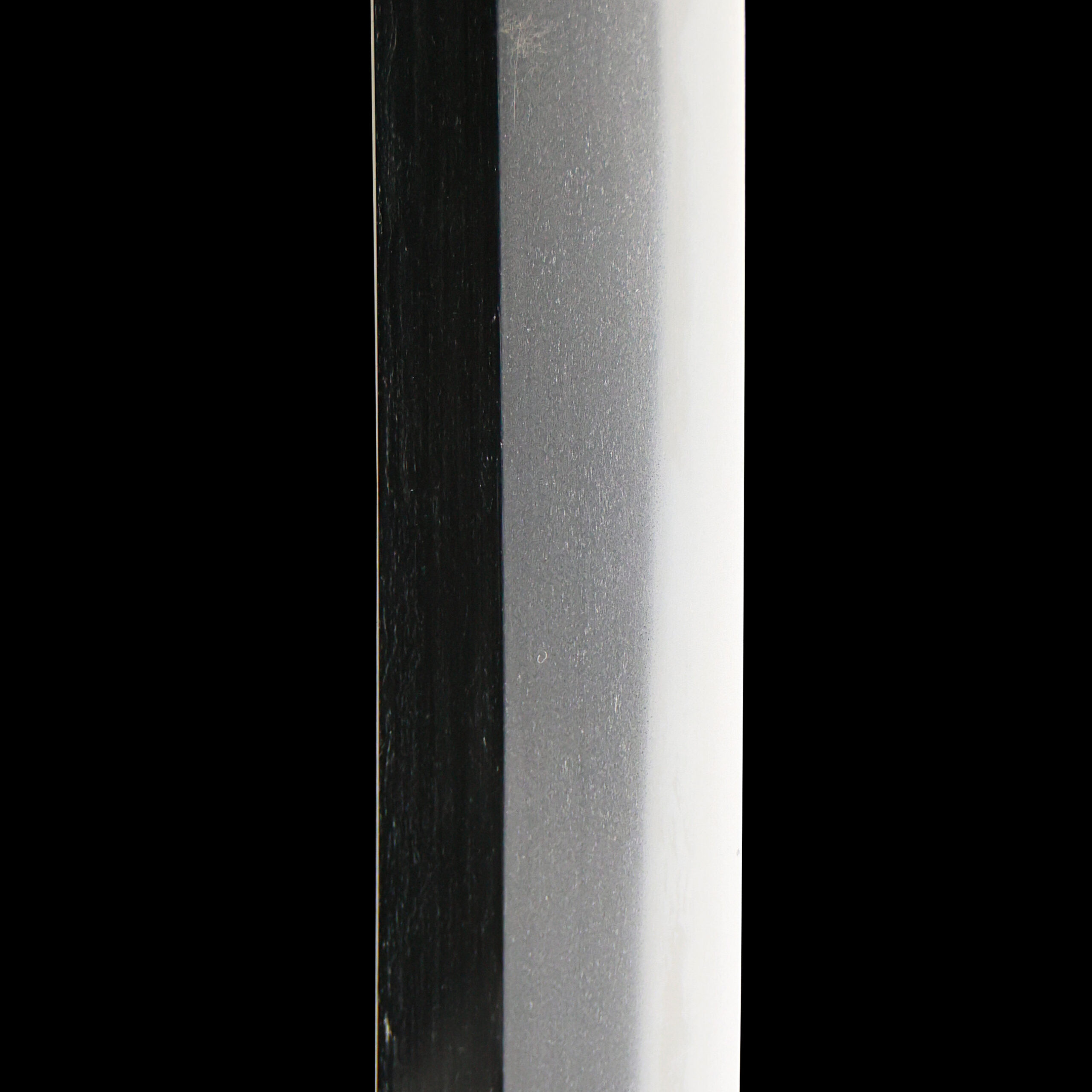
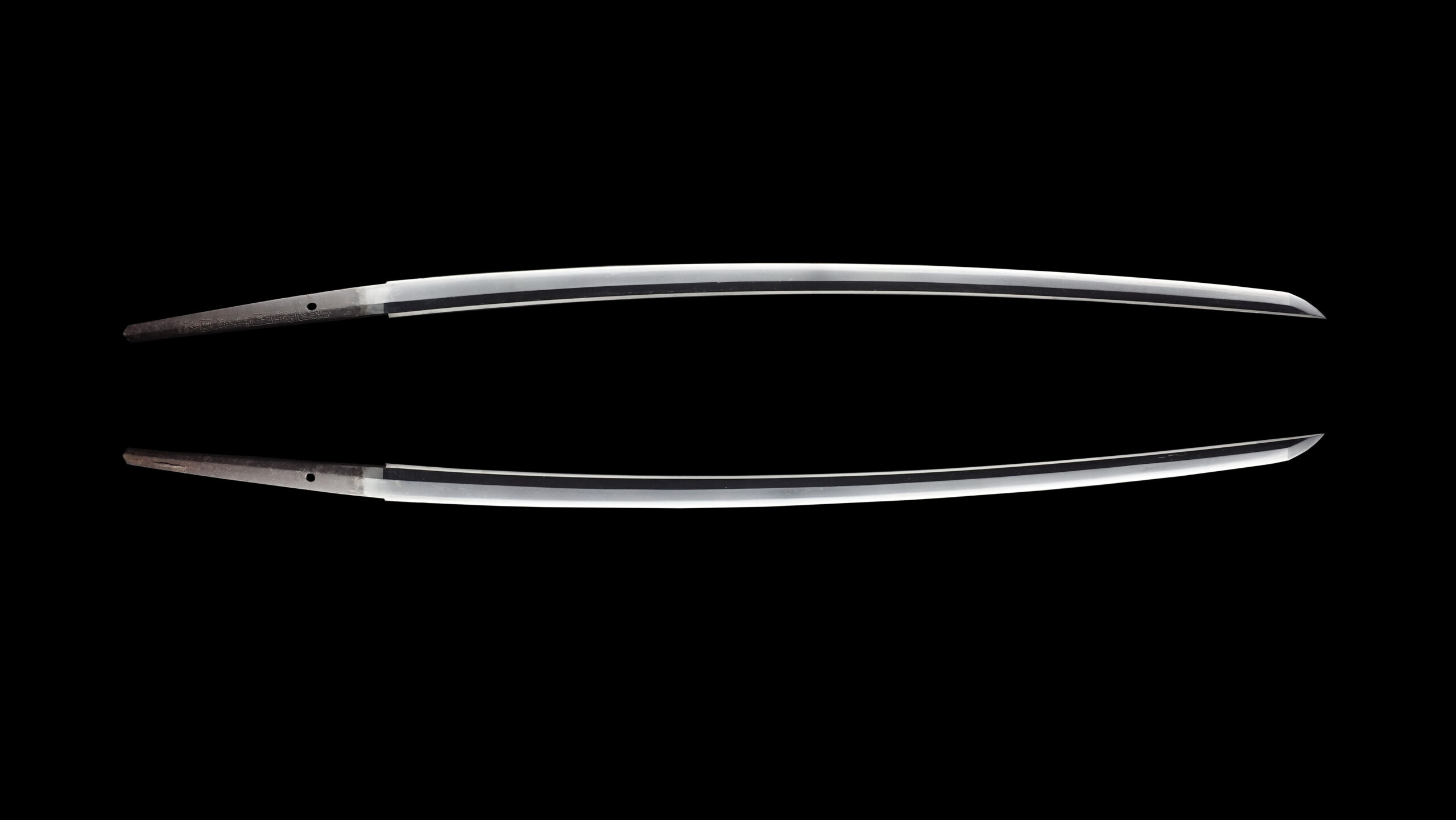
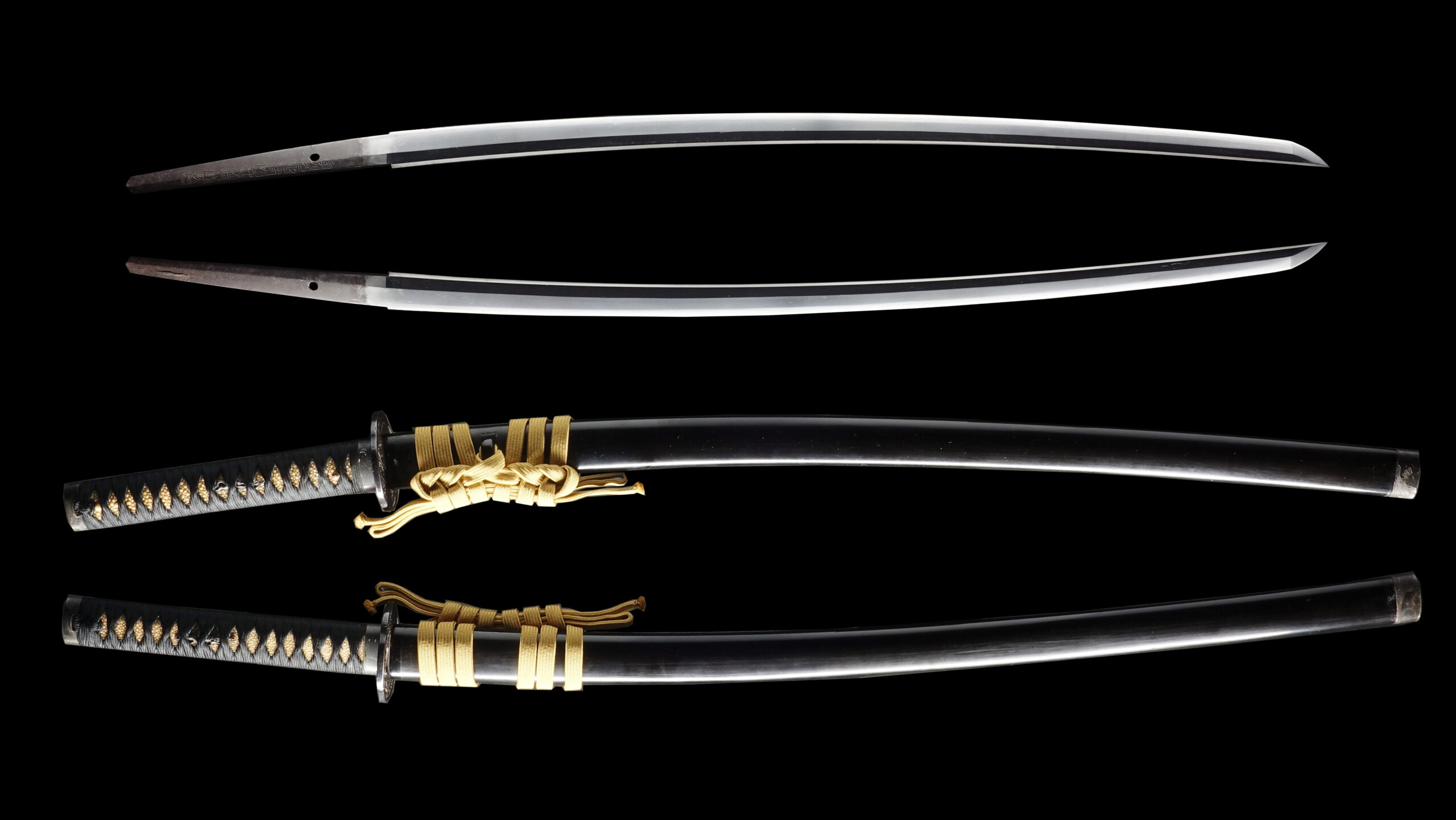
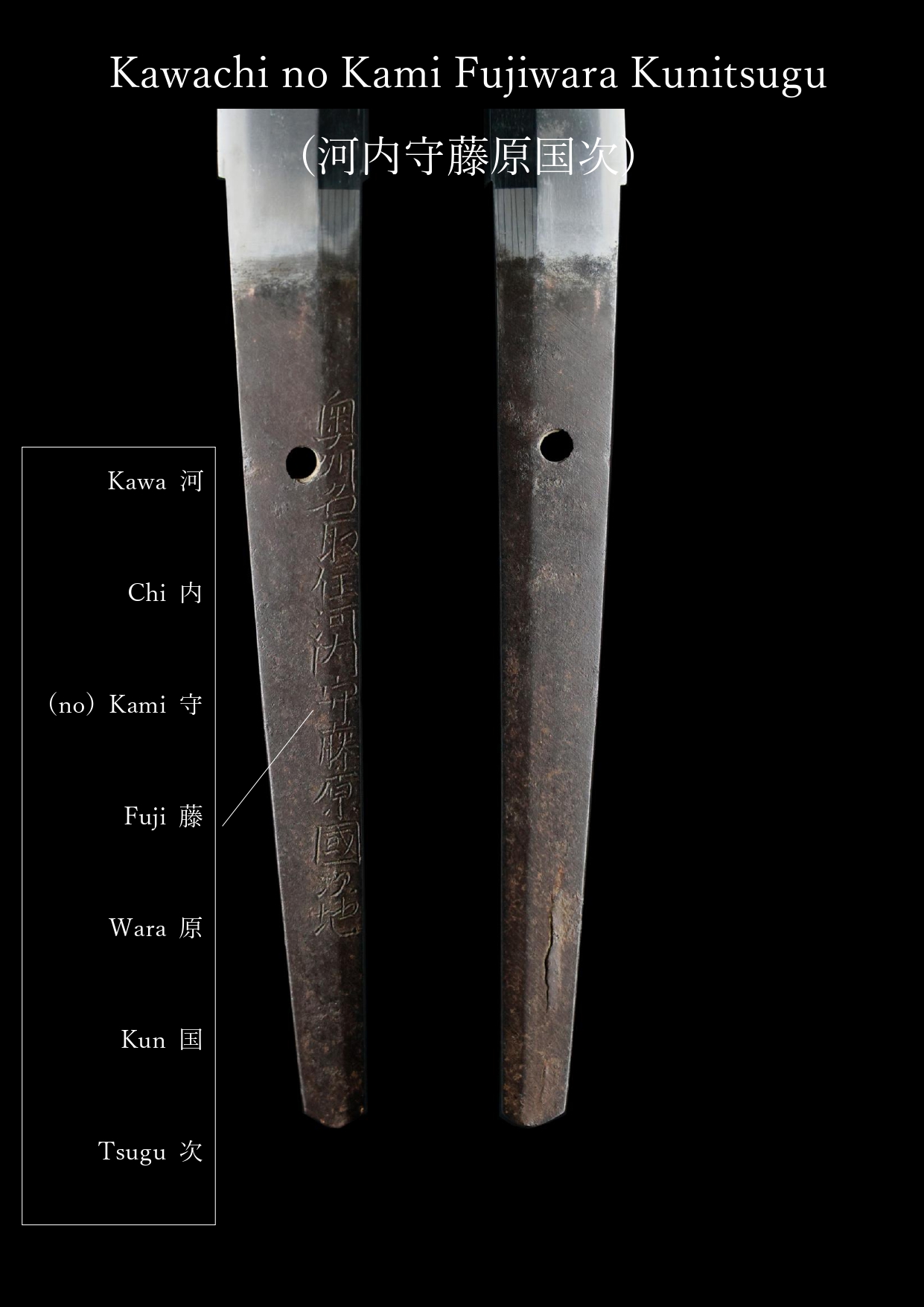
This blade was signed by Kawachi no Kami Fujiwara Kunitsugu (河内守藤原国次) during the early Edo period (Early 17th century), according to an appraisal by the NBTHK (The Society for the Preservation of Japanese Art Swords).
Kunitsugu was an official swordsmith for the Sendai domain, a powerful feudal territory ruled by the Date clan. He is believed to have originally come from Mino Province and to have studied under the distinguished swordsmith Tashiro Kiyosada. Under Kiyosada’s guidance, Kunitsugu likely mastered the Mino-den, a traditional sword-forging style known for its robust construction and practical elegance.
He later relocated to Natori, a town in the Oshu region—an old name for Mutsu Province, which encompassed much of what is now Fukushima, Miyagi, Iwate, Aomori, and parts of Akita Prefecture. Natori, located in present-day southern Miyagi Prefecture, was an important center within the Sendai domain, closely tied to the domain’s capital at Sendai Castle.
It was in Natori that Kunitsugu established his workshop and produced blades for the Date clan and their retainers. His role as a retained swordsmith placed him in a prestigious position, forging weapons that served both practical and symbolic roles within the samurai society of the time.
The Kunitsugu lineage continued to serve the Sendai domain through multiple generations, maintaining their reputation and craftsmanship well into the shinshintō period (late Edo period).
MINO DEN
MINO-DEN exceedingly prospered during Sengoku Jidai (Warring State period) due to the high demand for weapons. And the location of Mino province beat others. Akechi Mitsuhide controlled Mino province, and Nobunaga Oda ruled Owari province. Tokugawa Ieyasu was the lord of Suruga (Neighboring areas). There was high demand from those powerful feudal lords and their retainers.
Furthermore, so many wars occurred between the Kanto region and the Kyoto area. Mino is located in the middle, making feudal lords feel convenient to order swords from MINO-DEN. The blades forged in MINO provinces also had the reputation of their practical design and sharpness. Many feudal lords demanded swords forged in the Mino province. This highly skilled sword-forging technique has been passed down for generations.
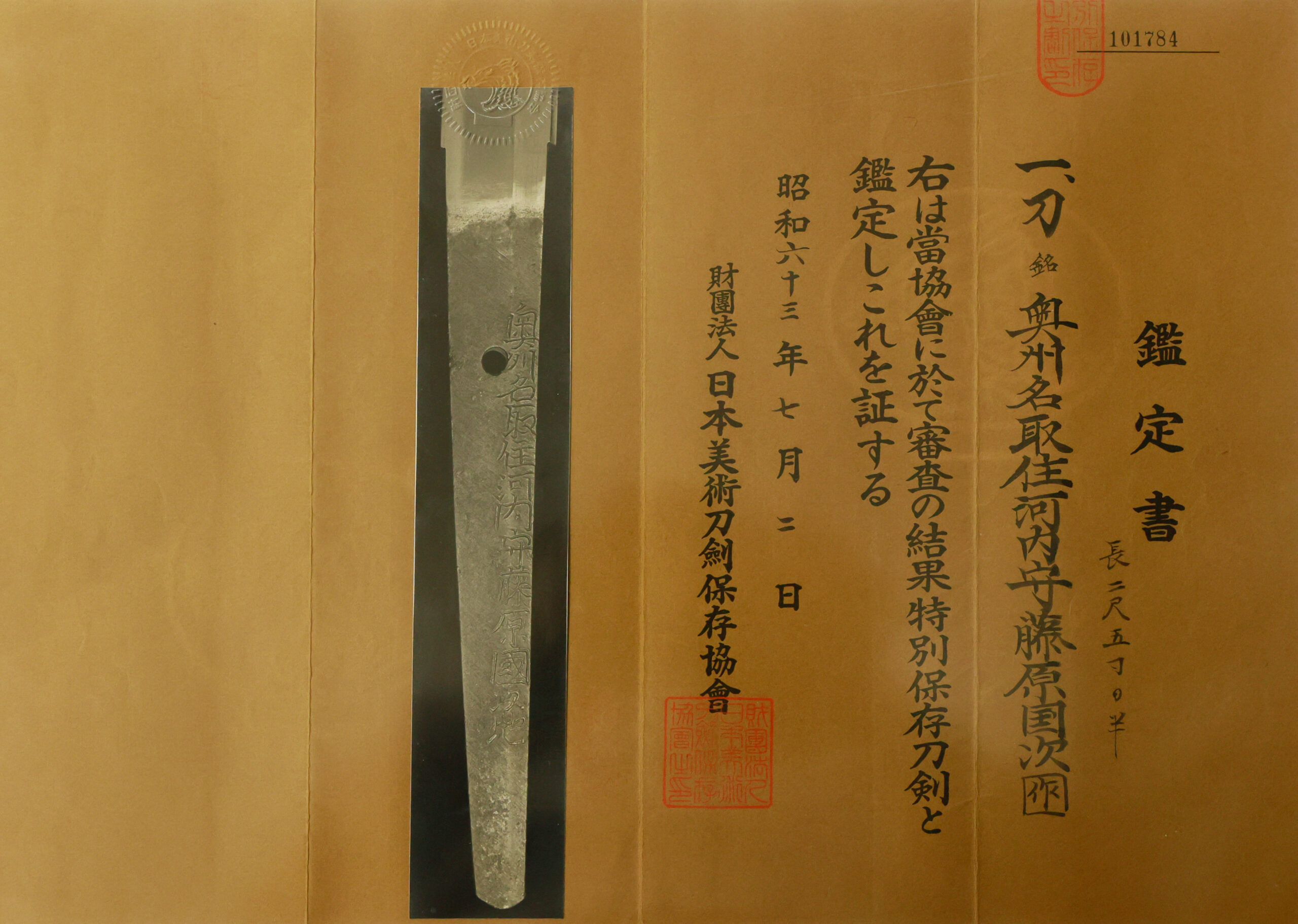
It is appraised as a Tokubetsu Hozon Token (特別保存刀剣) issued by NBTHK (Nihon Bijutsu Touken Hozon Kyokai:日本美術刀剣保存協会).
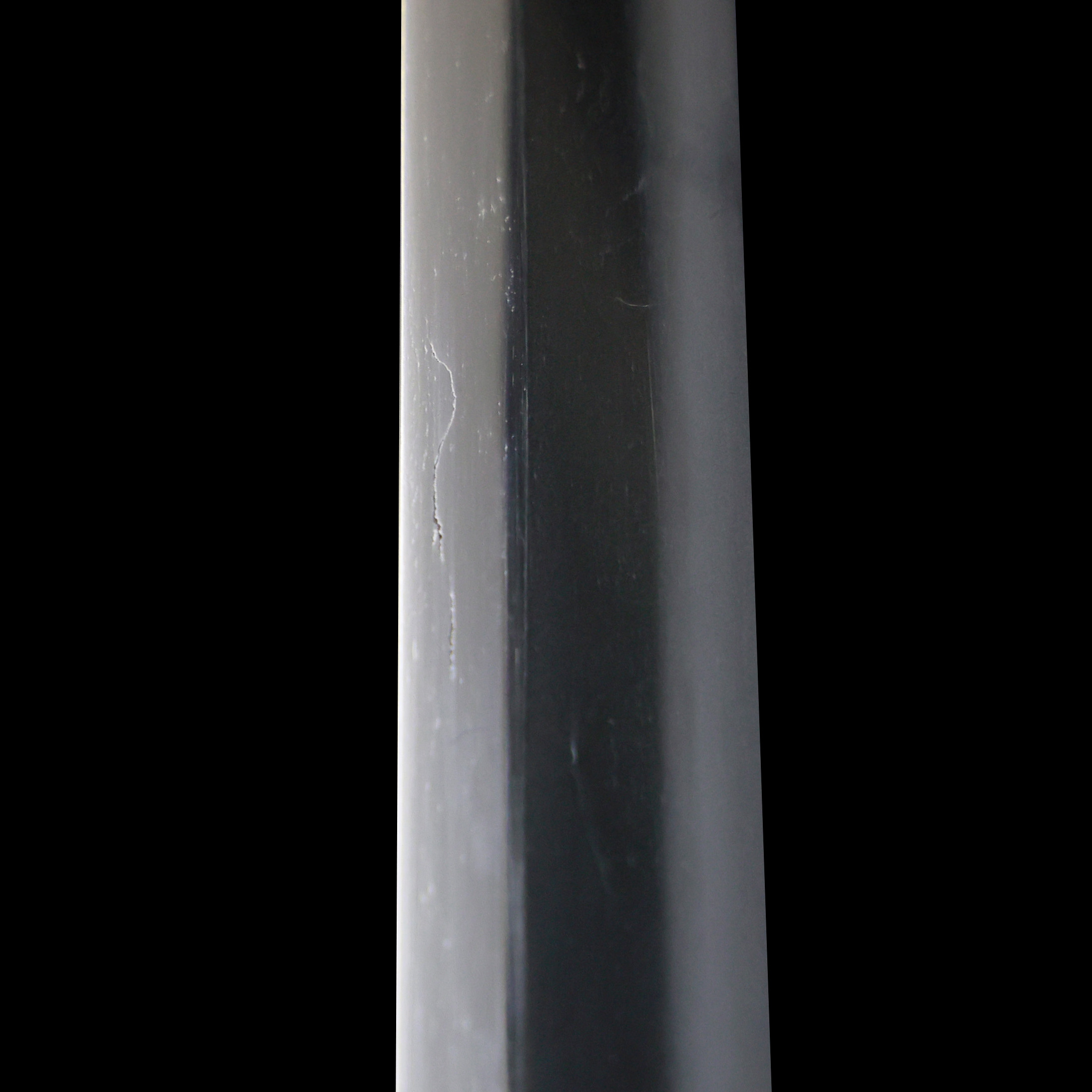
*Please keep in mind that there is a couple of Kitae Kizu and a black rus on the blade.
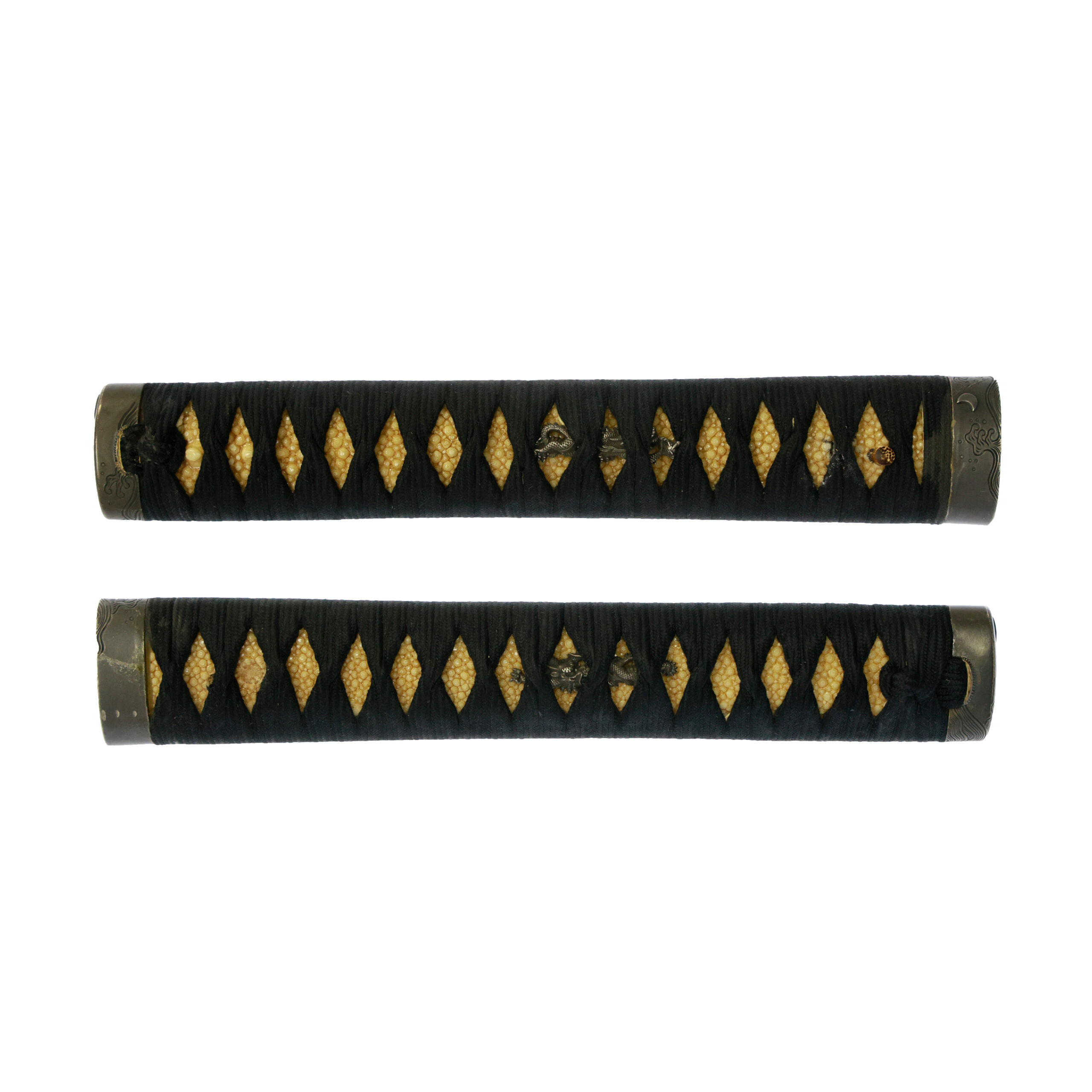
Fuchi-Kashira
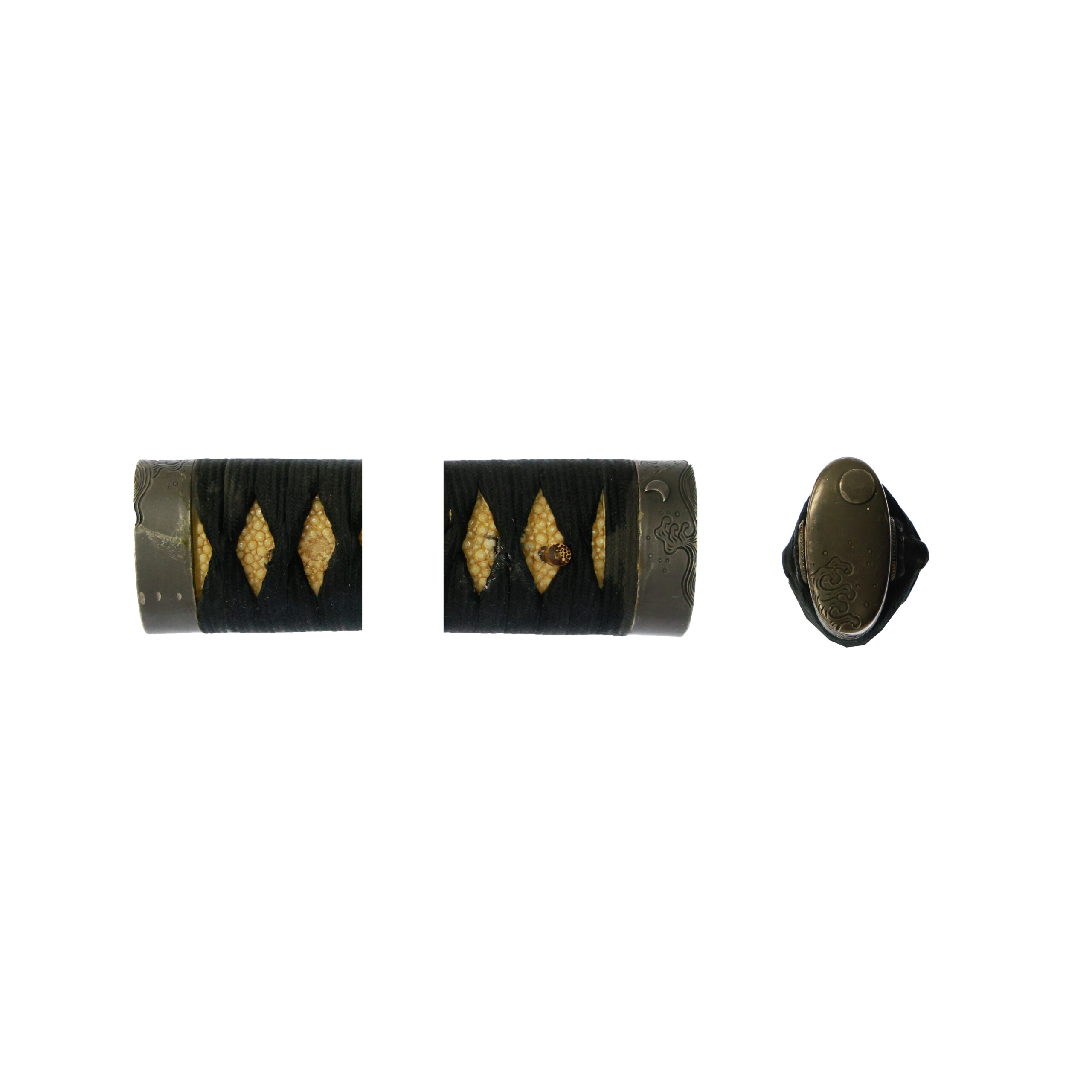
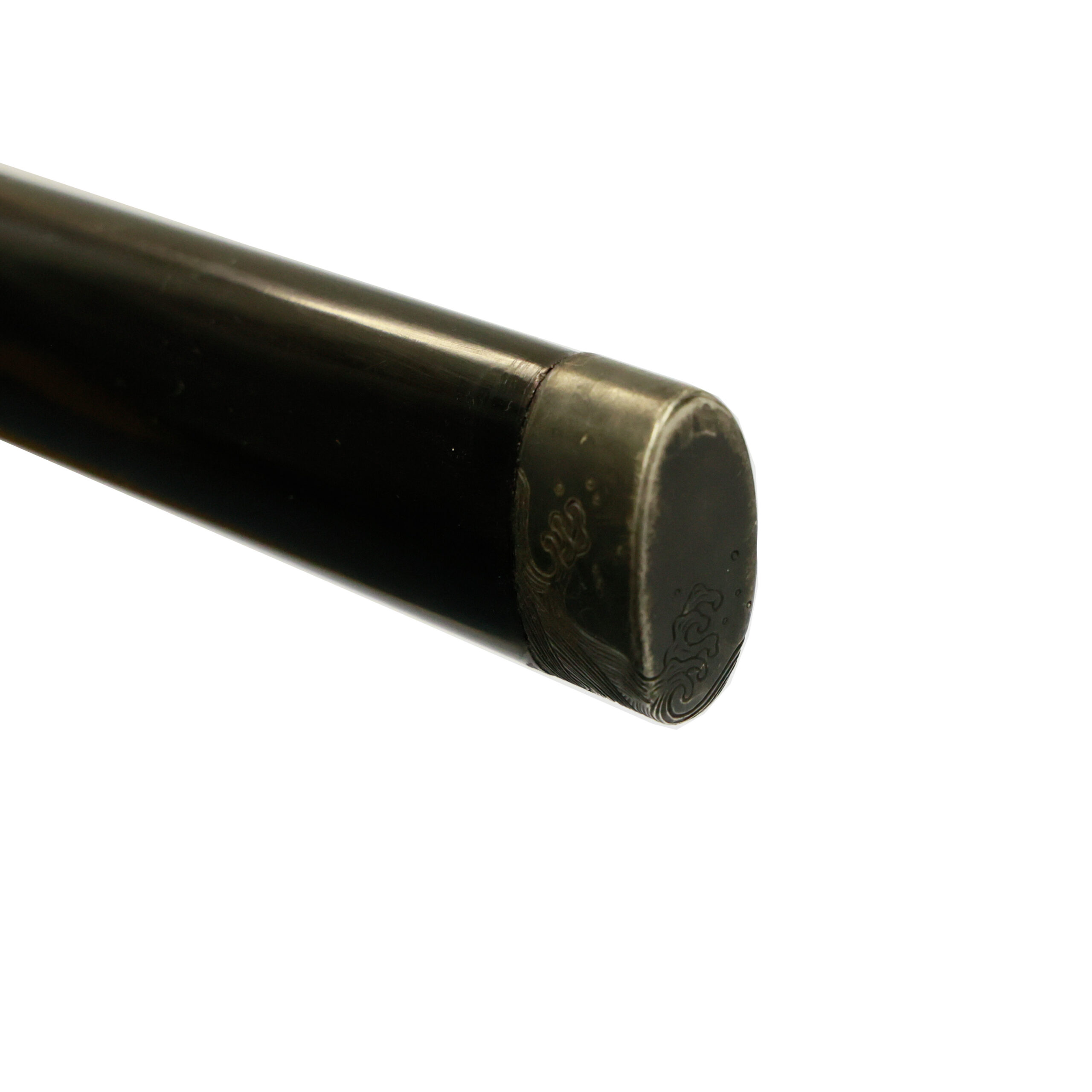
The theme of this Fuchi Kashira is the Hatou Zu (波涛図), which depicts large undulating and splashing waves. As waves’ movements continue endlessly, the wave pattern represents eternity, immortality, longevity, birth, etcetera. Also, since tides repeatedly change the shape and terrain of rocks, some people hoped for a strong will by using this motif. People used this pattern wishing for an indomitable spirit to rechallenge time and time without giving up. Thanks to its dynamic design, this motif has been appreciated, especially for men’s Kimono (traditional Japanese costume). It is also said that warlords used wave patterns on their banners and armors, comparing the movement of battle to that of waves coming and going.
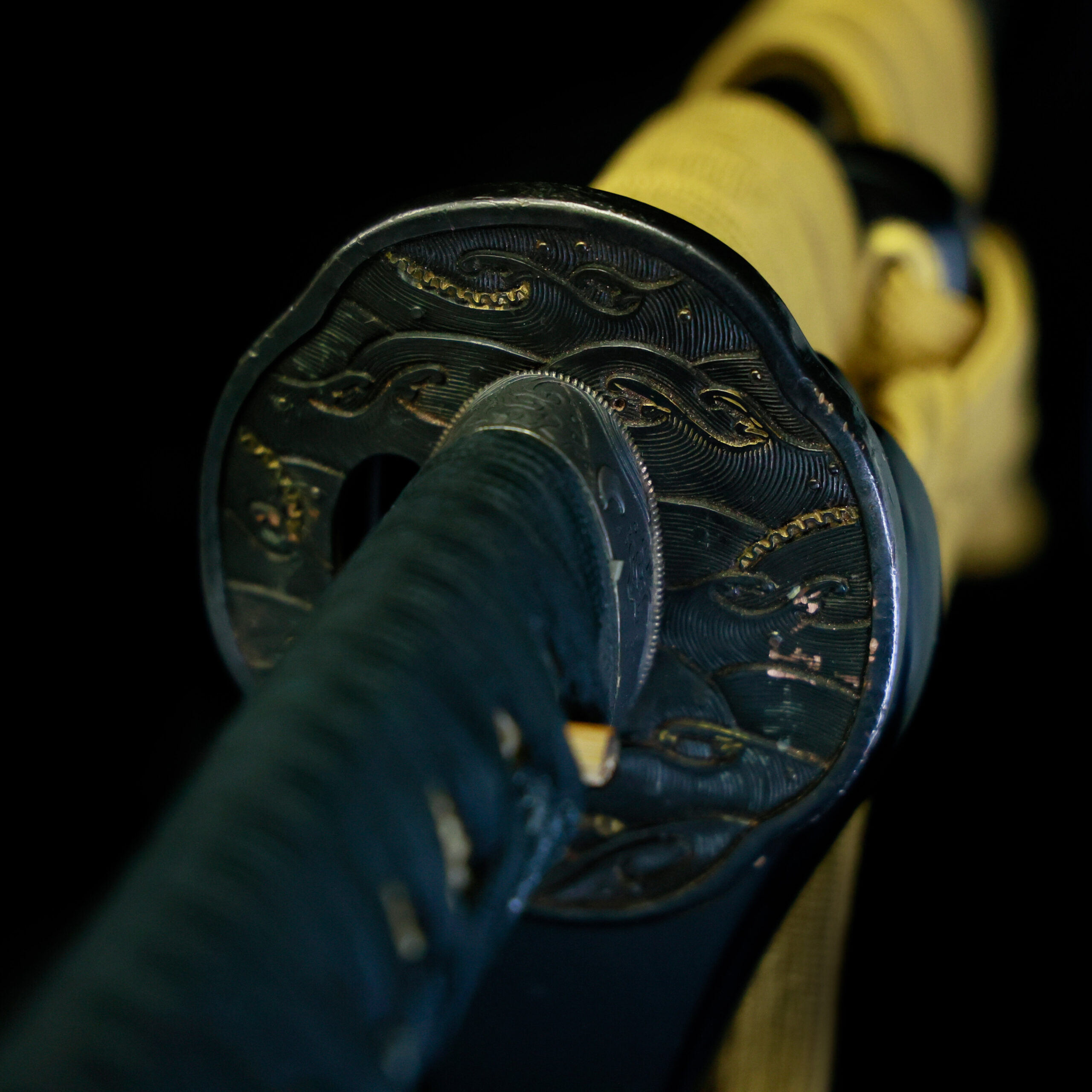
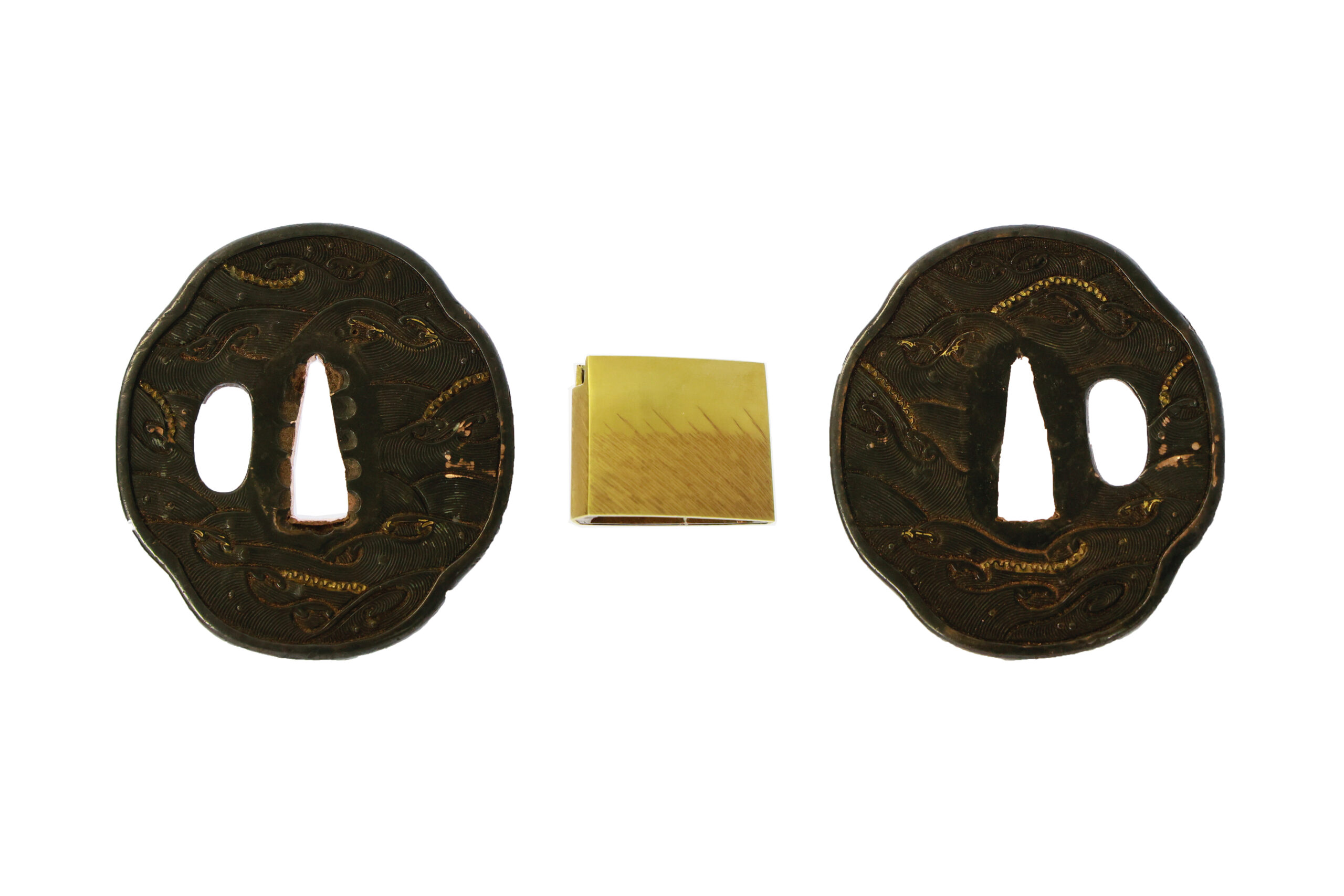
The tsuba (sword guard) of this piece also features the Hatō-zu design, creating a sense of visual harmony and thematic unity throughout the sword’s fittings.
Also, the sun or moon is depicted on this Fuchi Kashira. The sun and the moon have been treated as objects of worship since ancient times. Some people considered them the symbol of authority. The moon pattern has various shapes depending on the waxing and waning of the moon: full moon, half-moon, crescent, or hazy moon. There is also the idea: as the moon changes its shape depending on its fullness, it represents growth and development. Moreover, the moon is a classic design that symbolizes autumn: the combination of a moon with rabbits, deer, autumn grass, waves, etcetera.
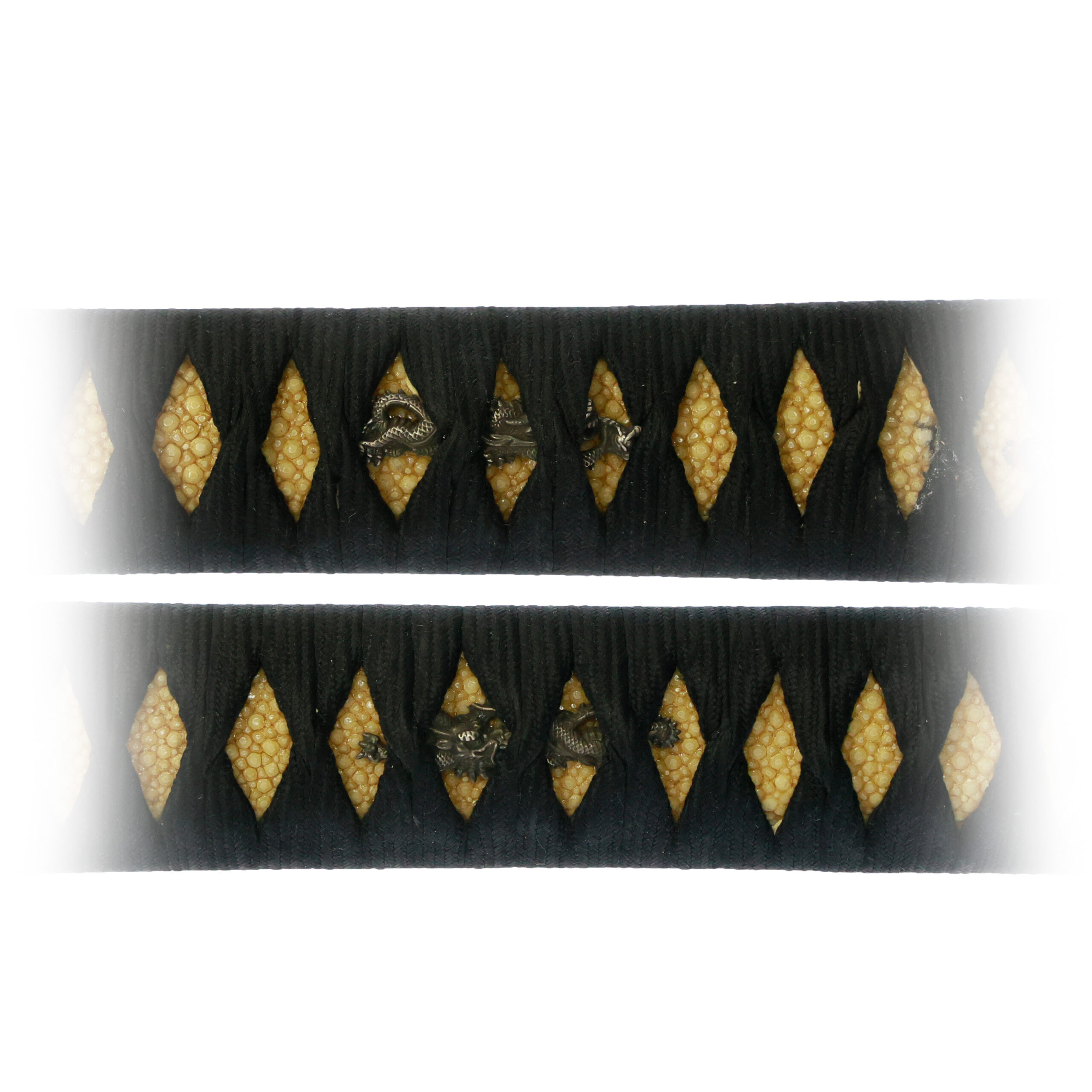
Tsuka and Menuki
Dragon (龍, Ryu) is the motif of this Menuki. Initially, the dragon is an imaginary creature found in ancient Chinese traditions or myths. Furthermore, it is regarded as a symbolic beast of auspicious signs. Its body is likened to nine animals: antlers are deer, the head is a camel, eyes are demons, the neck is a snake, belly is Mizuchi (蛟, mythical animal in Japan which looks like a snake and have a horn and four legs), scales are fish, claws are falcons, palms are tigers, and ears are cows. It was thought that the dragon would reign at the top of all animals because of its odd-looking appearance.
In ancient China, the dragon pattern was used for emperors’ clothing so that people strictly defined its shape or even the number of nails. On the other hand, the dragon pattern does not have detailed rules to represent classes in Japan. However, still, it maintains its meaning as the all-purpose auspicious pattern.
Also, in Japan, there is a belief that worships dragon as a water god and is called Ryujin Shinkou (竜神信仰). Since rice cultivation flourished in this country, water is always an essential resource. Therefore, the dragon motif has been familiar to Japanese people since a long time ago.
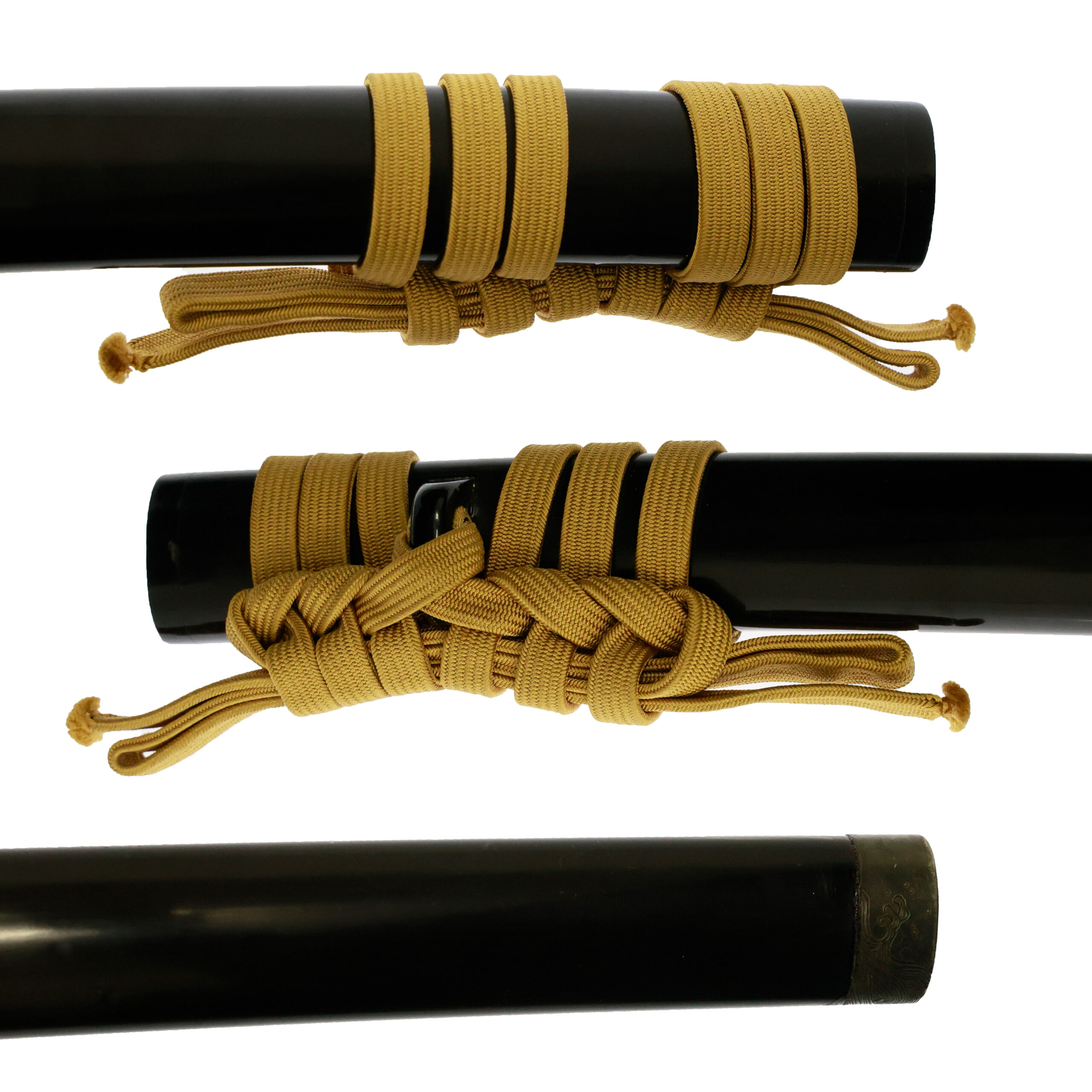
Saya
This scabbard is covered with black lacquer. Due to its high waterproof effect, lacquer has been used since ancient times in Asia. The blade of a Japanese sword is made of iron, and moisture is the greatest enemy of iron. For the purpose of carrying the blade without degrading it, people devised a method of coating the scabbard with lacquer. To prevent not only moisture but also rain and snow from penetrating the inside of the scabbard, it was necessary to apply multiple layers of lacquer. The Nushi (塗師, lacquerers) was born precisely because advanced techniques were required to handle the complicated processes.
Authentication Paper
They authenticated the blade on July 2nd in the 63rd year of Showa (1988). They appraised it as Tokubetsu Hozon Touken, the blade especially worth preserving for Japanese society.

 NihontoWatch