The twentieth century nearly killed the craft twice: wartime distortion, then the occupation ban. The NBTHK’s founding in 1948 and licensed forging from 1953 rebuilt the sword as an art, crowned by Living National Treasures and the mukansa rank.
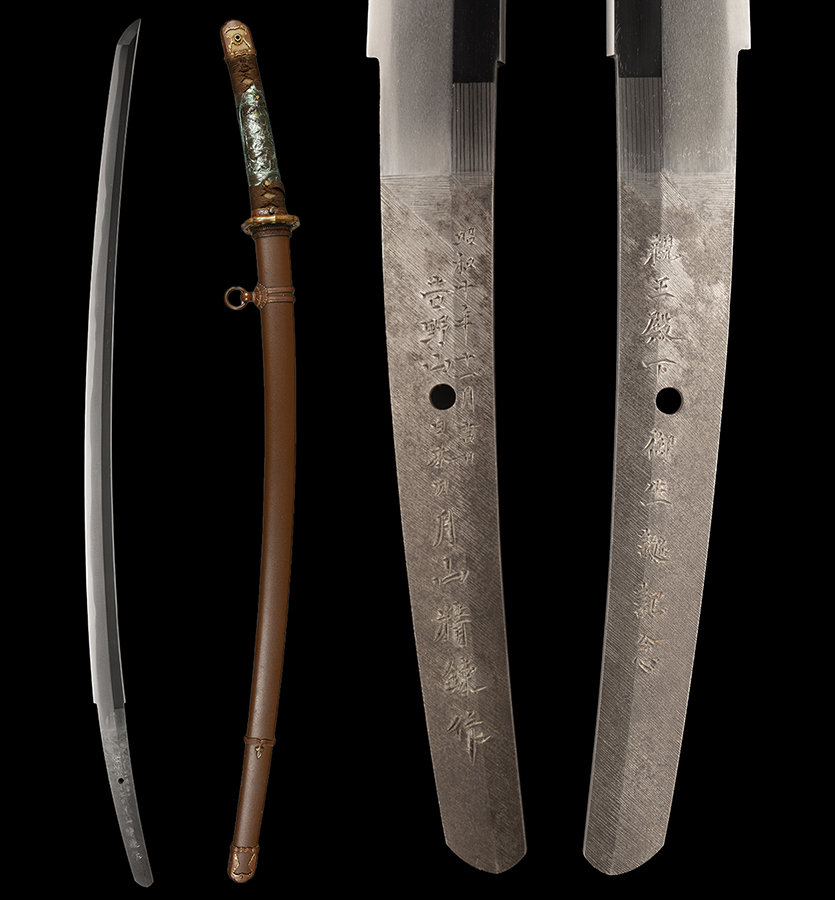
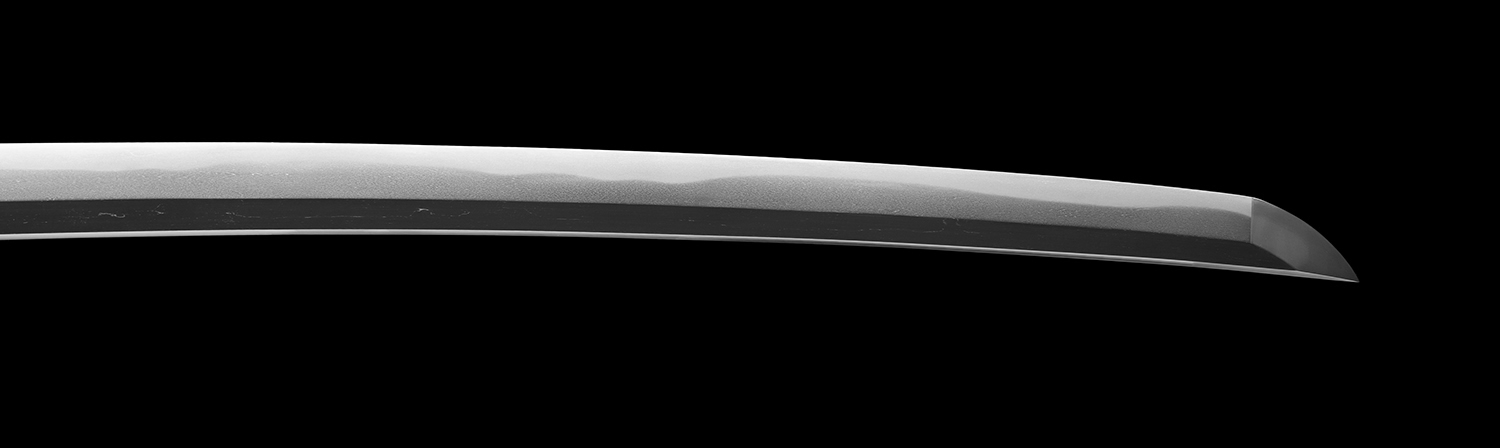
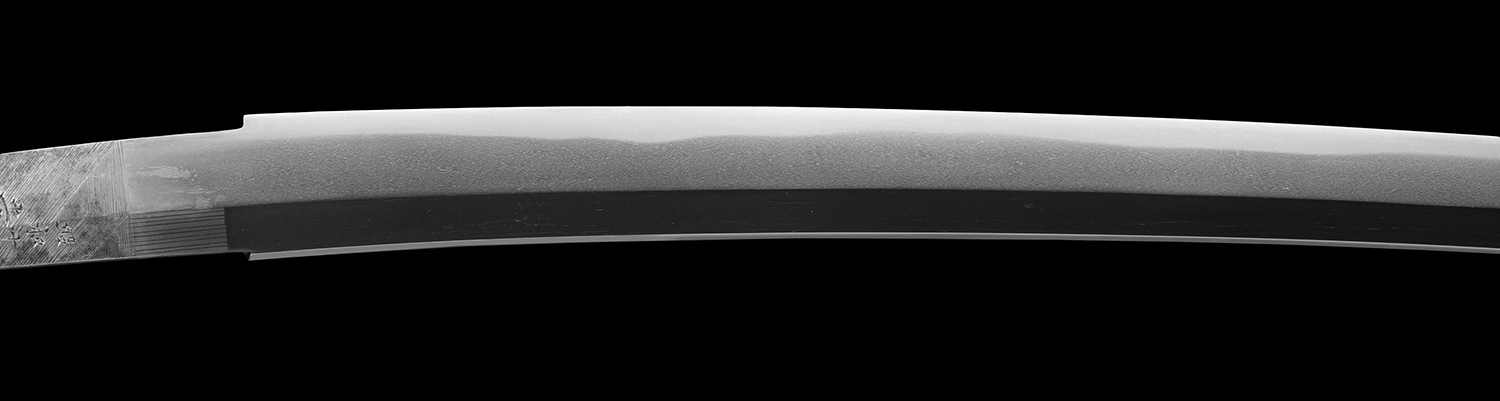
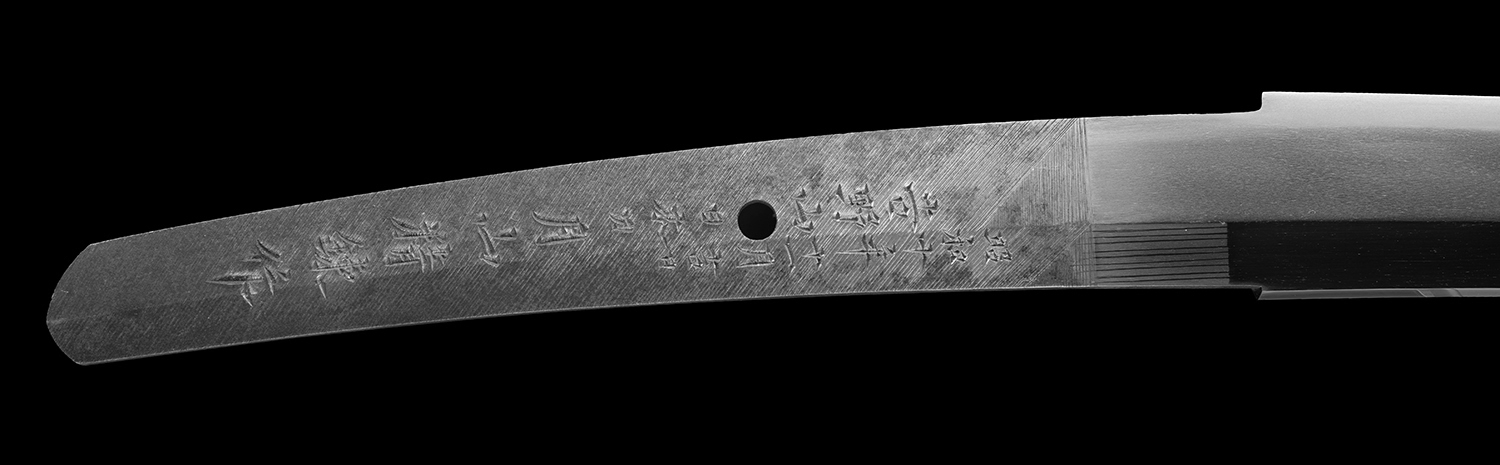
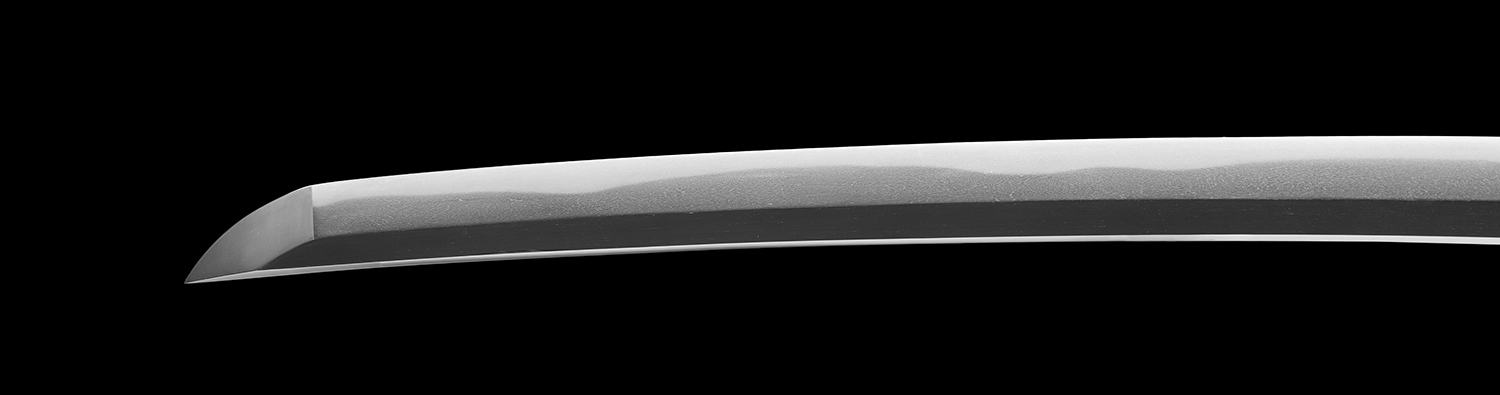
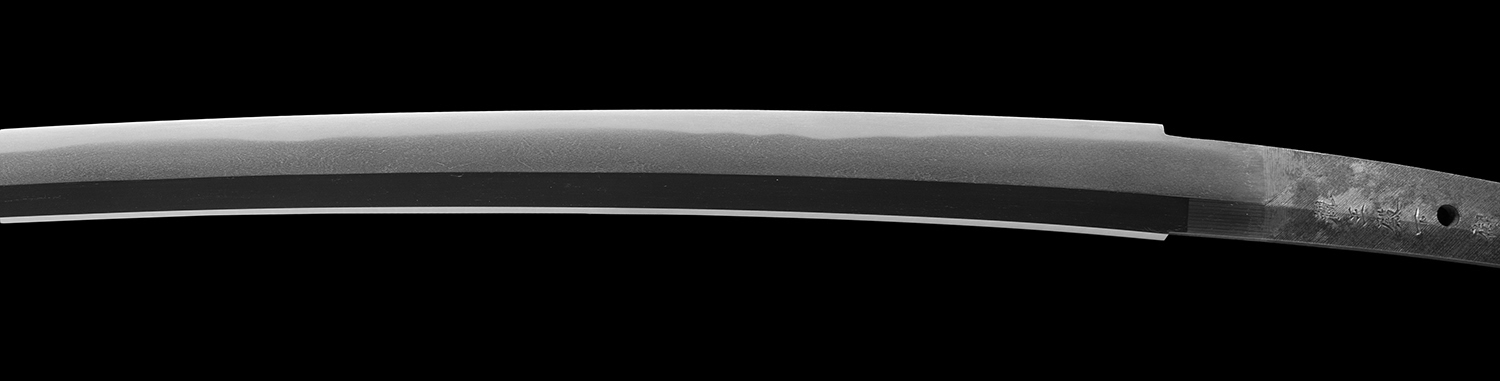
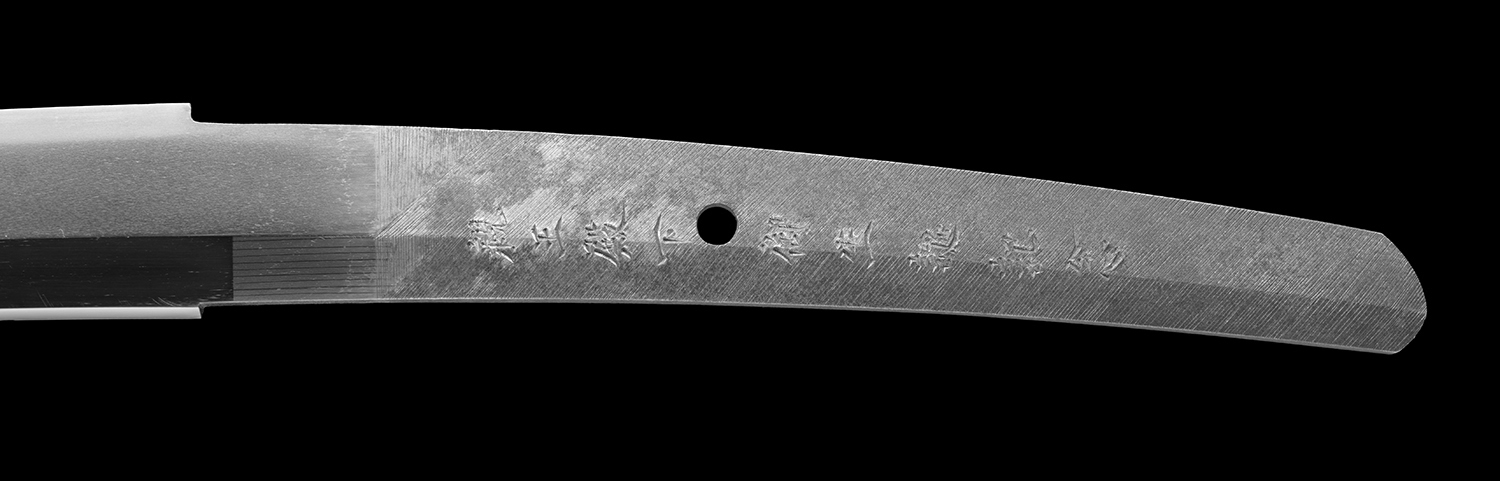
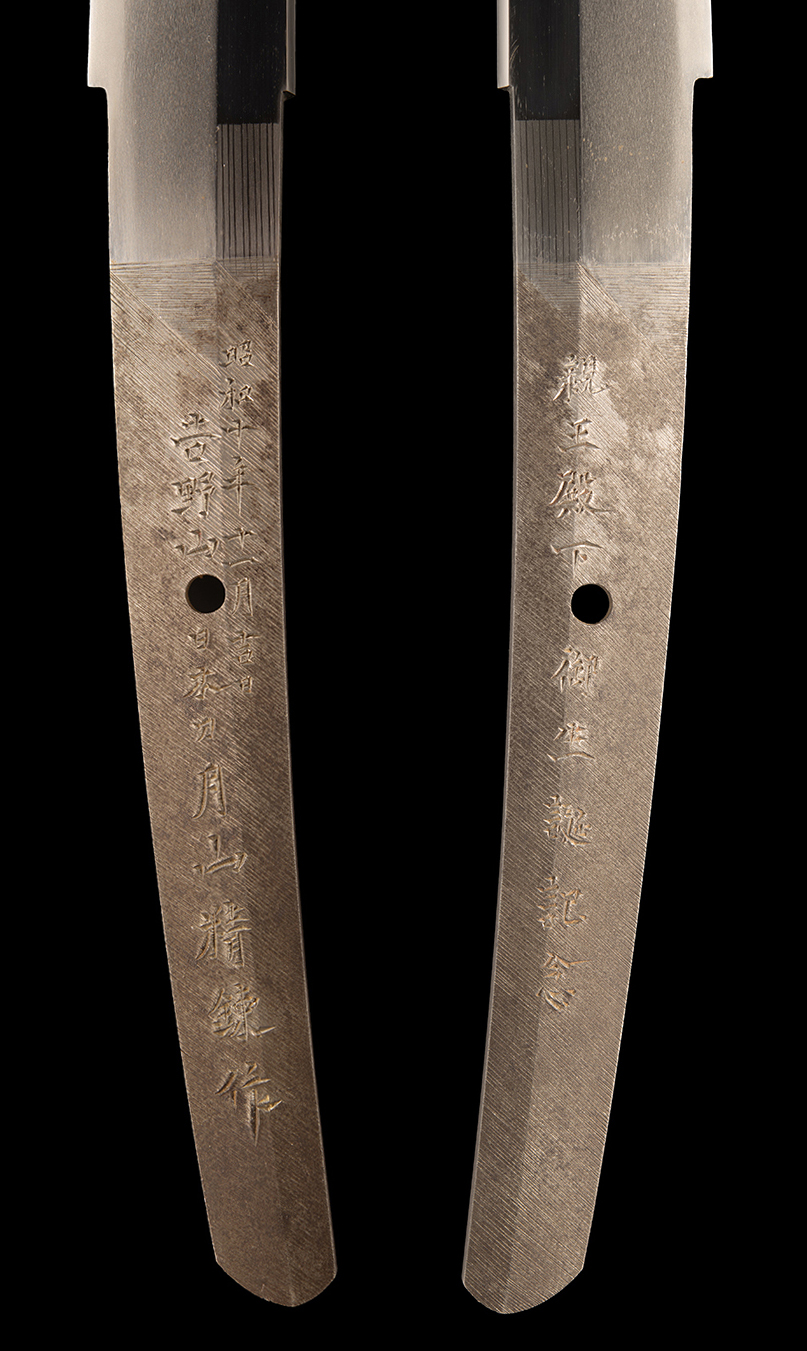
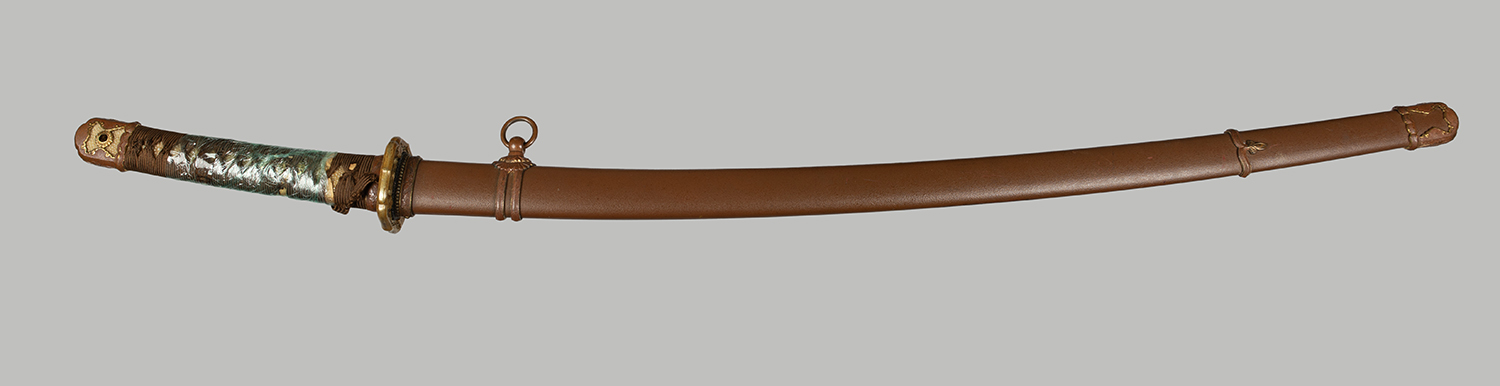
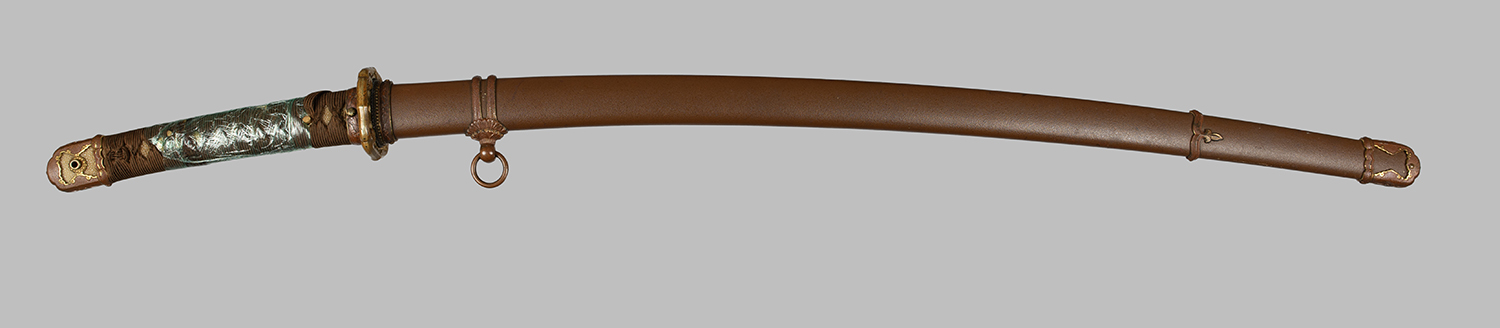
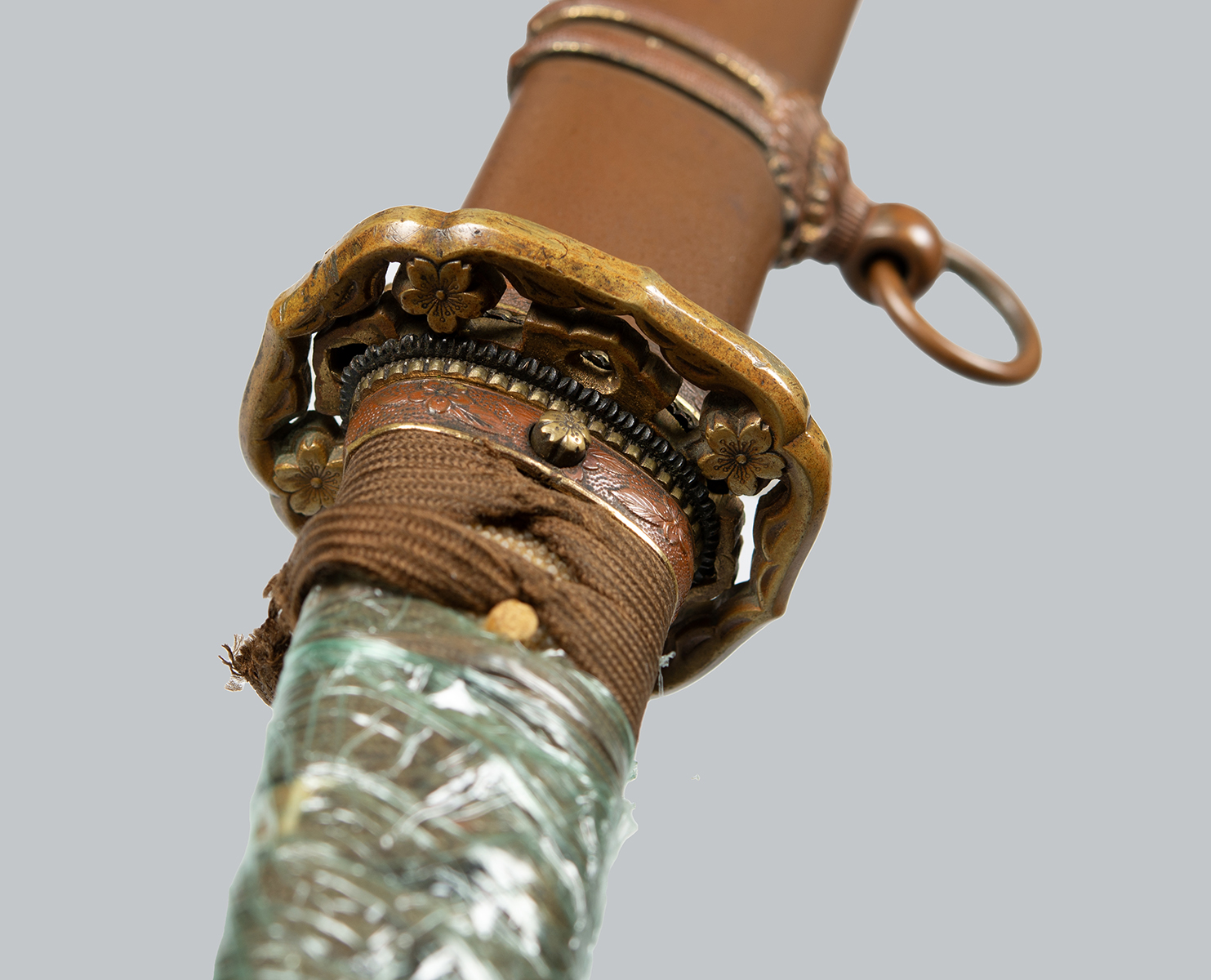
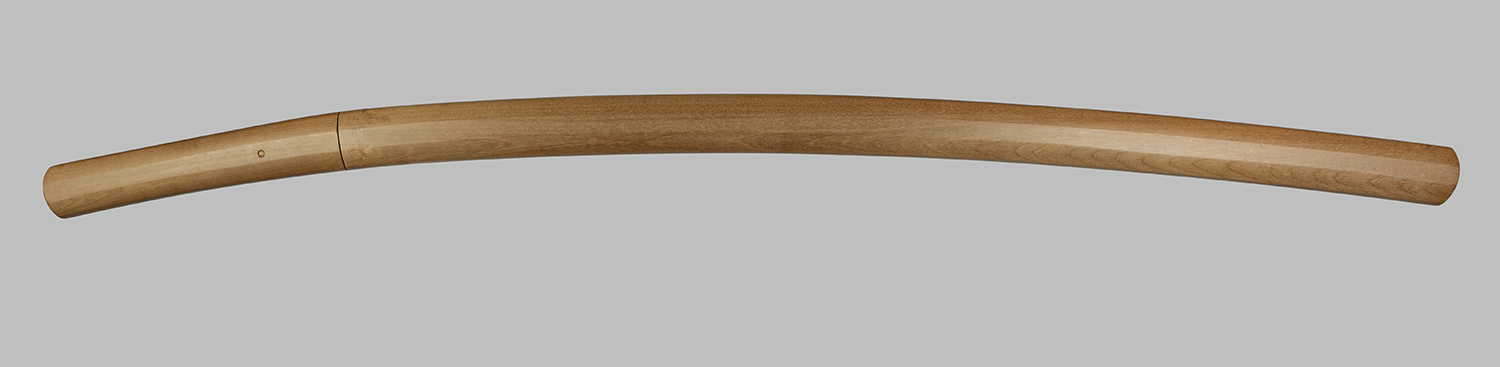
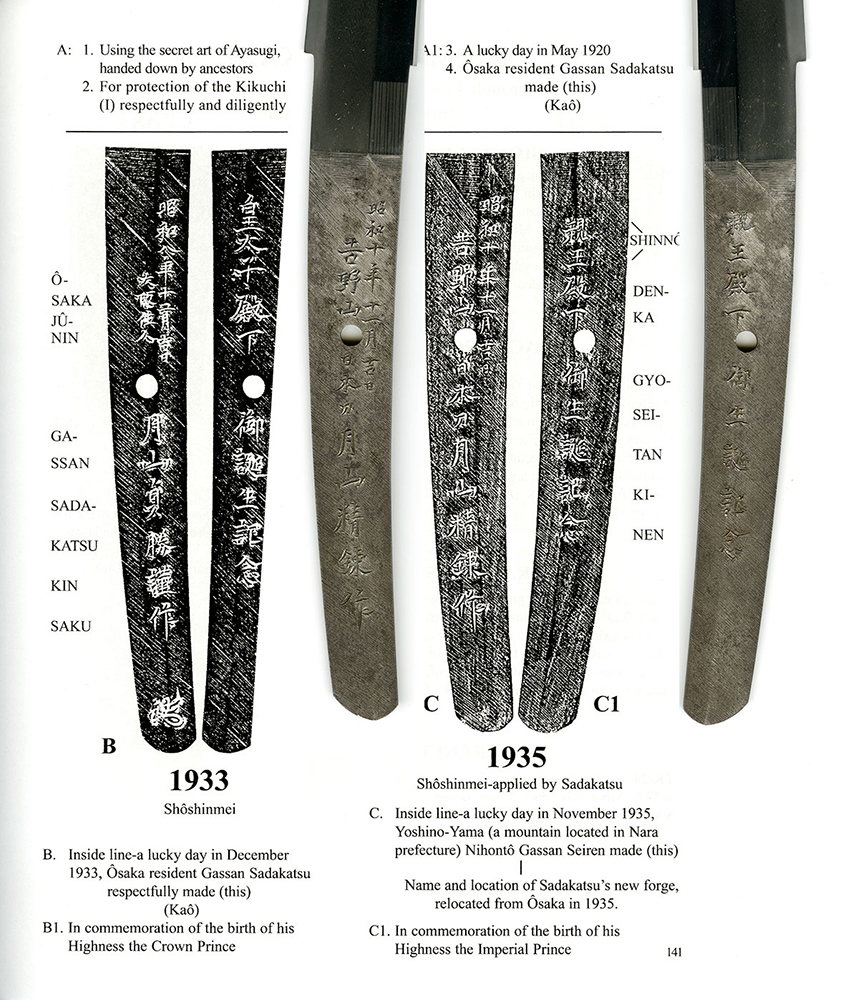
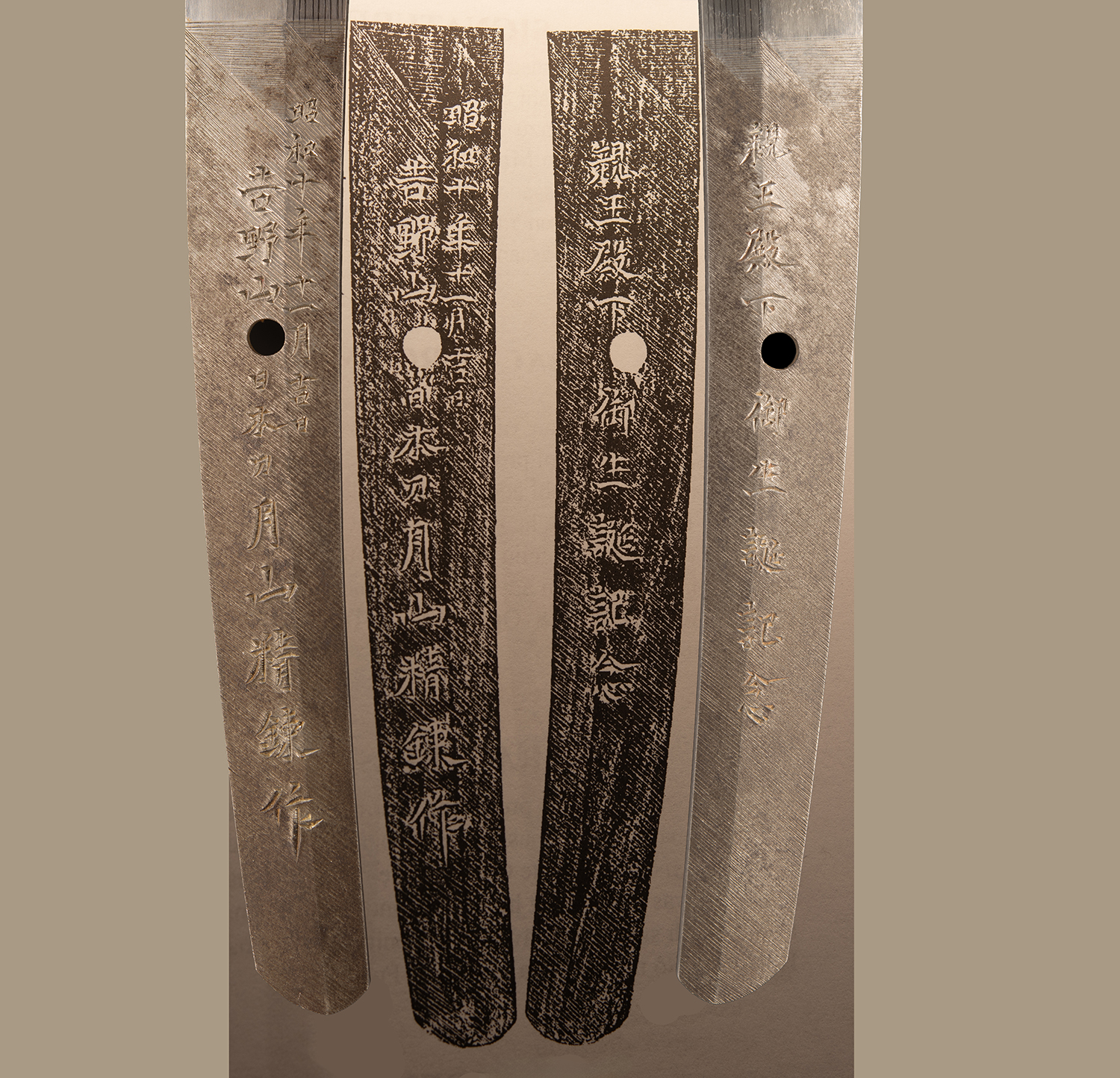
WWII Gunto Koshirae Made to commemorate the birth of the Imperial Prince Masahito Hamon : Nie deki notare with ko-choji mixed in. Many ashi are present. Kuchigaiba and nijuba can be seen. Fine kinsuji is mixed in the ha-buchi. Boshi : O-maru with short kaeri. Kitae : Itame hada that is well wrought and with a hint of nagareu. Ji-nie and chikei are present and one can see yubasuri near the ha. About this sword : Gassan Sadakatsu is counted among the most important Gendaito smiths. He is ranked at 3 million yen in the Tokotaikan and was one of the few gendai smiths listed in Fujishiro's Shinto Hen. He was born in Meiji two (1869) and was the son of the famous smith, Gassan Sadakazu. They worked in Osaka, and Sadakatsu made daisaku for his father in his old age. Sadakatsu was very successful and had many high-profile clients. In 1934, he was awarded by the urban prefecture Osaka for his skill as a craftsman. He passed away on December 24th 1943 at the age of 74. Gassan Sadakatsu made many fine blades to commemorate special occasions of national pride. This katana was made to commemorate the birth of Prince Masahito in 1935. Prince Masahito is a member of the Imperial House of Japan and the younger brother of Emperor Akihito (abdicated in 2019). He is the second son and sixth born child of Emperor Showa and Empress Kojun. A near identical blade by Gassan Sadakatsu with the same commemorative inscription and date is shown in John Scott Slough's book "An Oshigata Book of Modern Japanese Swordsmiths 1868-1945". (See images below) These may have been non-commissioned works that Sadakatsu knew he would have clients of Imperial Army Officers for, as he was constantly making blades for the War effort at that time. Or, one of these could be a Kage-uchi (shadow -work) for a specific commission. Gassan Sadakatsu had a new forge built in 1935 in Nara prefecture. This sword was made that same year and the mei records the location of the workshop at Yoshino-yama. This katana was among the first works made at the new Gassan smithy. The mei of this blade states "Gassan Seiren" 月山精練. Seriren means "forged into refined steel". This statement notes that this katana was elaborately and carefully forged using a fine steel. Both this blade and the one shown in the book are signed this exact and special manner. This blade has a wonderful WWII shin-gunto koshirae. It would have been one that required special attention to make as it is fitted to the aggressive nakago sori and blade sori of this katana perfectly. This has the sukashi style gunto tsuba. The ito on the tsuka is torn as shown in the photos. This blade is consigned to us from a collection of Gendai that was assembled decades ago. It does not have a paper but the owner is happy to offer a one year guarantee that this blade will pass NBTHK Hozon at a minimum. Please inquire with questions/details. An outstanding work and historically important Gendai-to by one of the modern masters of Nihonto.
Offered by Nihontocraft
This piece has sold
Get an email when a new Gassan Sadakatsu piece hits the market.


Shinshinto · Osaka · around 1926-1989
Fujishiro Jo saku · Tōken Taikan top 60%
6 pieces on the market now
Where Sadakatsu stands among comparable artisans: across all of nihontō, and within tradition, era, and period. The tiers (Foremost · Leading · Major · Notable) weigh official designations from the NBTHK and Japan's Agency for Cultural Affairs, together with historical honors of lasting repute such as the Sansaku and Meibutsu-chō.
Select a lens to see how it's measured.
Shinshinto · Settsu
27 pieces on the market now
| Smith | Era | Designated |
|---|---|---|
| Sadaharu貞晴 | 1865-1868 | 0 |
| Sadayoshi貞吉 | 1926-1989 | 0 |
| Yoshiaki吉明 | 1844-1848 | 0 |
| Naonobu直信 | 1854-1860 | 0 |
| Sadayoshi貞吉 | 1830-1863 | 0 |
Shōwa to the present: destruction and revival
The twentieth century nearly killed the craft twice: wartime distortion, then the occupation ban. The NBTHK’s founding in 1948 and licensed forging from 1953 rebuilt the sword as an art, crowned by Living National Treasures and the mukansa rank.
Certifies a genuine blade worth preserving: a signature confirmed correct, or, if unsigned, an era, province, and school that the NBTHK can reliably identify.
The NBTHK (Nihon Bijutsu Tōken Hozon Kyōkai, the Society for the Preservation of Japanese Art Swords) is a public-interest incorporated foundation founded in 1948 and supervised by Japan’s Agency for Cultural Affairs (Bunkachō); it is based at the Japanese Sword Museum in Tokyo. Its expert panels physically examine each submitted work (shinsa) and issue a certificate (kanteishō) ranking it by artistic and historical merit. NBTHK papers are the most widely recognized standard of authentication for Japanese swords and fittings.
NBTHK official site3 day inspection period on all sales. Items can be returned for any reason for a full refund, less return shipping cost. Returned items must be in the same condition as when purchased.