Edo was the sword’s age of connoisseurship: the Hon’ami appraisers, the shogunal register of famous blades of 1719, and a thriving literature turned the sword into an object of study even as it ceased to be drawn in war.
 NihontoWatchNihontoWatch
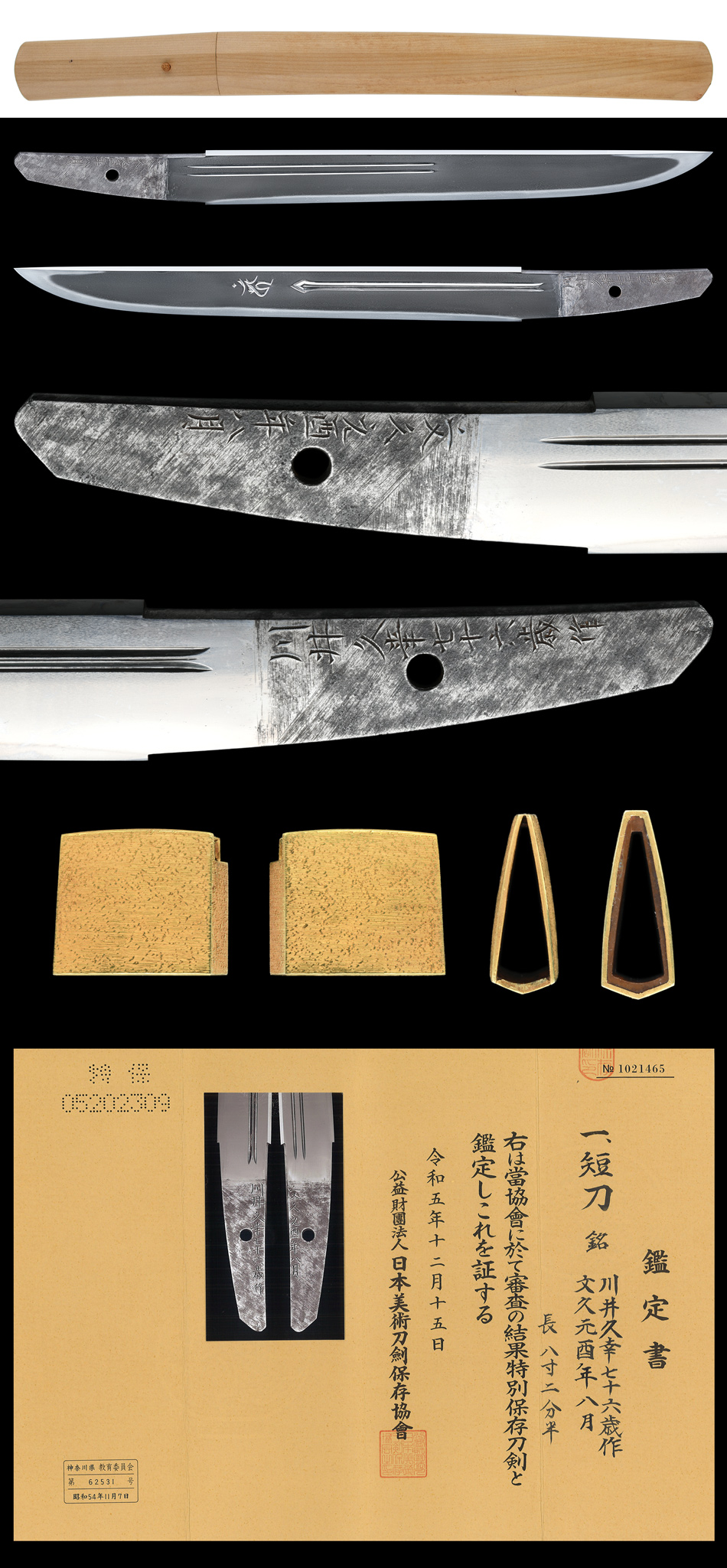
川井久幸。銘は藤原久幸造之、藤原久幸作幕府臣川井久幸、幕府士川井久幸などと切ります。川井亀太郎。徳川幕府の旗本であり、江戸小石川に住す。細川正義門人で腕前良く人気刀匠。 本刀刃長は八寸二分半。元先幅差なく、重ね確りとし、やや内反り、表に梵字と素剣、裏に腰樋の彫刻を刻した力感に富む品の良い刀姿の一口です。地鉄は小板目鍛、地沸良く付き、細かく地景が入り、強靭且つ精良な鍛となります。刃文は匂勝ちの直刃を焼き、一部僅かに浅く湾れ、匂口やや締まり心に明るく冴えます。帽子はそのまま直ぐで小丸に返ります。茎は生ぶ、化粧筋違鑢に仕立て、刀工銘と年紀を刻します。本作は細川正義門、幕府旗本であった川井久幸の優刀で、姿良く、地鉄精美に整うなど気品のある逸品としてご紹介いたします。白鞘、金銀着一重はばき、特別保存刀剣鑑定書。
NihontoWatchOffered by World Seiyudo
This piece has sold
Get an email when a new Hisayuki piece hits the market.

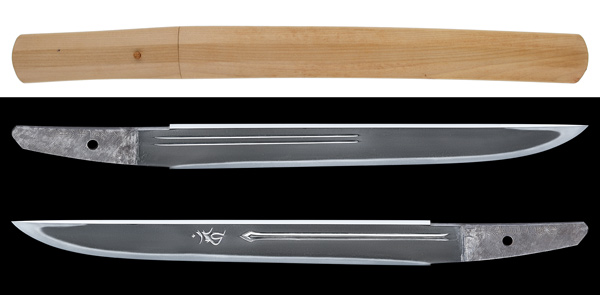
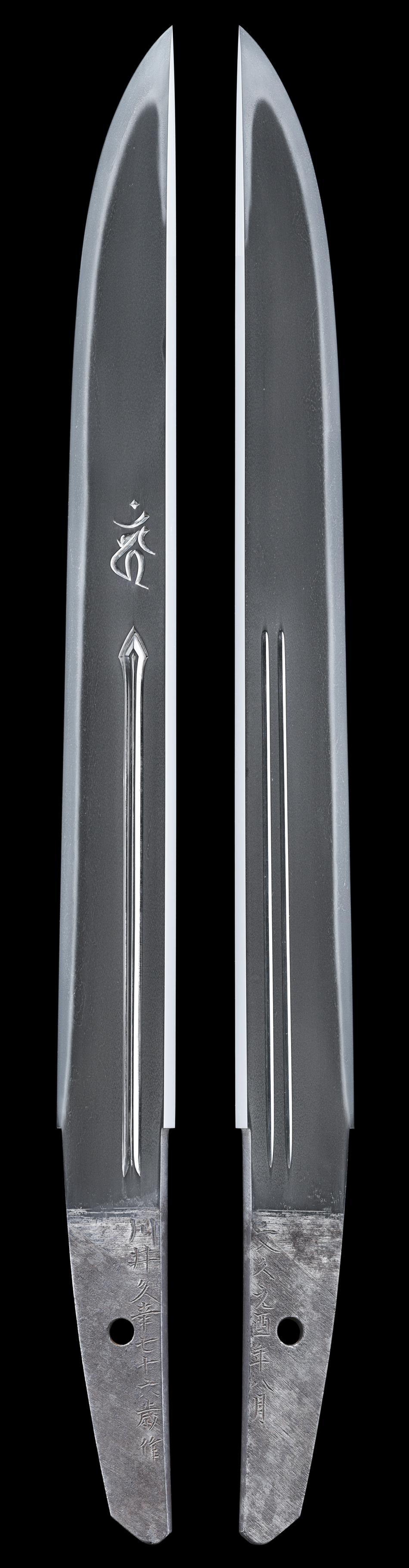
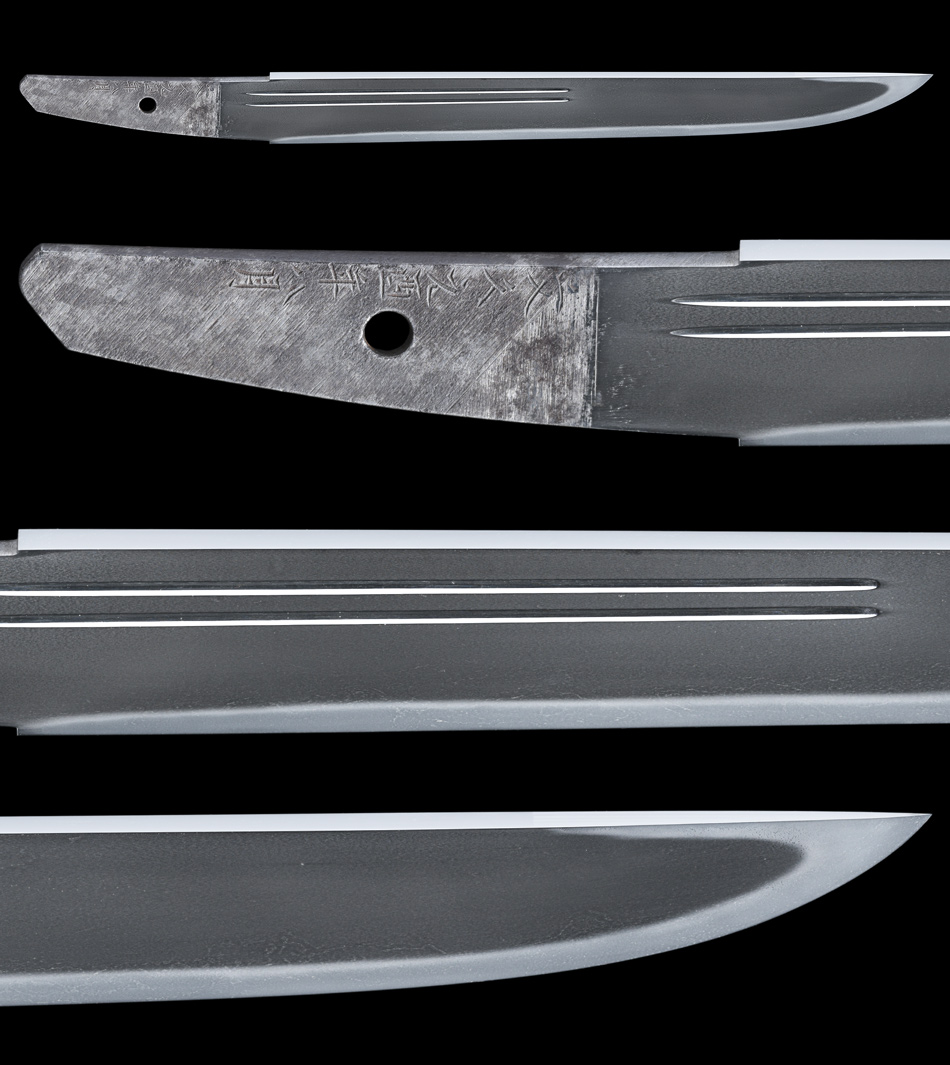
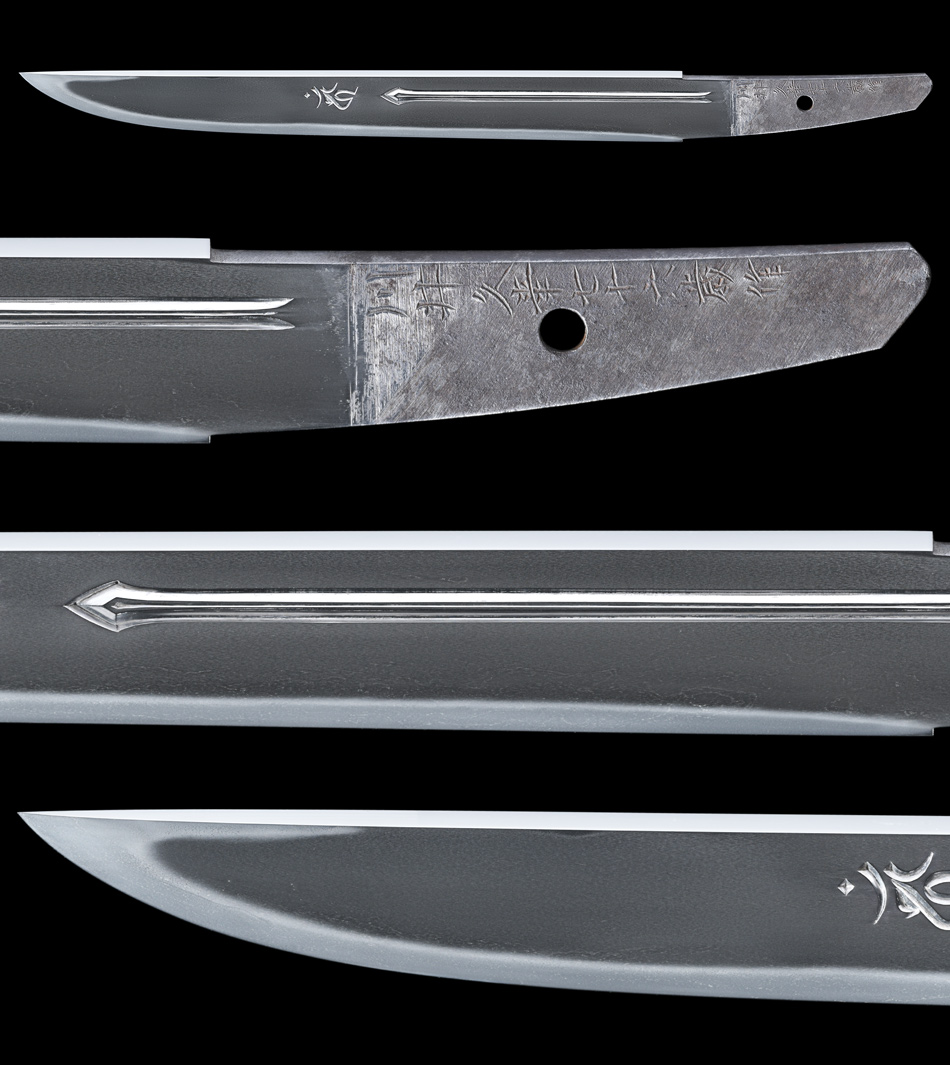
Musashi · around 1854-1860
2 pieces on the market now
The Edo period (1615 to 1868)
Edo was the sword’s age of connoisseurship: the Hon’ami appraisers, the shogunal register of famous blades of 1719, and a thriving literature turned the sword into an object of study even as it ceased to be drawn in war.
A Hozon-certified blade judged to show notably superior workmanship and a better state of preservation. The bar is higher: re-tempered blades and most unsigned Muromachi/Edo works are excluded.
The NBTHK (Nihon Bijutsu Tōken Hozon Kyōkai, the Society for the Preservation of Japanese Art Swords) is a public-interest incorporated foundation founded in 1948 and supervised by Japan’s Agency for Cultural Affairs (Bunkachō); it is based at the Japanese Sword Museum in Tokyo. Its expert panels physically examine each submitted work (shinsa) and issue a certificate (kanteishō) ranking it by artistic and historical merit. NBTHK papers are the most widely recognized standard of authentication for Japanese swords and fittings.
NBTHK official siteNo cooling-off period or returns; refund only if the purchased sword is proven fake, capped at purchase price (excludes commission sales, accessories, auction items).