 NihontoWatchNihontoWatch
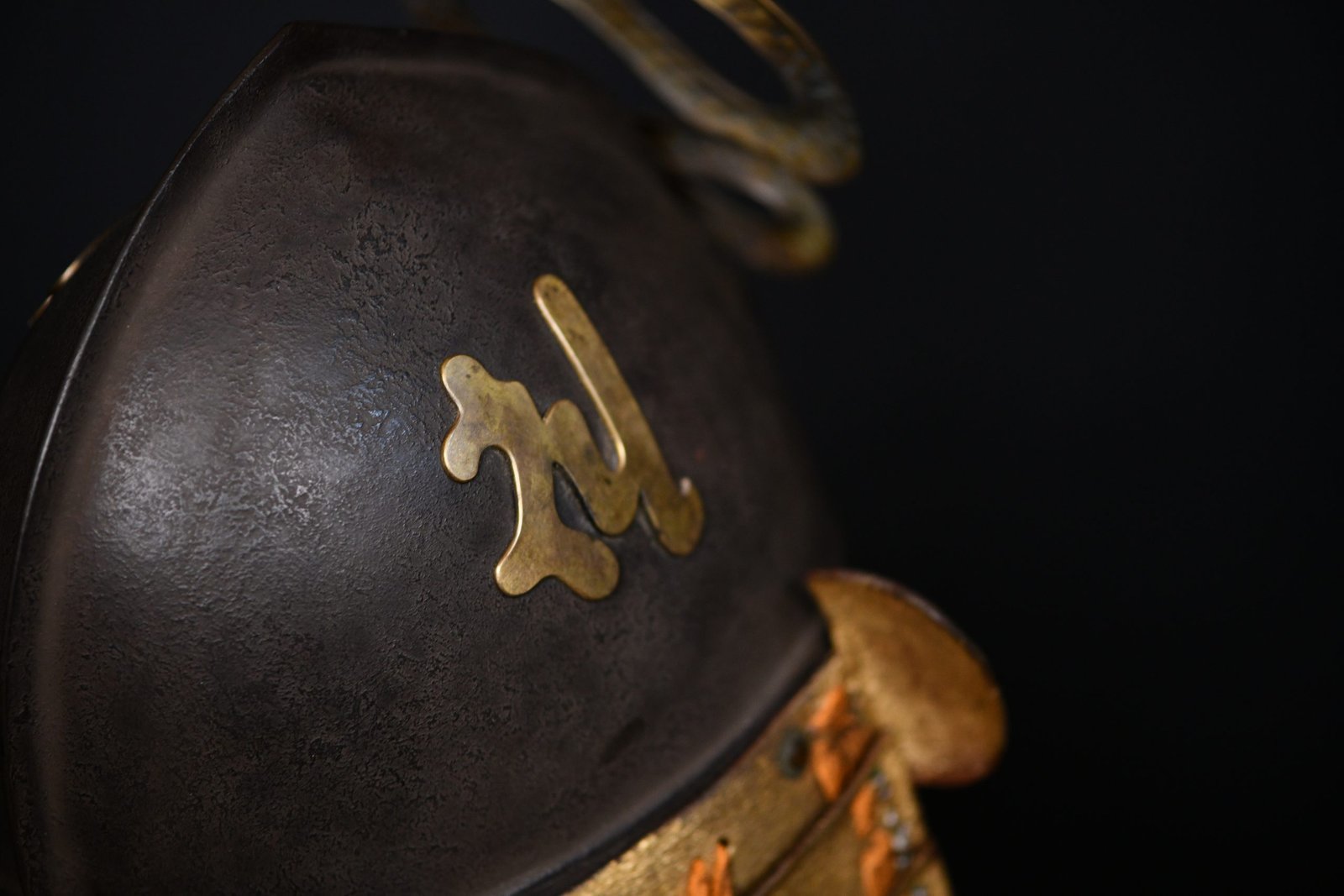
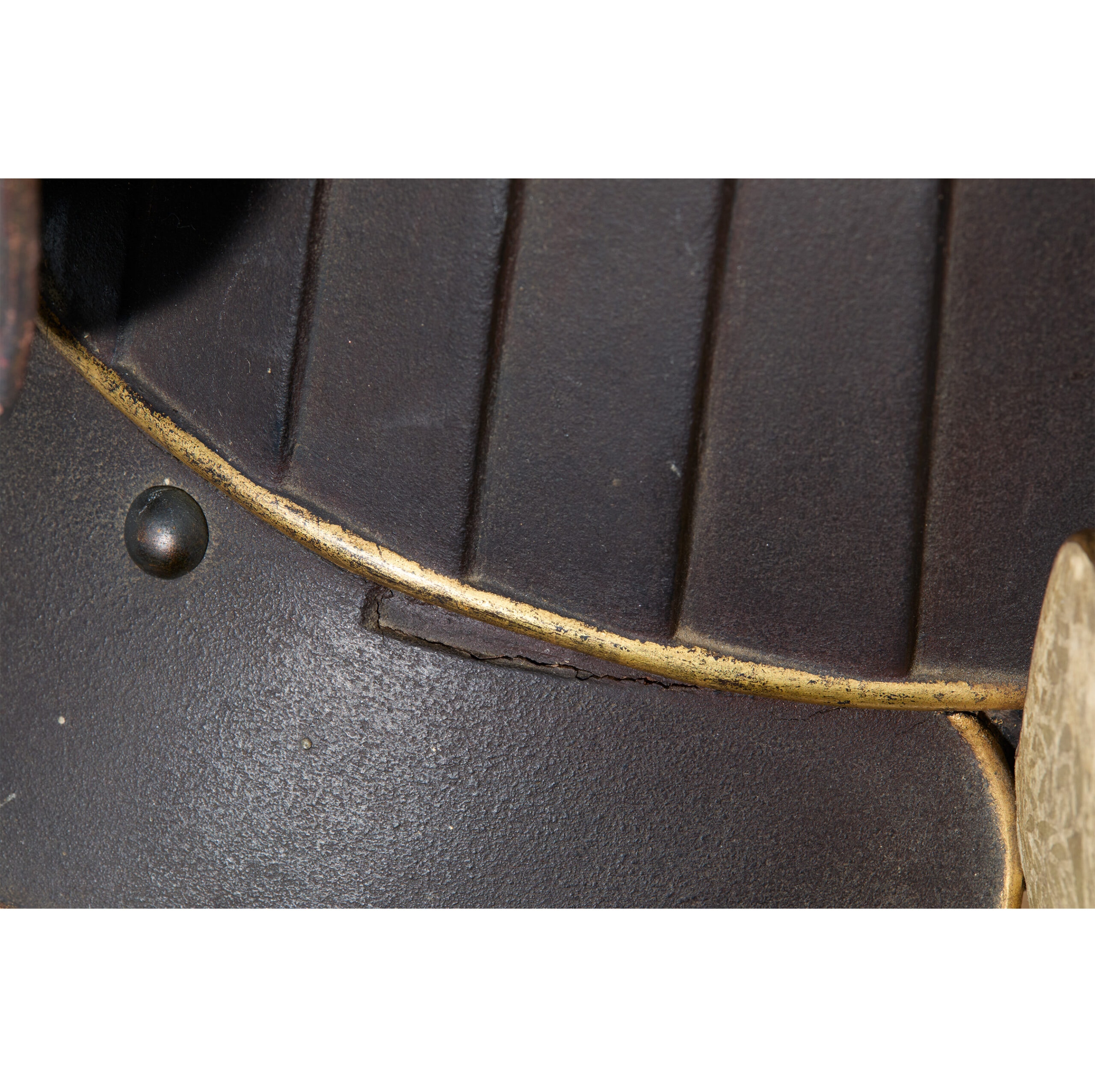
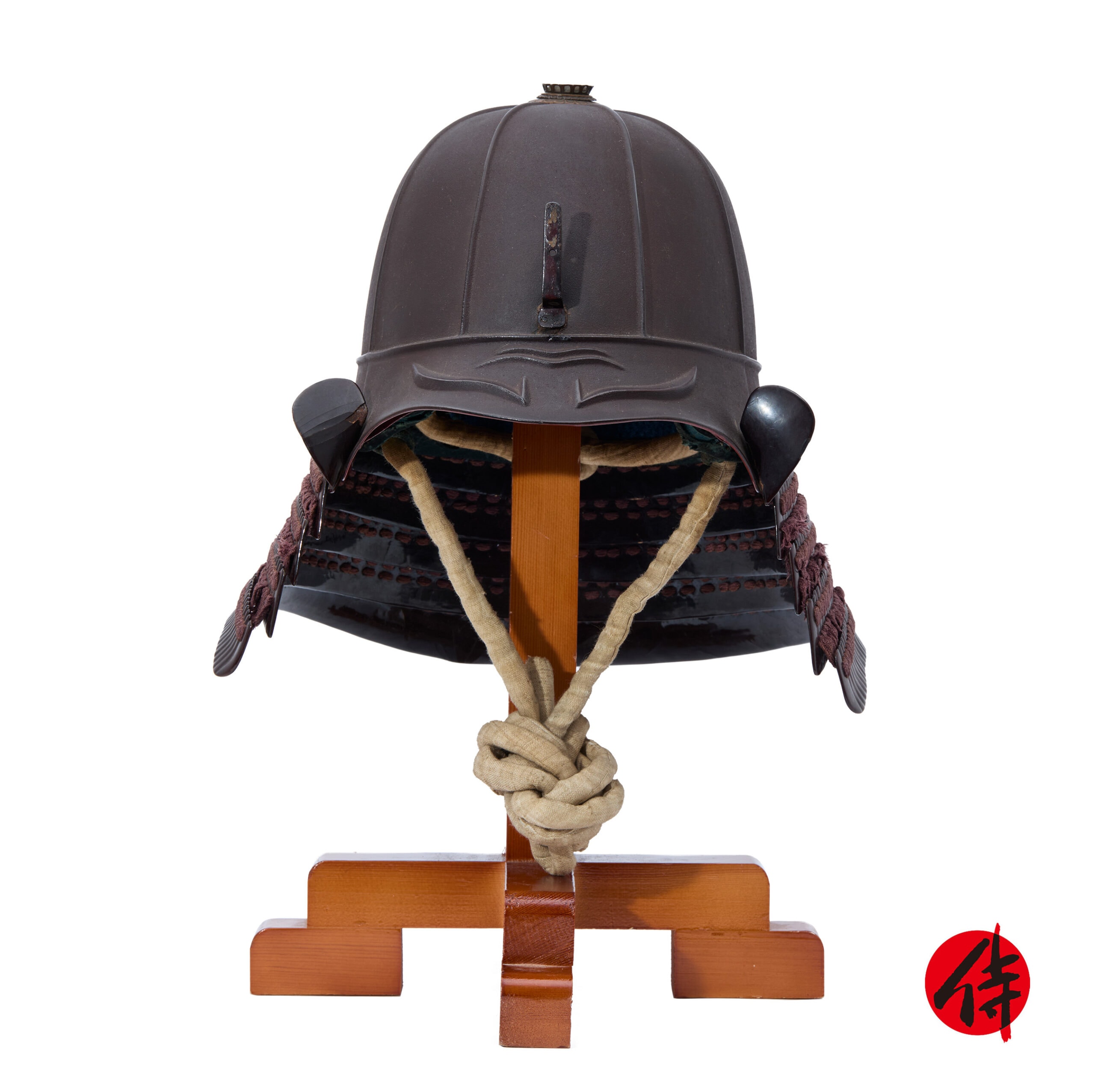
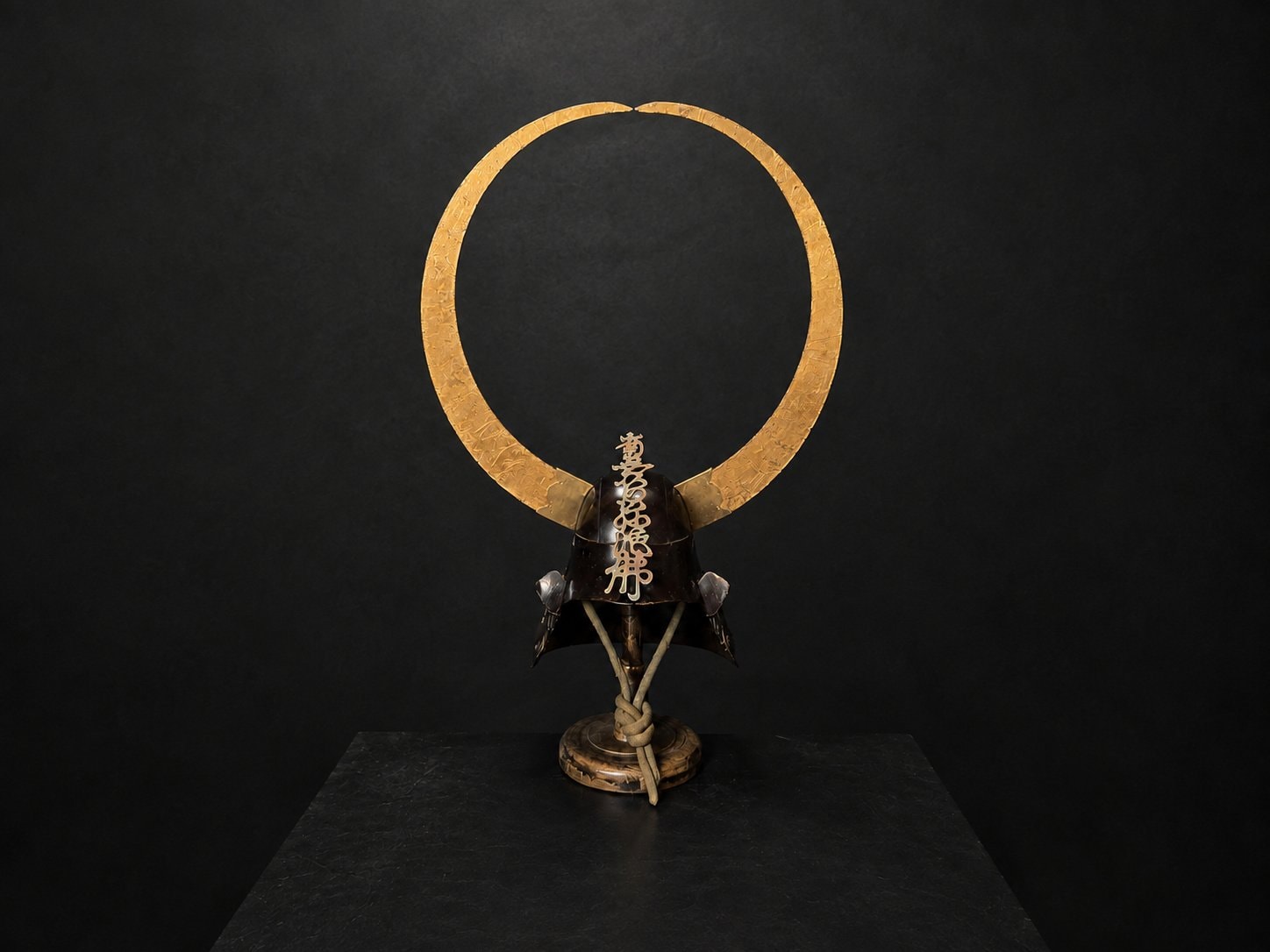
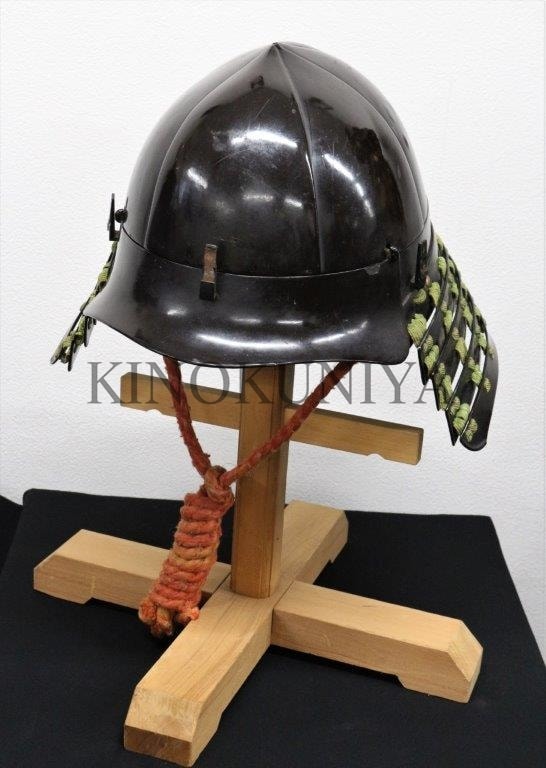
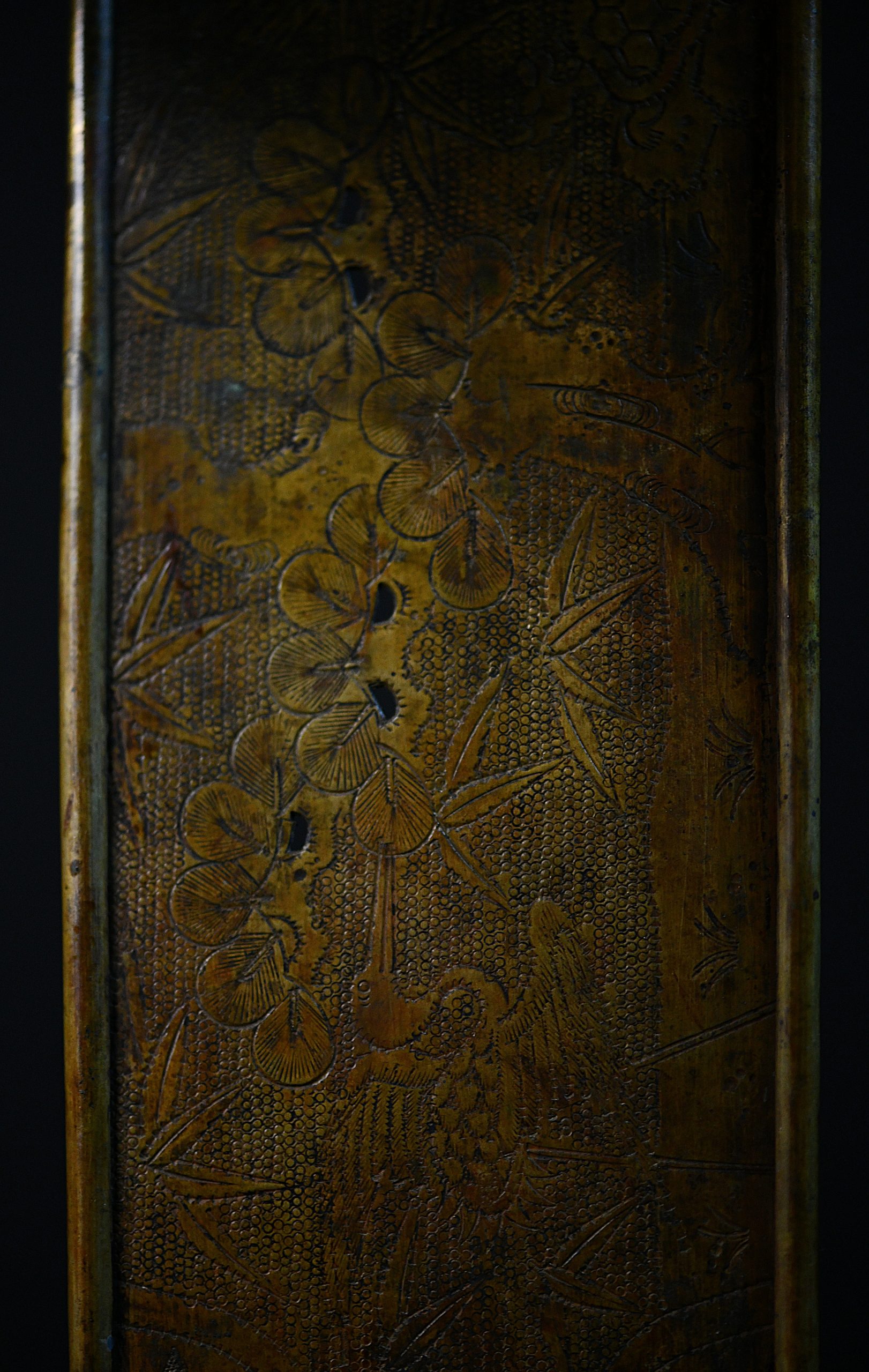
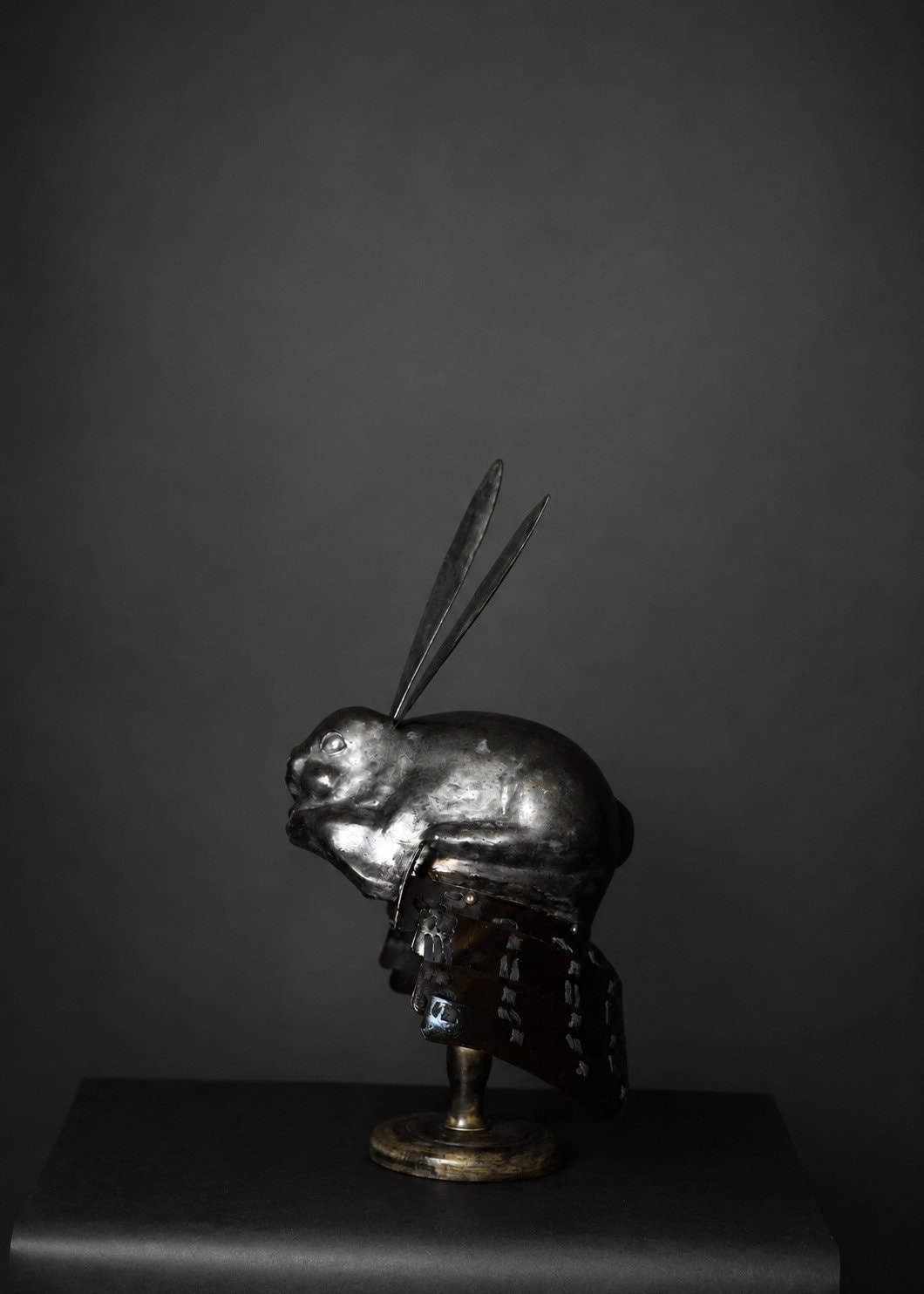
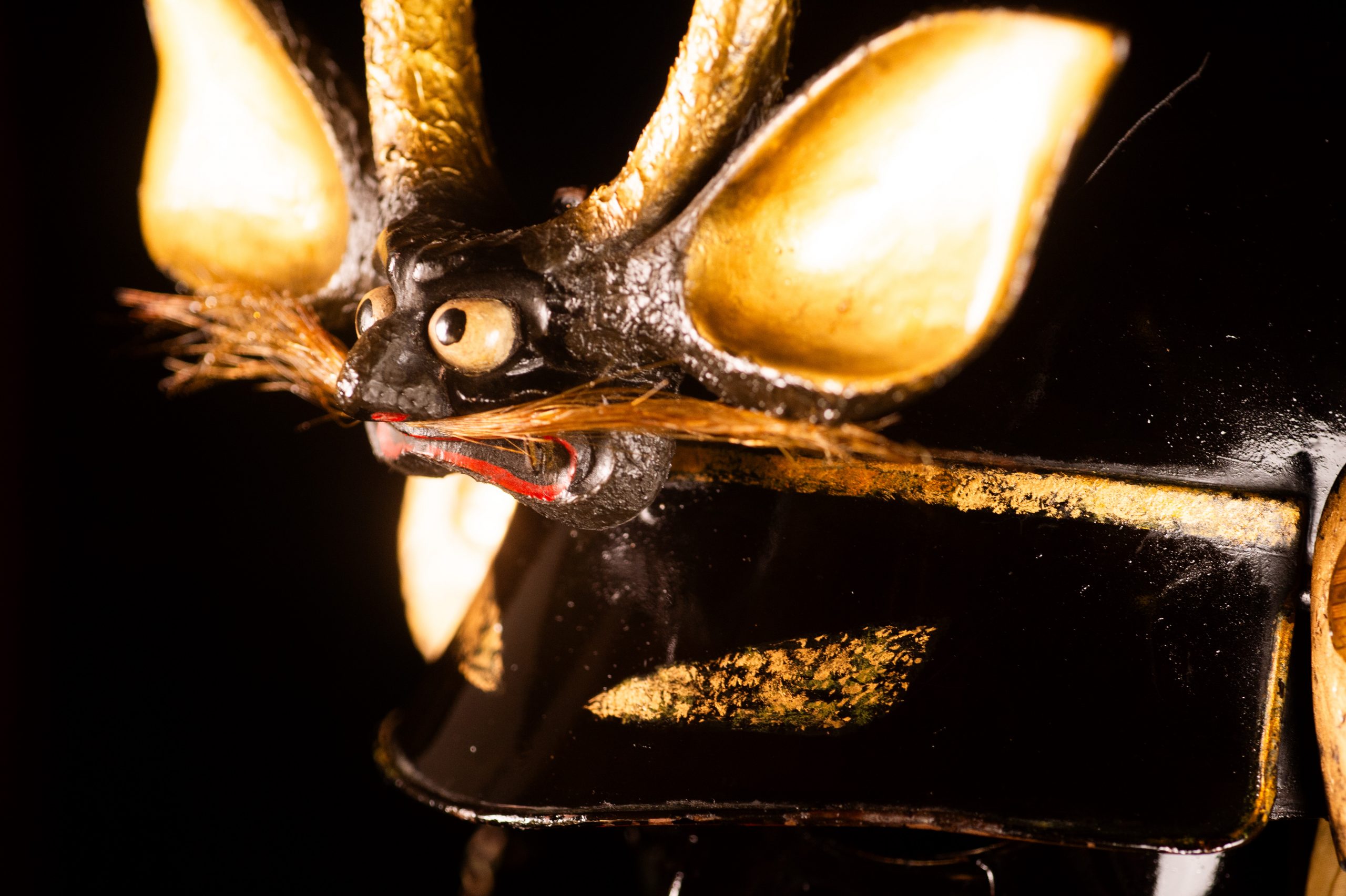
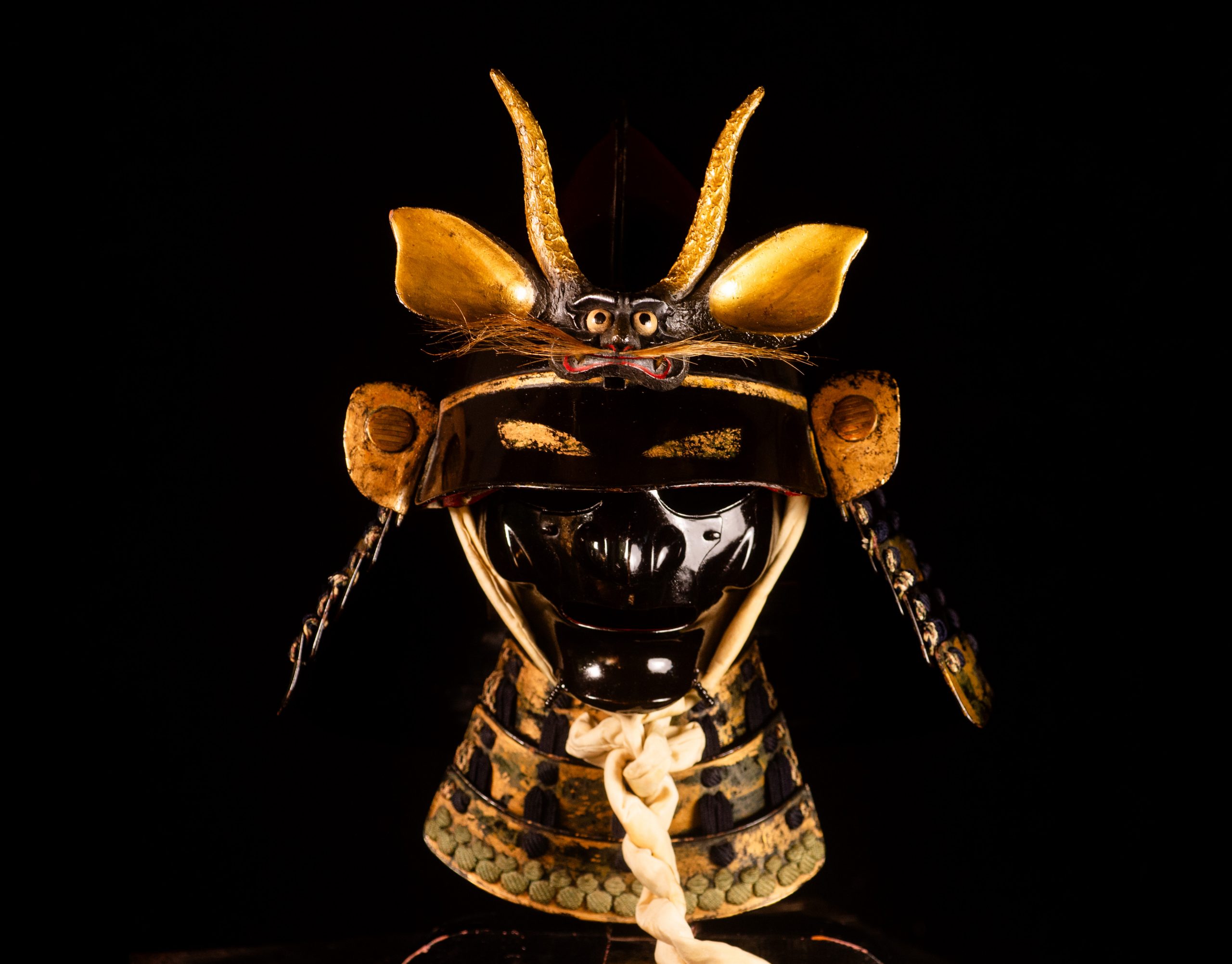
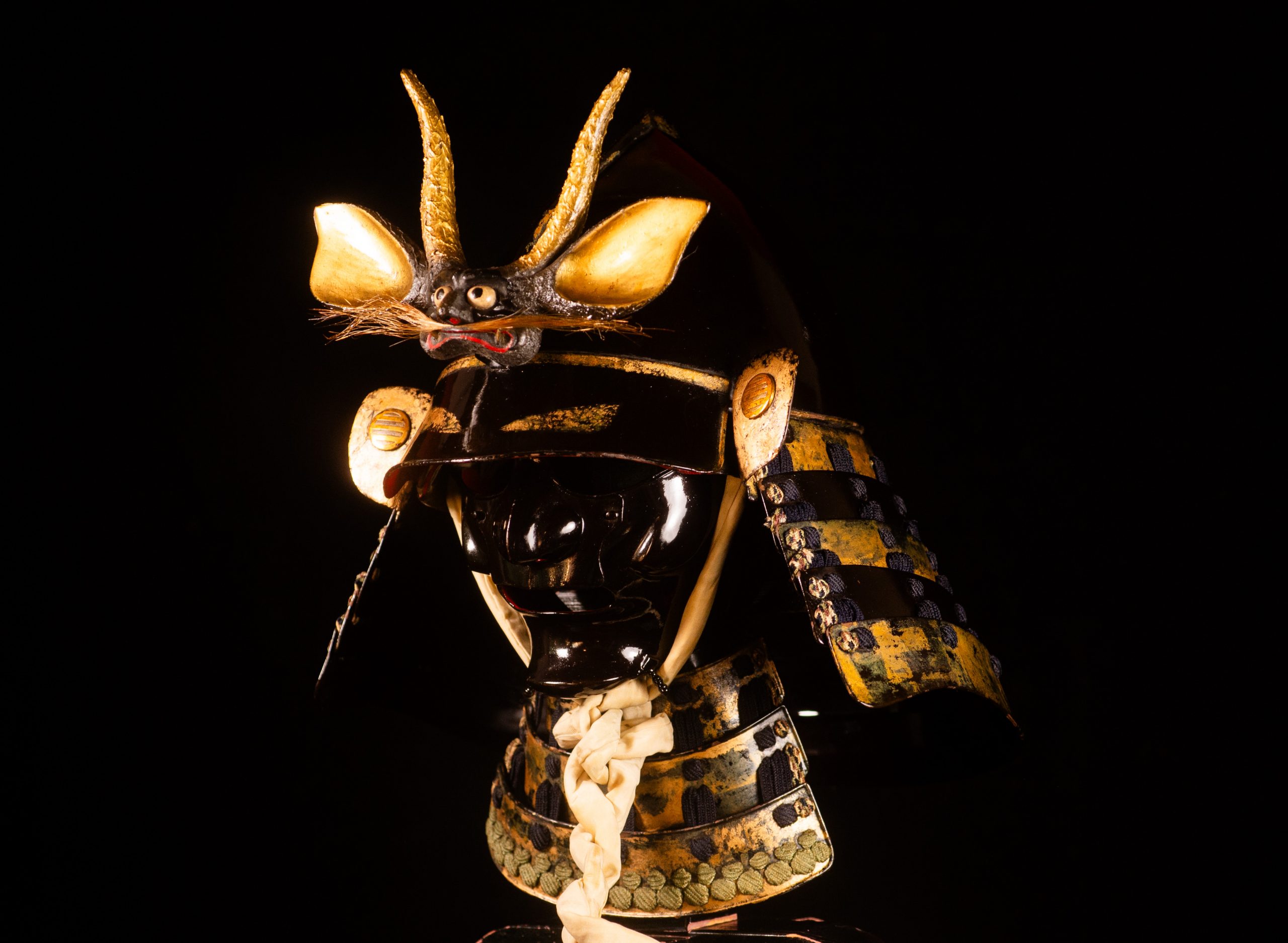
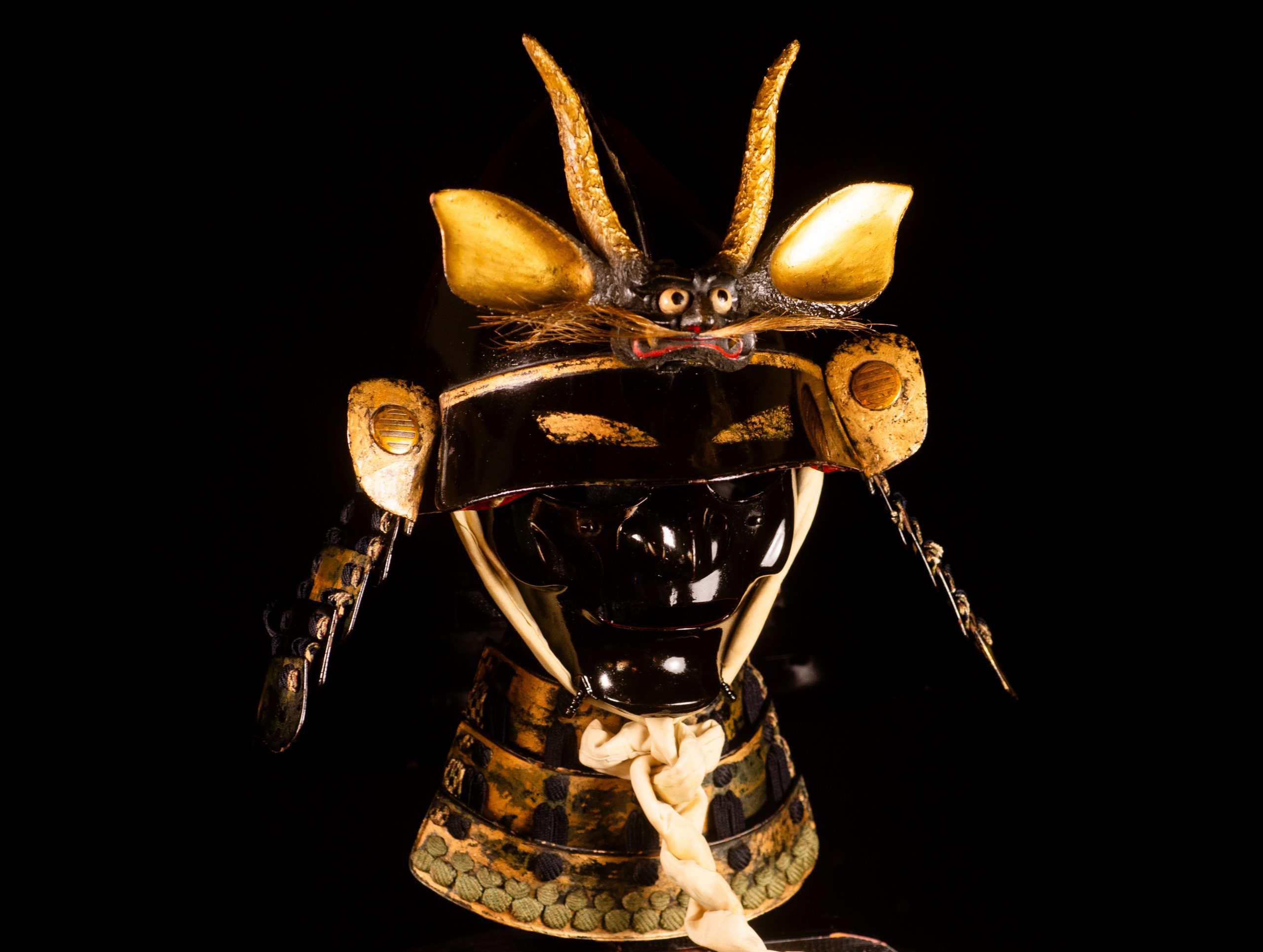
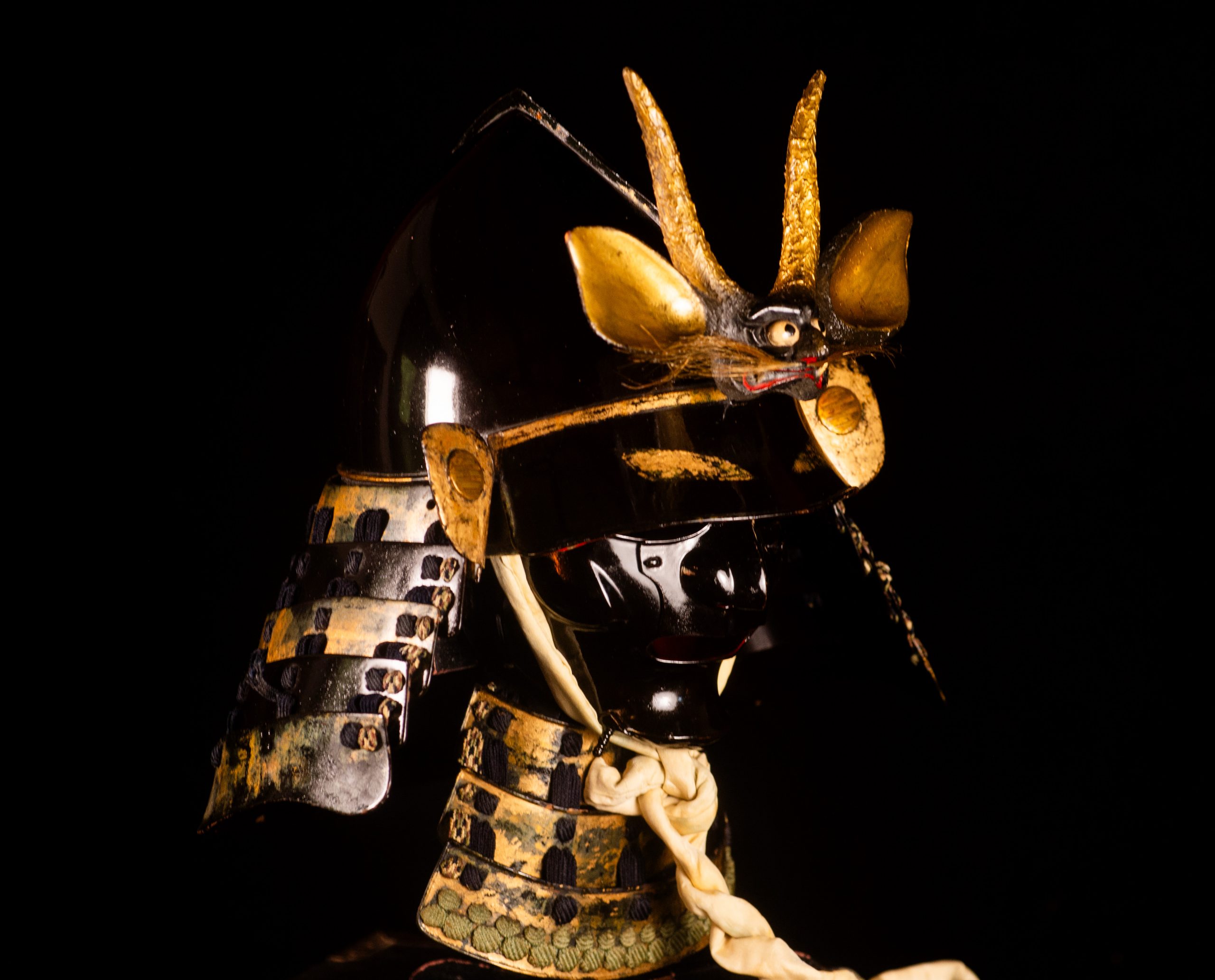
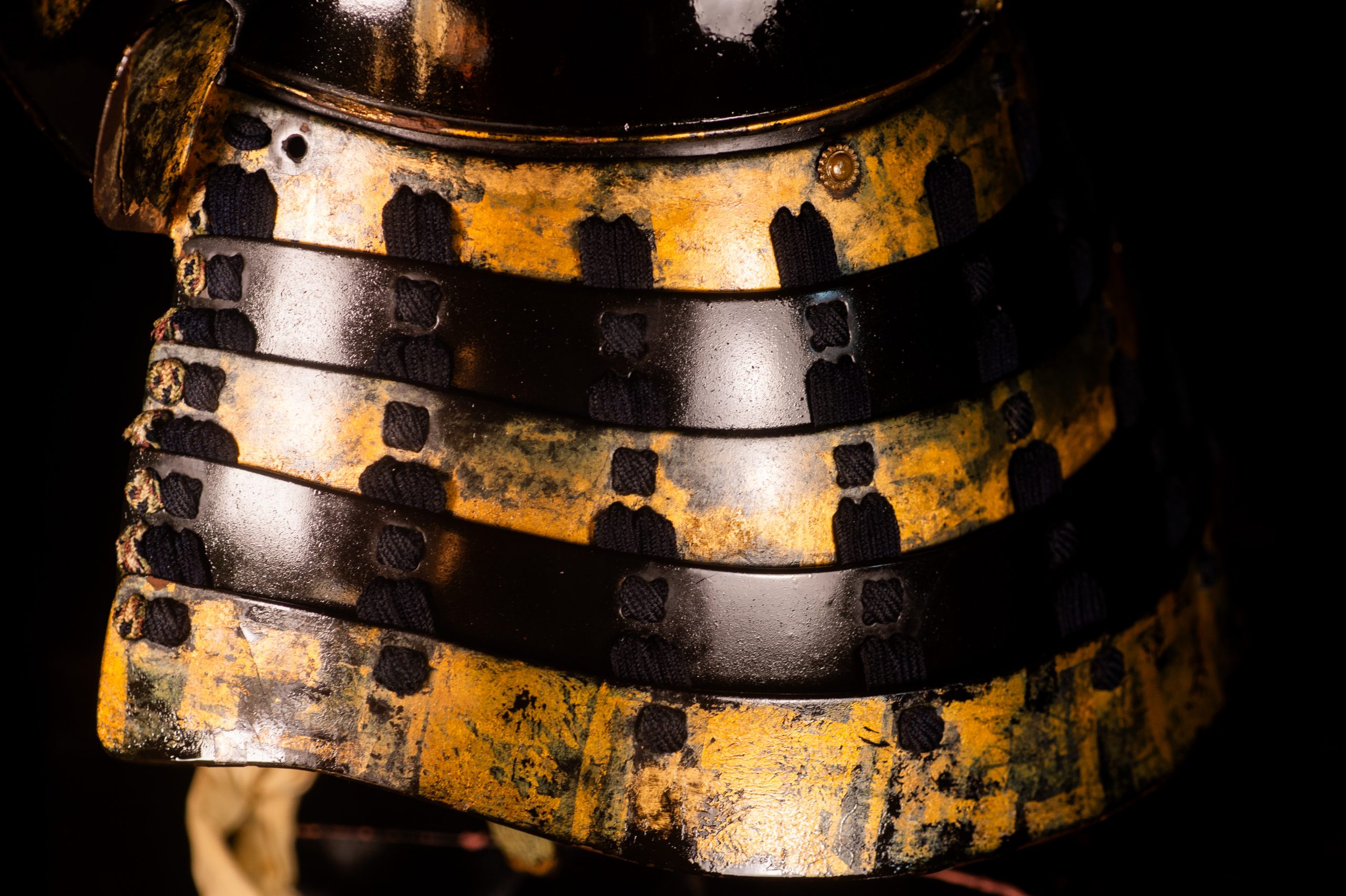
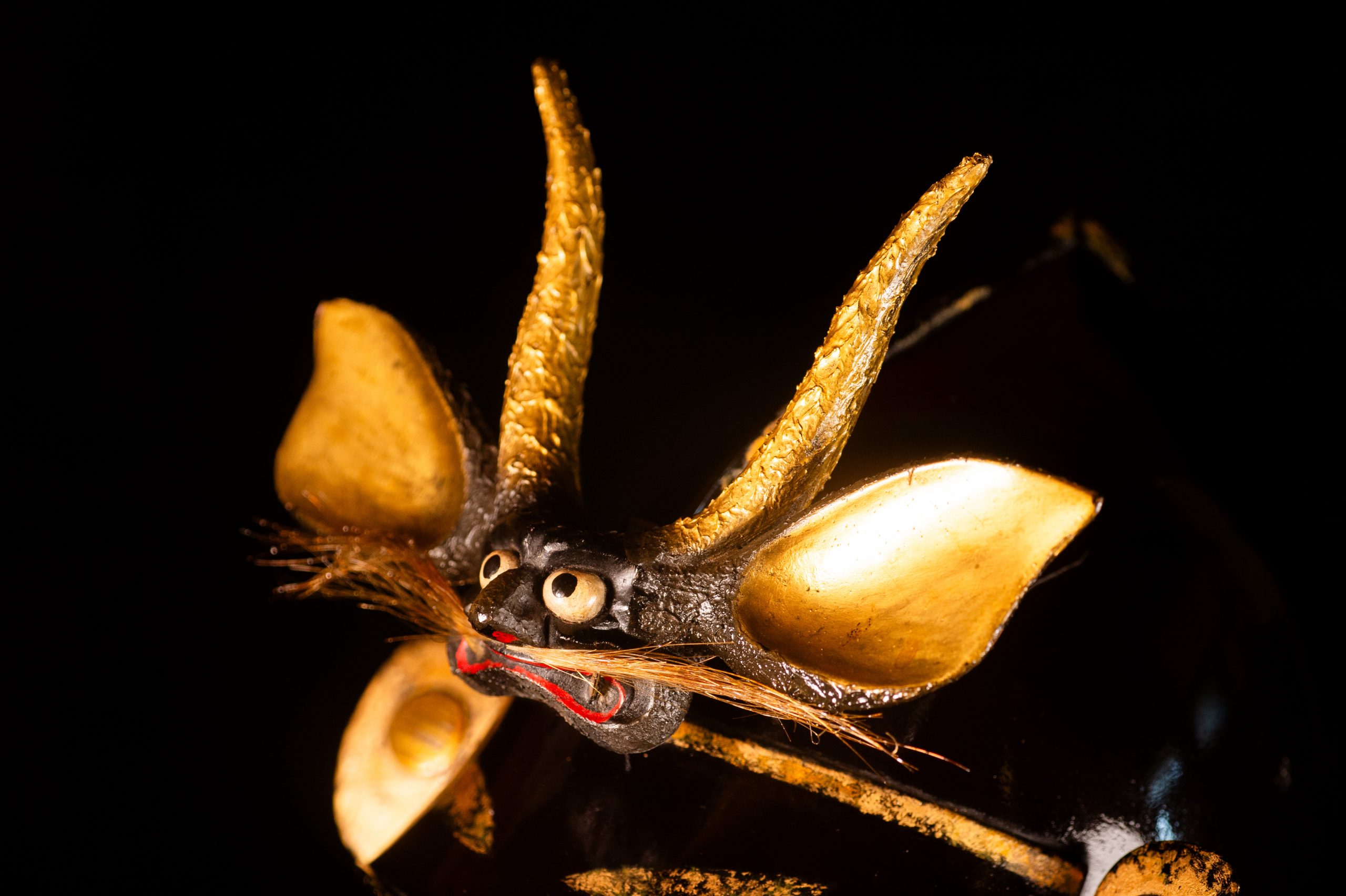
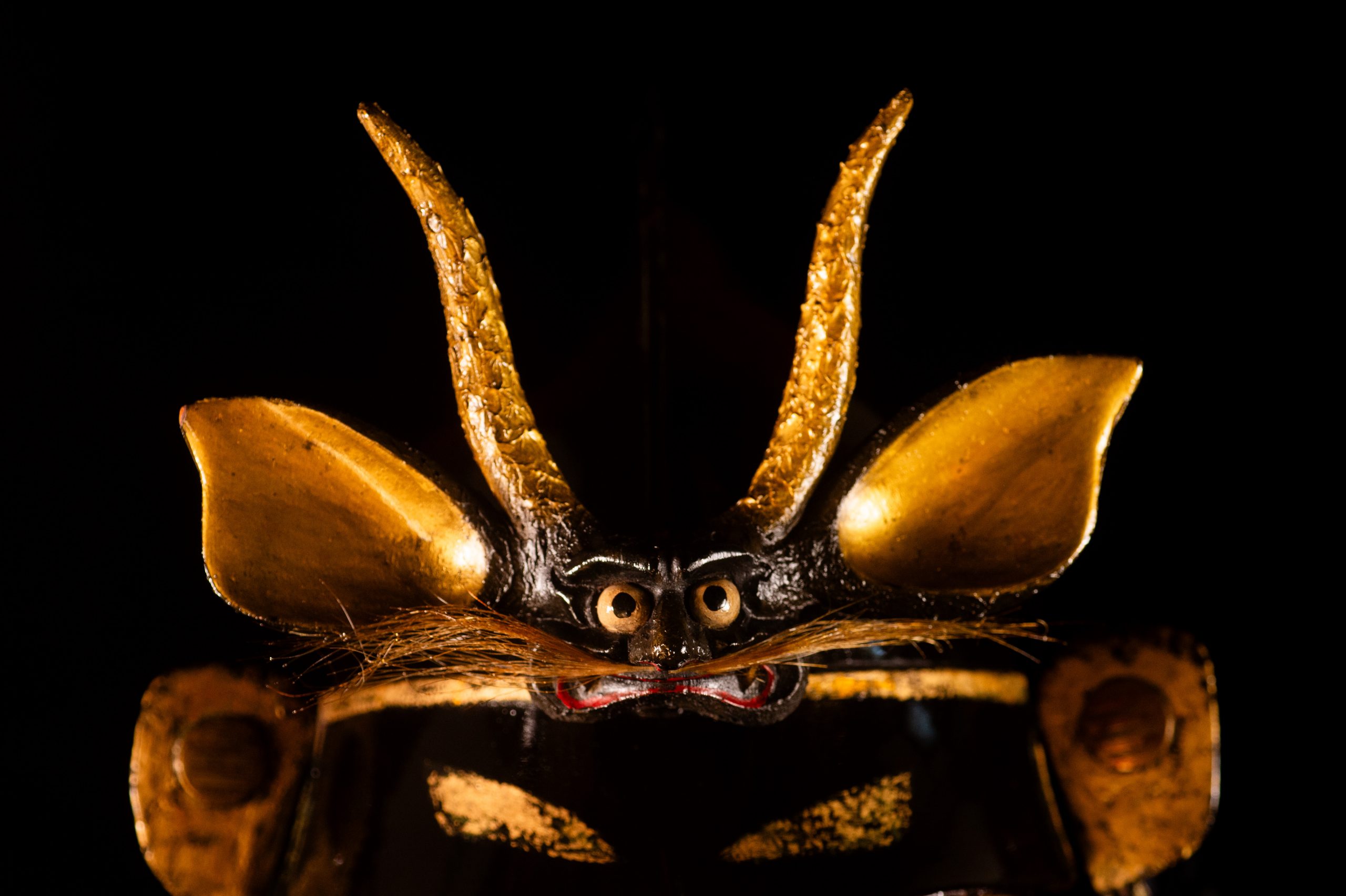
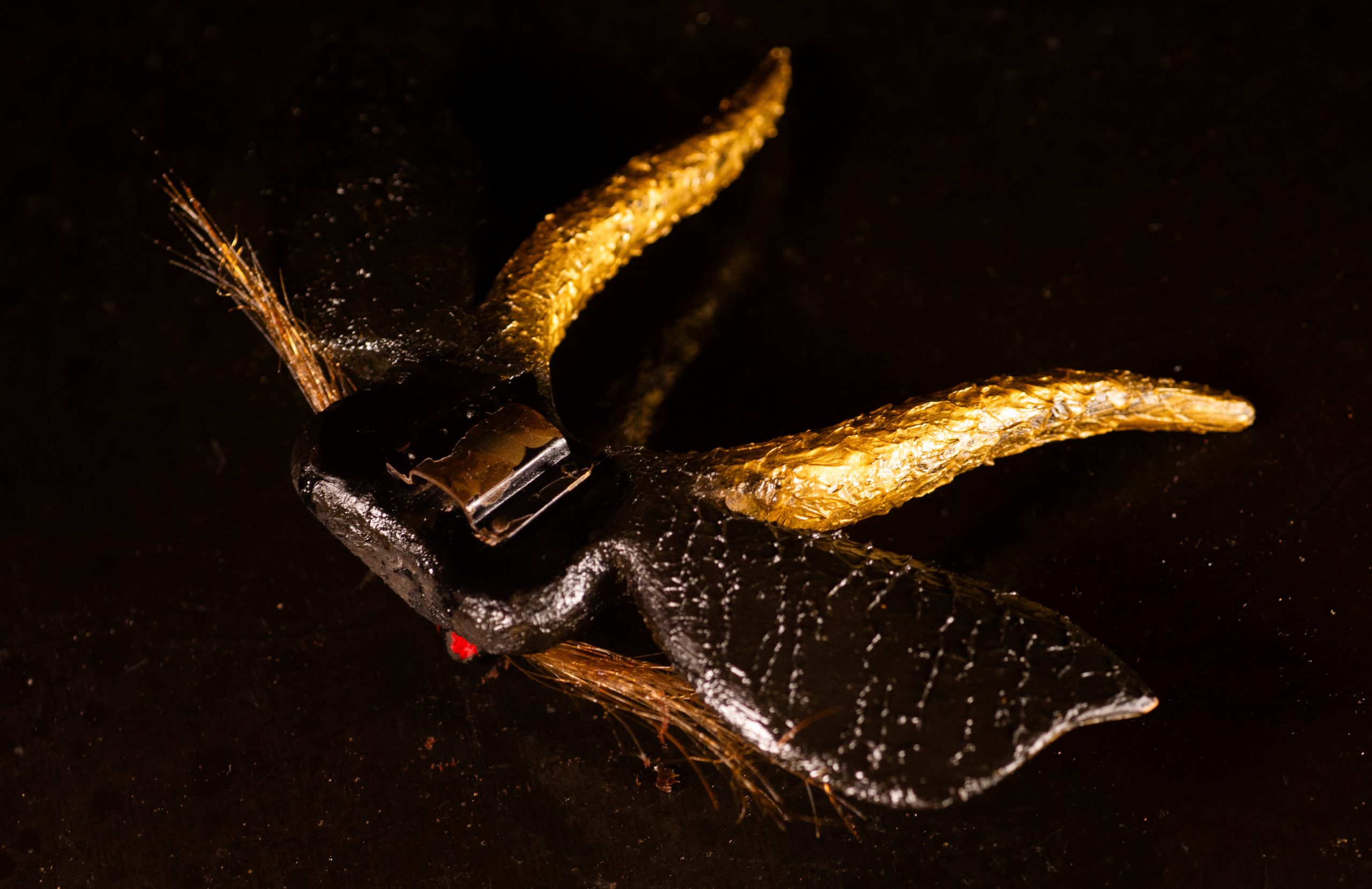
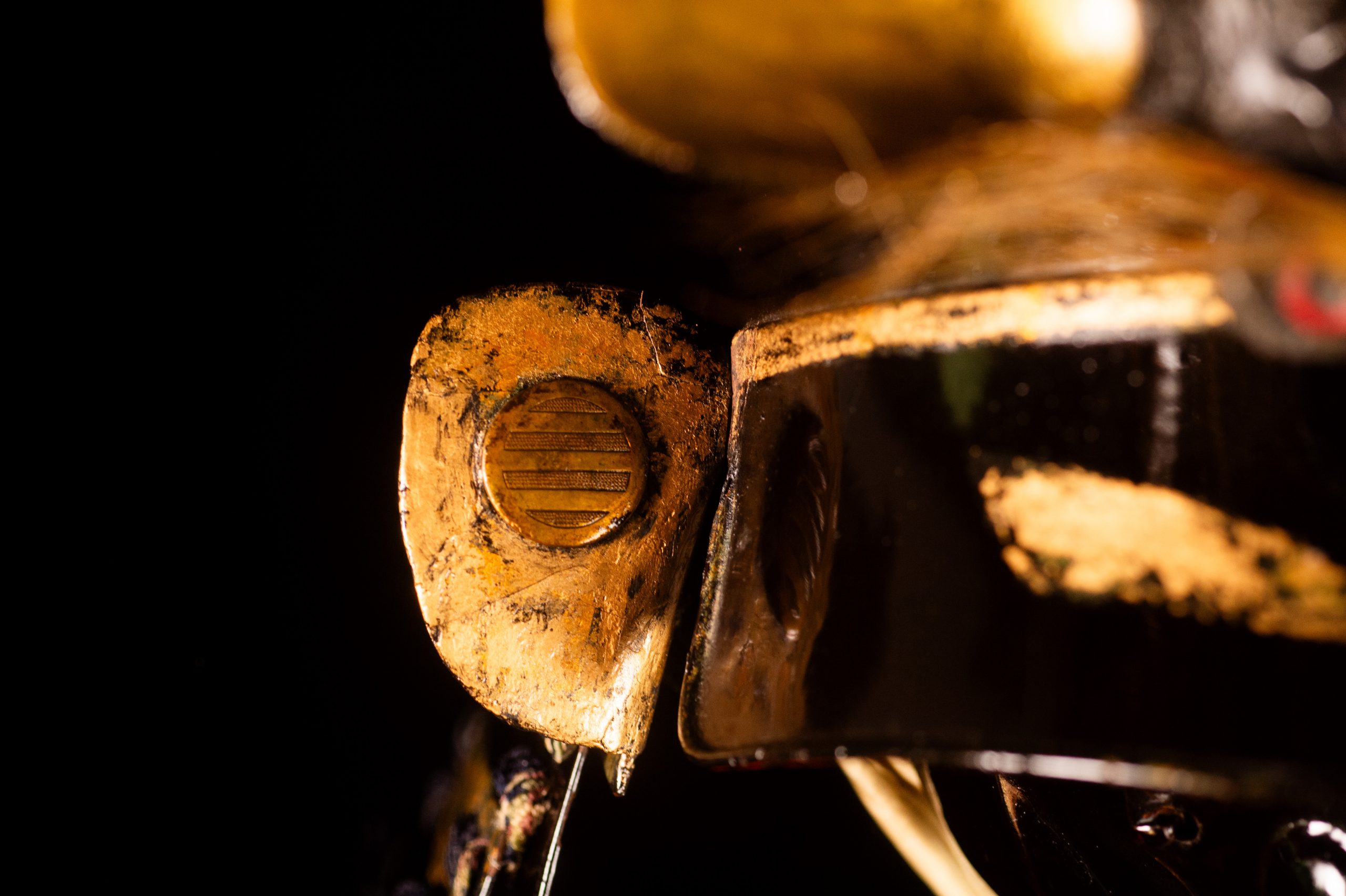
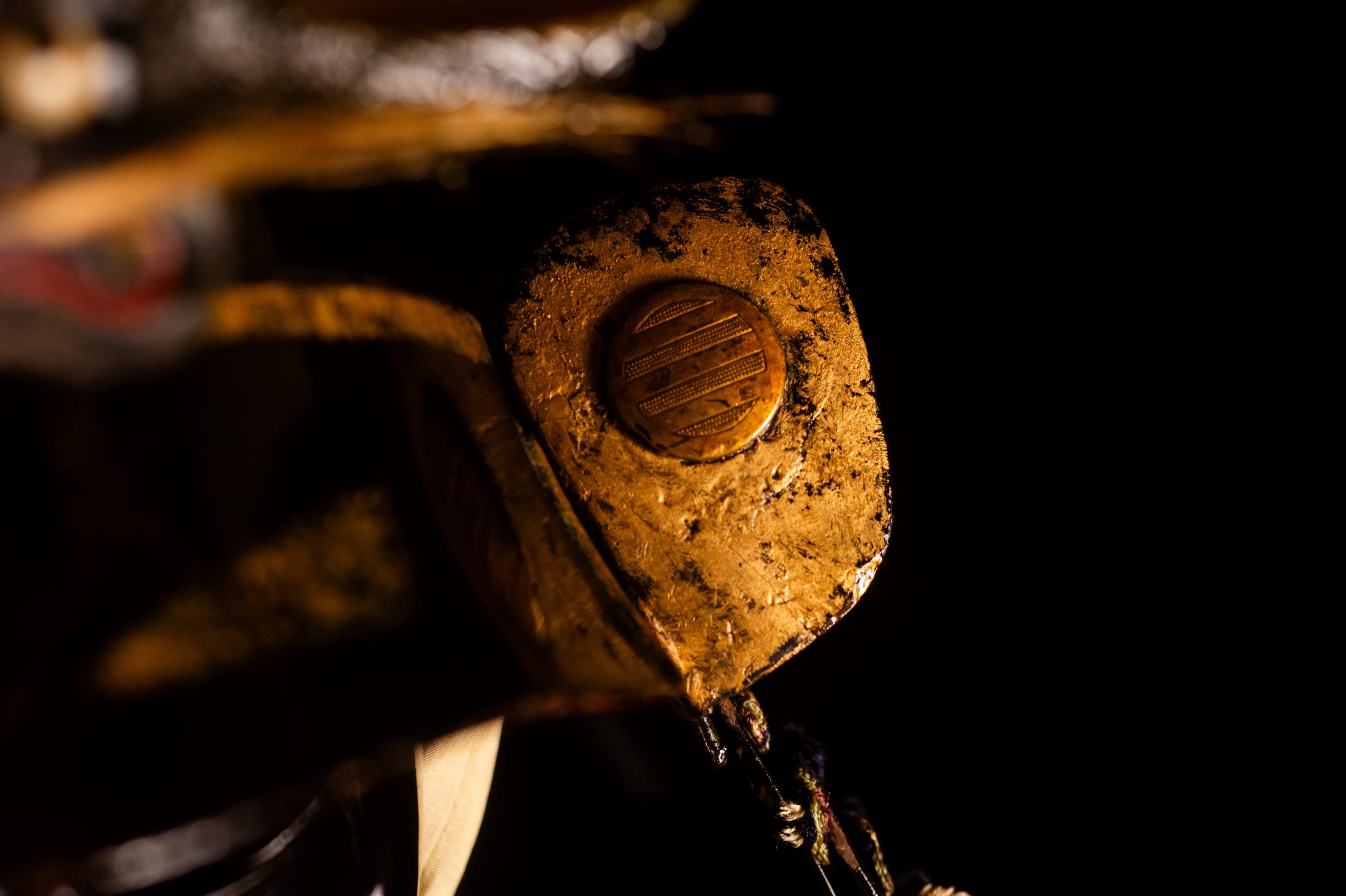
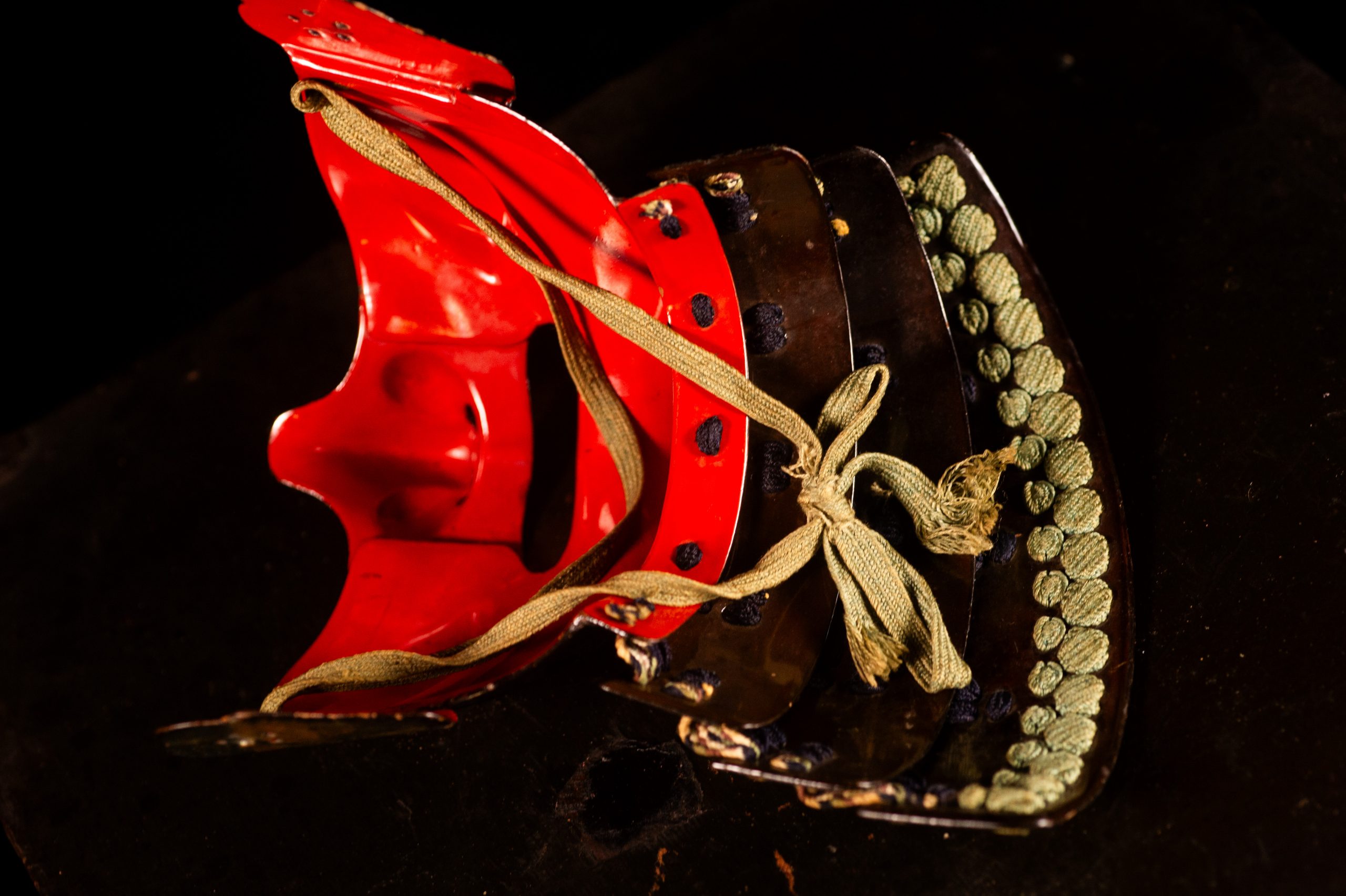
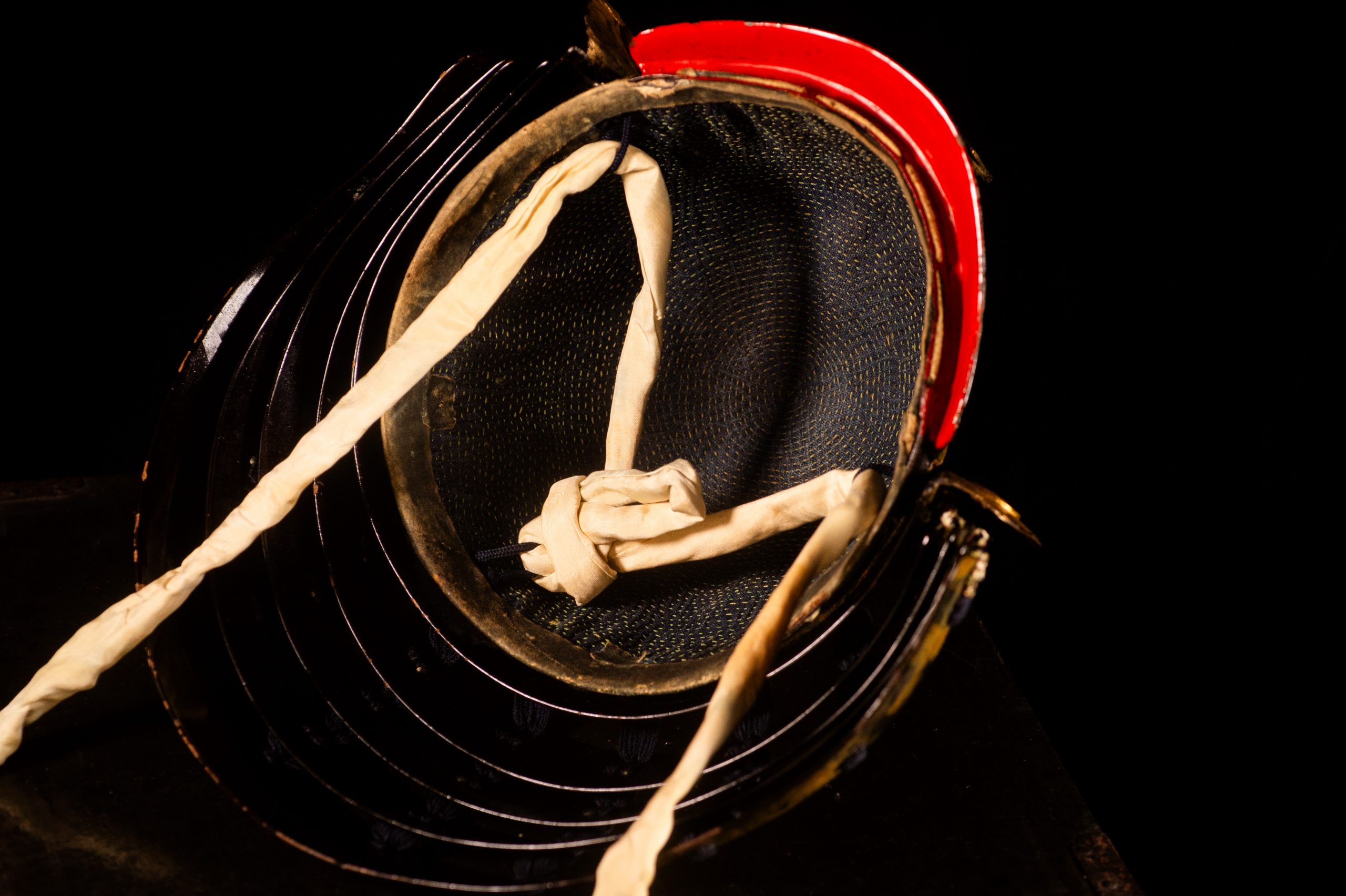
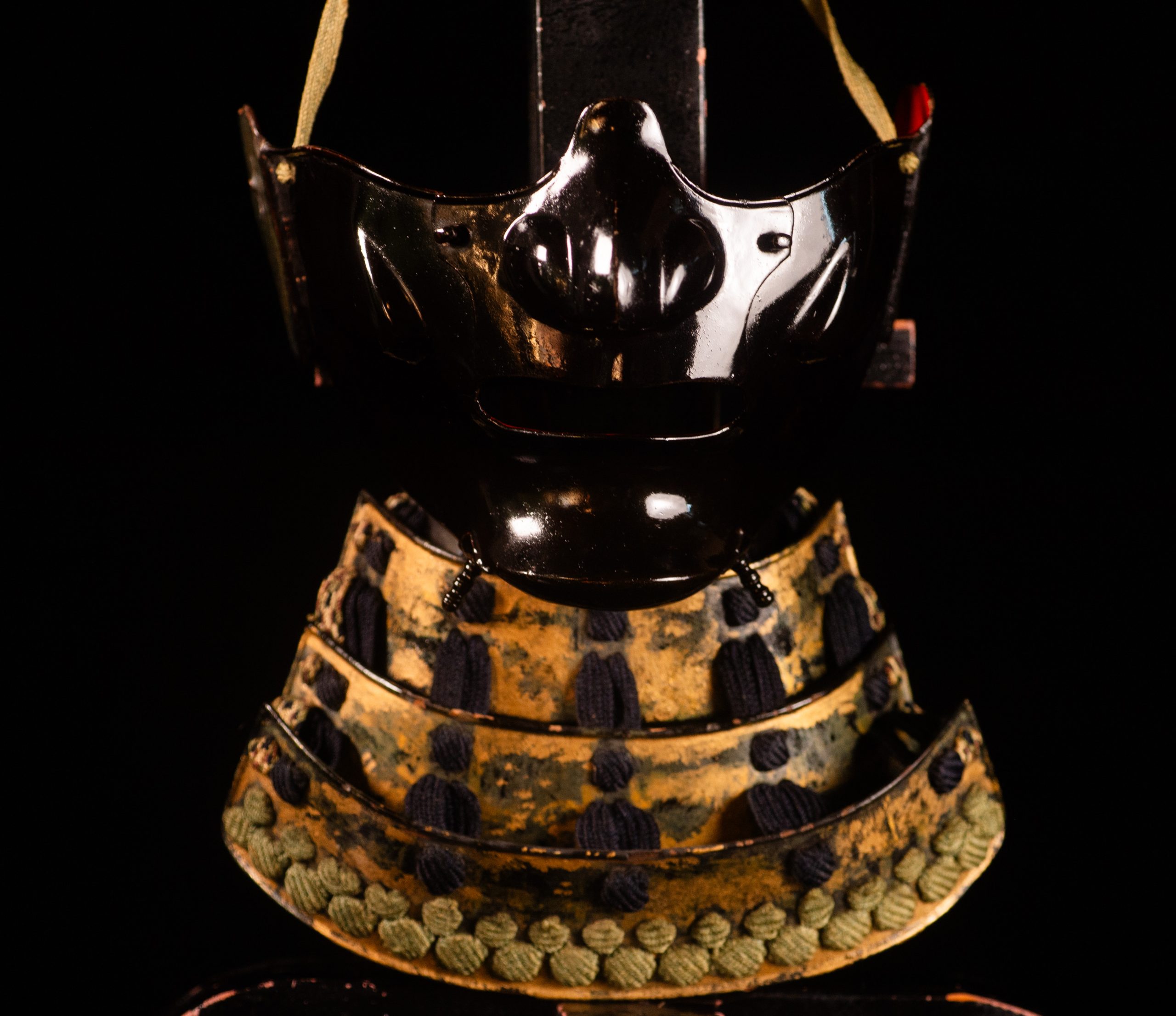
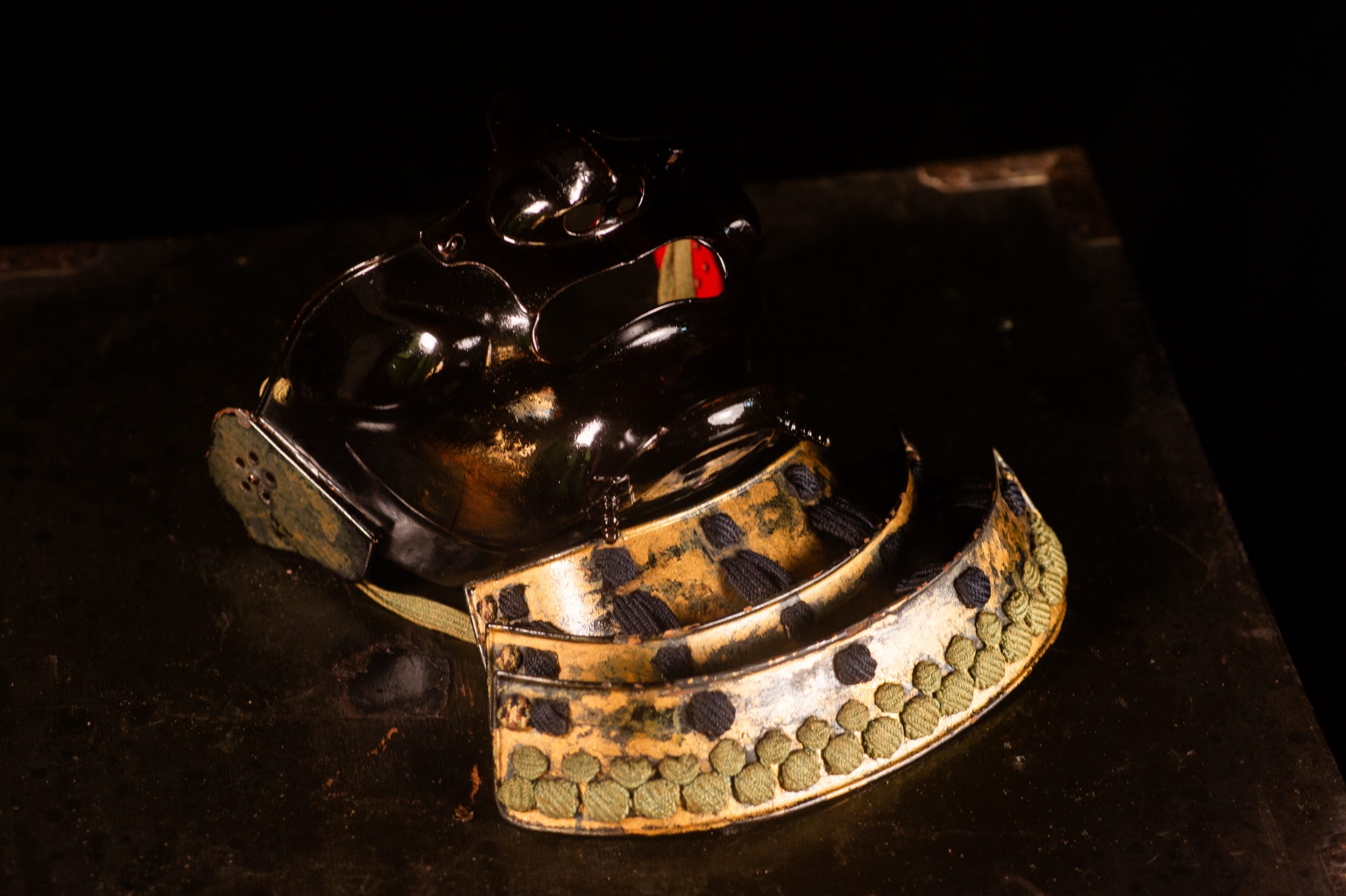
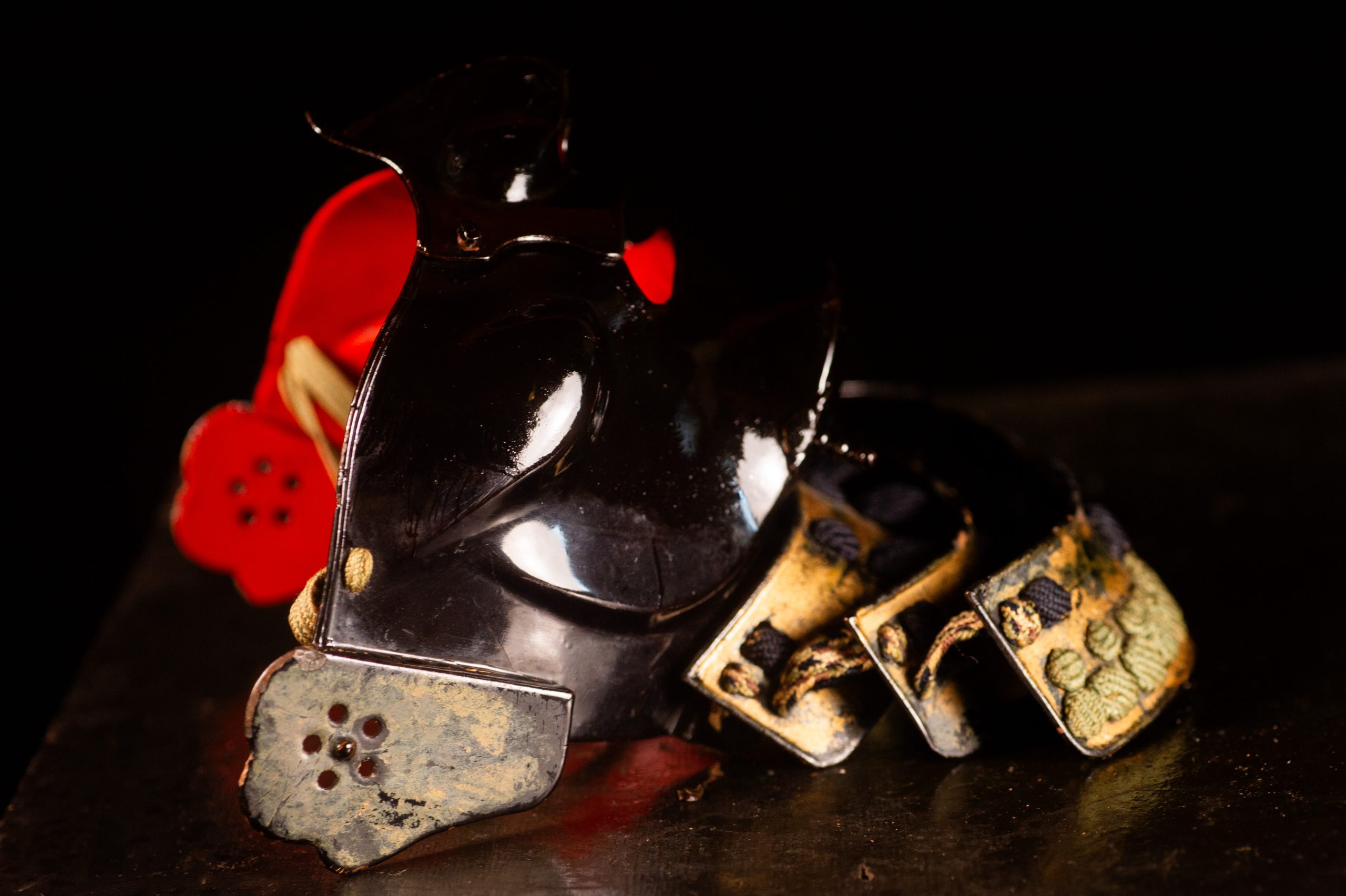
Comes with certificate of supein Nihonto. Japanese Kabuto with figural maedate and gilt kuwagata — Edo period This kabuto is defined by a deliberately dramatic, high-impact aesthetic: a deep black-lacquered hachi, a broad lamellar shikoro with a strong chromatic identity (black, gilt and indigo), and a sculptural maedate with a zoomorphic/demonic character, crowned by kuwagata-style gilt horns and oversized gilt ears. It is the kind of helmet designed to command attention in a display setting, with an unmistakably ceremonial-martial visual language. Technical description and components Hachi (helmet bowl) High-profile hachi finished in glossy black lacquer, featuring a pronounced longitudinal ridge that sets the silhouette. A metal-edged rim is visible along the upper boundary, visually framing the form and reinforcing the helmet’s architectural presence. Shikoro (neck guard) Wide, flared shikoro built from overlapping lacquered lames (ita), with gilt-applied finishing that reads as both decorative intent and age-consistent wear. The odoshi lacing in indigo creates a bold, regular pattern with strong graphic rhythm. Along the edge, a green-toned knotted/laced border provides a third color accent and a richer overall palette. Fukigaeshi Compact gilt-finished fukigaeshi featuring a clearly visible circular mon: a roundel containing three horizontal bars. It adds immediate heraldic presence without needing interpretation—the motif is clean, legible, and visually valuable. Maedate A highly expressive sculptural maedate: a zoomorphic/demonic face with prominent eyes, a mouth accented with red, and moustache whiskers made from natural hair. The composition is completed by gilt kuwagata-style horns and large gilt ears. The reverse shows a metal mounting clip consistent with traditional attachment for this type of ornament. Condition (visual observation) Overall, the piece presents in solid condition. The lacquer retains good gloss and readability, with natural wear and visible losses/rubbing on gilt areas and edges consistent with age. The lacing appears intact and visually strong. The maedate retains its volume, expression, and organic elements (whiskers), which is particularly significant for figural crests.
NihontoWatchOffered by Supein Nihonto


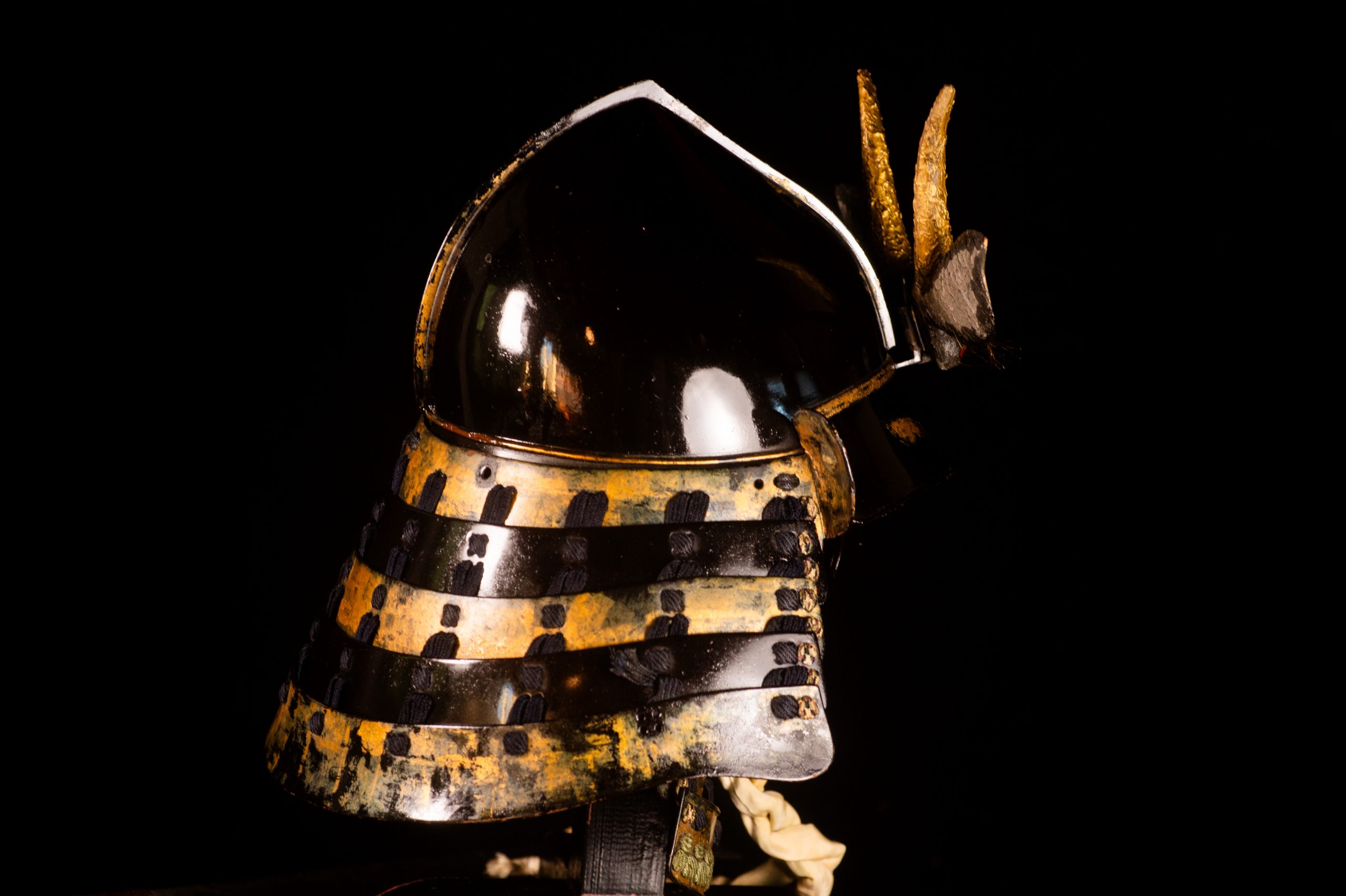
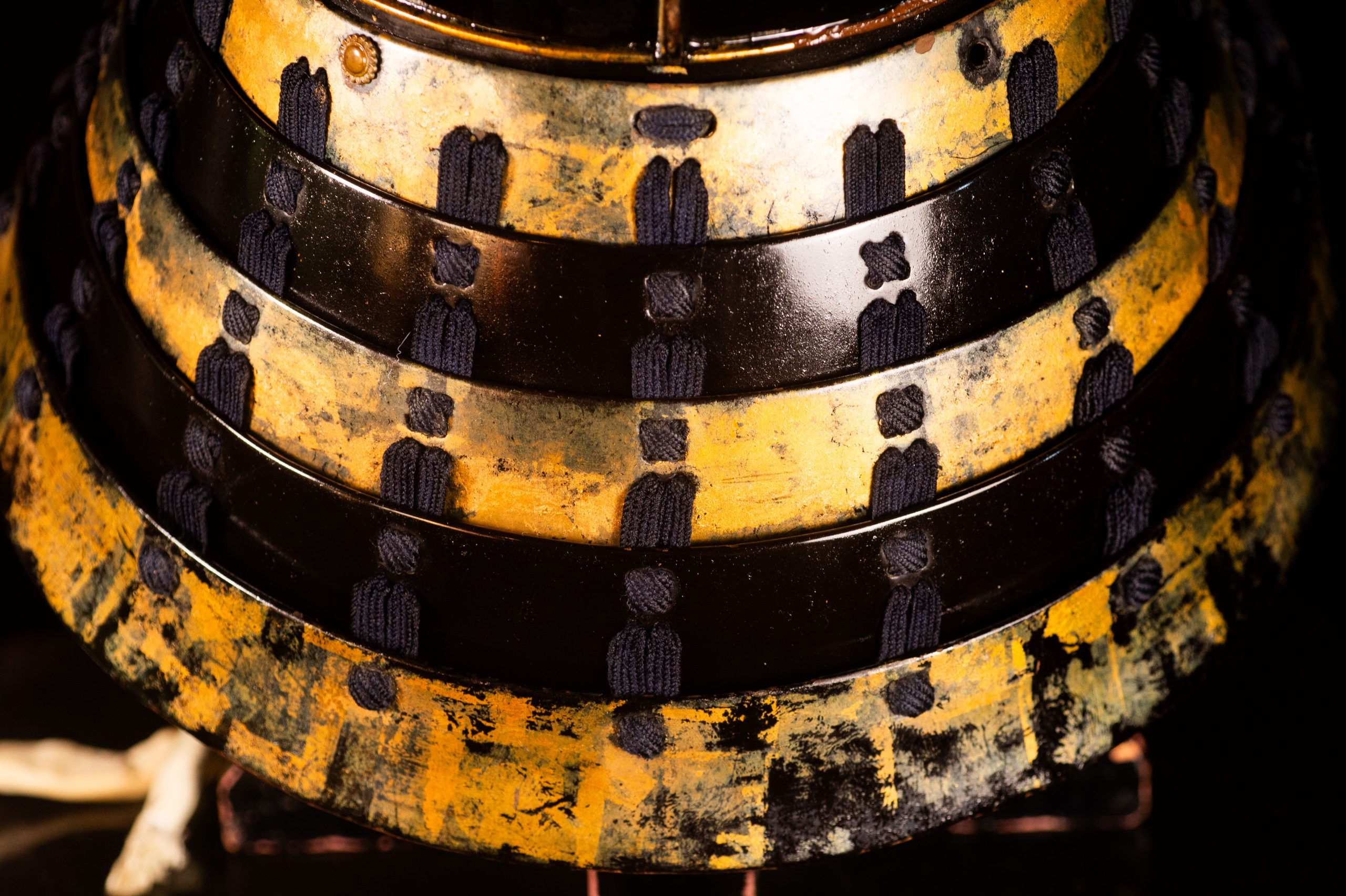
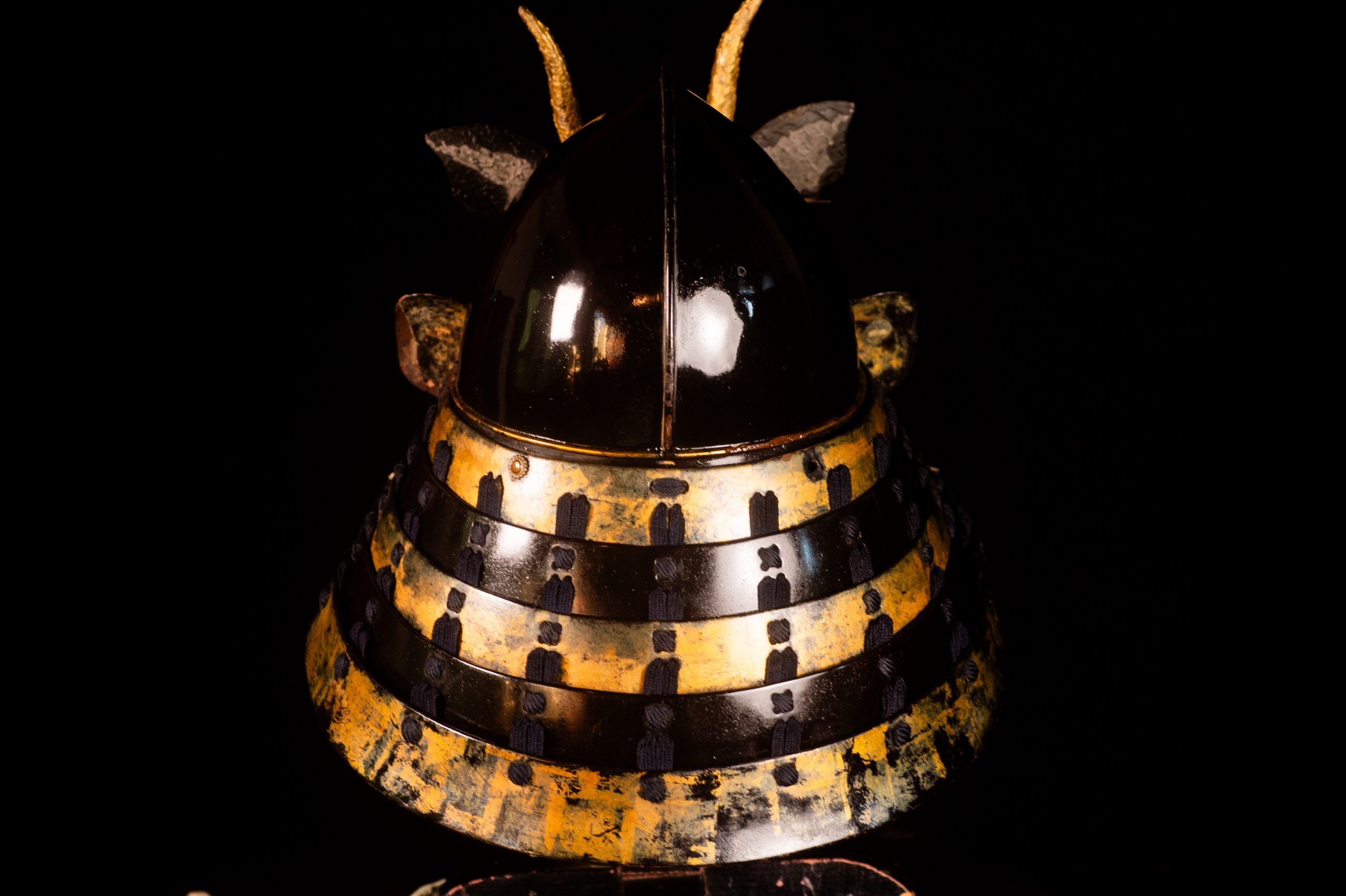
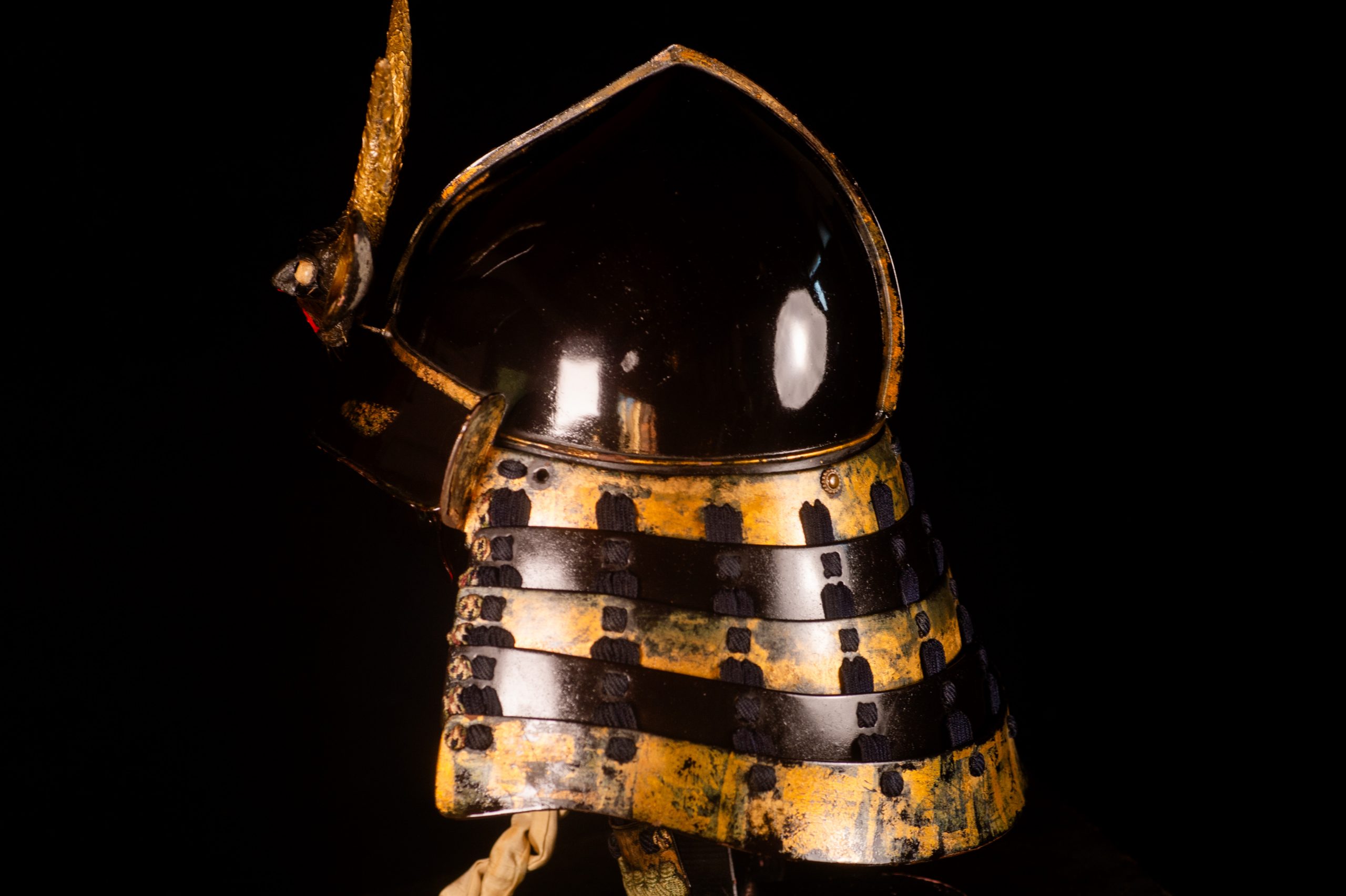

Single component
Unsigned
Kebiki-odoshi · Kon (dark blue)
circular mon with three horizontal bars
Edo
We could not find an authenticity certificate on the seller’s listing. Japanese armour is normally certified by the Nihon Katchū Bugu Kenkyū Hozon Kai (the armour society). Without one, the attribution is the seller’s own assessment and has not been independently verified — treat it with caution and ask the dealer about certification before buying.
14-day return if items arrive damaged or in unexpected condition; customer bears return shipping + insurance; items returned in original condition with all accessories; antique armour non-returnable; only regular priced items refundable; shipping costs non-refundable.
€2,900