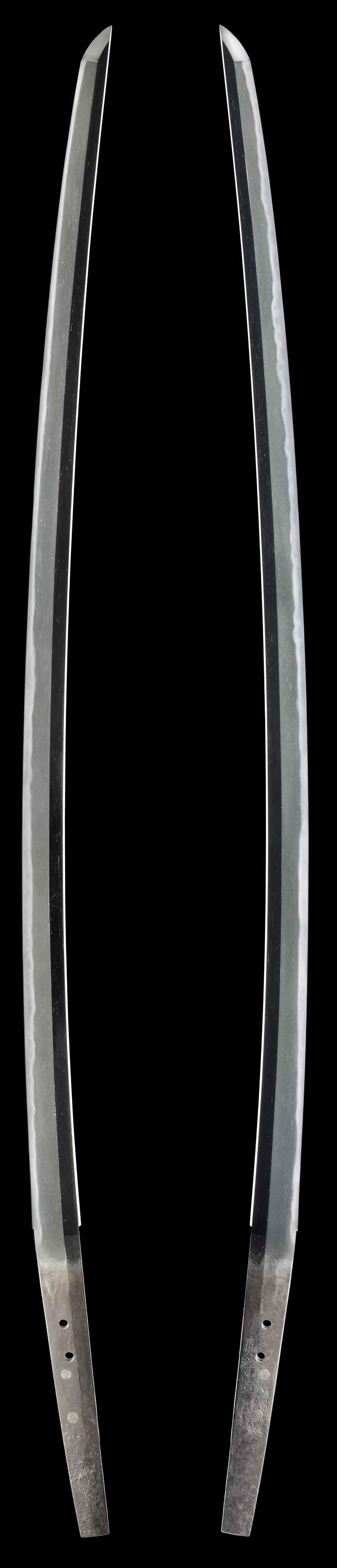
War at home and trade abroad made Muromachi Bizen the busiest forge region in Japan: a century of Sengoku demand after the Ōnin War, and export missions to Ming China carrying blades by the tens of thousands.
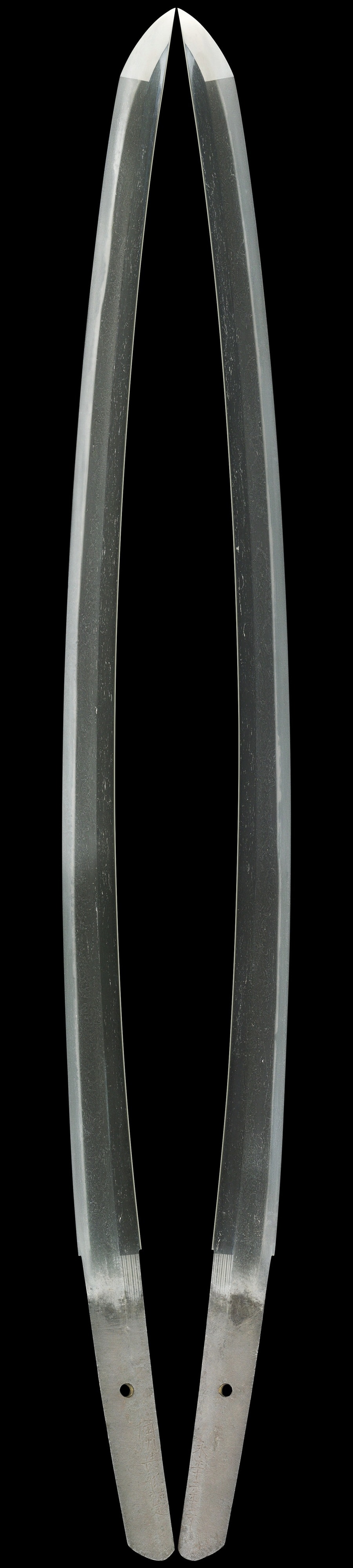
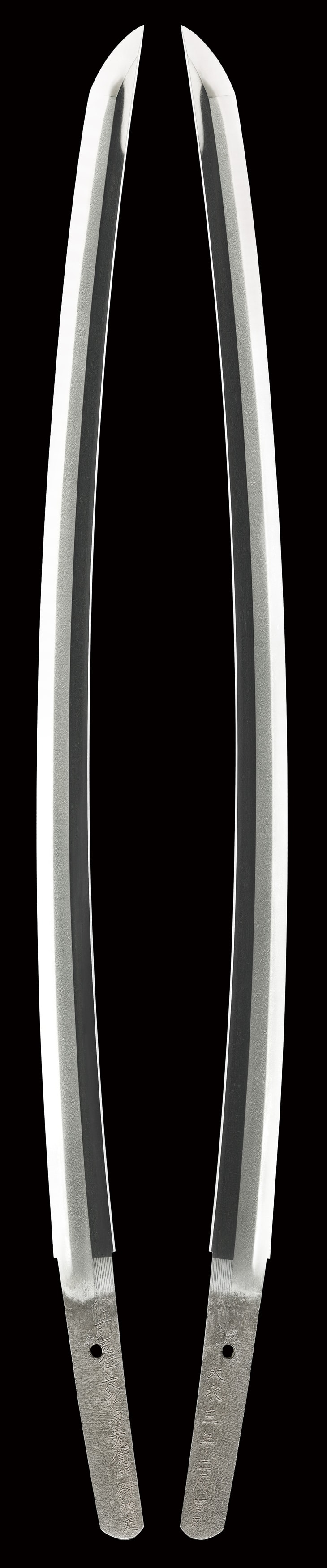
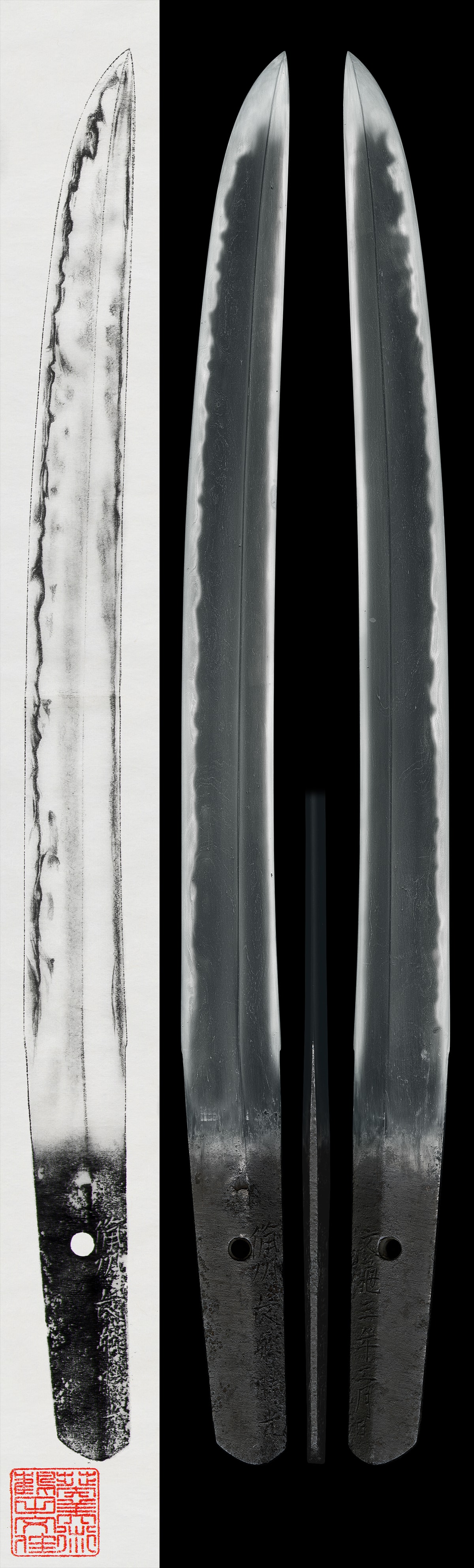
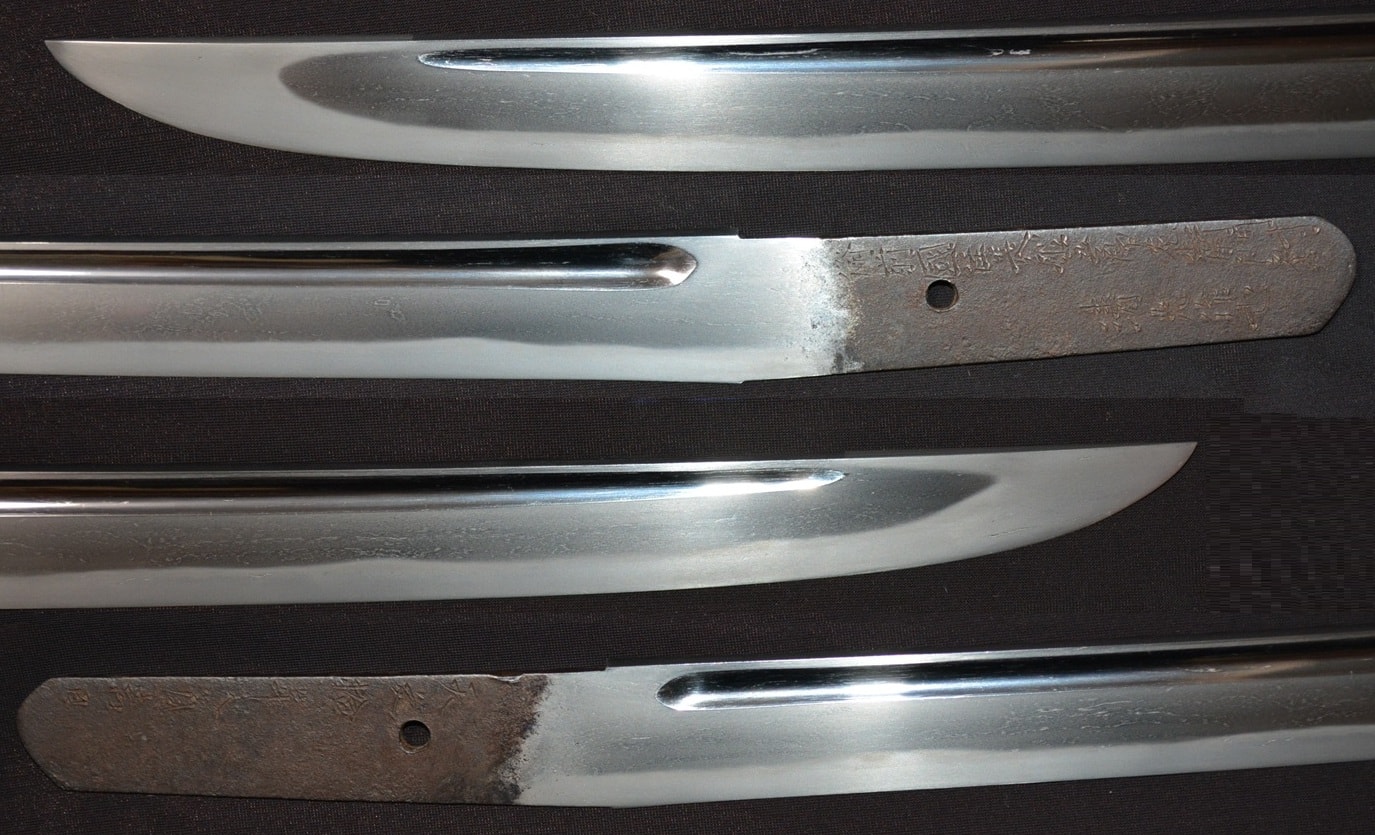
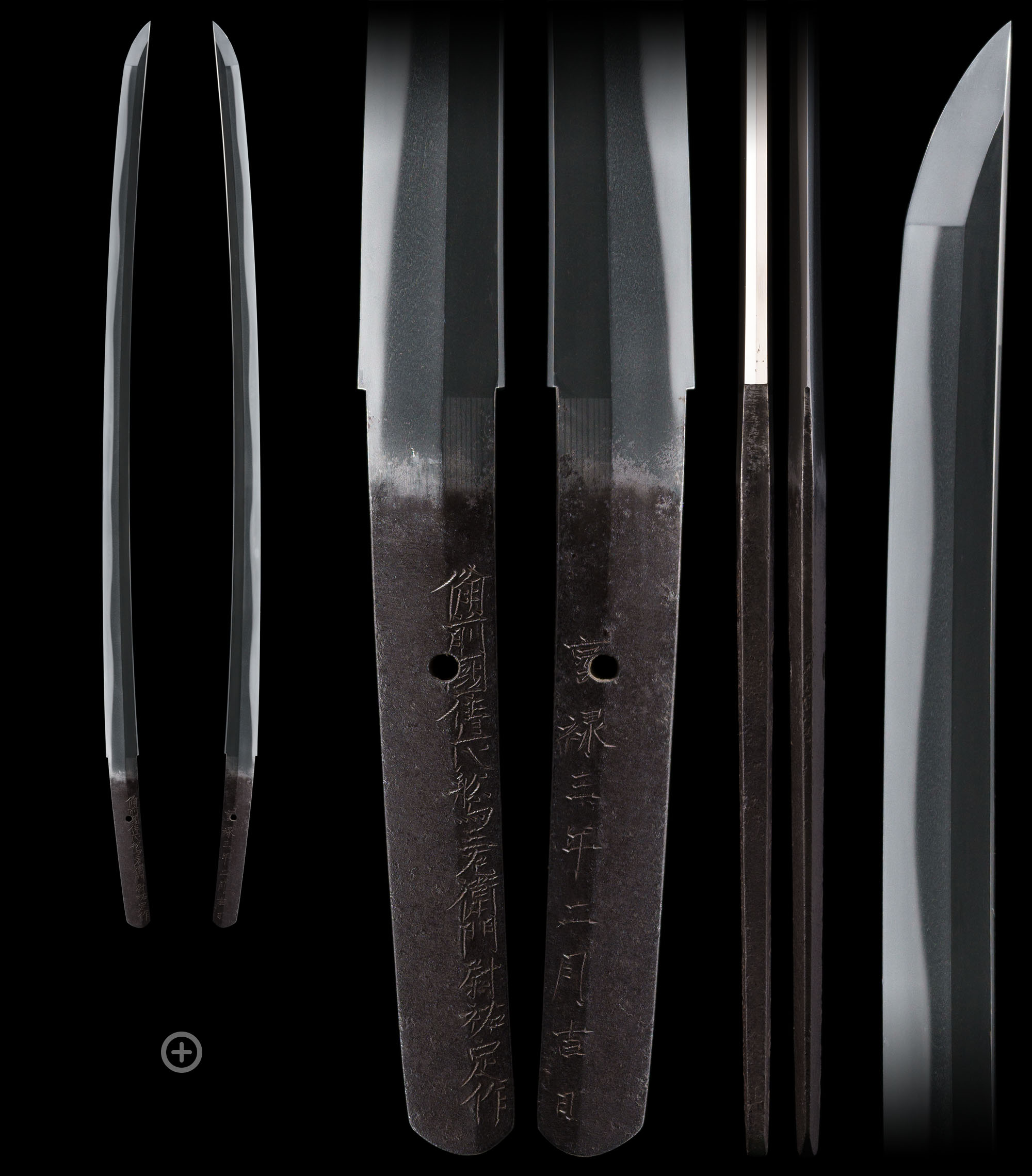
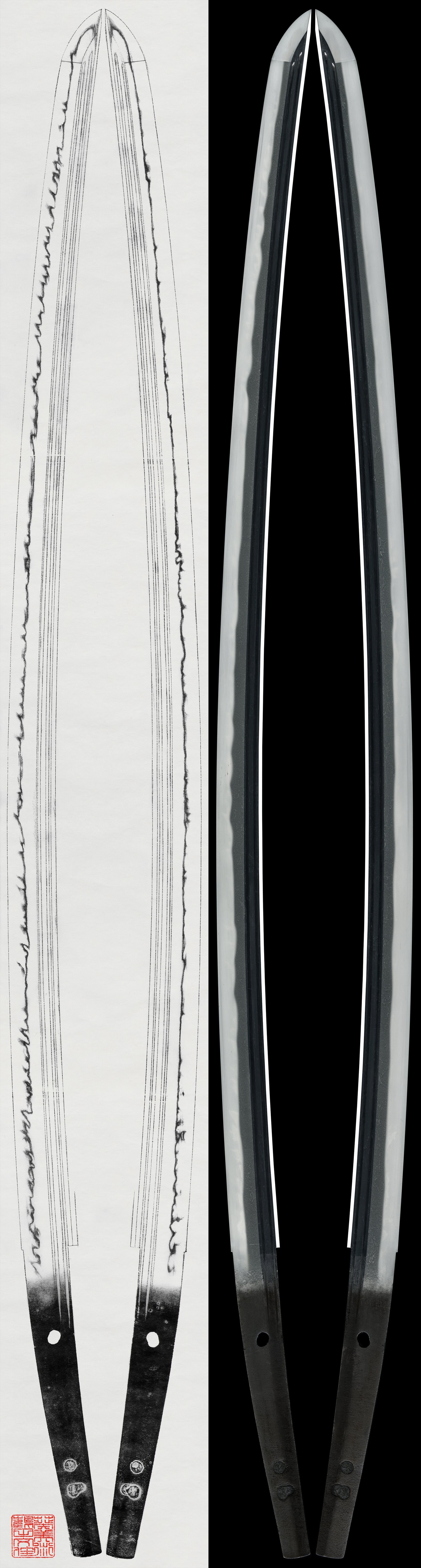
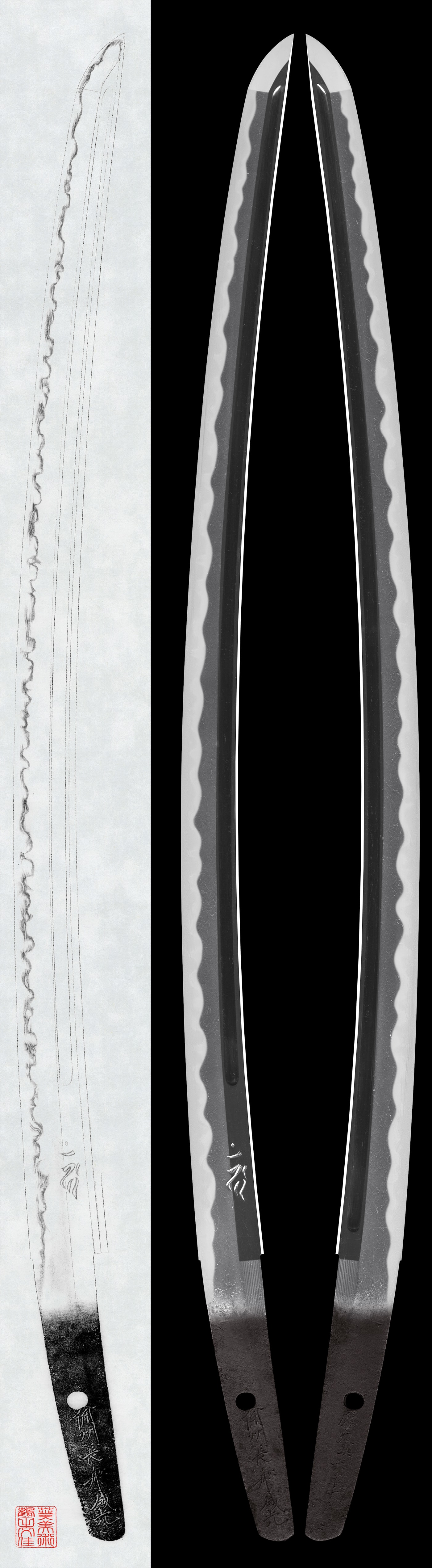
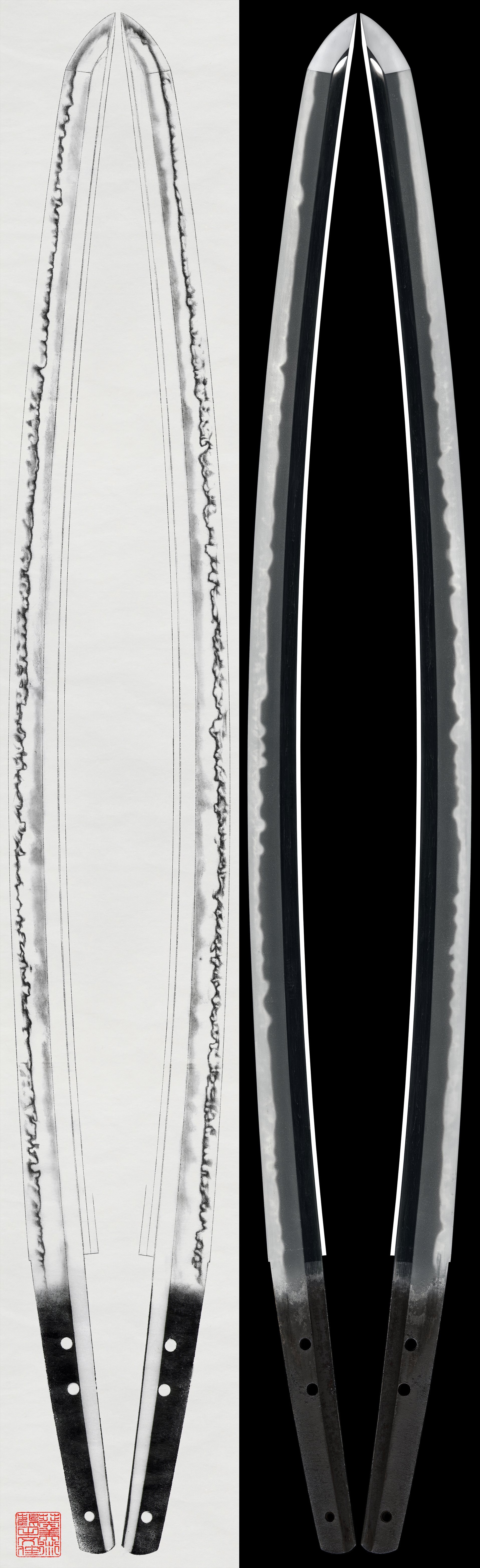
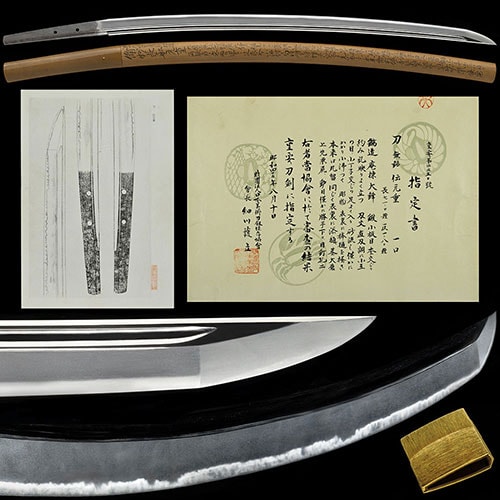
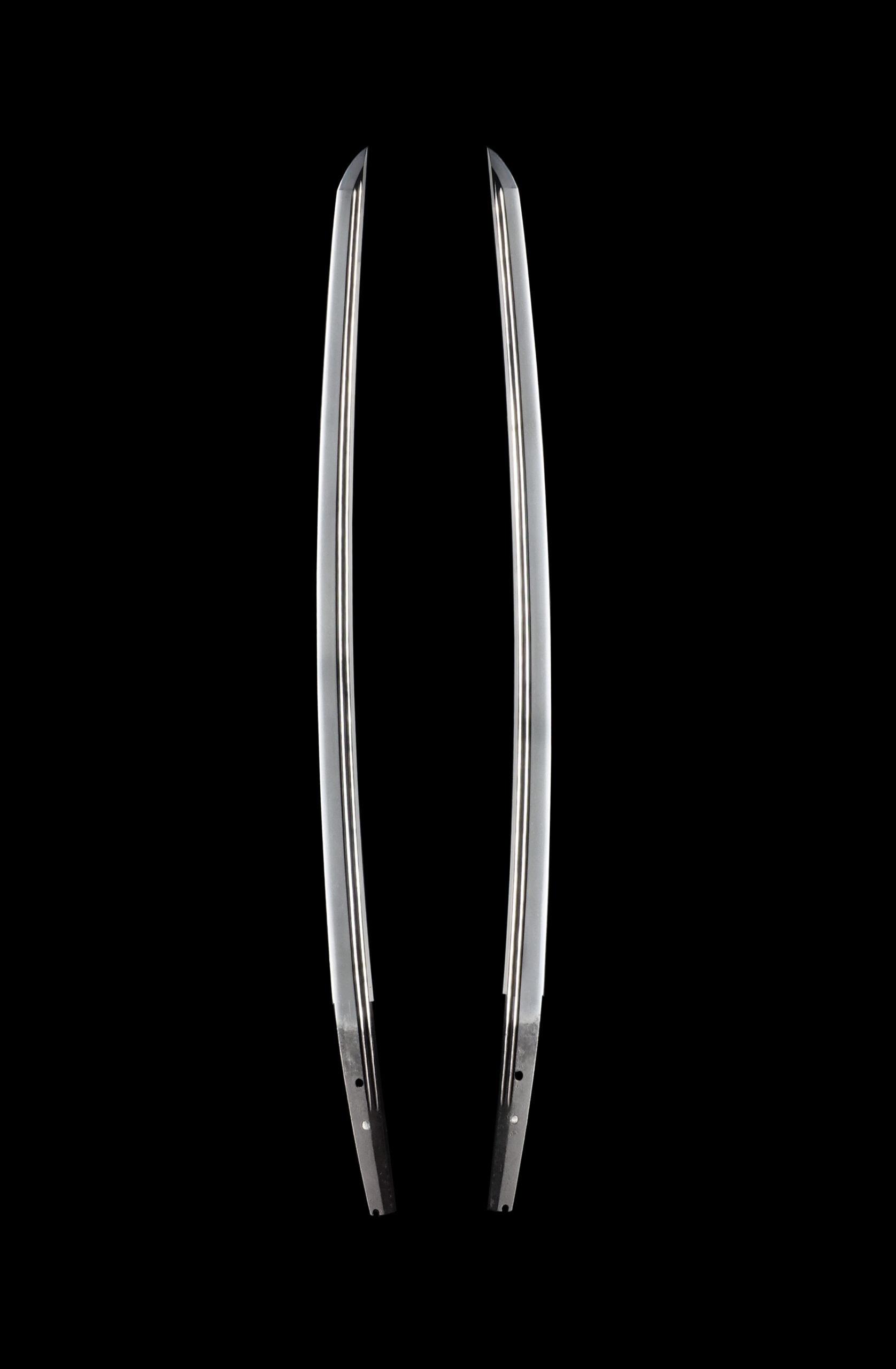
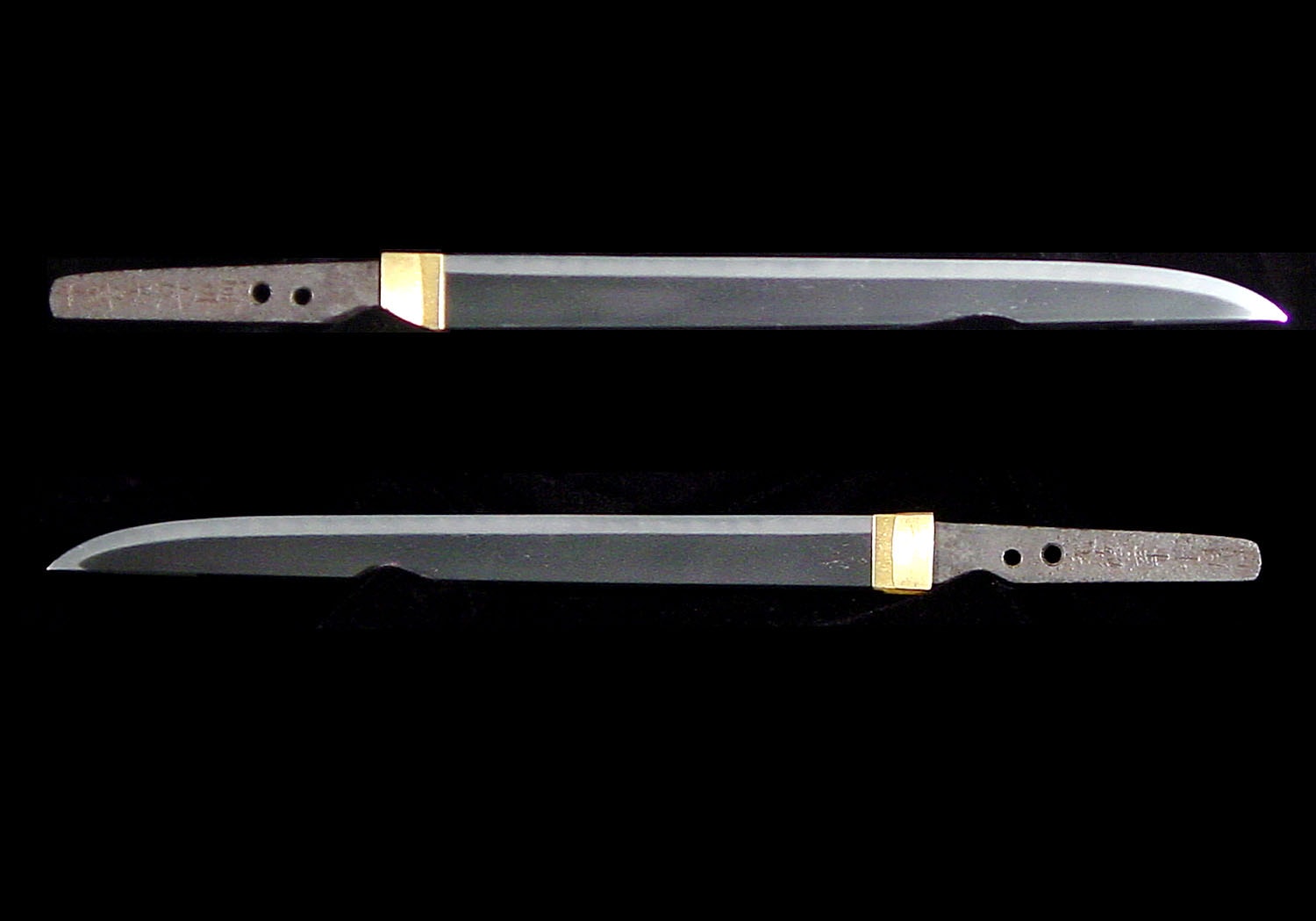
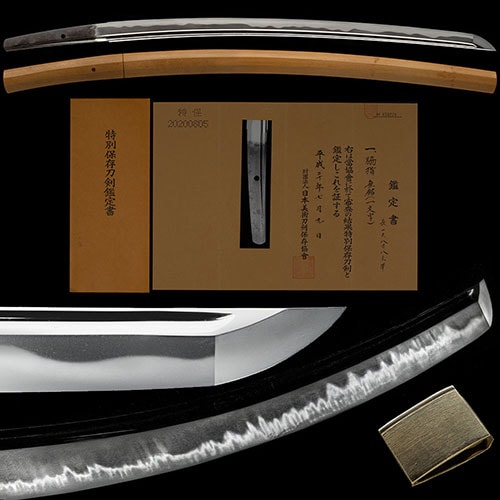
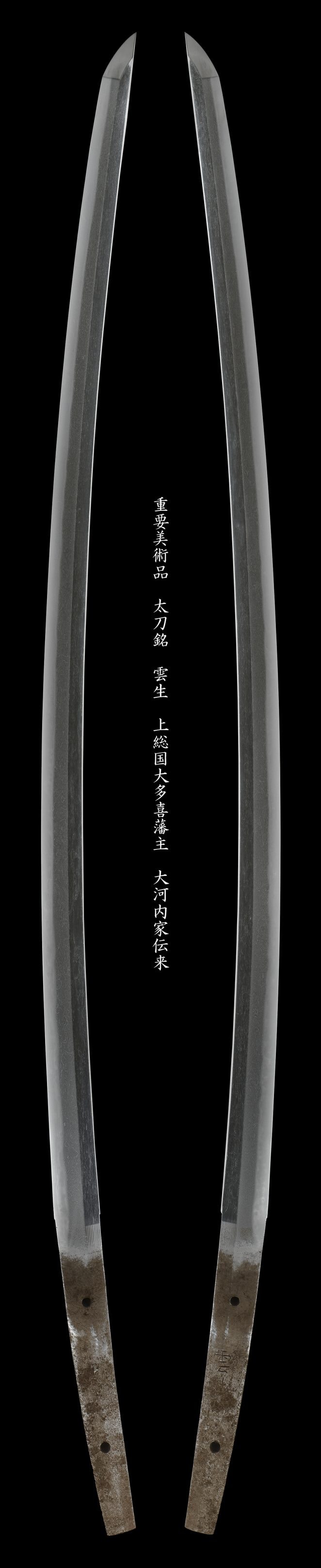
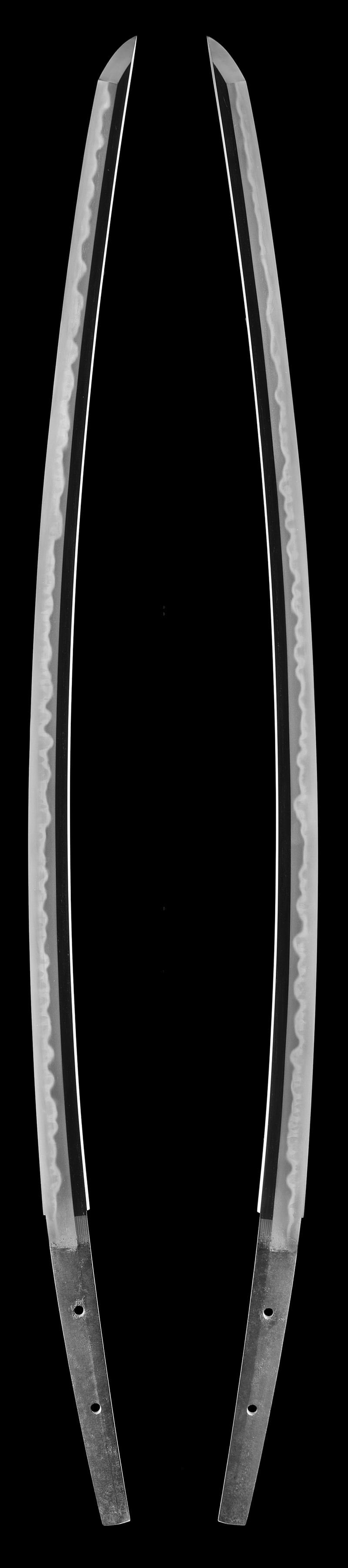
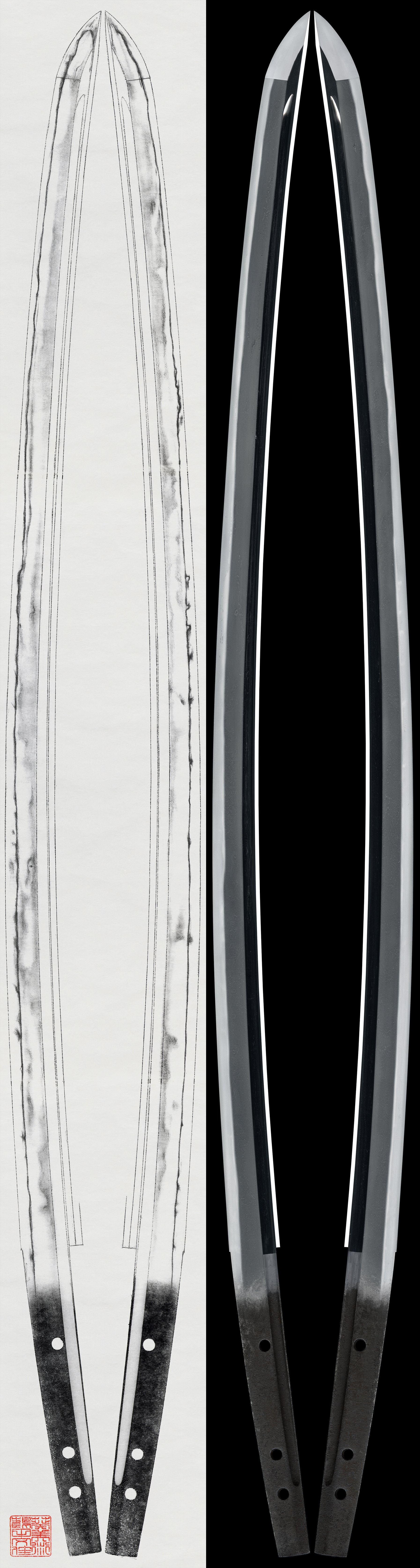
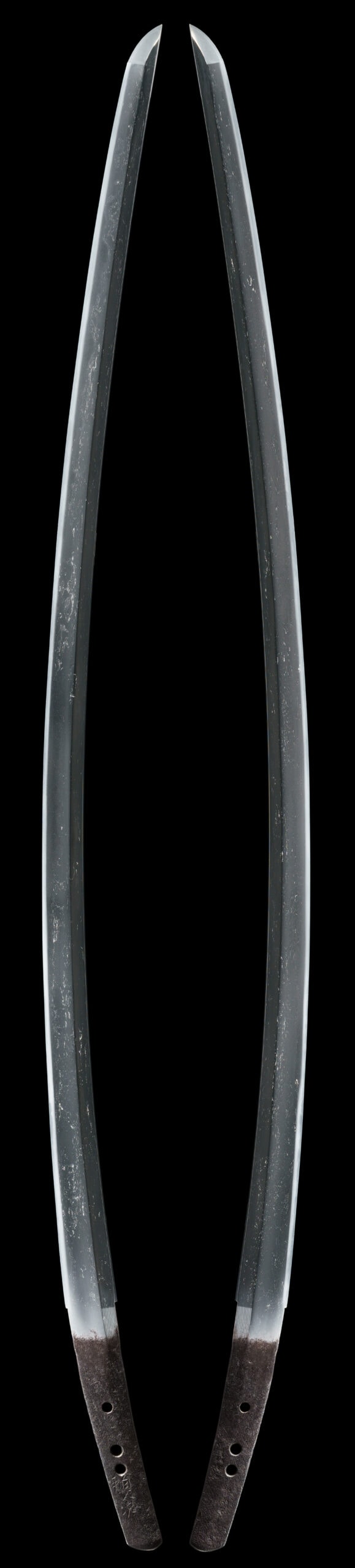
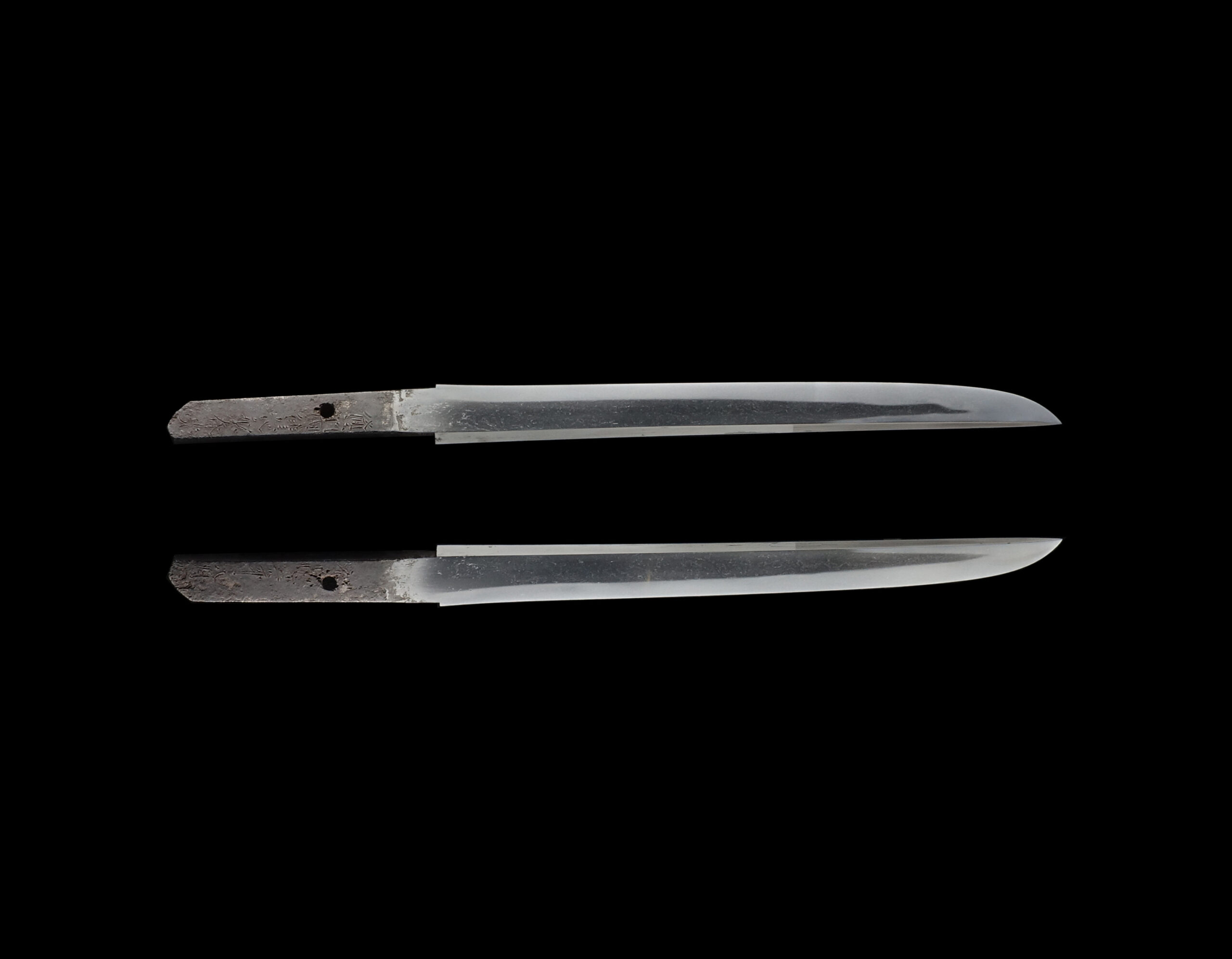
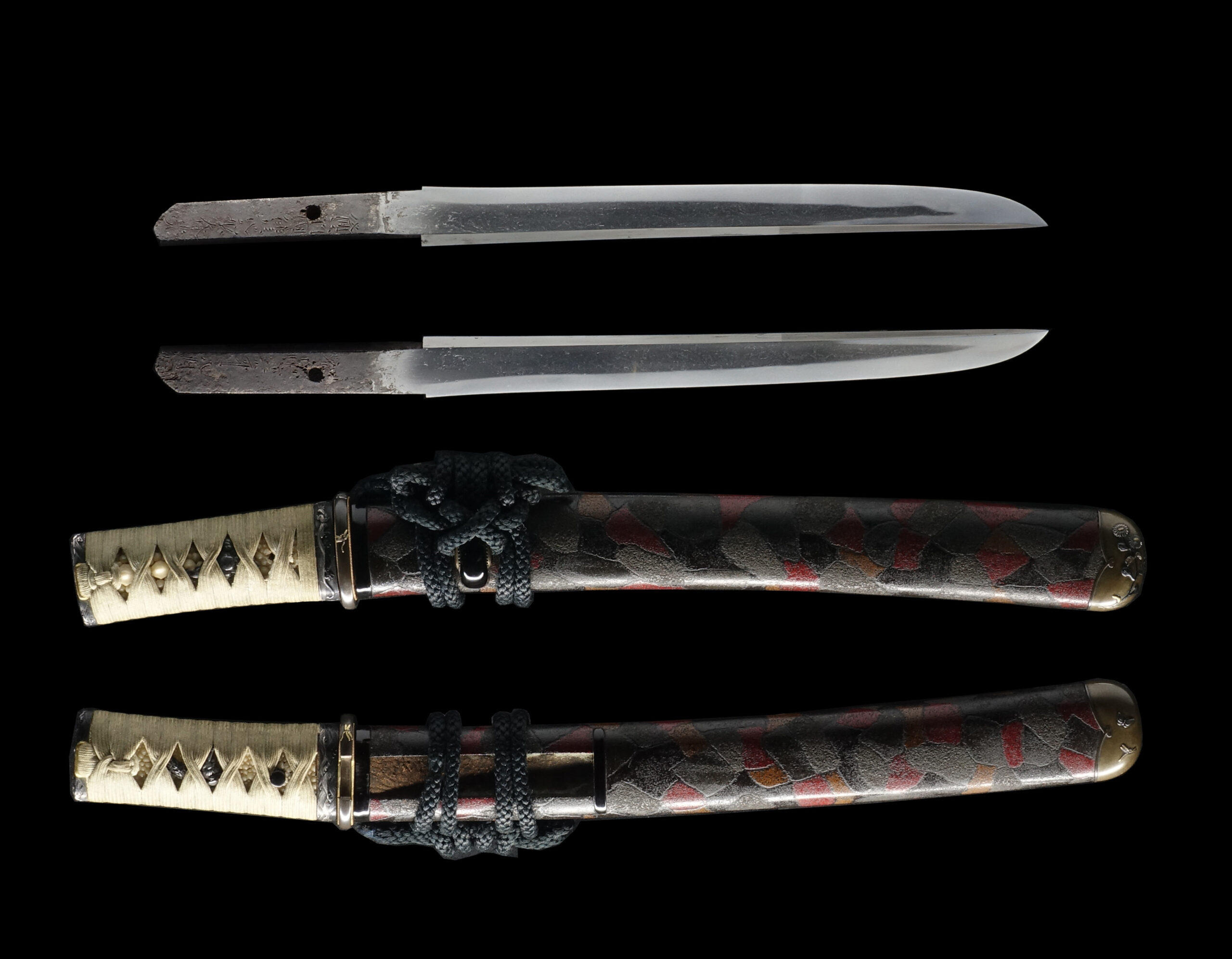
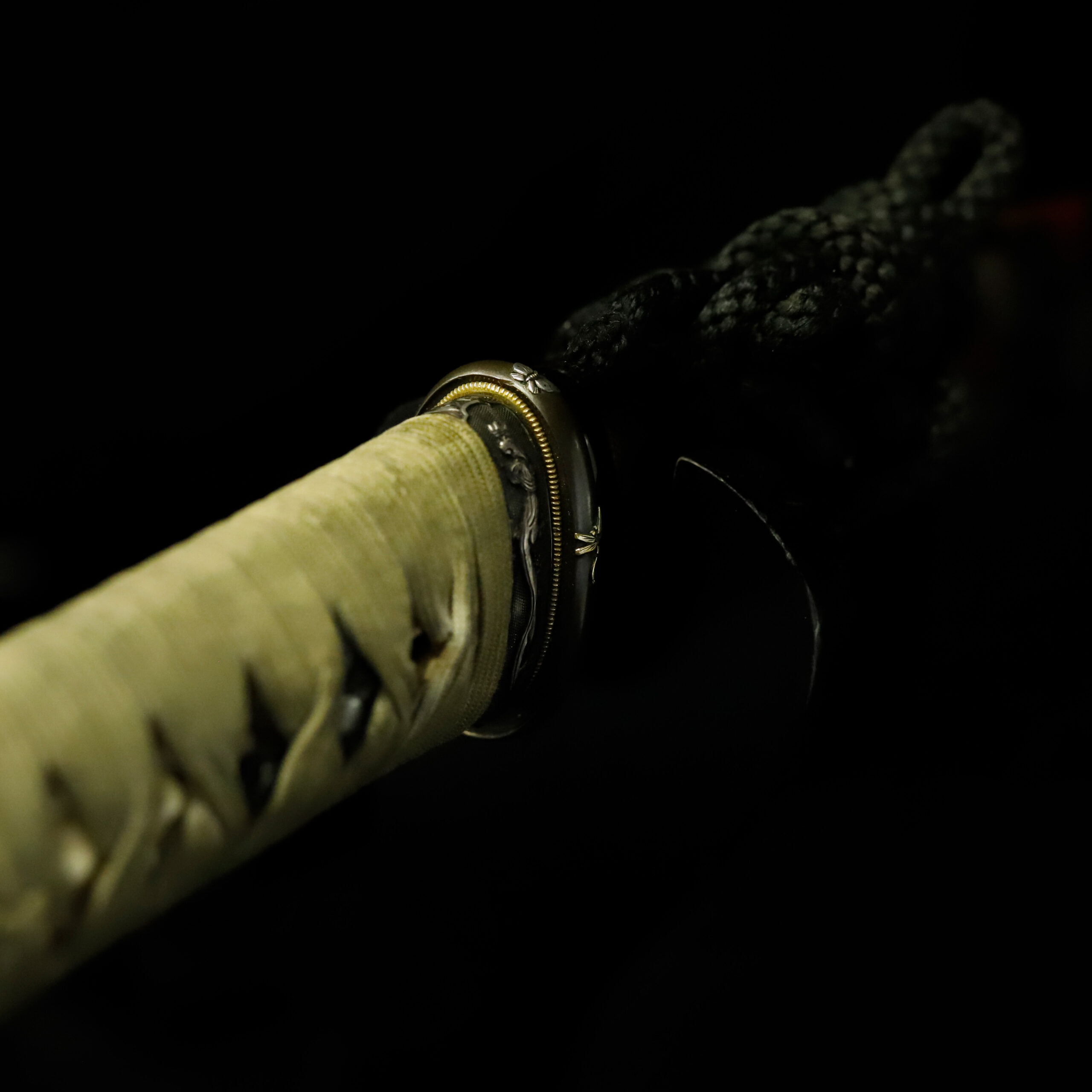
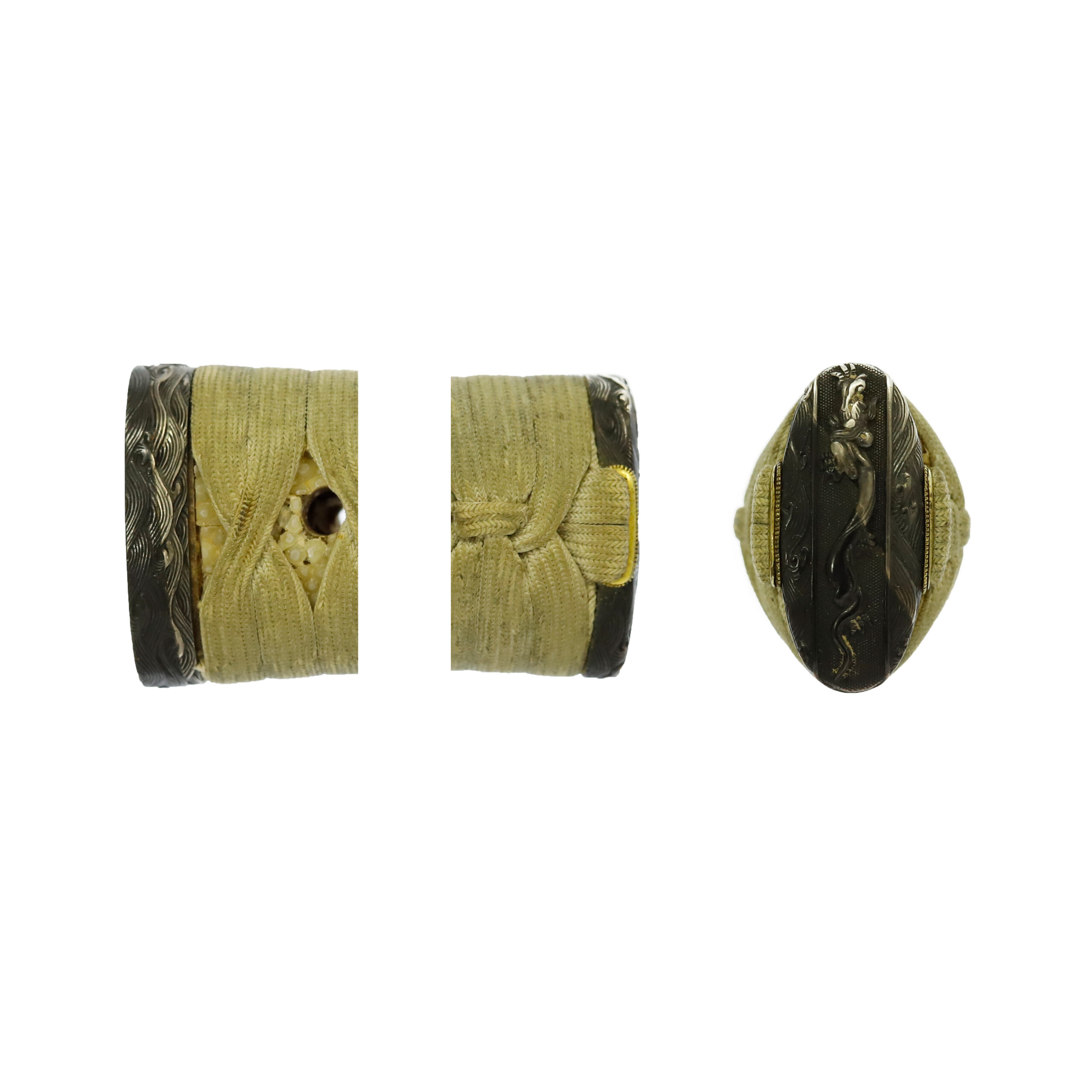
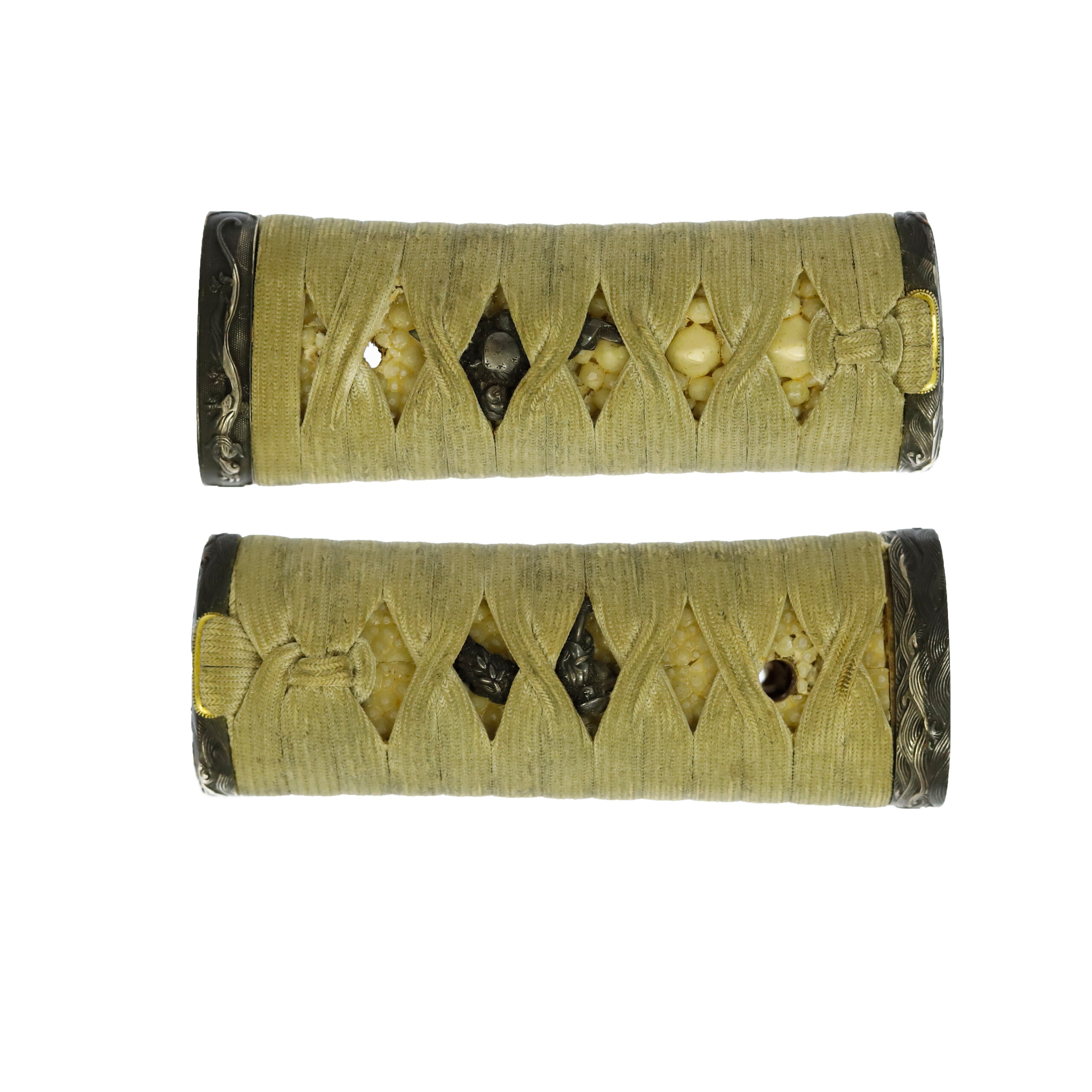
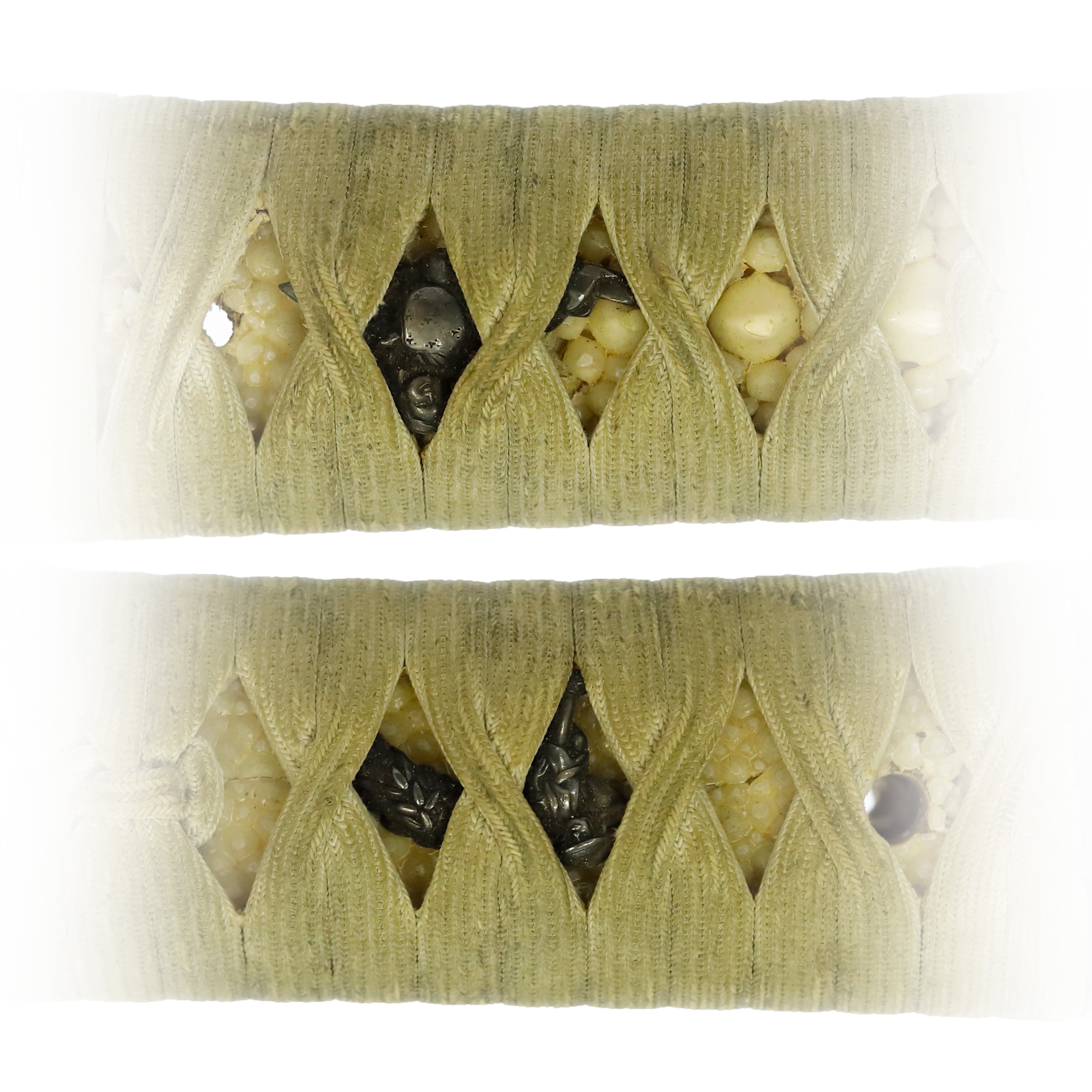
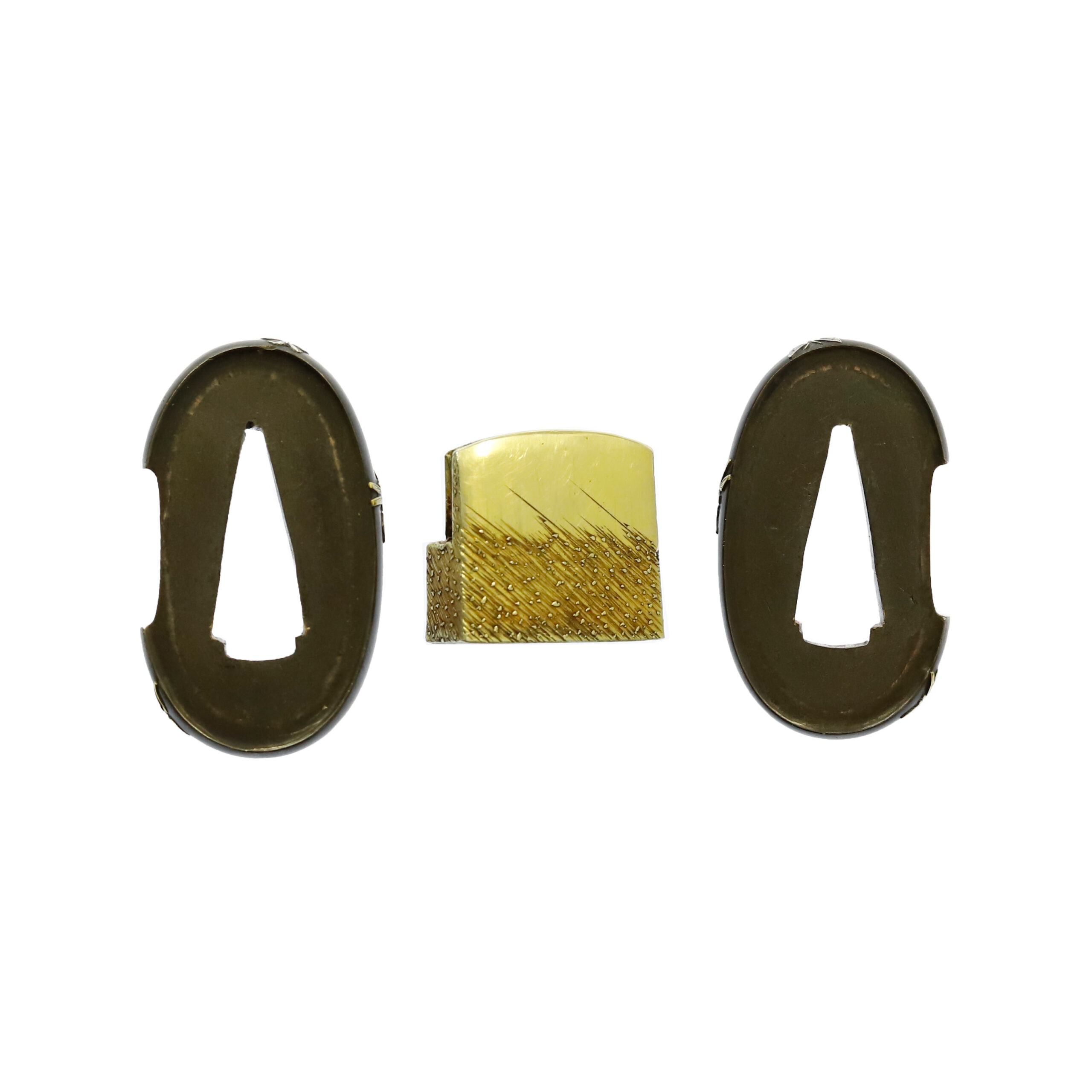
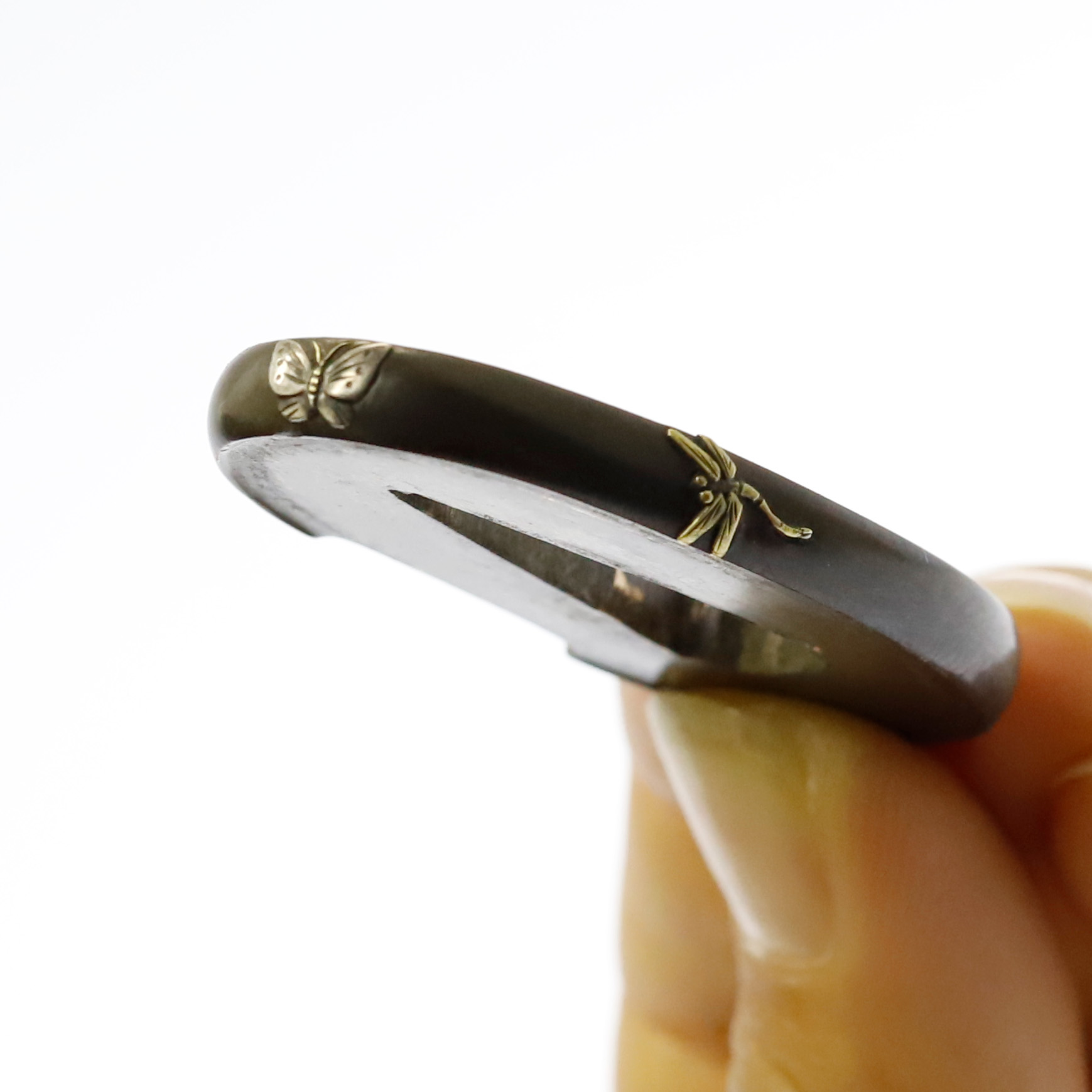
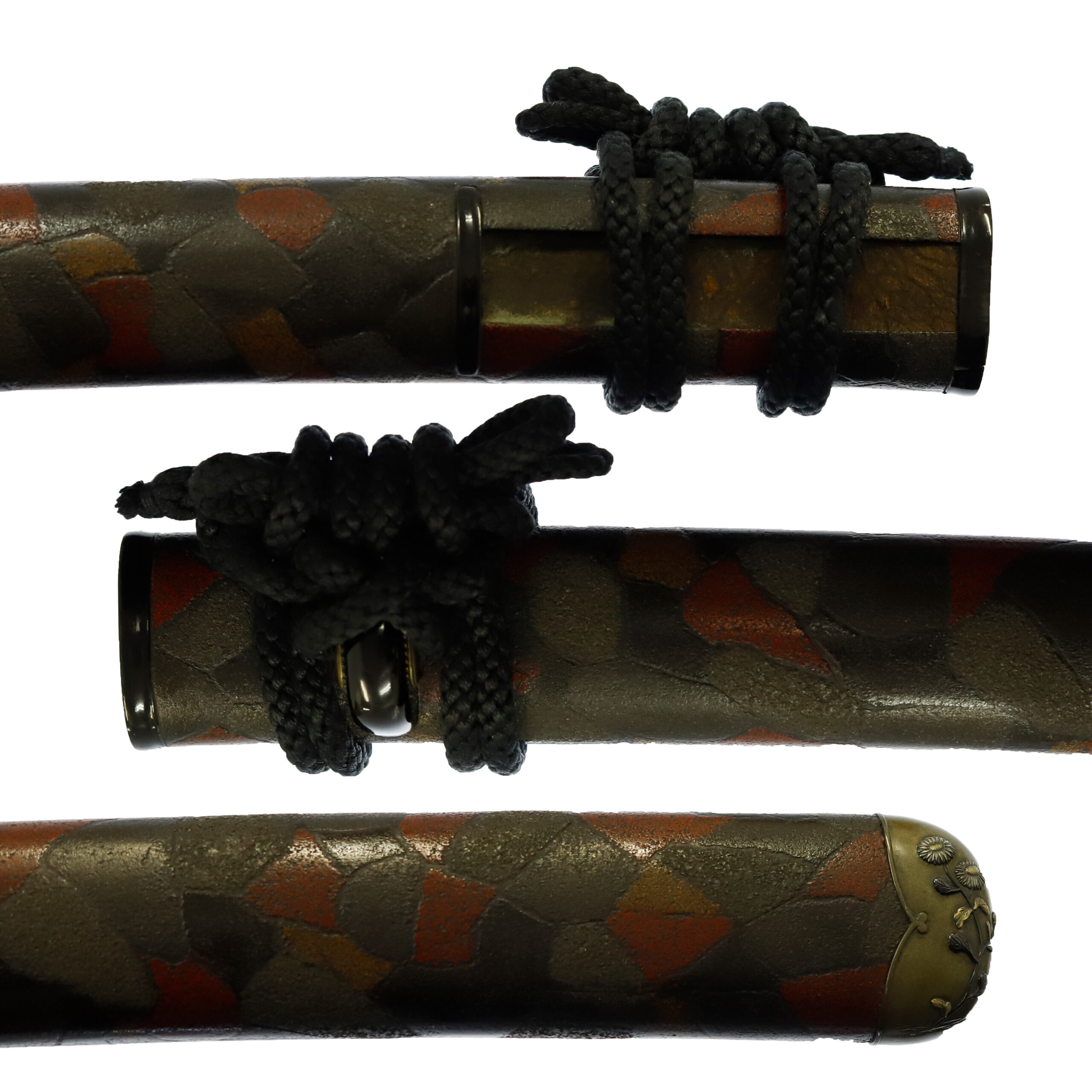
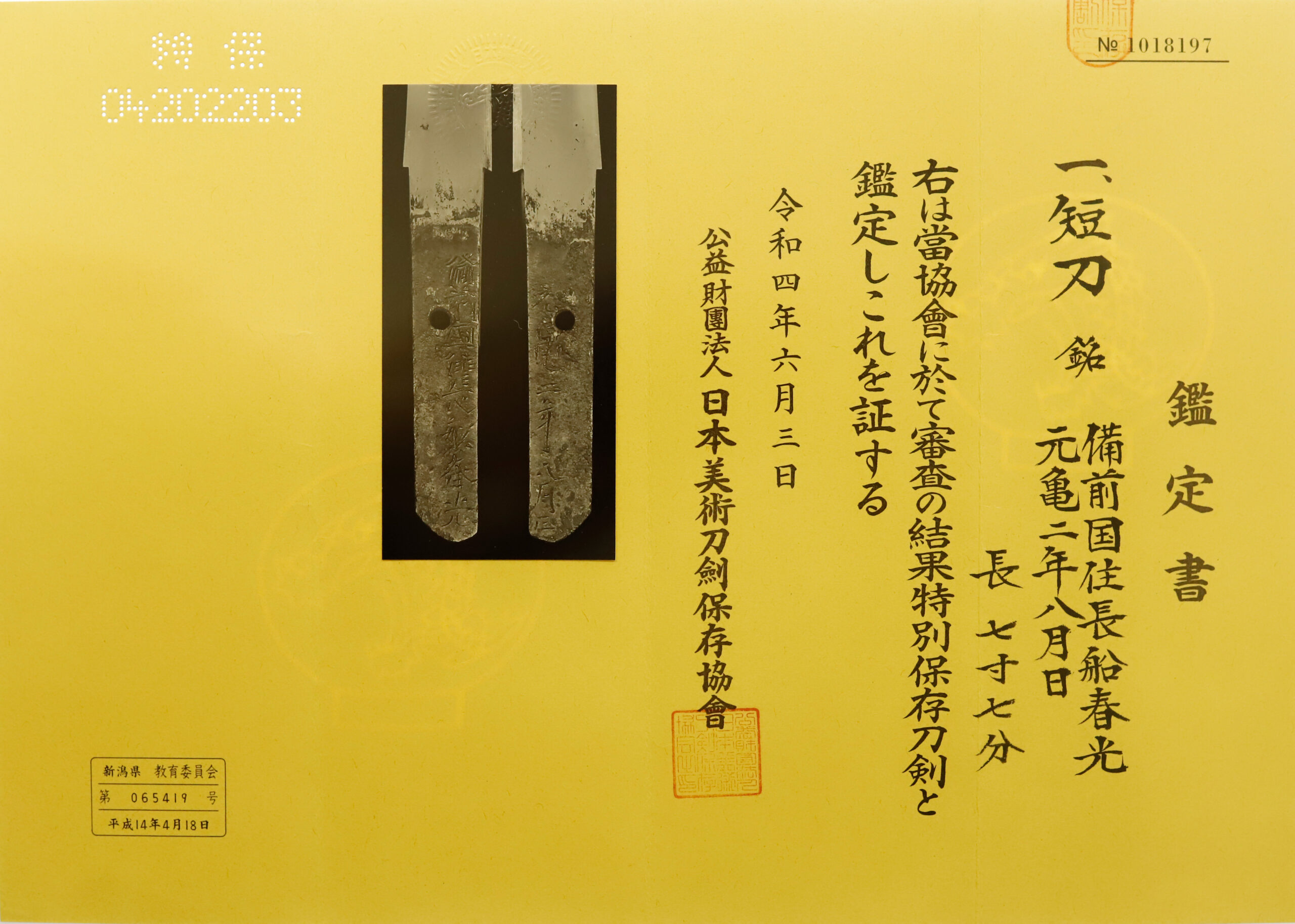
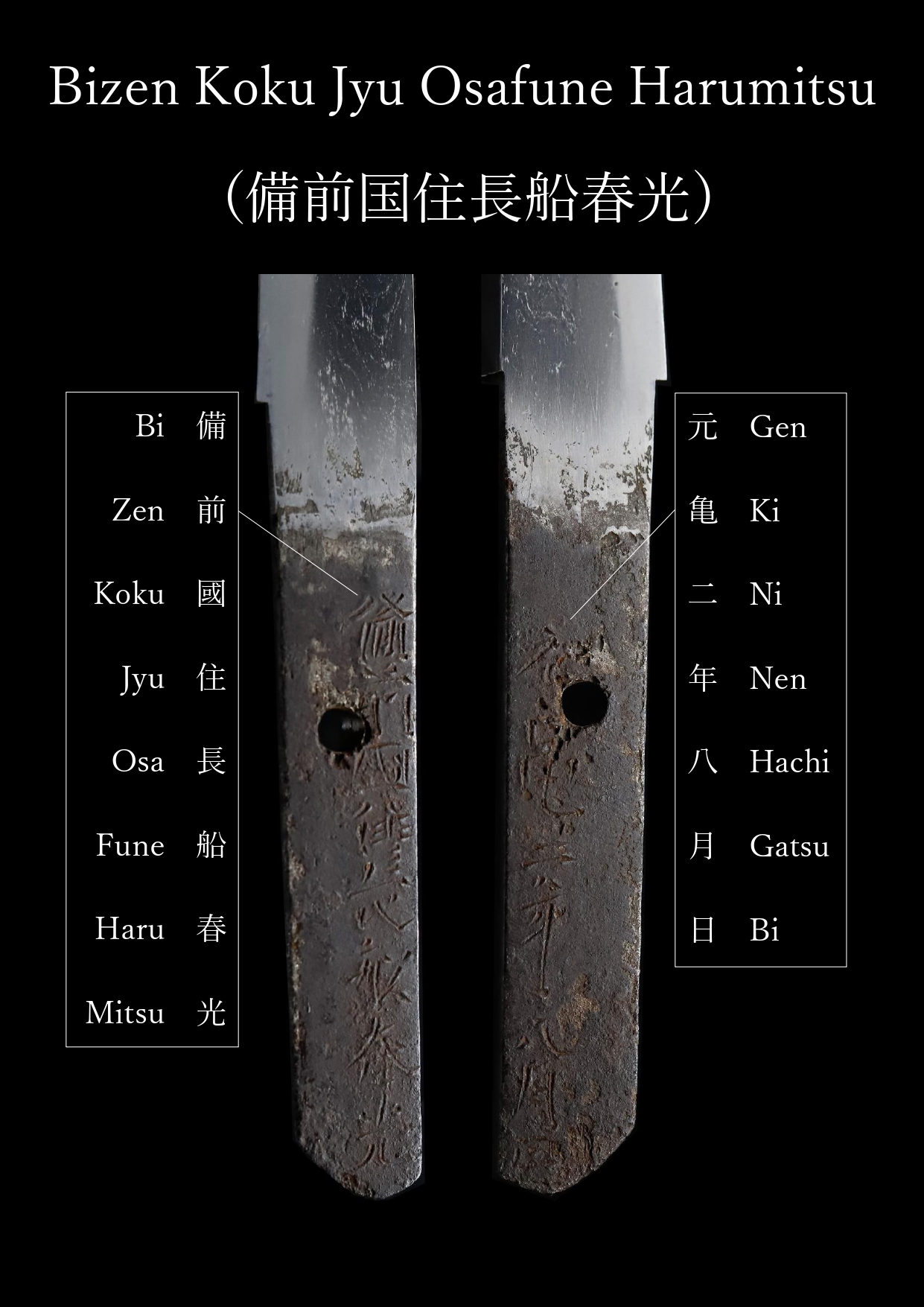
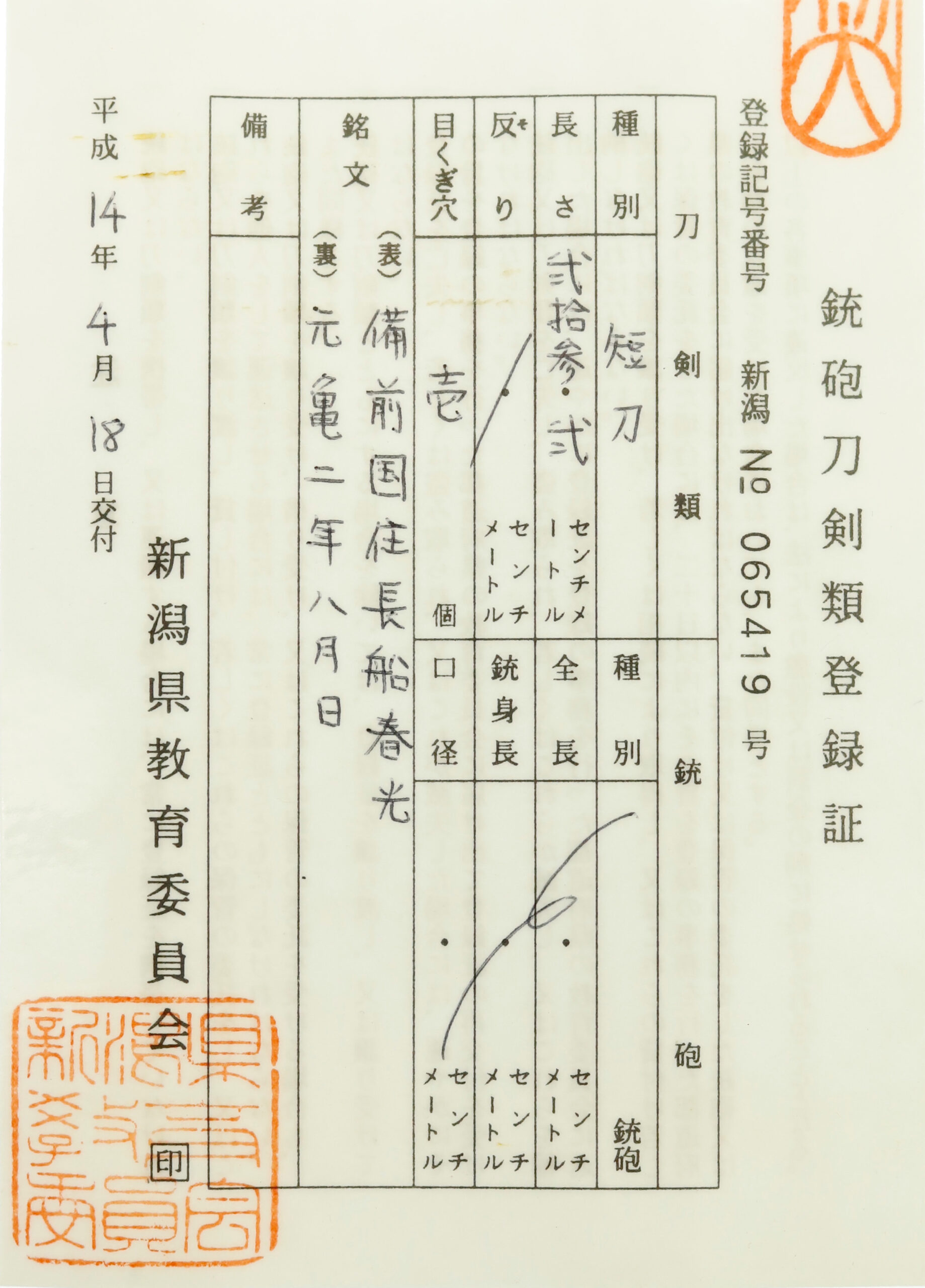
This tanto was forged by Harumitsu of the Bizen Osafune school in 1571, during the late Muromachi period. It is accompanied by an NBTHK Tokubetsu Hozon Certificate, confirming its authenticity and high quality. The blade comes with both a shirasaya and a decorative koshirae featuring dragon and wave motifs on the fuchi-kashira, and menuki depicting figures.
 NihontoWatch
mei · Osafune · Muromachi · nagasa 23.2cm
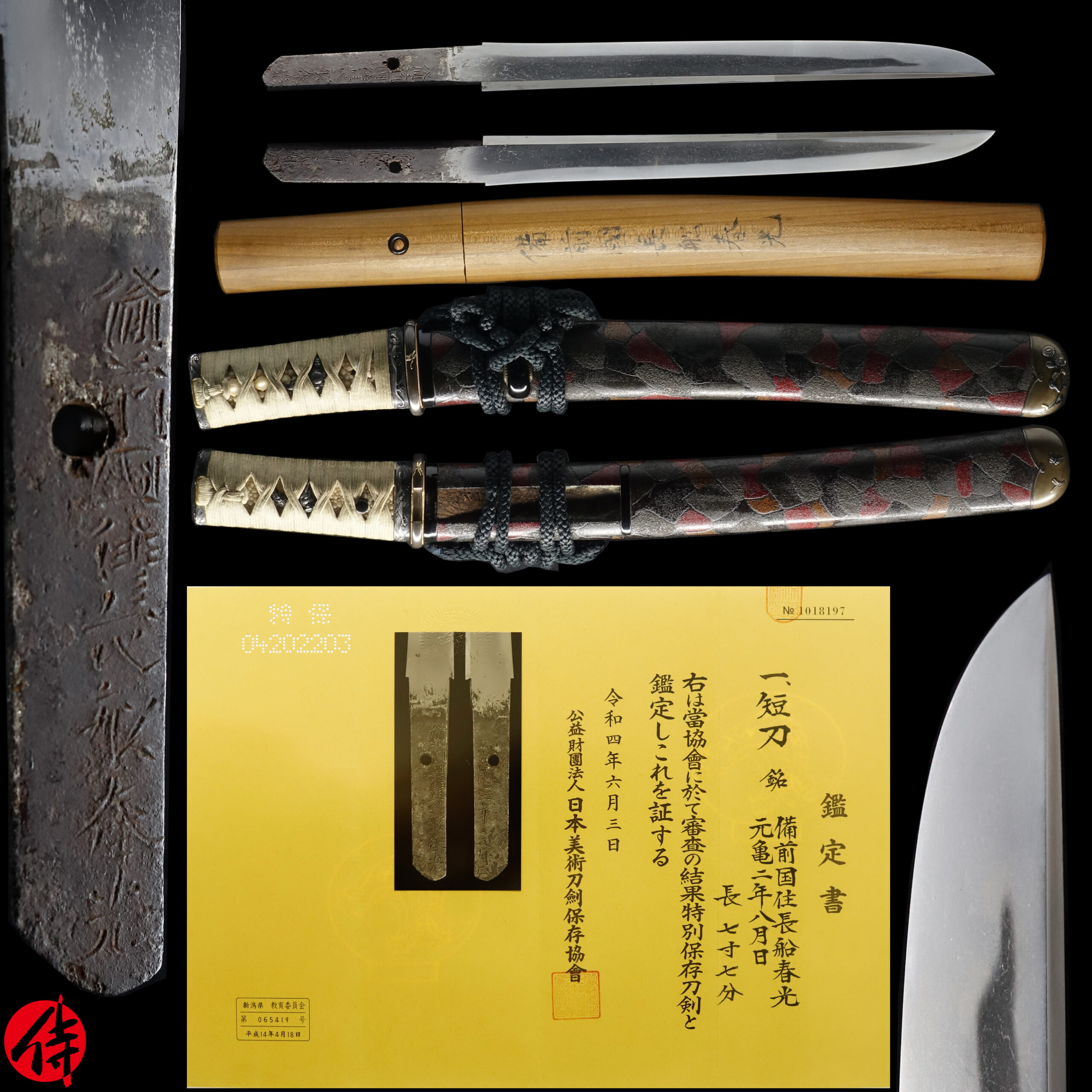
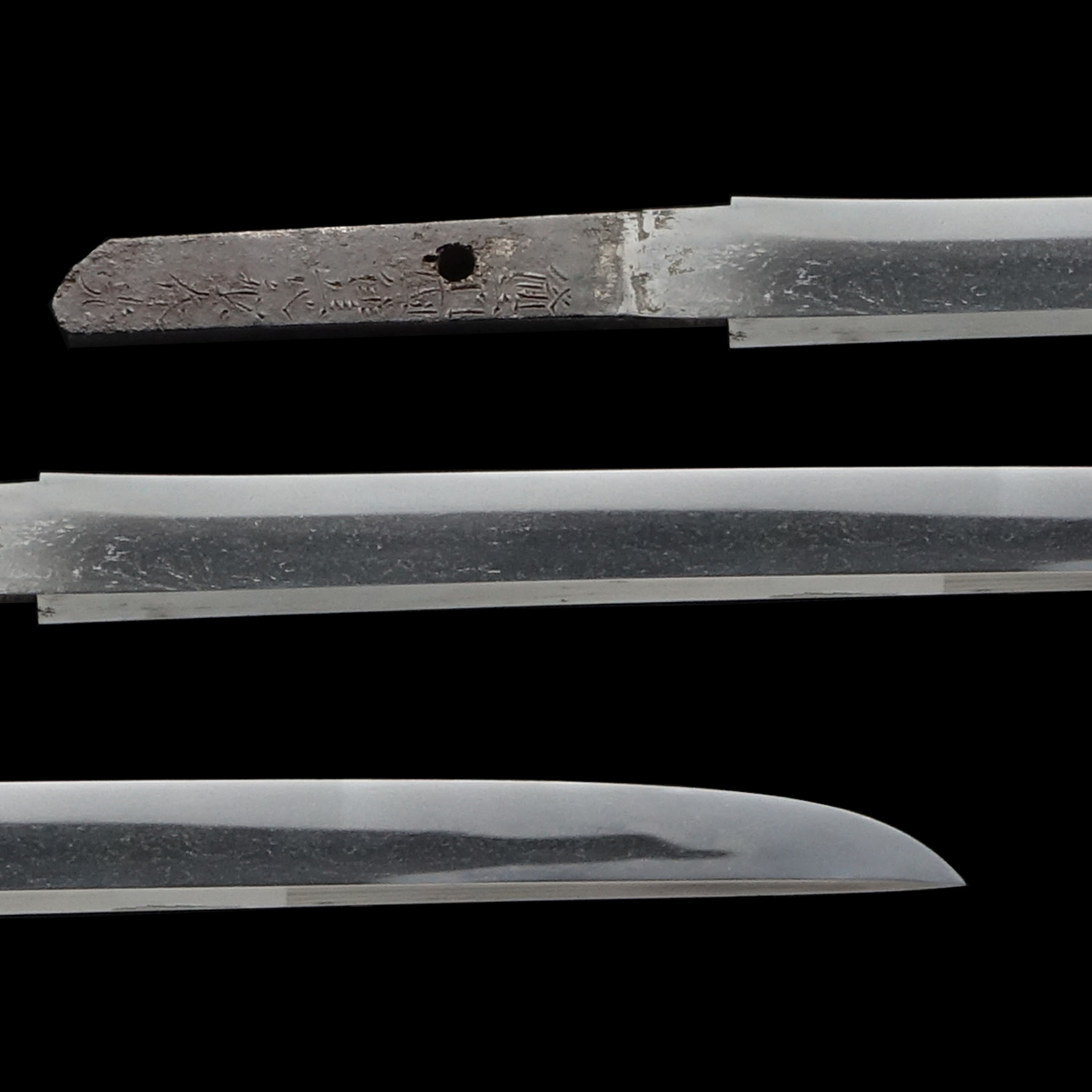
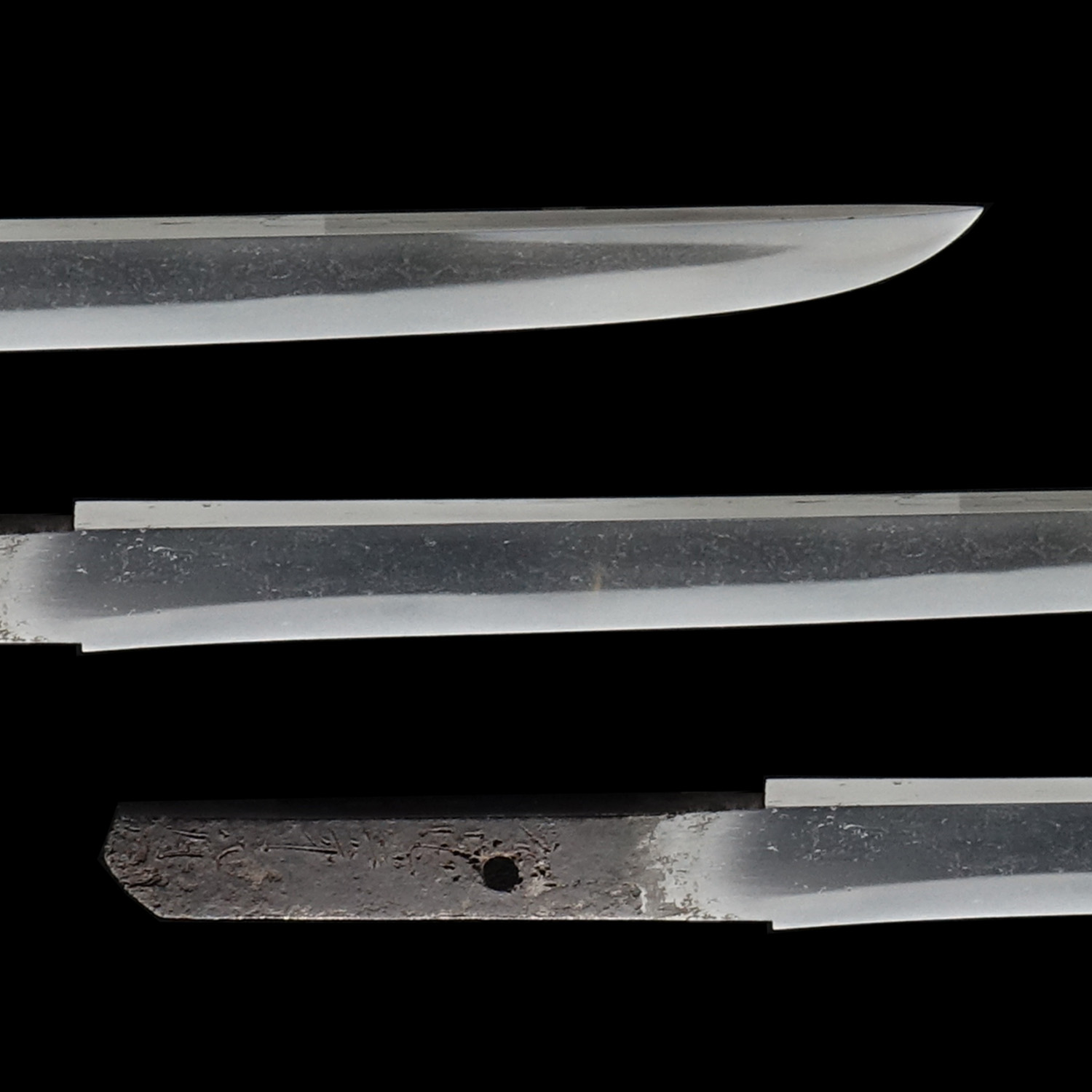
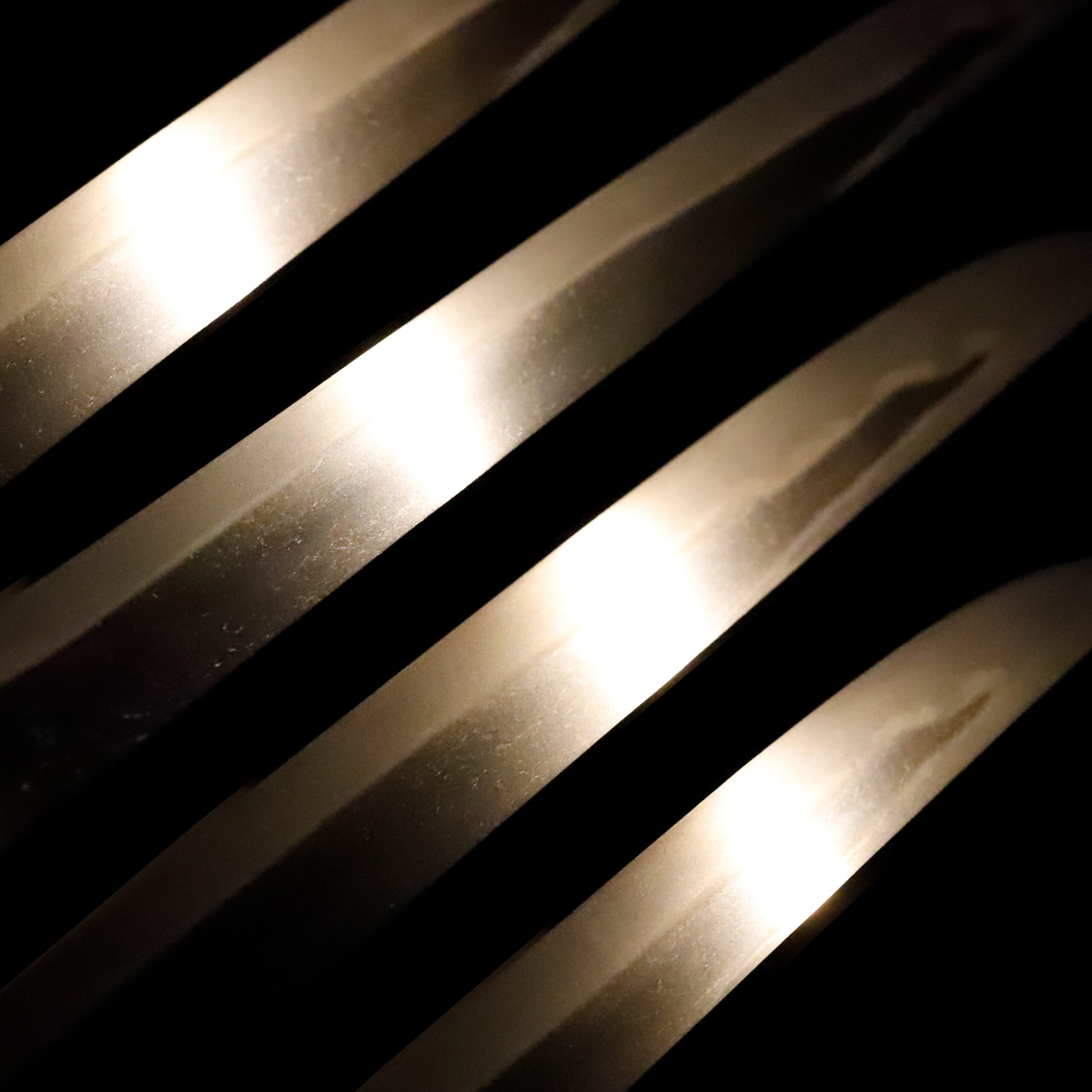
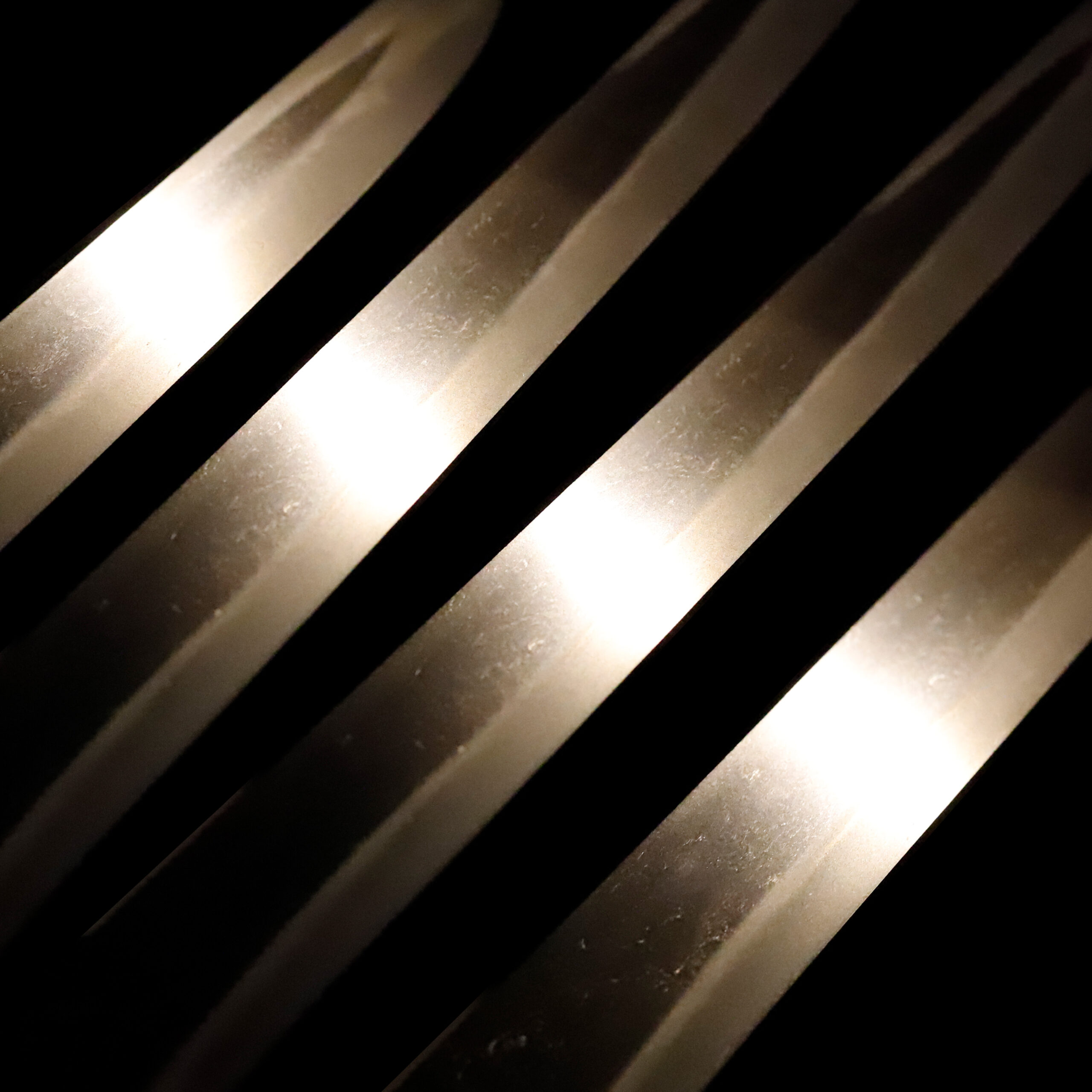
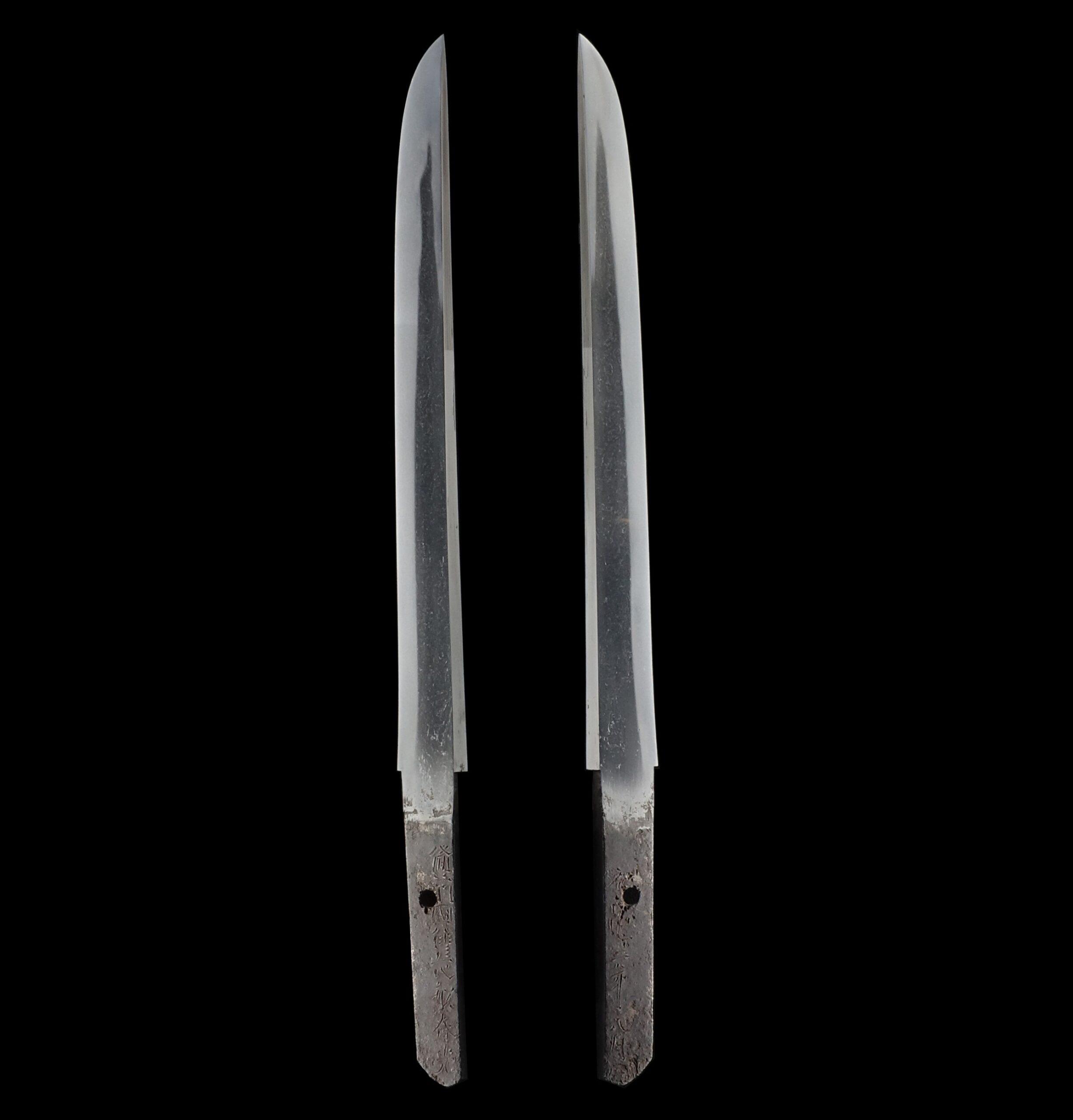
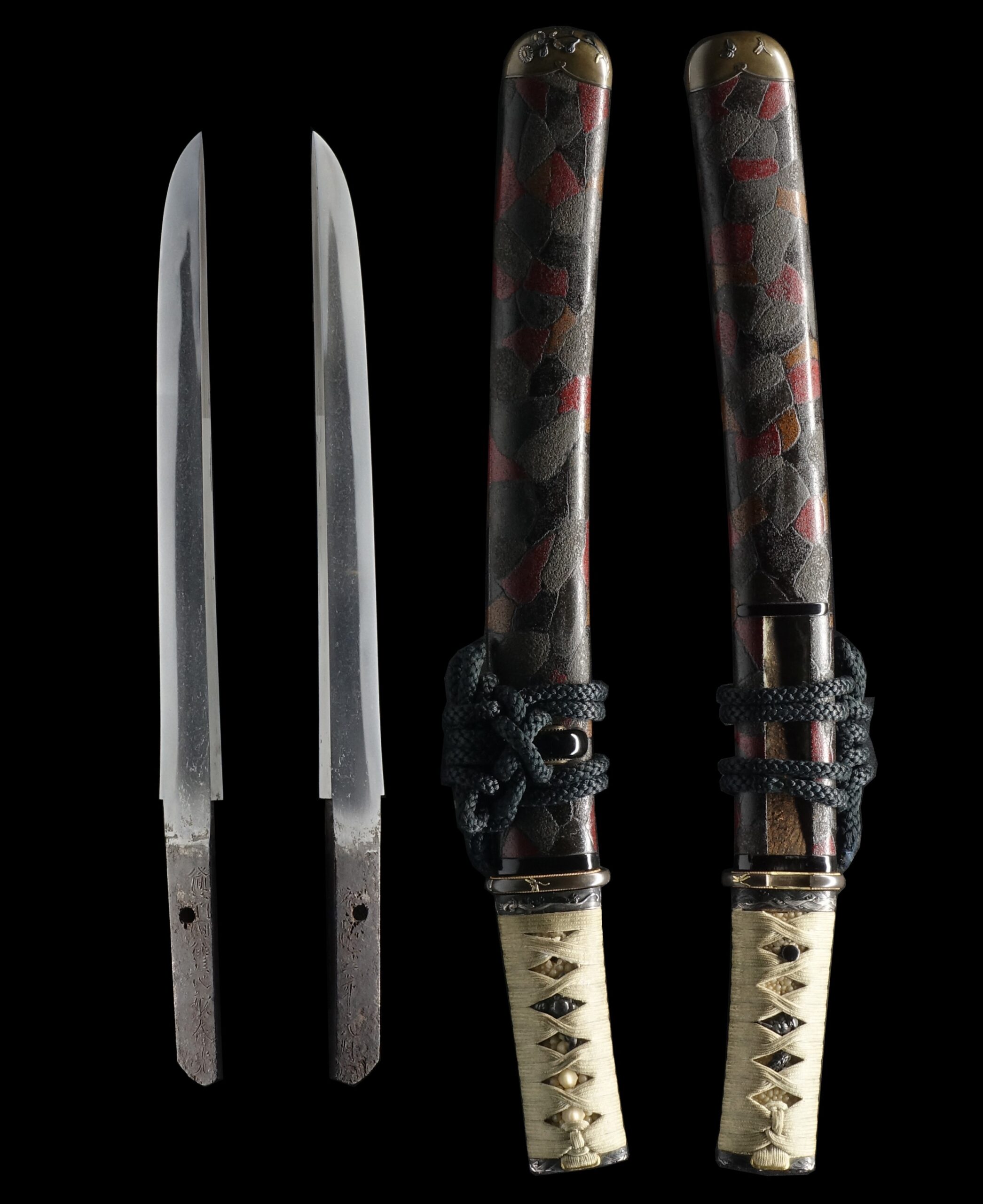
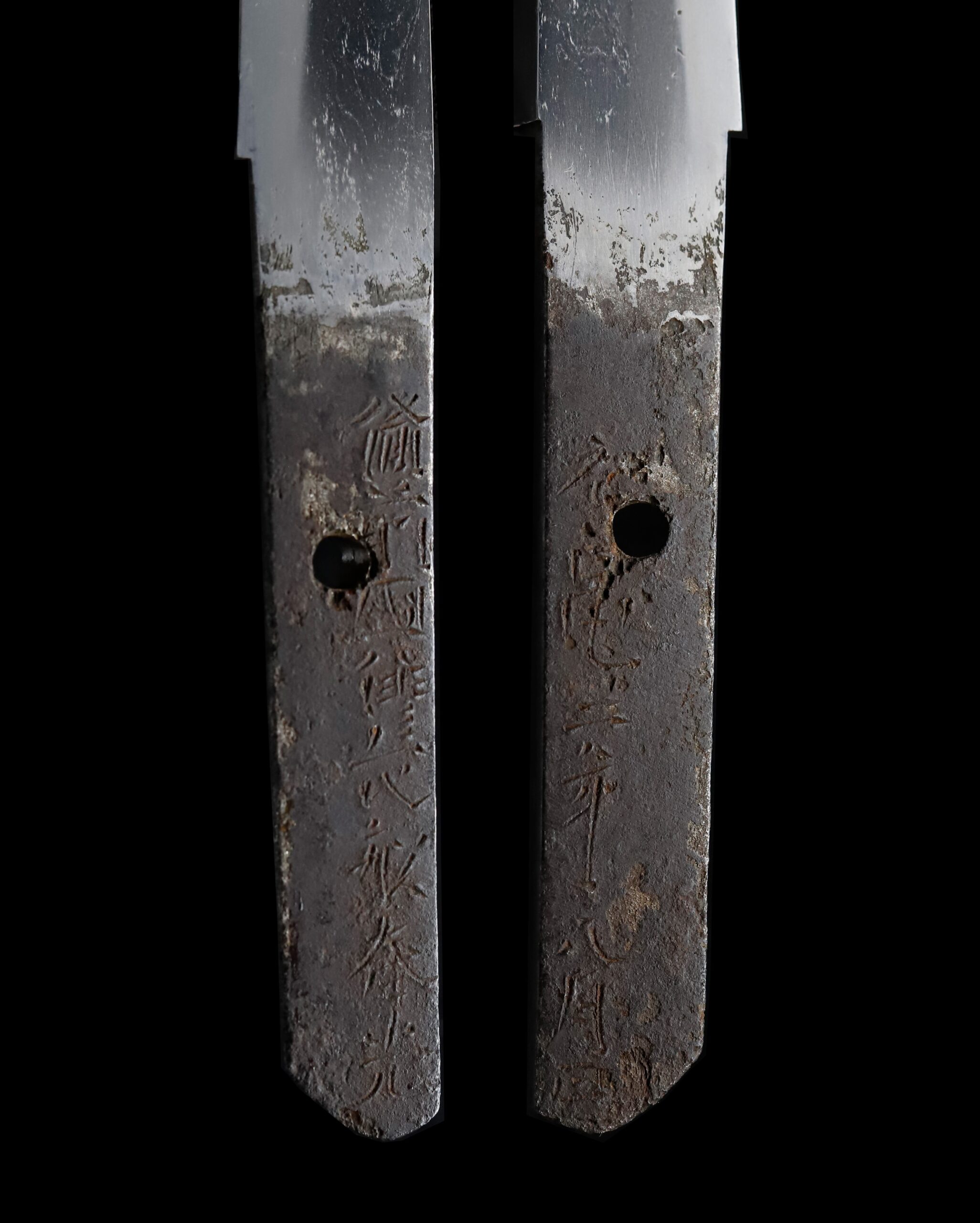
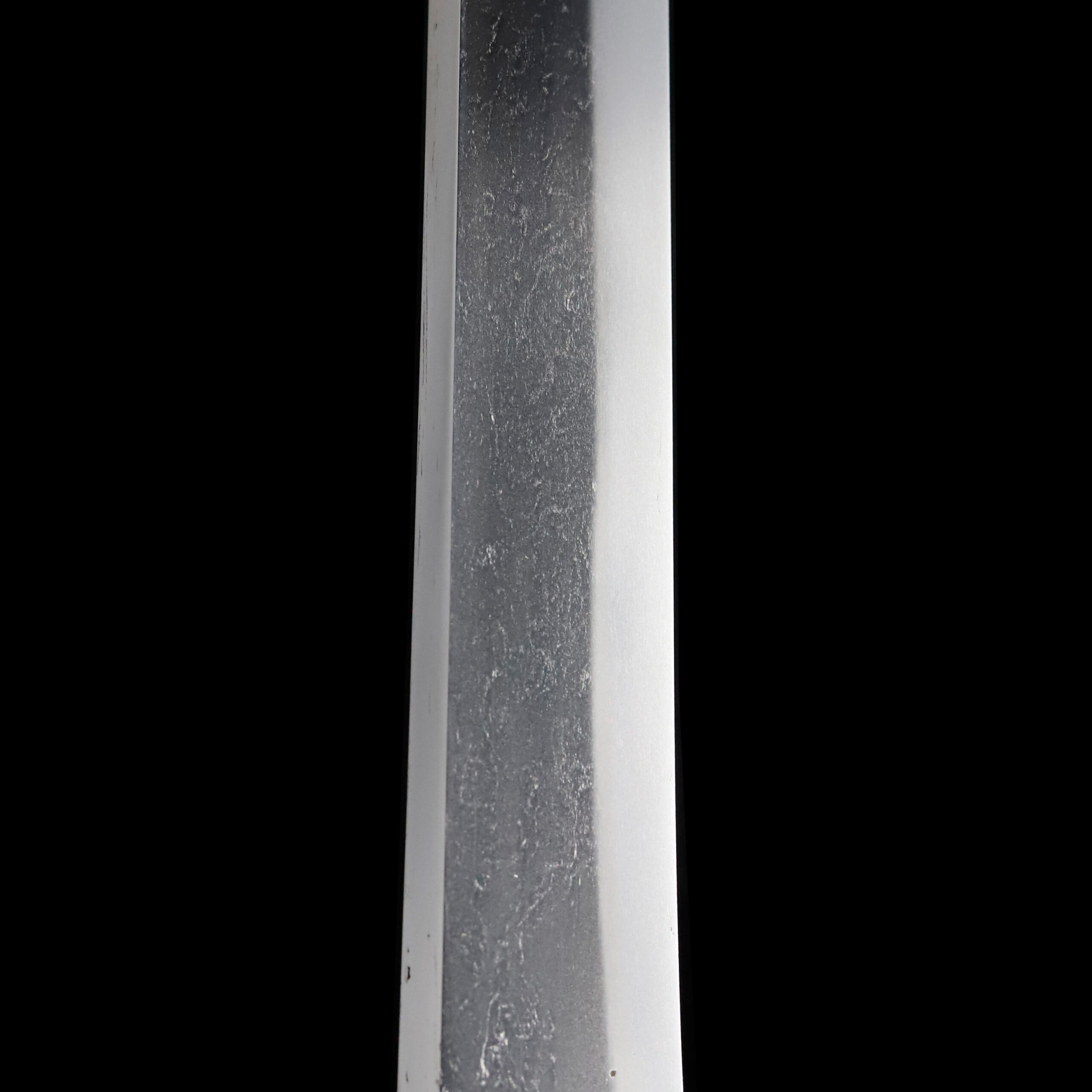
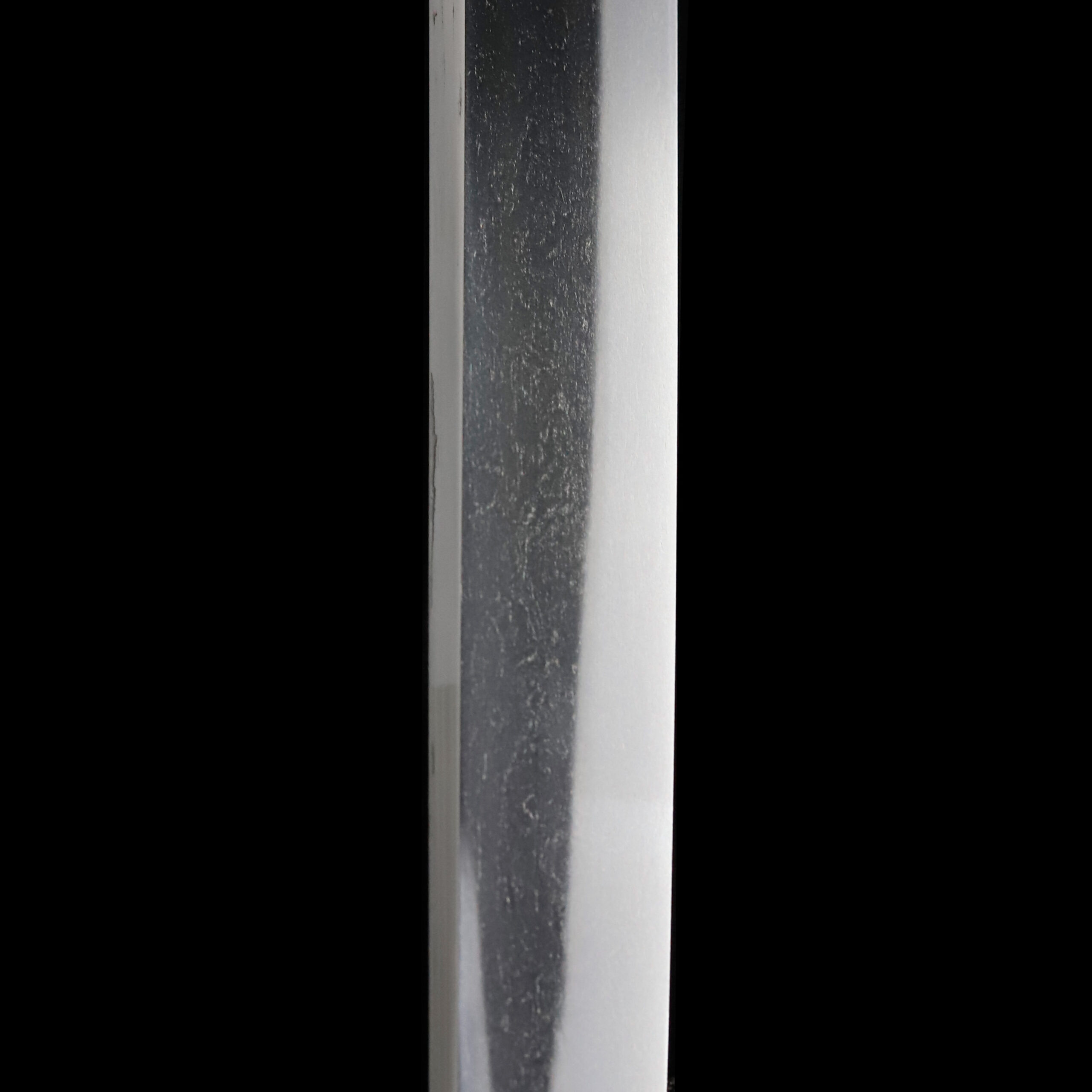
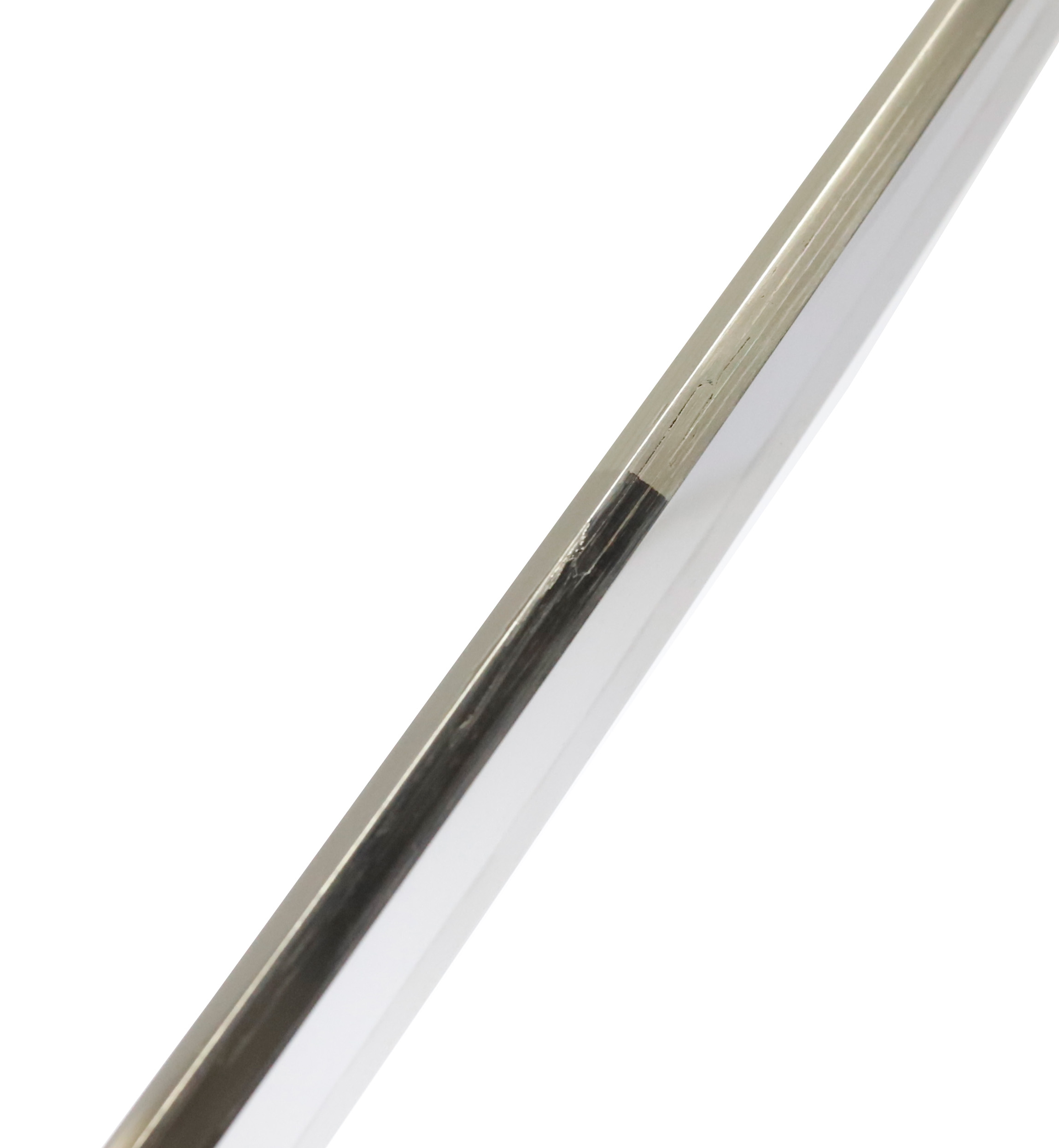
Bizen Osafune (Sue-Bizen) · Bizen · around 1533-1570
1 piece on the market now
Osafune Harumitsu signed his blades 春光 and styled himself Jurozaemon-no-jo, and the published sources place him by name at the head of a crowded field. Several Sue-Bizen smiths bore the name Harumitsu, signing also with the personal names Saemon-no-jo, Gorozaemon-no-jo, Magojuro, Jirozaemon-no-jo, Gozaemon-no-jo and Saemon-shichiro, the name running chronologically from the Bunmei era through the Bunroku era; among them the published sources record that 「その中で十郎左衛門の名が最も知られ」[[c:1]], the Jurozaemon Harumitsu being the best known of all. His own dated work is concrete and tightly clustered in the mid-sixteenth century: a katana of Tenbun 2 (1533), a katana of Tenbun 16 (1547), a katana of Tenbun 24 (1555), and a katana of Eiroku 4 (1561), every one of them an ubu, long-signed blade carrying both the smith's signature and a date inscription. He worked in the Osafune workshops in their late-Muromachi phase, the period the trade calls Sue-Bizen, when the village smiths shared a single idiom and cut the day and month of their making into the tang.
His recognized hand divides into two registers the published sources themselves describe, and the first is the koshi-hiraki gunome-midare that is the hallmark of the group. On the Tenbun 24 katana the temper is a gunome-midare into which the waist-opened gunome enters, the pattern falling overall into a small-scale midare with ashi entering and ko-nie adhering, and on the Tenbun 2 katana that opened gunome widens and gathers force: small gunome are mixed in, tobiyaki appears, the temper is nie-deki and in places the nie collapses into the ji, with kinsuji and sunagashi running slightly. The published sources name this 「末備前特有の腰開きの互の目」[[c:2]], the waist-opened gunome characteristic of Sue-Bizen, and it is the first thing by which his blades are known. The boshi follows the temper into a midare-komi turning back in ko-maru with hakikake on his fullest blade, or is tempered deep in an ichimai-like manner with a long kaeri.
Set against this flamboyant face is a quieter suguha register, and it is here that the jigane shows most clearly. The Eiroku 4 katana is forged in a tightly packed ko-itame, the grain well consolidated, with ji-nie adhering finely and a midare-utsuri standing over the surface, an old Bizen reflection uncommon on a Sue-Bizen blade; its temper is a chu-suguha with gunome tempered around the koshi, ko-ashi entering and the nioiguchi tight. The Tenbun 16 katana carries a wide suguha-cho with a slight admixture of small gunome, ko-ashi and yo appearing within the edge, over an itame well kneaded with a moist look and thick ji-nie. Across both registers the forging is the constant: a well-worked itame, at times the tighter ko-itame, with ji-nie throughout and chikei entering on the Tenbun 2 blade. The boshi in this quieter manner runs deep and straight and turns in ko-maru with a long kaeri.
The two registers are not phases of a career so much as two manners the same smith kept in hand across the same two decades, the dated blades running back and forth between them. The published sources read the Tenbun 24 katana as 「十郎左衛門尉春光の代表作」[[c:3]], a representative work of the smith, its forging a well-packed itame with ji-nie adhering. They count the Tenbun 2 katana, its waist-opened gunome-midare full and its workmanship good overall, among 「春光の傑作の部類の一口」[[c:4]], the masterwork class of his production. Of the Tenbun 16 katana, the calmer of the suguha pieces, they single out the forging in particular, recording that 「とくに鍛えの優れた点が特筆される」[[c:5]], that its especially superior forging is what is most worthy of note. The shorter Eiroku 4 blade, compact in its proportions, they read as of comparatively good workmanship among the smith's works in both jigane and hamon.
Harumitsu is best understood within the Sue-Bizen succession rather than against it. The published sources for the line record the Jurozaemon Harumitsu as the son of Jirobei-no-jo Harumitsu, himself the son of Jirozaemon-no-jo Katsumitsu, placing him within the principal Osafune descent alongside the Sukesada and Kiyomitsu houses that carried the village through the sixteenth century. He works the koshi-hiraki gunome the sources call the group's characteristic temper, the small gunome mixed into both his midare and his suguha giving the finely-broken, small-scale pattern that distinguishes the late hand from the broad choji of the older Osafune mainstream. What lifts his designated blades above the routine Sue-Bizen production is the forging: the well-kneaded itame with ji-nie adhering thickly, the quality the sources reserve their praise for, and on the Eiroku 4 katana the survival of an old Bizen midare-utsuri that the late group only rarely kept.
Harumitsu's surviving designated record is small and entirely signed, four katana among the Important Sword sessions from the 15th through the 37th, with no National Treasures or Important Cultural Properties among them and none yet raised to Tokubetsu Juyo. All four carry long signatures and date inscriptions across the Tenbun and Eiroku eras, so that the small body of work is unusually legible: every blade dated, every one ubu, the smith's hand readable across a quarter-century. One provenance of note is recorded, the Tenbun 16 katana having been 「海軍元帥東郷平八郎の遺愛の一口」[[c:6]], a cherished possession of Navy Marshal Togo Heihachiro, the victor of Tsushima. He is the kind of named Sue-Bizen master a collector encounters from time to time rather than rarely, the dated and signed katana the documentary heart of his work; the fullest of them, with the waist-opened gunome-midare full and the forging worked to the level the published sources call the masterwork class, is a blade of comparatively good standing among the late Osafune hands, and one comes to market only now and then, with patience.
Where Harumitsu stands among comparable artisans: across all of nihontō, and within tradition, era, and period. The tiers (Foremost · Leading · Major · Notable) weigh official designations from the NBTHK and Japan's Agency for Cultural Affairs, together with historical honors of lasting repute such as the Sansaku and Meibutsu-chō.
Select a lens to see how it's measured.
Years he was demonstrably active, proven by signed-and-dated blades
Bizen-den · Bizen
Phase: Sue-Bizen末備前· 1441–1596
237 pieces on the market now
The last great chapter of Osafune unfolds in the Eisho and Tenbun years of the late Muromachi, when the riverside workshop turned its accumulated craft toward an age of constant war. Where Oei-Bizen had looked backward, reviving the tachi shape and the choji temper of the Kamakura masters under Yasumitsu and Morimitsu, Sue-Bizen faces forward into Sengoku demand. The leading hands carry the same family characters one generation further: the Sukesada group, headed by Yosazaemon-no-jo Sukesada and the Hikobee-jo Sukesada said to be his father, alongside Katsumitsu (often Jirozaemon-no-jo), Munemitsu, Tadamitsu of the Heiroemon-jo line, and the Kiyomitsu smiths Magoemon-no-jo and Gorozaemon-no-jo. The setsumei draw a sharp line through their output. Commissioned blades, chumon-uchi, were signed with full zokumyo, dated, and frequently inscribed with the name of the ordering party, as on the Katsumitsu and Sadamitsu naginata of Meio 8 made for the Miyake of Kojima, a house that fed into the Ukita. Below them ran the bulk trade of kazu-uchimono, the arms that supplied the warring provinces, and it is the chumon-uchi masters that the designations preserve. What the steel does in this window is distinct from every earlier Osafune register. The shape is the uchigatana: wide mihaba with thick kasane, pronounced sakizori, an extended chu-kissaki or o-kissaki, and a short nakago suited to the katate-uchi one-handed draw, a body unlike the koshizori tachi of Ko-Osafune or the broad Nanbokucho profile of Soden-Bizen. The forging tightens into ko-itame over which a midare-utsuri stands faintly rather than vividly, weaker than the bright reflection of the founding generation.
The signature temper is the open-waisted koshi-no-hiraita gunome, splitting at the heads into fukushiki compound midare and mixed with togariba and choji; it is nioi-based with ko-nie and a bright nioiguchi, with ashi, yo, kinsuji and small tobiyaki worked through. Against this, Soden-Bizen had pushed Soshu nie and notare, while the founders had tempered flamboyant choji over a vivid utsuri. Two specialties branch off the gunome base: the Kiyomitsu and Tadamitsu suguha, calm and tightly forged, and the hitatsura of high-tempered pieces with long muneyaki and yubashiri, seen in the warlord-smiths Akamatsu Masanori and Ishikawa Yukihisa. To kantei a Sue-Bizen blade is to read the body first and the temper second. The compact uchigatana sugata with thick kasane and a short tang fixes the late-Muromachi date; the faint utsuri over dense ko-itame keeps it in Bizen; the open-waisted compound gunome names the group. The masters then separate by hand: Katsumitsu is set apart by the abundant choji he folds into the gunome, yielding a more florid, brilliant dekiguchi than his peers; Tadamitsu and the Kiyomitsu smiths are read out by their suguha, with Magoemon-no-jo's itame standing in mokume to distinguish his ground. The cutting reputation is documented directly, as on the Hikobee-jo Sukesada katana of Keicho 5 carrying a tameshi inscription naming the tester Ichihara Hachibee. Provenance threads through the supplementary signatures: Masanori's reward blades cut for his retainers, the Miyake names tying the workshop to the Ukita, and the Shinjuro Sukesada whose few large works may have ended in the Tensho flood. The horimono carried from the mainline, bonji with rendai, Fudo Myoo, and shrine dedications, persist on these blades as a final mark of the line. Learn more →
| Smith | Era | Designated |
|---|---|---|
| Mitsutada光忠 | 1238-1239 | 60 |
| Nagamitsu長光 | 1274-1304 | 244 |
| Kagemitsu景光 | 1303-1336 | 143 |
| Kanemitsu兼光 | 1323-1370 | 231 |
| Sanenaga眞長 | 1299-1309 | 64 |
Bizen in the Muromachi period
War at home and trade abroad made Muromachi Bizen the busiest forge region in Japan: a century of Sengoku demand after the Ōnin War, and export missions to Ming China carrying blades by the tens of thousands.
A Hozon-certified blade judged to show notably superior workmanship and a better state of preservation. The bar is higher: re-tempered blades and most unsigned Muromachi/Edo works are excluded.
The NBTHK (Nihon Bijutsu Tōken Hozon Kyōkai, the Society for the Preservation of Japanese Art Swords) is a public-interest incorporated foundation founded in 1948 and supervised by Japan’s Agency for Cultural Affairs (Bunkachō); it is based at the Japanese Sword Museum in Tokyo. Its expert panels physically examine each submitted work (shinsa) and issue a certificate (kanteishō) ranking it by artistic and historical merit. NBTHK papers are the most widely recognized standard of authentication for Japanese swords and fittings.
NBTHK official siteReturns/exchanges limited to defects caused by shipping (except willful misconduct or gross negligence by the company); customers must contact within 72 hours of receiving the product.

This tanto was forged by Harumitsu of the Bizen Osafune school in 1571, during the late Muromachi period. It is accompanied by an NBTHK Tokubetsu Hozon Certificate, confirming its authenticity and high quality. The blade comes with both a shirasaya and a decorative koshirae featuring dragon and wave motifs on the fuchi-kashira, and menuki depicting figures.
NihontoWatchmei · Osafune · Muromachi · nagasa 23.2cm
Bizen Osafune (Sue-Bizen) · Bizen · around 1533-1570
1 piece on the market now
Osafune Harumitsu signed his blades 春光 and styled himself Jurozaemon-no-jo, and the published sources place him by name at the head of a crowded field. Several Sue-Bizen smiths bore the name Harumitsu, signing also with the personal names Saemon-no-jo, Gorozaemon-no-jo, Magojuro, Jirozaemon-no-jo, Gozaemon-no-jo and Saemon-shichiro, the name running chronologically from the Bunmei era through the Bunroku era; among them the published sources record that 「その中で十郎左衛門の名が最も知られ」[[c:1]], the Jurozaemon Harumitsu being the best known of all. His own dated work is concrete and tightly clustered in the mid-sixteenth century: a katana of Tenbun 2 (1533), a katana of Tenbun 16 (1547), a katana of Tenbun 24 (1555), and a katana of Eiroku 4 (1561), every one of them an ubu, long-signed blade carrying both the smith's signature and a date inscription. He worked in the Osafune workshops in their late-Muromachi phase, the period the trade calls Sue-Bizen, when the village smiths shared a single idiom and cut the day and month of their making into the tang.
His recognized hand divides into two registers the published sources themselves describe, and the first is the koshi-hiraki gunome-midare that is the hallmark of the group. On the Tenbun 24 katana the temper is a gunome-midare into which the waist-opened gunome enters, the pattern falling overall into a small-scale midare with ashi entering and ko-nie adhering, and on the Tenbun 2 katana that opened gunome widens and gathers force: small gunome are mixed in, tobiyaki appears, the temper is nie-deki and in places the nie collapses into the ji, with kinsuji and sunagashi running slightly. The published sources name this 「末備前特有の腰開きの互の目」[[c:2]], the waist-opened gunome characteristic of Sue-Bizen, and it is the first thing by which his blades are known. The boshi follows the temper into a midare-komi turning back in ko-maru with hakikake on his fullest blade, or is tempered deep in an ichimai-like manner with a long kaeri.
Set against this flamboyant face is a quieter suguha register, and it is here that the jigane shows most clearly. The Eiroku 4 katana is forged in a tightly packed ko-itame, the grain well consolidated, with ji-nie adhering finely and a midare-utsuri standing over the surface, an old Bizen reflection uncommon on a Sue-Bizen blade; its temper is a chu-suguha with gunome tempered around the koshi, ko-ashi entering and the nioiguchi tight. The Tenbun 16 katana carries a wide suguha-cho with a slight admixture of small gunome, ko-ashi and yo appearing within the edge, over an itame well kneaded with a moist look and thick ji-nie. Across both registers the forging is the constant: a well-worked itame, at times the tighter ko-itame, with ji-nie throughout and chikei entering on the Tenbun 2 blade. The boshi in this quieter manner runs deep and straight and turns in ko-maru with a long kaeri.
The two registers are not phases of a career so much as two manners the same smith kept in hand across the same two decades, the dated blades running back and forth between them. The published sources read the Tenbun 24 katana as 「十郎左衛門尉春光の代表作」[[c:3]], a representative work of the smith, its forging a well-packed itame with ji-nie adhering. They count the Tenbun 2 katana, its waist-opened gunome-midare full and its workmanship good overall, among 「春光の傑作の部類の一口」[[c:4]], the masterwork class of his production. Of the Tenbun 16 katana, the calmer of the suguha pieces, they single out the forging in particular, recording that 「とくに鍛えの優れた点が特筆される」[[c:5]], that its especially superior forging is what is most worthy of note. The shorter Eiroku 4 blade, compact in its proportions, they read as of comparatively good workmanship among the smith's works in both jigane and hamon.
Harumitsu is best understood within the Sue-Bizen succession rather than against it. The published sources for the line record the Jurozaemon Harumitsu as the son of Jirobei-no-jo Harumitsu, himself the son of Jirozaemon-no-jo Katsumitsu, placing him within the principal Osafune descent alongside the Sukesada and Kiyomitsu houses that carried the village through the sixteenth century. He works the koshi-hiraki gunome the sources call the group's characteristic temper, the small gunome mixed into both his midare and his suguha giving the finely-broken, small-scale pattern that distinguishes the late hand from the broad choji of the older Osafune mainstream. What lifts his designated blades above the routine Sue-Bizen production is the forging: the well-kneaded itame with ji-nie adhering thickly, the quality the sources reserve their praise for, and on the Eiroku 4 katana the survival of an old Bizen midare-utsuri that the late group only rarely kept.
Harumitsu's surviving designated record is small and entirely signed, four katana among the Important Sword sessions from the 15th through the 37th, with no National Treasures or Important Cultural Properties among them and none yet raised to Tokubetsu Juyo. All four carry long signatures and date inscriptions across the Tenbun and Eiroku eras, so that the small body of work is unusually legible: every blade dated, every one ubu, the smith's hand readable across a quarter-century. One provenance of note is recorded, the Tenbun 16 katana having been 「海軍元帥東郷平八郎の遺愛の一口」[[c:6]], a cherished possession of Navy Marshal Togo Heihachiro, the victor of Tsushima. He is the kind of named Sue-Bizen master a collector encounters from time to time rather than rarely, the dated and signed katana the documentary heart of his work; the fullest of them, with the waist-opened gunome-midare full and the forging worked to the level the published sources call the masterwork class, is a blade of comparatively good standing among the late Osafune hands, and one comes to market only now and then, with patience.
Where Harumitsu stands among comparable artisans: across all of nihontō, and within tradition, era, and period. The tiers (Foremost · Leading · Major · Notable) weigh official designations from the NBTHK and Japan's Agency for Cultural Affairs, together with historical honors of lasting repute such as the Sansaku and Meibutsu-chō.
Select a lens to see how it's measured.
Years he was demonstrably active, proven by signed-and-dated blades
Bizen-den · Bizen
Phase: Sue-Bizen末備前· 1441–1596
237 pieces on the market now
The last great chapter of Osafune unfolds in the Eisho and Tenbun years of the late Muromachi, when the riverside workshop turned its accumulated craft toward an age of constant war. Where Oei-Bizen had looked backward, reviving the tachi shape and the choji temper of the Kamakura masters under Yasumitsu and Morimitsu, Sue-Bizen faces forward into Sengoku demand. The leading hands carry the same family characters one generation further: the Sukesada group, headed by Yosazaemon-no-jo Sukesada and the Hikobee-jo Sukesada said to be his father, alongside Katsumitsu (often Jirozaemon-no-jo), Munemitsu, Tadamitsu of the Heiroemon-jo line, and the Kiyomitsu smiths Magoemon-no-jo and Gorozaemon-no-jo. The setsumei draw a sharp line through their output. Commissioned blades, chumon-uchi, were signed with full zokumyo, dated, and frequently inscribed with the name of the ordering party, as on the Katsumitsu and Sadamitsu naginata of Meio 8 made for the Miyake of Kojima, a house that fed into the Ukita. Below them ran the bulk trade of kazu-uchimono, the arms that supplied the warring provinces, and it is the chumon-uchi masters that the designations preserve. What the steel does in this window is distinct from every earlier Osafune register. The shape is the uchigatana: wide mihaba with thick kasane, pronounced sakizori, an extended chu-kissaki or o-kissaki, and a short nakago suited to the katate-uchi one-handed draw, a body unlike the koshizori tachi of Ko-Osafune or the broad Nanbokucho profile of Soden-Bizen. The forging tightens into ko-itame over which a midare-utsuri stands faintly rather than vividly, weaker than the bright reflection of the founding generation.
The signature temper is the open-waisted koshi-no-hiraita gunome, splitting at the heads into fukushiki compound midare and mixed with togariba and choji; it is nioi-based with ko-nie and a bright nioiguchi, with ashi, yo, kinsuji and small tobiyaki worked through. Against this, Soden-Bizen had pushed Soshu nie and notare, while the founders had tempered flamboyant choji over a vivid utsuri. Two specialties branch off the gunome base: the Kiyomitsu and Tadamitsu suguha, calm and tightly forged, and the hitatsura of high-tempered pieces with long muneyaki and yubashiri, seen in the warlord-smiths Akamatsu Masanori and Ishikawa Yukihisa. To kantei a Sue-Bizen blade is to read the body first and the temper second. The compact uchigatana sugata with thick kasane and a short tang fixes the late-Muromachi date; the faint utsuri over dense ko-itame keeps it in Bizen; the open-waisted compound gunome names the group. The masters then separate by hand: Katsumitsu is set apart by the abundant choji he folds into the gunome, yielding a more florid, brilliant dekiguchi than his peers; Tadamitsu and the Kiyomitsu smiths are read out by their suguha, with Magoemon-no-jo's itame standing in mokume to distinguish his ground. The cutting reputation is documented directly, as on the Hikobee-jo Sukesada katana of Keicho 5 carrying a tameshi inscription naming the tester Ichihara Hachibee. Provenance threads through the supplementary signatures: Masanori's reward blades cut for his retainers, the Miyake names tying the workshop to the Ukita, and the Shinjuro Sukesada whose few large works may have ended in the Tensho flood. The horimono carried from the mainline, bonji with rendai, Fudo Myoo, and shrine dedications, persist on these blades as a final mark of the line. Learn more →
| Smith | Era | Designated |
|---|---|---|
| Mitsutada光忠 | 1238-1239 | 60 |
| Nagamitsu長光 | 1274-1304 | 244 |
| Kagemitsu景光 | 1303-1336 | 143 |
| Kanemitsu兼光 | 1323-1370 | 231 |
| Sanenaga眞長 | 1299-1309 | 64 |
Bizen in the Muromachi period
War at home and trade abroad made Muromachi Bizen the busiest forge region in Japan: a century of Sengoku demand after the Ōnin War, and export missions to Ming China carrying blades by the tens of thousands.
A Hozon-certified blade judged to show notably superior workmanship and a better state of preservation. The bar is higher: re-tempered blades and most unsigned Muromachi/Edo works are excluded.
The NBTHK (Nihon Bijutsu Tōken Hozon Kyōkai, the Society for the Preservation of Japanese Art Swords) is a public-interest incorporated foundation founded in 1948 and supervised by Japan’s Agency for Cultural Affairs (Bunkachō); it is based at the Japanese Sword Museum in Tokyo. Its expert panels physically examine each submitted work (shinsa) and issue a certificate (kanteishō) ranking it by artistic and historical merit. NBTHK papers are the most widely recognized standard of authentication for Japanese swords and fittings.
NBTHK official siteReturns/exchanges limited to defects caused by shipping (except willful misconduct or gross negligence by the company); customers must contact within 72 hours of receiving the product.