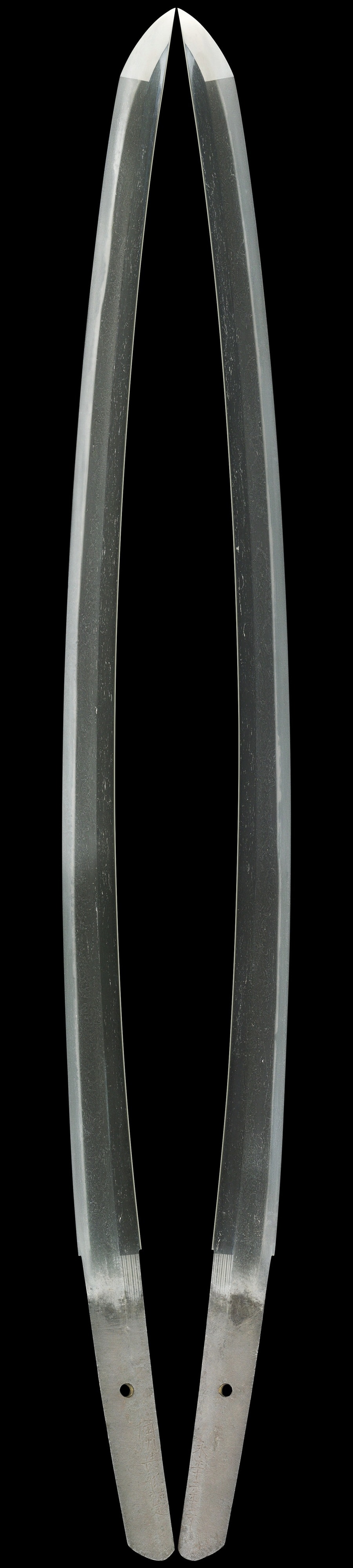
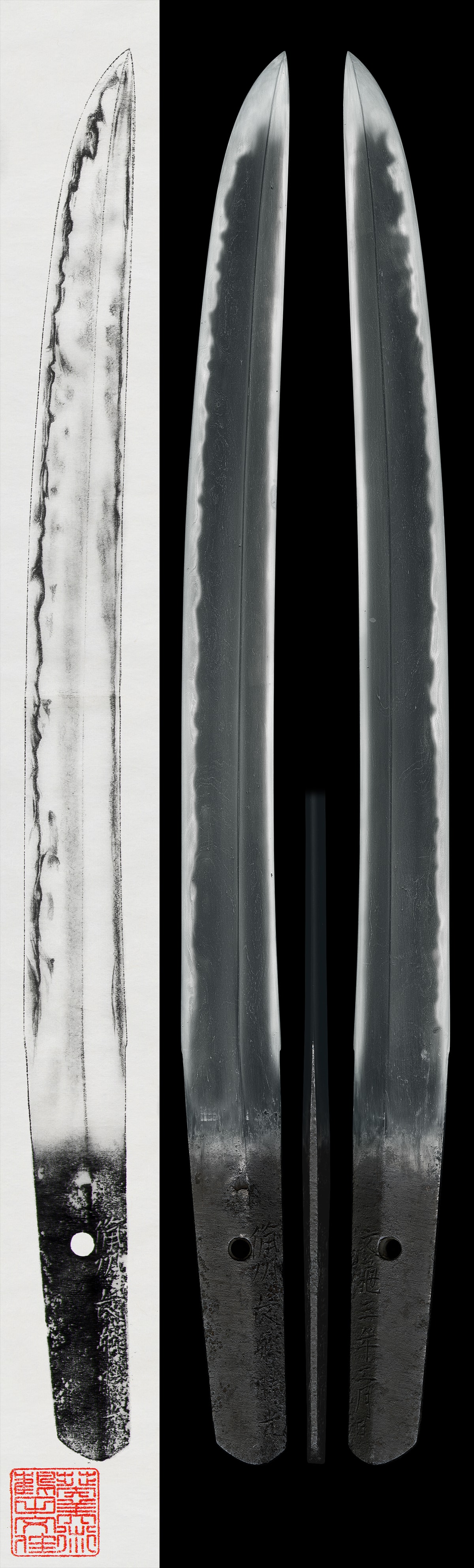
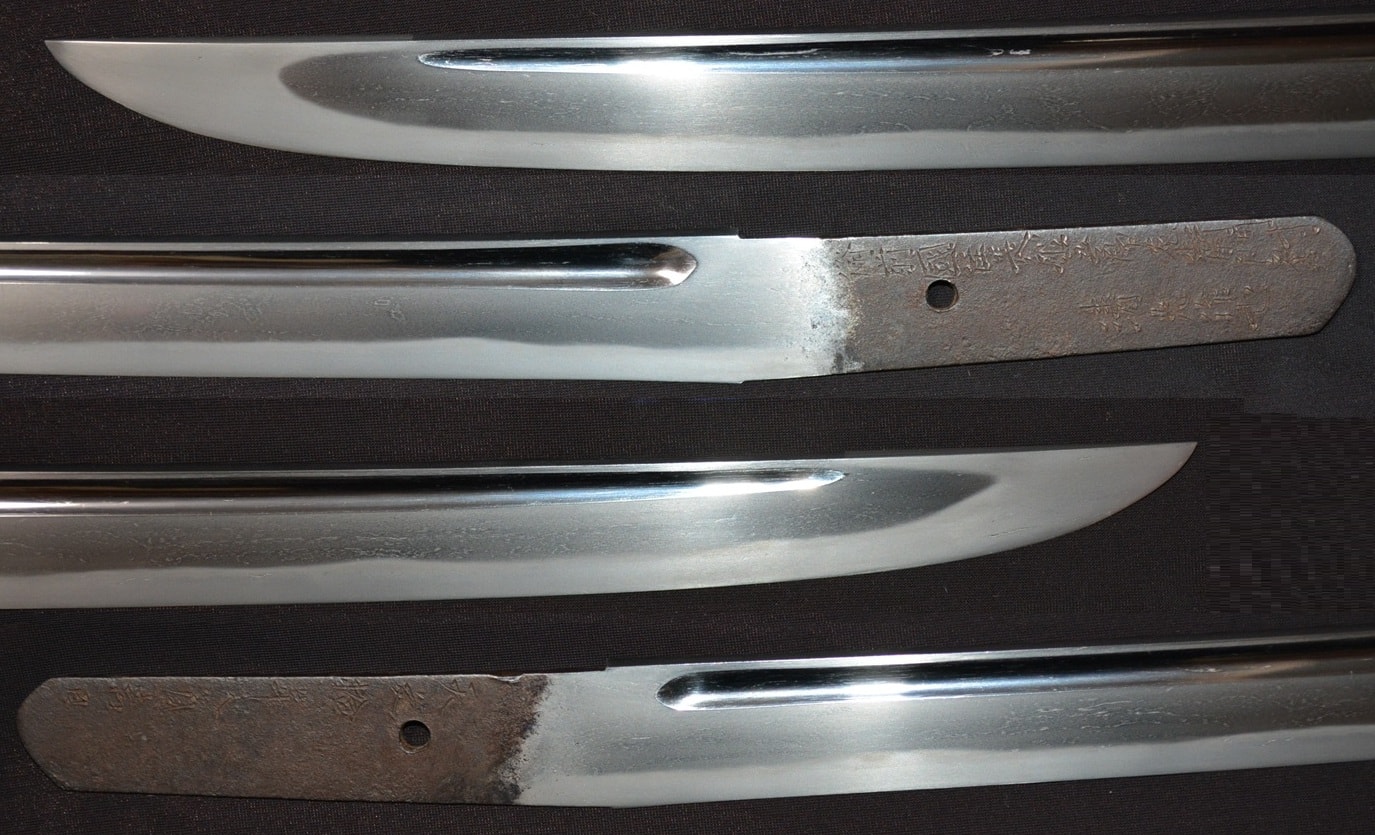
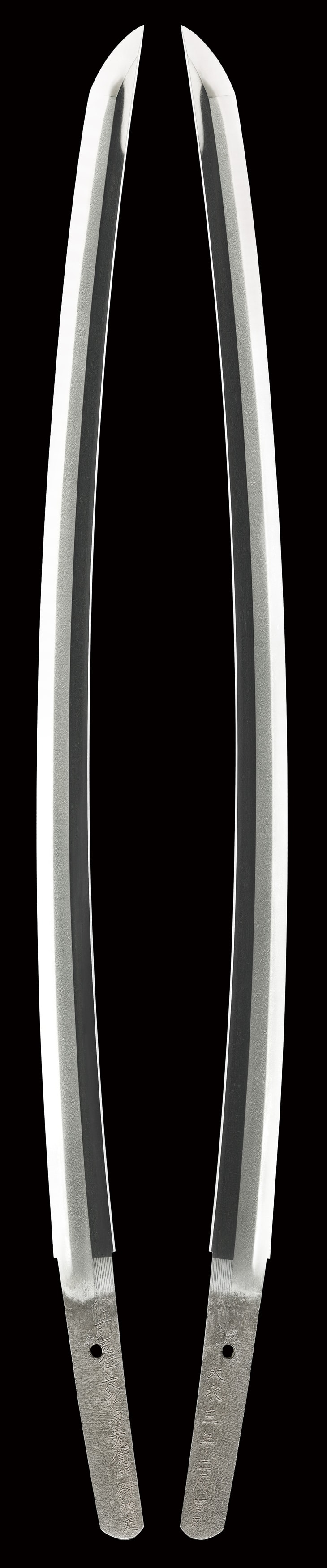
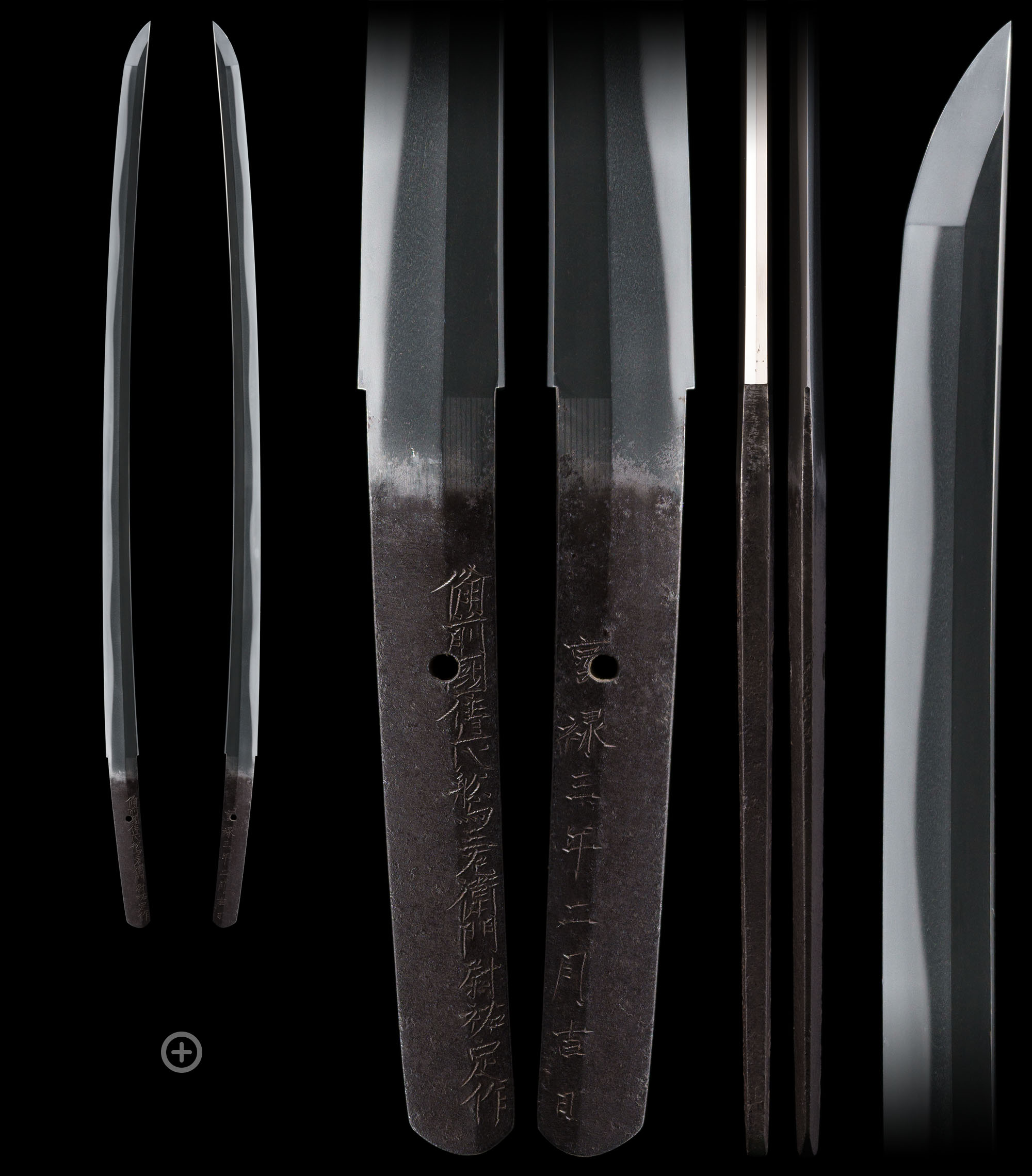
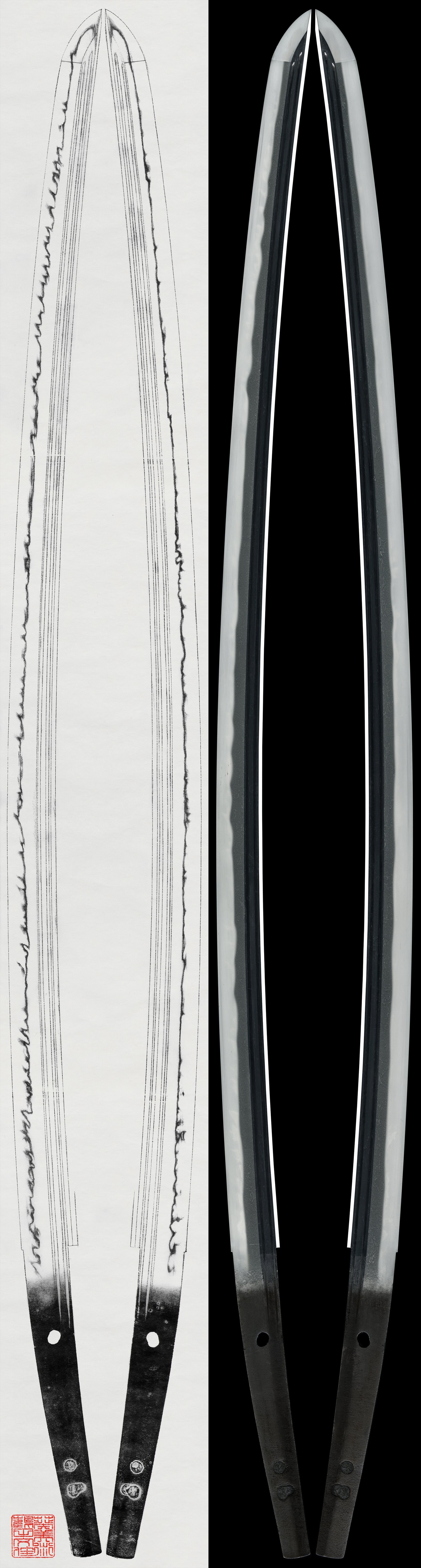
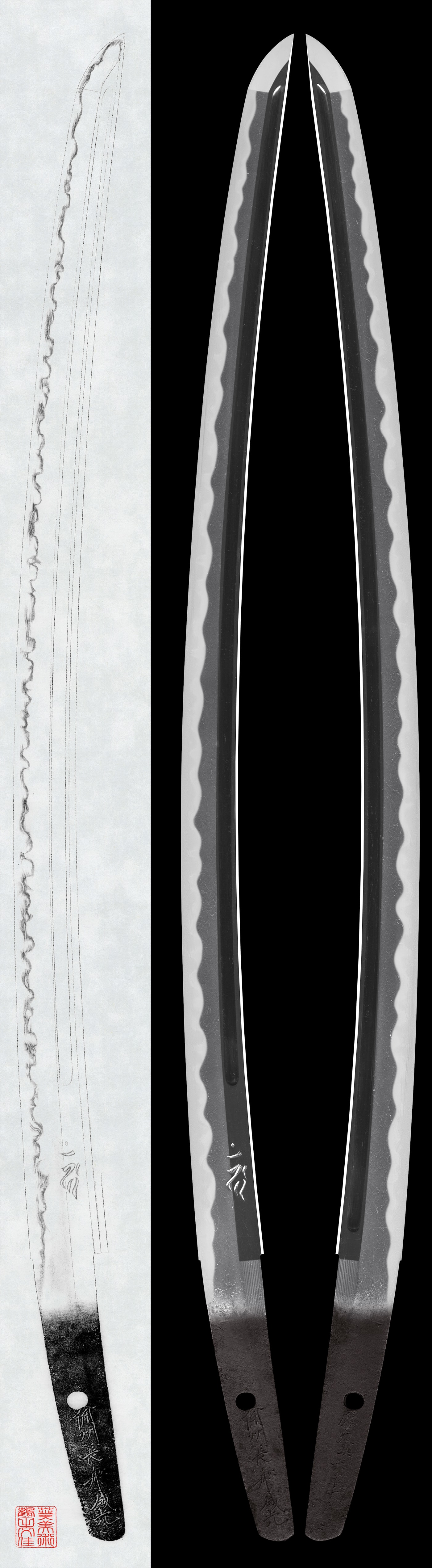
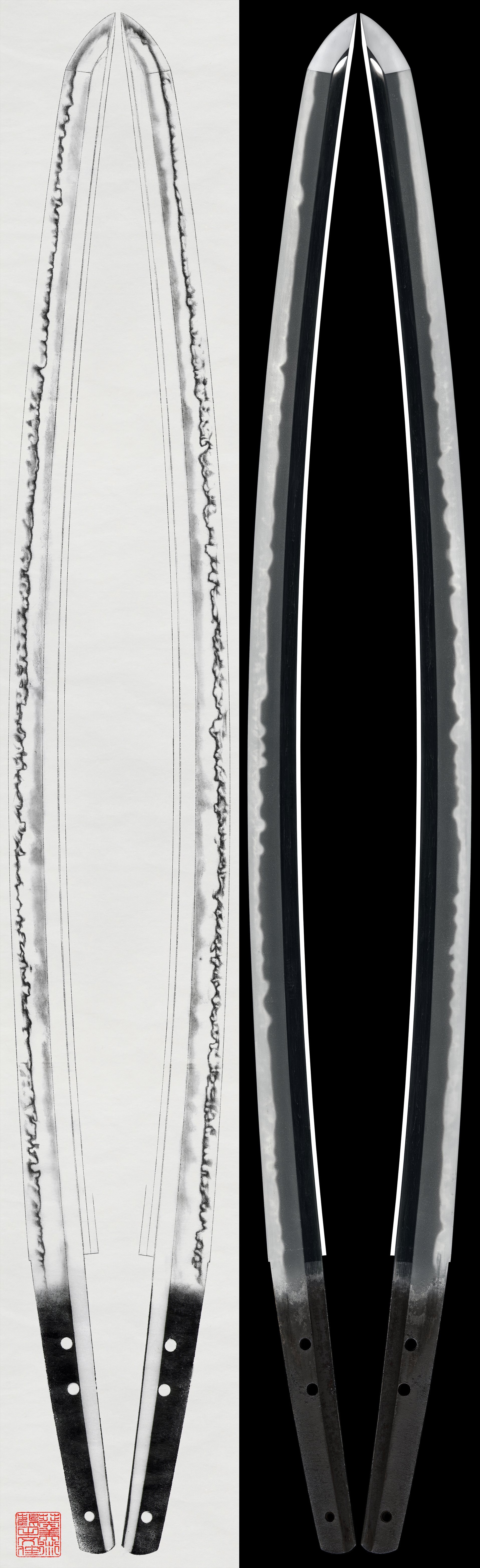
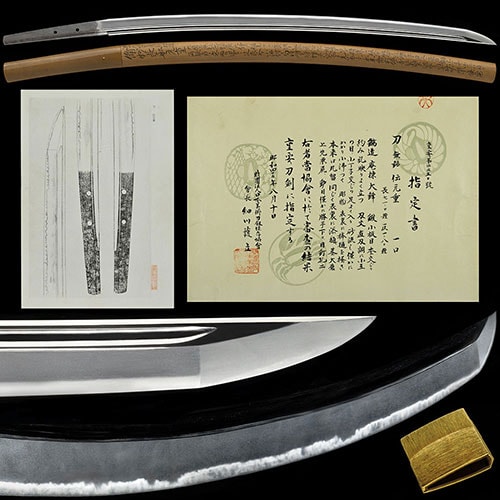
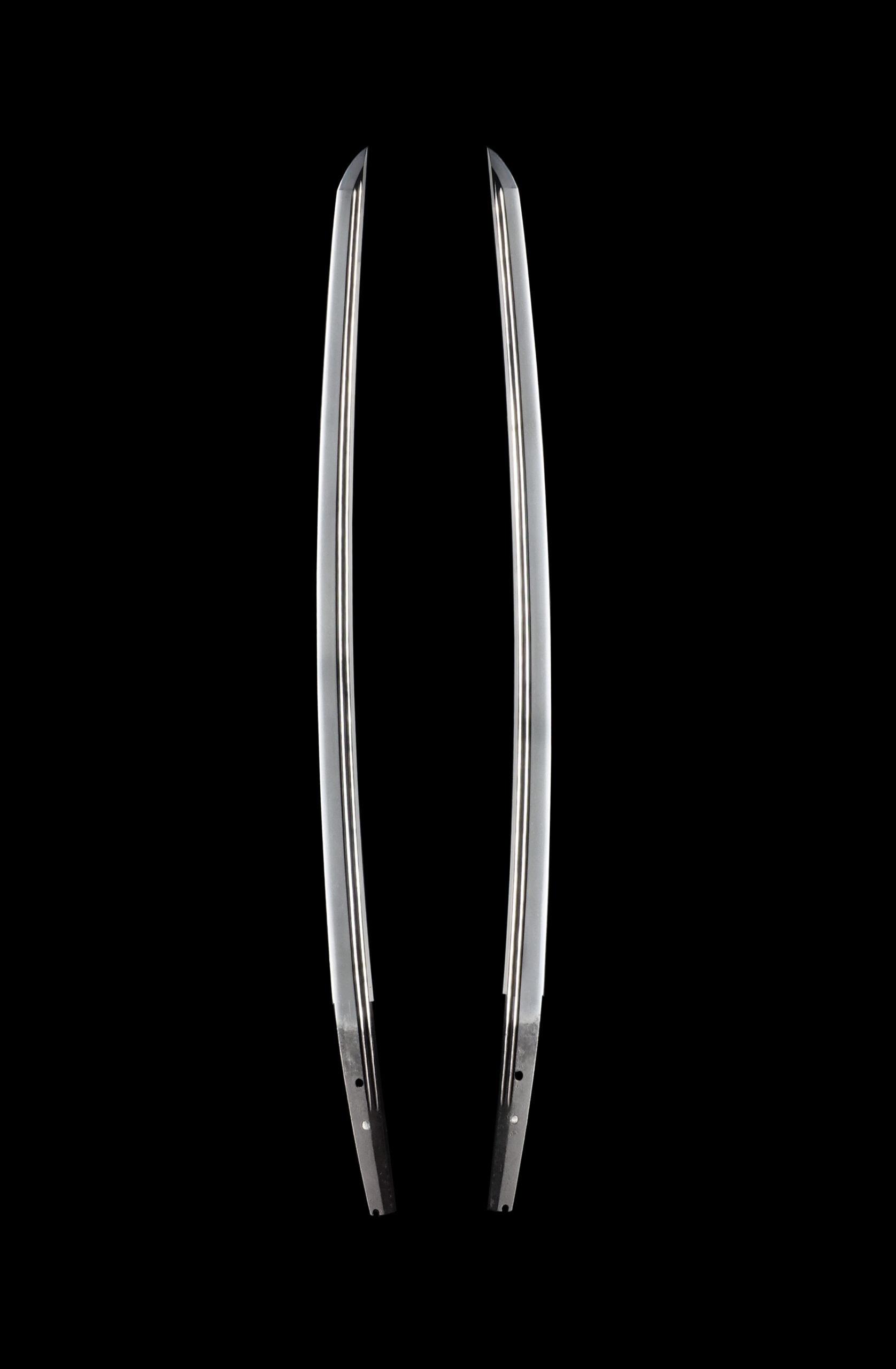
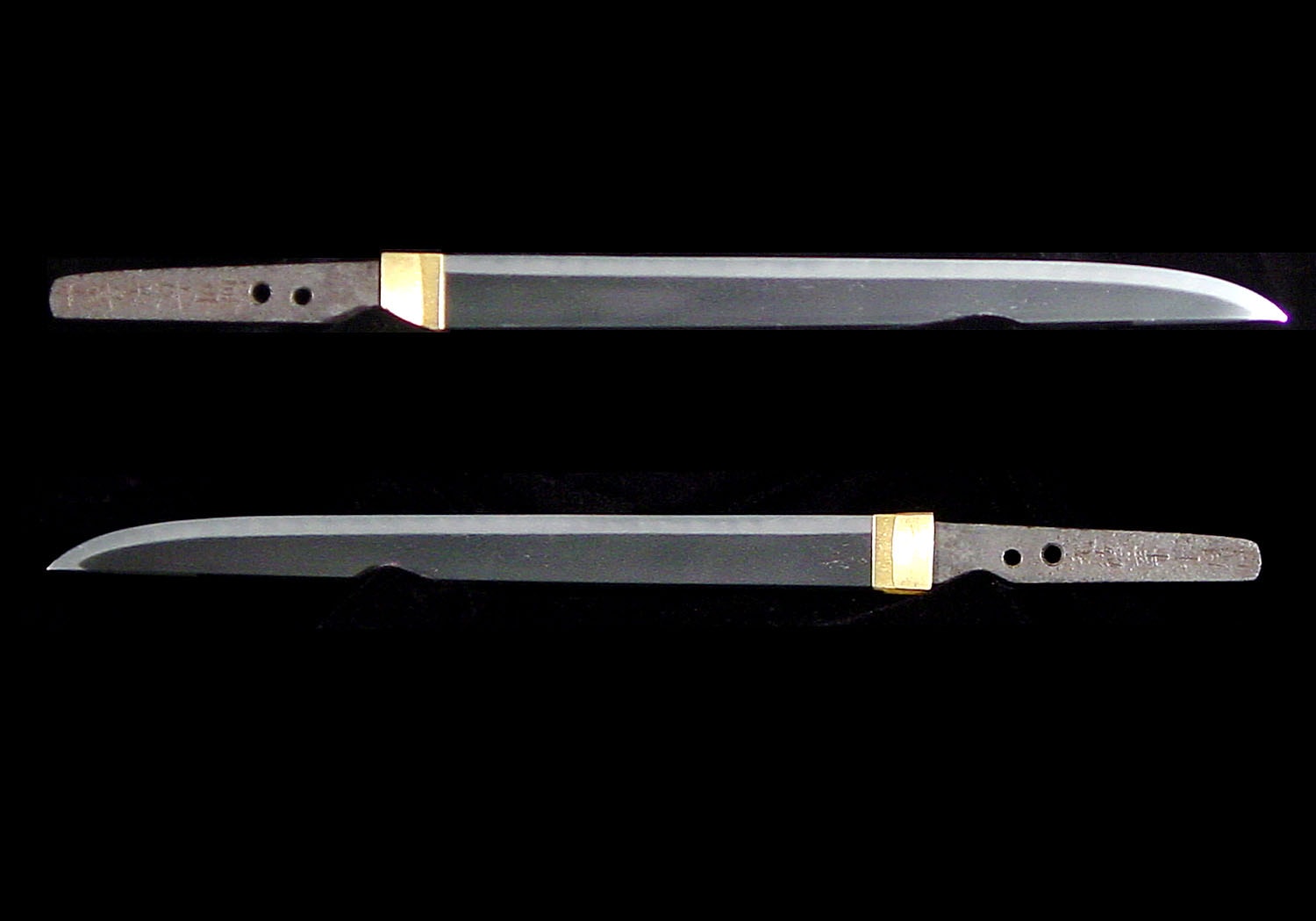
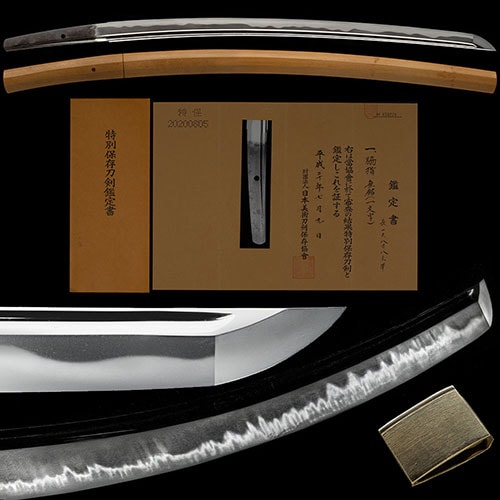
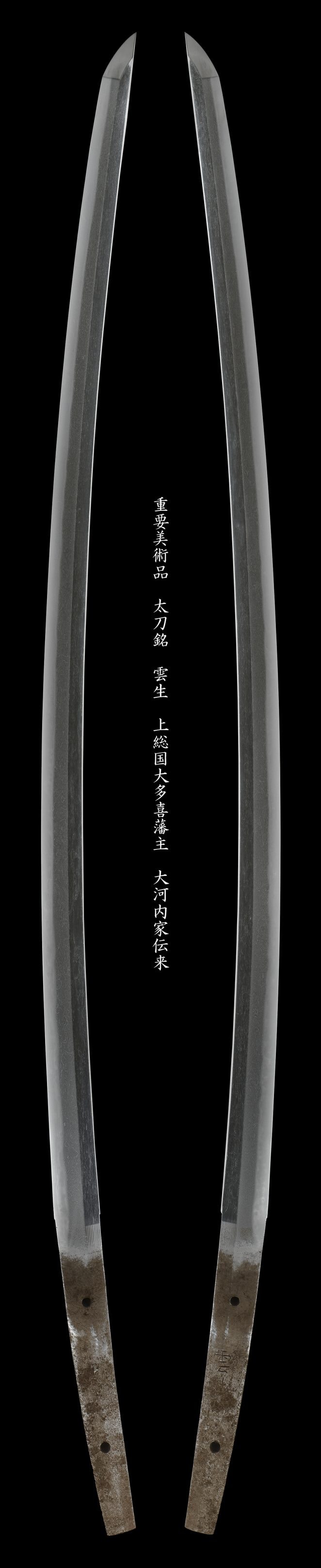
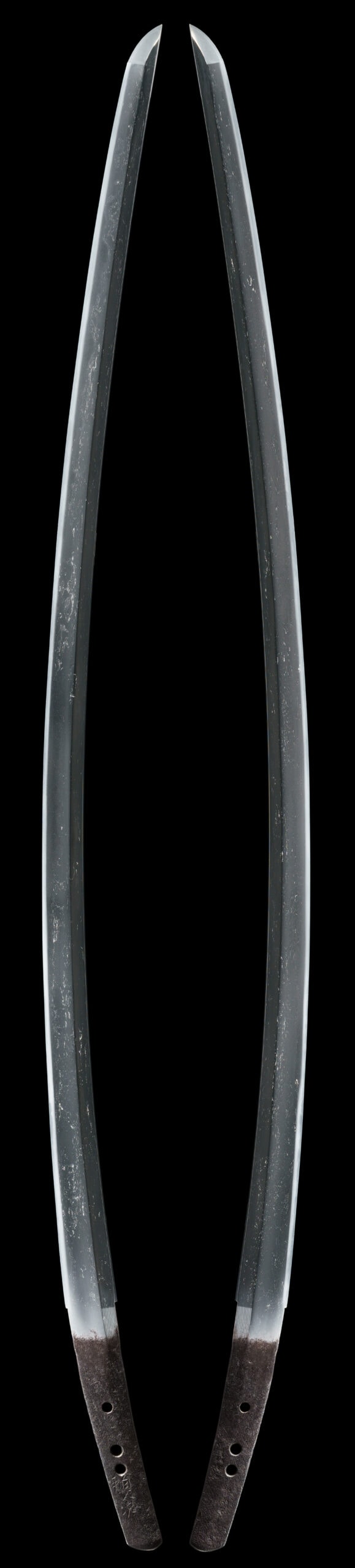
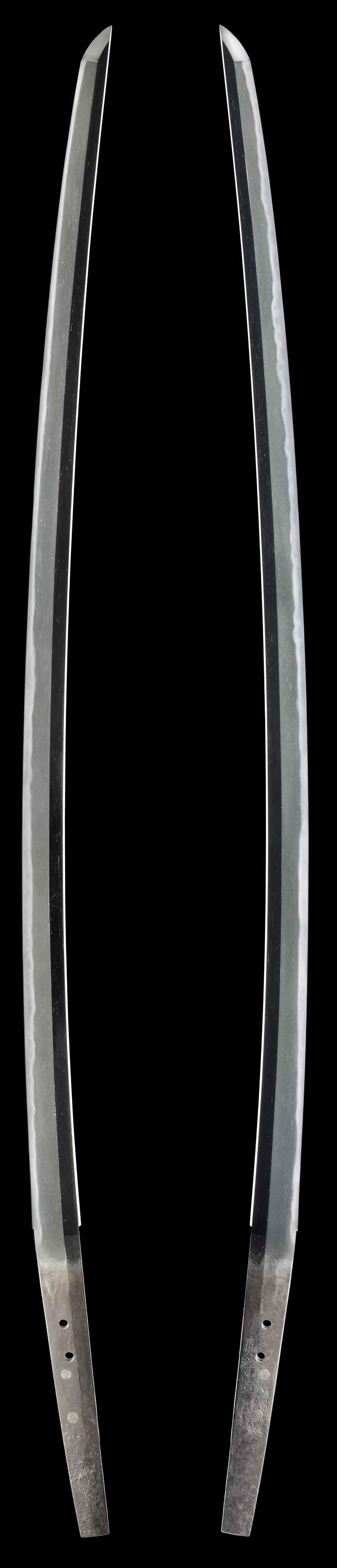
Harumitsu signed his blades 春光 and styled himself Jurozaemon-no-jo, and the published sources place him by name at the head of a crowded field. Several smiths bore the name Harumitsu, signing also with the personal names Saemon-no-jo, Gorozaemon-no-jo, Magojuro, Jirozaemon-no-jo, Gozaemon-no-jo and Saemon-shichiro, the name running chronologically from the Bunmei era through the Bunroku era; among them the published sources record that 「その中で十郎左衛門の名が最も知られ」, the Jurozaemon Harumitsu being the best known of all. His own dated work is concrete and tightly clustered in the mid-sixteenth century: a of Tenbun 2 (1533), a of Tenbun 16 (1547), a of Tenbun 24 (1555), and a of Eiroku 4 (1561), every one of them an , long-signed blade carrying both the smith's signature and a date inscription. He worked in the workshops in their late- phase, the period the trade calls , when the village smiths shared a single idiom and cut the day and month of their making into the tang.
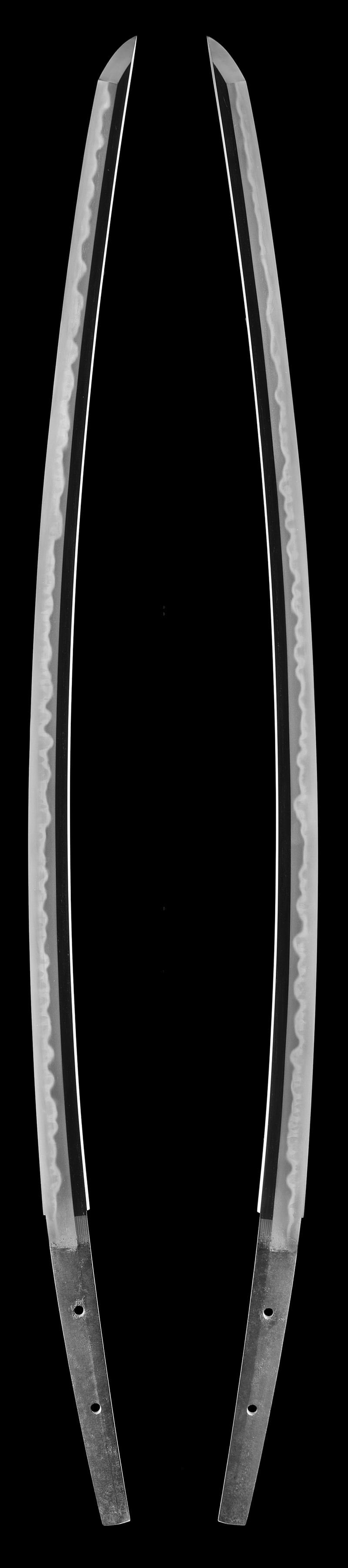
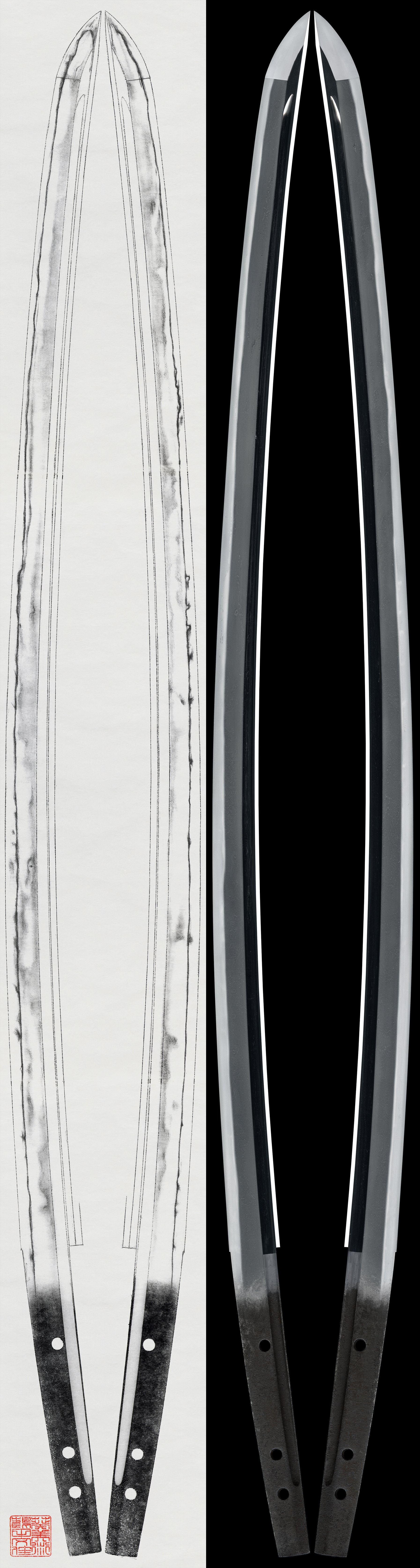
His recognized hand divides into two registers the published sources themselves describe, and the first is the koshi-hiraki that is the hallmark of the group. On the Tenbun 24 the temper is a into which the waist-opened enters, the pattern falling overall into a small-scale with entering and adhering, and on the Tenbun 2 that opened widens and gathers force: small are mixed in, appears, the temper is and in places the collapses into the , with and running slightly. The published sources name this 「末備前特有の腰開きの互の目」, the waist-opened characteristic of , and it is the first thing by which his blades are known. The follows the temper into a turning back in with on his fullest blade, or is tempered deep in an -like manner with a long .
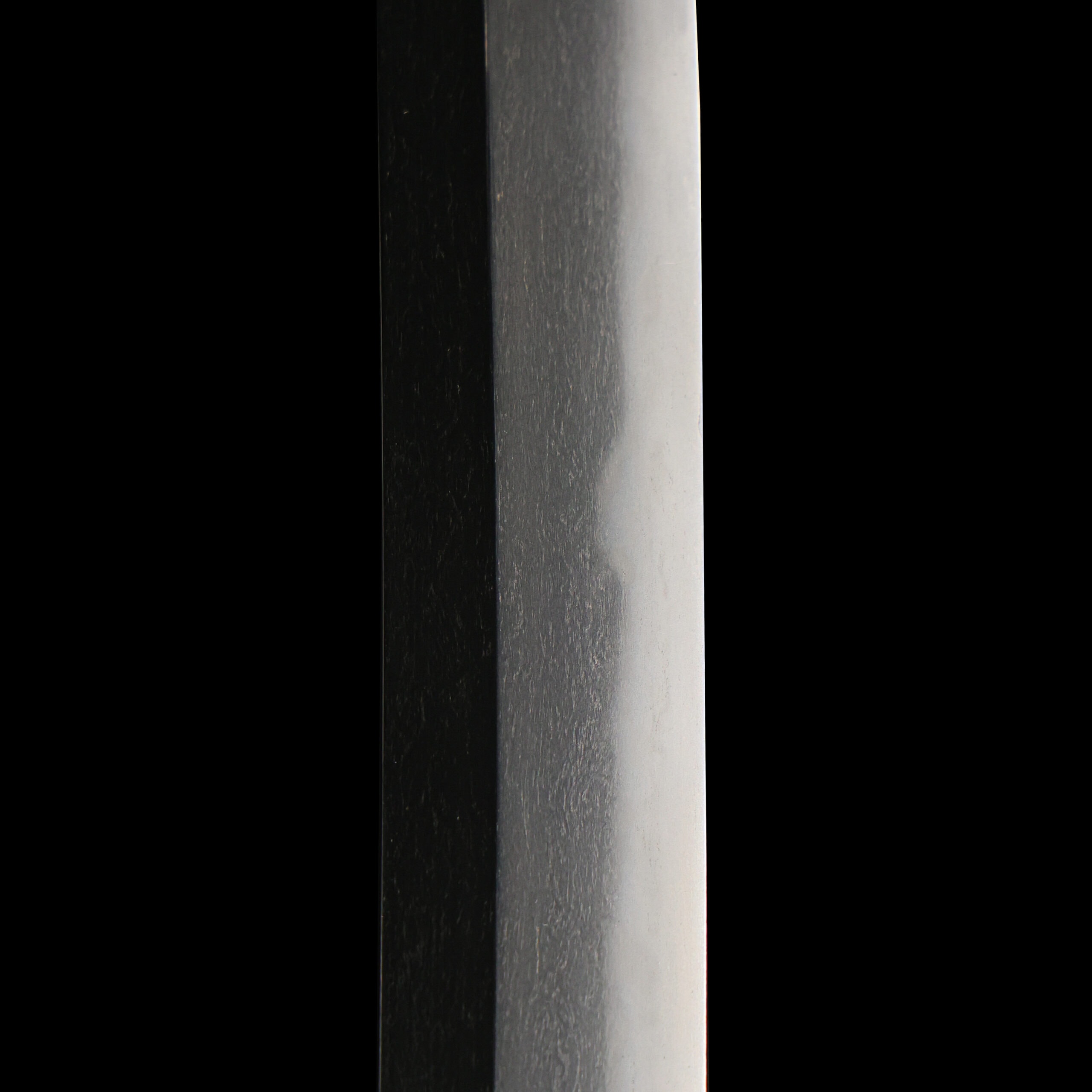
Set against this flamboyant face is a quieter register, and it is here that the shows most clearly. The Eiroku 4 is forged in a tightly packed , the grain well consolidated, with adhering finely and a standing over the surface, an old reflection uncommon on a blade; its temper is a with tempered around the , entering and the tight. The Tenbun 16 carries a wide with a slight admixture of small , and appearing within the edge, over an well kneaded with a moist look and thick . Across both registers the forging is the constant: a well-worked , at times the tighter , with throughout and entering on the Tenbun 2 blade. The in this quieter manner runs deep and straight and turns in with a long .
The two registers are not phases of a career so much as two manners the smith kept in hand across the two decades, the dated blades running back and forth between them. The published sources read the Tenbun 24 as 「十郎左衛門尉春光の代表作」, a representative work of the smith, its forging a well-packed with adhering. They count the Tenbun 2 , its waist-opened full and its workmanship good overall, among 「春光の傑作の部類の一口」, the masterwork class of his production. Of the Tenbun 16 , the calmer of the pieces, they single out the forging in particular, recording that 「とくに鍛えの優れた点が特筆される」, that its especially superior forging is what is most worthy of note. The shorter Eiroku 4 blade, compact in its proportions, they read as of comparatively good workmanship among the smith's works in both and .
Harumitsu is best understood within the succession rather than against it. The published sources for the line record the Jurozaemon Harumitsu as the son of Jirobei-no-jo Harumitsu, himself the son of Jirozaemon-no-jo Katsumitsu, placing him within the principal descent alongside the Sukesada and Kiyomitsu houses that carried the village through the sixteenth century. He works the koshi-hiraki the sources call the group's characteristic temper, the small mixed into both his and his giving the finely-broken, small-scale pattern that distinguishes the late hand from the broad of the older mainstream. What lifts his designated blades above the routine production is the forging: the well-kneaded with adhering thickly, the quality the sources reserve their praise for, and on the Eiroku 4 the survival of an old that the late group only rarely kept.
Harumitsu's surviving designated record is small and entirely signed, four among the Important Sword sessions from the 15th through the 37th, with no National Treasures or Important Cultural Properties among them and none yet raised to . All four carry long signatures and date inscriptions across the Tenbun and Eiroku eras, so that the small body of work is unusually legible: every blade dated, every one , the smith's hand readable across a quarter-century. One provenance of note is recorded, the Tenbun 16 having been 「海軍元帥東郷平八郎の遺愛の一口」, a cherished possession of Navy Marshal Togo Heihachiro, the victor of Tsushima. He is the kind of named master a collector encounters from time to time rather than rarely, the dated and signed the documentary heart of his work; the fullest of them, with the waist-opened full and the forging worked to the level the published sources call the masterwork class, is a blade of comparatively good standing among the late hands, and one comes to market only now and then, with patience.