NihontoWatch MonNihontoWatchBETA
MarketEncyclopedia
NihontoWatch Mon

NihontoWatchBETA

Market
Encyclopedia
Overview·Kantei·Designations·Provenance·Blade Forms·Signatures·Lineage·School
OverviewKanteiDesignationsProvenanceBlade FormsSignaturesLineageSchool
  1. Schools
  2. Osafune
  3. Ko-Osafune
  4. Kagehide

Osafune Kagehide

景秀

Tokujū
Vol. 7, No. 33 · Katana

Osafune Kagehide

景秀

23 ranked works

ProvinceBizenEraKencho (1249–1256)PeriodKamakuraSchoolOsafuneTraditionBizen-denGeneration1stFujishiroJo-jo sakuToko Taikan1,000(top 8%)TypeSwordsmithCodeKAG9
1Jūyō Bunkazai
3Tokubetsu Jūyō19Jūyō Tōken

Overview

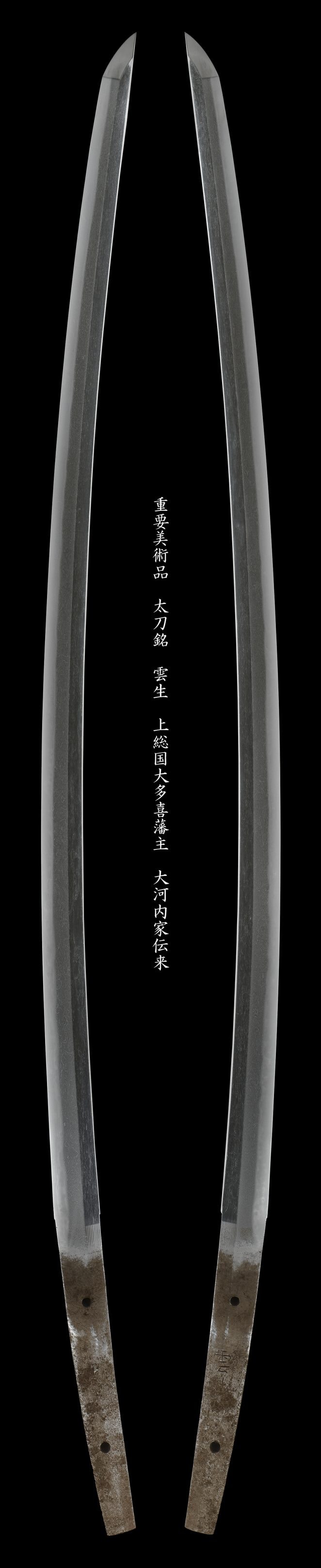
Kagehide is an smith of the middle-to-late period, known above all for one blade: the by the name Kuronbo-giri, cherished in the house of Date Masamune and designated an Important Cultural Property. The published sources open almost every entry the way, that Kagehide has been transmitted since old times as the younger brother of Mitsutada (古来、光忠の弟と伝えられ), the founding head of the school, though one record preserves the variant tradition that he was the elder brother. His signed works are few, and the judges call them rare and of high documentary value each time one appears. Where Mitsutada is the orthodox main line, Kagehide is its more wayward sibling, a hand that the commentaries say is rather to be appraised as aligning with the group.

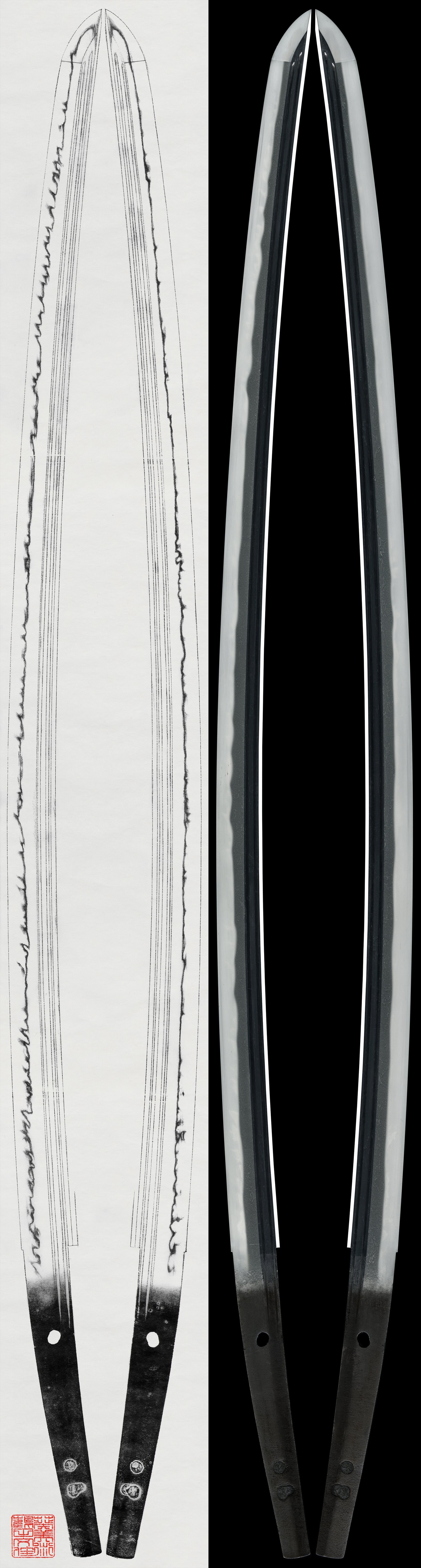
The feature that names him is the pointed set into his clove temper. Like Mitsutada he commands a flamboyant -dominant , the published sources writing that he too excelled in the showy manner (華やかな丁子主調の乱れを得意), the wide and undulating, in places the crest of the temper rising so high that it reaches the . But where the two part company is exact and often repeated: compared with Mitsutada the intervals of the run closer (乱れの間が近く), the pointed stand out (尖り刃が目立ち), and the whole carries a faintly sooty cast the texts call susudoshii, so that one senses, in their phrase, a feeling of that kind (ややすすどしい感を受ける). On his finest blades the is mixed with fukuro-chōji, - and angular , with interspersed, the conspicuously alternating wide and narrow. The judges read the conspicuous as the single point by which his work can be marked as his.

The constant beneath the temper is the . He forges an , at times a well-packed , mixed with and a flowing , well worked and carrying a fine, sometimes dust-fine , with entering and a clear standing across both his manners. Over that the is chiefly -based with adhering, and entering well, slight and running through, and on the best pieces a bright, clear . The runs into a turning back in , at times pointed with . It is a worked with care, the reflection of the period, over which the pointed clove temper does its distinguishing work.

His record divides into two registers rather than two periods. The first is the flamboyant Kuronbo-giri manner just described, his recognized prime, whose summit on paper is a great signed published in the Kōzan : the published sources call it the artistic territory as the Important Cultural Property , a work in which Kagehide's true strengths are brought forth without reserve (本領が遺憾なく発揮), the finest among his works. The second is a calmer register, a or base mixed with , and very small , the pointed elements held back, the bright. The judges connect this quieter hand to the observation that early work by Mitsutada and Sanenaga can show a -like territory, noting of one such blade that its lower half is so classically refined it can at a glance recall a superior sword (一見古備前の上作を想わせる). His signatures survive only as two large characters, never longer, which the commentaries give as one reason a fully fixed standard for him is hard to set.

Within the early mainstream he stands beside Mitsutada, Nagamitsu and Sanenaga. The published sources separate his flamboyant from Mitsutada by exactly the closer-set and the standing-out , while reading his calmer pieces as nearer to Nagamitsu and Sanenaga; on a late whose temper centers on low-waisted they remark that the manner is closer to those two than to Mitsutada, yet the noticeable pointed elements keep the attribution his. His bright , his disposition and above all his are the traits by which the judges affirm his unsigned work from era and school, his attribution resting in the end on that pointed tell rather than on any signed standard. He is the brother who carried the name in his own slightly harsher voice.

For the collector he is a rare early name. Fujishiro grades him Jō-jō . He has no National Treasures; his record runs instead through one Important Cultural Property, the Kuronbo-giri, together with a small group at the and tiers, twenty-two designated blades on record across those two ranks. His provenance roll is short but distinguished, the Kuronbo-giri held in the Date house, a Sekigahara reward blade inherited by the Tanegashima retainers of the Shimazu, and a signed formerly of the Mōri family among those of recorded whereabouts, with examples now at Futarasan Jinja and the Hayashibara Museum of Art. Most of his designated blades are held rather than traded, and signed Kagehide of form is among the scarcer things in the early field; a privately held example comes to light only seldom, and when one does it is a landmark, a document of the more individual side of the first generation.
Kantei

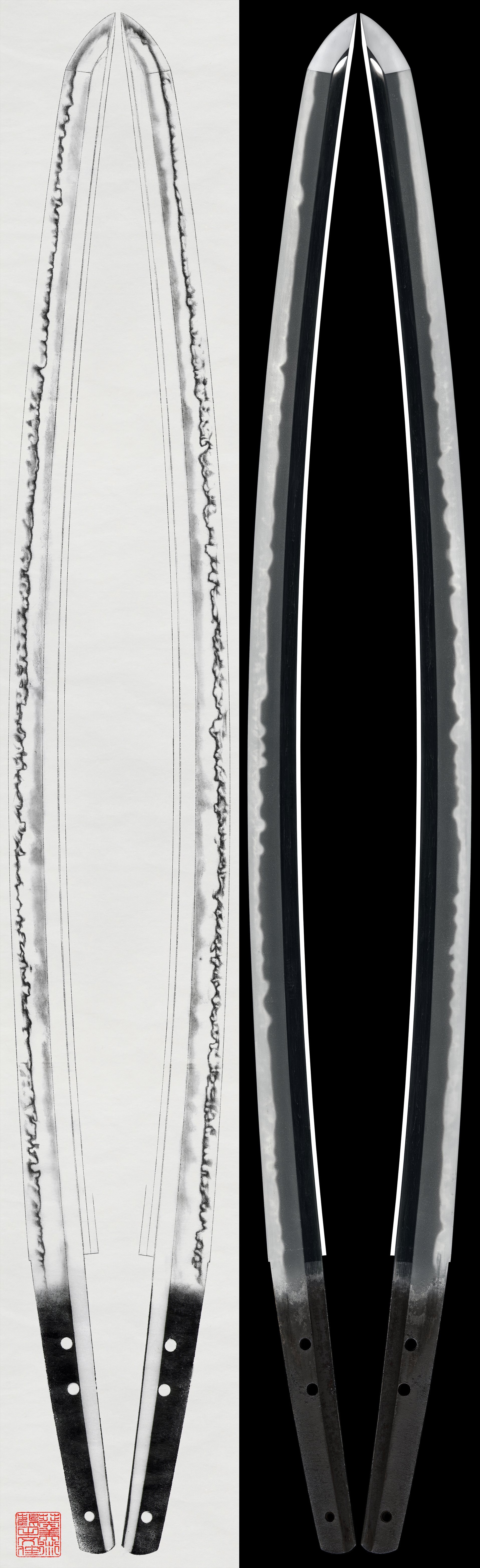
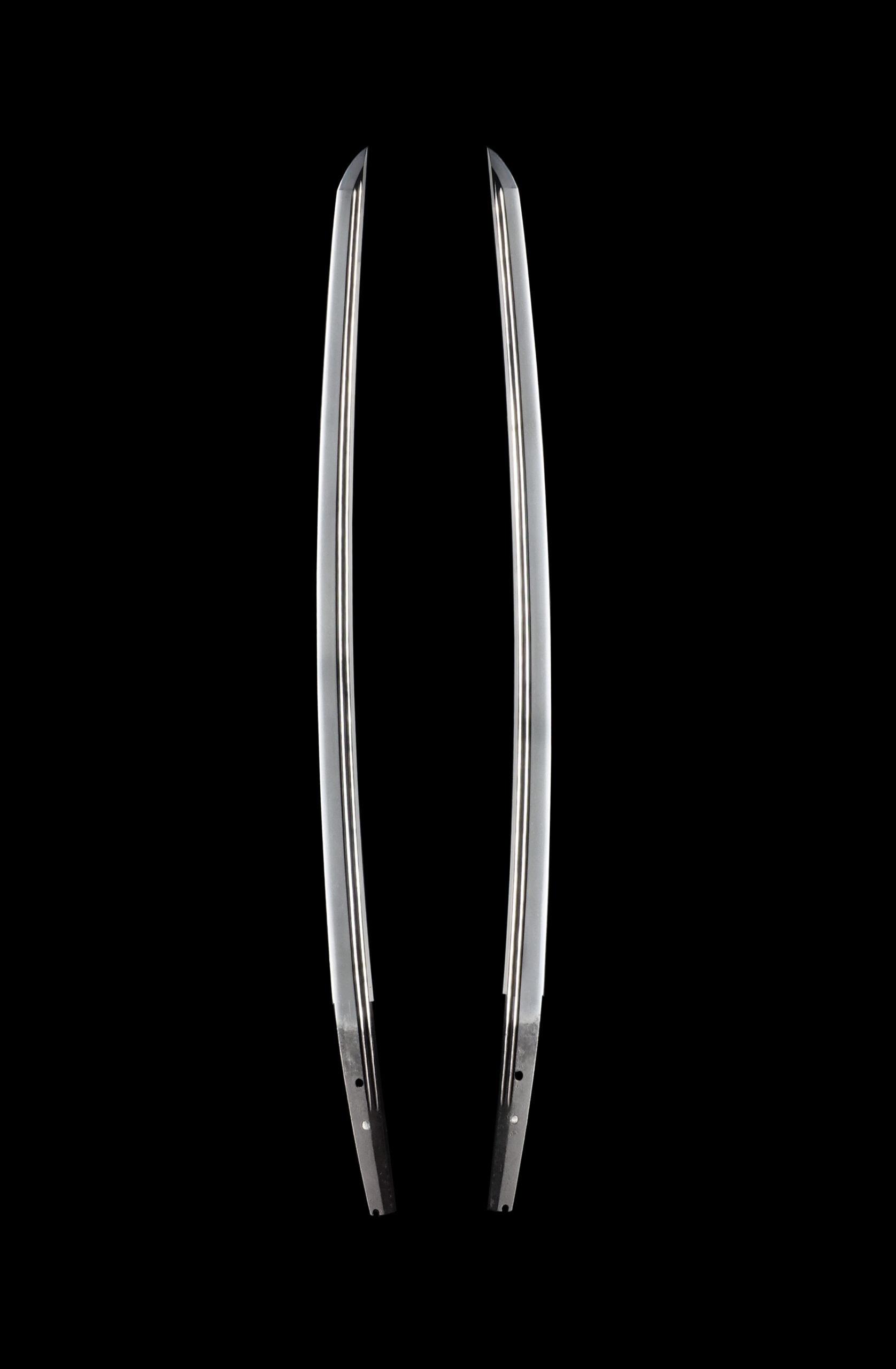
one Osafune hand read in two registers: the flamboyant choji-midare of the Kuronbo-giri manner, wide and undulating with conspicuous togariba and a sooty cast set apart from his brother Mitsutada, and a calmer suguha-based register closer to Nagamitsu and Sanenaga, both over an itame ground with ji-nie and a clear midare-utsuri

Kagehide is an smith of the middle-to-late period, transmitted since old times as the younger brother of Mitsutada, the head of the school's first generation. His record is held together by one celebrated work, the Important Cultural Property by the name Kuronbo-giri, a blade cherished in the Date house, and his signed pieces are few. Like Mitsutada he commands a flamboyant -dominant , the temper wide and undulating, in places rising so high that the crest of the reaches the , but the published sources draw the line that separates him: compared with Mitsutada the intervals of the run closer, pointed stand out, and the whole carries a faintly sooty cast the texts call susudoshii. His is an , at times a well-packed , with and a clear , and his temper is -dominant with a disposition, the and the admixed the marks by which his work is recognized. A second, quieter register, -based and closer to Nagamitsu and Sanenaga, shows the breadth of his hand and his footing among the early masters.
Diagnostic discriminators

unique vs Mitsutada, the orthodox Osafune choji

Observation by phase

The flamboyant choji manner (the Kuronbo-giri register, his recognized prime)

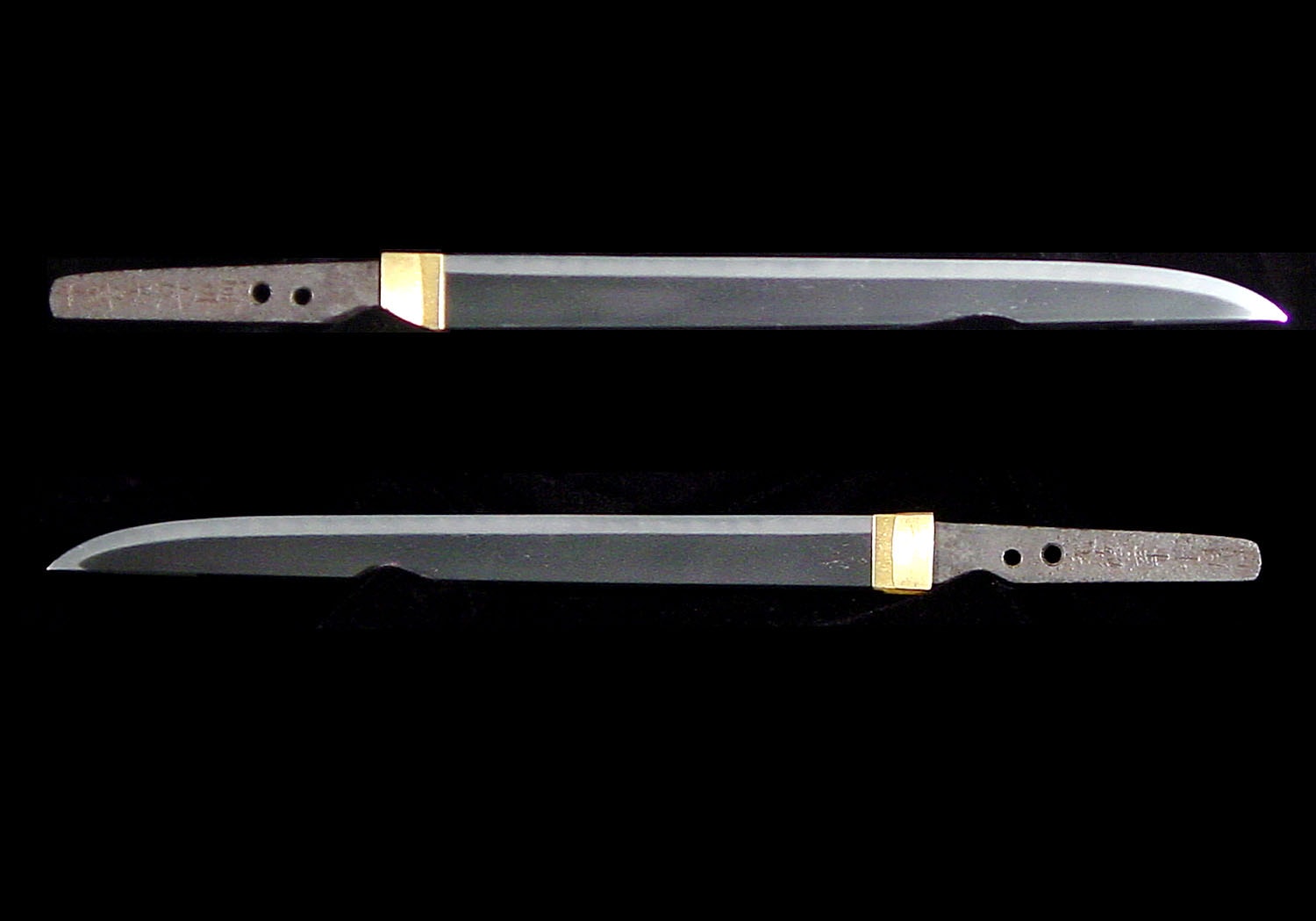
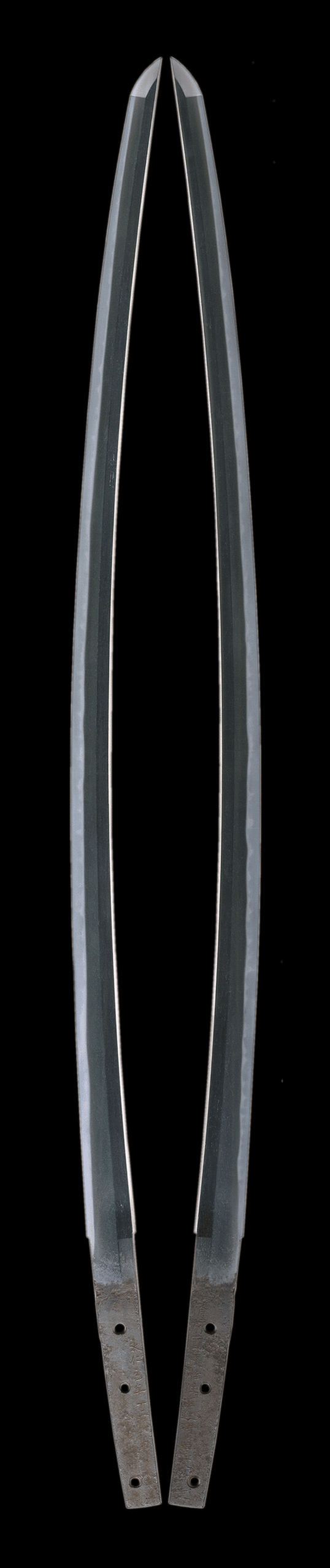
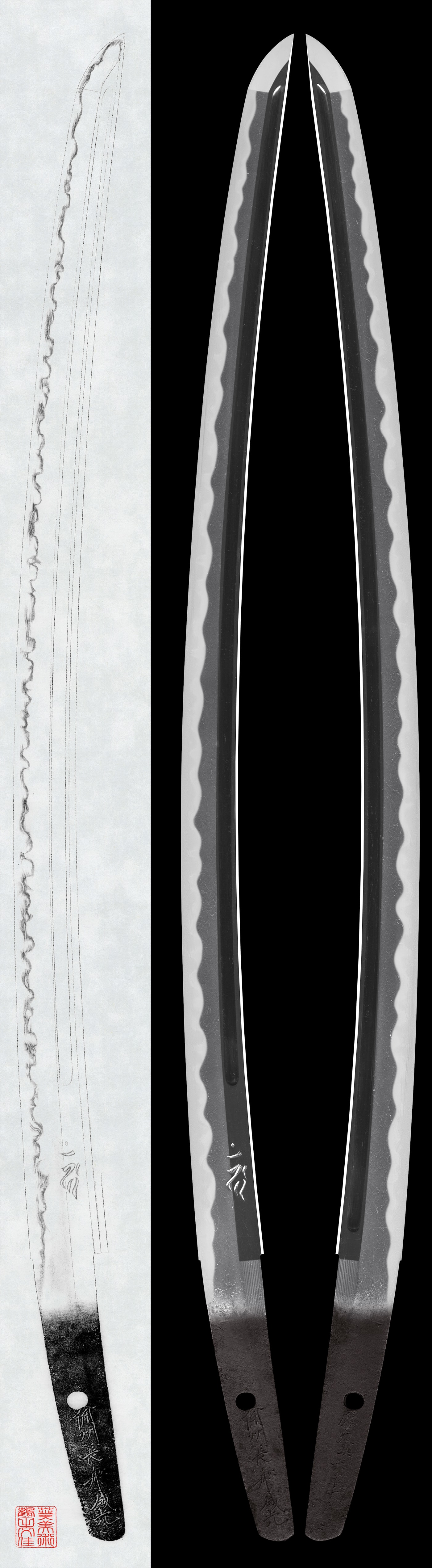
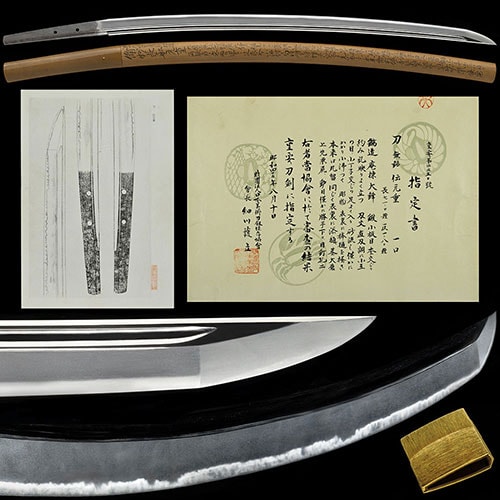
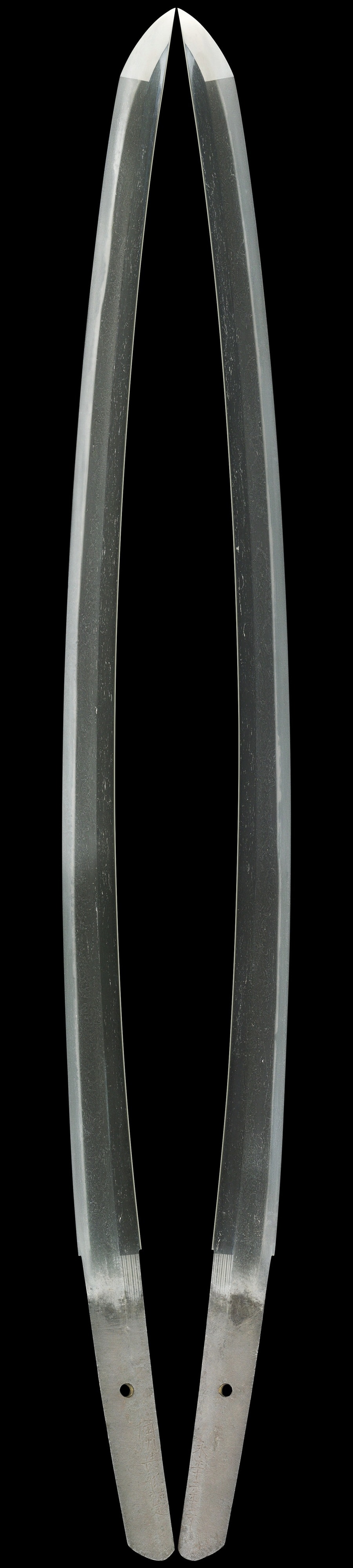
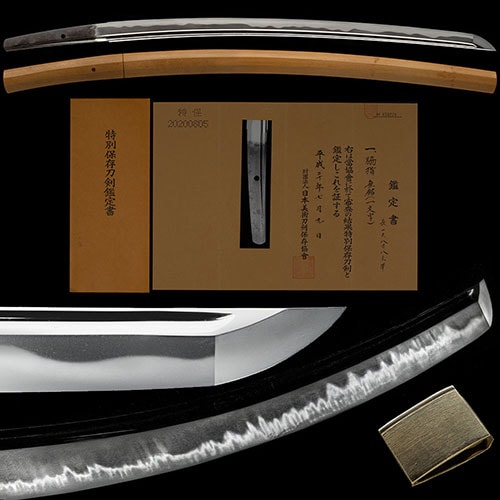
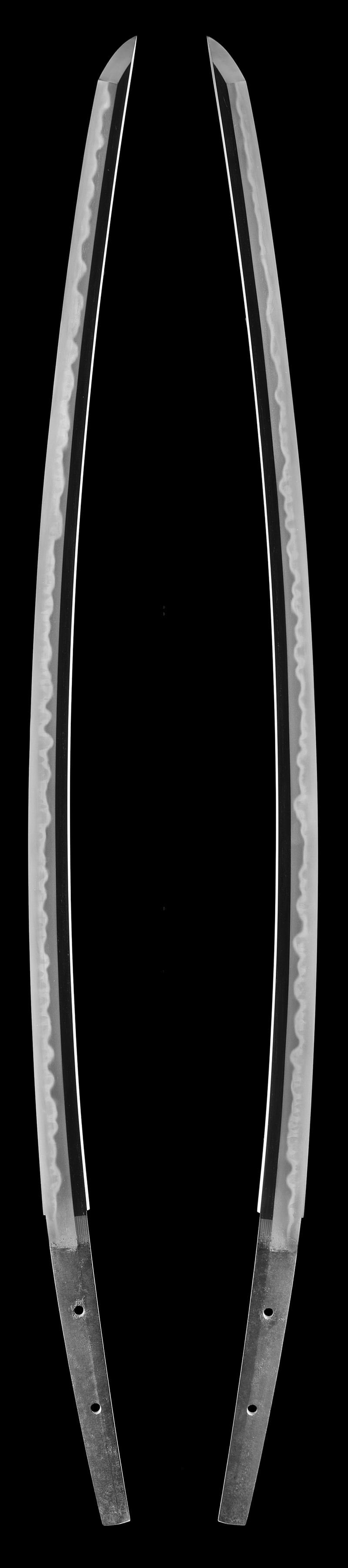
His finest record is the flamboyant , the manner of the Important Cultural Property Kuronbo-giri. The ground is an mixed with and, in places, , well forged, with dust-fine and a vivid standing clearly. Over it the is wide, alternating conspicuously between broad and narrow, in places the crest of the temper rising to the ; the temper is mixed with -, -, angular and pointed , with and entering well, -dominant with , slight and , interspersed, and a bright, clear . The runs into a turning back in , at times pointed with . The published sources call the great Tokuju published in the Kozan the finest among his works, the artistic territory as the Kuronbo-giri, where Kagehide's strengths are brought forth without reserve. The , attributed by Kochu, carries the standing-grain , , and the and that the judges read as his tell.

Sugata 姿
Jigane 地鉄
Hamon 刃文
Bōshi 帽子

The calm suguha register (closer to Nagamitsu and Sanenaga)

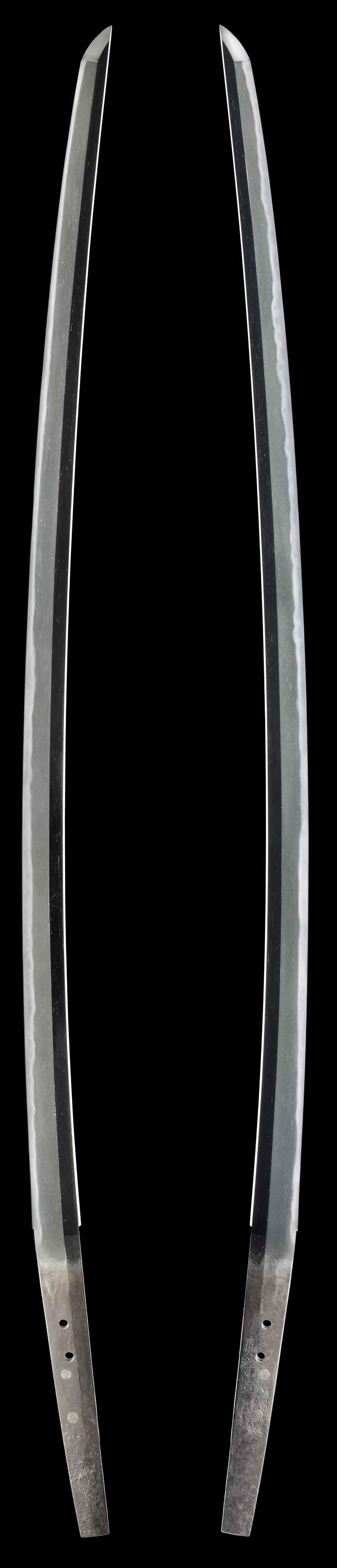
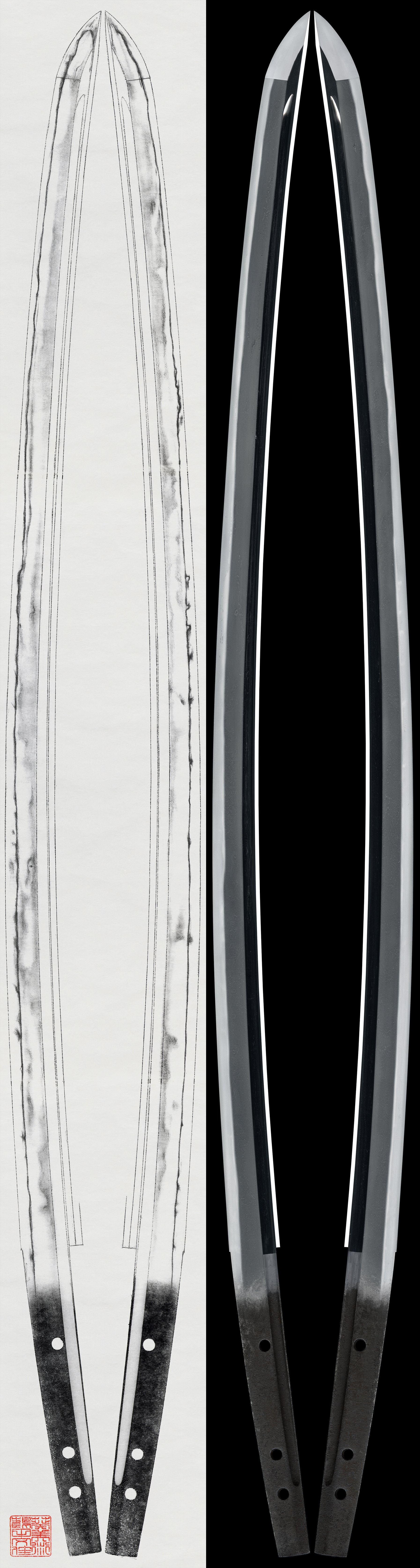
the calm register is read on the suguha-based, two-character signed wakizashi and the late tachi, where pointed elements are not conspicuous and the territory turns refinedly archaic

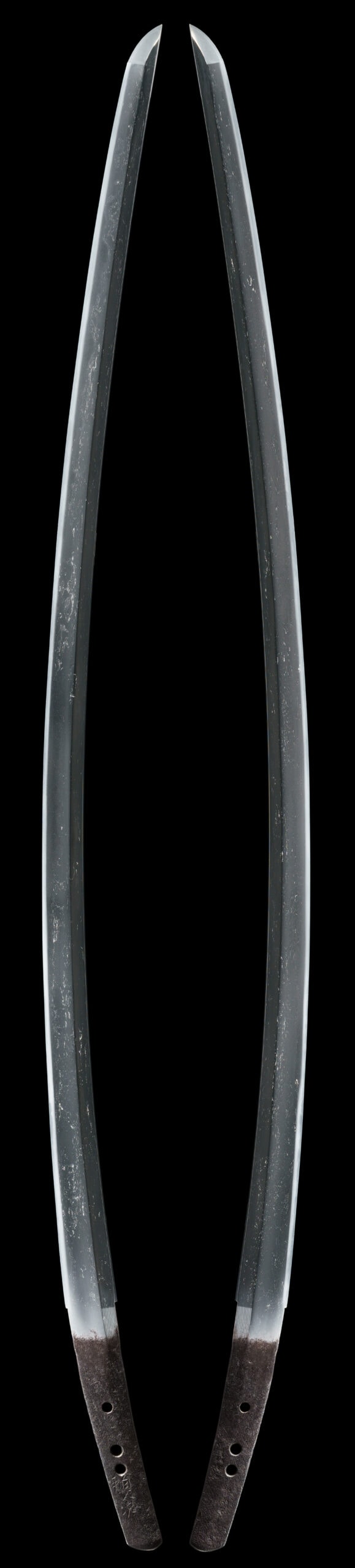
A second, quieter face of his record sets a base under his . The published sources note that early work by Mitsutada and Sanenaga can show a -like territory, and several of Kagehide's blades convey exactly that: the lower half built on a or , mixed with , and very small , with and , adhering, and a bright, clear over a tightly packed with fine , and a distinct . On one late Tokuju the spacing of the is gentle and the territory refinedly archaic, closer to Nagamitsu and Sanenaga than to Mitsutada; yet even here the noticeable keep the attribution his. These calmer pieces, the judges hold, are valuable for understanding the breadth of his working range.

Jigane 地鉄
Hamon 刃文
Bōshi 帽子
Scholarship

The published sources record that Kagehide is transmitted since old times as the younger brother of Mitsutada, that his manner is rather to be appraised as aligning with the Ichimonji group, and that the famous Kuronbo-giri is rather in an Ichimonji manner: compared with Mitsutada the intervals of the midare are closer and the togariba conspicuous, giving a sooty impression. They caution that his signed works are few and known only in two-character signatures, so complete certainty is not possible, the attribution of his mumei work resting on era, school and the standing-out togariba.

On the calmer blades the published sources note that early Osafune work by Mitsutada and Sanenaga can display a Ko-Bizen-like territory, and that one suguha-based piece strongly conveys exactly that, the lower-half hamon refinedly archaic and recalling at a glance a superior Ko-Bizen blade, while the innate individuality of the Osafune group, above all the standing-out togariba, still marks it as Kagehide.

Designations

Kokuhō—
Jūyō Bunkazai1
Jūyō Bijutsuhin—
Gyobutsu—
Tokubetsu Jūyō3
Jūyō Tōken19

Elite Standing

0.22 across 23 designated works

Top 11% among smiths

Provenance

4 documented provenances across certified works by Kagehide

Provenance Standing

4 works held in elite collections across 4 documented provenances

Top 15% among smiths

Raw score: 2.22 / 10

Blade Forms

Distribution across 23 ranked works

Signatures

Signature types across 23 ranked works

Currently Available

Lineage

Kagehide
Students (3)
  1. 1.Nariie成家3 for sale21designated
  2. 2.Kageyori景依5designated
  3. 3.Kageyasu景安4designated

Osafune School

Other artisans of the Osafune school

  1. 1.Mitsutada光忠61designated
  2. 2.Nagamitsu長光2 for sale253designated
  3. 3.Kagemitsu景光2 for sale146designated
  4. 4.Kanemitsu兼光4 for sale237designated
  5. 5.Sanenaga眞長1 for sale64designated
  6. 6.Chikakage近景4 for sale86designated
  7. 7.Tomomitsu倫光1 for sale64designated
  8. 8.Kagemasa景政2 for sale22designated
  9. 9.Masamitsu政光4 for sale84designated
  10. 10.Motomitsu基光3 for sale41designated
  11. 11.Yoshimitsu義光35designated
  12. 12.Shigezane重眞1 for sale45designated

Kagehide

Kagehide(景秀) was a Japanese swordsmith of the Osafune school in Bizen province, active during the Kencho (1249-1256) period.

The work follows the Bizen-den tradition.

Designated works by Kagehide include 1 Jūyō Bunkazai (Important Cultural Property), 3 Tokubetsu Jūyō, 19 Jūyō.