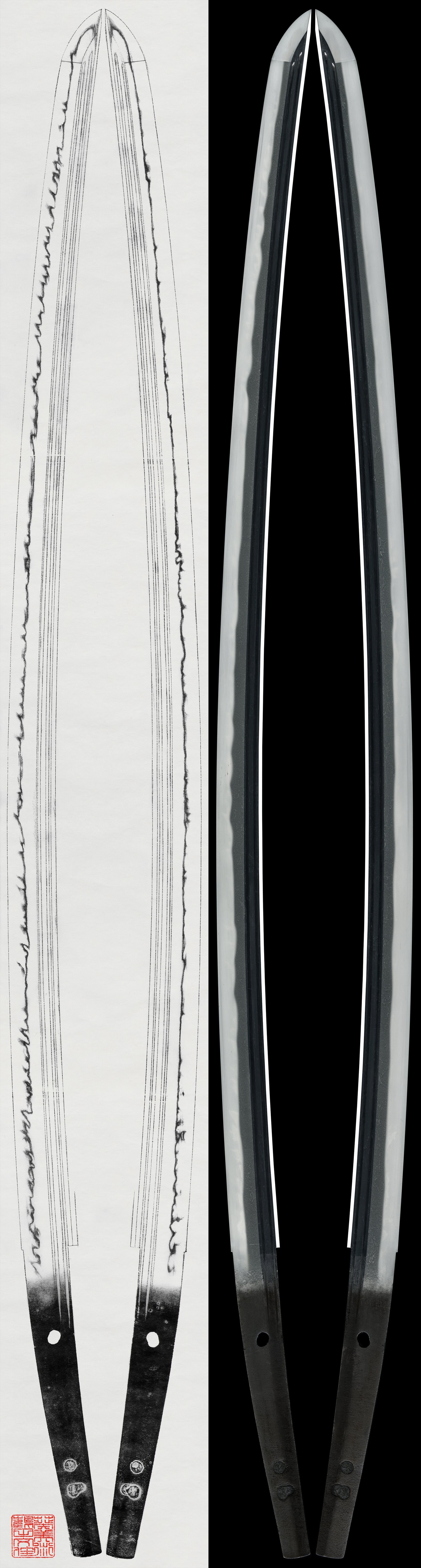
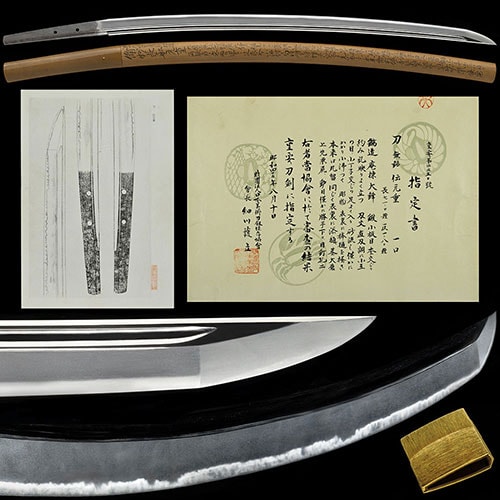
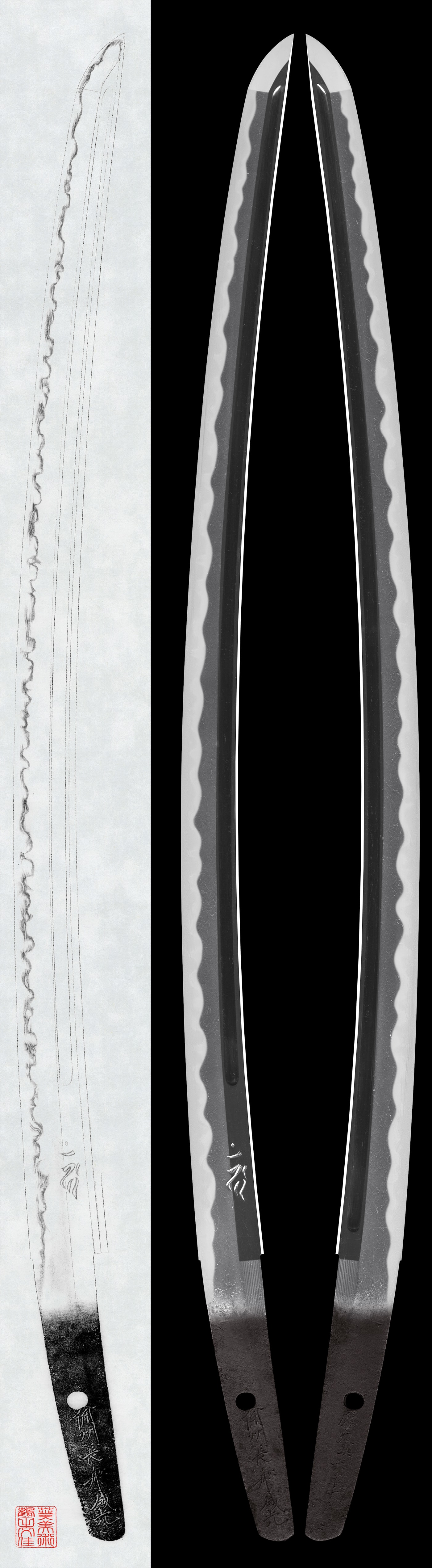
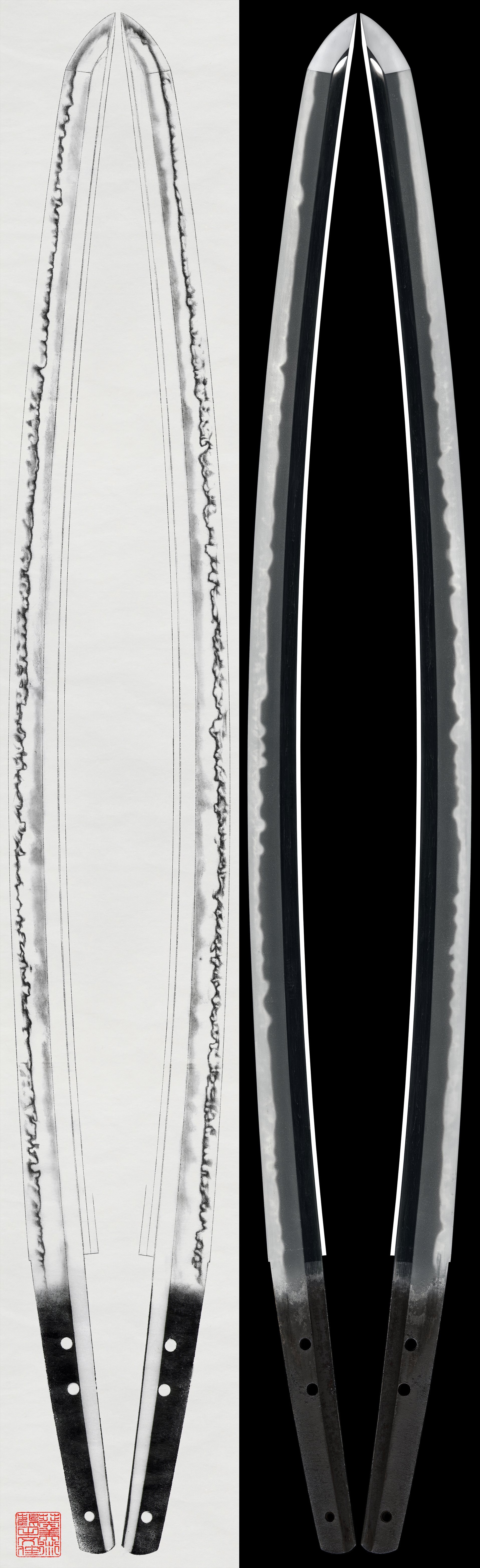
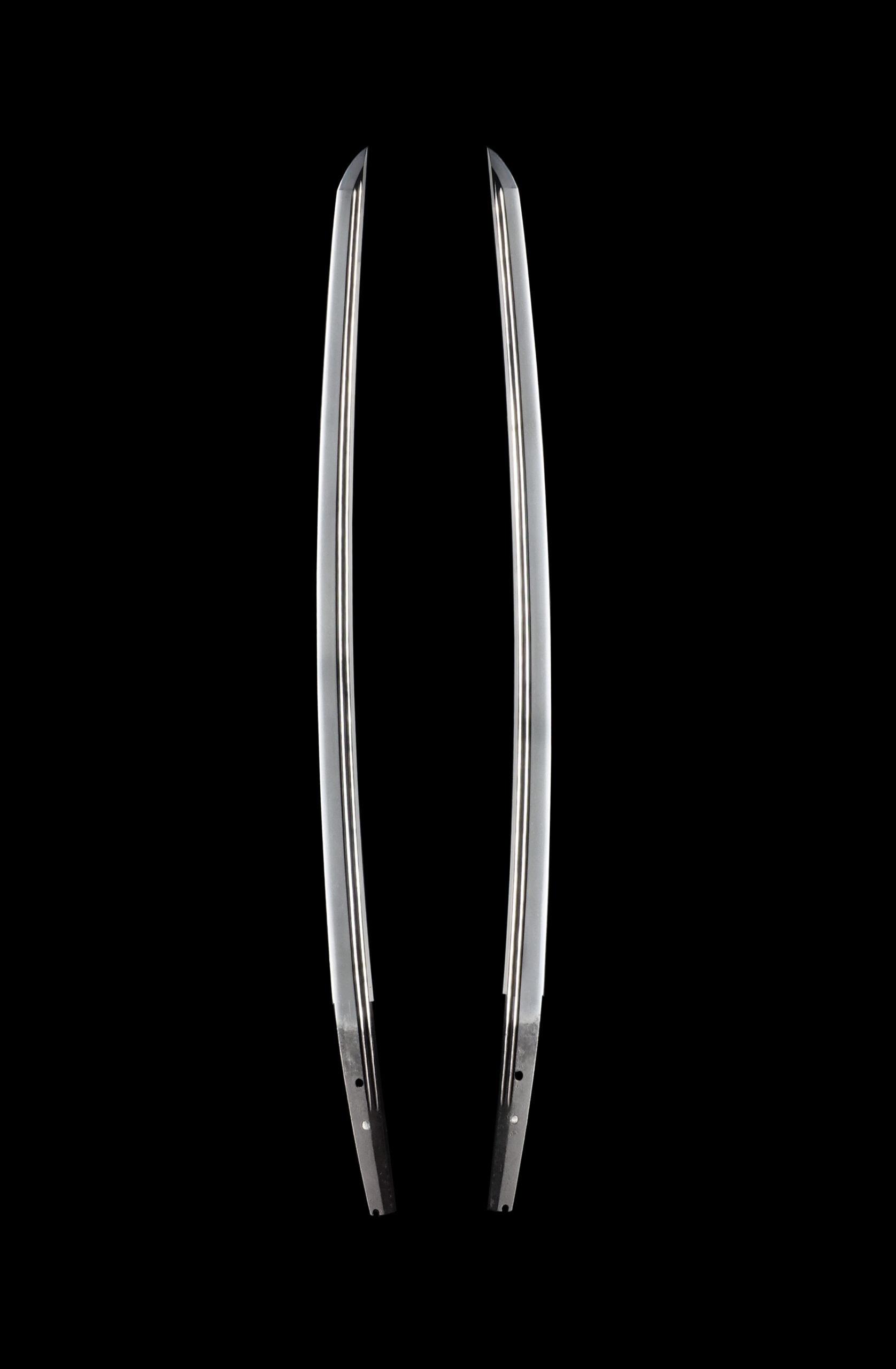
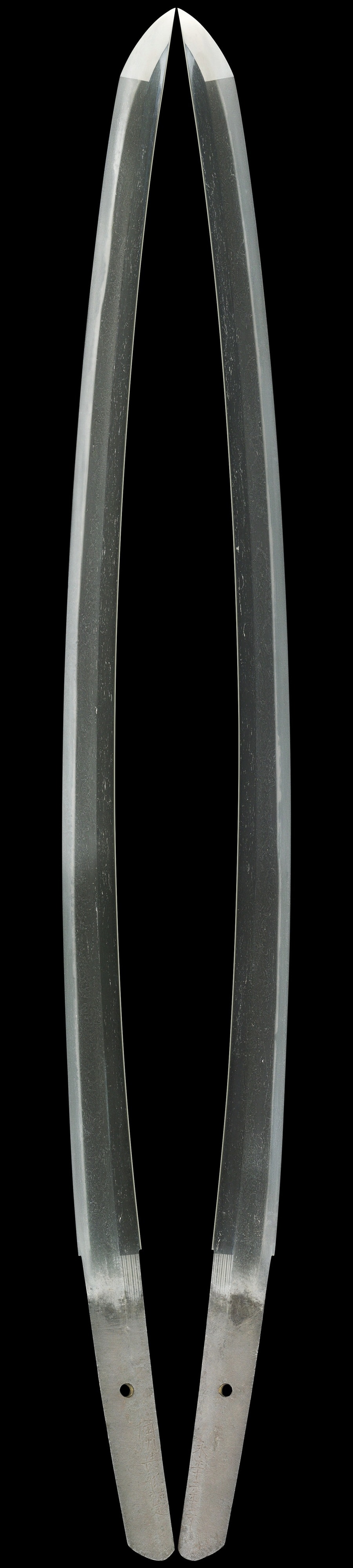
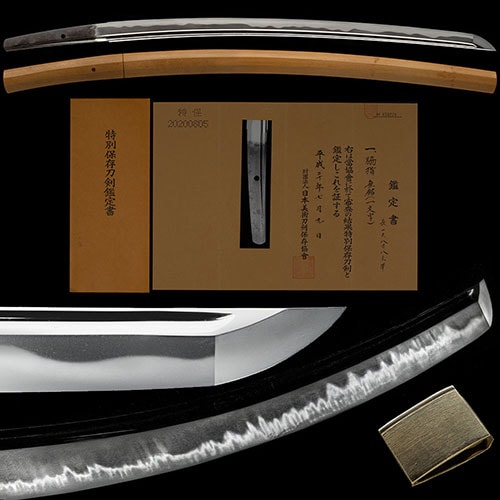
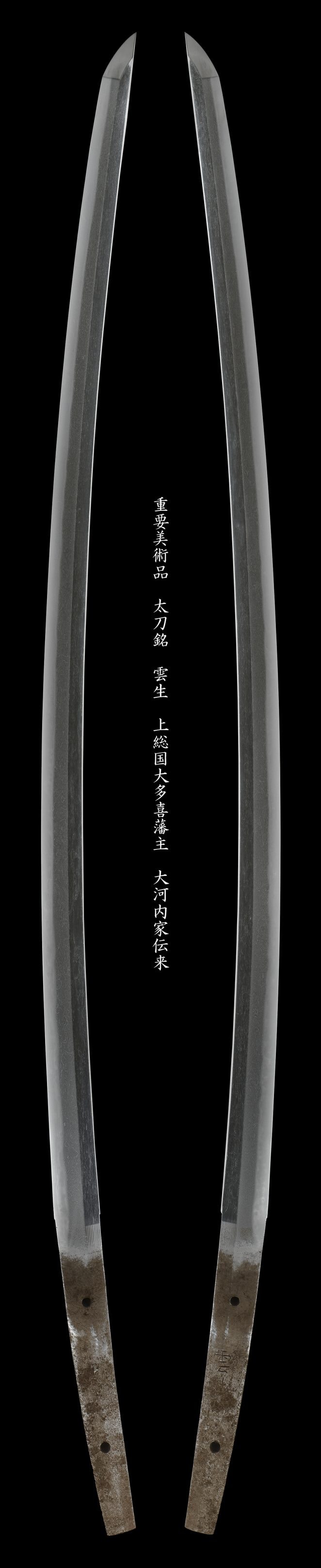
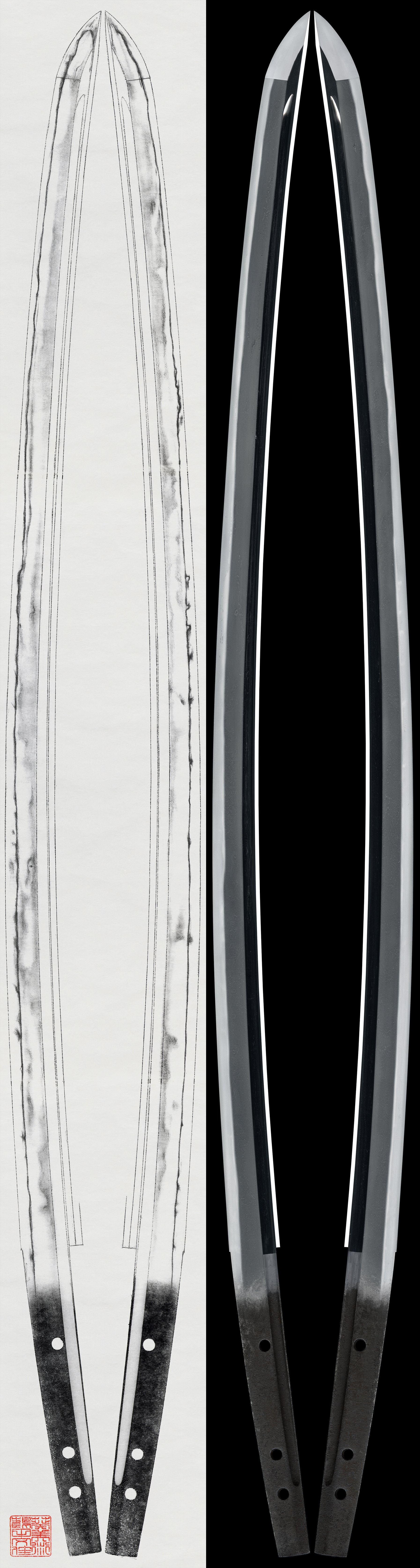
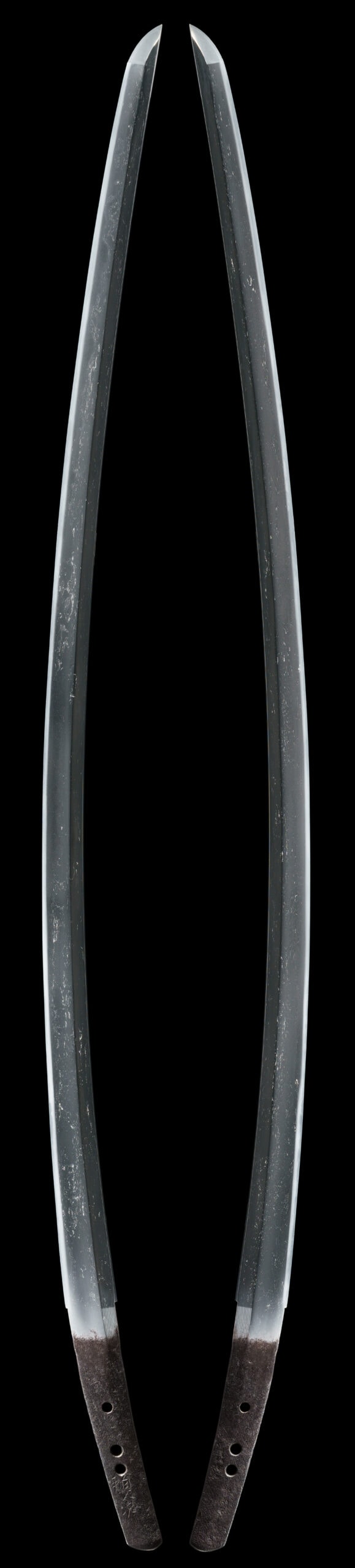
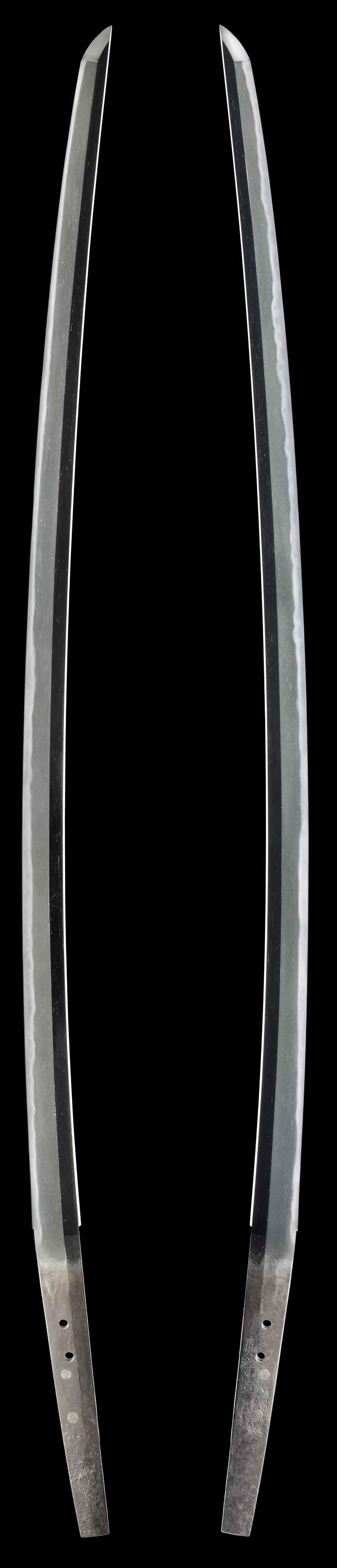
Motomitsu was a swordsmith of the school in the period, transmitted as either a son of Kanemitsu or a smith trained in his circle, and recorded as having held the title Saemon-no-jō. His dated works run from the Kōei era through Eiwa, so the span of his activity is securely fixed, and the published sources open the held by the Tokugawa house plainly: "a signed by Motomitsu, a pupil of the master". He carries the Kanemitsu manner forward into the second half of the fourteenth century, and the commentary that places him in that lineage also draws the careful line that defines his standing within it.
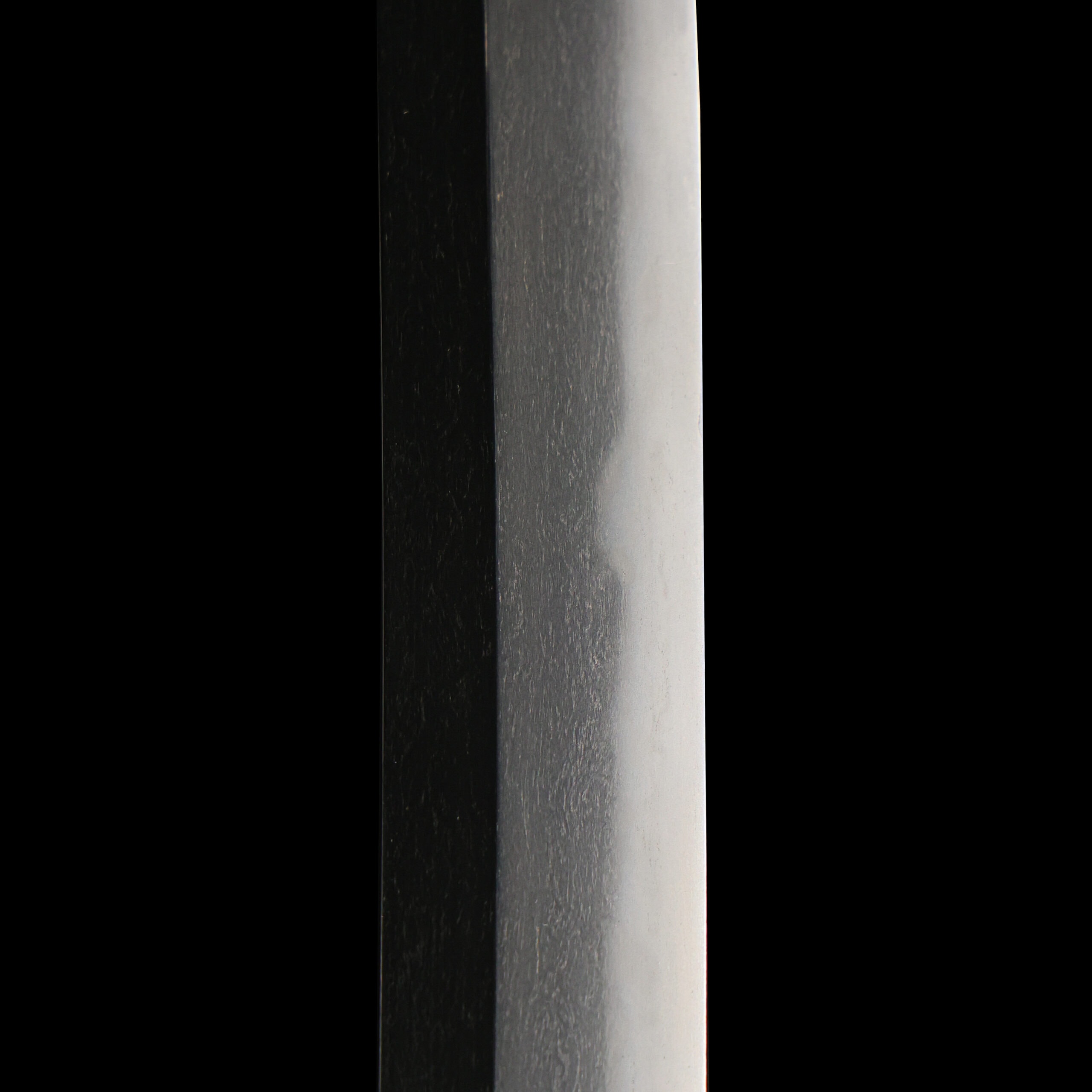
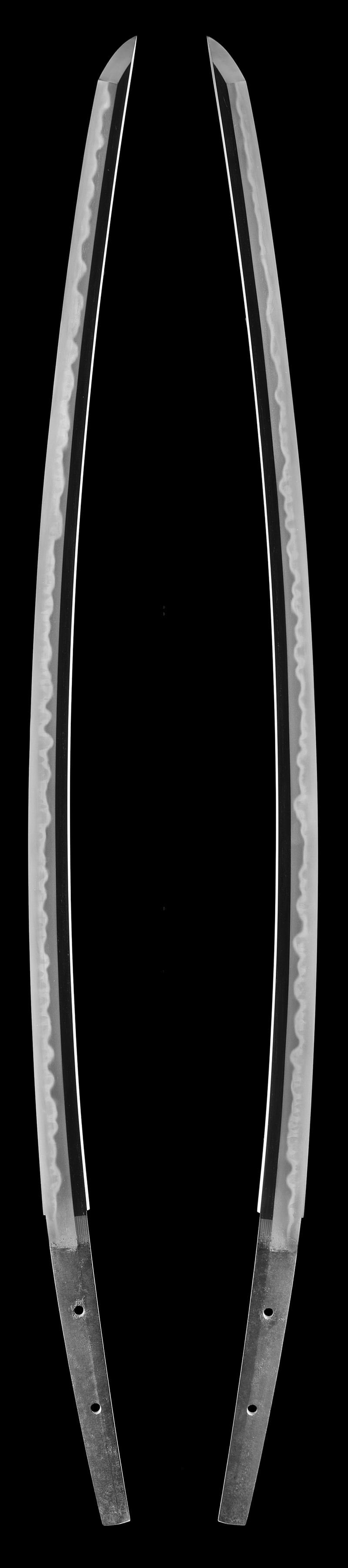
His hand is read first in the temper. Over an he sets a -dominant whose spine is , the saw-tooth pattern of the Kanemitsu workshop, and into it he crowds angular teeth, , and shallow whose crests turn angular. The published sources name this intermixture as his own: of the Tokugawa they write that "the workmanship is broadly Kanemitsu-, yet, as in this blade, the are conspicuous, and his distinctive character is seen in the way of many shapes mingle together". The figure recurs across his entries, set against the more orderly, linked the school also produced. and enter, the tightens and runs bright with , and and play through the .
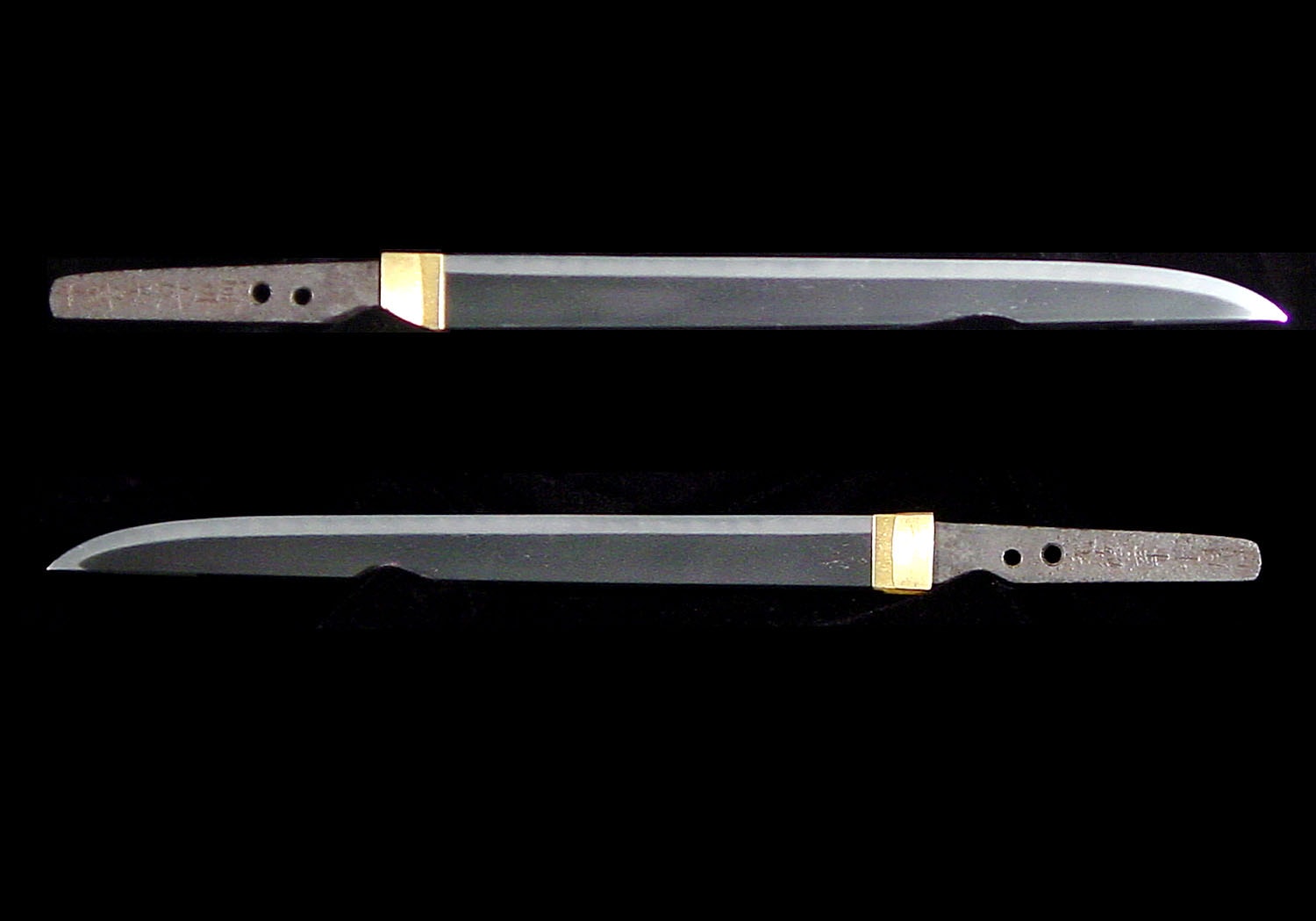
The is the constant beneath that temper. His is mixed with and frequently tends to stand into , with , fine , and patches of -toned steel, over which a rises; near the edge it often reads instead as a straight, -toned , the he shares with his master. The enters in and turns with a pointed tendency to a small round, finishing with fine . On his dirks he carves , or a with accompanying , and one carries a devotional , the quiet decorative vocabulary of late .
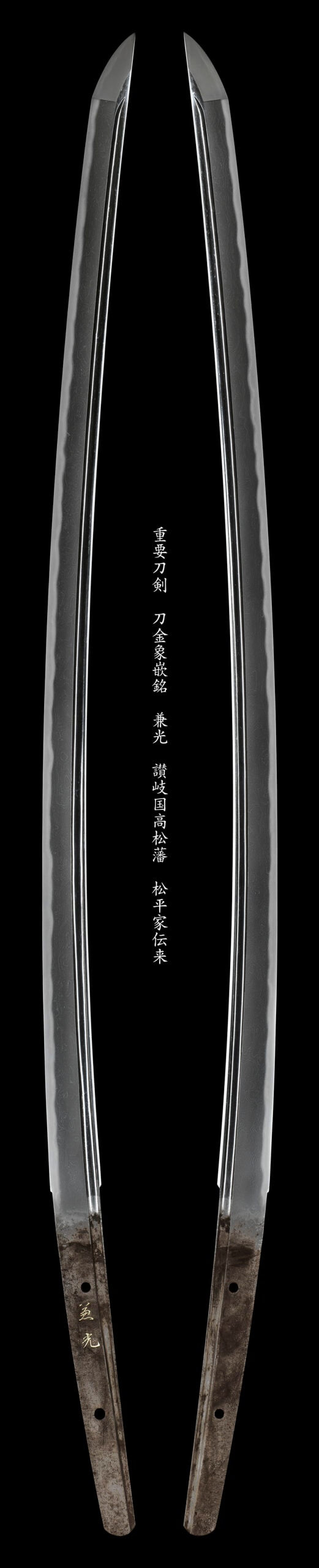
His record divides cleanly by form. On one side stand the signed, dated blades in his own hand: cut Bishū Motomitsu, and the and , several of them and crisply dated to Bunna, Jōji and , of which the published sources say "the quality of the workmanship gives the sense of approaching Kanemitsu" and which they prize as research material for the smith. On the other stand the , wide in body with little taper and an extended , the grand shape, judged to him from era and the Kanemitsu manner. The commentary notes that signed by him are comparatively few.
What separates him from the rest of the group is exactly what the judges name when they affirm an unsigned blade. They find in the standing grain and the varied teeth within the the features that mark a work as his, writing of one that "within the Kanemitsu group there is that which should be most closely likened to Motomitsu, and the attribution is correctly affirmed". Yet they are equally candid about his rank: in overall standing "there are points where he yields slightly to Kanemitsu". His is the able second hand of the workshop, holding its temper while pressing his own crowded, varied upon it, and the unsigned attributions rest on school and period rather than on a single decisive personal tell.
For the collector he is a documented but uncommon late- name. The Tōkō Taikan values him at the upper-middle level, and his connoisseurship record is built less on volume than on the precision of his dated, signed work. He has no National Treasures; his standing rests instead on one Important Cultural Property, a signed preserved in the Mitsui Bunko in Tokyo, together with one and a body of blades, some thirty-eight in the and tiers in all. The provenance that survives is good: the descends through the Tokugawa house, called by the published sources "a superior work by Motomitsu transmitted in the Great Tokugawa family"; a bearing a gold-inlaid attribution thought to be the work of Mitsutada is held by the Sano Art Museum, formerly in the Homma collection. Most designated Motomitsu blades are held rather than traded, so a signed example comes to light only from time to time, and when one does it is a precise, datable record of how the Kanemitsu workshop carried through the age.