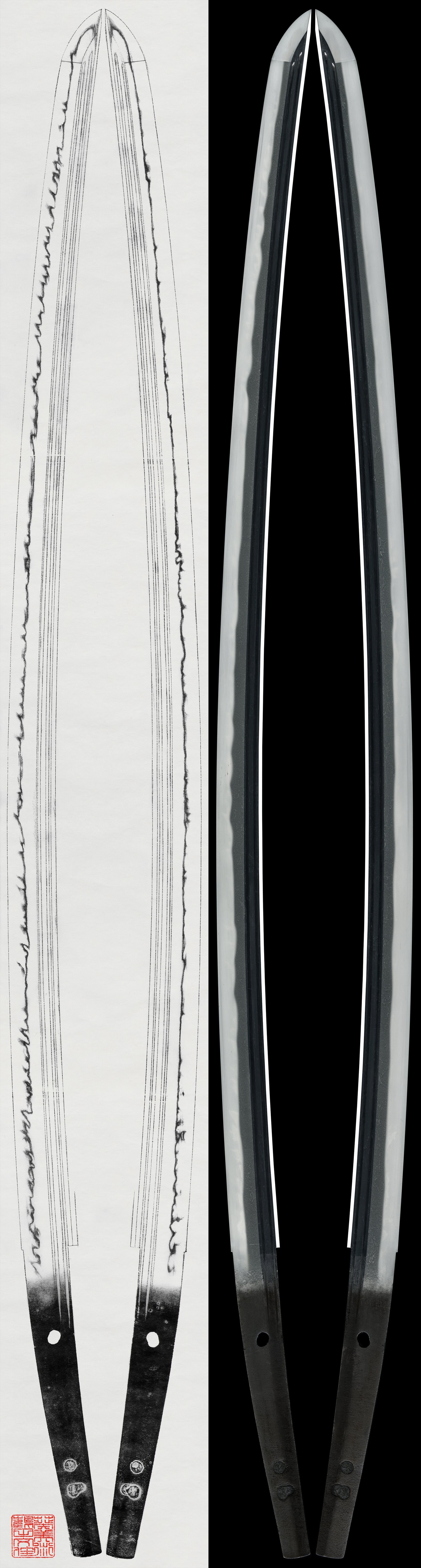
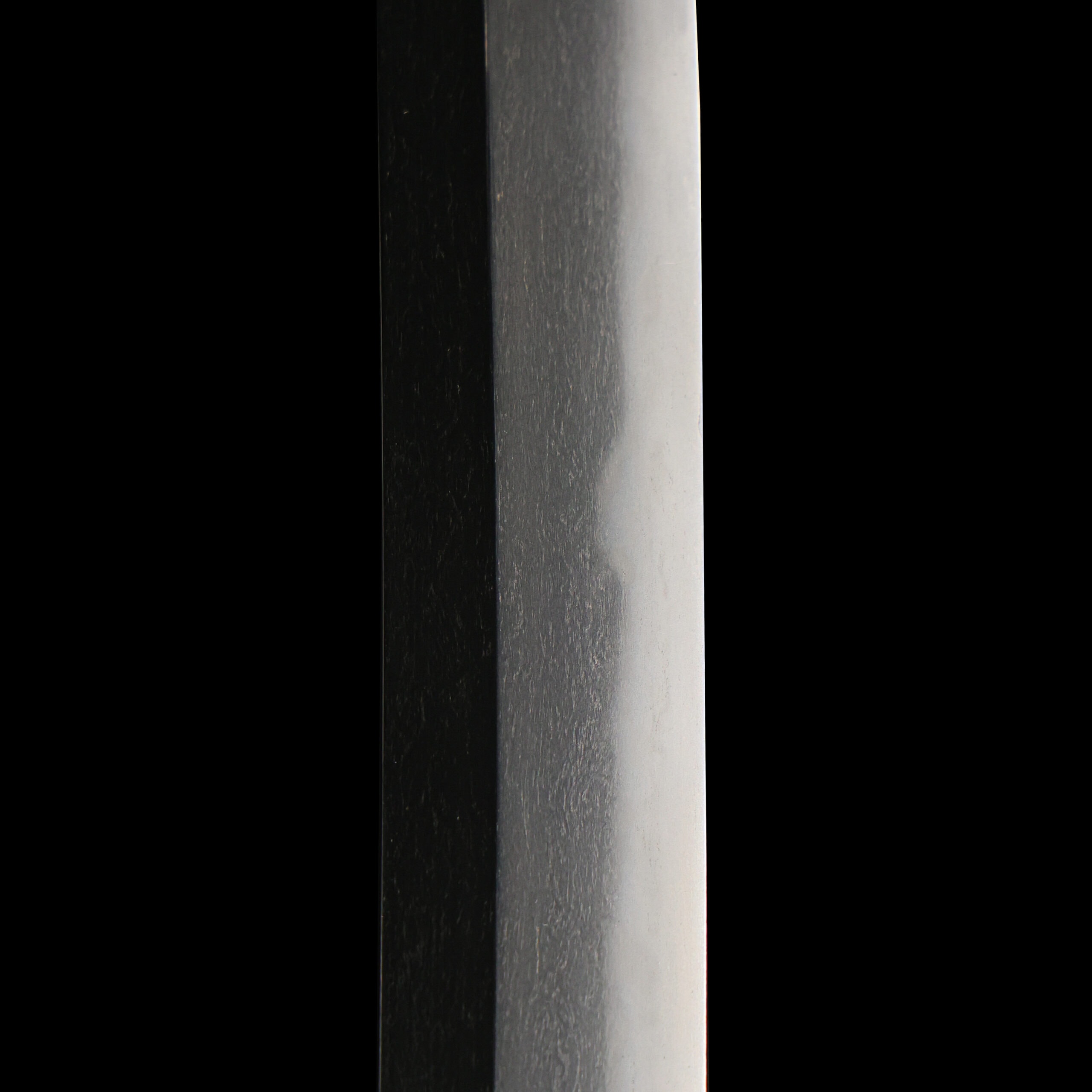
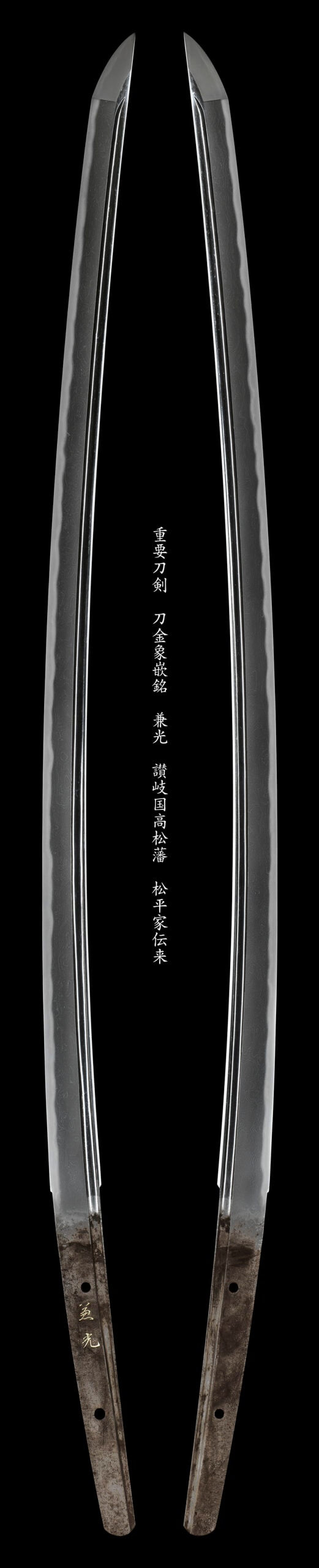
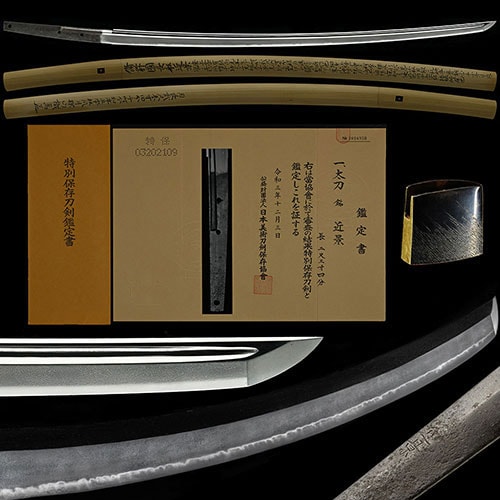
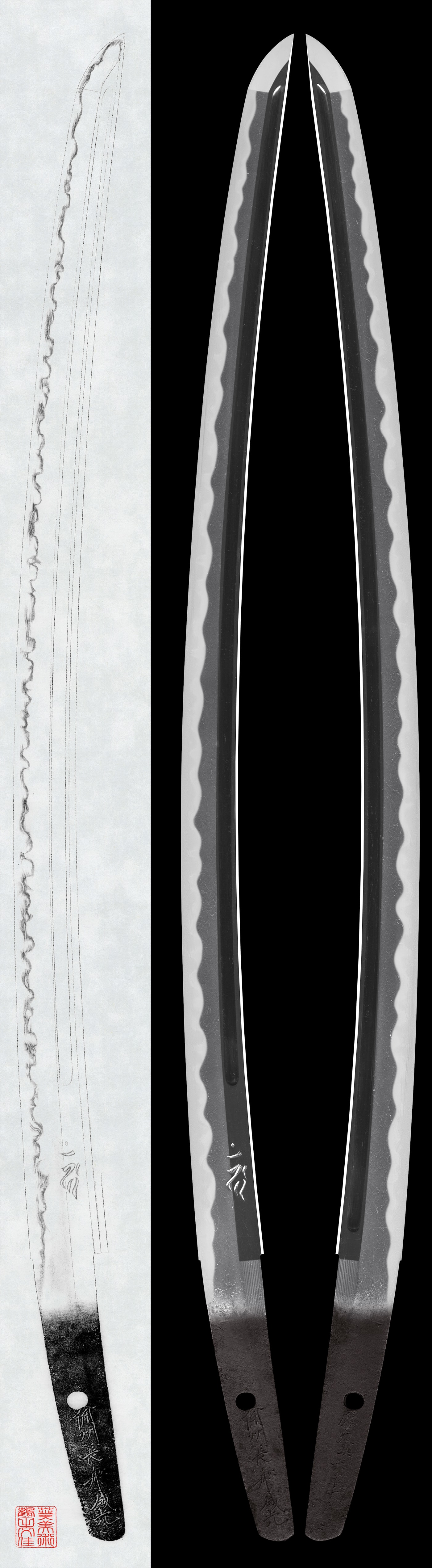
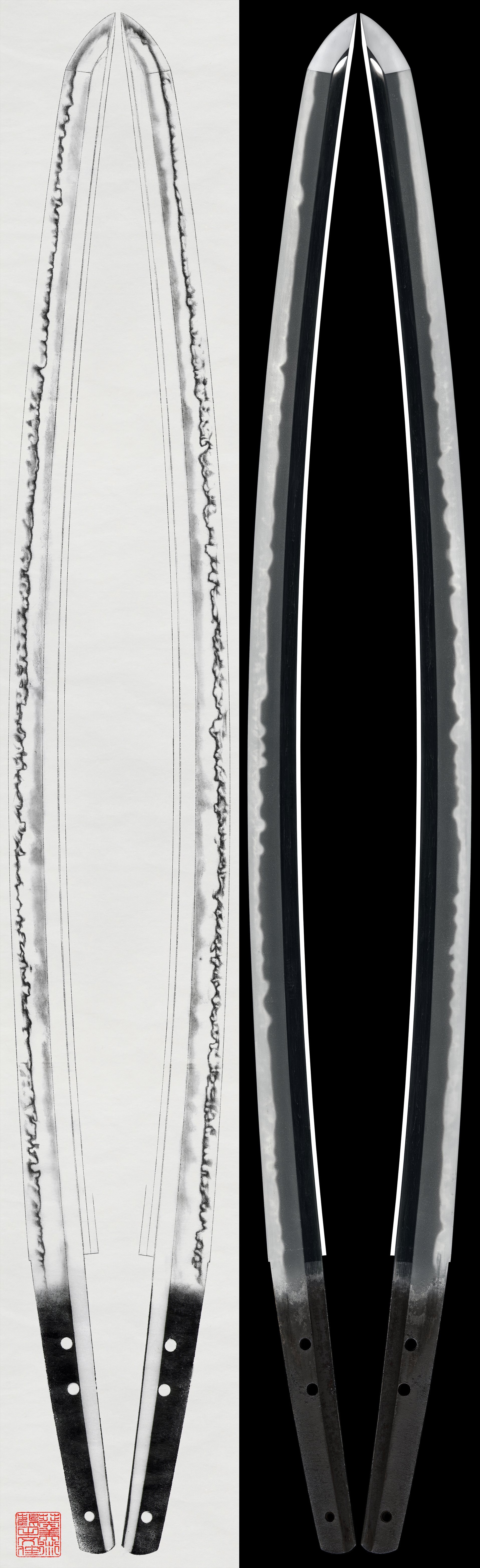
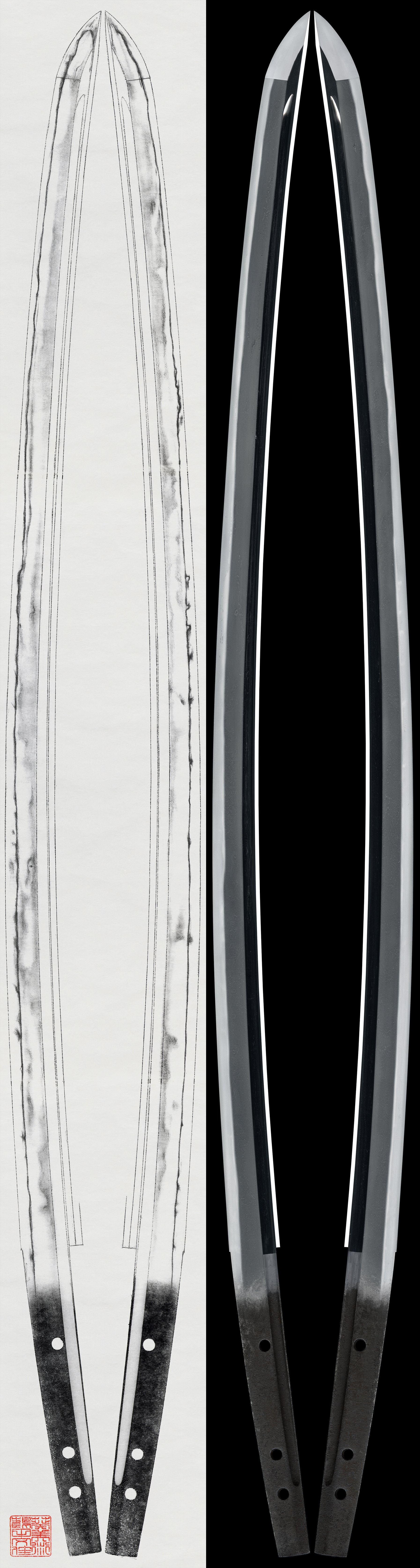
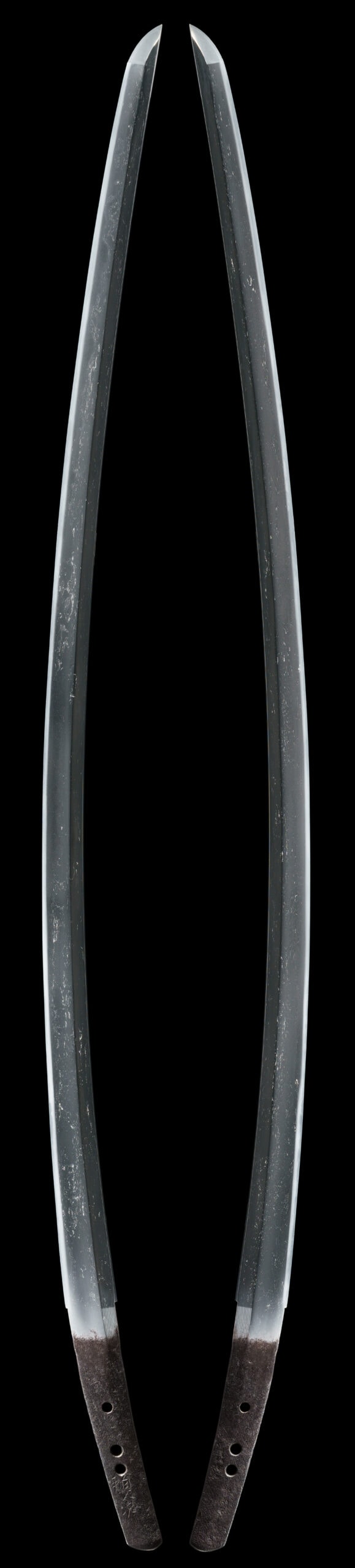
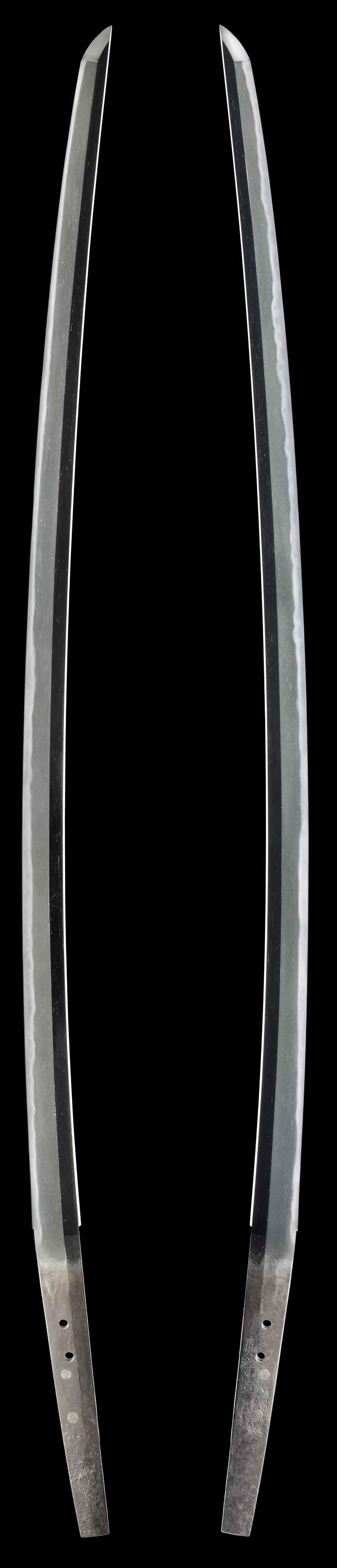
The dated work of Motoshige opens with a inscribed Shōwa 5 (1316) and closes in the Jōji era of the mid period, a span of some fifty years. Across this interval the published sources allow a first and a second generation, while noting that no settled consensus exists as to where the boundary falls. On one point the record is constant: Motoshige of the group in was a smith of a line distinct from Kanemitsu and Chōgi. The old genealogies derive the line instead from Moriie: the son of the second-generation Moriie was Morishige, and Morishige's son was Motoshige. He stands apart both from the mainline of Mitsutada and Nagamitsu and from the houses beside him, and the individuality of his blades answers to that separate descent.
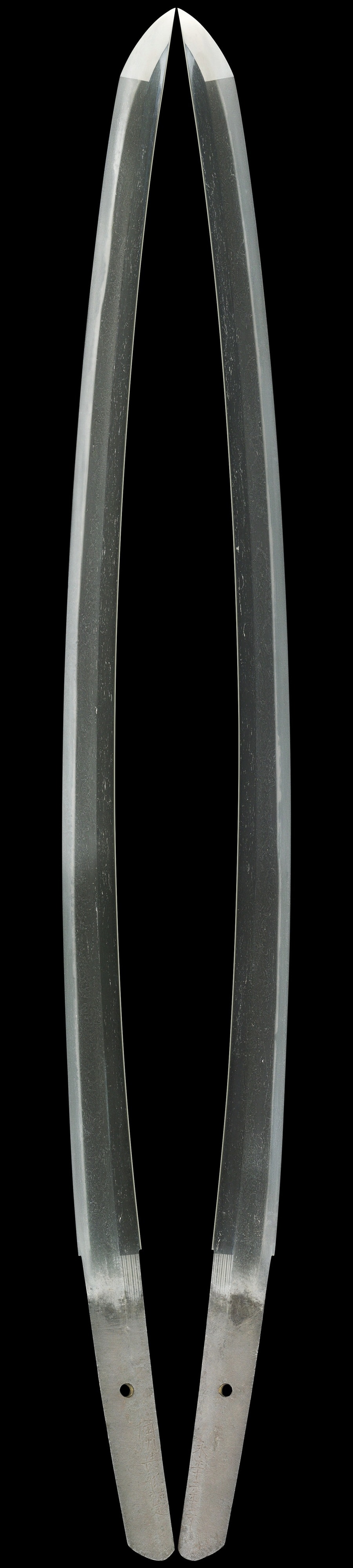
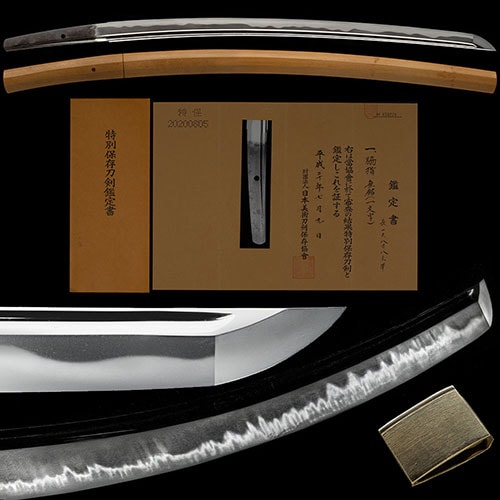
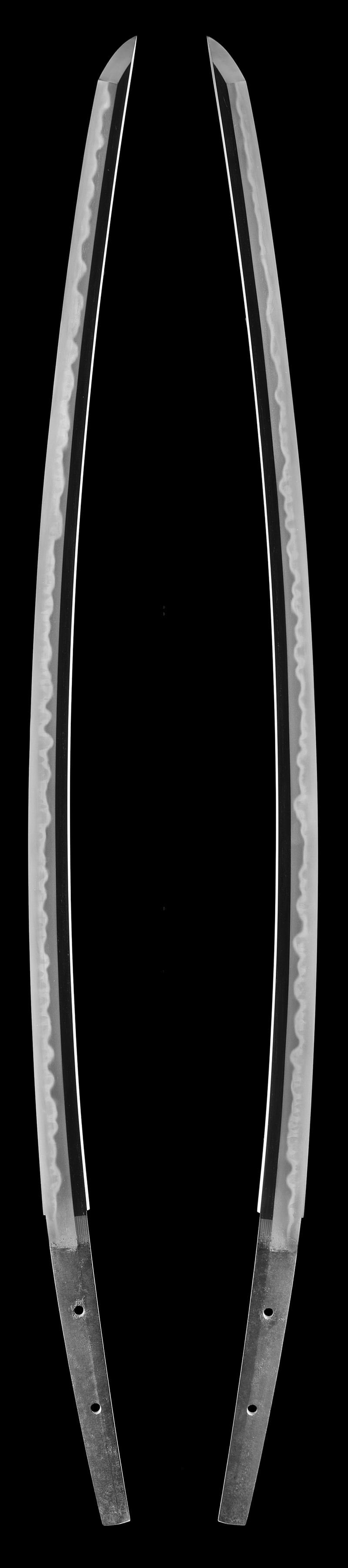
The manner the published sources assign him returns almost word for word. The forging mixes flowing and ; in the , angular stand out over a tone, and the whole slants in ; within the temper work and ; the becomes pointed. The notes conclude that "the viewing points of this smith and his school lie precisely in the point where the temperament is mixed in". The squared teeth are the most personal of these marks: the sources describe "angular with the aligned in a straight line, peculiar to this smith", read most clearly around the . The tends toward tightness with , and fine and thread the .
The is an mixed with and flowing grain, standing somewhat across the surface. Very fine attaches, fine enter, is interlaced, and a rises, often vividly. Of one unsigned the sources name the slanting and this -laced, standing forging surface, "what is termed the cicada wing", as the conditions that point an appraisal to Motoshige. His uchi-zori are forged in with a slight flowing tendency, and the refined forging of his best appears at a glance almost a pure .
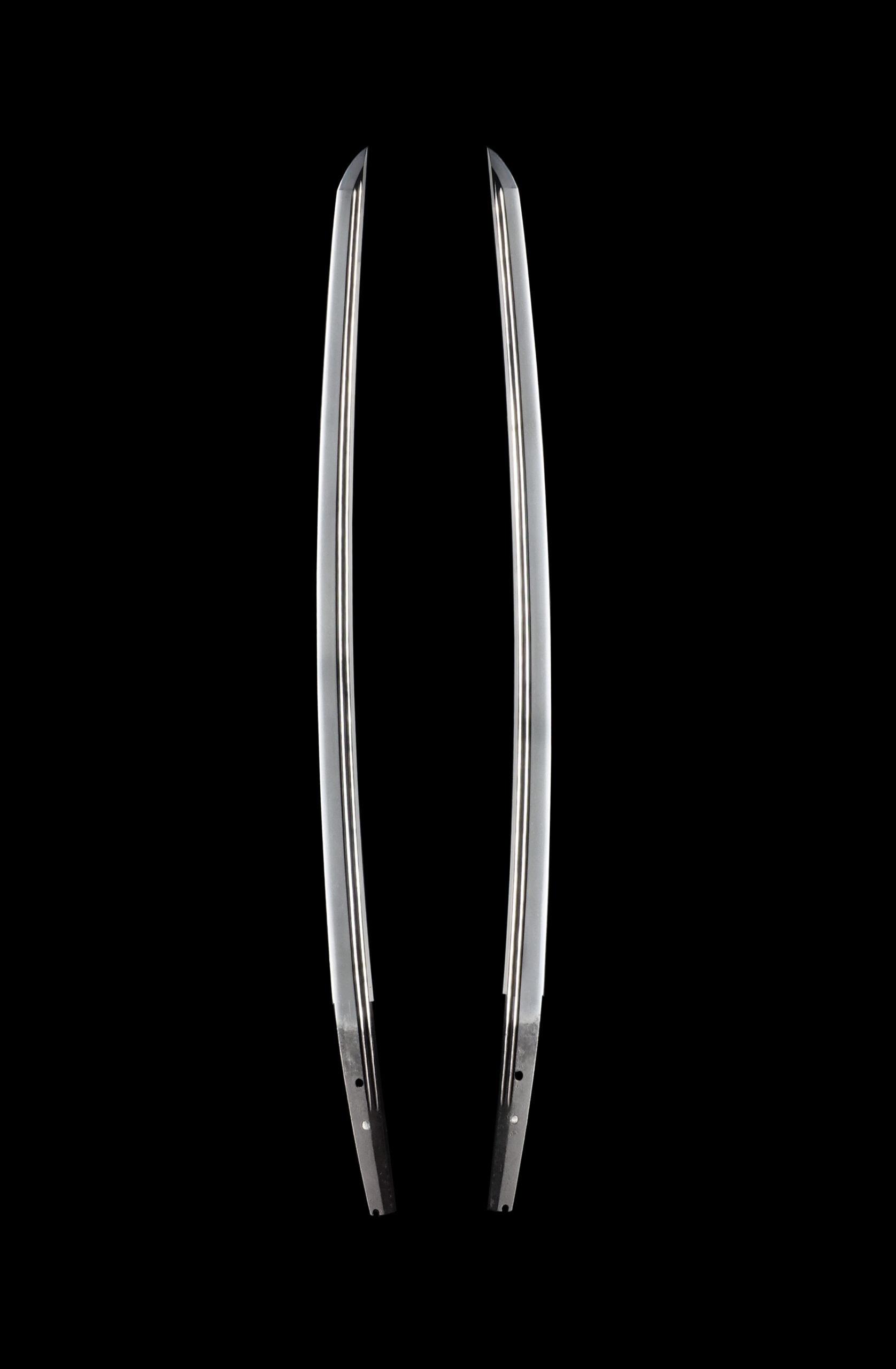
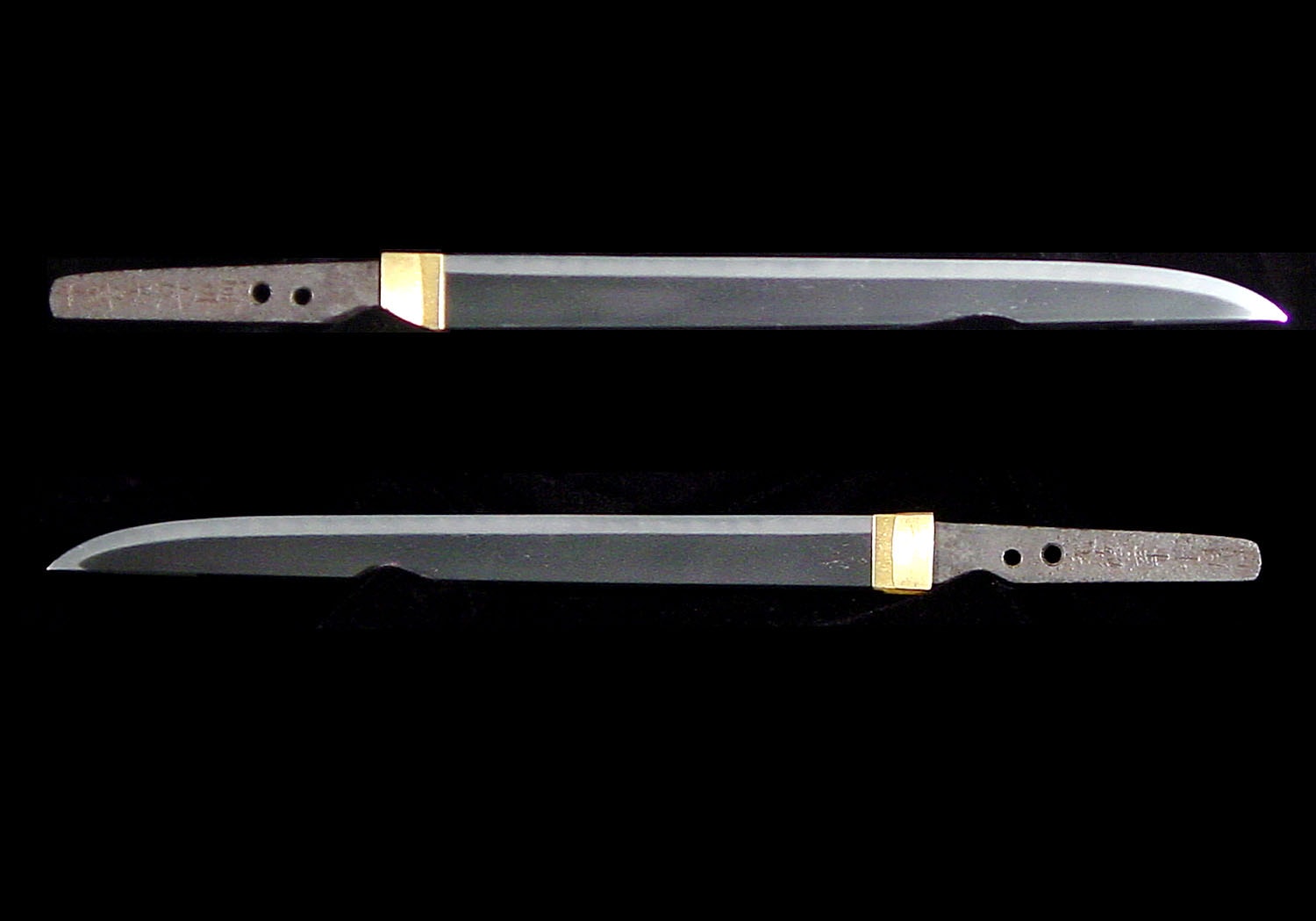
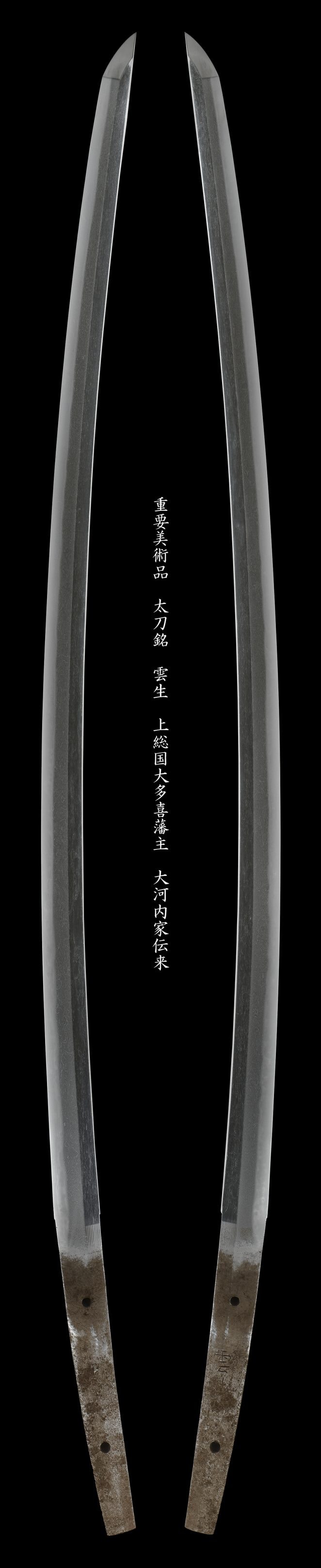
The record divides into clear registers. At its head stands the group called Ko-Motoshige: two-character signatures cut with a thick chisel on the above file marks, with a Jūyō Bijutsuhin dated Kagen 2 (1304). Of one such slender with -zori the sources write that the -toned with and , over an carrying , is a workmanship "-like through and through". They hold this hand to be a different and somewhat earlier man than the long-signature Motoshige, leaving open whether he was the ancestor of the line or a smith connected with . The dated work runs from Shōwa 5 through Karyaku into Kenmu: of standard proportions with uchi-zori, in so close to the older manner that one dated blade reads "almost as though one were viewing the work of Kagemitsu". From the years the build turns grand: wide with little taper, shallow , a large , the Enbun and Jōji stance. The bulk of what survives answers to it as unsigned ; among the signed pieces stands an of 94.45 cm preserving the full form of the period. tradition counted Motoshige among the three sages of Sadamune (貞宗三哲) beside and Hōjōji Kunimitsu, a claim the published sources find "hard to credit out of hand": most of his surviving work is plainly , with fewer -tinged pieces than Kanemitsu or Chōgi. The exception is real: in the transmitted in the Shimazu family, an Important Cultural Property, the of and grows extraordinarily strong and and stand out.
A blade of his may show "at a rough glance a manner that could be taken for "; yet the angular teeth aligned at the and the vividly standing return the appraisal to Motoshige, a temperament at base that wears the air of neighboring . Against Kagemitsu, to whom the old books liken him, the wider , the pointed and the loosened flowing and in the reveal "the individuality of a Motoshige whose line differs from that of Kagemitsu and his kind". The viewing points are shared, the notes add, by his school, Shigezane and the rest, who carried the squared, slanting manner through the period.
He is rated Jō-jō in Fujishiro's grading, and 159 designated works stand on record: seven Important Cultural Properties, nine Jūyō Bijutsuhin, and 142 blades across the and tiers, twenty-one of them . Unsigned blades outnumber signed ones, ninety-nine against fifty-six, so he is met most often as an unsigned . The named pieces carry the history: the Kenmu 1 (1334) called "the white eyebrow among his works"; the 'ō 3 (1352) of 'in-no-miya transmission; the Satake bestowed by Shōgun Tokugawa Ienobu in Hōei 8 (1711), whose Kōon gold-inlay attribution the sources call "entirely just"; and the Date family that may be the very Motoshige the Tokugawa Jikki (徳川実紀) records Iemitsu granting Date Masamune in 'ei 1 (1624). Twenty-nine blades carry recorded provenance, through the Date, Satake, Uesugi, Hachisuka, Hosokawa, Shimazu, Owari Tokugawa and Yanagisawa houses and into the Imperial Family. The Important Cultural Properties can never trade, and holdings of the Tokyo National Museum, the Sano Art Museum, the Hayashibara Museum of Art, the Seikadō Bunko Art Museum, Uesugi Jinja and the British Museum stand outside the market. Yet with 142 blades in those tiers he remains among the few major names of a collector can still realistically hold, and the hand declares itself wherever the squared, slanting runs beneath a vivid .