 NihontoWatchNihontoWatch
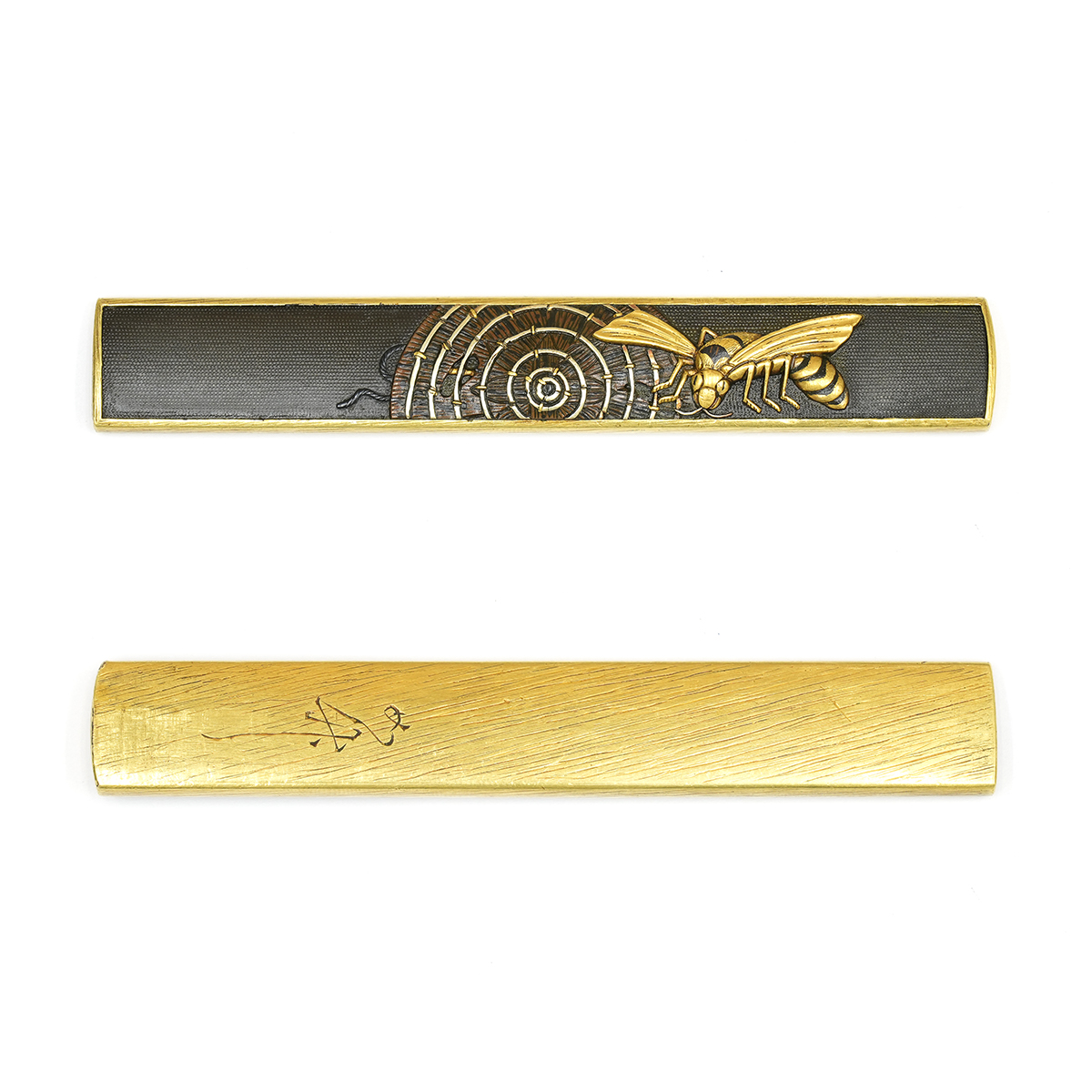
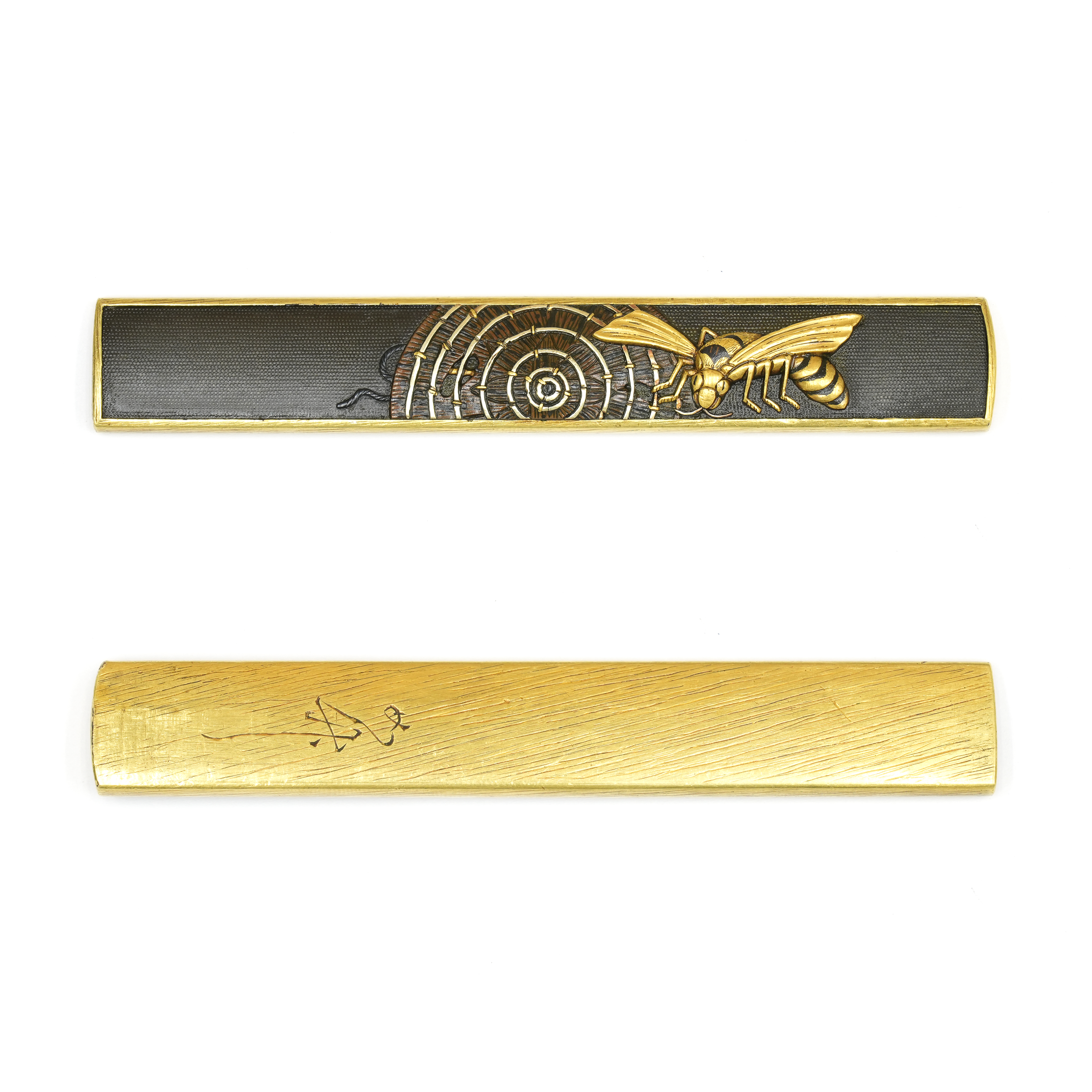
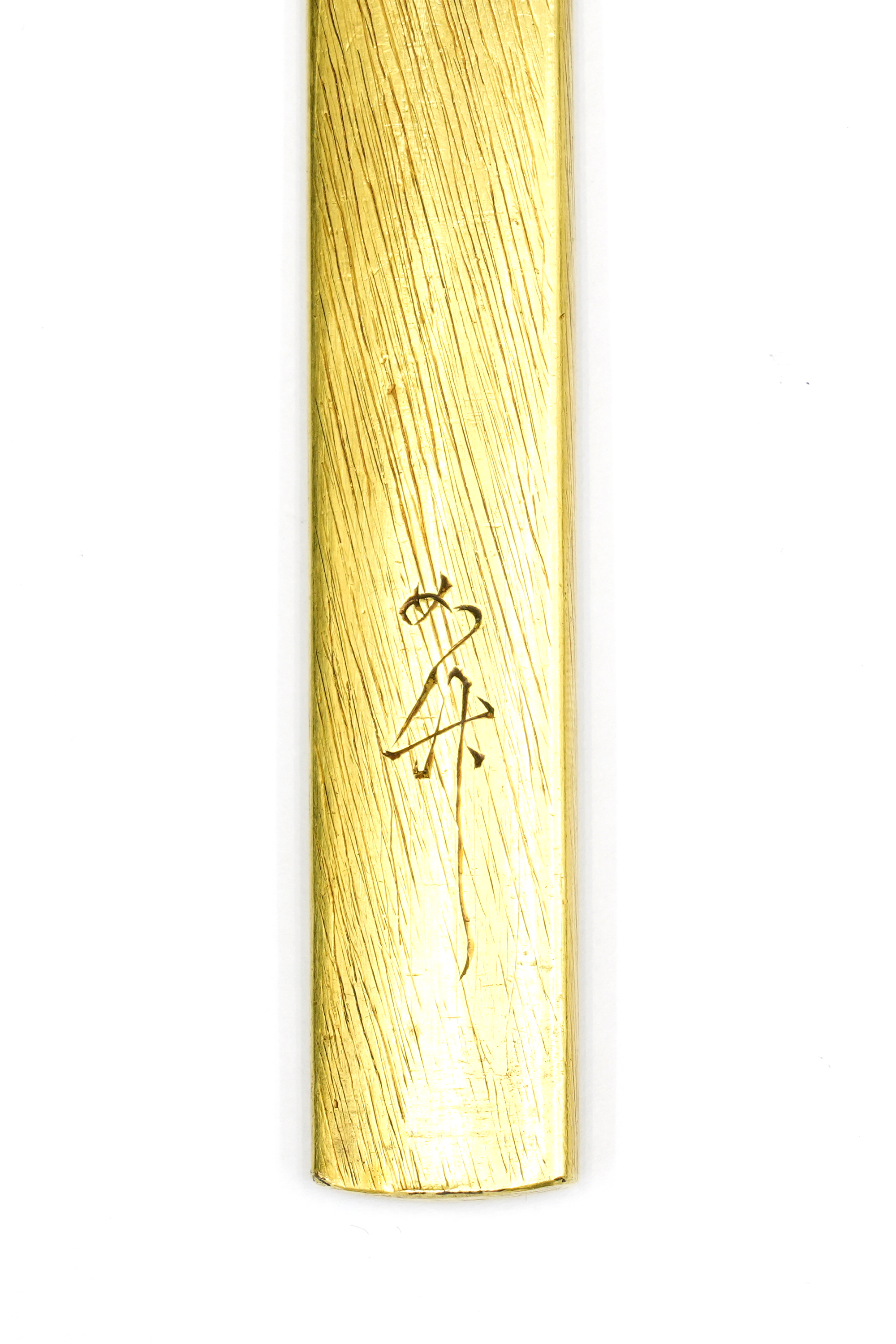
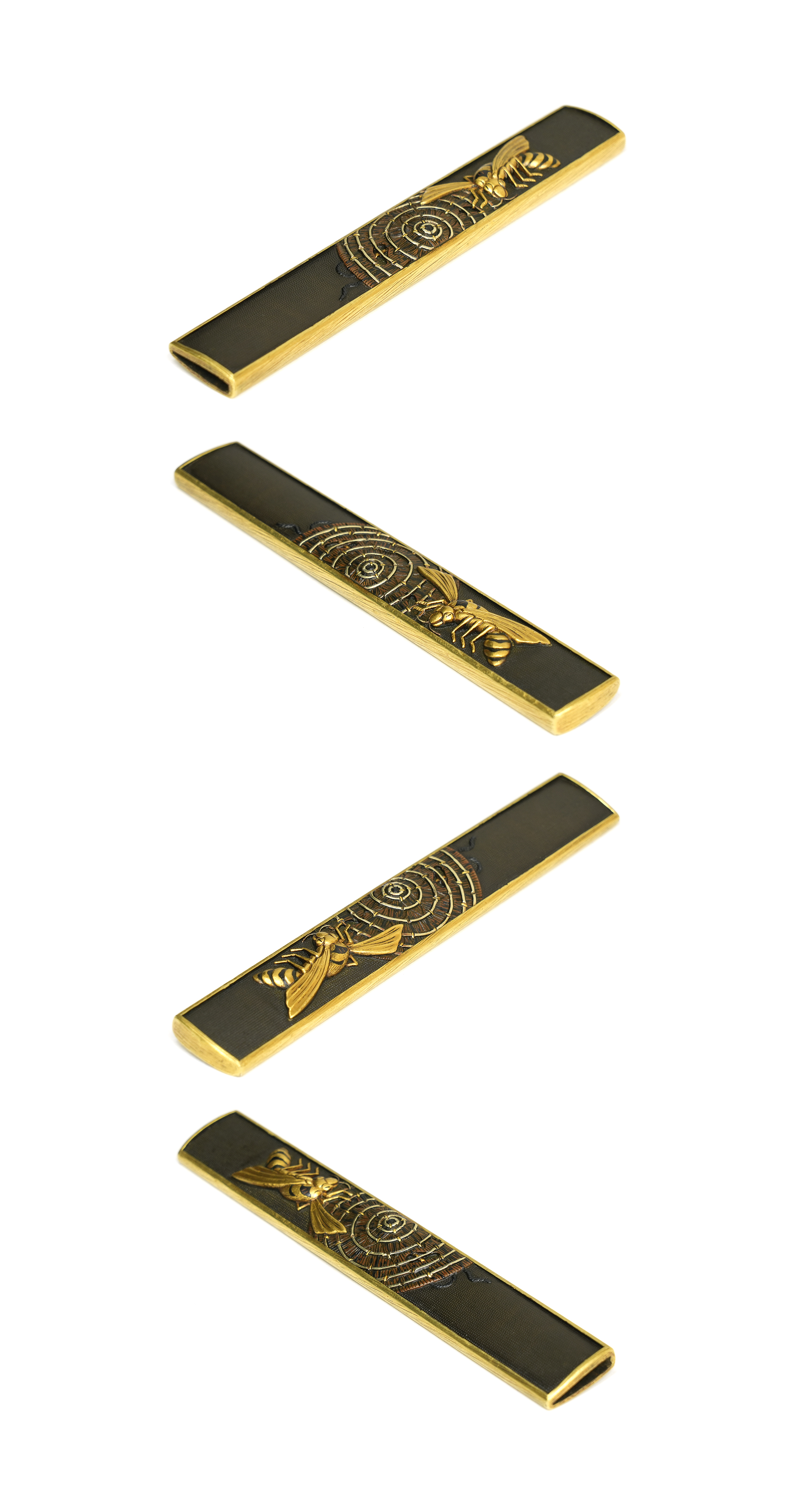
The combination of a tattered hat and a bee is a motif of unexpected taste, capturing within a single frame the wabi aesthetic of a hat worn down until its ribs are exposed and the sense of life in a powerfully fluttering bee. By deliberately placing a damaged hat as the main subject rather than a neat, orderly object, it expresses the sophisticated sensibility typical of Edo metalworkers who find beauty in the flavor of things aged over many years and in familiar scenery; the addition of a large bee creates a vivid contrast between the quiet antique and sharp movement. This piece uses a shakudo nanako-ji of deep, clear black as its stage, with a large tattered hat positioned from the center to the left, and a powerful bee rendered in high relief to its right. The hat features finely carved bamboo ribs radiating in multiple layers from the central circular portion, with iroe applied to the remaining hat material and the points where the ribs are fastened, sublimating the broken form into a complex and impressive sculpture; the composition, which boldly cuts off the circular hat in the center of the frame, also provides strong movement and depth to the narrow space of the kozuka. The modeling of the bee is particularly impressive, three-dimensionally carving everything from the head, thorax, and segmented abdomen to the six bent legs and the wings spread wide to the left and right, with the abdomen alternating gold and shakudo black to emphasize its characteristic stripes and volume. The long, flowing lines engraved into the wings lend lightness to the hard metal, allowing one to imagine even the momentary sound of wings as it prepares to alight on the hat, while the broken components peeking out to the left and the shadows created between the intricate ribs of the hat tighten the bee's brilliant luster and deepen the wabi expression of the tattered hat; the work, which integrates precise nanako, suemon rich in height variation, and the effective arrangement of iroe, reveals the certain skill of the piece itself. A thin gold plate is wrapped around the fuchi, and the ura is also covered with a thin gold plate finished with fine yasurime, sharply tightening the black shakudo nanako-ji of the surface. From the front, one can enjoy the meticulous structure of the tattered hat and the powerful figure of the bee; from an angle, the rich three-dimensionality of the suemon and the glint of gold running along the edge; and when turned over, the gold spreading across the surface and the handmade yasurime, with the contrasts of wabi object and brilliant insect, deep black and bright gold, showing different expressions from every viewing angle. Without relying on an artist's name, this is a highly charismatic and charming hitotsu that strongly attracts the viewer through the interest of the subject matter, the carving technique, the color, and the compositional power itself.
Offered by Toushin
We couldn’t find current papers for this piece. Ask the dealer whether it has been, or can be, submitted to shinsa. — Hoshi

Jochiku
Edo
Signed
As written by the shop
Machine translation from the shop's Japanese · may contain errors ·
We could not find an authenticity certificate on the seller’s listing. Japanese swords and fittings are normally papered by the NBTHK (or the NTHK). Without one, the attribution is the seller’s own assessment and has not been independently verified — treat it with caution and ask the dealer about certification before buying.
As a rule we do not accept returns, except when we have sent a different item from the one ordered or when there is a significant discrepancy between the description and the item. If you wish to return an item, please contact us within 3 days of its arrival and then send it back.
¥385,000