 NihontoWatchNihontoWatch
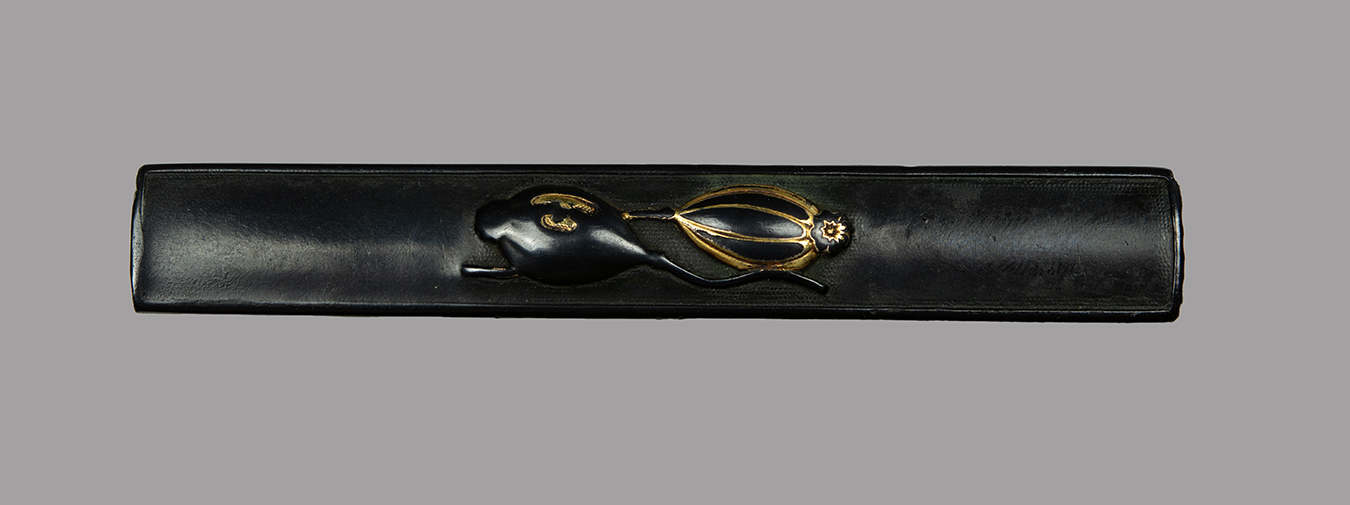
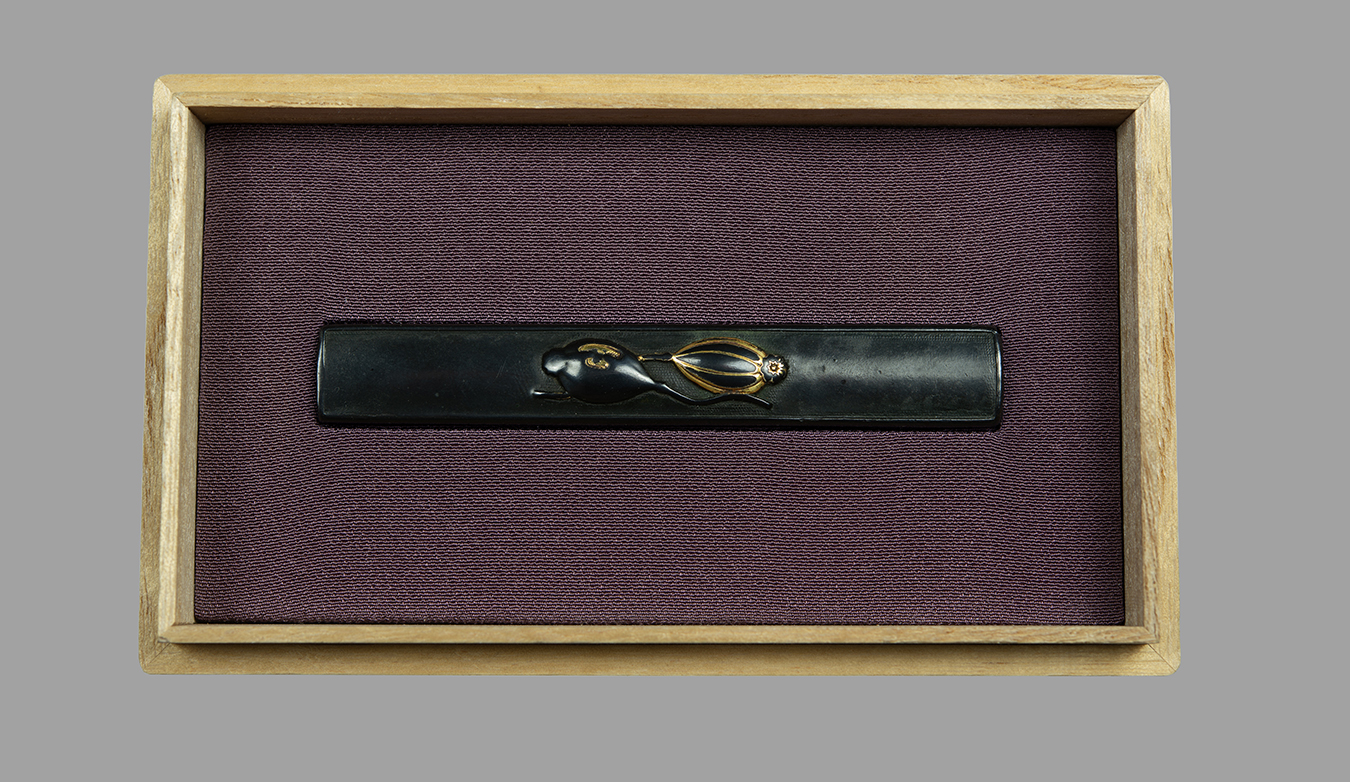
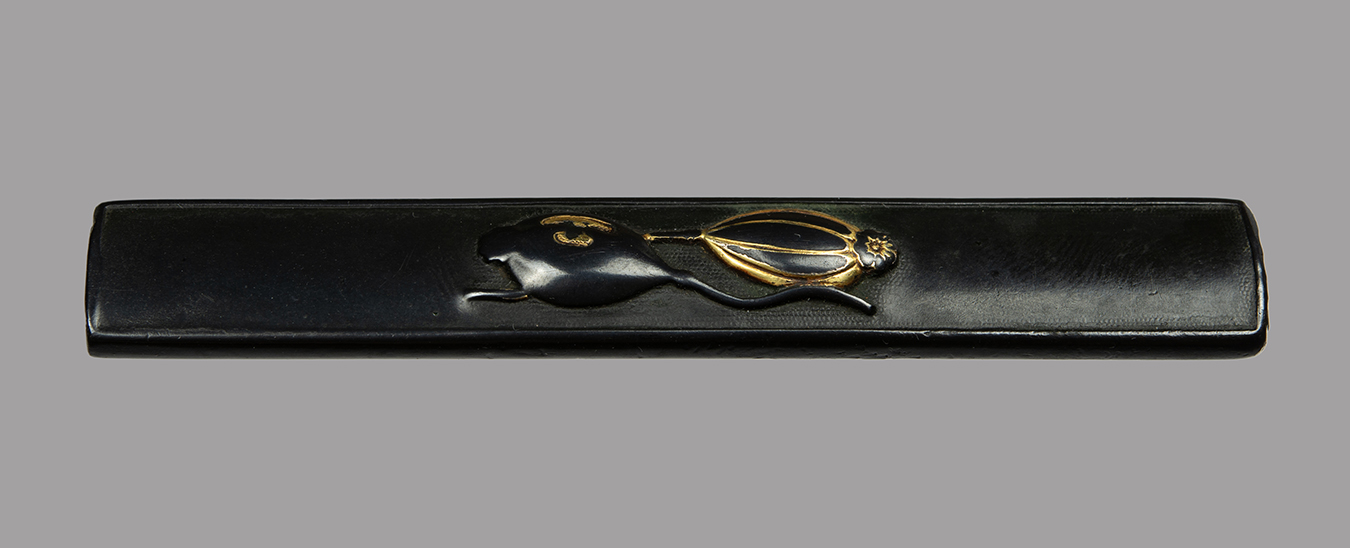
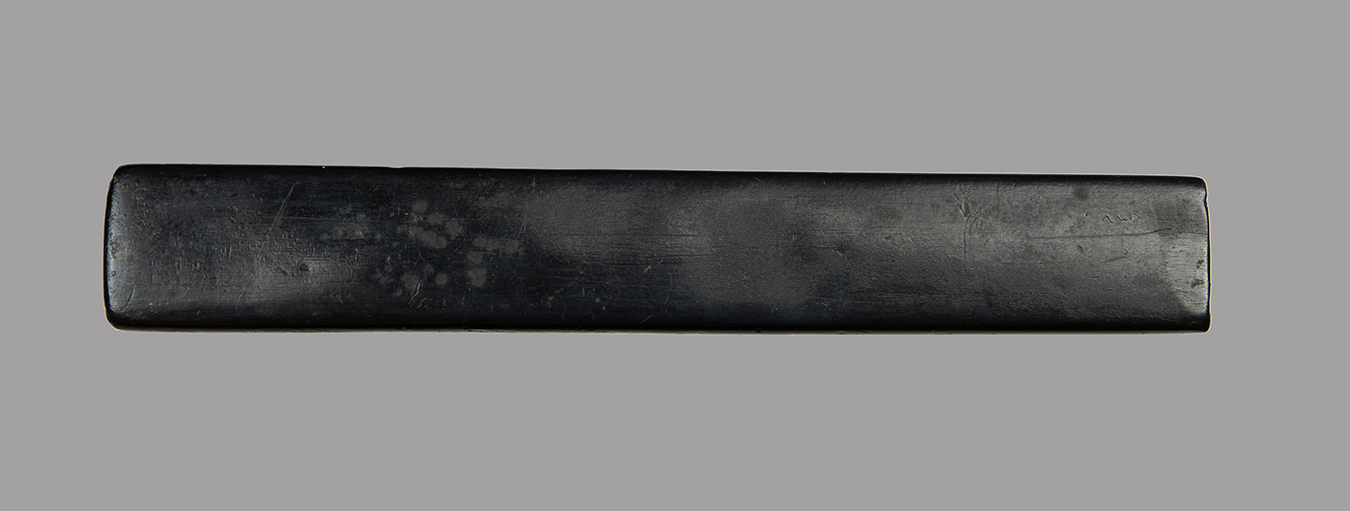
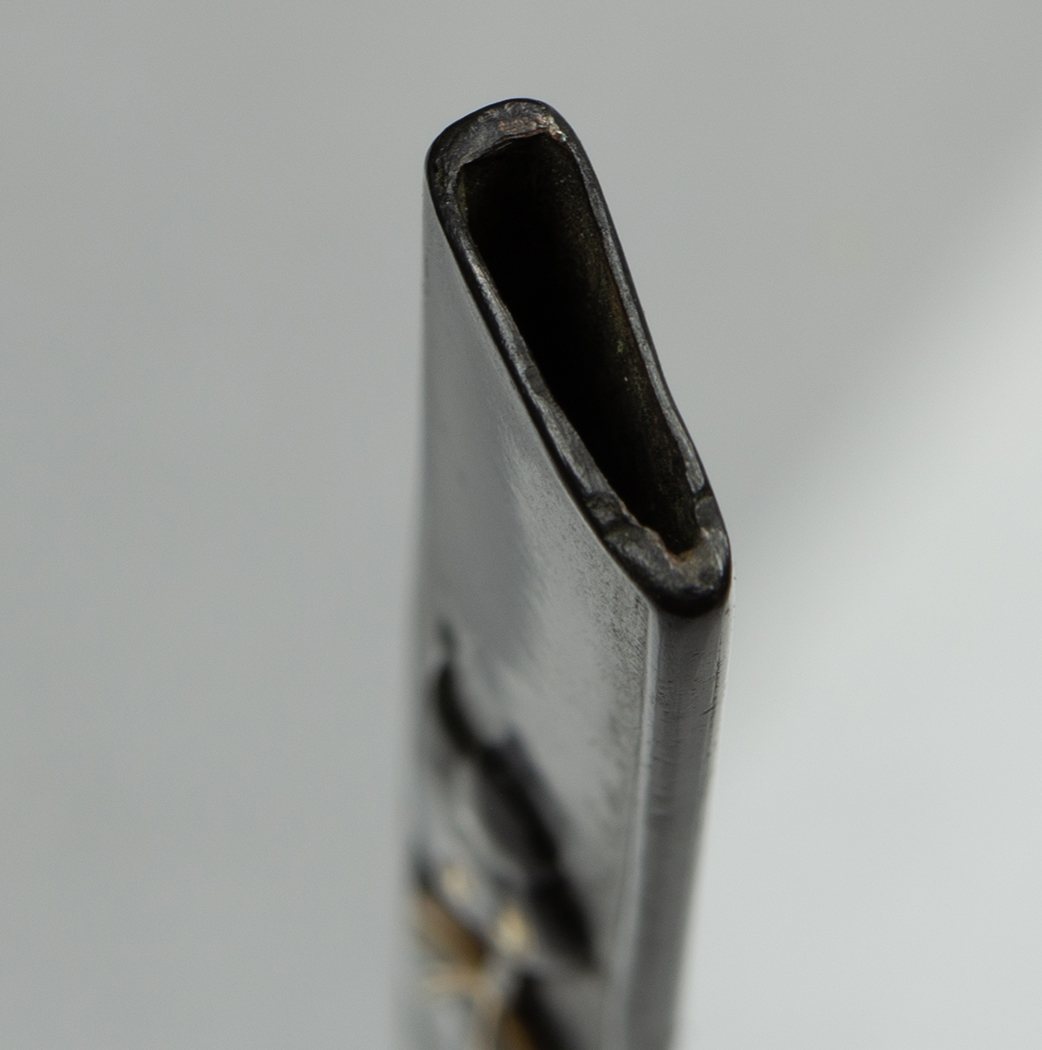
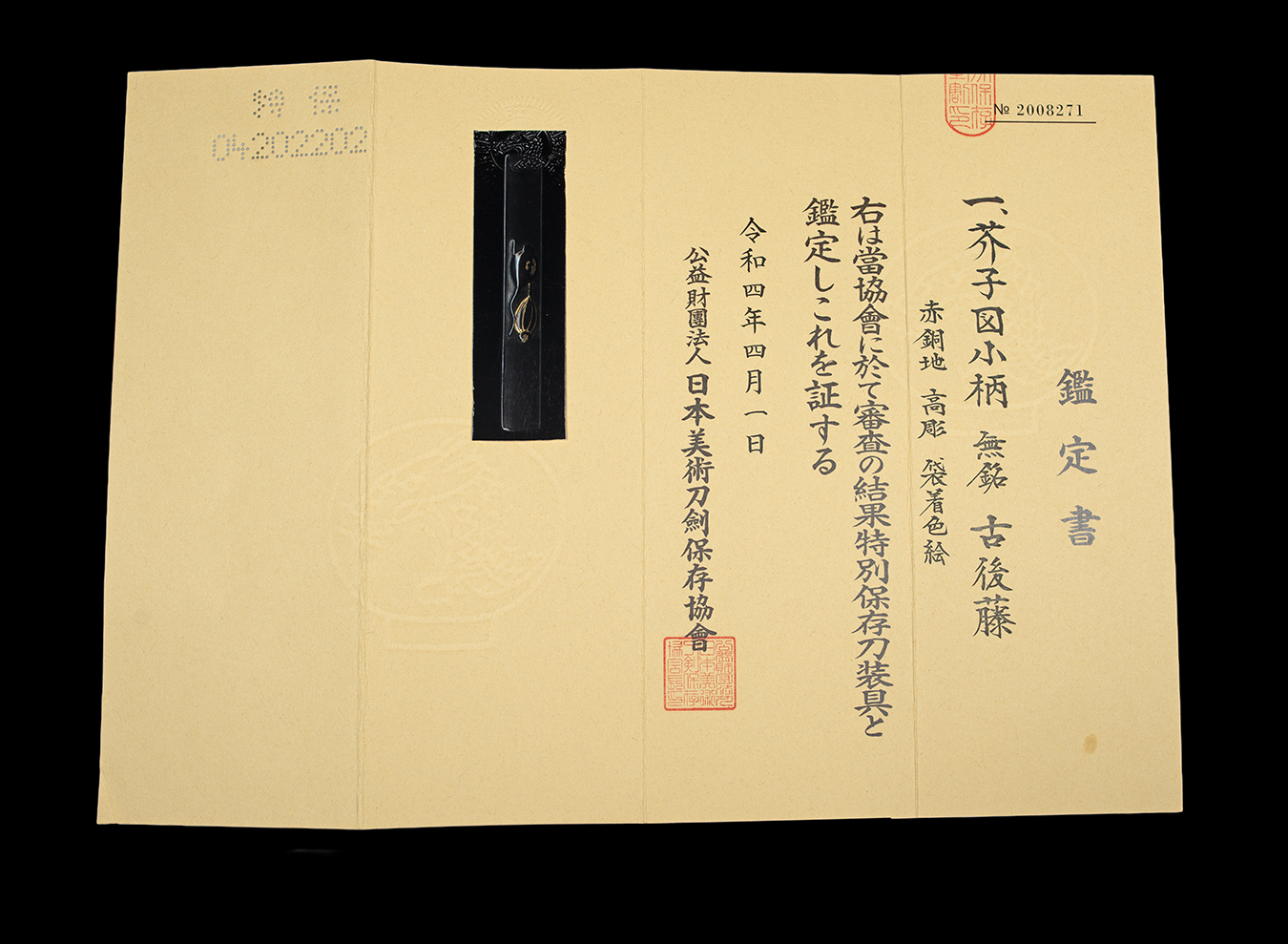
Ko Goto Kozuka NBTHK Tokubetsu Hozon An important Ko Goto kozuka. This is a Muromachi period example and not a naoshi. In other words, the entire kozuka is original to the Muromachi period rather than only the "mon" or central motif, as is often the case. The theme here is the Japanese Poppy flower. The bulbs are shown before opening - still tightly encased in the nodding buds. This symbolizes anticipation, hidden potential, and the fragile, fleeting nature of beauty before it reveals itself. This is a very old Kozuka. One can see that the nanako is worn almost completely smooth. It only remains in areas around the poppies. Only the edge of the uttori remains. The attribution of Ko-Goto is used to indicate a work of the first three masters. Yujo, Sojo and Joshin. Based on the evidence of age and style of the work, this kozuka is most likely from the time of Yujo or Sojo. Circa 1500. Accompanied by a fitted kiri-bako and a NBTHK Hozon paper.
NihontoWatchOffered by Nihontocraft

Pre-Edo
Unsigned
Tokuho (NBTHK)
A Hozon-certified fitting of notably superior craftsmanship and condition, often with signature or workmanship of high reference value.
The NBTHK (Nihon Bijutsu Tōken Hozon Kyōkai, the Society for the Preservation of Japanese Art Swords) is a public-interest incorporated foundation founded in 1948 and supervised by Japan’s Agency for Cultural Affairs (Bunkachō); it is based at the Japanese Sword Museum in Tokyo. Its expert panels physically examine each submitted work (shinsa) and issue a certificate (kanteishō) ranking it by artistic and historical merit. NBTHK papers are the most widely recognized standard of authentication for Japanese swords and fittings.
NBTHK official site3 day inspection period on all sales. Items can be returned for any reason for a full refund, less return shipping cost. Returned items must be in the same condition as when purchased.
$2,500