Modern Shizuoka, in koshirae
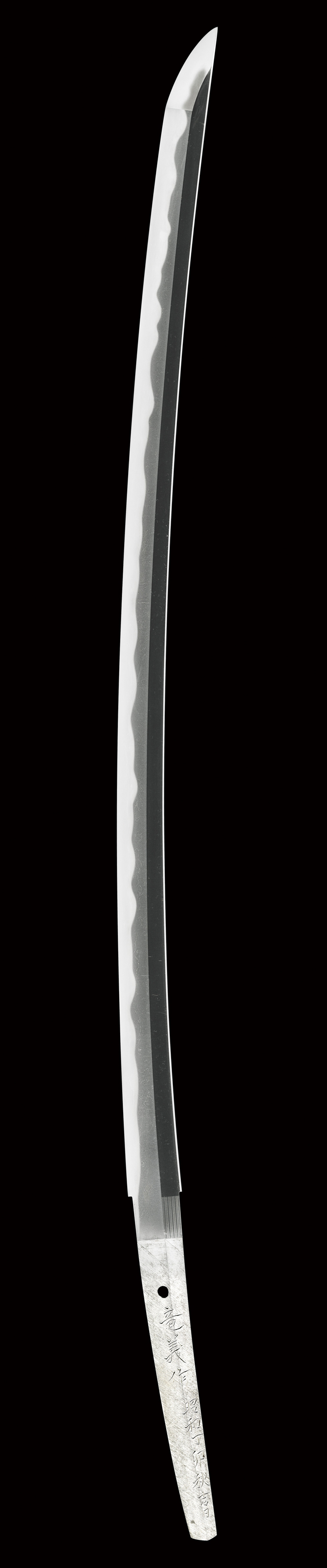
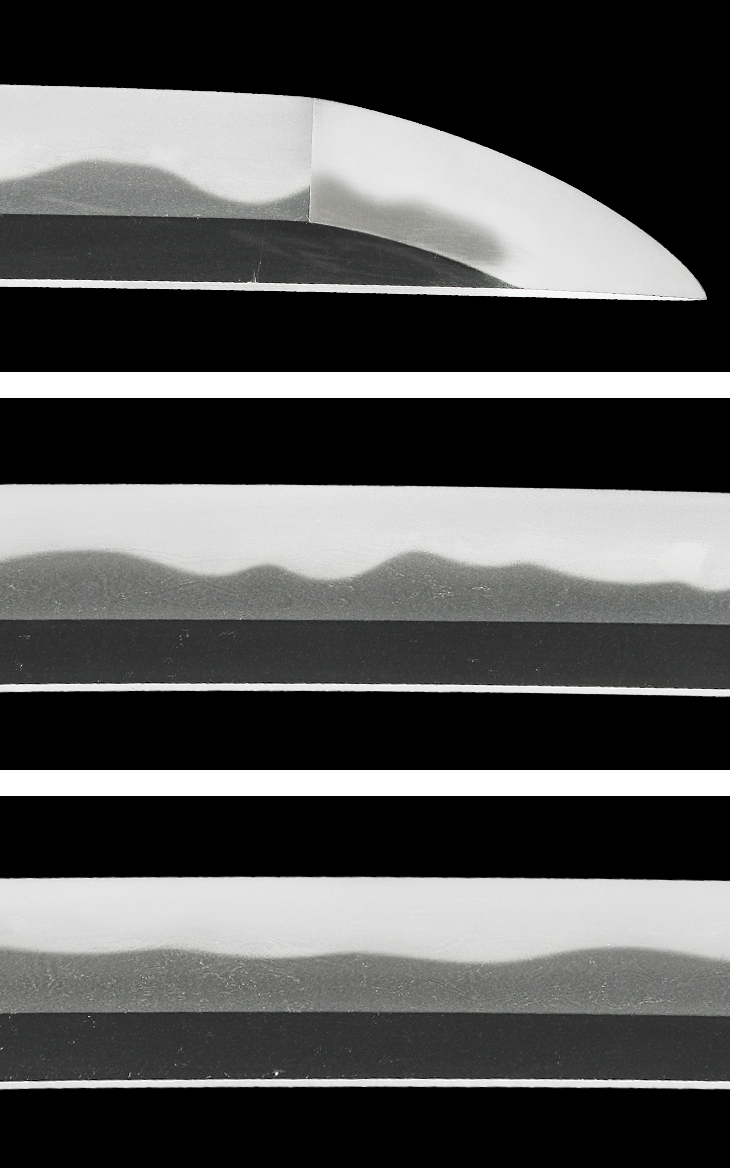
Shinogi-zukuri, high shinogi, low iori-mune, chu-kissaki slightly extended. Kitae, ko-itame with itame and mokume mixed, well-tightened, with large patterns standing out in places, thick ji-nie, frequent chikei, and excellent jitetsu. Hamon, gunome mixed with ko-gunome, notare, and ko-midare, the habuchi is intensely covered in nie with deep nioi, bright and clear, with hotsure, nie-suji appearing like niju-ba, ko-ashi and yo frequently appearing within the ha, frequent kinsuji and sunagashi, and parts becoming nie-sake and nie-kuzure in appearance. Boshi, notare-komi with deep yaki and nie, the tip is pointed in style with hakikake and kaeri. Nakago ubu, tip is kurijiri, yasurime is kesho o-sujikai. Copper gold-foiled habaki. Period polish.
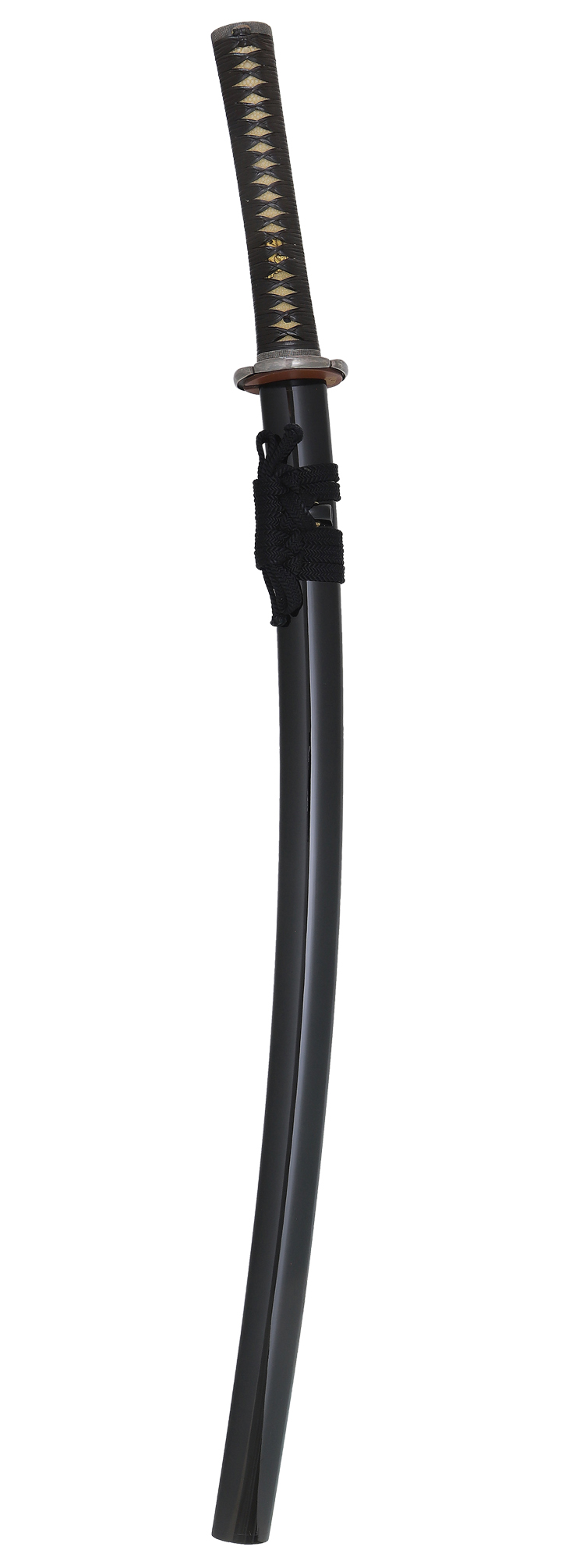
In Jo-iai koshirae (total length 107, tsuka length 24.5, modern work, saya is black ro-saya, kurigata has shitodome, black sageo, tsuka is oya-same with dark brown thin leather wrap, fuchi-kashira is silver-ground nanako-style, mumon, menuki is silver-ground katachibori with kin-iroe, horse design, tsuba is iron-ground mokko-gata mumon, silver fukurin).
Tatsuyoshi, whose name was Enomoto Eiichiro, was born in Showa 26, the son of the Mukansa smith Yusui Shin Sadayoshi; he first used the mei Sadayoshi and later changed it to Tatsuyoshi, and his younger brother is Sadahito. He forged swords with his father at a workshop near Komoike, Omiya-cho, Mishima City, Shizuoka Prefecture, and like his father, he was a master smith who excelled in Soshu-den and Soden-Bizen, but he passed away in Heisei 25 at the age of 62.
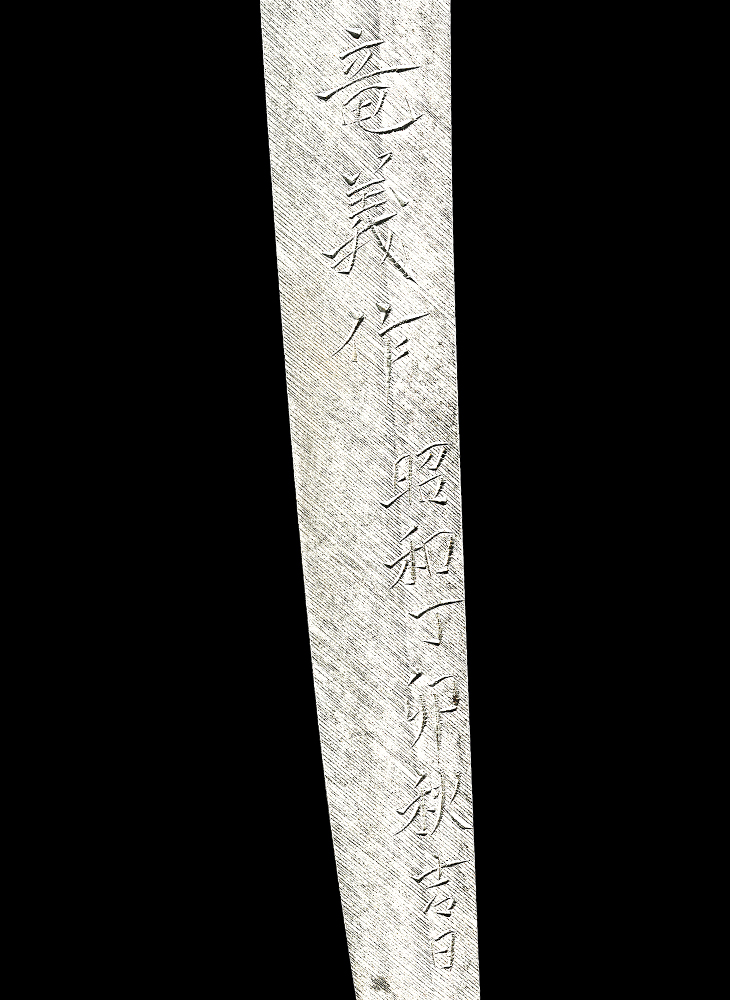
This work, having a tame-uchi mei on the nakago-ura, is a carefully made custom order, produced in Showa 62 (1988) when the smith was 36 years old.
The dimensions are slightly over 2 shaku 5 sun, with an o-kissaki and deep sori, little difference between the motohaba and sakihaba, showing a grand tachi-sugata of the Nanbokucho peak period.
The ha, which mixes gunome with ko-gunome, notare, and ko-midare, has a habuchi intensely covered in nie, bright and clear, with hotsure, nie-suji appearing like niju-ba, ko-ashi and yo frequently appearing within the ha, frequent kinsuji and sunagashi, and parts becoming nie-sake and nie-kuzure in appearance.
From this deki and style, I believe it was modeled after something like the Important Cultural Property designated tachi by Osafune Chogi, the pinnacle of Soden-Bizen.
Currently, in koshirae it weighs 1,378g excluding the saya; it is quite difficult to use with this sense of weight, and since the deki is good, I definitely recommend it for appreciation.
There are no major defects, and since the smith has already passed away, it will be a precious surviving work.
Machine translation from the shop's Japanese · may contain errors ·
Modern Shizuoka, in koshirae
Shinogi-zukuri, high shinogi, low iori-mune, chu-kissaki slightly extended. Kitae, ko-itame with itame and mokume mixed, well-tightened, with large patterns standing out in places, thick ji-nie, frequent chikei, and excellent jitetsu. Hamon, gunome mixed with ko-gunome, notare, and ko-midare, the habuchi is intensely covered in nie with deep nioi, bright and clear, with hotsure, nie-suji appearing like niju-ba, ko-ashi and yo frequently appearing within the ha, frequent kinsuji and sunagashi, and parts becoming nie-sake and nie-kuzure in appearance. Boshi, notare-komi with deep yaki and nie, the tip is pointed in style with hakikake and kaeri. Nakago ubu, tip is kurijiri, yasurime is kesho o-sujikai. Copper gold-foiled habaki. Period polish.
In Jo-iai koshirae (total length 107, tsuka length 24.5, modern work, saya is black ro-saya, kurigata has shitodome, black sageo, tsuka is oya-same with dark brown thin leather wrap, fuchi-kashira is silver-ground nanako-style, mumon, menuki is silver-ground katachibori with kin-iroe, horse design, tsuba is iron-ground mokko-gata mumon, silver fukurin).
Tatsuyoshi, whose name was Enomoto Eiichiro, was born in Showa 26, the son of the Mukansa smith Yusui Shin Sadayoshi; he first used the mei Sadayoshi and later changed it to Tatsuyoshi, and his younger brother is Sadahito. He forged swords with his father at a workshop near Komoike, Omiya-cho, Mishima City, Shizuoka Prefecture, and like his father, he was a master smith who excelled in Soshu-den and Soden-Bizen, but he passed away in Heisei 25 at the age of 62.
This work, having a tame-uchi mei on the nakago-ura, is a carefully made custom order, produced in Showa 62 (1988) when the smith was 36 years old.
The dimensions are slightly over 2 shaku 5 sun, with an o-kissaki and deep sori, little difference between the motohaba and sakihaba, showing a grand tachi-sugata of the Nanbokucho peak period.
The ha, which mixes gunome with ko-gunome, notare, and ko-midare, has a habuchi intensely covered in nie, bright and clear, with hotsure, nie-suji appearing like niju-ba, ko-ashi and yo frequently appearing within the ha, frequent kinsuji and sunagashi, and parts becoming nie-sake and nie-kuzure in appearance.
From this deki and style, I believe it was modeled after something like the Important Cultural Property designated tachi by Osafune Chogi, the pinnacle of Soden-Bizen.
Currently, in koshirae it weighs 1,378g excluding the saya; it is quite difficult to use with this sense of weight, and since the deki is good, I definitely recommend it for appreciation.
There are no major defects, and since the smith has already passed away, it will be a precious surviving work.
The twentieth century nearly killed the craft twice: wartime distortion, then the occupation ban. The NBTHK’s founding in 1948 and licensed forging from 1953 rebuilt the sword as an art, crowned by Living National Treasures and the mukansa rank.
For one-of-a-kind items such as swords, sword fittings and antiques, other customers may be waiting for the item, so please contact us about a return within 3 days of its arrival and ship it back within 8 days. Refunds are made on the day the returned item arrives.

 NihontoWatch