NihontoWatch MonNihontoWatchBETA
MarketEncyclopedia
NihontoWatch Mon

NihontoWatchBETA

Market
Encyclopedia
Overview·Kantei·Designations·Provenance·Work Types·Signatures·Lineage·School
OverviewKanteiDesignationsProvenanceWork TypesSignaturesLineageSchool
  1. Schools
  2. Goto
  3. Waki-Goto
  4. Ichijo
  5. Tomei

Araki Tomei

東明

Jūyō
Vol. 52, No. 159 · Mitokoromono

Araki Tomei

東明

31 ranked works

ProvinceYamashiroEralate Edo (1817–1870)SchoolGoto>Waki-Goto>IchijoTraditionIeboriTeacherGoto IchijoSpecialtieskozuka, menuki, fuchi-kashira, tsubaTypeTosogu MakerCodeWGO055
1Tokubetsu Jūyō30Jūyō Tōken

Overview

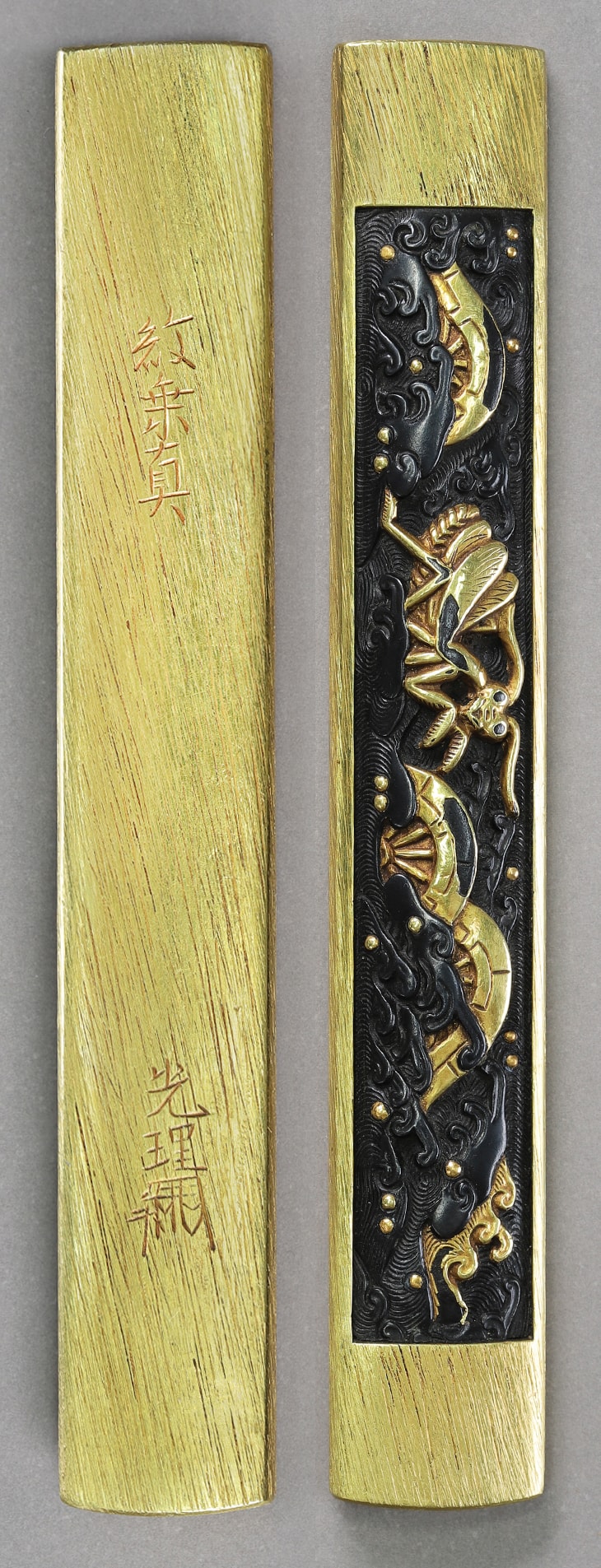
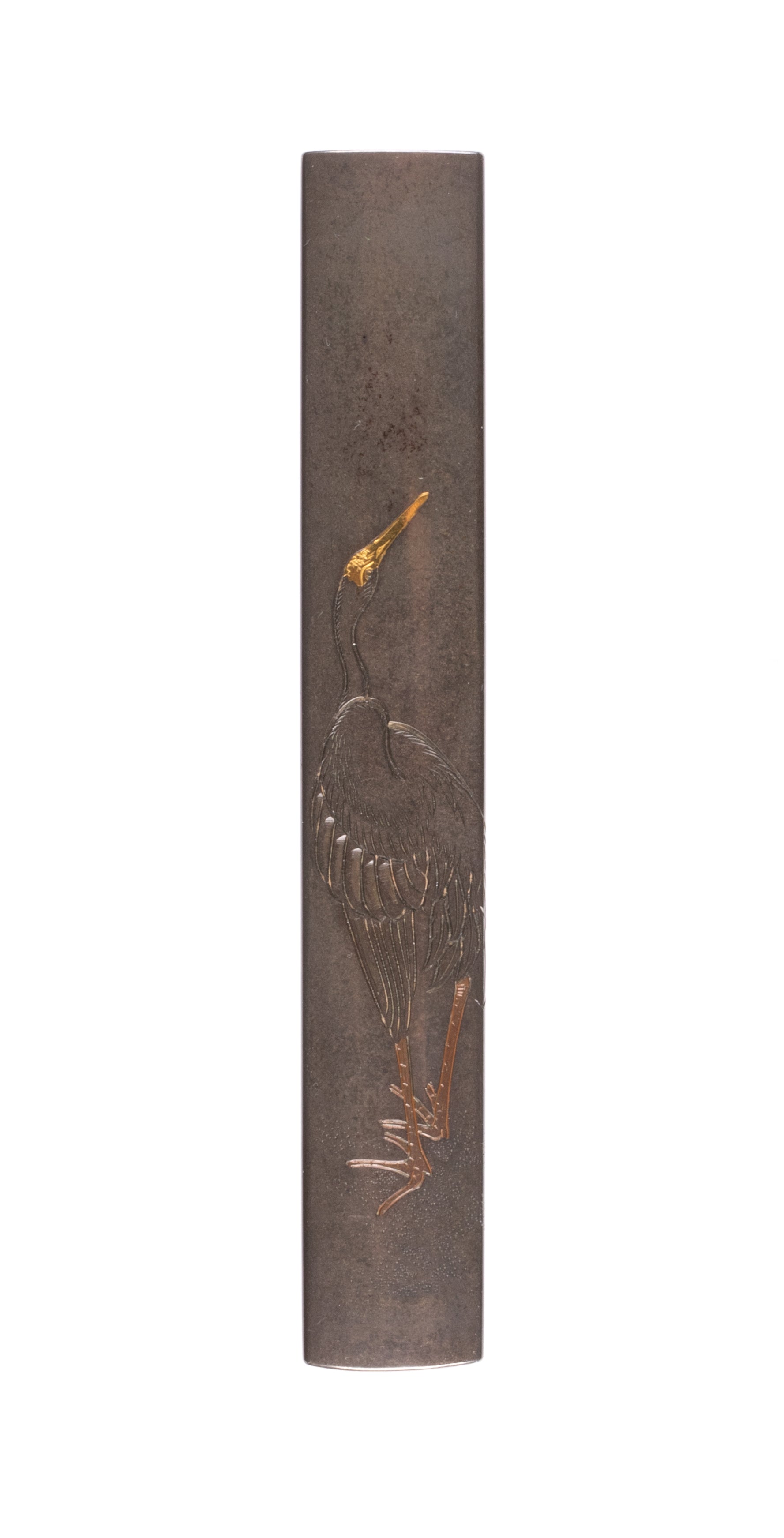
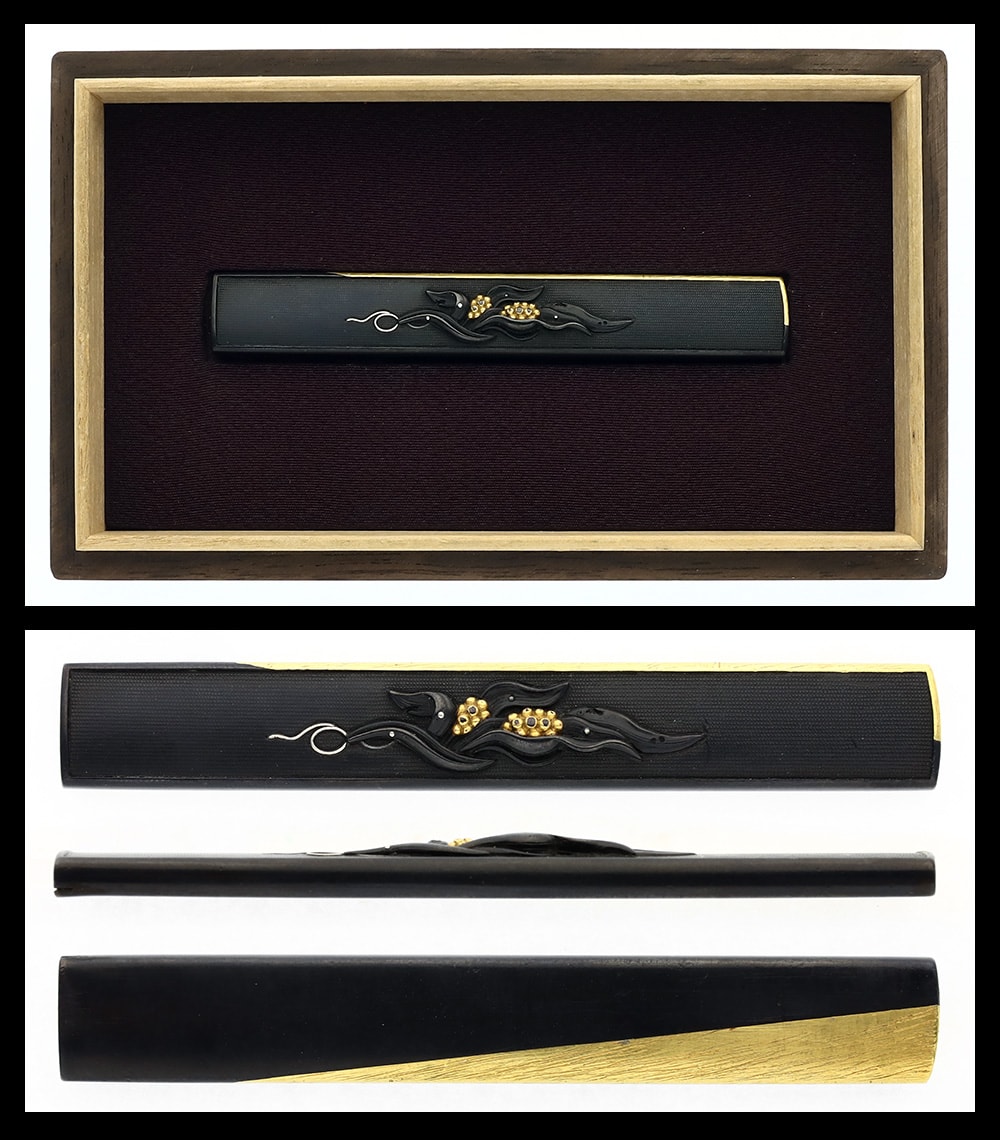
Araki Tomei was born in Kyoto in Bunka 14 (1817) and entered the apprenticeship of Goto Tojo at the age of thirteen, from whom he was granted the use of the character "to" and took the name Tomei. He later studied under Goto Ichijo, receiving the art name "Issai," and thereafter signed his works "Issai Tomei." He also employed the go Ginshotei and, less frequently, Matsugintei; among comparatively few examples, certain works bear the signature "Tomei Arashu Nobunobu," which constitutes valuable documentary material. In addition to his metalworking training within the Goto lineage, Tomei studied preparatory drawing (shita-e) under the Kyoto painter Hayashi Ranga. It is said that his celebrated specialty -- the carving of millet ears (awaho) -- was devised through research undertaken together with Ranga, and that this distinctive motif brought him renown already in his own day. Active in the Bakumatsu era, Tomei is recognized as an eminent figure in the metalworking world of late -period Kyoto and a distinguished disciple of Goto Ichijo.

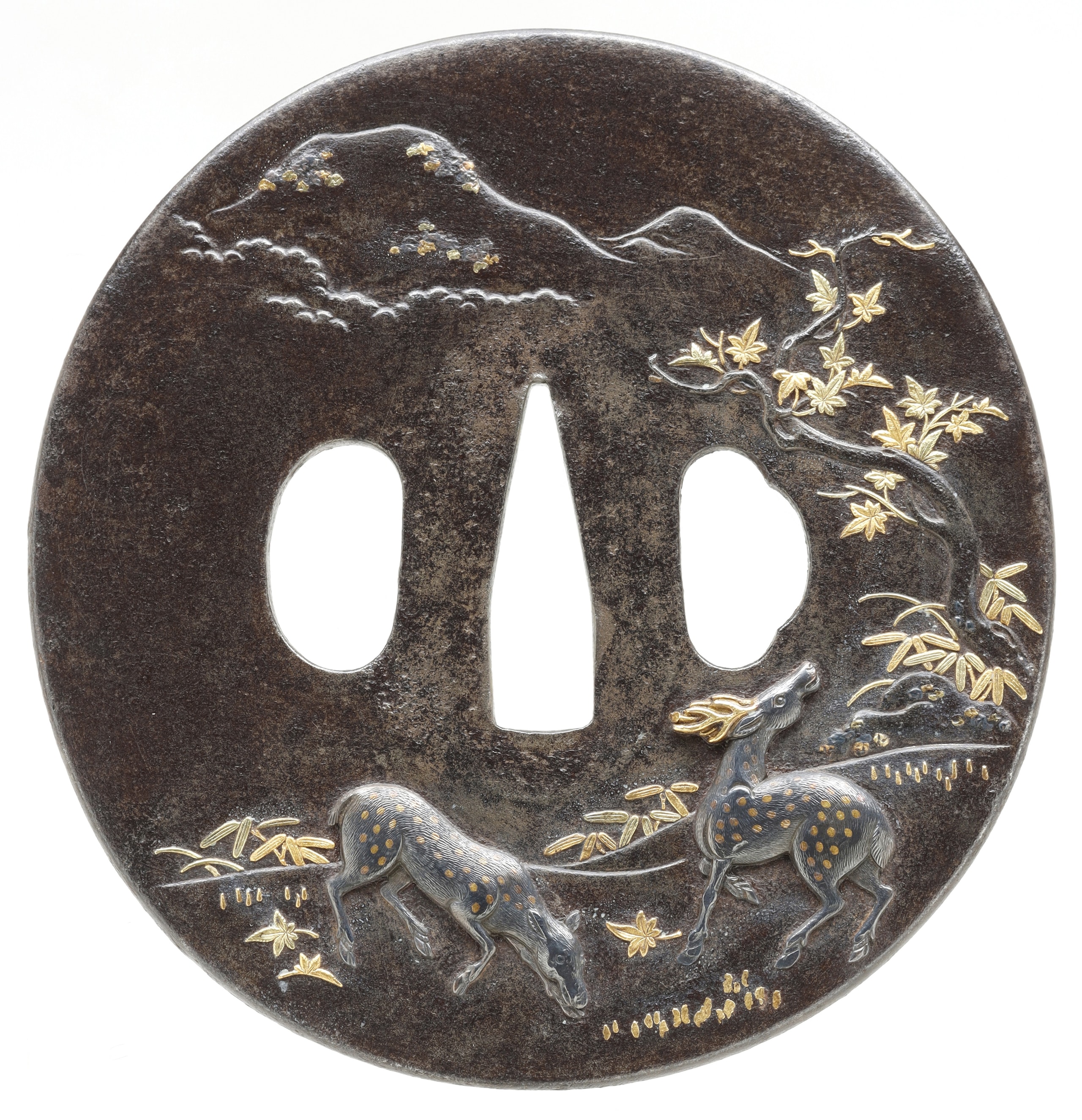
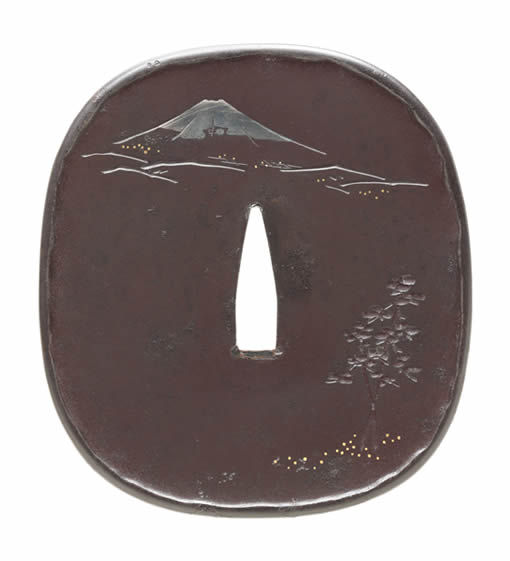
Tomei's technical mastery centers on the sculptural rendering of millet ears through specialized chisels. Each ear is conceived as a single bloom composed of seven conical grains, with sharply defined tips; the heavy, abundantly ripened clusters appear as though the grains might spill outward at any moment. This three-dimensional modelling, driven in with purpose-built tools, is described as a domain that permits no rival among other craftsmen. His preferred grounds include and polished iron (), upon which the millet is expressed through with - and polychrome in gold, silver, , and . The leaves and stems receive equally attentive treatment: the appearance of foliage beginning to wither and change color in autumn is conveyed through the differential application of gold and plain copper, while the branches are rendered with heightened animation. When working on iron grounds, he employs sunago- to evoke haze suspended across the scene, a technique inherited from the Ichijo line. The shiguregane catch construction on the ceiling plate, and the file marks applied to rim areas, likewise display characteristics transmitted from Ichijo. His are typically executed in solid gold () with sculptural yobori, while his - ground treatment on is so finely wrought that it can be mistaken for the texture of silk crepe.

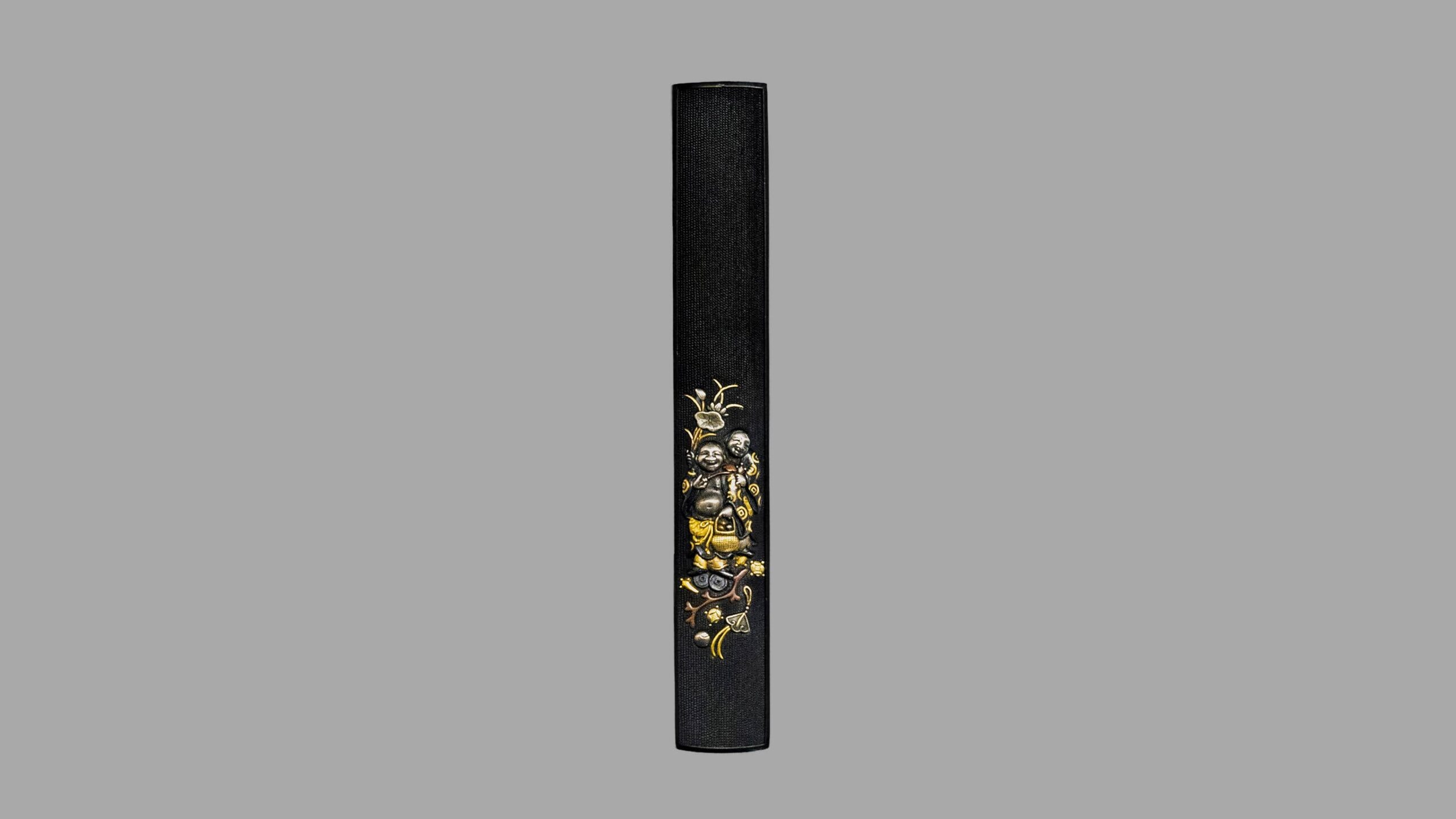
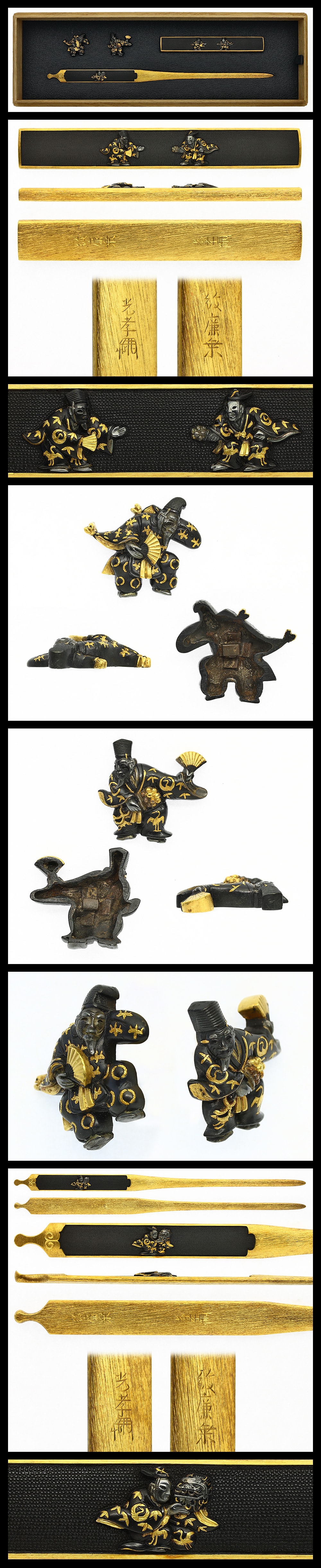
Across his designated works, the consistently praises Tomei's millet-ear carvings as occupying a distinctive world of expression that admits no rival. The phrase "the arena in which Tomei excelled above others" recurs as a hallmark evaluation, underscoring that this sculptural artistry was uniquely his domain, far beyond the reach of other artists. Even works departing from the millet subject -- such as his depictions of Mt. with the Longevity Star Deity, or the Two Deities Daikoku and Bishamonten -- are recognized for exceptionally precise carving and high technical ability applied to a dense, lustrous . His compositions balance splendor and restraint in just measure, and his complete mounting suites are praised for achieving a refined elegance of unmistakably Kyoto-style character. The describes the overall tone of his representative works as elevated and dignified, with a lyrical feeling that fully merits the appellation "Tomei of the millet ears." His position within the late Goto tradition is that of a master who, while grounded in the hereditary methods of the Ichijo school, brought to them a pictorial sensibility and sculptural vitality that defined the highest achievement of Bakumatsu-era kinko in Kyoto.

Kantei

3 descriptive axes: material (the Goto-derived grounds and metals) x technique (takabori, iro-e, applied suemon and inlay) x themes (the millet-ear signature subject set against the rural genre props that surround it). No temporal phases: the late-Edo output is stylistically unified around the awabo subject, with the inherited Ichijo rasp-work as a recurring attribution support.

Araki Tomei is a Kyoto metalwork artist of the late period and a pupil of the Goto house's last great master Goto Ichijo. Born in Kyoto in 1817, at thirteen he entered the workshop of Goto Tojo, who granted him the character To for the art-name Tomei; he then studied under Goto Ichijo, who granted him the workshop-name Issai, so he signs Issai Tomei (he also signs Ginshotei Tomei, and rarely his real name Araki Hidenobu). He studied under-drawings with the Kyoto painter Hayashi Ranga, and his one defining subject, the ear of foxtail millet (awabo), is said to have been devised through that study. He works on the orthodox soft-metal grounds of his Goto-derived training, with and iro-e, and the records repeatedly say the rasp-work on the rim and crown shows the stamp of the Ichijo workshop. His distinguishing mark is not that inherited house hand but the millet-ear itself: the call awabo his sole domain, a subject in which no other artist, even within the gifted Ichijo school, can equal him.

Diagnostic discriminators

unique vs the Ichijo workshop hand / ordinary machibori

Material

His constant ground is worked in fine , the orthodox soft-metal field of his Goto-derived training, often with a back plate or filled-back (-fukumegane) on the ; are frequently solid gold (). He ranges across the wider palette, ishime, plain copper (), and the difficult , and on his bolder sets reaches to iron grounds for . The metal choice serves the subject; the millet is what the eye is meant to find.

Technique

His hand is relief with polychrome iro-e in gold, copper and copper-red (-do), animated with applied and crest-applique inlay (-) and flush inlay; are solid-gold , and fine details the reverse plates. The special effect is the awabo itself, the conical grains struck up in high relief with a special chisel so the ripe ears seem about to spill over the edge. The rasp (yasuri) on the rim-crown and mouth is repeatedly noted as the Ichijo-workshop manner he inherited.

Themes

One dominant register organizes nearly all his work: the ear of foxtail millet (awabo), drawn from life and devised in study with the painter Hayashi Ranga, set in an autumn-field scene with the props and creatures of the harvest. Around the millet he gathers sparrows and quail, the scarecrow and the bird-clappers, the sedge hat and woven basket. A small group of pieces step outside the millet to literati and auspicious subjects, Mt with the southern-pole star-god and a moonlit valley, or the deities Daikoku and Bishamon, but the treat these as the exception that proves where his fame lies.

Millet-ears and the autumn field (his signature subject)

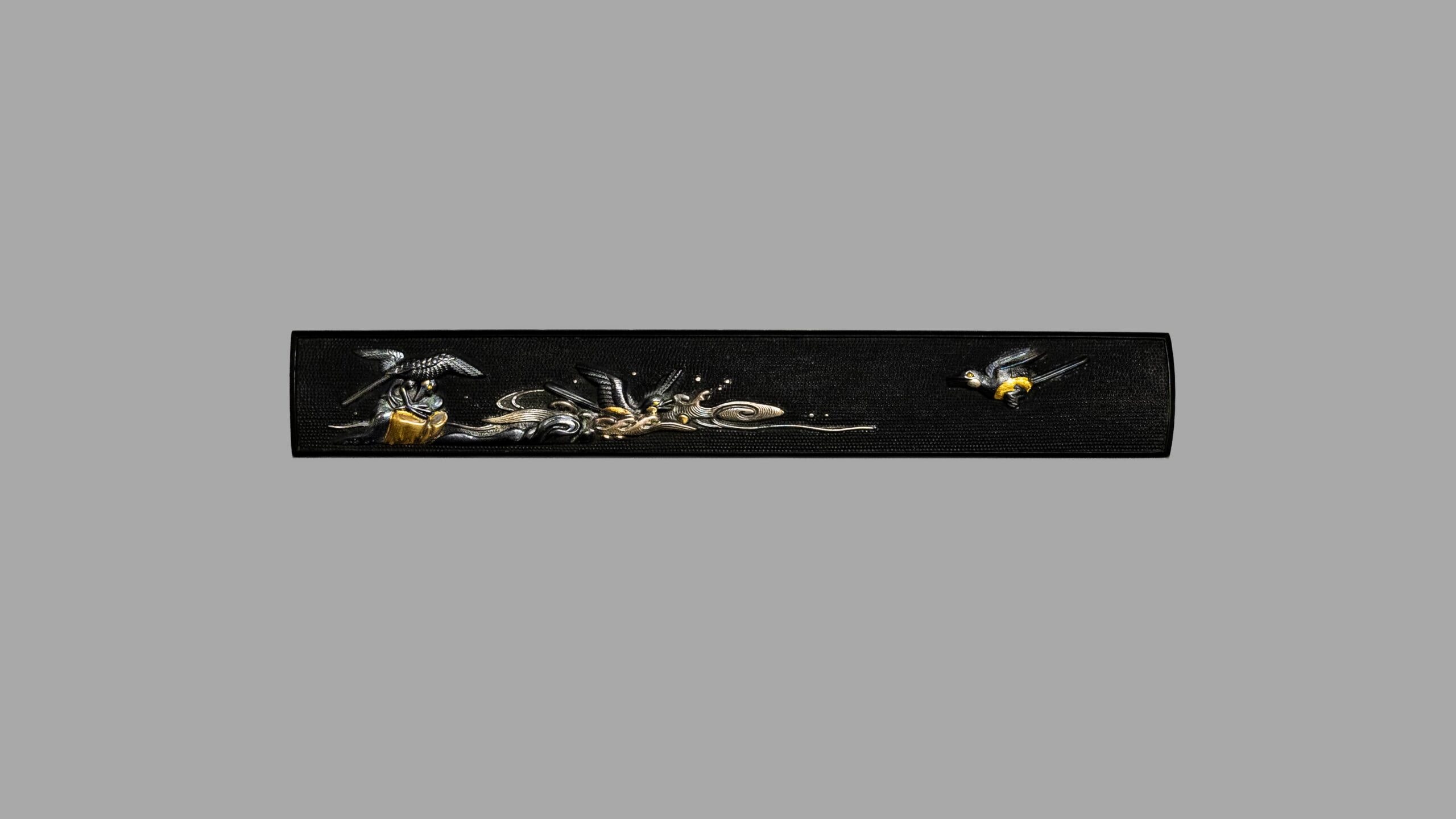
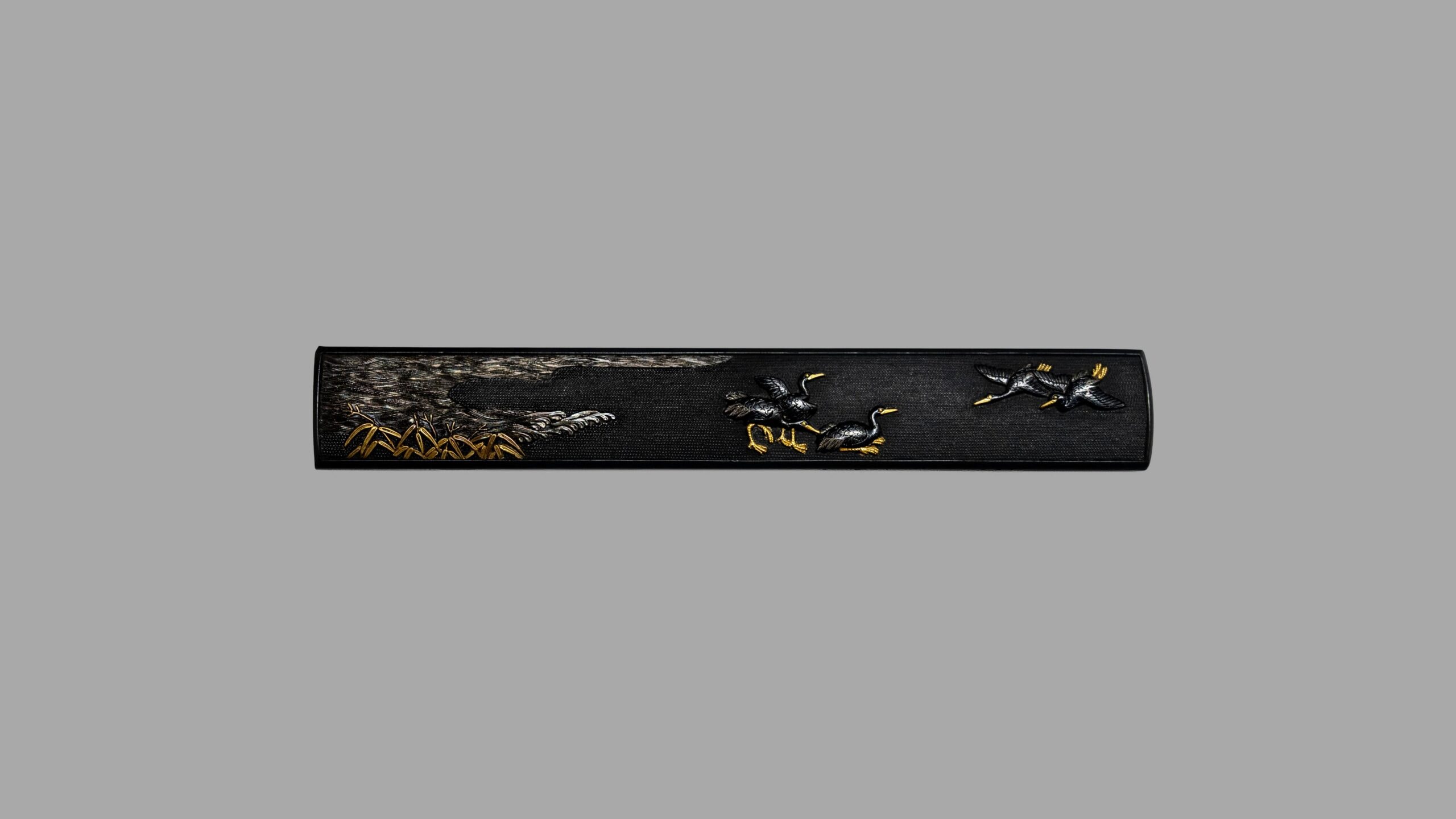
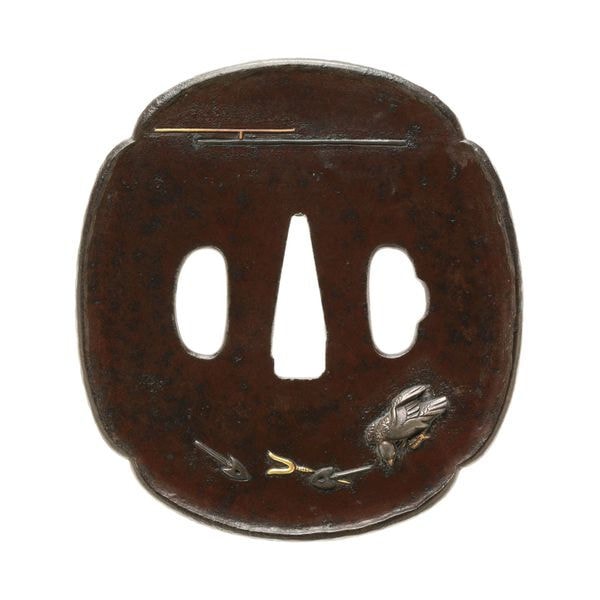
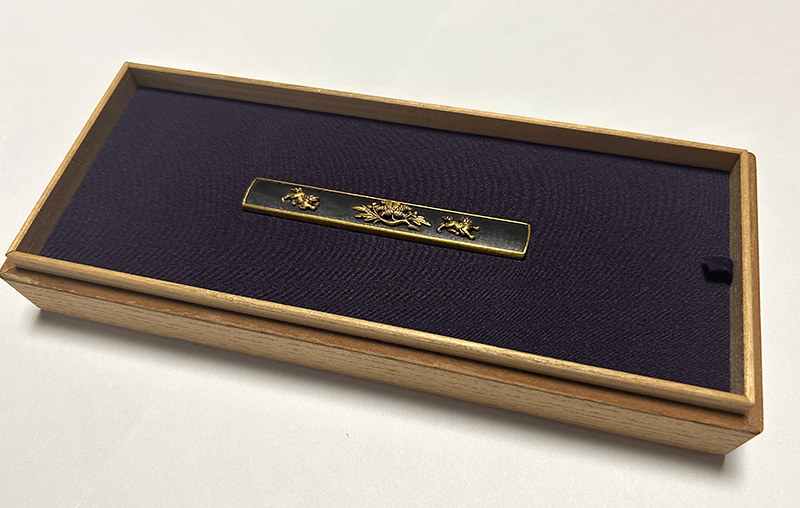
The ear of foxtail millet, his sole domain, with the sparrows and quail, scarecrow, bird-clappers and sedge hat of the harvest field, in iro-e with applied . The records say the conical grains and the spilling ripeness are unequalled by any other artist.

案山子kakashi
Literati and auspicious subjects (the exception)less firmly established

A few pieces leave the millet for literati and auspicious subjects: Mt with the cloud-borne southern-pole god and a moonlit deep valley paired with Chinese verse, and the rusu-moyo (allusive absence) of Daikoku and Bishamon. The mark these as not his usual awabo work, while praising the quality of the and the precision of the carving.

Full iconography

Signature chronology

Placement
Dated signatures
Recorded signatures

Documentary note

His pieces are signed in two principal forms, Issai Tomei (the workshop-name Issai granted by Goto Ichijo) and Ginshotei Tomei (the go Ginshotei); a small number carry his real name Araki Hidenobu (also as Tomei Araki Hidenobu), which the records call rare and of documentary value. On split (wari) the go appears alone as Tomei. One dated piece reads Ansei 5 (1858), spring. Because his fame rests so completely on the millet-ear, the awabo subject itself functions as an attribution support alongside the signature, together with the Ichijo-workshop rasp on the rim-crown and mouth that the repeatedly single out.

Scholarship

The records traditionally say his signature millet-ear was devised through study of under-drawings with the Kyoto painter Hayashi Ranga, and that he was already famous for the awabo in his own day.

On one mounting his millet-ear fittings are paired with maki-e by the lacquer master Shibata Zeshin, named in a single setsumei.

Designations

Kokuhō—
Jūyō Bunkazai—
Jūyō Bijutsuhin—
Gyobutsu—
Tokubetsu Jūyō1
Jūyō Tōken30

Elite Standing

0.13 across 31 designated works

Top 10% among makers

Provenance

2 documented provenances across certified works by Tomei

Provenance Standing

0 works held in elite collections across 2 documented provenances

Top 50% among makers

Raw score: 2.00 / 10

Work Types

Distribution across 31 ranked works

Other
2684%
Tsuba
310%
Fuchi-Kashira
26%

Signatures

Signature types across 31 ranked works

Currently Available

Lineage

TeacherGoto Ichijo
Tomei

Ichijo School

Other artisans of the Ichijo school

  1. 1.Goto Ichijo後藤一乗6 for sale90designated
  2. 2.Nagatake永武13designated
  3. 3.Ikkin一琴1 for sale11designated
  4. 4.Issho一匠8designated
  5. 5.Isshin一真1 for sale7designated
  6. 6.Koran光覧4designated
  7. 7.Yoshiteru義照2 for sale4designated
  8. 8.Wada Isshin Masatatsu和田一真政竜1designated
  9. 9.Yoshinaga吉長1 for sale1designated
  10. 10.Isshi一至6designated
  11. 11.Kawashima Ichinyo川島一如1designated
  12. 12.Sugioka Ikkyo杉岡一挙1designated

Tomei

Tomei(東明) was a maker of Japanese sword fittings (tōsōgu) of the Ichijo school in Yamashiro province, active during the late Edo (1817–1870) period.

The work follows the Iebori tradition.

Designated works by Tomei include 1 Tokubetsu Jūyō, 30 Jūyō.