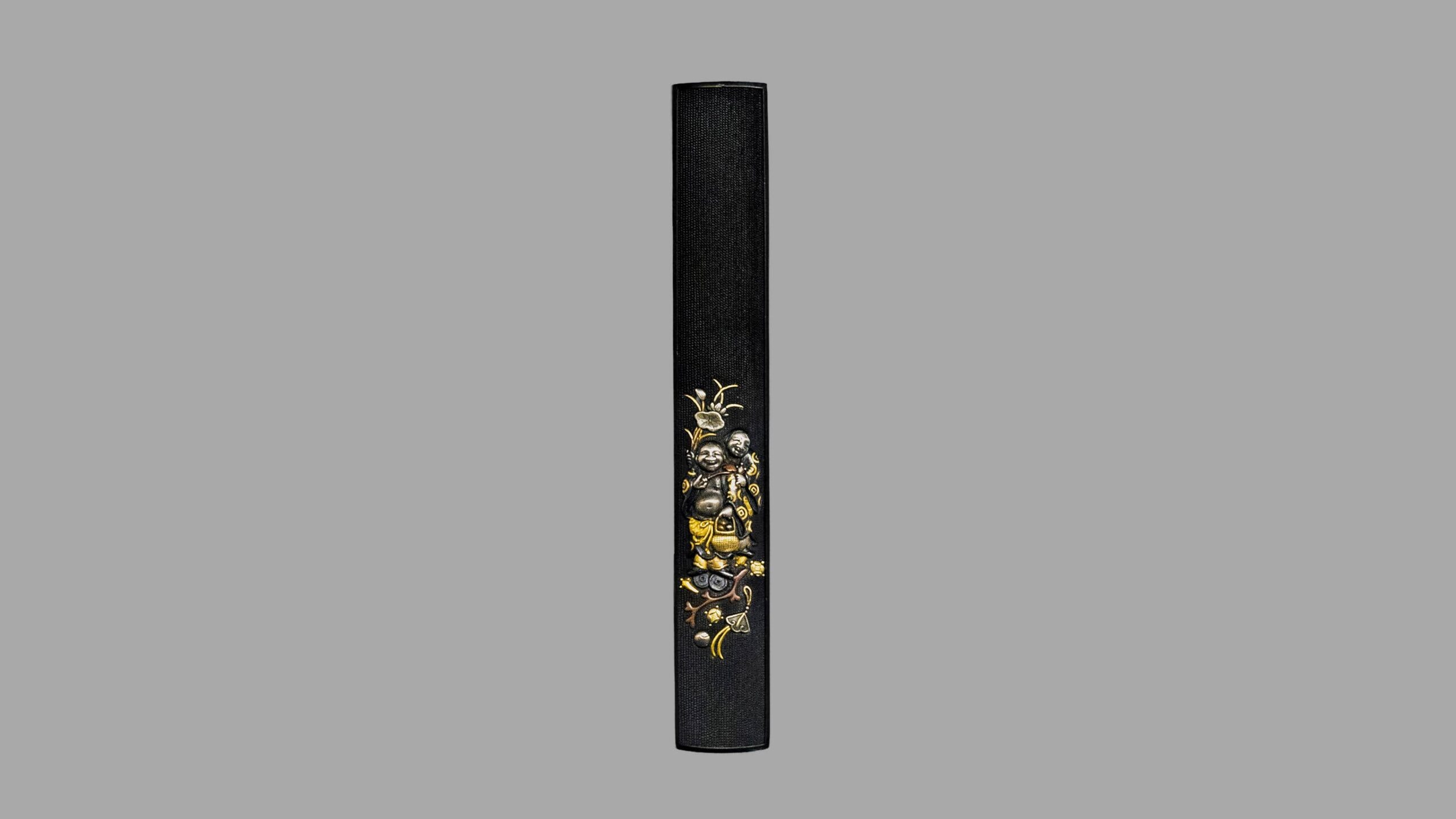
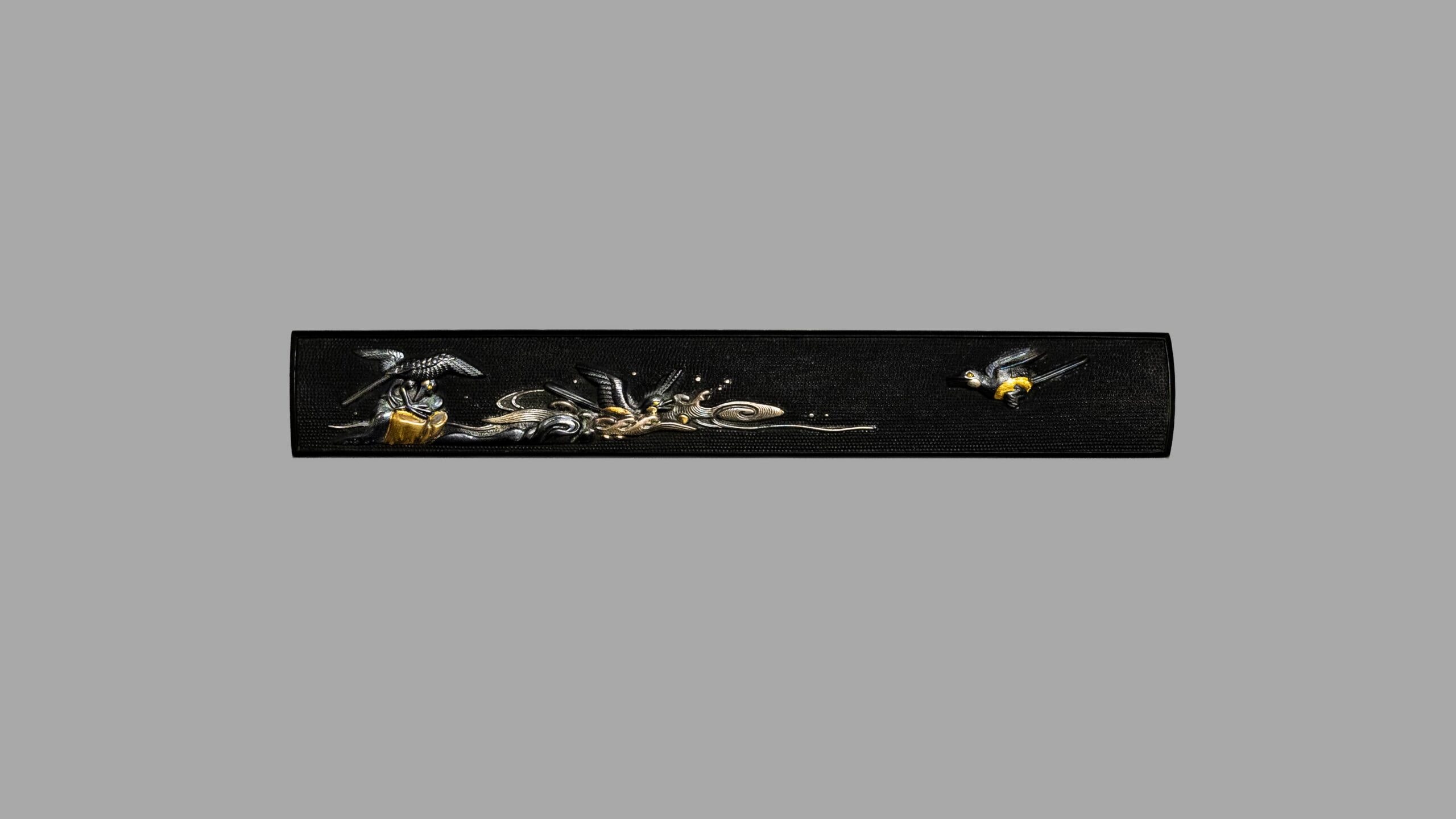
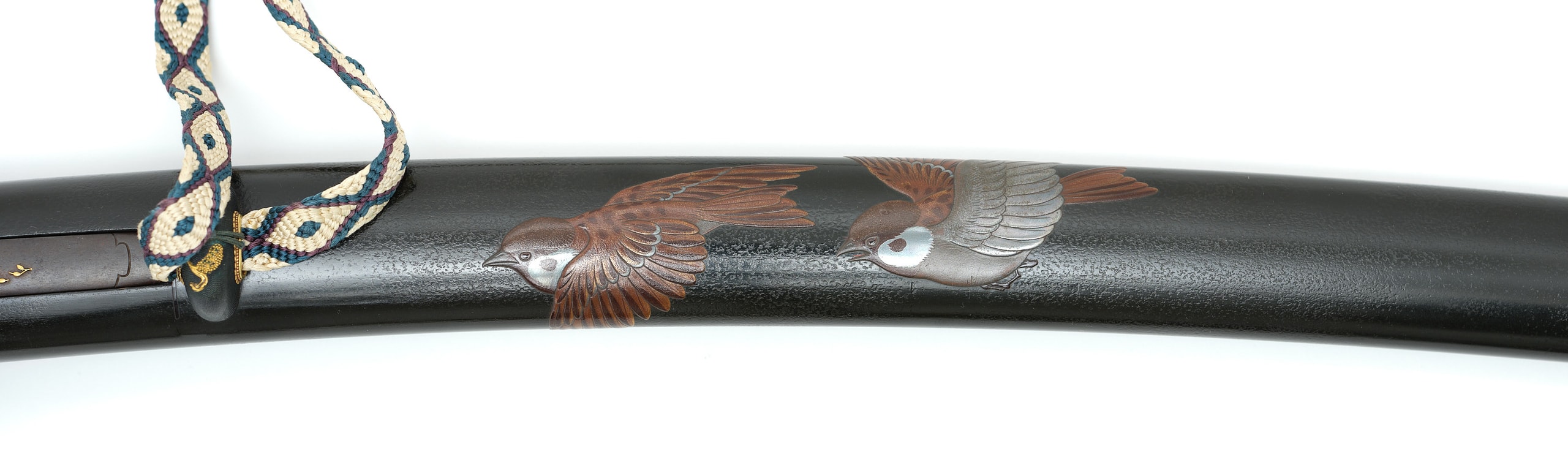
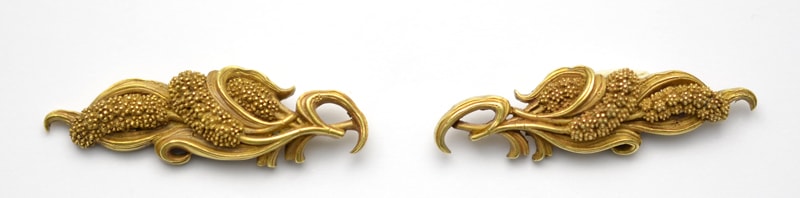
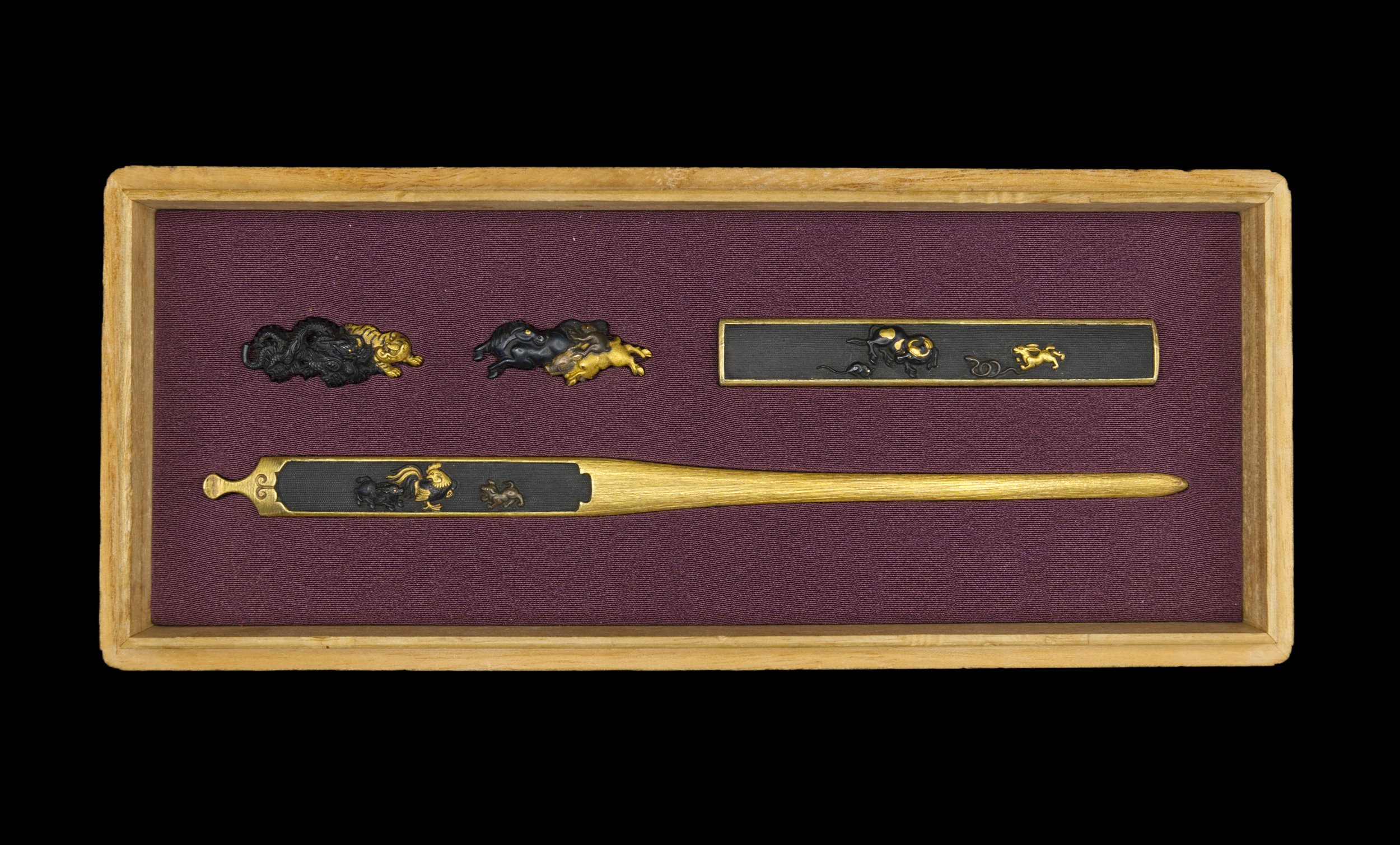
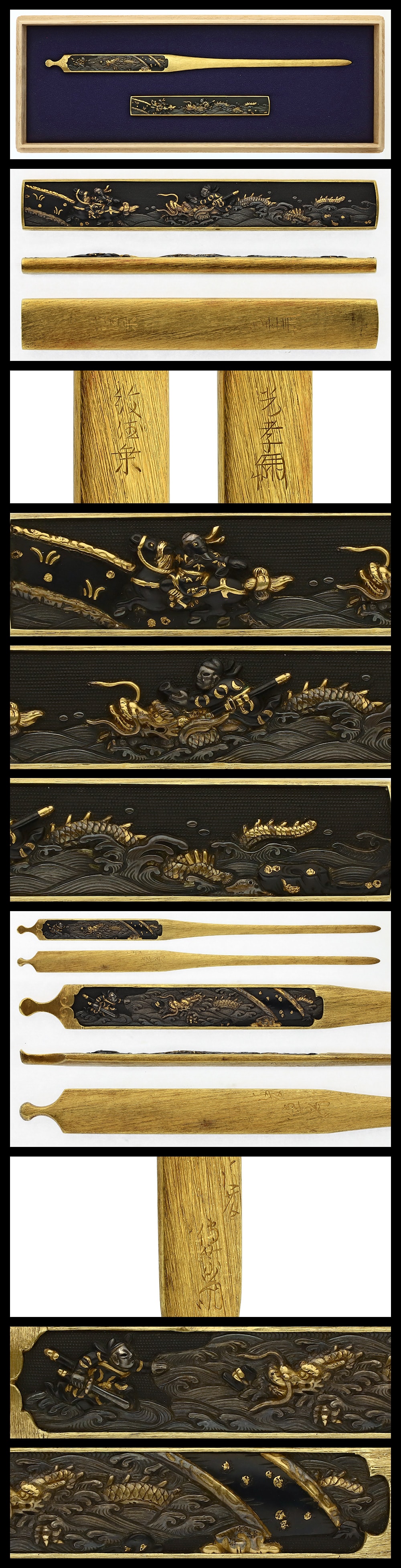
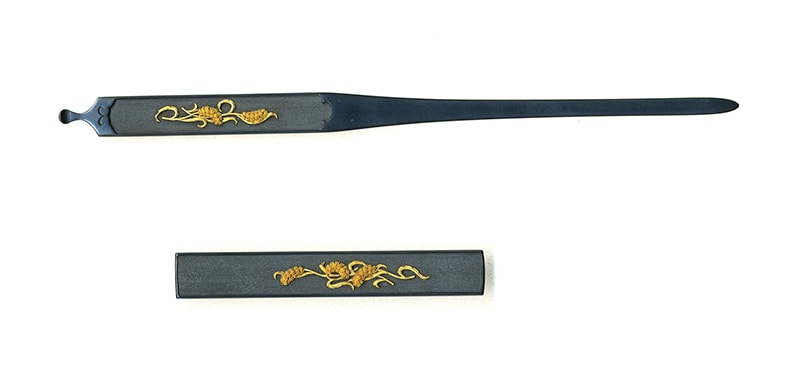
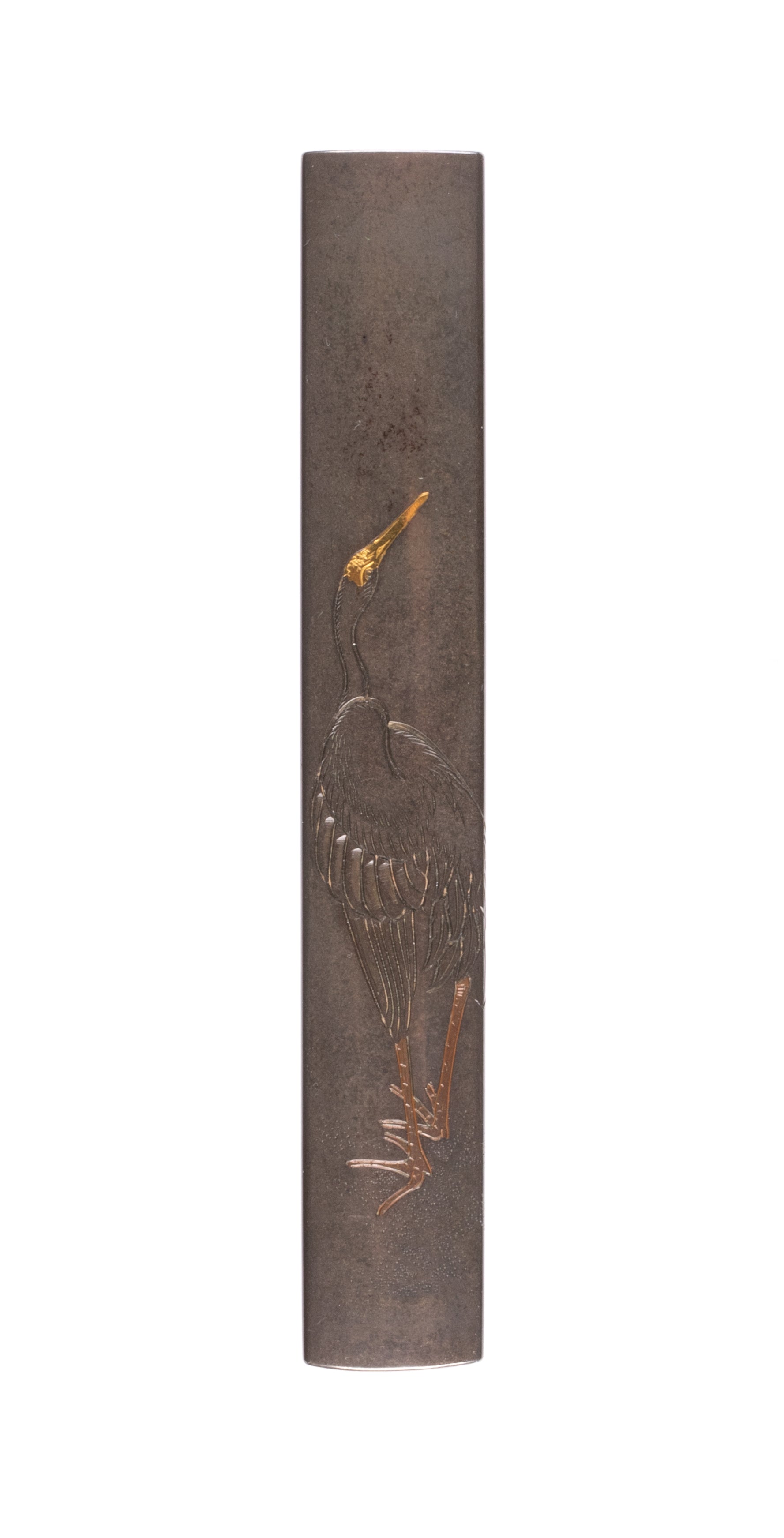
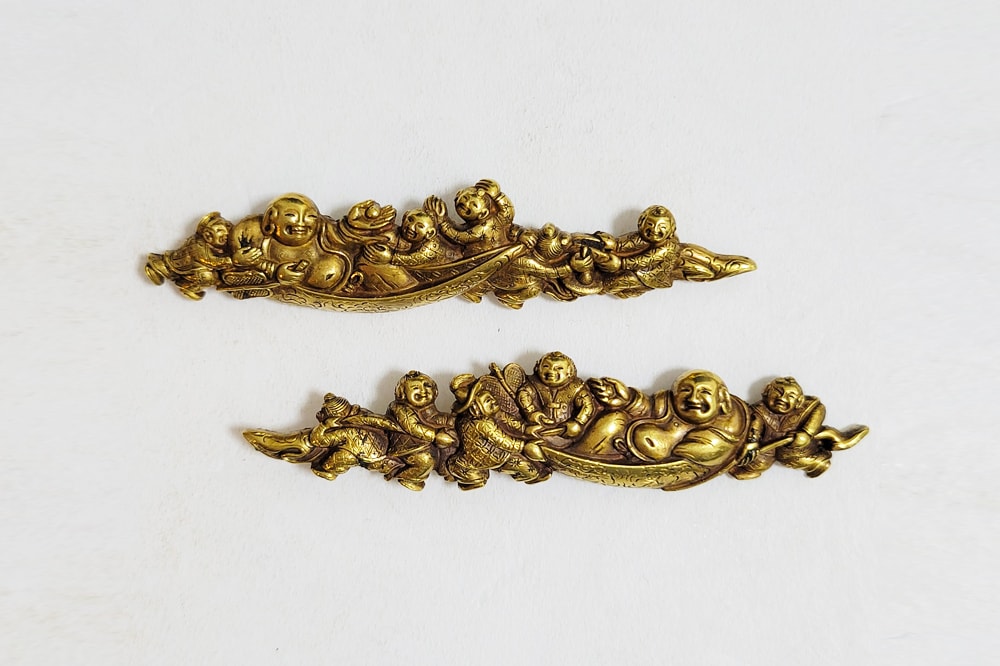
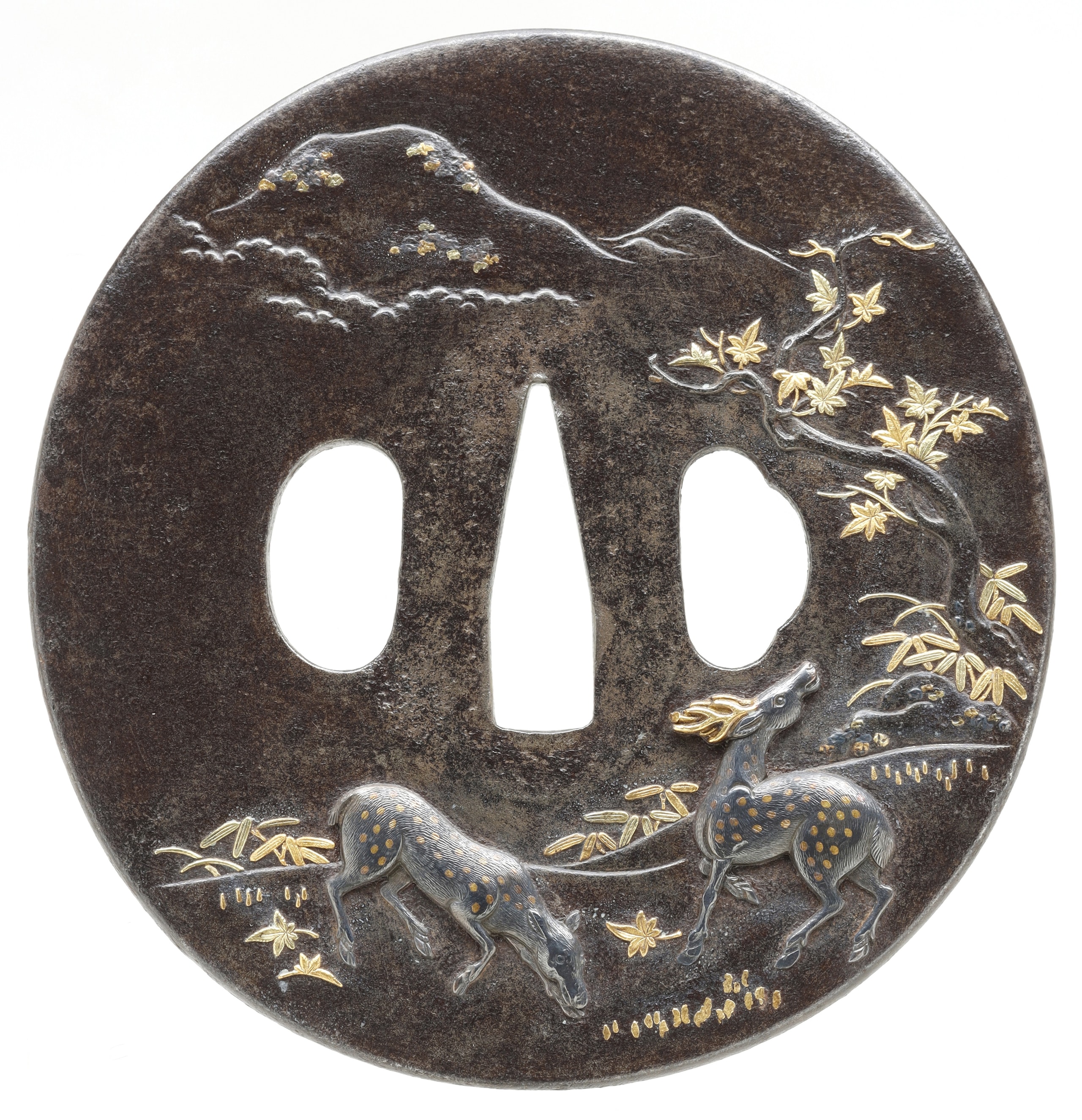
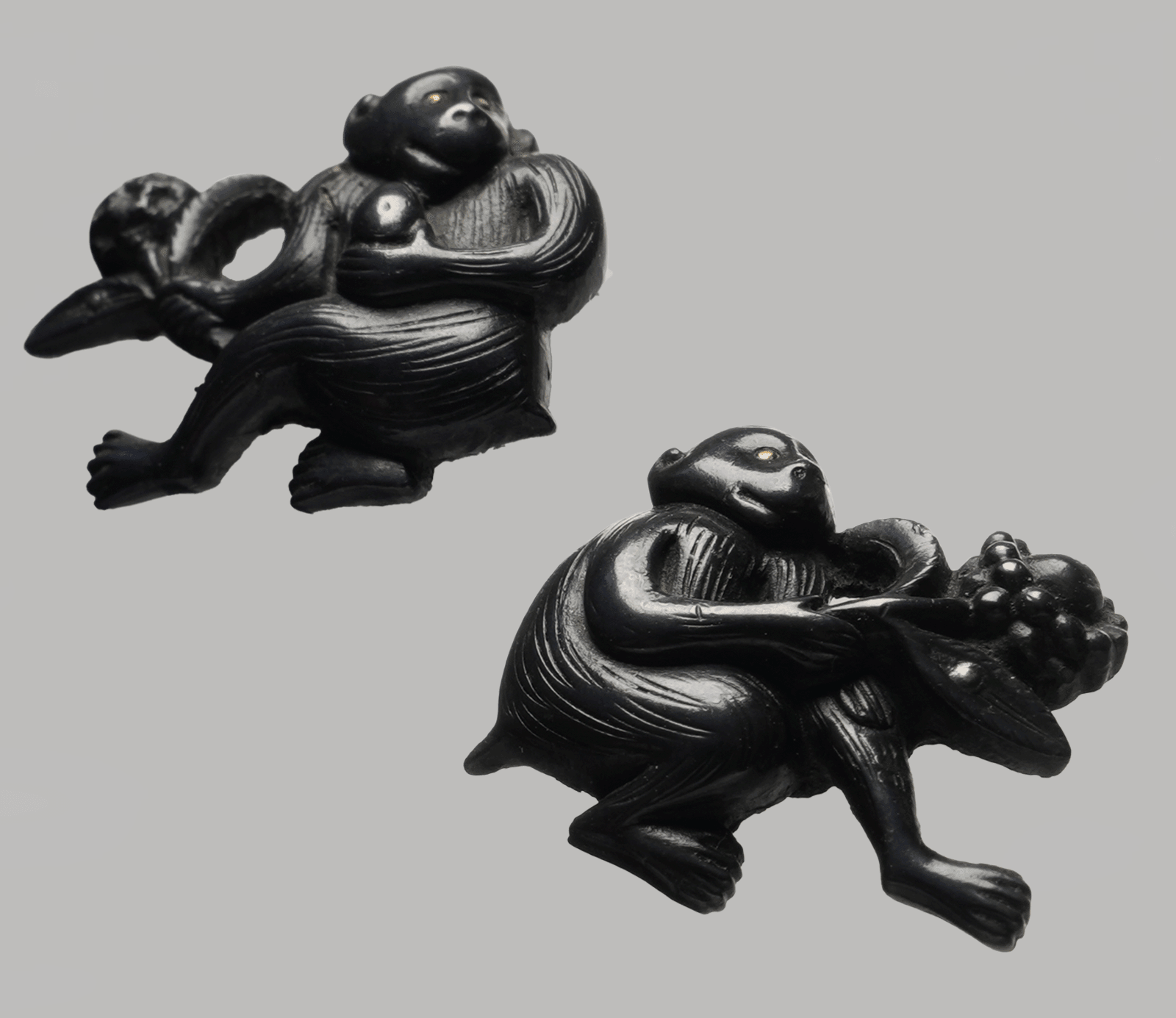
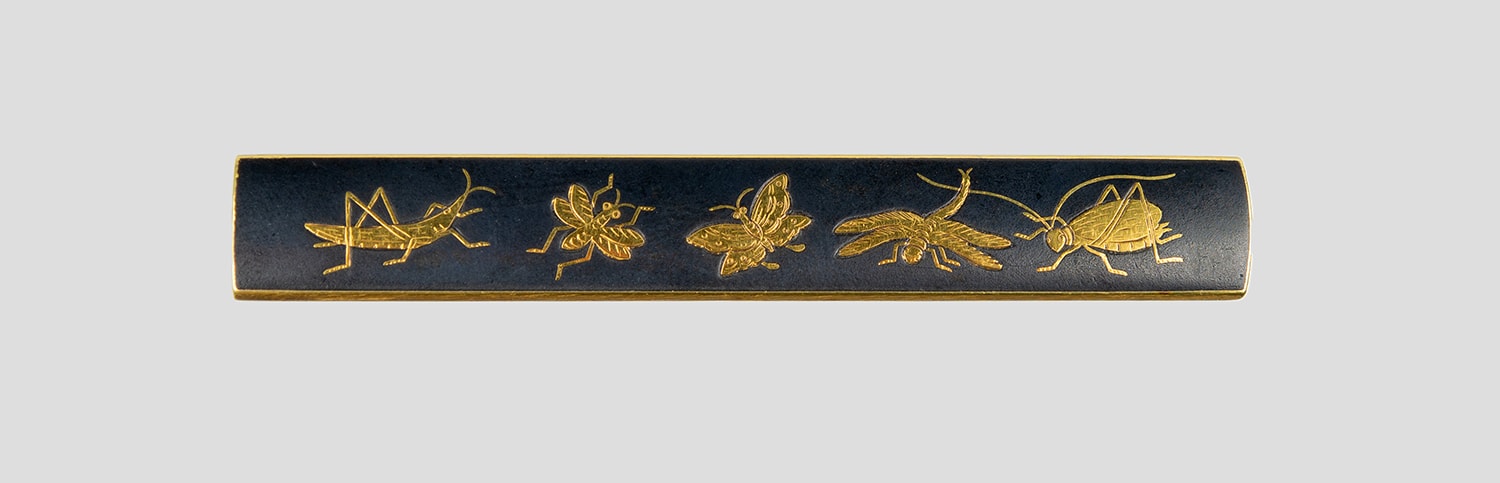
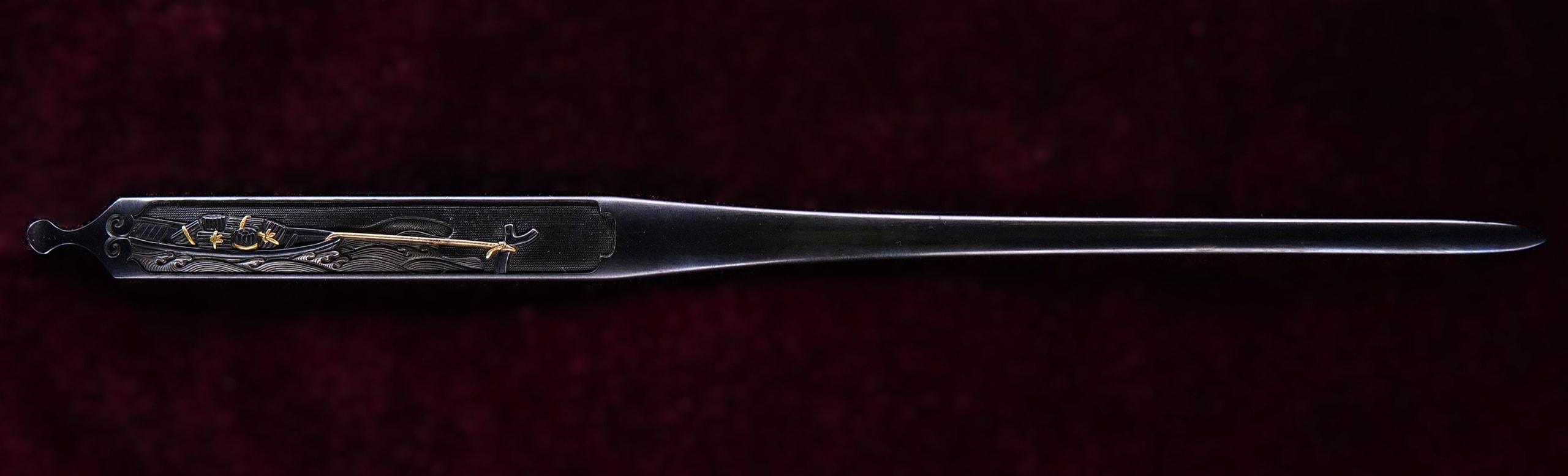
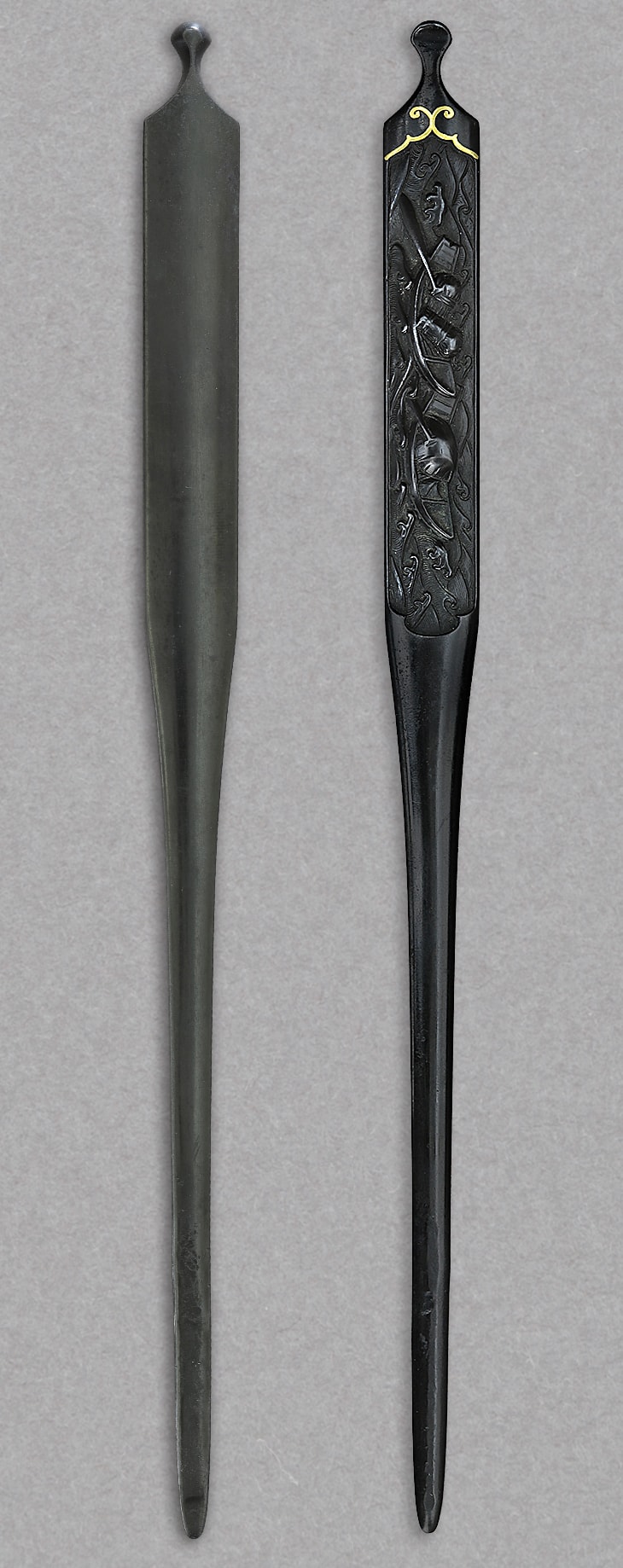
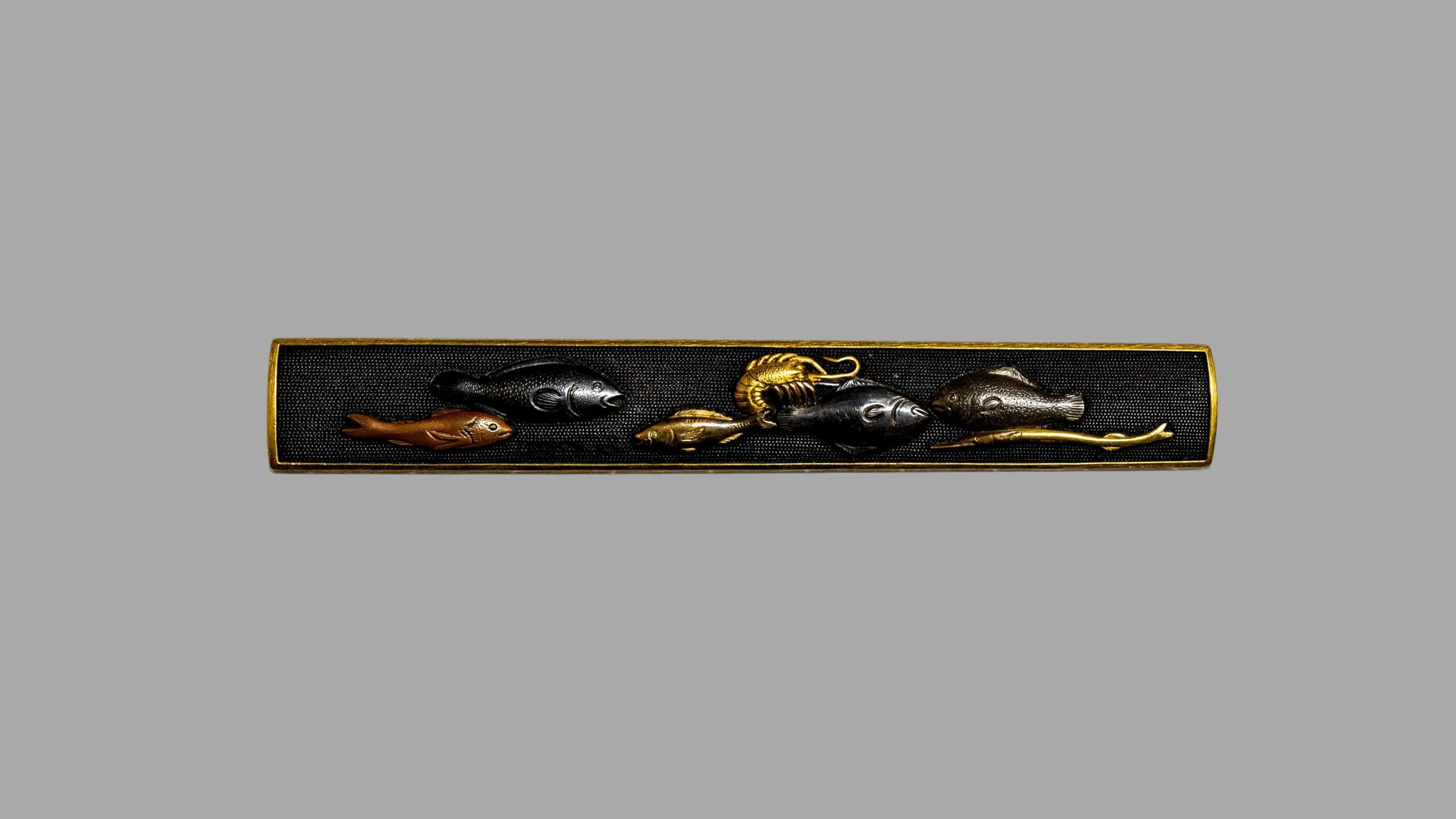
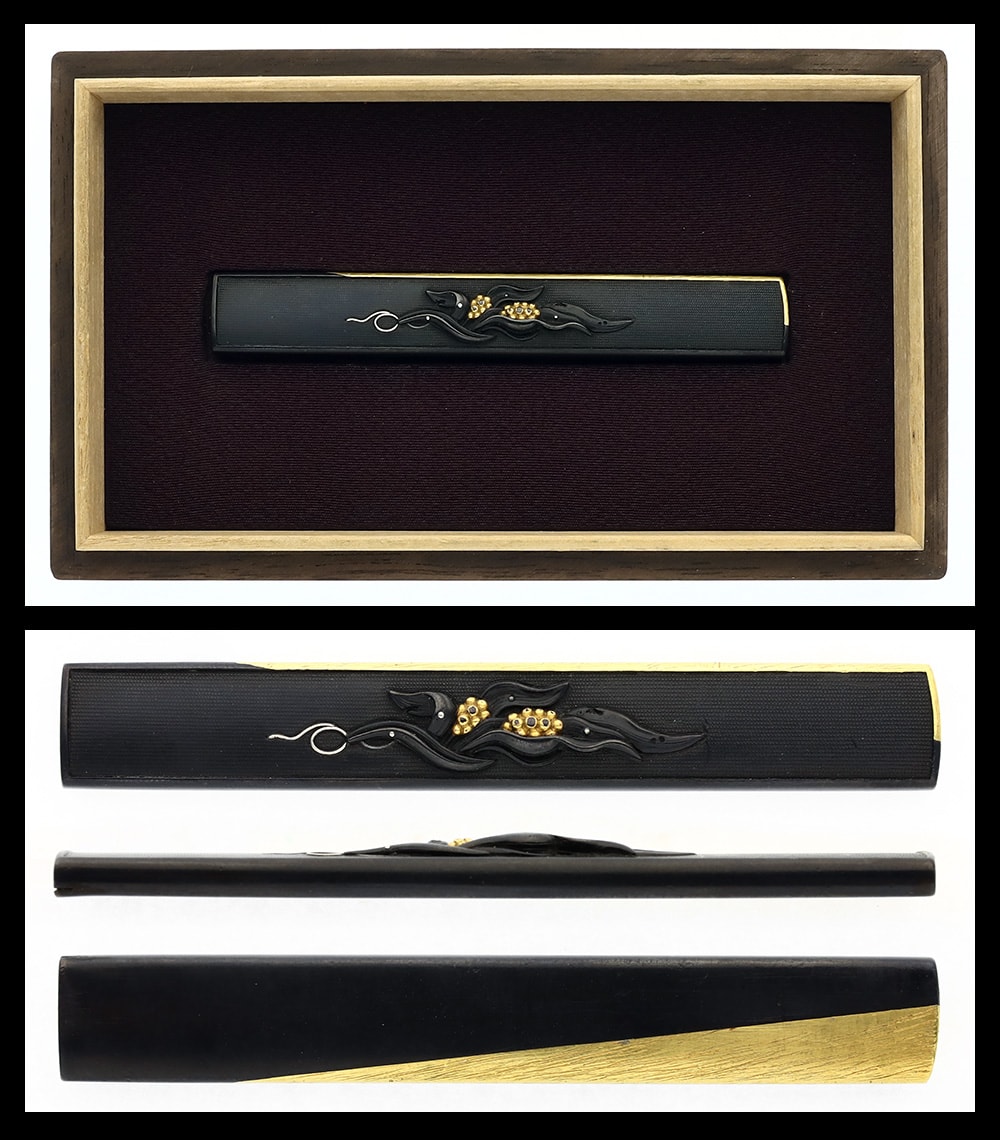
Goto Ichijo was born in Kyoto in Kansei 3 (1791) as the son of Shigejo, fourth-generation head of the Shichiroemon house, a cadet branch of the Goto family. At the age of nine he was adopted by Hachirobei Kenjo of the Goto, and at eleven he studied metal carving under Hanzaemon Kamejo. Following the death of his adoptive father, he succeeded to the headship at fifteen. His elder brother was Korejo Mitsuhiro, and his younger brother was Hisajo. He initially used the name Mitsuka, then Mitsuyuki, and later Mitsuyo. In Bunsei 7 (1824), at the age of thirty-four, he produced sword fittings for Emperor Kokaku; in recognition of this achievement he was granted the rank of Hokyo and adopted the art name Ichijo. In Bunkyu 2 (1862) he produced fittings for an imperial for Emperor , and the following year he was promoted to Hogen. He died in Meiji 9 (1876) at the age of eighty-six. The consistently characterizes him as a master craftsman who "brought the Goto lineage to a brilliant culmination," and in one notable formulation, as the artist who "adorned the shaft-end" (-ojiri) of the Goto family line.
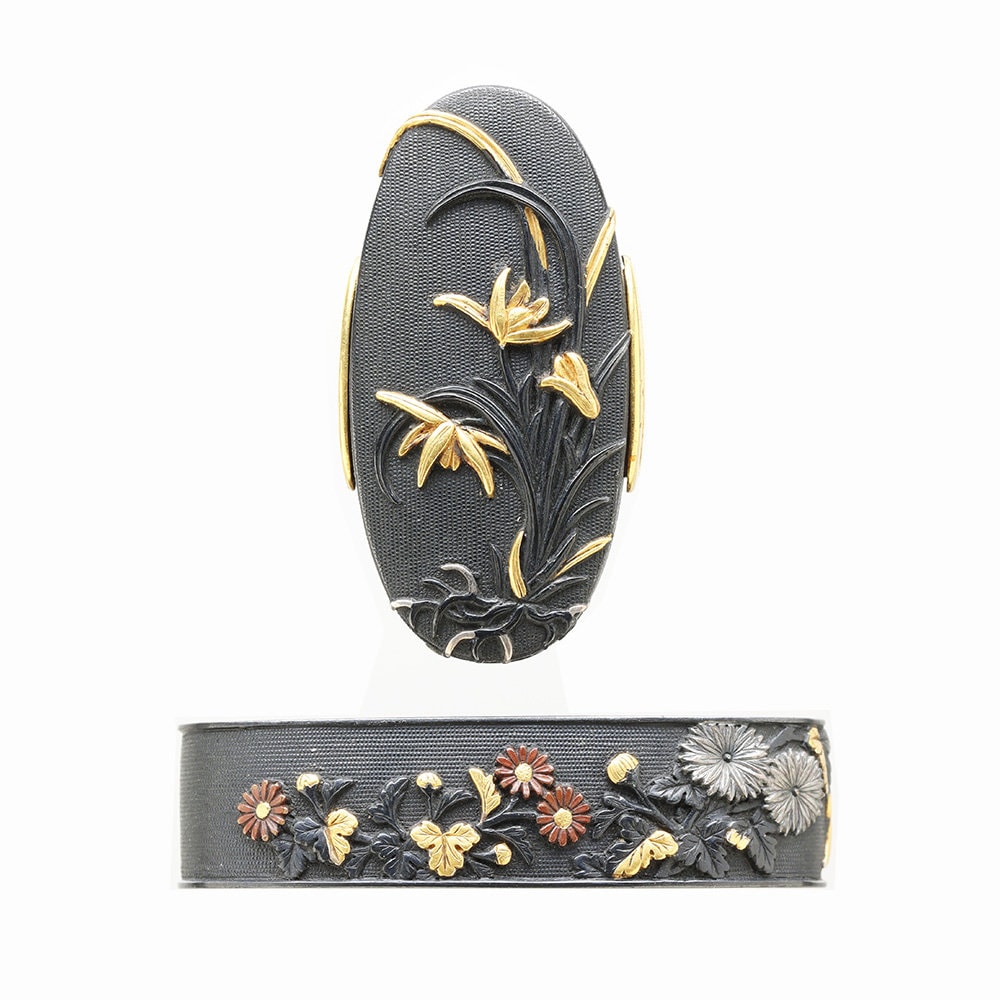
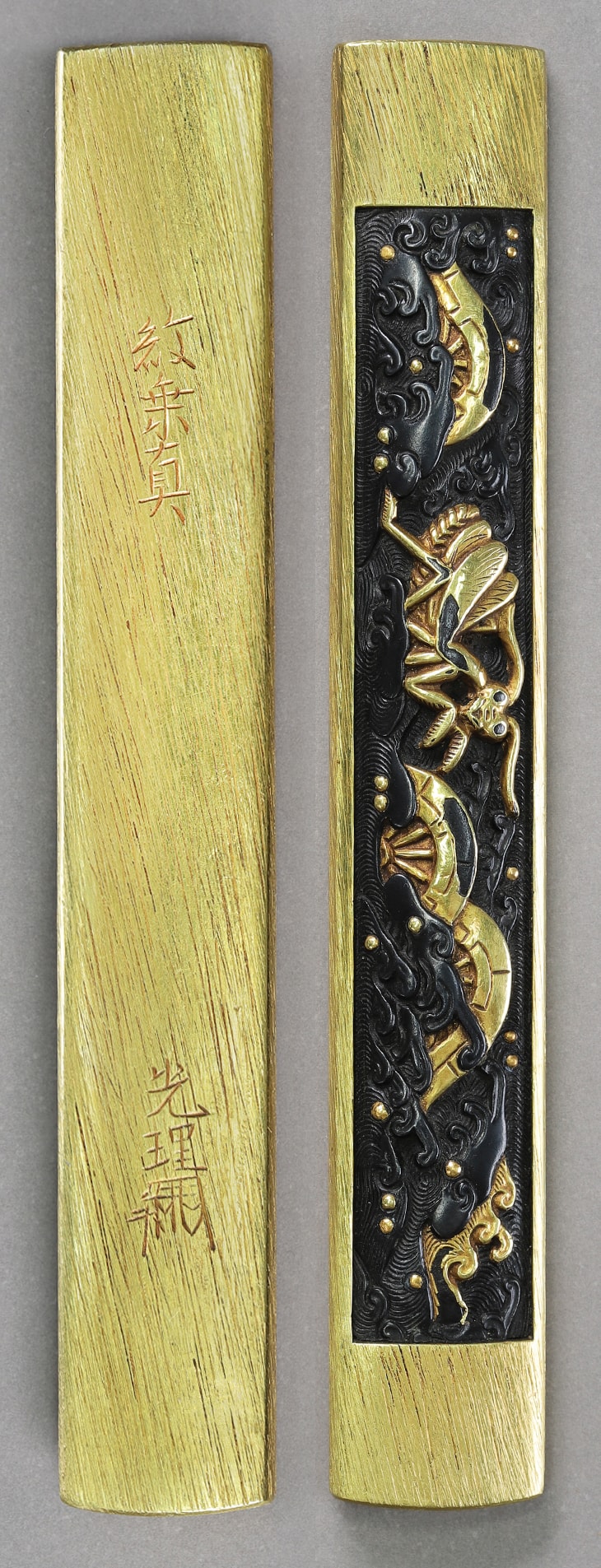
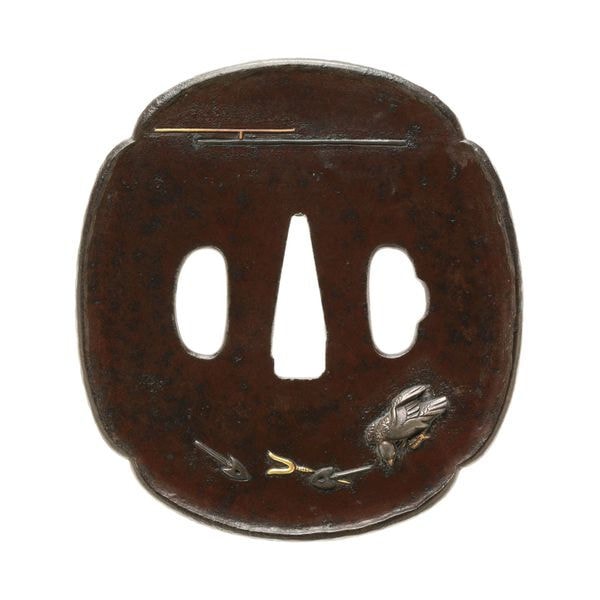
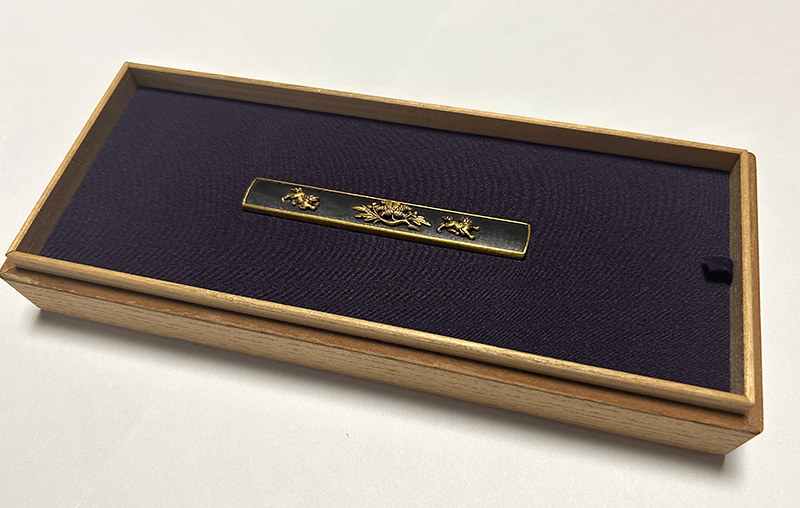
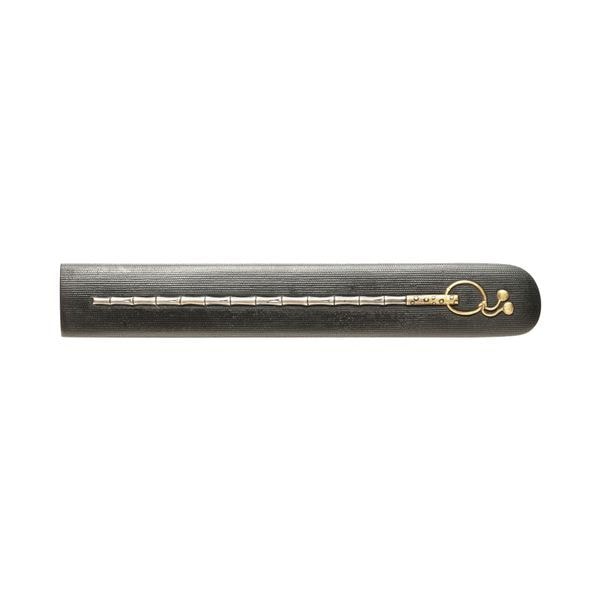
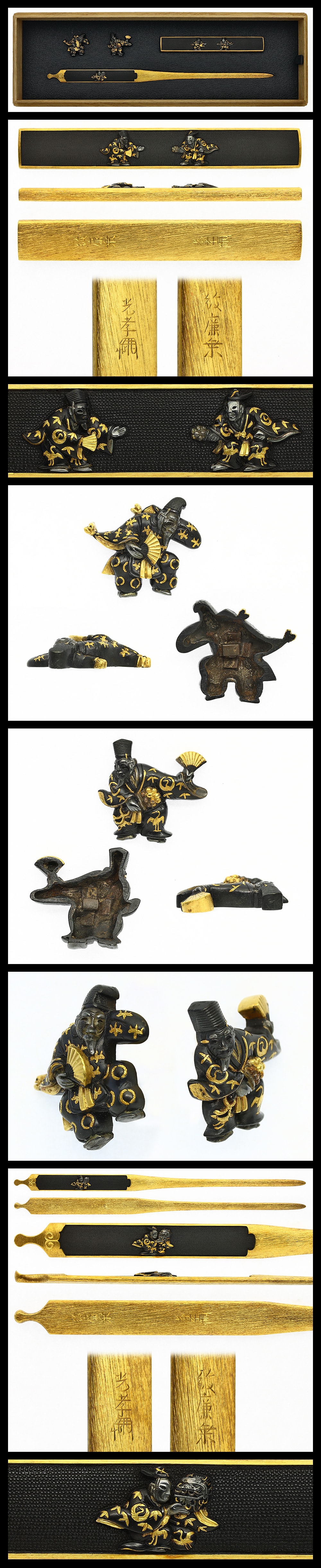
Ichijo's technical foundation rests upon the hereditary Goto manner of iebori -- canonical motifs such as dragons and lions carved in accordance with established conventions -- but "building upon this foundation, he shifted toward works centered on close observation (shasei), rendering grasses and flowers, insects, birds, landscapes, and related subjects with meticulous carving and a refined, dignified presence." His characteristic ground is of such surpassing fineness that the describes it as "minute and orderly, deep and limpid," deserving the appellation ("silk-textured "). Upon this ground he deploys that "combines strength with delicacy," enriched by polychrome in gold, silver, , , and . His favored form is the sumi-iri , and many works exhibit the chuya shitate ("day-and-night" construction) using contrasting alloys on obverse and reverse. Beyond , he commanded an exceptional range of materials: refined copper () for which he is renowned, high-quality approaching silver in tone, and iron grounds animated by his distinctive -sunago . He frequently engraved or Classical Chinese verses in on reverse plates, reinforcing the literati character of his themes. His characteristic and -style split signatures appear across , mitsudogu, and complete soroe sets, testifying to the comprehensive scope of his production.
The evaluations return repeatedly to the union of minute finish and elevated dignity as Ichijo's defining quality. Works from the Kaei era, when he was in his late fifties, "frequently display this combination of meticulousness and elevated tone," and the committee observes that "while it is often said that excessive minuteness can dilute artistic tone and dignity, Ichijo -- true to his stature -- achieves both minute finish and high dignity, permitting no rival." Even at seventy-seven, his capacity to produce work of the highest caliber was "worthy of deep admiration, attesting both to the height of his technique and to his vigor." His handling of the Goto iebori heritage is judged to have been "sublimated into a more modern sensibility," and the dignity of his finest pieces is said to lie "far beyond the reach of other craftsmen." In summation, Ichijo stands as the terminal master of the Goto tradition, an artist whose works embody what the calls "outstanding color sensibility" and whose command of the full repertoire of metalworking techniques -- , , kosuki-bori, , and polychrome -- sustained the ancestral standard across a career spanning more than seven decades.