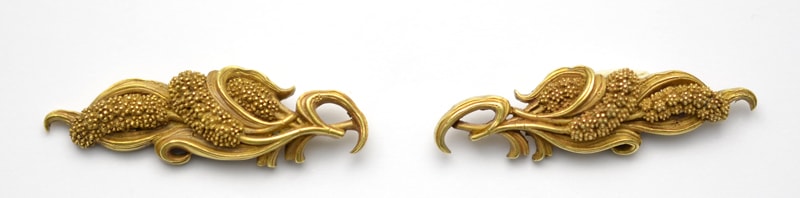
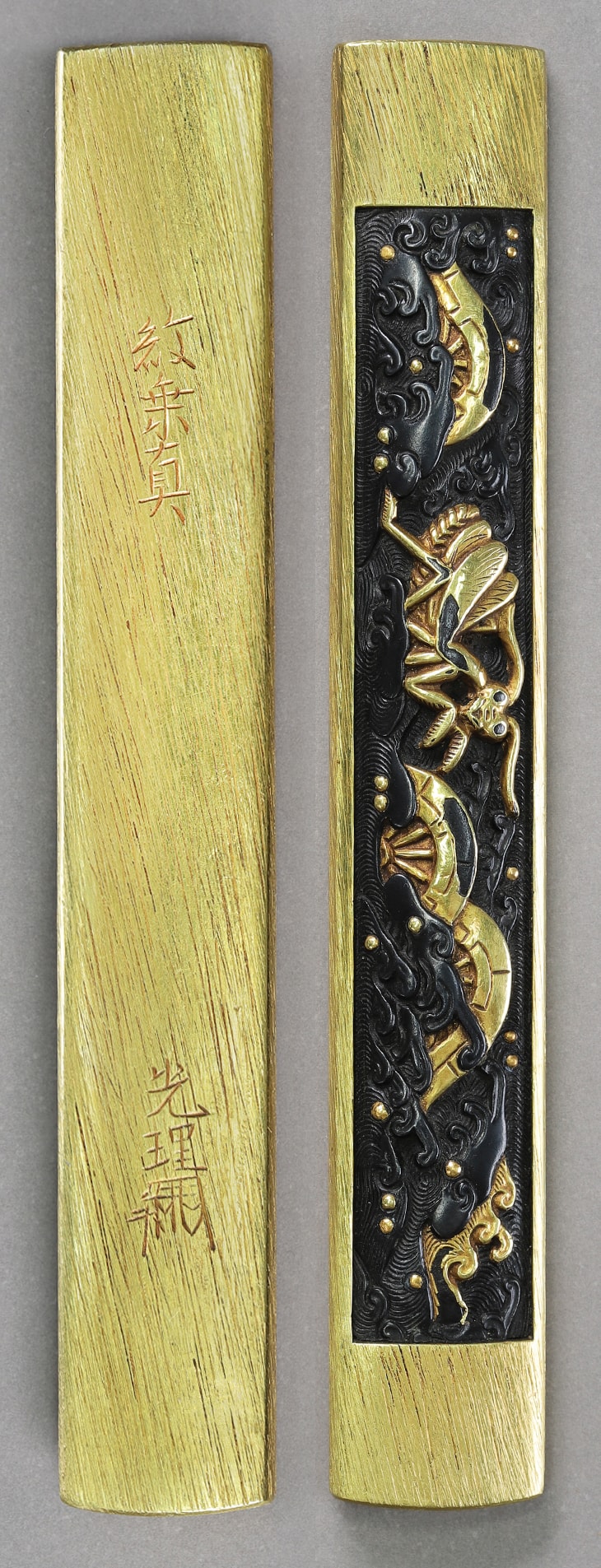
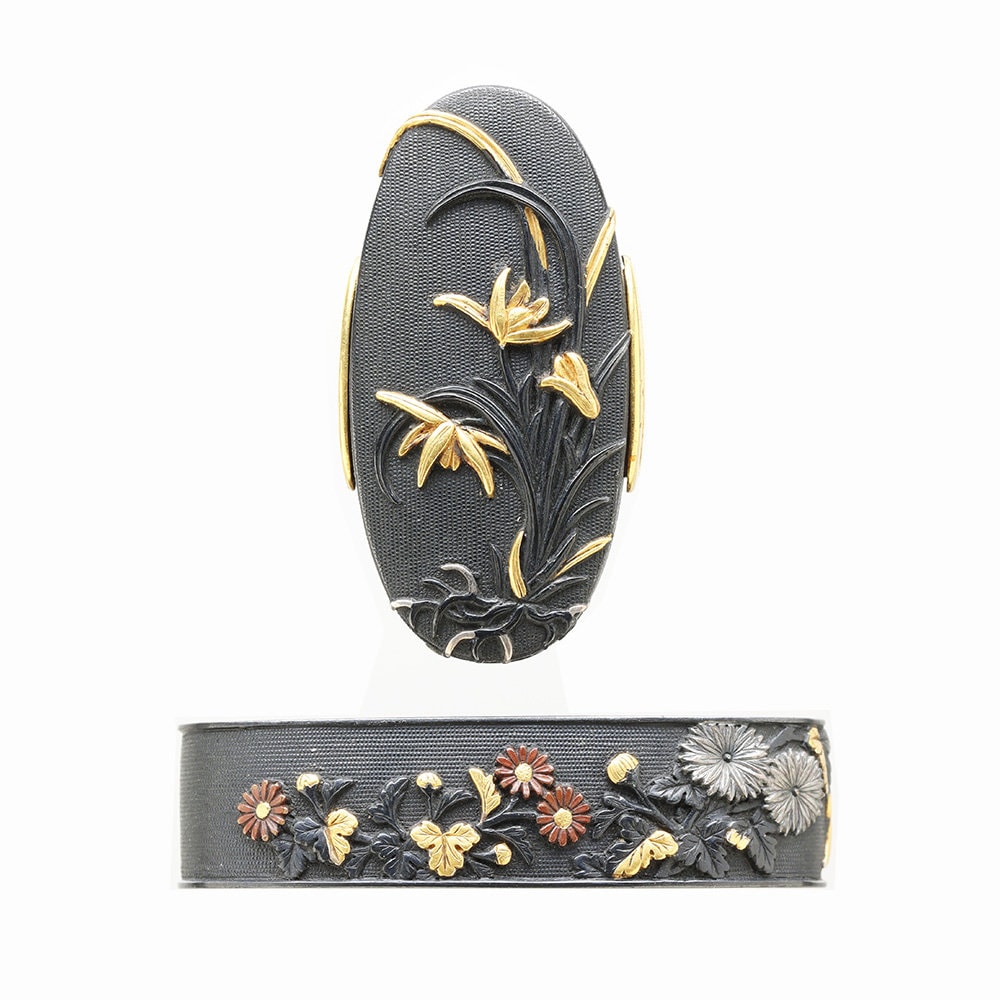
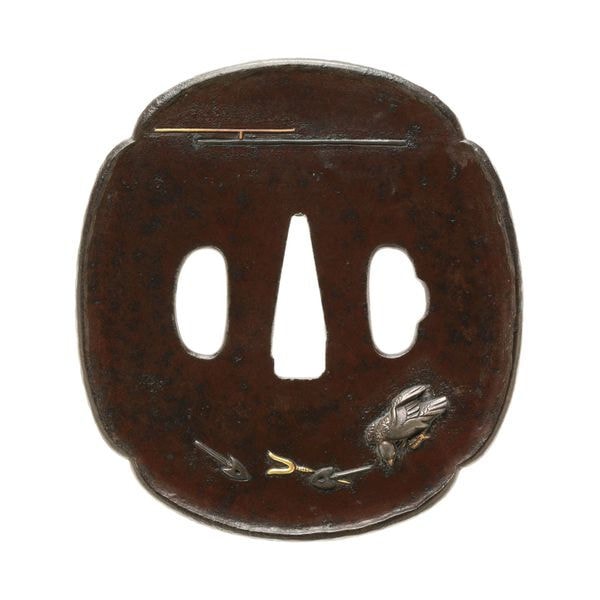
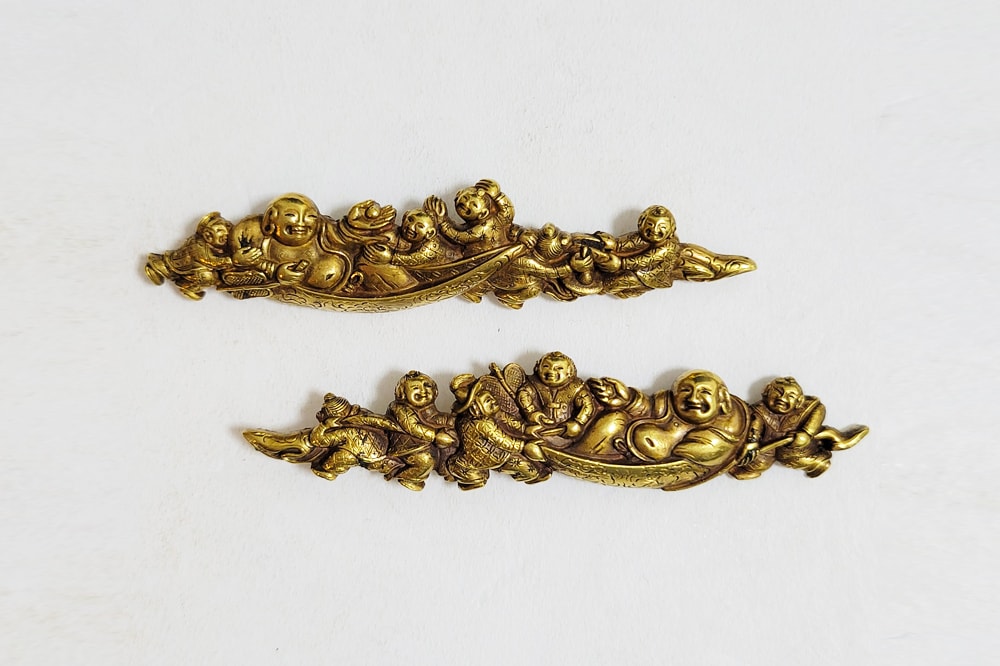
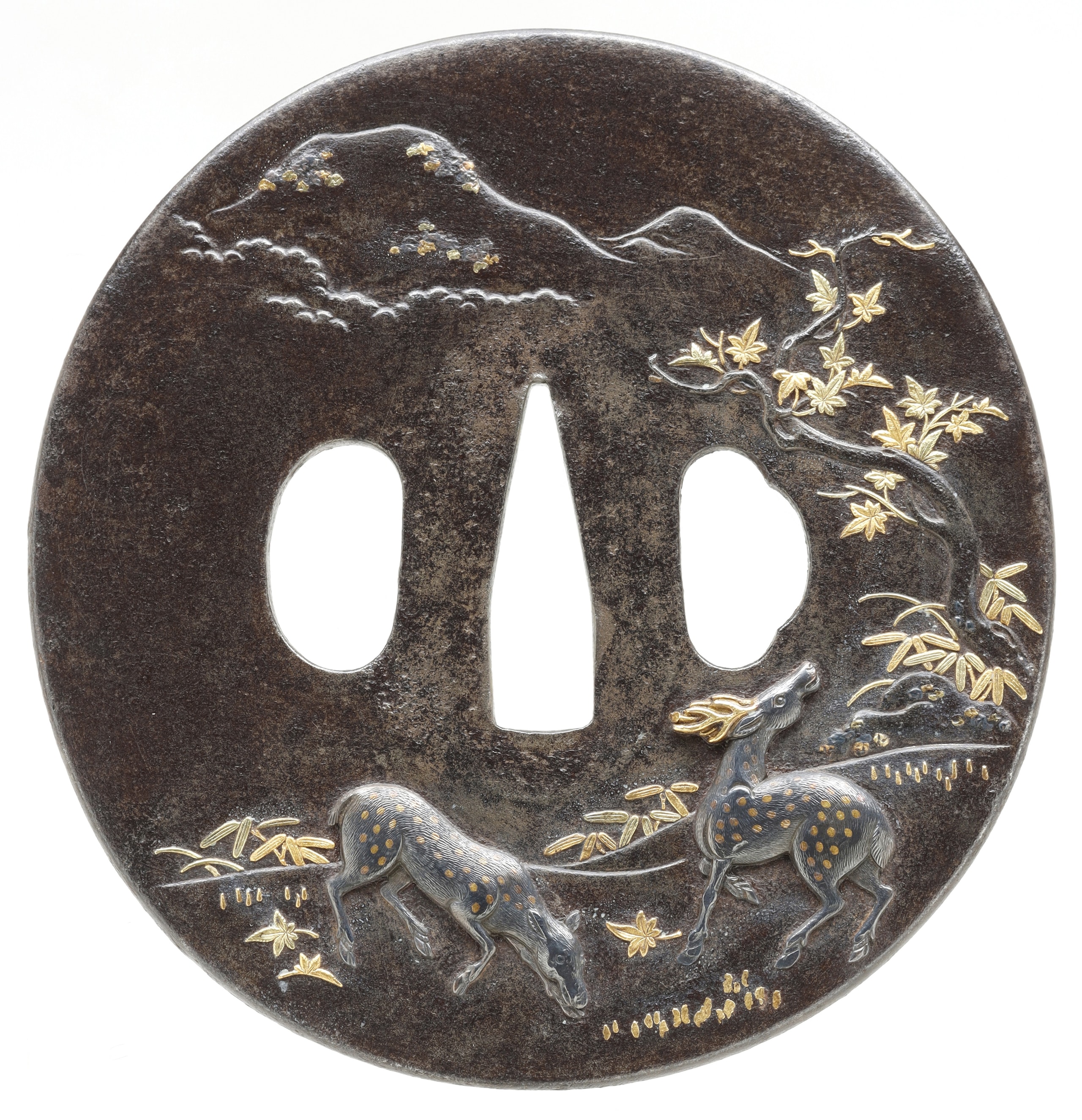
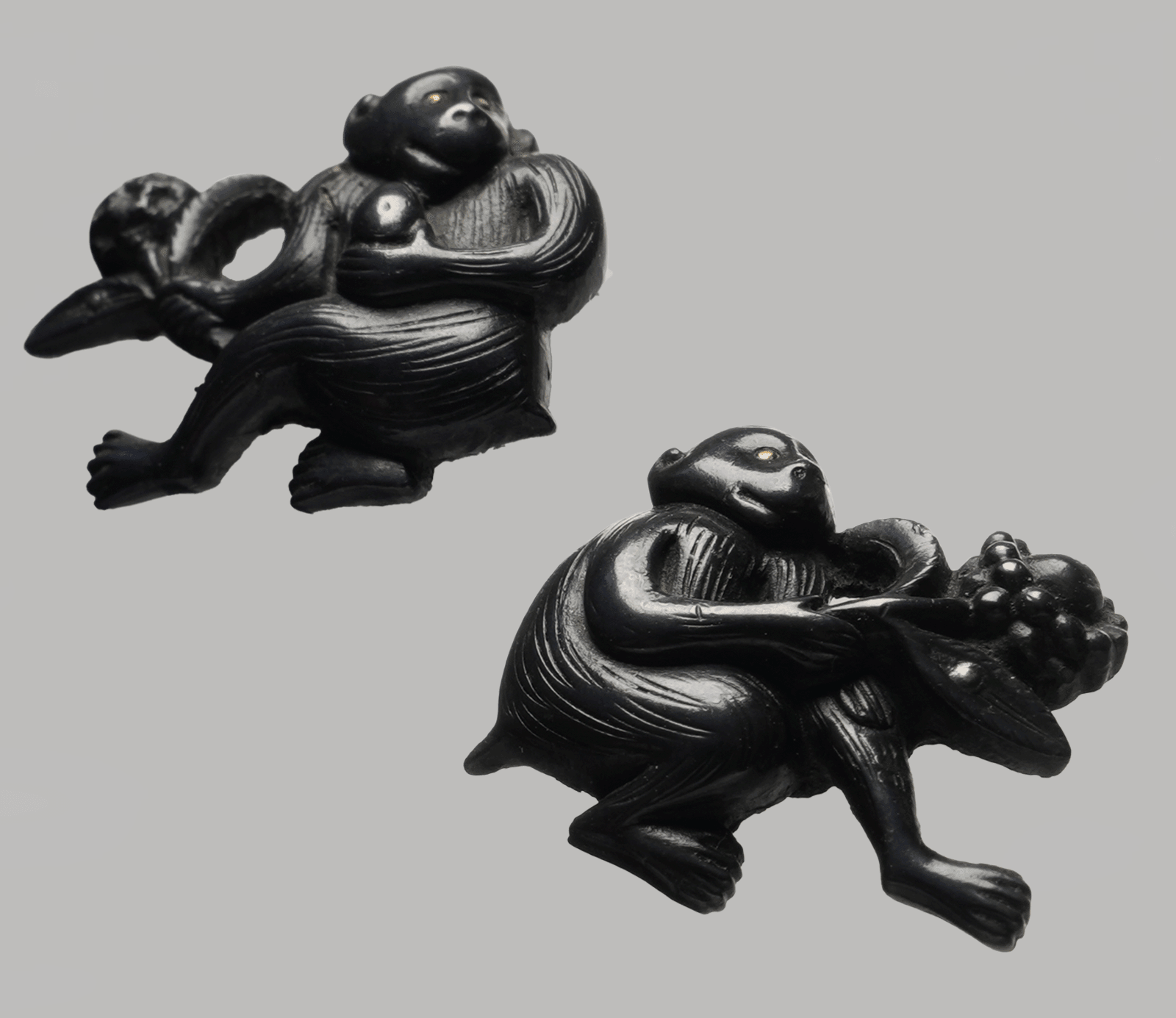
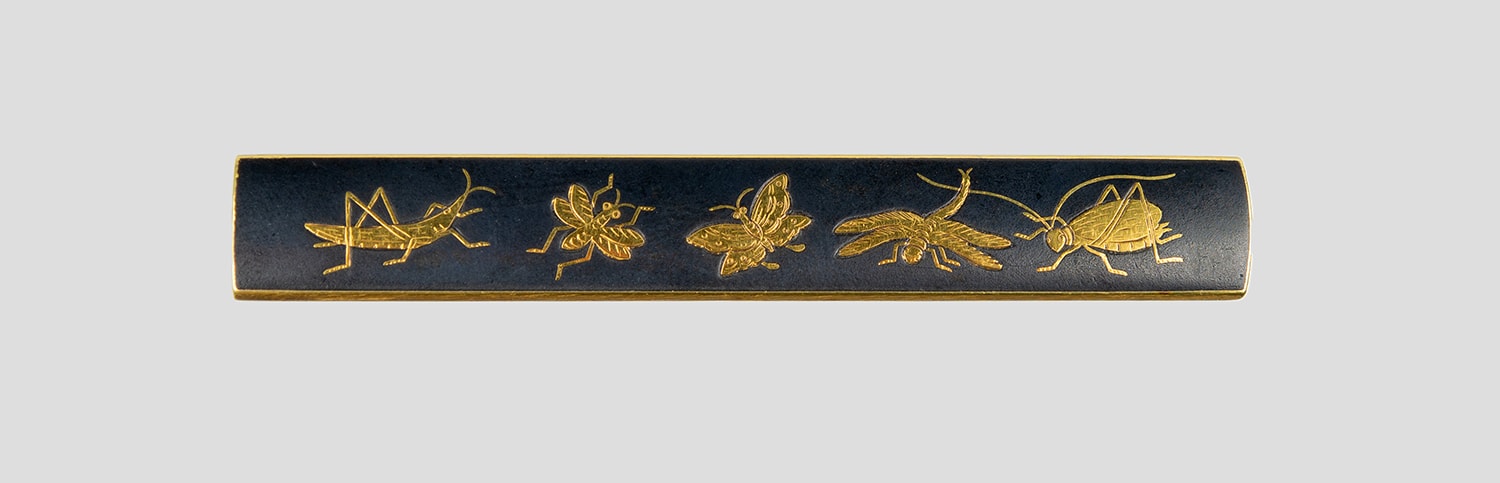
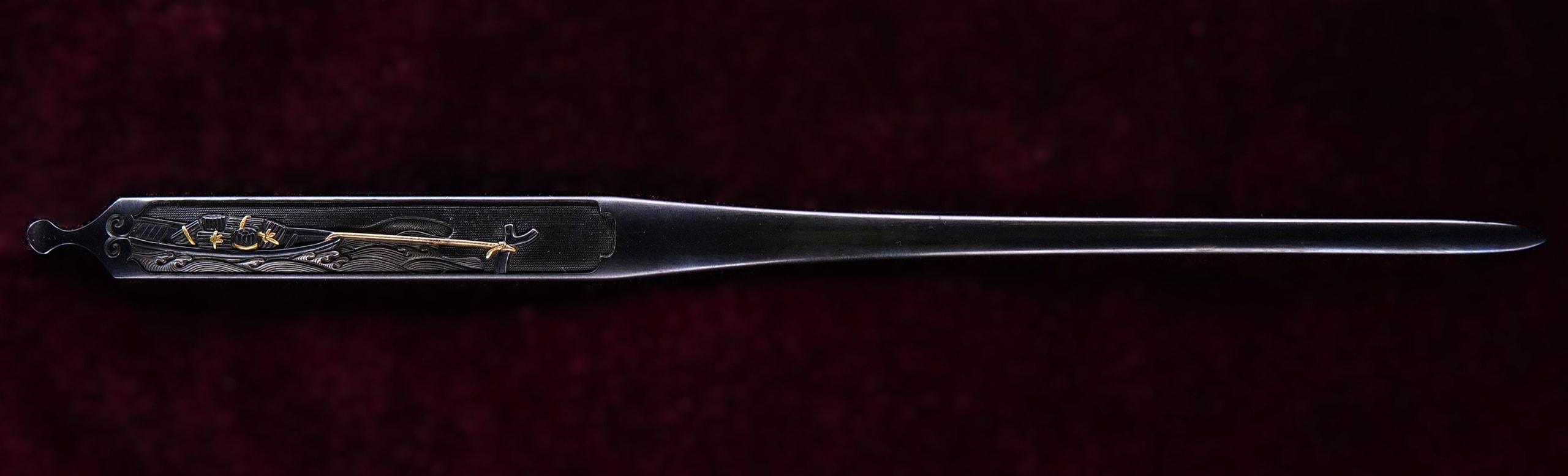
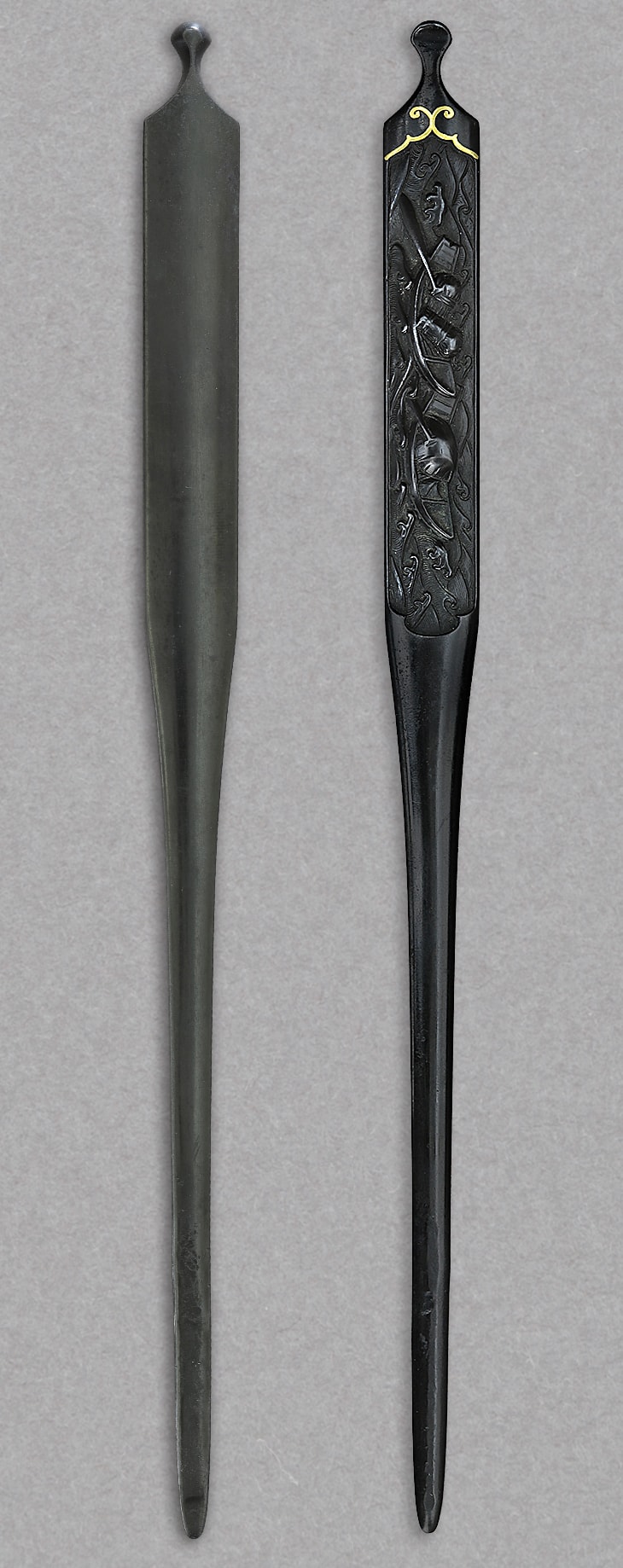
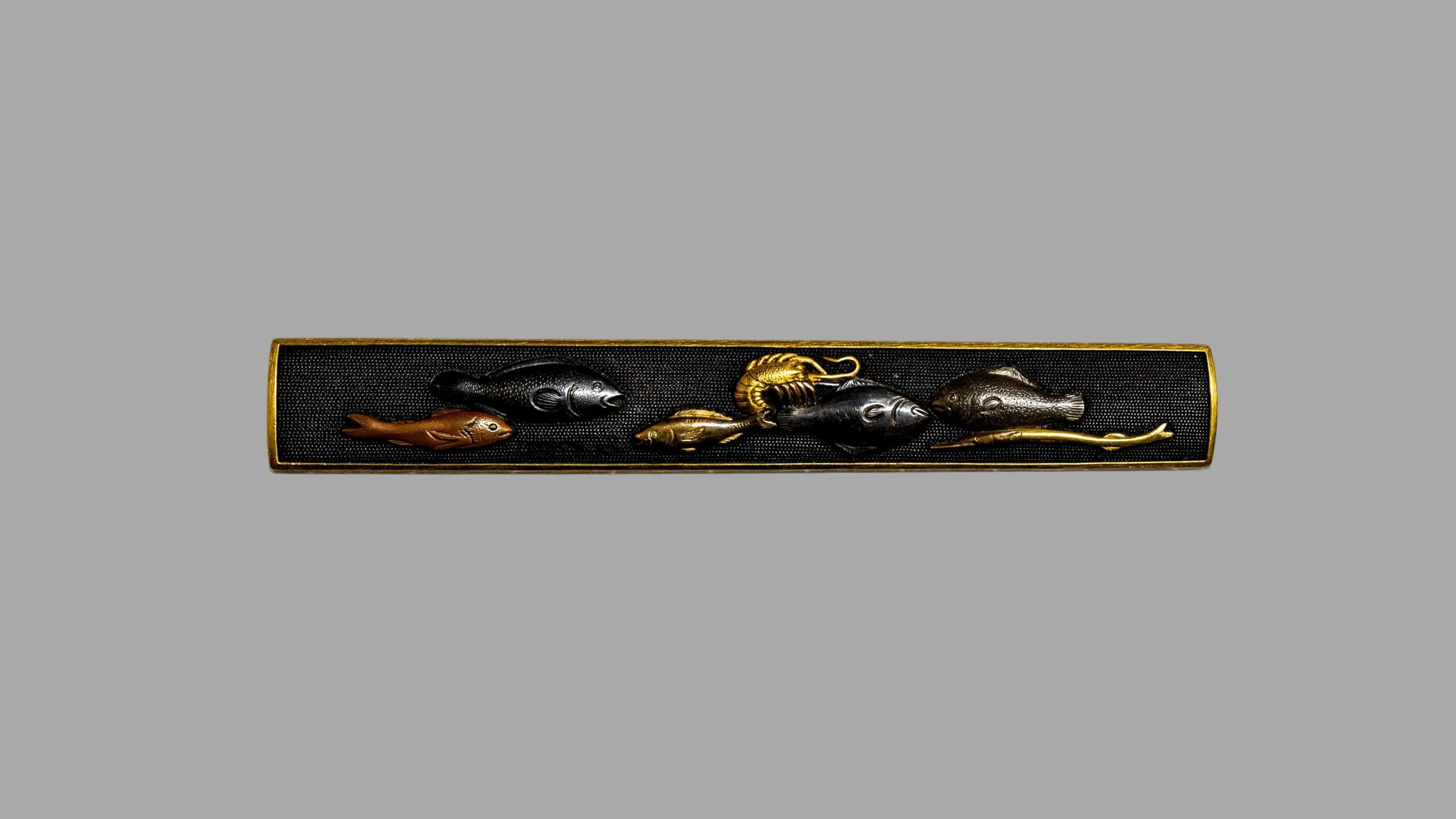
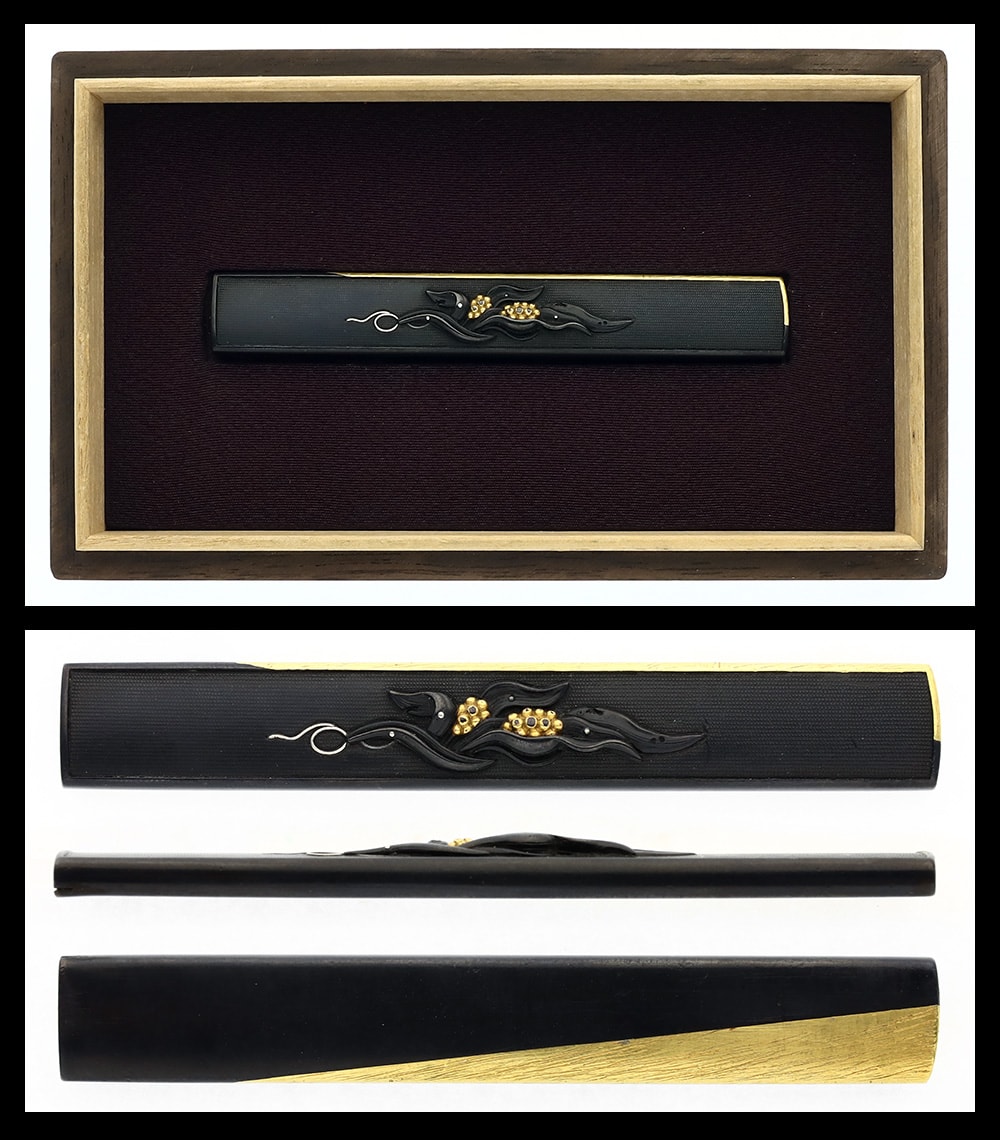
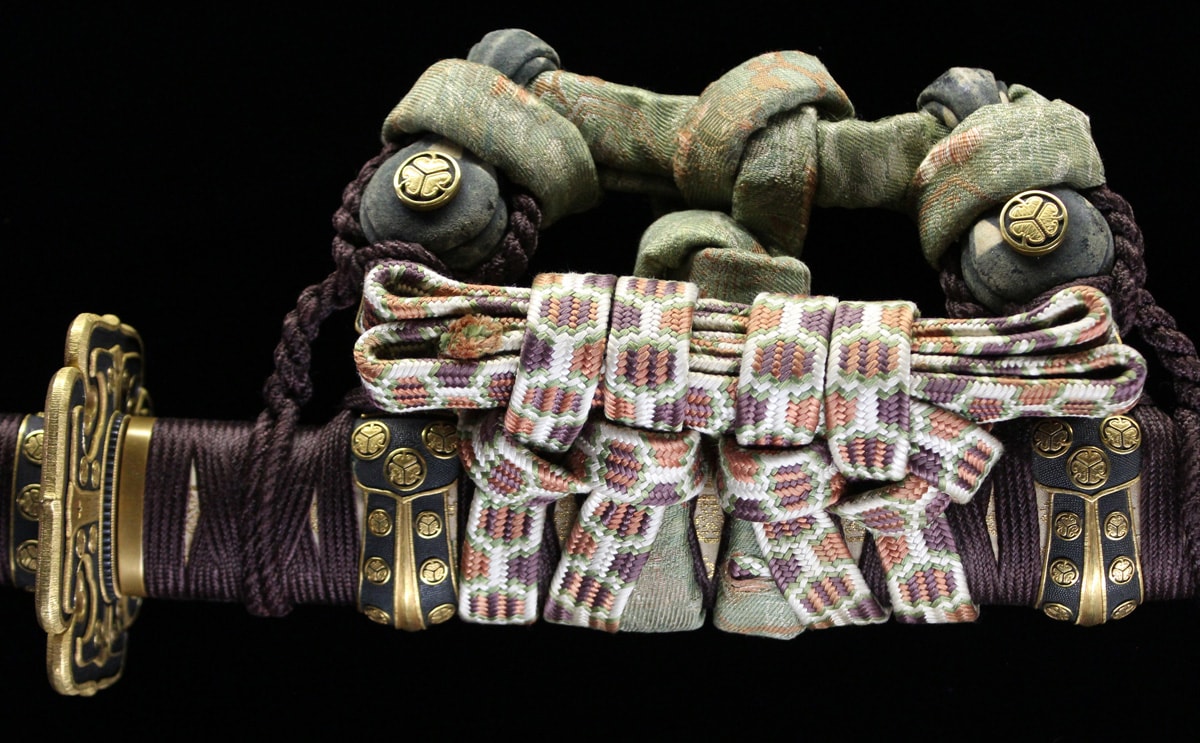
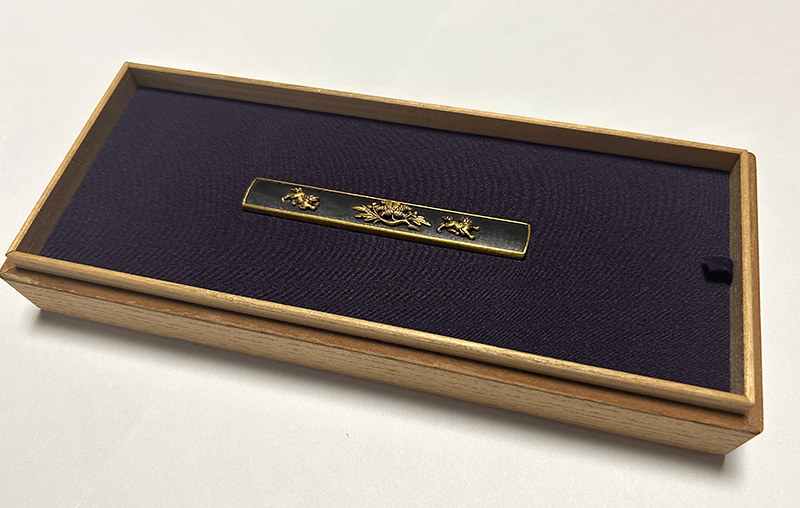
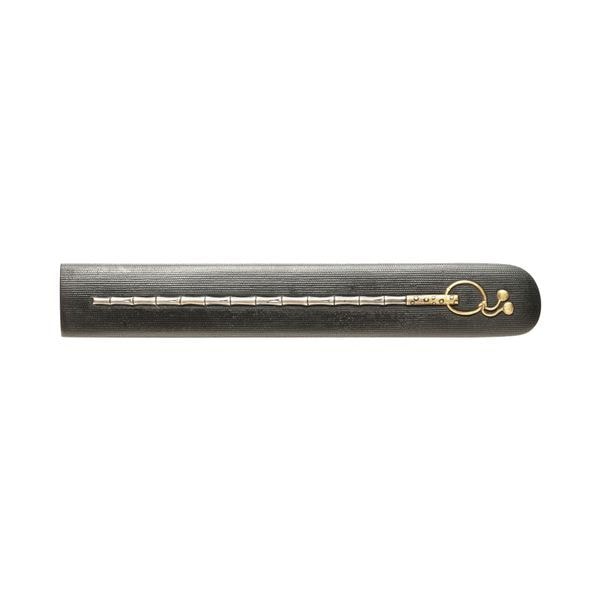
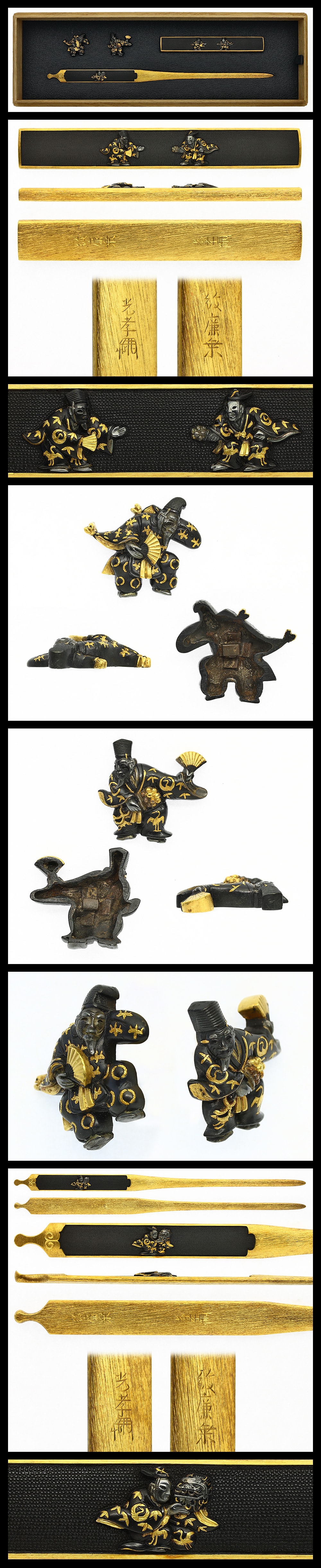
Funada Ikkin was born in Shonai in Dewa Province, the son of Funada Hirotsune, himself a pupil of Iwamoto Kanri. In Bunsei 9 (1826), at the age of fifteen, Ikkin went to and studied under Kumagai Yoshiyuki before entering the school of Goto Ichijo in Bunsei 11 (1828), where he trained for seven years in Kyoto. He then returned to , established himself independently, and became a retained artisan of the Sakai family of Shonai. He died in Bunkyu 3 (1863) at the age of fifty-two. The consistently identifies him as "one of the foremost disciples" within the circle of Goto Ichijo, a position reinforced across multiple designations that place him at the summit of Ichijo's school.
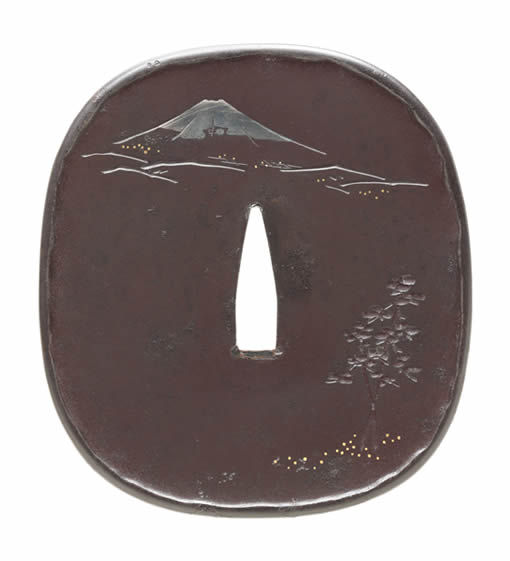
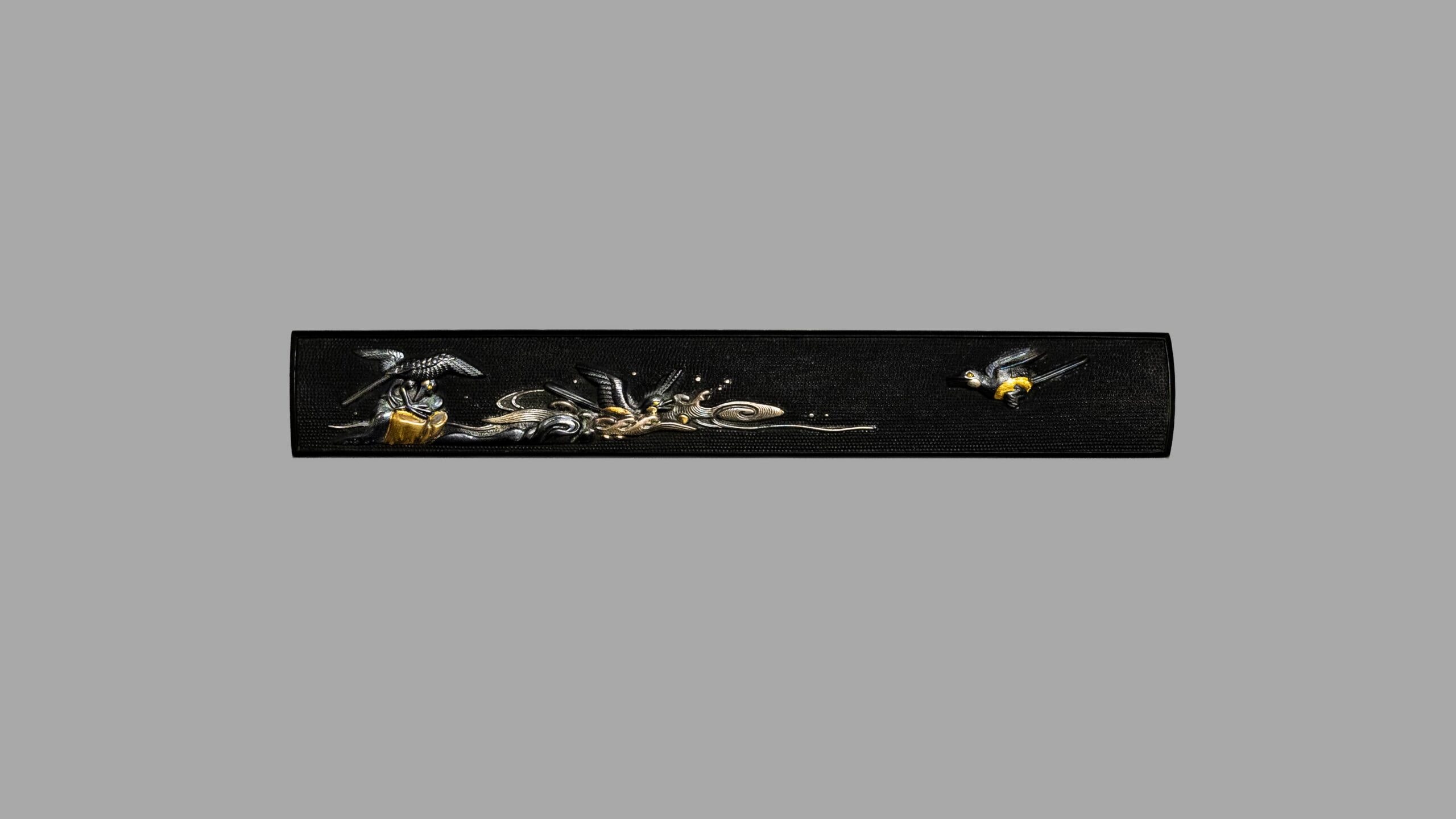
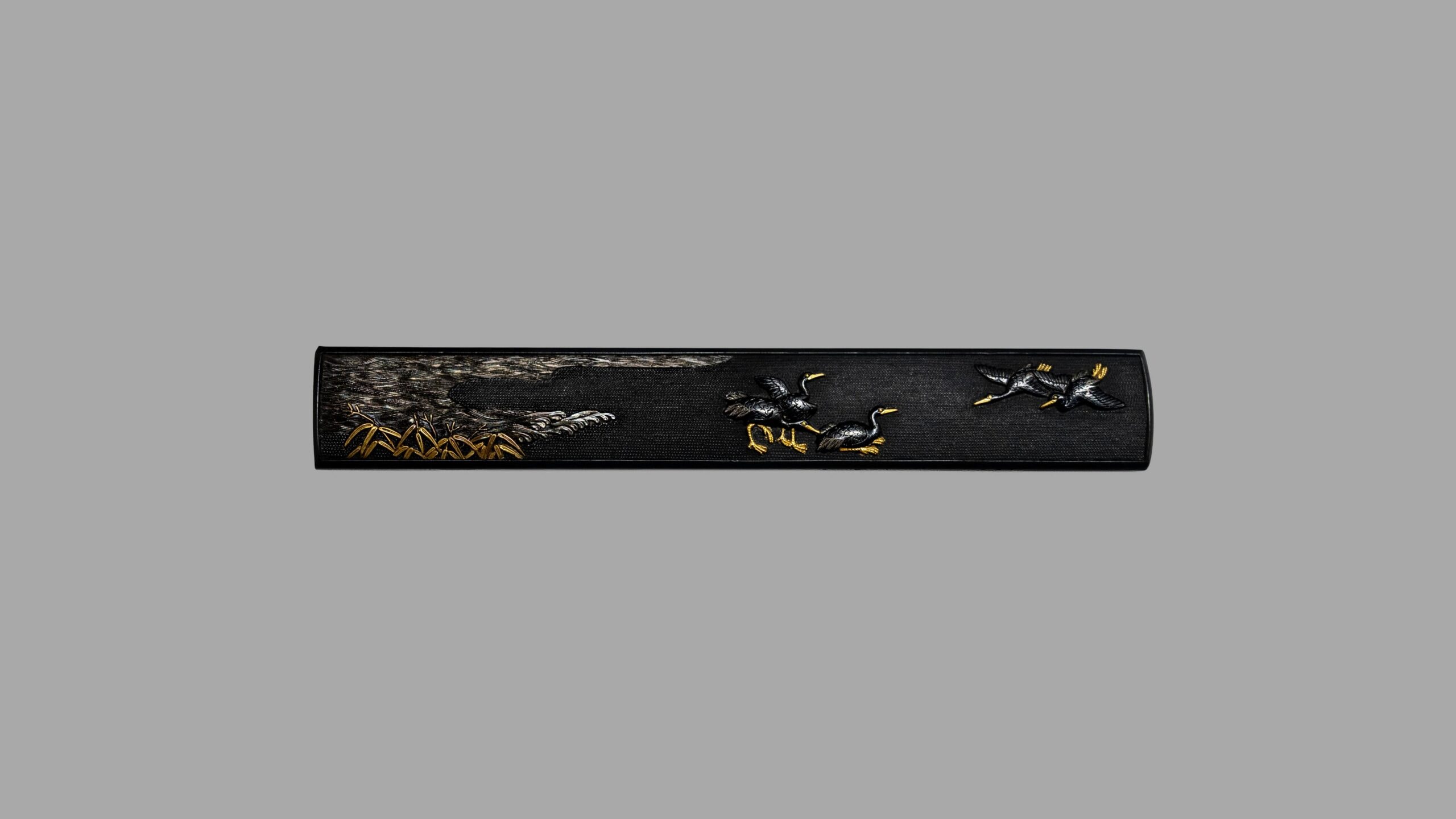
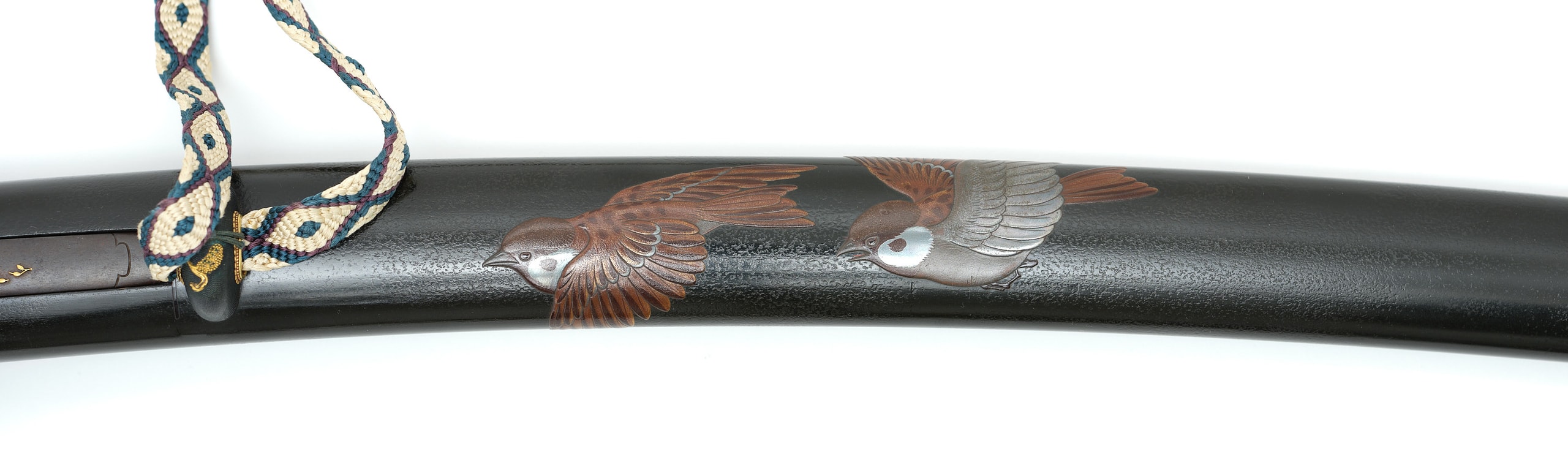
Ikkin was highly proficient in both and , but it is in kosuki-bori that his reputation is singular: in this technique "he admitted no rival," and even his teacher Ichijo is said to have lamented that "kosuki-bori is beyond my own reach." His work on ground -- whether or -- demonstrates precise control of depth and shallowness in the carving, and his application of gold and silver - and is repeatedly described as deft and accomplished. He favored traditional subjects of the Goto house, rendering the (Four Gentlemen) and the crawling dragon -- a canonical okagei motif -- with an inventive, distinctive expression that nonetheless honors the lineage from which it springs.
The 's evaluations return consistently to a vocabulary of power tempered by refinement. His dragon sansho-mono is called "a dignified, forceful work in which Ikkin's vigor and commanding spirit are fully evident," while his sets are praised for "a clear, refined elegance." Of his depicting the Wago-, the assessment is direct: "a painstaking work demonstrating the highest level of skill among the disciples of Goto Ichijo." The recurring judgment that his ability "comes very close to rivalling his master" places Funada Ikkin at the foremost rank of late tosogu artists working within the Ichijo tradition.