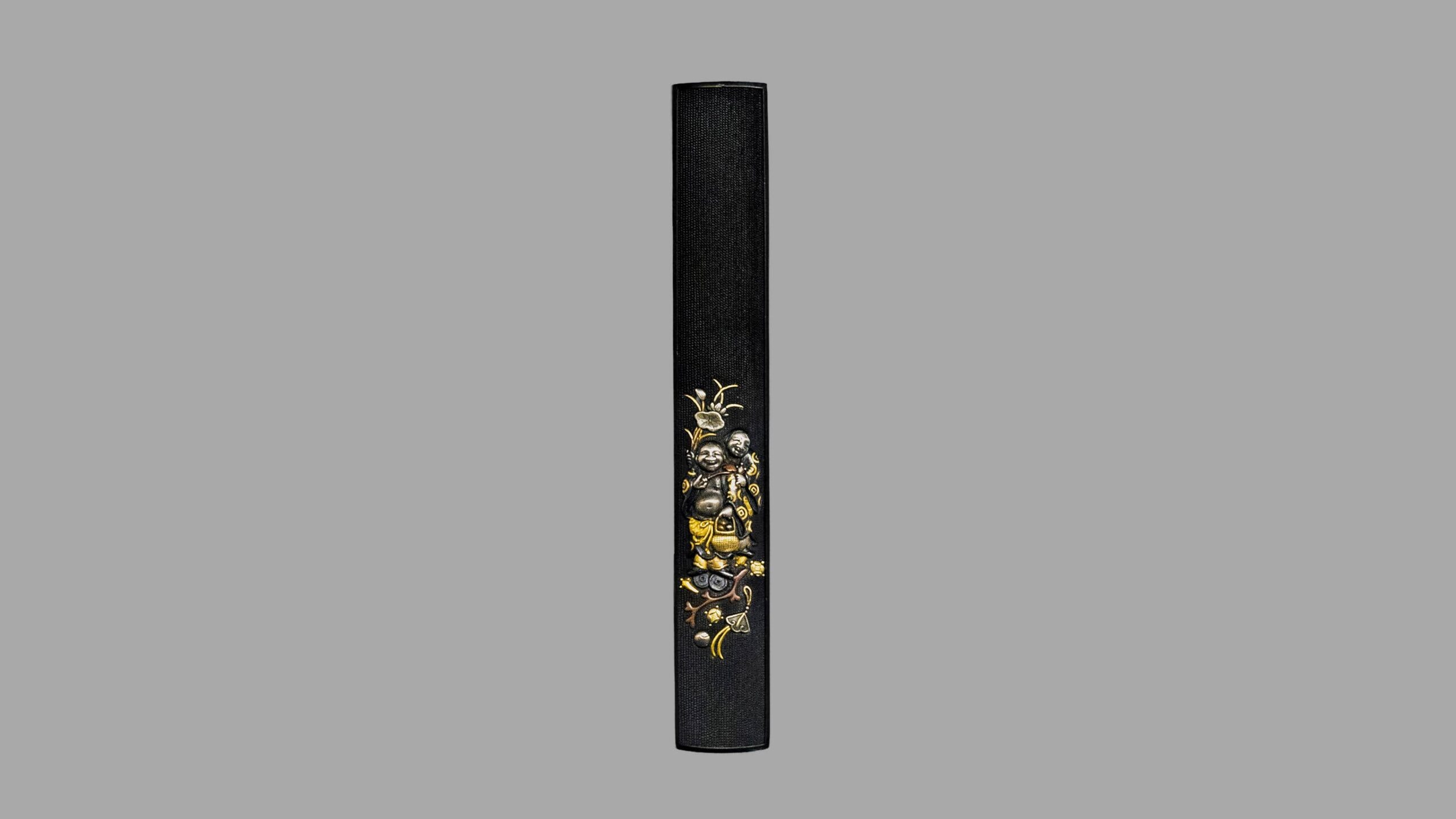
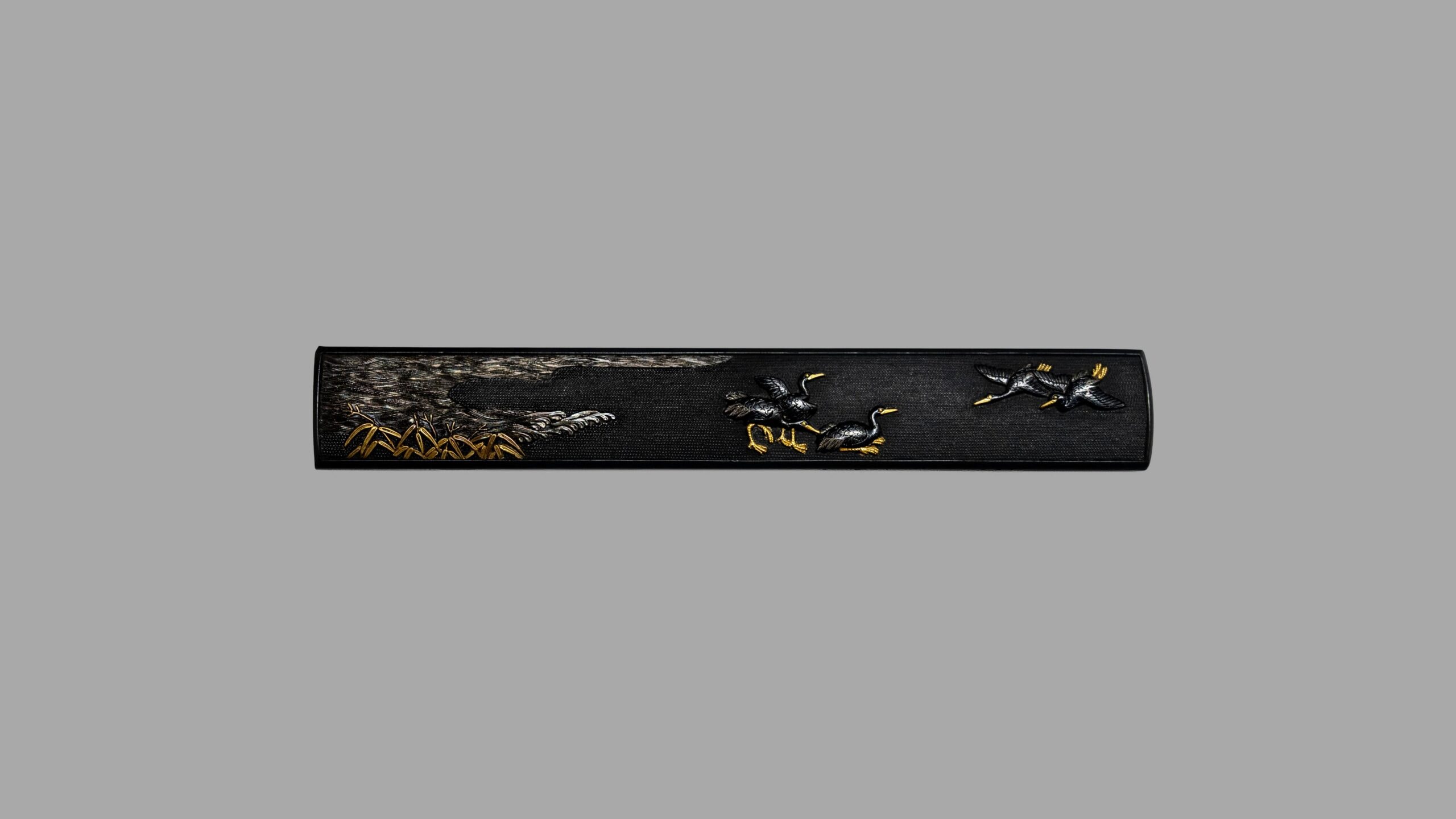
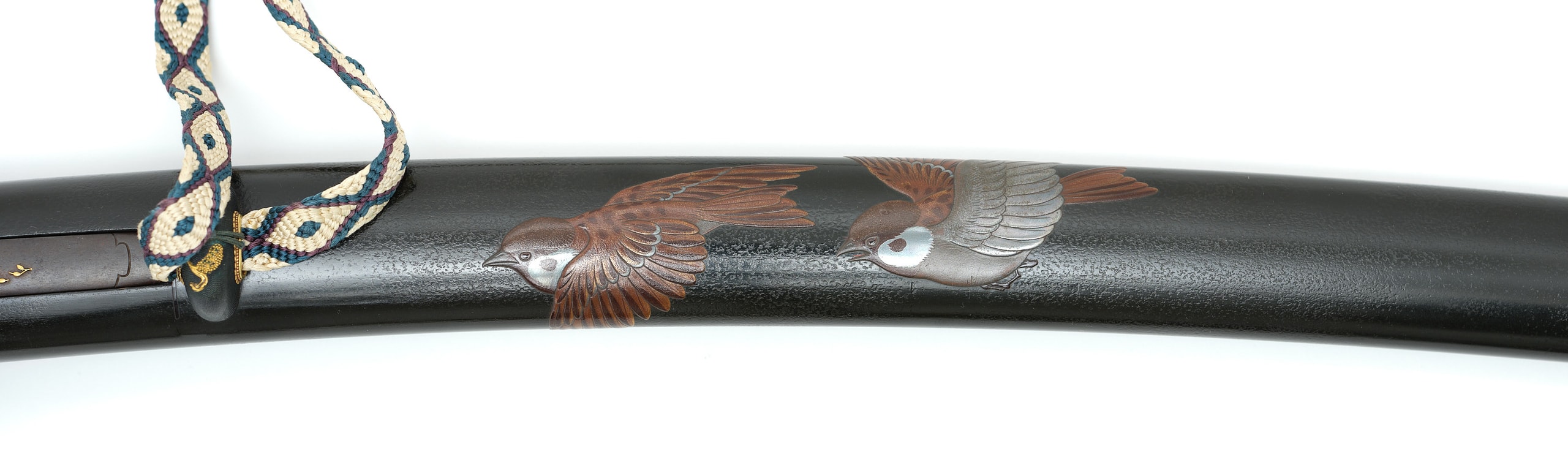
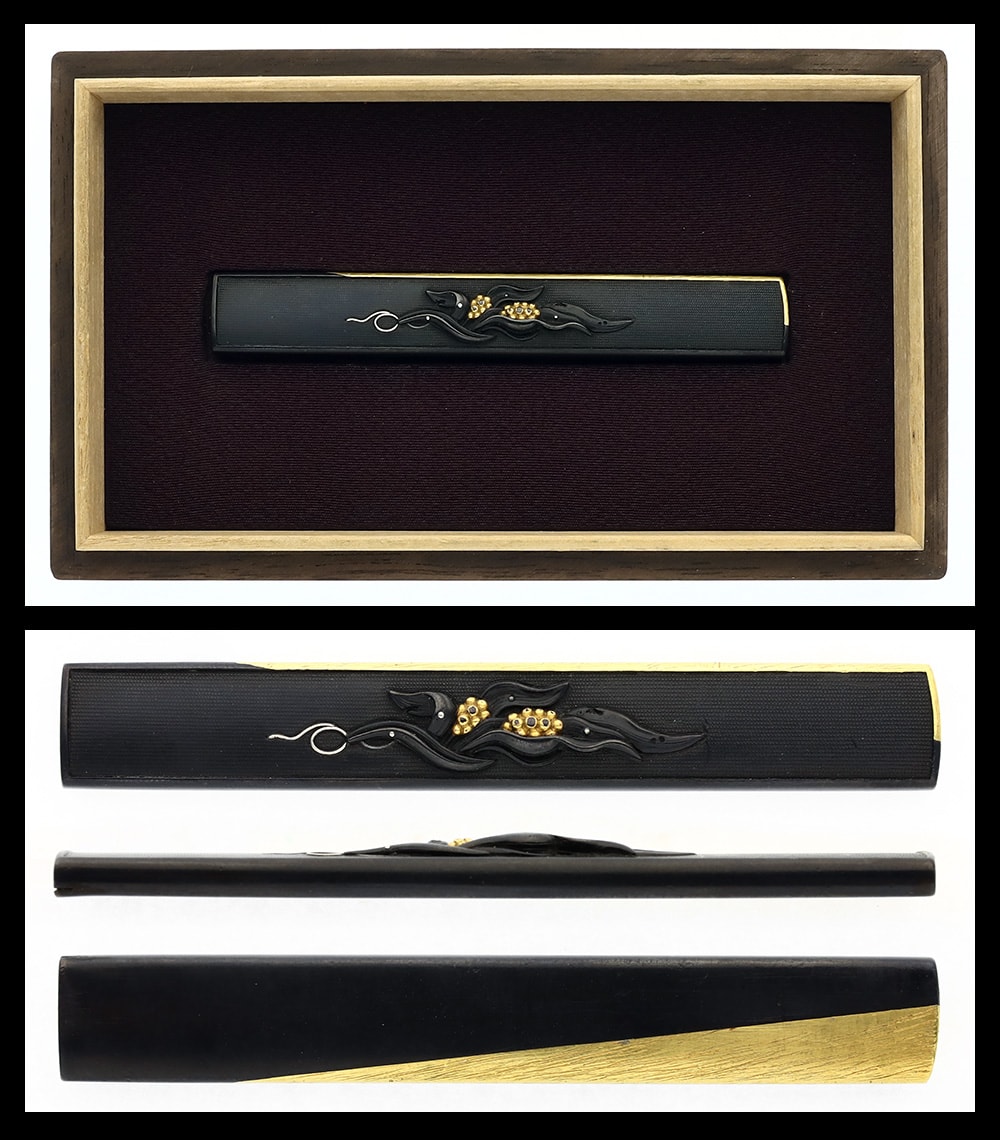
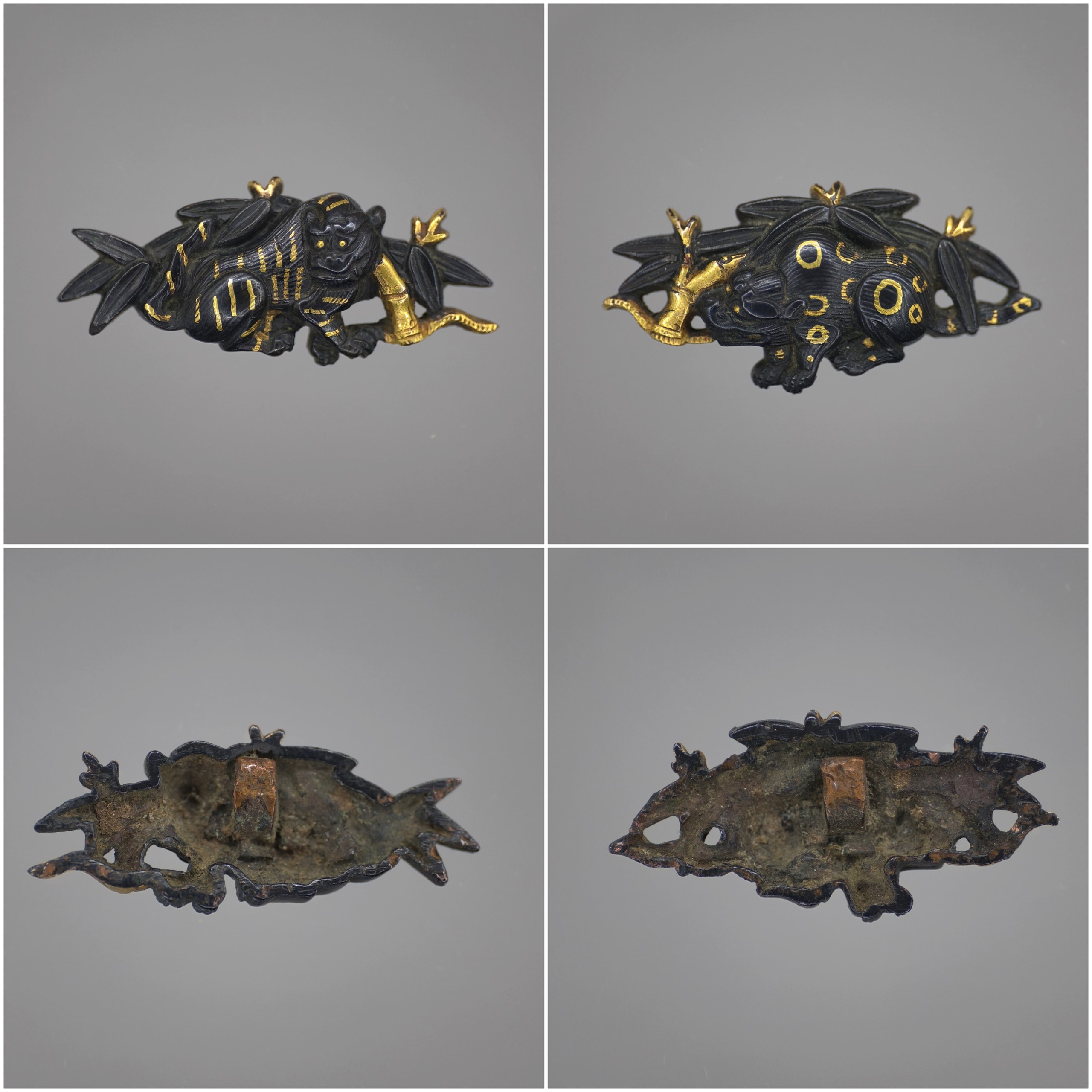
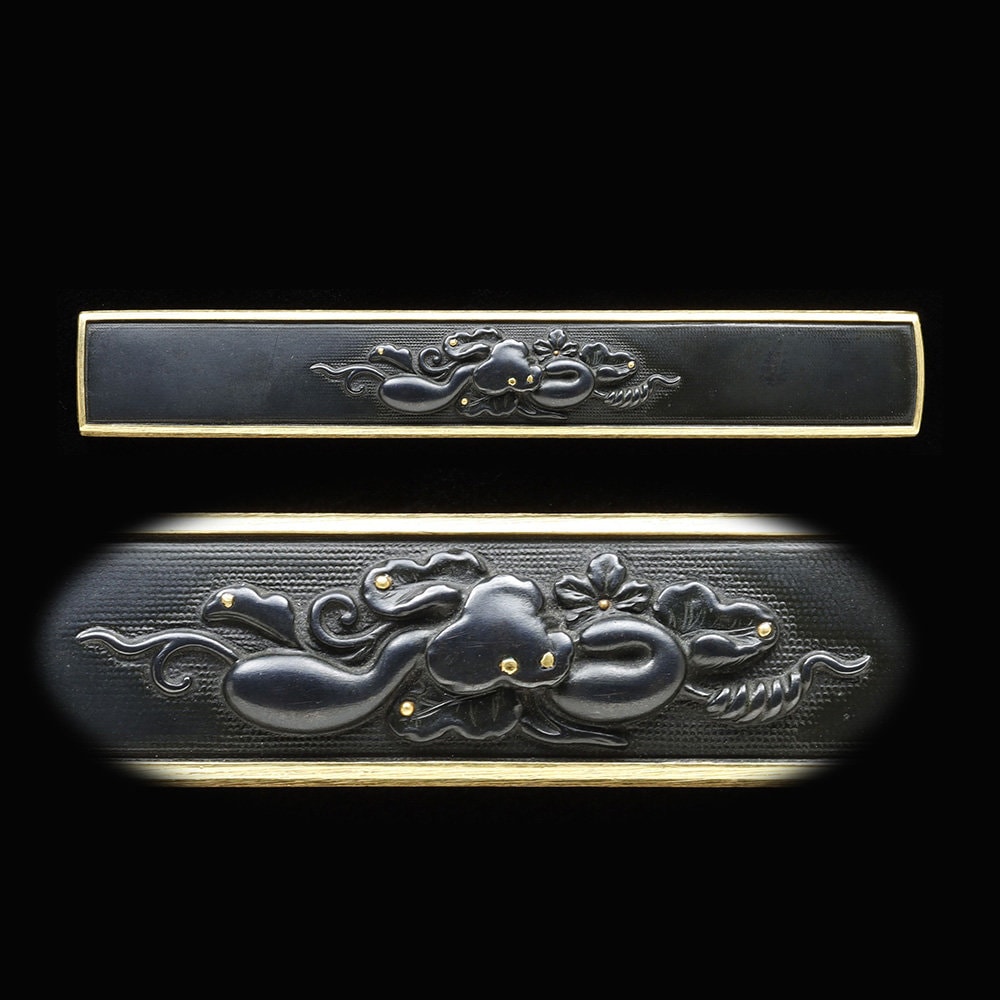
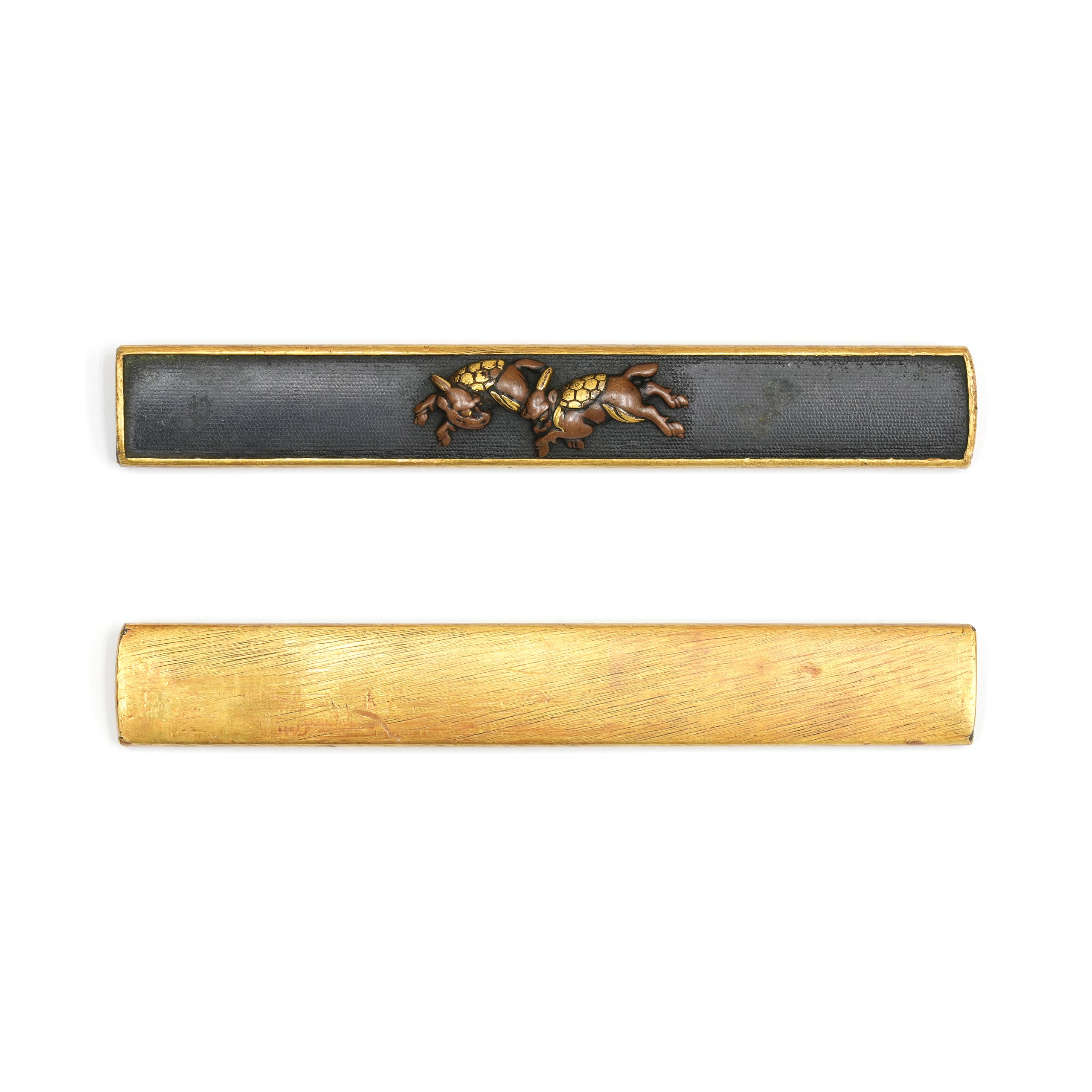
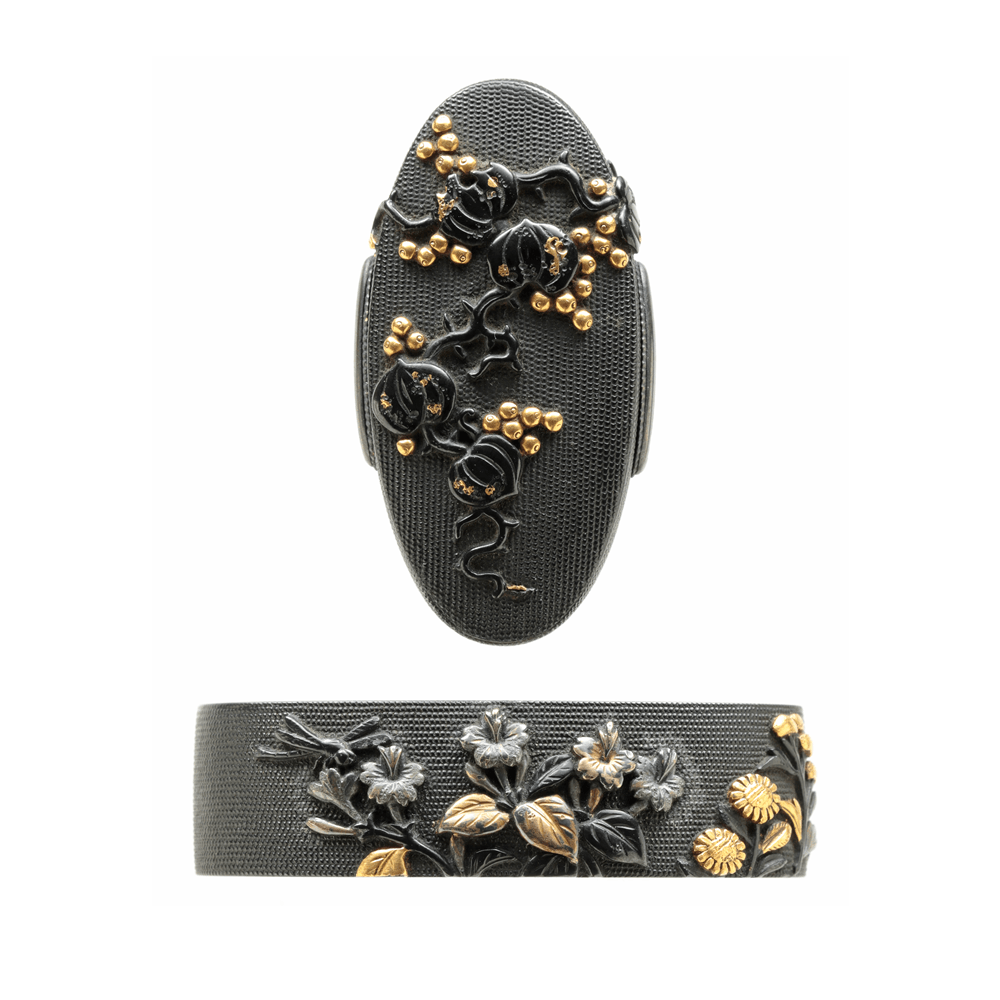
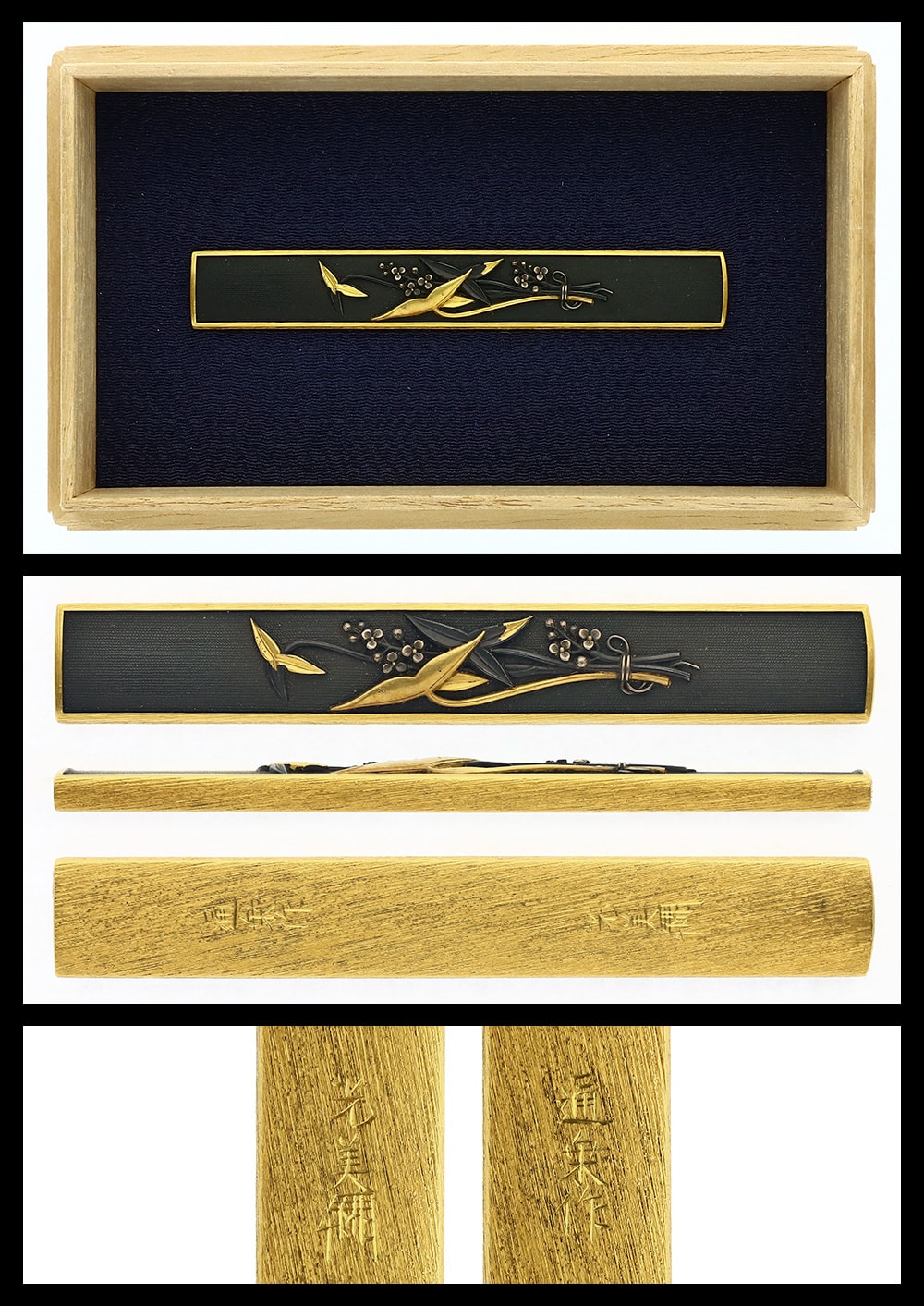
Nakagawa Issho was the second son of Nakagawa Katsutsugu, a retained artisan (kakae-ko) of the Matsudaira family, lords of the Tsuyama domain in Mimasaka Province. His real name was Nakagawa Katsuzane, and his common name (tsusho) was Naojiro. At the age of twenty-one he entered the workshop of Goto Ichijo in Kyoto, and by twenty-five -- as evidenced by extant dated works -- he had already been granted the character "" by Ichijo and styled himself "Ikkatsu." During the Ansei era (1854-1860) he returned to Tsuyama; however, the Nakagawa house was ultimately succeeded by his youngest brother Katsutaka, and Issho returned to in Man'en 1 (1860). Two years later, in Bunkyu 2 (1862), he changed "Ikkatsu" to "Issho." Traditionally counted among Ichijo's celebrated "Five Tigers" (Goko), he died in Meiji 9 (1876) at the age of forty-eight.
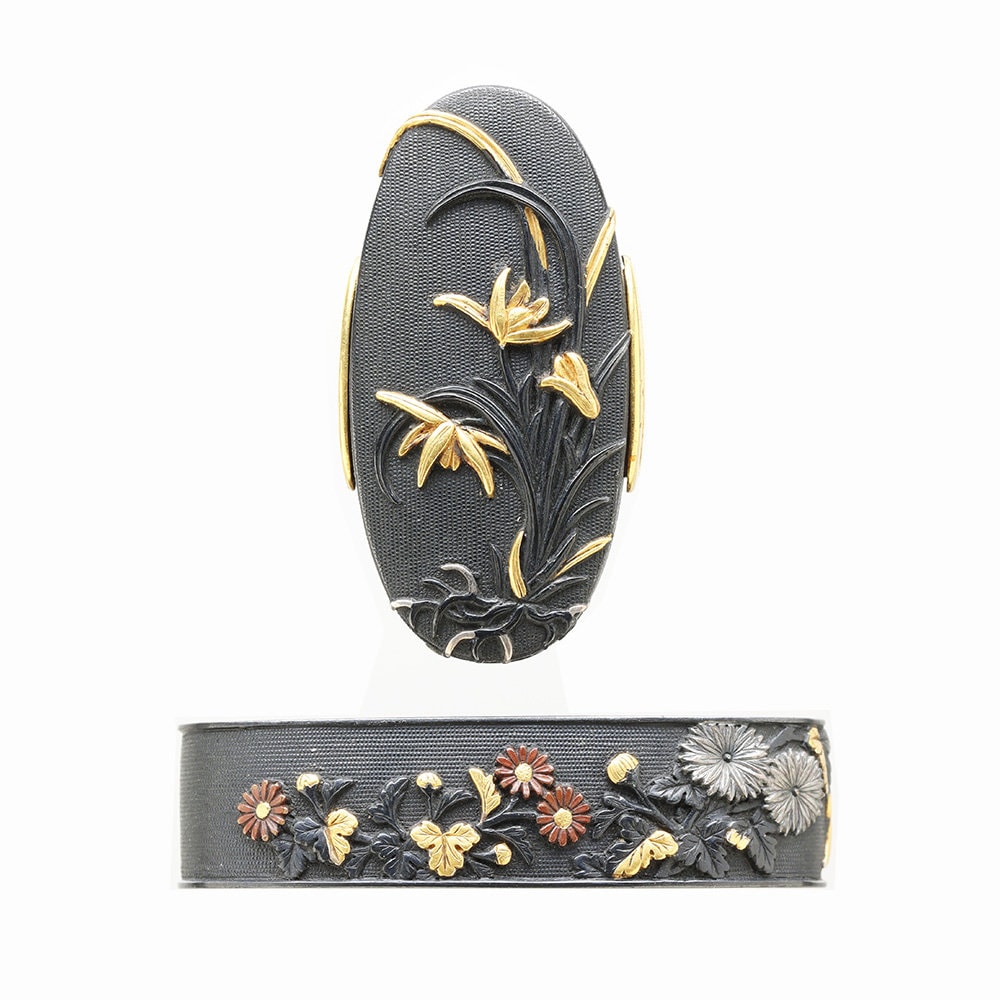
Issho's technical vocabulary encompasses the full range of the Ichijo school's metalworking tradition, deployed with what the consistently characterizes as "assured technical skill." His demonstrate extremely fine -- the refined "silk " (kinu-) -- over grounds, embellished with graceful, minute enriched by vivid in gold and hi-irodo (scarlet copper). In his ground pieces, he renders dense, sumptuous motifs through with and -sunago , "achieving a rich pictorial effect while maintaining crisp definition in the carving." His command of kosuki-bori and is described as wielding chisels "with complete freedom," further employing among - such refined techniques as pale, subdued keshi- and sunago- to convey what the terms "a courtly and elegant taste." His rounded-relief -- "a refinement characteristic of the Ichijo line" -- are carved with exceptionally fine technique.
The positions Issho as one of the foremost pupils in the lineage of Goto Ichijo, a craftsman whose unified, fully matching sets of fittings represent the highest standard of coordinated metalwork in the late and early Meiji periods. His productions consistently demonstrate the capacity to unify entire mounting programs -- from scabbard lacquer to hilt furnishings -- into works where "every aspect is imbued with a luxurious and splendid taste." The workmanship across his complete is repeatedly praised as executed "with exceptional care and meticulousness throughout," reflecting a mastery that places him securely among the principal inheritors of the Ichijo tradition.
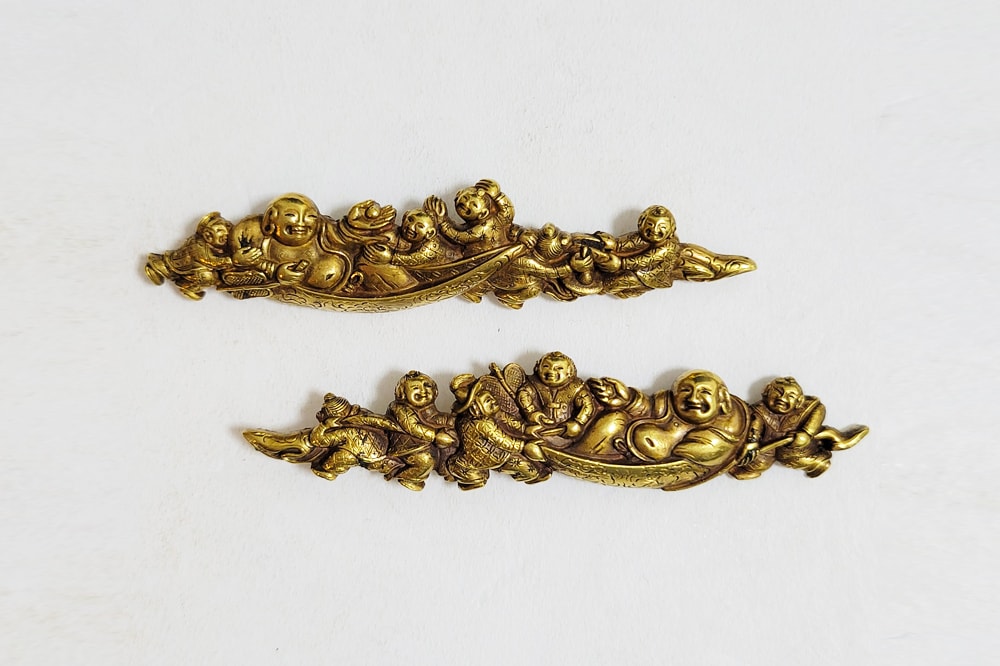
Kantei
3 descriptive axes: material (the Goto-derived grounds, ranging from shakudo nanako through oborogin, shibuichi and suaka to plain silver and iron) x technique (takabori, the deep ko-suki-bori scoop, katakiri and kebori line, iro-e, applied suemon and gold-and-silver inlay) x themes (the Goto okite-mono peony-and-butterfly and the seasonal grasses, insects and small birds of the Ichijo naturalist register, with a Chinese-tale design on one large set). No temporal phases: his bakumatsu-to-Meiji output is stylistically unified around the inherited Ichijo-workshop hand, with the autumn grasses and the ko-suki-bori chisel as the recurring personal notes.
Nakagawa Issho is a metalwork artist of the late and early Meiji period and one of the Five Tigers (goko) of the Goto house's last great master Goto Ichijo. His family name is Nakagawa, his real name Katsuzane, his common name Naojiro, and his art-name Issho (first written 一勝, from 1862 written 一匠); he signs the go with his real name, Issho Nakagawa Katsuzane, with a . He was the second son of Nakagawa Katsutsugu, a retained craftsman of the Matsudaira lords of Tsuyama domain in Mimasaka province. He entered the Kyoto school of Goto Ichijo at twenty-one, and the records say Ichijo granted him the school's '' character, with which he first named himself Issho (一勝); having returned to Tsuyama he yielded the Nakagawa house to his youngest brother, went out to , and in Bunkyu 2 (1862) changed his name to Issho (一匠). He died in Tokyo in 1876 at forty-eight. He works the orthodox soft-metal grounds of his Goto-derived training, with and iro-e, and the records place him with Hashimoto Isshi and Funada Ikkin among the pupils trusted with substitute-work for the master. His separators from his own school are few and honest: almost everything in his ground and hand is inherited Goto and Ichijo foundation, and his favoured grasses-flowers-birds-and-insects sit inside the school's naturalist register. What is his own is the signature itself, the real-name-and-go Issho Nakagawa Katsuzane with the studio-go Toun(sha) and the literati locatives, and a noted command of the deep ko-suki-bori chisel, which one record singles out as his strength.
Diagnostic discriminators
what most reliably separates his work from his own school is the signature itself. Within the shared Ichijo hand the Five Tigers each take their own 'ichi' go; his is Issho, written first 一勝 (granted by Ichijo) and from 1862 一匠, and he cuts it with his real name as Issho Nakagawa Katsuzane, behind the studio-go Toun(sha) and the literati locatives (a hermit by the Otonashi-gawa at the northern foot of Oshi-dake). This is a documentary / signature separator, not a stylistic one; his real name Katsuzane appears on seven of the eight pieces, so the rate is its corpus fraction. His grounds and the rest of his hand are pure Goto/Ichijo foundation
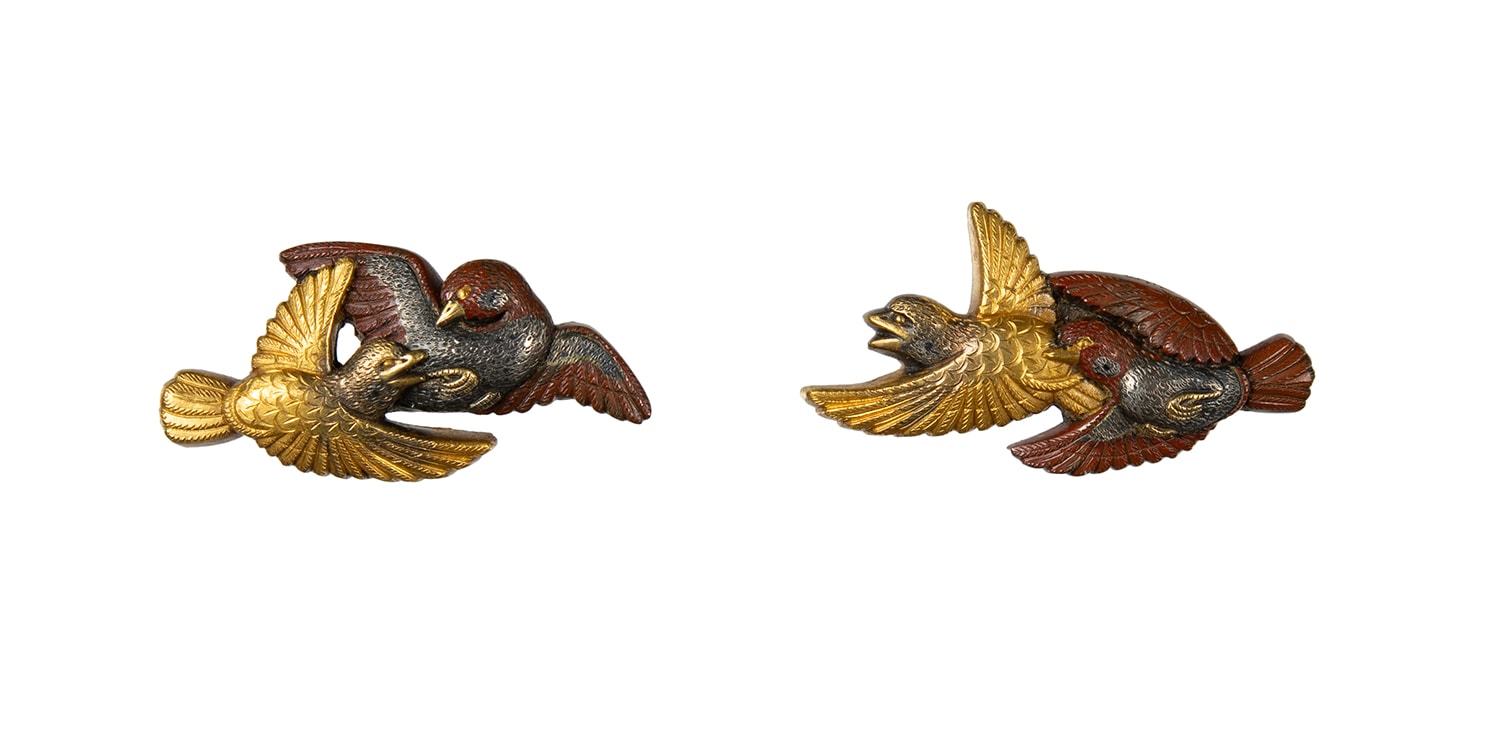
one setsumei singles out the deep, free ko-suki-bori scoop as the chisel Issho is skilled at (Issho's favoured ko-suki-bori), and it appears as a worked technique on two of the eight pieces. The ko-suki-bori is part of the inherited Ichijo repertoire (the school uses it too), so this is a relative mastery rather than a technique he alone owns; the 'his strength' framing rests on a single record, so it is flagged single-source and scoped to that statement. It is his one stylistic personal note beyond the signature
Material
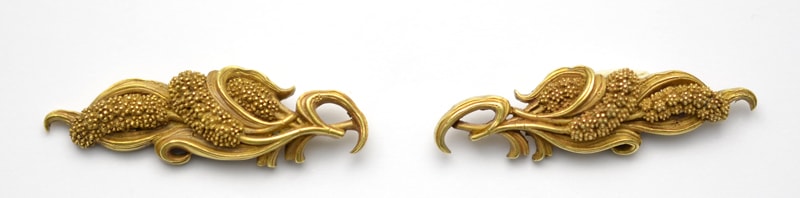
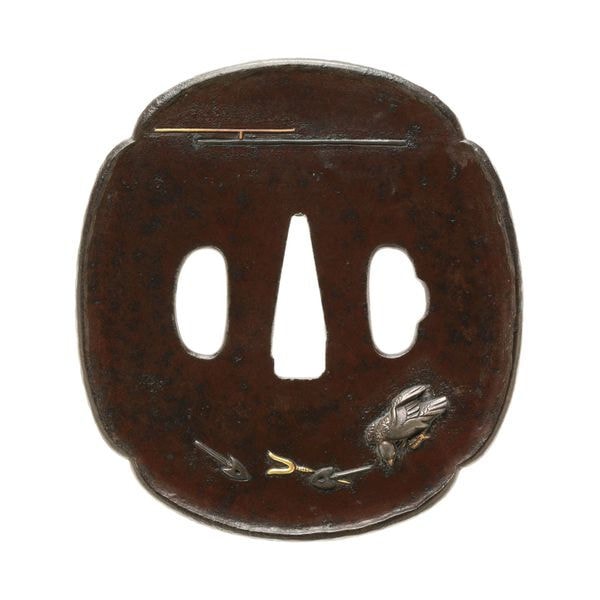
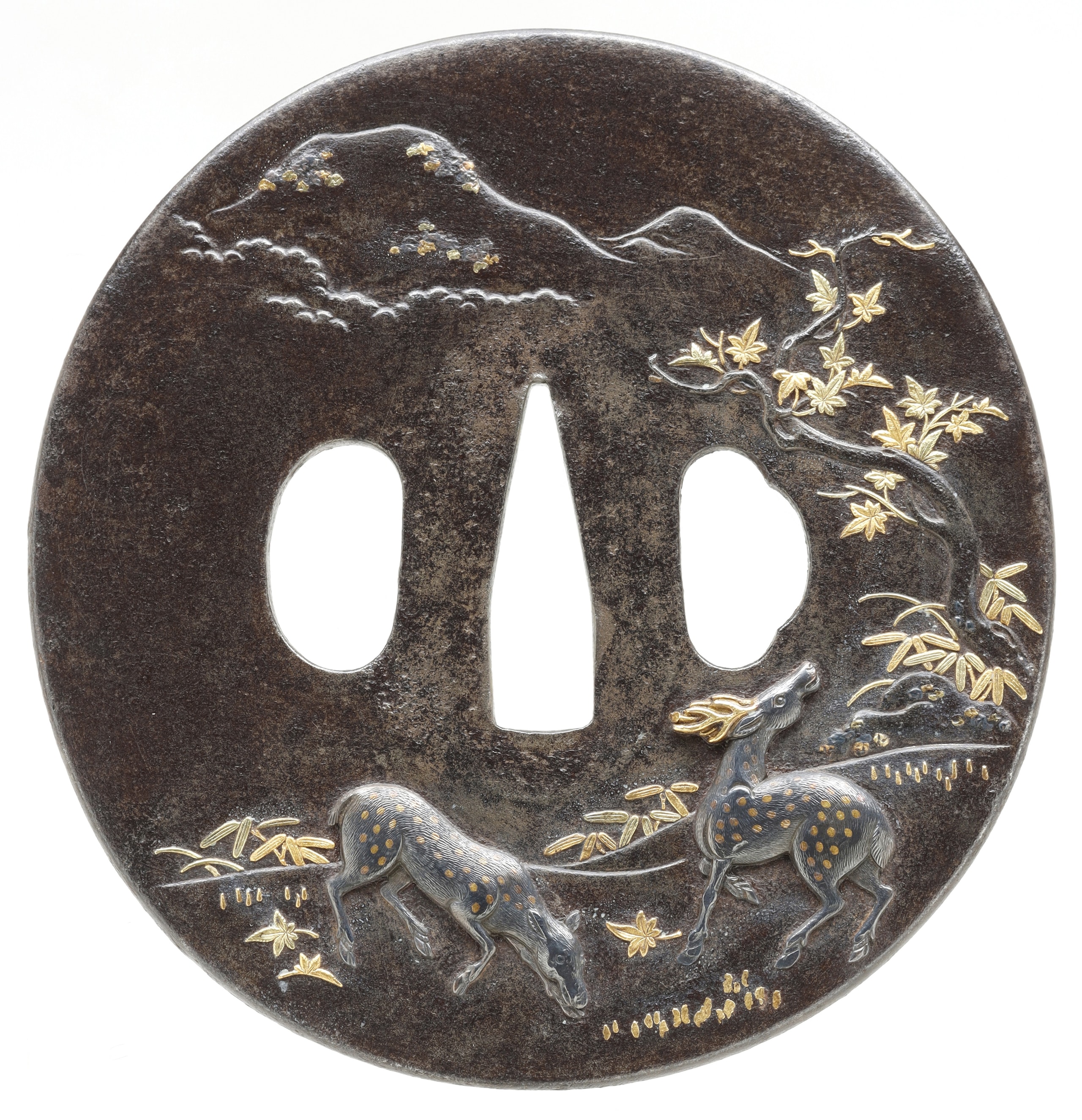
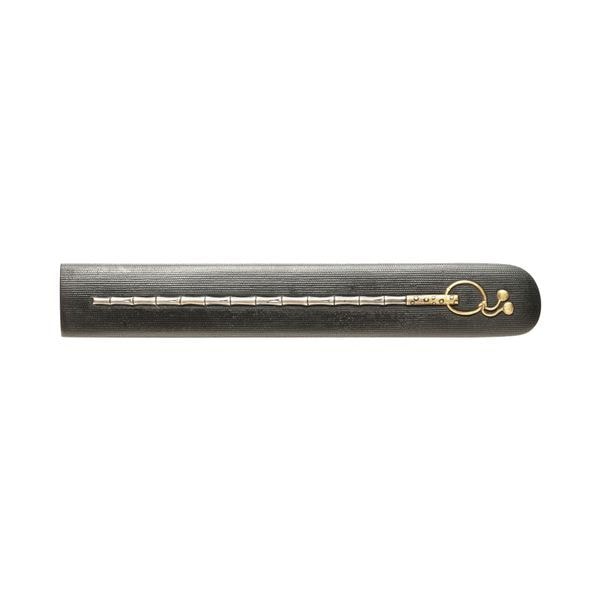
His grounds span the soft-metal range of his Goto-derived training. On the orthodox three-piece sets he works in a fine (called silk- on one set), with the and given a filled or applied back plate (-fukumegane / -itagane) and of solid gold (). Elsewhere he reaches for and grounds, inlay, plain polished silver () on his Meiji fittings, and, on his two larger , iron worked plain and polished. The metal choice serves the depth of the chisel and a quiet, settled colour.
Technique
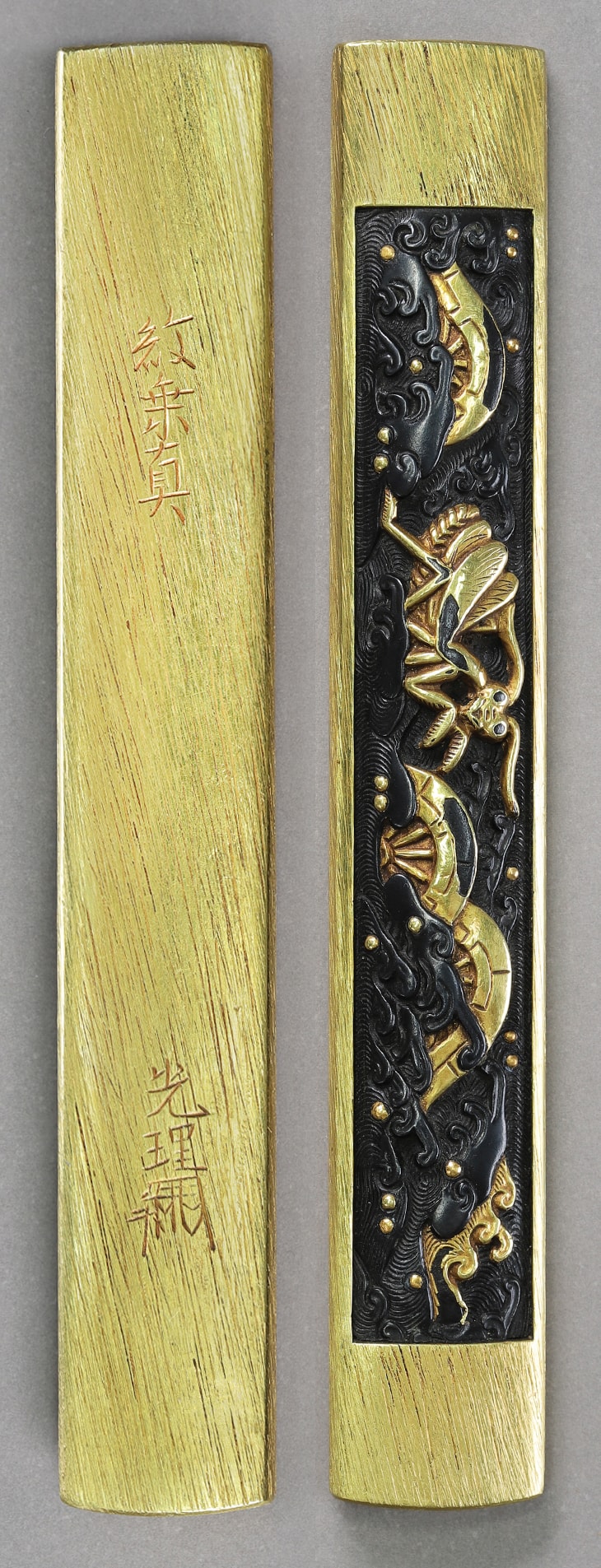
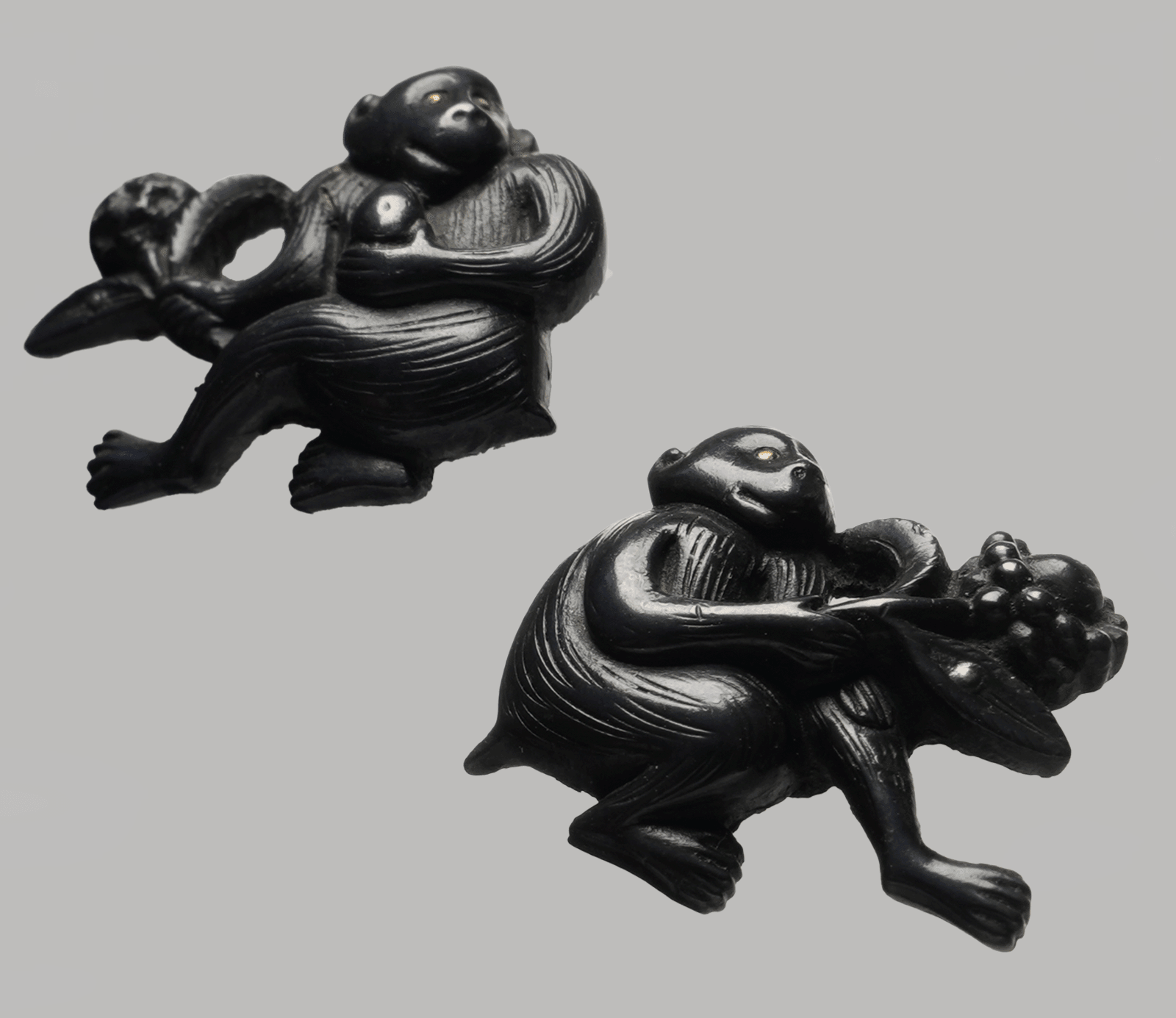
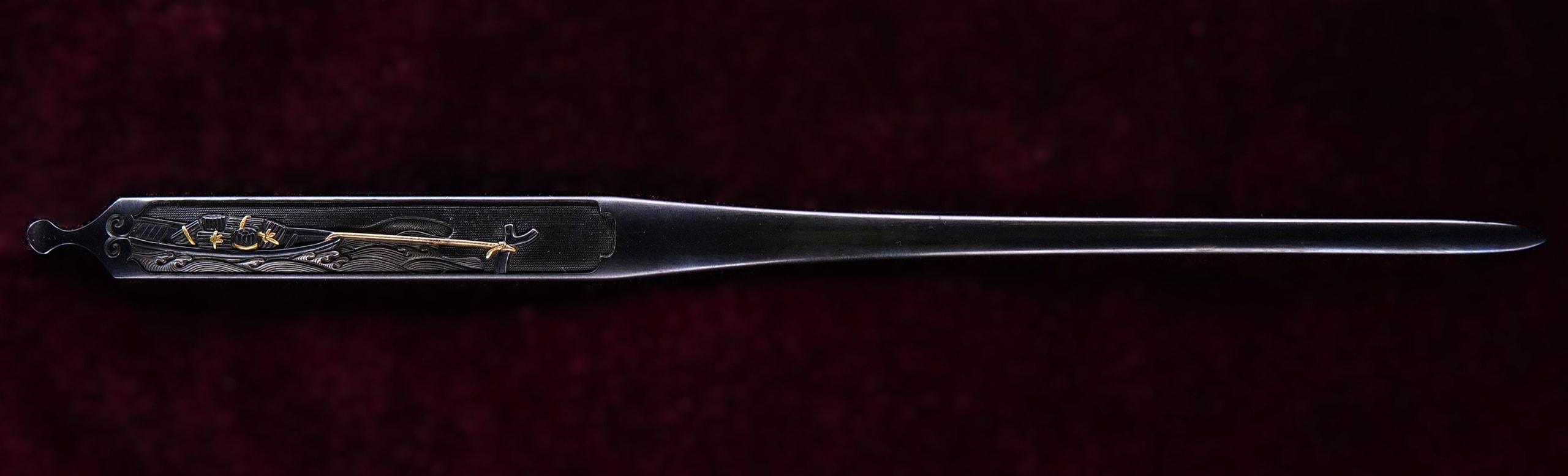
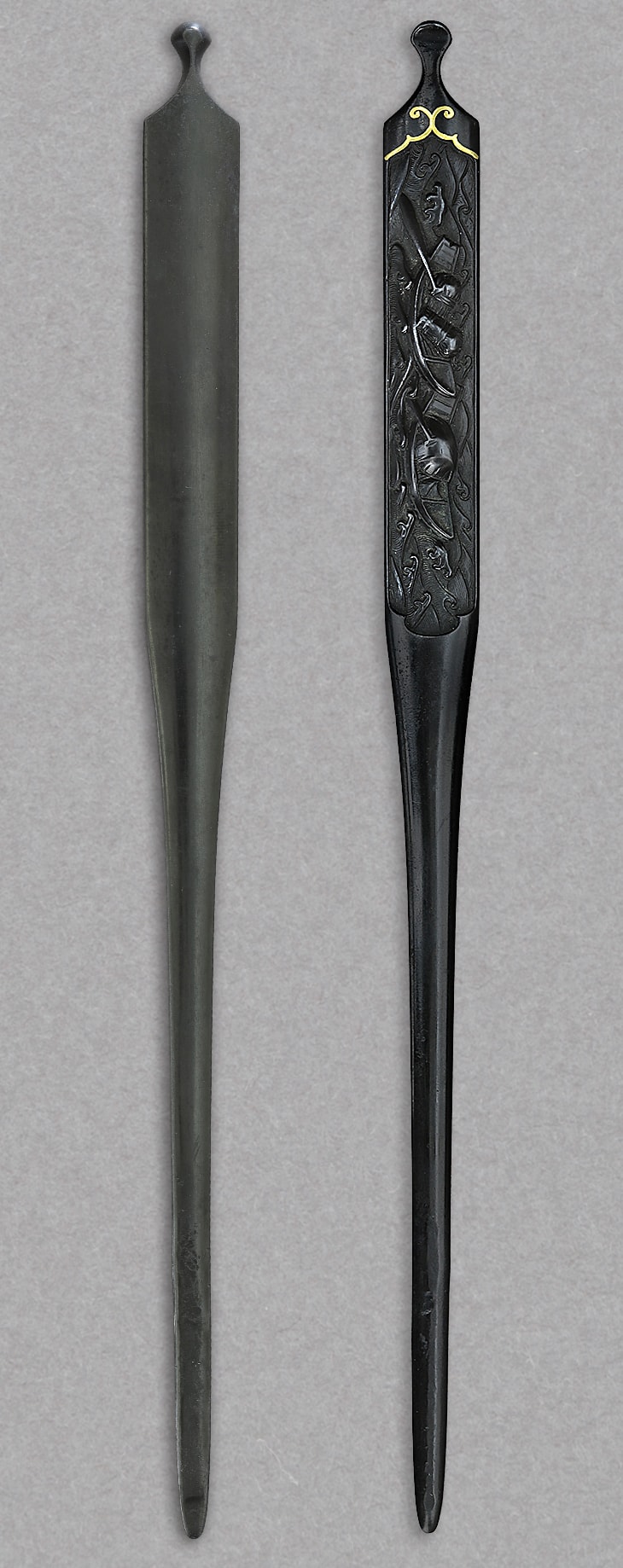
His hand is relief with polychrome iro-e in gold, silver, and , animated with applied and flush inlay (, -, -, and a scattered gold-dust -sunago- on his iron and silver fields); are solid-gold or . He also works the painterly katakiri-bori and fine of the Ichijo school, and on one set finishes the reverse with a shigure rasp. The recognised personal note within this inherited hand is his command of the deep, scooping ko-suki-bori chisel, which one record singles out as his strength.
Themes
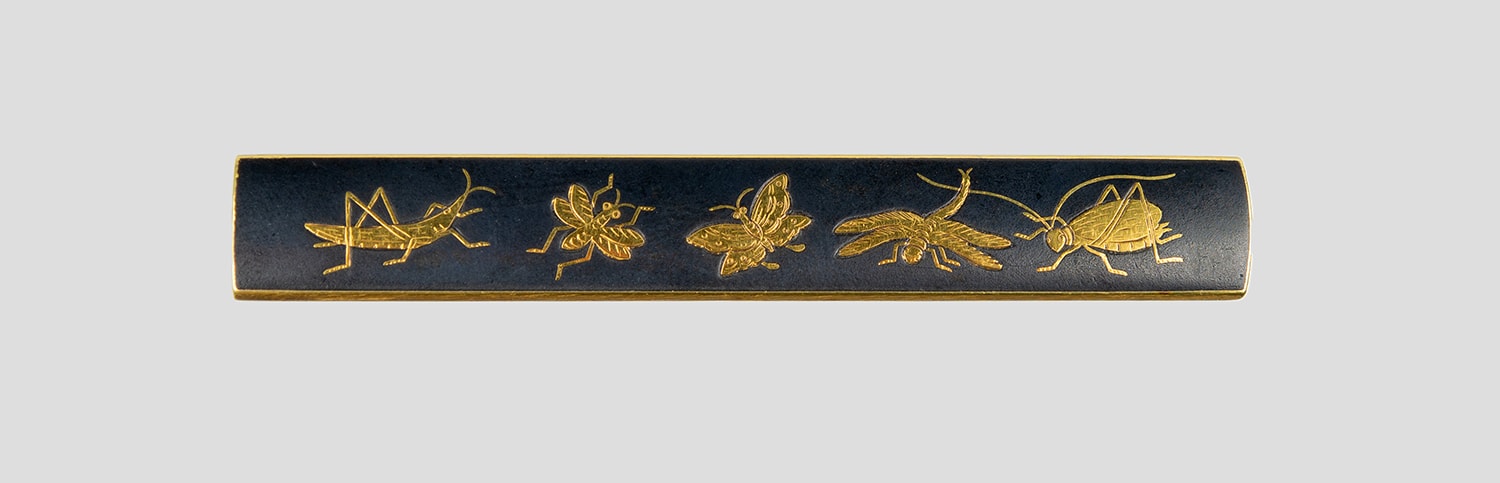
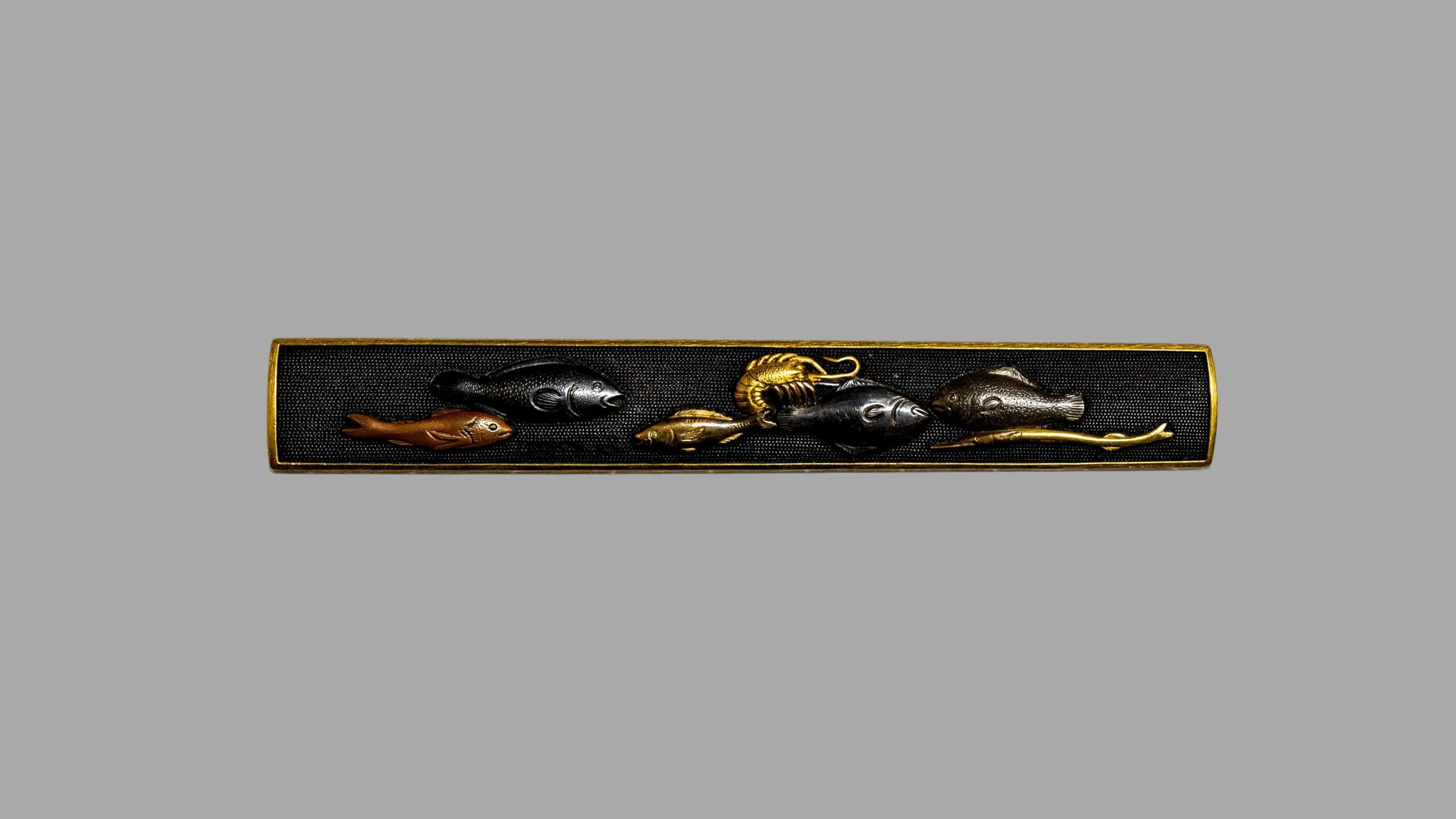
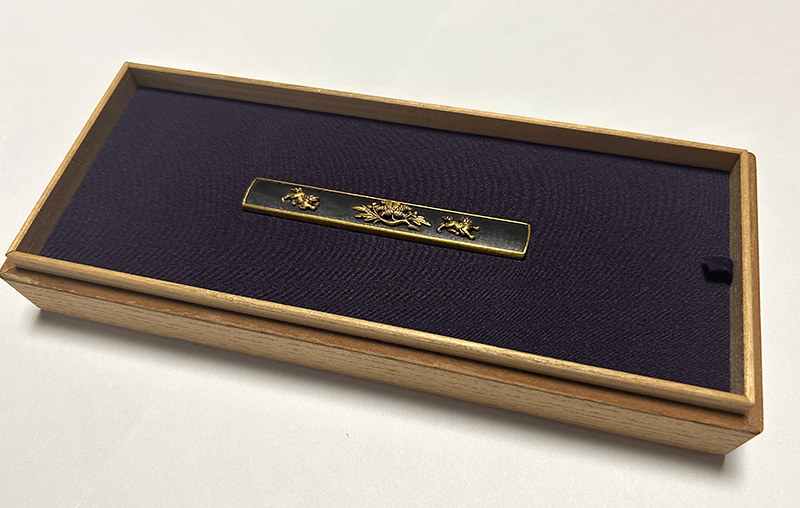
Two registers organize his work, both inside the Ichijo school's repertoire rather than subjects he alone owns. The first is the seasonal grasses, insects and small birds of the naturalist register: autumn grasses with butterflies, dragonflies and bees, the seven fragrant flowers (orchid, lily, narcissus, jasmine, gardenia, plum and katsura gathered as a set), peony with butterfly, plum with bush warbler. The records say these grasses-flowers-birds-and-insects are the thing not only Issho but the whole Ichijo school most excels at. The second is a more orthodox vein: a Goto-style peony-and-butterfly three-piece set, a cherry-and-maple spring-and-autumn , and on one large the Chinese tale of the old man of the frontier whose horse ran off (jinkan-banji saio-ga-uma), set as a meditation on calm of mind.
Seasonal grasses, insects and small birds (his favoured naturalist register)
Autumn grasses with butterflies, dragonflies and bees, the seven fragrant flowers gathered as a three-piece set, plum with bush warbler, drawn within the Ichijo school's naturalist manner. The records say these grasses-flowers-birds-and-insects are the thing not only Issho but the whole school most loves to carve, and praise the precise, accurate chisel and the abundance of gold dust scattered across the field.
蘭ran
Orthodox and Chinese-tale subjects (peony-butterfly, cherry-maple, the Saio horse)less firmly established
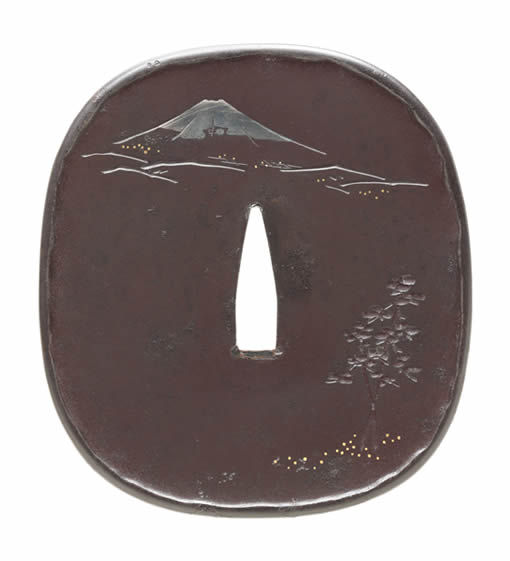
A more orthodox vein: a Goto-style peony-and-butterfly three-piece set in with iro-e, a cherry-and-maple spring-and-autumn dagger mounting, and one large carrying the Chinese tale of the old man of the frontier (jinkan-banji saio-ga-uma), the fortune-and-misfortune parable of the Huainanzi set across the front and back as a lesson in calm of mind.
Full iconography
Signature chronology
Placement
Dated signatures
Recorded signatures
Documentary note
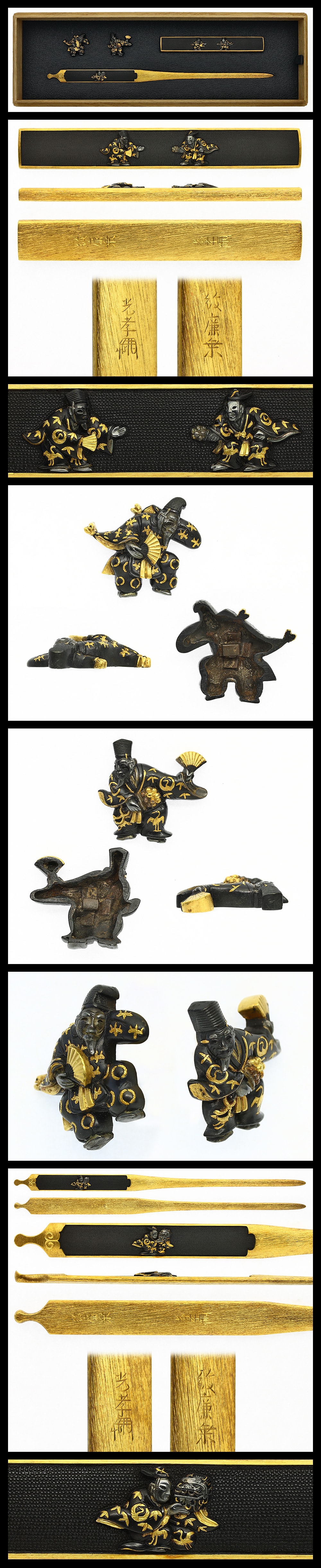
His pieces are signed with the go Issho and his real name Nakagawa Katsuzane, usually with a . The go is written first 一勝 (the '' character granted by Ichijo), changed in Bunkyu 2 (1862) to 一匠; both read Issho. His fullest signatures add the studio-go Toun or Tounsha (韜雲 / 韜雲舎) and a literati locative prefix, a hermit by the Otonashi-gawa at the northern foot of Oshi-dake. On split (wari) the bare go appears divided as Nakagawa Issho. Several pieces are dated, running from Keio 1 (1865) and Genji 1 (1864) through to Meiji 3 (1870), and on one three-piece set his own box inscription records that he made it 'by the Otonashi-gawa at the northern foot of Oshi-dake in the summer of Meiji 3'. The records differ on two biographical details: one gives the ''-character grant at twenty-nine in Ansei 4 and names the brother who continued the house Itteki, while the others give it at twenty-five by the evidence of dated works and name the brother Katsutaka; both readings are preserved here.
Scholarship
On one three-piece set (a single piece in the corpus) the record notes his own box inscription, recording that he made it by the Otonashi-gawa at the northern foot of Oshi-dake in the summer of Meiji 3, on a complete, unused set in its original fitted box.
Issho(一匠) was a maker of Japanese sword fittings (tōsōgu) of the Ichijo school in Mimasaka / Yamashiro province, active during the late Edo–Meiji (1828–1876) period.