NihontoWatch MonNihontoWatchBETA
MarketEncyclopedia
NihontoWatch Mon

NihontoWatchBETA

Market
Encyclopedia
Overview·Kantei·Designations·Work Types·Signatures·Lineage·School
OverviewKanteiDesignationsWork TypesSignaturesLineageSchool
  1. Schools
  2. Goto
  3. Waki-Goto
  4. Ichijo
  5. Isshin

Ichijo Isshin

一真

Jūyō
Vol. 33, No. 234 · Mitokoromono

Ichijo Isshin

一真

7 ranked works

ProvinceYamashiroEralate Edo–Meiji (1814–1882)SchoolGoto>Waki-Goto>IchijoTraditionIeboriTeacherGoto IchijoSpecialtiesmitokoromono, kozuka, menuki, fuchi-kashiraTypeTosogu MakerCodeWGO053
7Jūyō Tōken

Overview

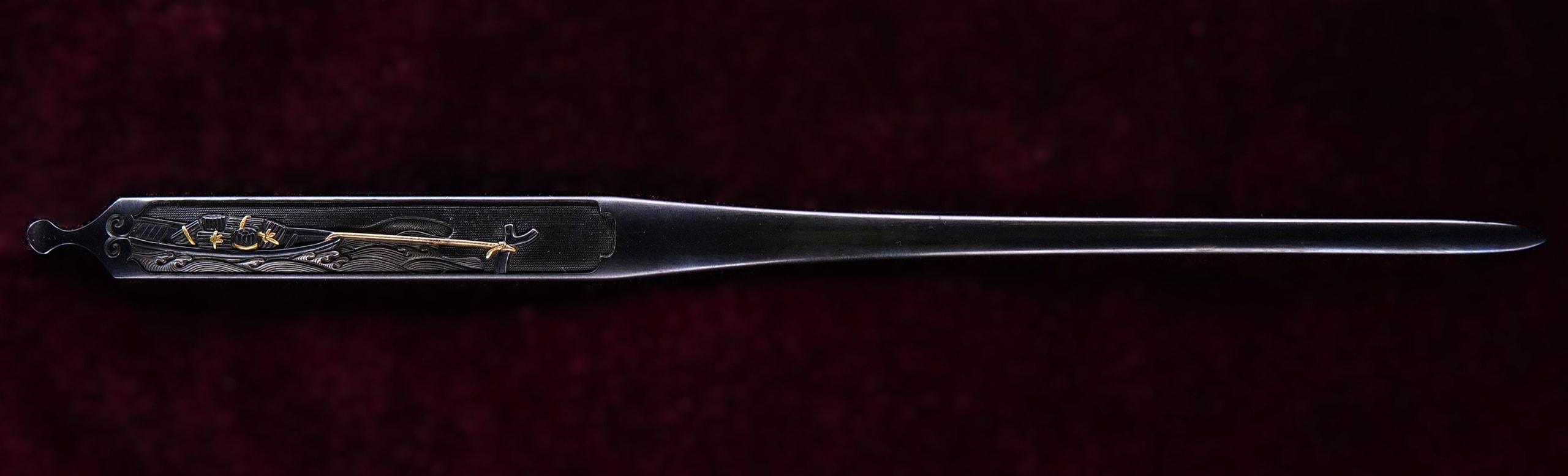
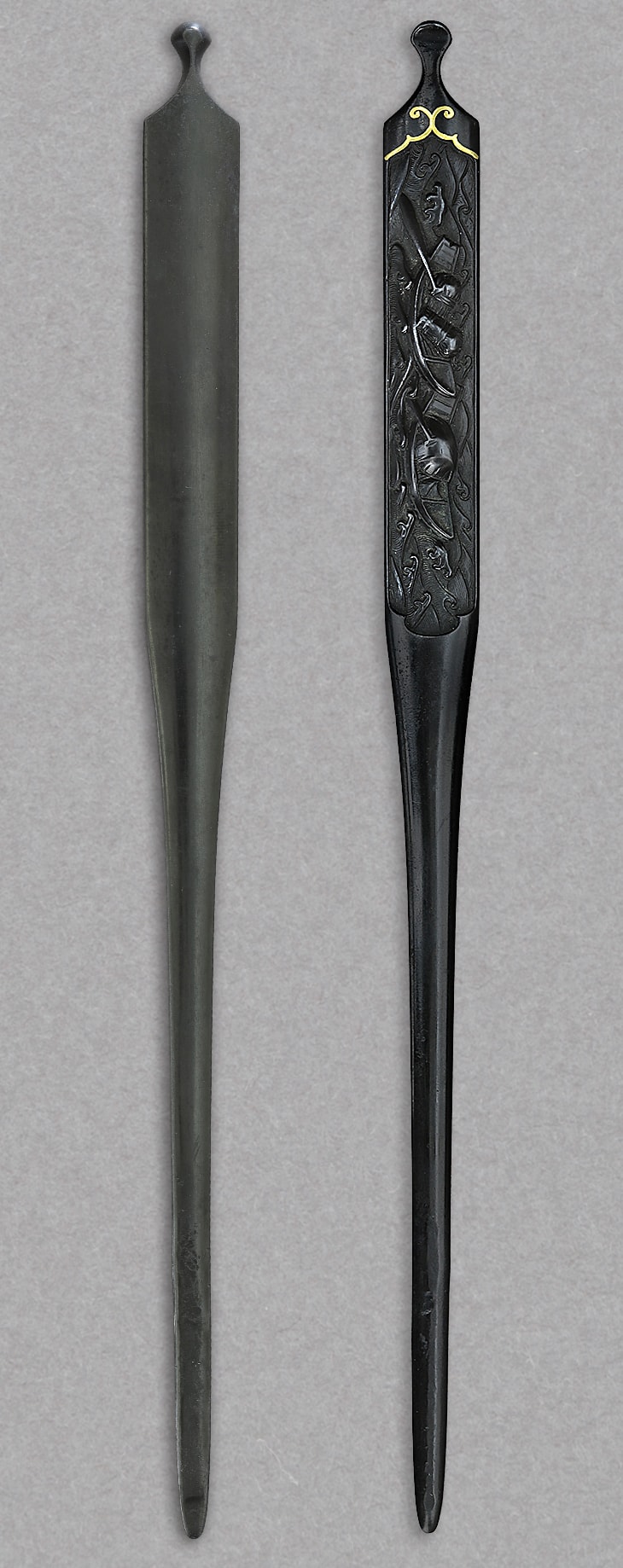
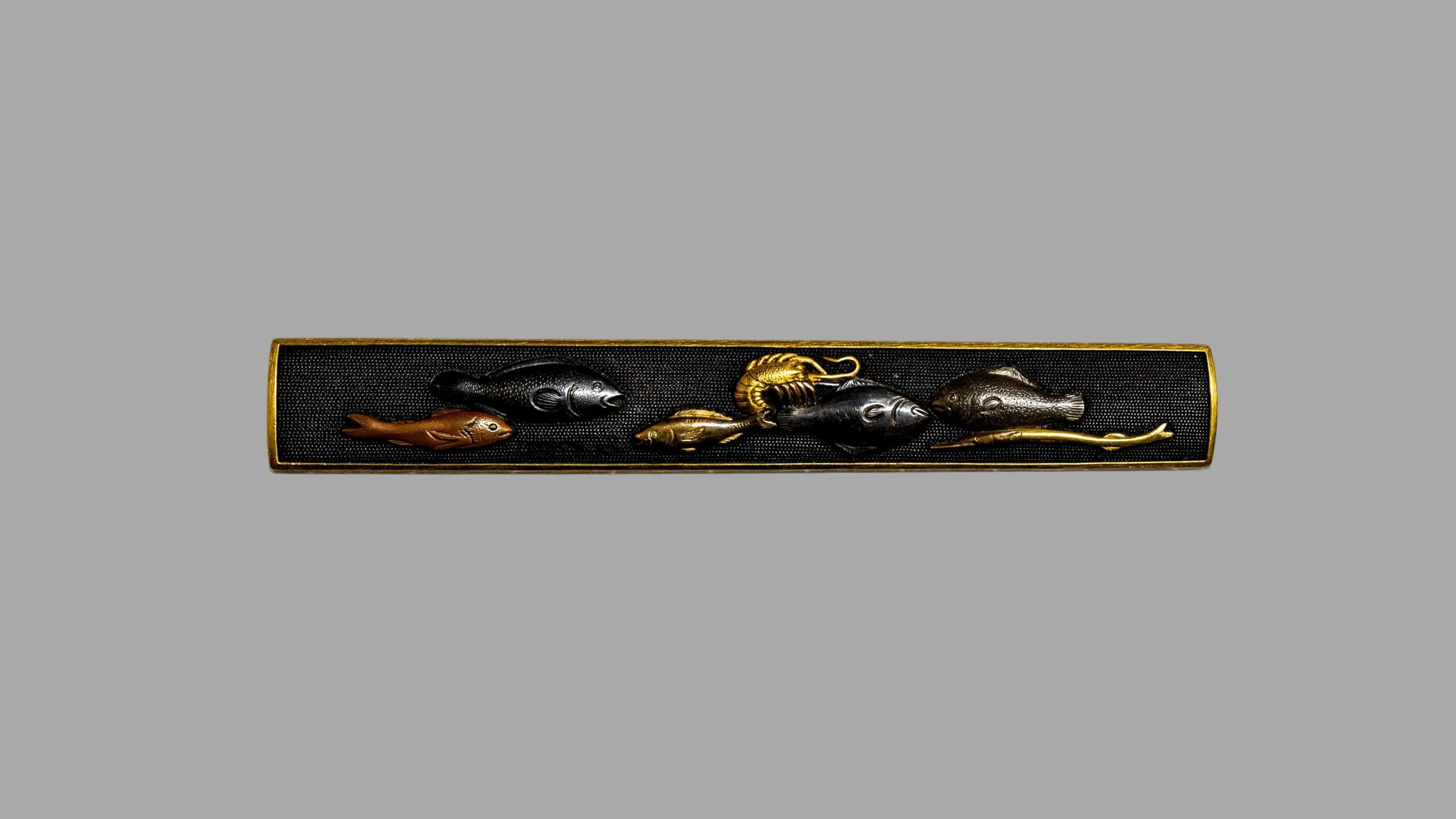
Wada Isshin Masamasa was born in Kyoto in Bunka 11 (1814). He first trained under Fujiki Kyubei, a craftsman who produced fittings in the Goto manner as an outsourced engraver (shiirebori-shi), and at that time used the name Masataka. Later, through the intermediation of the sword merchant Sawaya Chubei, who recognized his natural talent, he entered the school of Goto Ichijo. He was granted permission to use the character "" and accordingly changed his name to Isshin. A man of broad cultivation, he possessed knowledge of medicine, was devout in matters of religion, and enjoyed composing poetry and playing the gekkin (moon lute). He used art names (go) such as Gekkindo, Bizan, and Tennenka, and many of his works bear honorific prefixes including , Daishin, and Asomi. He died in December of Meiji 15 (1882) at the age of sixty-nine.

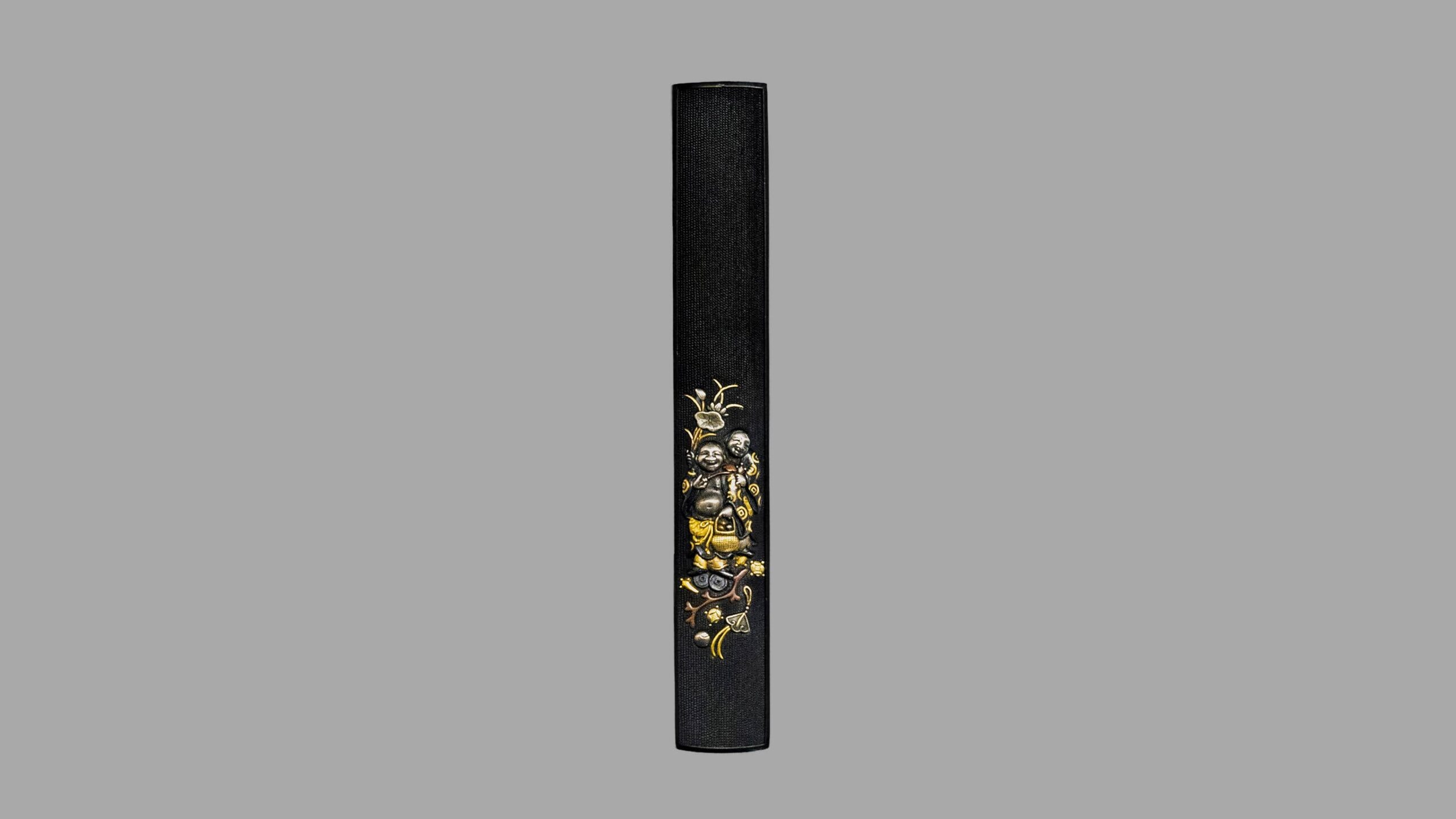
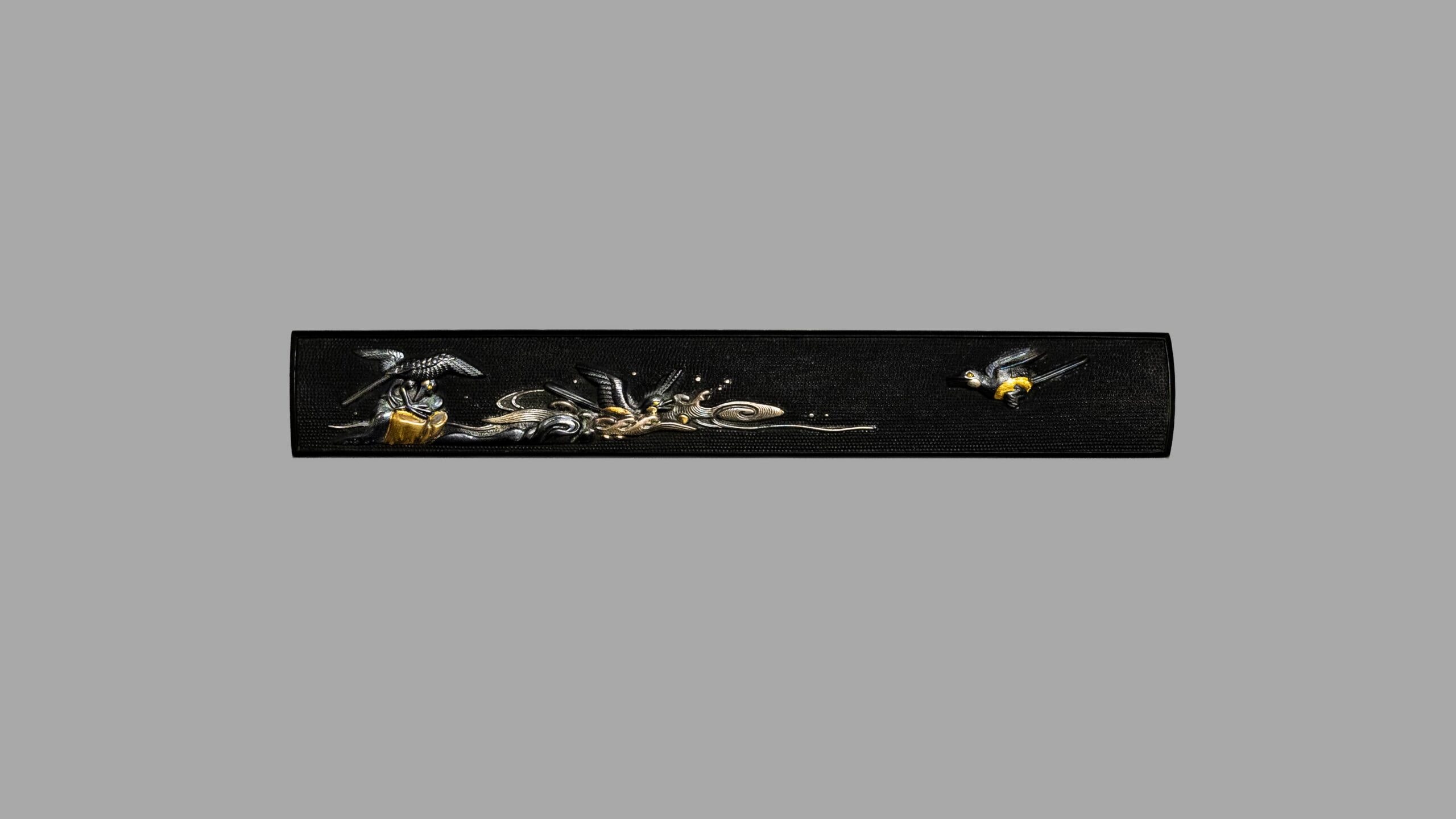
Isshin's work is distinguished by its comprehensive command of the Goto Ichijo repertoire, deployed across ambitious, large-scale coordinated sets. His productions characteristically employ with polychrome , executed with painstaking care and meticulous finishing across every component. In his complete daishio fittings set unified by the Twelve Zodiac theme, the observes that he "deploys every available technique -- high relief, ornament, inlay, and polychrome -- devoting himself to the portrayal of each animal with painstaking care." His mitsudogu of Genji 1 (1864), a Four Seasons flowers-and-birds set executed in with , is recognized as "one of the foremost large-scale works among Isshin's productions," a work "into which Isshin poured his full abilities" whose "level of completion is exceptionally high." In passages of individual expression, such as the concentrated ingenuity in the "eight"-shaped brow markings of his coiled dragons, he tests a character distinctly his own.

The consistently positions Isshin as a leading figure within the Ichijo lineage who faithfully inherited and carried forward his master's style. In his forms, the rendering of clouds and waves, and the on , the characteristics of Ichijo are prominently displayed, making it "especially interesting to observe how this craftsman, who was a leading figure within the lineage, faithfully inherited and carried forward his master's style." Yet Isshin is not merely an imitator; his works reveal a craftsman who, while working within the inherited vocabulary, concentrated creative zeal into individual passages of invention -- achieving what the calls a "masterpiece in which the creative zeal of Wada Isshin is fully brought to expression."

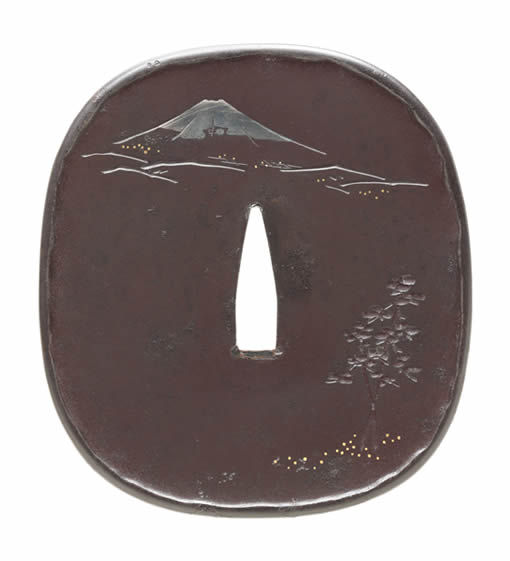
Kantei

3 descriptive axes: material (the Goto-derived grounds, ranging from shakudo and oborogin nanako through shibuichi and suaka to solid gold, plain silver and iron) x technique (takabori and the ground-cut sukidashi relief, the deep ko-suki-bori scoop, katakiri and kebori line, iro-e, applied suemon and gold-and-silver inlay) x themes (the Goto okite-mono dragons, his favoured seasonal grasses, insects and small birds of the Ichijo naturalist register, and two festival/twelve-zodiac design programmes). No temporal phases: his bakumatsu-to-Meiji output is stylistically unified around the inherited Ichijo-workshop hand, with the sharp-edged chisel and dense coloring as the recurring personal note.

Wada Isshin is a metalwork artist of the late and early Meiji period and a pupil of the Goto house's last great master Goto Ichijo. His family name is Wada, his go Isshin, and his name and second go Masatatsu; he signs Wada Isshin Masatatsu or the more formal Wada Daishin Fujiwara Masatatsu, with a . Born in Kyoto in 1814, he first trained under Fujiki Kyubei, a Goto-line subcontract carver, and named himself Masataka; the records say a sword dealer, Sawada (one record Sawaya) Chubei, recognized his talent and arranged his entry to the school of Goto Ichijo, where Ichijo licensed him the school's '' character, with which he renamed himself Isshin and took the go Masatatsu. He had a knowledge of medicine, loved and the gekkin lute, and was a devout follower of , a man of refined taste; he used the go-names Gekkindo, Bizan and Tennenka and prefixed his signatures with the honorary titles , Daishin and asomi. He died in Tokyo in 1882 at sixty-nine. He works the orthodox soft-metal grounds of his Goto-derived training, and with and iro-e, and the records place him as a pillar of the Ichijo school who well inherited the master's manner. His separators from his own school are few and honest: across a thin corpus of seven pieces almost everything in his ground and hand is inherited Goto and Ichijo foundation, and his seasonal grasses-flowers-and-insects sit inside the school's naturalist register. What is reliably his own is the signature itself, the family-name-and-name Wada (Daishin Fujiwara) Masatatsu present on every piece, and one record singles out the sharp edge of his carving and the density of his coloring as his distinctive note within the shared school manner.

Diagnostic discriminators

what most reliably separates his work from his own school is the signature itself. Within the shared Ichijo hand each pupil takes his own go; his is Isshin (the 'ichi' character licensed by Ichijo) coupled to the name Masatatsu, cut as Wada Isshin Masatatsu or, more formally, behind the honorary title Daishin and the uji Fujiwara as Wada Daishin Fujiwara Masatatsu, with a kao, sometimes with the literati prefix Koto-yumin (an idler of the capital). On split menuki it is divided as a wari-mei, Isshin and Masatatsu across the pair. This is a documentary / signature separator, not a stylistic one; the name Masatatsu appears on every one of the seven pieces, so the self-rate is 1.0. His grounds and the rest of his hand are pure Goto/Ichijo foundation

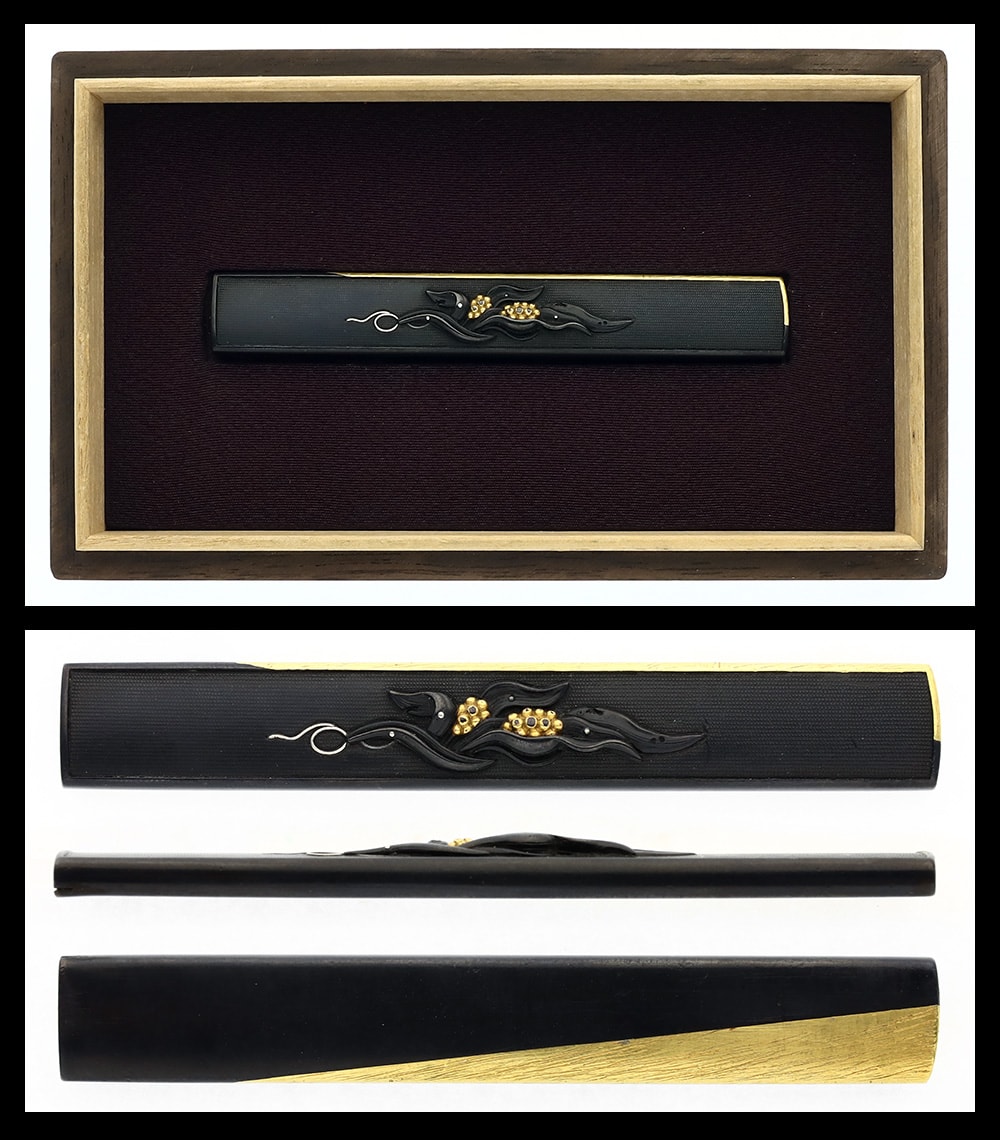
one setsumei, on an orchid-silver four-seasons-grasses-and-insects koshirae, says that although the grass-flower-and-insect design is what Ichijo and his school most excel at, Wada Isshin's metalwork has a distinctive character in that its carving is sharp-edged and its coloring dense. This is the corpus's one explicit stylistic separator stated for him within the shared school manner; it rests on a single piece, so it is flagged single-source and is not a recurring tell. It is his one stylistic personal note beyond the signature, the related shared chisel (the ko-suki-bori his school-mates are famed for) being foundation rather than a separator

Material

His grounds span the soft-metal range of his Goto-derived training. On the fitting sets he works and in a fine or polished ground, with and , the and given a filled or applied back plate (-fukumegane / -itagane), and of solid gold or . On one set he works a day-and-night ground pairing with polished (). On his bolder paired he reaches for plain polished iron, and one carries silver and solid-gold fields. The metal choice serves the orthodox subject and a dense, settled colour.

Technique

His hand is relief, sometimes raised on a cut-away ground (), with polychrome iro-e in gold, silver, , and , animated with applied (-bori) and flush inlay (, -); are solid-gold or , and fine , the painterly katakiri-bori line and gold-and-silver cut-foil inlay detail the reverse and ground. On one set he uses the deep, scooping ko-suki-bori chisel for the autumn and spring grasses. The recognised personal note within this inherited hand is the sharp edge of his carving and the density of his coloring, which one record singles out as what gives his metalwork its distinctive character.

Themes

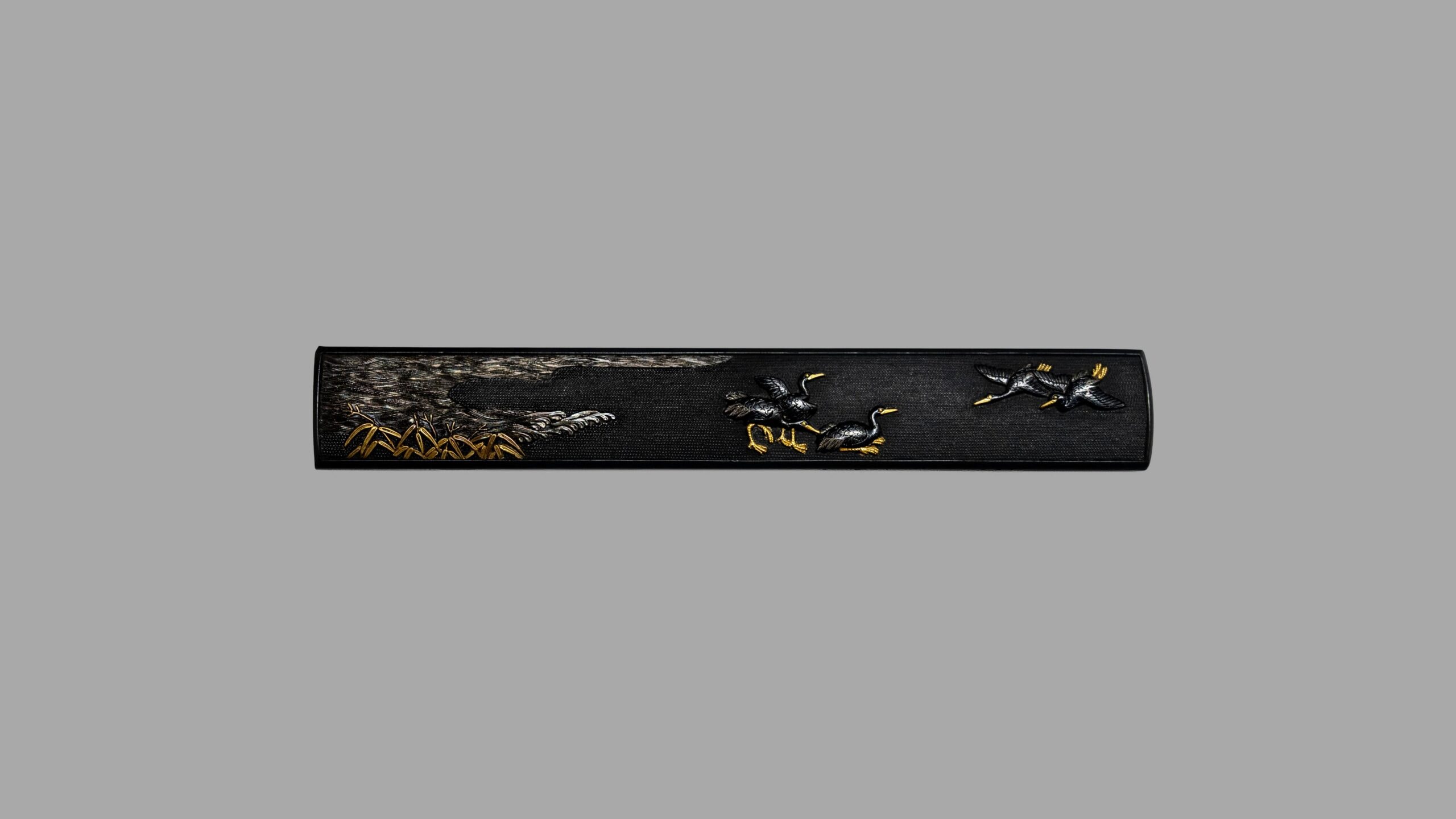
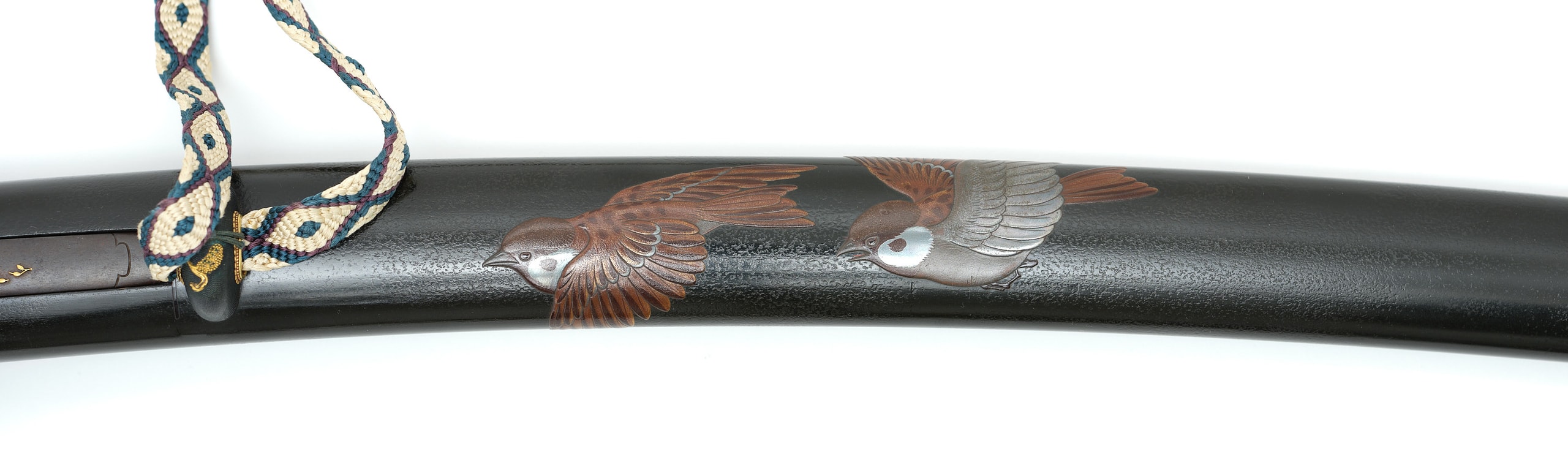
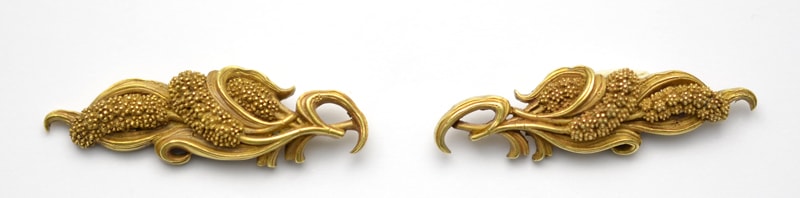
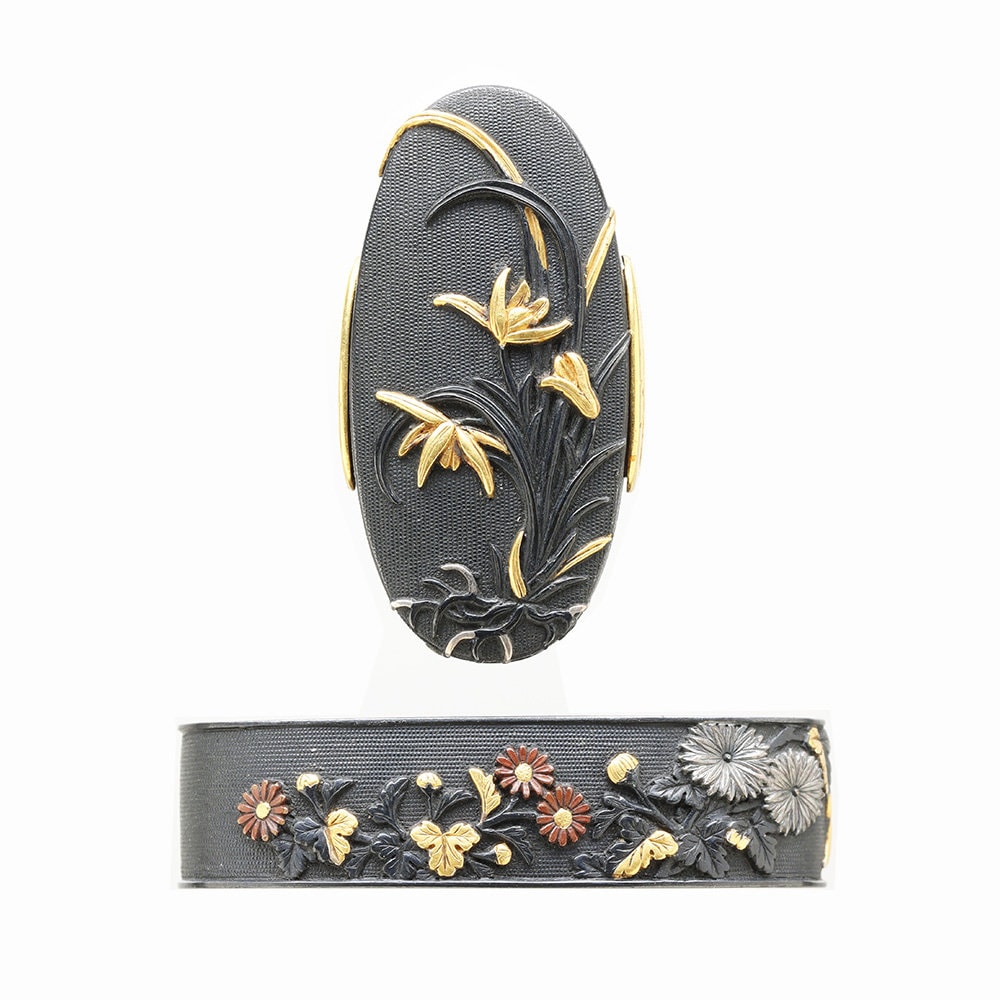
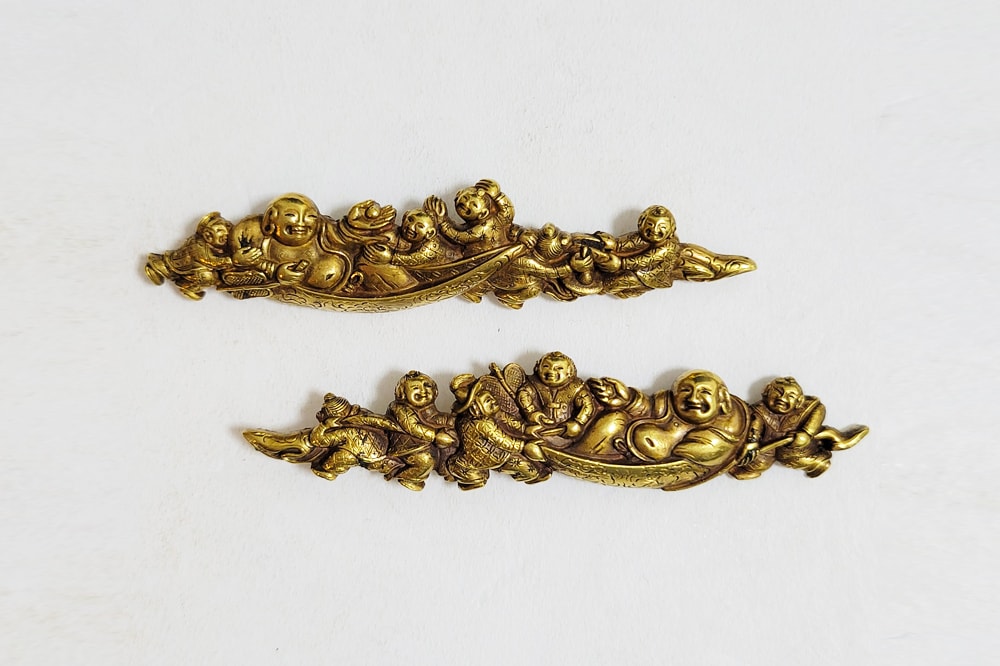
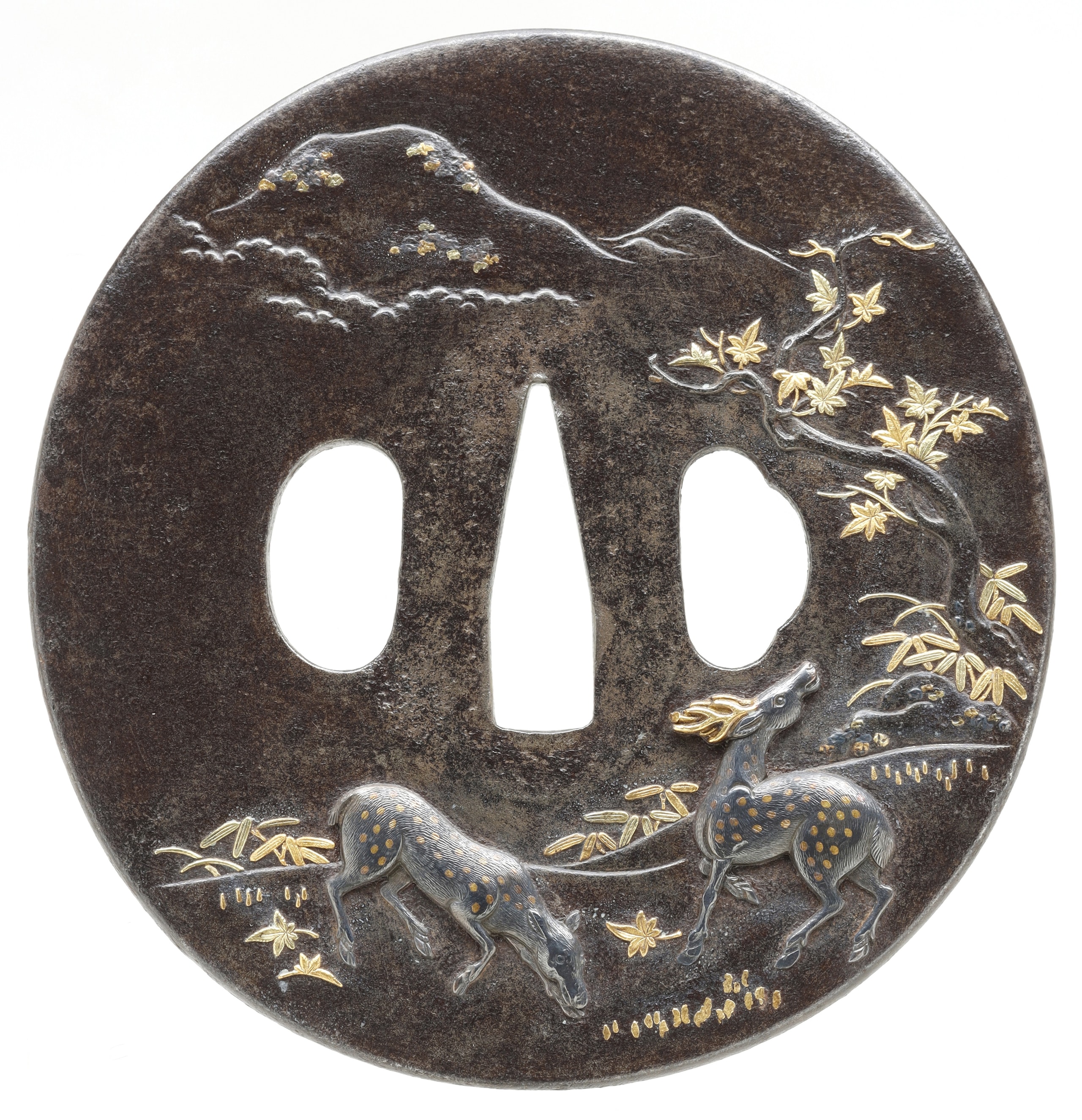
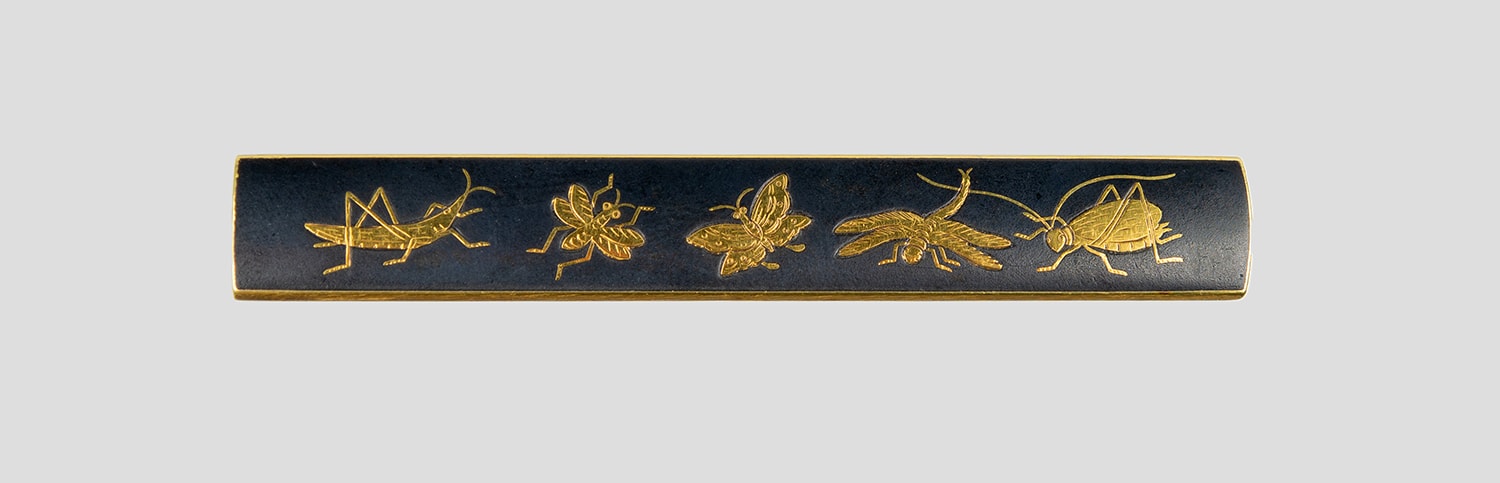
Two registers organize his work, both inside the Ichijo school's repertoire rather than subjects he alone owns. The first is the seasonal grasses, insects and small birds of the naturalist register: autumn and spring grasses with butterflies and dragonflies, water-plantain with the auspicious dragonfly (katchu-mushi), egret and heron, plum with small birds. The records say this grass-flower-and-insect subject is what the Ichijo school and Isshin most excel at, and on one such the record singles out the sharp carving and dense coloring of his hand. The second is a more orthodox and programmatic vein: an okite-mono dragon-over-waves dai-sho carved in iron with applied gold relief, a five-festival design programme that sets each fitting to a seasonal festival (the chrysanthemum Choyo, the seven-herbs Jinjitsu, a cock-fight for Joshi), and a full twelve-zodiac dai-sho set in which every fitting carries one of the twelve animals.

Seasonal grasses, insects and small birds (his favoured naturalist register)

Autumn and spring grasses with butterflies and dragonflies, water-plantain with the auspicious dragonfly, egret and heron, plum with small birds, drawn within the Ichijo school's naturalist manner. The records say this grass-flower-and-insect subject is what the school and Isshin most excel at, and on one orchid-silver they single out the sharp edge of his carving and the density of his coloring as his distinctive note, set off by the russet lacquer of the scabbard.

Orthodox and programmatic subjects (the dragon, the five festivals, the twelve zodiac)less firmly established

A more orthodox and programmatic vein. One dai-sho pair of carries the okite-mono dragon climbing through cloud and surging waves, the iron ground cut in relief with the dragons in applied gold , in a manner the records say plainly follows his teacher Ichijo. Two large sets are conceived as design programmes: a five-festival set assigning each fitting to a seasonal festival (the chrysanthemum Choyo, the seven herbs of the Jinjitsu, a cock-fight for the Joshi), and a twelve-zodiac dai-sho set carrying each of the twelve animals across its fittings, the chisel turning to every technique in the repertoire.

Full iconography

Signature chronology

Placement
Dated signatures
Recorded signatures

Documentary note

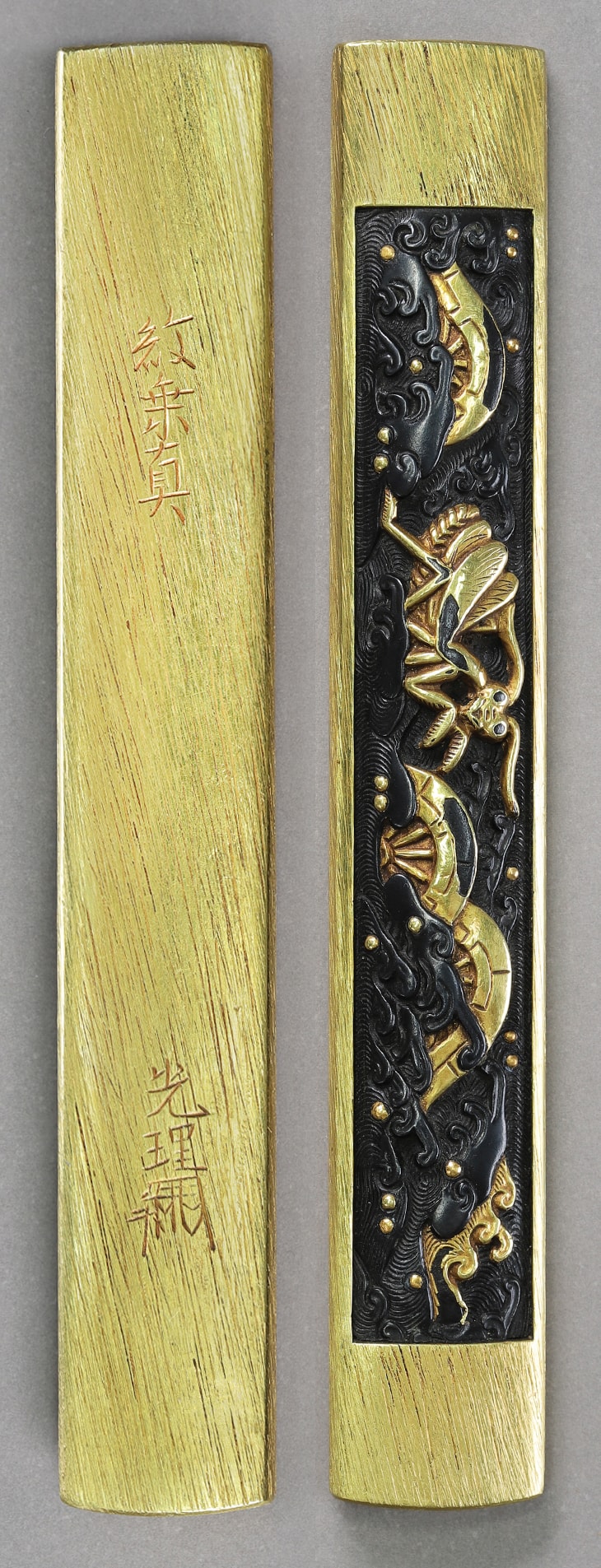
His pieces are signed with the family name Wada and the go Isshin coupled to the name Masatatsu (Wada Isshin Masatatsu), or in the formal form behind the honorary title Daishin and the uji Fujiwara (Wada Daishin Fujiwara Masatatsu), usually with a . He had earlier named himself Masataka under his first teacher Fujiki Kyubei, before the '' character was licensed to him by Ichijo. His fullest signatures add the honorary prefixes , Daishin or asomi and sometimes the literati prefix -yumin (an idler of the capital); the go-names Gekkindo, Bizan and Tennenka are recited in his biography. On split the signature is divided as a , Isshin and Masatatsu. Several pieces are dated, running through the Ansei era (one Ansei 5, 1858, dragon dai-sho ) and into the bakumatsu, and the records date one festival set to his fortieth year and the great four-seasons set to Genji 1 (1864) at fifty, called one of his finest large works. One large twelve-zodiac set divides labour with the lacquerer Koma Kanya (a teacher of Shibata Zeshin) on the scabbard and the Kyoto Otsuki-school -maker Tenkodo Hidekuni on the guard, the metal fittings alone being Isshin's.

Scholarship

On one twelve-zodiac mounting (a single piece in the corpus, a maki-e scabbard uchigatana koshirae) the record notes a division of labour among three artists, the metal fittings by Isshin, the scabbard maki-e lacquer by Koma Kanya (known as a teacher of Shibata Zeshin), and the tsuba by the Kyoto Otsuki-school maker Tenkodo Hidekuni, assembling the twelve zodiac across the whole mounting.

Designations

Kokuhō—
Jūyō Bunkazai—
Jūyō Bijutsuhin—
Gyobutsu—
Tokubetsu Jūyō—
Jūyō Tōken7

Elite Standing

0.05 across 7 designated works

Top 23% among makers

Work Types

Distribution across 7 ranked works

Other
7100%

Signatures

Signature types across 7 ranked works

Currently Available

Lineage

TeacherGoto Ichijo
Isshin

Ichijo School

Other artisans of the Ichijo school

  1. 1.Goto Ichijo後藤一乗6 for sale90designated
  2. 2.Tomei東明5 for sale31designated
  3. 3.Nagatake永武13designated
  4. 4.Ikkin一琴1 for sale11designated
  5. 5.Issho一匠8designated
  6. 6.Koran光覧4designated
  7. 7.Yoshiteru義照2 for sale4designated
  8. 8.Yoshinaga吉長1 for sale1designated
  9. 9.Isshi一至6designated
  10. 10.Wada Isshin Masatatsu和田一真政竜1designated
  11. 11.Kawashima Ichinyo川島一如1designated
  12. 12.Sugioka Ikkyo杉岡一挙1designated

Isshin

Isshin(一真) was a maker of Japanese sword fittings (tōsōgu) of the Ichijo school in Yamashiro province, active during the late Edo–Meiji (1814–1882) period.

The work follows the Iebori tradition.

Designated works by Isshin include 7 Jūyō.