Kikka Karigane Sukashi Tsuba "Mumei" Kyo-sukashi (Edo Period) Accompanied by Nippon Bijutsu Token Hozon Kyokai Kanteisho Maru-gata, Tetsu-ji, Ji-sukashi, Kaku-mimi koniku Tate-haba 81mm, Yoko-haba 81mm, Kasane 4mm, Juyo 58g (All measurements are approximate.) Kikka (chrysanthemums) have been deeply associated with the Imperial Family since ancient times and are used as the Imperial crest. As a symbol of longevity, this composition was also highly favored by the samurai class wishing for prosperity. This is a masterpiece of Kyo-sukashi that brilliantly depicts chrysanthemums composed of fine openwork lines. These sukashi tsuba produced in Yamashiro Province are characterized by their elegance and ingenuity; along with Owari and Akasaka, they are referred to by their place of origin as Kyo-sukashi. 0 Yen (Tax included)
 NihontoWatch
mumei · Yamashiro · Edo
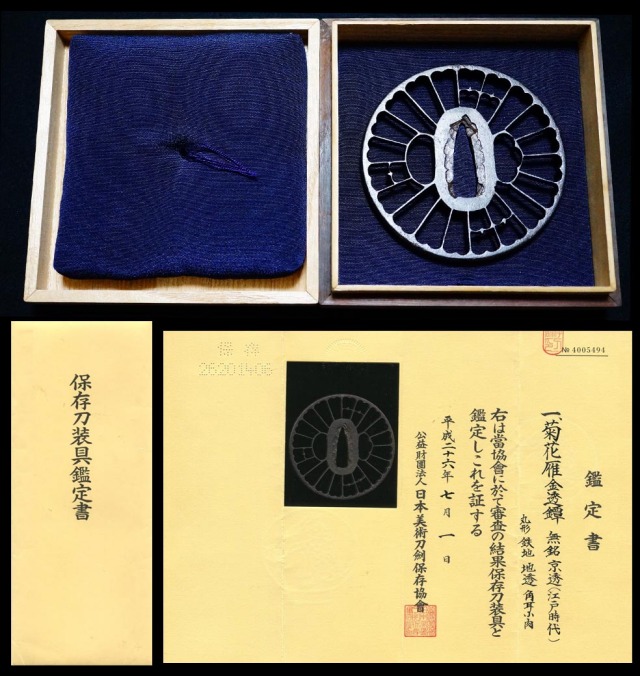
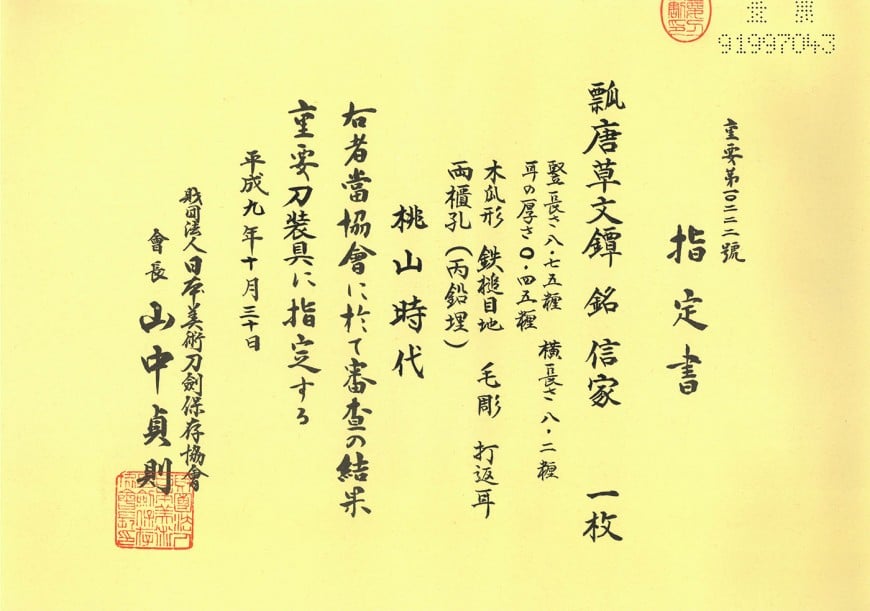
Certifies a genuine fitting worth preserving: a correct signature, or, if unsigned, an identifiable era and school, with recognized artistic and craft value.
The NBTHK (Nihon Bijutsu Tōken Hozon Kyōkai, the Society for the Preservation of Japanese Art Swords) is a public-interest incorporated foundation founded in 1948 and supervised by Japan’s Agency for Cultural Affairs (Bunkachō); it is based at the Japanese Sword Museum in Tokyo. Its expert panels physically examine each submitted work (shinsa) and issue a certificate (kanteishō) ranking it by artistic and historical merit. NBTHK papers are the most widely recognized standard of authentication for Japanese swords and fittings.
NBTHK official sitePlease notify us of your intention to return, by email or fax, no later than the day after the item's arrival. Return shipping, insurance, and refund transfer fees are the customer's responsibility.
Kikka Karigane Sukashi Tsuba "Mumei" Kyo-sukashi (Edo Period) Accompanied by Nippon Bijutsu Token Hozon Kyokai Kanteisho Maru-gata, Tetsu-ji, Ji-sukashi, Kaku-mimi koniku Tate-haba 81mm, Yoko-haba 81mm, Kasane 4mm, Juyo 58g (All measurements are approximate.) Kikka (chrysanthemums) have been deeply associated with the Imperial Family since ancient times and are used as the Imperial crest. As a symbol of longevity, this composition was also highly favored by the samurai class wishing for prosperity. This is a masterpiece of Kyo-sukashi that brilliantly depicts chrysanthemums composed of fine openwork lines. These sukashi tsuba produced in Yamashiro Province are characterized by their elegance and ingenuity; along with Owari and Akasaka, they are referred to by their place of origin as Kyo-sukashi. 0 Yen (Tax included)
NihontoWatchmumei · Yamashiro · Edo
Certifies a genuine fitting worth preserving: a correct signature, or, if unsigned, an identifiable era and school, with recognized artistic and craft value.
The NBTHK (Nihon Bijutsu Tōken Hozon Kyōkai, the Society for the Preservation of Japanese Art Swords) is a public-interest incorporated foundation founded in 1948 and supervised by Japan’s Agency for Cultural Affairs (Bunkachō); it is based at the Japanese Sword Museum in Tokyo. Its expert panels physically examine each submitted work (shinsa) and issue a certificate (kanteishō) ranking it by artistic and historical merit. NBTHK papers are the most widely recognized standard of authentication for Japanese swords and fittings.
NBTHK official sitePlease notify us of your intention to return, by email or fax, no later than the day after the item's arrival. Return shipping, insurance, and refund transfer fees are the customer's responsibility.