 NihontoWatchNihontoWatch
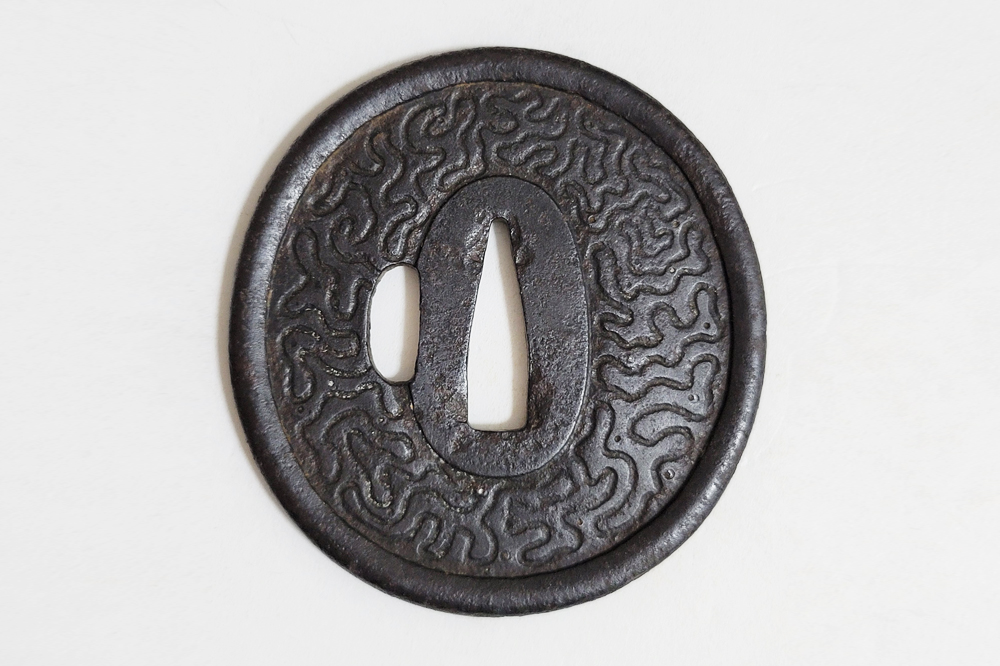
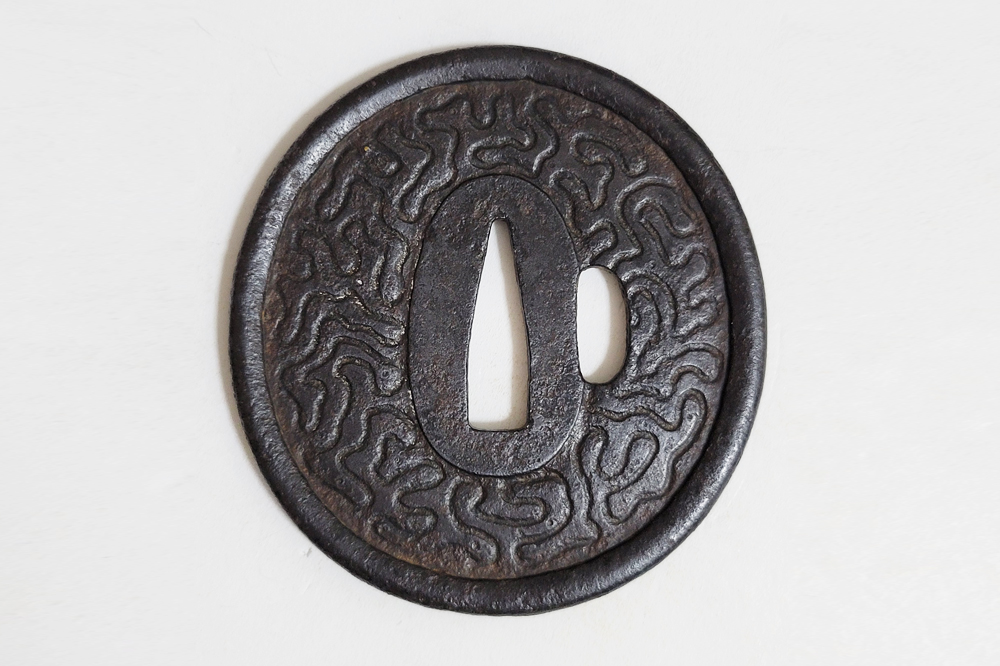
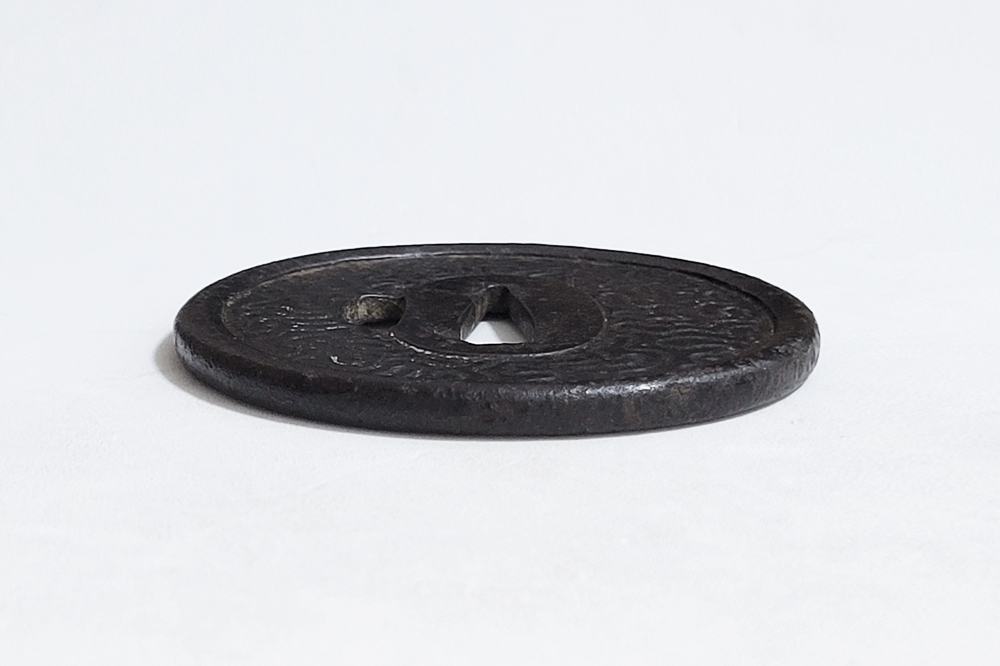
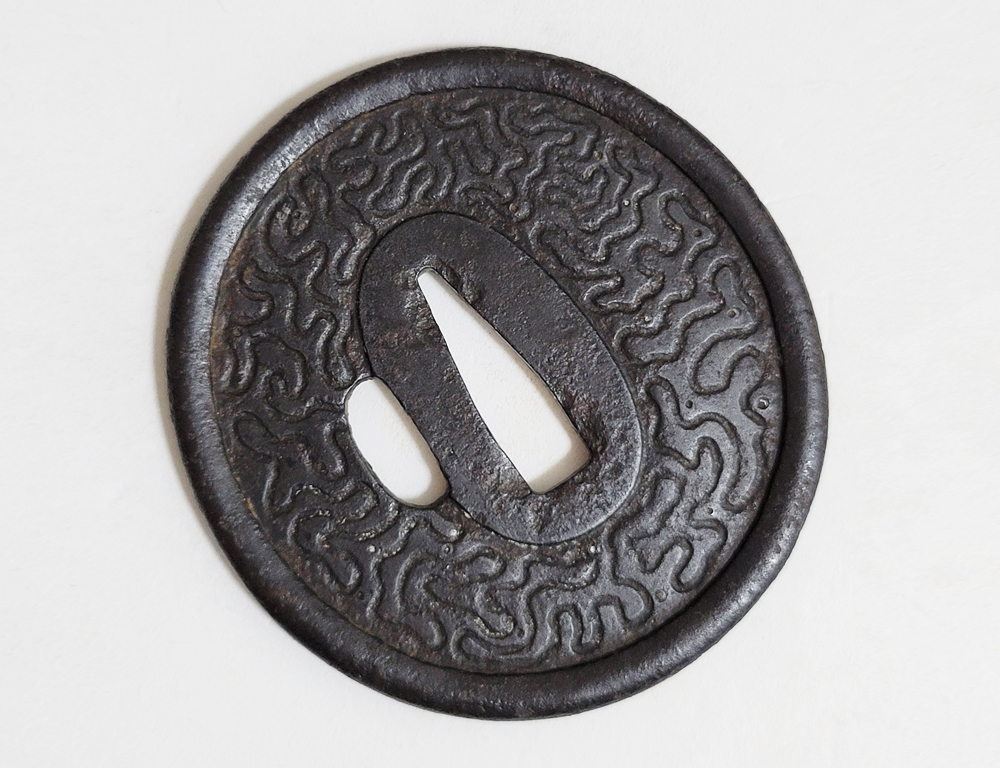
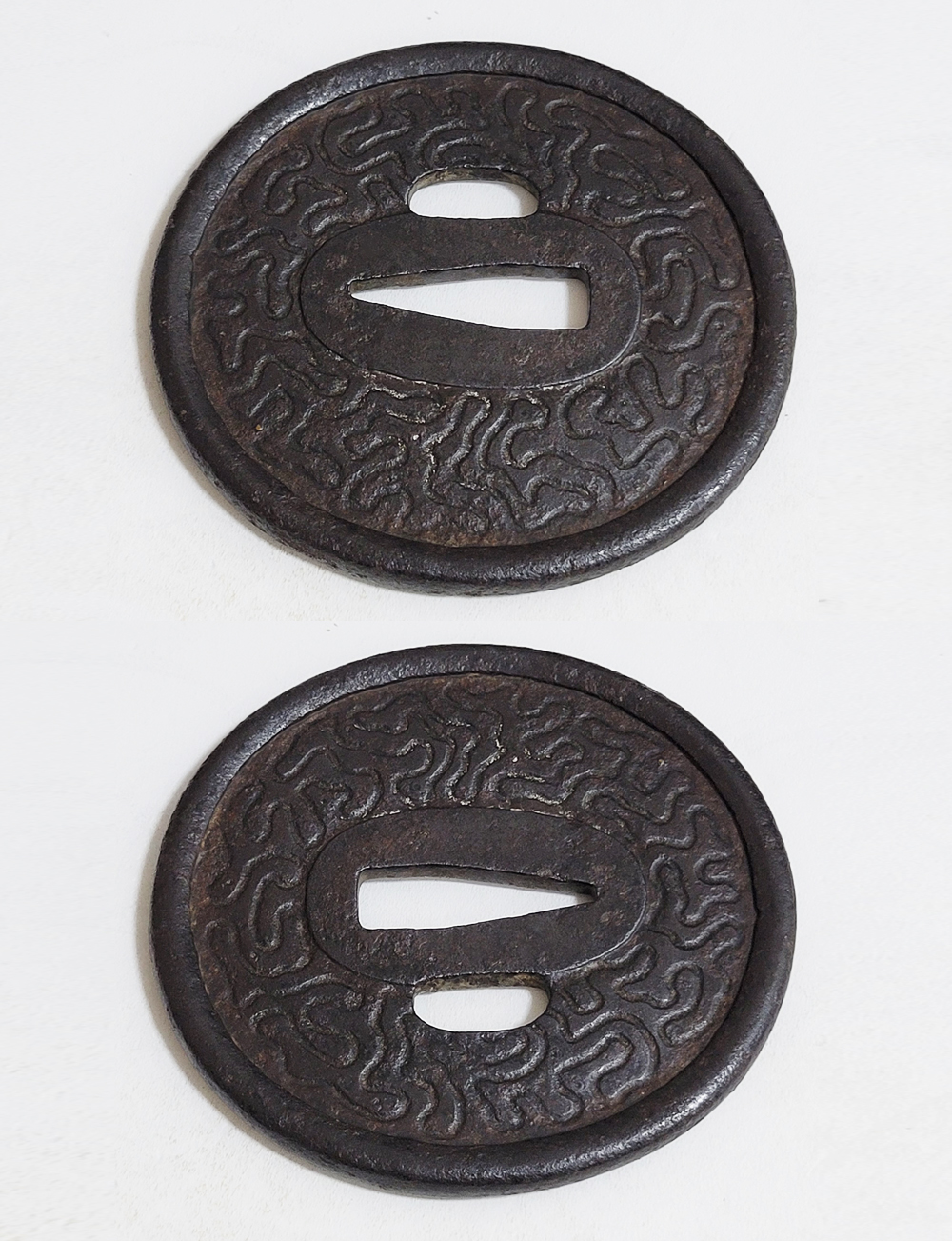
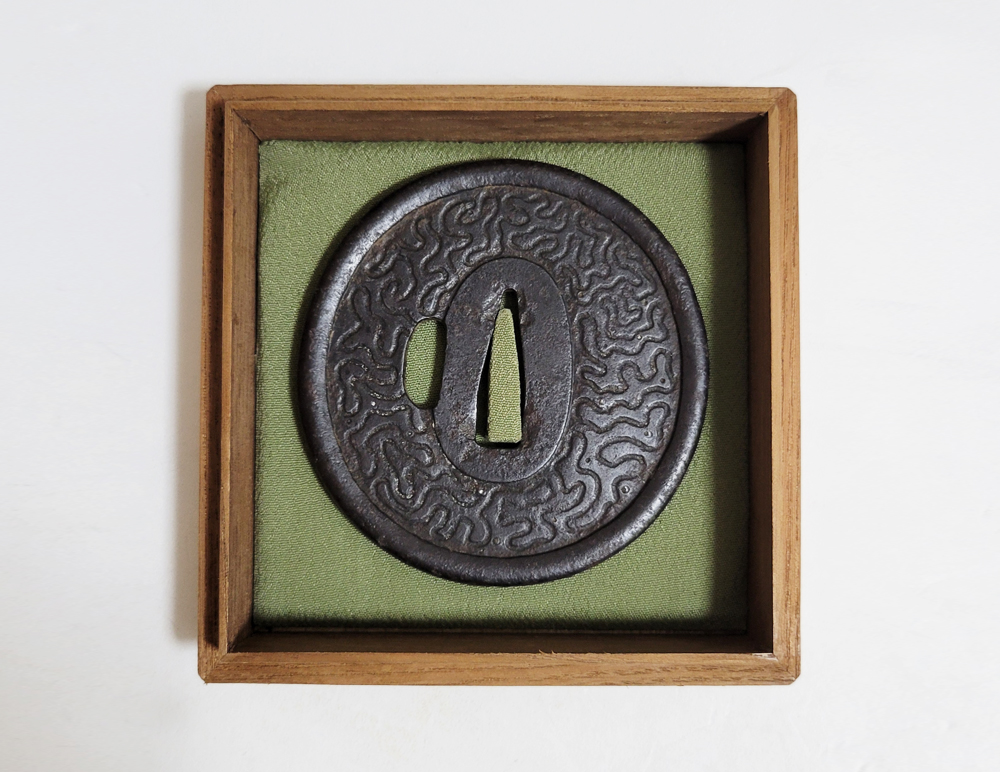
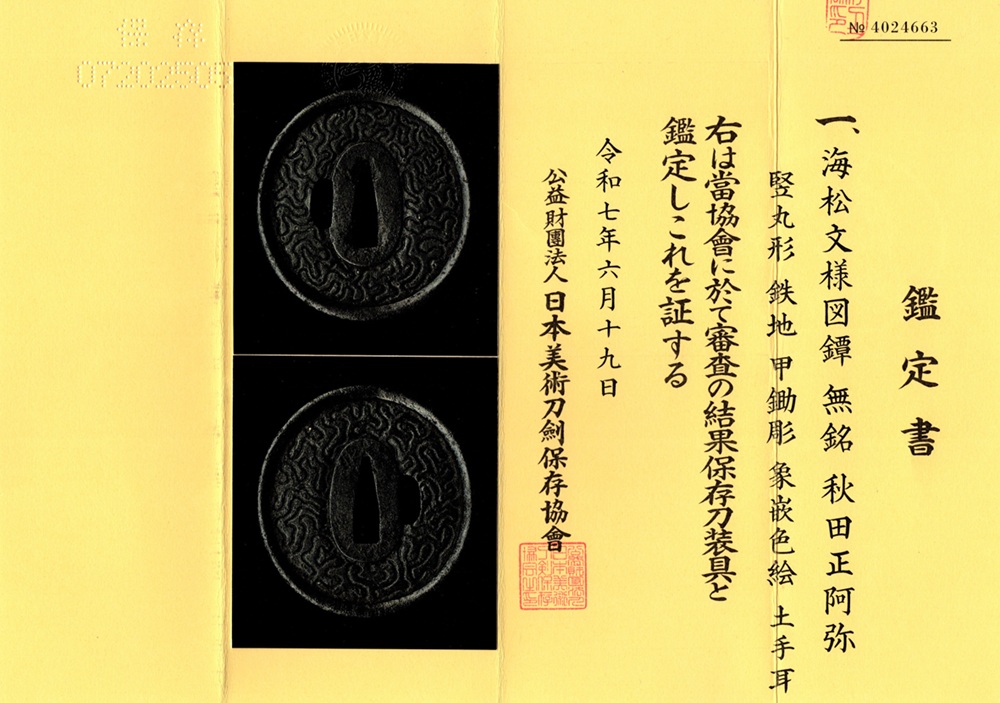
Akita Shoami was a branch of the Shoami school that flourished in Akita during the Edo period, leaving behind excellent metalwork pieces centered around the first generation Shoami Denbei. This work is a tatemaru-gata tetsu-ji tsuba considered to be a work from around the mid-Edo period, expressing irregular curved patterns reminiscent of insects crawling or eating their way across the entire surface in senbori. Iroe of tsuyu-zogan remains in places, adding variety to the blackish tetsu-ji. The mimi is a dotemimi, exuding a sense of weight and showing a unique charm despite its simplicity. It is attributed to Akita Shoami and passed the Hozon Tosogu Shinsa in Reiwa 7 (2025).
NihontoWatchOffered by Touken Matsumoto
11 on the market

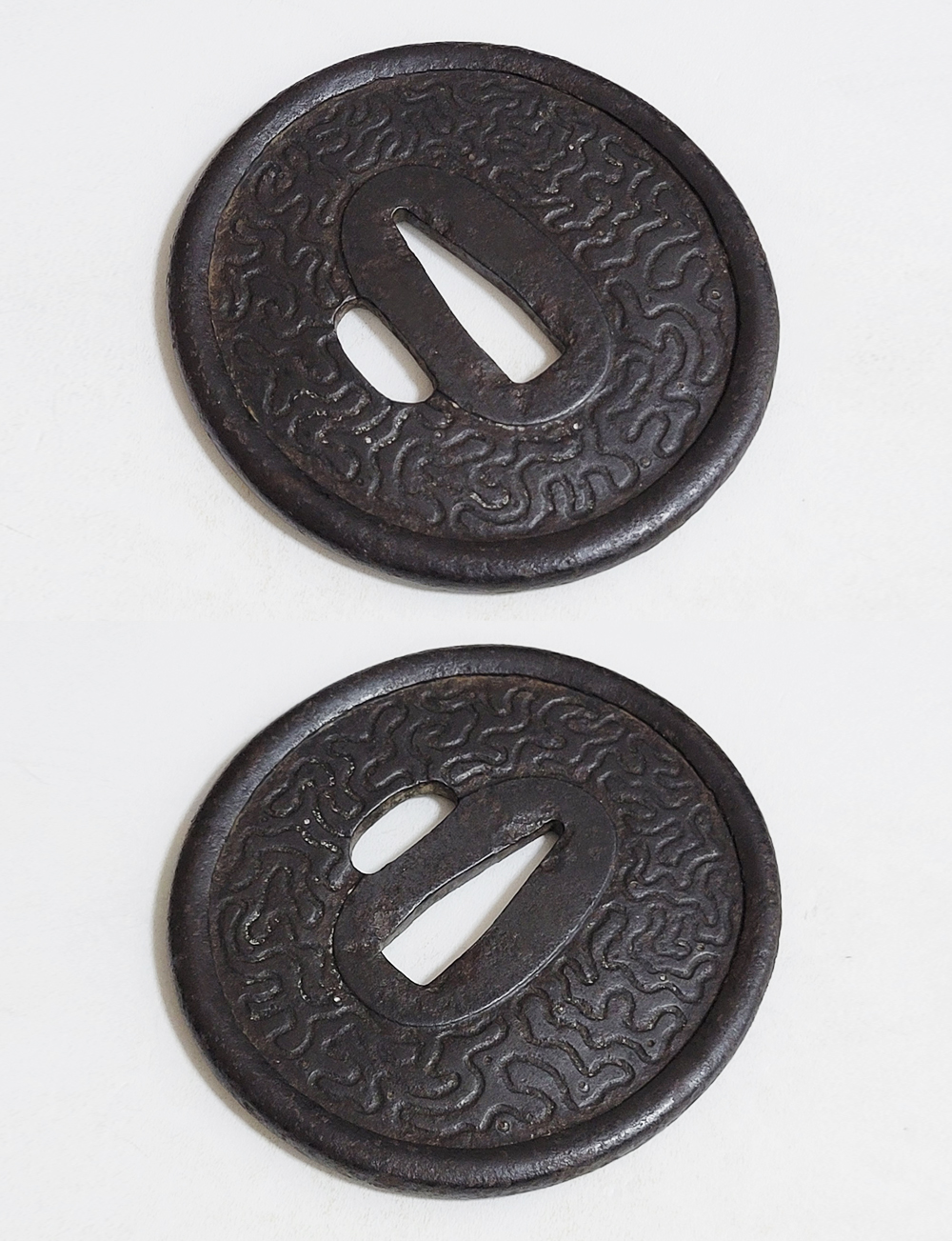
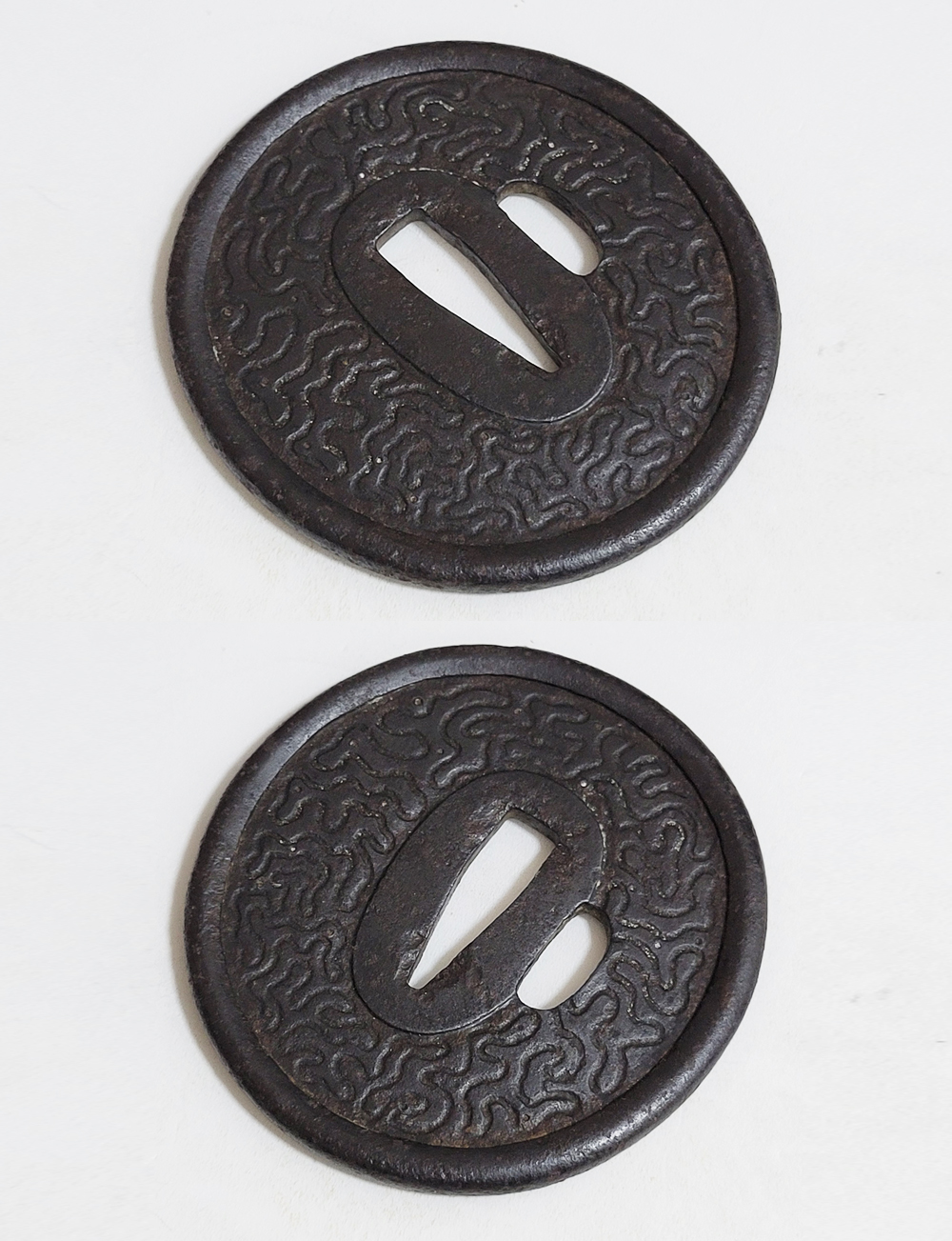
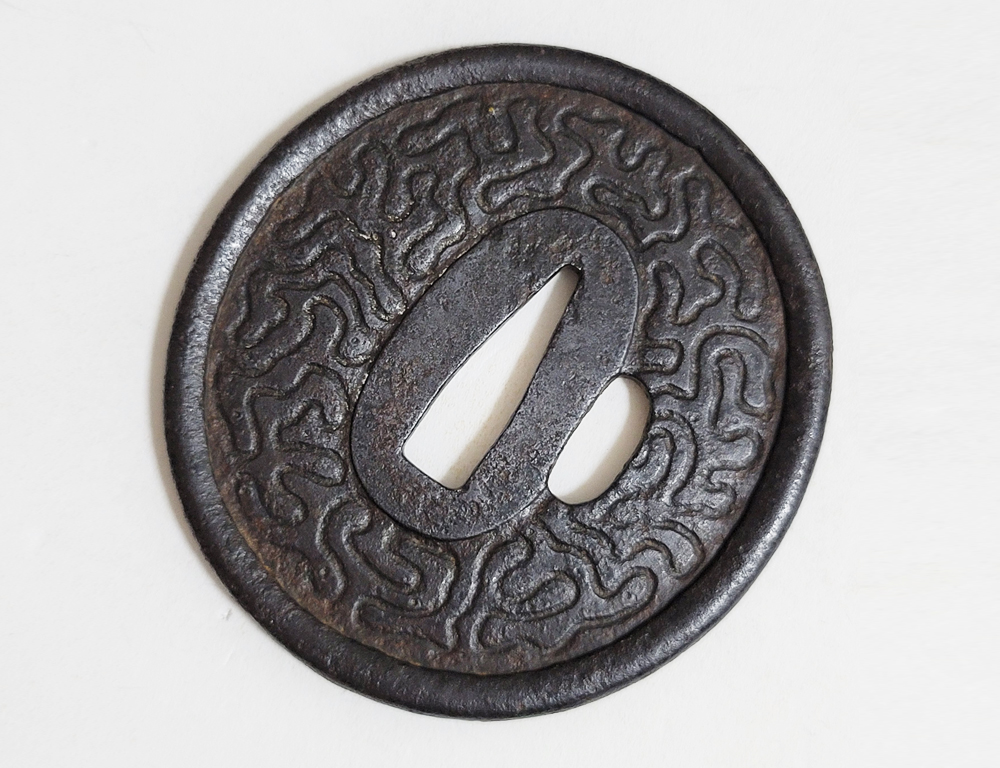
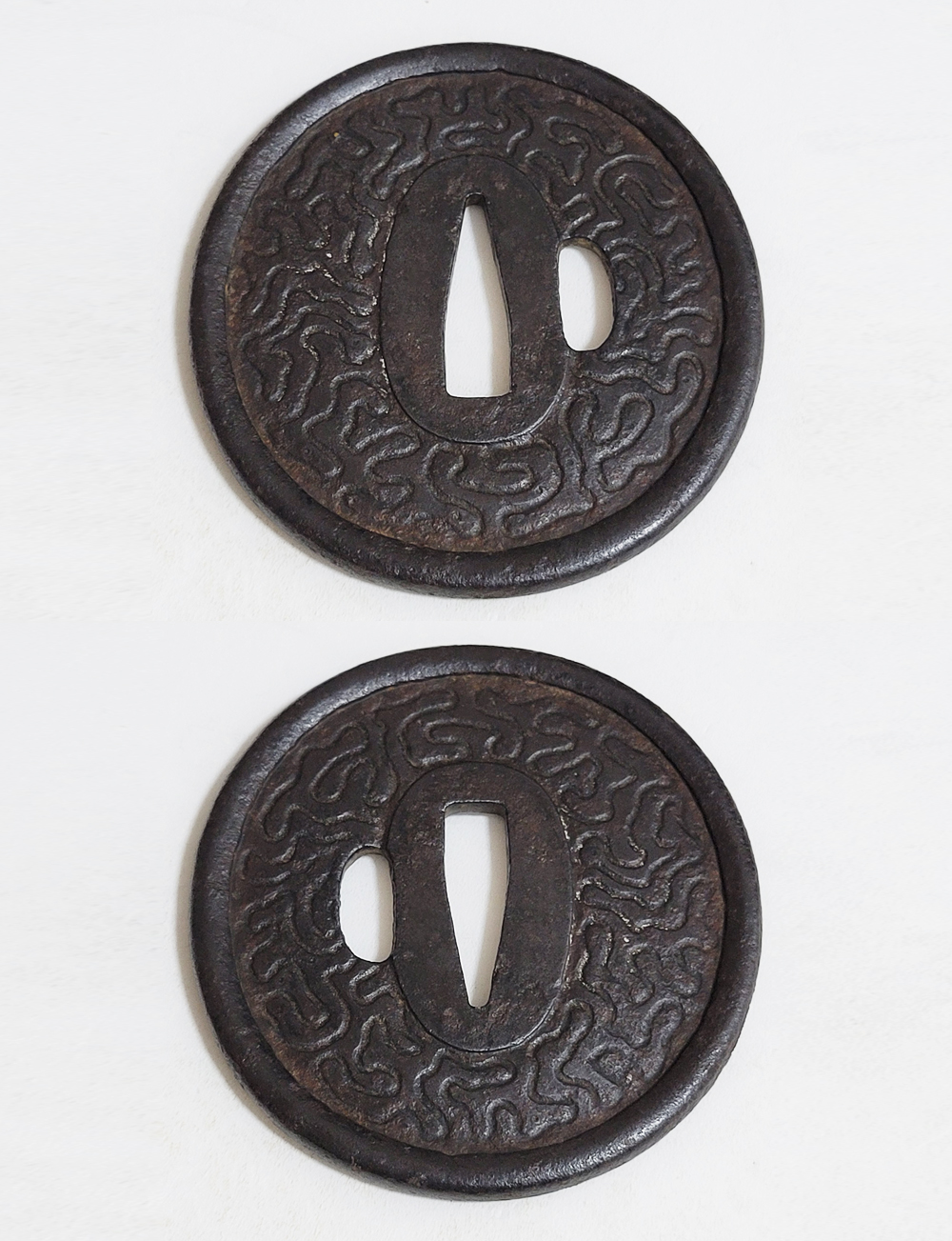
As written by the shop
Machine translation from the shop's Japanese · may contain errors ·
Iron-tsuba · Dewa
11 pieces on the market now
| Smith | Era | Designated |
|---|---|---|
| Denshichi伝七 | 1670 | 1 |
| Shoami Rokuya正阿弥六弥 | — | 1 |
Certifies a genuine fitting worth preserving: a correct signature, or, if unsigned, an identifiable era and school, with recognized artistic and craft value.
The NBTHK (Nihon Bijutsu Tōken Hozon Kyōkai, the Society for the Preservation of Japanese Art Swords) is a public-interest incorporated foundation founded in 1948 and supervised by Japan’s Agency for Cultural Affairs (Bunkachō); it is based at the Japanese Sword Museum in Tokyo. Its expert panels physically examine each submitted work (shinsa) and issue a certificate (kanteishō) ranking it by artistic and historical merit. NBTHK papers are the most widely recognized standard of authentication for Japanese swords and fittings.
NBTHK official siteReturns within 7 days of the item's arrival. Returns are not possible if (1) the item has been altered, or (2) for overseas transactions.
¥100,000