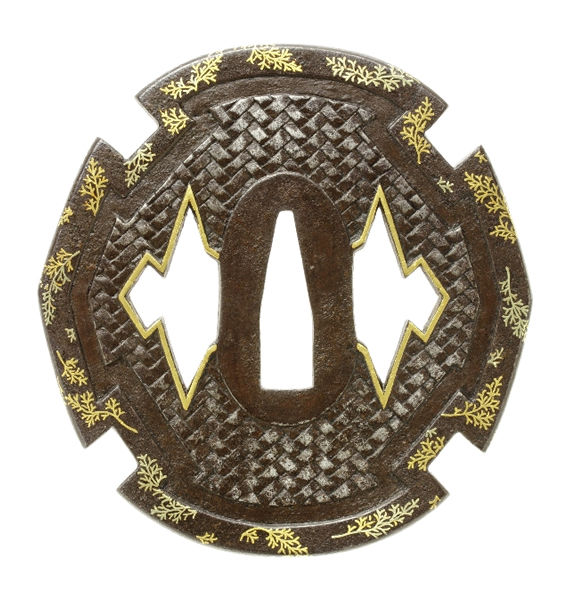
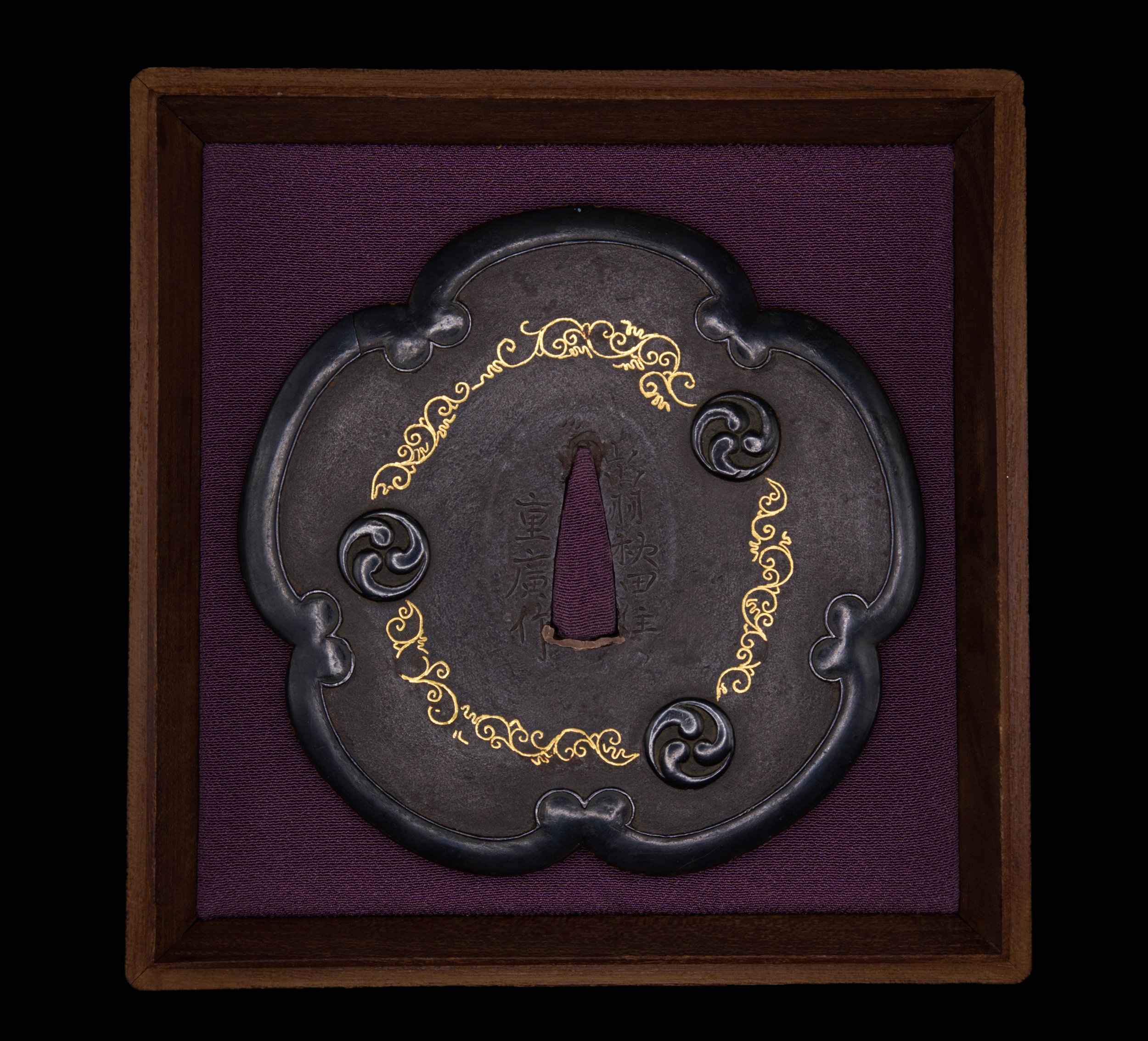
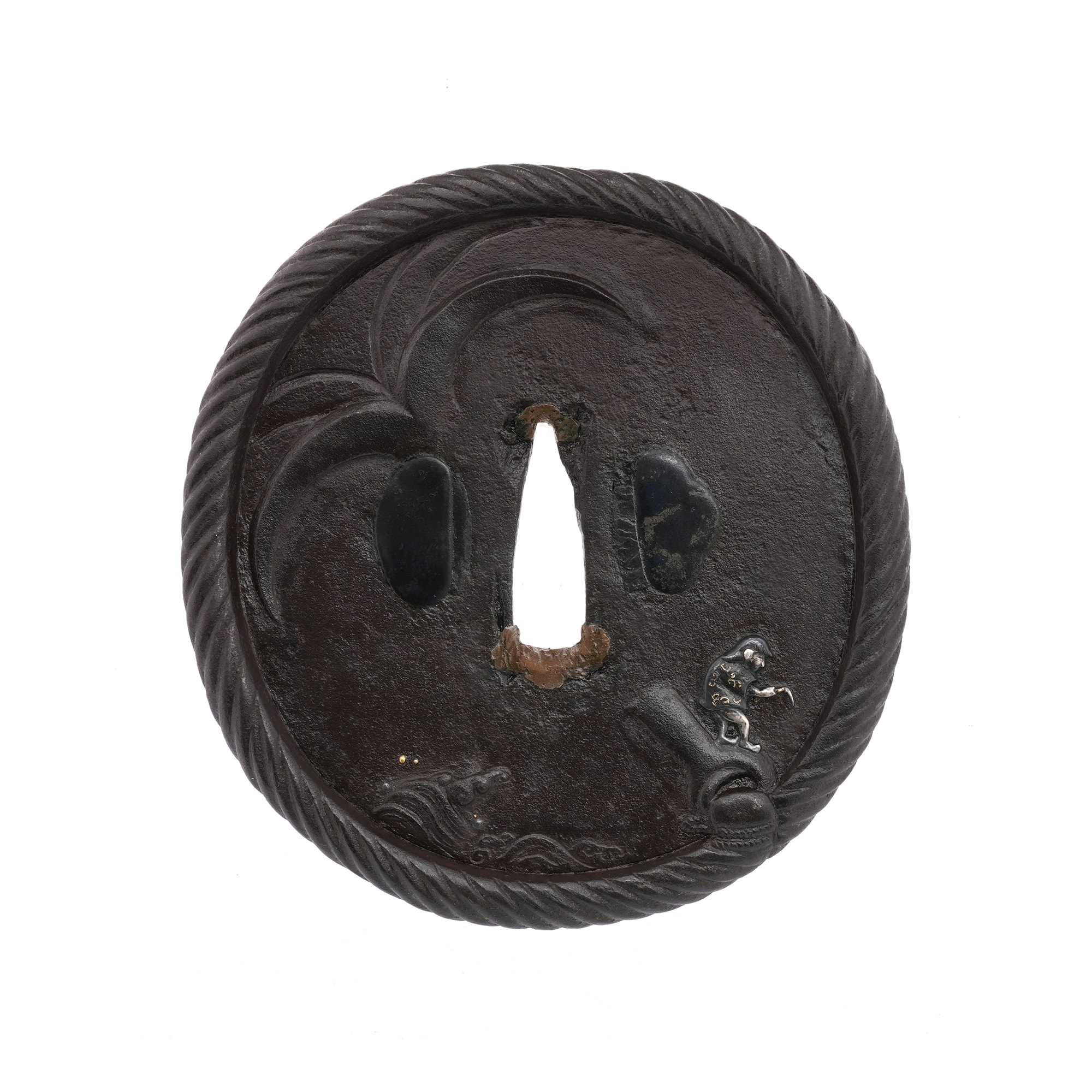
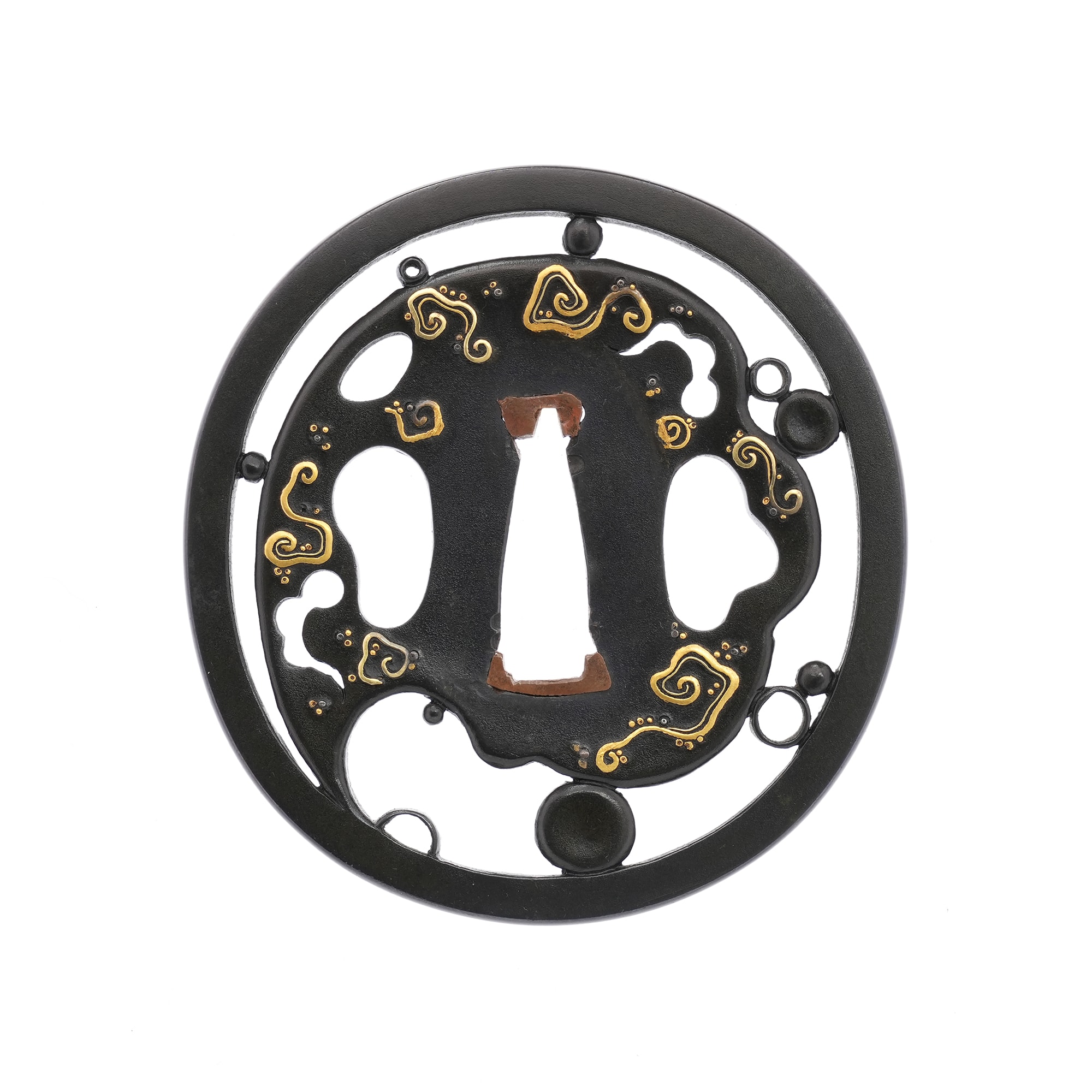
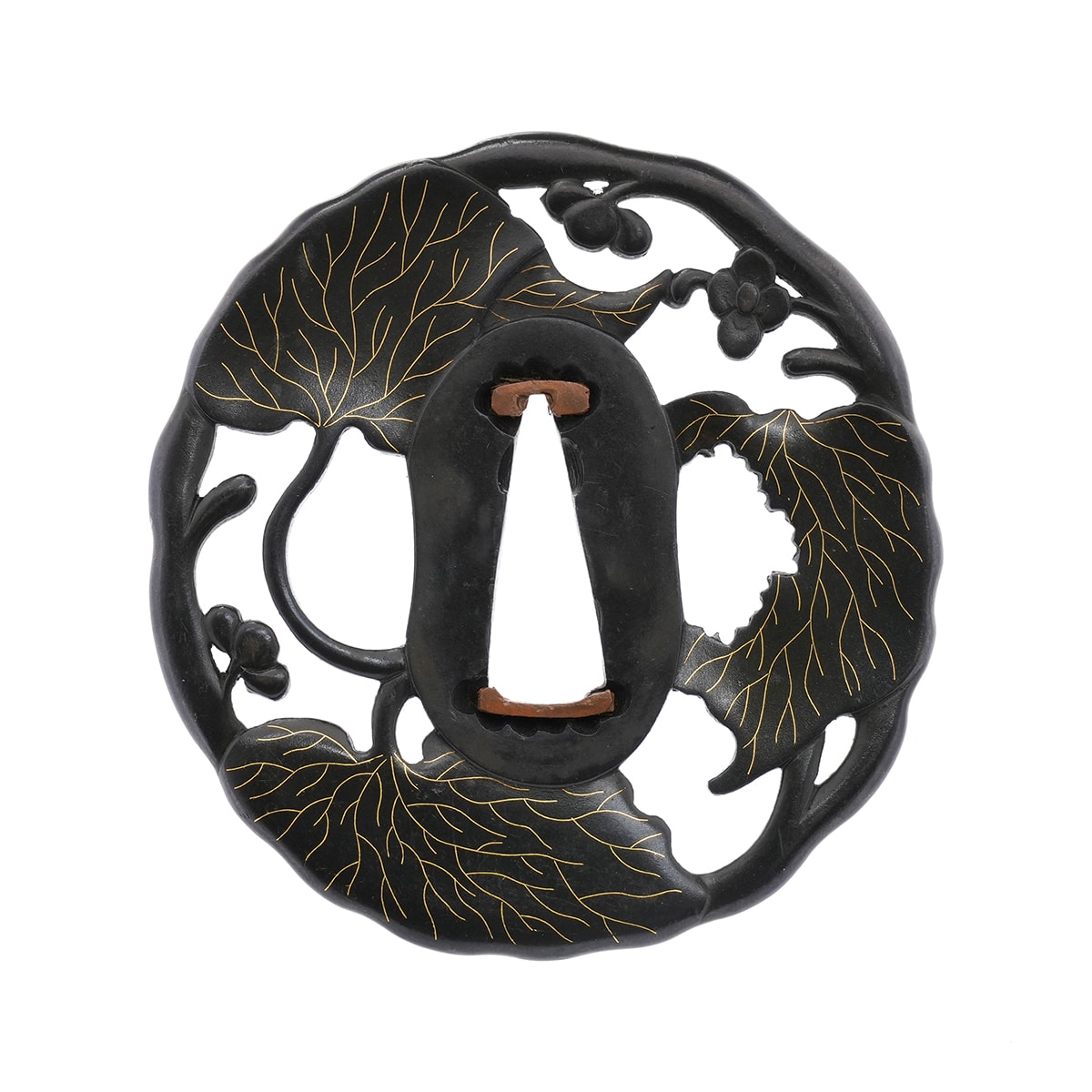
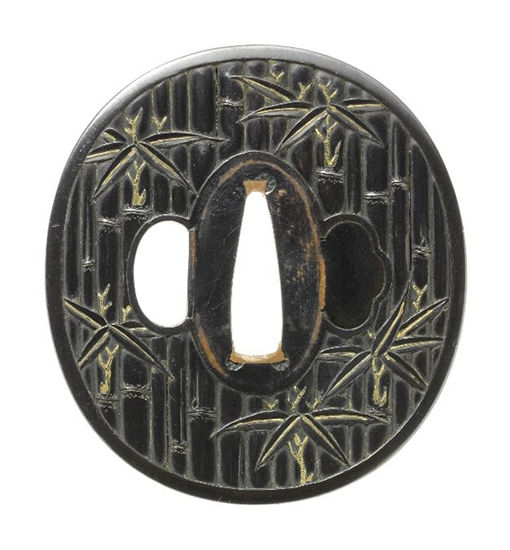
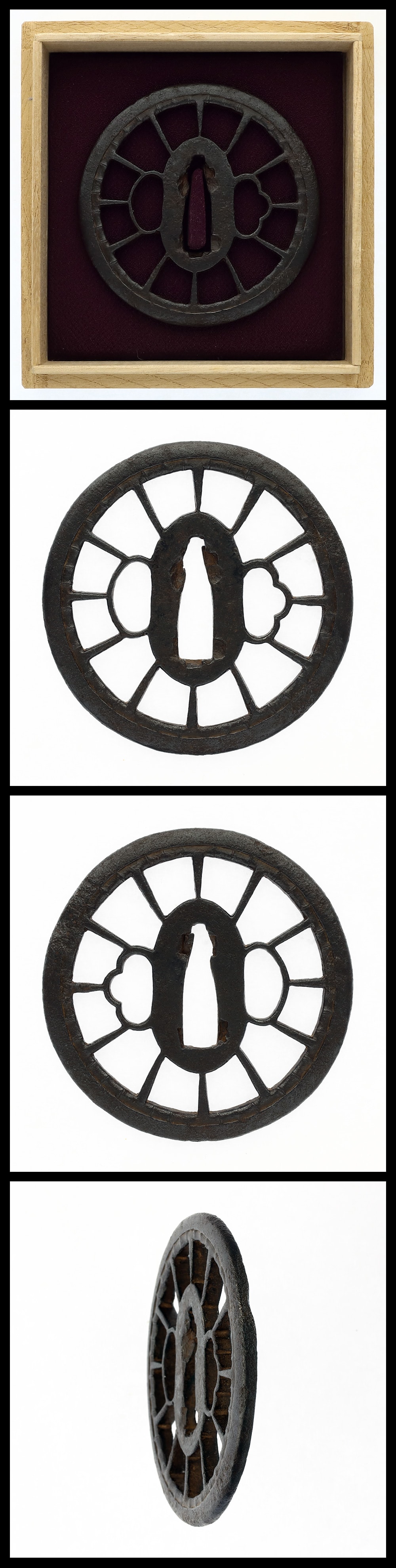
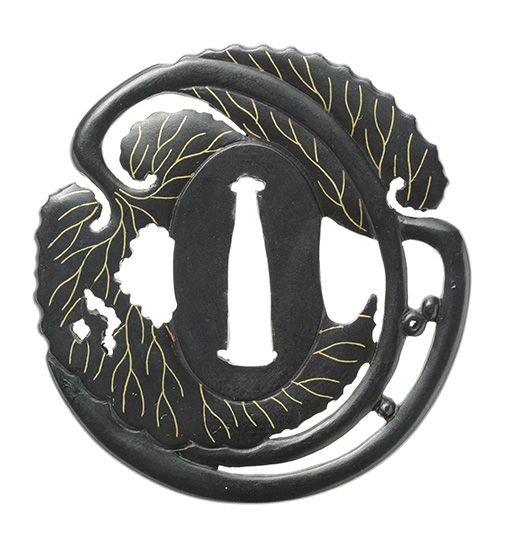
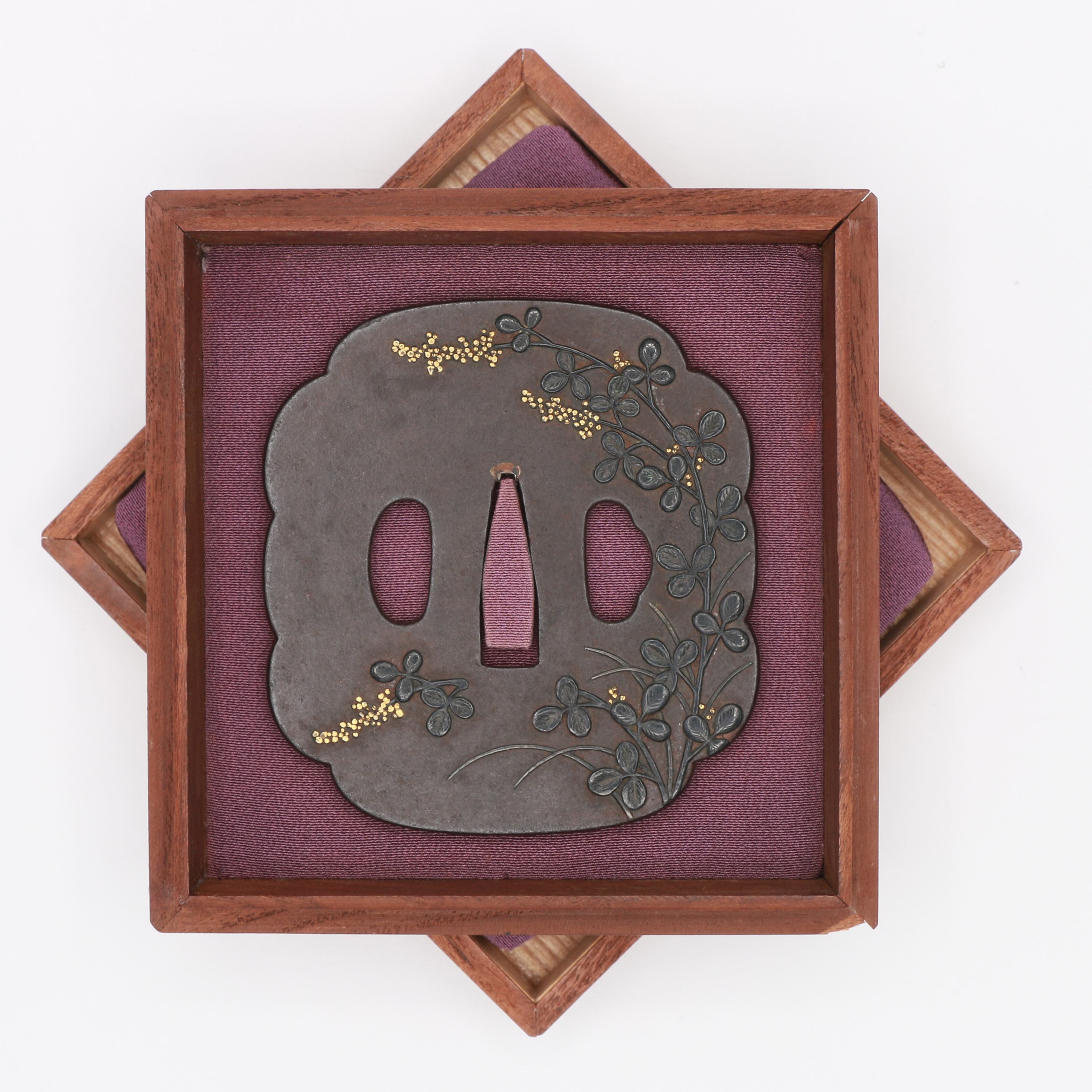
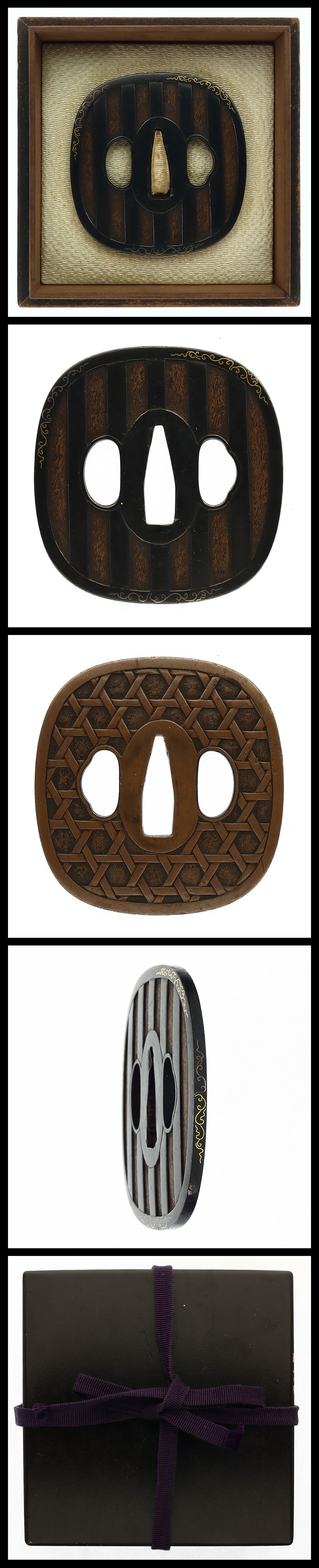
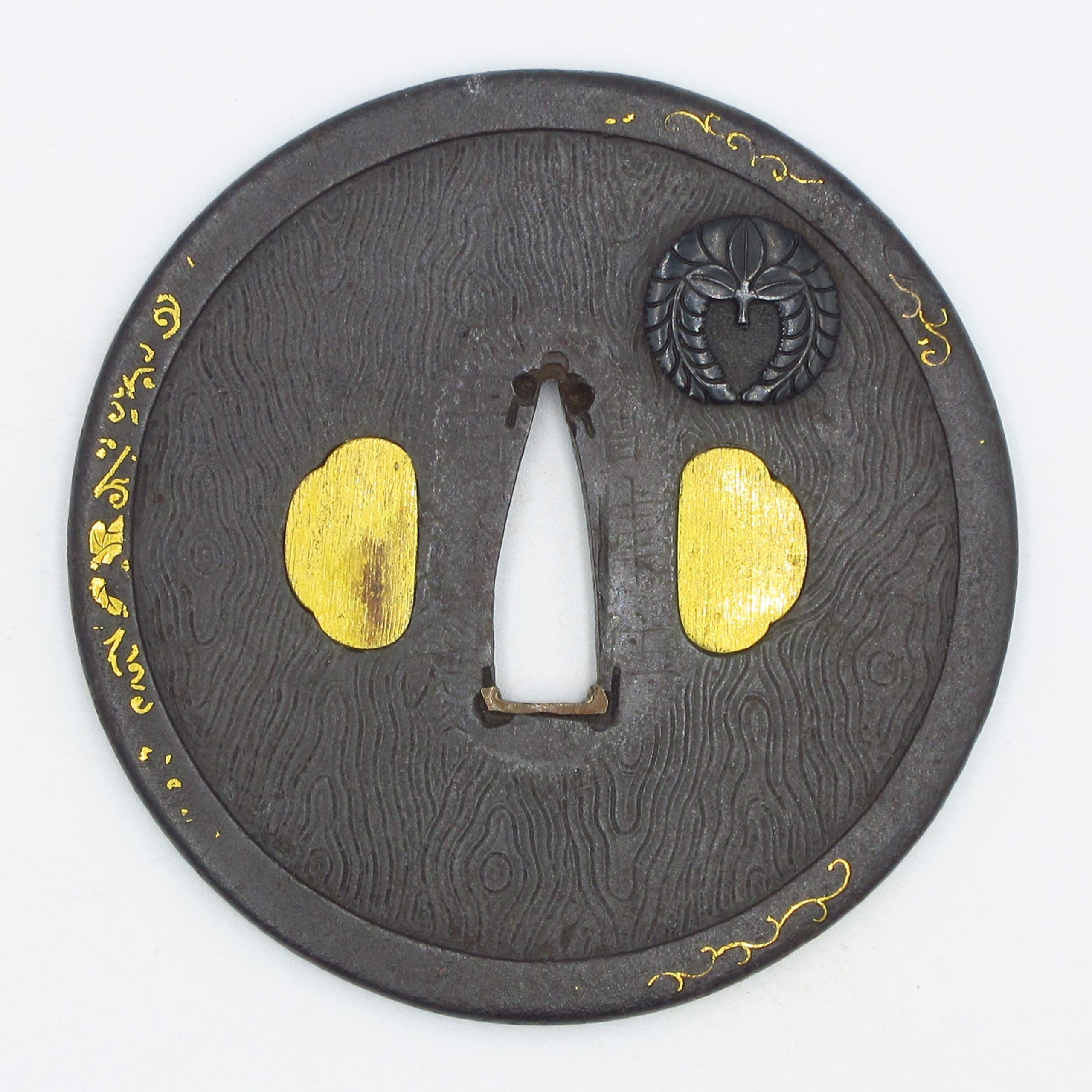
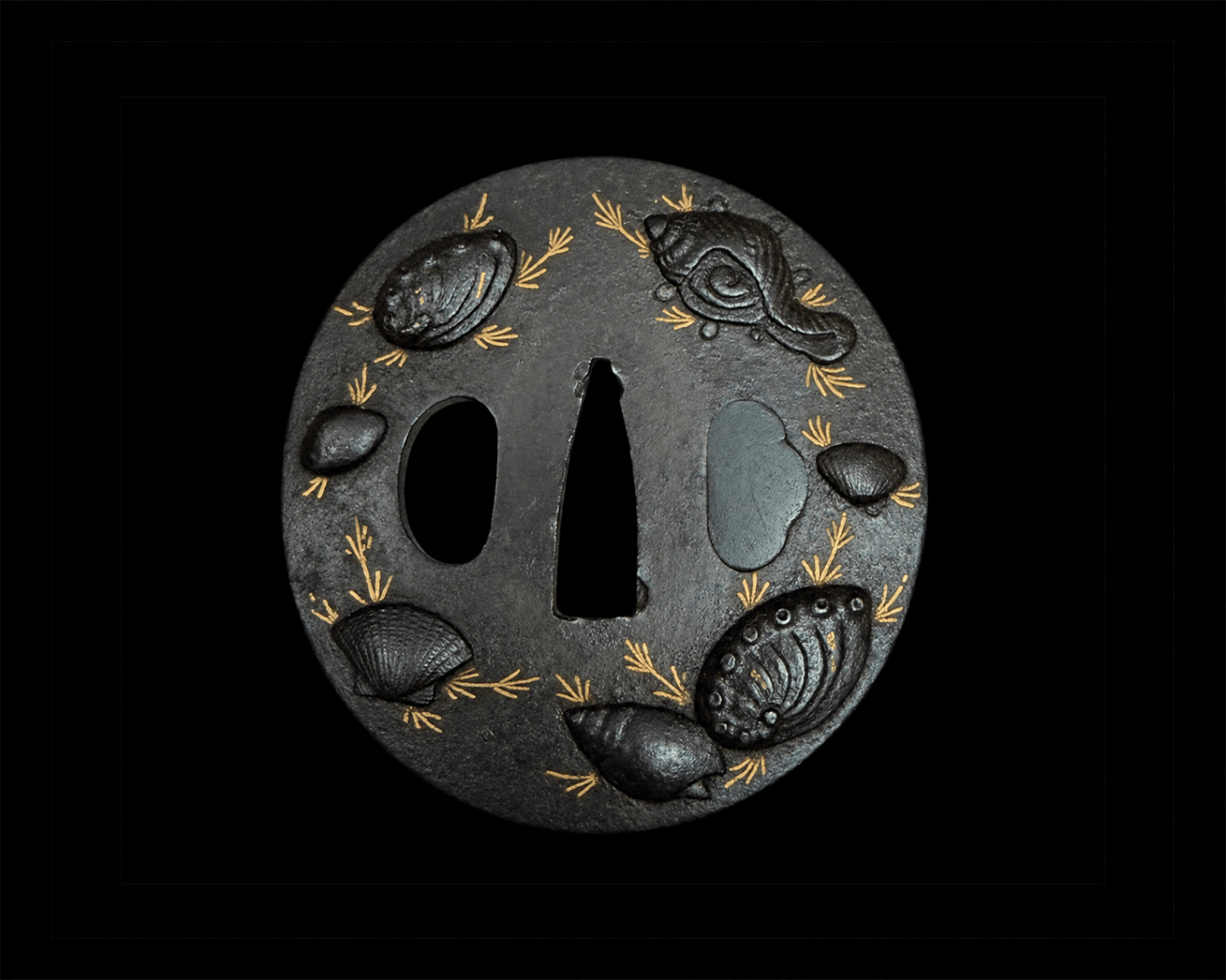
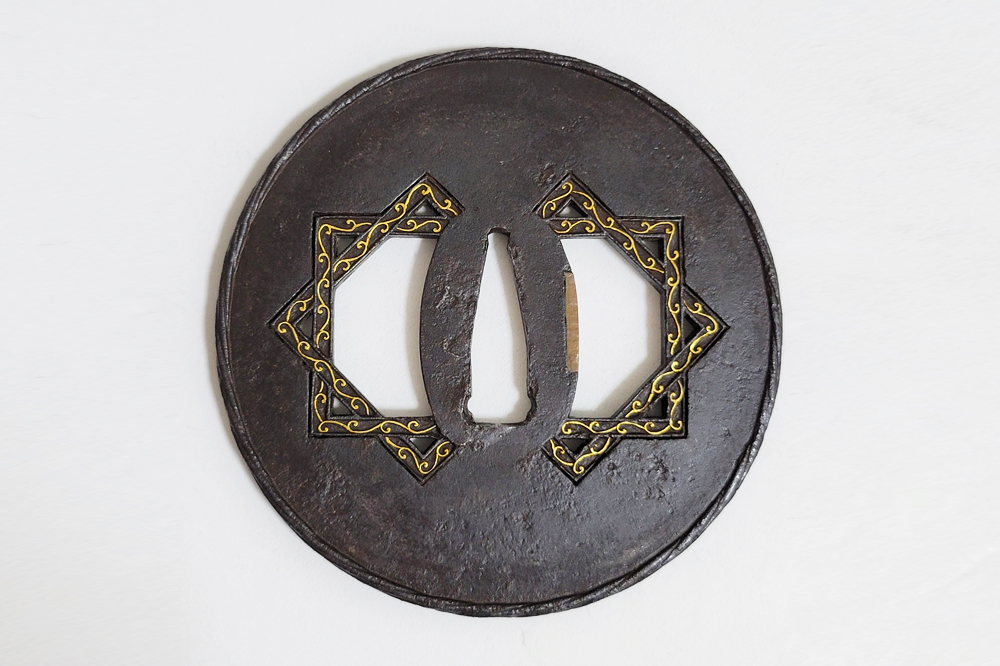
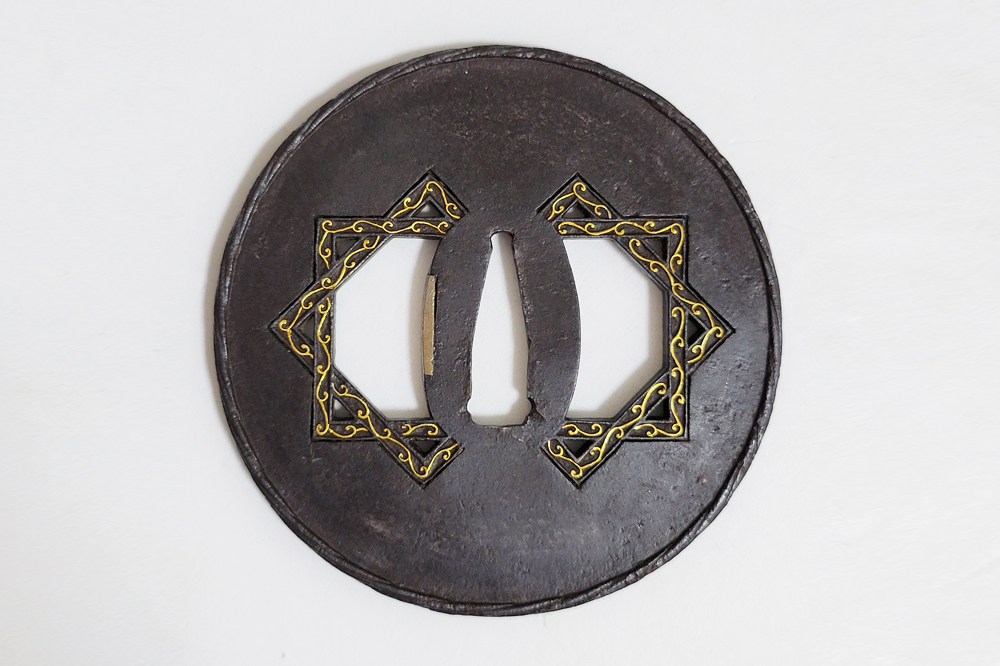
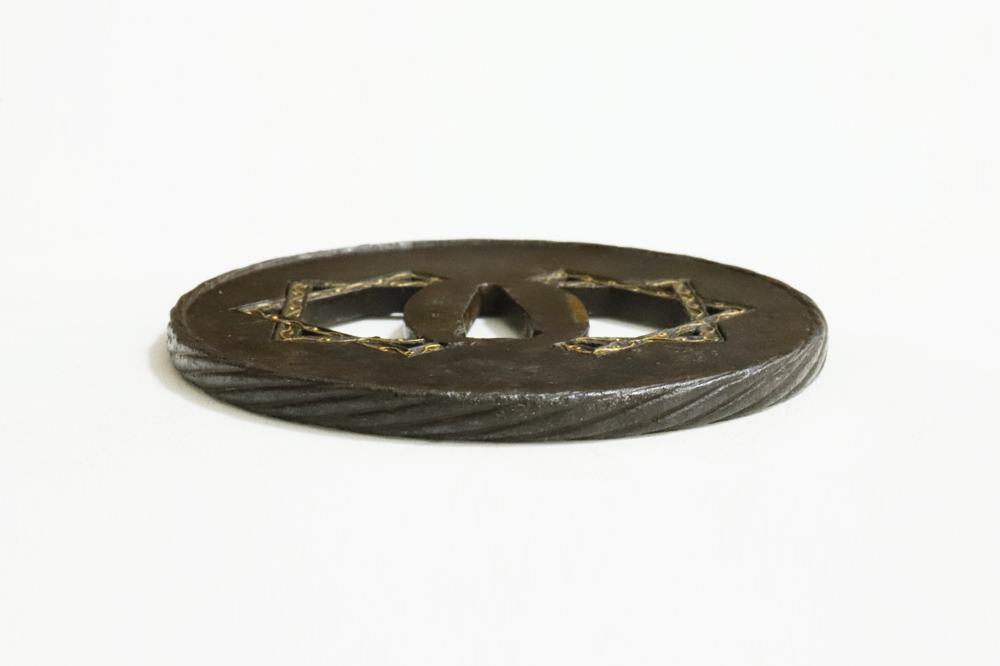
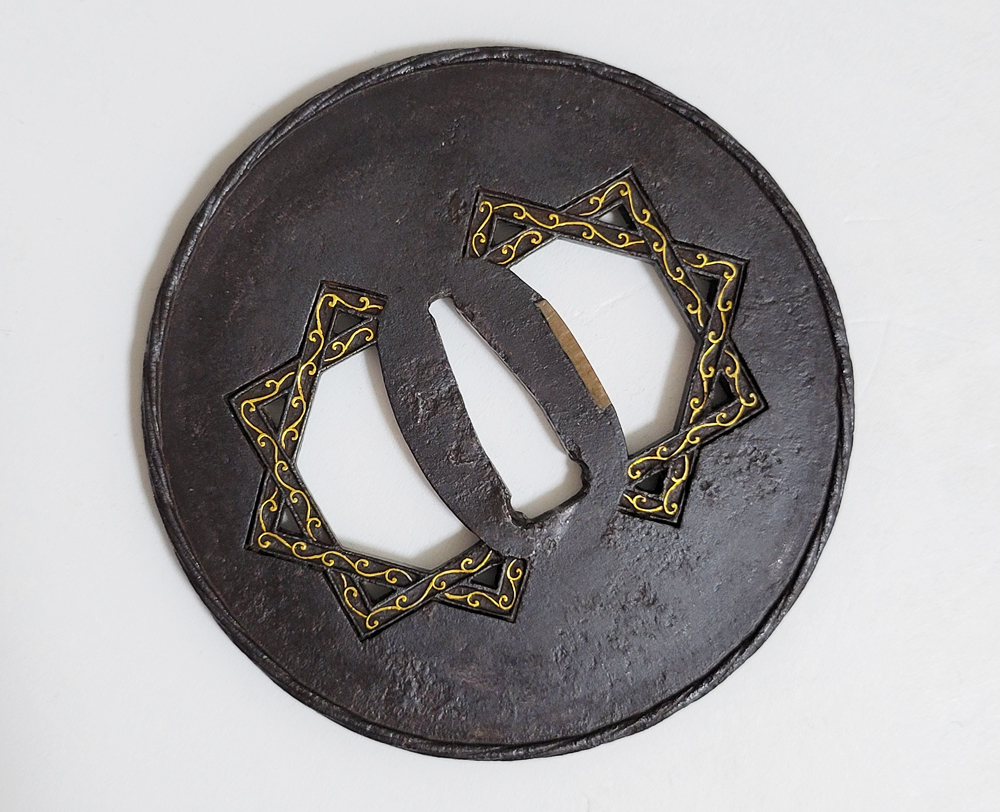
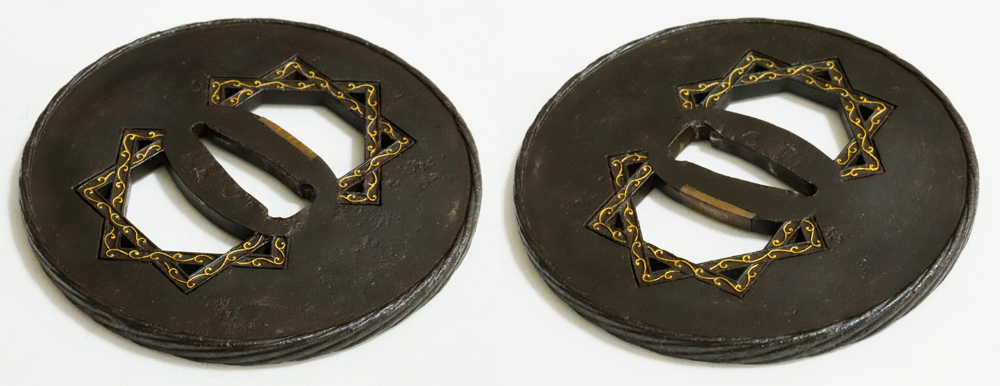
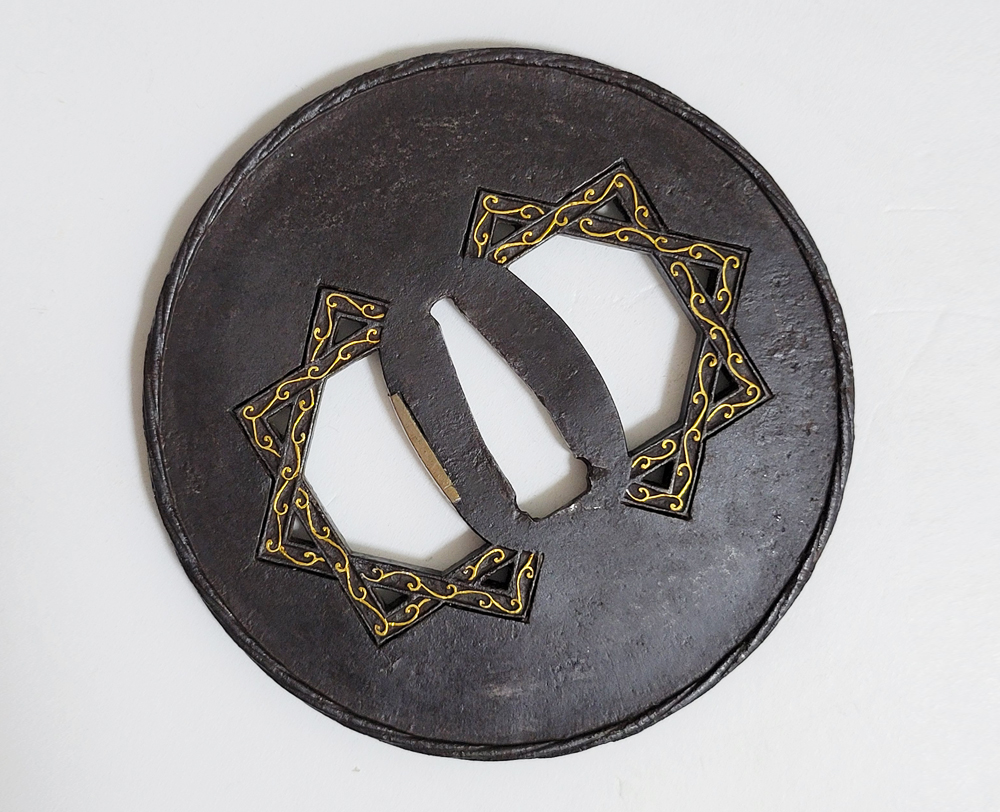
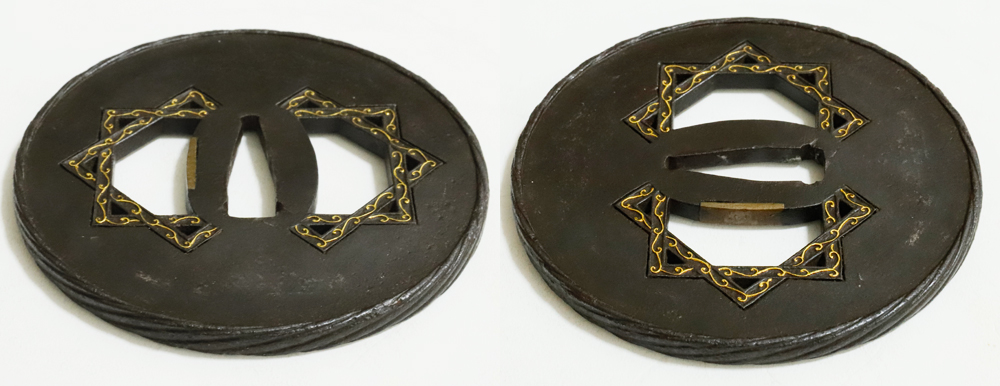
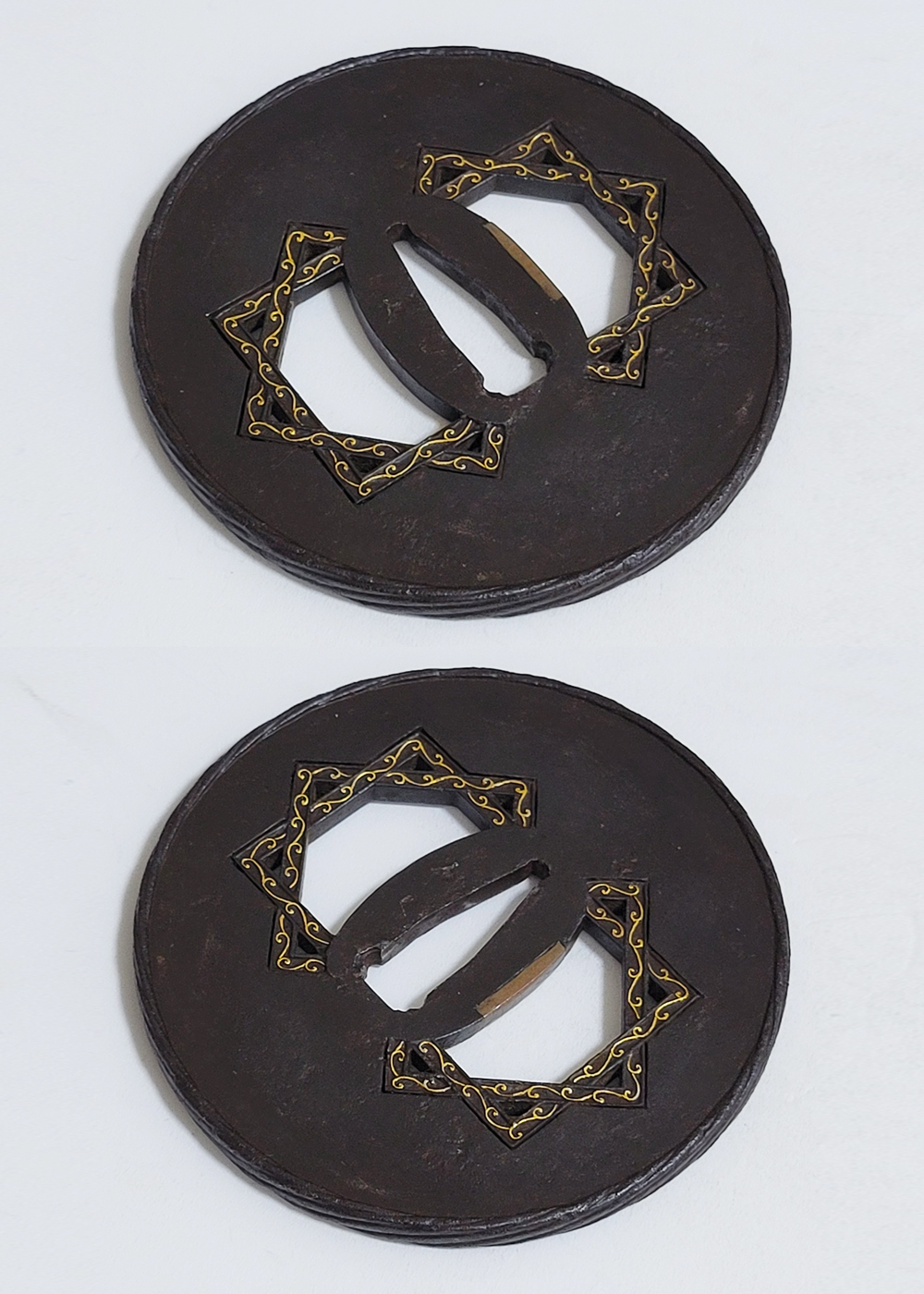
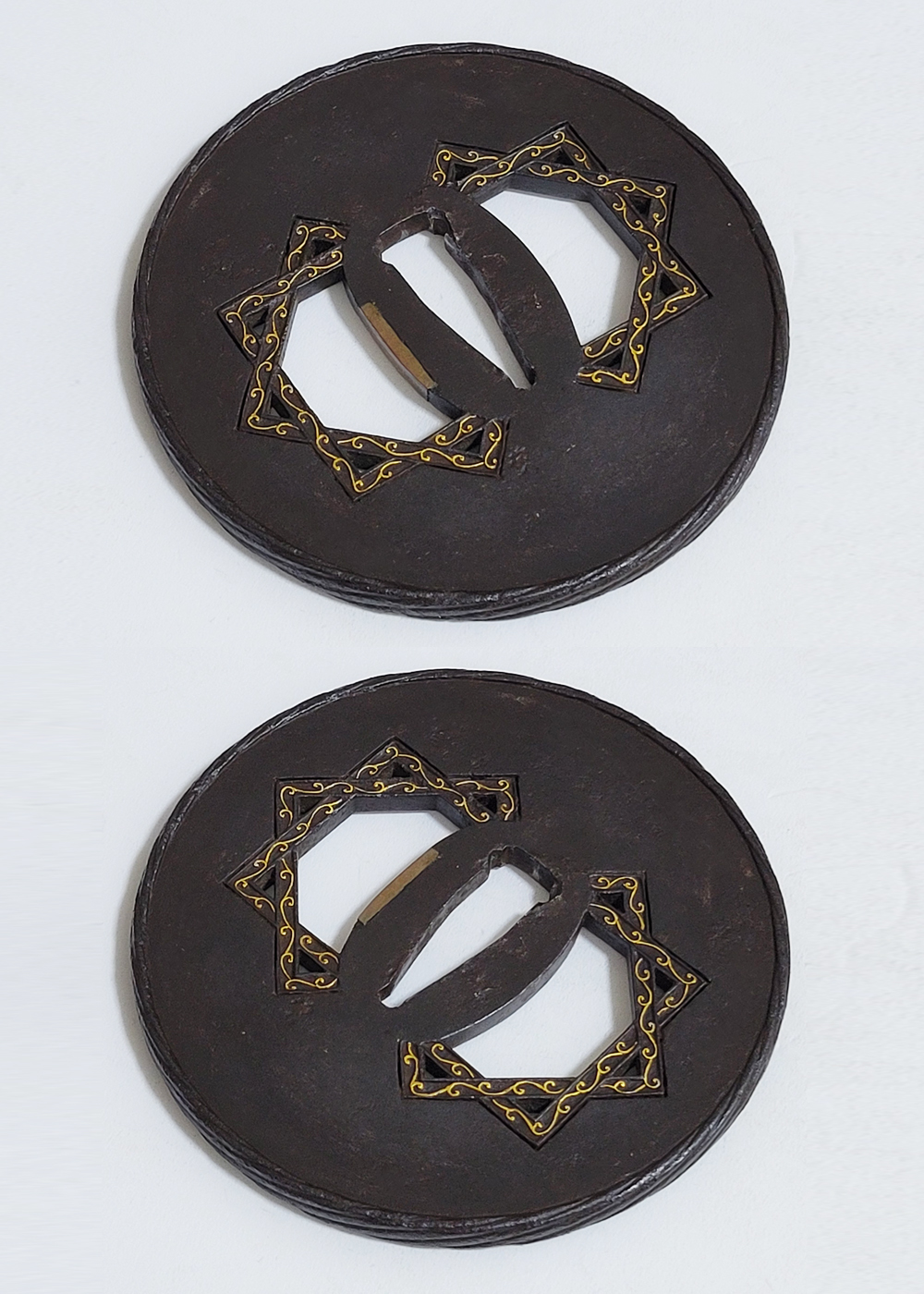
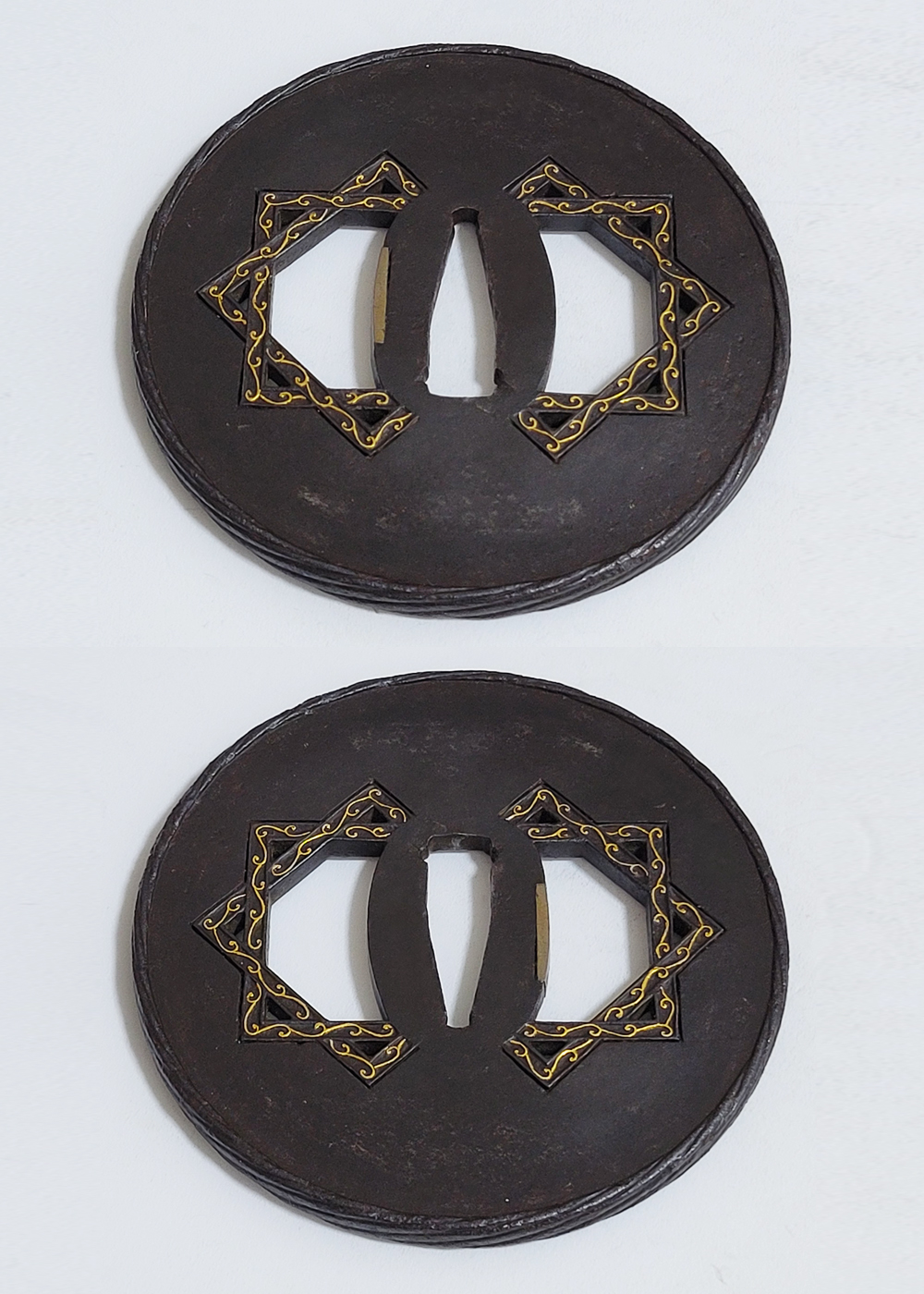
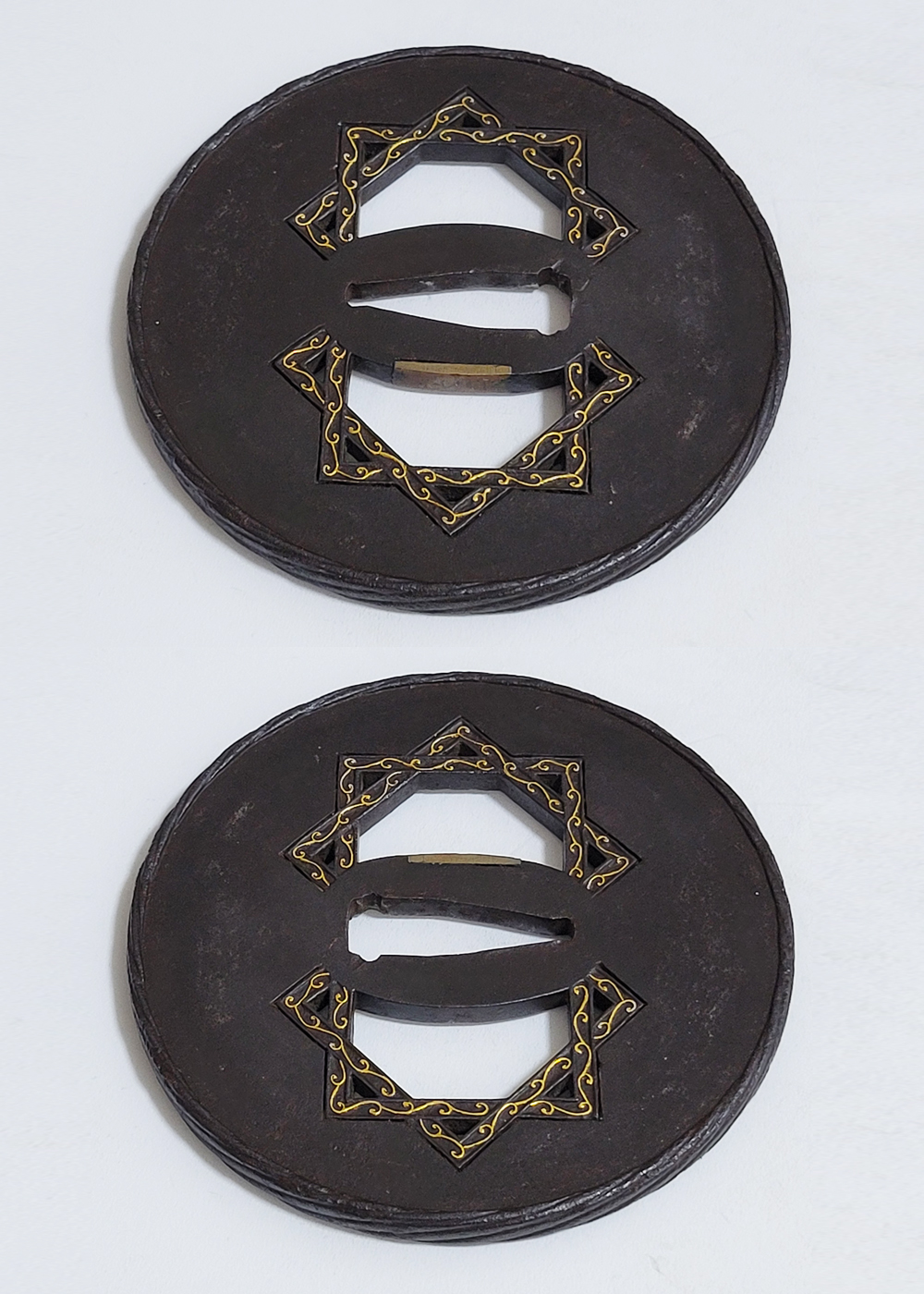
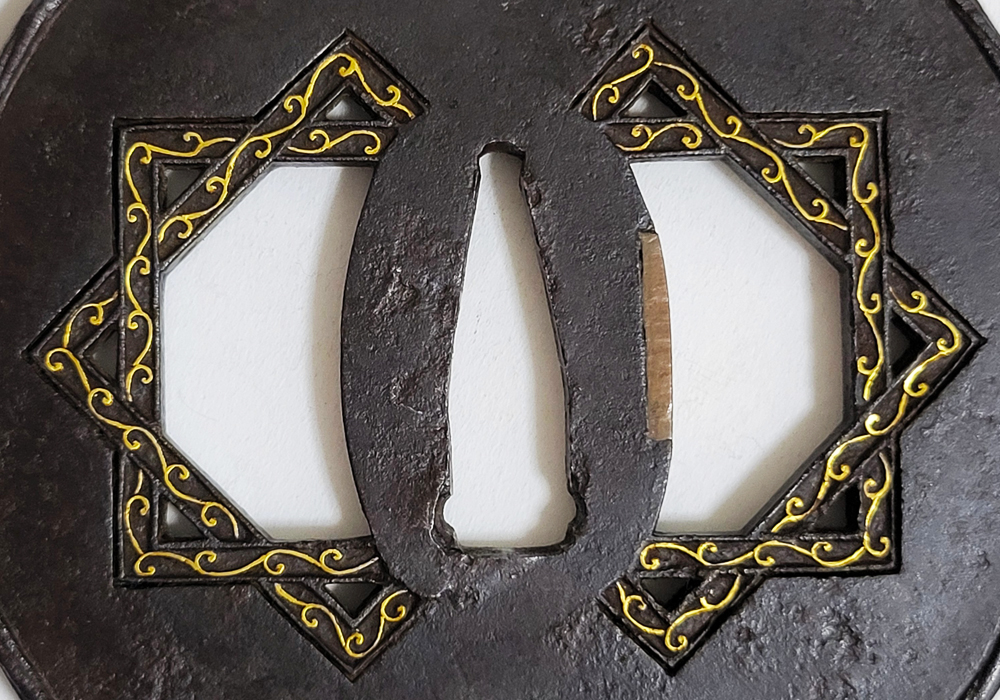
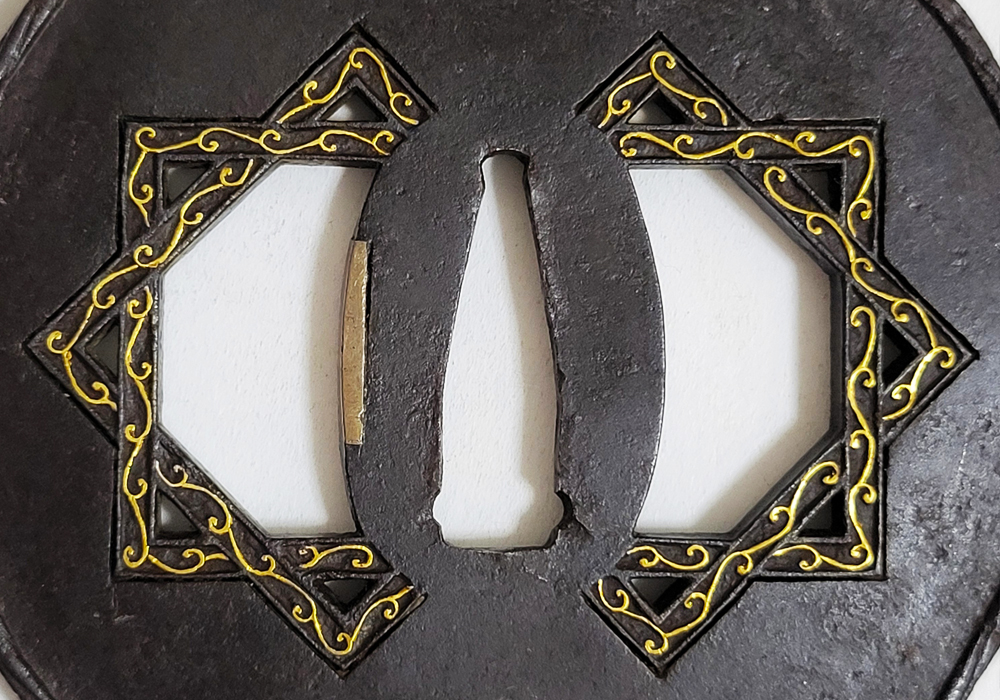
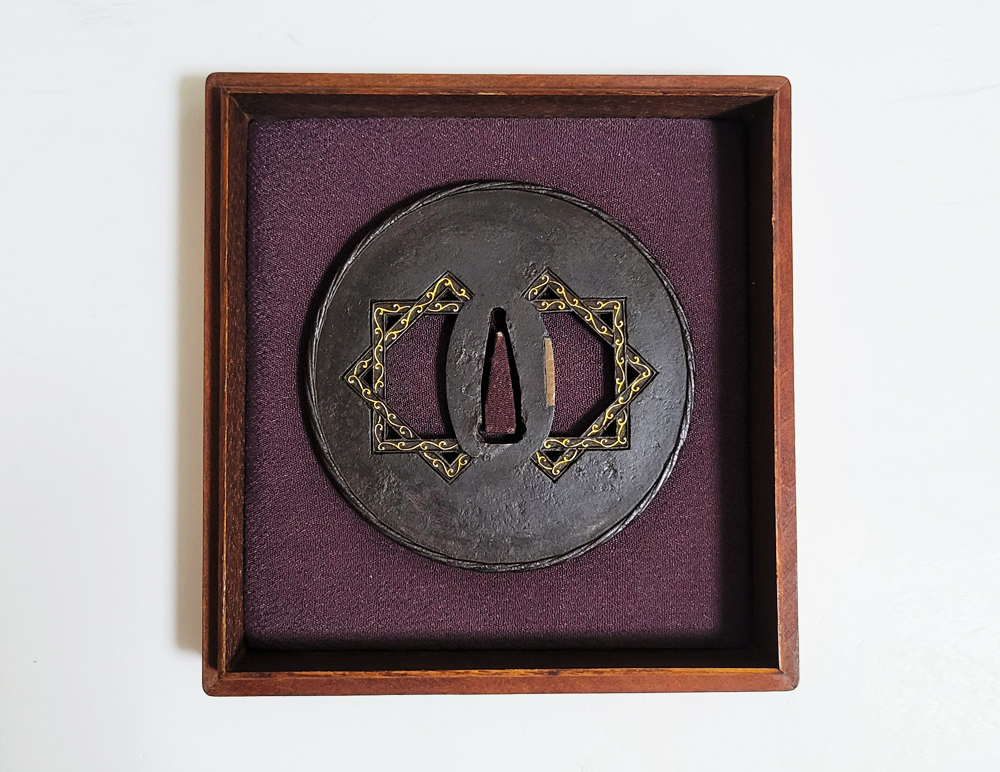
This large tsuba features a robust iron ground with a finely crafted rope-patterned rim. Asymmetrical kakumon (angular crests) are arranged in openwork and sukidashi-bori, elegantly adorned with gold inlay arabesque patterns along their edges. The geometric kakumon and delicate gold inlay curves harmoniously blend, creating a dignified aesthetic. While maintaining the traditional Shoami style, the design reveals a unique originality. It was judged as Akita Shoami and passed Hozon Tosogu certification in February 2026.
 NihontoWatch
mumei · Akita Shoami · mid Edo (Kanbun era, c. 1660s)
Akita-Shoami School
mid Edo (Kanbun era, c. 1660s)
Dewanokuni
Unsigned
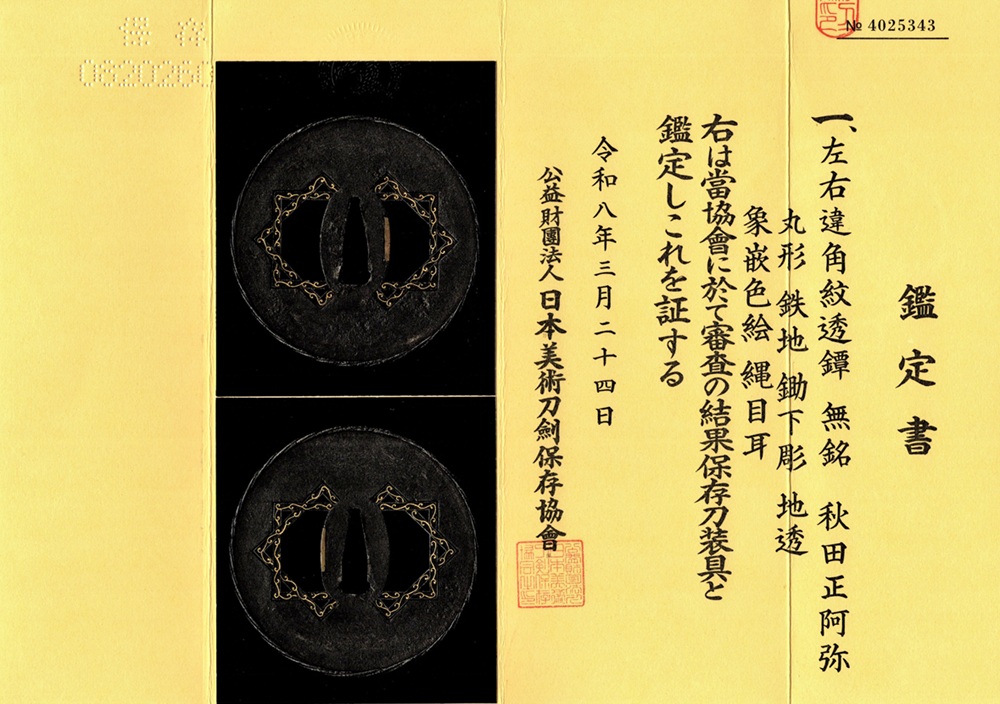
Hozon (NBTHK)
Iron-tsuba · Dewa
10 pieces on the market now
| Smith | Era | Designated |
|---|---|---|
| Shoami Rokuya正阿弥六弥 | — | 1 |
| Denshichi伝七 | 1670 | 1 |
Certifies a genuine fitting worth preserving: a correct signature, or, if unsigned, an identifiable era and school, with recognized artistic and craft value.
The NBTHK (Nihon Bijutsu Tōken Hozon Kyōkai, the Society for the Preservation of Japanese Art Swords) is a public-interest incorporated foundation founded in 1948 and supervised by Japan’s Agency for Cultural Affairs (Bunkachō); it is based at the Japanese Sword Museum in Tokyo. Its expert panels physically examine each submitted work (shinsa) and issue a certificate (kanteishō) ranking it by artistic and historical merit. NBTHK papers are the most widely recognized standard of authentication for Japanese swords and fittings.
NBTHK official siteDomestic: items may be returned within 7 days in original condition for a full refund (buyer covers transport). Overseas orders: no-refunds, no-returns.
This large tsuba features a robust iron ground with a finely crafted rope-patterned rim. Asymmetrical kakumon (angular crests) are arranged in openwork and sukidashi-bori, elegantly adorned with gold inlay arabesque patterns along their edges. The geometric kakumon and delicate gold inlay curves harmoniously blend, creating a dignified aesthetic. While maintaining the traditional Shoami style, the design reveals a unique originality. It was judged as Akita Shoami and passed Hozon Tosogu certification in February 2026.
NihontoWatchmumei · Akita Shoami · mid Edo (Kanbun era, c. 1660s)
Akita-Shoami School
mid Edo (Kanbun era, c. 1660s)
Dewanokuni
Unsigned
Hozon (NBTHK)
Iron-tsuba · Dewa
10 pieces on the market now
| Smith | Era | Designated |
|---|---|---|
| Shoami Rokuya正阿弥六弥 | — | 1 |
| Denshichi伝七 | 1670 | 1 |
Certifies a genuine fitting worth preserving: a correct signature, or, if unsigned, an identifiable era and school, with recognized artistic and craft value.
The NBTHK (Nihon Bijutsu Tōken Hozon Kyōkai, the Society for the Preservation of Japanese Art Swords) is a public-interest incorporated foundation founded in 1948 and supervised by Japan’s Agency for Cultural Affairs (Bunkachō); it is based at the Japanese Sword Museum in Tokyo. Its expert panels physically examine each submitted work (shinsa) and issue a certificate (kanteishō) ranking it by artistic and historical merit. NBTHK papers are the most widely recognized standard of authentication for Japanese swords and fittings.
NBTHK official siteDomestic: items may be returned within 7 days in original condition for a full refund (buyer covers transport). Overseas orders: no-refunds, no-returns.