Modern Japan made the sword an exile, then an artwork: the 1876 Haitōrei ended sword wearing, the postwar ban nearly ended the craft, and the revival built on the NBTHK’s founding in 1948 remade it as a licensed art.
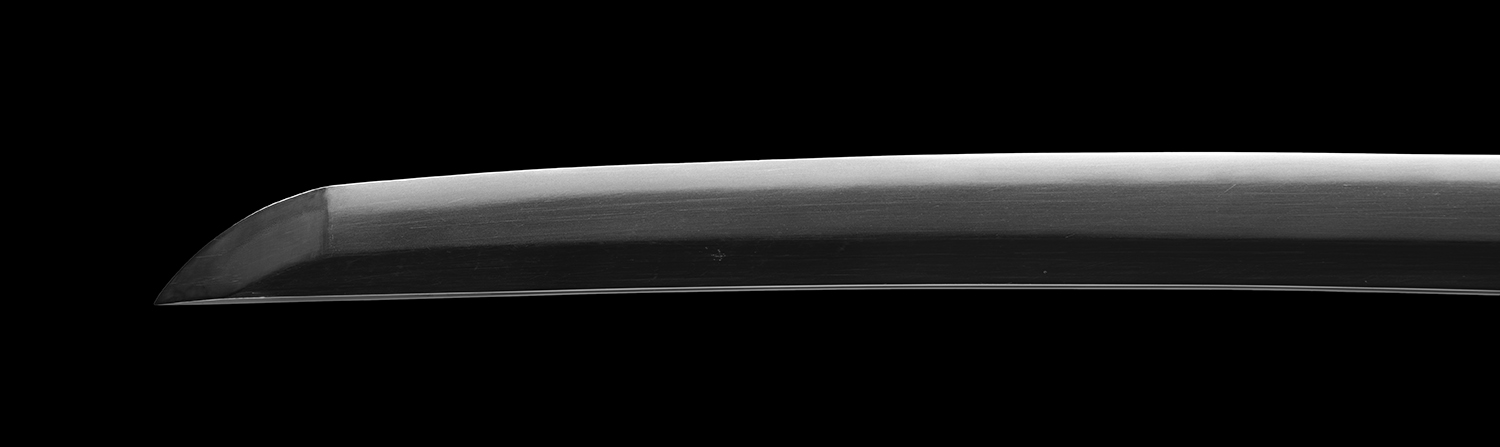
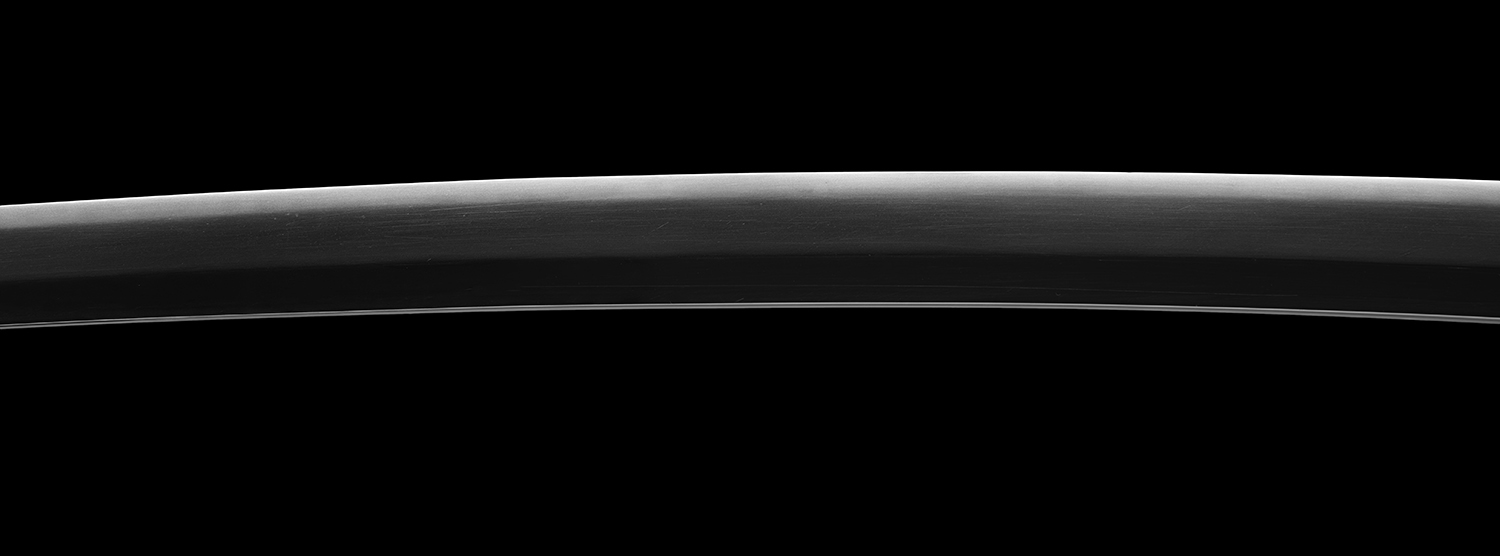
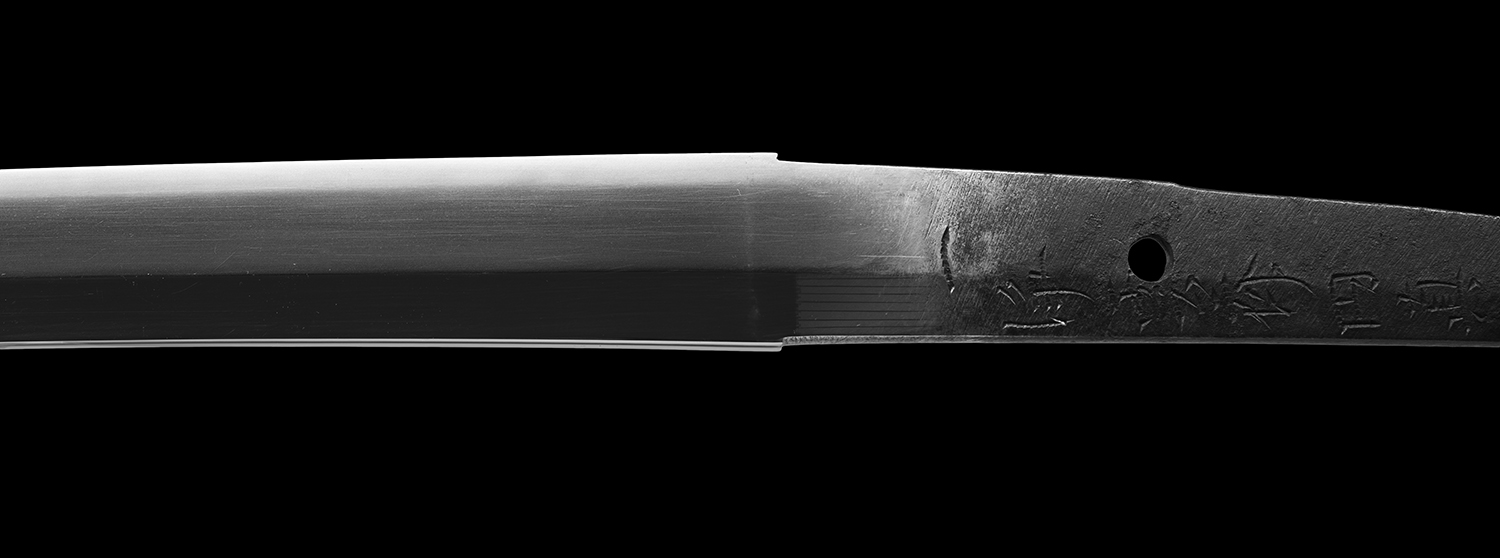
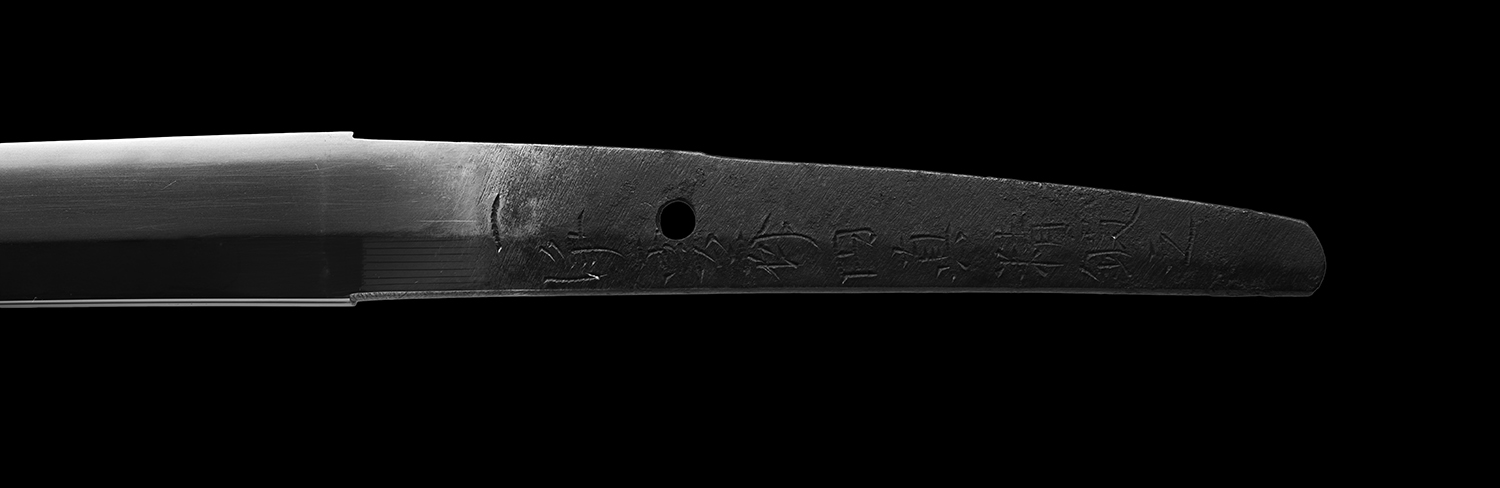
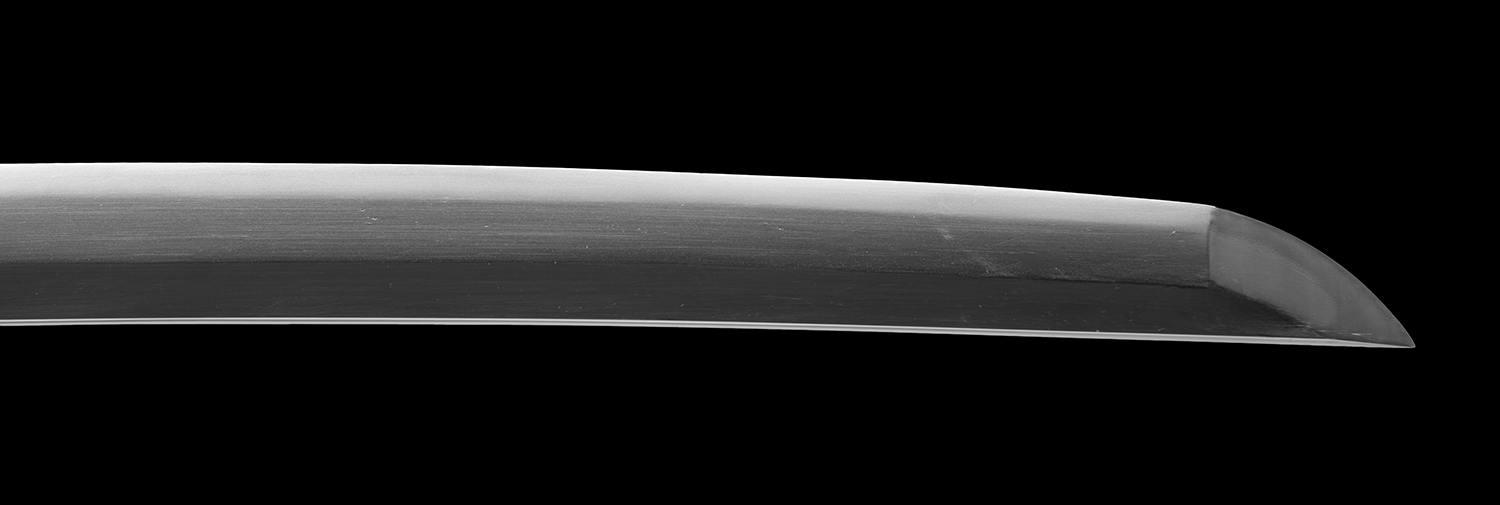
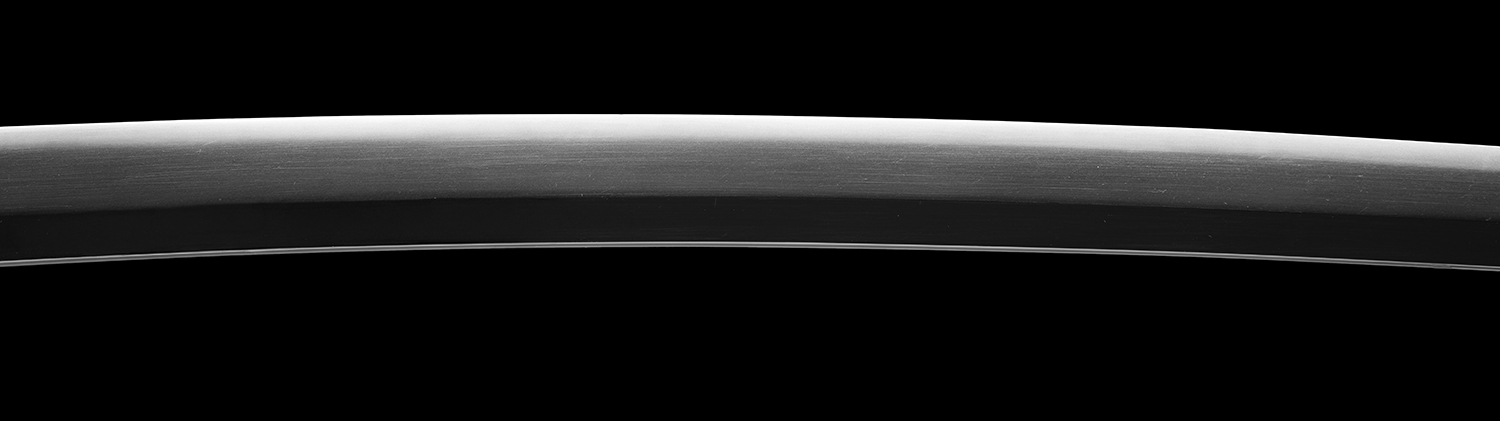
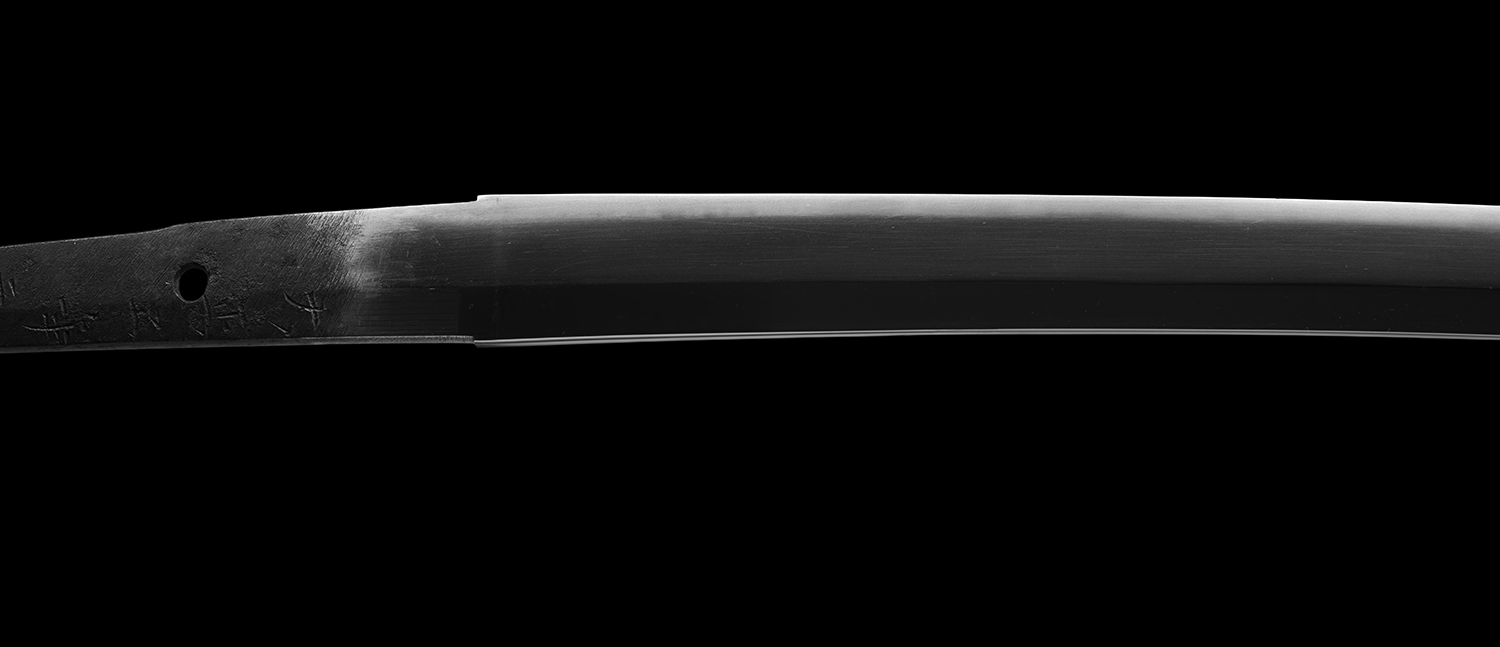
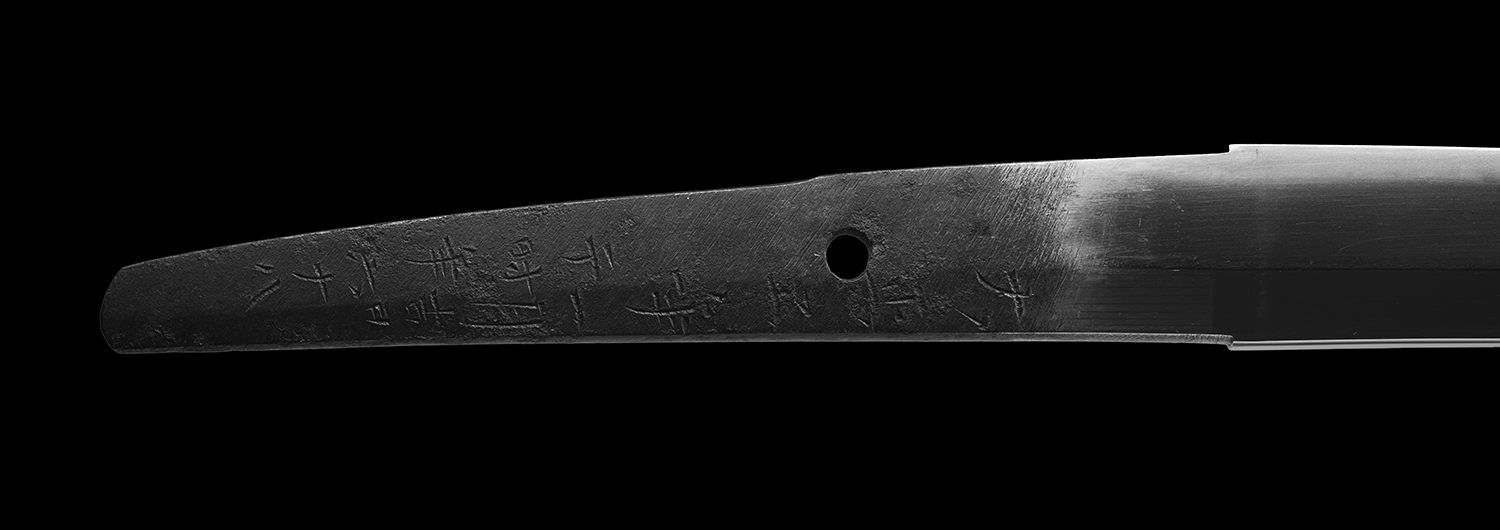
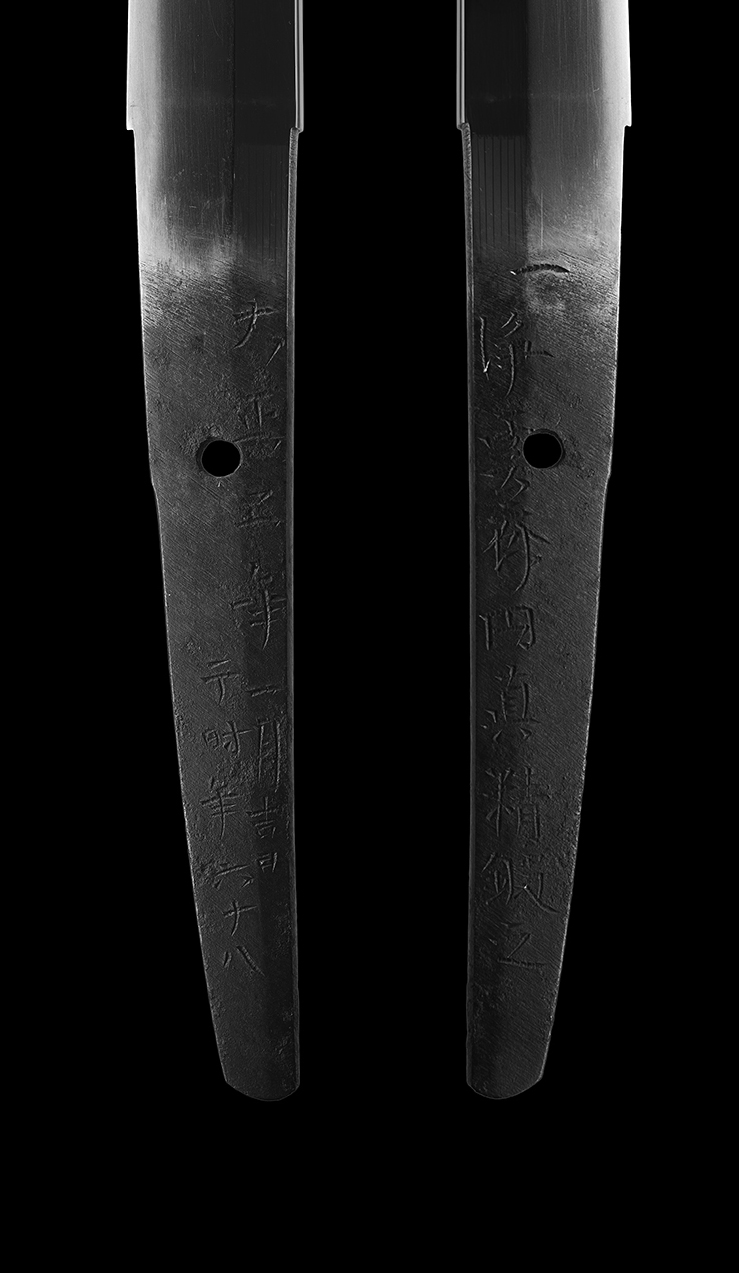
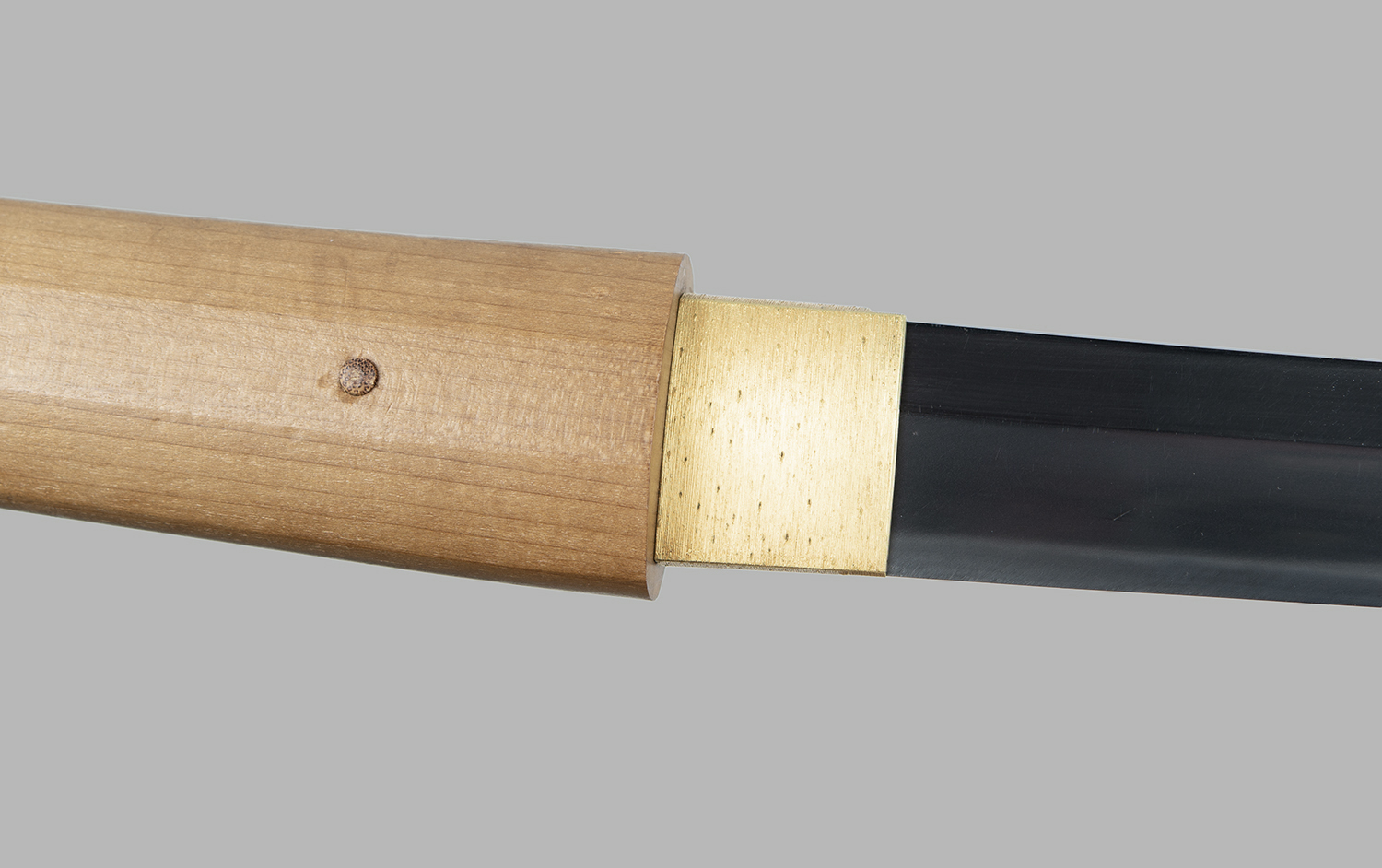
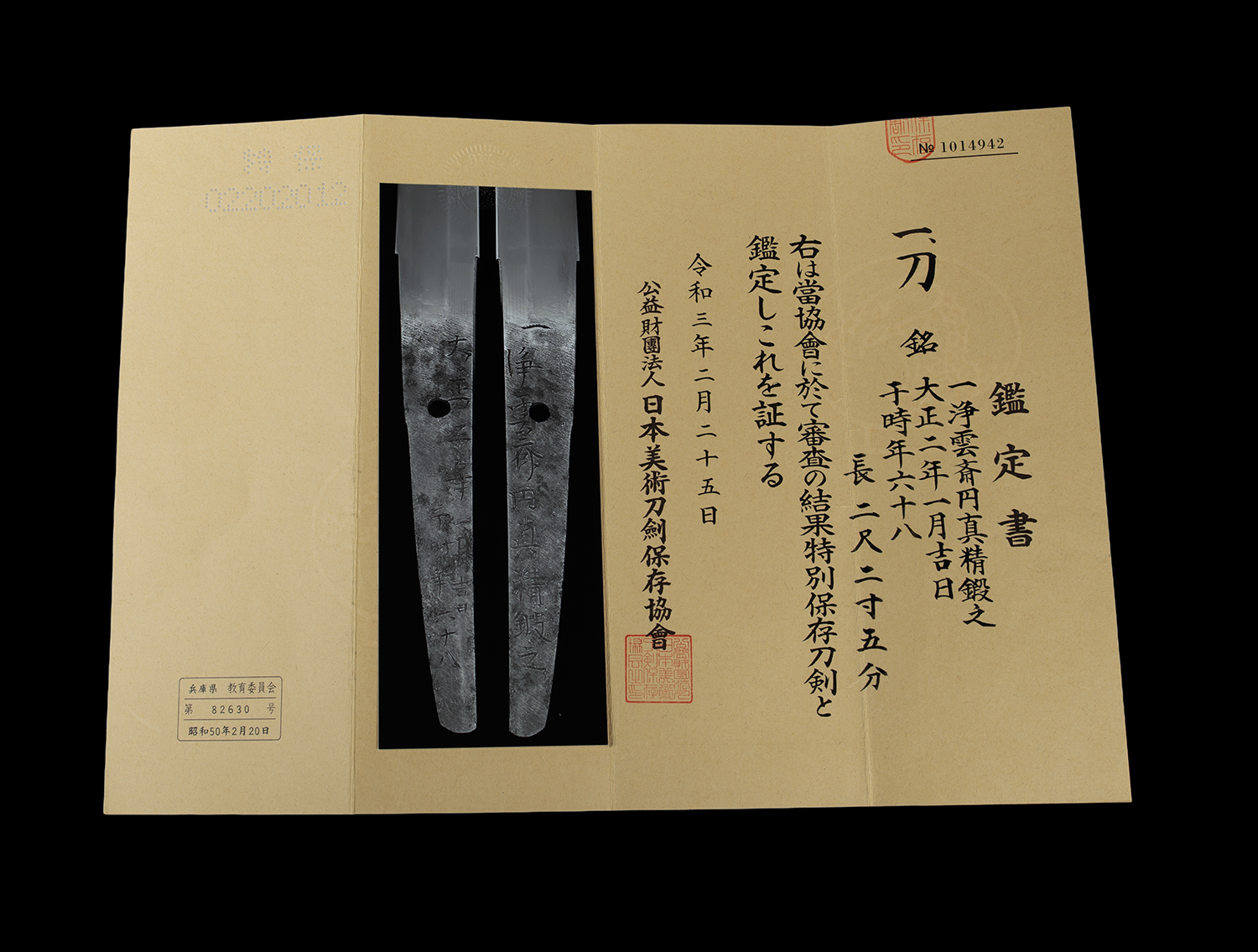
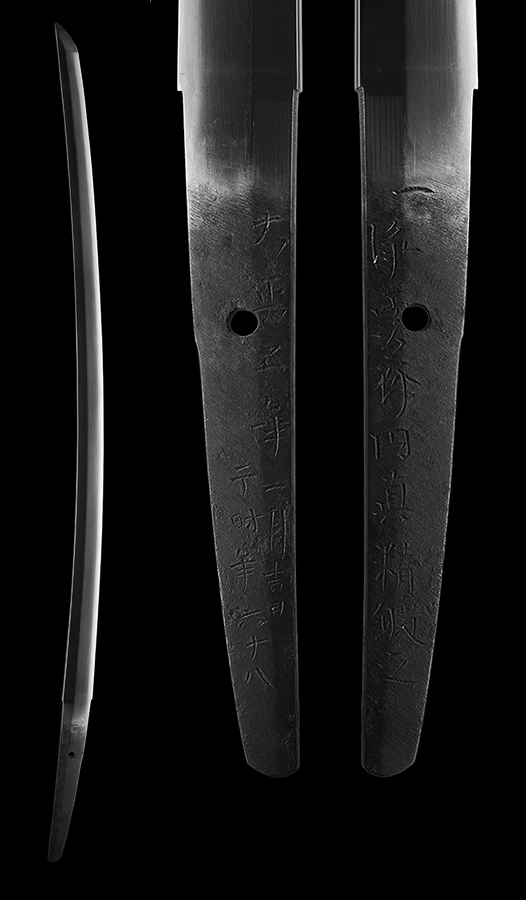
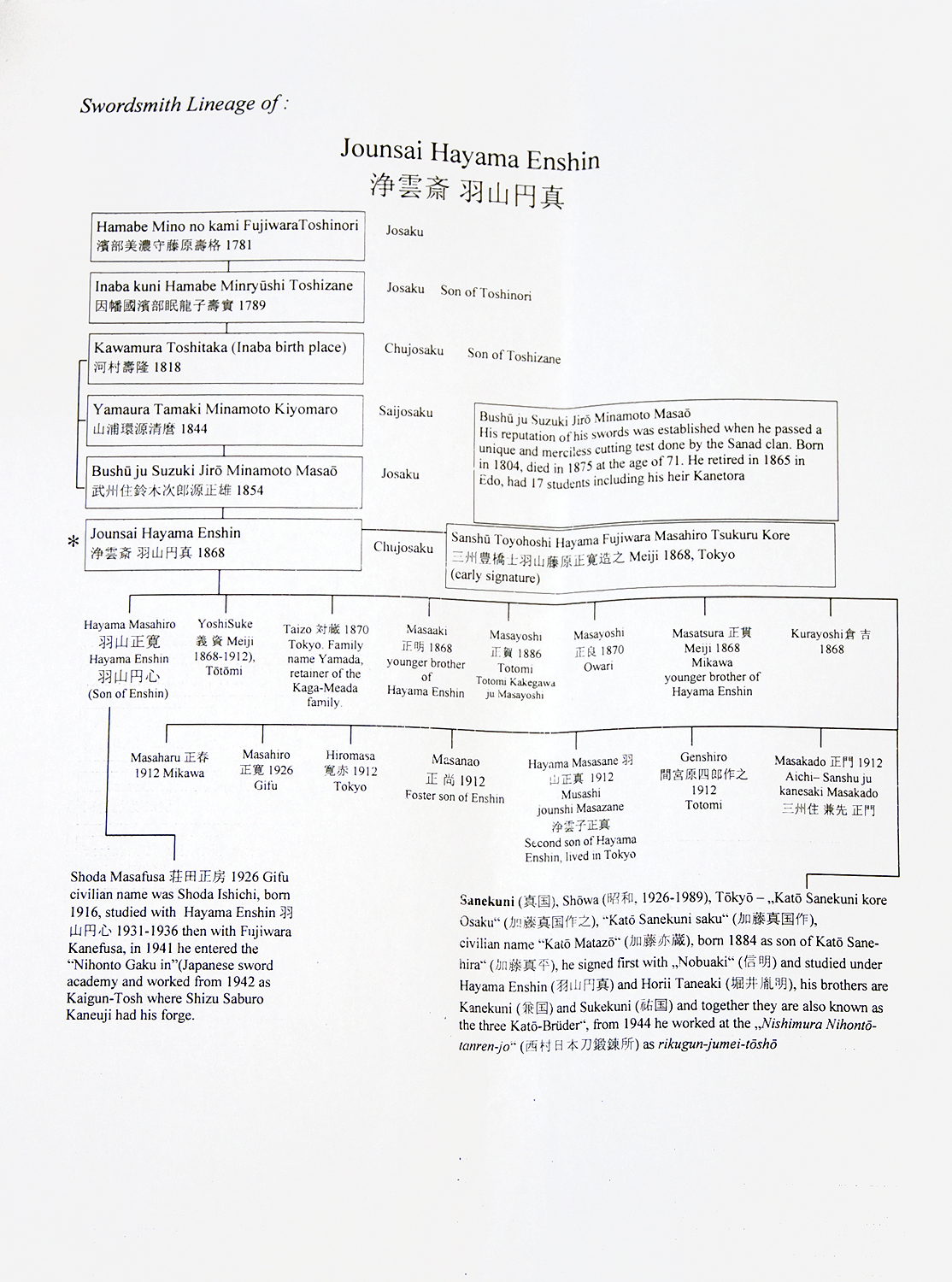
This is a fine and important Gendaito tachi by Hayama Enshin, made in January 1913 when he was 68 years old. Enshin was a key smith who preserved sword making after the Meiji Restoration, known for his unique steel color and koto-like nioi-guchi. The blade is healthy, features a maru-mune, and comes with NBTHK Tokubetsu Hozon papers, an old shirasaya, and a storage box.
 NihontoWatch
mei · Kiyomaru · Taisho · nagasa 68.2cm · sori 2.1cm



Tokyo · around 1912-1926
2 pieces on the market now
The modern era (1868 to today)
Modern Japan made the sword an exile, then an artwork: the 1876 Haitōrei ended sword wearing, the postwar ban nearly ended the craft, and the revival built on the NBTHK’s founding in 1948 remade it as a licensed art.
A Hozon-certified blade judged to show notably superior workmanship and a better state of preservation. The bar is higher: re-tempered blades and most unsigned Muromachi/Edo works are excluded.
The NBTHK (Nihon Bijutsu Tōken Hozon Kyōkai, the Society for the Preservation of Japanese Art Swords) is a public-interest incorporated foundation founded in 1948 and supervised by Japan’s Agency for Cultural Affairs (Bunkachō); it is based at the Japanese Sword Museum in Tokyo. Its expert panels physically examine each submitted work (shinsa) and issue a certificate (kanteishō) ranking it by artistic and historical merit. NBTHK papers are the most widely recognized standard of authentication for Japanese swords and fittings.
NBTHK official site3 day inspection period on all sales. Items can be returned for any reason for a full refund, less return shipping cost. Returned items must be in the same condition as when purchased.
$6,800
This is a fine and important Gendaito tachi by Hayama Enshin, made in January 1913 when he was 68 years old. Enshin was a key smith who preserved sword making after the Meiji Restoration, known for his unique steel color and koto-like nioi-guchi. The blade is healthy, features a maru-mune, and comes with NBTHK Tokubetsu Hozon papers, an old shirasaya, and a storage box.
NihontoWatchmei · Kiyomaru · Taisho · nagasa 68.2cm · sori 2.1cm
Tokyo · around 1912-1926
2 pieces on the market now
The modern era (1868 to today)
Modern Japan made the sword an exile, then an artwork: the 1876 Haitōrei ended sword wearing, the postwar ban nearly ended the craft, and the revival built on the NBTHK’s founding in 1948 remade it as a licensed art.
A Hozon-certified blade judged to show notably superior workmanship and a better state of preservation. The bar is higher: re-tempered blades and most unsigned Muromachi/Edo works are excluded.
The NBTHK (Nihon Bijutsu Tōken Hozon Kyōkai, the Society for the Preservation of Japanese Art Swords) is a public-interest incorporated foundation founded in 1948 and supervised by Japan’s Agency for Cultural Affairs (Bunkachō); it is based at the Japanese Sword Museum in Tokyo. Its expert panels physically examine each submitted work (shinsa) and issue a certificate (kanteishō) ranking it by artistic and historical merit. NBTHK papers are the most widely recognized standard of authentication for Japanese swords and fittings.
NBTHK official site3 day inspection period on all sales. Items can be returned for any reason for a full refund, less return shipping cost. Returned items must be in the same condition as when purchased.
$6,800


