The Shintō era was largely invented in Kyōto: Umetada Myōju’s workshop trained the movement, Horikawa Kunihiro raised a generation, and the Hon’ami appraisers, who held no forge, governed the meaning of famous blades.
 NihontoWatchNihontoWatch
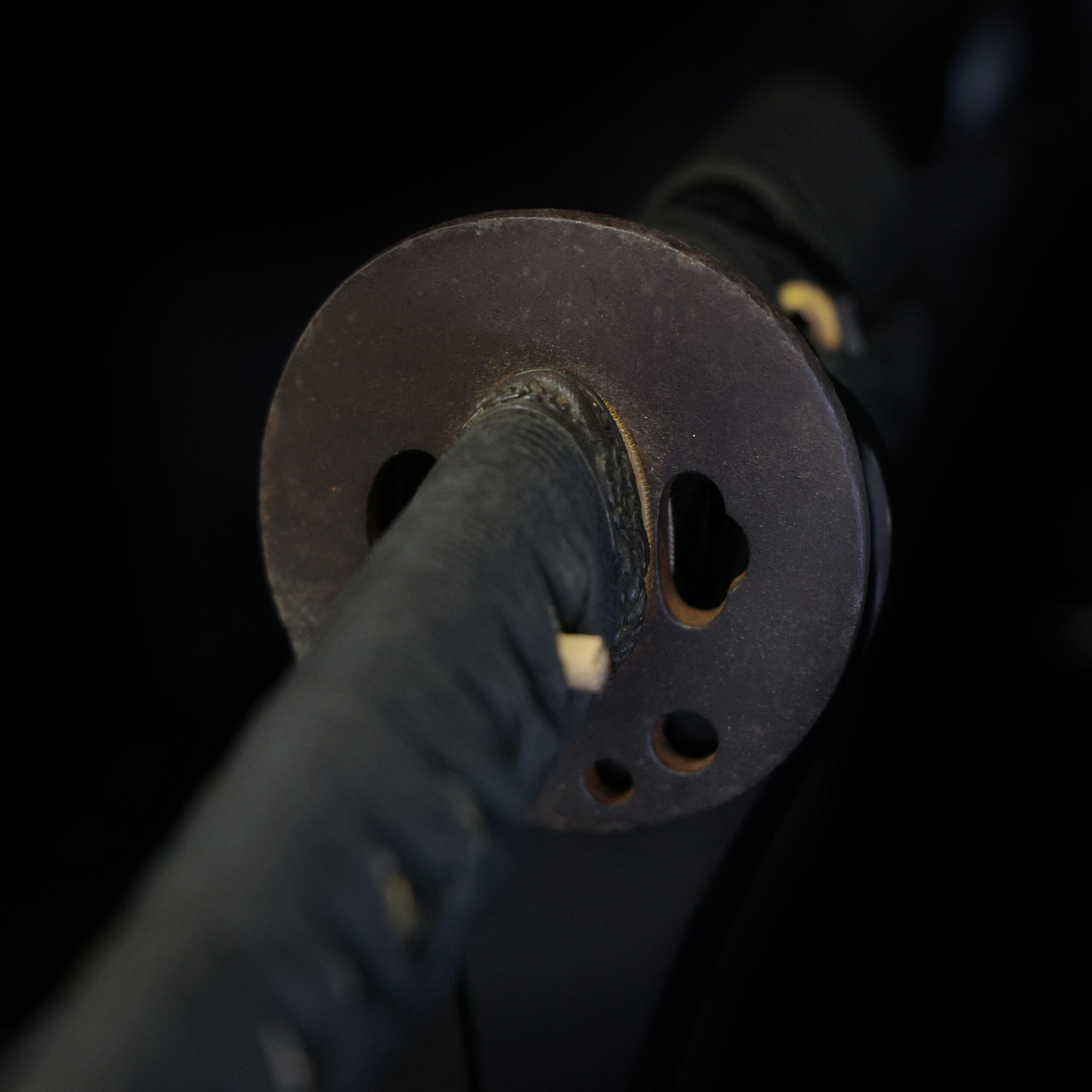
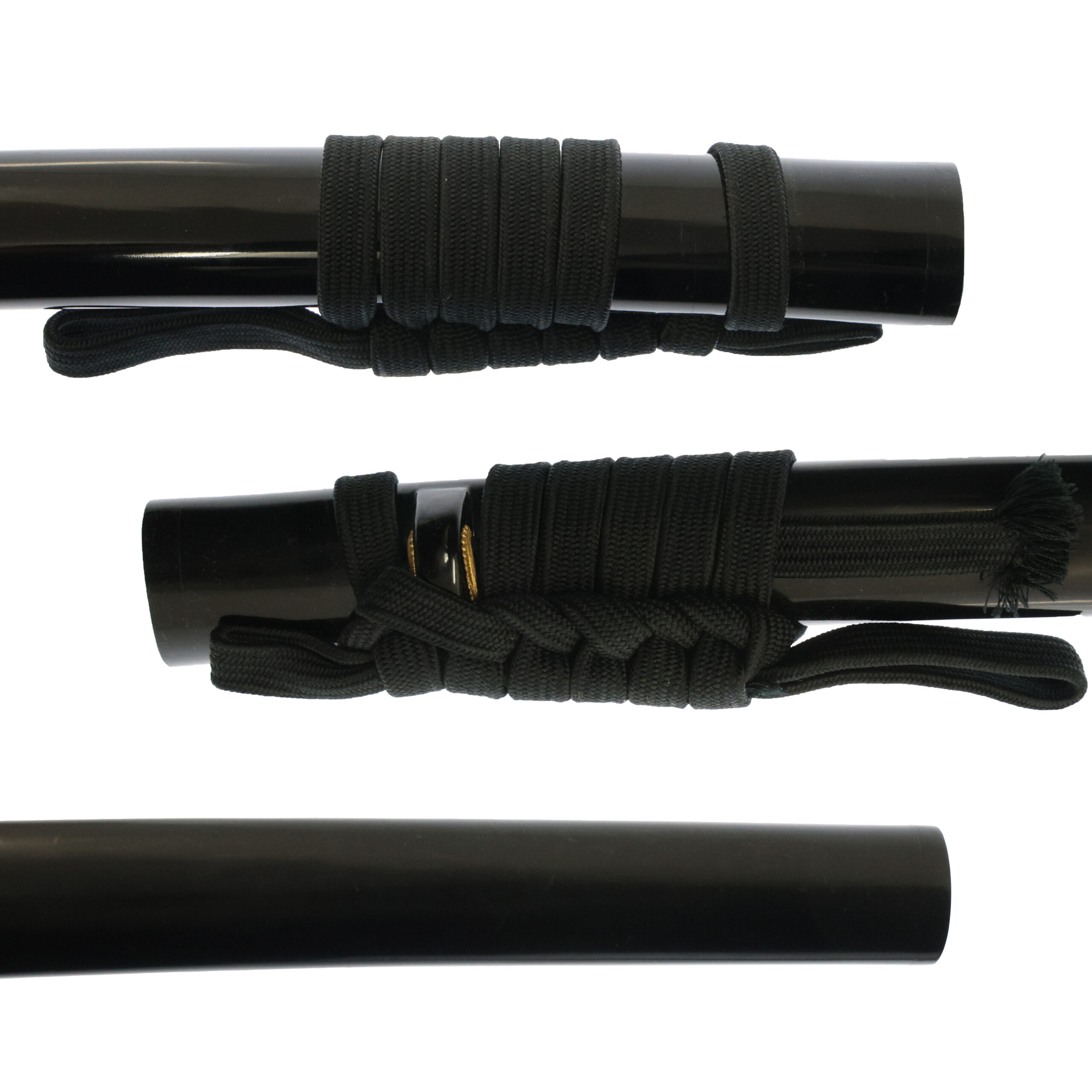
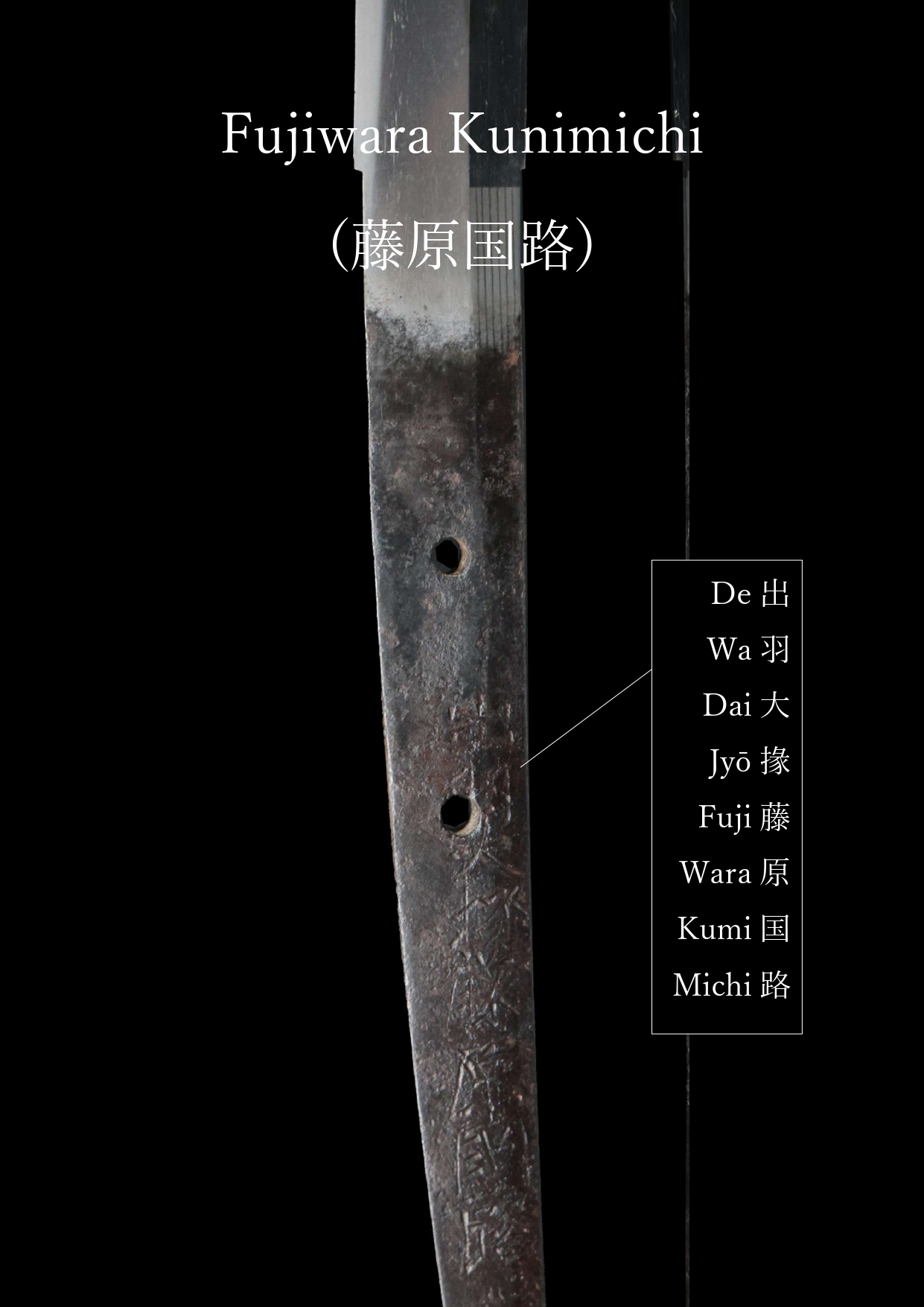
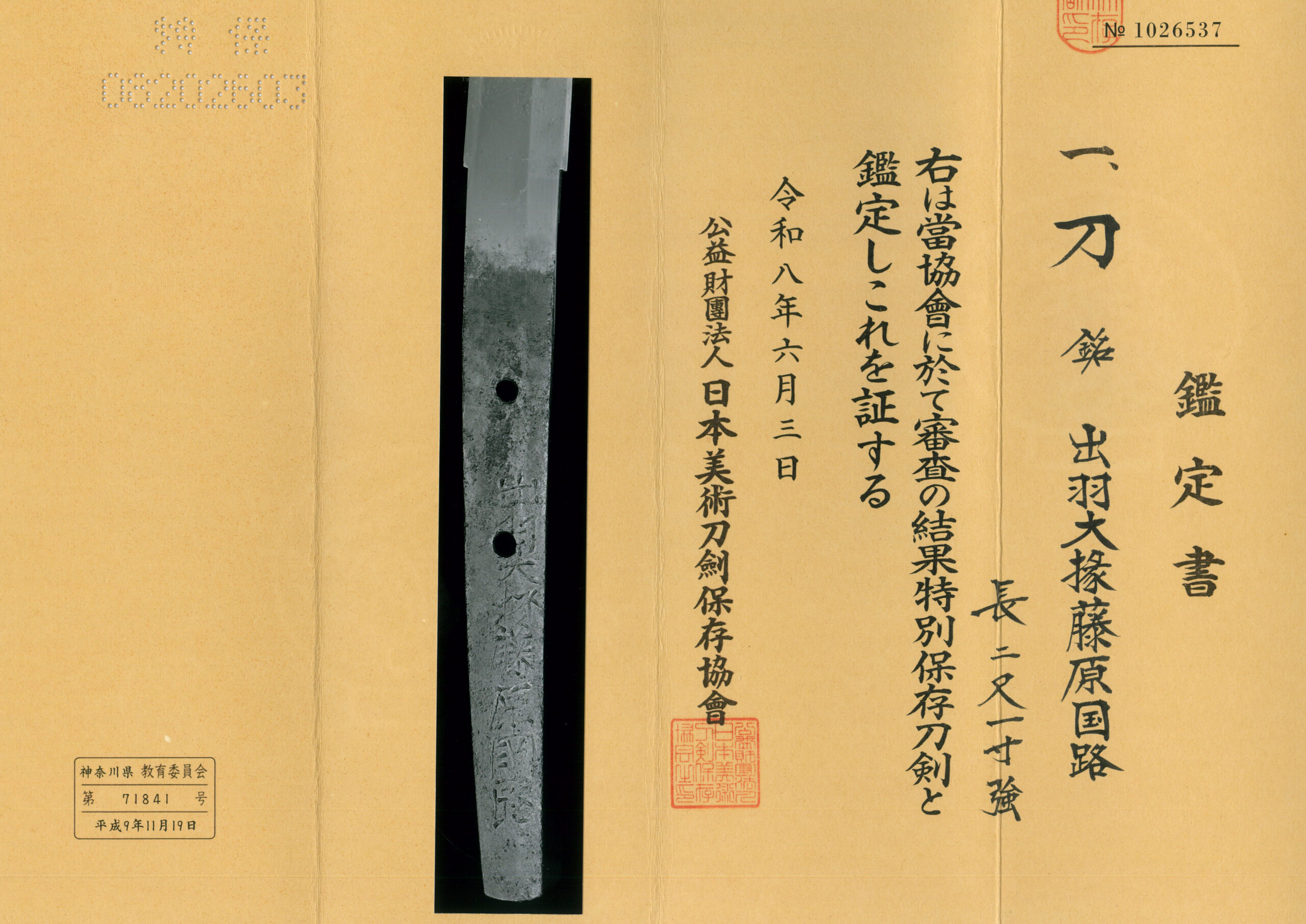
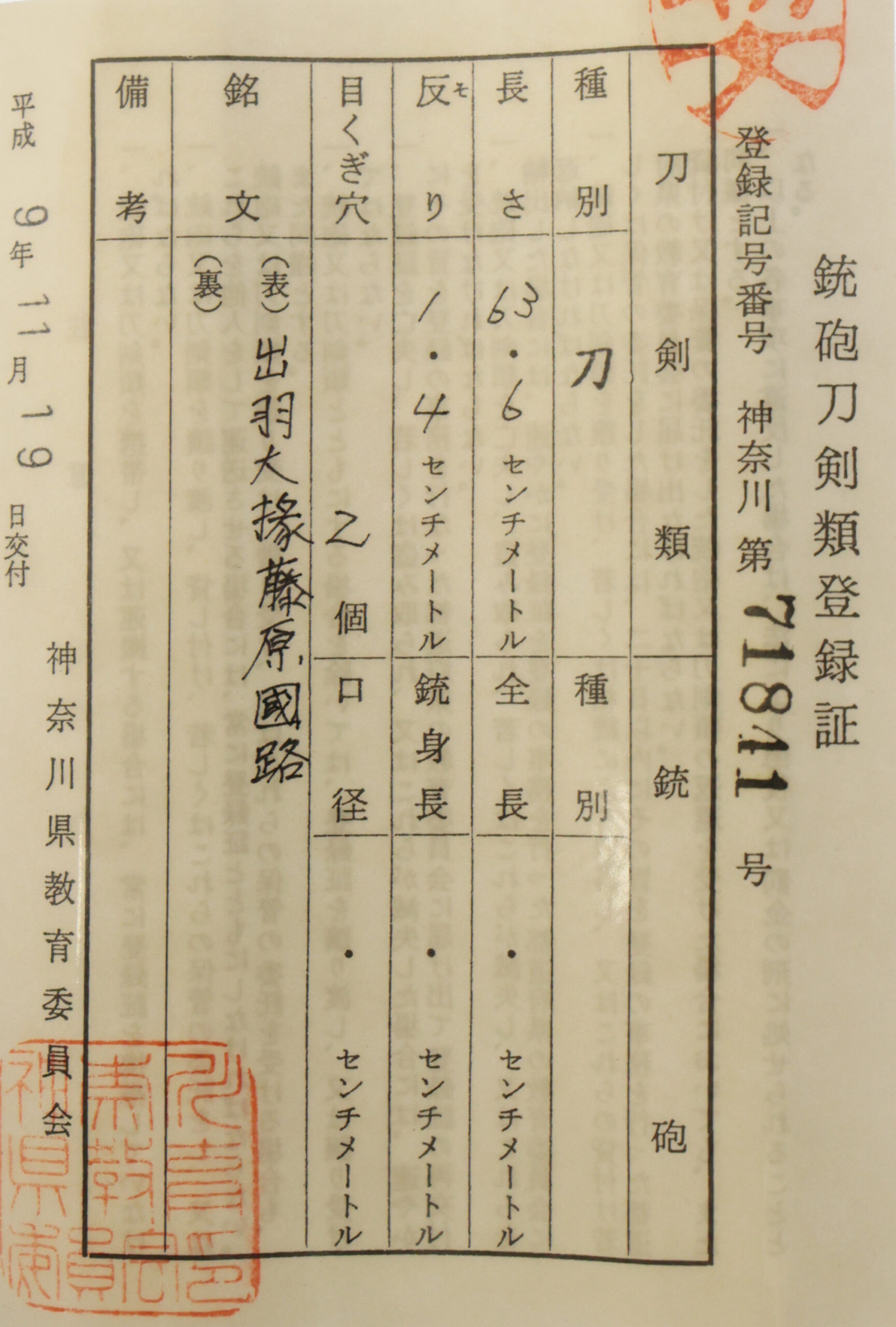
This blade was signed by Dewa Daijo Fujiwara Kunimichi (出羽大掾藤原国路), who was especially active during the early Edo period (1615-1658: Genna-Meireki era) in Yamashiro province (Today’s Kyoto prefecture). It is said that Kunimichi originally belonged to Mishina school at the beginning of his career and later started to serve Horikawa Kunihiro school. He also signed Heianjo Kunimichi (平安城国道), Heianjo Jyu Kunimichi (平安城住国路), Dewa Daijo Fujiwara Rai Kunimichi (出羽大掾藤原来国路). He was born in the 4th year of the Tensho era (1576: Azuchi Momoyama period). Based on available records, he started to officially appear in Japanese sword history in the 13th year of the Keisho era (1608: The beginning of the Edo period). He first signed Kunimichi (国道). As you can see, the letter of Michi is different from the one seen on this blade. Those who belonged to Mishina (三品) school used Michi (道) as their maker’s names, such as Iga no Kami Kimichi (伊賀守金道). That is why it is believed that Kunimichi originally belonged to Mishina school. Also, at the end of his career, he used Rai (来) in his maker’s name, which is the only characteristic of the swordsmiths who belonged to Mishina school back then. In the 14th year of the Keisho era (1609), he started to use both Kunimichi (国道) and Kunimichi (国路). It is thought that this year was when he shifted his maker’s name to Kunimichi (国路). He received the title of Dawa Daijo (出羽大掾) in the 20th year of the Keisho era (1615). Kami is an honorable official title given by the imperial court for one’s excellent craftsmanship. Since Dewa Daijo is inscribed on this blade, this blade was at least made after 1615 when he had already mastered superb sword-forging techniques. His master, Horkawa Kunihiro, died in the 18th year of the Kisho era (1613). After his master’s decease, it is said that he started to belong to Mishina school again and learned sword-forging techniques from Iga no Kami Kinmichi. Kunimichi was one of the most prominent figures in Horikawa Kunihiro school. He was incredibly excellent at forging blades in Mino DEN, one of the five Japanese sword forging traditions. Two of his works are Important Cultural Property, and five of them are Important Artwork, all of which were designated by the Agency for Cultural Affairs. It is appraised as a Tokubetsu Hozon Token (特別保存刀剣) issued by NBTHK (Nihon Bijutsu Touken Hozon Kyokai:日本美術刀剣保存協会). *Please keep in mind that there are a couple of kitae kizu on the blade. Fuchi-Kashira The motif of this Fuchi-Kashira is the Ryū (龍, dragon). The dragon is an imaginary creature originating in ancient Chinese mythology and has long been revered as a symbol of auspicious power. Its form is traditionally described as a composite of nine animals: antlers of a deer, a camel’s head, demon-like eyes, a snake’s neck, the belly of a mizuchi (蛟, a mythical Japanese water creature resembling a horned serpent), fish scales, falcon-like claws, tiger-like paws, and the ears of an ox. Because of this extraordinary and otherworldly appearance, the dragon was believed to reign supreme over all animals. In ancient China, the dragon motif was strictly reserved for the emperor, and even details such as its form and the number of claws were carefully regulated according to rank. In contrast, Japanese representations of dragons were not governed by rigid class-based rules. Nevertheless, the motif retained its significance as a universally auspicious symbol, associated with power, protection, and good fortune. In Japan, dragons have also been venerated as water deities under the belief known as Ryūjin Shinkō (竜神信仰, dragon-god worship). As rice cultivation has long been central to Japanese society, water has always been an essential and sacred resource. For this reason, the dragon motif—symbolizing rain, water, and life-giving force—has been deeply familiar to the Japanese people since ancient times. Tsuka and Menuki The motif of this Menuki appears to represent traditional fishing equipment, including a fishing rod and what seems to be a basket used to hold the catch. During the Edo period, specialized Japanese fishing rods known as Edo wazao (江戸和竿) were developed from carefully selected sections of bamboo joined together. Fishermen also used woven bamboo or rattan baskets called biku (魚籠) to carry and keep the fish they had caught. From the middle of the Edo period onward, fishing became a widely enjoyed pastime among both samurai and townspeople. For samurai, it could offer more than simple recreation: the patience, concentration, and self-control required in fishing were considered valuable forms of mental discipline. The motif therefore evokes not only everyday life in Edo-period Japan, but also a quiet pursuit associated with patience and composure. Tsuba and Habaki This Tsuba is made of iron and formed in a circular shape. Its simple, unadorned design gives it a restrained and rustic beauty, allowing the natural texture and character of the iron to stand out. Saya This scabbard is covered with black lacquer. Due to its high waterproof effect, lacquer has been used since ancient times in Asia. The blade of a Japanese sword is made of iron, and moisture is the greatest enemy of iron. For the purpose of carrying the blade without degrading it, people devised a method of coating the scabbard with lacquer. To prevent not only moisture but also rain and snow from penetrating the inside of the scabbard, it was necessary to apply multiple layers of lacquer. The Nushi (塗師, lacquerers) was born precisely because advanced techniques were required to handle the complicated processes. Authentication Paper They authenticated the blade on June 3rd in the 8th year of Reiwa (2026). They appraised it as Tokubetsu Hozon Touken, the blade especially worth preserving for Japanese society.
Offered by Samurai Museum
11 on the market

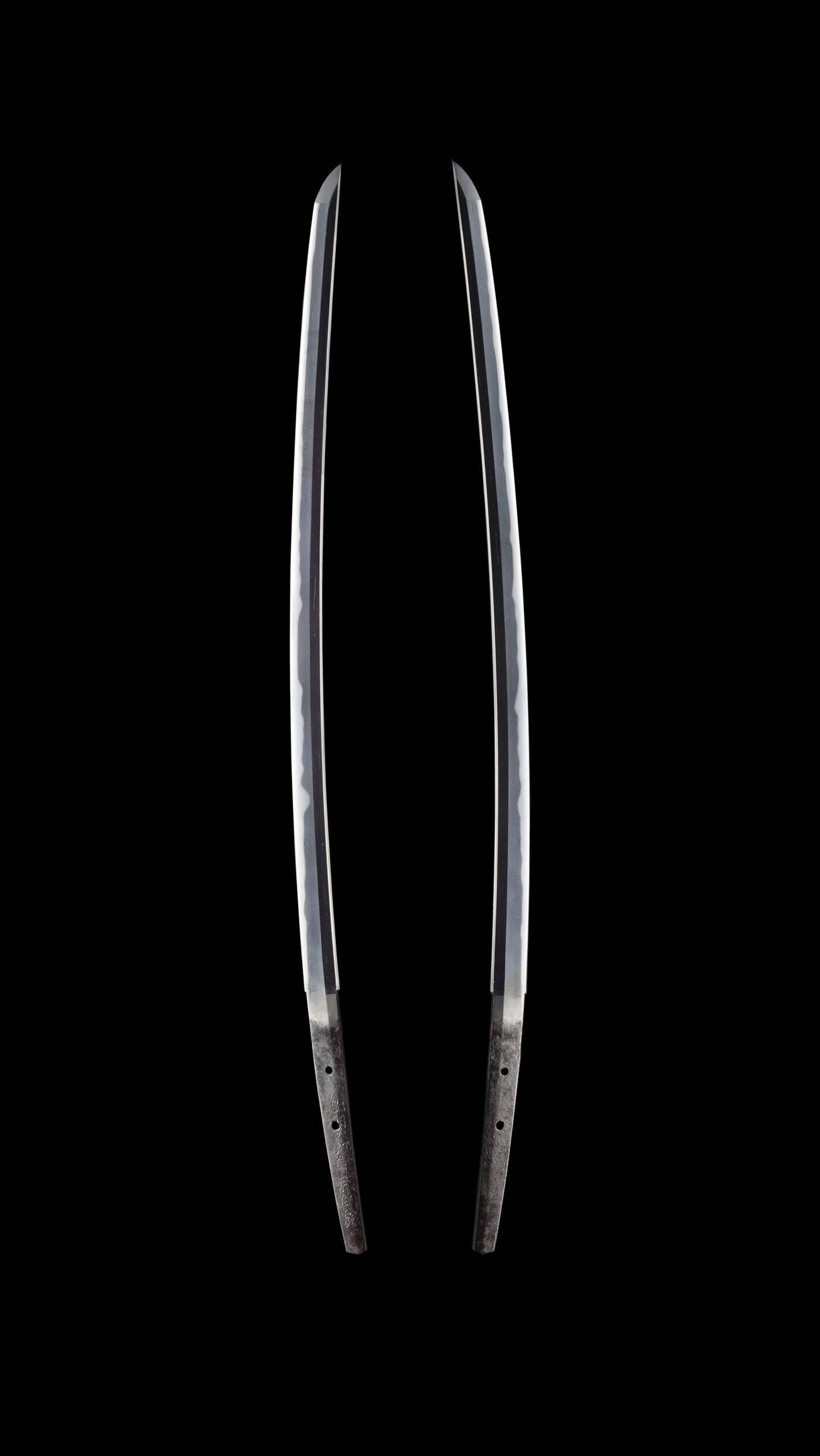
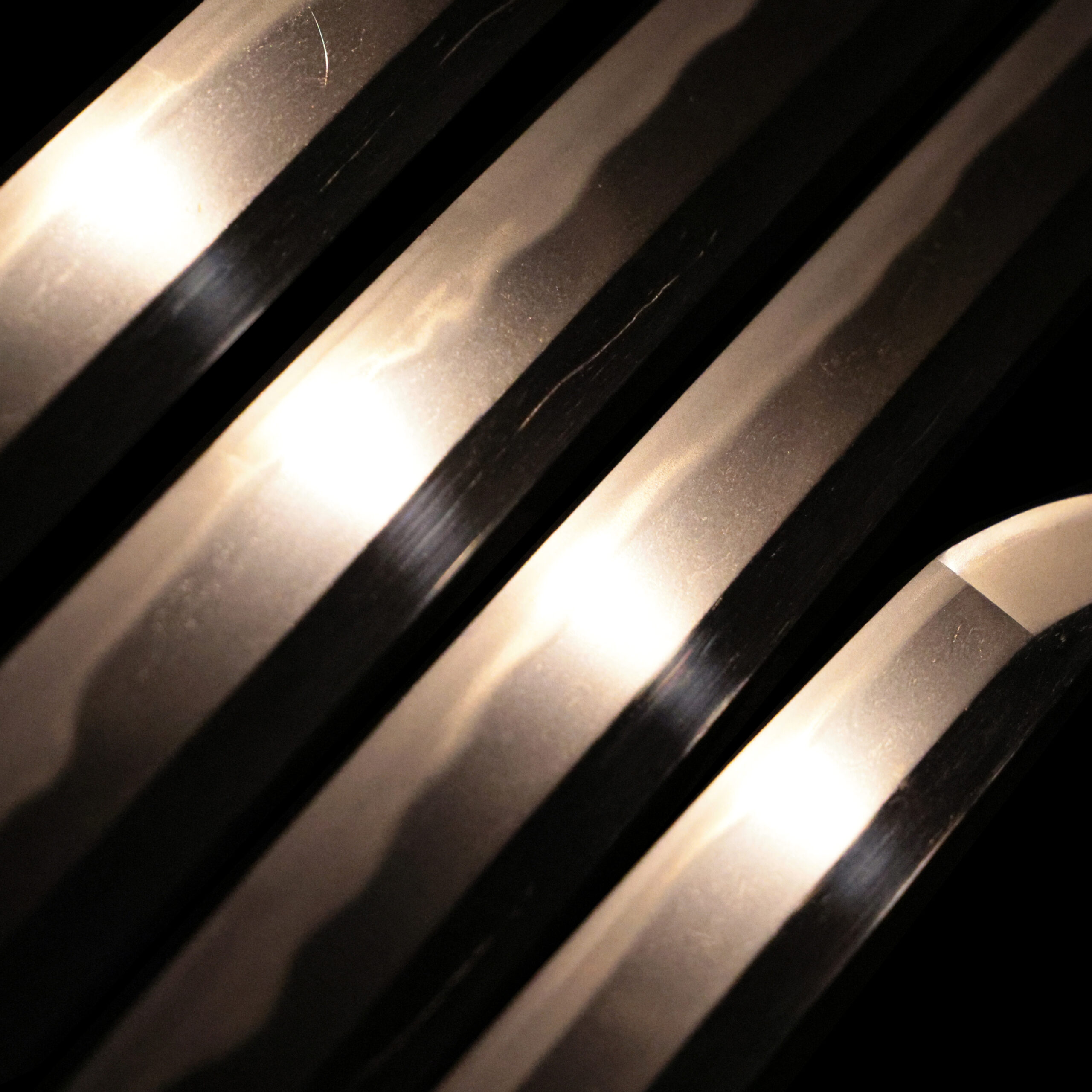
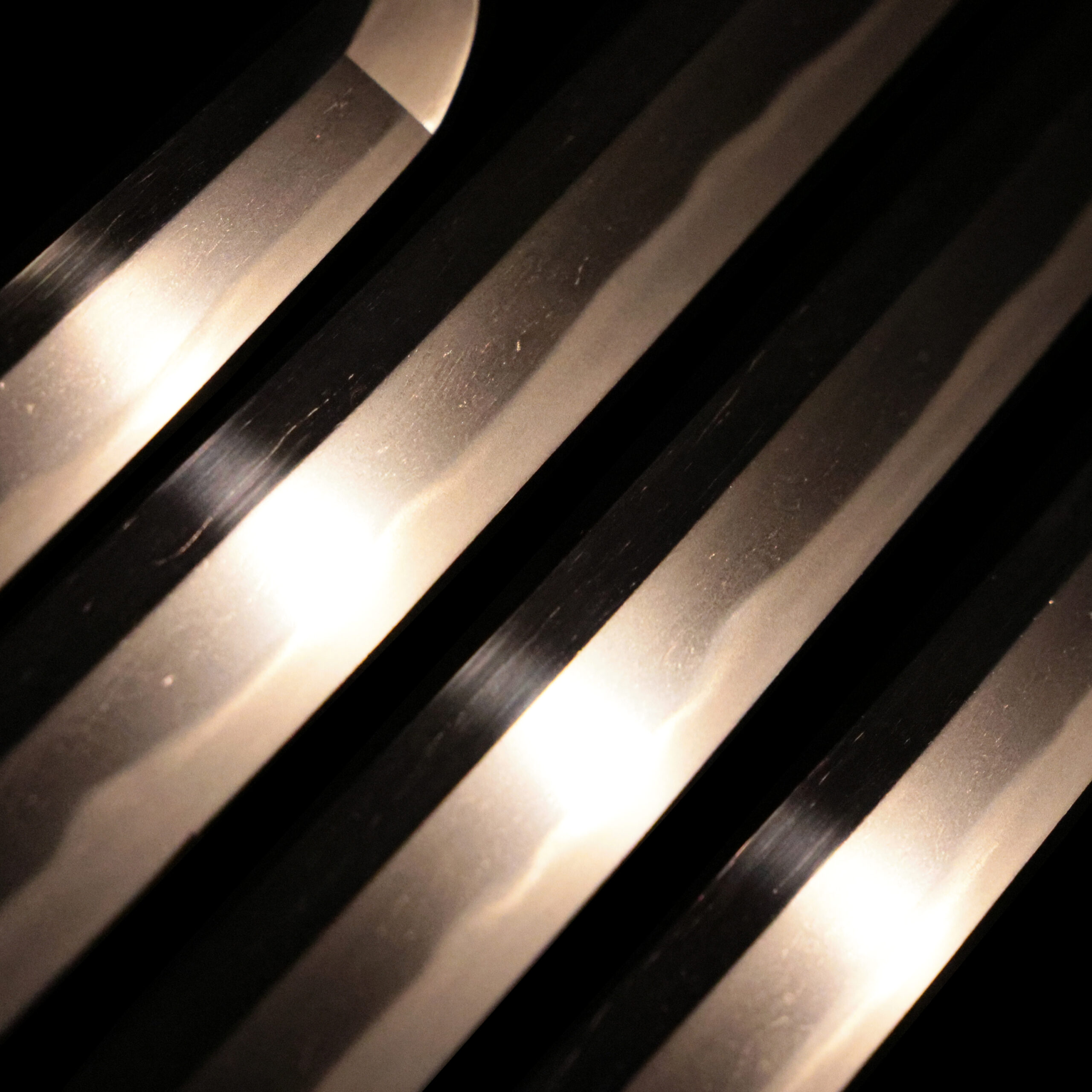
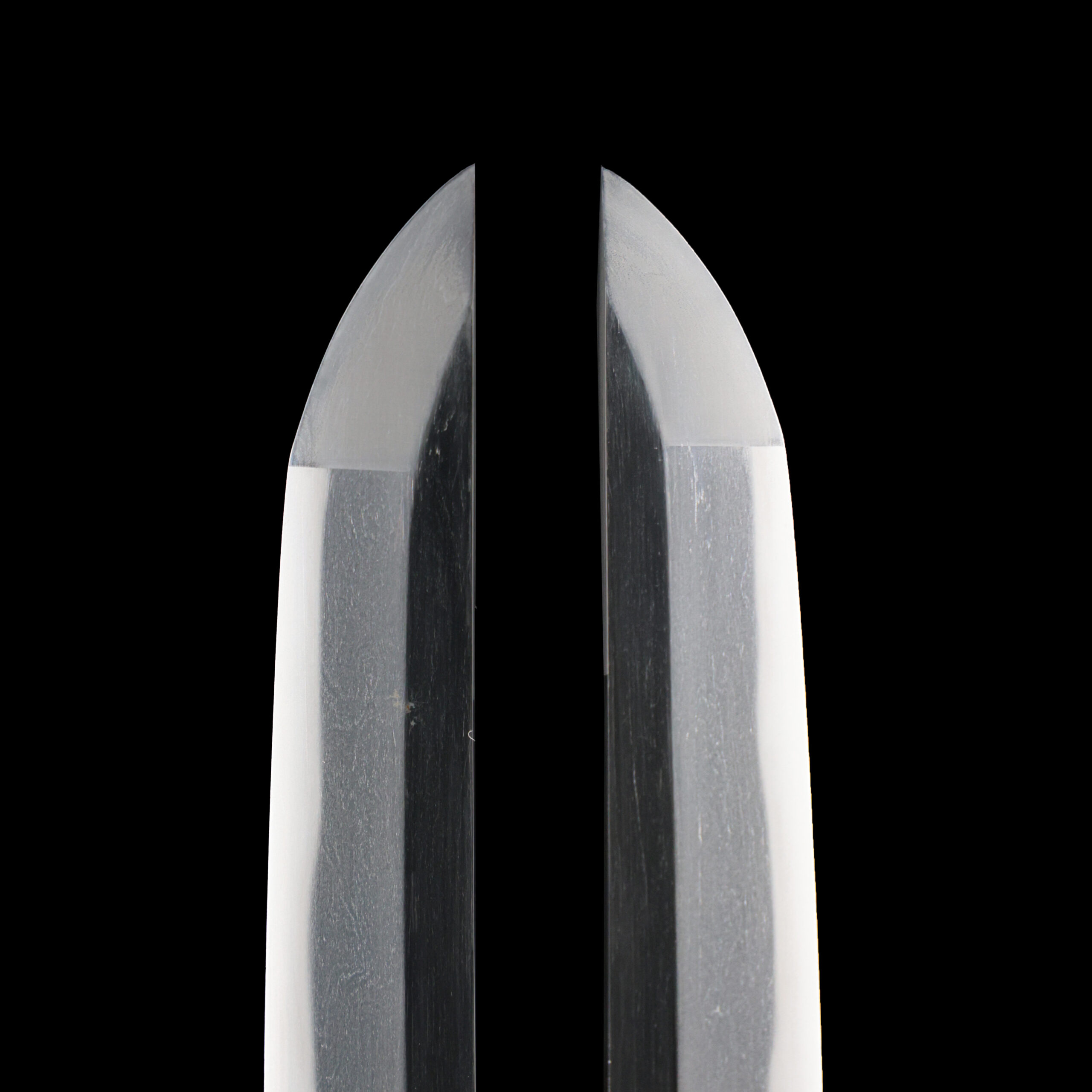
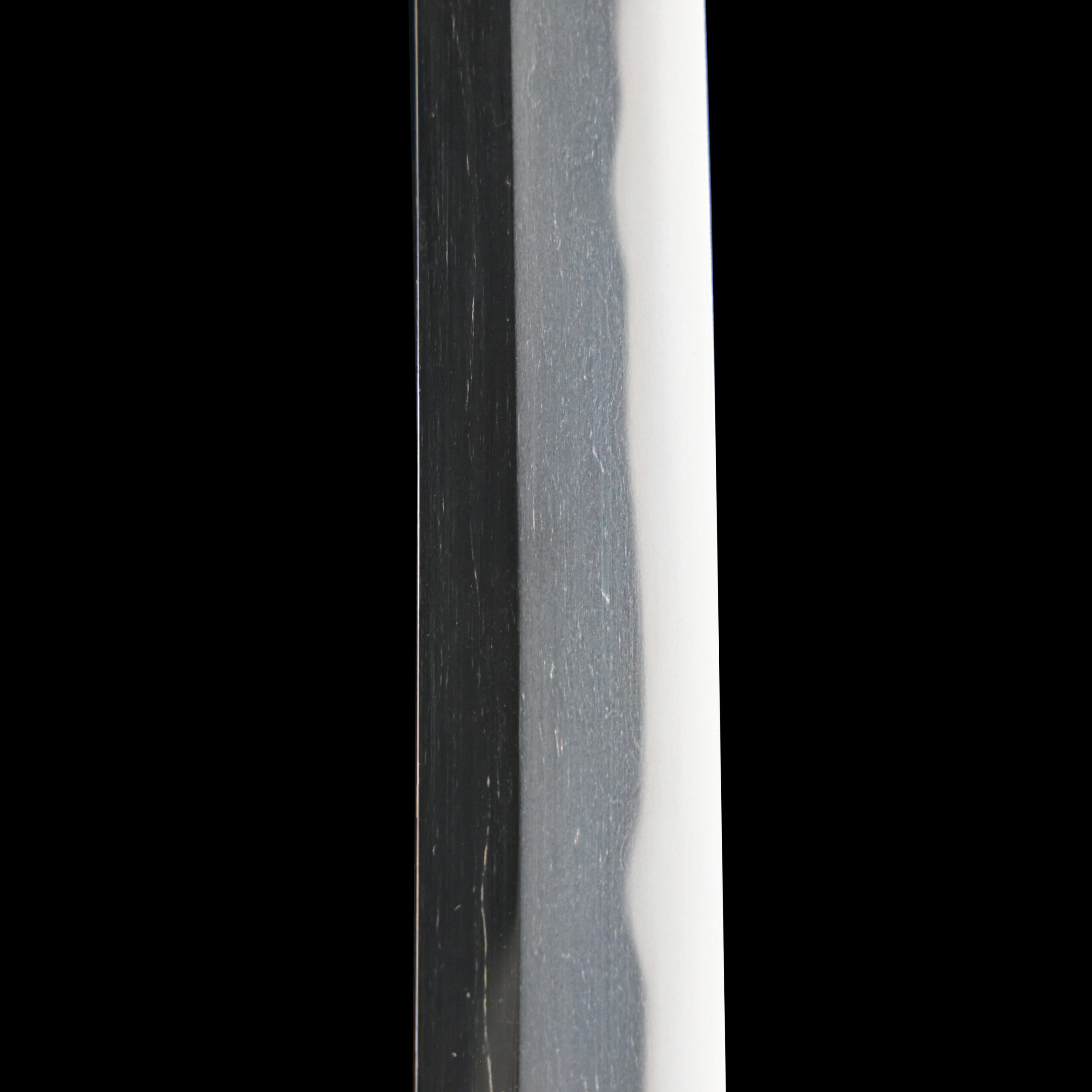
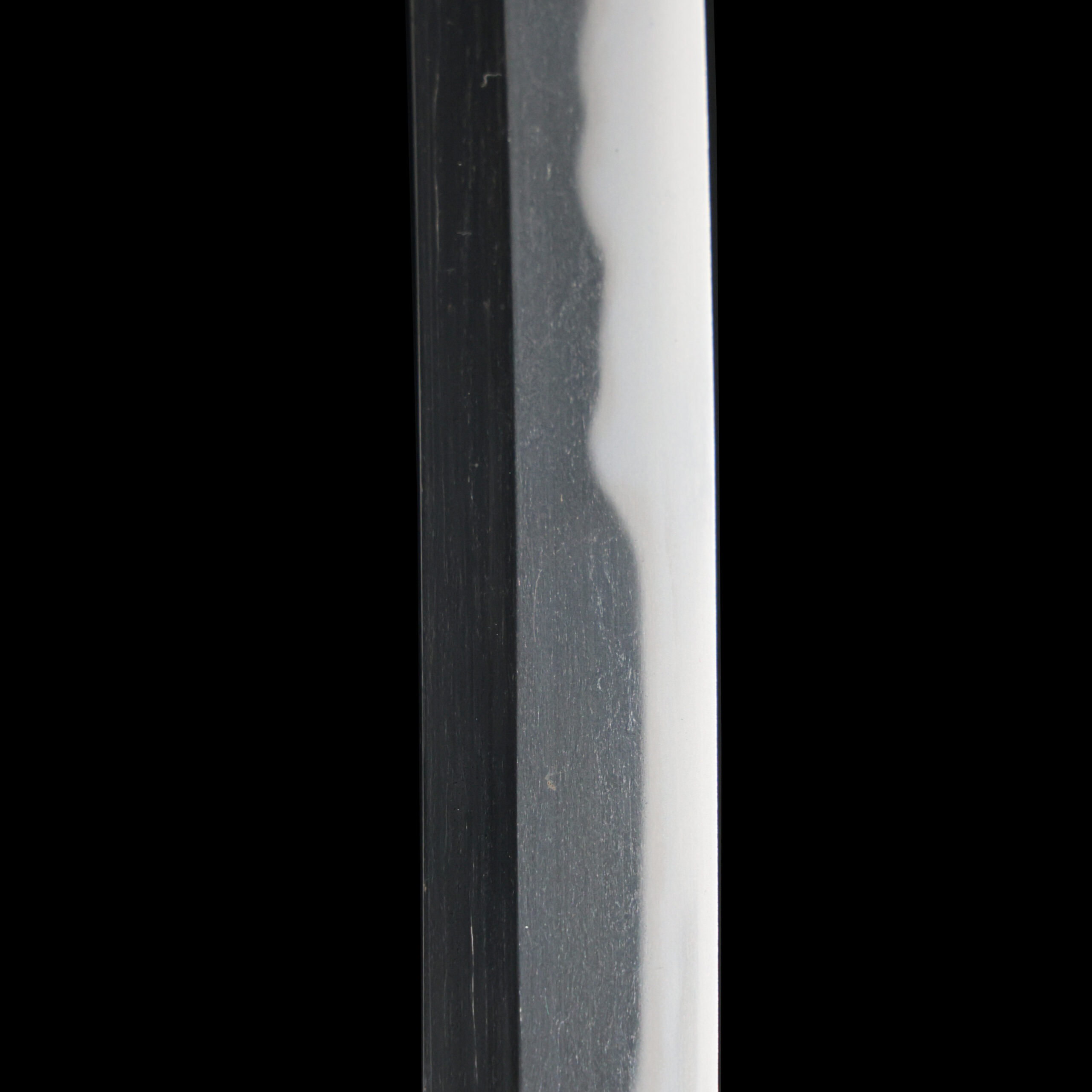
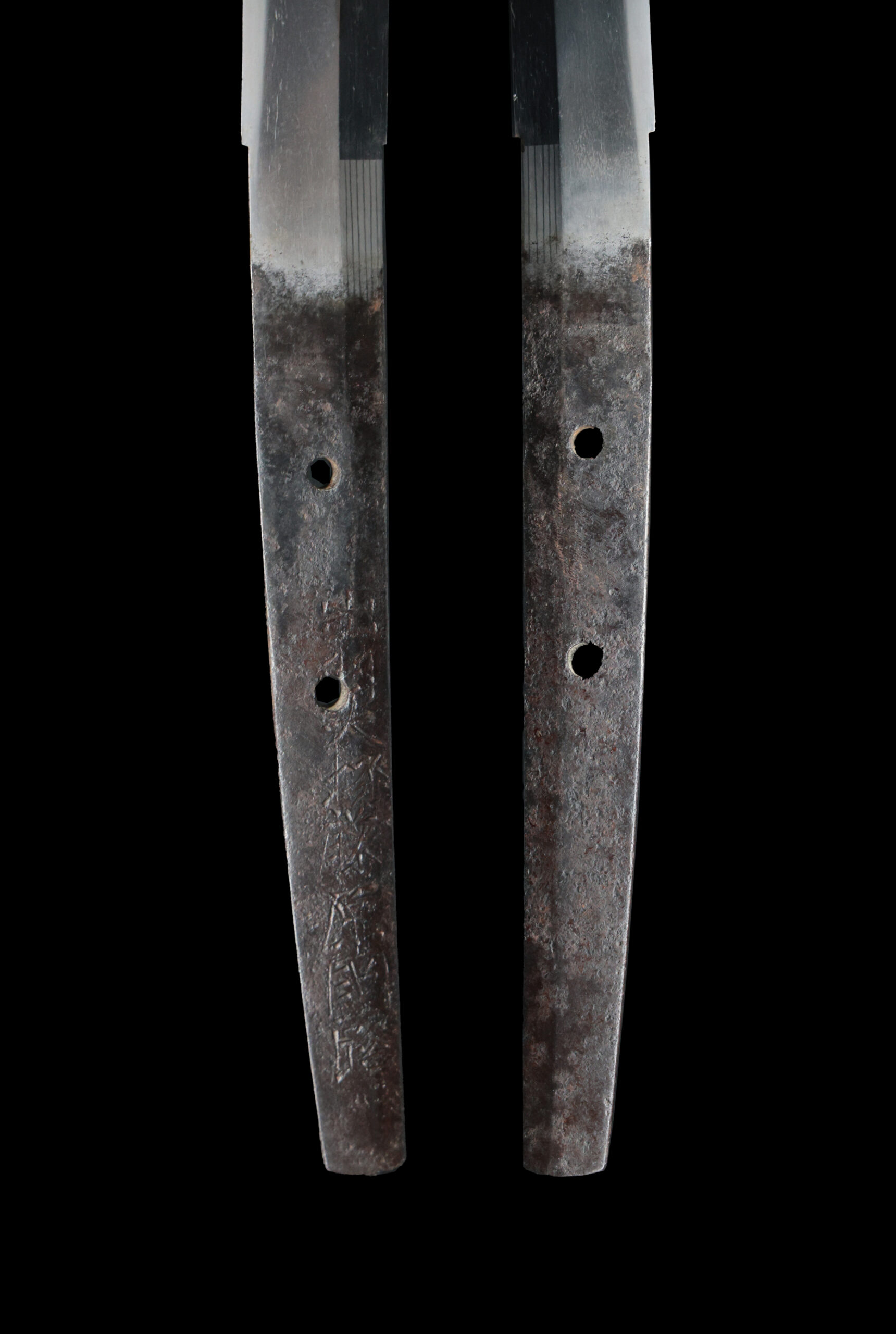
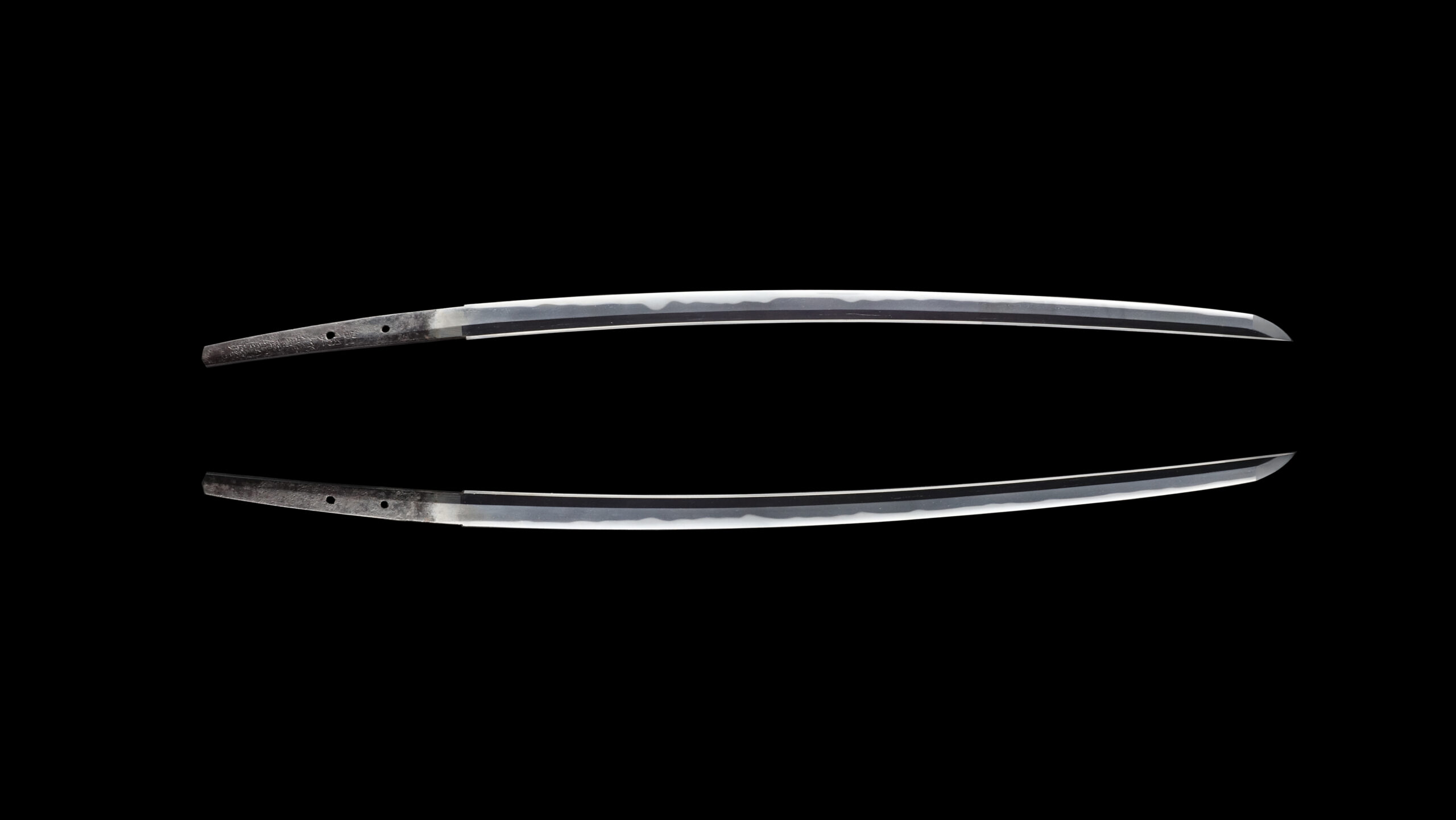
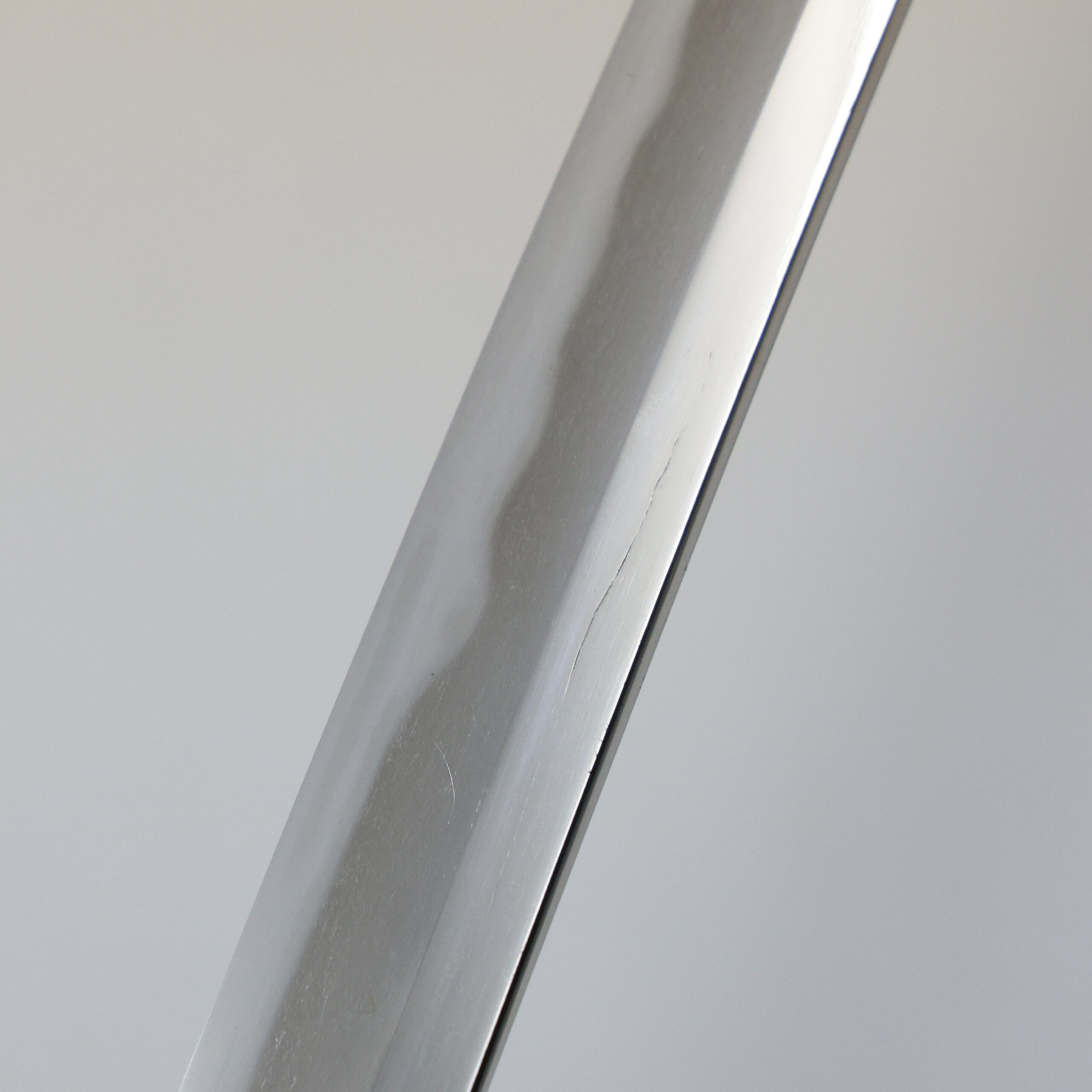
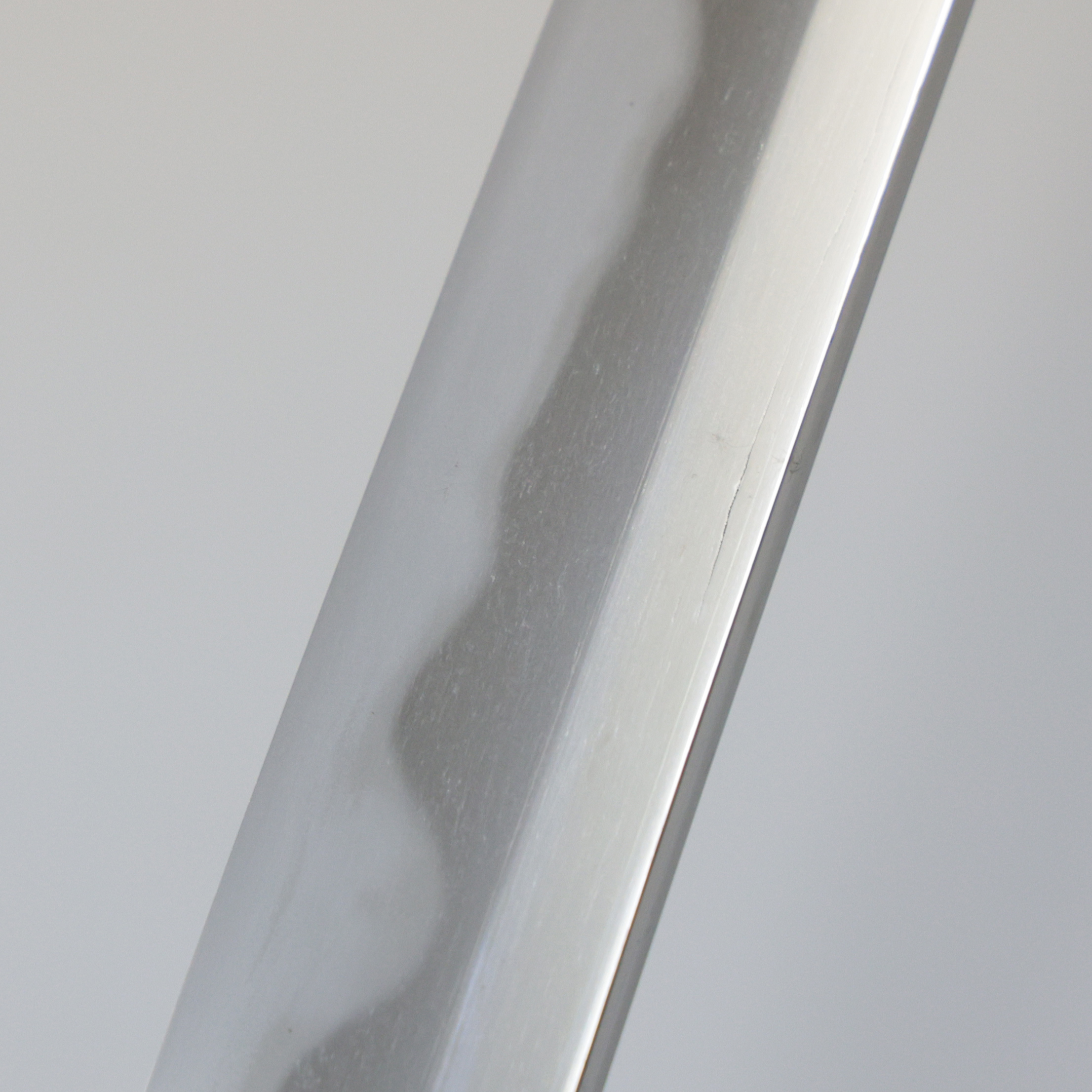
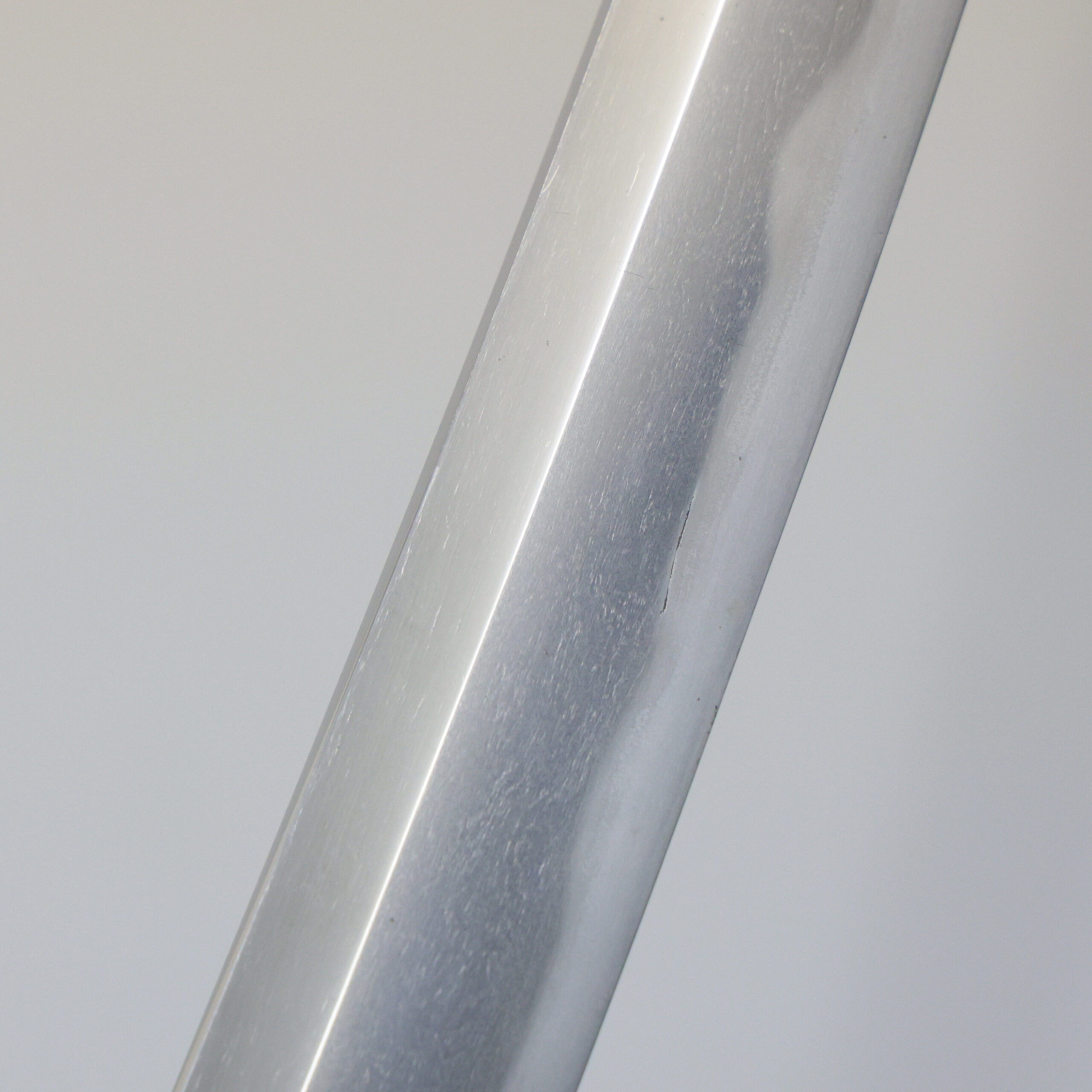
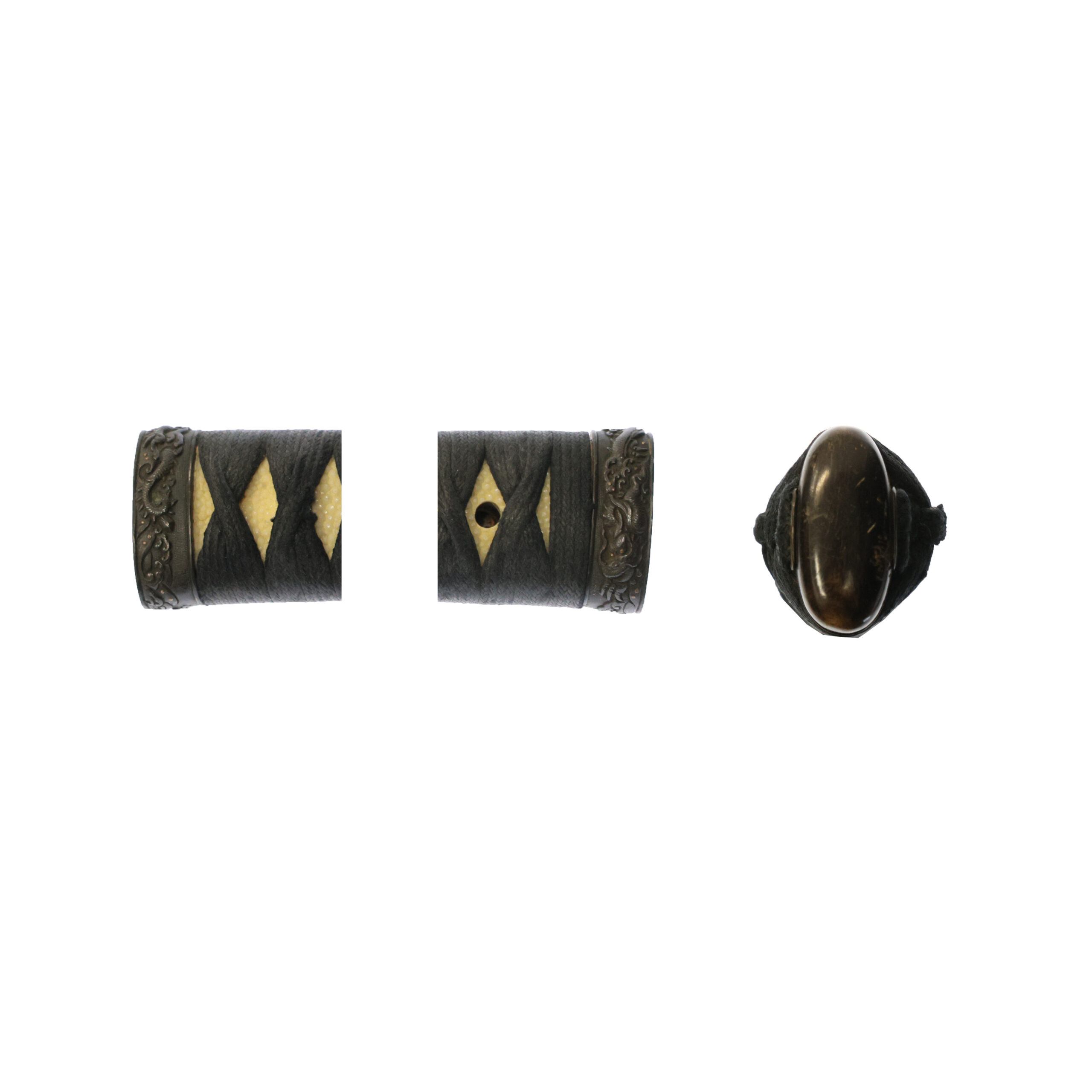
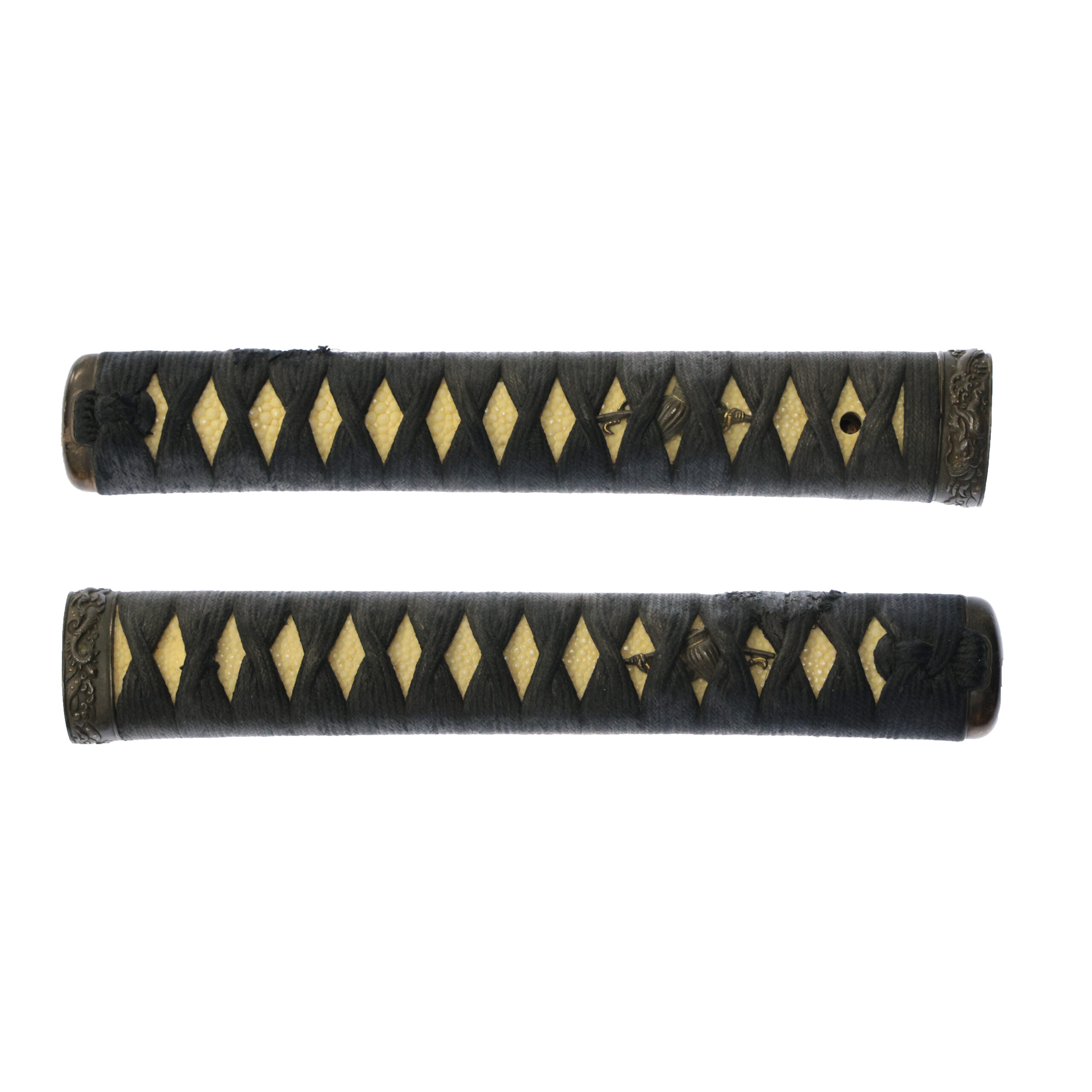
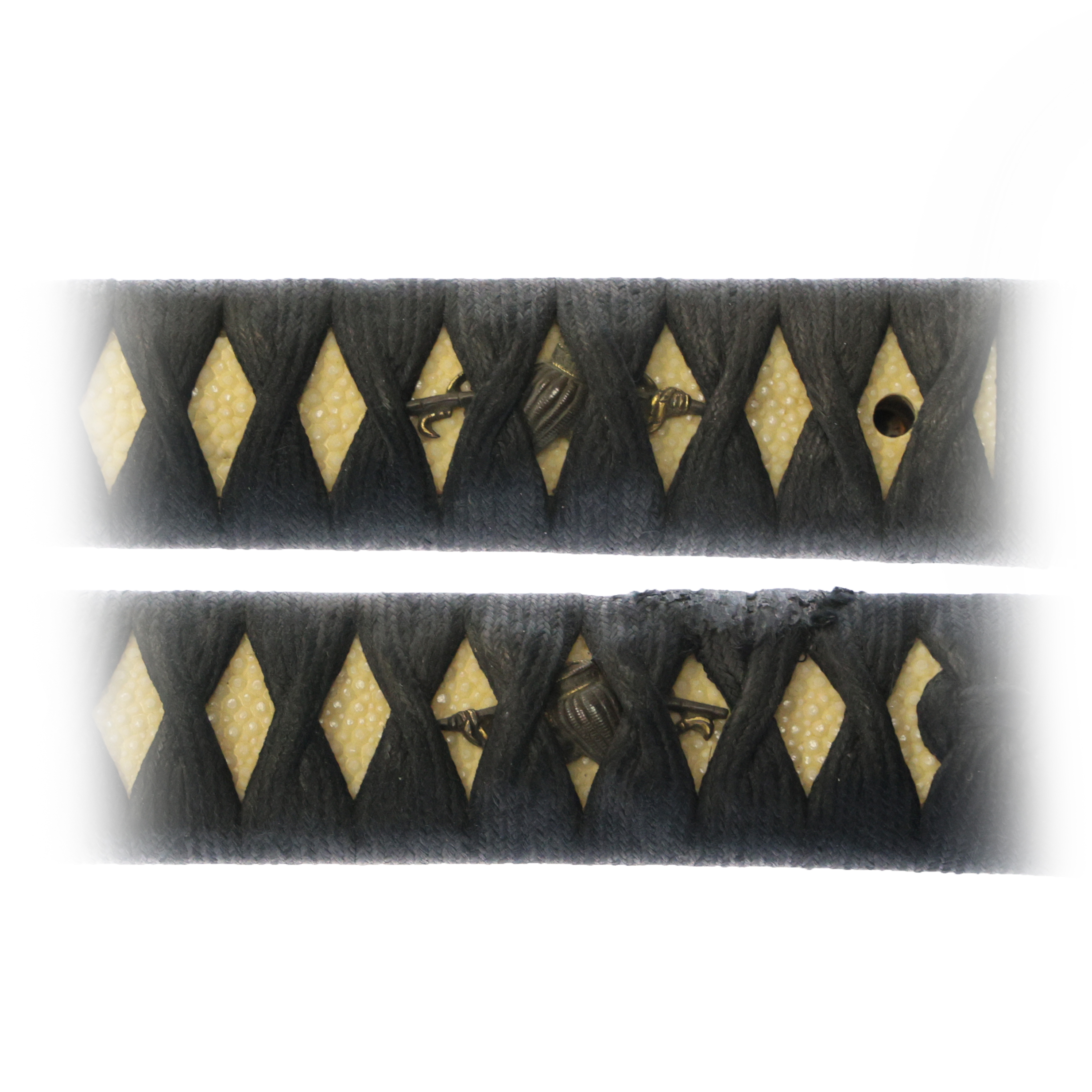
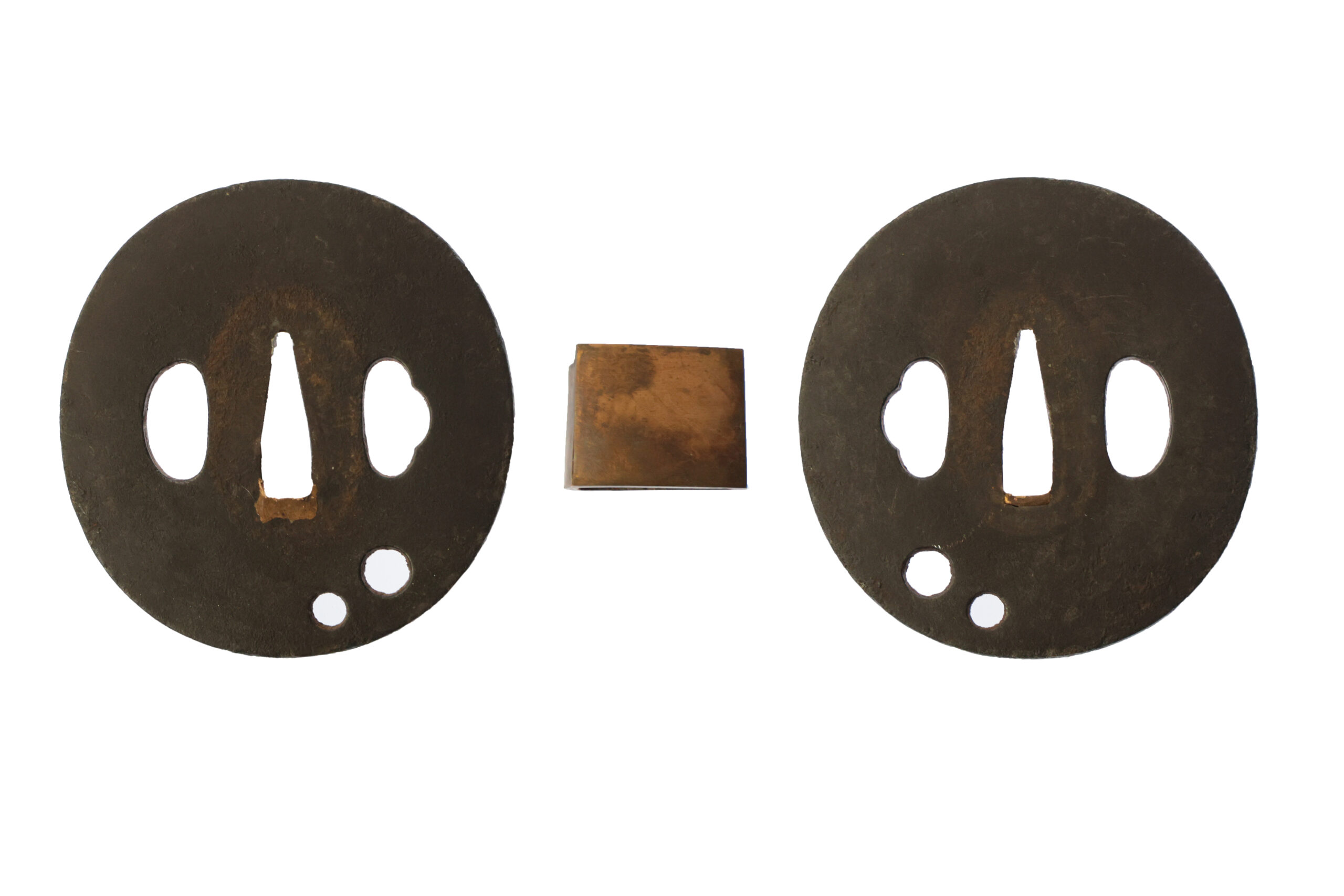
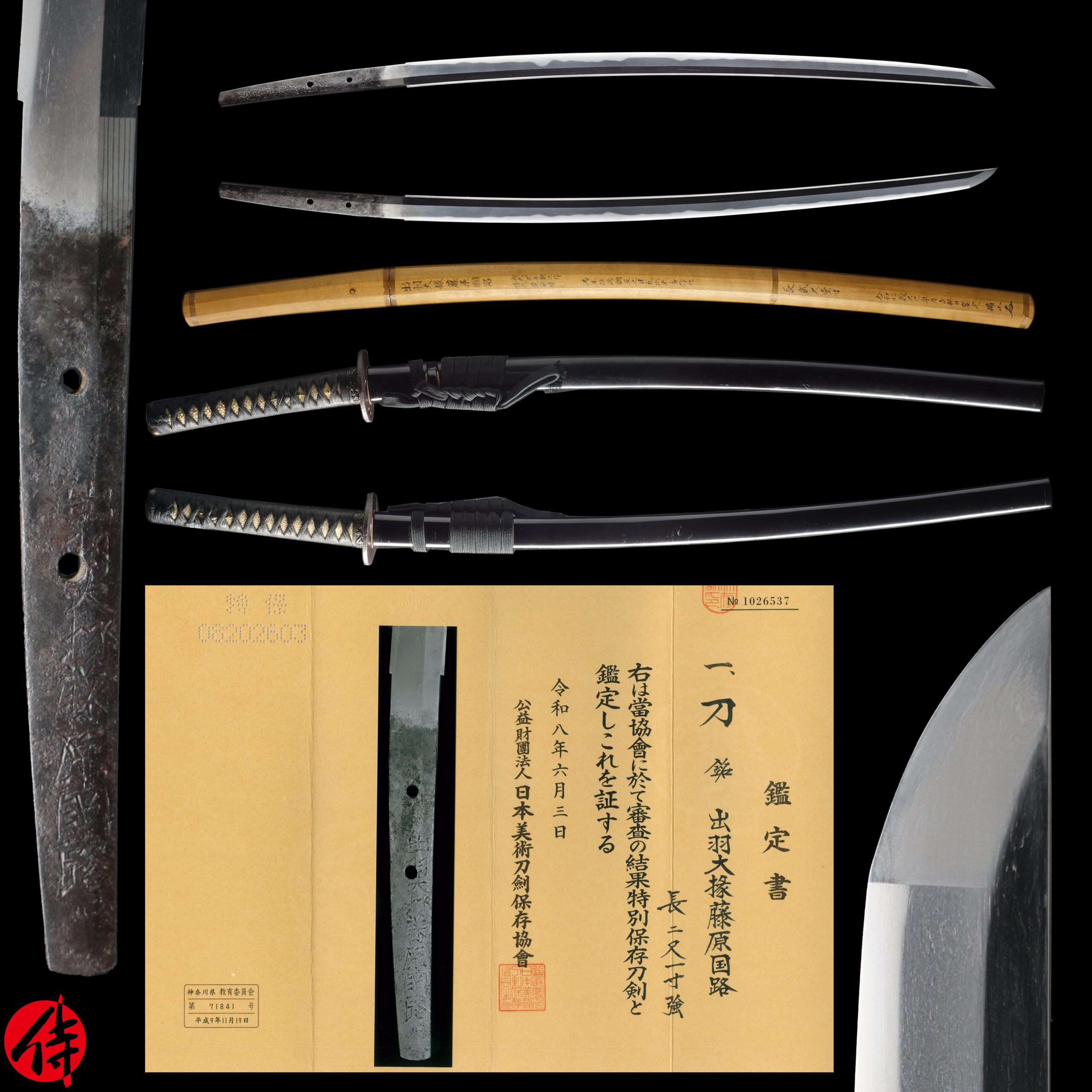
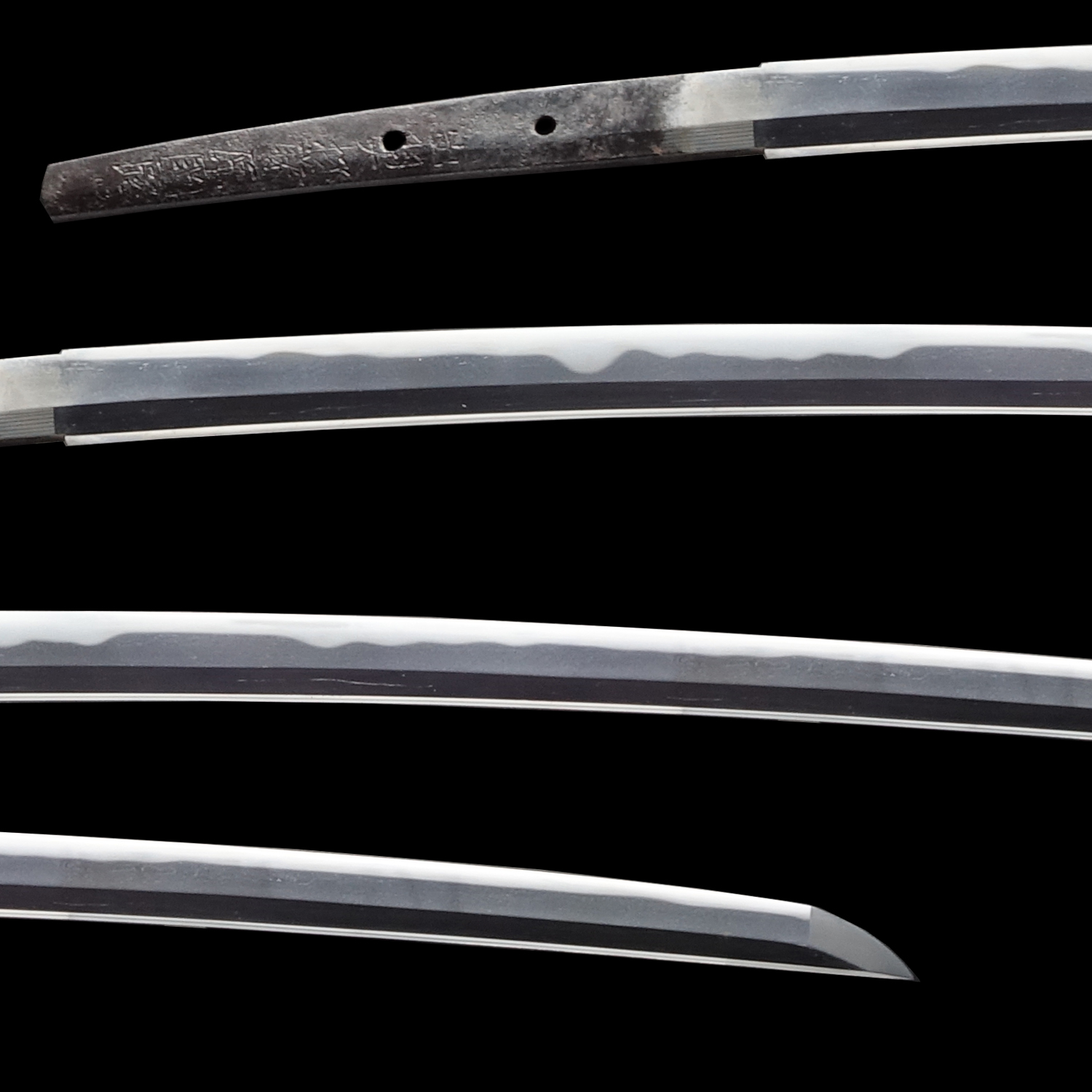
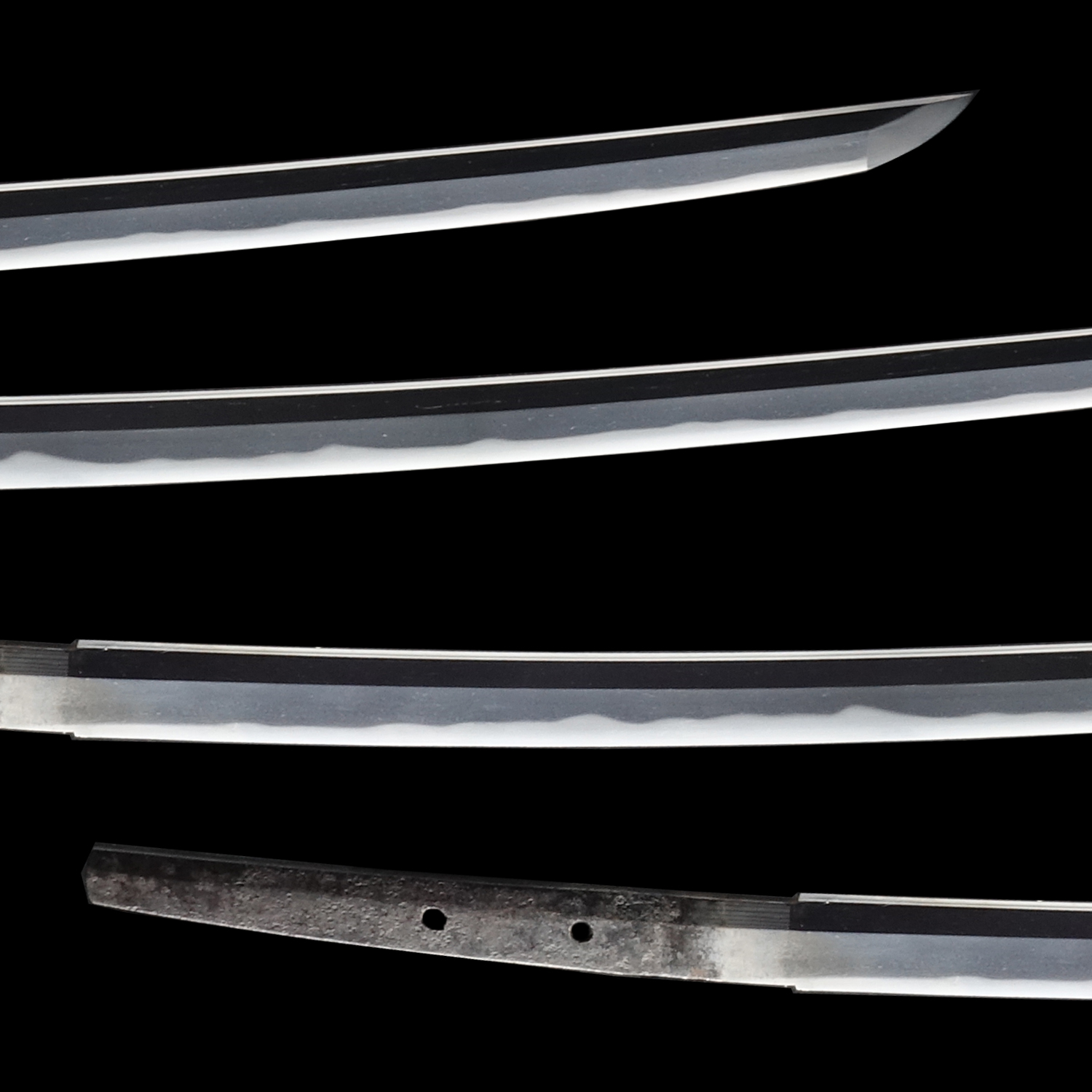
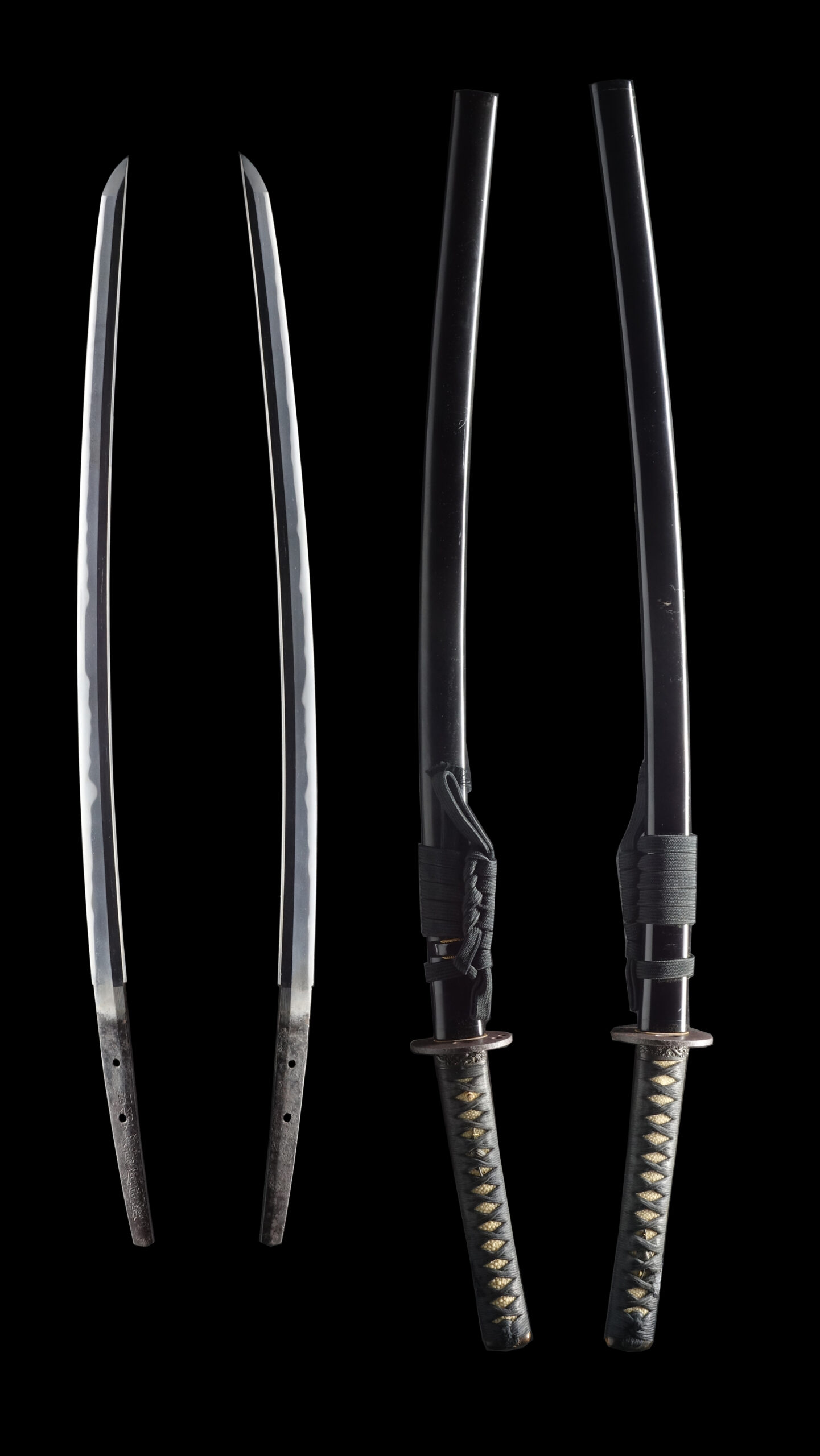
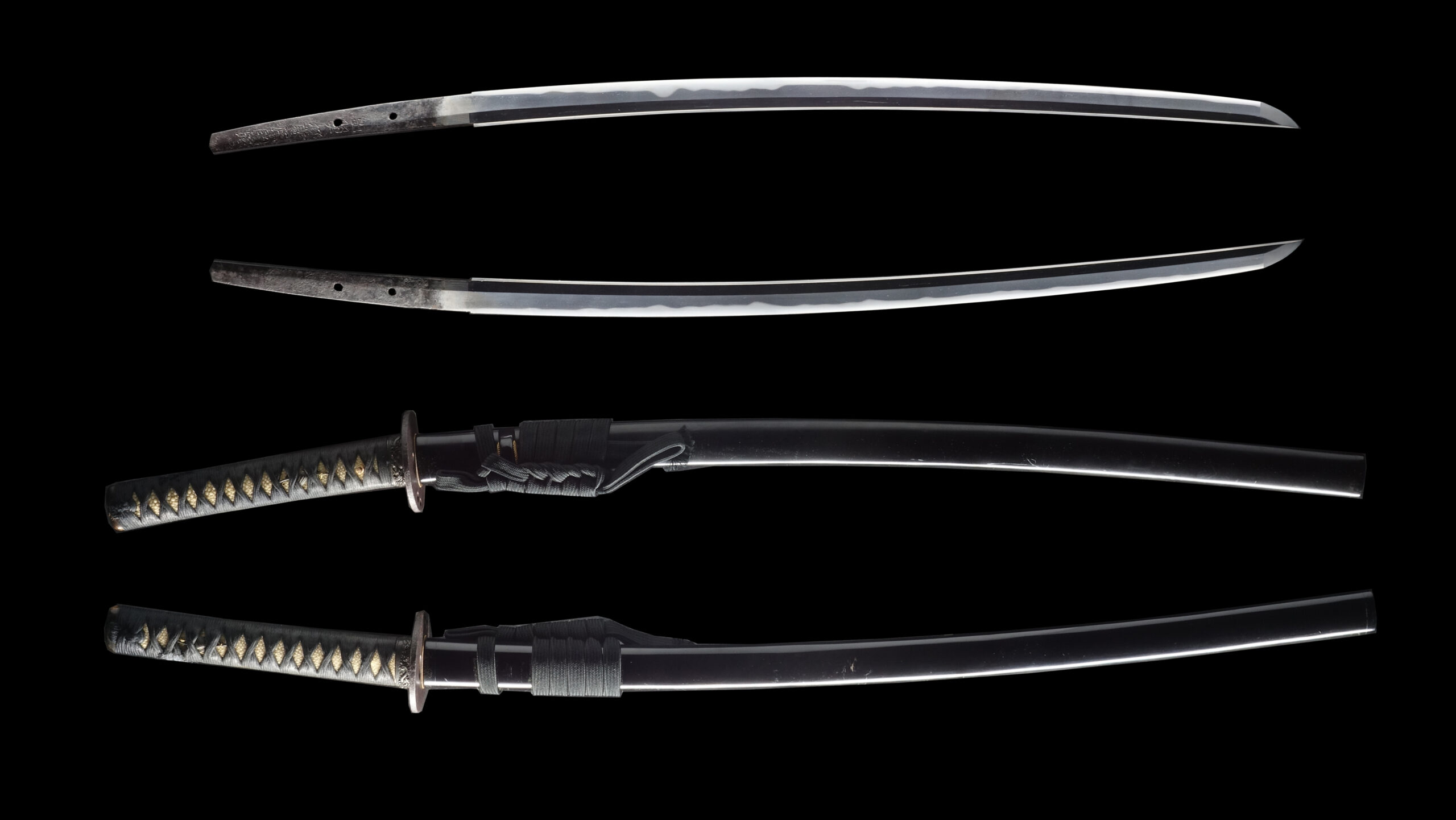
Horikawa (Yamashiro / Kyoto) · Yamashiro · around 1615-1624
Fujishiro Jo-jo saku · Tōken Taikan top 11%
11 pieces on the market now
Dewa Daijō Fujiwara Kunimichi worked in Kyoto in the Keichō-shintō years, the foremost pupil of Horikawa Kunihiro and, the published sources say, the most versatile hand of that whole circle, calling him "the most dexterous of the Horikawa school"[[c:1]]. His career is unusually long. Dated blades run from Keichō 13 (1608) to Kanbun 2 (1662), and one piece carries an added inscription giving his age as seventy-seven in Keian 5, so that some accounts even propose a second-generation Kunimichi for the works after the Jōō era. He is said to have lived in the Ebisugawa quarter near Horikawa, and the sword books record that he first studied under Iga-no-kami Kinmichi of the Mishina house before entering Kunihiro's gate; after his teacher's death he received the title Dewa Daijō, around Keichō 19 to Genna 1, in an arrangement sponsored by Kinmichi.
His characteristic work is a copy of the Sōshū tradition, and within it the Naoe-Shizu manner above all. The published sources are consistent on where his strength lay: he handled every tradition but Bizen with skill, "and of these the Sōshū tradition was his greatest specialty, looking devotedly to Shizu and Samonji"[[c:2]]. Over a board-grain jigane that stands up he tempers a notare and ko-notare base into which gunome and large gunome gather, building to a lively large midare with tobiyaki; the nioi is deep, the nie thick and at times coarse, with broad sunagashi and long kinsuji. The published sources name exactly these as the points by which he is known, his strong, lively nie, his large flamboyant midare, and the rich work of sunagashi and kinsuji. His most personal feature lies in the bōshi: a shallow notare-komi that thrusts up and turns pointed with hakikake, "the so-called Sanpin bōshi, entering in notare and becoming pointed at the tip"[[c:3]].
The jigane is where he is most himself. His itame stands up and is often dry and coarse, a distinctive zanguri texture mixed with mokume and flowing grain, inclining toward masame near the edge, with ji-nie adhering and chikei entering. It is not the unhurried, expansive steel of his teacher; it is a tauter, more worked jigane, and the published sources, while granting that in breadth of range he even surpasses Kunihiro, are clear that in leisurely grandeur of scale he does not match him. Across the temper run the activities he is read by, ashi entering well, the nioiguchi deep and at times brightly clear, muneyaki along the back of some blades, and on the more boisterous pieces a tendency toward coarse nie and basake.
Two registers divide his work. The first and most frequent is the flamboyant Shizu copy, the large midare fully tempered, the bōshi pointed in the Mishina manner, devotional carvings of suken, bonji and gomabashi on the omote and ura, and on his wide hira-zukuri wakizashi a Fudō or a Kurikara. The second is a subdued, low-temper register encountered from time to time, the hamon quiet, the nioiguchi tighter, the line dignified and sometimes carrying an archaic colour like old Shizu; one Tokubetsu-Jūyō katana of this kind lacks all flamboyance and is so richly covered in nie in both ji and ha that the published sources say it could "be mistaken for a work by his teacher Kunihiro"[[c:4]], proof of how completely he had absorbed the Horikawa hand. His signatures track his life across both registers, the early Kunidō written with the character 道, the prime full signature Dewa Daijō Fujiwara Kunimichi after he took the title, and the late pieces prefixed Rai, the changing name read together with the pointed bōshi as evidence of his connection to the Mishina house.
What sets Kunimichi apart within the Horikawa school is not a single feature but a balance. Among Kunihiro's pupils he and Izumi-no-kami Kunisada are reckoned the two most prolific, and his collaborator Kunitsugu, transmitted as either his son or his disciple, served as his capable daisaku and signed a joint katana before taking his own title. Against the school's other great hands his own features set him off: the standing, dry zanguri jigane, the pointed Sanpin bōshi that the Horikawa norm does not show, the thick coarse nie and long kinsuji of a thorough Shizu copy. The published sources call his finest work in this manner "the flower of his Shizu copies"[[c:5]], and praise his strongest pieces as overflowing with power, close to the highest rank of his oeuvre; his Samonji copy, too, is held to stand without disadvantage beside his teacher's.
For the collector Kunimichi is an attainable major name among the Keichō-shintō smiths, where so much of the school's best is held rather than traded. Fujishiro grades him Jō-jō saku. He has no National Treasures; his record runs instead through two Important Cultural Properties, two Tokubetsu-Jūyō and many Jūyō, sixty-eight blades in all in the Tokubetsu-Jūyō and Jūyō tiers, with seventy-five designated works on record, alongside prewar Jūyō-Bijutsuhin that include the great long tachi dedicated to the Goryō Shrine in Kyoto. The provenance recorded for his blades reaches into the Imperial Family and old collections, with examples now held at the Goryō Shrine and the Yasaka Shrine in Kyoto and others long in private hands. Of the seven tiers above only a small number can ever change hands, and most designated blades, even in private collections, are kept rather than sold; but a signed Dewa Daijō Kunimichi in the tradeable tier does come to a patient collector from time to time, a Kyoto Shizu copy of the first rank by the most versatile of Kunihiro's pupils.
Where Kunimichi stands among comparable artisans: across all of nihontō, and within tradition, era, and period. The tiers (Foremost · Leading · Major · Notable) weigh official designations from the NBTHK and Japan's Agency for Cultural Affairs, together with historical honors of lasting repute such as the Sansaku and Meibutsu-chō.
Select a lens to see how it's measured.
Years he was demonstrably active, proven by signed-and-dated blades
Shinto · Yamashiro
64 pieces on the market now
At Ichijo Horikawa in Kyoto, from Keicho 4 (1599), Horikawa Kunihiro gathered the pupils whose work the published sources name with his own as the opening of the shinto age. Kunihiro himself reached forging late and by a roundabout road. Born Tanaka and serving as a warrior under the Ito of Obi castle in Hyuga, he wandered the provinces after that house fell, forging where he stopped, his earliest dated blade cut in Hyuga in Tensho 4 (1576); his itinerant Tensho-uchi looked to late Soshu and late Seki, often run toward a hitatsura-like effect over devotional carving. The settlement in Kyoto changed that. There his stated aim, the sources write, lay in the revival of the Soshu-den tradition, the leaning strongest toward Shizu, and around that ideal he trained the men who carried his manner forward: Dewa no Kami Kunimichi, Kuniyasu, Osumi no Jo Masahiro, Echigo no Kami Kunitomo, the elder Kunisada and Kunisuke, with later and minor hands reaching Settsu, Echizen and Edo. Many of them, born like the master at Obi, followed him from Hyuga to the capital. The shared vocabulary is read first in the steel. The school forges an itame mixed with mokume that stands up, the grain raised into the loose, granular surface the commentaries name outright, the zanguri hada particular to Horikawa work, with ji-nie lying thick and chikei entering; on many blades a mizukage rises obliquely from the machi. Over that ground the prime manner is the Keicho-shinto sugata, wide with little taper and an extended chu-kissaki or o-kissaki, the build likened to a Nanbokucho odachi cut down, tempered in a notare and gunome with thick nie, sunagashi and long kinsuji, the nioiguchi often sinking into shizumi. Within that frame the pupils diverge sharply.
Kunimichi runs the flamboyant Shizu copy fully out and turns his boshi pointed in the Mishina manner, the Sanpin boshi the school otherwise does not show. Masahiro keeps the same Soshu-den worked at lower temperature, his temper calm and his mokume conspicuous; Kuniyasu and Kunitsugu stand closest of all to the master and signed for him. Kunitomo turns alone toward late Seki, his gunome round-headed and his chisel the finest in the group, and the elder Kunisada and Kunisuke carry the zanguri steel south into Osaka, the latter keeping the Ishido clove he was born to. Hiroyuki holds suguha over a blackish steel that recalls old Yamato, and the two Echizen Kunikiyo forge a dark, dense hokkoku-gane under a calm chu-suguha. A collector seeks Horikawa because the school stands at a hinge: Kunihiro is read as the first hand of the new-sword age, and the line he taught runs forward into the Osaka tradition through Kunisada and Kunisuke and into Echizen through Kunikiyo. To kantei the work, read the steel first, the standing zanguri surface and the oblique mizukage, then the sinking nioiguchi and the Soshu-revival notare with its sunagashi and kinsuji; the individual hand declares itself in the departures, Kunimichi's pointed boshi, Kunitomo's Seki gunome and compact tang, Kuniyasu's reversed file marks and two-character mei, Hiroyuki's kiri-yasuri. The founder and his closest pupils sit at the top of the line, Kunihiro signing almost everything he made, the large kata-ochi two-character mei beside his long residence signatures; because Kuniyasu, Masahiro, Kunitsugu and Hiromi worked as his daisaku, a share of the blades signed Kunihiro are in fact theirs. Provenance runs through the houses of the founder's own story and of the country, the Hyuga Ito he had served, the Shimazu of Kagoshima, the Imperial Family and Toyotomi Hideyori, with the tachi Kunihiro dedicated to the Hataeda Hachimangu still in the shrine's keeping. A signed Horikawa blade reaches a private collection only from time to time, carrying on its nakago the hand with which the new sword begins. Learn more →
| Smith | Era | Designated |
|---|---|---|
| Kunihiro國廣 | 1573-1613 | 147 |
| Kunimichi國路 | 1615-1624 | 75 |
| Kunisada國貞 | 1624-1646 | 87 |
| Kunitomo國儔 | 1596-1615 | 27 |
| Masahiro正弘 | 1596-1615 | 16 |
Kyōto: the revival workshop
The Shintō era was largely invented in Kyōto: Umetada Myōju’s workshop trained the movement, Horikawa Kunihiro raised a generation, and the Hon’ami appraisers, who held no forge, governed the meaning of famous blades.
A Hozon-certified blade judged to show notably superior workmanship and a better state of preservation. The bar is higher: re-tempered blades and most unsigned Muromachi/Edo works are excluded.
The NBTHK (Nihon Bijutsu Tōken Hozon Kyōkai, the Society for the Preservation of Japanese Art Swords) is a public-interest incorporated foundation founded in 1948 and supervised by Japan’s Agency for Cultural Affairs (Bunkachō); it is based at the Japanese Sword Museum in Tokyo. Its expert panels physically examine each submitted work (shinsa) and issue a certificate (kanteishō) ranking it by artistic and historical merit. NBTHK papers are the most widely recognized standard of authentication for Japanese swords and fittings.
NBTHK official siteReturns/exchanges limited to defects caused by shipping (except willful misconduct or gross negligence by the company); customers must contact within 72 hours of receiving the product.
¥1,300,000