The Shintō era was largely invented in Kyōto: Umetada Myōju’s workshop trained the movement, Horikawa Kunihiro raised a generation, and the Hon’ami appraisers, who held no forge, governed the meaning of famous blades.
 NihontoWatchNihontoWatch
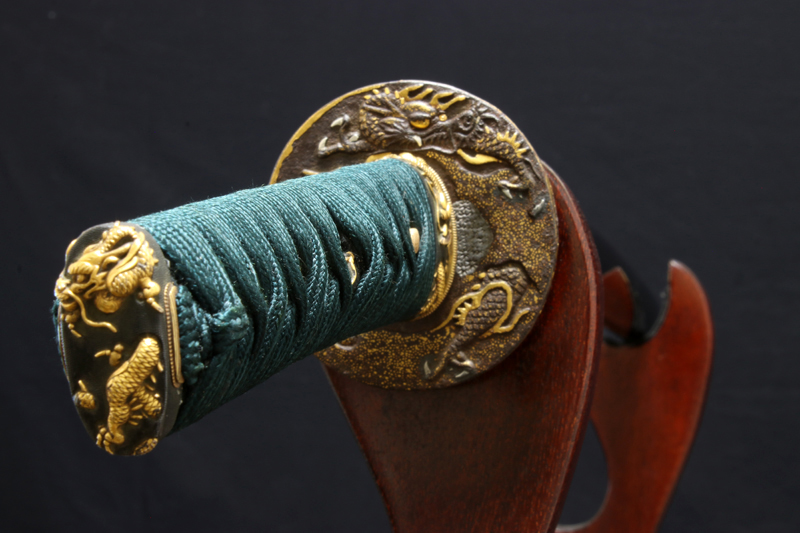
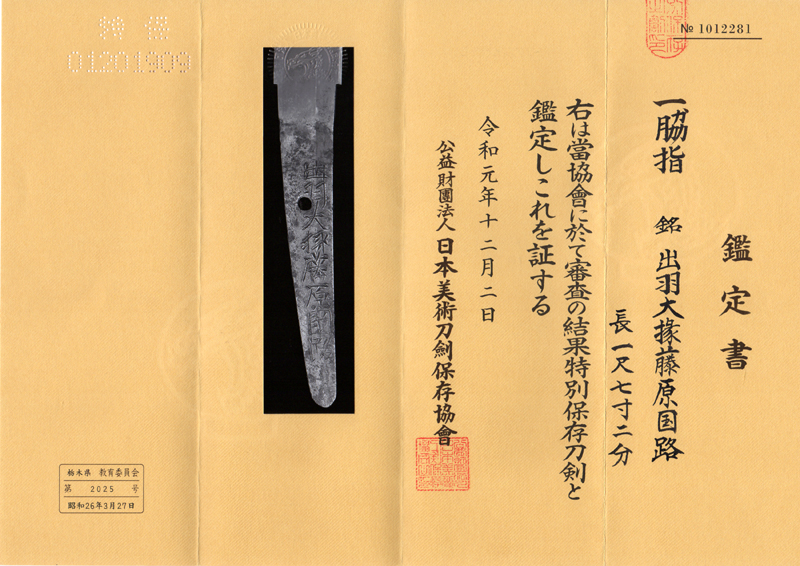
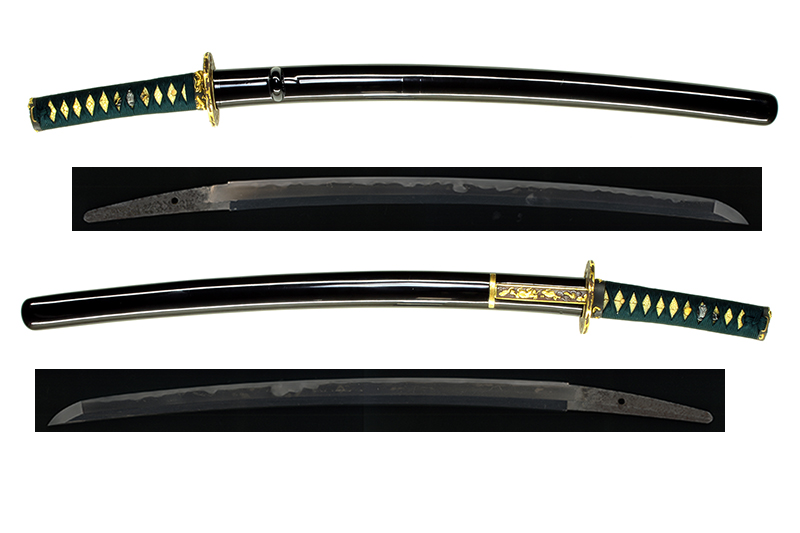
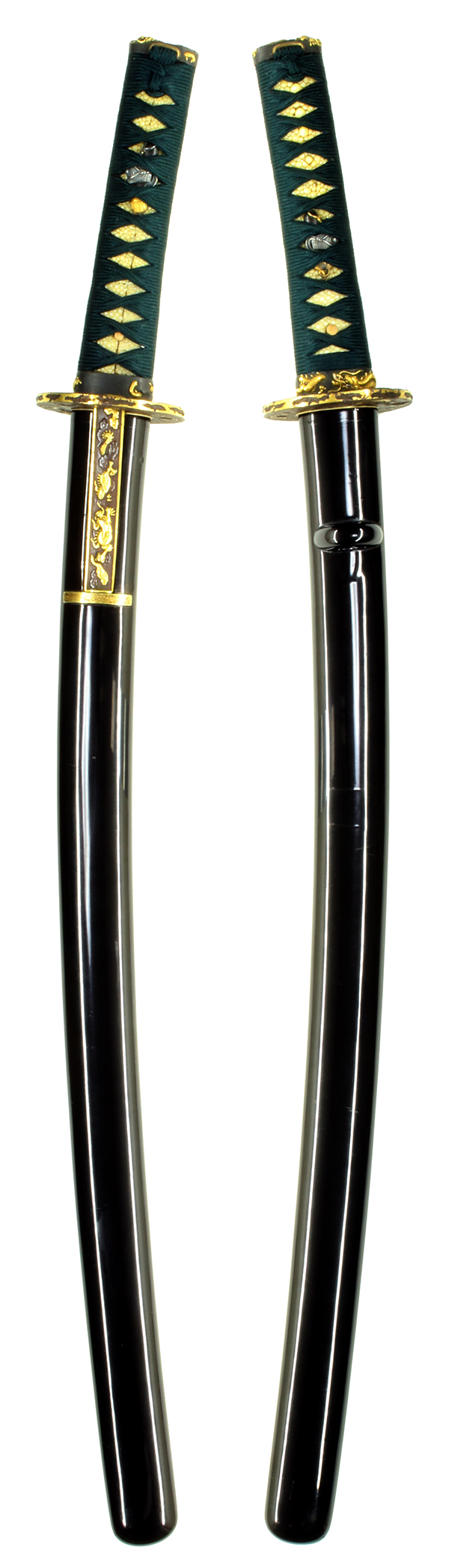
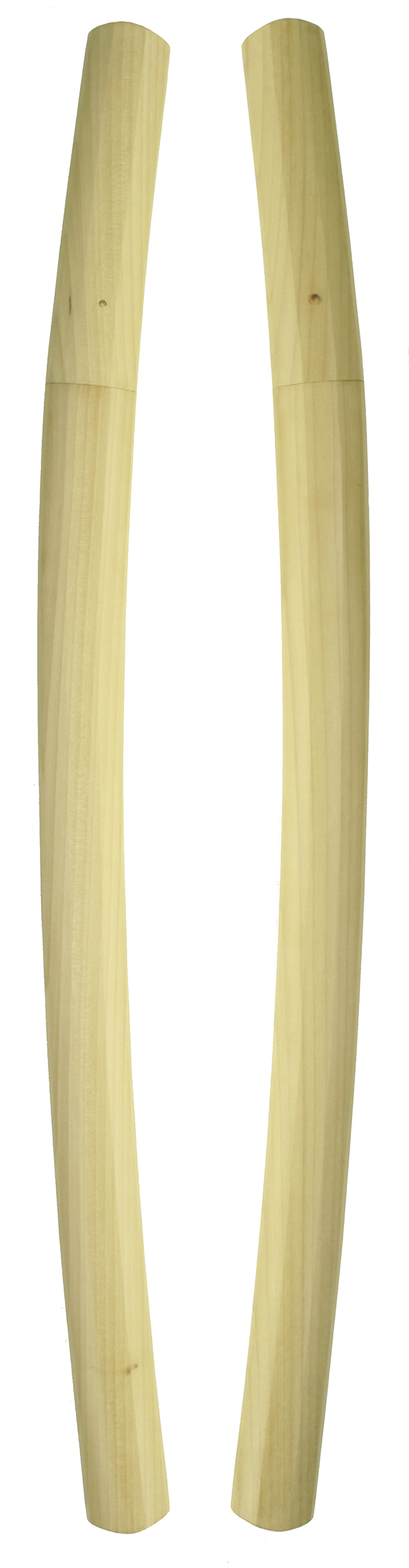
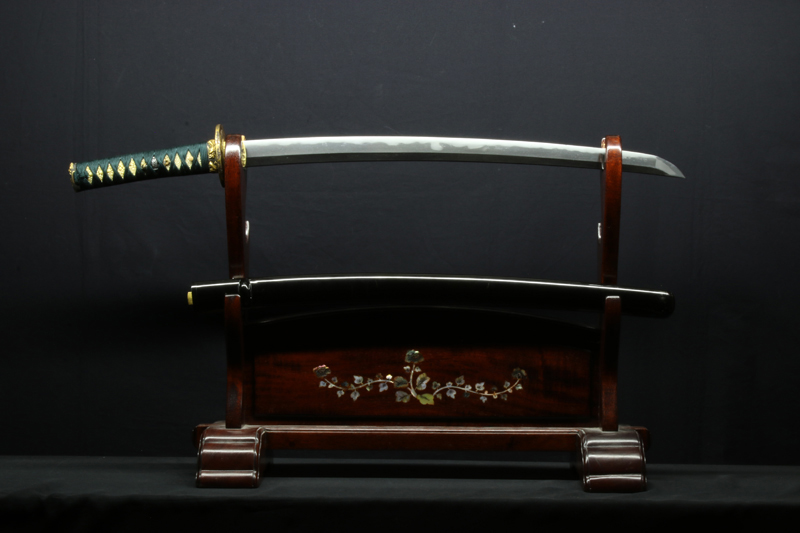
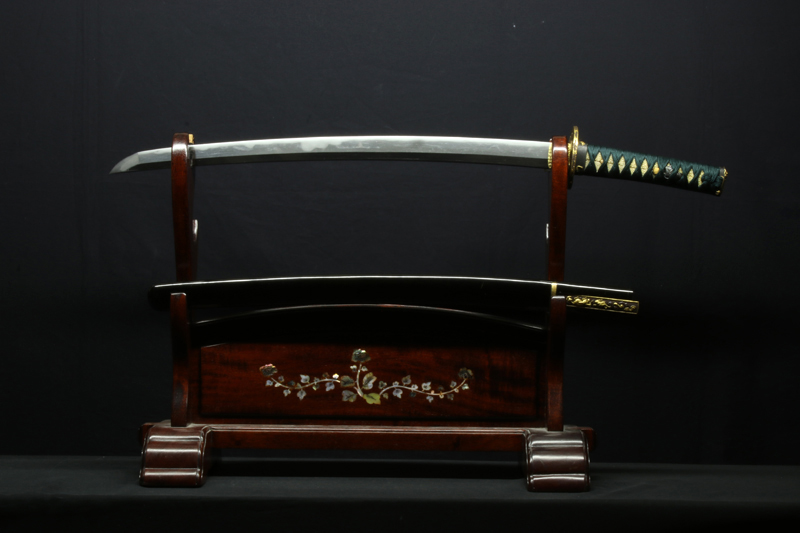
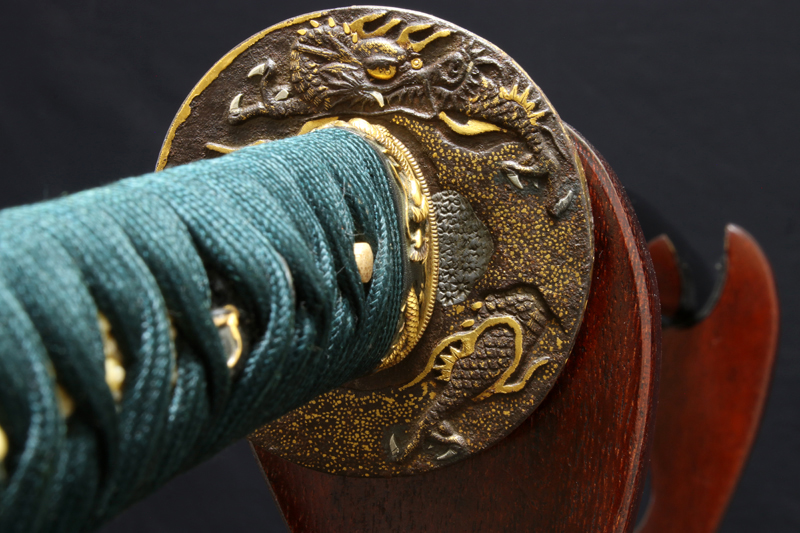
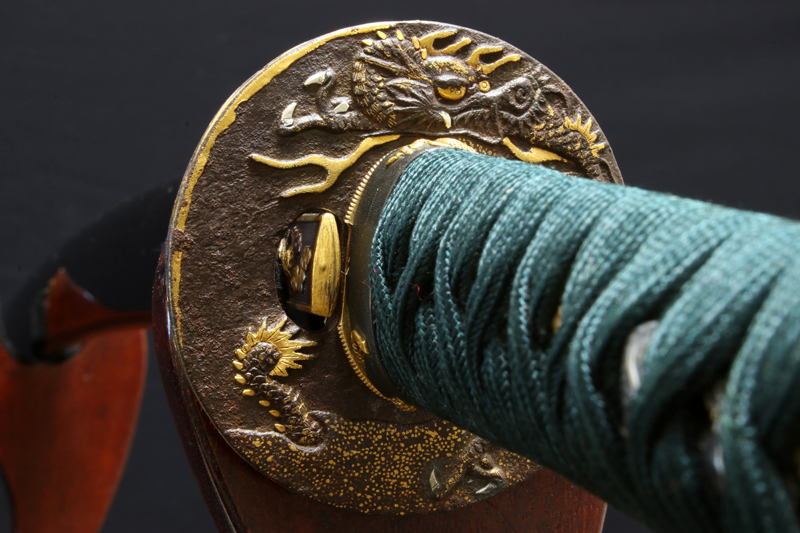
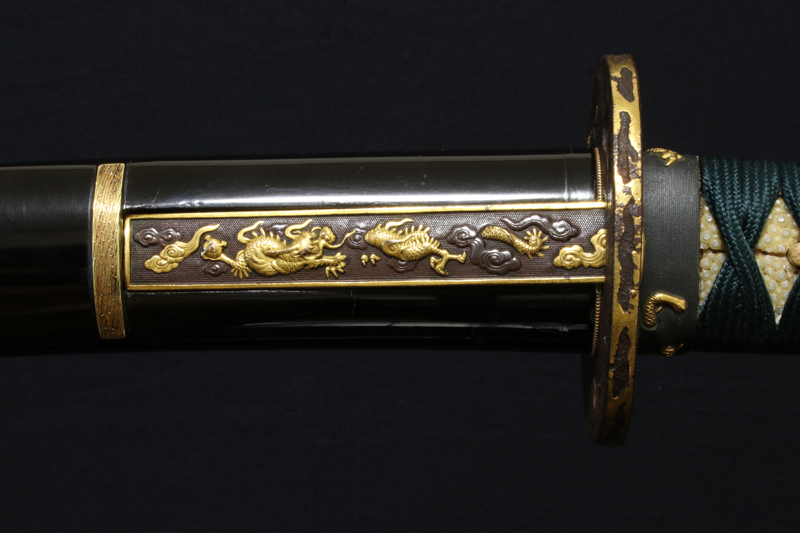
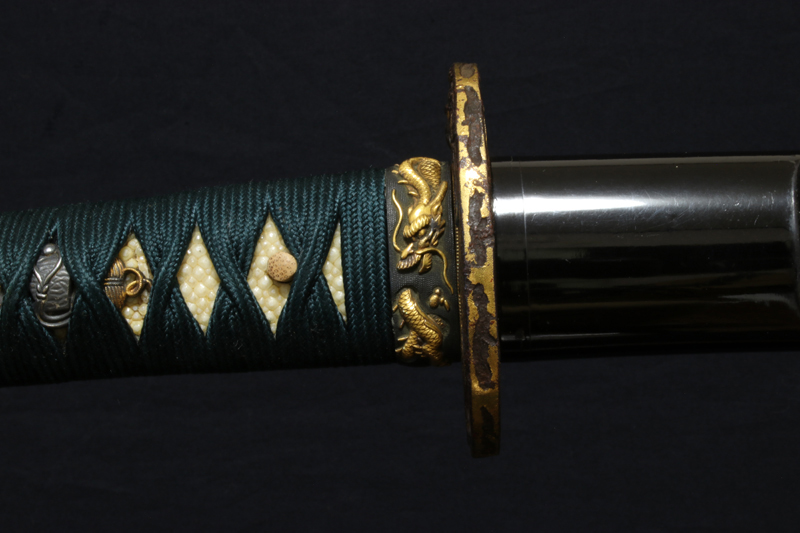
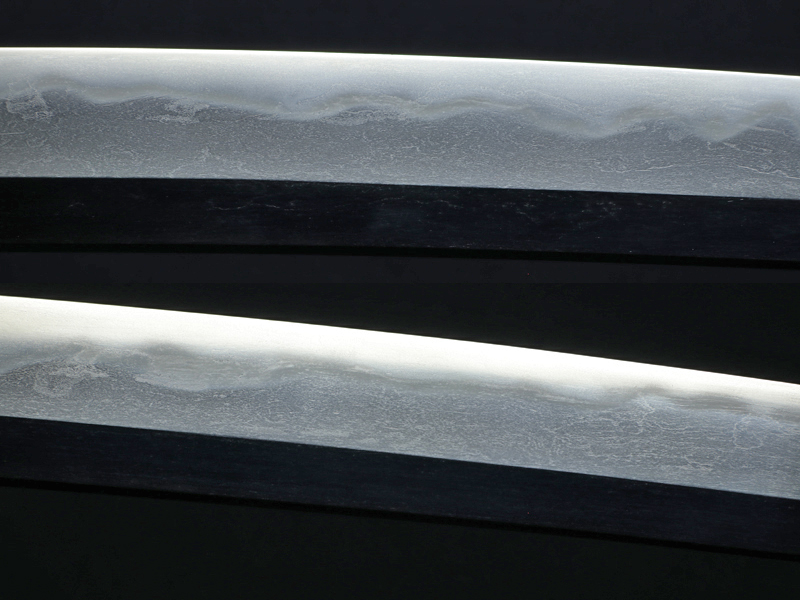
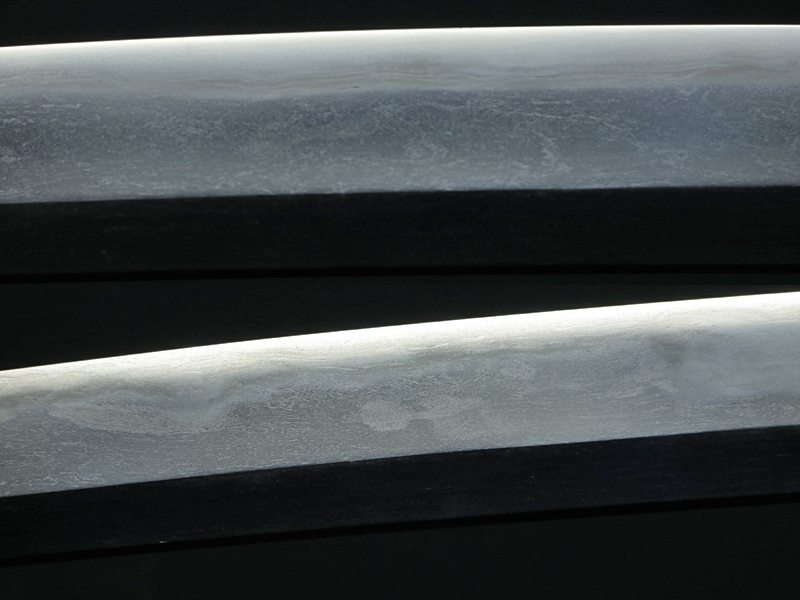
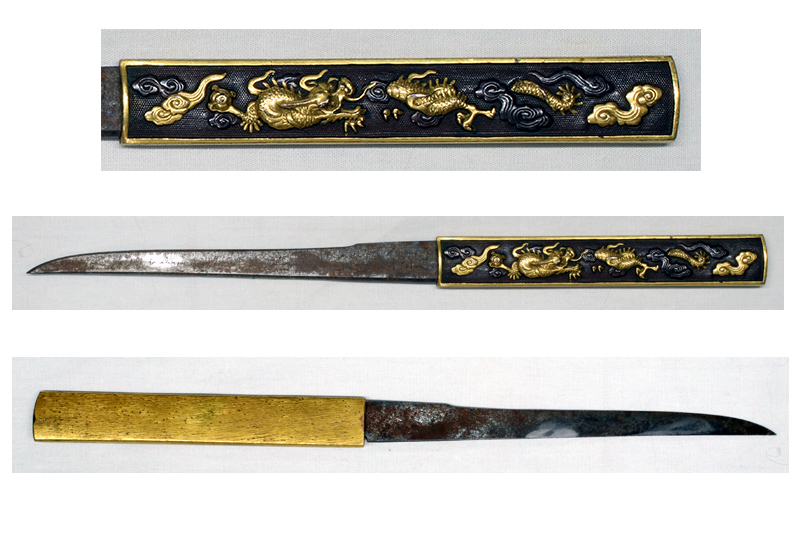
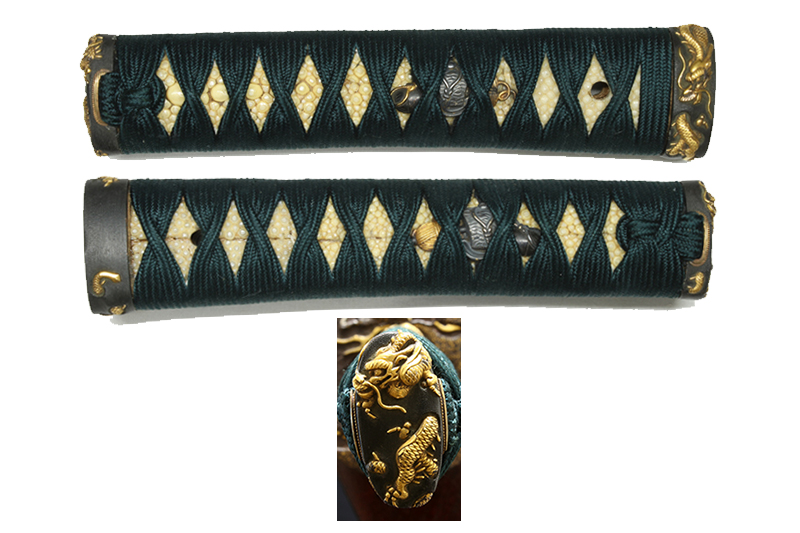
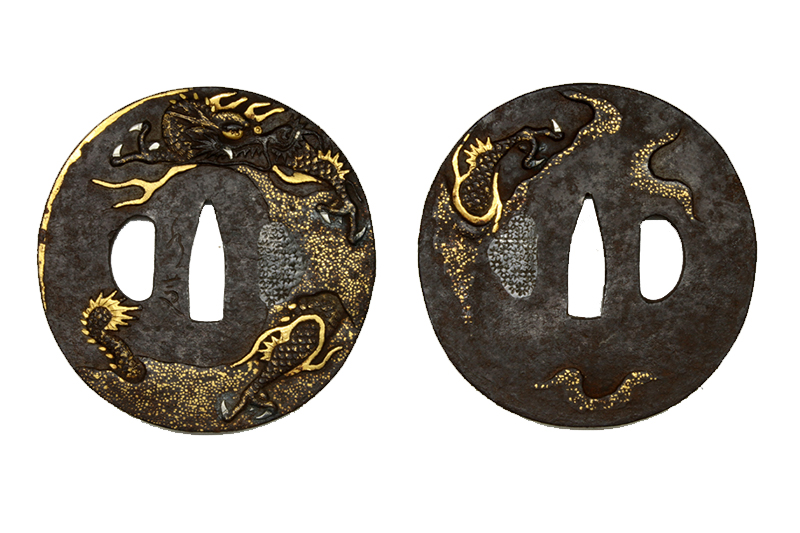
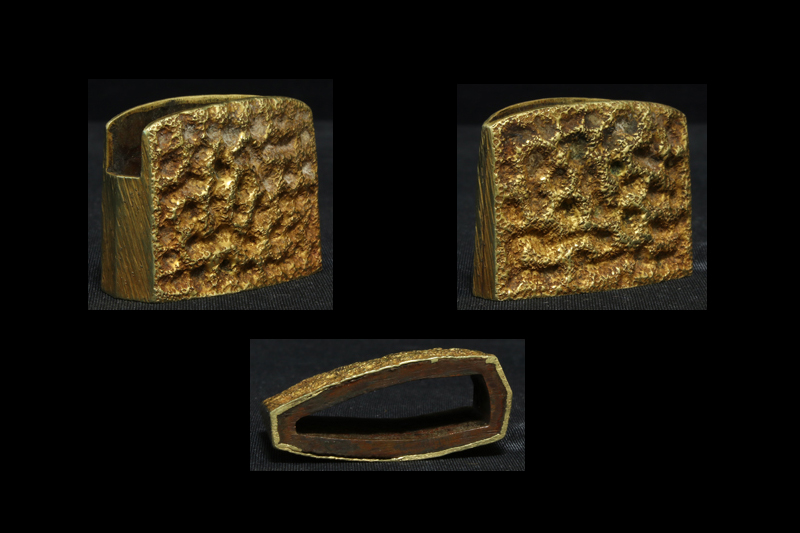
Hozontoken by NBTHK / Dewa daijo Fujiwara no Kunimichi. Kunimich is a more high-grade ranking in the Shinto. He is student of Horikawa Kunihiro school. 「体配 style」 体配は鎬造り庵棟、身幅重共尋常、鳥居反り、中鋒。茎は生で、鑢目は筋違い、茎尻は栗尻。 The style is Shinogizukuri (ridged style) with Iorimune (standard surface), having a Chu-kissaki. Nakago is original, and design of the file is kaichigai, and end of nakago is kurishiri. 「地鉄 jigane」 小板目肌に杢目肌が混じりよく練れて地沸が厚くつき地景がよく入り、ざんぐりとして肌立ち柾に流れる。 Mokume is mixed in Koitame, It have lot of jinie and chikei. it flow in Masame. 「刃紋 hamon」 刃紋は、湾れに互の目が混じる、明るく冴えた見事な刃紋で、飛び焼き棟焼きをみせ、刃中に金筋、砂流しが盛んに働く。帽子は乱れ込み小丸に深く返る。 Guonme and notare. It have tobiyaki and kinsuji and sunagashi. Then Boshi is Midarekomi and komaru. 「特徴 detailed」 出羽大掾藤原国路は堀川国広の弟子で最も著名であり高齢迄制作した為比較的制作本数が多く遺作が数多く残されている。 天正四年頃(1576)の生まれで、最晩年の作刀が明暦三年(1657)頃とみられる。制作時代は慶長より寛文迄続く当初國道 と称し後に慶長十九年から二十年(1614 から1615)にかけての間に出羽大掾を受領したと思われる。 本作、体配からみると寛永頃の作だと思われる、飛び焼きを盛んに焼いた珍しい作品です。 拵の金具も良い物が使われています、特に若芝の鍔は逸品で、特別保存刀装具に合格すると思います。 刀身は研ぎ上がってばかりで、完璧です。 The Dewa Daijo Kunimichi is student of Horikawa Kunihiro school. His life is from 1576 to around 1657. I think that this sword was made in Kanei(1624 to 1654). 「拵 koshirae」 ハバキ:素銅地金着一重の岩石鎺。Made of copper with cover of gold. And pattern is rock. 鍔 :鉄地金象嵌龍の図。銘は若芝。Made of iron and design of the dragon of gold inlay.It has a signature of Jakushi 縁頭 :赤銅魚子地龍の図。Made of alloy of copper and gold and design of the dragon. 目貫 :赤銅地武具の図。Made of alloy of copper and gold and design of the weapon of samurai. 柄 :鮫は親粒が付き巻き鮫、柄巻は正絹納戸色の諸摘み巻き。 小柄 :赤銅魚子地雲龍の図。Made of alloy of copper and gold and design of the cloud dragon. 鞘 :黒呂鞘。Black(Kuroro) With Shirosaya. 「刀身の状態 condition of blade」 研:研ぎ上がったばかりです。Blade have just finished polishing. 傷:傷は無いです。There is no crack.
NihontoWatchOffered by Giheiya
This piece has sold
Get an email when a new Horikawa Kunimichi piece hits the market.


Horikawa (Yamashiro / Kyoto) · Yamashiro · around 1615-1624
Fujishiro Jo-jo saku · Tōken Taikan top 11%
11 pieces on the market now
Dewa Daijō Fujiwara Kunimichi worked in Kyoto in the Keichō-shintō years, the foremost pupil of Horikawa Kunihiro and, the published sources say, the most versatile hand of that whole circle, calling him "the most dexterous of the Horikawa school"[[c:1]]. His career is unusually long. Dated blades run from Keichō 13 (1608) to Kanbun 2 (1662), and one piece carries an added inscription giving his age as seventy-seven in Keian 5, so that some accounts even propose a second-generation Kunimichi for the works after the Jōō era. He is said to have lived in the Ebisugawa quarter near Horikawa, and the sword books record that he first studied under Iga-no-kami Kinmichi of the Mishina house before entering Kunihiro's gate; after his teacher's death he received the title Dewa Daijō, around Keichō 19 to Genna 1, in an arrangement sponsored by Kinmichi.
His characteristic work is a copy of the Sōshū tradition, and within it the Naoe-Shizu manner above all. The published sources are consistent on where his strength lay: he handled every tradition but Bizen with skill, "and of these the Sōshū tradition was his greatest specialty, looking devotedly to Shizu and Samonji"[[c:2]]. Over a board-grain jigane that stands up he tempers a notare and ko-notare base into which gunome and large gunome gather, building to a lively large midare with tobiyaki; the nioi is deep, the nie thick and at times coarse, with broad sunagashi and long kinsuji. The published sources name exactly these as the points by which he is known, his strong, lively nie, his large flamboyant midare, and the rich work of sunagashi and kinsuji. His most personal feature lies in the bōshi: a shallow notare-komi that thrusts up and turns pointed with hakikake, "the so-called Sanpin bōshi, entering in notare and becoming pointed at the tip"[[c:3]].
The jigane is where he is most himself. His itame stands up and is often dry and coarse, a distinctive zanguri texture mixed with mokume and flowing grain, inclining toward masame near the edge, with ji-nie adhering and chikei entering. It is not the unhurried, expansive steel of his teacher; it is a tauter, more worked jigane, and the published sources, while granting that in breadth of range he even surpasses Kunihiro, are clear that in leisurely grandeur of scale he does not match him. Across the temper run the activities he is read by, ashi entering well, the nioiguchi deep and at times brightly clear, muneyaki along the back of some blades, and on the more boisterous pieces a tendency toward coarse nie and basake.
Two registers divide his work. The first and most frequent is the flamboyant Shizu copy, the large midare fully tempered, the bōshi pointed in the Mishina manner, devotional carvings of suken, bonji and gomabashi on the omote and ura, and on his wide hira-zukuri wakizashi a Fudō or a Kurikara. The second is a subdued, low-temper register encountered from time to time, the hamon quiet, the nioiguchi tighter, the line dignified and sometimes carrying an archaic colour like old Shizu; one Tokubetsu-Jūyō katana of this kind lacks all flamboyance and is so richly covered in nie in both ji and ha that the published sources say it could "be mistaken for a work by his teacher Kunihiro"[[c:4]], proof of how completely he had absorbed the Horikawa hand. His signatures track his life across both registers, the early Kunidō written with the character 道, the prime full signature Dewa Daijō Fujiwara Kunimichi after he took the title, and the late pieces prefixed Rai, the changing name read together with the pointed bōshi as evidence of his connection to the Mishina house.
What sets Kunimichi apart within the Horikawa school is not a single feature but a balance. Among Kunihiro's pupils he and Izumi-no-kami Kunisada are reckoned the two most prolific, and his collaborator Kunitsugu, transmitted as either his son or his disciple, served as his capable daisaku and signed a joint katana before taking his own title. Against the school's other great hands his own features set him off: the standing, dry zanguri jigane, the pointed Sanpin bōshi that the Horikawa norm does not show, the thick coarse nie and long kinsuji of a thorough Shizu copy. The published sources call his finest work in this manner "the flower of his Shizu copies"[[c:5]], and praise his strongest pieces as overflowing with power, close to the highest rank of his oeuvre; his Samonji copy, too, is held to stand without disadvantage beside his teacher's.
For the collector Kunimichi is an attainable major name among the Keichō-shintō smiths, where so much of the school's best is held rather than traded. Fujishiro grades him Jō-jō saku. He has no National Treasures; his record runs instead through two Important Cultural Properties, two Tokubetsu-Jūyō and many Jūyō, sixty-eight blades in all in the Tokubetsu-Jūyō and Jūyō tiers, with seventy-five designated works on record, alongside prewar Jūyō-Bijutsuhin that include the great long tachi dedicated to the Goryō Shrine in Kyoto. The provenance recorded for his blades reaches into the Imperial Family and old collections, with examples now held at the Goryō Shrine and the Yasaka Shrine in Kyoto and others long in private hands. Of the seven tiers above only a small number can ever change hands, and most designated blades, even in private collections, are kept rather than sold; but a signed Dewa Daijō Kunimichi in the tradeable tier does come to a patient collector from time to time, a Kyoto Shizu copy of the first rank by the most versatile of Kunihiro's pupils.
Where Kunimichi stands among comparable artisans: across all of nihontō, and within tradition, era, and period. The tiers (Foremost · Leading · Major · Notable) weigh official designations from the NBTHK and Japan's Agency for Cultural Affairs, together with historical honors of lasting repute such as the Sansaku and Meibutsu-chō.
Select a lens to see how it's measured.
Years he was demonstrably active, proven by signed-and-dated blades
Shinto · Yamashiro
64 pieces on the market now
At Ichijo Horikawa in Kyoto, from Keicho 4 (1599), Horikawa Kunihiro gathered the pupils whose work the published sources name with his own as the opening of the shinto age. Kunihiro himself reached forging late and by a roundabout road. Born Tanaka and serving as a warrior under the Ito of Obi castle in Hyuga, he wandered the provinces after that house fell, forging where he stopped, his earliest dated blade cut in Hyuga in Tensho 4 (1576); his itinerant Tensho-uchi looked to late Soshu and late Seki, often run toward a hitatsura-like effect over devotional carving. The settlement in Kyoto changed that. There his stated aim, the sources write, lay in the revival of the Soshu-den tradition, the leaning strongest toward Shizu, and around that ideal he trained the men who carried his manner forward: Dewa no Kami Kunimichi, Kuniyasu, Osumi no Jo Masahiro, Echigo no Kami Kunitomo, the elder Kunisada and Kunisuke, with later and minor hands reaching Settsu, Echizen and Edo. Many of them, born like the master at Obi, followed him from Hyuga to the capital. The shared vocabulary is read first in the steel. The school forges an itame mixed with mokume that stands up, the grain raised into the loose, granular surface the commentaries name outright, the zanguri hada particular to Horikawa work, with ji-nie lying thick and chikei entering; on many blades a mizukage rises obliquely from the machi. Over that ground the prime manner is the Keicho-shinto sugata, wide with little taper and an extended chu-kissaki or o-kissaki, the build likened to a Nanbokucho odachi cut down, tempered in a notare and gunome with thick nie, sunagashi and long kinsuji, the nioiguchi often sinking into shizumi. Within that frame the pupils diverge sharply.
Kunimichi runs the flamboyant Shizu copy fully out and turns his boshi pointed in the Mishina manner, the Sanpin boshi the school otherwise does not show. Masahiro keeps the same Soshu-den worked at lower temperature, his temper calm and his mokume conspicuous; Kuniyasu and Kunitsugu stand closest of all to the master and signed for him. Kunitomo turns alone toward late Seki, his gunome round-headed and his chisel the finest in the group, and the elder Kunisada and Kunisuke carry the zanguri steel south into Osaka, the latter keeping the Ishido clove he was born to. Hiroyuki holds suguha over a blackish steel that recalls old Yamato, and the two Echizen Kunikiyo forge a dark, dense hokkoku-gane under a calm chu-suguha. A collector seeks Horikawa because the school stands at a hinge: Kunihiro is read as the first hand of the new-sword age, and the line he taught runs forward into the Osaka tradition through Kunisada and Kunisuke and into Echizen through Kunikiyo. To kantei the work, read the steel first, the standing zanguri surface and the oblique mizukage, then the sinking nioiguchi and the Soshu-revival notare with its sunagashi and kinsuji; the individual hand declares itself in the departures, Kunimichi's pointed boshi, Kunitomo's Seki gunome and compact tang, Kuniyasu's reversed file marks and two-character mei, Hiroyuki's kiri-yasuri. The founder and his closest pupils sit at the top of the line, Kunihiro signing almost everything he made, the large kata-ochi two-character mei beside his long residence signatures; because Kuniyasu, Masahiro, Kunitsugu and Hiromi worked as his daisaku, a share of the blades signed Kunihiro are in fact theirs. Provenance runs through the houses of the founder's own story and of the country, the Hyuga Ito he had served, the Shimazu of Kagoshima, the Imperial Family and Toyotomi Hideyori, with the tachi Kunihiro dedicated to the Hataeda Hachimangu still in the shrine's keeping. A signed Horikawa blade reaches a private collection only from time to time, carrying on its nakago the hand with which the new sword begins. Learn more →
| Smith | Era | Designated |
|---|---|---|
| Kunihiro國廣 | 1573-1613 | 147 |
| Kunimichi國路 | 1615-1624 | 75 |
| Kunisada國貞 | 1624-1646 | 87 |
| Kunitomo國儔 | 1596-1615 | 27 |
| Masahiro正弘 | 1596-1615 | 16 |
Kyōto: the revival workshop
The Shintō era was largely invented in Kyōto: Umetada Myōju’s workshop trained the movement, Horikawa Kunihiro raised a generation, and the Hon’ami appraisers, who held no forge, governed the meaning of famous blades.
A Hozon-certified blade judged to show notably superior workmanship and a better state of preservation. The bar is higher: re-tempered blades and most unsigned Muromachi/Edo works are excluded.
The NBTHK (Nihon Bijutsu Tōken Hozon Kyōkai, the Society for the Preservation of Japanese Art Swords) is a public-interest incorporated foundation founded in 1948 and supervised by Japan’s Agency for Cultural Affairs (Bunkachō); it is based at the Japanese Sword Museum in Tokyo. Its expert panels physically examine each submitted work (shinsa) and issue a certificate (kanteishō) ranking it by artistic and historical merit. NBTHK papers are the most widely recognized standard of authentication for Japanese swords and fittings.
NBTHK official siteWithin 3 days of the item's arrival, we offer a refund or an exchange. Return shipping and the bank transfer fee for the refund are at the customer's expense.