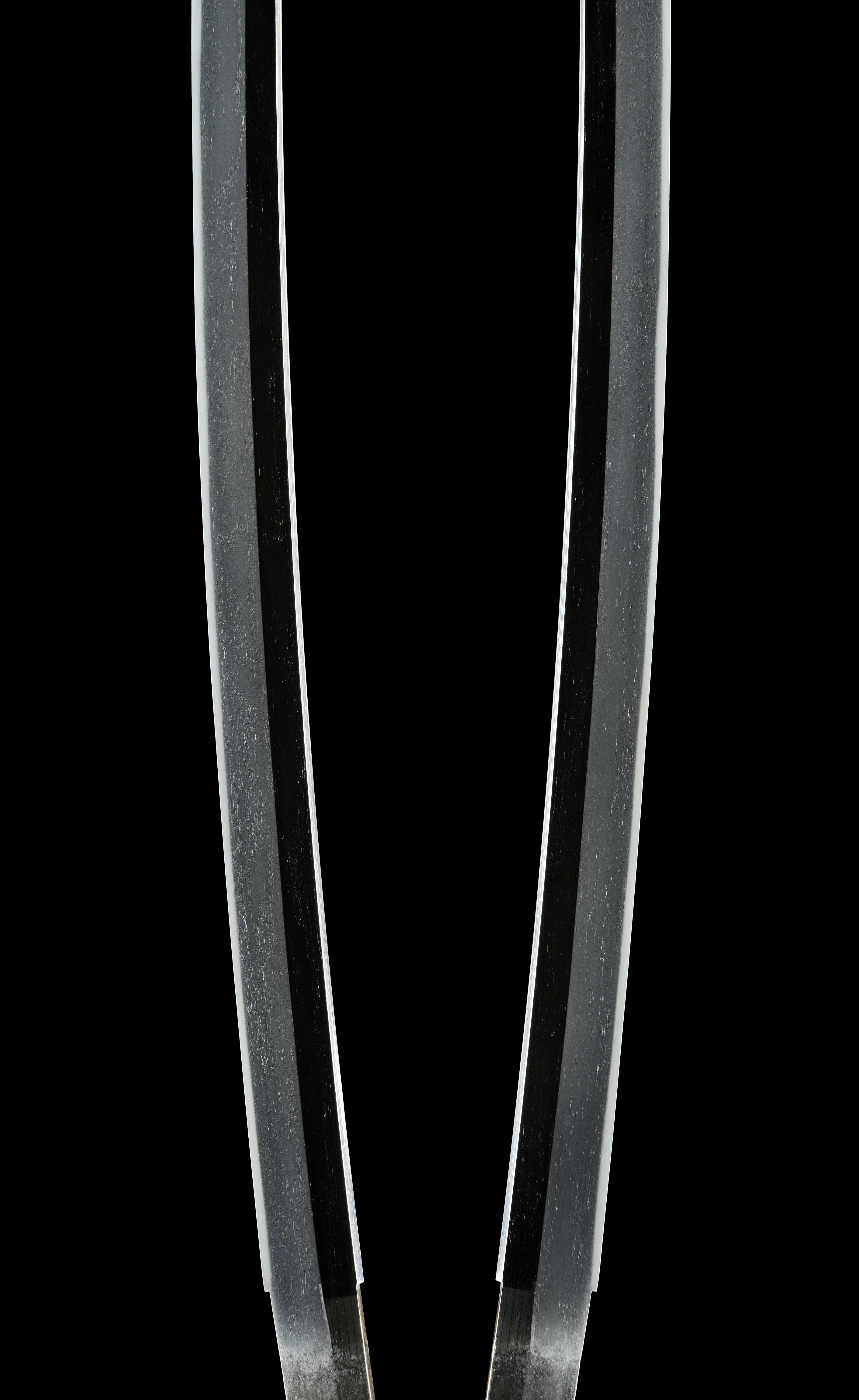
Motohaba 25.7 mm Moto-kasane 6.2 mm
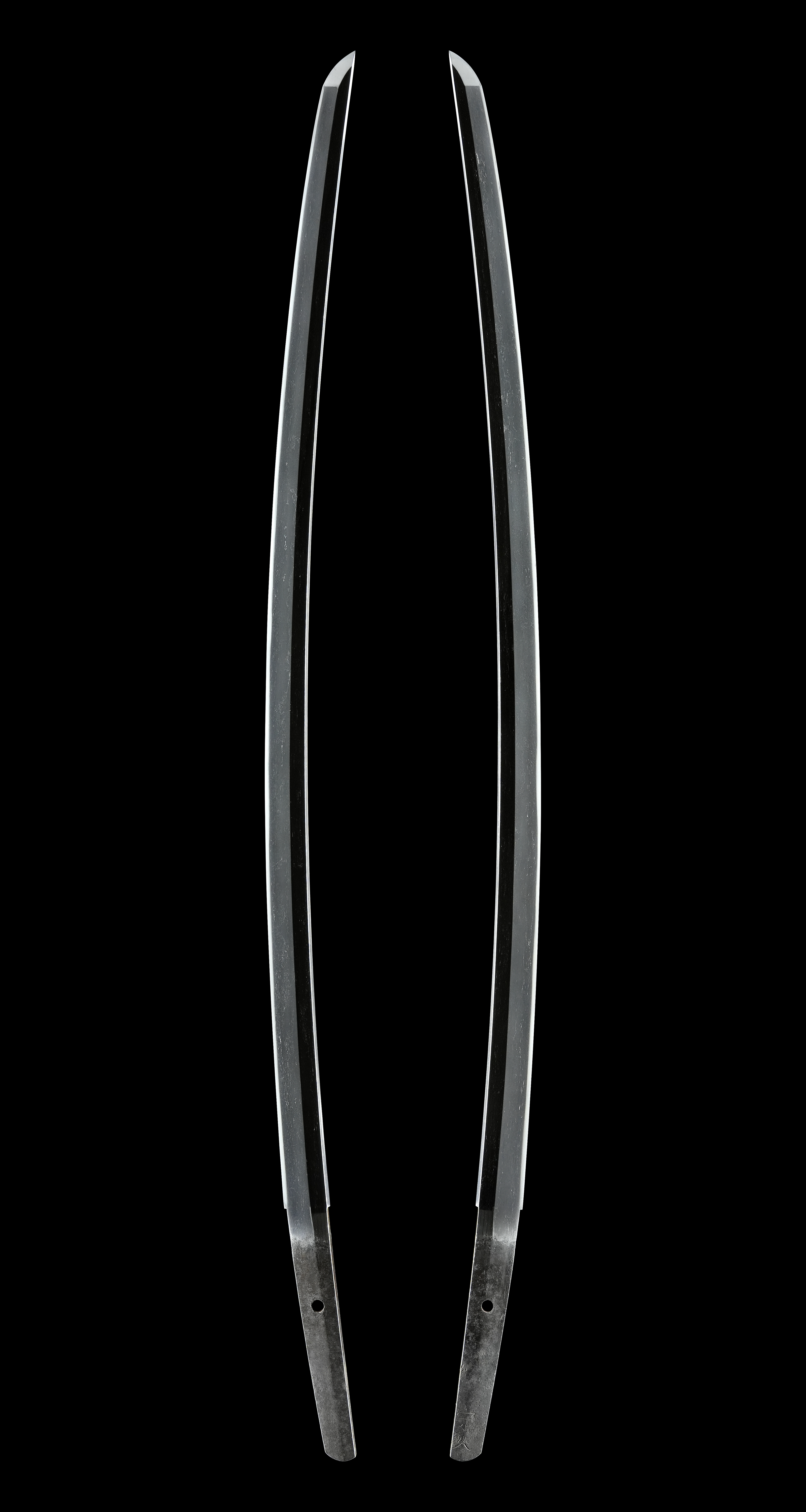
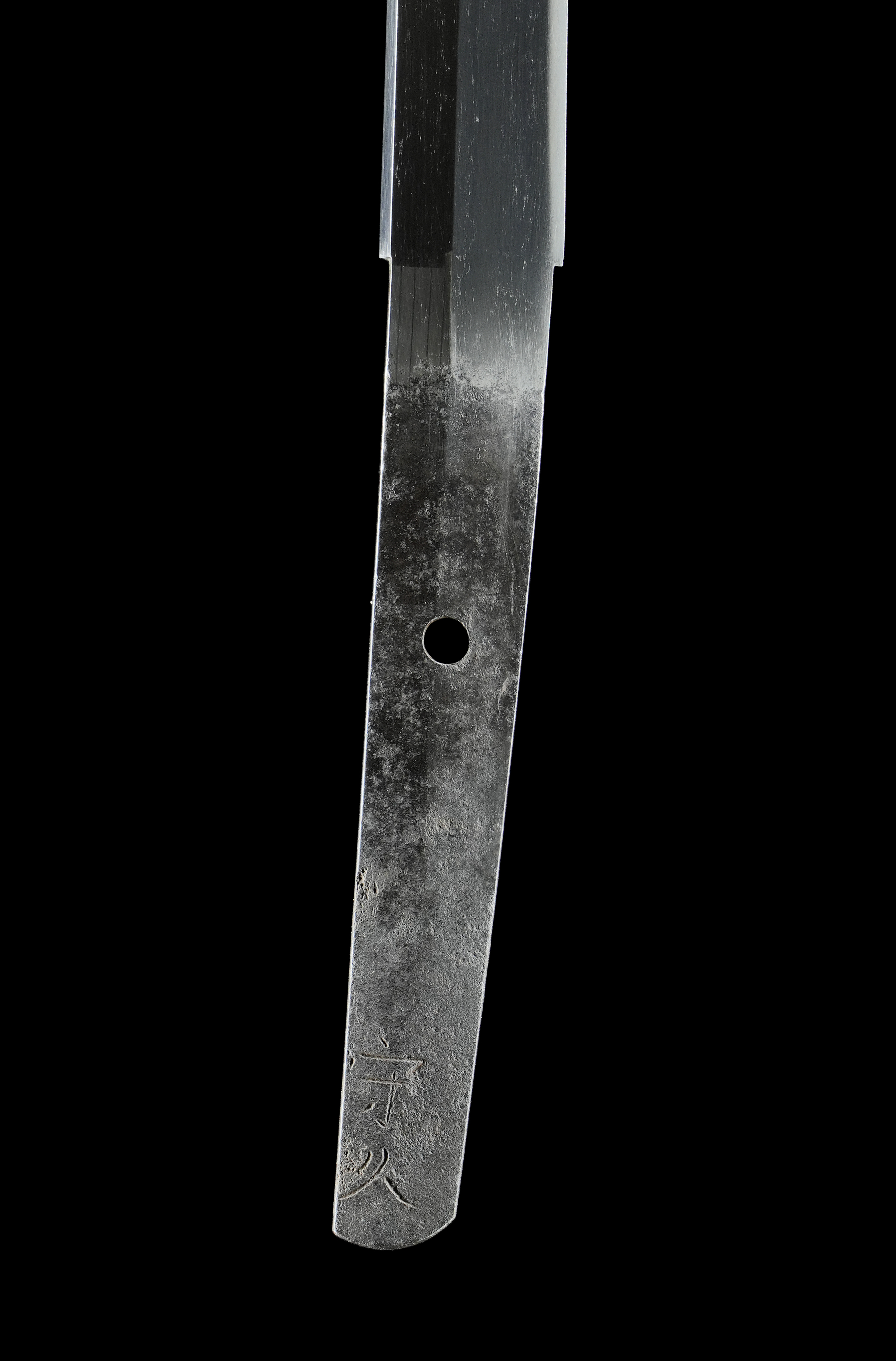
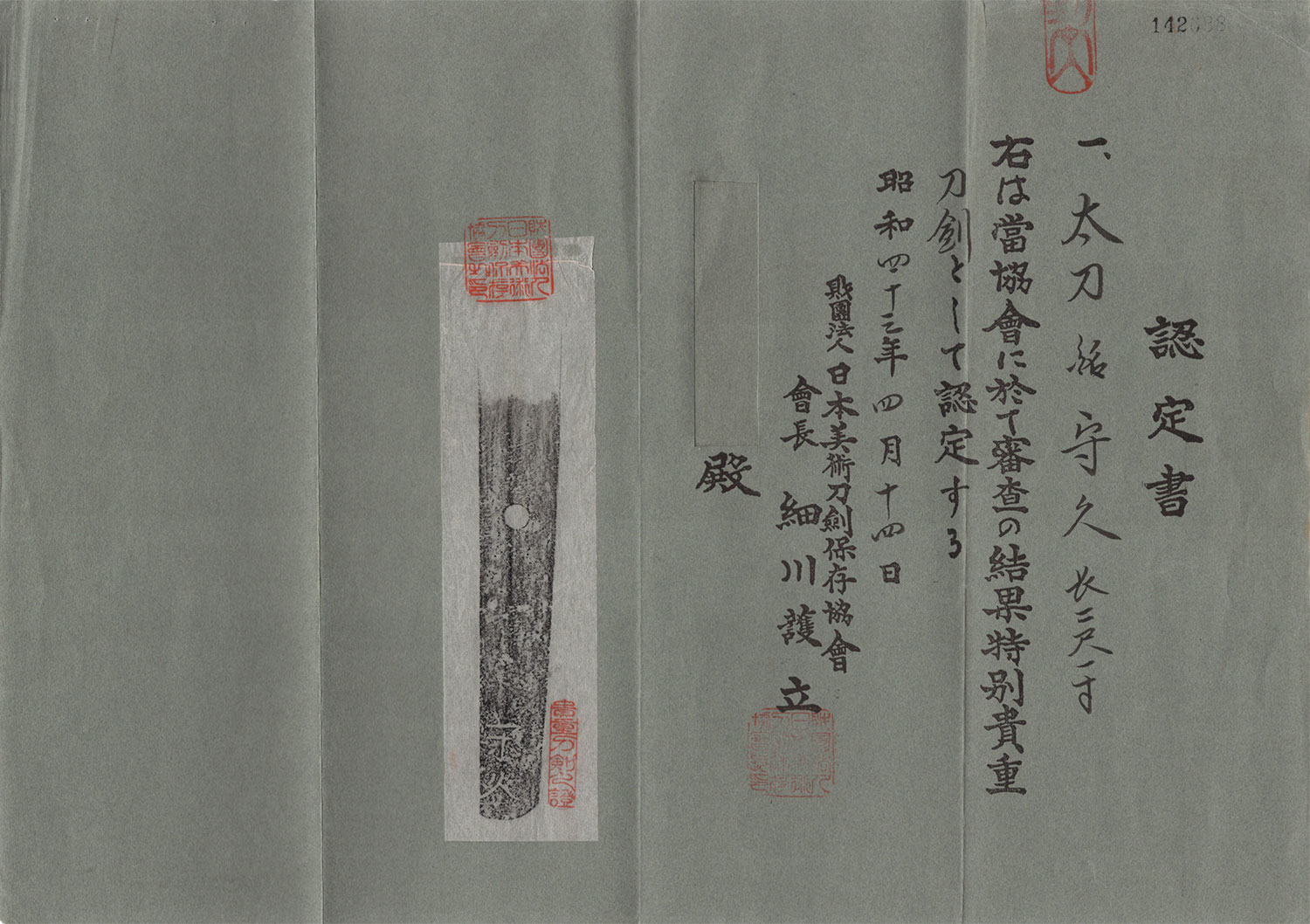
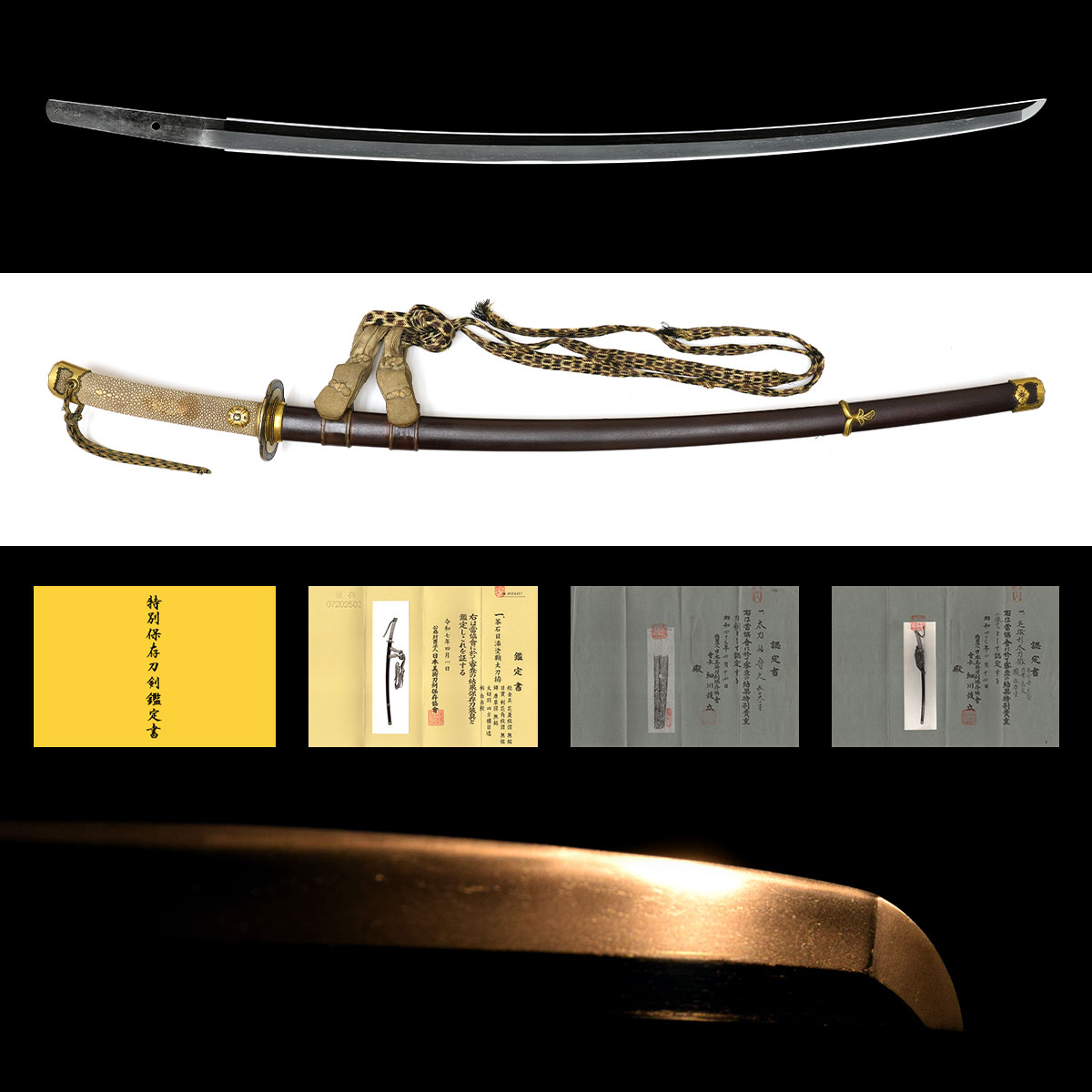
While multiple tosaho named Morihisa exist and the province of production for this tachi has not been identified, it is a precious sword for which a Tokubetsu Hozon Token Kanteisho was issued as a signed work by Morihisa from the late Kamakura period. It is thought to be a type of kodachi originally forged in a short length, and while it has undergone suriage in later generations, the niji-mei of Morihisa remains clearly on the nakago-jiri; within its compact dimensions of nagasa 63.5 cm and sori 1.9 cm, it retains an elegant, archaic sugata typical of Kamakura kosaku with funbari. Differing in style from the long, deep koshi-zori tachi used on horseback, the sugata evokes a kodachi worn within palaces or by foot soldiers, and despite its short length, it does not lose the dignity of a tachi.
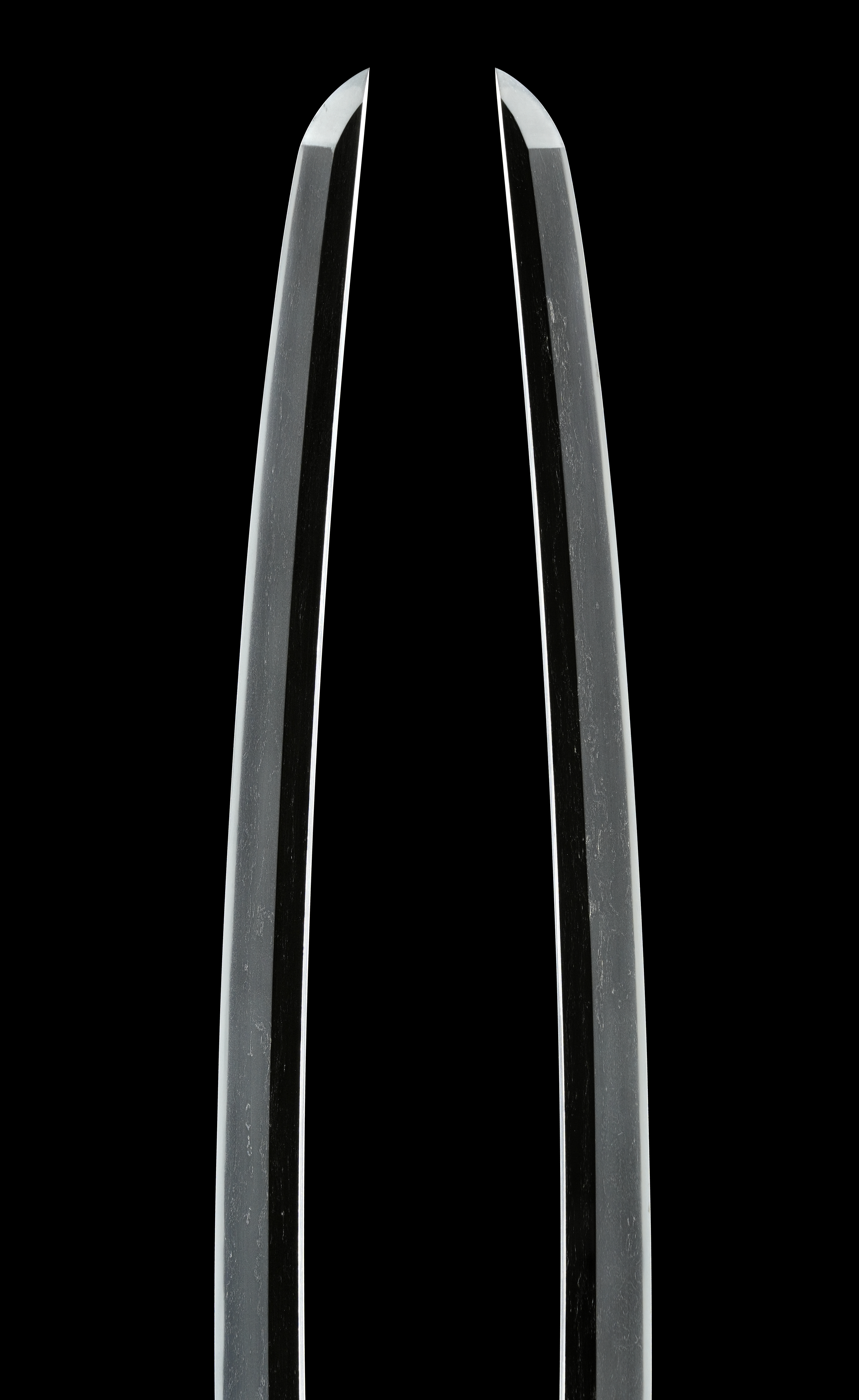
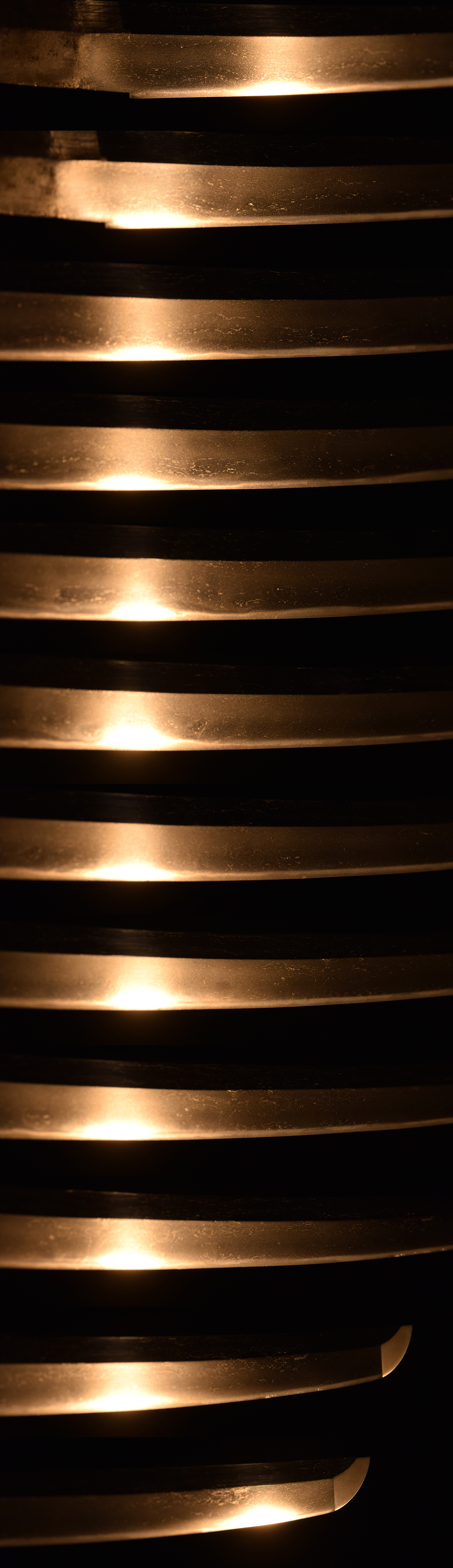
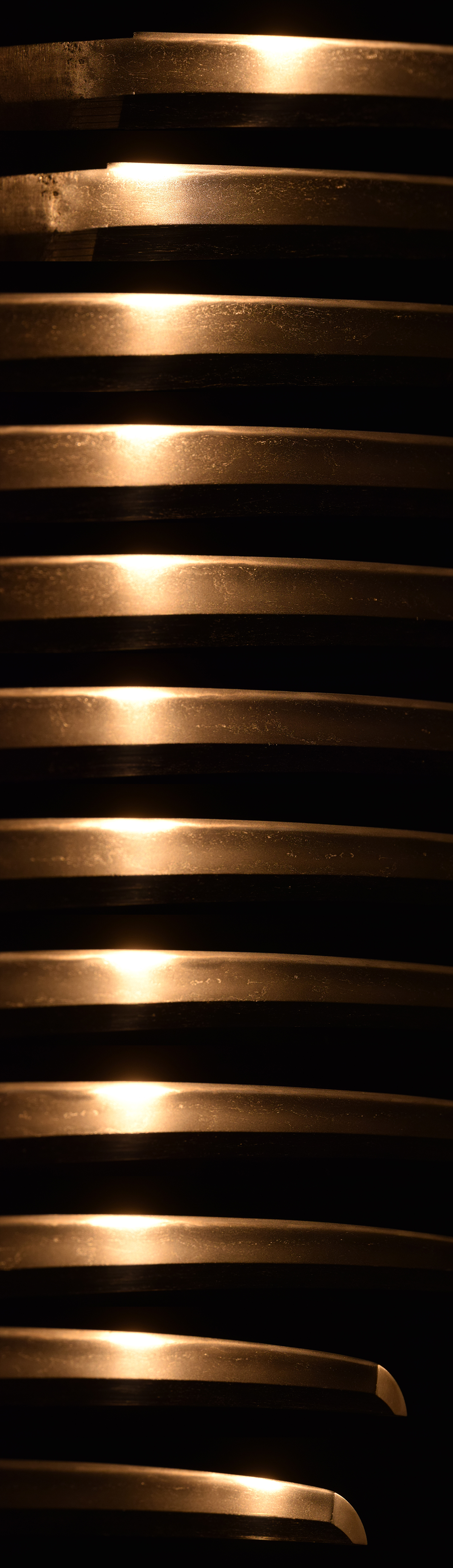
The jigane is well-kneaded with masame as the primary element mixed with mokume, becoming somewhat hada-tachi, and a faint midare-utsuri appears in the ji. The hamon is based on suguha mixed with small notare in places, with thick nie and a bright, clear nioiguchi; within the ha, kinsuji and inazuma are active, and uchinoke continue along the habuchi to partially exhibit a niju-ba style, showing variations unique to kosaku throughout. It is not the type to catch the eye with a flamboyant hamon, but rather a work that increases in flavor the more one observes the fine hataraki in the jigane and ha; the masame-leaning kitae, suguha-style yakiba, and hataraki reminiscent of niju-ba have a character that brings to mind Yamato-mono, and it is a sword that has traditionally been viewed as suggesting the Senjuin school. However, as the current kantei does not specify the province of production, this remains strictly a personal impression of the workmanship received from the ji and ha.
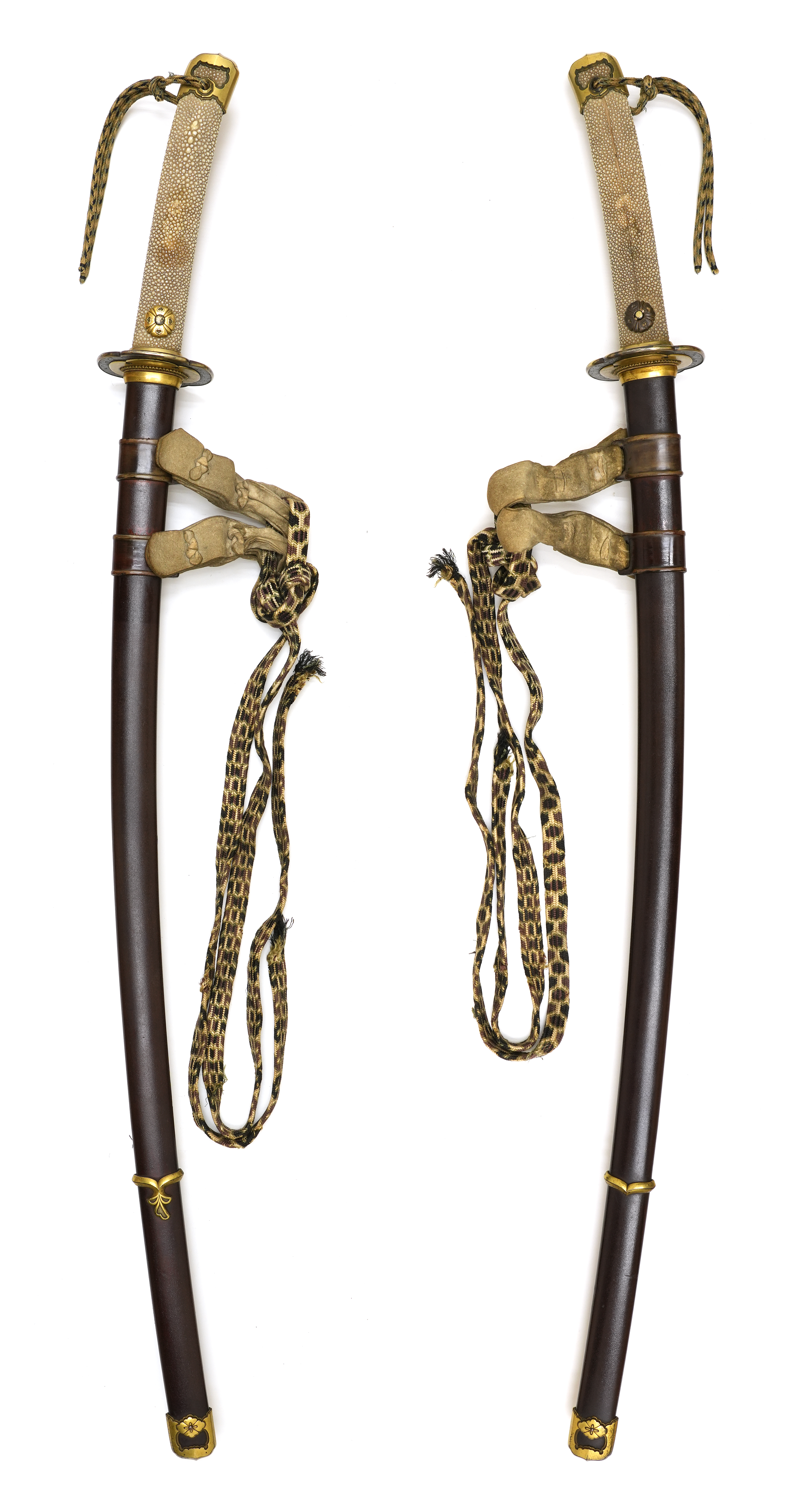
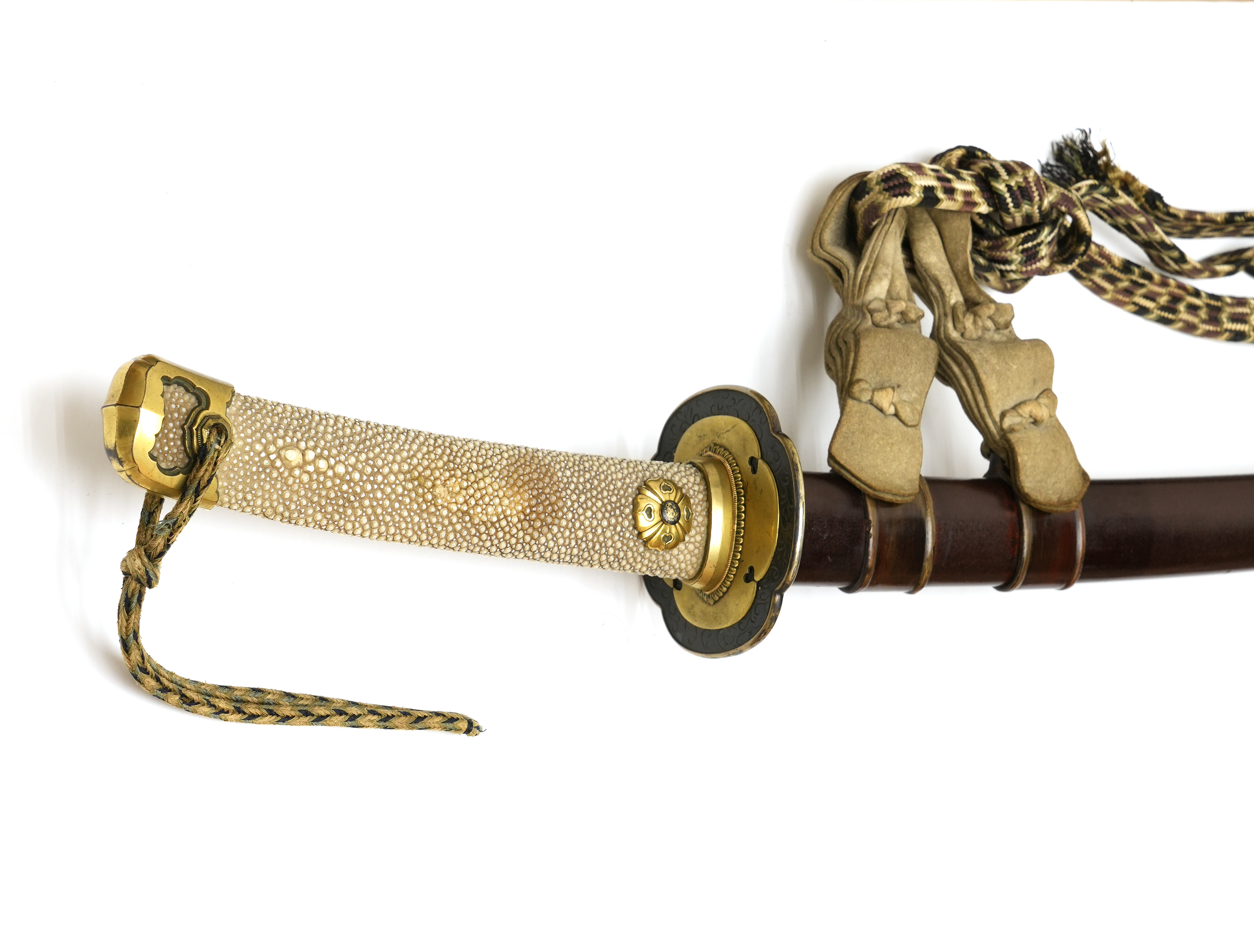
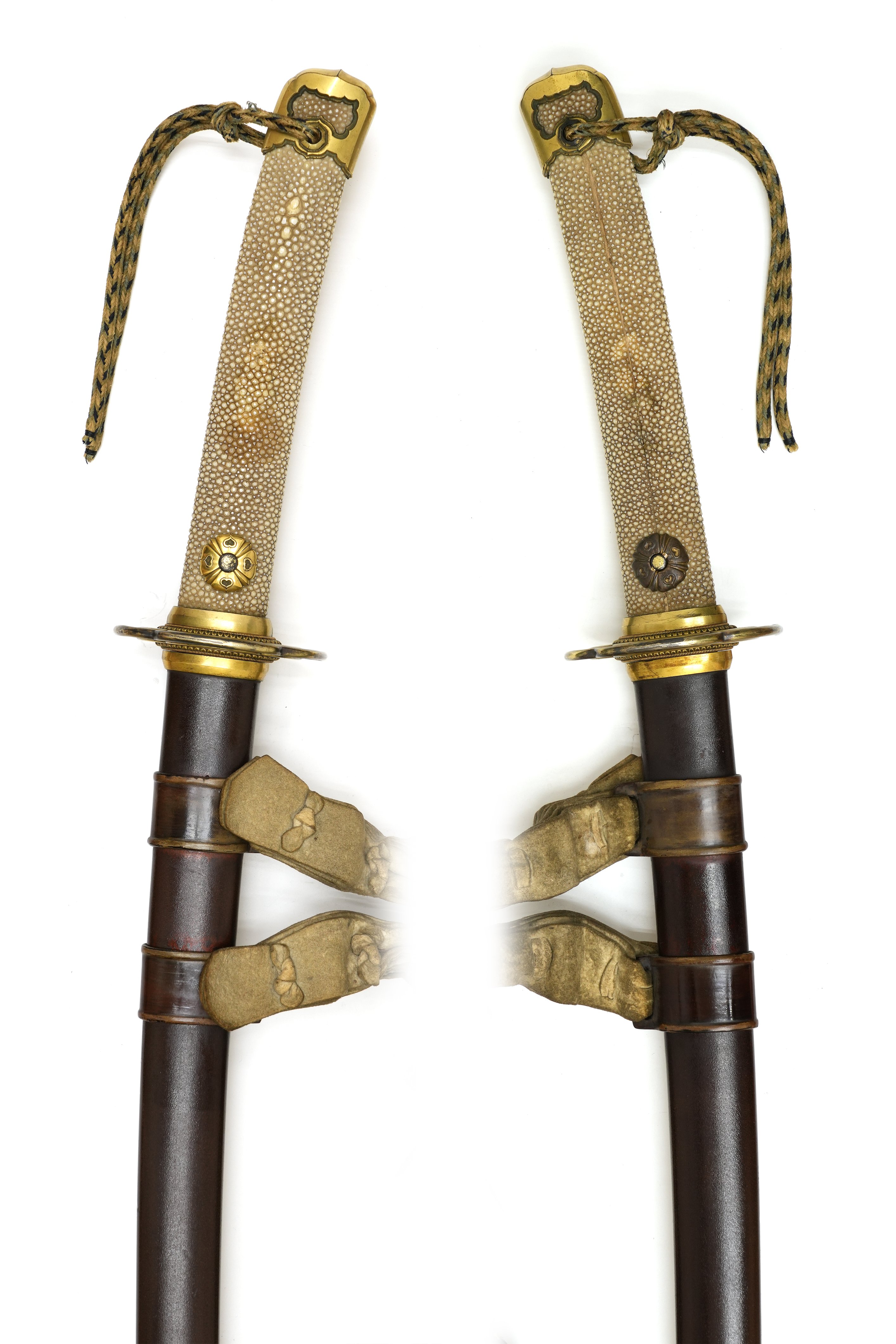
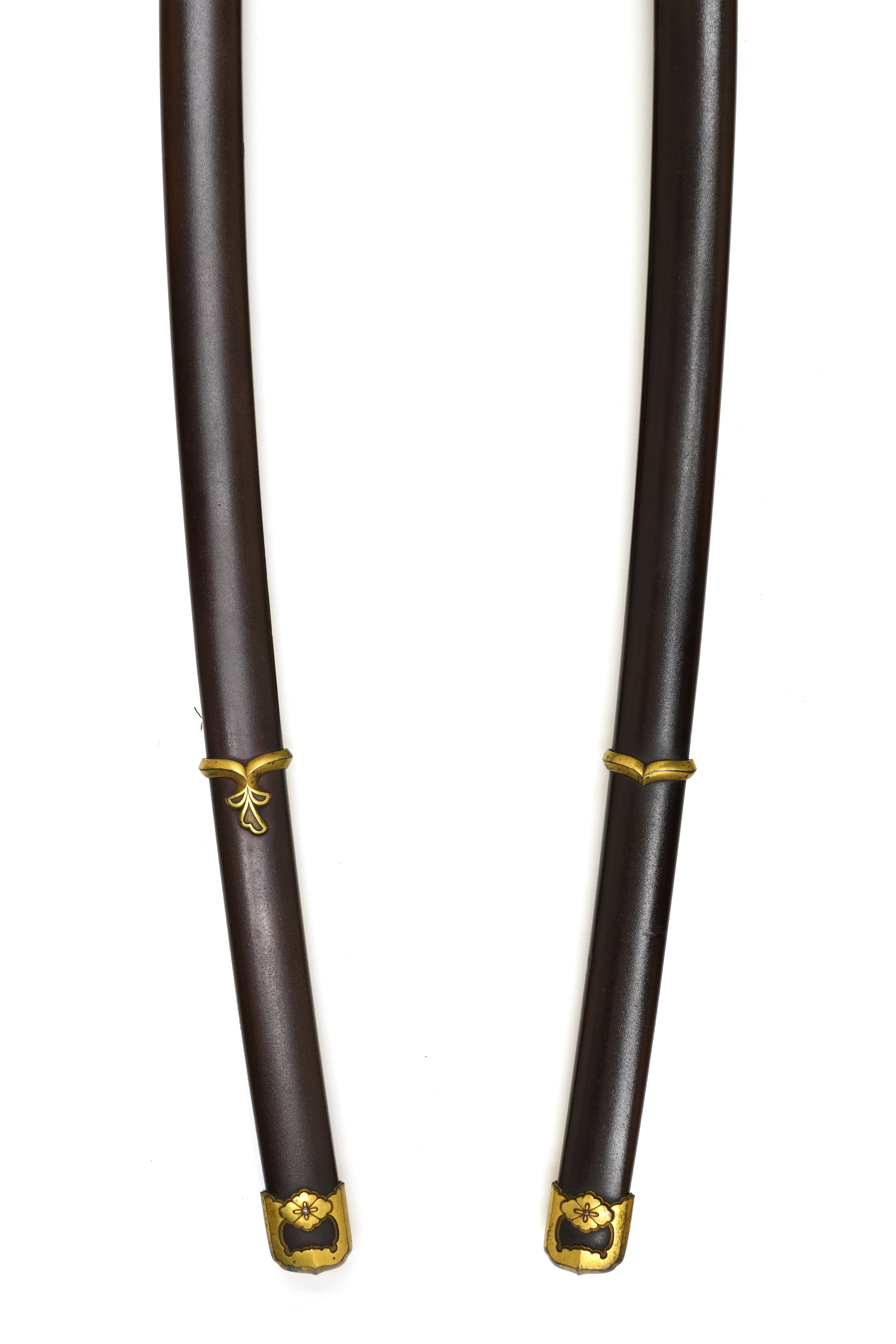
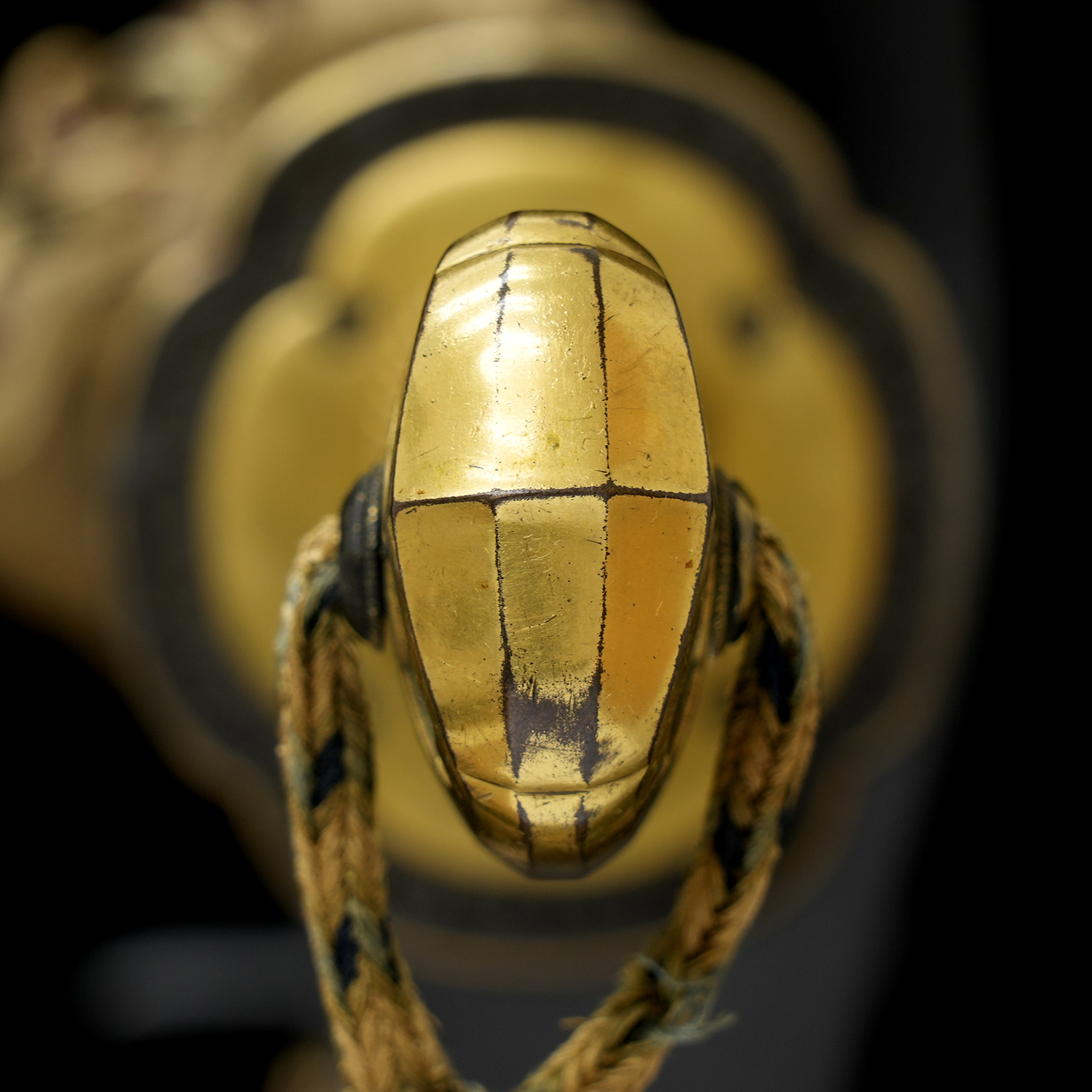
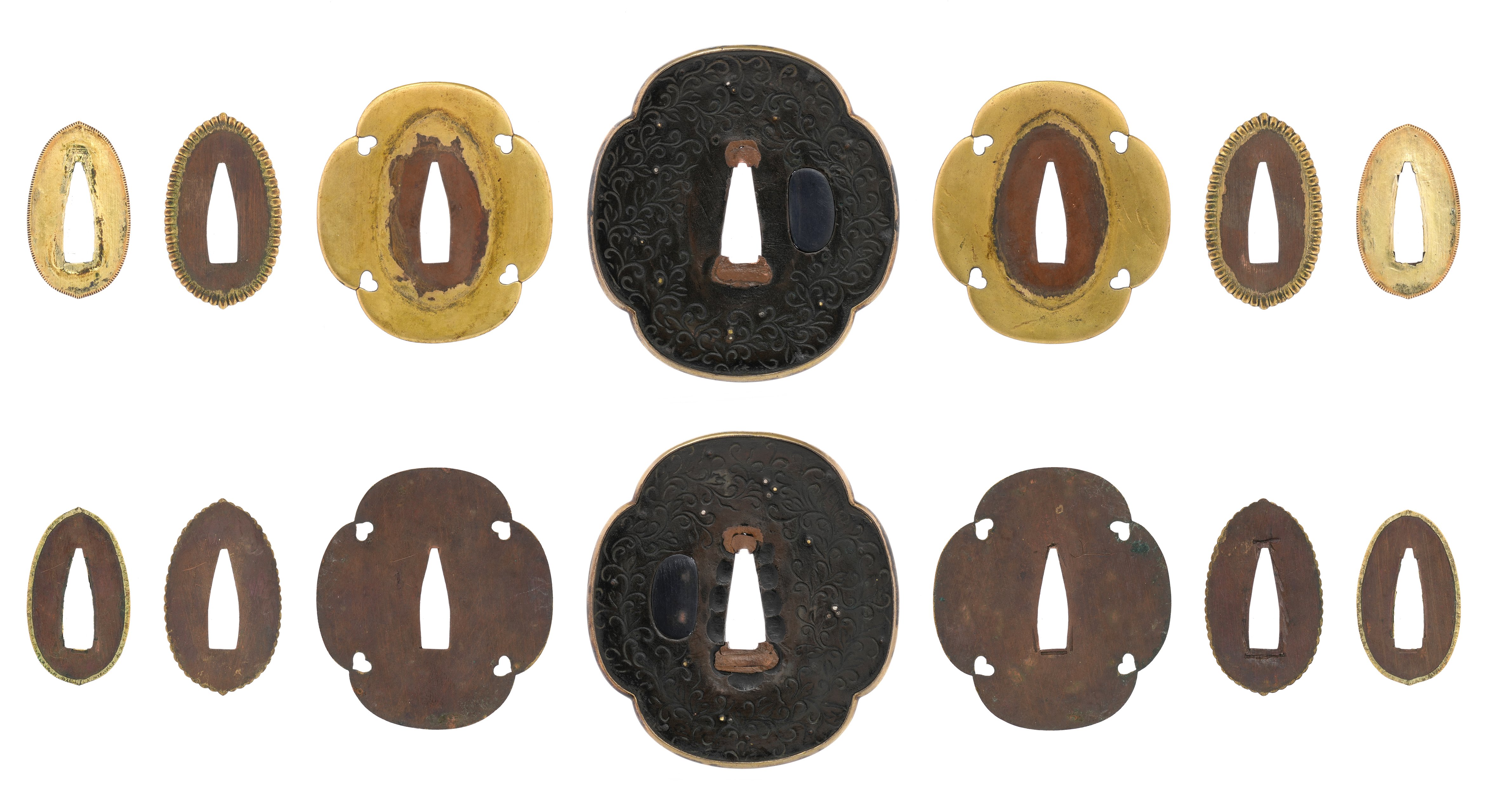
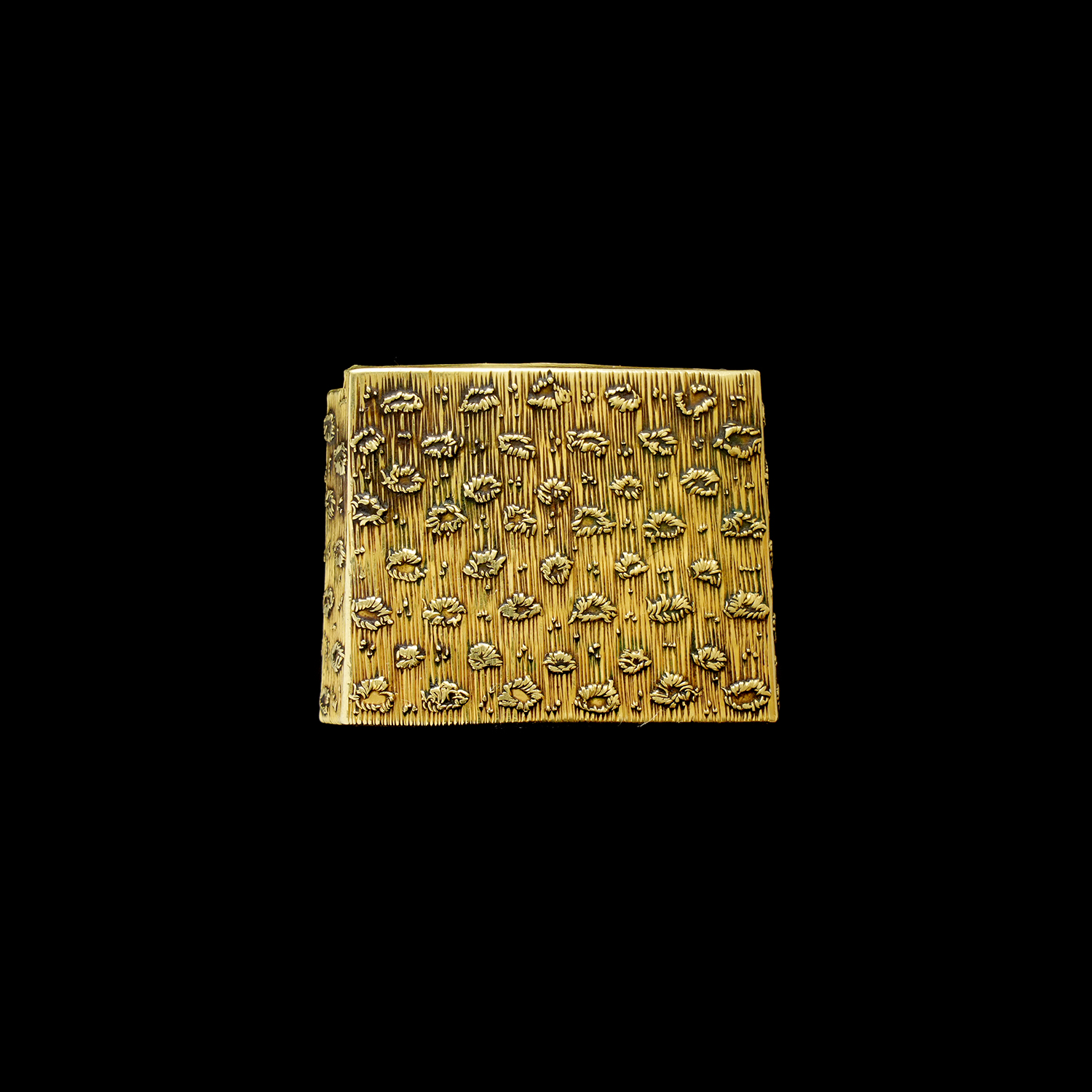
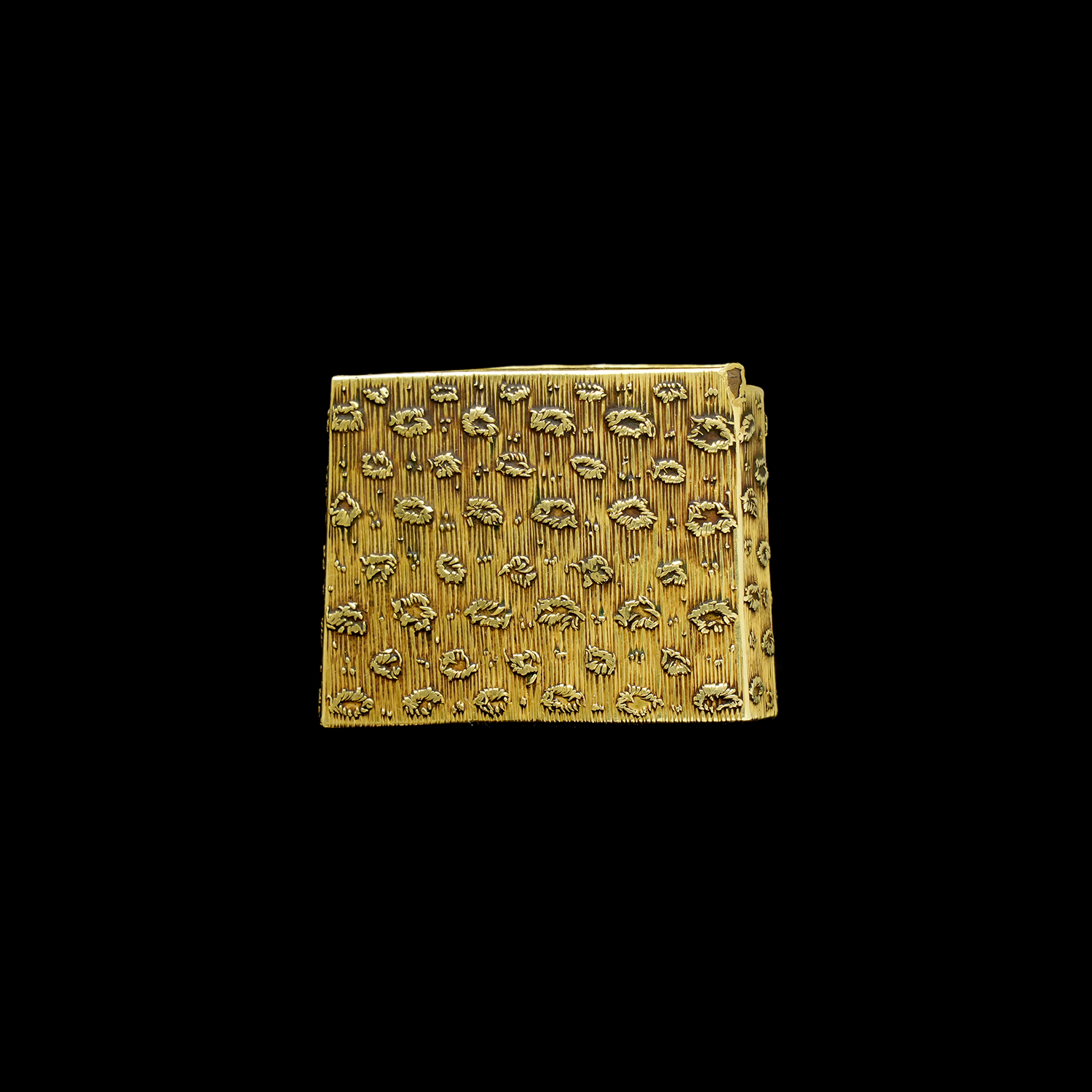
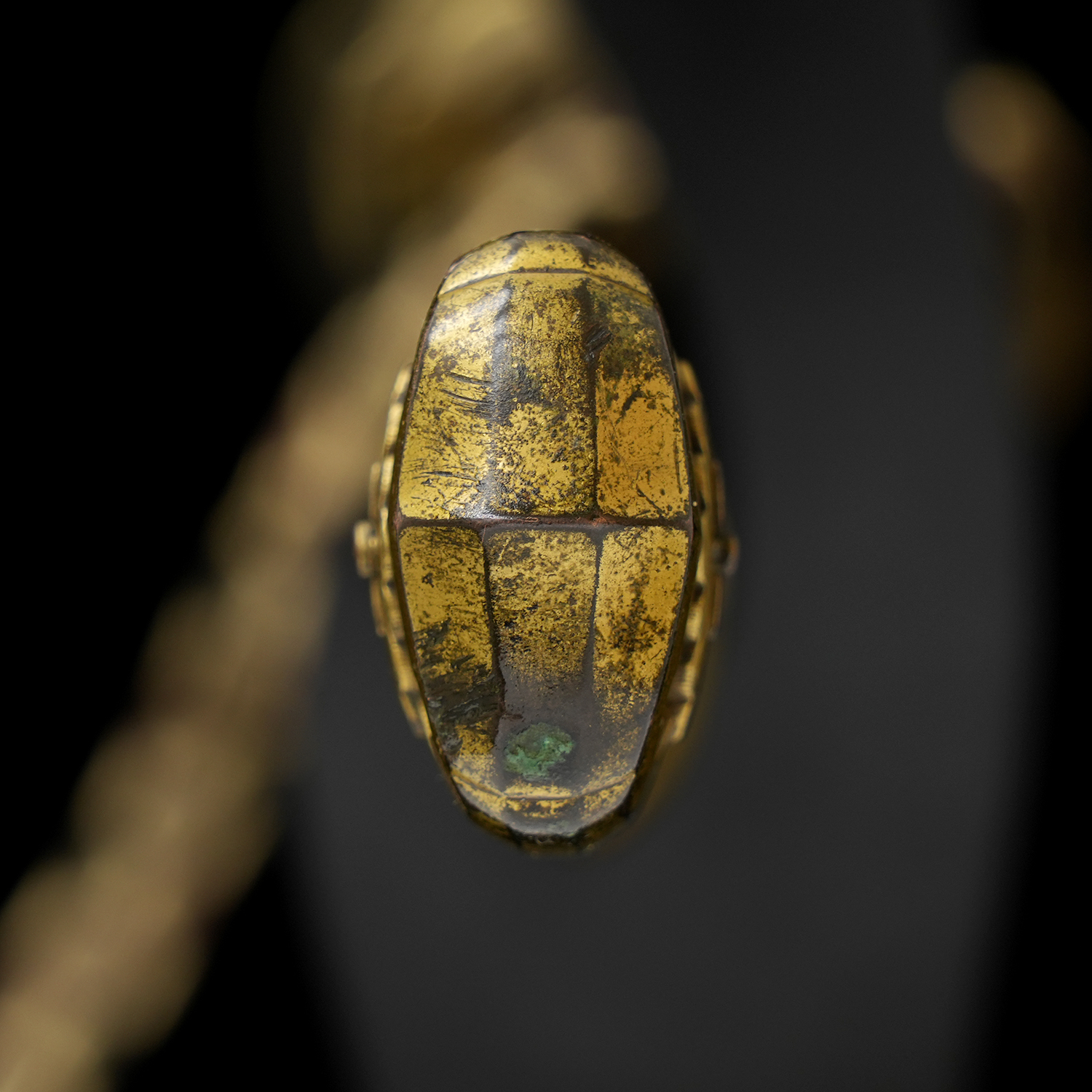
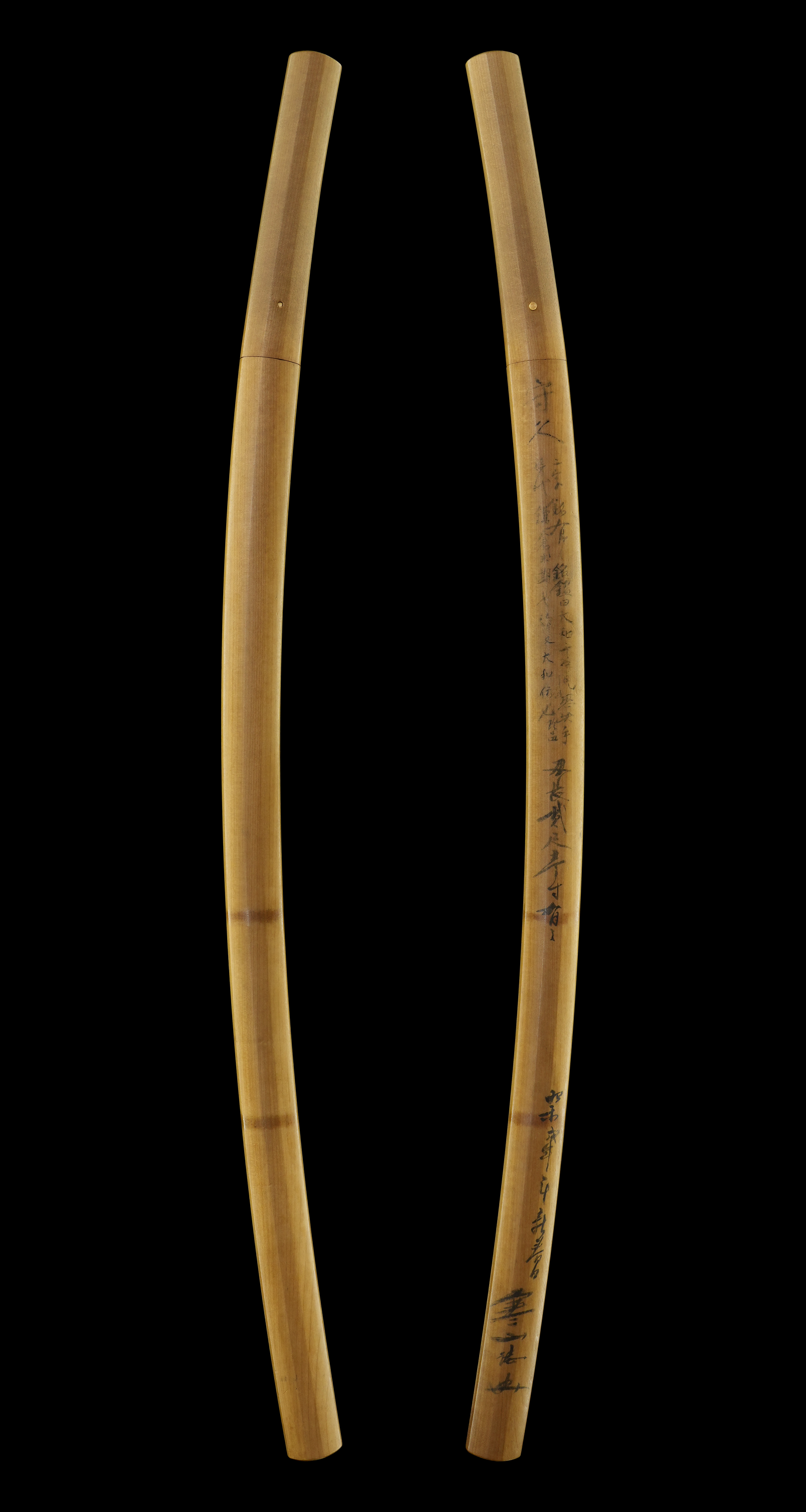
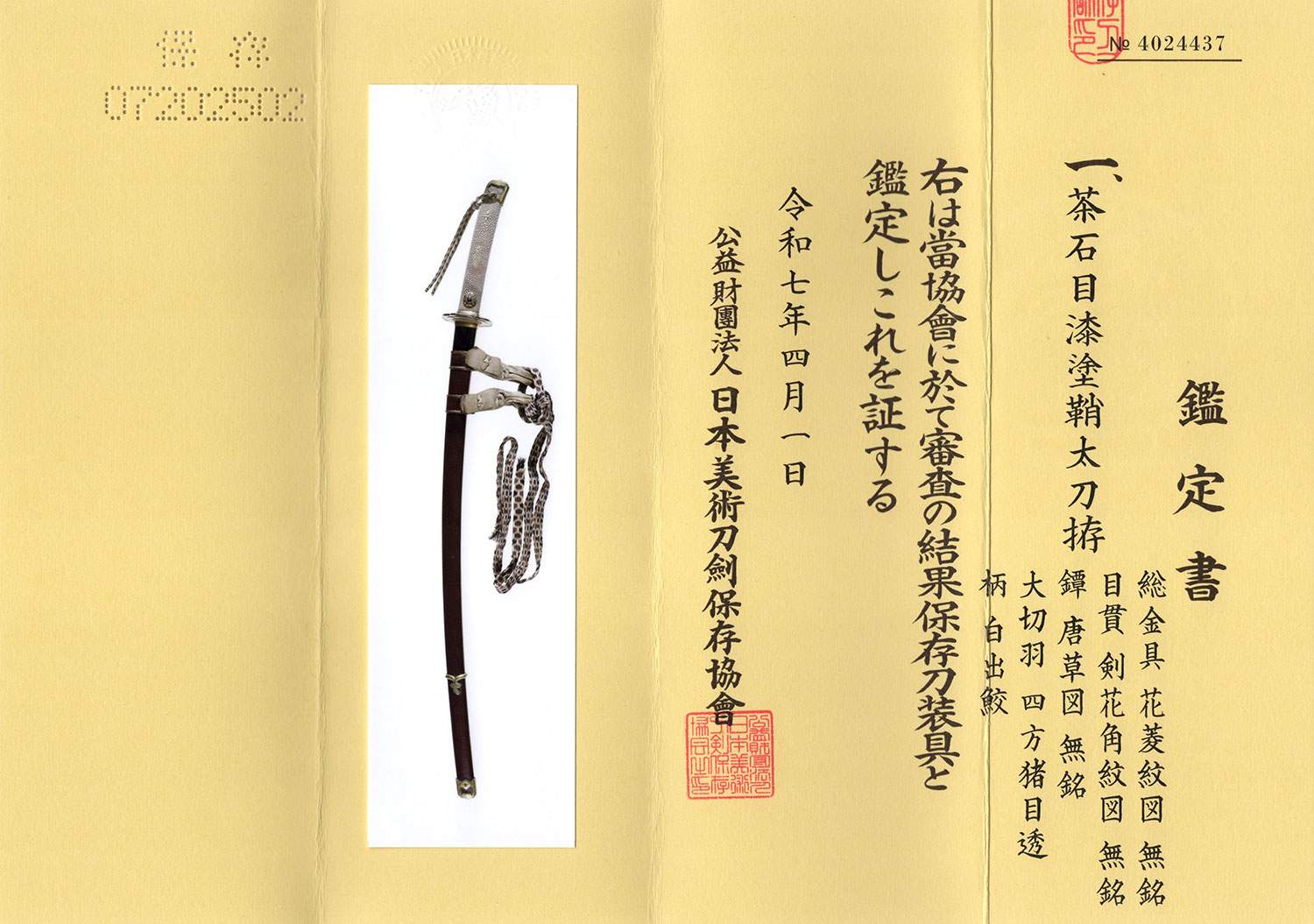
The accompanying cha-ishime-nuri-saya tachi-koshirae is also a presence that greatly enhances the value of this sword; centered around a tsuba with karakusa patterns, the sogo-kanagu feature hanabishi patterns, the menuki feature ken-hanabishi patterns, and the dai-seppa are finished with shiho-inome-sukashi. In the ashi-kanagu section, an archaic construction using nerigawa (lacquered leather) instead of metal yamagata-kanagu is seen, and the tachi-o with a kikko pattern remains to this day, though with damage at both ends. The tsuka covered in white same, the gold-colored kanagu, and the subdued cha-ishime-nuri-saya harmonize to create an exterior with dignity without flowing into gaudiness, well-conveying the atmosphere unique to a tachi-koshirae that has passed through long ages. While a slight tsuba-nari is noted, there is no significant rattling in the tsuka, and the weight when housed in the koshirae with the saya drawn is a light 763 grams; when actually held, combined with the short blade, one feels a well-balanced sugata that fits comfortably in the hand.
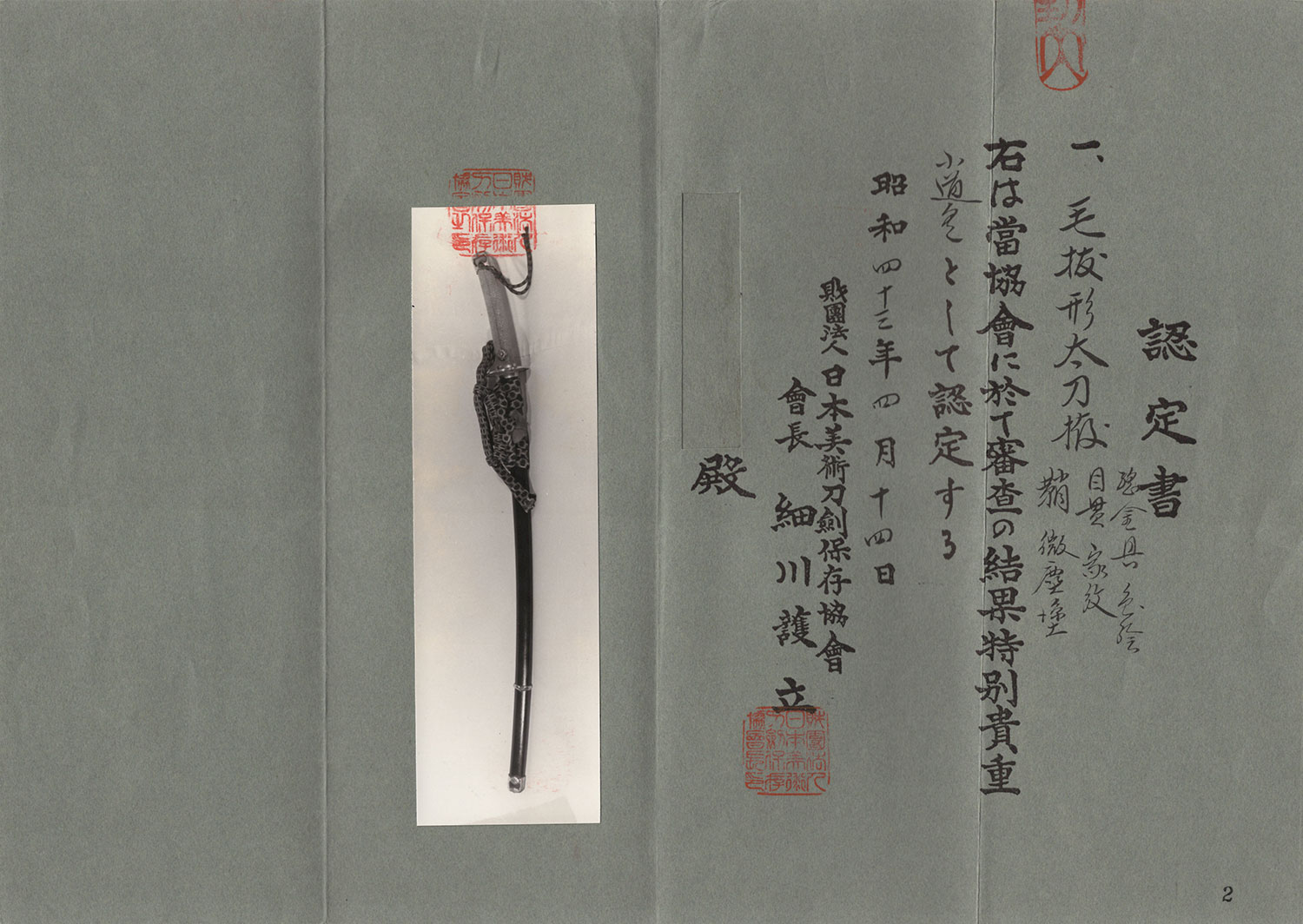
A Tokubetsu Kicho Token Ninteisho dated Showa 47, April 14 has been handed down with this sword, and the tachi-koshirae is also accompanied by an old Tokubetsu Kicho Kodogu Ninteisho as well as a current Hozon Tosogu Kanteisho. Although it had a history of being put on hold during an examination in Heisei 26, May, it has now passed a new examination, and a new Tokubetsu Hozon Token Kanteisho has been issued as a signed work by Morihisa from the late Kamakura period. This is an extremely important point in evaluating this sword; regarding the era and mei which were difficult to judge with only the previous old certification, it has been evaluated by the current kantei as a signed koto dating back to the late Kamakura period.
Swords themselves that date back to the Kamakura period are precious today, but this sword has great value in that it is not a mumei koto but retains a niji-mei of Morihisa, and furthermore is a signed item evaluated as Tokubetsu Hozon Token. While the fact that the province of production is not specified should be considered in the evaluation, if one comprehensively considers the late Kamakura period era, the fact that it is signed, the presence of highlights as a kosaku in the ji and ha, and the fact that even the old tachi-koshirae has been handed down as a set, it is not a work whose value should be measured simply by the ranking of famous smiths. The kantei history from the old ninteisho to the current Tokubetsu Hozon Token Kanteisho also remains, and the fact that one can trace the transition of the evaluation itself that this single tachi has walked is also an interesting point.
It is a single item complete inside and out, having passed down to the present day an elegant short tachi sugata, ji and ha typical of Kamakura kosaku, the Morihisa signature, and a tachi-koshirae that has aged through time; it is a work that I would like you to appreciate as a whole as a tachi left through many years, rather than looking at the blade in isolation. Now that the environment to re-evaluate the inherent value of this sword has been prepared by the issuance of the new Tokubetsu Hozon Token Kanteisho, I would like to thoroughly recommend this sword as an opportunity to own a signed koto from the late Kamakura period together with its tachi-koshirae.
Machine translation from the shop's Japanese · may contain errors ·
Motohaba 25.7 mm Moto-kasane 6.2 mm
While multiple tosaho named Morihisa exist and the province of production for this tachi has not been identified, it is a precious sword for which a Tokubetsu Hozon Token Kanteisho was issued as a signed work by Morihisa from the late Kamakura period. It is thought to be a type of kodachi originally forged in a short length, and while it has undergone suriage in later generations, the niji-mei of Morihisa remains clearly on the nakago-jiri; within its compact dimensions of nagasa 63.5 cm and sori 1.9 cm, it retains an elegant, archaic sugata typical of Kamakura kosaku with funbari. Differing in style from the long, deep koshi-zori tachi used on horseback, the sugata evokes a kodachi worn within palaces or by foot soldiers, and despite its short length, it does not lose the dignity of a tachi.
The jigane is well-kneaded with masame as the primary element mixed with mokume, becoming somewhat hada-tachi, and a faint midare-utsuri appears in the ji. The hamon is based on suguha mixed with small notare in places, with thick nie and a bright, clear nioiguchi; within the ha, kinsuji and inazuma are active, and uchinoke continue along the habuchi to partially exhibit a niju-ba style, showing variations unique to kosaku throughout. It is not the type to catch the eye with a flamboyant hamon, but rather a work that increases in flavor the more one observes the fine hataraki in the jigane and ha; the masame-leaning kitae, suguha-style yakiba, and hataraki reminiscent of niju-ba have a character that brings to mind Yamato-mono, and it is a sword that has traditionally been viewed as suggesting the Senjuin school. However, as the current kantei does not specify the province of production, this remains strictly a personal impression of the workmanship received from the ji and ha.
The accompanying cha-ishime-nuri-saya tachi-koshirae is also a presence that greatly enhances the value of this sword; centered around a tsuba with karakusa patterns, the sogo-kanagu feature hanabishi patterns, the menuki feature ken-hanabishi patterns, and the dai-seppa are finished with shiho-inome-sukashi. In the ashi-kanagu section, an archaic construction using nerigawa (lacquered leather) instead of metal yamagata-kanagu is seen, and the tachi-o with a kikko pattern remains to this day, though with damage at both ends. The tsuka covered in white same, the gold-colored kanagu, and the subdued cha-ishime-nuri-saya harmonize to create an exterior with dignity without flowing into gaudiness, well-conveying the atmosphere unique to a tachi-koshirae that has passed through long ages. While a slight tsuba-nari is noted, there is no significant rattling in the tsuka, and the weight when housed in the koshirae with the saya drawn is a light 763 grams; when actually held, combined with the short blade, one feels a well-balanced sugata that fits comfortably in the hand.
A Tokubetsu Kicho Token Ninteisho dated Showa 47, April 14 has been handed down with this sword, and the tachi-koshirae is also accompanied by an old Tokubetsu Kicho Kodogu Ninteisho as well as a current Hozon Tosogu Kanteisho. Although it had a history of being put on hold during an examination in Heisei 26, May, it has now passed a new examination, and a new Tokubetsu Hozon Token Kanteisho has been issued as a signed work by Morihisa from the late Kamakura period. This is an extremely important point in evaluating this sword; regarding the era and mei which were difficult to judge with only the previous old certification, it has been evaluated by the current kantei as a signed koto dating back to the late Kamakura period.
Swords themselves that date back to the Kamakura period are precious today, but this sword has great value in that it is not a mumei koto but retains a niji-mei of Morihisa, and furthermore is a signed item evaluated as Tokubetsu Hozon Token. While the fact that the province of production is not specified should be considered in the evaluation, if one comprehensively considers the late Kamakura period era, the fact that it is signed, the presence of highlights as a kosaku in the ji and ha, and the fact that even the old tachi-koshirae has been handed down as a set, it is not a work whose value should be measured simply by the ranking of famous smiths. The kantei history from the old ninteisho to the current Tokubetsu Hozon Token Kanteisho also remains, and the fact that one can trace the transition of the evaluation itself that this single tachi has walked is also an interesting point.
It is a single item complete inside and out, having passed down to the present day an elegant short tachi sugata, ji and ha typical of Kamakura kosaku, the Morihisa signature, and a tachi-koshirae that has aged through time; it is a work that I would like you to appreciate as a whole as a tachi left through many years, rather than looking at the blade in isolation. Now that the environment to re-evaluate the inherent value of this sword has been prepared by the issuance of the new Tokubetsu Hozon Token Kanteisho, I would like to thoroughly recommend this sword as an opportunity to own a signed koto from the late Kamakura period together with its tachi-koshirae.
Historical context
The Kamakura period (1185 to 1333)
›
Nearly every later authority calls Kamakura the golden age of the sword: the first warrior government as patron, the great traditions at full strength simultaneously, and, tradition holds, the finest smiths of the realm rotating through Go-Toba’s court.
A Hozon-certified blade judged to show notably superior workmanship and a better state of preservation. The bar is higher: re-tempered blades and most unsigned Muromachi/Edo works are excluded.
About the NBTHK›
The NBTHK (Nihon Bijutsu Tōken Hozon Kyōkai, the Society for the Preservation of Japanese Art Swords) is a public-interest incorporated foundation founded in 1948 and supervised by Japan’s Agency for Cultural Affairs (Bunkachō); it is based at the Japanese Sword Museum in Tokyo. Its expert panels physically examine each submitted work (shinsa) and issue a certificate (kanteishō) ranking it by artistic and historical merit. NBTHK papers are the most widely recognized standard of authentication for Japanese swords and fittings.
As a rule we do not accept returns, except when we have sent a different item from the one ordered or when there is a significant discrepancy between the description and the item. If you wish to return an item, please contact us within 3 days of its arrival and then send it back.

 NihontoWatch