Muromachi turned sword making into an industry: the uchigatana rose with massed infantry warfare, Osafune and Seki produced bundle swords beside custom orders, and the Ming trade carried Japanese blades abroad by the tens of thousands.
 NihontoWatchNihontoWatch
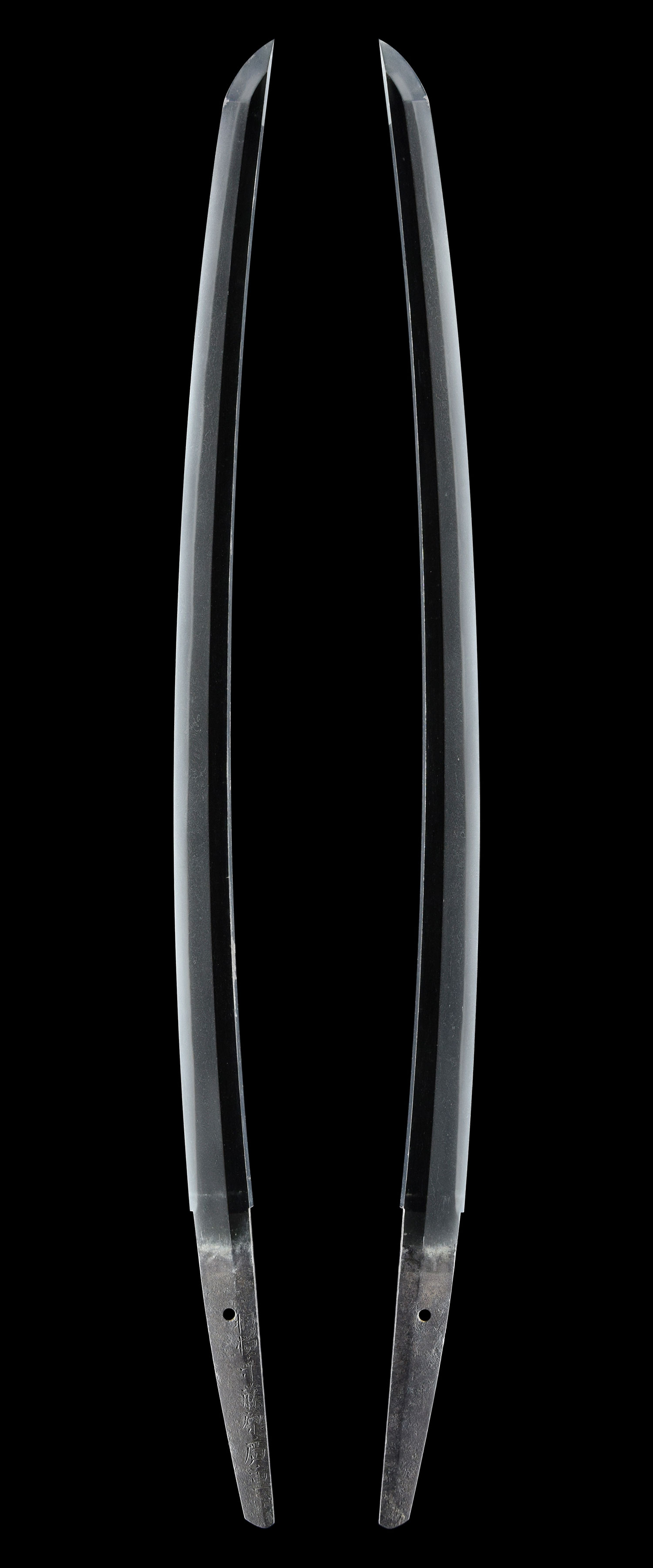
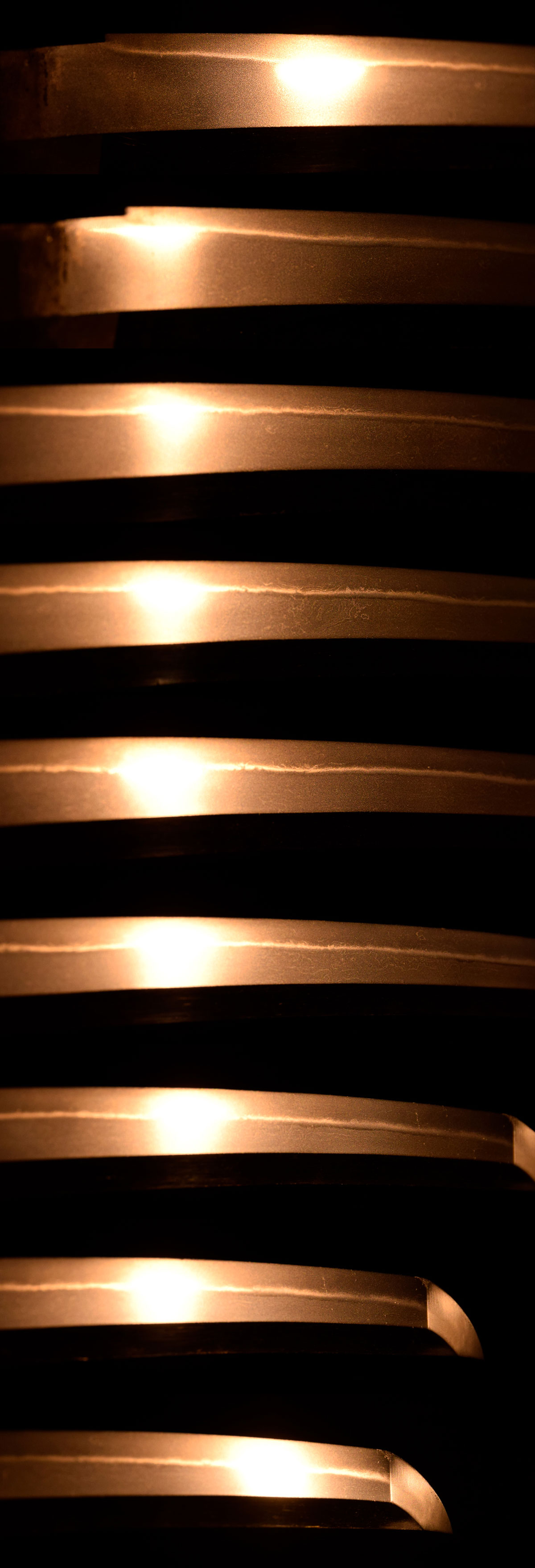
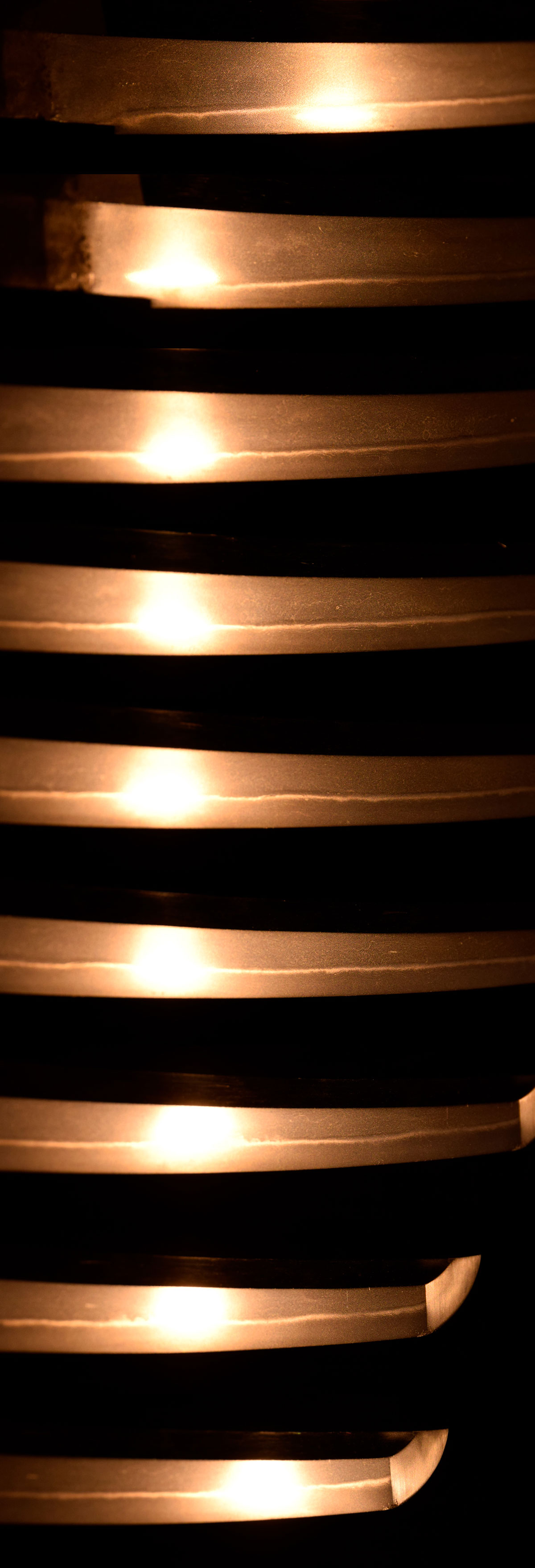
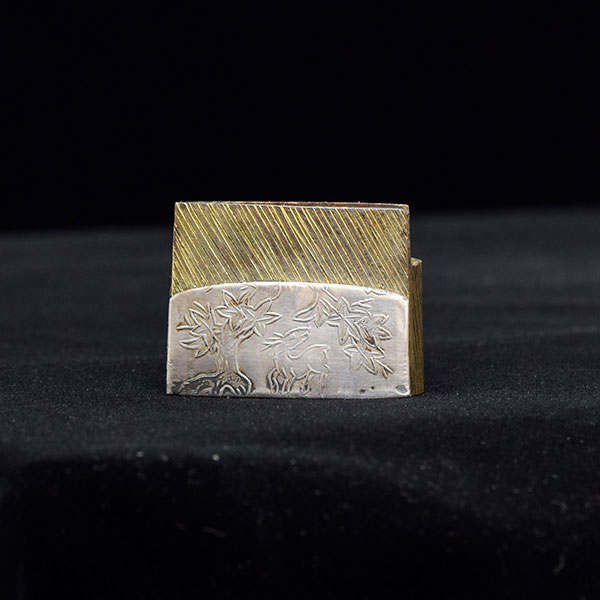
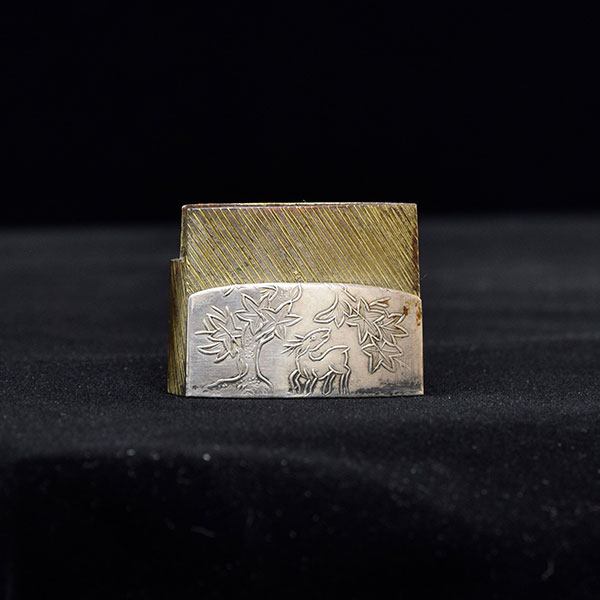
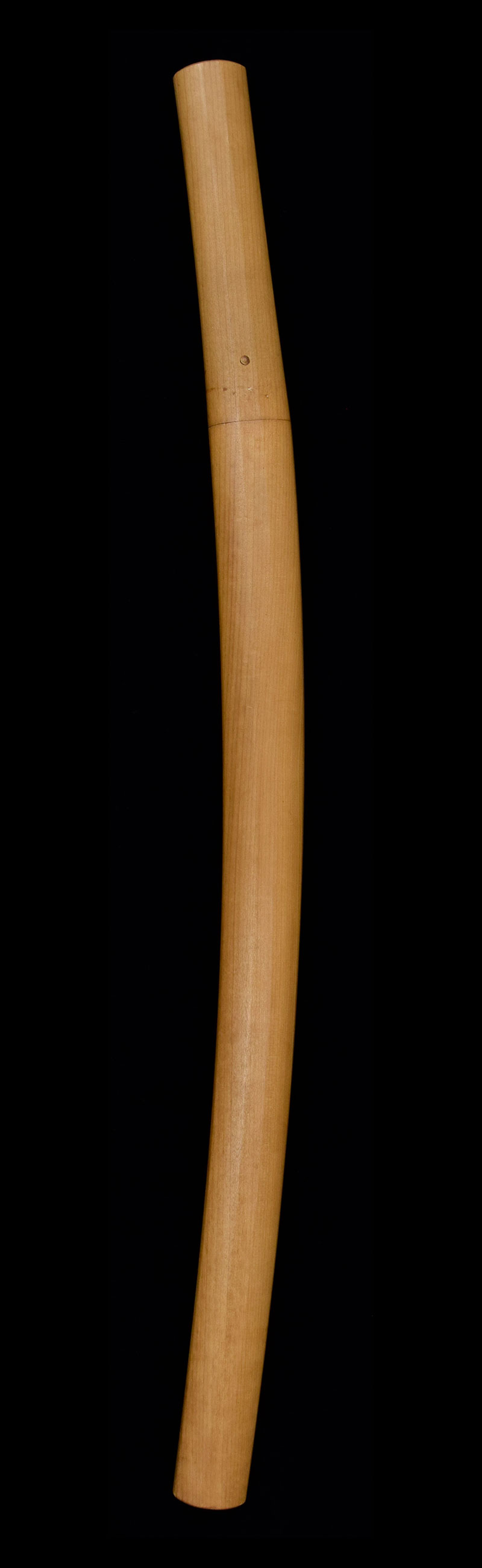
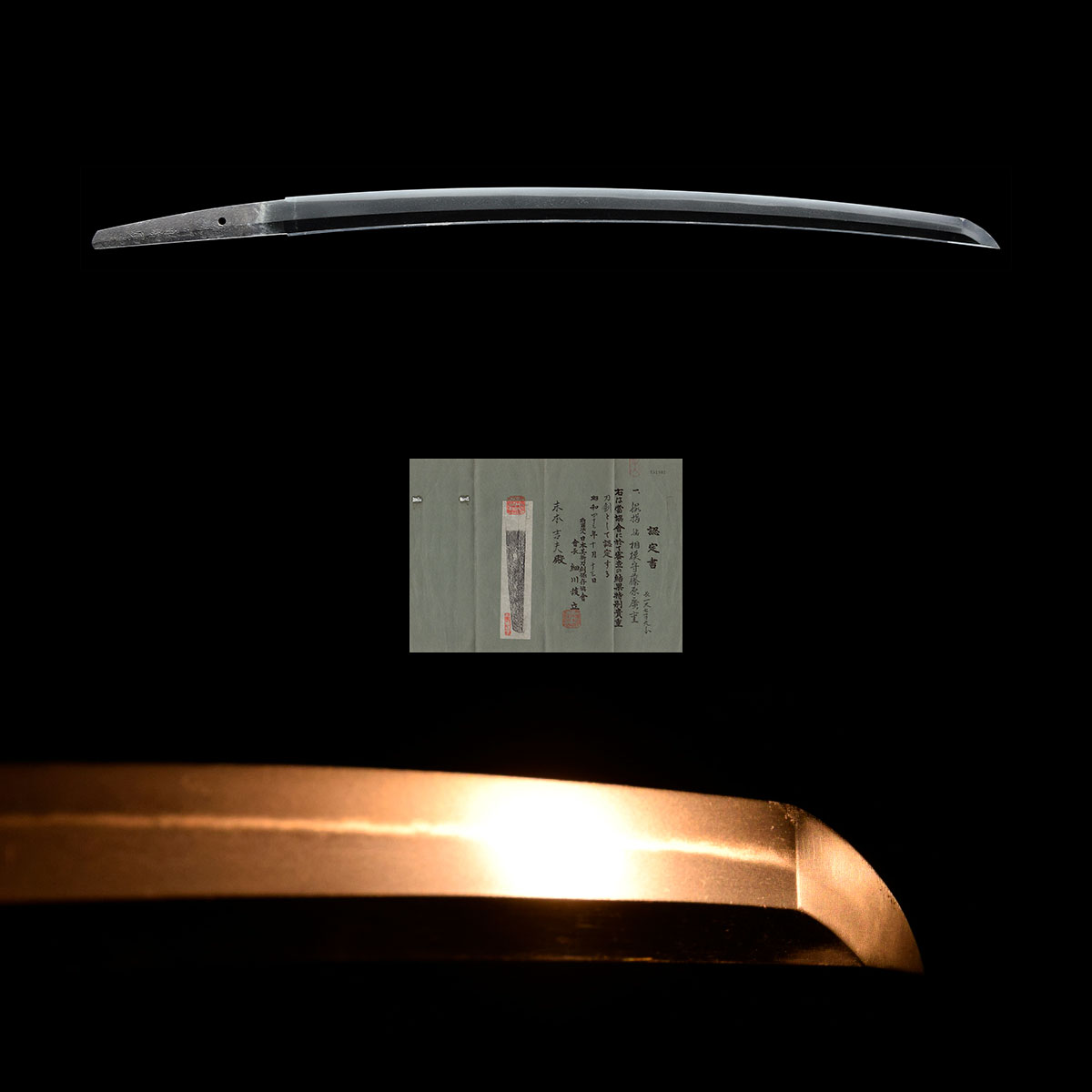
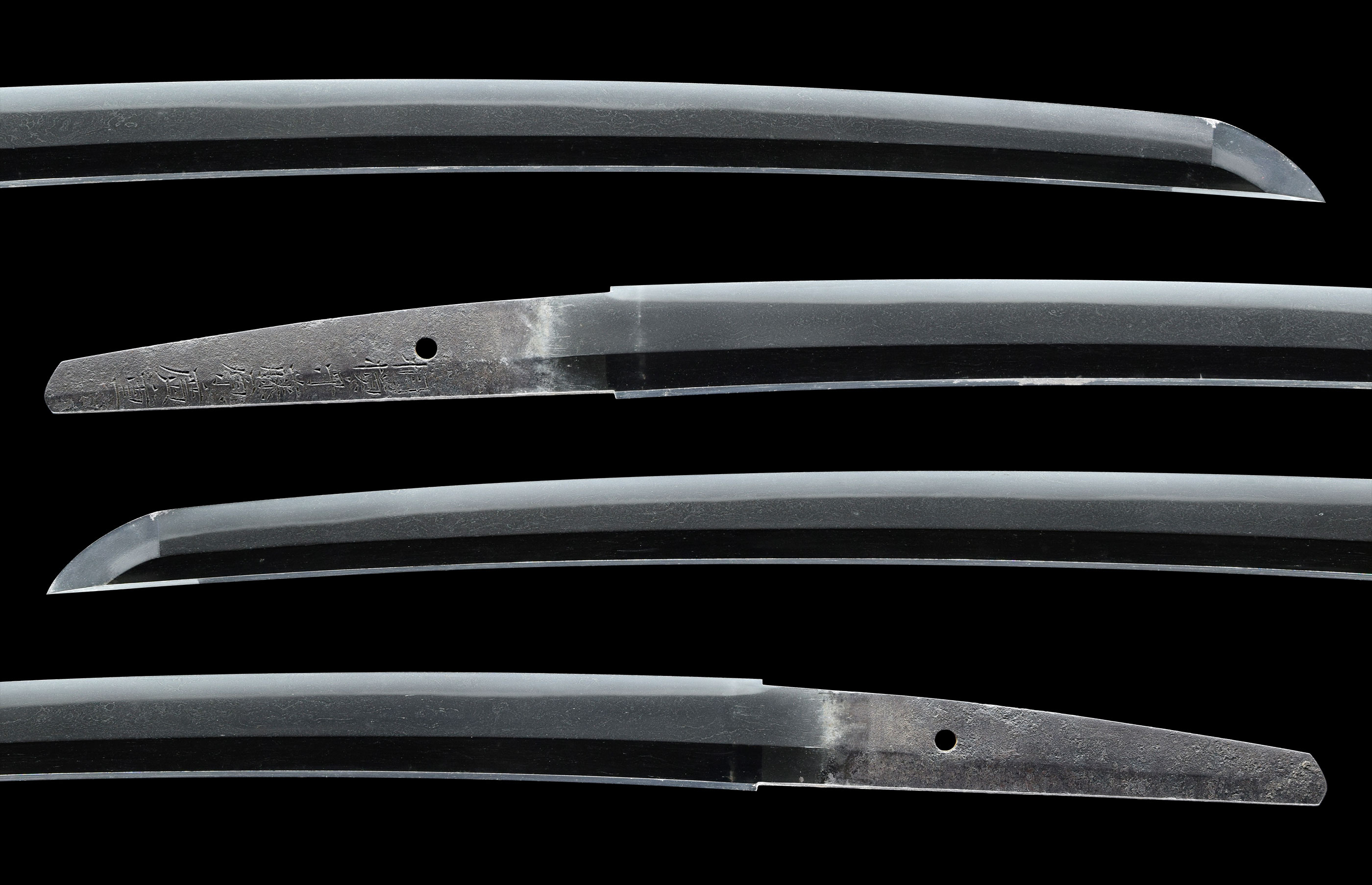
Late Muromachi period, around Tensho (1513~) The middle period of Muromachi era Bushu Shimohara-to is a general term for swords produced by a group of swordsmiths from the Yamamoto family scattered across Ongata village, Yokokawa village, Jigenji village (former Moto-Hachioji village), and other areas in Tama-gun, Musashi Province, who were active in what is now Hachioji City, Tokyo. This area was the territory of the Kanrei Yamanouchi Uesugi, and they received the patronage of Oishi Michitoshi, the lord of Takiyama Castle and a senior official (Musashi Shugodai) of the Uesugi family; later, after the Odawara Hojo clan conquered the Kanto region, they were patronized by Hojo Ujiteru, the lord of Hachioji Castle and second son of the third generation Ujiyasu. The second generation Chikashige received the character "Yasu" from Hojo Ujiyasu and changed his name to "Yasushige". The younger brother of Yasushige received the character "Teru" from Hojo Ujiteru and changed his name to "Terushige". Subsequently, they received generous patronage from the Tokugawa family as well and served as their purveyors. Among them, there was even a swordsmith who received a character from Mito Mitsukuni. In terms of sword making, from the end of the Muromachi period through the Azuchi-Momoyama and Edo periods, they produced swordsmiths such as Chikashige, Yasushige, Terushige, Hiroshige, Masashige, Munekuni, and Yasukuni, inheriting the traditions of the Shimohara smiths for generations. From the early Edo period, many works incorporating Shinto-den are seen, and the Shimohara smiths spanned ten families, known as the "Shimohara Jukka". Although they declined after the mid-Edo period, they were the only group of swordsmiths in Bushu to continue until the Bakumatsu. This wakizashi has a moderate difference between the moto and saki with a chu-kissaki, leaving an impression of an elegant taihai that is truly characteristic of a nihonto. The jigane is ko-itame mixed with mokume, well-kneaded and slightly hadadachi, with good cohesion. The hamon is a suguha with a bright and clear nioiguchi, and prominent kinsuji and inazuma entwined with the jigane are visible along the habuchi. The nioiguchi is finely irregular toward both the ha-machi and mune-machi sides, with nezumi-ashi, and the boshi on both the omote and ura returns in a sugu-ni-maru fashion. In its current condition, small rust is visible near the habaki-moto, the yokote, and on part of the mune, but it can be fully enjoyed for appreciation. The foundation has been given a good polishing, so it is sharp and gives a refreshing visual impression. The workmanship of the toshin is extremely good, and from the included patterned habaki, it can be inferred that this was the sashiryo of a high-ranking joshi. This is a masterpiece that we hope you will cherish for a long time, perhaps by having the aforementioned small rust spot-polished or by re-polishing the whole piece and submitting it for Tokubetsu Hozon Token simultaneous shinsa.
Offered by Toushin
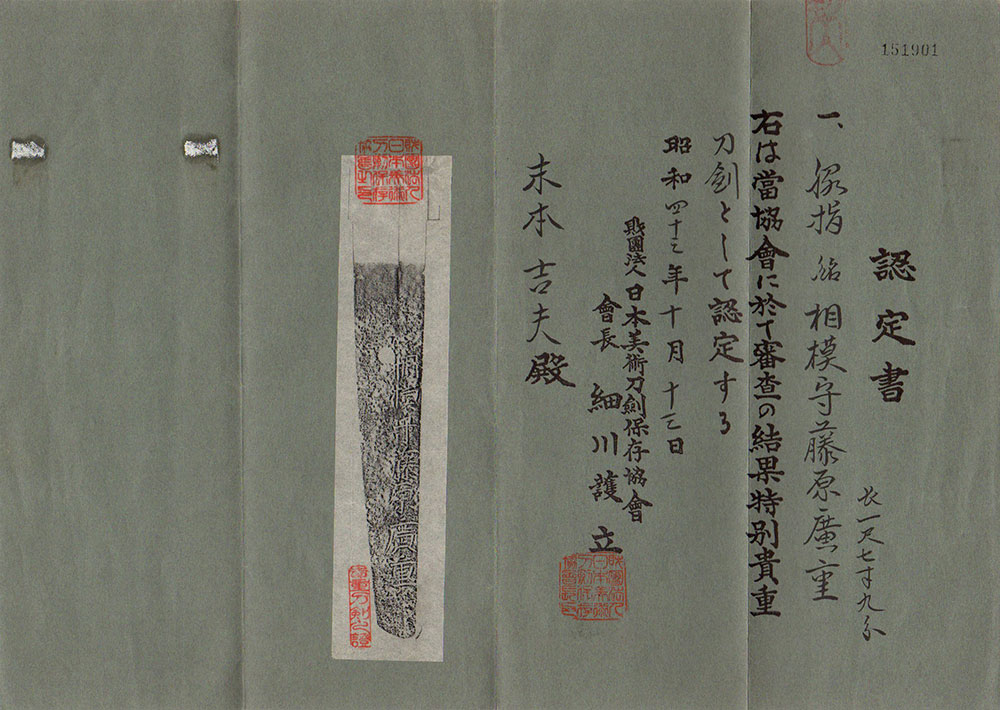
Its only papers are older green Kichō papers, which the NBTHK largely disavows today. Ask the dealer whether it has passed current shinsa. — Hoshi

As written by the shop
Machine translation from the shop's Japanese · may contain errors ·
Musashi · around 1592-1596
The Muromachi period (1392 to 1573)
Muromachi turned sword making into an industry: the uchigatana rose with massed infantry warfare, Osafune and Seki produced bundle swords beside custom orders, and the Ming trade carried Japanese blades abroad by the tens of thousands.
This work carries older NBTHK “Kichō”-era papers, which the NBTHK no longer issues and largely disavows today. To confirm the attribution, submission to an official Japanese examination body (such as the NBTHK or NTHK) for modern certification could be considered.
As a rule we do not accept returns, except when we have sent a different item from the one ordered or when there is a significant discrepancy between the description and the item. If you wish to return an item, please contact us within 3 days of its arrival and then send it back.
¥275,000