After the Ōnin War broke the Ashikaga order, a century of Sengoku warfare armed nearly every province in Japan. The era rewards a discriminating eye: routine work exists in quantity, and beside it stand custom blades of the first rank.
 NihontoWatchNihontoWatch
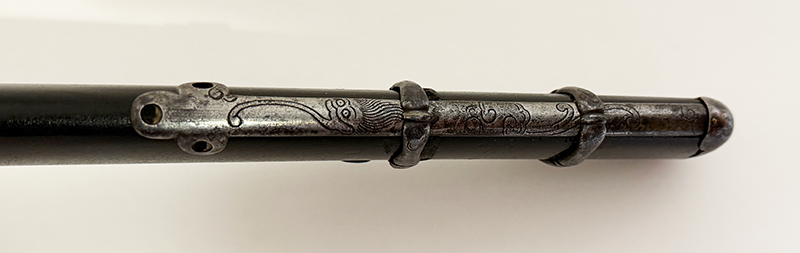
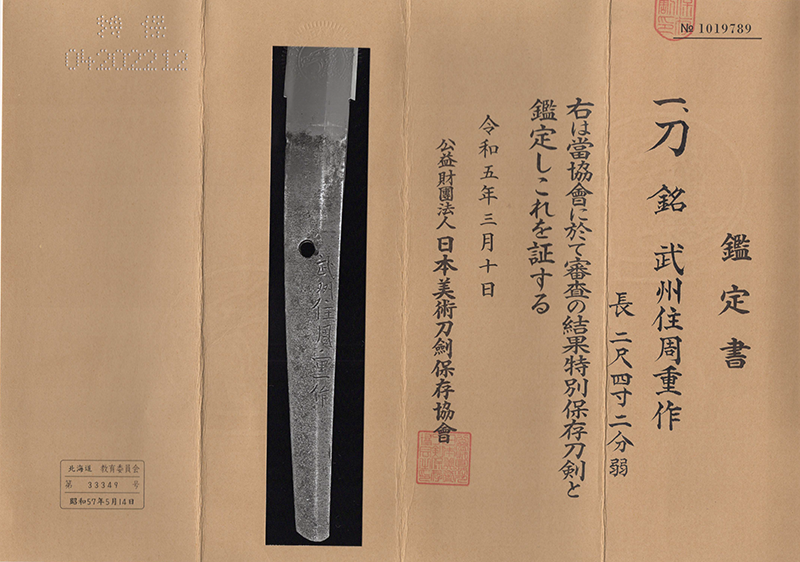
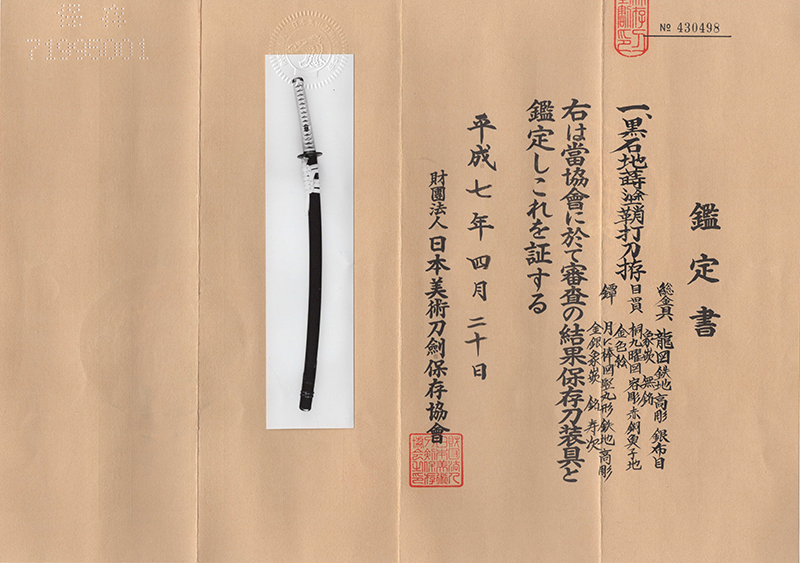
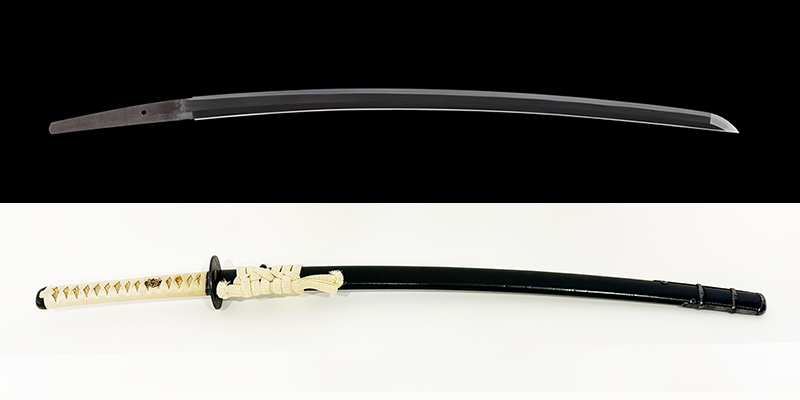
A Tokubetsu Hozon Token designated work by Chikashige, the founder of the Shitahara kaji who were active in Musashi no Kuni during the Edo period. From the late Muromachi period through the Edo period, the group of swordsmiths who lived in the present-day Ongata and Moto-Hachioji village districts of Hachioji City and produced swords and spears are called the Shitahara kaji, and the swords produced by this group are called Bushu Shitahara-to. This area was the territory of the Kanrei Yamanouchi Uesugi, and they received the patronage of the senior official (Musashi Shugodai) Oishi Michitoshi, and after the Odawara Hojo clan conquered the Kanto, the second son of the third generation Ujiyasu, Hojo Ujiteru; thereafter, they served the Tokugawa family and were granted relief of their former lands. In terms of sword making, it began with Chikashige in the Daiei era at the end of the Muromachi period, and it is said that his son Yasushige received the "Yasu" from Hojo Ujiyasu of Odawara, and his younger brother Terushige received the "Teru" from the Hachioji castle lord Hojo Ujiteru for their respective names, and in the early Edo period, sword production was prolific, reaching 10 families, also called the "Shitahara Jukka". This work is by the founder of the Shitahara kaji, Chikashige. It shows a sugata of the very end of the Muromachi period with a slightly long nagasa, sakizori, and an extended kissaki; the hamon is a dignified suguha mixed with muneyaki, and while the jitetsu is itame hada-dachi with a nagare-gokoro, it is clear, allowing one to feel the budding of the mokume hada and uzumaki hada (jorin-moku) that would become the characteristics of the later Shitahara kaji. Extant zaimei works by this smith are extremely few and precious, and it is a superior work that well expresses the typical sakufu of this smith recorded in the Honami Taimeizukushi Hiden and other sources. The koshirae is a jidai koshirae with a kuro-ishimeji saya and all fittings by Jingo depicting a characteristic ryu-zu in silver nunome zogan, and this is also designated as Hozon Tosogu by the Token Hozon Kyokai. Polished by Mr. Morii Tetsutaro in 2026.
NihontoWatchOffered by Iida Koendo
2 on the market

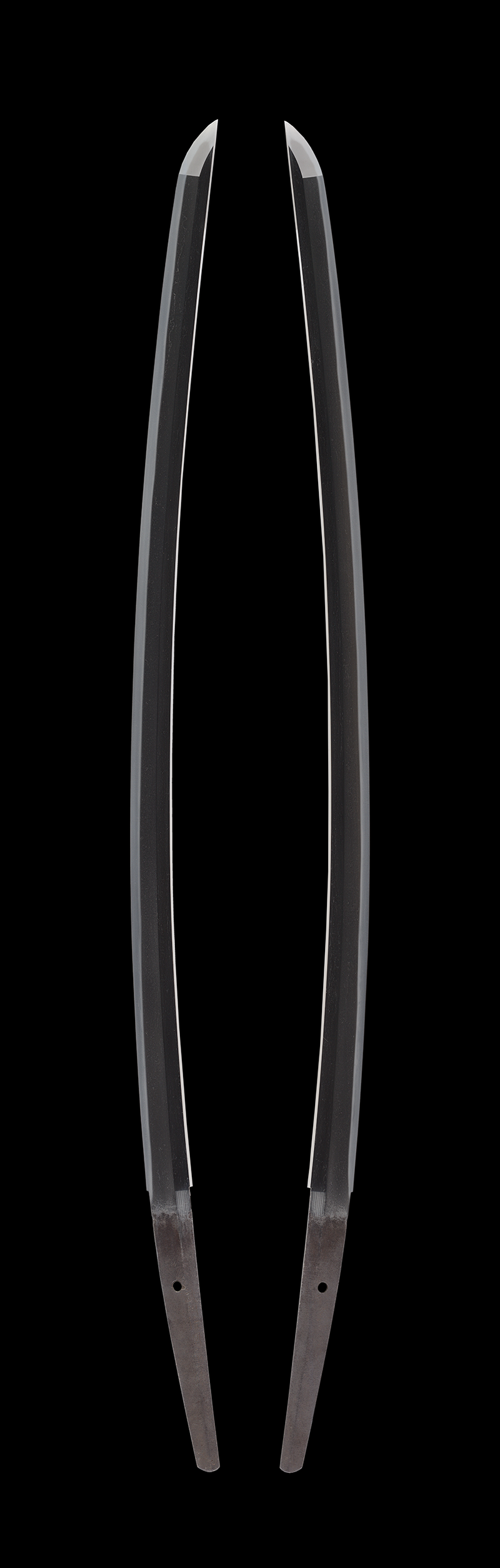
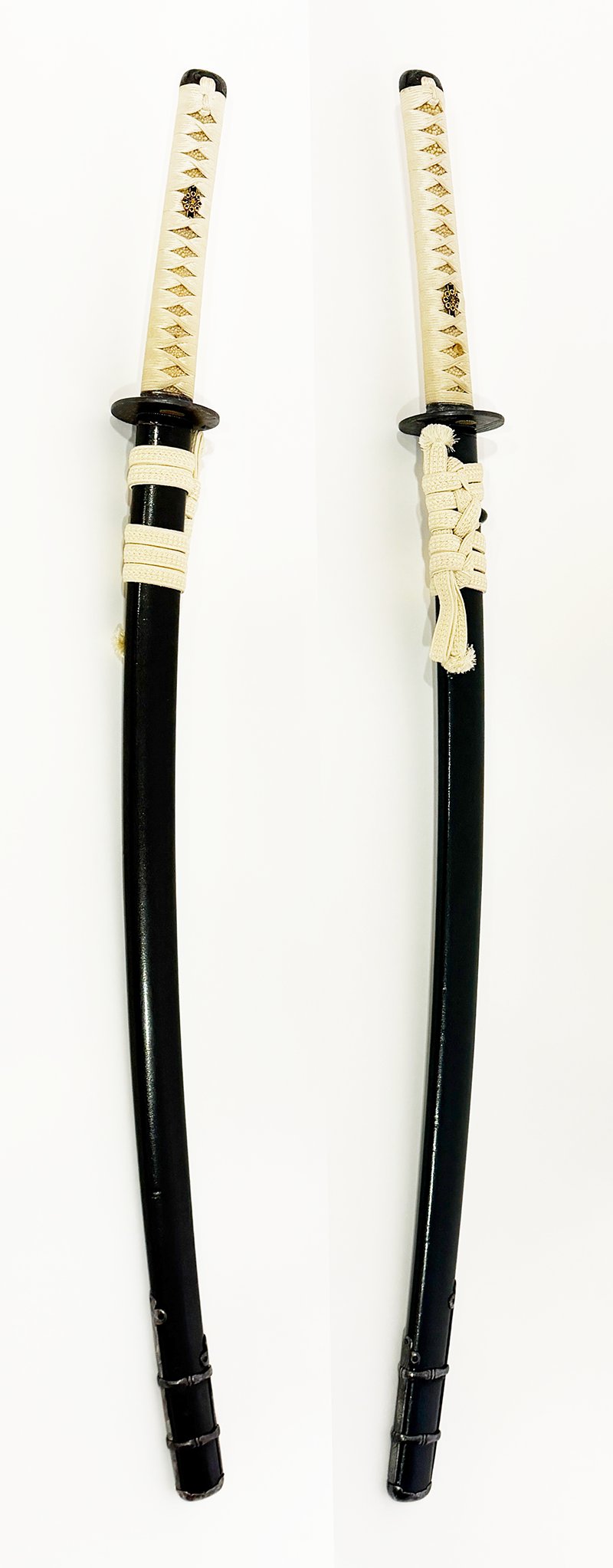
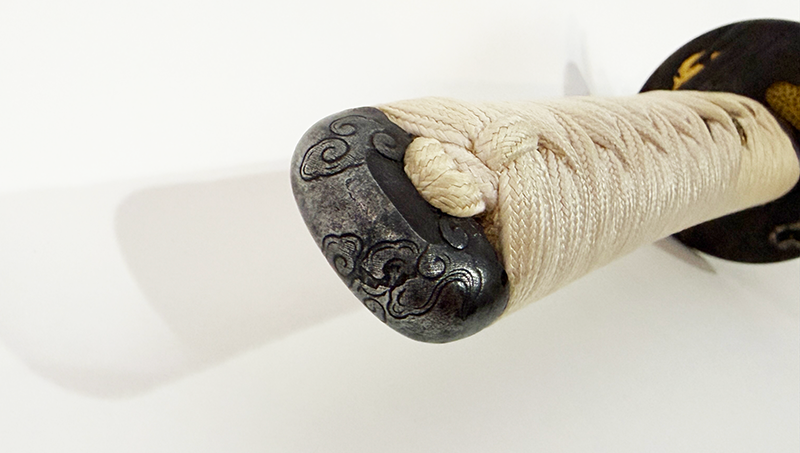
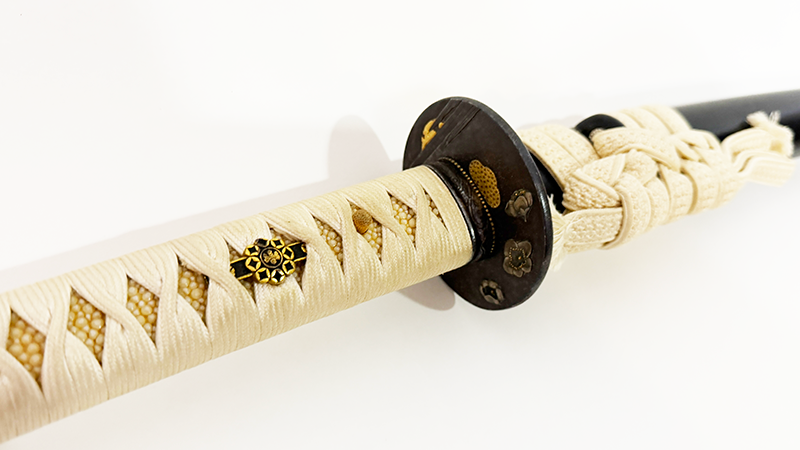

As written by the shop
Machine translation from the shop's Japanese · may contain errors ·
Musashi · around 1504-1521
2 pieces on the market now
The Muromachi period (1392 to 1573)
After the Ōnin War broke the Ashikaga order, a century of Sengoku warfare armed nearly every province in Japan. The era rewards a discriminating eye: routine work exists in quantity, and beside it stand custom blades of the first rank.
A Hozon-certified blade judged to show notably superior workmanship and a better state of preservation. The bar is higher: re-tempered blades and most unsigned Muromachi/Edo works are excluded.
The NBTHK (Nihon Bijutsu Tōken Hozon Kyōkai, the Society for the Preservation of Japanese Art Swords) is a public-interest incorporated foundation founded in 1948 and supervised by Japan’s Agency for Cultural Affairs (Bunkachō); it is based at the Japanese Sword Museum in Tokyo. Its expert panels physically examine each submitted work (shinsa) and issue a certificate (kanteishō) ranking it by artistic and historical merit. NBTHK papers are the most widely recognized standard of authentication for Japanese swords and fittings.
NBTHK official siteFor returns at the customer's convenience, please notify us within two days of the item's arrival. Items that have been altered cannot be accepted. Return shipping is at the customer's expense. Costs other than the item price (bank transfer fees, cash-on-delivery fees, etc.) cannot be refunded. Items delivered overseas cannot be returned or refunded.
¥2,200,000