Muromachi turned sword making into an industry: the uchigatana rose with massed infantry warfare, Osafune and Seki produced bundle swords beside custom orders, and the Ming trade carried Japanese blades abroad by the tens of thousands.
 NihontoWatchNihontoWatch
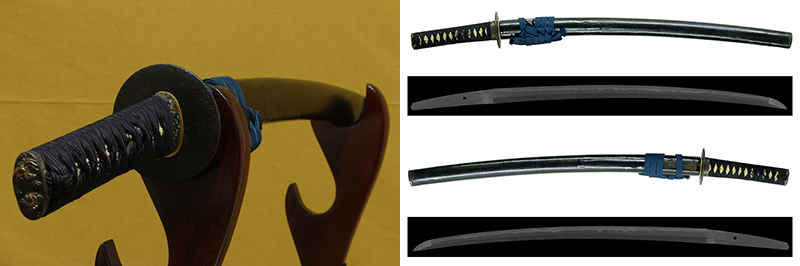
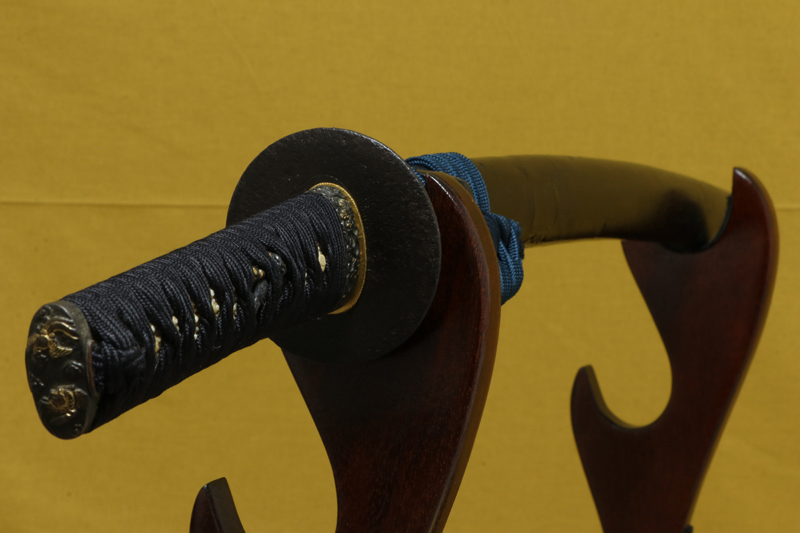
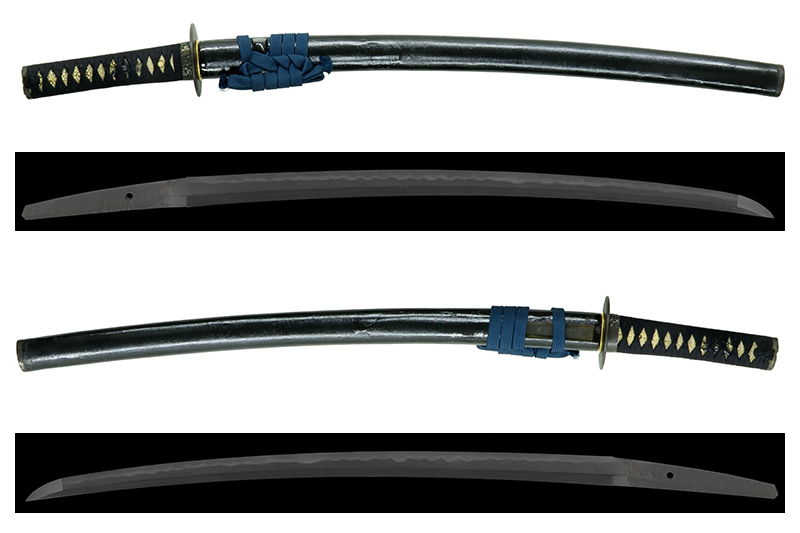
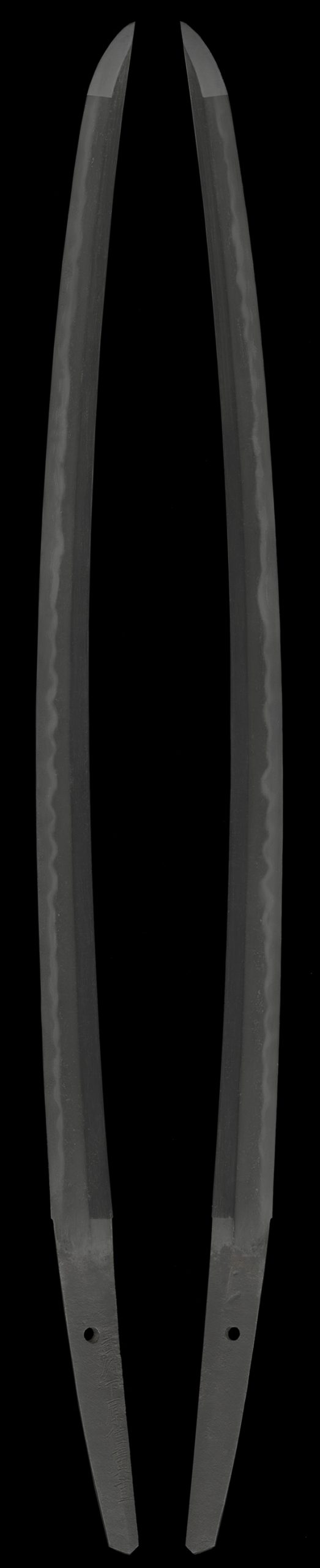
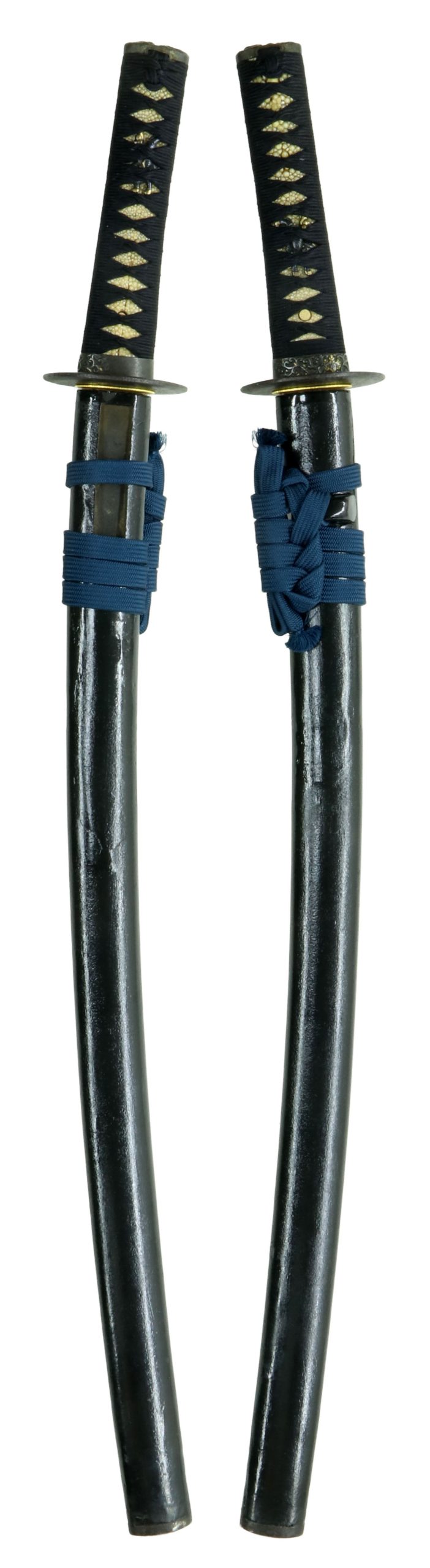
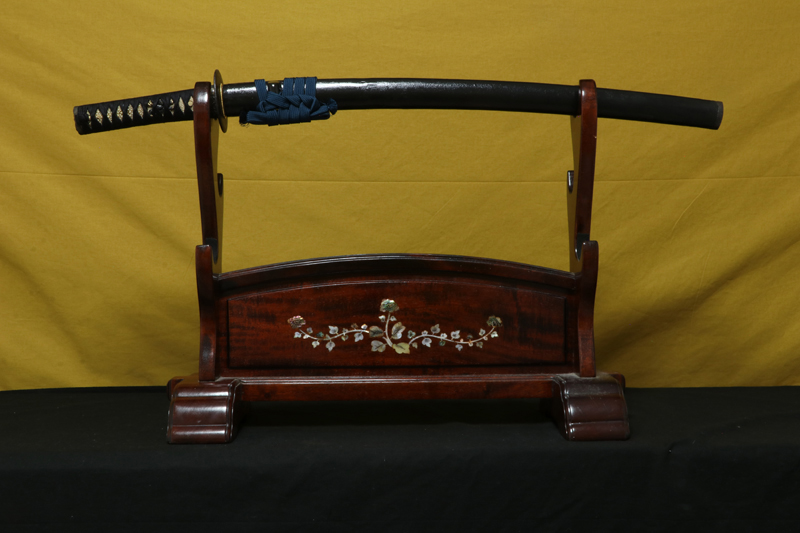
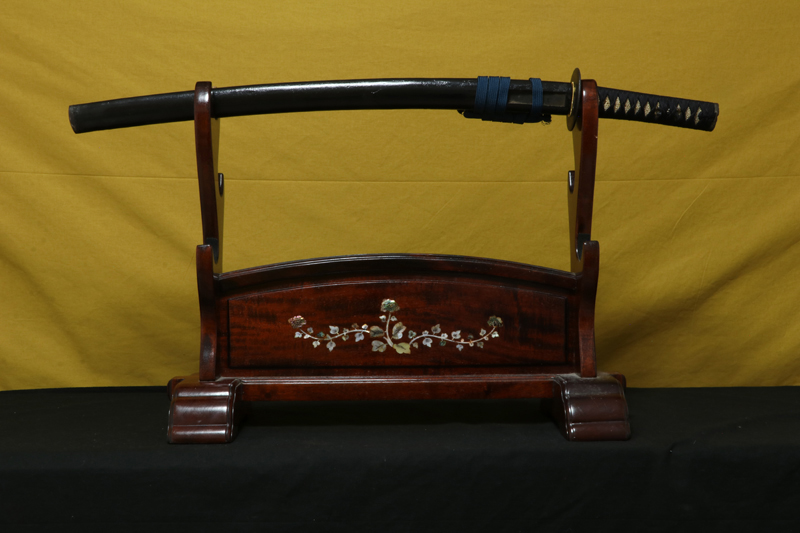
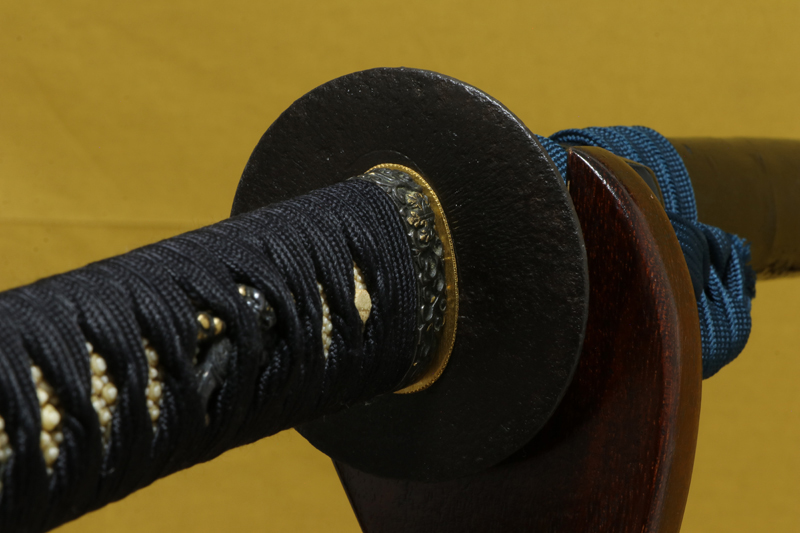
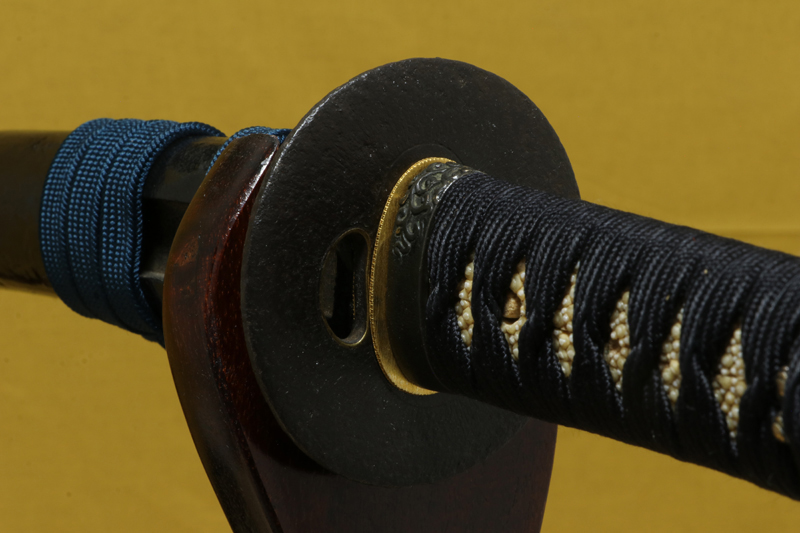
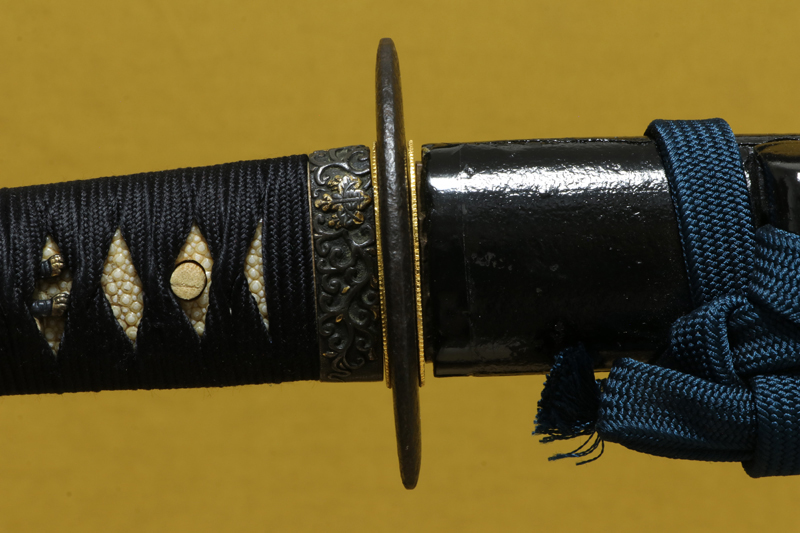
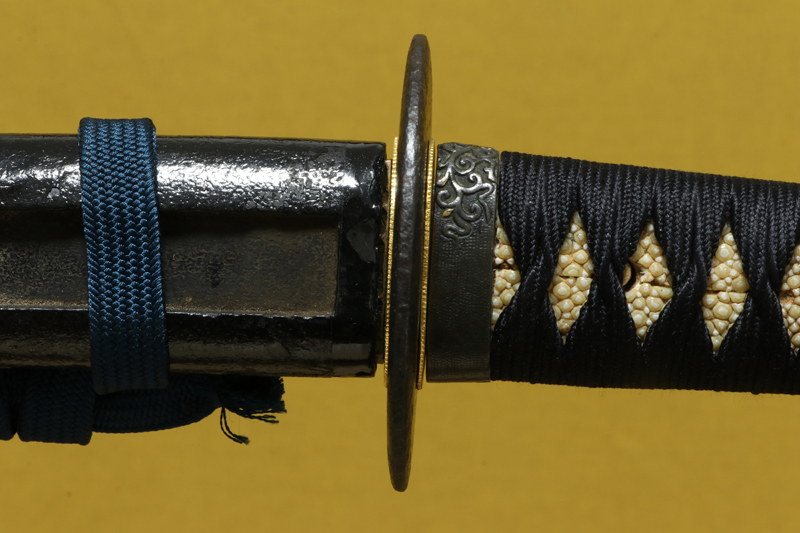
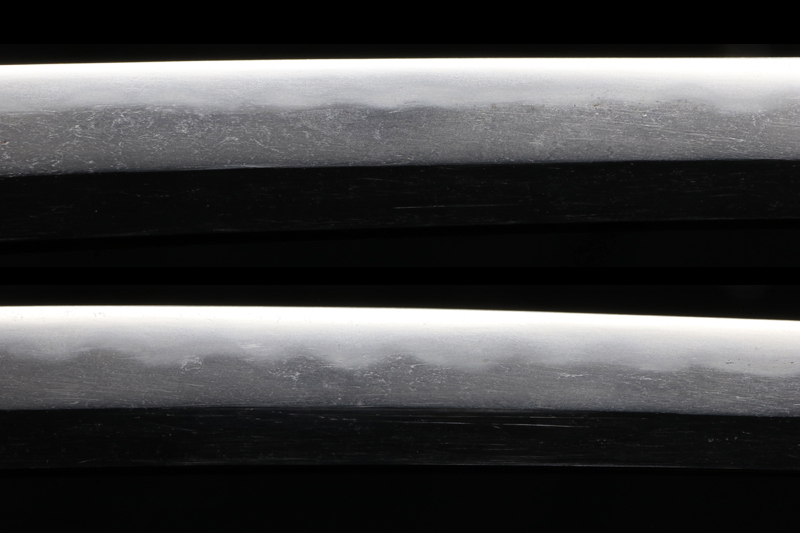
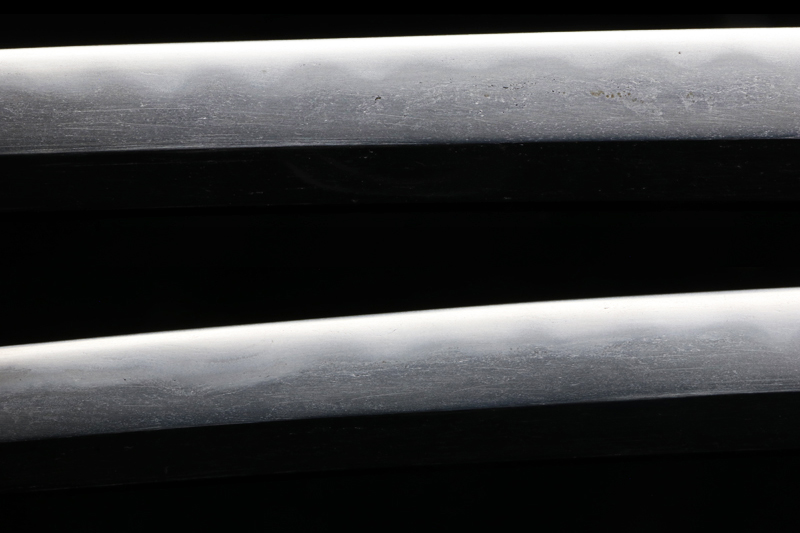
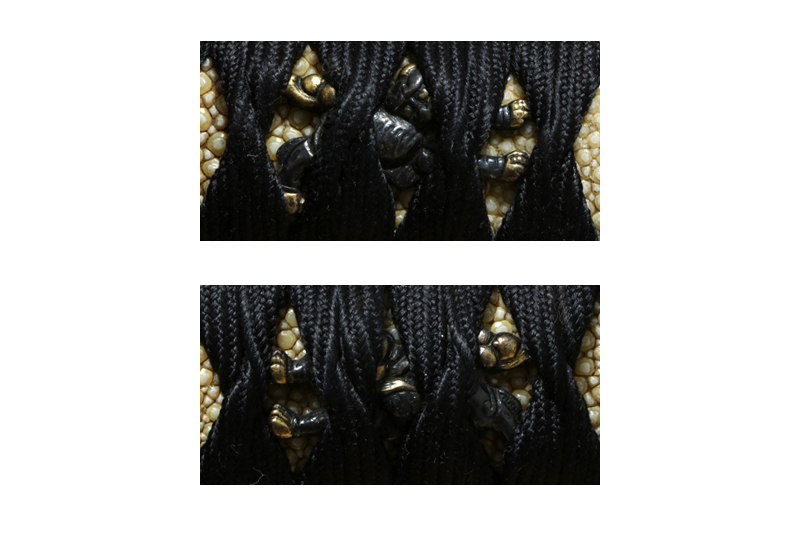
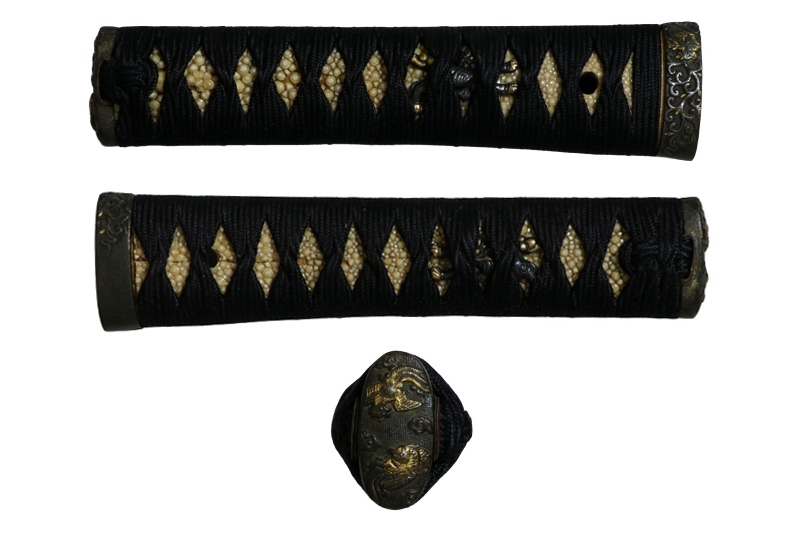
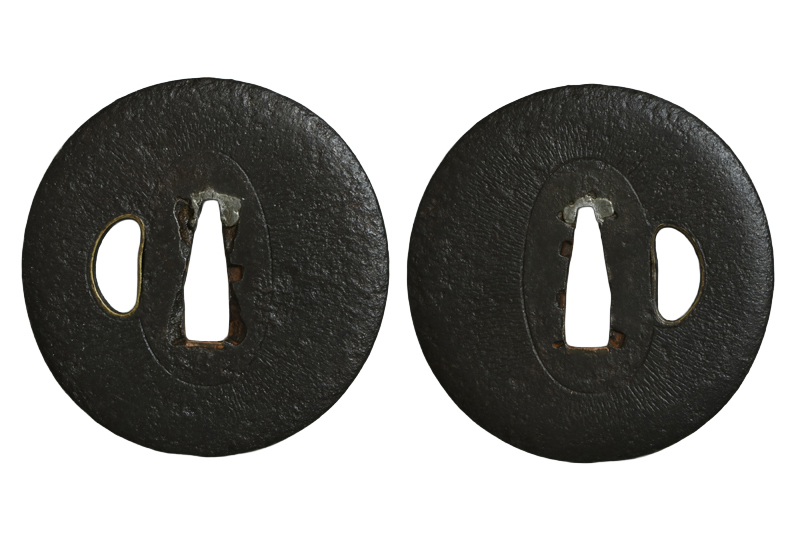
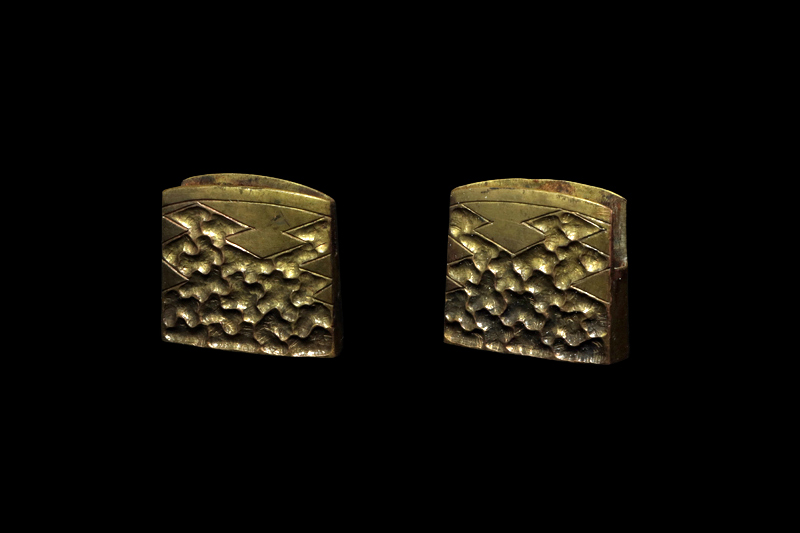
Koto Busyu Shitahara ju Hiroshige with Koshirae. 室町時代後期、武州下原康重の脇差です。 鑑定書が付属しませんが、地鉄・刃紋、そして茎のたなご腹風の形状から、下原派の作品だと思われます。 拵のコンディションは良好で、柄糸は巻き替えられていると思われます。 This is a wakizashi by Bushu Shimohara Yasushige from the late Muromachi period. Although it does not come with an appraisal certificate, based on the jigane, hamon, and the tanago-bara-style shape of the nakago, it is thought to be a work of the Shimohara school. The koshirae is in good condition, and the tsuka-ito appears to have been rewrapped. The price is reasonable, making this piece ideal for a collection. 「刀姿 sword figure」 鎬造り庵棟、身幅重尋常、鳥居反り中鋒、茎は生で、たなご腹原風となり、鑢目は筋違い鑢、茎尻は栗尻。 Shinogi-zukuri with an iori-mune; the mihaba and kasane are of standard proportions, with torii-zori and a chu-kissaki. The nakago is ubu with a tanago-bara-style shape, sujikai yasurime, and a kurijiri nakago-jiri. 「地鉄 jigane」 地鉄は板目肌に柾目肌が交じり、白気映りが立つ。 The jigane shows itame-hada mixed with masame-hada, with prominent shirake-utsuri. 「刃紋 hamon」 刃紋は互の目乱れ、刃縁沸がつき砂流しかかり、刃中は金筋が栄んに働く。釯子は乱れ込み履き掛け尖り気味に返る。 The hamon is a gunome-midare, with nie along the habuchi and sunagashi appearing, while kinsuji are actively visible within the ha. The boshi is midare-komi with hakikake, turning back in a slightly pointed manner. 「特徴 detailed」 武州下原派は、現在の東京都八王子周辺に住した永正頃の山本周重を初代とし、江戸時代後期にかけて山本一族十家を中心として大いに繁栄した一派で、特に広重・周重・康重・照重の四工が有名です。 本作は鑑定書が付属しませんが、地鉄・刃紋、そして茎のたなご腹風の形状から、下原派の作品と見て間違いないと思われます。ただし、康重は数代にわたっているため、銘の真贋については判別が困難です。 刀身は古研ぎのため表面がやや曇っていますが、地刃はよく見えます。欠点となるような重大な傷はありませんが、研ぎ疲れにより肌立ちが見られる箇所があります。 The Bushu Shimohara school originated with Yamamoto Chikashige, who lived in the Hachioji area of present-day Tokyo around the Eisho era. It flourished greatly through the late Edo period, centered on the ten branches of the Yamamoto family, and is particularly known for four famous smiths: Hiroshige, Chikashige, Yasushige, and Terushige. This piece does not come with an appraisal certificate, but judging from the jigane, hamon, and the tanago-bara-style shape of the nakago, it can confidently be regarded as a work of the Shimohara school. However, the authenticity of the mei is difficult to determine, as the name Yasushige was used across several generations. Because the blade has an old polish, its surface appears somewhat cloudy, but the jihada and hamon are clearly visible. There are no flaws that would be considered serious defects, although some areas show slight grain opening due to polish wear. * 鑑定の合格保証は出来ません。 We cannot guarantee that the sword will pass appraisal. 「拵 Koshirae」 ハバキ(habaki) :素銅地金鍍金の岩石鎺。 Habaki: Su-akagane-ji with gold plating, ganseki-habaki. 鍔(tsuba) :鉄地丸型刷毛目鍔。 Tsuba: Tetsu-ji, round shape, hakime-tsuba. 縁頭(fhchikashira):赤銅地桐唐草の図。 Fuchikashira: Shakudo-ji with a design of paulownia and arabesque. 柄(tsuka) :鮫は大きな親粒が付き巻鮫。柄巻は正絹黒の諸捻り巻。 Tsuka: Same with a large oyatsubu, maki-zame. Tsuka-maki is black pure silk in morohineri-maki. 鞘(saya) :黒石目。 Saya: Kuro-ishime. 「刀剣の状態 condition of blade」 研:古研ぎのため表面がやや曇っていますが、地刃はよく見えます。 Polish: Because the blade has an old polish, its surface appears somewhat cloudy, but the jihada and hamon are clearly visible. 傷:欠点となるような重大な傷はありませんが、研ぎ疲れにより肌立ちが見られる箇所があります。 Flaws: There are no flaws that would be considered serious defects, although some areas show slight grain opening due to polish wear.
Offered by Giheiya
This piece has sold
Get an email when a new Shimosaka Hiroshige piece hits the market.

As written by the shop
Machine translation from the shop's Japanese · may contain errors ·
Musashi · around 1592-1596
The Muromachi period (1392 to 1573)
Muromachi turned sword making into an industry: the uchigatana rose with massed infantry warfare, Osafune and Seki produced bundle swords beside custom orders, and the Ming trade carried Japanese blades abroad by the tens of thousands.
Within 3 days of the item's arrival, we offer a refund or an exchange. Return shipping and the bank transfer fee for the refund are at the customer's expense.