After the Ōnin War broke the Ashikaga order, a century of Sengoku warfare armed nearly every province in Japan. The era rewards a discriminating eye: routine work exists in quantity, and beside it stand custom blades of the first rank.
 NihontoWatchNihontoWatch
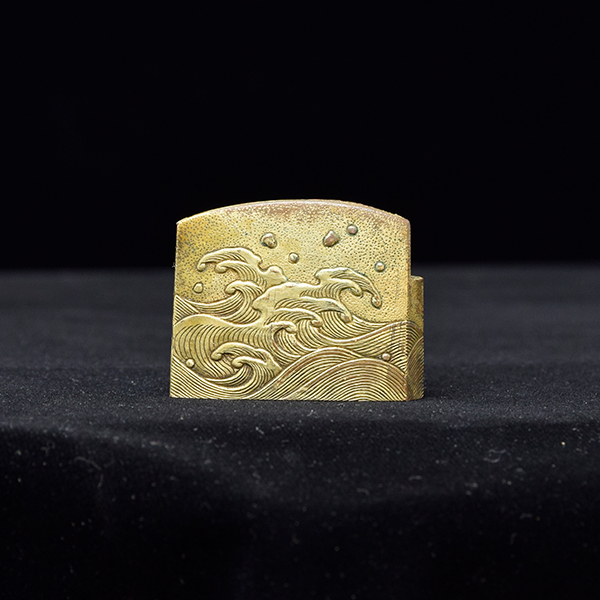
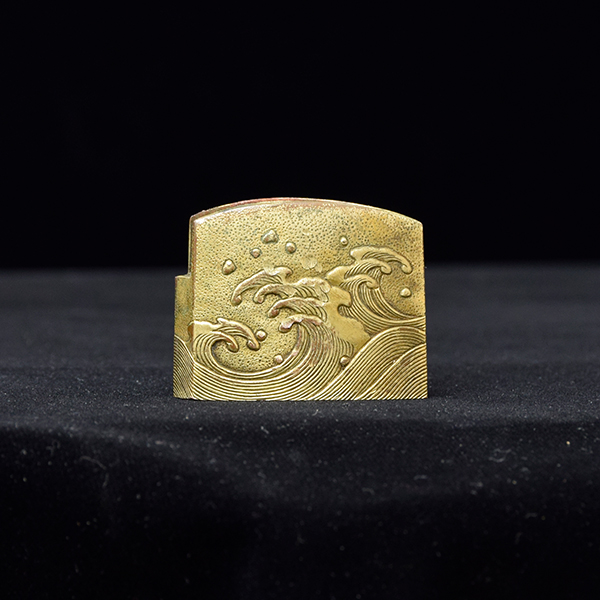
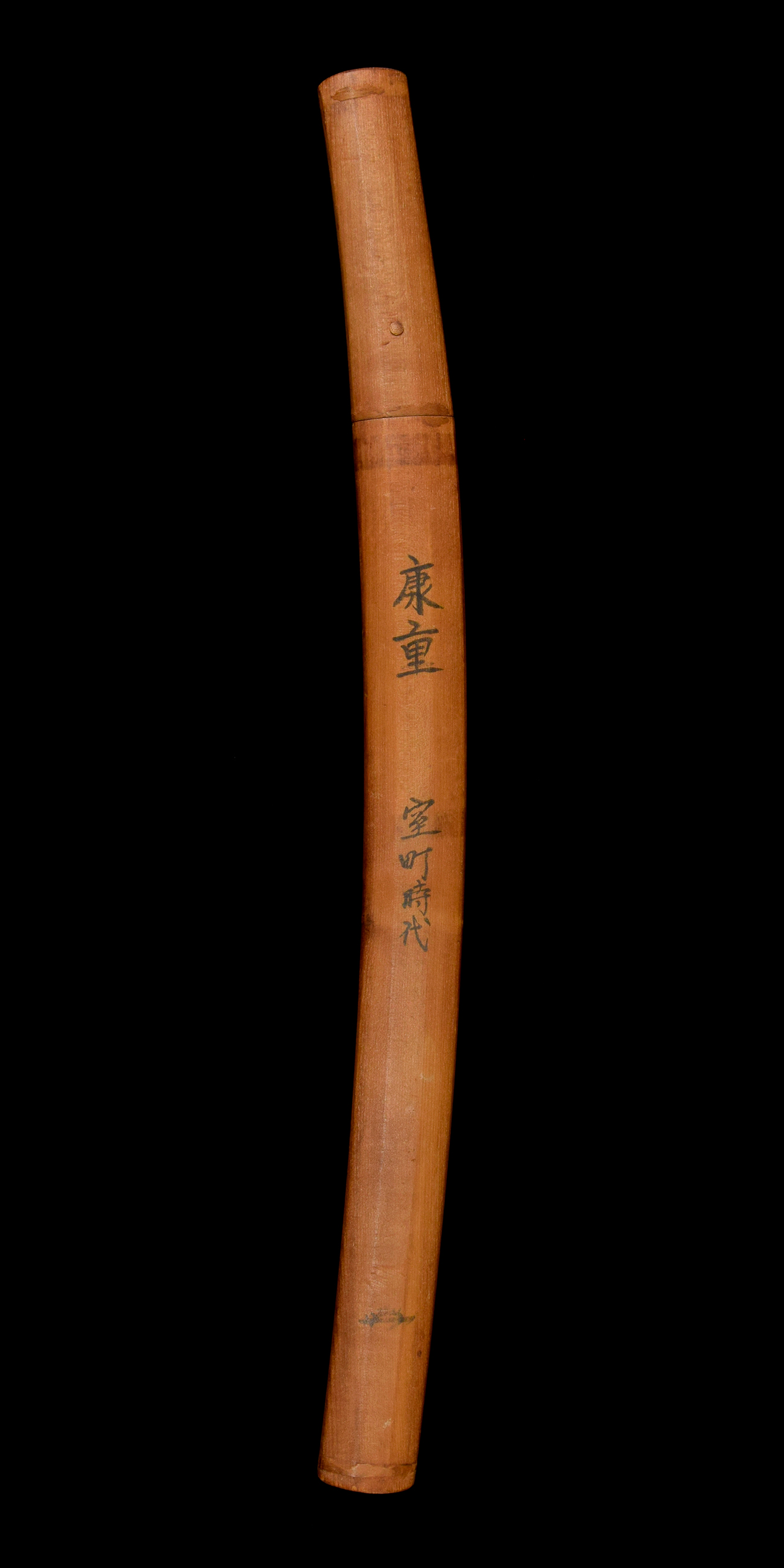
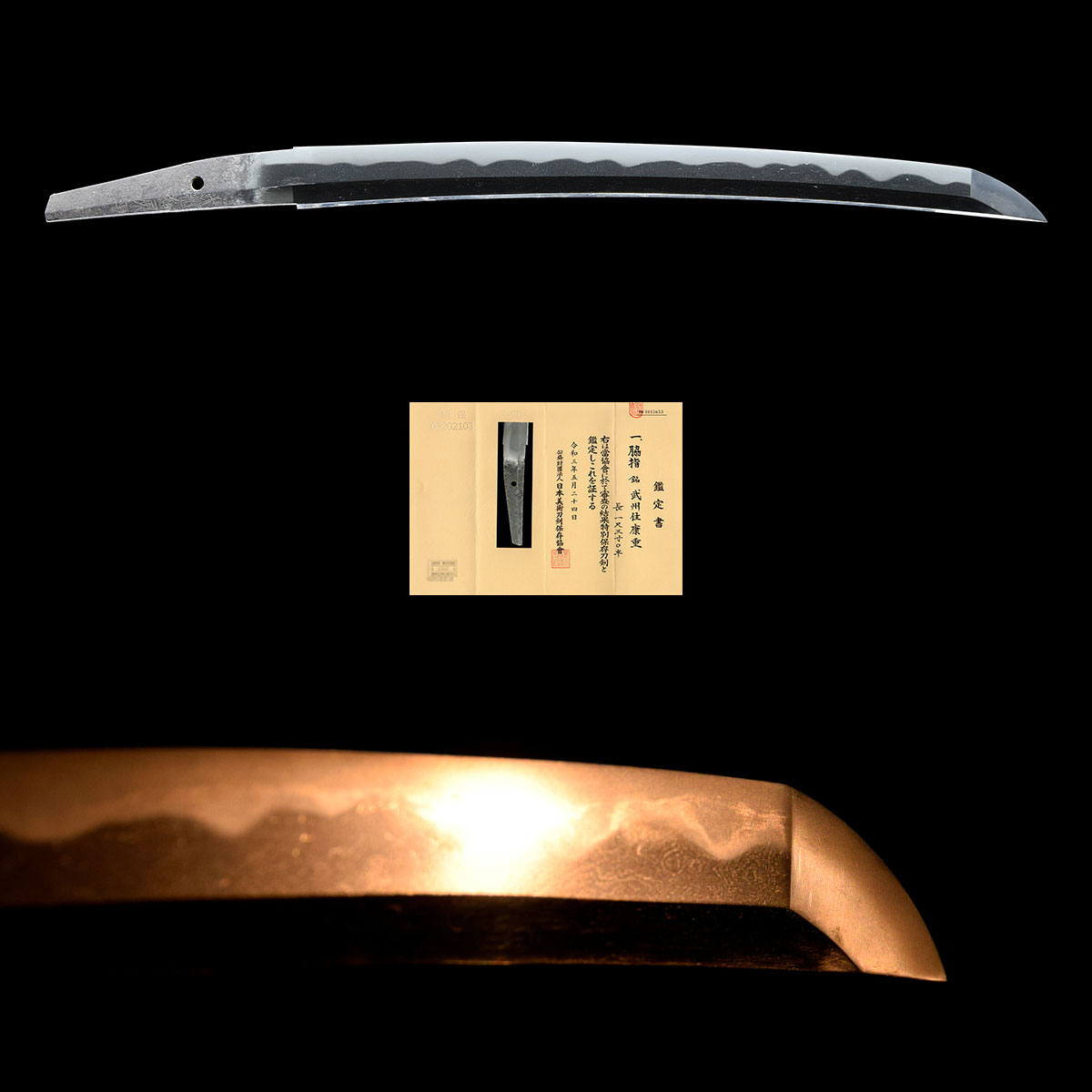
Bushu Shimohara-to is a general term for swords produced by a group of swordsmiths from the Yamamoto family who were scattered across villages such as Ongata, Yokokawa, and Jigenji (former Moto-Hachioji) in the Tama District of Musashi Province, and they were active in what is now Hachioji City, Tokyo. This area was the territory of the Kanrei Yamanouchi Uesugi, and they received the patronage of Oishi Michitoshi, the lord of Takiyama Castle and a senior official (Musashi Shugodai) of the Uesugi family; later, after the Odawara Hojo clan seized control of the Kanto region, they were patronized by Hojo Ujiteru, the lord of Hachioji Castle and second son of the third generation Ujiyasu, and the second generation Chikashige received the character "Yasu" from Hojo Ujiyasu and changed his name to Yasushige. The younger brother of Yasushige received the character "Teru" from Hojo Ujiteru and changed his name to Terushige. Subsequently, they were also heavily patronized by the Tokugawa family and served as their purveyors. Among them, there were even swordsmiths who received a character from Mito Mitsukuni. In terms of sword making, from the end of the Muromachi period through the Azuchi-Momoyama and Edo periods, they produced swordsmiths such as Chikashige, Yasushige, Terushige, Hiroshige, Masashige, Munekuni, and Yasukuni, inheriting the traditions of the Shimohara smiths for generations; from the early Edo period, many works incorporating Shinto-den are seen, and the Shimohara smiths spanned ten families and were called the "Shimohara Jukka". Although they declined after the mid-Edo period, they were the only group of swordsmiths in Bushu to continue until the Bakumatsu. This wakizashi has a wide mihaba and an impressive, magnificent sugata with an extended kissaki that is truly powerful; the jitetsu is a well-kneaded ko-itame hada mixed with moku, slightly hadadatsu with chikei, and the hamon is a notare-style gunome midare with kinsuji and sunagashi appearing prominently, showing a spirited dekiguchi. There are small spots of rust in places, but there is no need for urgent polishing, and you can enjoy the ji and ha even in its current condition. Because a solid and honest polishing has been applied, the shitaji is also good, and the dignified, tightened yokote-giwa feels refreshing to look at; the accompanying habaki is also no ordinary item, speaking to the good provenance of this sword.
Offered by Toushin
7 on the market

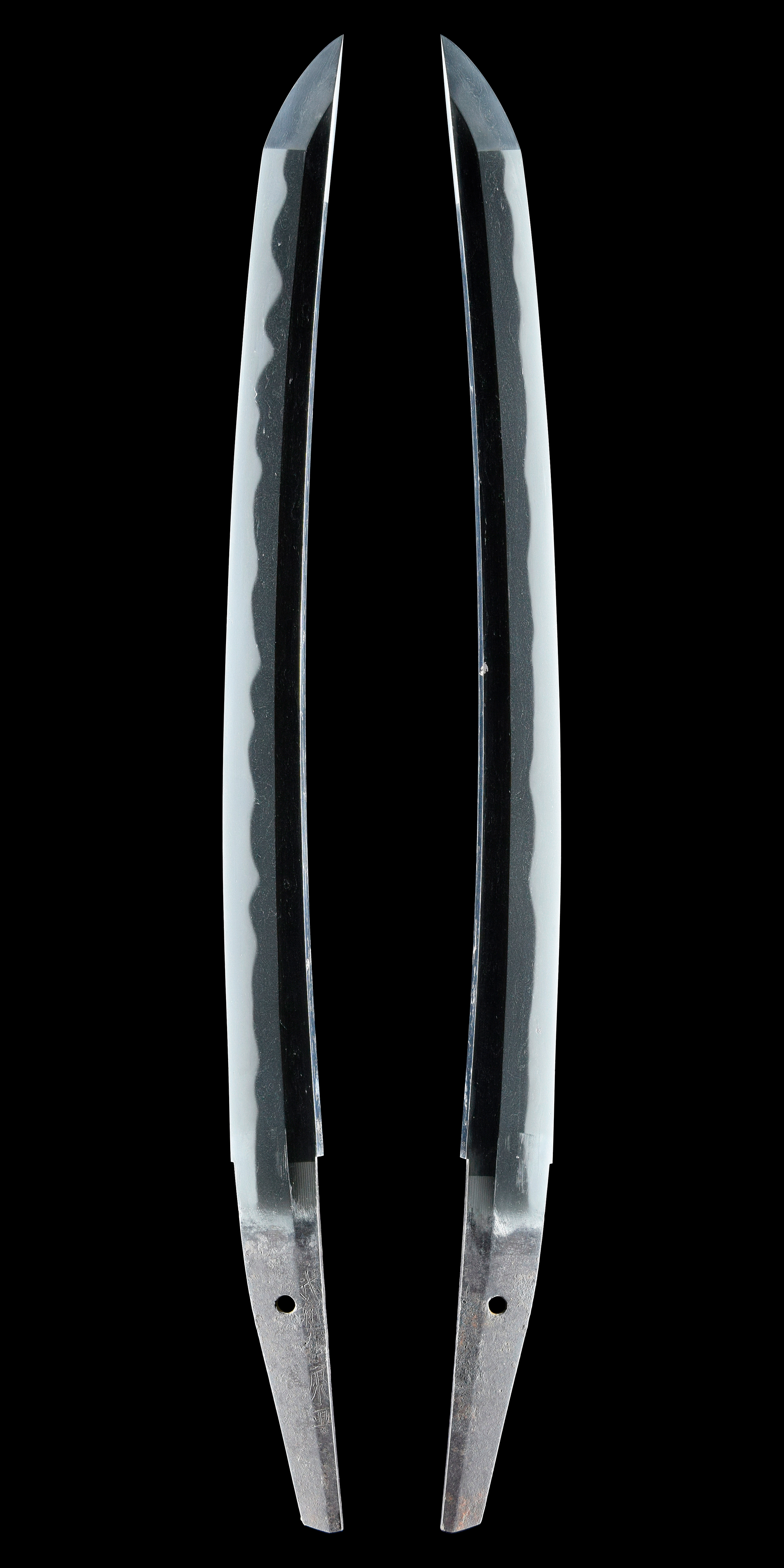
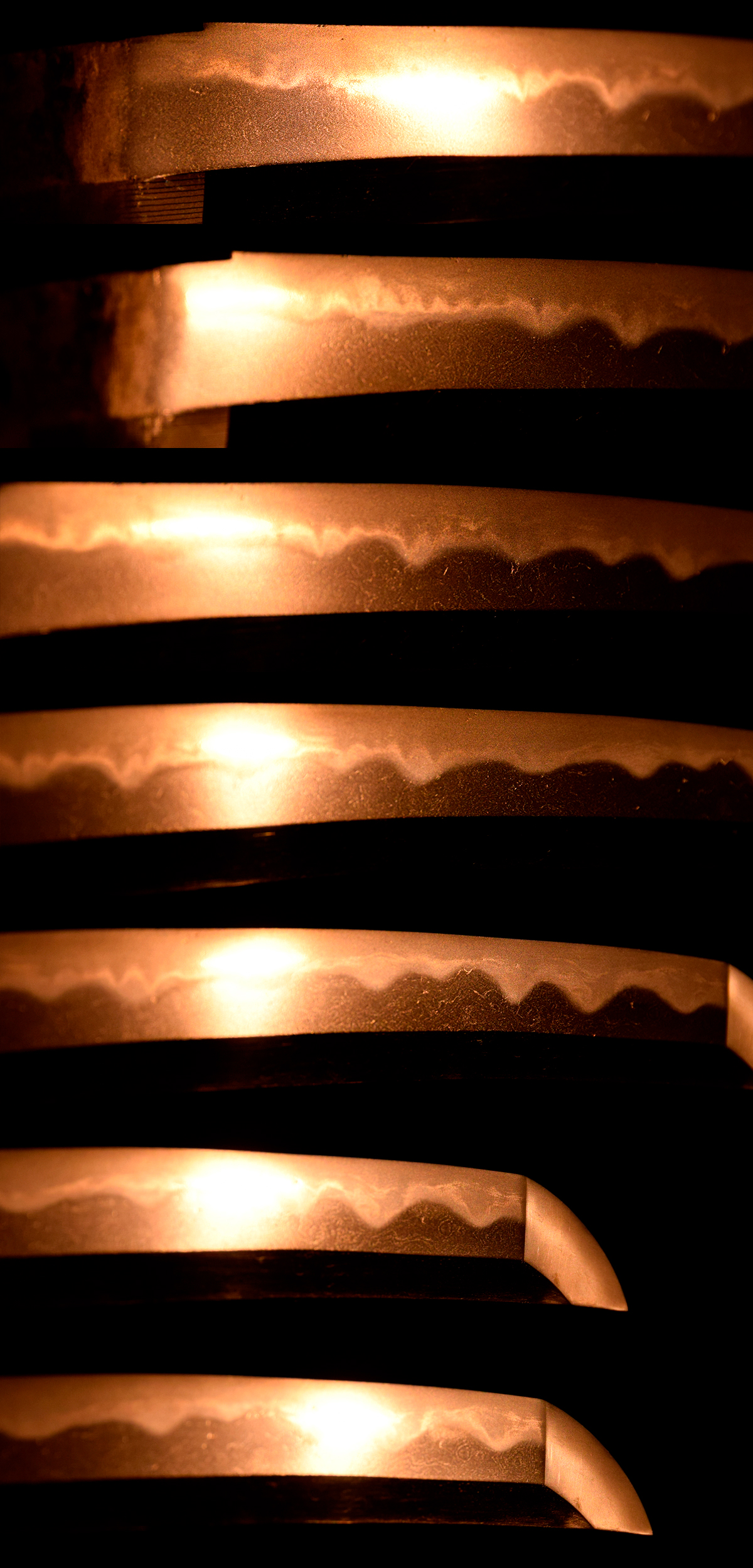
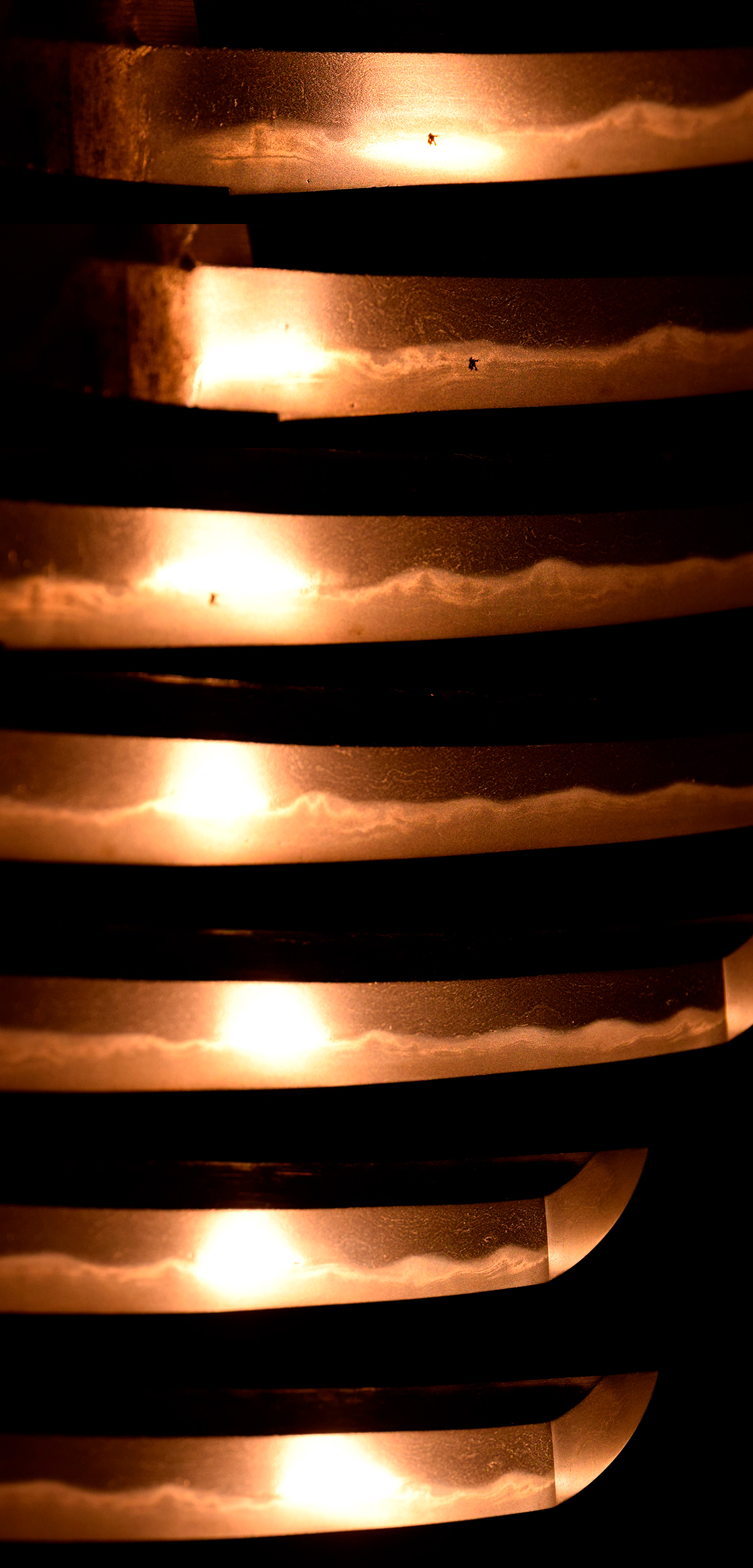
As written by the shop
Machine translation from the shop's Japanese · may contain errors ·
Shinto · Musashi · around 1558-1570
Tōken Taikan top 60%
1 piece on the market now
Where Yasushige stands among comparable artisans: across all of nihontō, and within tradition, era, and period. The tiers (Foremost · Leading · Major · Notable) weigh official designations from the NBTHK and Japan's Agency for Cultural Affairs, together with historical honors of lasting repute such as the Sansaku and Meibutsu-chō.
Select a lens to see how it's measured.
Shinto · Musashi
7 pieces on the market now
The Shitahara group (下原) worked at Hachiōji in Bushū, the old province of Musashi, from the end of the Muromachi period and carried its forge on into the Edo period. The setsumei place the lineage among the swordmakers of Musashi in the kotō age and name Terushige, Yasushige, Hiroshige, and Chikashige as its leading hands, with the meikan recording Terushige across three generations: a shodai in Kyōroku, a nidai in Eiroku, and a sandai in Tenshō. " That same blade was made to order, in this case from Hagiwara Kaminao of Kōshū, marking the group as a working provincial forge serving its region. In the forging the setsumei return repeatedly to an itame-hada freely mixed with mokume that stands up rather than lying flat, the grain described as hada-datsu, often running to nagare near the edge and taking on an ayasugi-like, whorled or vortex-like cast in the jigane. The temper is a moderately undulating notare into which gunome enter, frequently in regular paired sequences, with pointed togariba, a chōji-like feeling at times, and ko-nie clinging along a nioiguchi that can settle into a subdued shizumi tone; sunagashi and ashi appear within the ha, and the bōshi tends to run midare-komi and turn back in maru. One katana sets gunome, ō-midare and angular elements into a notare, its bōshi sweeping off in hakikake.
The setsumei read this hand as a synthesis drawing on late Sōshū and the Muramasa line together with late Mino tendencies, which together account for the standing grain and the paired gunome. For kantei the markers are consistent: the risen mokume with its ayasugi turn, the regularly paired gunome, and a build suited to the uchigatana of the closing Muromachi years, often with pronounced sakizori and an extended chū-kissaki. Carving recurs, including bō-hi, bonji, gomabashi, and a deeply cut kurikara-ryū whose coiling tail the NBTHK singles out as characteristic. Named and dated pieces anchor the group: the Yamamoto Genjirō Terushige naginata, uncommon as a double-edged ryōba form, and a Terushige katana appraised between Eiroku and Tenshō that the register calls the hakubi of the school. The setsumei note that Shitahara work survives in number into the shintō period while outstanding examples remain few, which sets these designated blades apart within the lineage. Learn more →
| Smith | Era | Designated |
|---|---|---|
| Terushige照重 | 1558-1570 | 2 |
| Terushige照重 | 1596-1615 | 1 |
| Yasushige康重 | 1558-1570 | 1 |
| Morishige盛重 | 1661-1673 | 0 |
| Yasushige康重 | 1661-1704 | 0 |
The Muromachi period (1392 to 1573)
After the Ōnin War broke the Ashikaga order, a century of Sengoku warfare armed nearly every province in Japan. The era rewards a discriminating eye: routine work exists in quantity, and beside it stand custom blades of the first rank.
A Hozon-certified blade judged to show notably superior workmanship and a better state of preservation. The bar is higher: re-tempered blades and most unsigned Muromachi/Edo works are excluded.
The NBTHK (Nihon Bijutsu Tōken Hozon Kyōkai, the Society for the Preservation of Japanese Art Swords) is a public-interest incorporated foundation founded in 1948 and supervised by Japan’s Agency for Cultural Affairs (Bunkachō); it is based at the Japanese Sword Museum in Tokyo. Its expert panels physically examine each submitted work (shinsa) and issue a certificate (kanteishō) ranking it by artistic and historical merit. NBTHK papers are the most widely recognized standard of authentication for Japanese swords and fittings.
NBTHK official siteAs a rule we do not accept returns, except when we have sent a different item from the one ordered or when there is a significant discrepancy between the description and the item. If you wish to return an item, please contact us within 3 days of its arrival and then send it back.
¥600,000
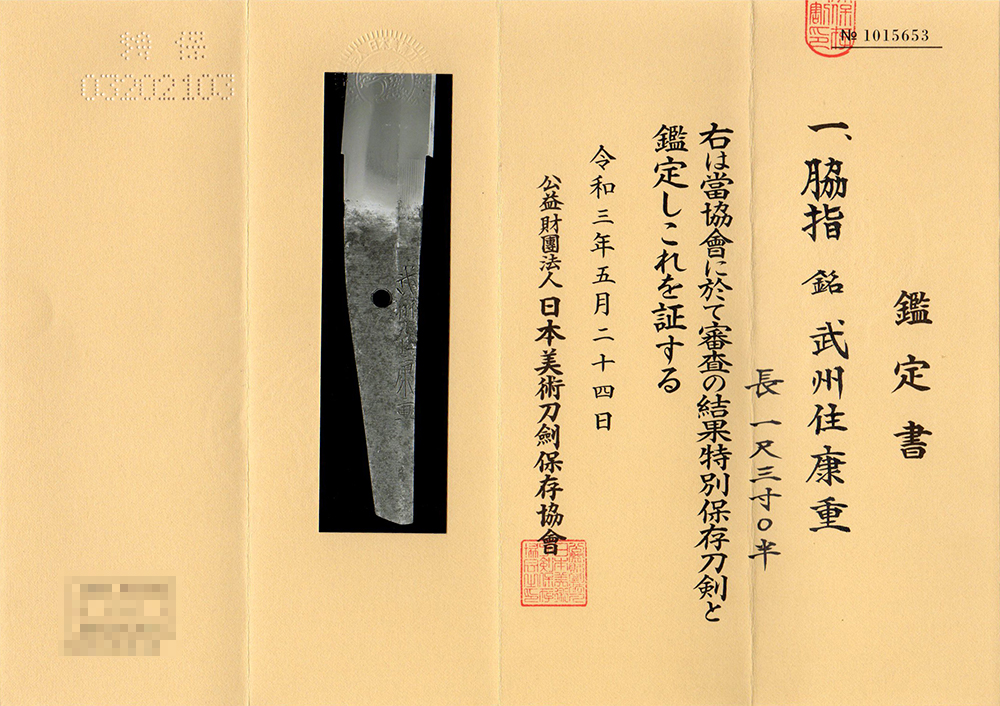
Certificate reading — 銘 武州住康重