The twentieth century nearly killed the craft twice: wartime distortion, then the occupation ban. The NBTHK’s founding in 1948 and licensed forging from 1953 rebuilt the sword as an art, crowned by Living National Treasures and the mukansa rank.
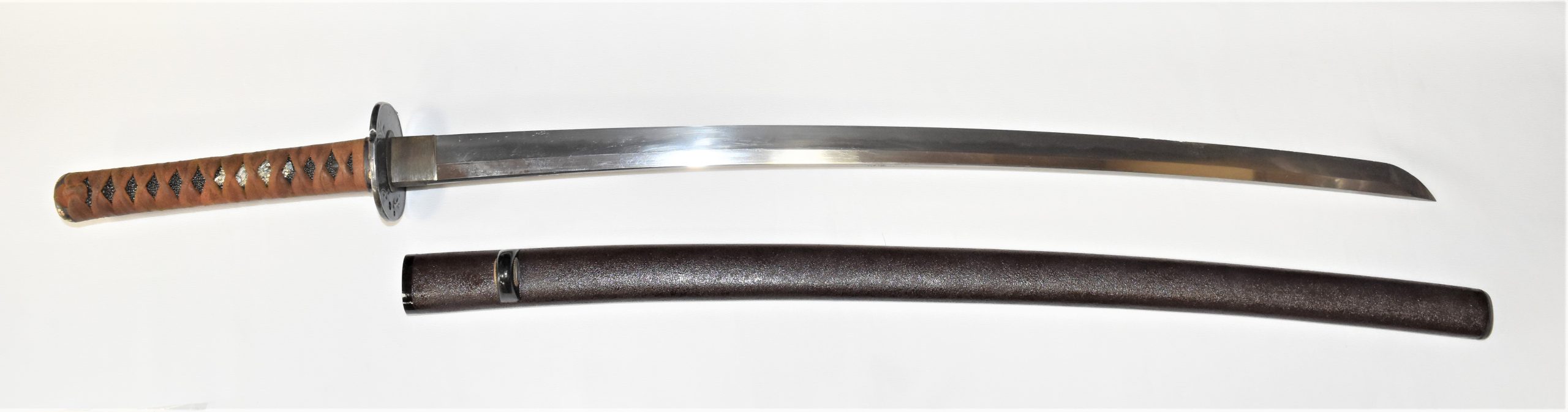
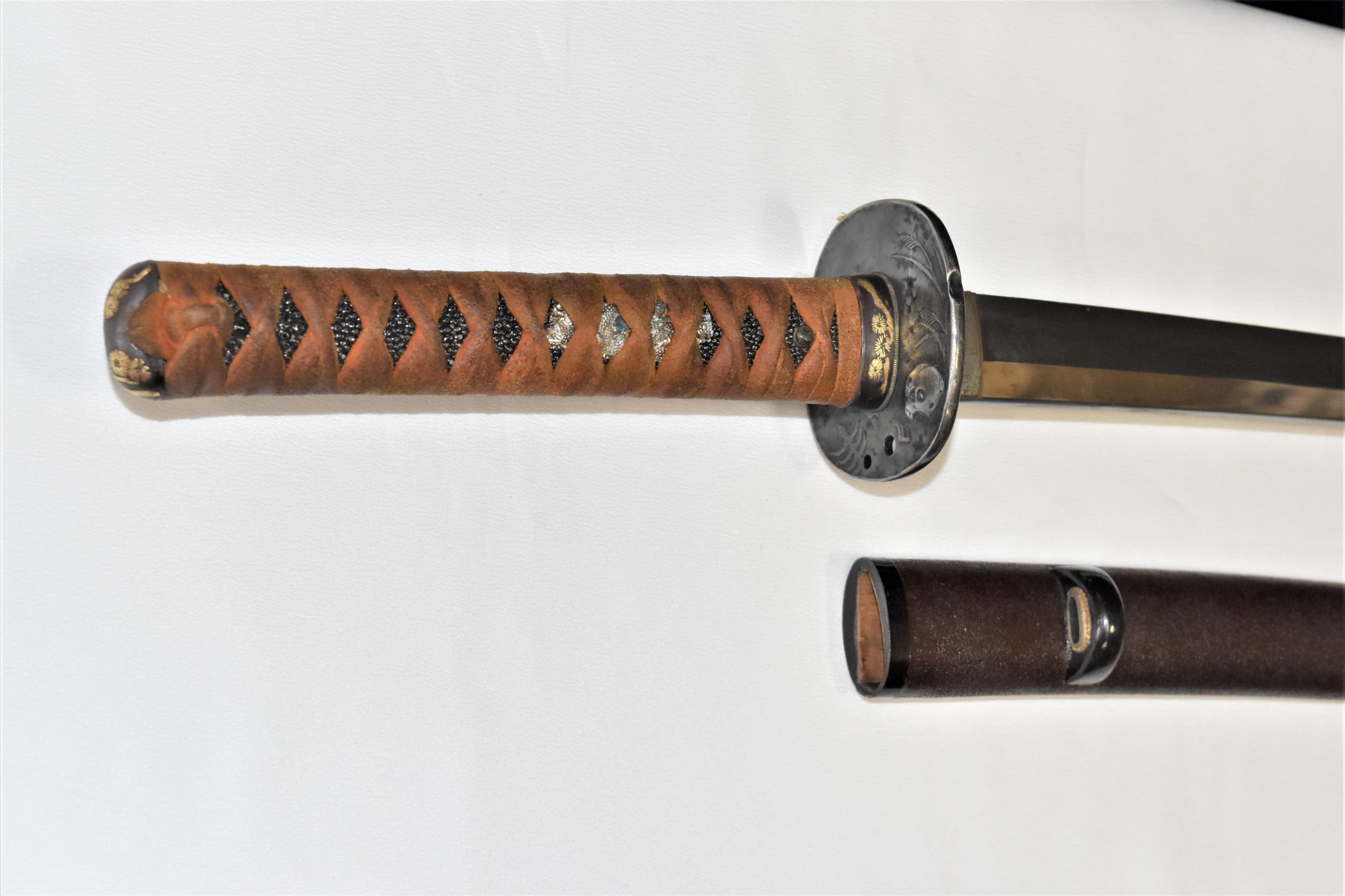
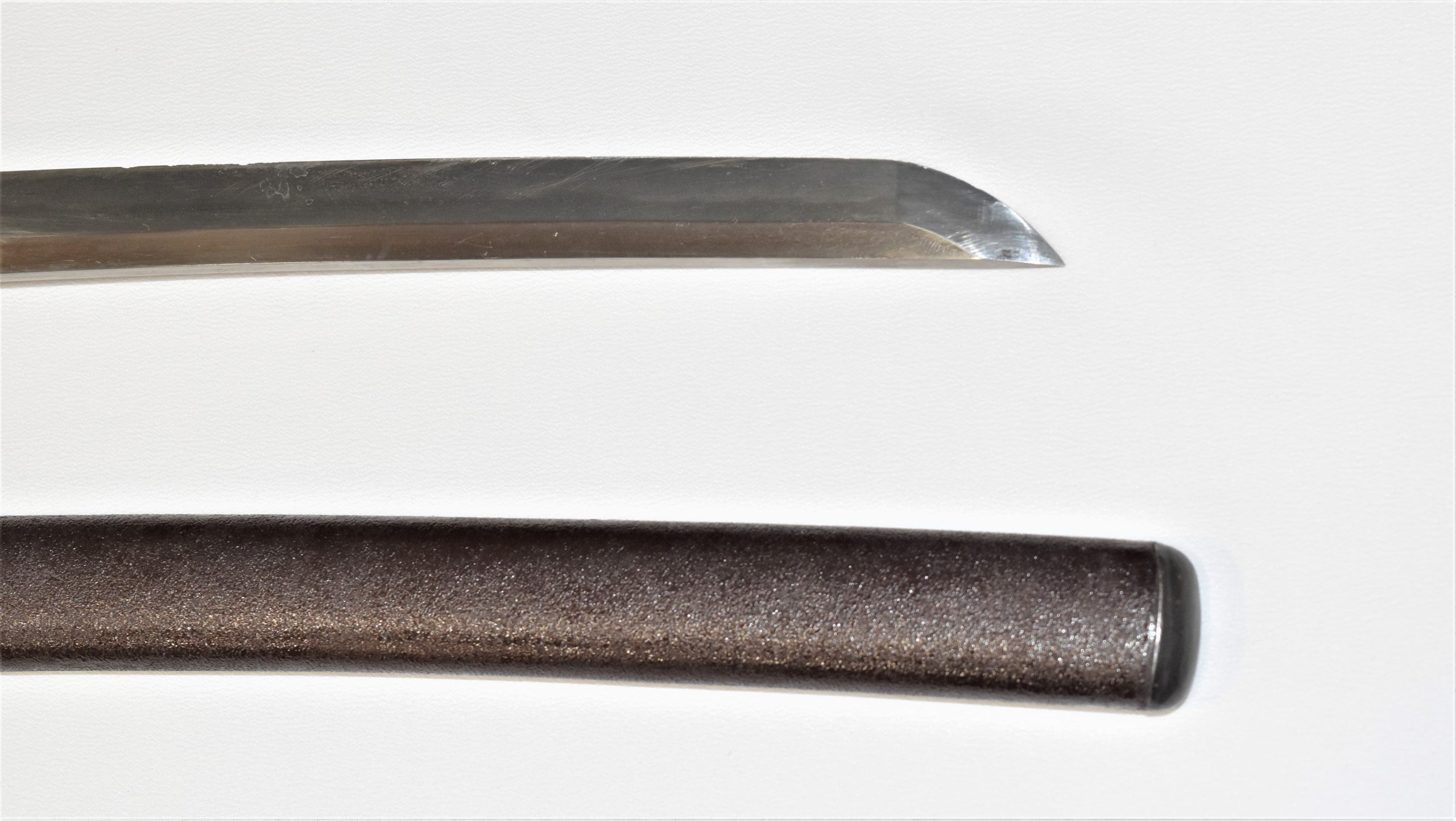
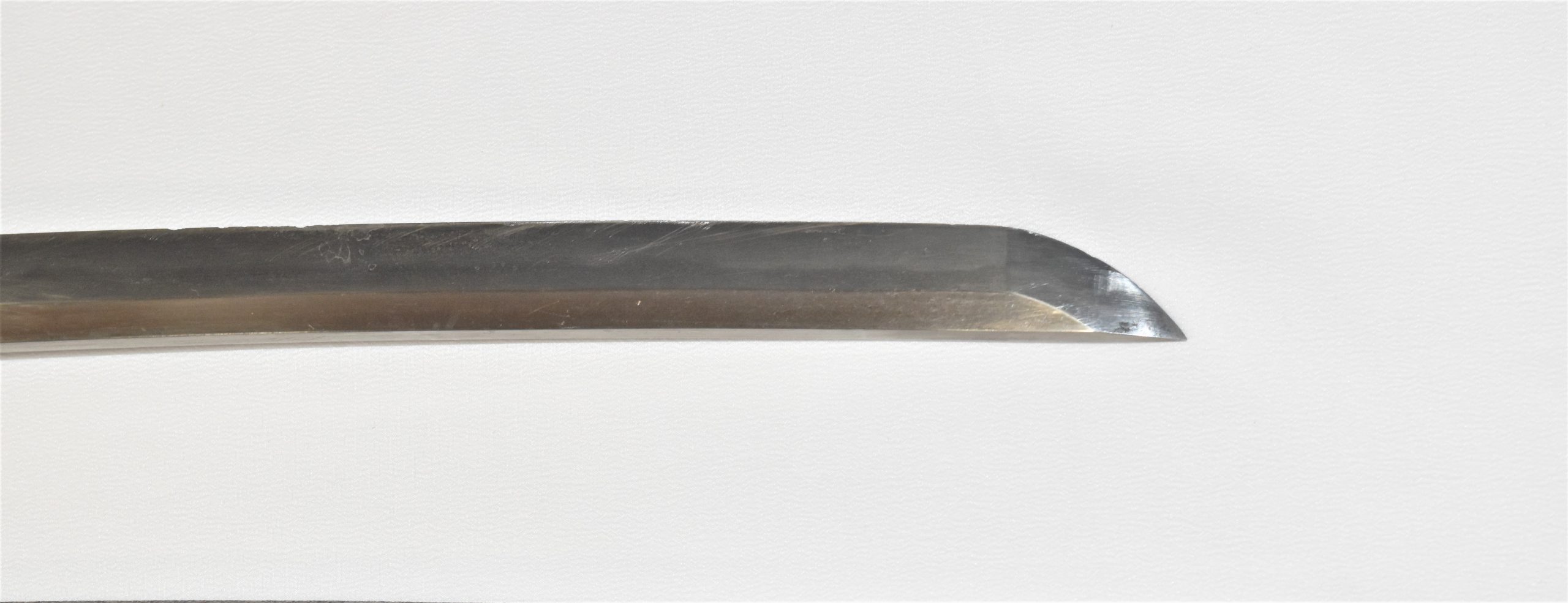
This is a katana made by Isobe Ikkan-sai Mitsuhiro (born 1915), a swordsmith from Hamamatsu City, Shizuoka Prefecture. The reverse inscription indicates it was made in November 1981. The blade has a solid weight and shows some chips on the monouchi area from use in tameshigiri (test cutting). It comes with a koshirae (mounting) featuring a red-brown leather tsukamaki and black brush-lacquered saya, though the tsuka is noted as being a bit short.
 NihontoWatch
mei · Showa (1926-1989) · nagasa 70.4cm · sori 1.8cm

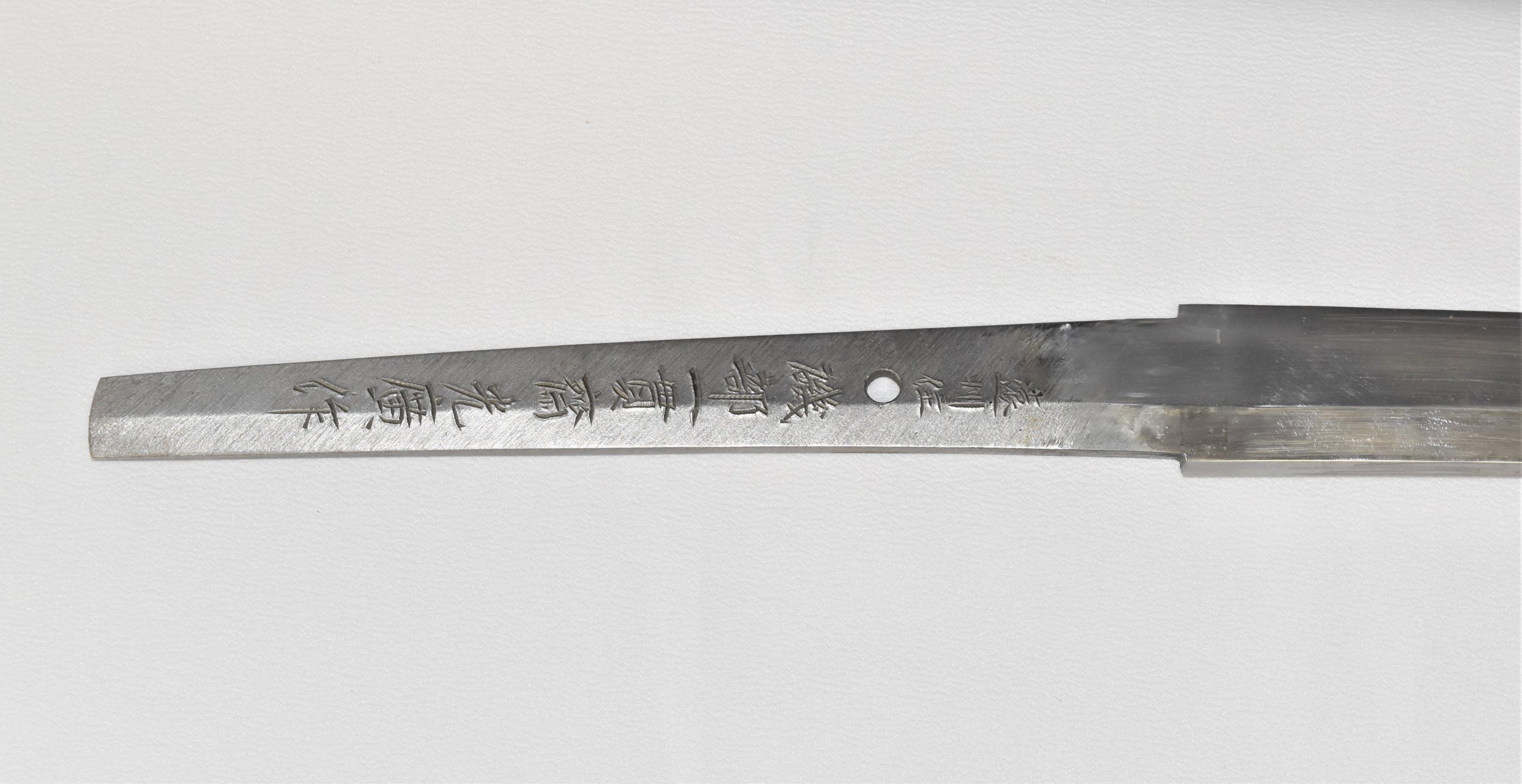
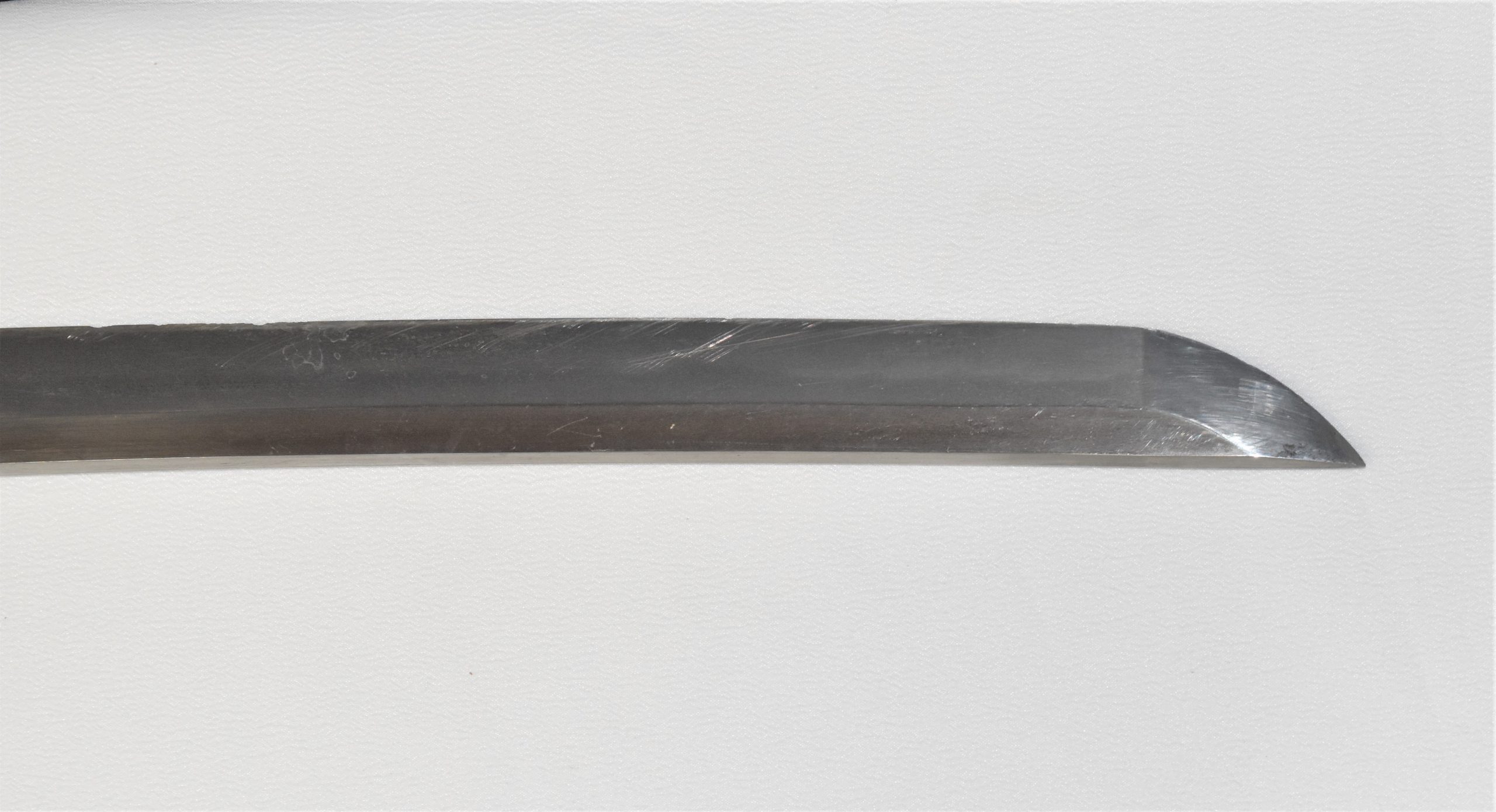

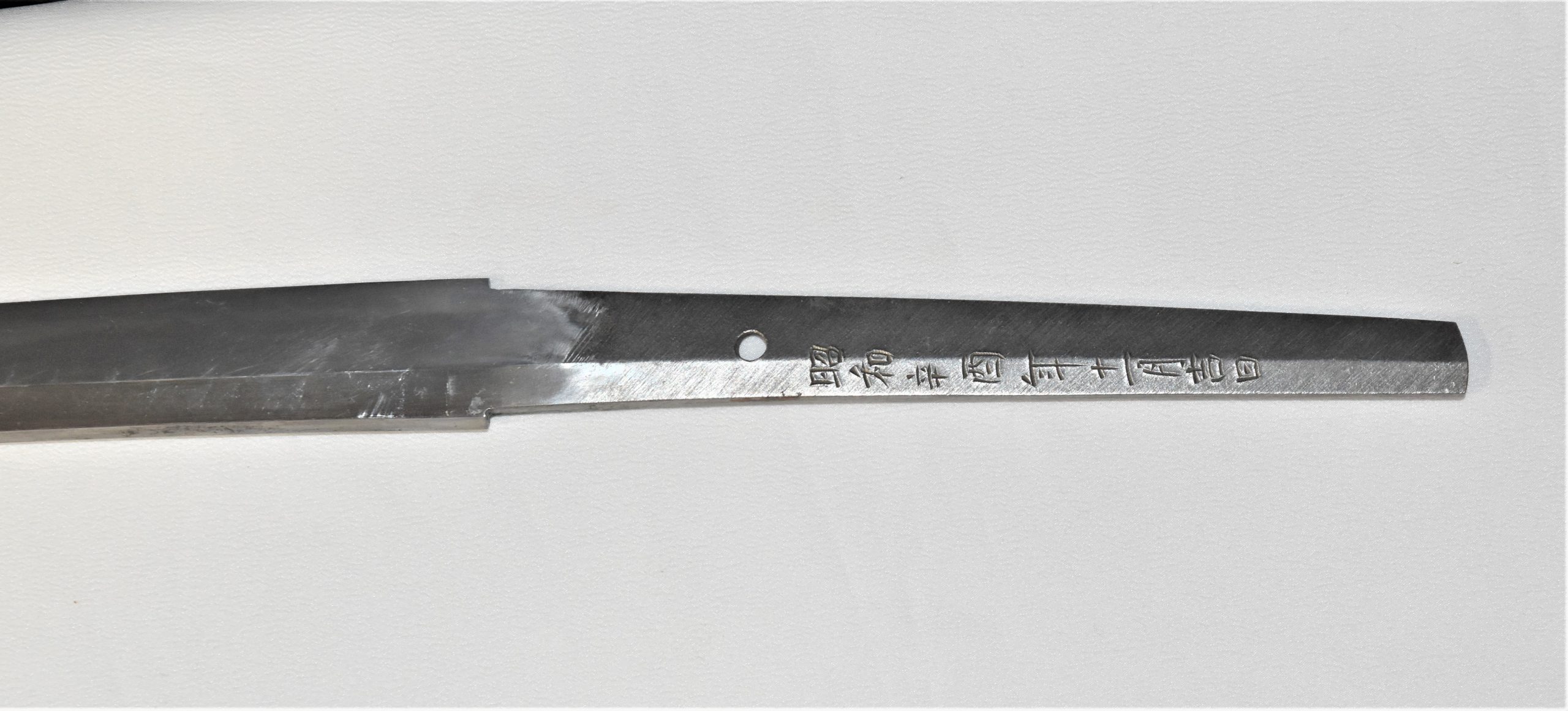
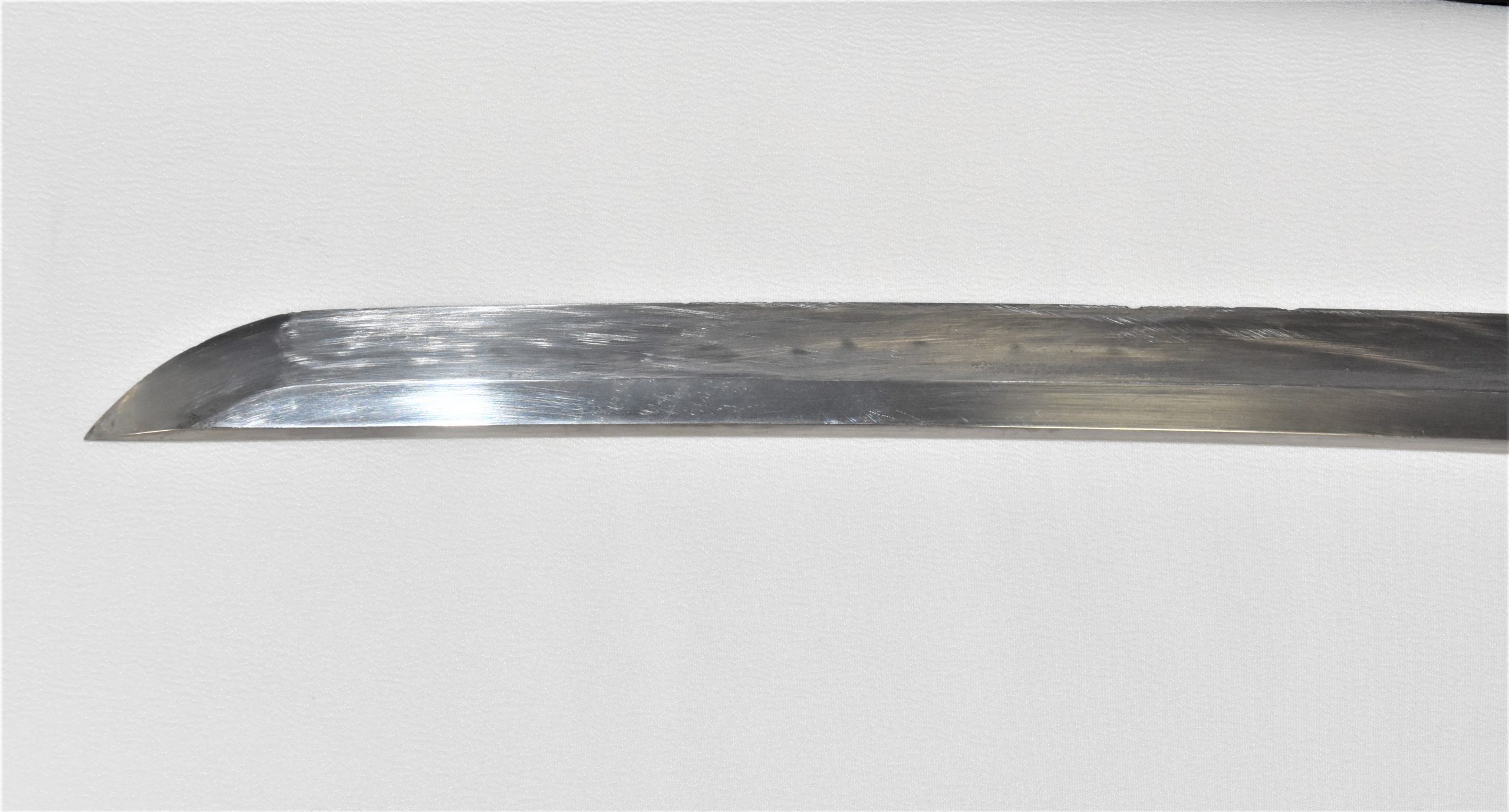
Shizuoka · around 1926-1989
4 pieces on the market now
Shōwa to the present: destruction and revival
The twentieth century nearly killed the craft twice: wartime distortion, then the occupation ban. The NBTHK’s founding in 1948 and licensed forging from 1953 rebuilt the sword as an art, crowned by Living National Treasures and the mukansa rank.
We could not find an authenticity certificate on the seller’s listing. Japanese swords and fittings are normally papered by the NBTHK (or the NTHK). Without one, the attribution is the seller’s own assessment and has not been independently verified — treat it with caution and ask the dealer about certification before buying.
¥350,000
This is a katana made by Isobe Ikkan-sai Mitsuhiro (born 1915), a swordsmith from Hamamatsu City, Shizuoka Prefecture. The reverse inscription indicates it was made in November 1981. The blade has a solid weight and shows some chips on the monouchi area from use in tameshigiri (test cutting). It comes with a koshirae (mounting) featuring a red-brown leather tsukamaki and black brush-lacquered saya, though the tsuka is noted as being a bit short.
NihontoWatchmei · Showa (1926-1989) · nagasa 70.4cm · sori 1.8cm
Shizuoka · around 1926-1989
4 pieces on the market now
Shōwa to the present: destruction and revival
The twentieth century nearly killed the craft twice: wartime distortion, then the occupation ban. The NBTHK’s founding in 1948 and licensed forging from 1953 rebuilt the sword as an art, crowned by Living National Treasures and the mukansa rank.
We could not find an authenticity certificate on the seller’s listing. Japanese swords and fittings are normally papered by the NBTHK (or the NTHK). Without one, the attribution is the seller’s own assessment and has not been independently verified — treat it with caution and ask the dealer about certification before buying.
¥350,000


