The twentieth century nearly killed the craft twice: wartime distortion, then the occupation ban. The NBTHK’s founding in 1948 and licensed forging from 1953 rebuilt the sword as an art, crowned by Living National Treasures and the mukansa rank.
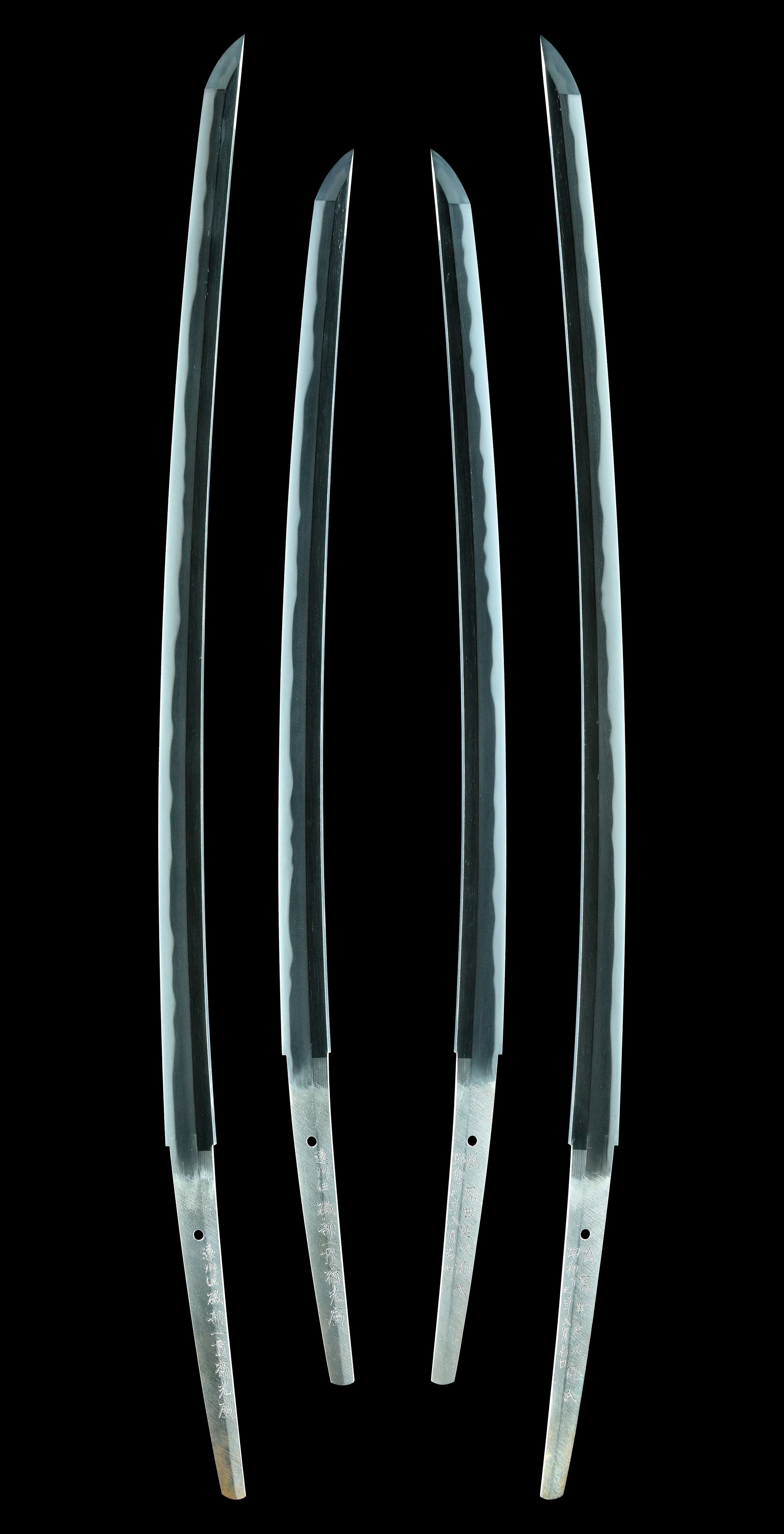
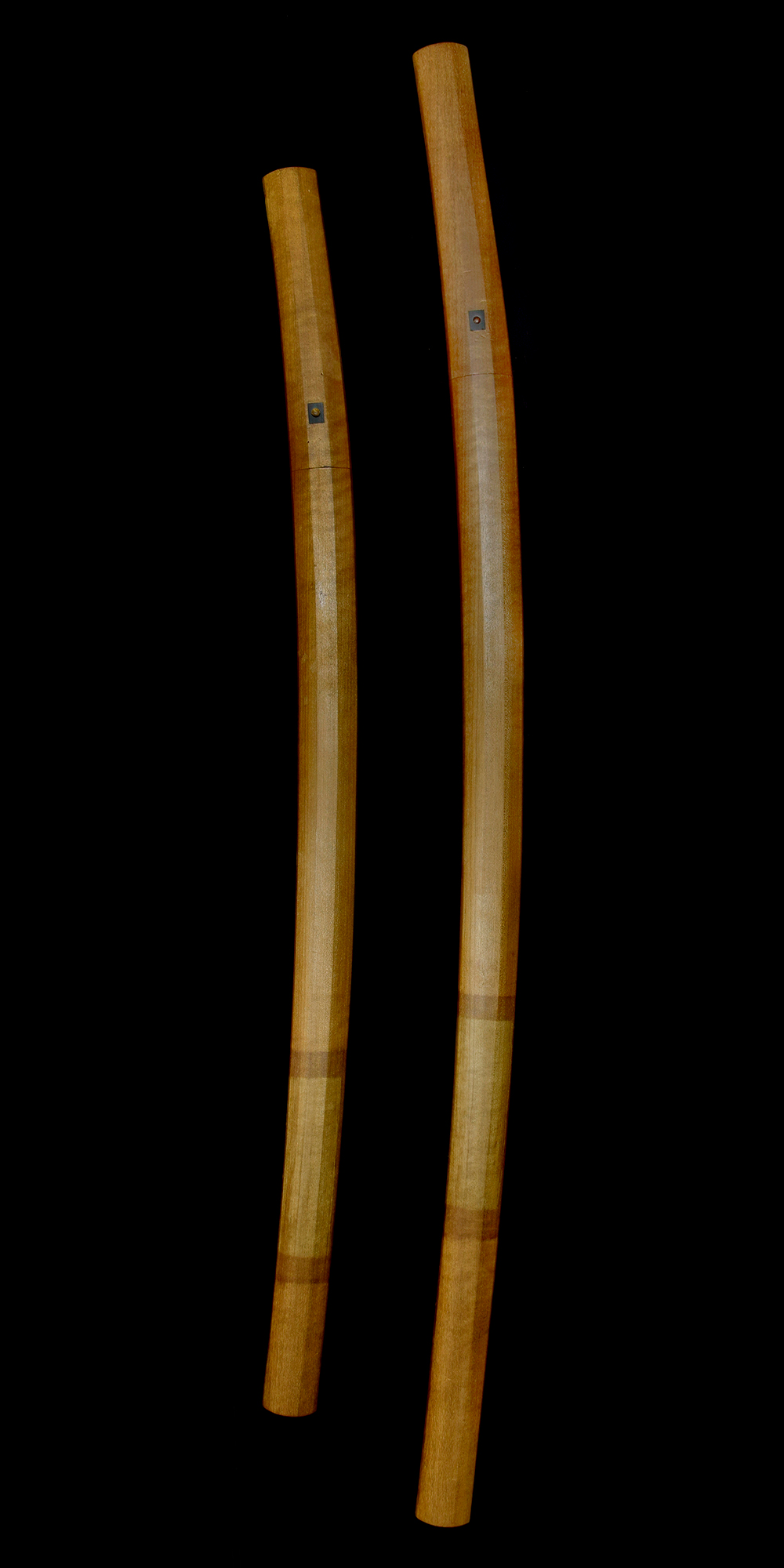
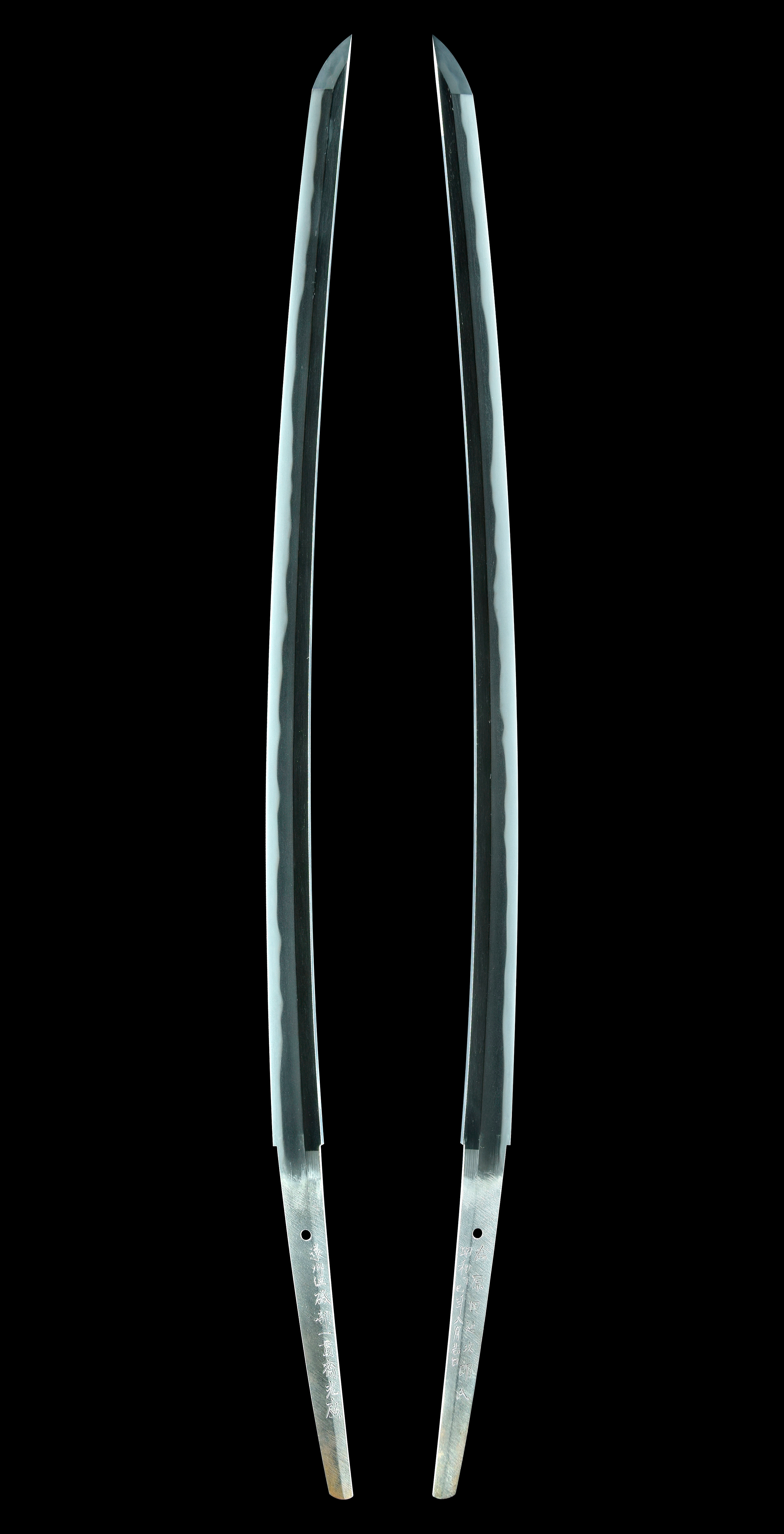
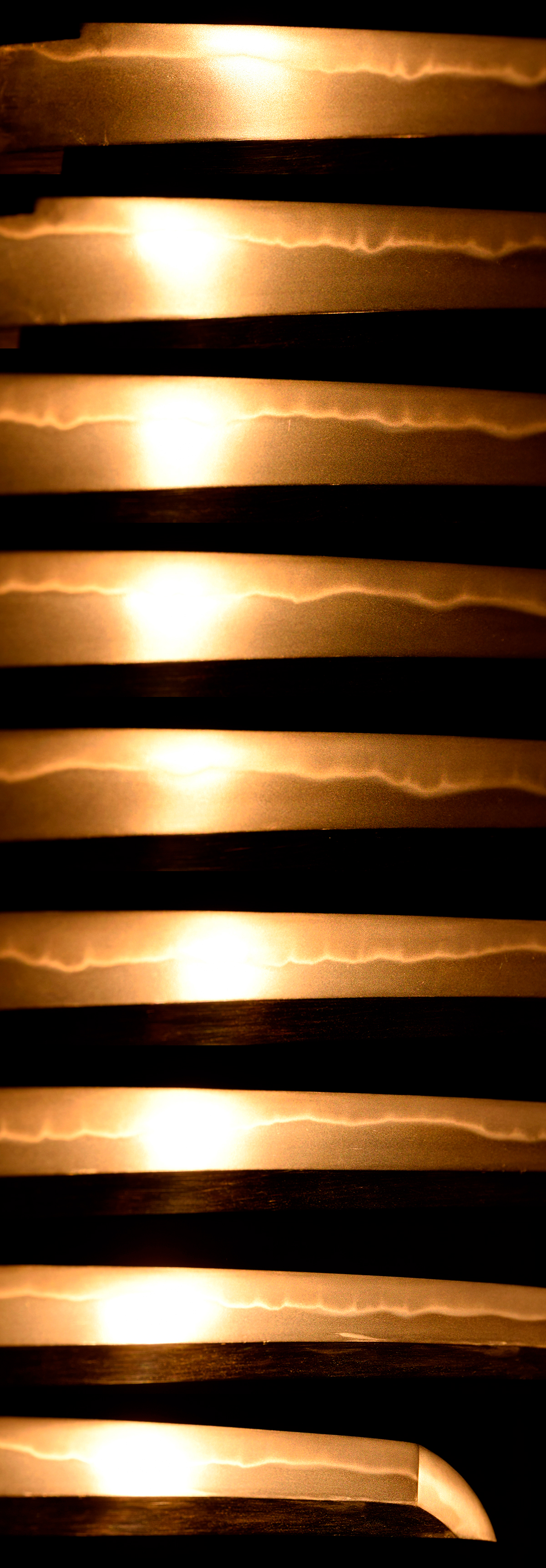
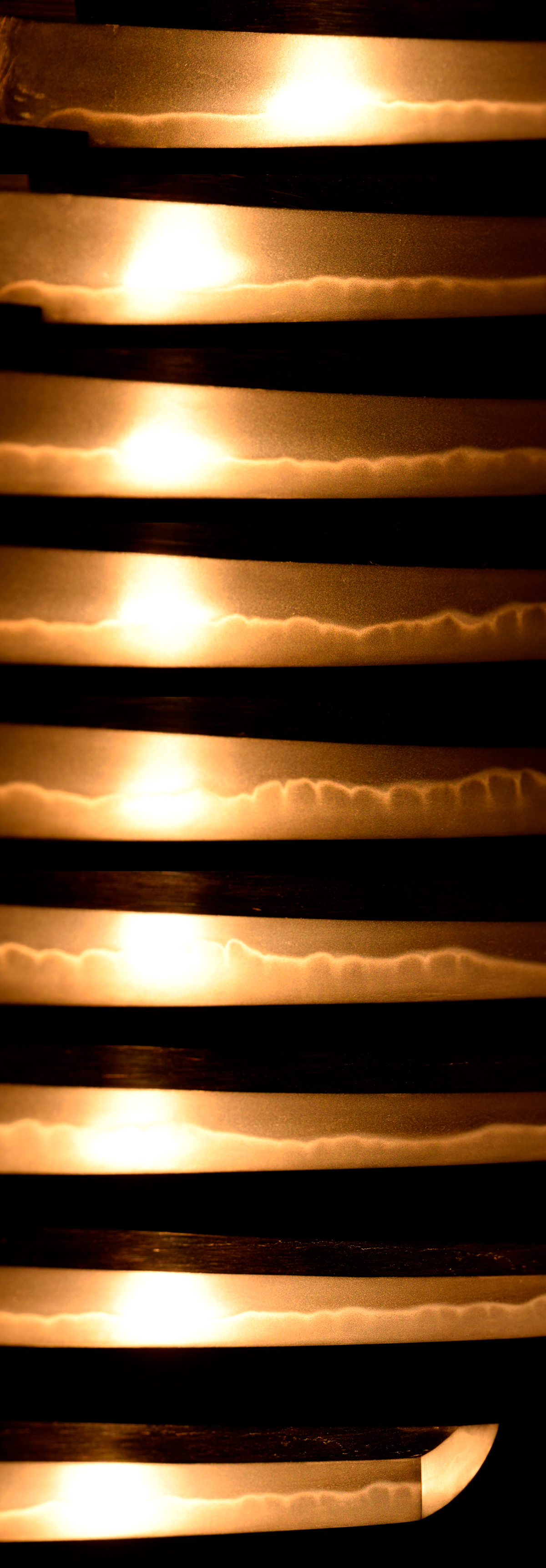
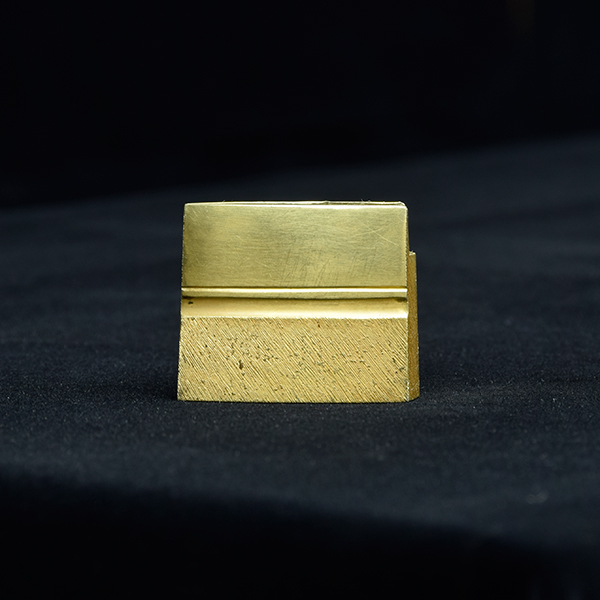
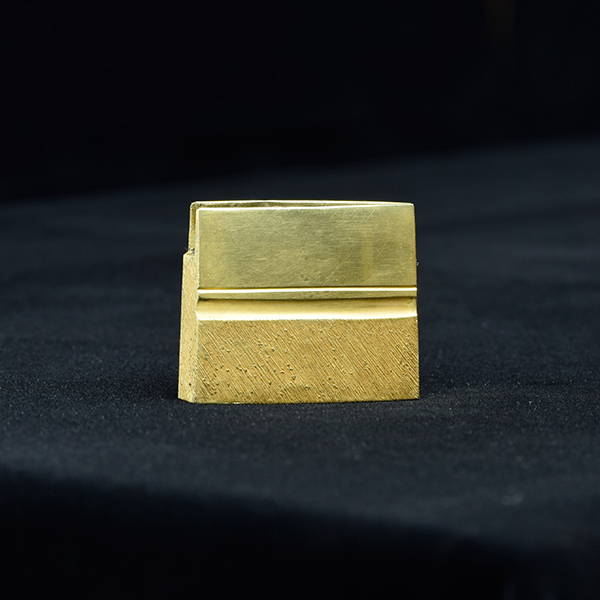
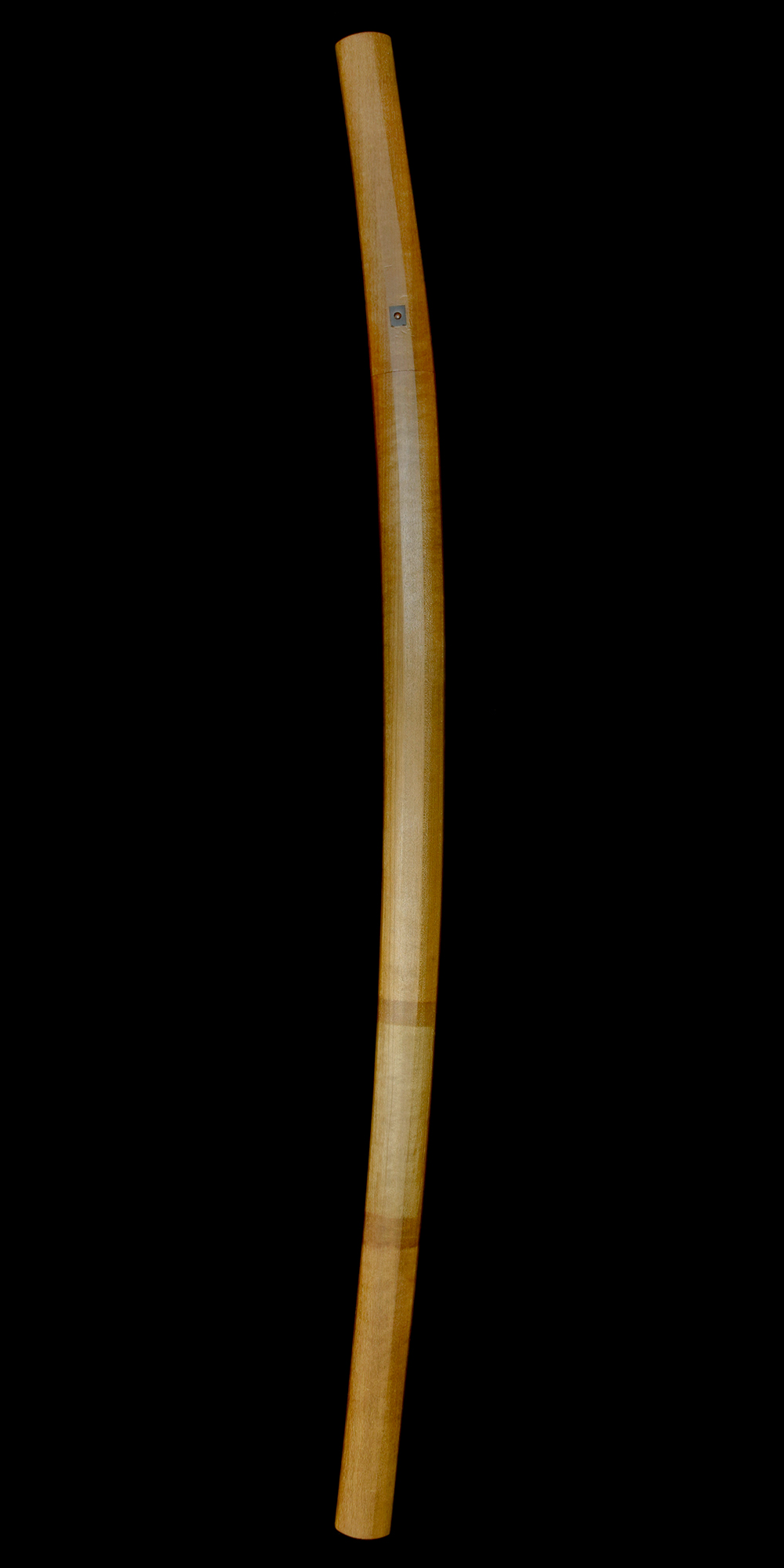
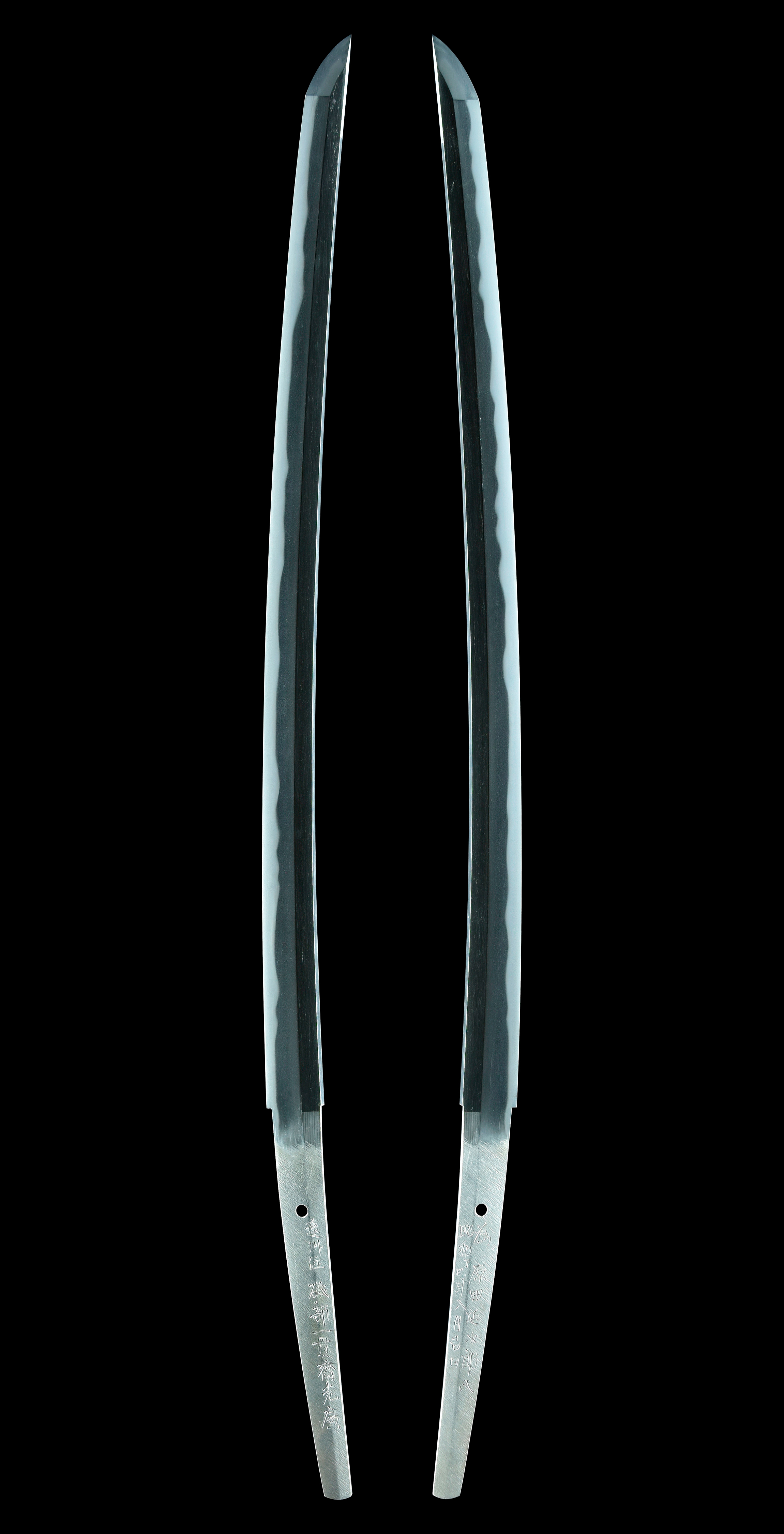
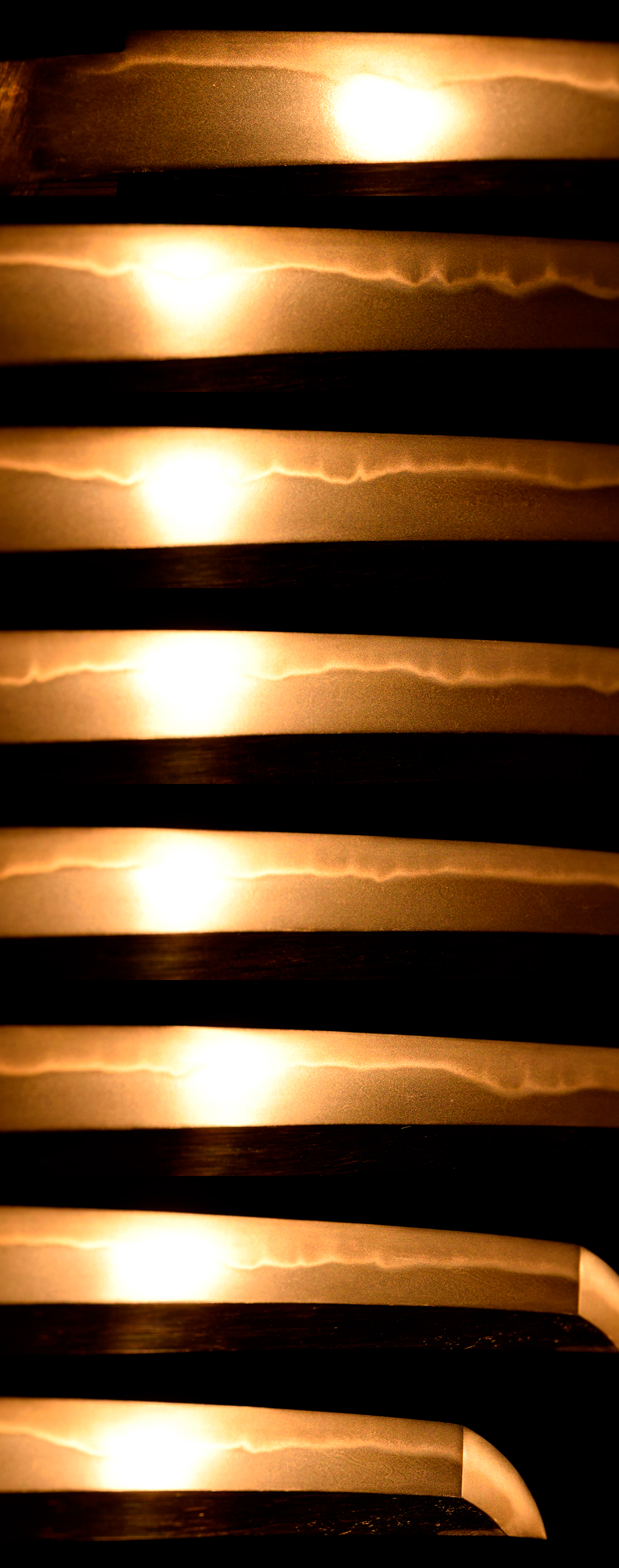
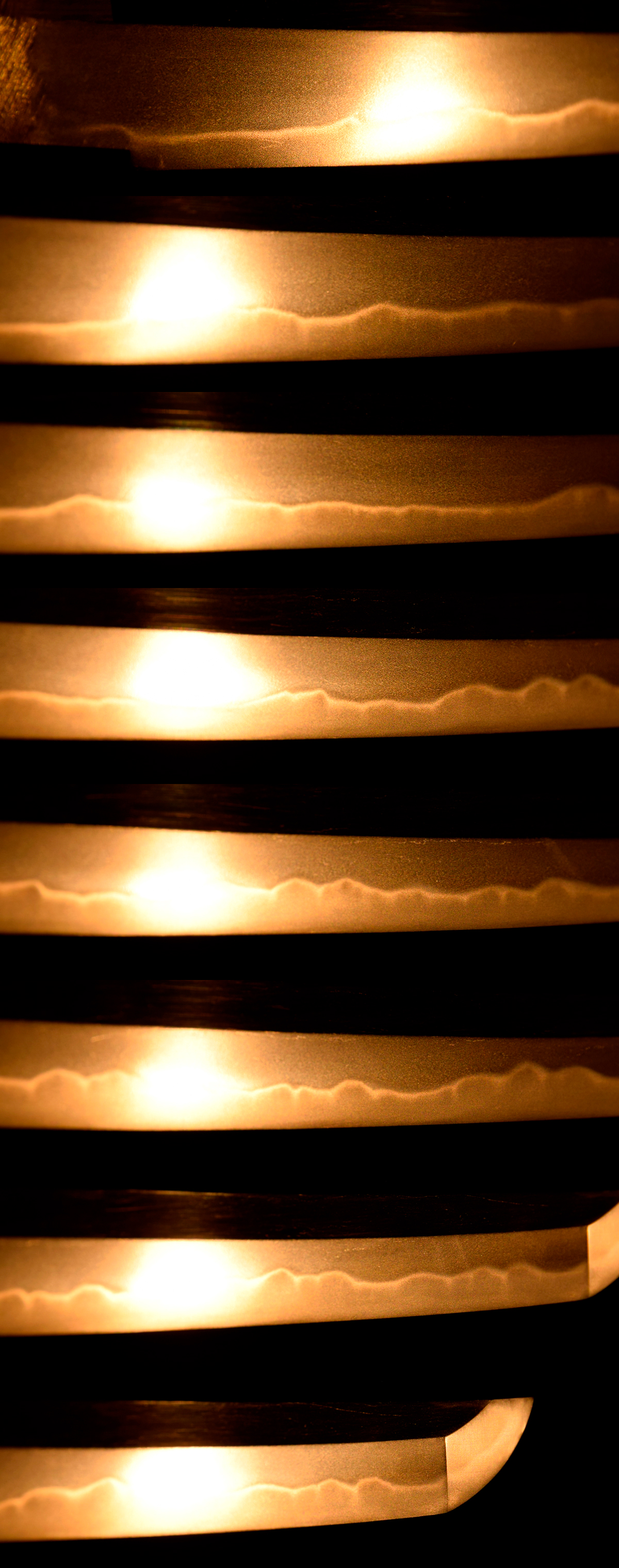
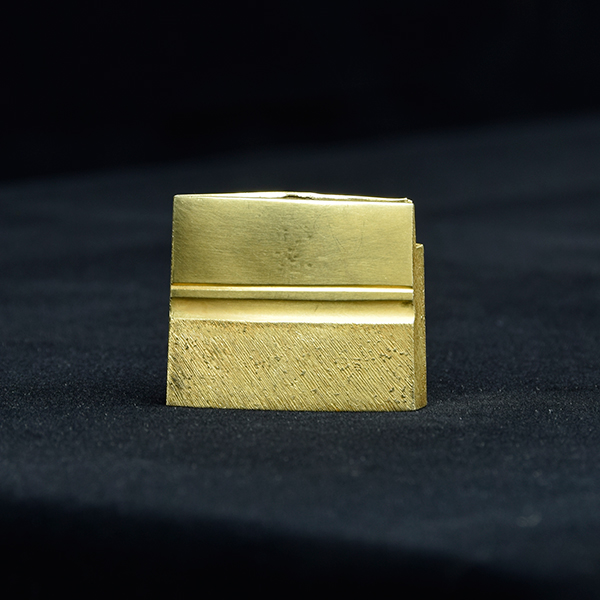
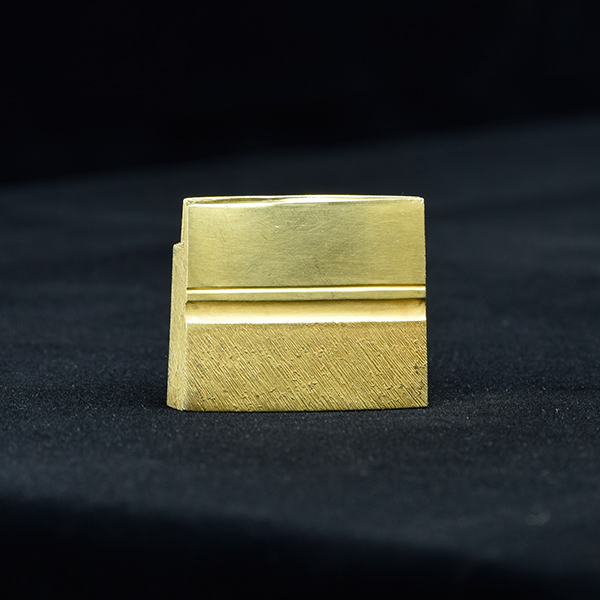
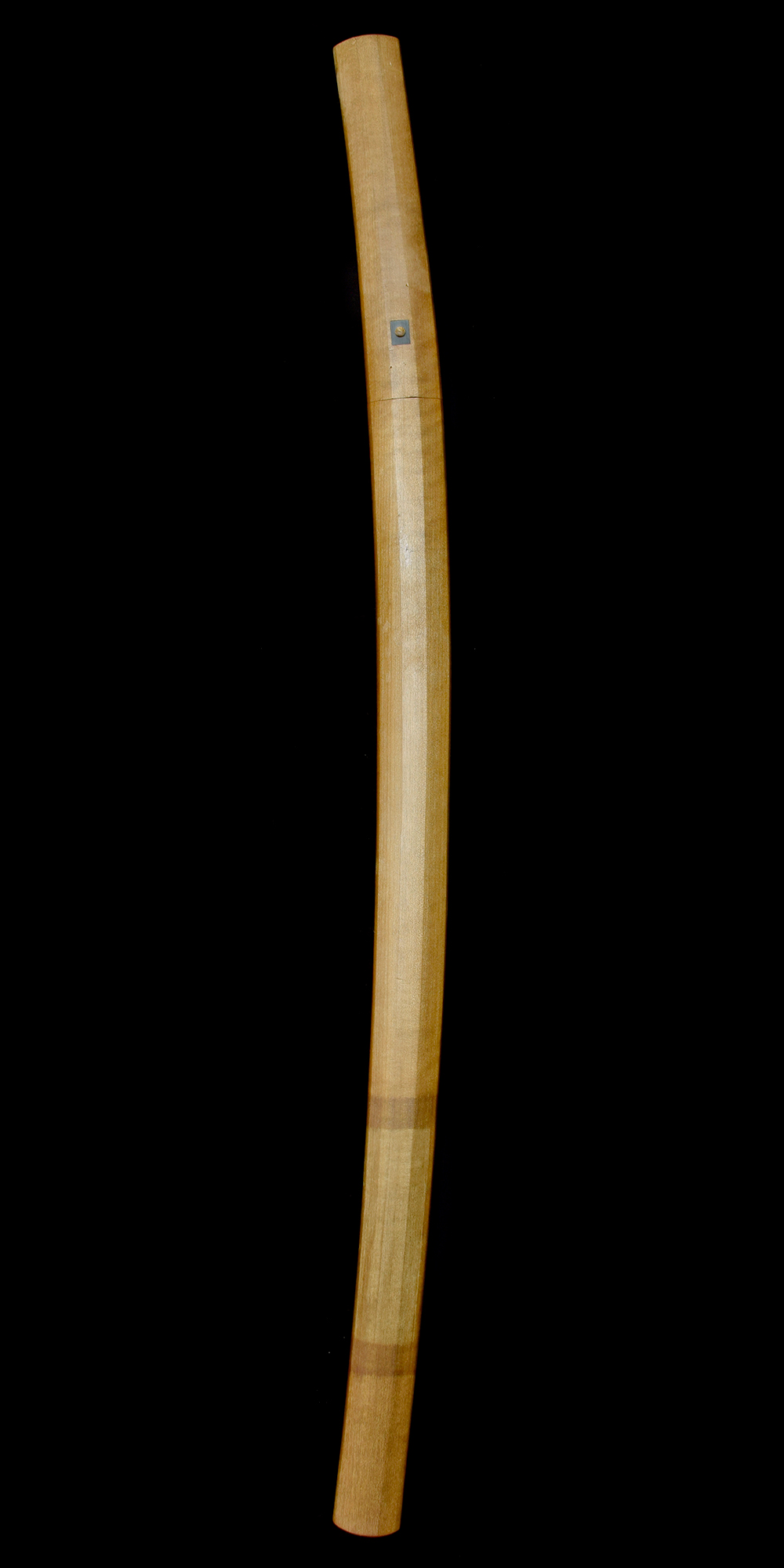
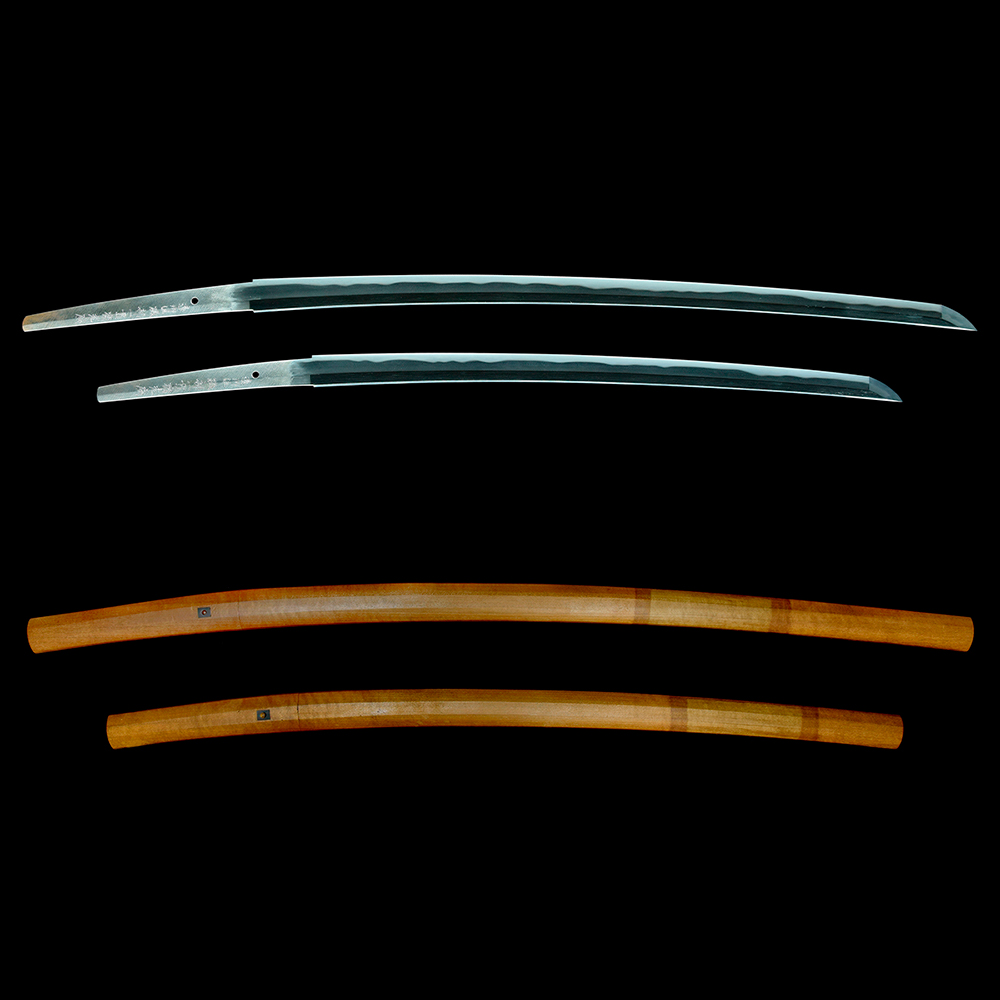
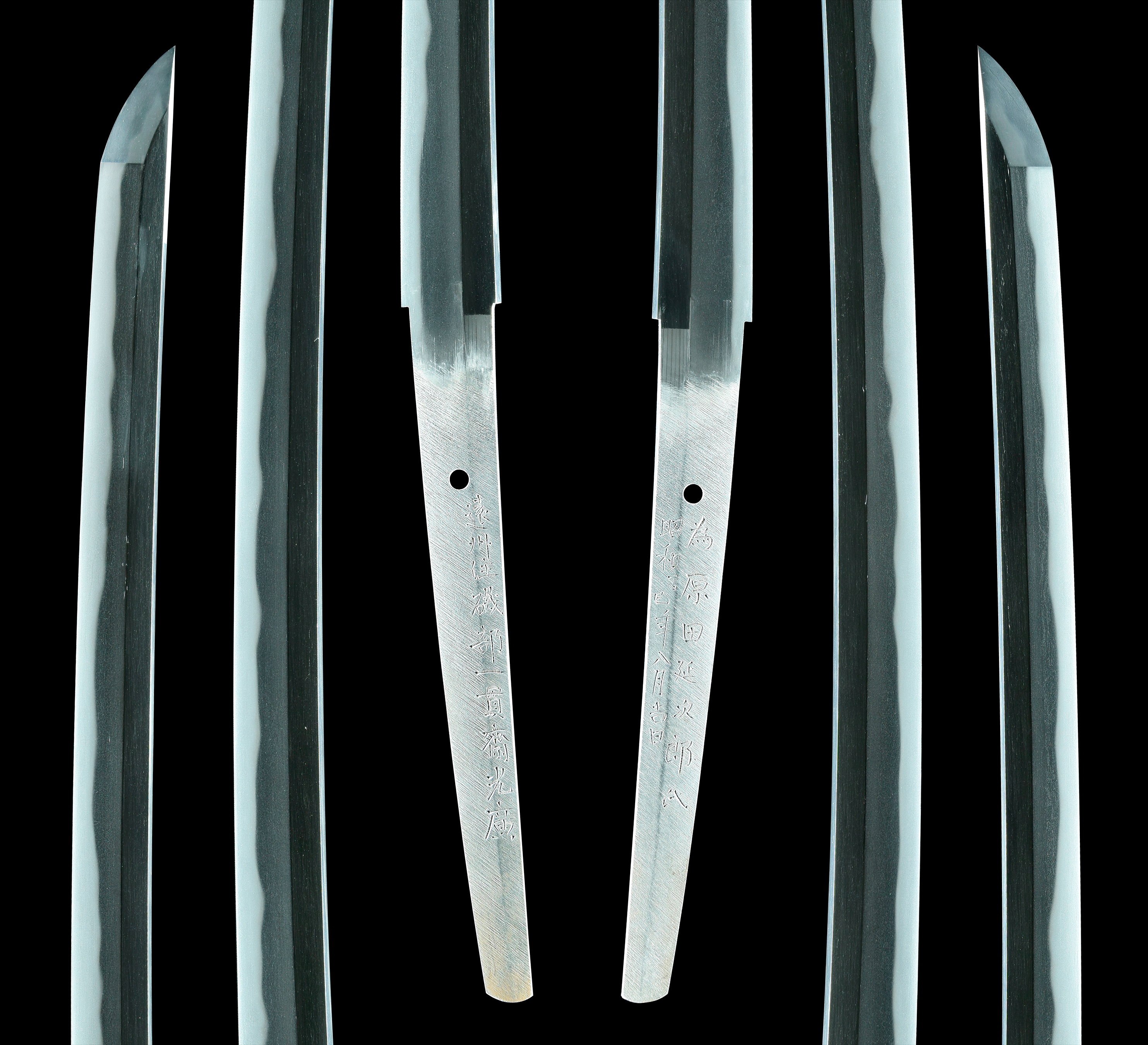
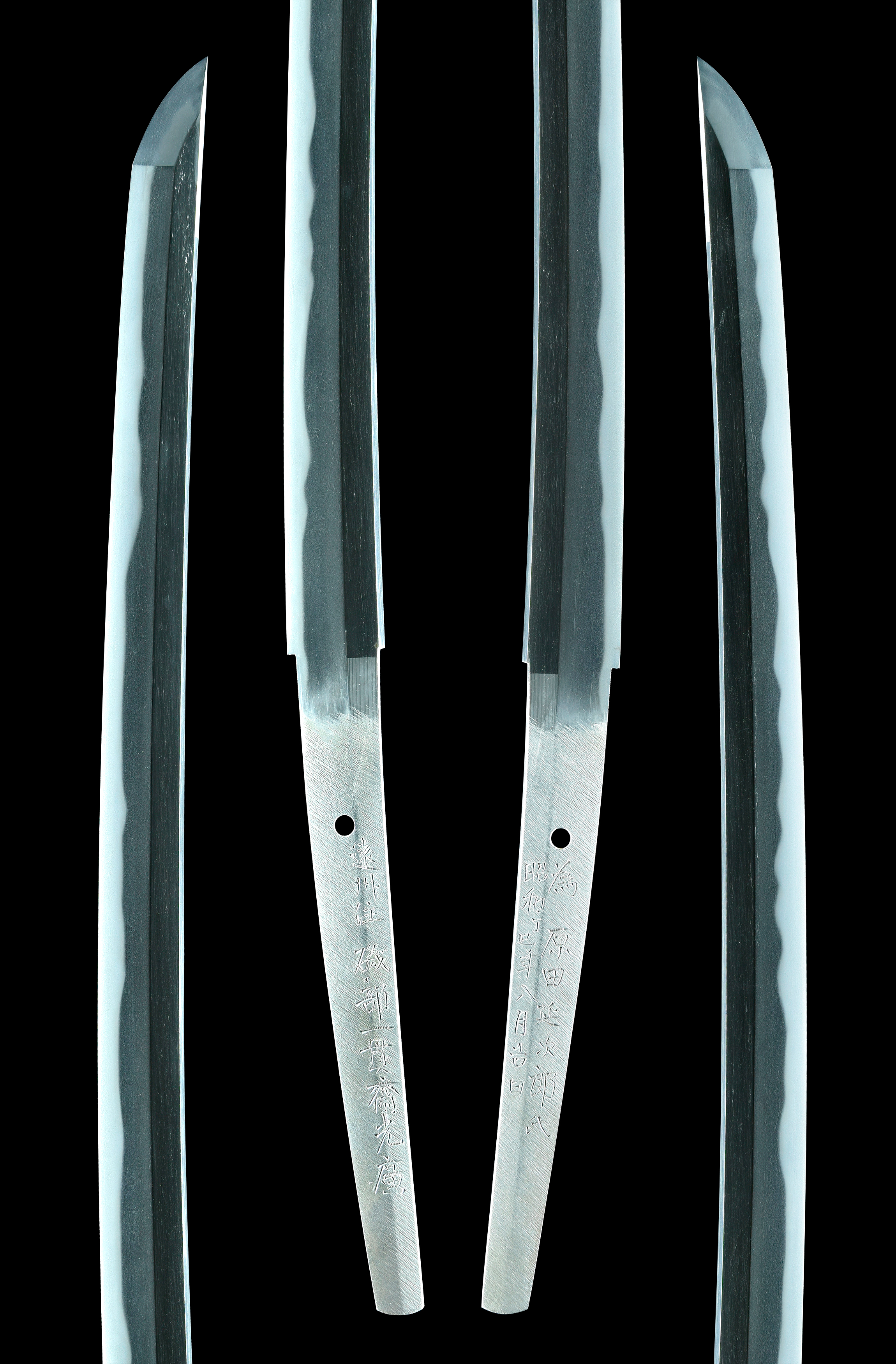
Motohaba 33.1 31.7 mm Motokasane 7.2 7.1 mm Isobe Mitsuhiro, born Taisho 4 September 10. A student of Miyaguchi Ikkansai Toshihiro, he succeeded to the Ikkansai name following Miyaguchi Ikkansai Tsunehiro, and was granted the character "Hiro" by his master Toshihiro. A member of the All Japan Swordsmith Association, he received the Doryoku-sho in Showa 35. He is a swordsmith who continued to energetically submit works to competitions thereafter and has extensive experience winning prizes. Katana: Ko-itame hada well-kneaded and tight, slightly hadatachi, with jinie and chikei. The hamon is a bright and clear gunome midare tempered with a basis of konie, and ashi enter well. Wakizashi: Ko-itame hada well-kneaded and tight, slightly hadatachi, with jinie and chikei. The hamon is a bright and clear gunome midare tempered with a basis of konie, and ashi enter well. A work by Mitsuhiro finished with the same jigane and the same yakiba for both the long and short swords. A special custom order by a person named Harada Nobujiro, it was finished at considerable expense. Naturally, a high-grade polish for art appreciation has been applied, making this a masterpiece where both the ji and ha can be clearly observed. Although some deterioration of the polish due to age, such as sayazure, can be seen in parts, there is no need to intentionally perform work on it and you can enjoy it as it is; however, for those who are concerned, we can undertake partial polishing, so please feel free to consult us. *Partial polishing is for a fee.
Offered by Toushin
4 on the market


As written by the shop
Machine translation from the shop's Japanese · may contain errors ·
Shizuoka · around 1926-1989
4 pieces on the market now
Shōwa to the present: destruction and revival
The twentieth century nearly killed the craft twice: wartime distortion, then the occupation ban. The NBTHK’s founding in 1948 and licensed forging from 1953 rebuilt the sword as an art, crowned by Living National Treasures and the mukansa rank.
We could not find an authenticity certificate on the seller’s listing. Japanese swords and fittings are normally papered by the NBTHK (or the NTHK). Without one, the attribution is the seller’s own assessment and has not been independently verified — treat it with caution and ask the dealer about certification before buying.
As a rule we do not accept returns, except when we have sent a different item from the one ordered or when there is a significant discrepancy between the description and the item. If you wish to return an item, please contact us within 3 days of its arrival and then send it back.
¥836,000