Sengoku Seki was an industry: smiths organized under their tutelary Kasuga shrine, arming the war bands of central Japan. Magoroku Kanemoto’s sanbonsugi and the finest Kanesada work prove quality survived inside mass production.
 NihontoWatchNihontoWatch
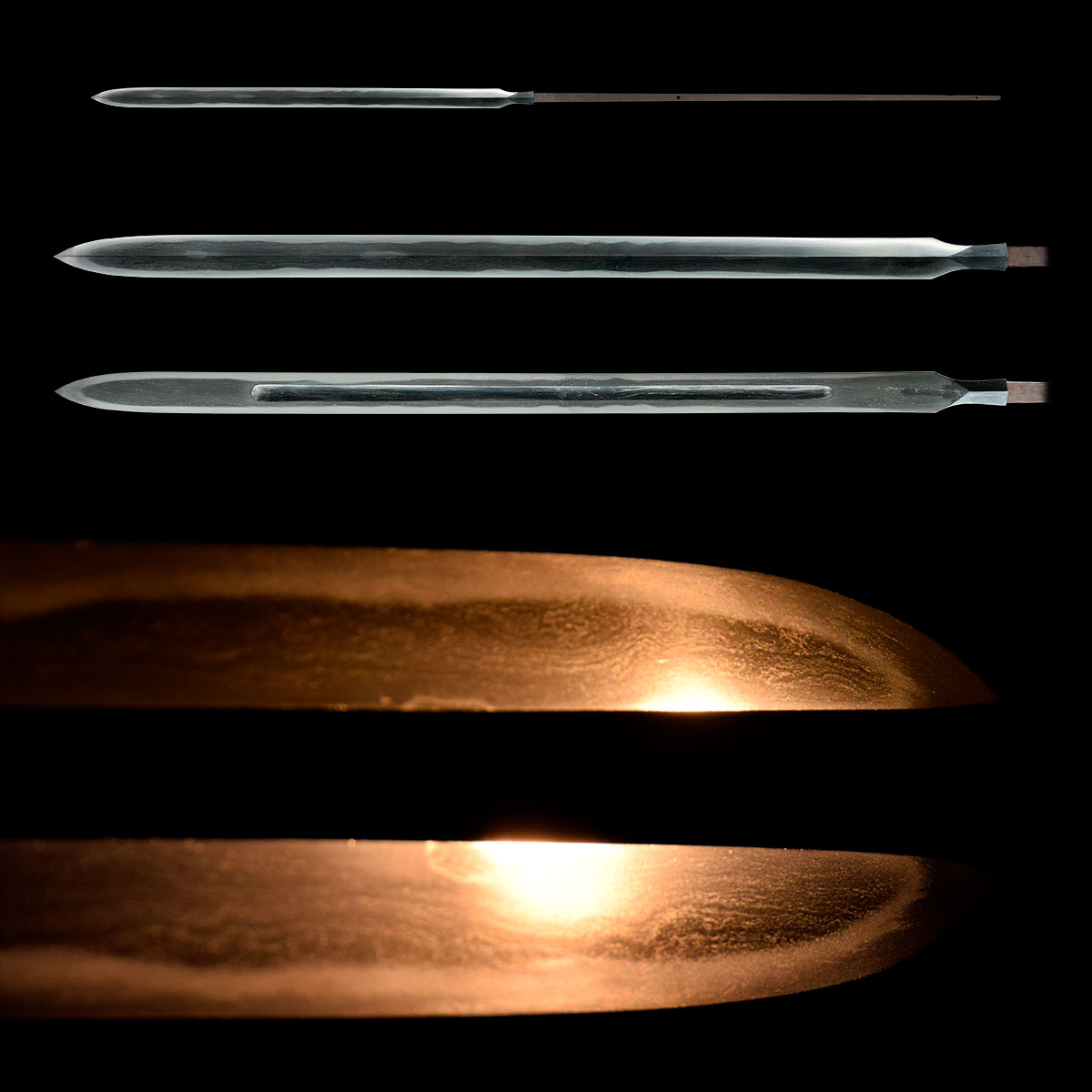
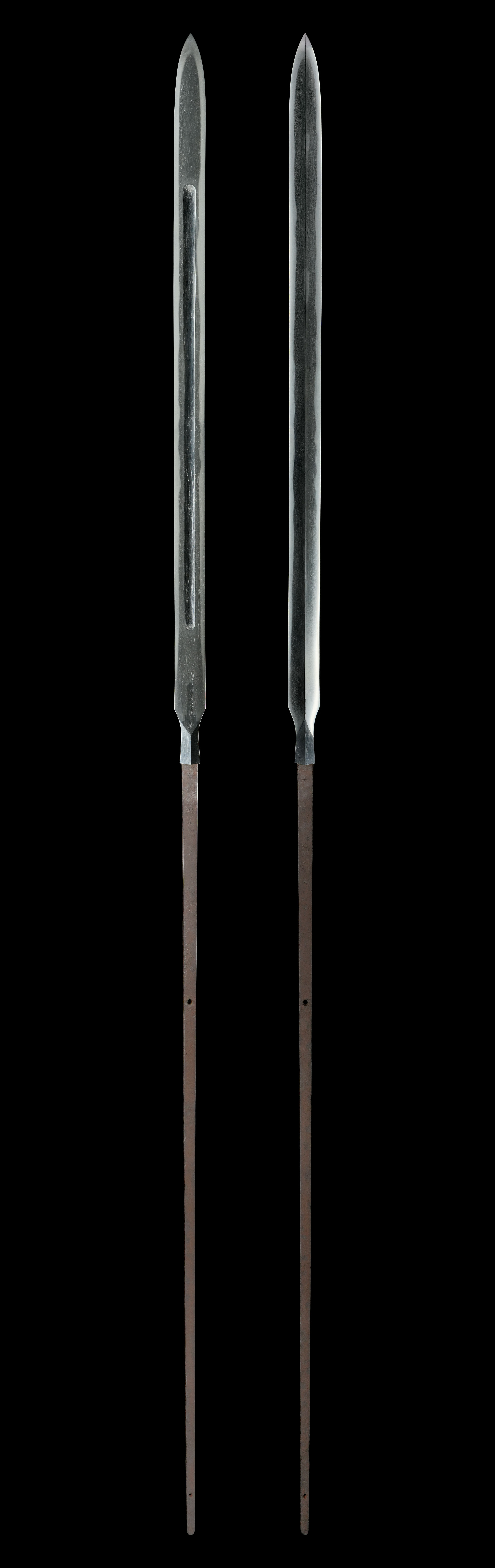
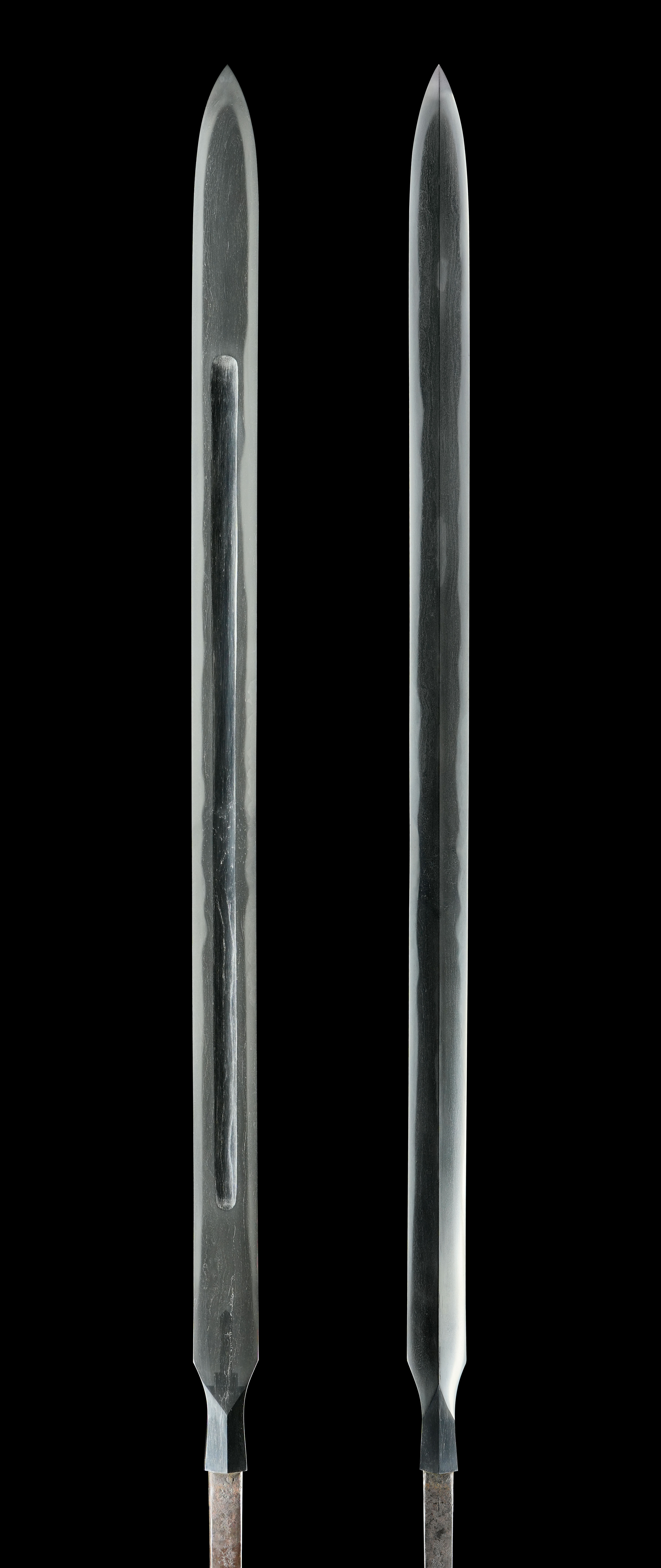
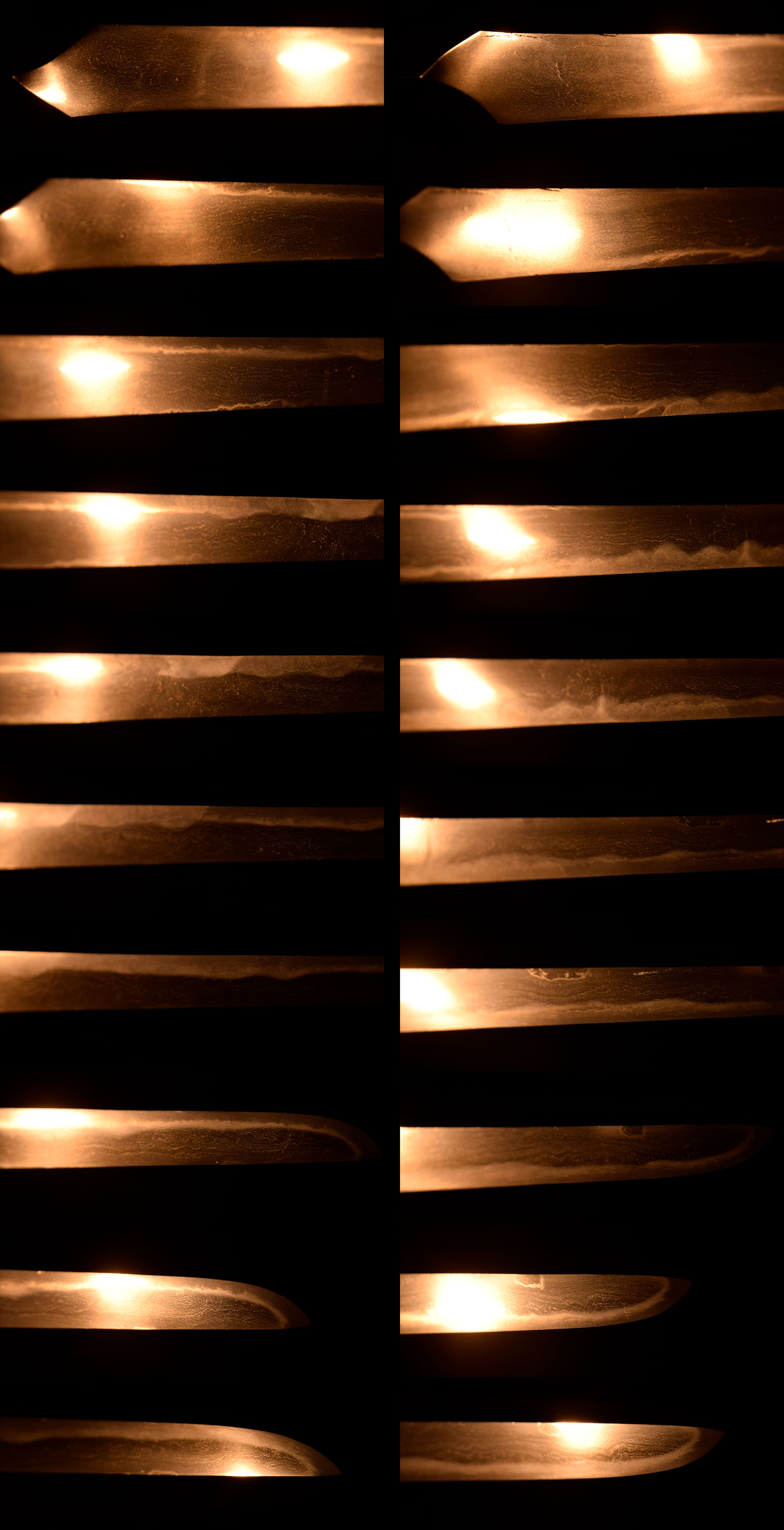
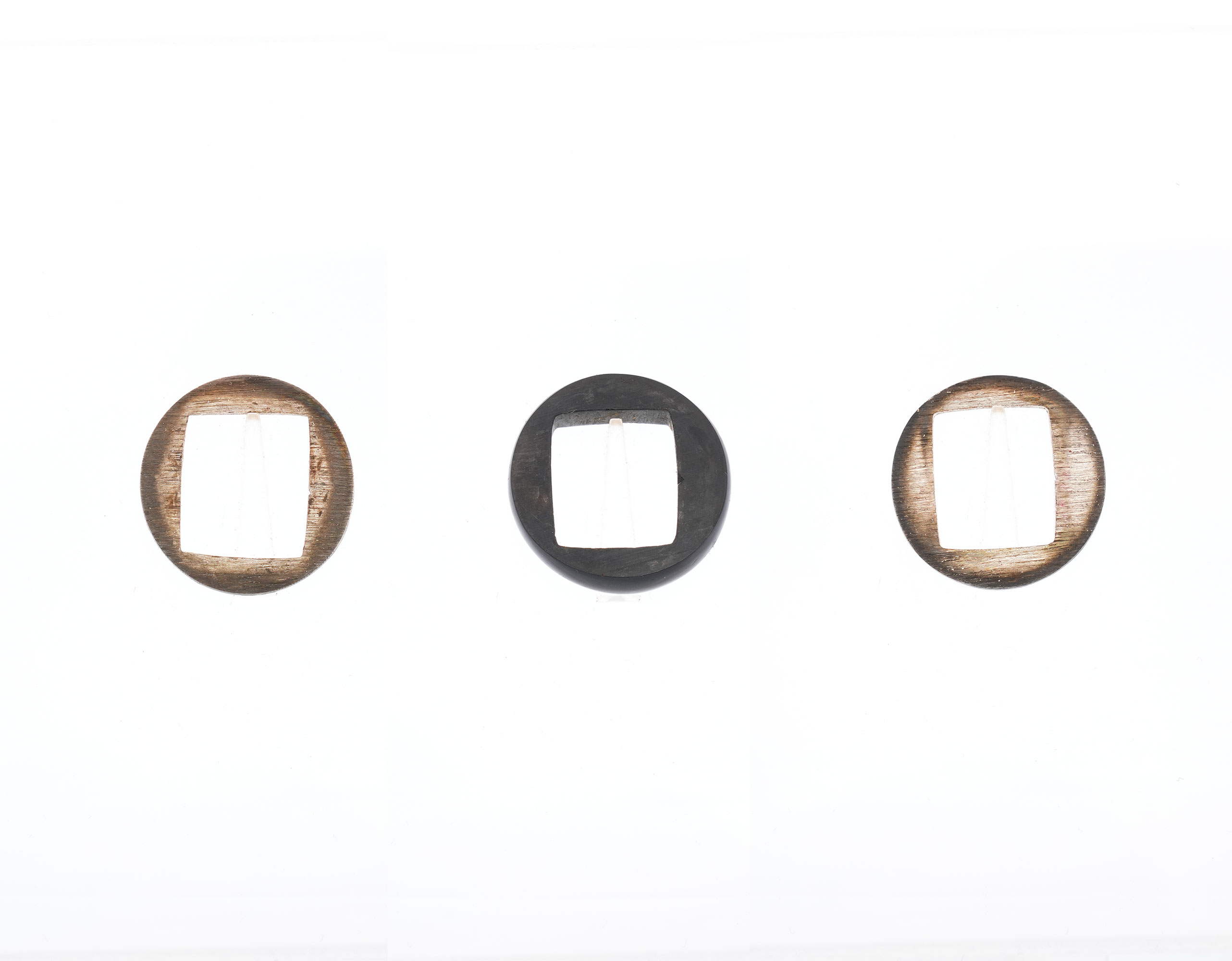
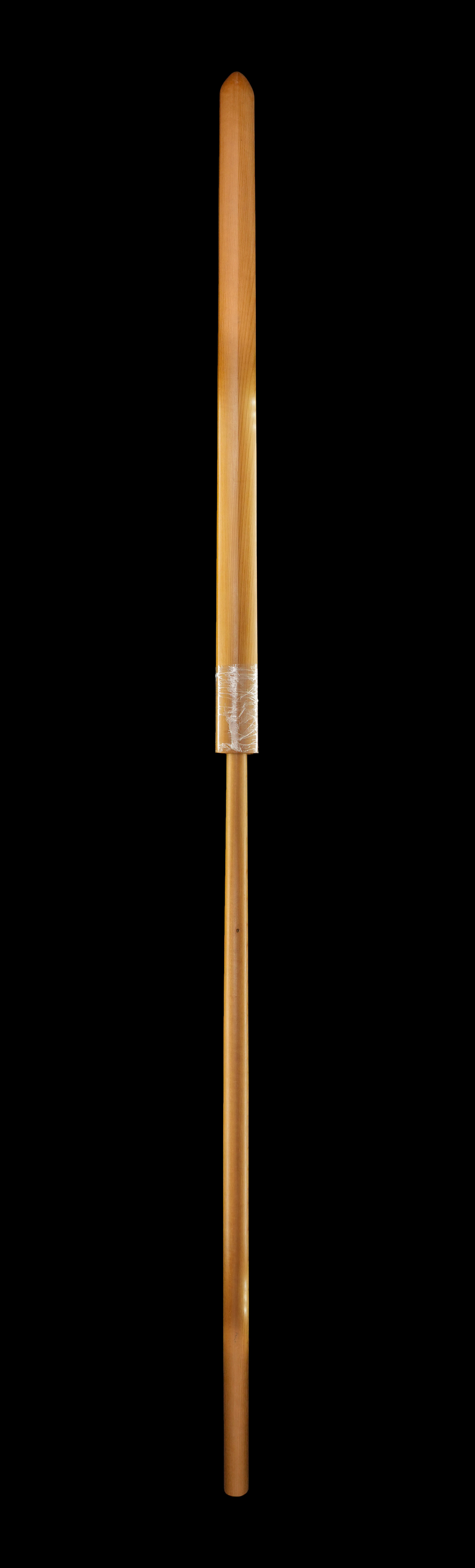
刃長74.55センチ 元幅31.9ミリ 元重ね13.3ミリ 物打幅32.6ミリ 物打重ね9.85ミリ 螻蛄首六角形 螻蛄首元幅20.2ミリ 螻蛄首元重ね19.75ミリ 螻蛄首端から刃区までの長さ5.4ミリ 茎の長さ75.15センチ 裸身重量1,362グラム 室町中期~後期 The middle ~ latter period of Muromachi era 昭和59年9月6日 福井県登録 附属 白鞘、銀切羽、角製鐔 兼則は直江志津兼友の子と伝えられ、法名を三阿弥と称す鍛冶で、南北朝末期から應永頃にかけて活躍したと考えられます。その後も同銘が続き、いずれも巧手として名高い名工です。 本槍は平三角造で、平面には力強い大樋を両端丸留に掻き、刃長二尺四寸六分と長大な姿が印象的です。地鉄は柾気が強く杢が交じり、地沸が豊かに付いて肌立ち、地景も鮮明に現れるなど、迫力と深みを兼ね備えた鉄味を呈しています。刃文は匂口明るい直刃調で、刃縁には食い違い風の刃を交え、小足が盛んに入るなど、働き多く見どころに富んだ出来口です。刃縁の沸が地に溢れて煙み込む箇所もあり、雄渾な表情が印象に残ります。銘の上に『十』と切られているのは、当時の武具管理番号でありましょう。 また、本槍の大きな特徴は、一度に鍛え上げたものではなく、上方と下方を別々に鍛え、最終的に一本として継いで仕上げられている点にあります。そのため地鉄の流れが微妙に異なる箇所が見られ、戦国期の大身槍の製作技法を如実に物語っています。 実用武具でありながら資料的価値も極めて高く、歴史的背景を楽しめる逸品であり、壮大な姿と威厳ある出来映えを誇る、兼則の技と戦国武具の醍醐味を味わえる一筋で、鑑賞価値・資料価値ともに申し分ない作品です。
NihontoWatchOffered by Toushin
This piece has sold
13 on the market
Get an email when new Naoe Shizu School work hits the market.


Mino-den · Mino
13 pieces on the market now
Within the province of Mino, in the decades of the Nanbokucho period, a body of smiths gathered at Naoe carrying forward the manner of Shizu Saburo Kaneuji, and from that locality they took the name Naoe Shizu. Kaneuji, originally a member of the Yamato Tegai group who studied under Masamune of Sagami and is counted among the Ten Disciples of Masamune (Masamune jittetsu), settled first at Shizu in Mino and established a flourishing school. His pupils and successors, among them Kanetomo, Kanetsugu, Kaneshige, and Kanenobu, relocated within the province to Naoe and forged there, and the smiths of that group are collectively termed Naoe Shizu to distinguish them from Shizu proper, which signifies Kaneuji himself. The lineage is in essence the second generation of the Shizu line, the Soshu-den of Masamune received through Kaneuji and translated into the steel and temper of Mino; the name ran on across several generations into the Muromachi, so that the reference works list more than one Kanetomo, around the Oan era and again around Oei, while the core Nanbokucho production falls in the Kanno, Enbun, Joji, and Oan years of the middle fourteenth century, anchored by the few signed and dated pieces such as a Kanno-dated wakizashi by Kanetsugu. The shared vocabulary of the school is the Shizu manner rendered in Mino. The forging is itame mixed with mokume and nagare-hada, frequently flowing toward masame and standing at times into hada-dachi, over which thick ji-nie settles and chikei enter well, the dark grain-lines threading a steel that is clear and legible; the midare-utsuri a Bizen smith would carry is absent, the ji speaking instead through the depth of its nie. The hamon is a Soshu-den notare crossed with the pointed togariba of Mino-den, gunome and ko-notare tempered in nie or ko-nie, often showing a saka-tendency, with ashi and yo entering and uchi-noke, yubashiri, and tobiyaki along the habuchi; through the temper run sunagashi and kinsuji in profusion, the streaming nie-lines and bright lightning-lines that are the school's surest sign, the nioiguchi deep and brightening at the best examples into something clear and lucid. The boshi answers the ha in midare-komi or notare-komi, turning in a ko-maru or sweeping into yakizume, the point frequently brushed with hakikake.
Within this common ground the hands separate. Kanetomo is read by the linking of round-headed gunome in sequence, calm and elegant in the ko-nie-deki the sources hold him most proficient in; Kanetsugu inclines toward the saka-slanted gunome and togariba with a more powerful, compelling dekiguchi; Tametsugu, a Norishige hand resettled inland rather than a direct Naoe smith, carries a larger, more billowing notare-midare over a steel that darkens, a manner the commentary holds to differ from Shizu and Kaneshige. Set against Kaneuji himself, the Naoe Shizu smiths work in a milder, more workmanlike register, the hada standing less strongly and the chikei fewer than in the master whose manner most closely approaches Masamune. To kantei a Naoe Shizu blade is to read the Soshu activity through a Mino frame, distinguishing it above from Shizu proper, whose forging stands and brightens more vigorously and whose ji and ha carry the higher Sagami character, and below from the later Sue-Seki, whose togariba harden into a drier, more regular tooth without the deep ji-nie and the run of kinsuji and sunagashi; a suguha blade with a whitish shirake tone, by contrast, reads away from the line entirely, toward the Zenjo hands who also bore these names. The strongest members, Kanetomo and Kanetsugu above all, hold their place in the Juyo register, their signed tanto and wakizashi designated Important Art Objects serving as the documentary spine against which the unsigned majority is measured. For the body of the school survives o-suriage and mumei, broad Nanbokucho katana and tanto attributed by resemblance to those scarce signatures, so that signed examples are held exceptionally valuable and reach private hands only with patience. Provenance is thin but real, blades descending through the Naruse and Akaboshi collections, a pair preserved at Atsuta Jingu, and others held by the NBTHK; the typical encounter remains a mumei attribution carrying the open Naoe jigane and the streaming nie of a tradition the smiths of Mino took from Masamune and made their own. Learn more →
| Smith | Era | Designated |
|---|---|---|
| Kanetomo兼友 | 1336-1340 | 11 |
| Kaneuji兼氏 | 1342-1345 | 3 |
| Kanenobu兼延 | 1368-1375 | 0 |
| Kaneuji兼氏 | 1394-1428 | 0 |
| Kanenobu兼延 | 1390-1394 | 0 |
Mino in the Muromachi period
Sengoku Seki was an industry: smiths organized under their tutelary Kasuga shrine, arming the war bands of central Japan. Magoroku Kanemoto’s sanbonsugi and the finest Kanesada work prove quality survived inside mass production.
As a rule we do not accept returns, except when we have sent a different item from the one ordered or when there is a significant discrepancy between the description and the item. If you wish to return an item, please contact us within 3 days of its arrival and then send it back.