Mino was founded, tradition holds, by immigrants: Kaneuji of the Yamato Tegai line settled at Shizu to work in the new Sōshū manner, so persuasively that later appraisers judged his best blades the closest of any to Masamune.
 NihontoWatchNihontoWatch
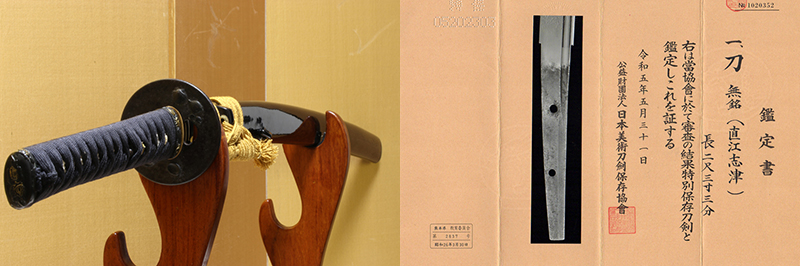
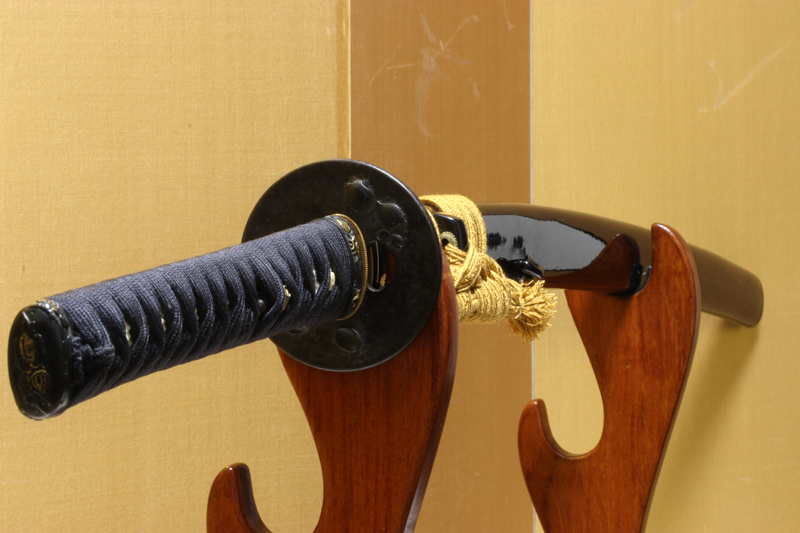
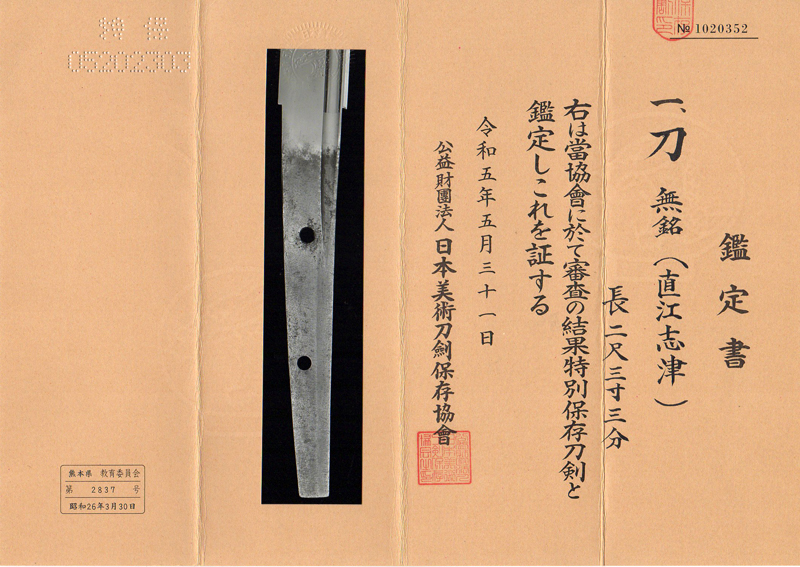
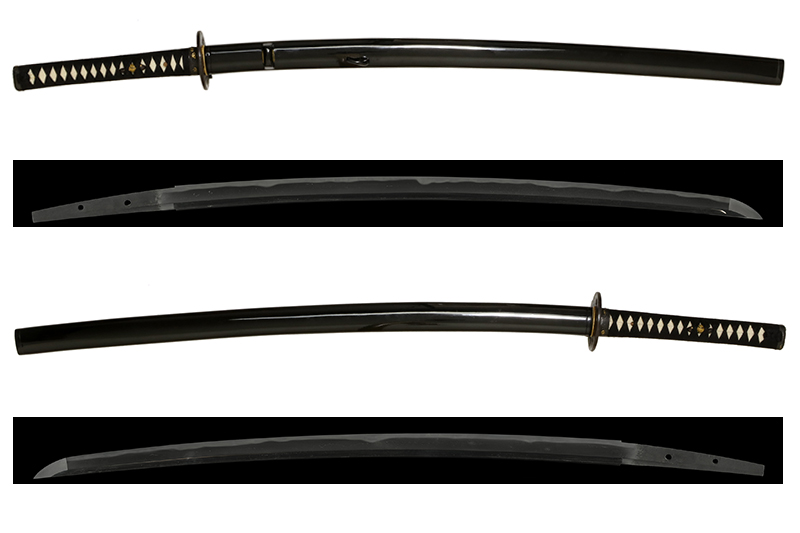
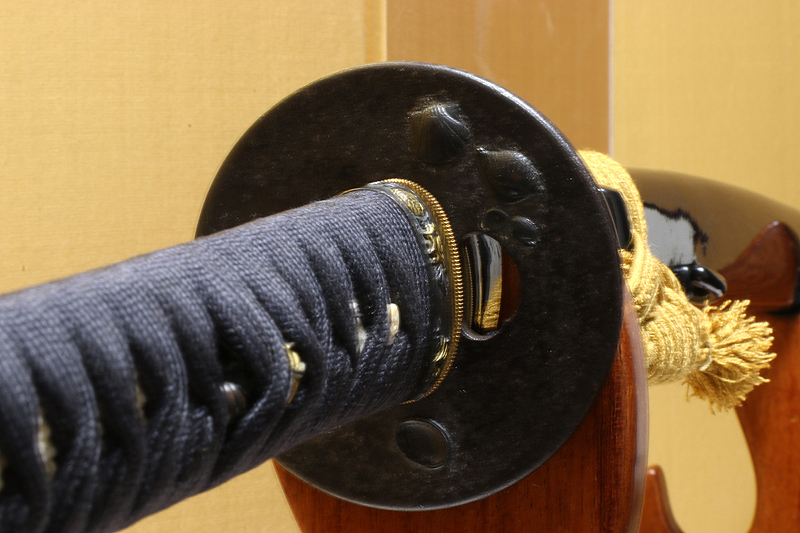
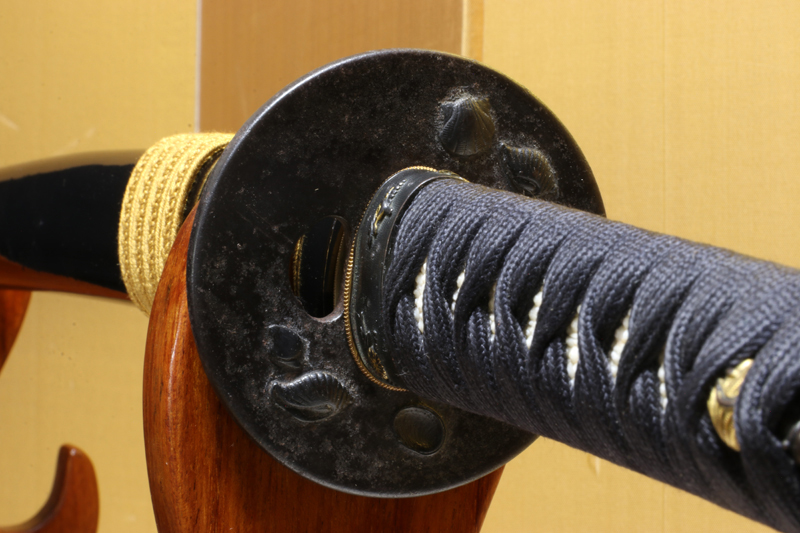
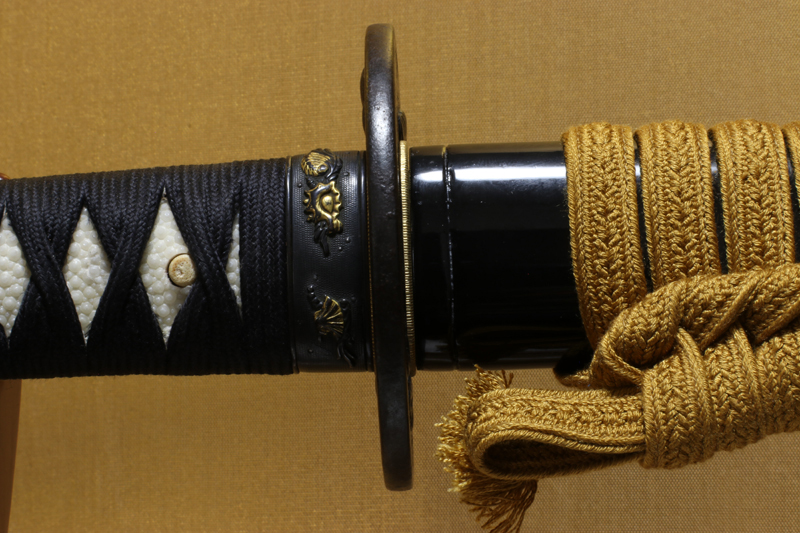
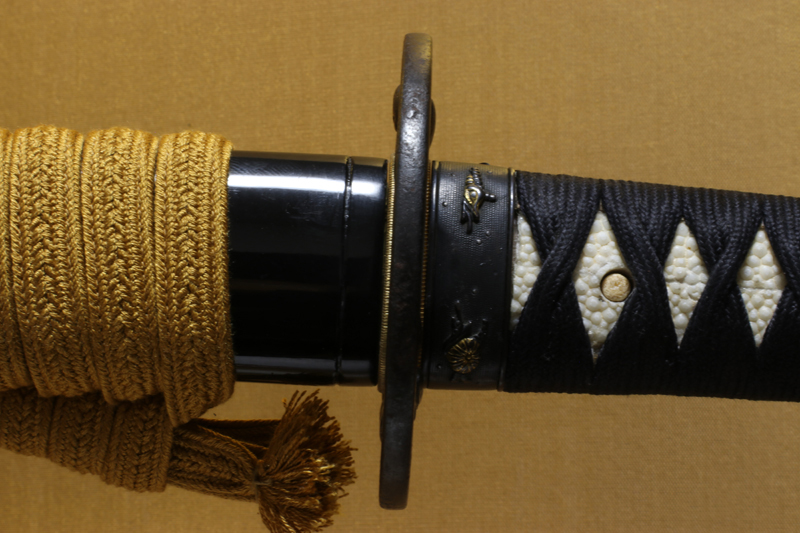
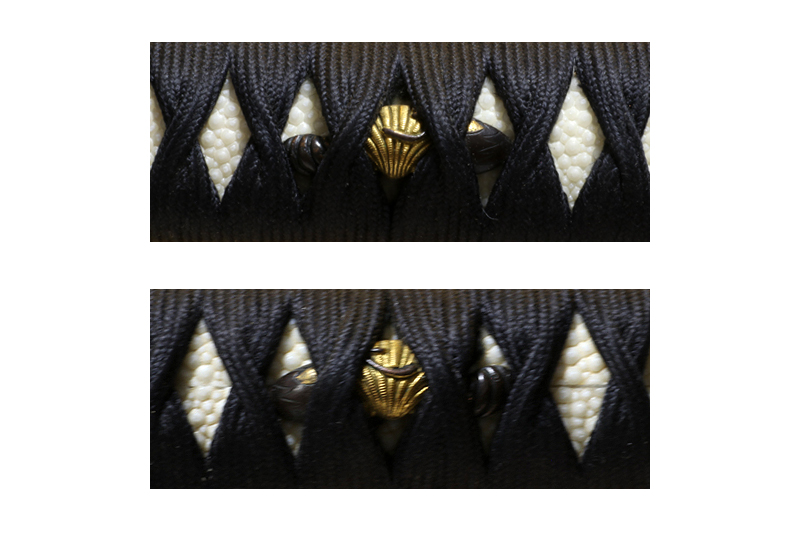
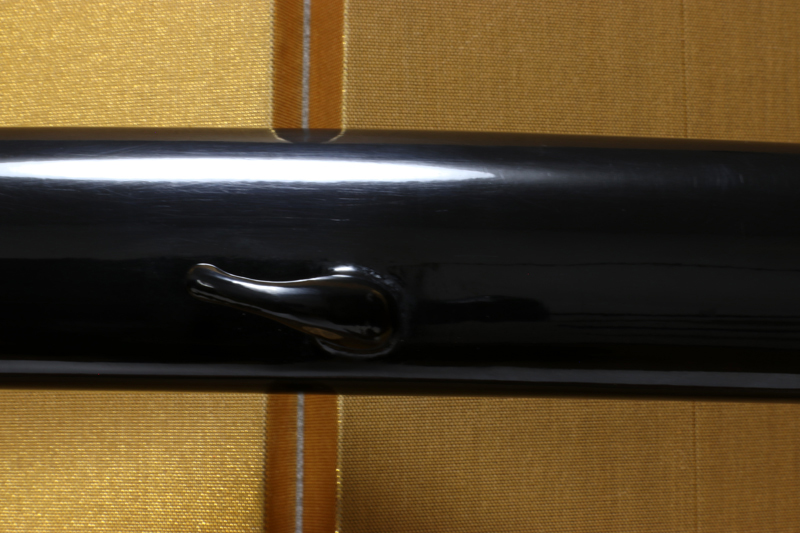
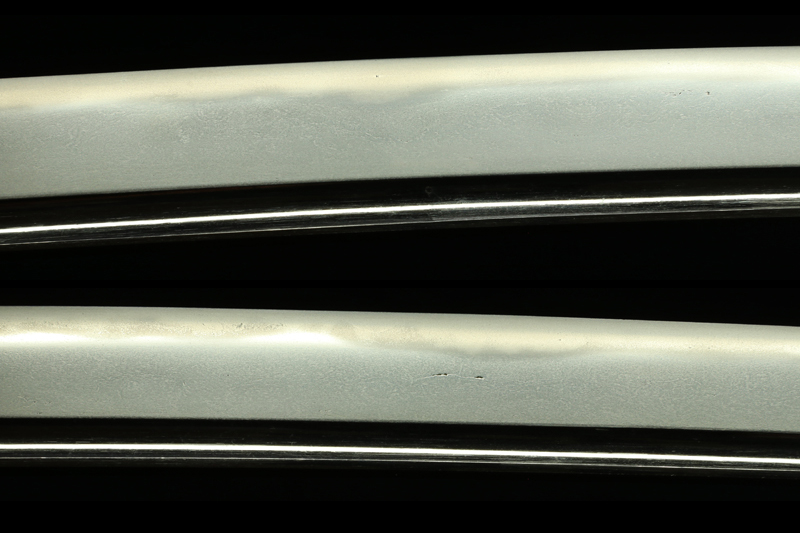
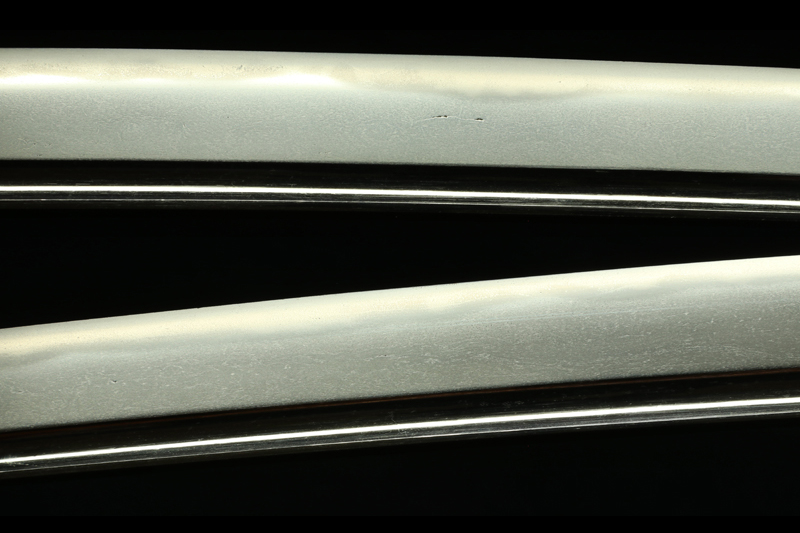
Tokubetsu Hozon Token mumei Naoesizu with Koshirae and Shirosaya. 南北朝時代の直江志津の太刀を、磨り揚げた刀です。 身幅太く豪壮な体配で、南北朝期の太刀姿を残しています。 付属する拵も良い物で、コレクションに最適です。 This is a Ohsuriage sword by Naoesizu in Nanbokutyou period This sword is wide Width and strong figure, and retains the appearance of the Tachi of the Nanbokutyo period. Also, Koshirae is good condition. So, this sword for perfect for collection. 「体配 style」 鎬造り庵棟、身幅重尋常、中間反り中鋒が延び心と成る。茎は大磨り揚げで鑢目は切、茎尻は一文字に切られる。 「彫物 carving」 表裏に片チリの棒樋が茎中に掻き流しと成る。 「地鉄 jigane」 地鉄は板目肌が流れ心と成り、地沸厚く付き、地景細かく入り、映り立つ。 「刃紋 hamon」 刃紋は互の目、足入り尖り刃を交え、微塵に沸が付き、湯走りかかり、刃中は金筋が二重刃のようになる。釯子は乱れ込み掃き掛け、焼き詰と成る。 「特徴 detailed」 直江志津は、正宗十哲の一人、大和手掻の刀工包氏が、南北朝の初め、美濃養老郡の志津に移住し鍛刀を始め志津三郎兼氏と名乗ります、その後兼氏の二男(一説に弟)兼俊は、その頃三湊が開け舟便が利用できる様になった直江村に弟子を連れて移り住み直江六郎と名乗り、兼友や、門弟の兼利・兼仲・兼則・兼長らとともに盛んに鍛刀し、後世に直江志津とよばれる名刀を残しました。 本作は南北朝時代の直江志津の太刀で、後の時代に磨り揚げられ、打刀に仕立てられた物です。 大磨り上げのため、鎺元に踏ん張りが無いですが、身幅が太く豪壮な姿をしています。 惜しむらくは、差表の平地に数か所繕いがあります、しかし余り目立ちません、これはこの刀が大事にされてきた証拠と言えるでしょう。 登録も昭和26年の熊本県登録で、位の高い武士が持っていた証拠です。 拵は、金具類が貝尽しで統一された良い物です。ぜひコレクションに加えて下さい。 「拵 Koshirae」 鎺(habaki) :素銅地銀着二。 鍔(tsuba) :鉄地貝尽しの図。 縁頭(fuchikashira):赤銅地貝尽しの図。 目貫(menuki) :赤銅地貝尽しの図。 柄(tsuka) :鮫は親粒が付き巻鮫、柄巻きは正絹黒の諸撮み巻き。 鞘(saya) :黒呂、返り角が付く。 「刀剣の状態 condition of blade」 研:良好です。 傷:欠点に成るような傷は有りません。
NihontoWatchNaoe Shizu School直江志津派
Offered by Giheiya
This piece has sold
13 on the market
Get an email when new Naoe Shizu School work hits the market.


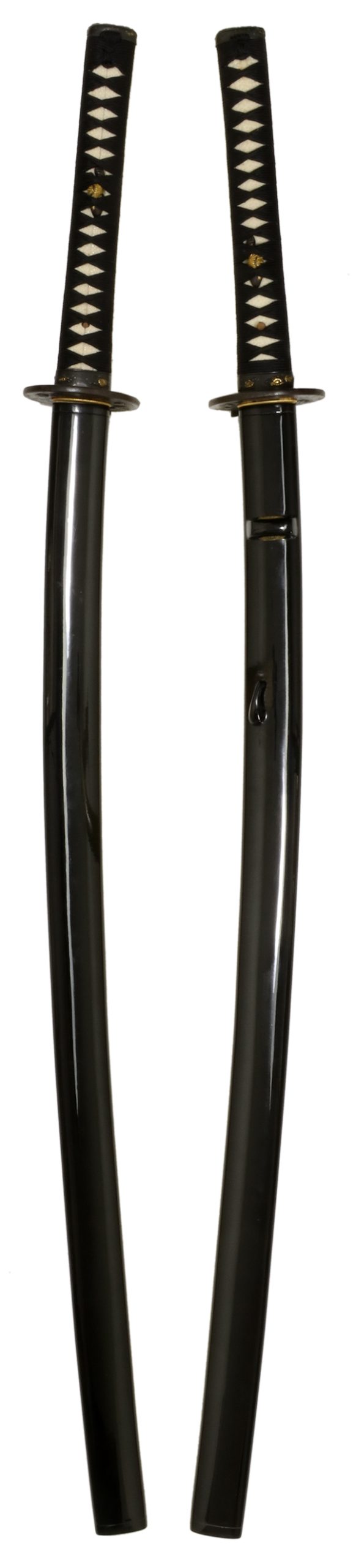
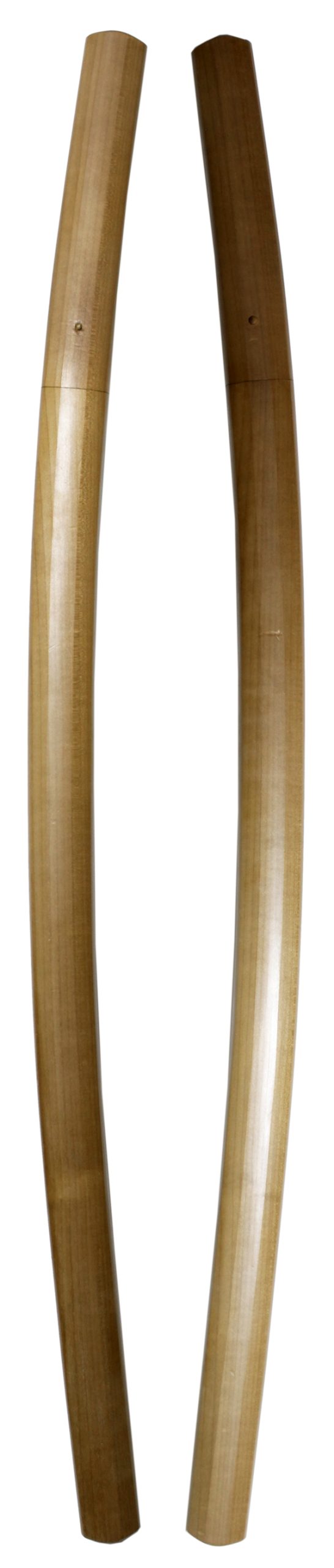
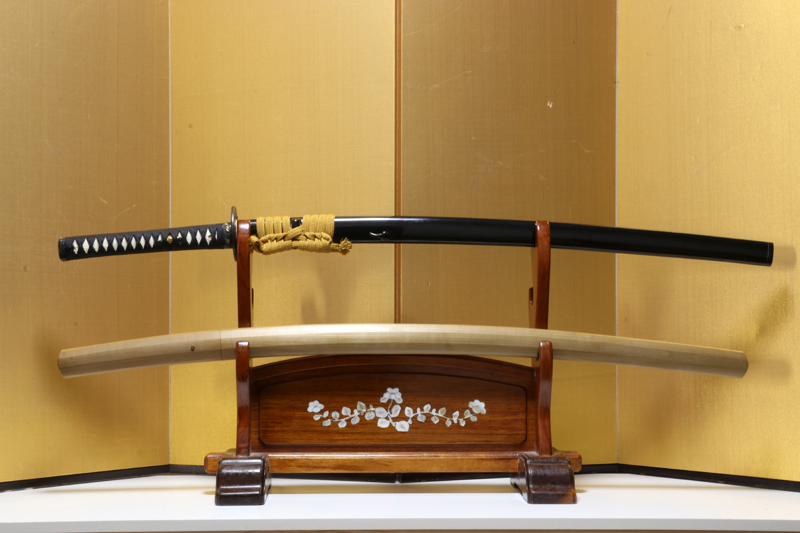
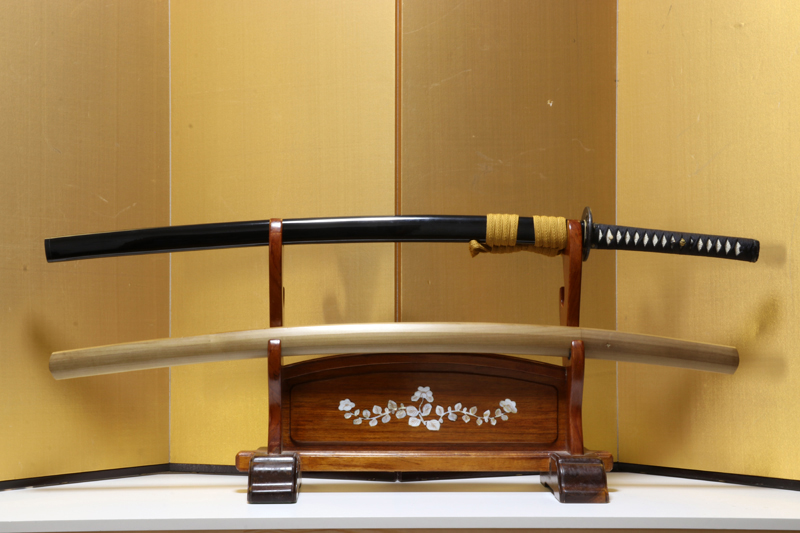
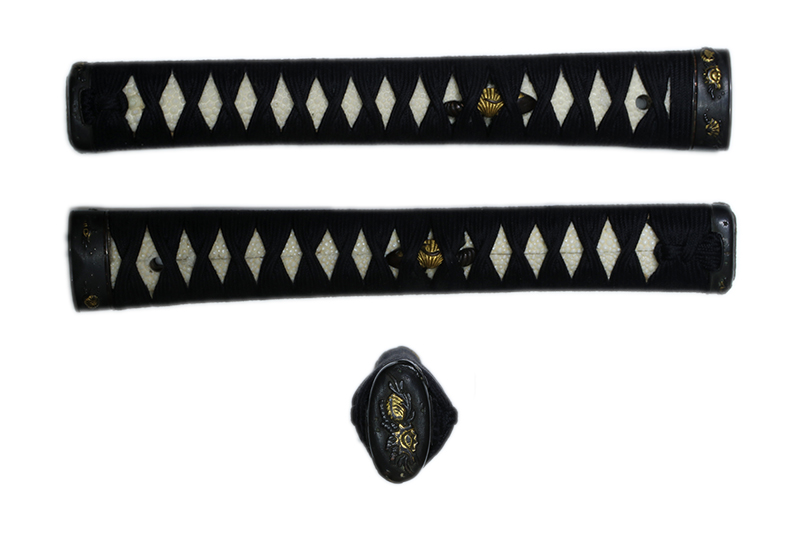
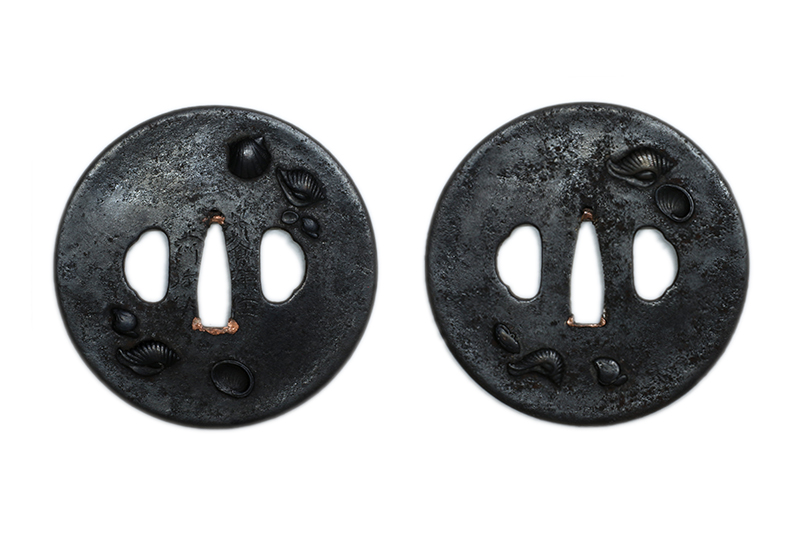
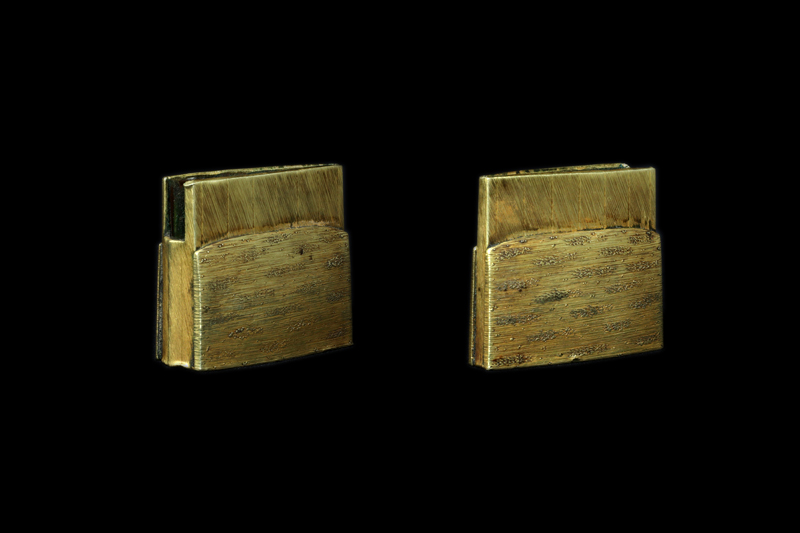
As written by the shop
Mino-den · Mino
13 pieces on the market now
Within the province of Mino, in the decades of the Nanbokucho period, a body of smiths gathered at Naoe carrying forward the manner of Shizu Saburo Kaneuji, and from that locality they took the name Naoe Shizu. Kaneuji, originally a member of the Yamato Tegai group who studied under Masamune of Sagami and is counted among the Ten Disciples of Masamune (Masamune jittetsu), settled first at Shizu in Mino and established a flourishing school. His pupils and successors, among them Kanetomo, Kanetsugu, Kaneshige, and Kanenobu, relocated within the province to Naoe and forged there, and the smiths of that group are collectively termed Naoe Shizu to distinguish them from Shizu proper, which signifies Kaneuji himself. The lineage is in essence the second generation of the Shizu line, the Soshu-den of Masamune received through Kaneuji and translated into the steel and temper of Mino; the name ran on across several generations into the Muromachi, so that the reference works list more than one Kanetomo, around the Oan era and again around Oei, while the core Nanbokucho production falls in the Kanno, Enbun, Joji, and Oan years of the middle fourteenth century, anchored by the few signed and dated pieces such as a Kanno-dated wakizashi by Kanetsugu. The shared vocabulary of the school is the Shizu manner rendered in Mino. The forging is itame mixed with mokume and nagare-hada, frequently flowing toward masame and standing at times into hada-dachi, over which thick ji-nie settles and chikei enter well, the dark grain-lines threading a steel that is clear and legible; the midare-utsuri a Bizen smith would carry is absent, the ji speaking instead through the depth of its nie. The hamon is a Soshu-den notare crossed with the pointed togariba of Mino-den, gunome and ko-notare tempered in nie or ko-nie, often showing a saka-tendency, with ashi and yo entering and uchi-noke, yubashiri, and tobiyaki along the habuchi; through the temper run sunagashi and kinsuji in profusion, the streaming nie-lines and bright lightning-lines that are the school's surest sign, the nioiguchi deep and brightening at the best examples into something clear and lucid. The boshi answers the ha in midare-komi or notare-komi, turning in a ko-maru or sweeping into yakizume, the point frequently brushed with hakikake.
Within this common ground the hands separate. Kanetomo is read by the linking of round-headed gunome in sequence, calm and elegant in the ko-nie-deki the sources hold him most proficient in; Kanetsugu inclines toward the saka-slanted gunome and togariba with a more powerful, compelling dekiguchi; Tametsugu, a Norishige hand resettled inland rather than a direct Naoe smith, carries a larger, more billowing notare-midare over a steel that darkens, a manner the commentary holds to differ from Shizu and Kaneshige. Set against Kaneuji himself, the Naoe Shizu smiths work in a milder, more workmanlike register, the hada standing less strongly and the chikei fewer than in the master whose manner most closely approaches Masamune. To kantei a Naoe Shizu blade is to read the Soshu activity through a Mino frame, distinguishing it above from Shizu proper, whose forging stands and brightens more vigorously and whose ji and ha carry the higher Sagami character, and below from the later Sue-Seki, whose togariba harden into a drier, more regular tooth without the deep ji-nie and the run of kinsuji and sunagashi; a suguha blade with a whitish shirake tone, by contrast, reads away from the line entirely, toward the Zenjo hands who also bore these names. The strongest members, Kanetomo and Kanetsugu above all, hold their place in the Juyo register, their signed tanto and wakizashi designated Important Art Objects serving as the documentary spine against which the unsigned majority is measured. For the body of the school survives o-suriage and mumei, broad Nanbokucho katana and tanto attributed by resemblance to those scarce signatures, so that signed examples are held exceptionally valuable and reach private hands only with patience. Provenance is thin but real, blades descending through the Naruse and Akaboshi collections, a pair preserved at Atsuta Jingu, and others held by the NBTHK; the typical encounter remains a mumei attribution carrying the open Naoe jigane and the streaming nie of a tradition the smiths of Mino took from Masamune and made their own. Learn more →
| Smith | Era | Designated |
|---|---|---|
| Kanetomo兼友 | 1336-1340 | 11 |
| Kaneuji兼氏 | 1342-1345 | 3 |
| Kanenobu兼延 | 1368-1375 | 0 |
| Kaneuji兼氏 | 1394-1428 | 0 |
| Kanenobu兼延 | 1390-1394 | 0 |
Mino in the Nanbokuchō period
Mino was founded, tradition holds, by immigrants: Kaneuji of the Yamato Tegai line settled at Shizu to work in the new Sōshū manner, so persuasively that later appraisers judged his best blades the closest of any to Masamune.
A Hozon-certified blade judged to show notably superior workmanship and a better state of preservation. The bar is higher: re-tempered blades and most unsigned Muromachi/Edo works are excluded.
The NBTHK (Nihon Bijutsu Tōken Hozon Kyōkai, the Society for the Preservation of Japanese Art Swords) is a public-interest incorporated foundation founded in 1948 and supervised by Japan’s Agency for Cultural Affairs (Bunkachō); it is based at the Japanese Sword Museum in Tokyo. Its expert panels physically examine each submitted work (shinsa) and issue a certificate (kanteishō) ranking it by artistic and historical merit. NBTHK papers are the most widely recognized standard of authentication for Japanese swords and fittings.
NBTHK official siteWithin 3 days of the item's arrival, we offer a refund or an exchange. Return shipping and the bank transfer fee for the refund are at the customer's expense.