Hizen swords were a domain enterprise: the Nabeshima sent Tadayoshi to study under Umetada Myōju around 1596, then built a licensed school around him. Nine generations carried its famously consistent konuka-hada work into the Meiji era.
 NihontoWatchNihontoWatch
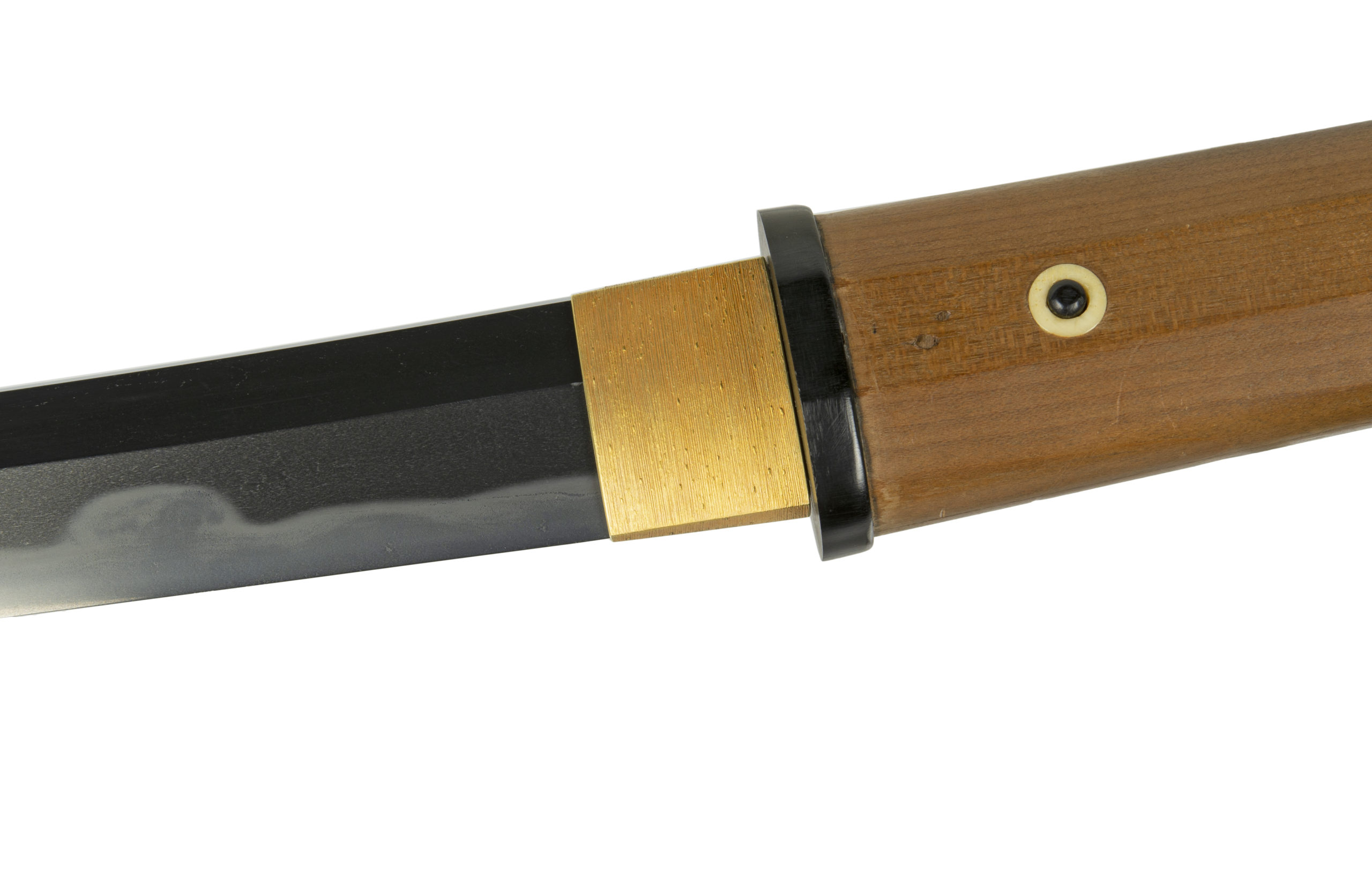
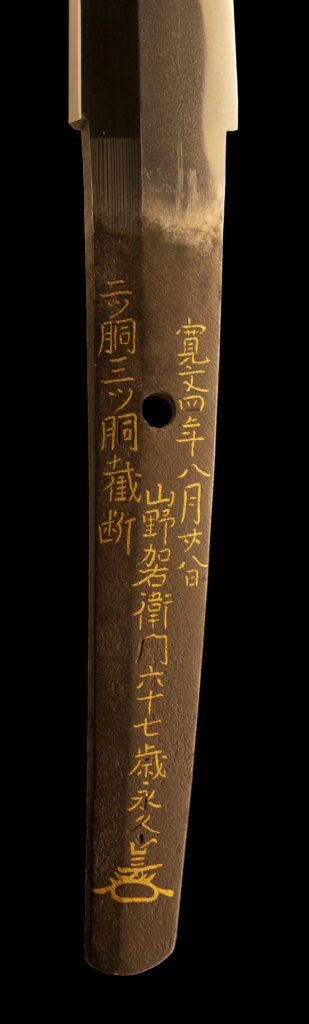
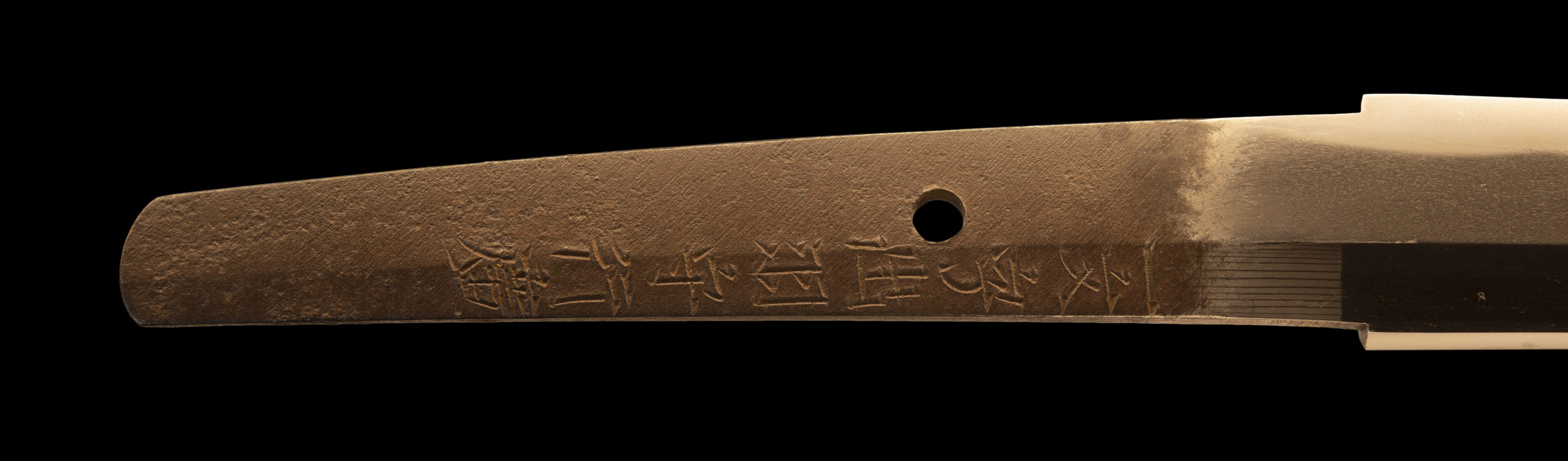
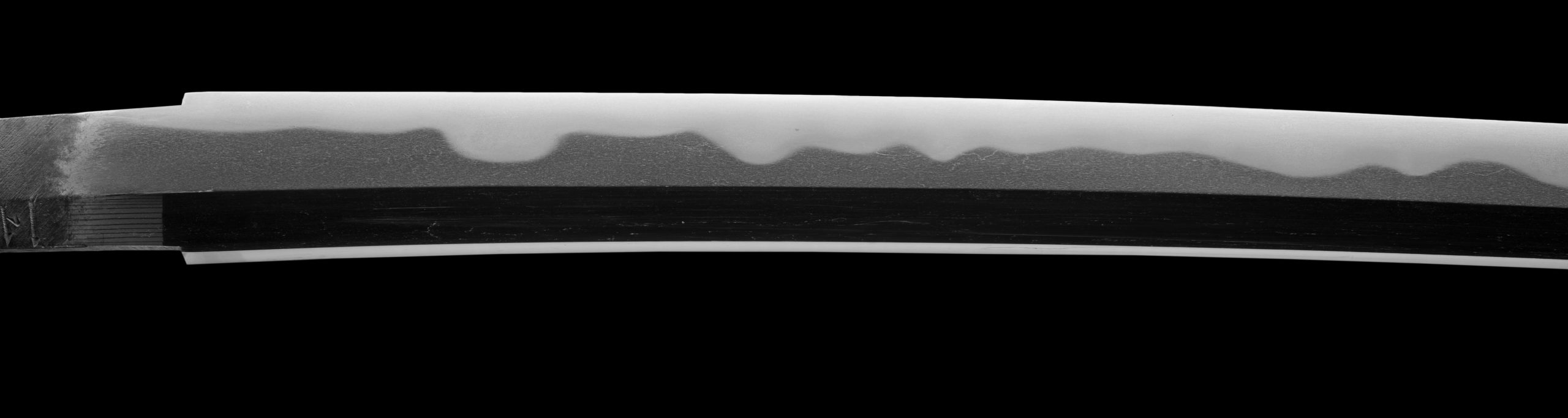
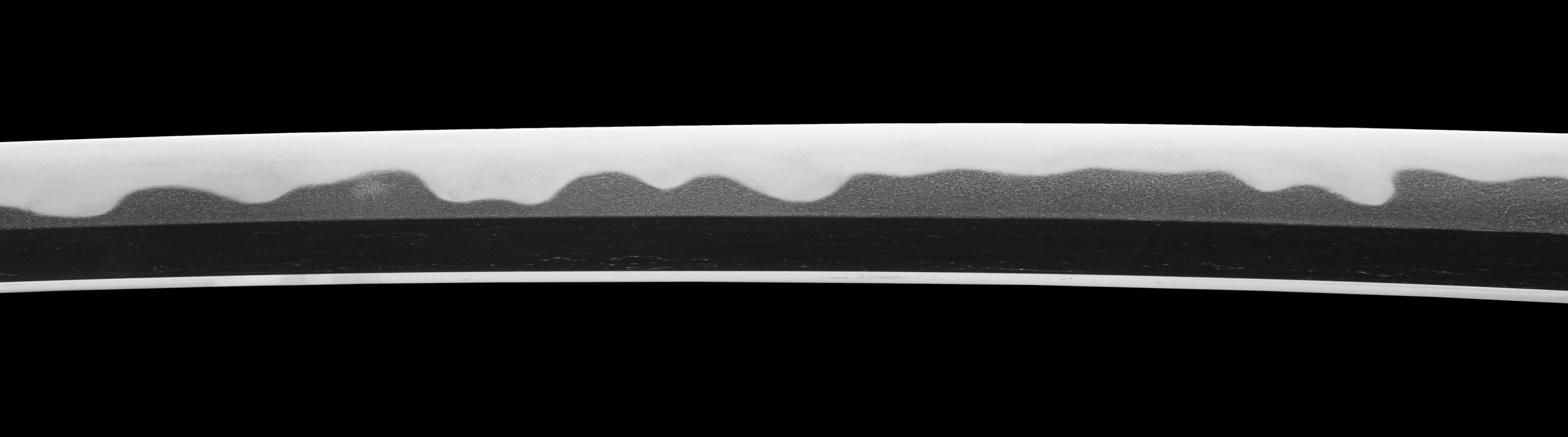
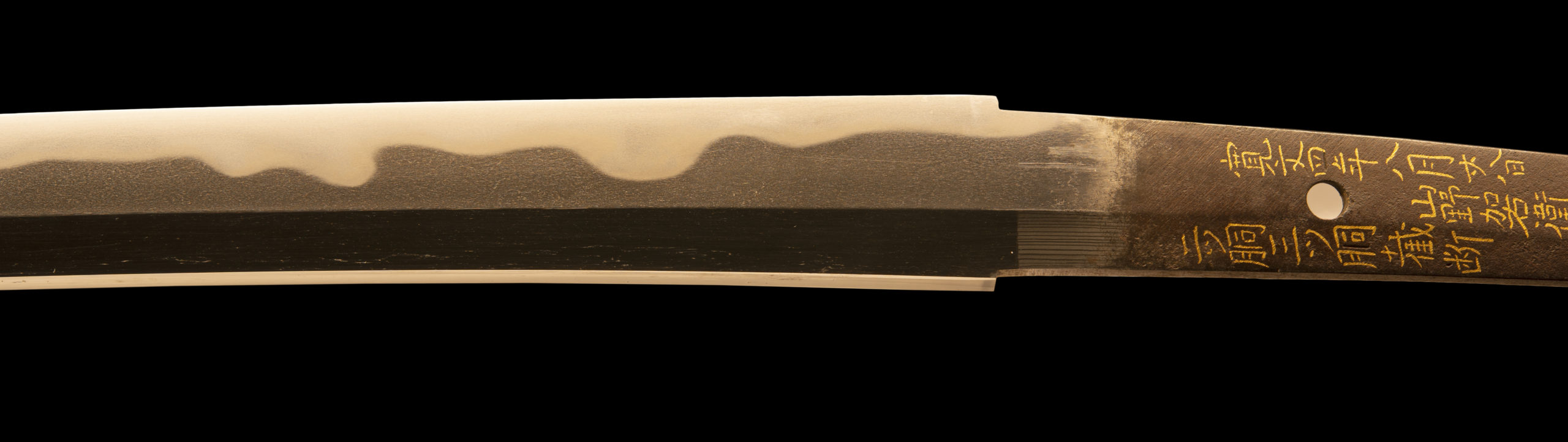
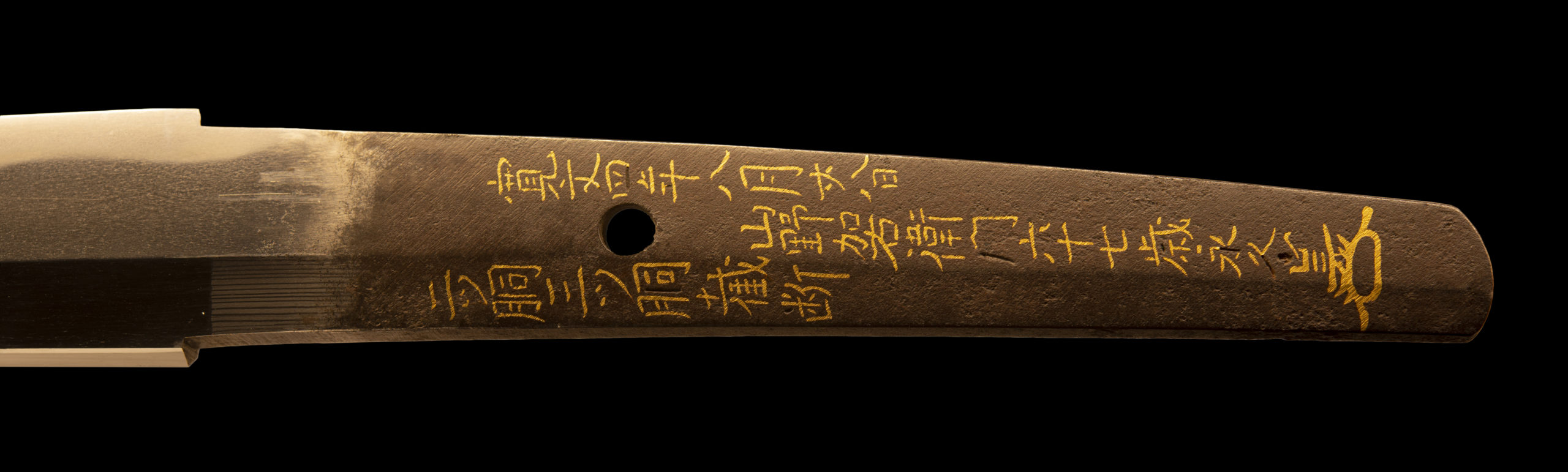
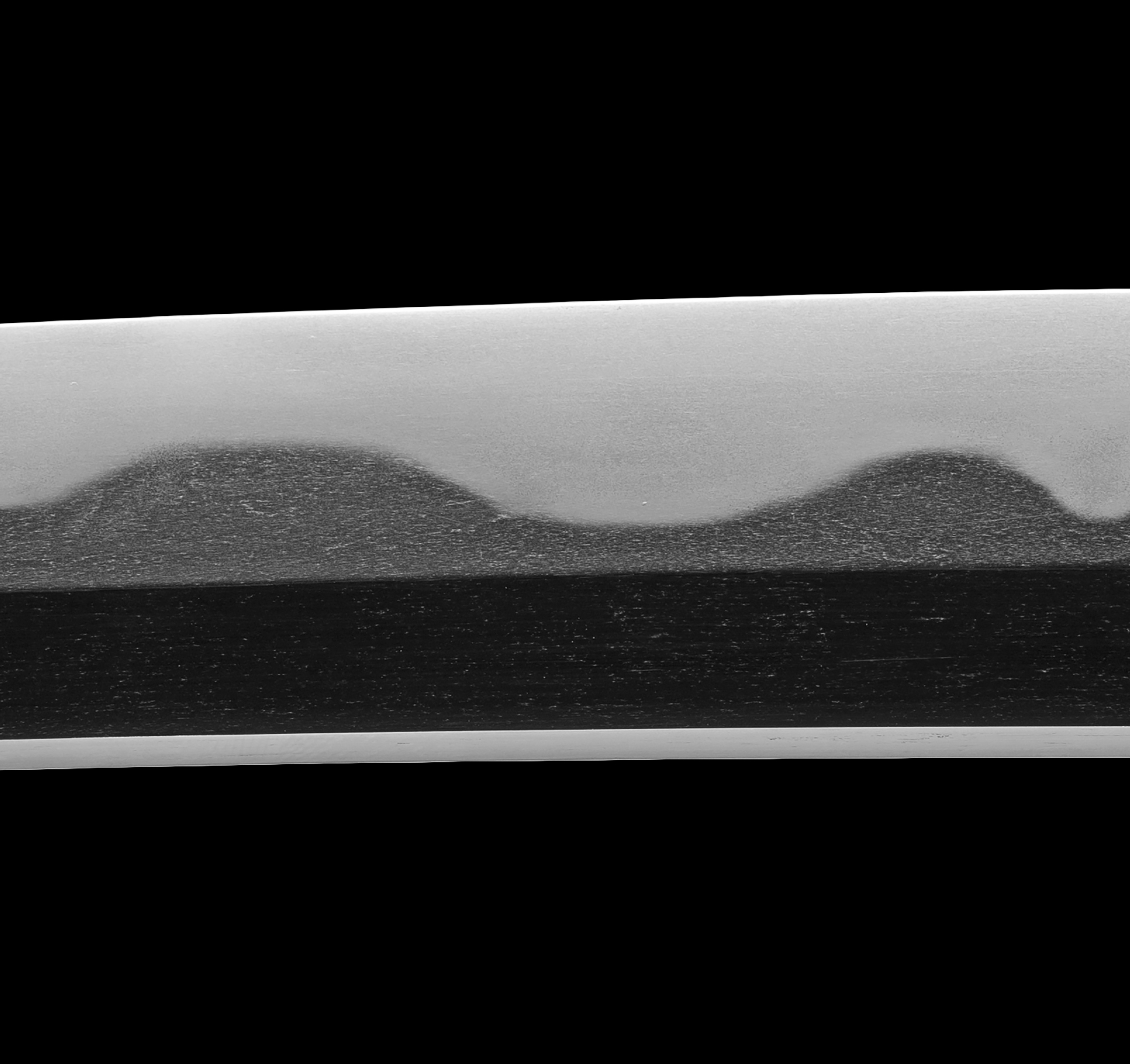
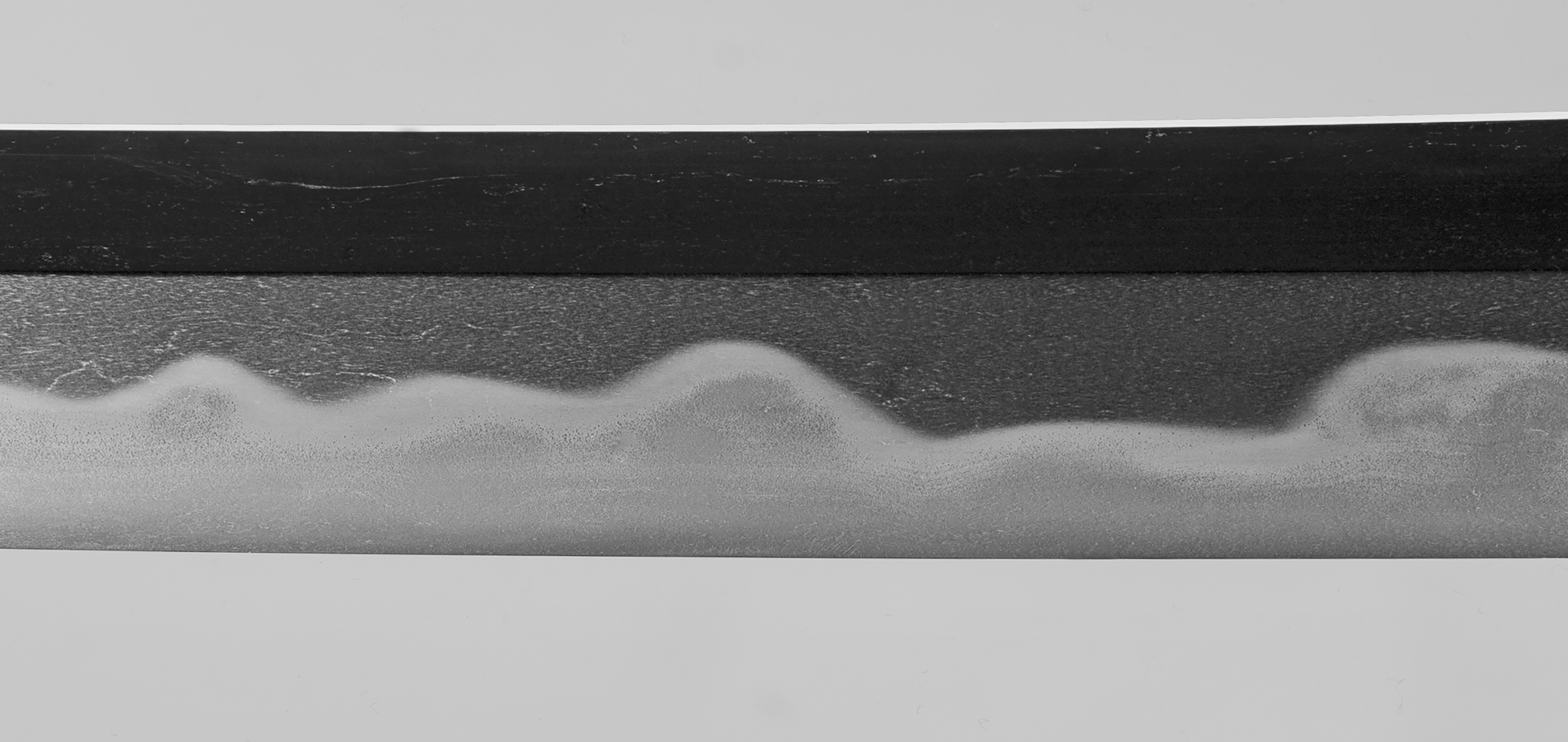
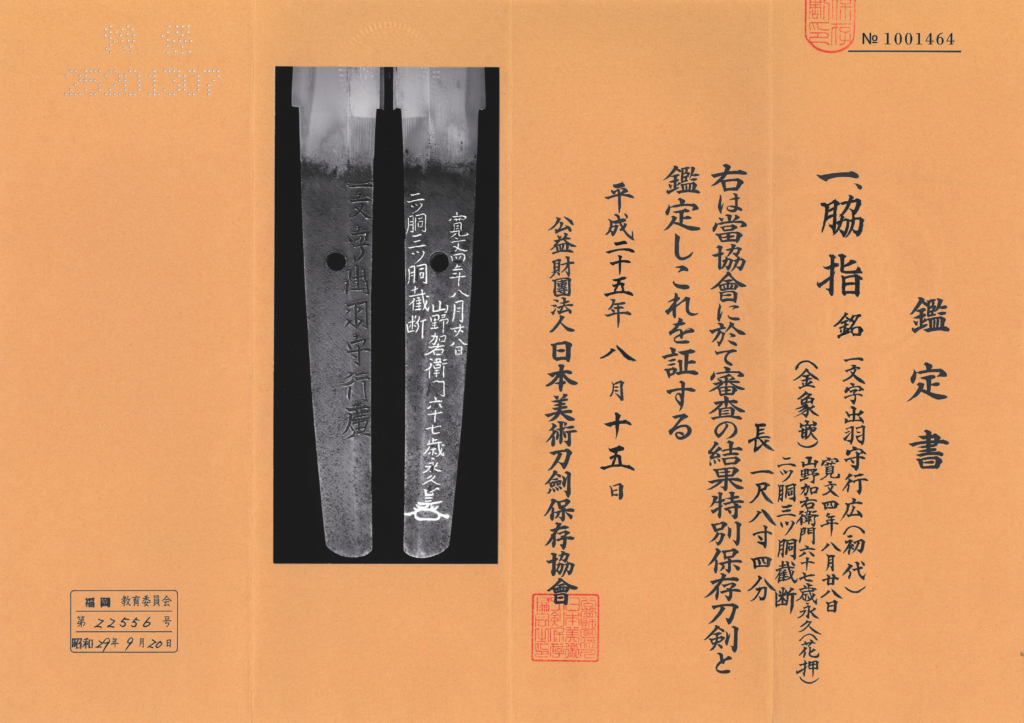
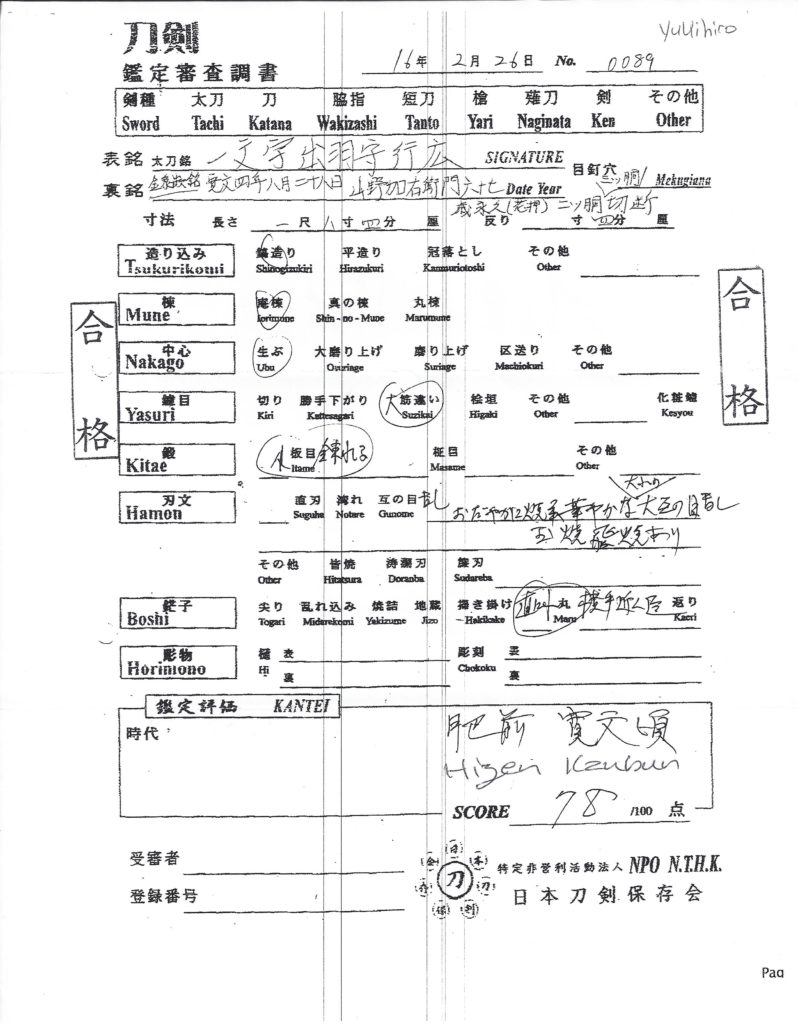
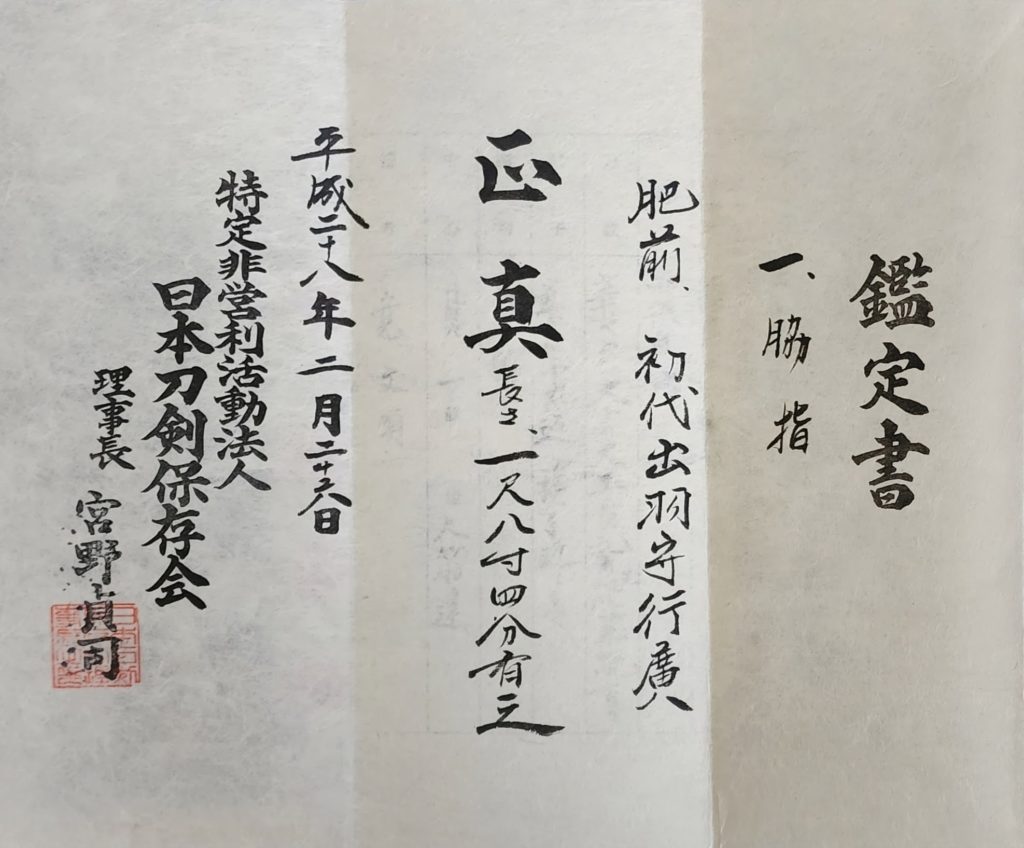
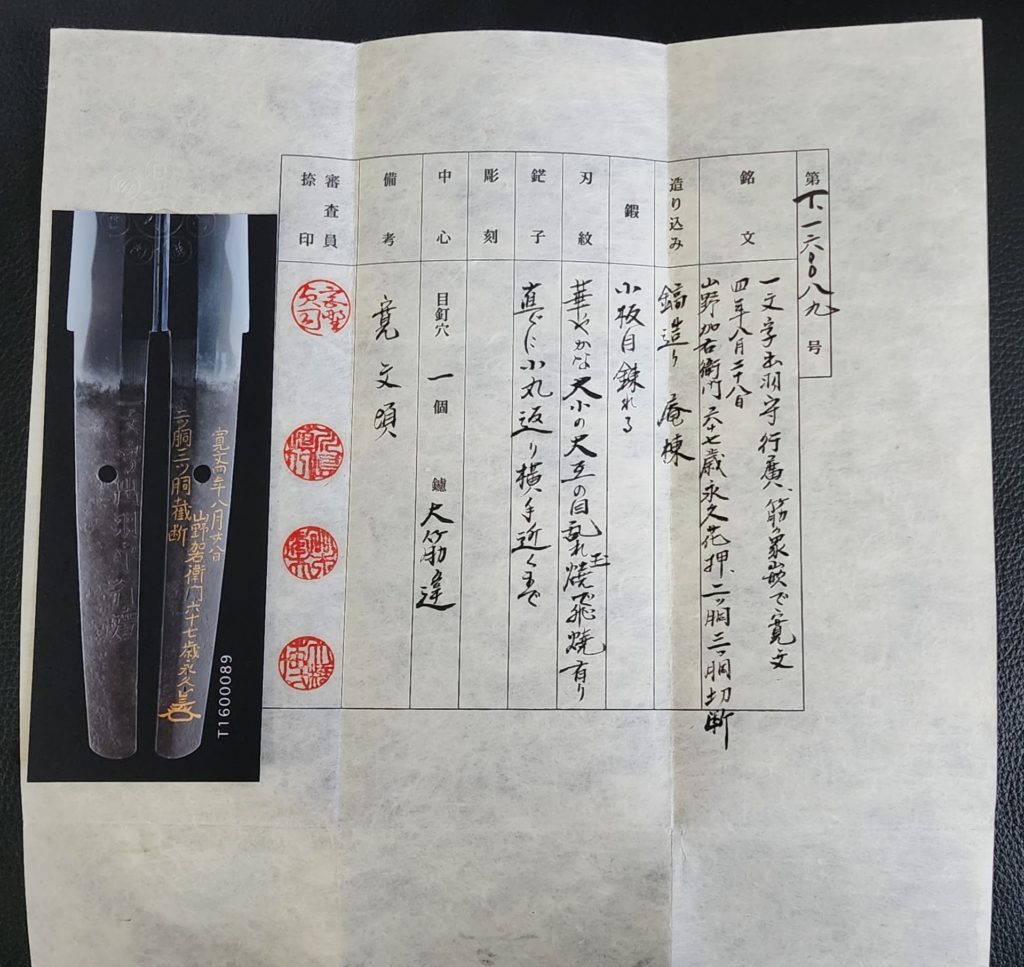
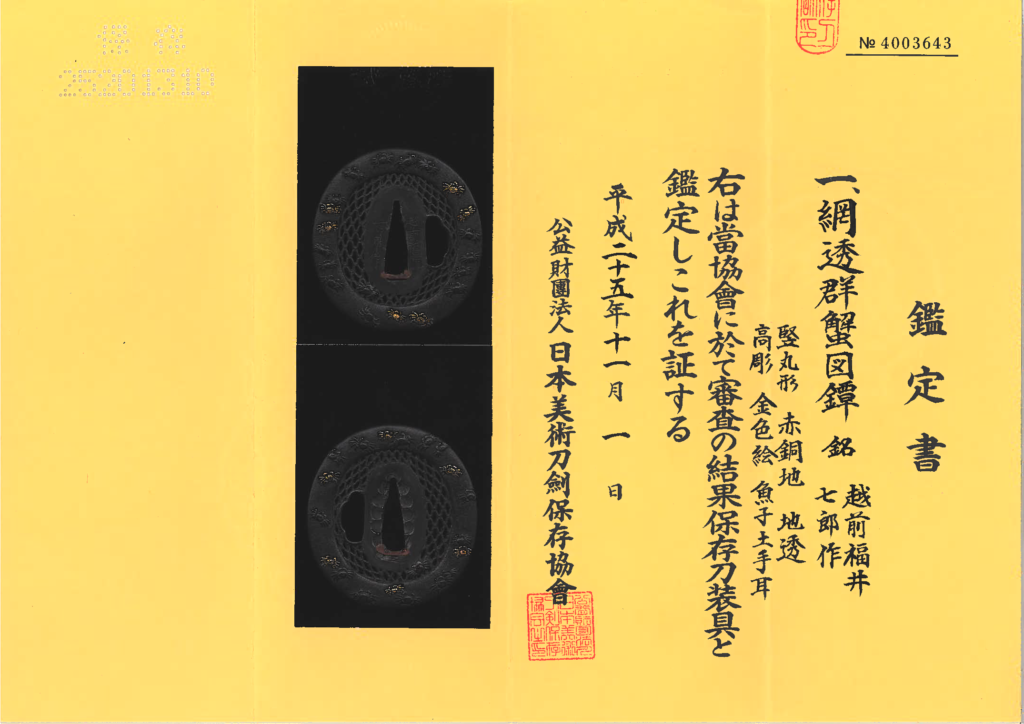
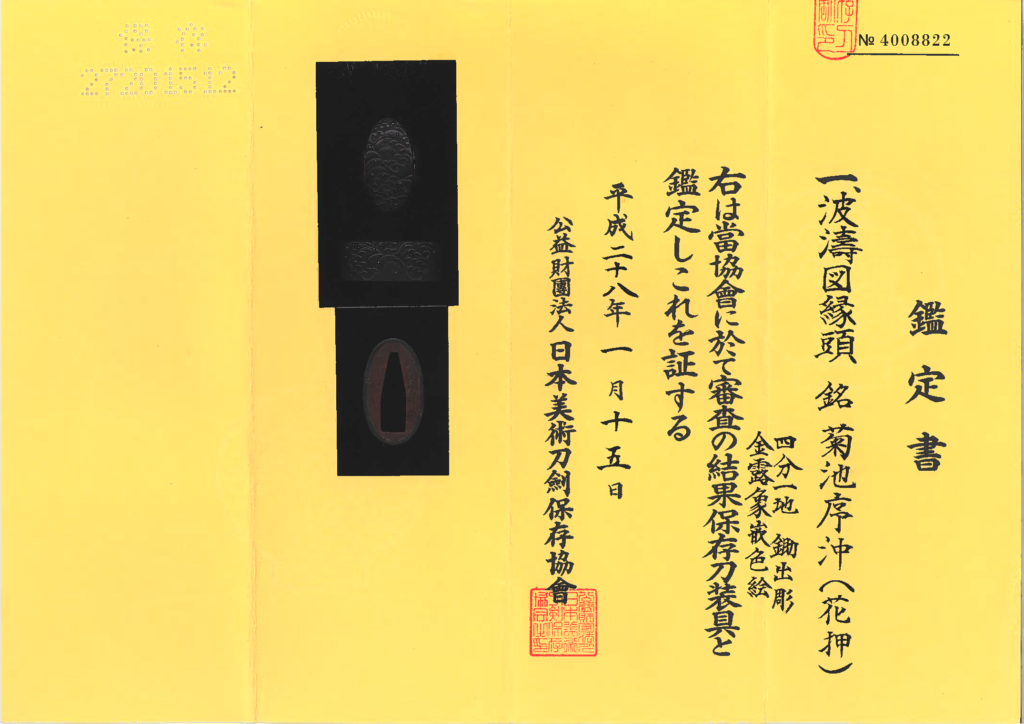
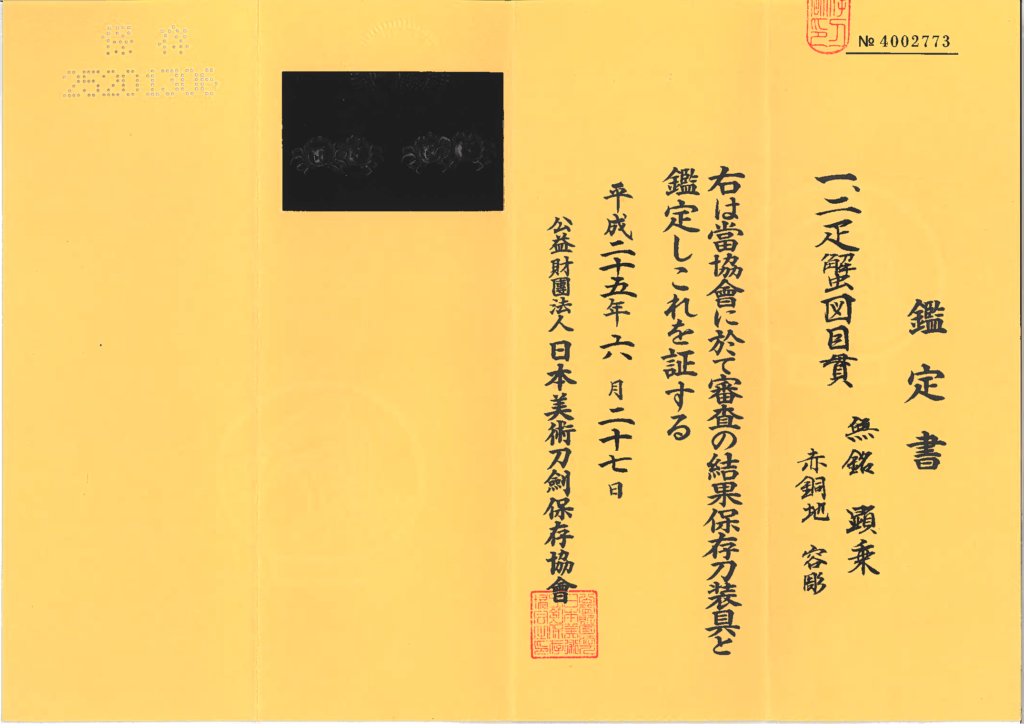
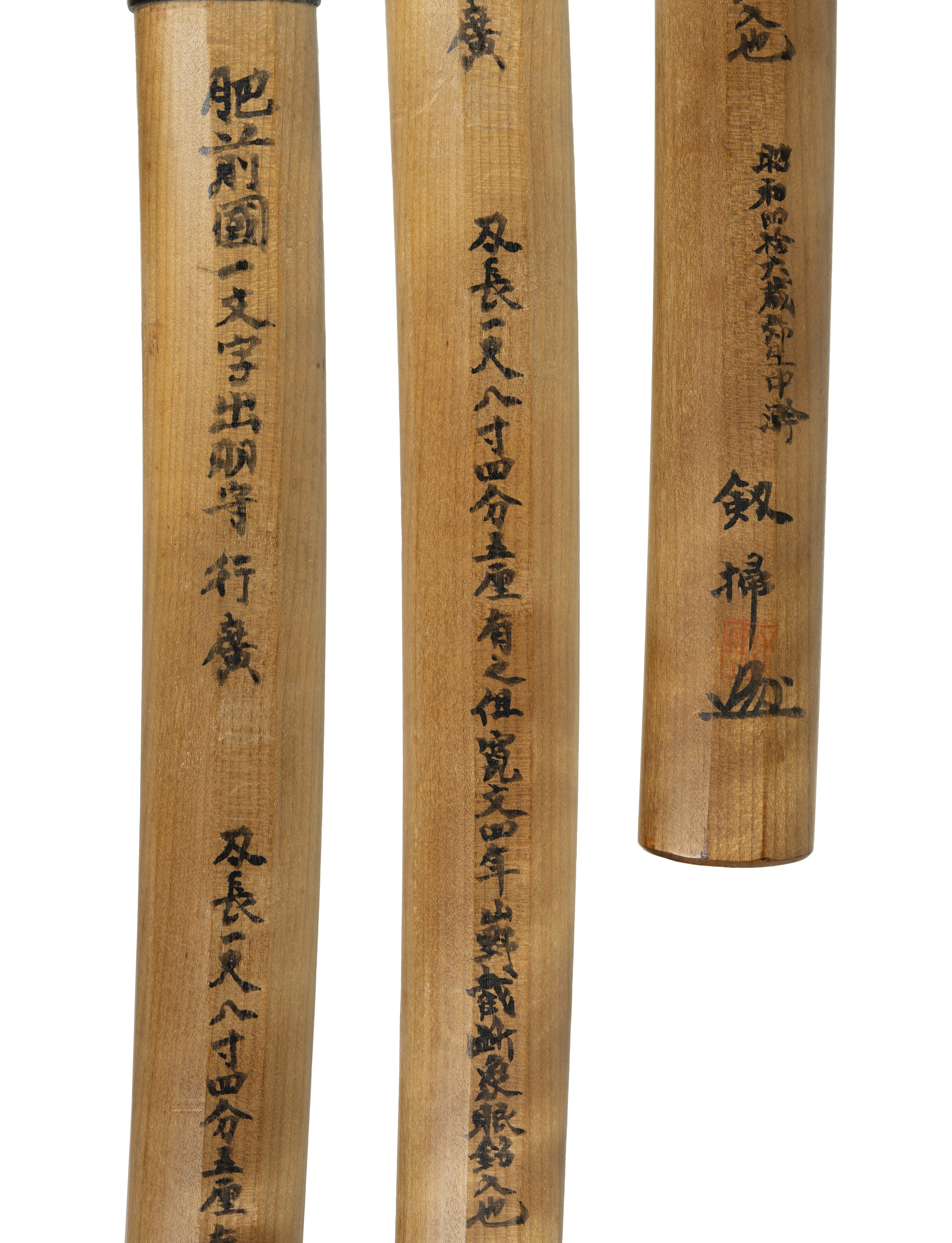
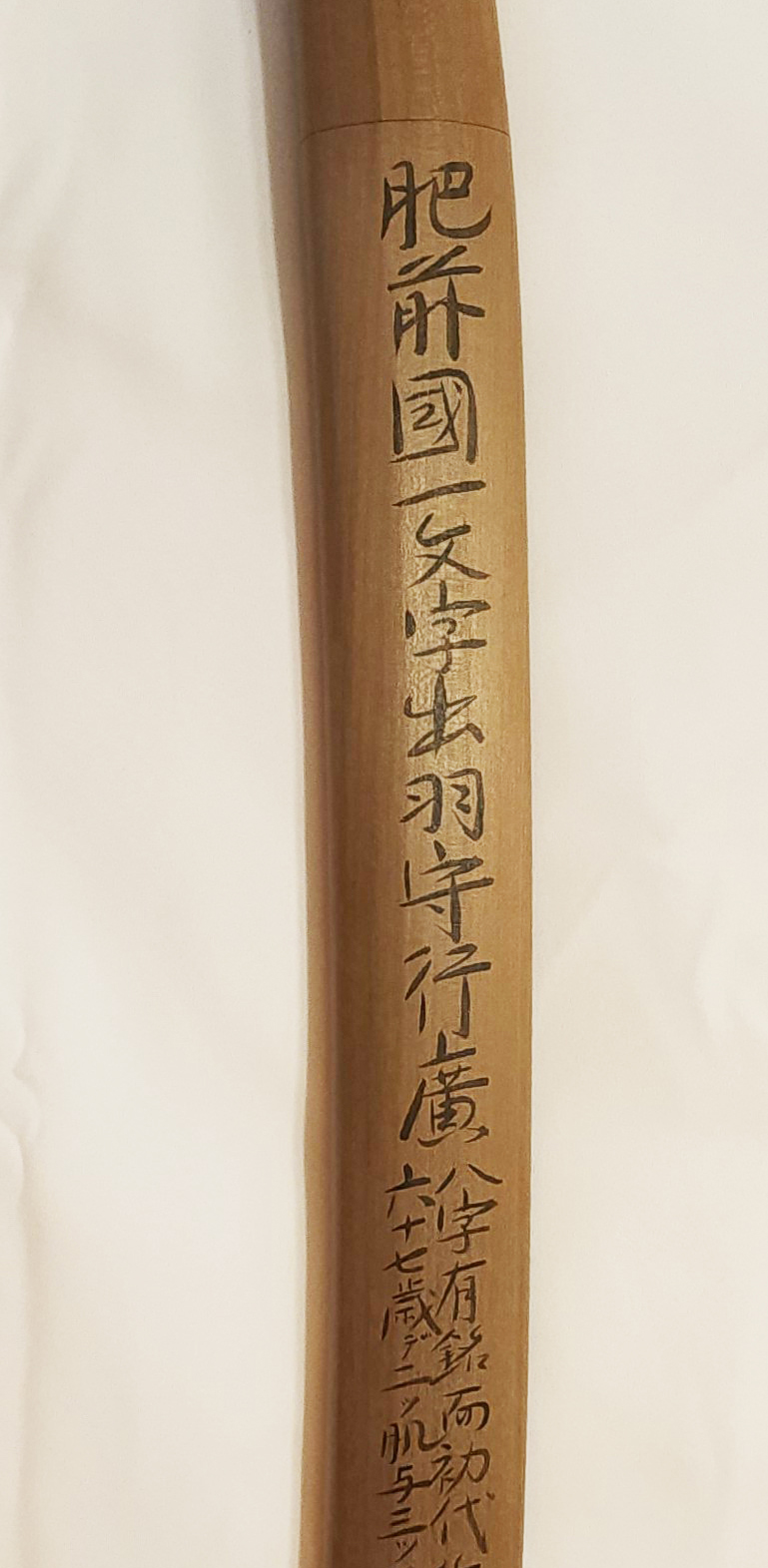
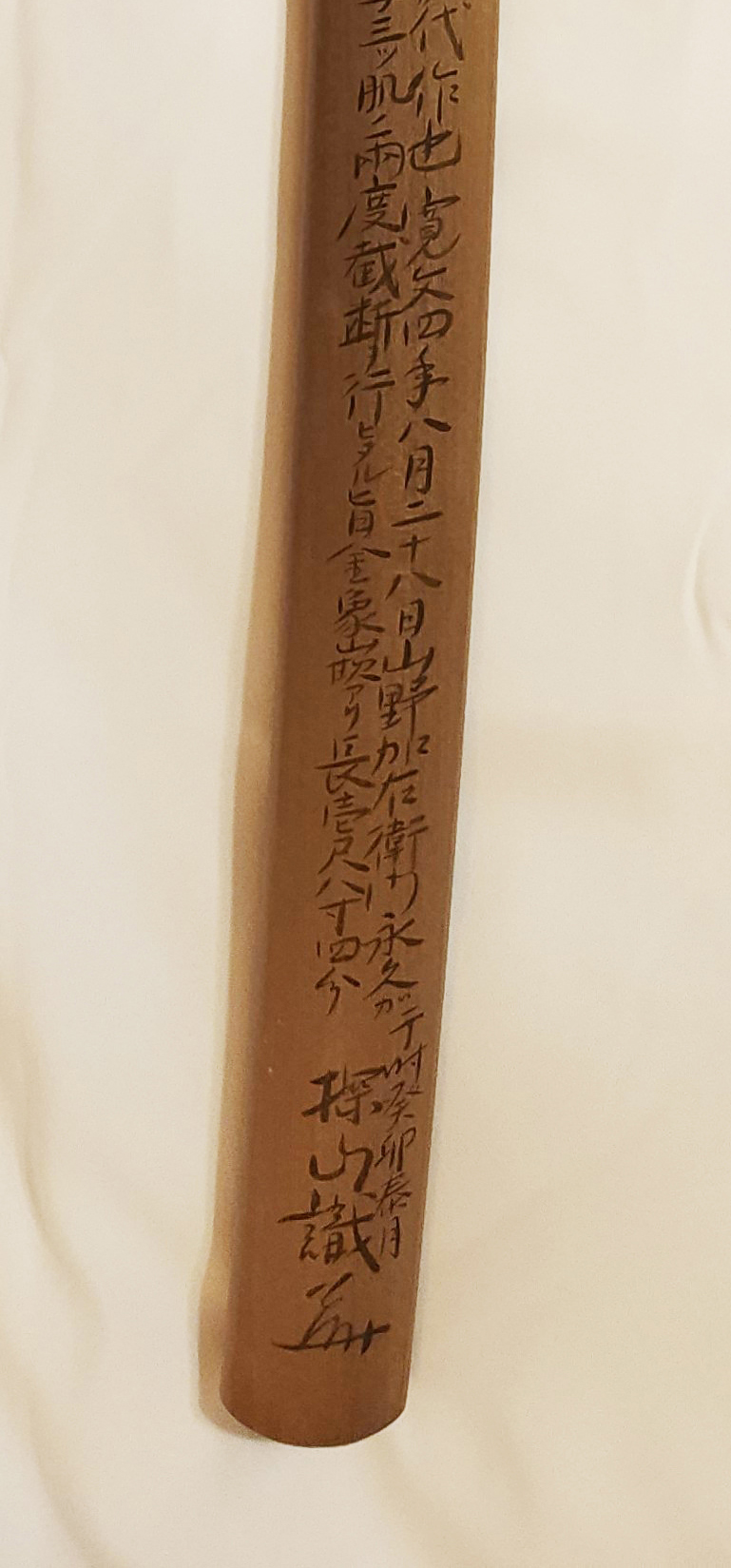
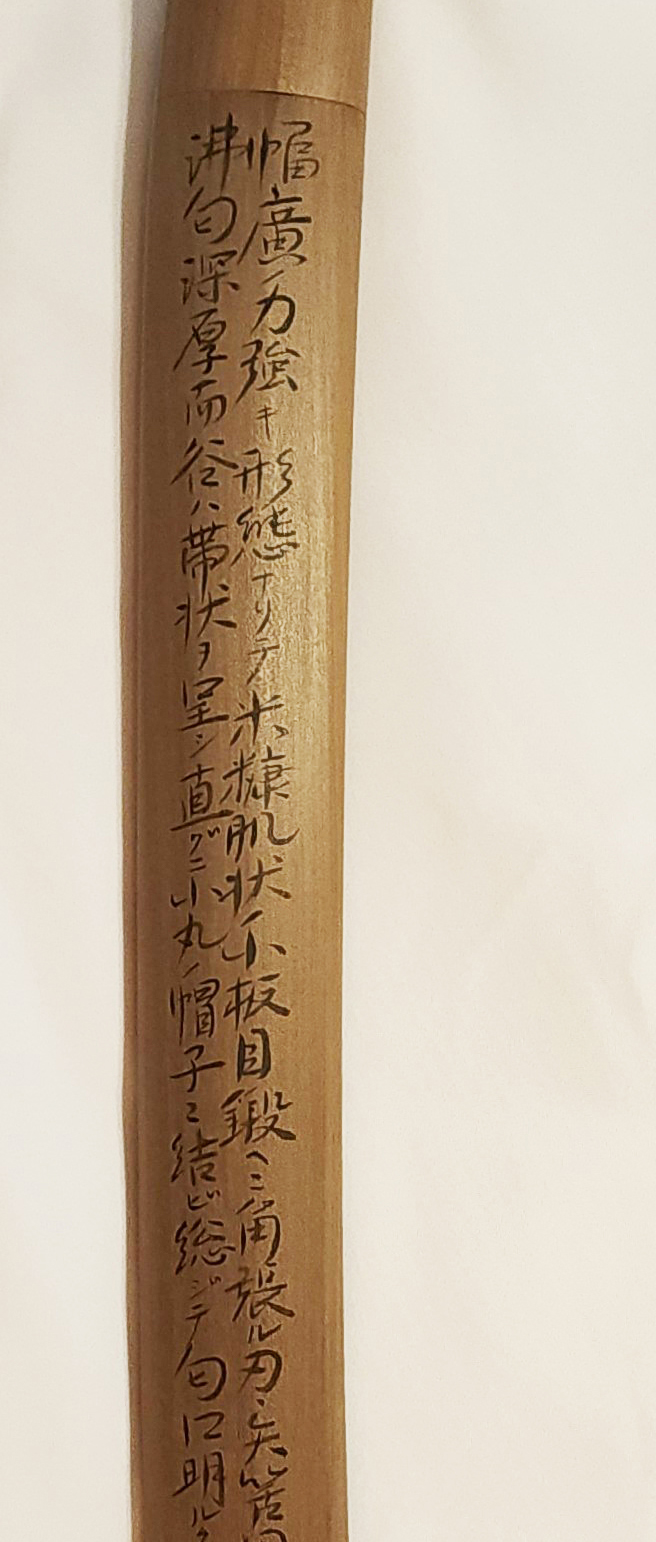
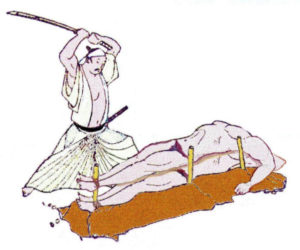
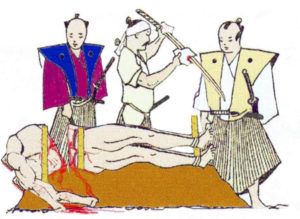
This is a fine wakizashi by 1st Generation (shodai) Yukihiro, born 1617 from Hizen province. Hizen province, located on the Island of Kyushu, was home to some of the most skilled and famous swordsmiths active in the Shinto period (1596-1764). Hizen swords were highly sought after due to their supreme cutting ability, balance, and durability. His first known sword was made in Kan’ei 1639 at the age of 22. He was given the title “Dewa Daijo” in 1648 then later granted the title “Dewa (no) Kami” in 1663. During the Keian 3rd (1650) he traveled to Nagasaki to study Dutch forging techniques under Yakushiji Tanenage & Hisatsugu.It is said he studied the Bizen Ichimonji techniques under Noriyoshi. This blade bears the Ichi (Ichimonji) character. This is signed – Ichimonji Dewa no Kami Yukihiro (一文字出羽守行廣)). A wakizashi measuring at 55.7 cm nagasa [cutting edge]. Made in kanbun which ranges from 1661-1673 AD with a 2 & 3 body gold inlay cutting test done by Nagahisa August 28th, 1664, also to include a custom koshirae. We can conclude with his new title received in 1663 and date of cutting test in 1664 that this wakizashi was made in 1663 or 1664. The blade is now stored in a new 20+ year old aged honoki, with sayagaki by Tanzan, Tanobe Michihiro sensei. The prior shirasaya (for the last 50-75 years or so) has sayagaki by 剣掃 (Kensō), otherwise known as Murakami Kōsuke, a prior board member and shinsa judge of the NBTHK, now mounted on a wooden blade (tsunagi) for preservation. Yukihiro has an NBTHK Tokubetsu-hozon certificate, meaning Extraordinarily Worthy of Preservation. The fuchigashira, menuki and tsuba each have NBTHK Hozon certificates meaning Worthy of Preservation. There is also a 5th certificate on the blade by NTHK-NPO at the 2016 Chicago shinsa of which it scored a 78 of 100 (see scan of worksheet), during the prior ownership. Tanobe Michihiro sensei (former Senior manager of the NBTHK’s Japanese sword museum) wrote with his sayagaki a description of this sword in his eyes. “This blade has a wide mihaba and is of a powerful shape. It displays a kitae in ko-itame that appears as konuka-hada and is hardened in long intervals in angular and yahazu elements and chōji, that are connected via gently undulating notare sections. The ha is nie-laden and the nioiguchi is wide and appears in the typical belt shape in the valleys of the ha. In addition, the bōshi is sugu with a ko-maru-kaeri, and with the nioiguchi being bright and clear, we have here a textbook work by this smith, which is also of an excellent deki.” At the end of Yukihiro’s career, he was serving under Nabeshima Sakyo in the town of Nagase, he passed away at the age of 66 May 27th, 1683 (Tenna 3rd). His line continued into later generations as far as the 1900’s. In his family ranks were Shodai Hizen Masahiro (his older brother by approx 11 years), his father Yoshinobu (adopted), and his grandfather Shodai Hizen Tadayoshi. Yukihiro was known to sign his katana with tachi-mei, and his wakizashi with katana-mei (sashi-omote). The blade was registered on September 20, 1954, in Fukuoka under the register number 22556. Ratings: Signature (mei) Translation Ichimonji Dewa No Kami Yuki Hiro Translation of Kinzogan mei: Yamano (Family name) Kauemon (his first name of cutter), 67 Sai (67 age) Naga Hisa (given name) Kao Kanbun 4 year (1664) Hachigatsu (August) 28 Nichi (date of 28th) Futatsu Dou (two body) Mitsu Dou (three body) Sai Dan (cut) Sayagaki by Kensō. Kosuke Murakami was formerly on the board of directors with the NBTHK. In the 1980's he issued his own papers under Tōensha. 肥前國一文字出羽守行廣 刃長一尺八寸四分五厘有之但寛文四年山野截断金象嵌銘入也 昭和四拾六歳弥生中澣 剣掃「花押」 Hizen no Kuni Ichimonji Dewa no Kami Yukihiro Hachō isshaku hassun yon-bu go-rin kore ari, tadashi Kanbun yonen Yamano setsudan kinzōgan-mei hairu nari. Shōwa yonjūrokunen yayoi chūkan Kensō + kaō Ichimonji Dewa no Kami Yukihiro from Hizen Province Blade length ~ 55.8 cm, bears a gold-inlaid result of a Yamano cutting test performed in Kanbun four (1664). Mid-third of March of Shōwa 46 (1971) Kensō + monogram. Sayagaki by Tanzan, Tanobe Michihiro sensei (former Senior Managing Director) of The Japanese Sword Museum at the NBTHK. 肥前國一文字出羽守行廣 八字有銘而初代作也寛文四年八月二十八日山野加右衛門永久ガ六十七歳デニッ肌与三ッ肌截断ヲ行ヒタル旨金象嵌アリ 長壱尺八寸四分 干時癸卯泰月探山識「花押」 幅廣ノ力強キ形態ナリテ米糠肌状ノ小板目鍛ヘニ角張ル刃・矢筈風ノ刃・丁子ヲ間遠ニ焼キ其等ヲ浅キ湾レデ繋グ刃取ヲ見セ沸匂深厚而谷ハ帯状ヲ呈シ直グニ小丸ノ帽子ニ結ビ総ジテ匂口明ルク冴ヘルナド典型的作風様式ヲ示シ出来宜矣 Hachi-ji yūmei shikamo Shodai saku nari. Kanbun yonen hachigatsu nijūhachinichi Yamano Ka’emon Nagahisa ga rokujūnana-sai de futatsu-dō yo mitsu-dō setsudan o okonai-taru mune kinzōgan ari. Nagasa isshaku hassun yon-bu Toki ni mizunoe-u taigetsu Tanzan shirusu + kaō Haba-hiro no chikrazuyoki keitai narite konuka-hada-jō no ko-itame kitae ni kakubaru-ha, yahazu-fū no ha, chōji o matō ni yaki sorera o asaki notare de tsunagu hadori o mise nie-nioi shinkō shikamo tani wa obi-jō tei-shi sugu ni ko-maru no bōshi ni musubi sōjite nioiguchi akaruku sae narudo tankei-teki sakufū yōshiki o shimeshi deki yoroshi. This blade bears an eight-character signature and is a work of the first generation. It also bears a gold-inlaid inscription, which states that on the 28th day of the eighth month Kanbun four (1664), Yamano Ka’emon Nagahisa cut with this blade at the age of 67 through two and through three bodies. Blade length ~ 55.7 cm Written by Tanzan [Tanobe Michihiro] in January of the year of the hare of this era (2023) + monogram. This is the most common region cut for multiple body cutting tests. This shows example how two bodies were stacked before the cutting test And the above image depicts the result Briefly, the koshirae: mounted on tsunagi is in a deep blue sea theme with dark blue silk laced handle & a black-blue lacquer saya done in ishimeji style (imitations of stone). There is a gold shitodome on kurikata and kashira. The habaki is a tomoyasuri gold foil. The seppa are in a gold foil. The tsuba: Ami-sukashi gunkai no zu tsuba (綱透群蟹図鐔) – Tsuba with openwork design of net and depicting groups of crabs. Mei: Echizen Fukui – Shichirō saku (越前福井・七郎作) “Made by Shichirō from Fukui in Echizen”. Tatemaru-gata, shakudō, ji-sukashi openwork design, takabori relief, gold iroe accents, raised dote-mimi with nanako ground. Prior owners’ description follows in quotations.” A tsuba like this one is a rare pleasure. It is a great work of his with a shakudo nanako rim covered with gold and shakudo crabs. The interior of the tsuba is an intricately carved fishing net. The tsuba quality and feeling of this tsuba is ko-kinko. “ The menuki: depicting two crabs each. They are attributed to [Gotō]* Kenjō (顕乗), they are Shakudō, katachibori crabs. *The Gotō attribution is not spelt out on the Hozon certificate; however sometimes the NBTHK omits the family name if the artist’s name is very distinctive, like in this case with the Gotō Kenjō crab menuki. Also another way the NBTHK does it, is by example, just Sōmin for Yokoya Sōmin. Reference from chapter 2.7 Gotō Kenjō (後藤顕乗), 7th gen. in the book by Markus Sesko, The Japanese tōsō-kinkō Schools: Kenjō´s civilian names were Masatsugu“ (正継), „Mitsuha“ (光派) and „Mitsutsune“ (光経) and his first names were „Gen´ichirō“ (源一郎) and „Ribei“ (理兵衛). He was born in the 14th year of Tenshō (1586), the second son of Tokujō. After the relatively early death of his older brother Eijō he succeeded as head of the family and as the 7th gen. mainline. Together with his cousin Kakujō (覚乗) he worked on a biennial basis alternating between Kyōto, for the bakufu, and Kanazawa (金沢) for the Maeda family (前田) who were the daimyō of Kaga province. Kenjō died on the 22nd day of the first month of Kanbun three (1663), at the age of 78. The fuchigashira: signed Kikuchi Tsuneoki + kaō (菊池序沖「花押」). Tsuneoki was the second master of the Kikuchi lineage. Well-made Shibuichi, sukidashibori relief, spray in gold inlay, iroe accents. Reference from 24.2 Kikuchi Tsuneoki (菊池序沖), 2nd gen.,. in the book by Markus Sesko, The Japanese tōsō-kinkō Schools: Tsuneoki was the son of Tsunekatsu and followed him as 2nd gen. of the Kikuchi family. Some sources list the later mentioned Tsunemitsu (序光) as 2nd gen. but the „Sōken-kishō“, which was published during his lifetime, says that he was a student of Tsunekatsu. That means this information should be correct. However, the „Tōsō-kodōgu-kōza“ lists Tsunemitsu as a student and later adopted son and successor of Tsunekatsu. But Tsuneoki´s first name was „Seijirō“ (清二郎) which is seen by some as support of him as having been the 2nd gen. Kikuchi. Tsuneoki signed first with Masamitsu (政光) and later also with Masakatsu (政克) but it is not yet completely clarified if Kikuchi Masakatsu was a different kinkō than Tsuneoki. The „Tōsō-kodōgu-kōza“ even assumes that Masakatsu was the younger brother of Tsunekatsu and had therefore nothing to do with Tsuneoki. Anyway, Tsuneoki is said to have been the student of Inagawa Naokatsu. He used the gō „Sōju“ (草寿) and „Sōjuken“ (草寿軒) but more details about his career or his year of birth and death are largely unknown. The tsuka: a dark blue silk lacing, beneath is samegawa nuri (rayskin lacquered black) a very desirable method that highlights the crab menuki well. Blades certificates images and translation: Tokubetsu Hozon NTHK-npo Tokubetsu Hozon NBTHK Tokubetsu Hozon certificate and translation. Kantei-Sho (鑑定書) – Appraisal No 1001464 Wakizashi, signed: Ichimonji Dewa no Kami Yukihiro (1st gen.) (一文字出羽守行弘「初代」) Kinzōgan-mei : Kanbun yonen hachigatsu nijūhachinichi – Yamano Ka’emon rokujūnana-sai Nagahisa + kaō – Futatsu-dō mitsu-dō setsudan (寛文四年八月廿八日・山野加右衛門六十七歳永久「花王」・二ツ胴三ツ胴截断) – “Yamano Ka’emon Nagahisa cut [with this blade] on the 28th day of the eighth month of Kanbun four (1664), and at the age of 67, through two and through three bodies” nagasa ~ 55.7 cm According to the result of the shinsa committee of our society, we judge this work as authentic and rank it as Tokubetsu-Hozon Tōken. August 15, 2013 [Foundation] Nihon Bijutsu Tōken Hozon Kyōkai, NBTHK (日本美術刀劍保存協會) NTHK-npo NTHK npo certificate, worksheet & translation. kantei-sho (鑑定書) – Certificate wakizashi (脇指) Hizen, Shodai Dewa no Kami Yukihiro (肥前、初代出羽守行廣) shôshin (正真) – Authentic nagasa 1 shaku 8 sun 4 bu kore ari (長さ一尺八寸四分有之) – Blade length ~ 55.7 cm Heisei 28 nen 2 gatsu 26 nichi (平成二十八年二月二十六日) – February 26th 2016 Non Profit Organization (特定非営利活動法人) Nihon Tôken Hozon Kai (日本刀剣保存会) – NTHK Board Chairman (理事長): Miyano Teiji (宮野貞司) No T. 160089 meibun (銘文) – Signature: Ichimonji Dewa no Kami Yukihiro (一文字出羽守行廣) kinzôgan-mei: Kanbun yonen hachigatsu nijûhachinichi (寛文四年八月二十八日, “28th day of the fourth month Kanbun four [1664]”) Yamano Ka’emon rokujûnanasai Nagahisa + kaô (山野加右衛門六十七歳永久, “Yamano Ka’emon Nagahisa, age 67 + kaô”) Futatsu-dô mitsu-dô setsudan (二ッ胴三ッ胴切断, “cut through two and three bodies”) tsukurikomi (造り込み) – Shape: shinogi-zukuri, iori-mune kitae (鍛) – Forging: fine ko-itame hamon (刃紋) – Hardening: flamboyant ô-gunome-midare that varies in width and that is mixed with tama and tobiyaki bôshi (鋩子) – Hardening in tip: sugu with a ko-maru-kaeri that runs back to about the height of the yokote chôkoku (彫刻) – Engravings: nakago (中心) – Tang: mekugi-ana (目釘穴) 1, yasurime (鑢): ô-sujikai bikô (備考) – Remarks: around Kanbun (1661-1673) shinsa’in natsu’in (審査員捺印) – Seals of Judges: 4 seals Fittings (Tosogu) certificates images and translation: Tsuba Fuchigashira Menuki Tsuba NBTHK Hozon certificate and translation. No 4003643 Ami-sukashi gunkai no zu tsuba (綱透群蟹図鐔) – Tsuba with openwork design of net and depicting groups of crabs Mei: Echizen Fukui – Shichirō saku (越前福井・七郎作) “Made by Shichirō from Fukui in Echizen” Tatemaru-gata, shakudō, ji-sukashi openwork design, takabori relief, gold iroe accents, raised dote-mimi with nanako ground According to the result of the shinsa committee of our society, we judge this work as authentic and rank it as Hozon Tōsōgu. November 1, 2013 Fuchigashira No 4008822 Hatō no zu fuchigashira (波濤図縁頭) – Fuchigashira depicting waves Mei: Kikuchi Tsuneoki + kaō (菊池序沖「花押」) Shibuichi, sukidashibori relief, spray in gold inlay, iroe accents January 15, 2016 Menuki No 4002773 Nihiki kani no zu menuki (二疋蟹図目貫) – Menuki depicting two crabs each Mumei: Kenjō (顕乗) Shakudō, katachibori June 27, 2013 *The Gotō attribution is not spelt out above; however sometimes the NBTHK omits the family name if the artist’s name is very distinctive, like Gotō Kenjō. For example just Sōmin for Yokoya Sōmin.
Offered by SamuraiSword
9 on the market




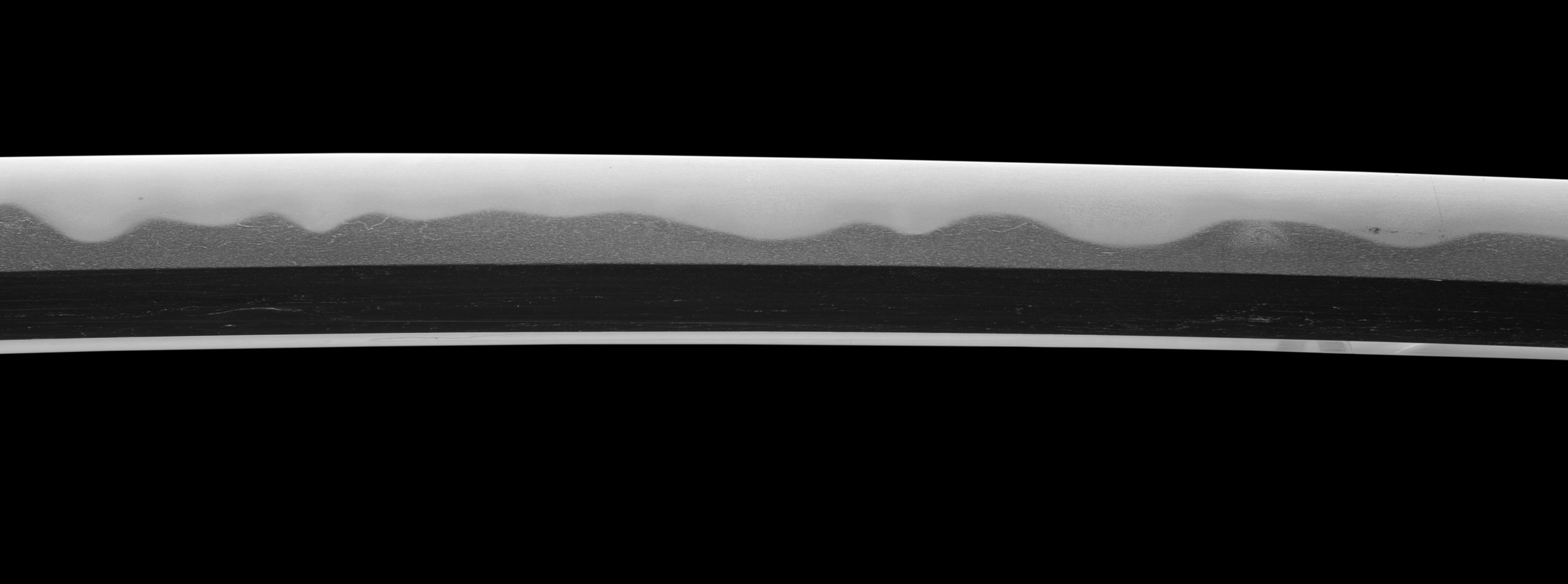
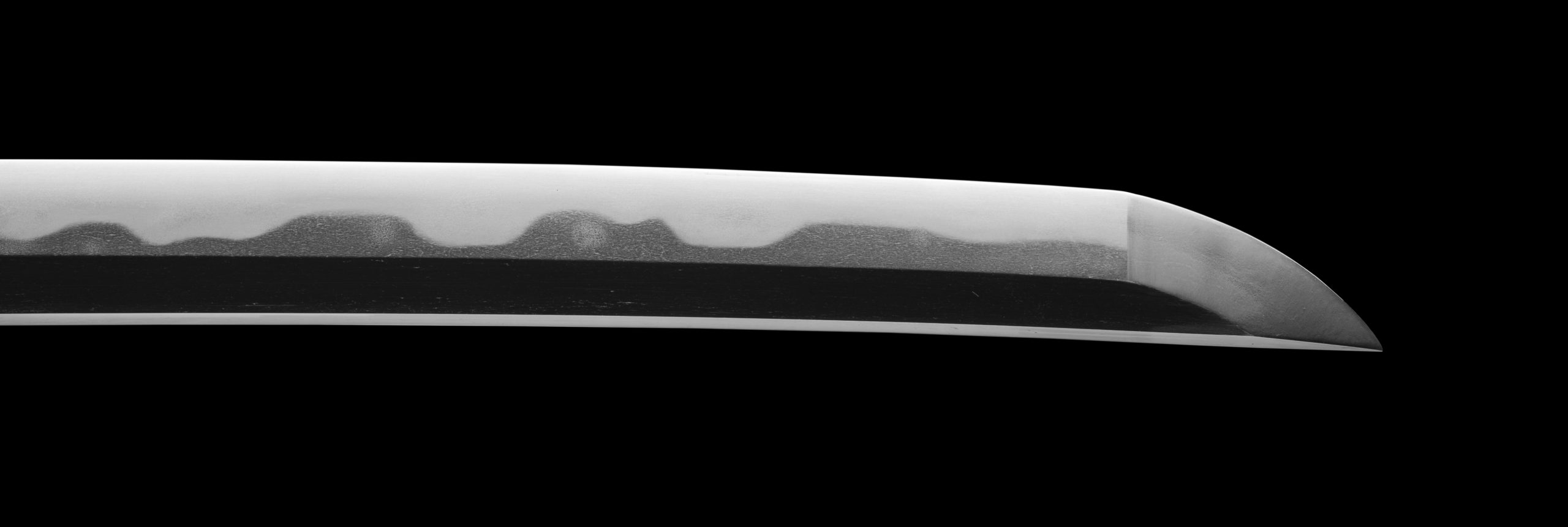
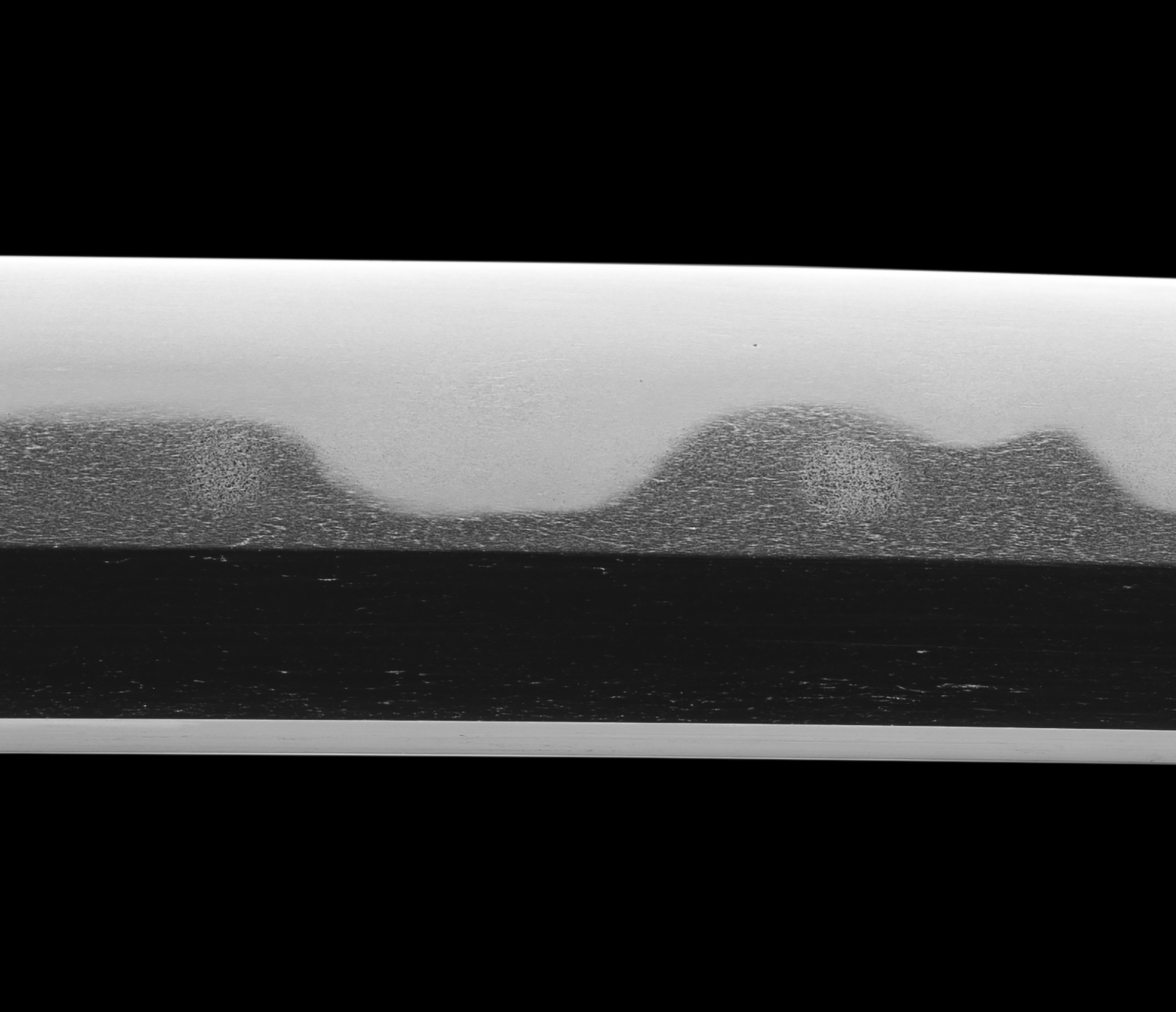

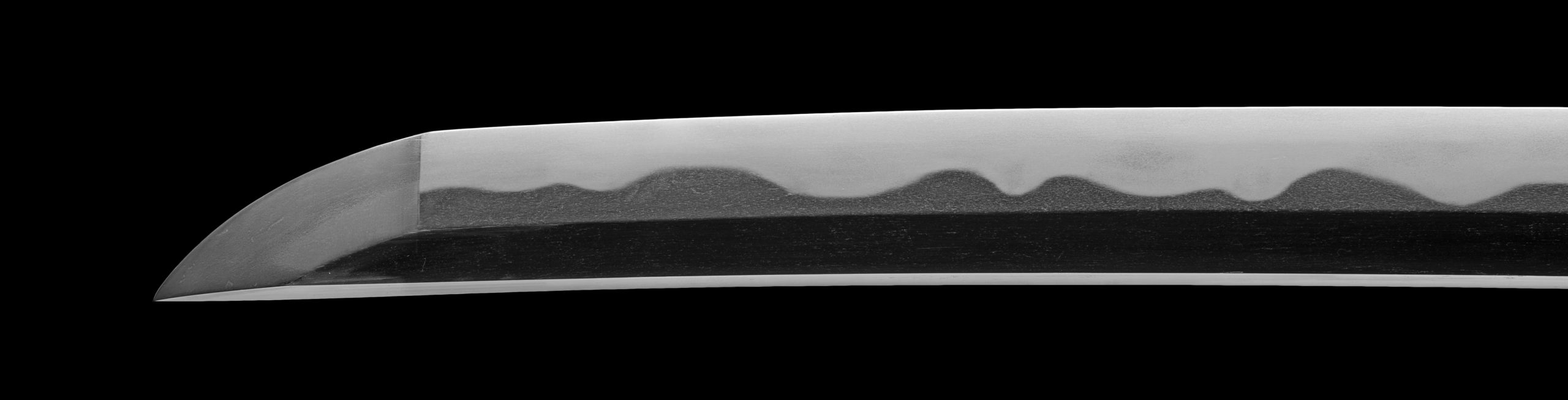
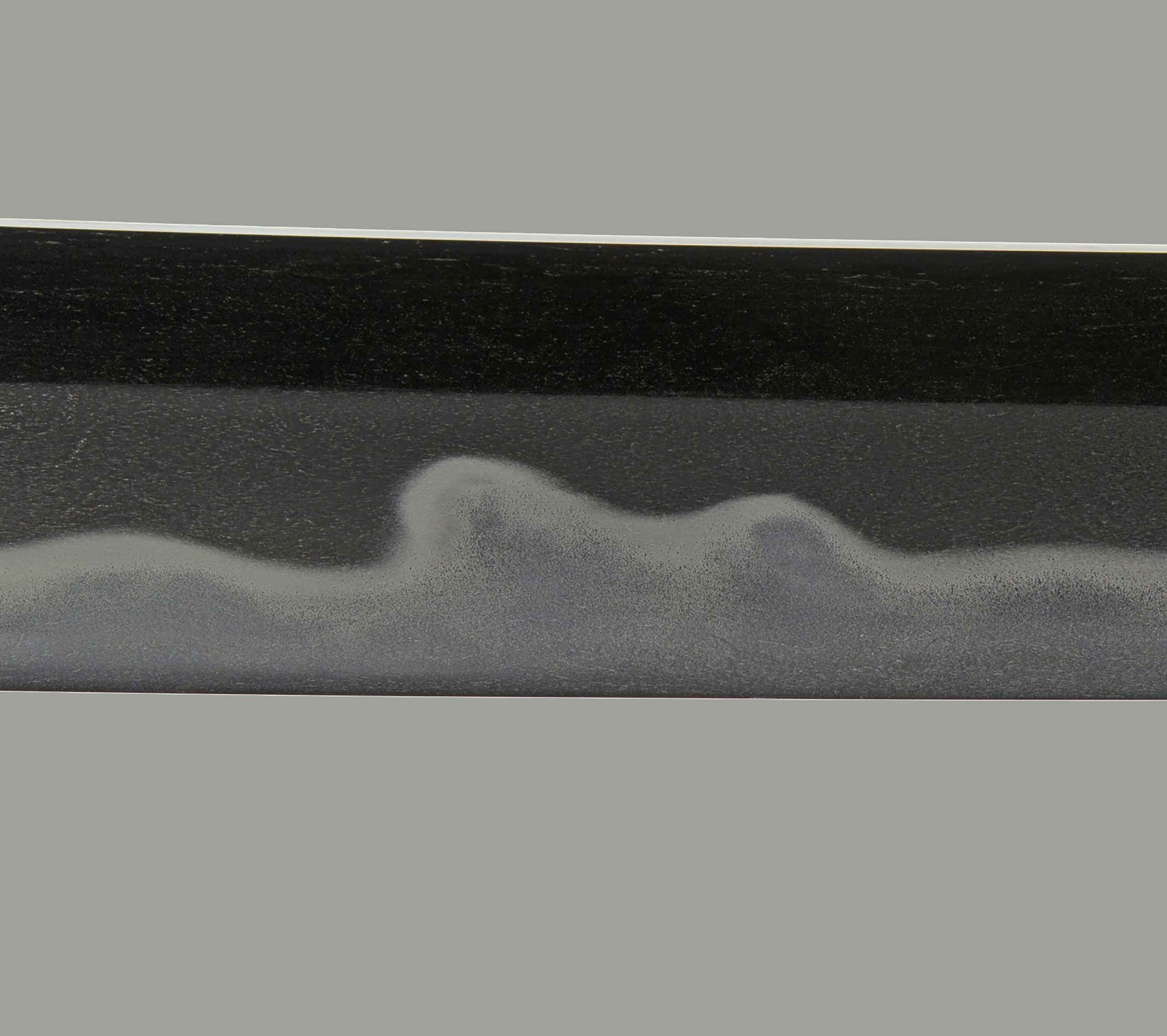
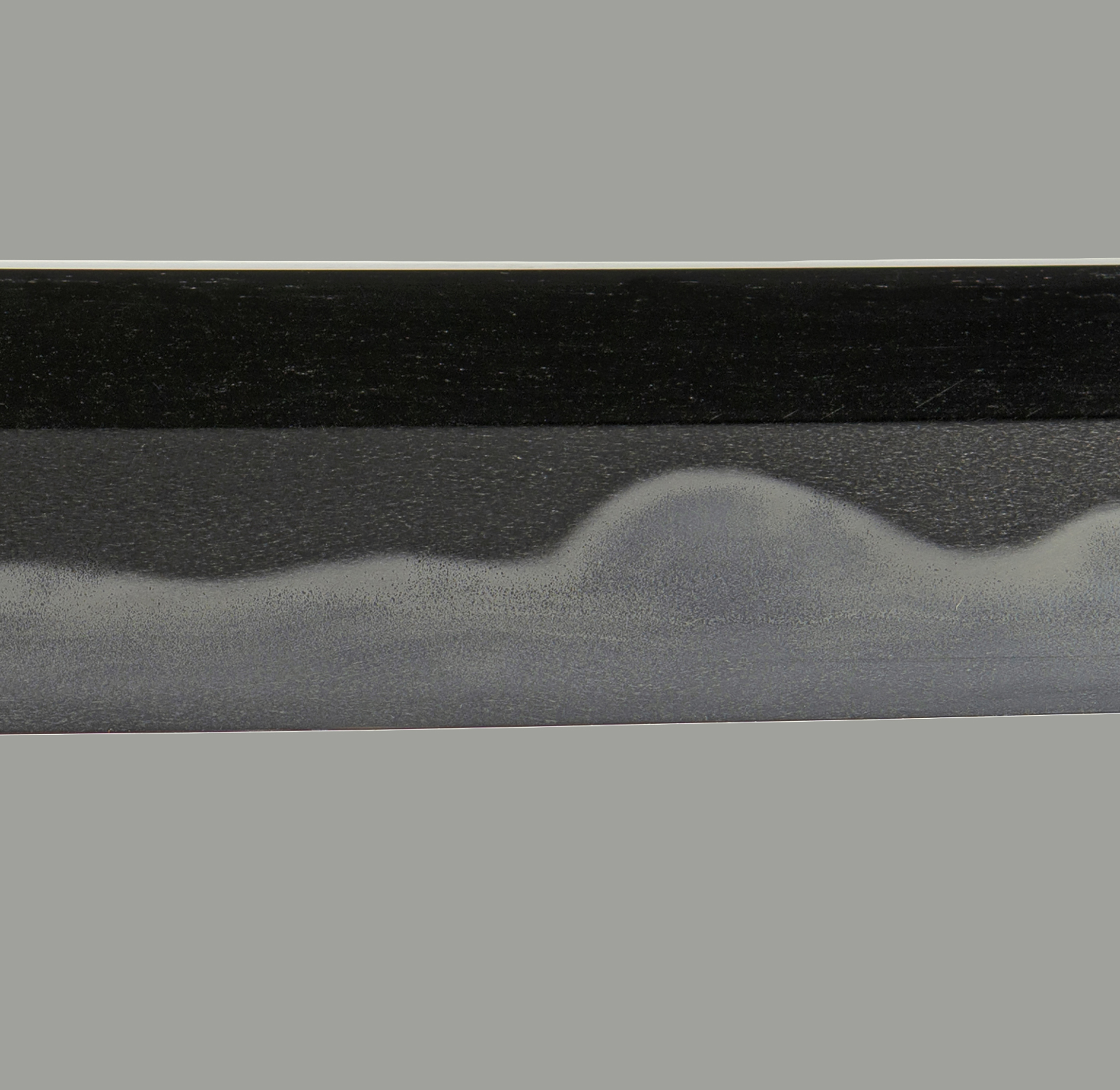
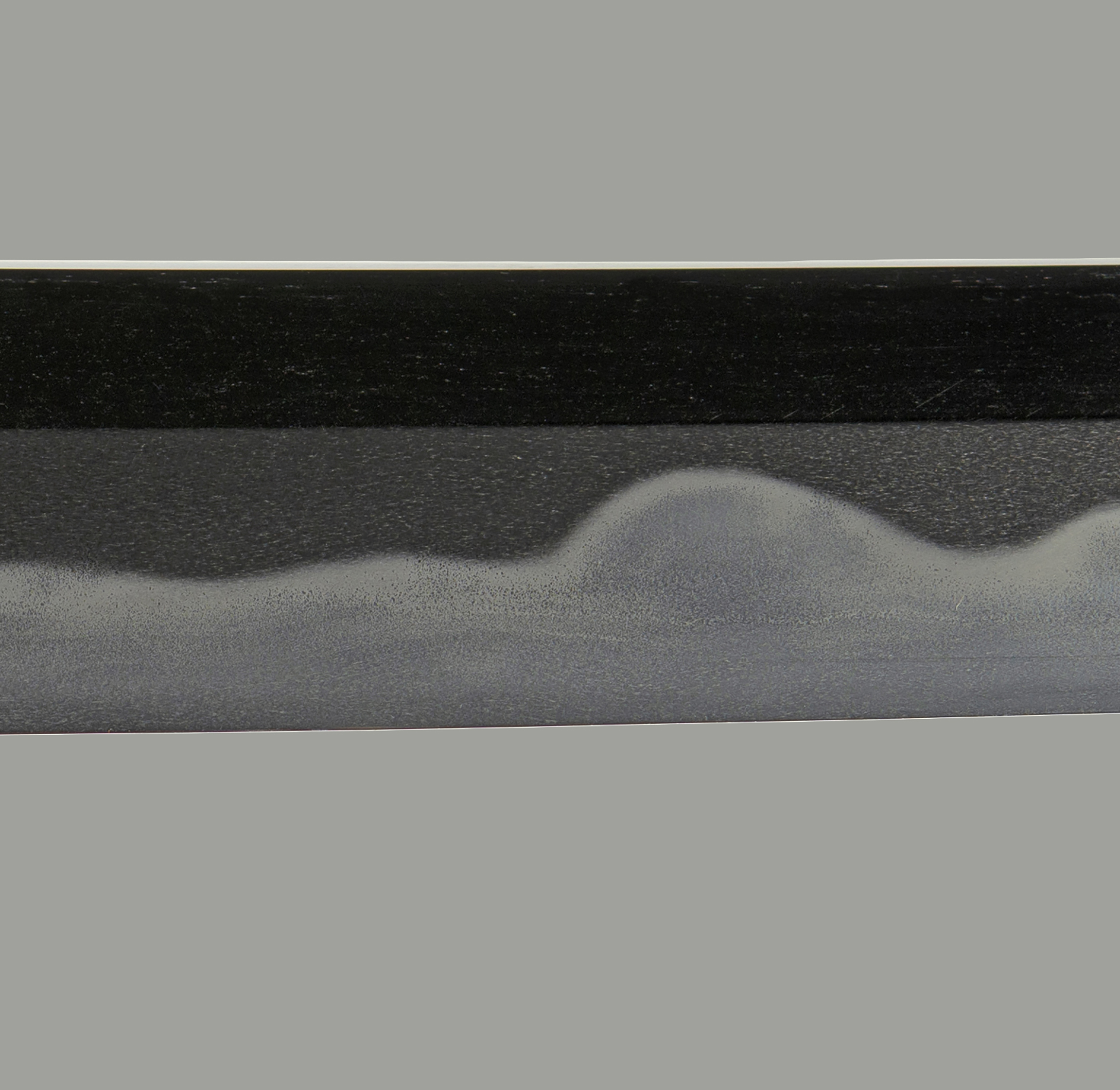
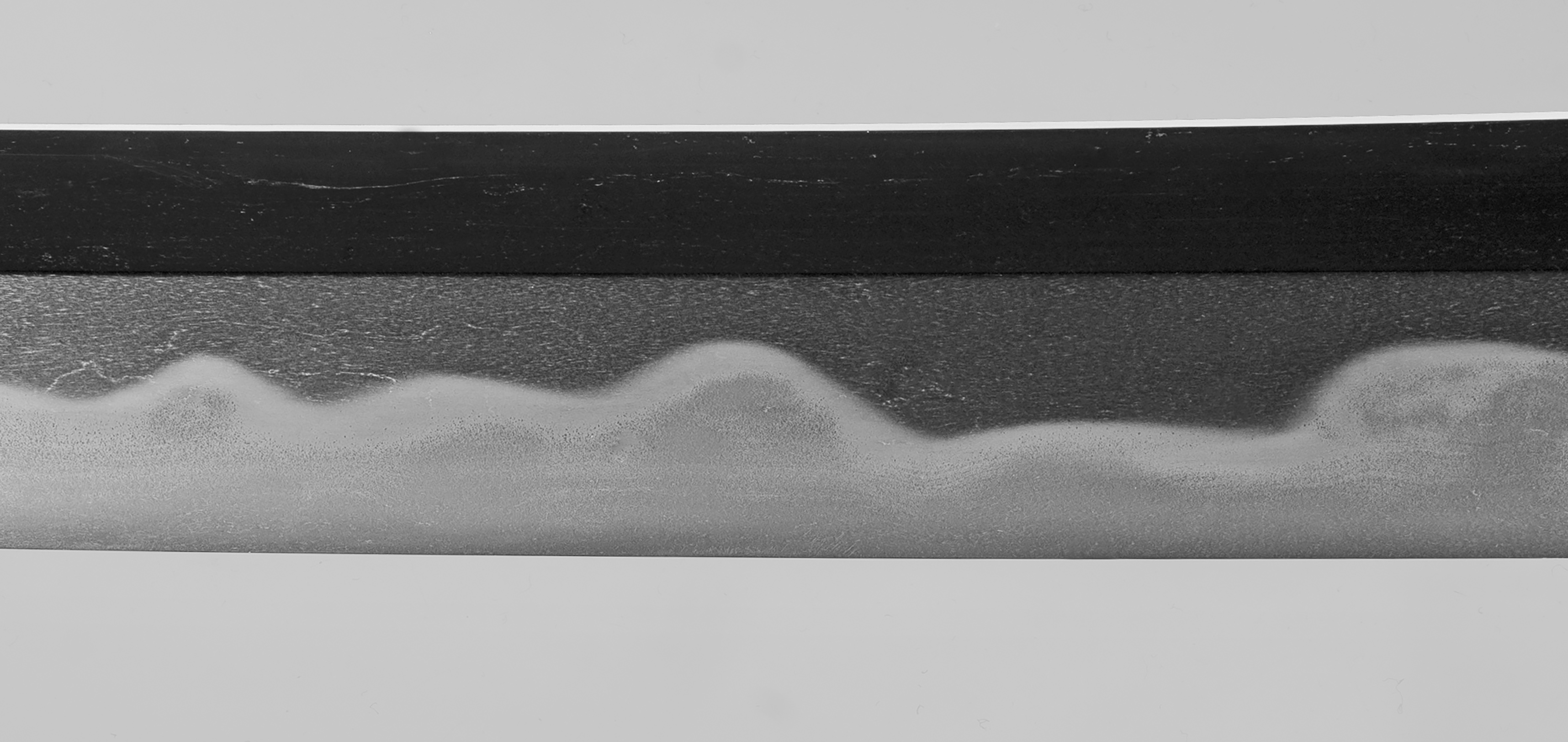






Hizen (waki-Hizen / Soba-Hizen, Saga) · Hizen · around 1639-1683
Fujishiro Jo saku · Tōken Taikan top 23%
9 pieces on the market now
Dewanokami Yukihiro, the first generation of the name, was born in Genna 3 (1617) as the second son of Hashimoto Yoshinobu, with the common name Kurobei. His elder brother was Kawachi no Daijo Masahiro, which made him a grandson of the first-generation Tadayoshi, and he worked at Saga on the collateral line of the Hizen school that the published sources call Soba-Hizen, beside the main house rather than within it. He received the title Dewa Daijo in Shoho 5 (1648), was promoted to Dewanokami in Kanbun 3 (1663), and died in Tenna 2 (1682) at the age of sixty-six. The name passed through several generations, and the published sources are careful on the point: of one katana they write that "there were several generations of the same name; this is the work of the first"[[c:1]].
Within the Hizen group his manner is known above all for a showy choji, and an early paper says simply that he tempers "particularly flamboyant choji within the school"[[c:2]]. On his finest katana a broad yakihaba carries a choji-midare mixed with gunome, angular and round-headed elements and yahazu-like forms, here and there boxy, the pattern large and florid. Long ashi enter vigorously and the nioi runs deep, with nie adhering thickly. Long sunagashi and kinsuji run through the edge, and the nioiguchi is bright. The published sources single out the vertically elongated choji-midare with long ashi as "something often seen in the first-generation Yukihiro" that "clearly manifests this smith's distinctive traits"[[c:3]]. On two outstanding katana they note that the kinsuji and sunagashi stand out beyond his usual work, and on one of them yubashiri-like tobiyaki lends a further charm.
The jigane is that of Hizen: a tightly forged ko-itame with dust-fine ji-nie laid thickly and fine chikei entering, which on several blades the sources call a refined komenuka-hada. On one katana they note a jigane of slightly blackish tone together with a straight yakidashi at the base below the midare, and they treat both as "one of the points of interest of Soba-Hizen"[[c:4]], rather than as faults. A second katana opens with the same straight yakidashi. The boshi runs straight to a ko-maru, on some blades an o-maru, often with hakikake and at times a deep turnback.
Beside the choji he commanded the school's traditional straight temper. A naginata carries a clean suguha over tightly packed ko-itame, its nioiguchi bright and clear. A katana shows a suguha-based temper over komenuka-hada, with an angular notare near the base suggestive of a koshiba. A katana in hiro-suguha, deep in nioi with thick ko-nie, is called a comparatively uncommon example for him, yet "work that could be mistaken for the suguha of the main line"[[c:5]]. One wakizashi reverses the usual Hizen arrangement, with choji and gunome above and a suguha-like shallow notare below; the sources call this unusual within the tradition, though the upper half is still the midare at which he excelled.
Separate from the hamon is the Aranda-kitae. He is said to have gone to Nagasaki in Keian 3 (1650) to learn Dutch forging under the Dutch smith Hisatsugu and Yakushiji Tanenaga, in essence a method of processing imported nanban-tetsu, and many of his blades carry the supplementary inscription "made with Dutch forging." He customarily cut the character ichi on the tang, and in rare cases the full form Hizen Ichimonji. One such katana lacks the Aranda inscription, which the sources take to mean that it was not made by that method. His nearest comparison in the record is his own brother: one large, florid gunome-midare katana is said "at first sight to call to mind rather the work of his elder brother Masahiro"[[c:6]], and another almost to recall a masterwork by Masahiro. His son, the second-generation Dewanokami Yukihiro, first signed Yukinaga, styled himself Tobanojo, and took the Dewanokami title in Jokyo 1 (1684), two years after his father's death.
Fifteen of his works are designated Juyo, and none stands in a higher tier; Fujishiro ranks him Jo saku. Dated pieces are few. A Kanbun 8 (1668) katana, made at fifty-one and bearing the Aranda inscription, is called "valuable source material"[[c:7]], and a long katana dated Enpo 6 (1678) was made as an offering to the Daijingu, a large work without any breakdown in ji or ha. Current owners are not recorded for these blades. Signed Juyo works by him do reach the market from time to time, though, as with most designated swords, they are far more often held than traded.
Where Yukihiro stands among comparable artisans: across all of nihontō, and within tradition, era, and period. The tiers (Foremost · Leading · Major · Notable) weigh official designations from the NBTHK and Japan's Agency for Cultural Affairs, together with historical honors of lasting repute such as the Sansaku and Meibutsu-chō.
Select a lens to see how it's measured.
Years he was demonstrably active, proven by signed-and-dated blades
Shinto · Hizen
105 pieces on the market now
The Hizen school began with a single domain commission. In Keicho 1 (1596) the Nabeshima of Hizen ordered Hashimoto Shinzaemon, the smith who would sign Tadayoshi, up to Kyoto with the carver Munenaga; there he entered the gate of Umetada Myoju and studied forging while Munenaga learned the chisel. The two returned to the province in Keicho 3 (1598), and Tadayoshi settled in the castle town below Saga, where under the domain's patronage the line grew into the dominant sword-making house of Kyushu. His own work runs from Keicho 5 (1600) to his death in Kan'ei 9 (1632); in Genna 10 (1624) he received the court title Musashi Daijo, changed his name to Tadahiro, and shifted his clan name from Minamoto to Fujiwara, so that the late Musashi Daijo blades are the founder under a second name. From him the house became a true generational institution: his son the second-generation Omi Daijo Tadahiro carried it forward as its most prolific hand, the third-generation Mutsu no Kami Tadayoshi returned its highest finish, and a Tosa no Kami branch took the founder's signature when he set it aside. Around this main line grew a circle of disciples and collateral hands, the waki-Hizen or Soba-Hizen smiths, several of them, like Yoshiie and Hironori, working as daisaku substitute makers whose own signed pieces are therefore scarce. The school's signature is its steel. Over a ko-itame forged so tightly it shows no slackness, fine ji-nie gathers in minute particles until the surface takes on the rice-bran konuka-hada (also written komenuka-hada) that no other school produces, fine chikei entering throughout and the ji notably clear and bright.
The orthodox temper laid upon it is a chu-suguha or hiro-suguha, sometimes tinged with a shallow notare and ko-gunome, the nioiguchi deep with finely clustered ko-nie and tightened to a bright clarity, the boshi running straight to a quiet ko-maru. The founder aimed this suguha toward the Rai school yet departed from it, his nioiguchi tighter and his forging carrying more vigor; the third generation refined it to what the published sources call the strongest and most precise hand of the first three generations. Against that calm register the house also worked a showier one, the Hizen choji-midare mixing gunome, long ashi, kinsuji and sunagashi, a manner the published sources already find more often in the founder's late Musashi Daijo work than in his Tadayoshi years, and one the second generation made his own. The branches pushed further from the suguha standard: Tadakuni of the Ogi domain ran sunagashi more conspicuously than any other Hizen hand and reached toward old Ichimonji in his o-choji; Masahiro and Yukihiro favored a flamboyant long-ashi choji over the calm main line; and the Iyo no Jo Munetsugu line worked apart in the Soshu-den, building a midareba on notare with a pointed togariba and a jihada that tends to stand and tone slightly blackish. A collector seeks Hizen-to first for that steel, and reads it the same way the appraiser does: a bright suguha lying over a clear, tight konuka-hada identifies the school before the signature is consulted, and the quiet ko-maru boshi on the ura-signed tang confirms the main-line practice. Generation and branch are then told within that frame, the third generation's powerful sugata recalling not his father but his grandfather, the waki-Hizen hands set apart by their irregular temper, their sujikai file marks and a sashi-ura signature, the Munetsugu line by its Soshu togari. The main line, made in real numbers across so long a span, reaches the market more readily than any Kamakura master, so a papered example is within reach of a patient collector, while the founder's own work and the finest konuka-suguha of the third generation come to open hands only from time to time. Provenance runs back through the house the school served, blades recorded to Nabeshima Katsushige and Nabeshima Naomoto and passing onward to the Owari Tokugawa, the Satake and the Imperial families; documentary inscriptions sharpen the picture further, a Myoju soemei attesting the founder's discipleship, Umetada carving adding flowers to brocade on his late blades, and the gold-inlaid cutting tests of Yamano Kanjuro and Yamano Ka'emon, rare on Hizen work, naming the edge as well as the hand. Learn more →
| Smith | Era | Designated |
|---|---|---|
| Tadayoshi忠吉 | 1596-1632 | 155 |
| Tadayoshi忠吉 | 1660-1686 | 61 |
| Tadahiro忠廣 | 1633-1693 | 133 |
| Masahiro正廣 | 1624-1655 | 30 |
| Tadakuni忠國 | 1648-1652 | 32 |
Hizen: a domain enterprise
Hizen swords were a domain enterprise: the Nabeshima sent Tadayoshi to study under Umetada Myōju around 1596, then built a licensed school around him. Nine generations carried its famously consistent konuka-hada work into the Meiji era.
A Hozon-certified blade judged to show notably superior workmanship and a better state of preservation. The bar is higher: re-tempered blades and most unsigned Muromachi/Edo works are excluded.
The NBTHK (Nihon Bijutsu Tōken Hozon Kyōkai, the Society for the Preservation of Japanese Art Swords) is a public-interest incorporated foundation founded in 1948 and supervised by Japan’s Agency for Cultural Affairs (Bunkachō); it is based at the Japanese Sword Museum in Tokyo. Its expert panels physically examine each submitted work (shinsa) and issue a certificate (kanteishō) ranking it by artistic and historical merit. NBTHK papers are the most widely recognized standard of authentication for Japanese swords and fittings.
NBTHK official site24 hour inspection period for all Antique items (USA only); all sales final on International orders.
Price on request
Certificate reading — 銘 一文字出羽守行広(金象嵌)寛文四年八月廿八日 山野加右衛門六十七歳永久(花押)二ッ胴三ッ胴截断