 NihontoWatchNihontoWatch
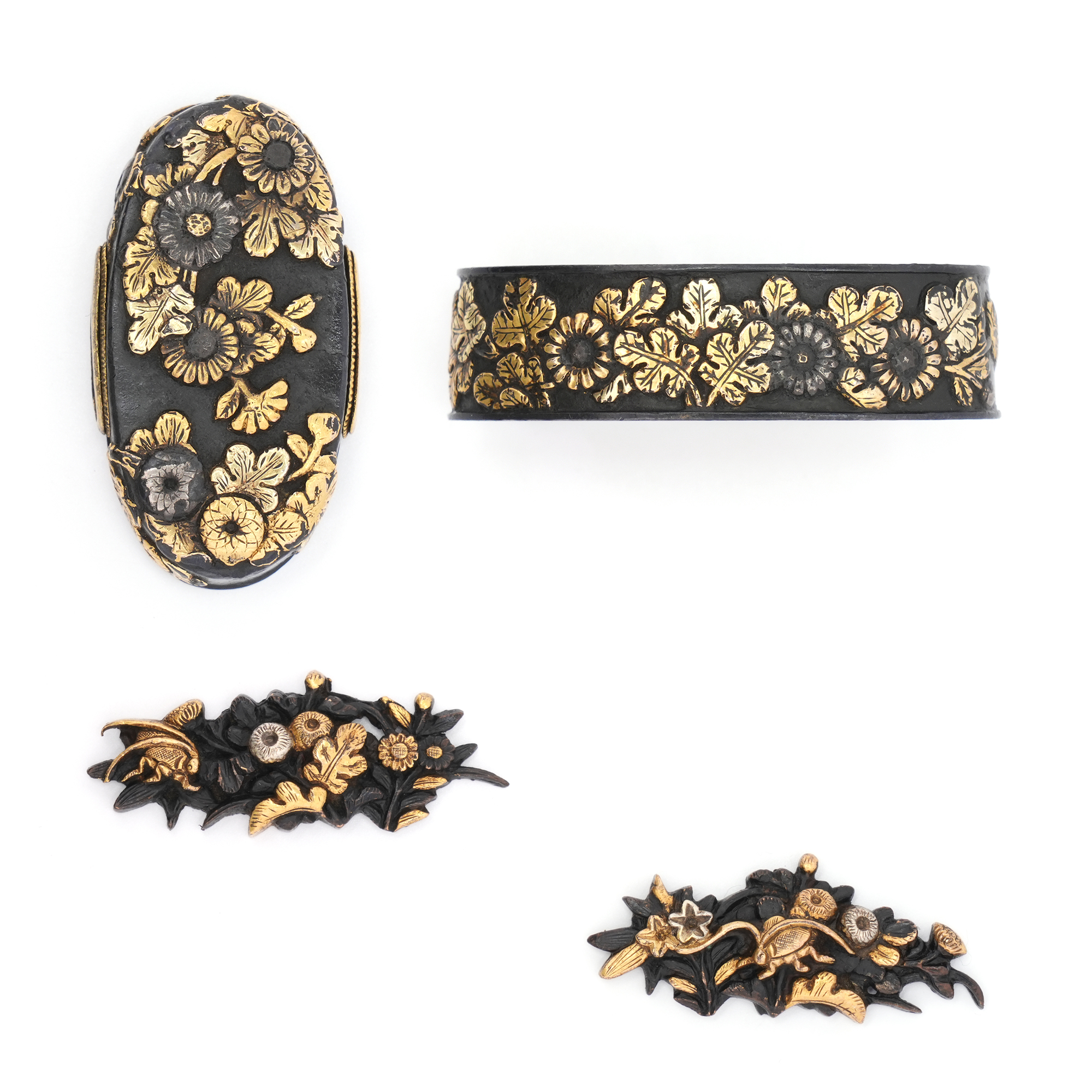
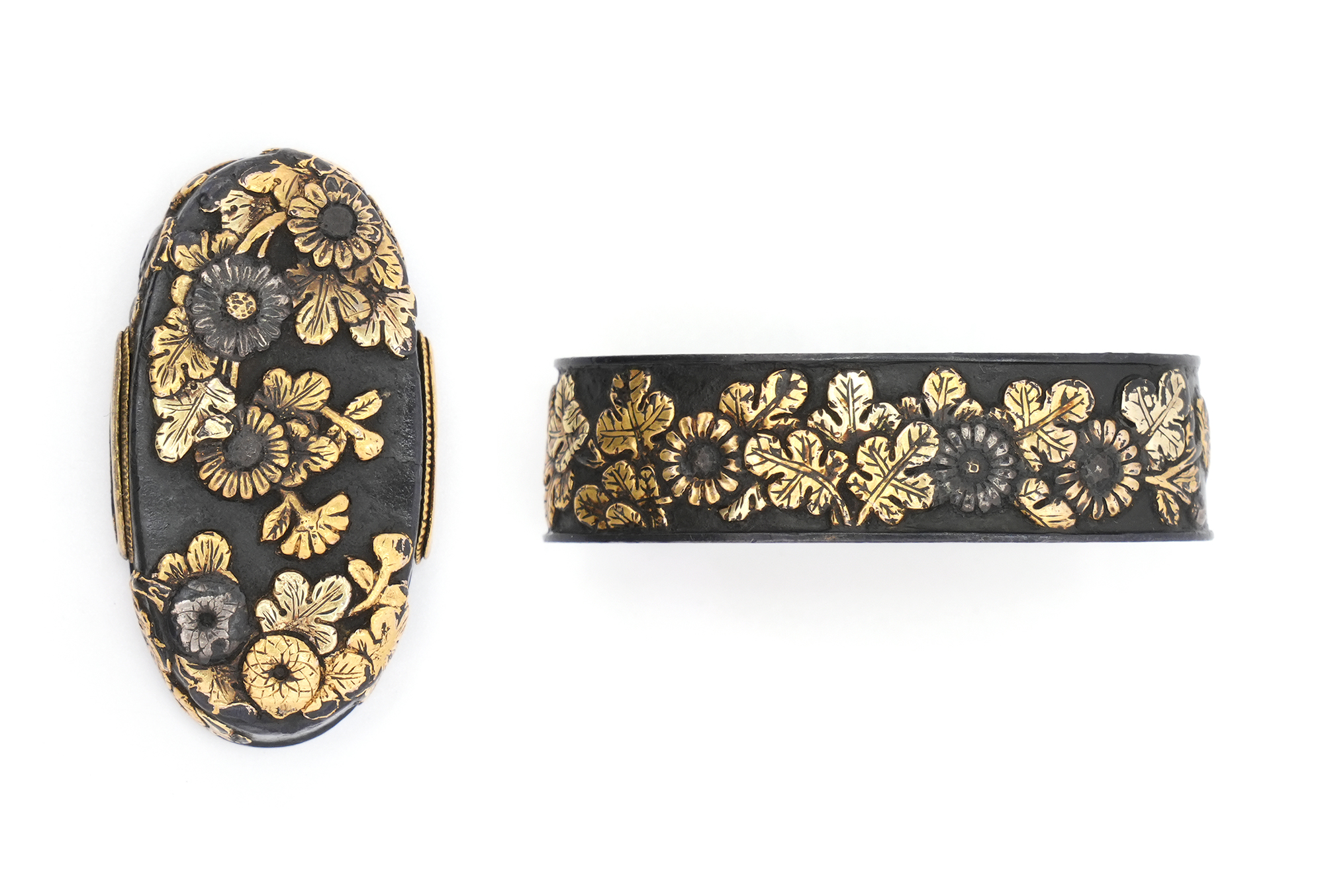
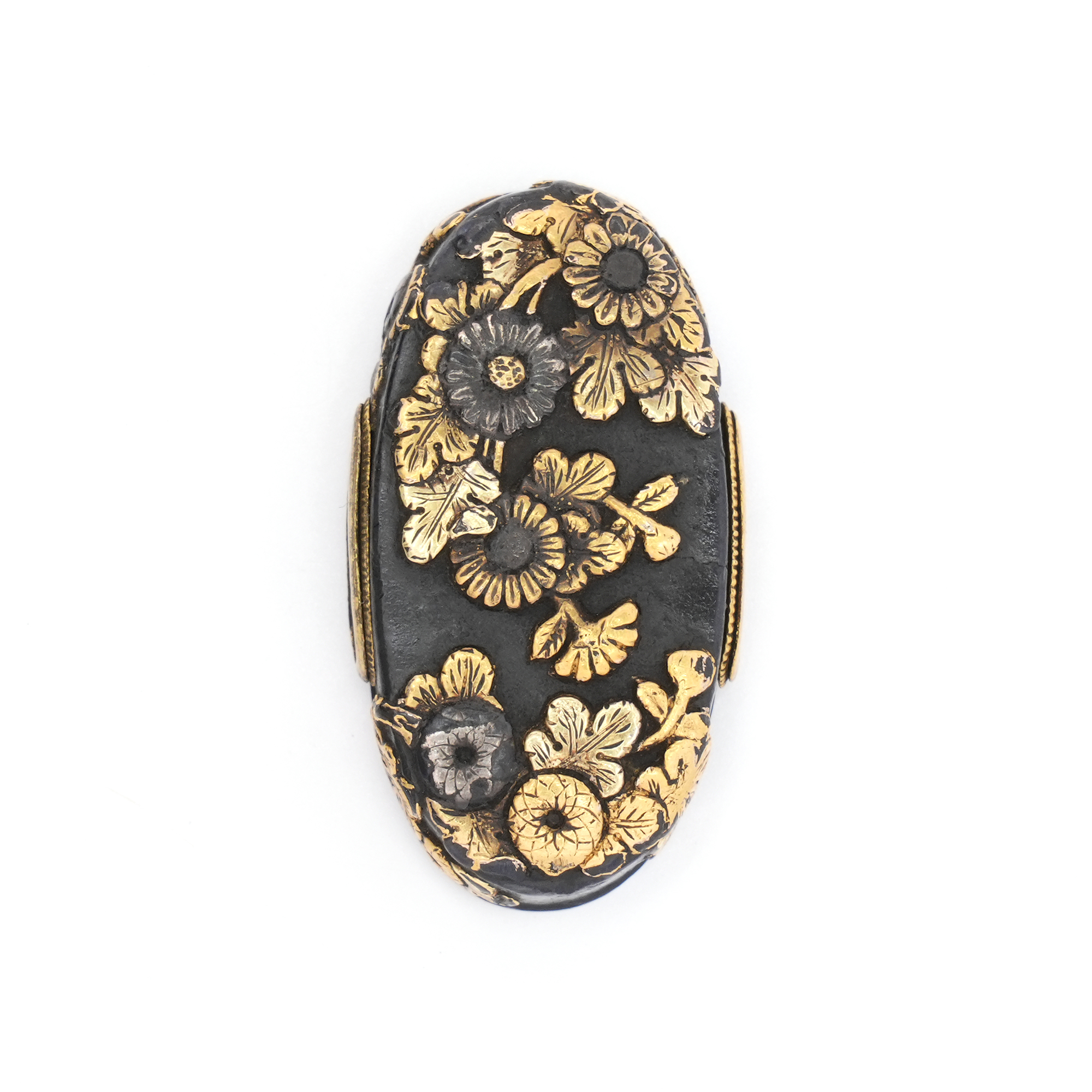
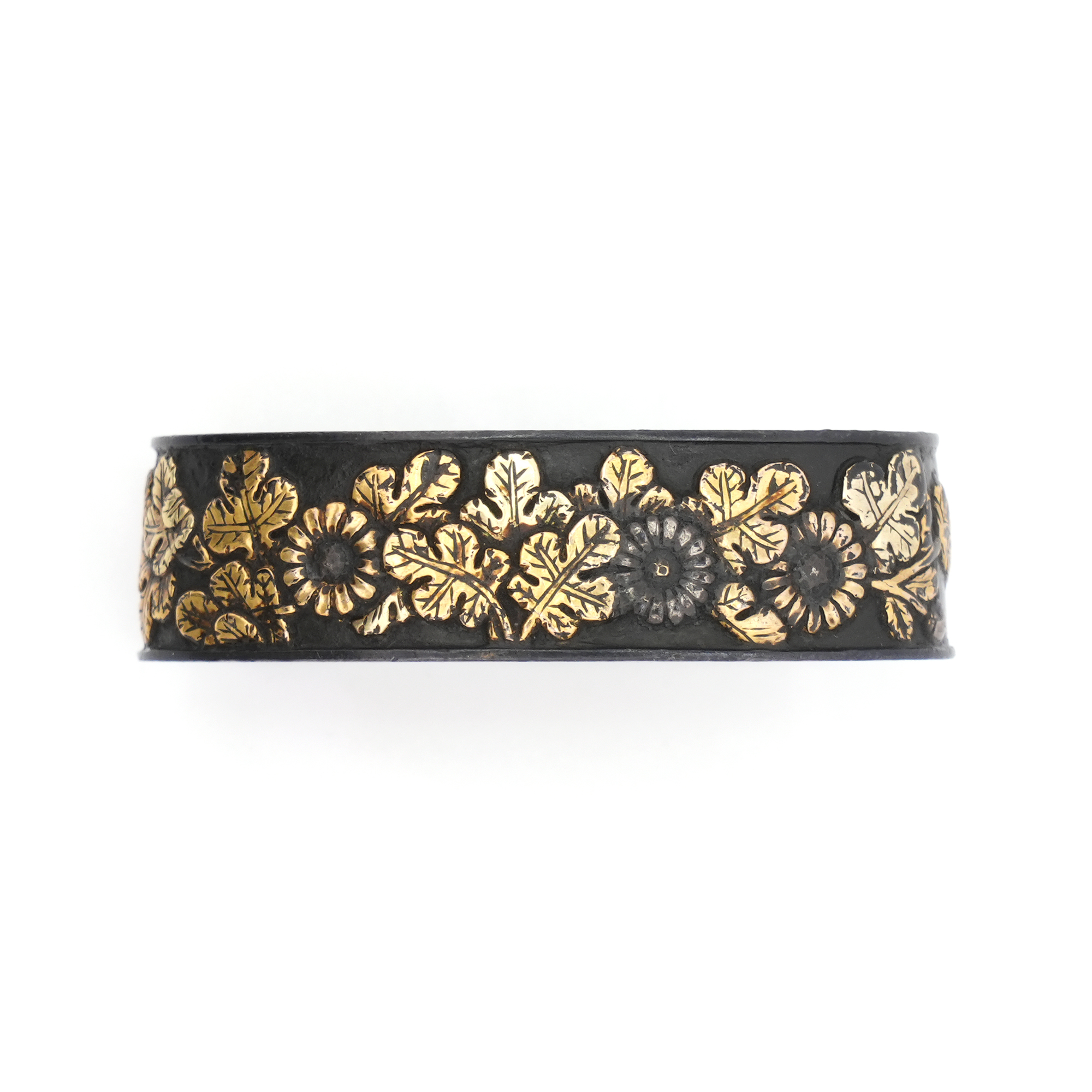
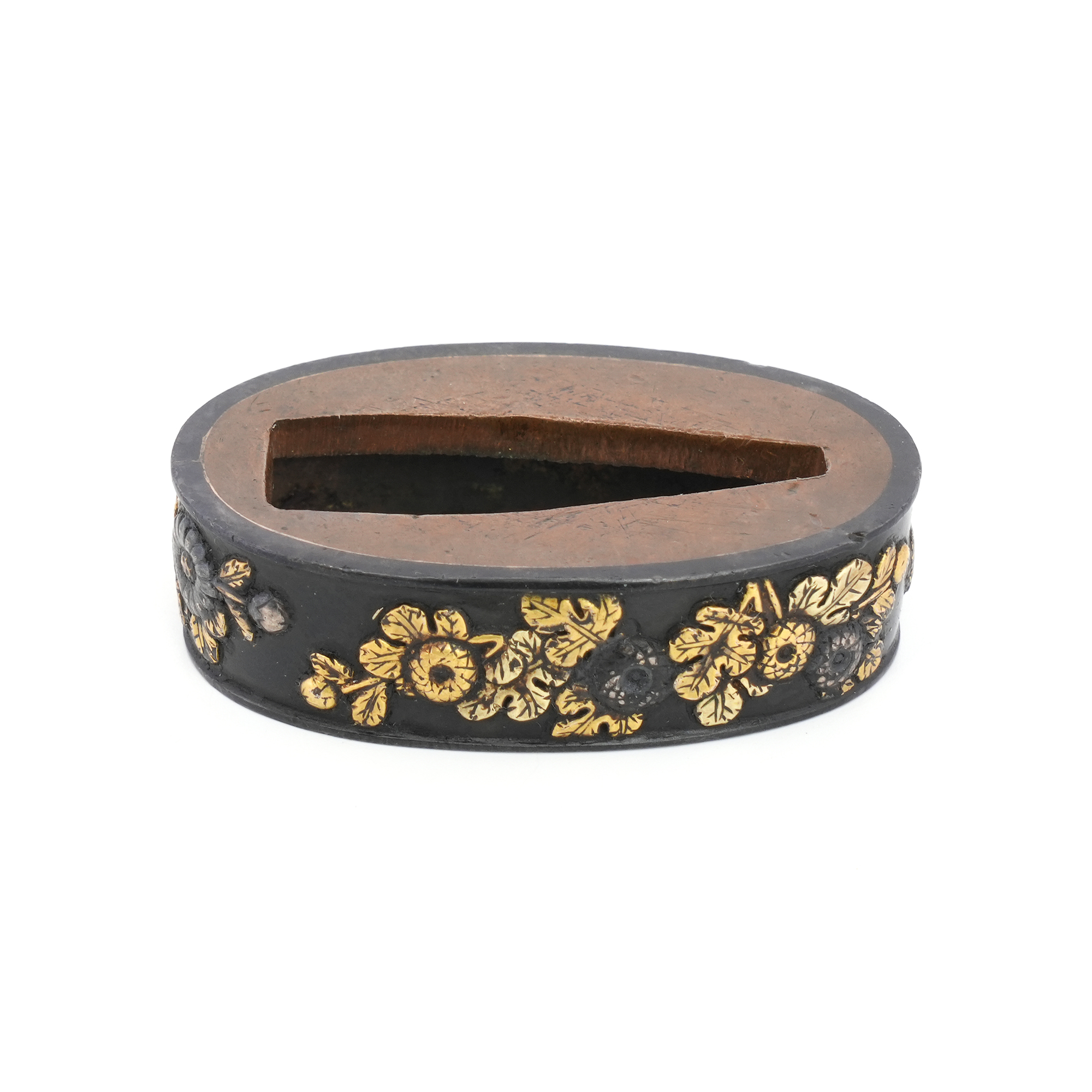
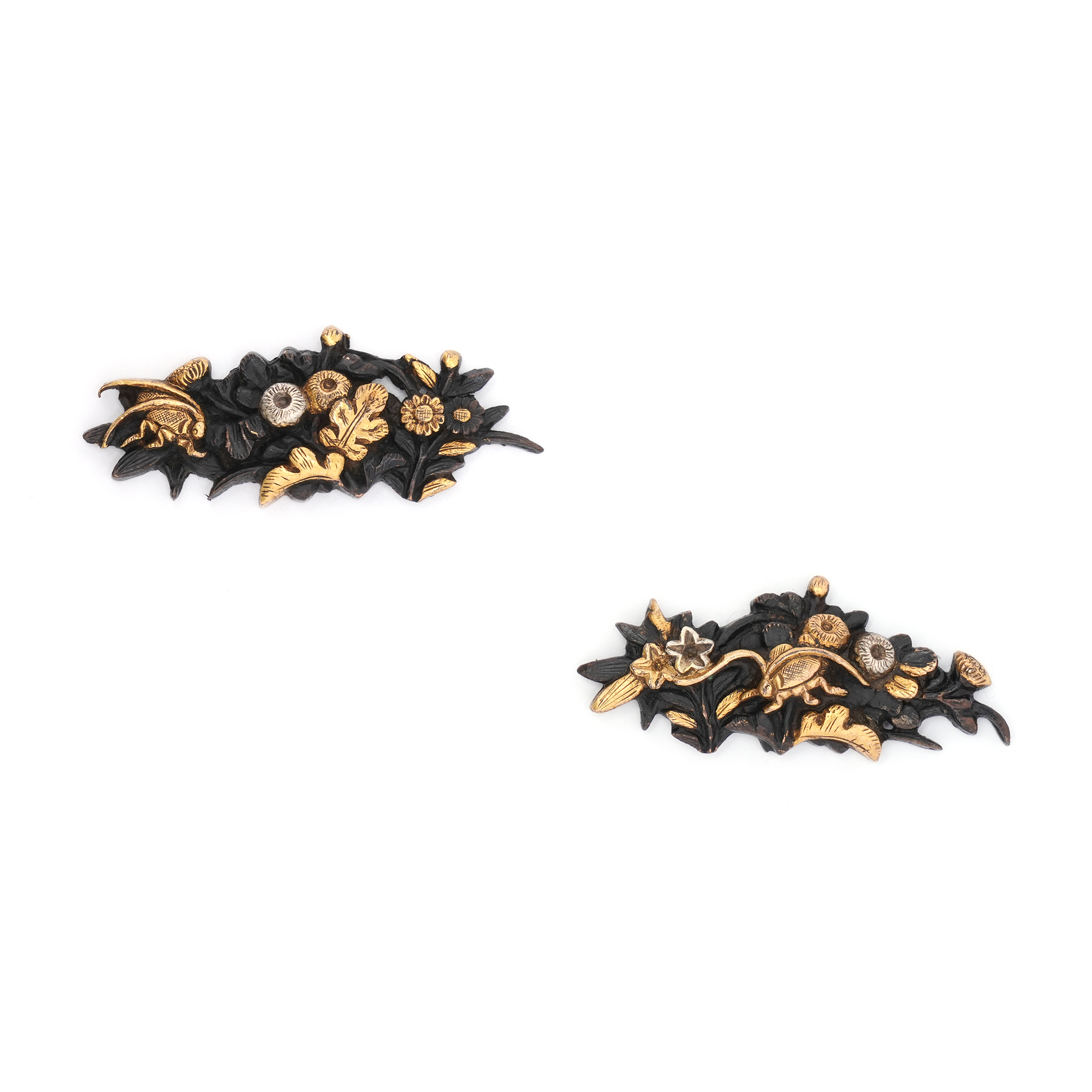
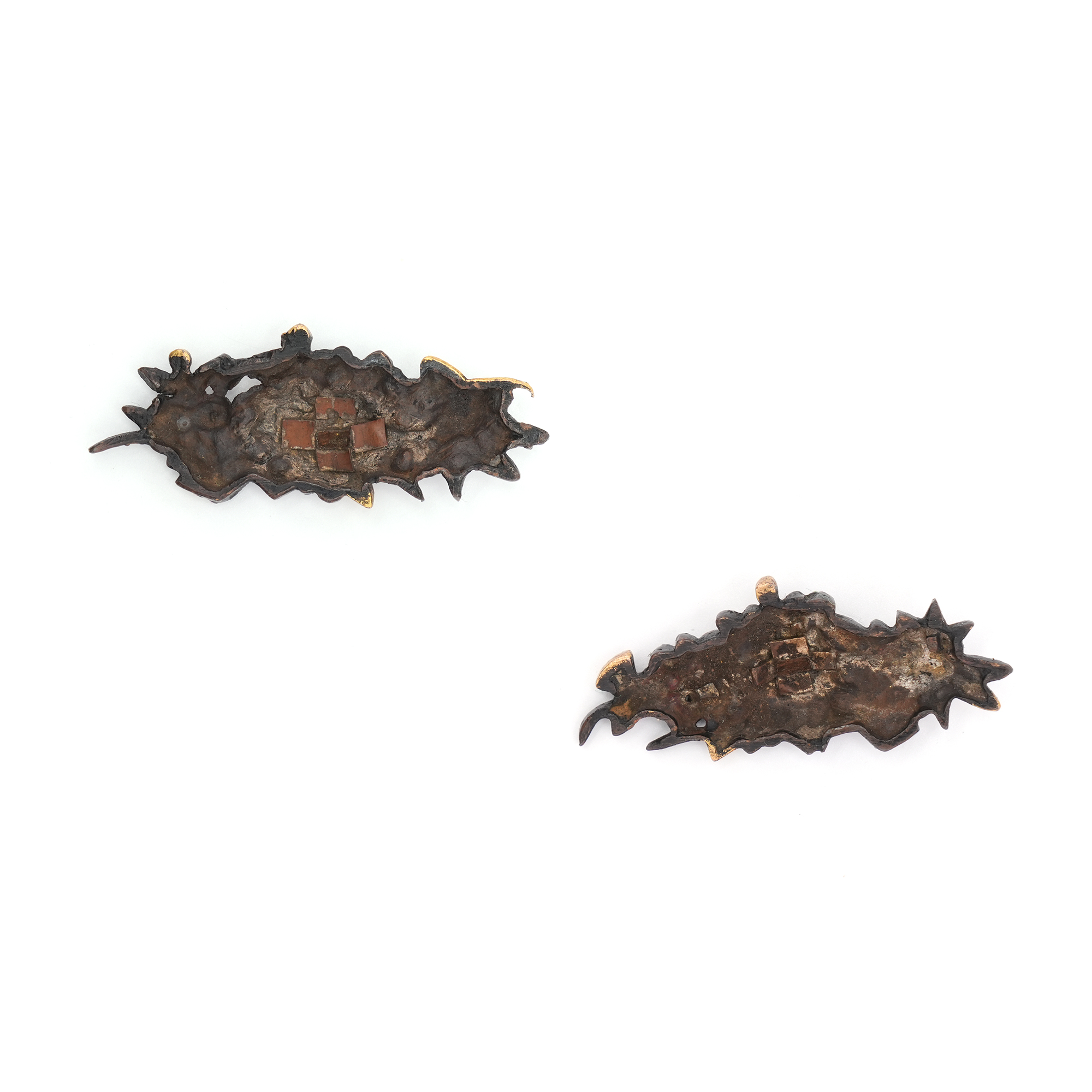
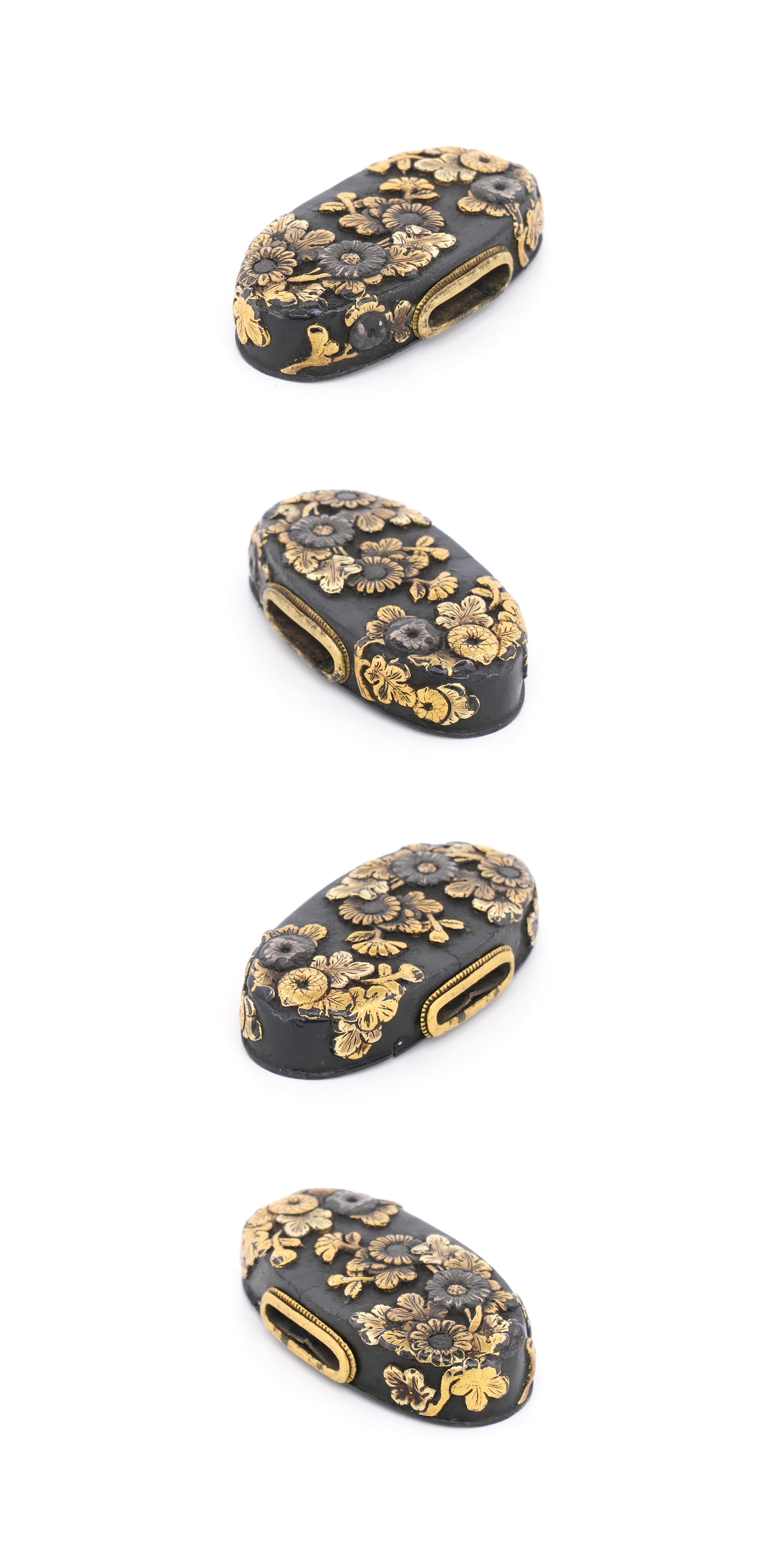
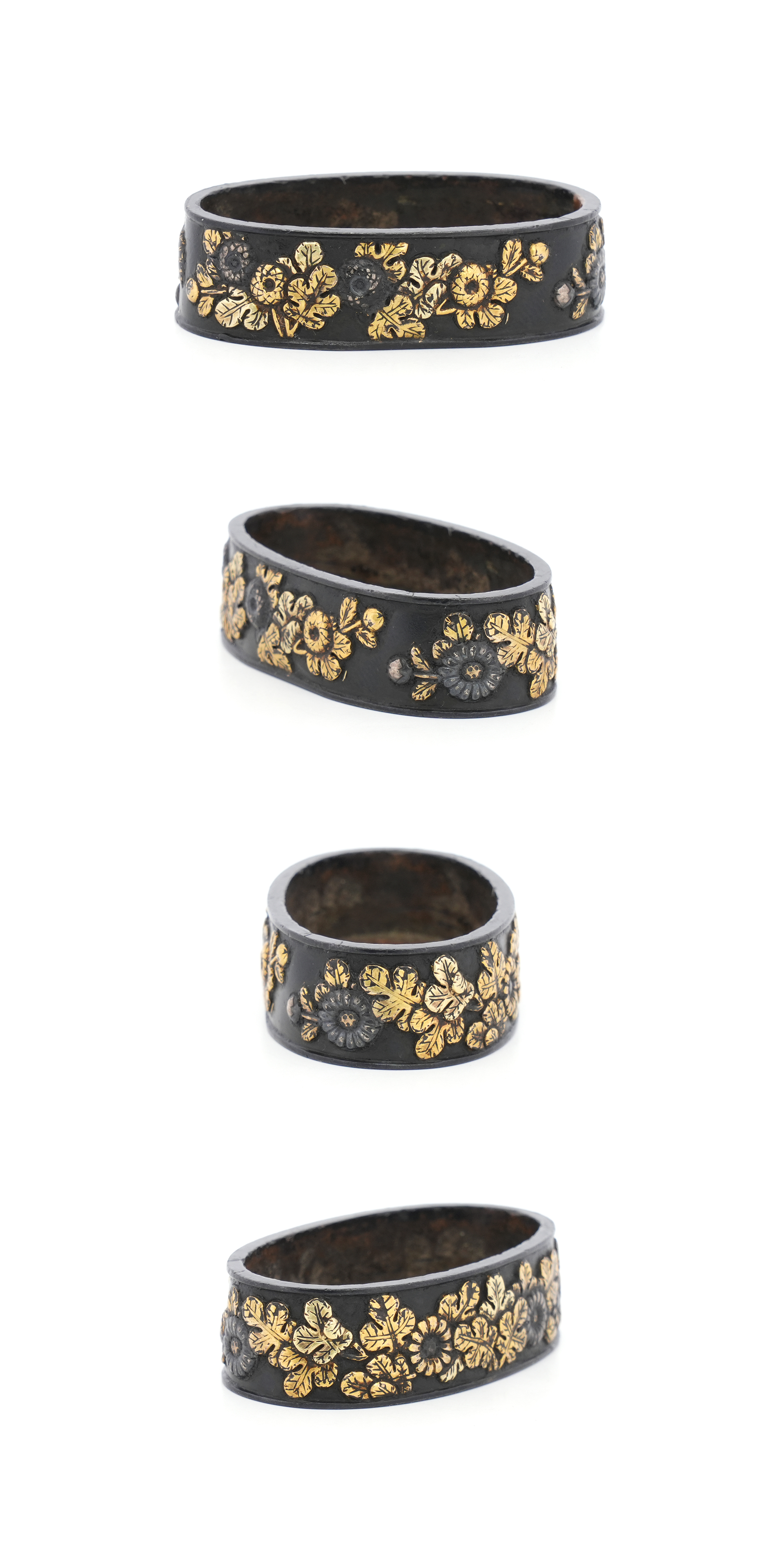
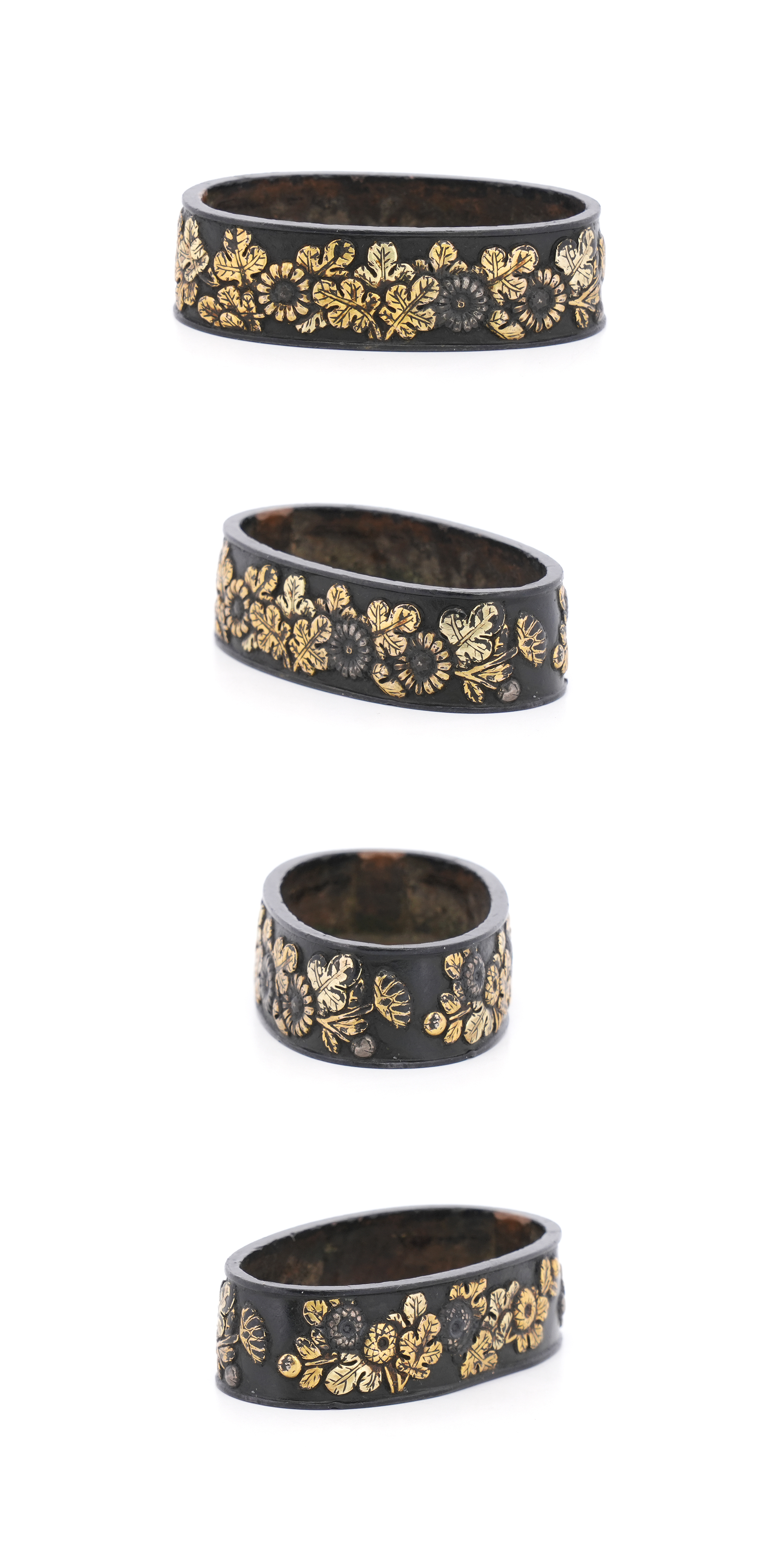
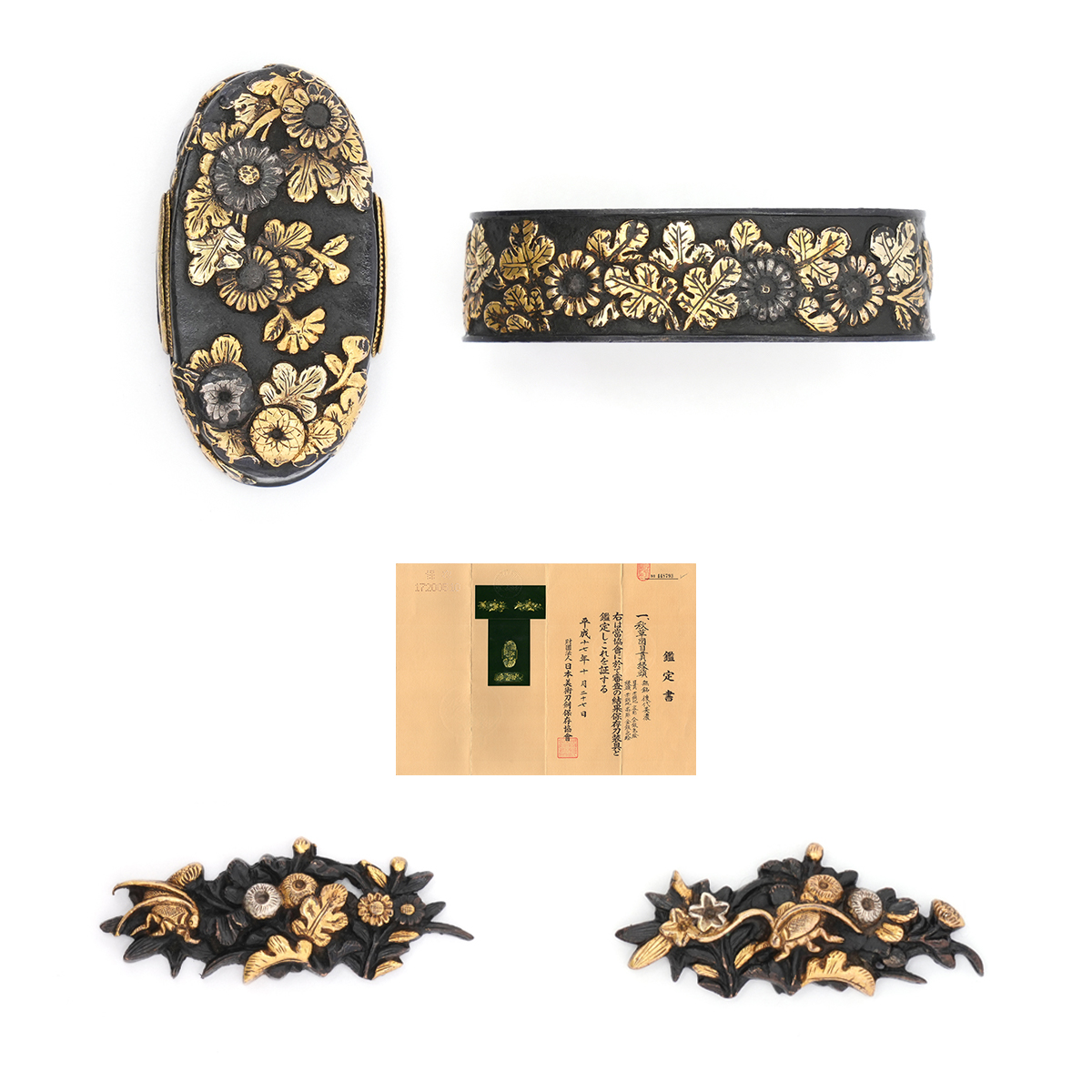
Mino kinko is a school of tosogu that developed from the end of the Muromachi period and spread throughout the country from the Momoyama period to the Edo period. Characterized by a flamboyant style featuring takabori iroe on tetsu or shakudo grounds, they left behind many works that skillfully express natural motifs, particularly flowering grasses and insects. This work is a set of akigusa-zu menuki and fuchigashira using a shakudo ground; the fuchi and kashira depict autumn grasses centered on chrysanthemums in takabori, finished flamboyantly with a mix of kin and gin iroe. Large and small flowers and leaves are arranged continuously across the entire fuchi, and the design, which unfolds without gaps while maintaining variety in the composition, is magnificent, with the contrast between the golden shining leaves and petals and the deep black shakudo ground giving a vivid impression. A large chrysanthemum bloom is set on the kashira, and by filling the surrounding area with autumn grasses, it creates a splendid atmosphere as if condensing an autumn field. The menuki are akigusa-zu in katachibori, featuring an autumnal design with suzumushi skillfully placed among the flowering grasses; despite their small size, the suzumushi, carved meticulously down to the fine details, evoke a scene of quiet autumn serenity. The coloring by kin and gin iroe is also effective, and as they are unified as a soroiganaqu with a design common to the fuchigashira, they will surely show even greater harmony when incorporated into a koshirae. The state of preservation is also relatively good, and it is blessed with the remaining condition of the kin and gin iroe, making it a work where one can fully enjoy the flamboyant style typical of later Mino. Using the elegant themes of autumn grasses and suzumushi that have been beloved by Japanese people, this set can be highly evaluated as a fine piece that combines the decorative quality unique to Mino kinko with a sense of the season.
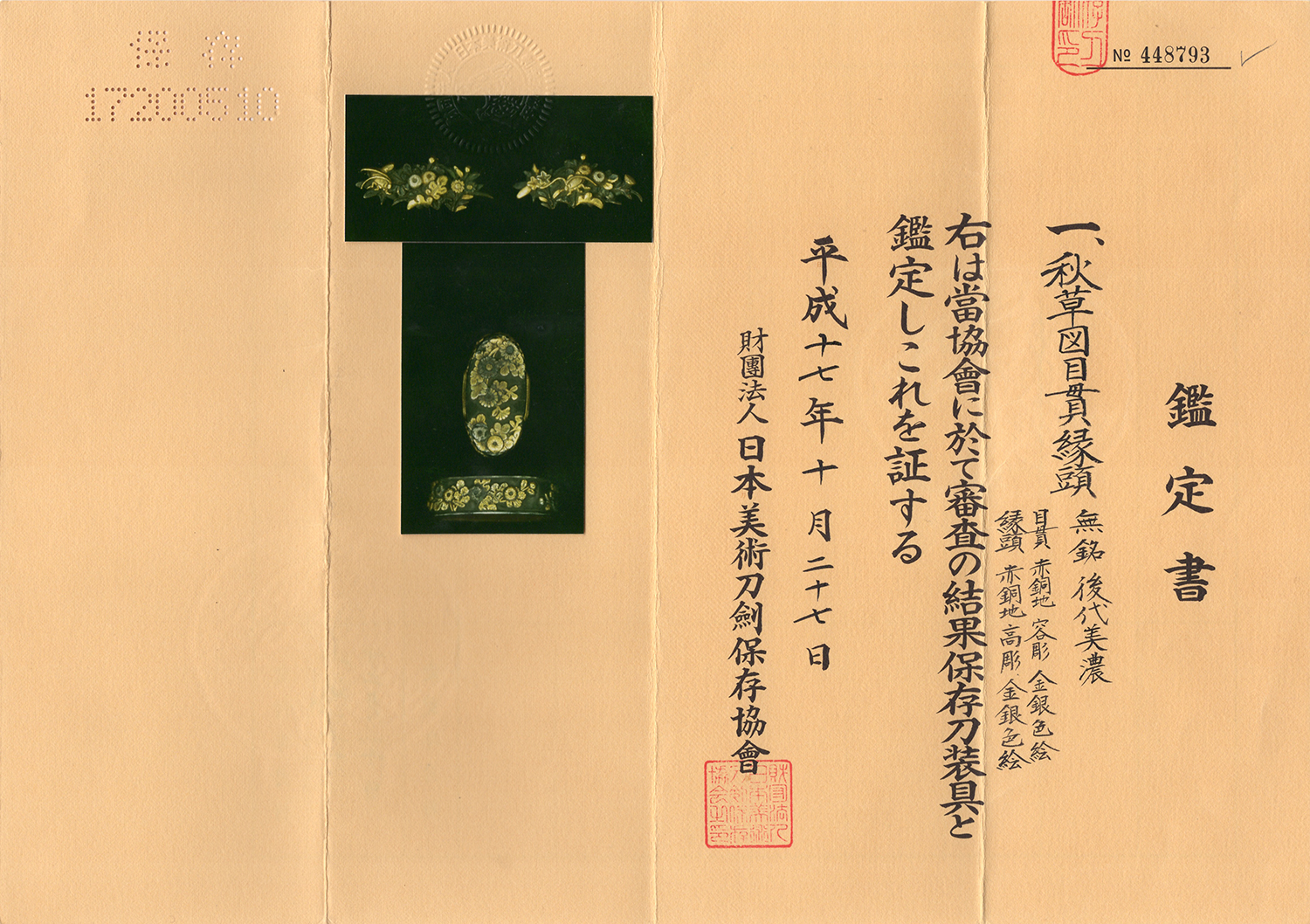
Certificate reading — 無銘(後代美濃)
NihontoWatchMino School美濃派
Offered by Toushin
19 on the market
Mino School
Nanbokuchō
Mino
Unsigned
Hozon (NBTHK)
As written by the shop
Machine translation from the shop's Japanese · may contain errors ·
Kinko · Mino
19 pieces on the market now
The Mino metalworking tradition emerged as a distinct school of early kinkō (sword-fittings artisans) active from the late Muromachi period through the Momoyama era. Rooted in the broader stream of ko-kanagu-shi (early metal-fittings makers), Mino craftsmen developed alongside but separate from the courtly Gotō lineage, serving a different aesthetic sensibility. Their chronological range extended through the transition into the early Edo period, though the tradition's characteristic vocabulary crystallized during the turbulent decades of the late sixteenth century. The hallmark of Mino workmanship lies in its distinctive approach to relief carving and decorative treatment. Rather than the refined, minutely detailed dragons favored by the Gotō house, Mino artisans developed the specialized "Mino dragon" (Mino-ryū) idiom: large-scale compositions executed in usukin-dashi (thin raised metal), characterized by sinuous, writhing forms with extensive sukashi (openwork).
Beyond dragon motifs, Mino craftsmen rendered auspicious subjects—cranes, turtles, pine, and bamboo—as well as floral designs such as wisteria in karakusa (arabesque) arrangements. The technical vocabulary consistently emphasizes vigorous yōbori (high-relief carving) with robust, thick-boned modeling and forceful execution, often on grounds of shakudō nanako-ji or solid gold, with enrichment through gold iroe and inlay. Works attributed to the Mino school are valued for their sumptuous materiality and animated sculptural presence. The tradition's preference for deeply cut relief with pronounced peaks and valleys creates a dynamic visual effect distinct from the more restrained aesthetic of contemporary Kyoto workshops. Surviving examples of Mino metalwork—ranging from menuki and kogai to complete koshirae suites—document a regional aesthetic that prioritized bold composition and vigorous carving over courtly refinement, reflecting the martial culture of the Sengoku and early unification periods. Learn more →
| Smith | Era | Designated |
|---|---|---|
| Mitsuharu光春 | — | 0 |
| Mitsunaka光仲 | — | 0 |
| Mitsunobu光伸 | — | 0 |
| Nakayuki仲之 | — | 0 |
| Nagamasa長正 | — | 0 |
Certifies a genuine blade worth preserving: a signature confirmed correct, or, if unsigned, an era, province, and school that the NBTHK can reliably identify.
The NBTHK (Nihon Bijutsu Tōken Hozon Kyōkai, the Society for the Preservation of Japanese Art Swords) is a public-interest incorporated foundation founded in 1948 and supervised by Japan’s Agency for Cultural Affairs (Bunkachō); it is based at the Japanese Sword Museum in Tokyo. Its expert panels physically examine each submitted work (shinsa) and issue a certificate (kanteishō) ranking it by artistic and historical merit. NBTHK papers are the most widely recognized standard of authentication for Japanese swords and fittings.
NBTHK official siteAs a rule we do not accept returns, except when we have sent a different item from the one ordered or when there is a significant discrepancy between the description and the item. If you wish to return an item, please contact us within 3 days of its arrival and then send it back.
¥264,000