 NihontoWatchNihontoWatch
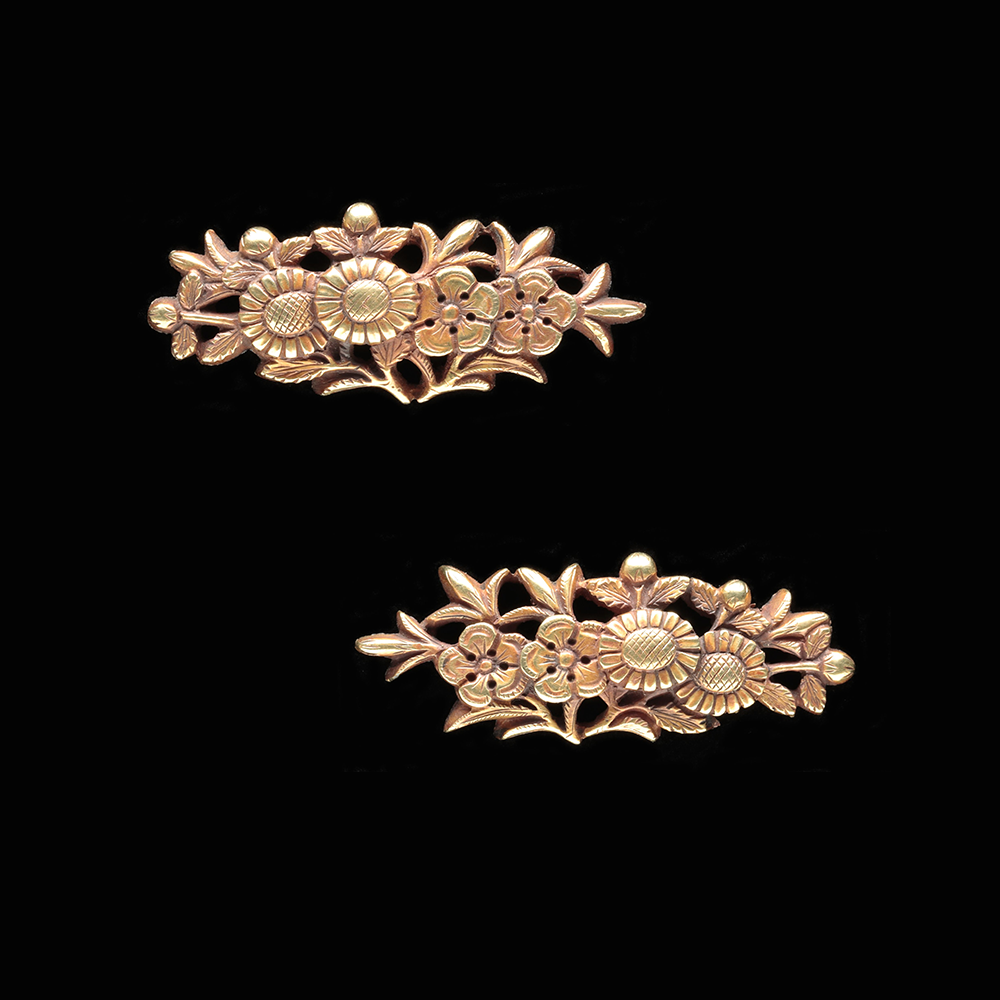
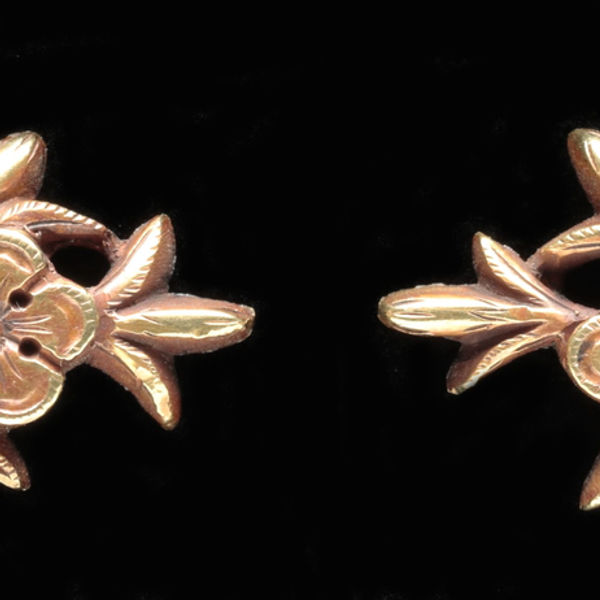
我が国の自然のありようを鮮明にする秋草に題を得、文様の周囲を透かし抜いて唐草風に構成した、美濃(みの)彫の様式になる目貫。時代の上がる美濃彫の作品は、文様がくっきりと立ち、透しもまた大胆に処理される傾向にある。 金無垢(きんむく)地を立体的に彫り出したこの目貫も、室町期の作のように打ち出しが強く薄手の仕立てとされ、際端が絞られて量感がある。美濃彫に多い菊と撫子は彫口が丁寧で、洗練味が加わって美しい。
NihontoWatchOffered by Choshuya
This piece has sold
19 on the market
Get an email when new Mino School work hits the market.

Mino School
Edo
Mino
Unsigned
Tokuho (NBTHK)
As written by the shop
Kinko · Mino
19 pieces on the market now
The Mino metalworking tradition emerged as a distinct school of early kinkō (sword-fittings artisans) active from the late Muromachi period through the Momoyama era. Rooted in the broader stream of ko-kanagu-shi (early metal-fittings makers), Mino craftsmen developed alongside but separate from the courtly Gotō lineage, serving a different aesthetic sensibility. Their chronological range extended through the transition into the early Edo period, though the tradition's characteristic vocabulary crystallized during the turbulent decades of the late sixteenth century. The hallmark of Mino workmanship lies in its distinctive approach to relief carving and decorative treatment. Rather than the refined, minutely detailed dragons favored by the Gotō house, Mino artisans developed the specialized "Mino dragon" (Mino-ryū) idiom: large-scale compositions executed in usukin-dashi (thin raised metal), characterized by sinuous, writhing forms with extensive sukashi (openwork).
Beyond dragon motifs, Mino craftsmen rendered auspicious subjects—cranes, turtles, pine, and bamboo—as well as floral designs such as wisteria in karakusa (arabesque) arrangements. The technical vocabulary consistently emphasizes vigorous yōbori (high-relief carving) with robust, thick-boned modeling and forceful execution, often on grounds of shakudō nanako-ji or solid gold, with enrichment through gold iroe and inlay. Works attributed to the Mino school are valued for their sumptuous materiality and animated sculptural presence. The tradition's preference for deeply cut relief with pronounced peaks and valleys creates a dynamic visual effect distinct from the more restrained aesthetic of contemporary Kyoto workshops. Surviving examples of Mino metalwork—ranging from menuki and kogai to complete koshirae suites—document a regional aesthetic that prioritized bold composition and vigorous carving over courtly refinement, reflecting the martial culture of the Sengoku and early unification periods. Learn more →
| Smith | Era | Designated |
|---|---|---|
| Mitsuharu光春 | — | 0 |
| Mitsunaka光仲 | — | 0 |
| Mitsunobu光伸 | — | 0 |
| Nakayuki仲之 | — | 0 |
| Nagamasa長正 | — | 0 |
A Hozon-certified fitting of notably superior craftsmanship and condition, often with signature or workmanship of high reference value.
The NBTHK (Nihon Bijutsu Tōken Hozon Kyōkai, the Society for the Preservation of Japanese Art Swords) is a public-interest incorporated foundation founded in 1948 and supervised by Japan’s Agency for Cultural Affairs (Bunkachō); it is based at the Japanese Sword Museum in Tokyo. Its expert panels physically examine each submitted work (shinsa) and issue a certificate (kanteishō) ranking it by artistic and historical merit. NBTHK papers are the most widely recognized standard of authentication for Japanese swords and fittings.
NBTHK official siteIf, due to our fault, the item differs significantly from its proper condition, the item may be returned. Cooling-off is within one week of the item's arrival.