Hizen swords were a domain enterprise: the Nabeshima sent Tadayoshi to study under Umetada Myōju around 1596, then built a licensed school around him. Nine generations carried its famously consistent konuka-hada work into the Meiji era.
 NihontoWatchNihontoWatch
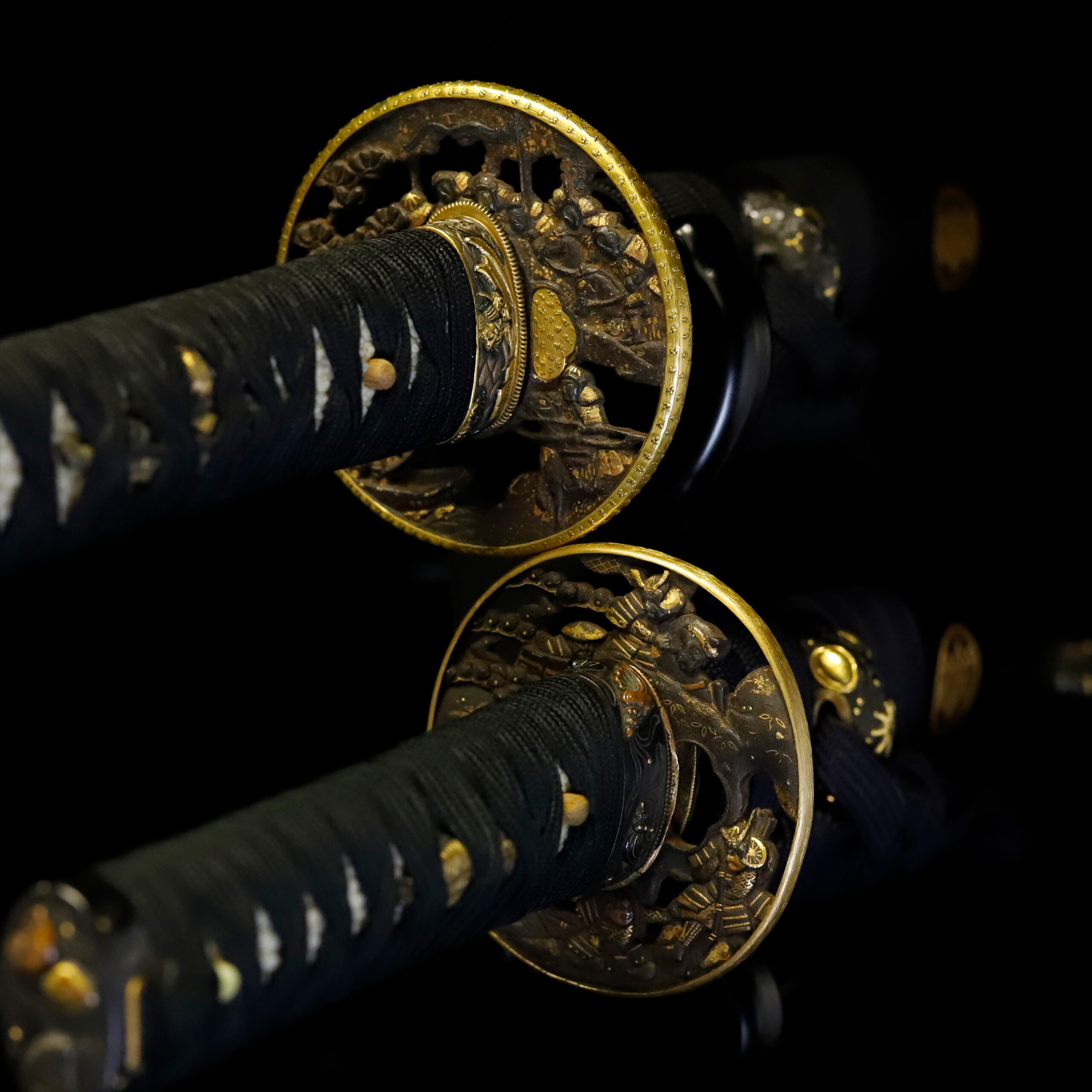
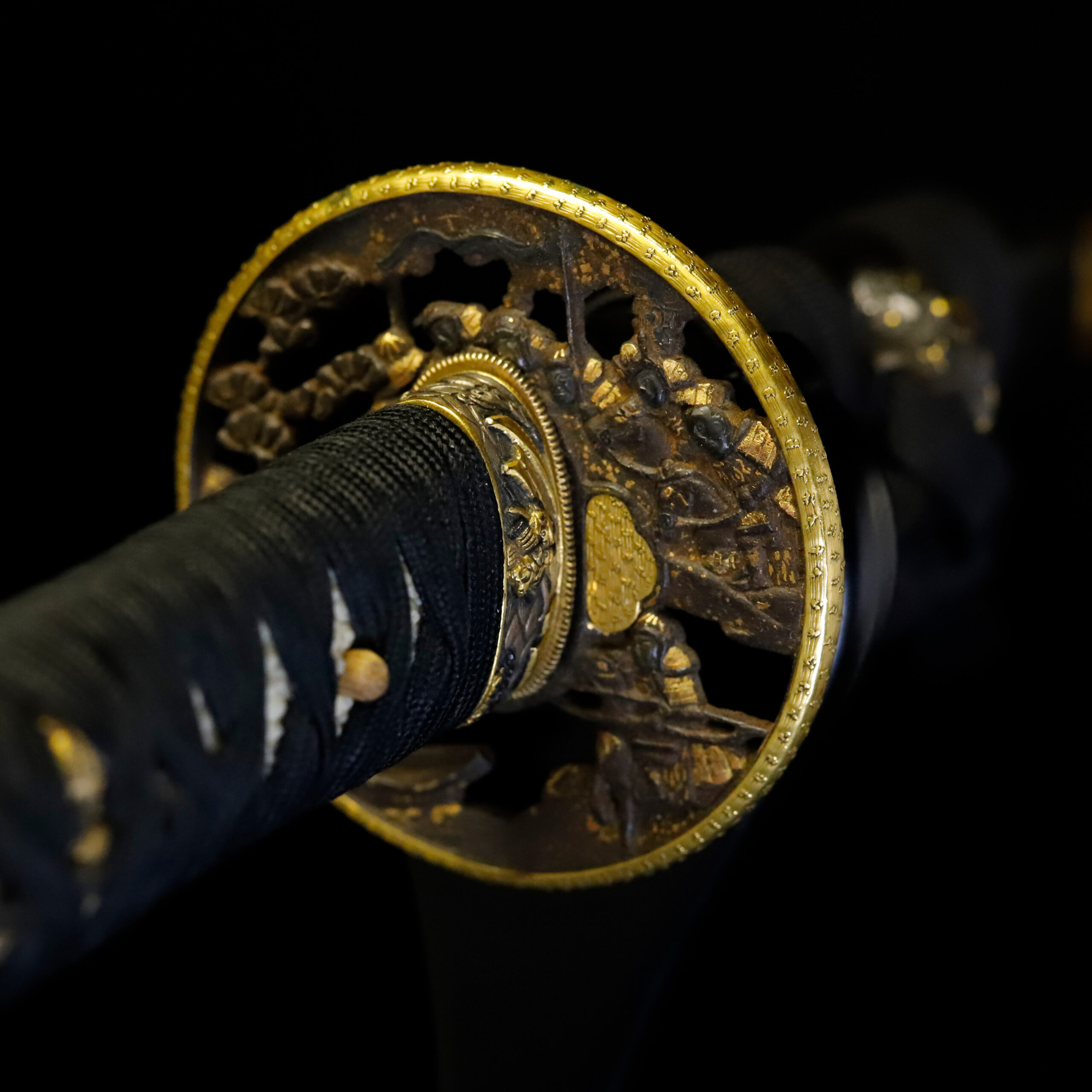
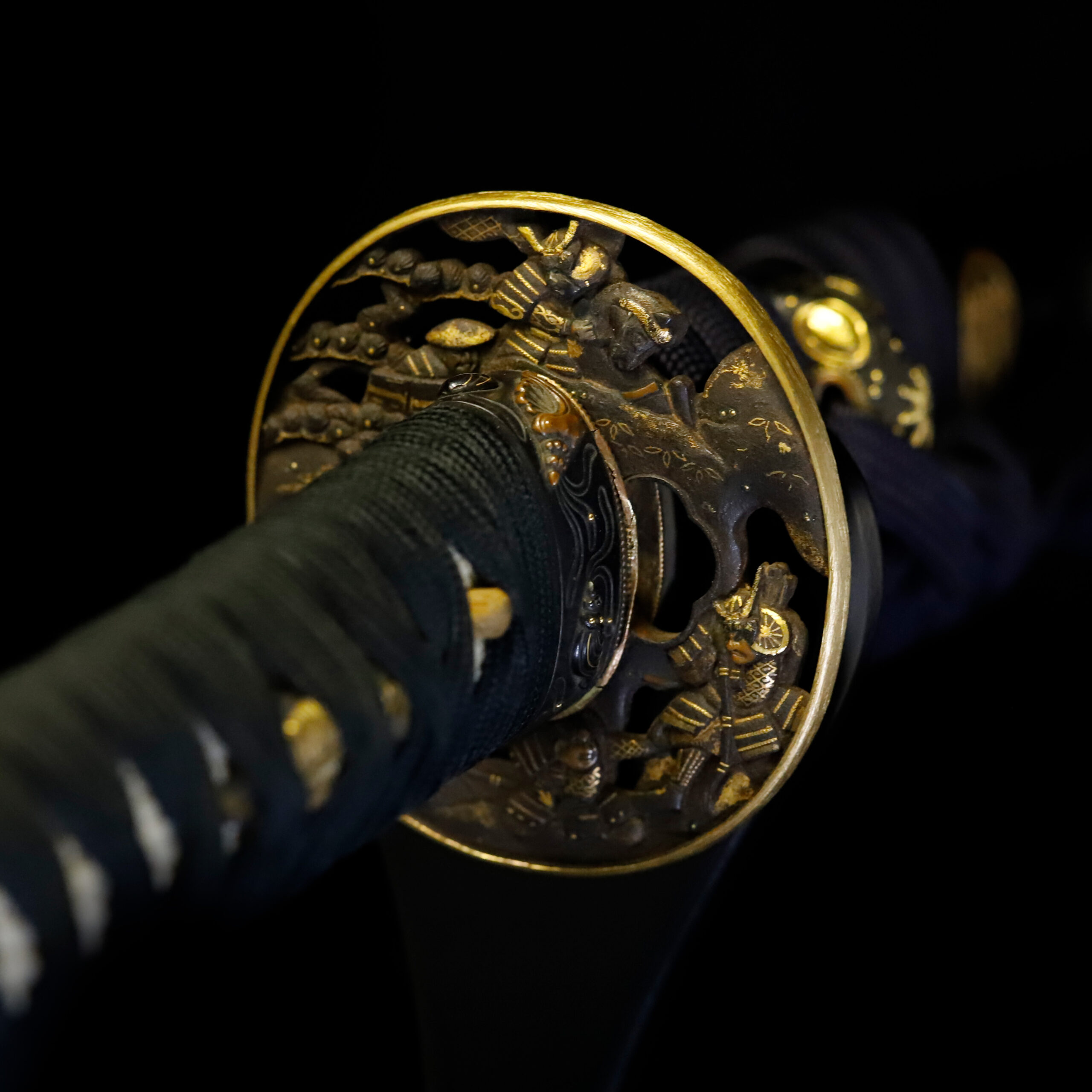
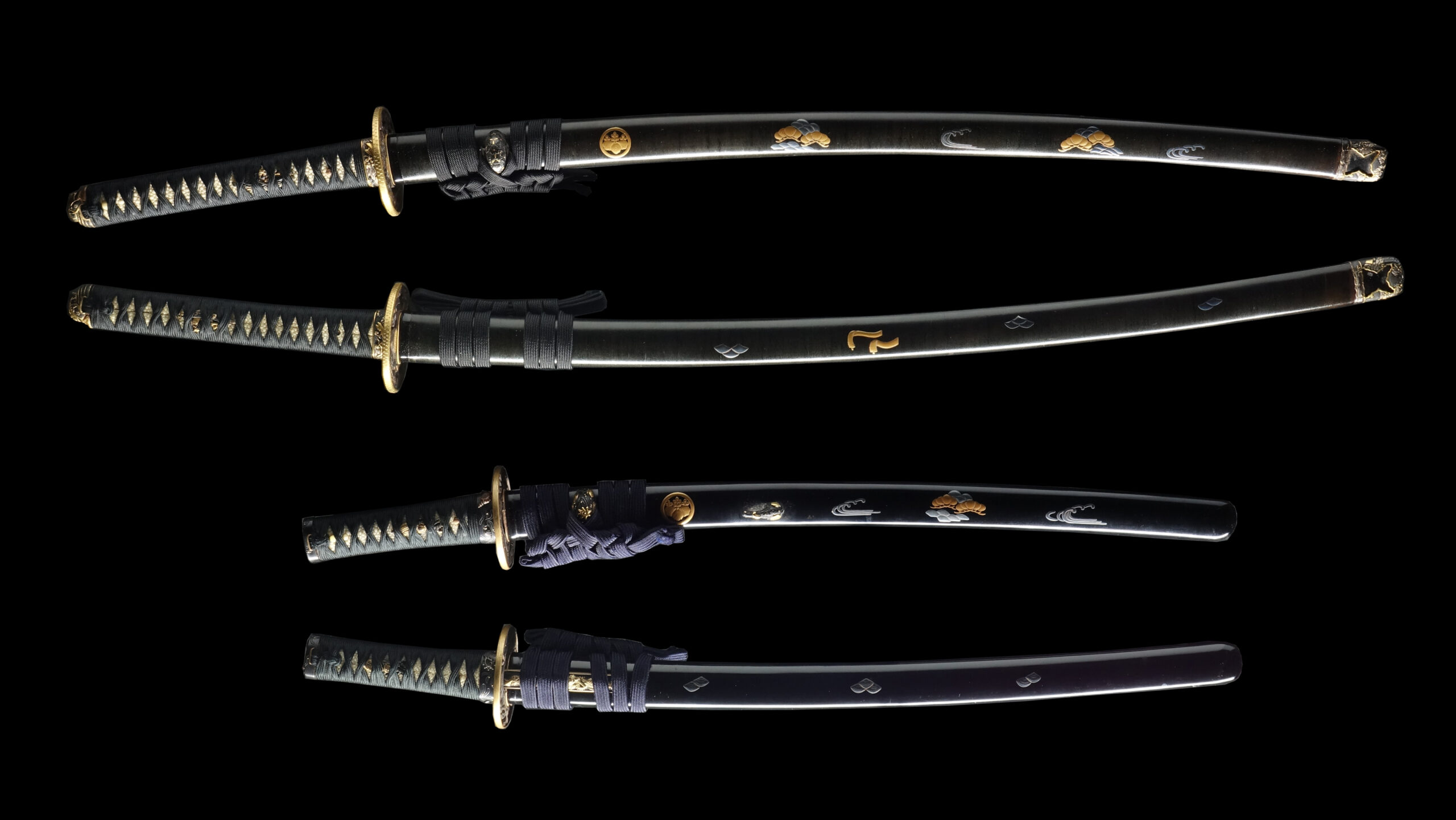
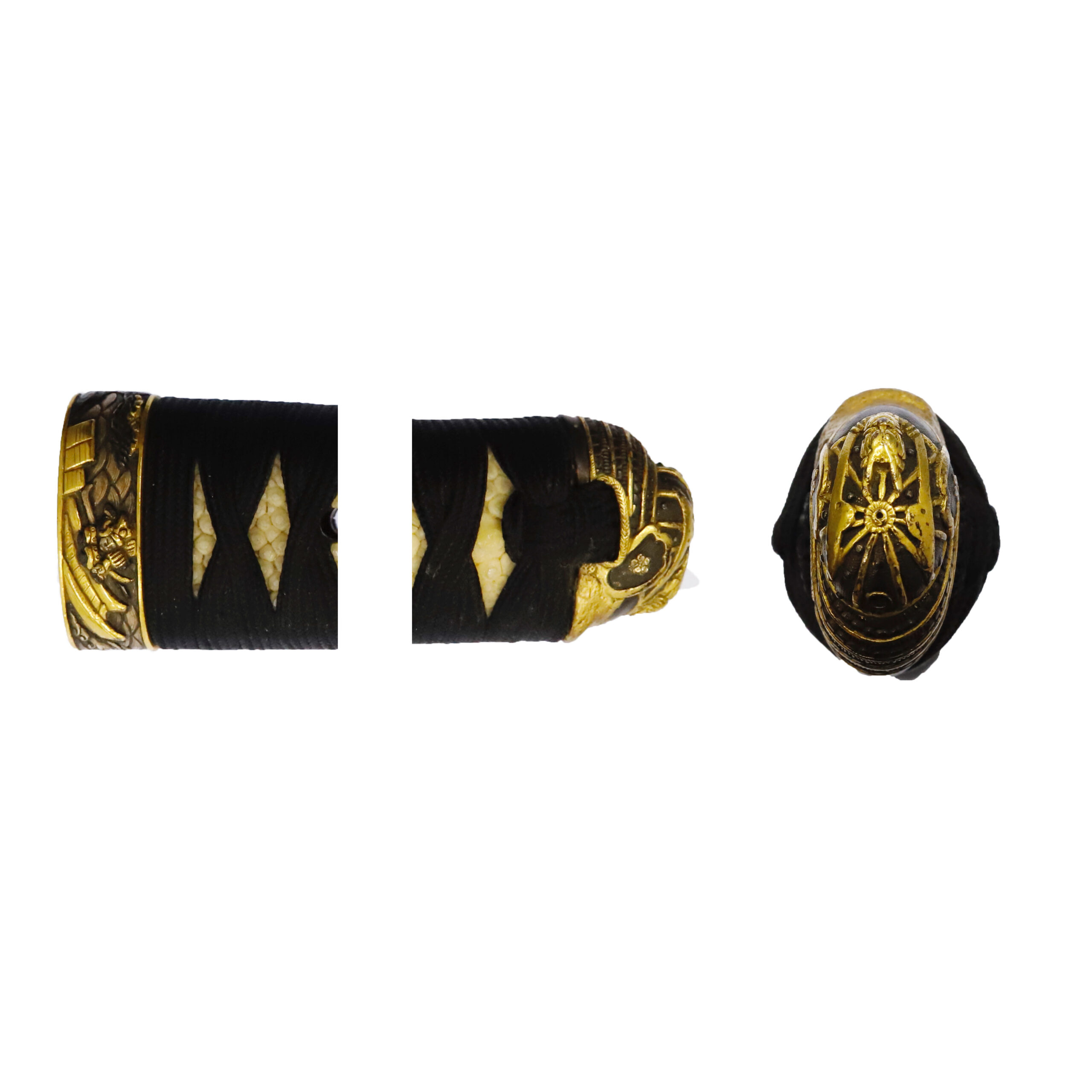
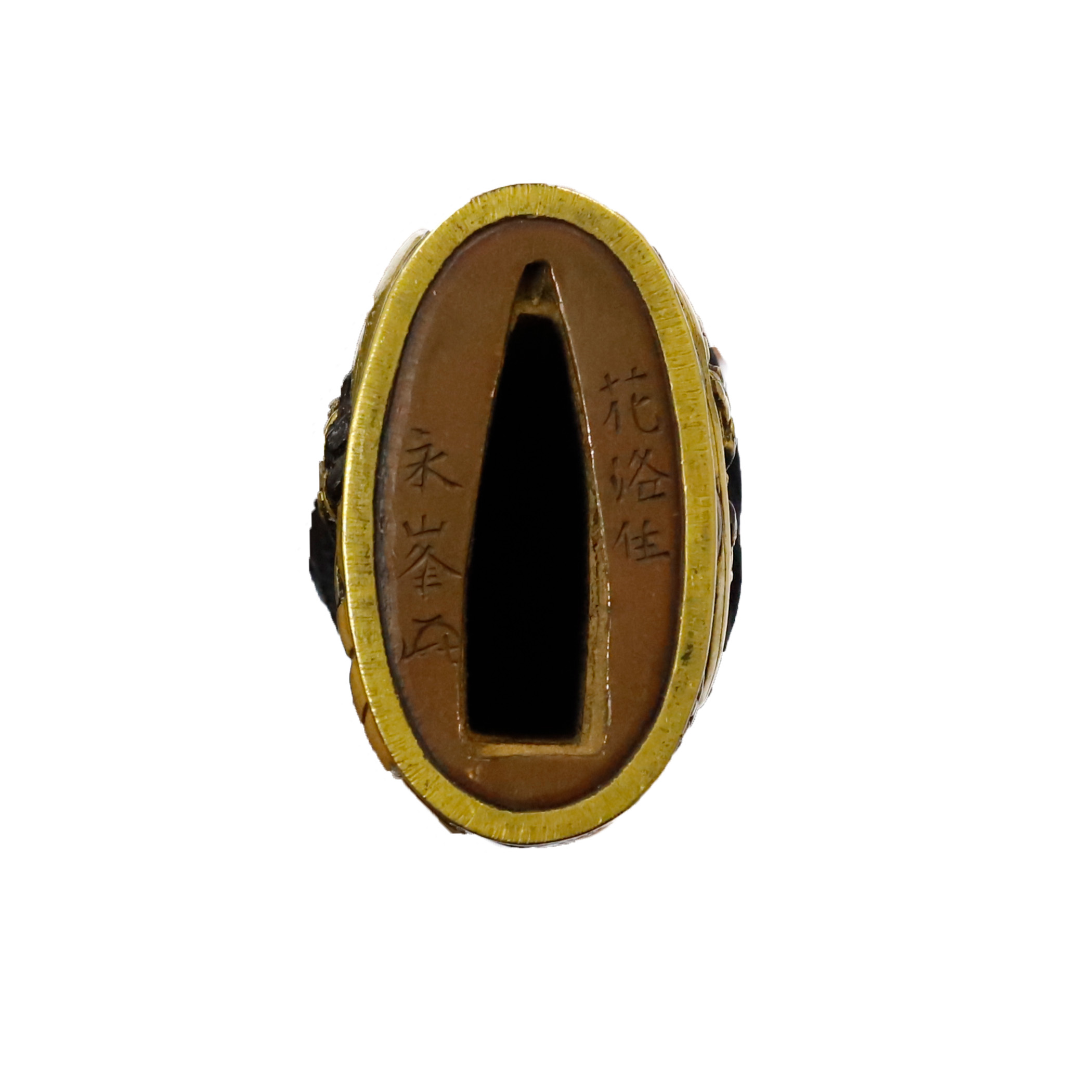
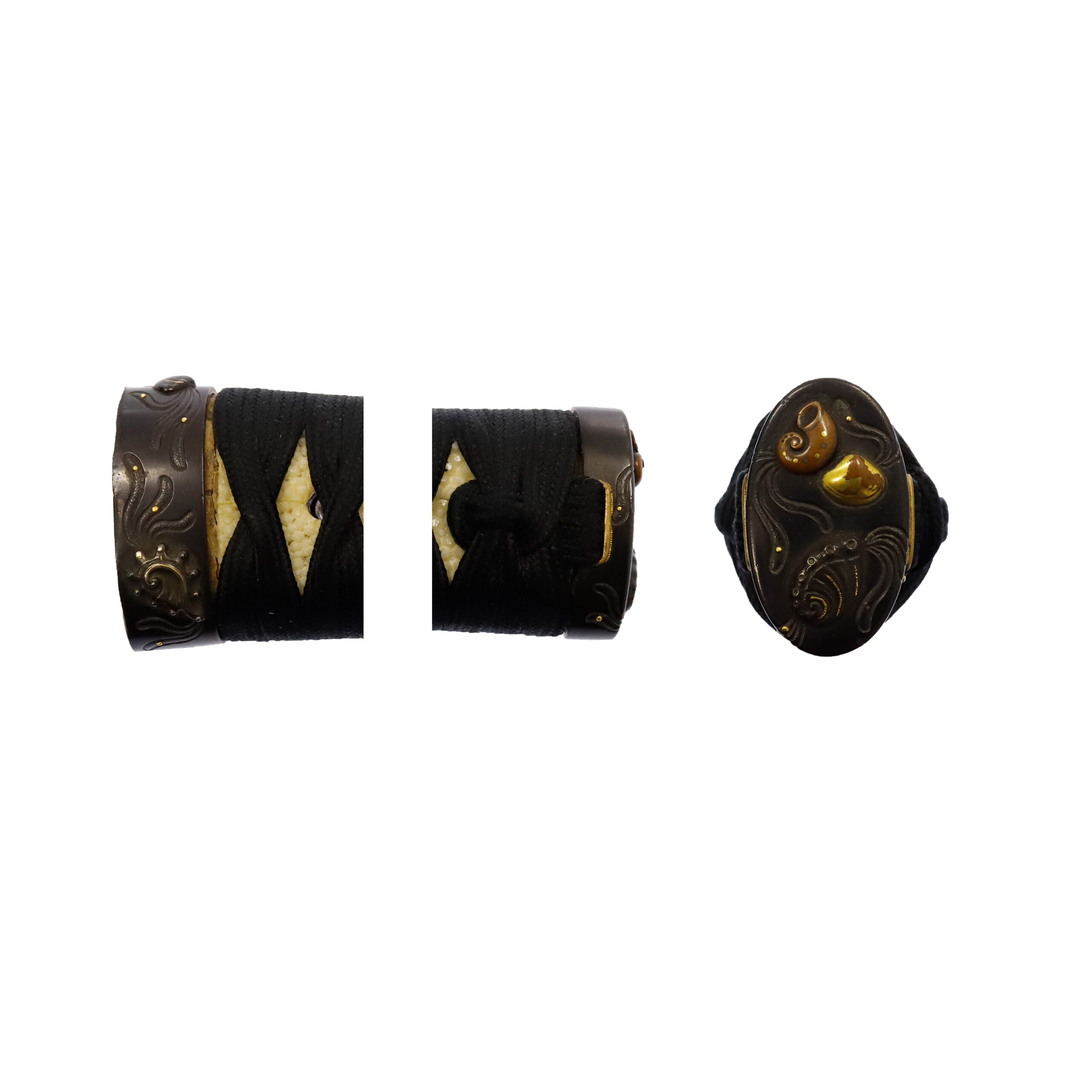
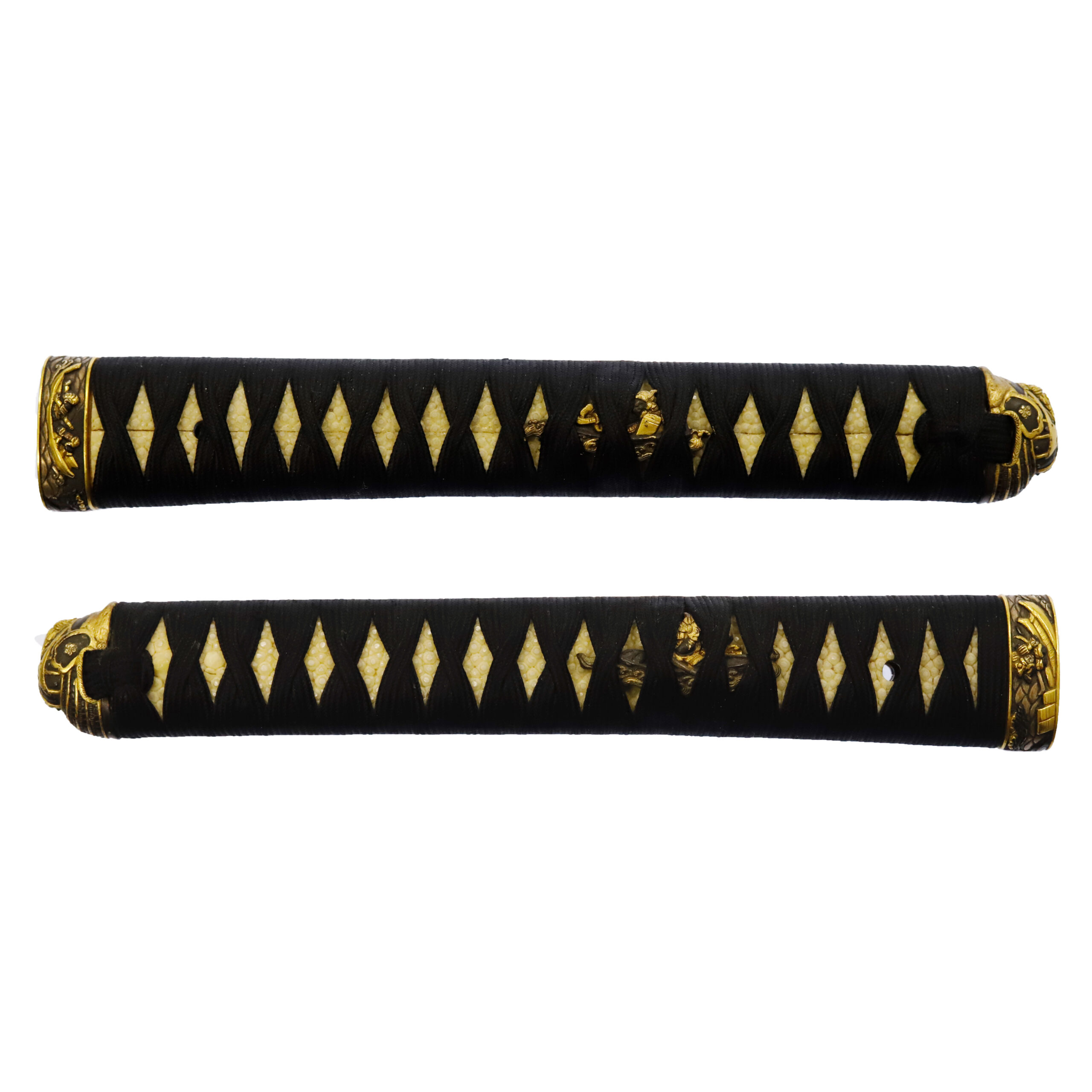
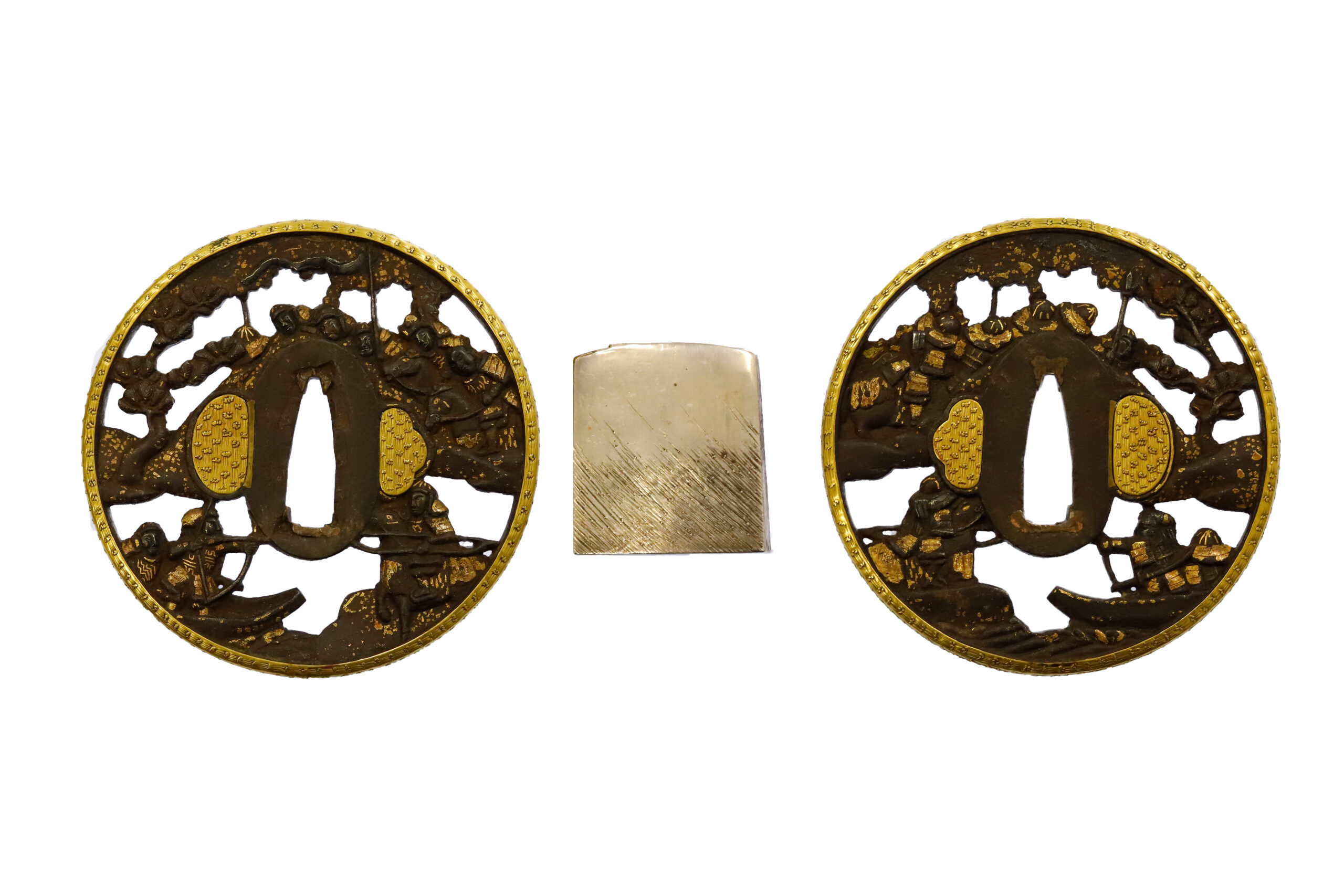
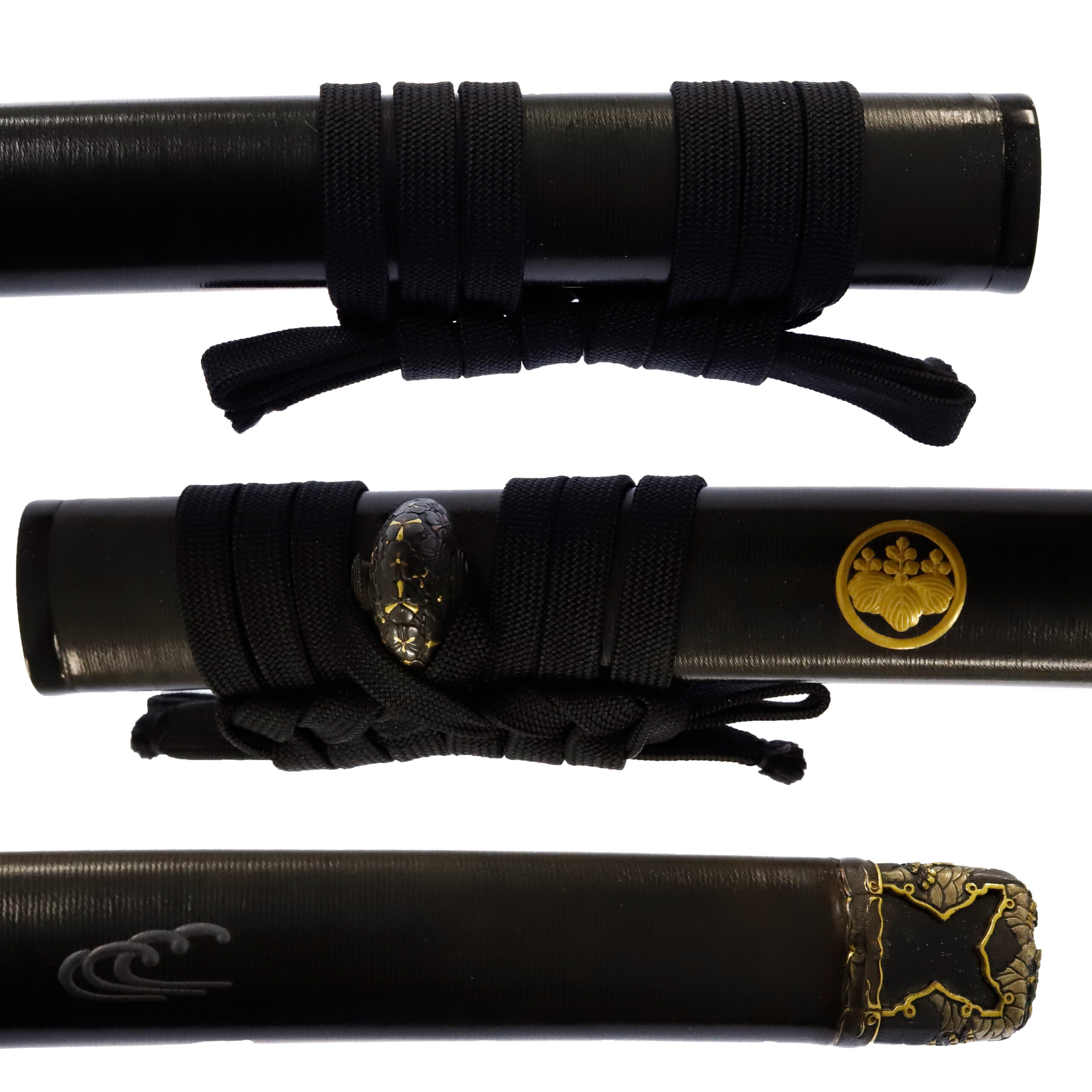
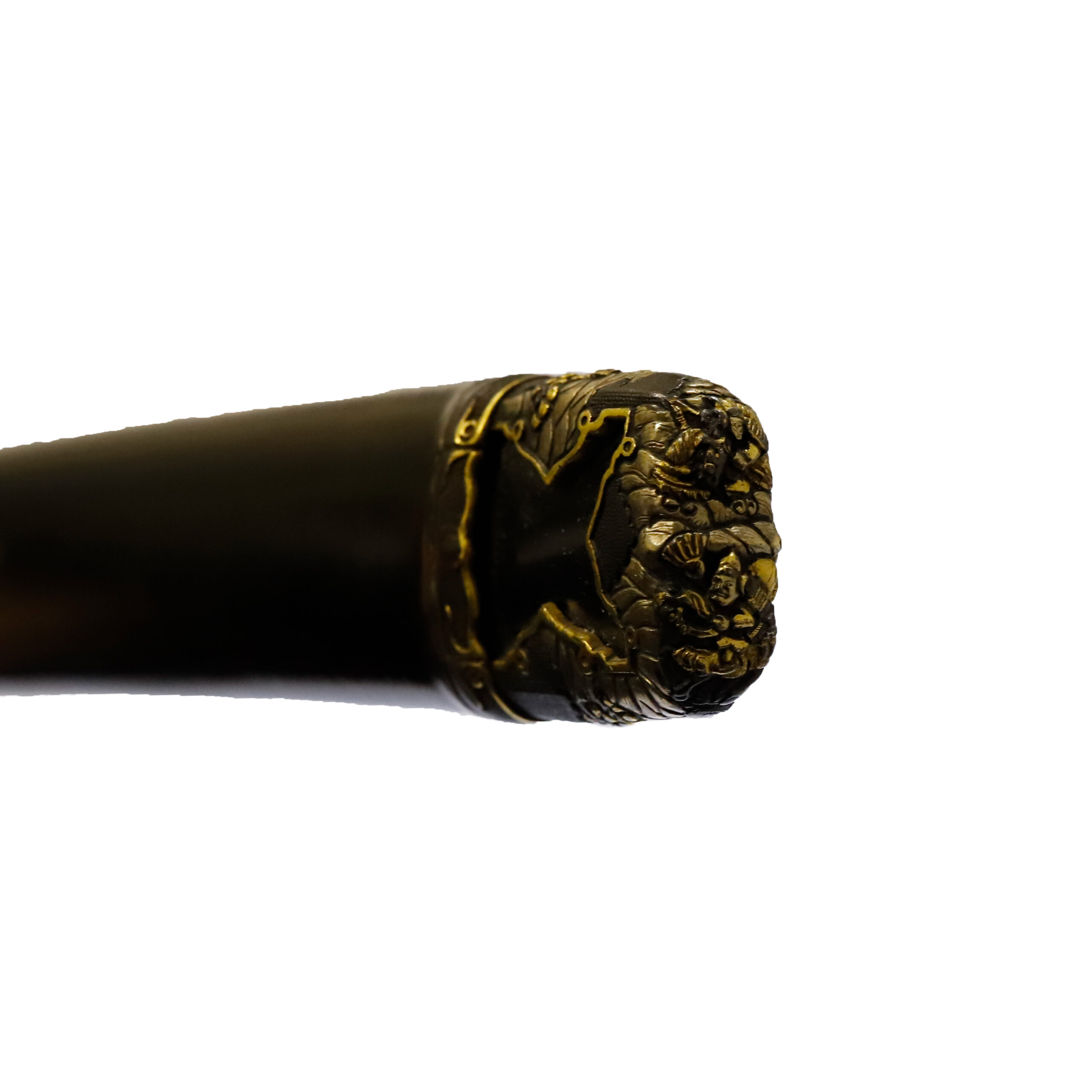
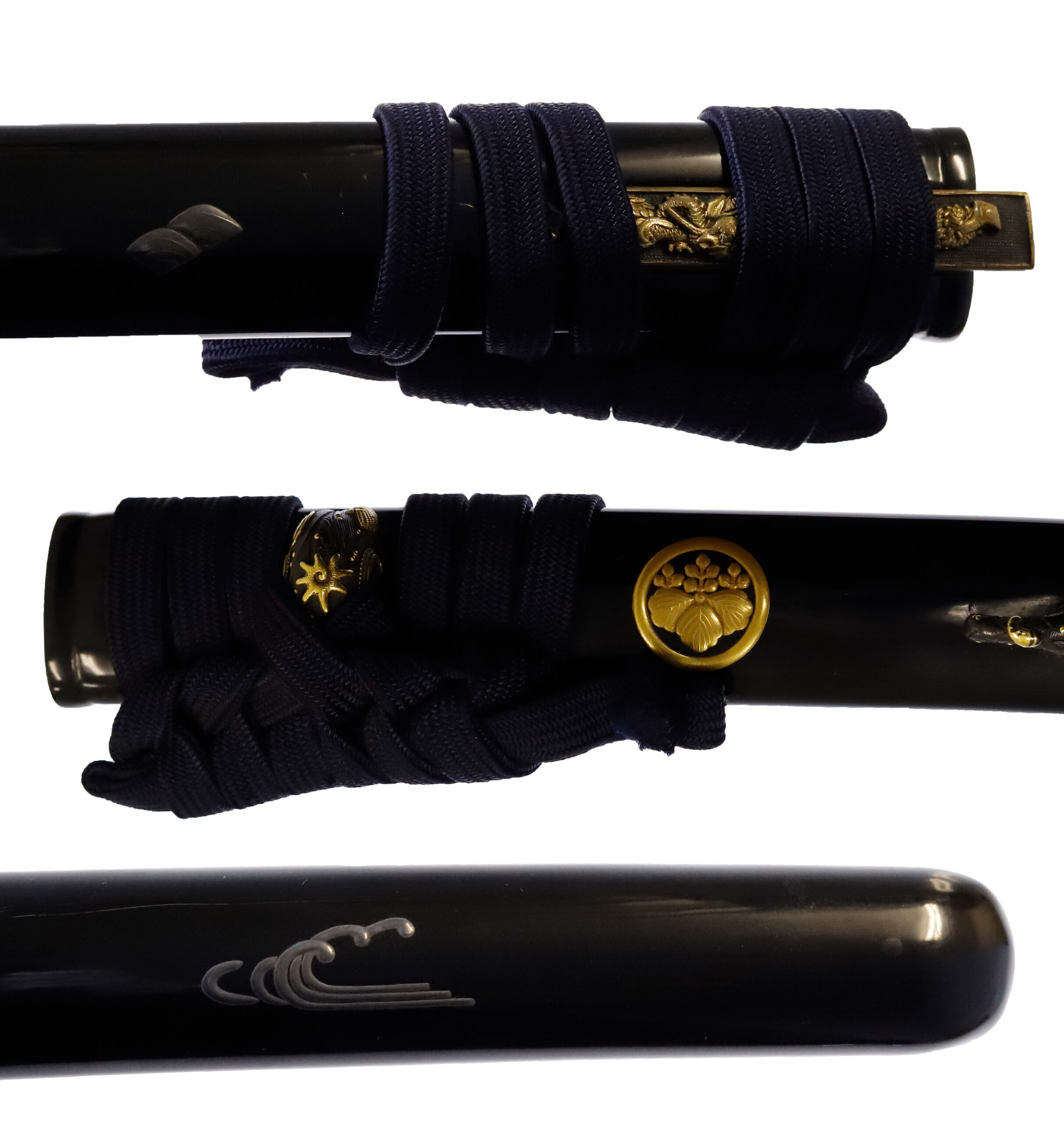
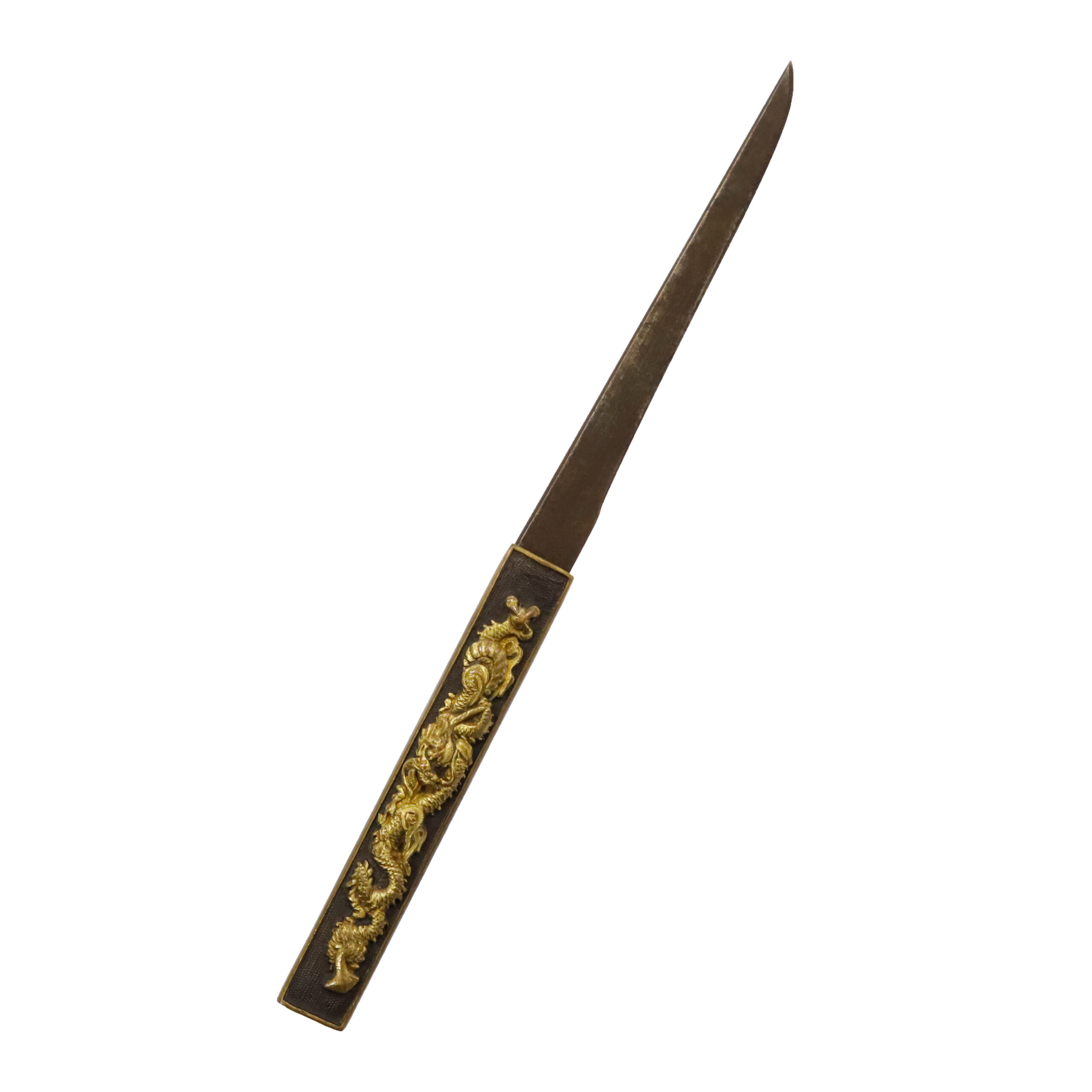
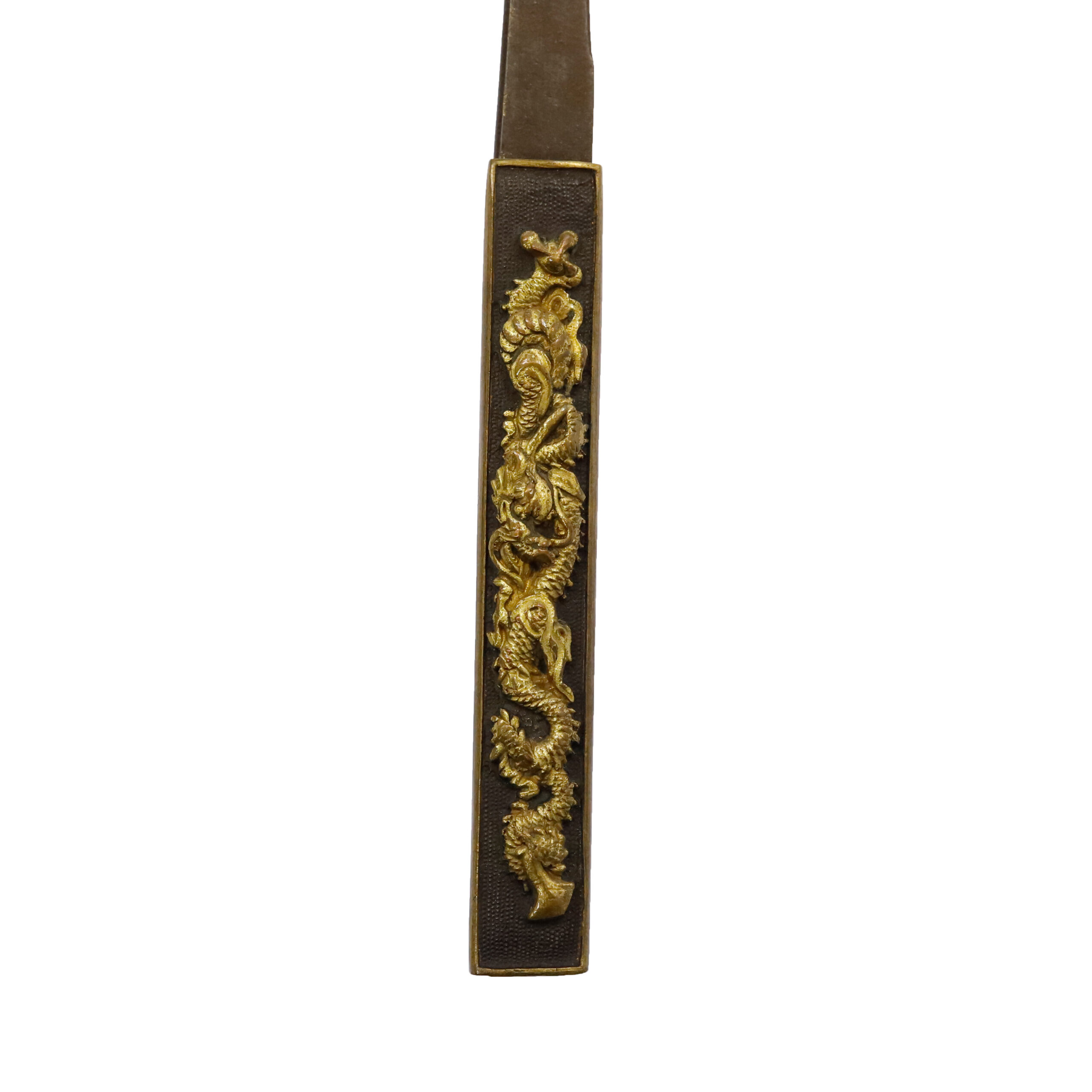
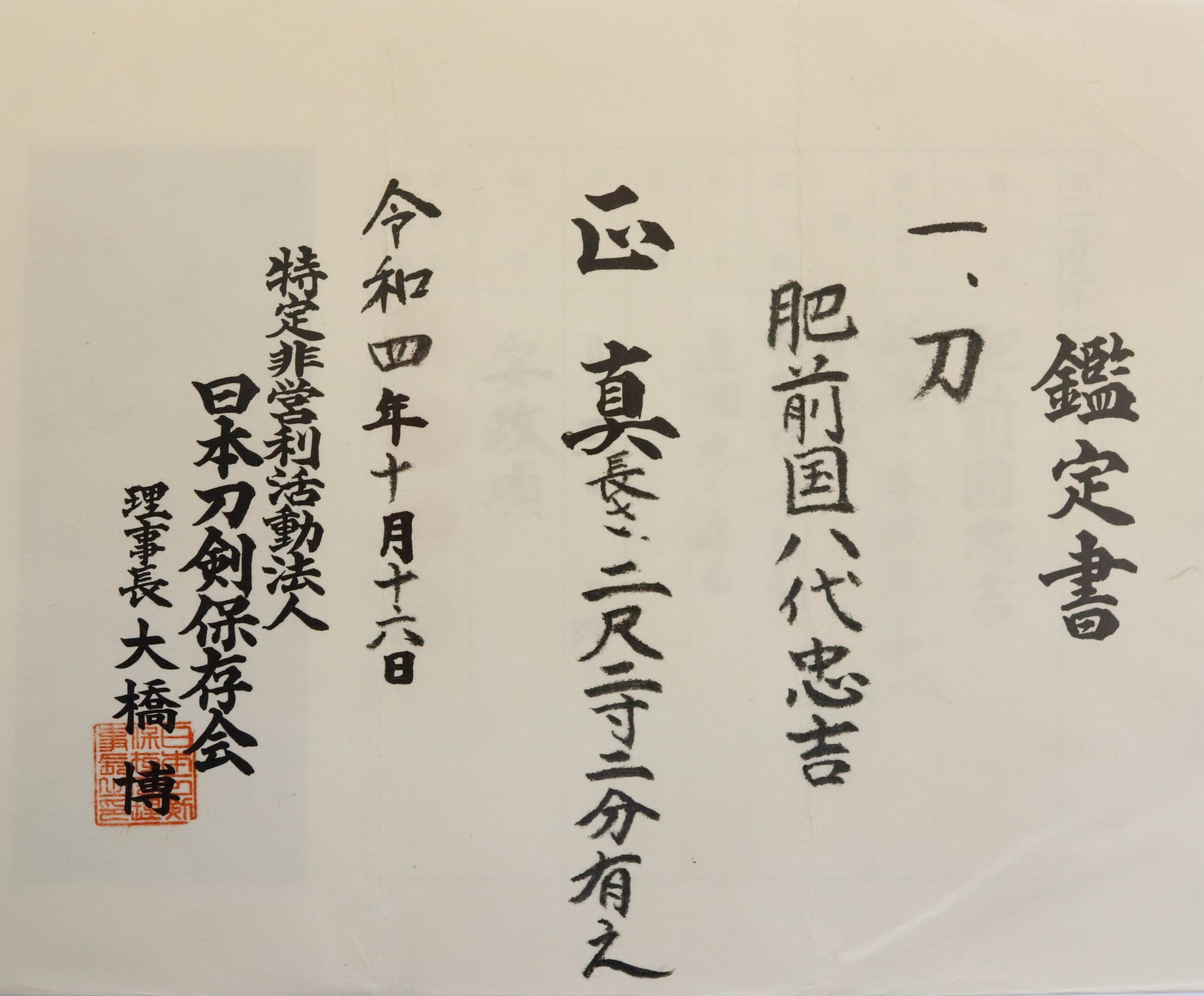
■Katana attributed to 8th gen Tadayoshi This blade was signed by Hizen Koku Tadayoshi (肥前国忠吉). The maker’s name Tadayoshi lasted nine generations during the Edo period. According to its NTHK’s appraisal, it was made by the 8th- gen Tadaysohi (八代忠吉) during the Ansei era (1855-1860). Among other generations of Tadayoshi, the eighth-gen was a renowned figure and mastered a high level of craftsmanship passed down from the previous generations. All the generations of Tadayoshi served Nabeshima clan, which controlled Saga domain (Today’s Saga prefecture). The 8th-gen Tadayoshi was born as the son of Furukawa family in Saga domain in 1801. He was eventually adopted by the 7th-gen Tadayoshi, and he changed his name to Hashimoto Shinzaemon (橋本新左衛門). He took over Tadayoshi school from the 7th-gen in the 13th year of the Bunka era (1816). The domain acknowledged his skill, and he played a vital role in modernizing the weaponry of Saga domain. In 1850, he was in charge of making a cannon for the domain because of his refined blacksmithing. He died at 59 in the 6th year of the Ansei era (1859). The first gen Tadayoshi school The first-gen Tadayoshi was born and raised in the Saga domain. In 1596, under the domain’s order, he went to Kyoto to learn the sword-forging technique from Umetada Myojyu(埋忠明寿), one of the greatest swordsmiths in the early Edo period. He improved his craftsmanship and returned to the Saga domain two years later (1598). The first head of the Nabeshima clan, Nabeshima Katsushige, appreciated the work of the first-gen Tadayoshi very much. Then, Katsushige appointed him as his Okakaekaji, a swordsmith who exclusively forged swords for a specific domain or clan. And Tadayoshi started to stay near Saga castle, which is the headquarter of the Nabeshima clan. And, he founded Hizen Tadayoshi school, which trained more than 100 swordsmiths during the Edo period. 5th gen Tadayoshi is one of them. Hizen Domain The swordsmiths in the Hizen province worked under the auspices of the Nabeshima clan like Tadayoshi. They could produce beautiful blades with Konuka Hada, whose steel surface is very smooth. This Hada is one of the most well-known characteristics of the blades produced in Hizen province. The swordsmiths also used and mixed carbon steel made in western countries. Since Hizenkoku had been flourishing through international trading, it had easy access to western carbon steel. ■Wakizashi attributed to Takada Teruyuki This blade was attributed to Hoshu Takada Teruyuki (豊州高田輝行) during the Enpo era (1673-1681: the mid-Edo period), according to NTHK’s appraisal this December. We are expecting to receive its authentication paper by next January 2023. Takada school was founded by Takada Tomoyuki in Takada village, Ohita prefecture, during the Nanbokucho period. (1334-1338 A.D). Tomoyuki went to Bizen province(today’s Okayama prefecture) to master the sword-forging techniques of BIZEN and came back to the village and trained his apprentices. That is how Takada school started. Those who forged swords in Takada village before the Edo period are called Taira Takada and Fujiwara Takada during the Edo period. This blade is categorized as a Fujiwara Takada sword. During Sengoku Period(the warring state period: from late 15 C to late 16 C), the Takada school forged many swords for feudal lords on Kyushu island. It is said that the reputation of the blades forged by Takada school was close to MINO or BIZEN swords, two of which are the most famous sword forging places. This highly skilled sword forging technique was passed down to later generations in the Edo period. Generally speaking, Kyushu island was prosperous in sword-making because of the long trading history with Asian countries. To gain an advantage in trading, many feudal lords on this island fought against each other. Takada school was able to receive many orders as the demand increased among those lords. The material of Japanese swords(high-quality iron sand and charcoal) was abundant in the mount Sobo Katamuki, located near Takada village. We believe Takada school prospered because of its geographic location and natural resources. *Please keep in mind that there is one noticeable Kitae Kizu near the straight grove and black rust on the Mune (backbone of the blade). ■What is Daisho? Daisho is a pair of two Japanese swords Samurai carried. During the Edo period, having Daisho in public places was considered social status for Samurai. Furthermore, Samurai were required to wear them under the law back then. Daisho is written as 大=Big and 小=Small. Dai part means Katana, and Sho part means Wakizashi. -Katana Jimon(Jihada) -Katana -Wakizashi Fuchi-Kashira The design of this Katana’s Fuchi Kashira is the Gunsen Zu (軍船図). It depicts ships used in naval battles. You could find Samurai warriors heading into battle on ships. And this theme is the same with this Katana’s Menuki as well. Uniquely, the Kashira part is designed with a Kabuto (兜, Samurai helmet) motif. This helmet has a gorgeous appearance of Suji Kabuto (筋兜) and has a dragon-designed front decoration. As described below, this Daisho Koshirae has a principal theme: Kassen Zu (合戦図). It depicts a scenery of a battlefield. Samurai warriors wear armor and bring weapons. They have stern expressions, and their brave appearance on the battlefields are expressed in detailed sculptures. Please continue to enjoy the following descriptions. The Wakizashi’s Fuchi Kashira is decorated with seashell patterns. Various types of shells, such as snails and bivalves, are designed. It is called the Kai Dukushi (貝尽くし). This pattern is a combination of different types of seashells. Bivalves, especially clams, their shells cannot be combined with any other clam’s frame; therefore, its pattern represents happy marriage. Seashell is called Kai (貝) in Japanese. Because of its pronunciation, the seashell has another meaning. There is a word Yarigai (やりがい, worthwhile). As a part of this word has the same accent as Kai (貝 is read Gai in some cases), Japanese people found this meaning. Also, since seashells are hard and combine only with their pair, people thought it represented a robust defense. Due to these meanings that inspire warriors who go to the battlefields, Samurai might have loved this motif. It has often been combined with a seaside scene or wave pattern. We think this design matches well with Katana’s Fuchi Kashira Gunsen Zu theme. Tsuka and Menuki As mentioned above, this Katana’s Menuki has the same theme as the Fuchi Kashira. In addition, you could find this theme on the Kojiri (鐺, a metal fitting that protects the tip of a scabbard). About Wakizashi’s Menuki, although we cannot see its entire shape, we could find a small chrysanthemum flower. And it seems golden paint was initially applied to its surface. A long time ago, the chrysanthemum was used as a medicine for obtaining a long life in the continent, and it was brought to Japan with this thought in the Nara period (648-781). Chrysanthemum symbolizes autumn, and people have greatly appreciated it since ancient times. As its petals form radially, the chrysanthemum has been likened to the sun. That is why this flower pattern is treated as the symbol of perpetual youth and longevity or good health. These ideas might have inspired this Menuki. Tsuba and Habaki You see the figure of fighting Samurai warriors. Both Tsubas have the same theme: the Genpei Kassen (源平合戦). It does not refer to one battle. This is a collective term for the civil wars heated in various parts of the country that continued over six years from 1180 until 1185. It is also called the Jishou Juei-no Ran (治承・寿永の乱). This was the battle between the Minamoto (源) clan (Genji family) and the Taira (平) clan (Heike family). By the call of Mochihito Ou (以仁王), many Samurai raised armies to overthrow the Taira family. It was the trigger of this protracted conflict. Mochihito Ou was unfortunately beaten by the Taira family and passed away in 1180. However, after that, Minamoto family side Samurai defeated the Taira side armies one after another. Finally, the Minamoto side won the battle and overthrew the Taira clan in 1185 at Dan-no Ura (壇ノ浦). It was the final battle of the Genpei Kassen, which led to the destruction of the Taira clan, who reached the height of glory. You would find the engraved inscription on the front of Wakizashi’s Tsuba. It is written as follows: 藻柄子入道 宗典製 (Mogarashi/Souheishi Nyudoh Souten Sei). Therefore, it shows this Tsuba’s maker is Mogarashi/Souheishi Nyudoh Souten (藻柄子入道 宗典). It is said he worked actively in the middle of the Edo period. He lived in Hikone (彦根) area, Oumi-no Kuni (近江国, today’s Shiga prefecture). He was good at the Takabori Iroe (高彫色絵) technique and originated the Hikone-Bori (彦根彫) style. He trained many disciples and played an active role in his longevity over 75 years old. The second Souten was the first’s son. He followed the first’s designs and created lots of excellent Tsubas. It is said many fake Souten Tsubas were made; it shows his works were highly appreciated. As additional information, please focus on the Mimi (耳, edge) part of each Tsuba. Both Tsubas’ Mimi parts are framed with golden metal. This decorative technique is called the Kin-Fukurin (金覆輪). It gives a gorgeous beauty to works, as seen in these Tsubas. It also has practicality, such as preventing the wear of the edge part. Also, it prevents wear and tears on the Kimono (着物, traditional Japanese costume) if the edge damages it by touching the cloth. Saya Pine and wave patterns are arranged alternatively on both scabbards. Also, you would find a golden crest. It is the Maru-ni Gosan Kiri (丸に五三桐), and we believe it was designed here as a family crest. The Kiri (桐, paulownia) pattern is generally composed of three standing straight inflorescences and three leaves. The number of blooming flowers at each inflorescence means the ranks of this design. The Gosan-no-Kiri (五三の桐) pattern is a popular design that the paulownia motif is used. This pattern was once used by the imperial family and people in authority at that time. Today, it is permitted to use by ordinary households and is appreciated as their family crests. According to a tradition, the Houou (鳳凰, Fenghuang, a kind of sacred beast) rests its wings at the paulownia tree; therefore, it has come to be regarded as a holy plant. About the pine tree pattern, since pine trees keep their green color throughout the years by withstanding severe heat and cold, people thought this plant pattern represents eternal youth. Furthermore, its color is called Tokiwa-Iro (常盤色, evergreen trees’ dark green color with brown), and pine trees have another name “Tokiwa-Gi (常盤木).” Tokiwa means immutability, so Tokiwa-Iro is a color that praises green with a wish for longevity and prosperity. And the wave pattern is intentionally drawn here, considering the combination with the theme of other sword mountings: Kassen Zu and Gunsen Zu. Also, this design itself has the following meanings. As waves’ movements continue endlessly, the wave pattern represents eternity, immortality, longevity, birth, etcetera. Also, since tides repeatedly change the shape and terrain of rocks, some people hoped for a strong will by using this motif. People used this pattern wishing for an indomitable spirit to rechallenge time and time without giving up. If we look at it this way, we can see that each design is deliberately placed there. Kozuka A Kozuka is attached to the Wakizashi’s handle, and a Kogatana (小刀, small knife) is stored. The dragon is designed and colored with golden paint. If you focus on this dragon’s hand, you will find that it brings a ball-shaped object in its hand. It is the Nyoi Houju (如意宝珠, Cintāmaṇi); a fantasy jewel that fulfills any desire and gives out treasure, clothes, food, and drinks. Moreover, it heals illness and suffering, removes evils, purifies muddy water, and prevents disasters. It is said this magical item is taken from the brain of the dragon king. Initially, the dragon was an imaginary creature found in ancient foreign traditions or myths. Furthermore, it is regarded as a symbol of auspicious signs. Its body is likened to nine animals: antlers are deer, the head is a camel, eyes are demons, the neck is a snake, the belly is the Mizuchi (蛟, a mythical animal in Japan that looks like a snake and has a horn and four legs), scales are fish, claws are falcons, palms are tigers, and ears are cows. It was thought that the dragon would reign at the top of all animals because of its odd-looking appearance. The dragon design is often seen in sword mountings. We imagine lots of Samurai favored this dignified beast motif. Authentication Paper NTHK, also known as NPO Nihon Touken Hozon Kai, is the oldest organization for sword authentication of Japanese swords in modern times. It was established in 1910 during the post-Samurai era. They authenticated the Katana and the Daisho Koshirae on October 16th in the 4th year of the Reiwa era (2022) and the Wakizashi was authenticated on December 18th in the forth year of the Reiwa (2022). We are expecting to receive the authentication paper for the Wakizashi in next January 2023. Registration Number The Board of Education in Kouchi prefecture issued a registration paper for the Katana blade and that in Tokyo issued one for the Wakizashi.
Offered by Samurai Museum
This piece has sold
Get an email when a new Hizen Tadayoshi piece hits the market.

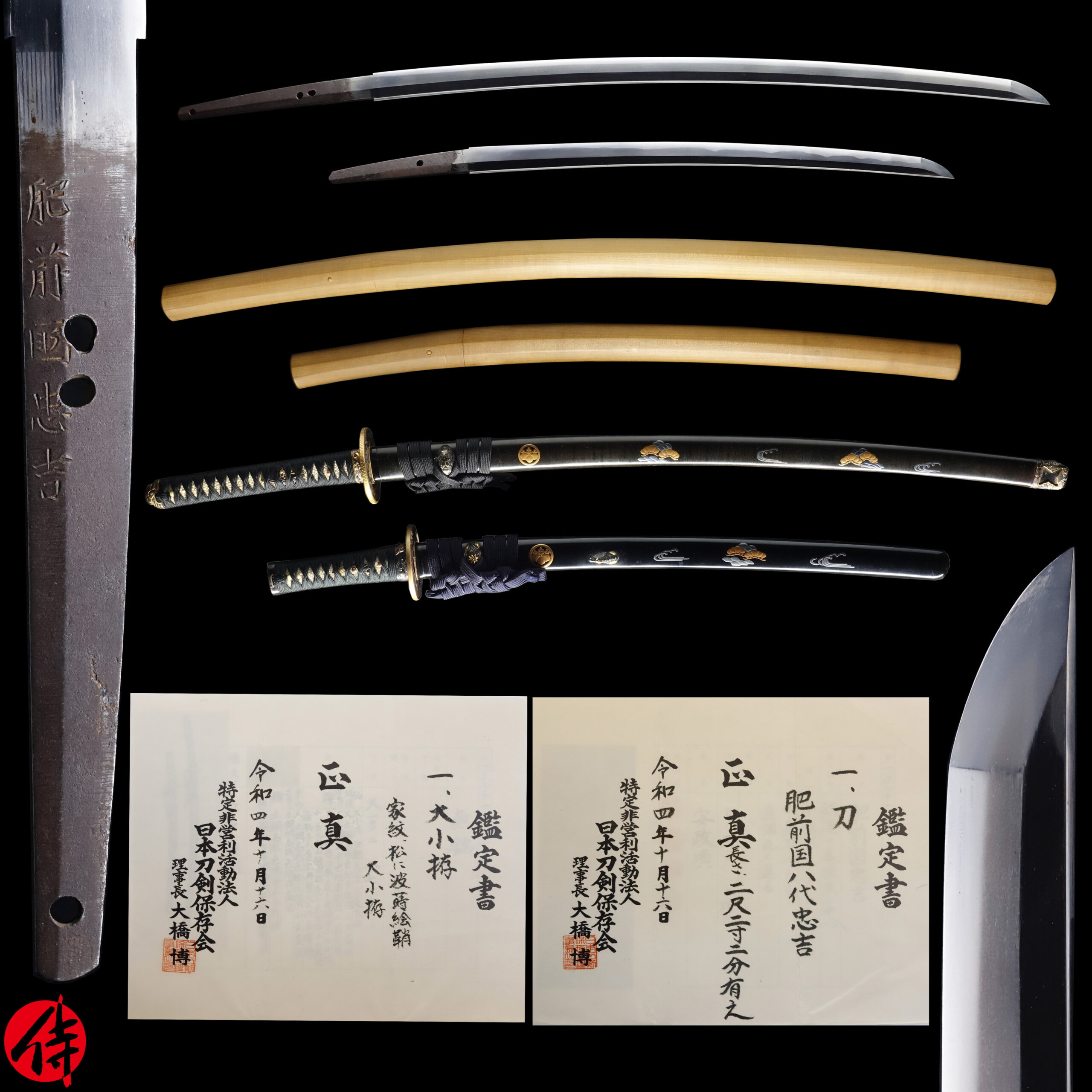
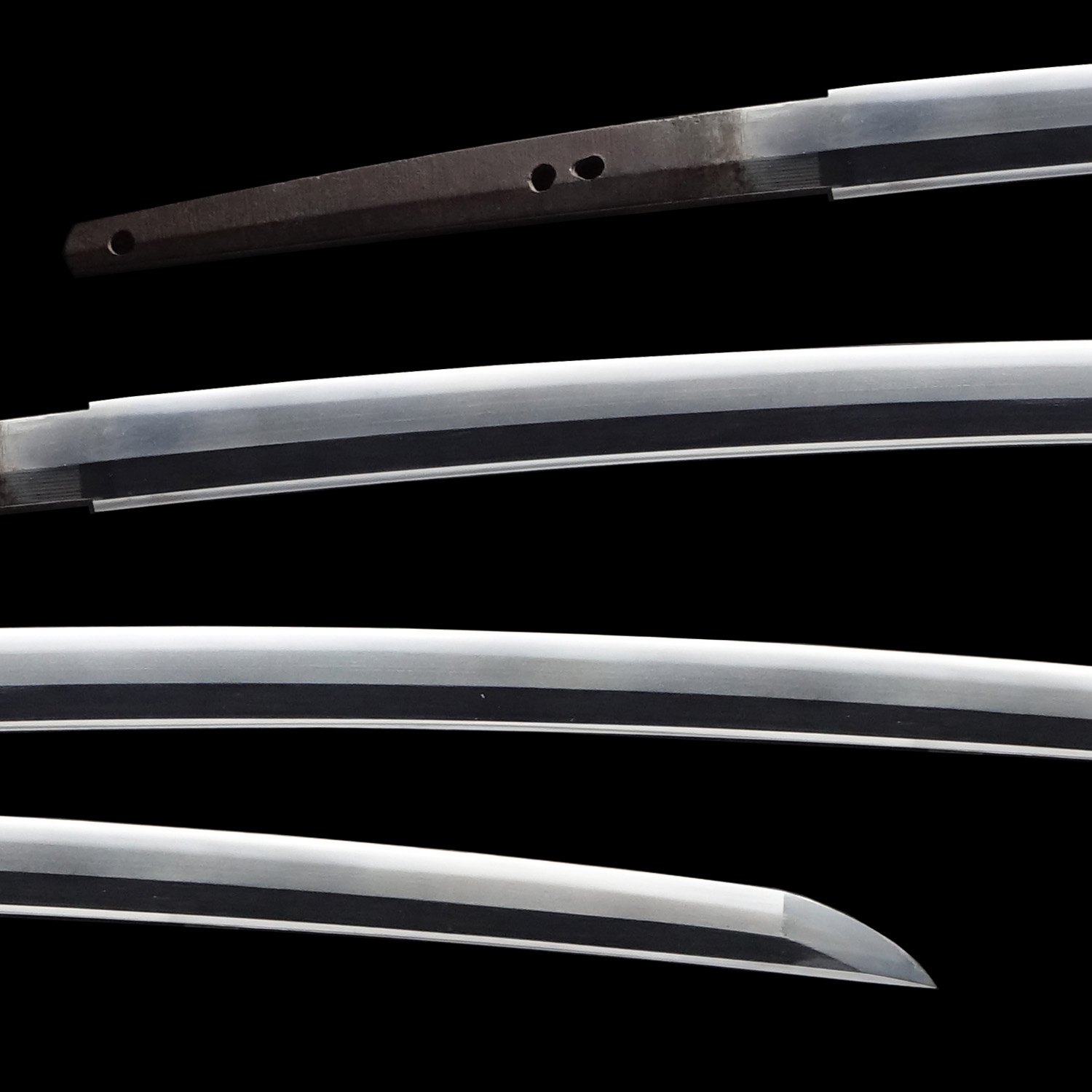
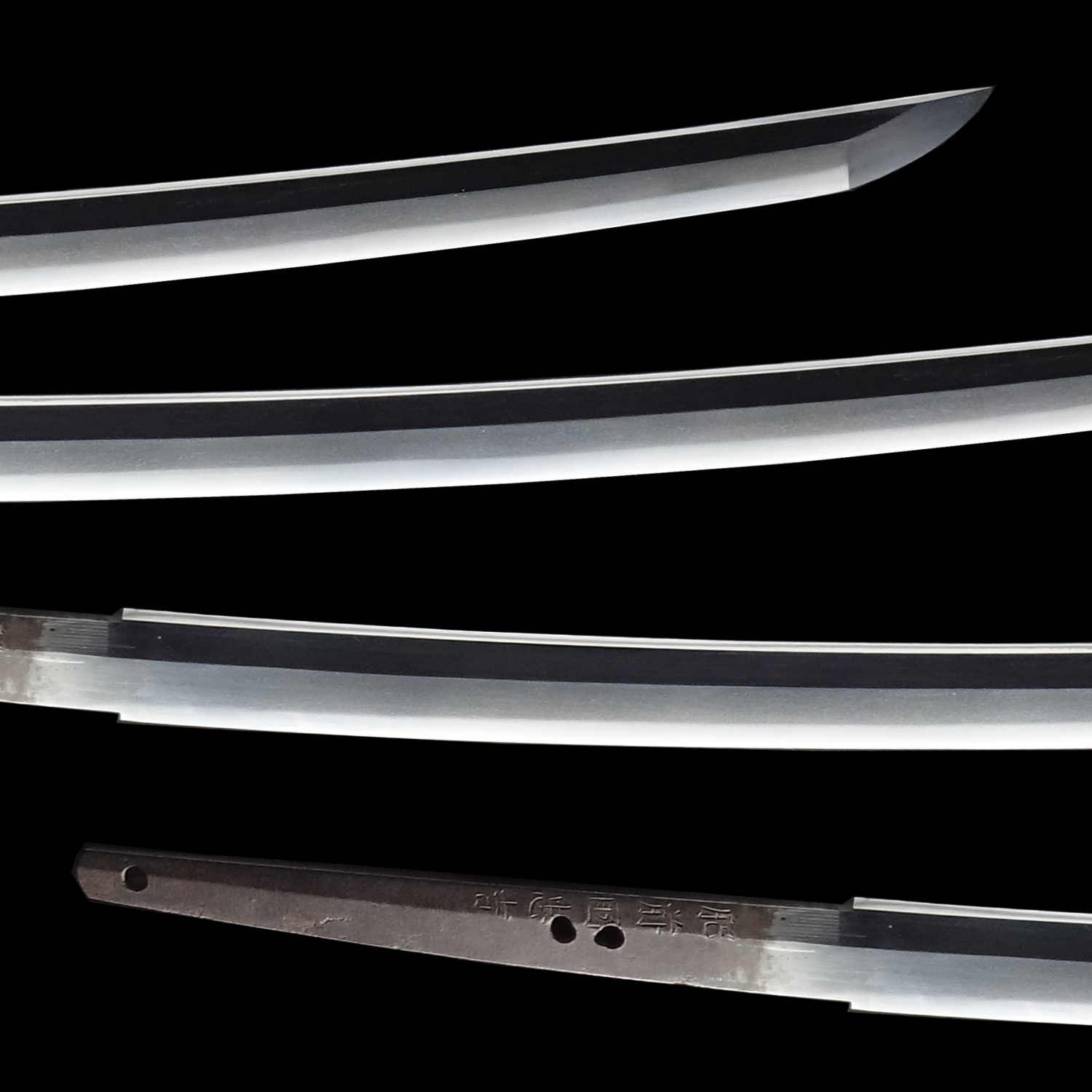
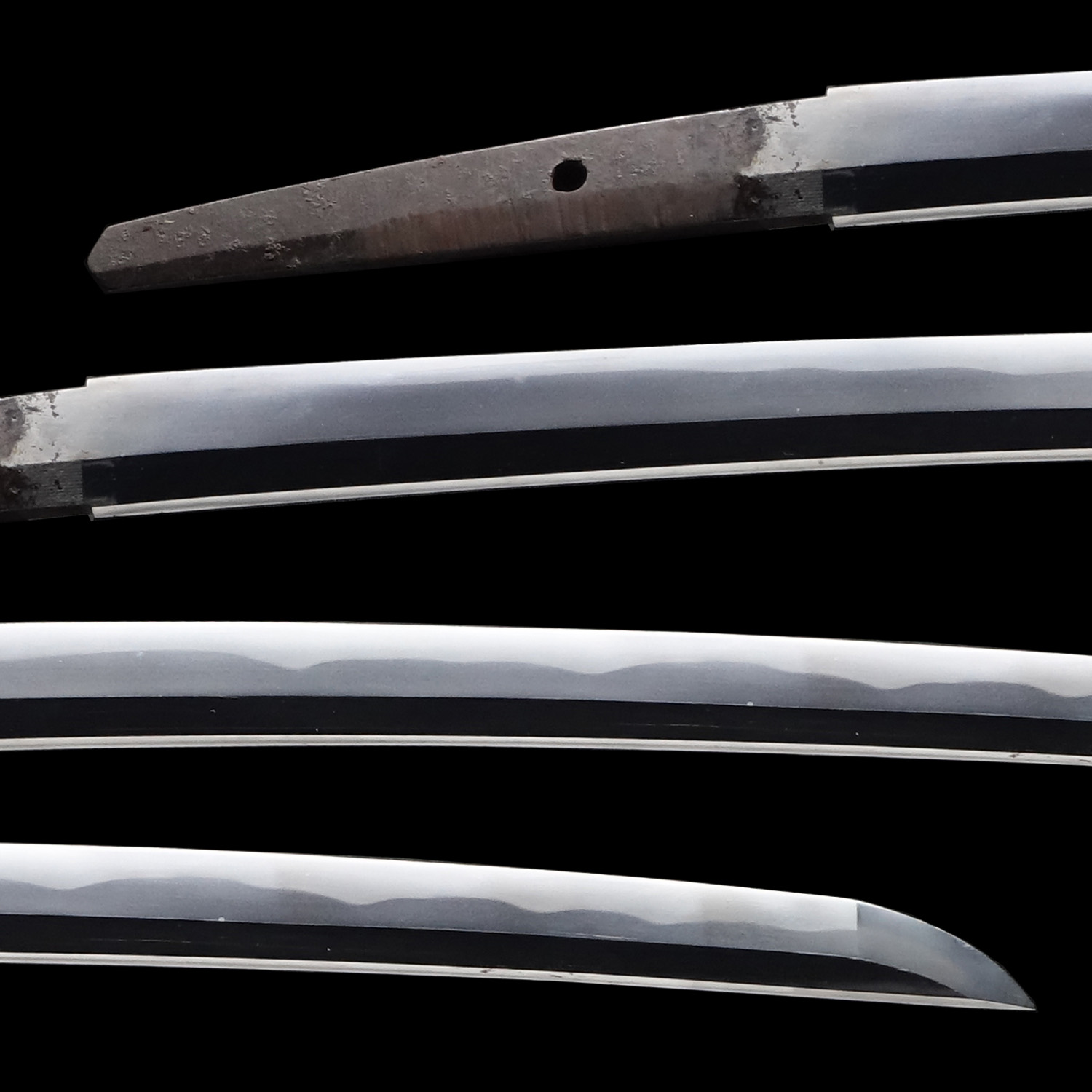
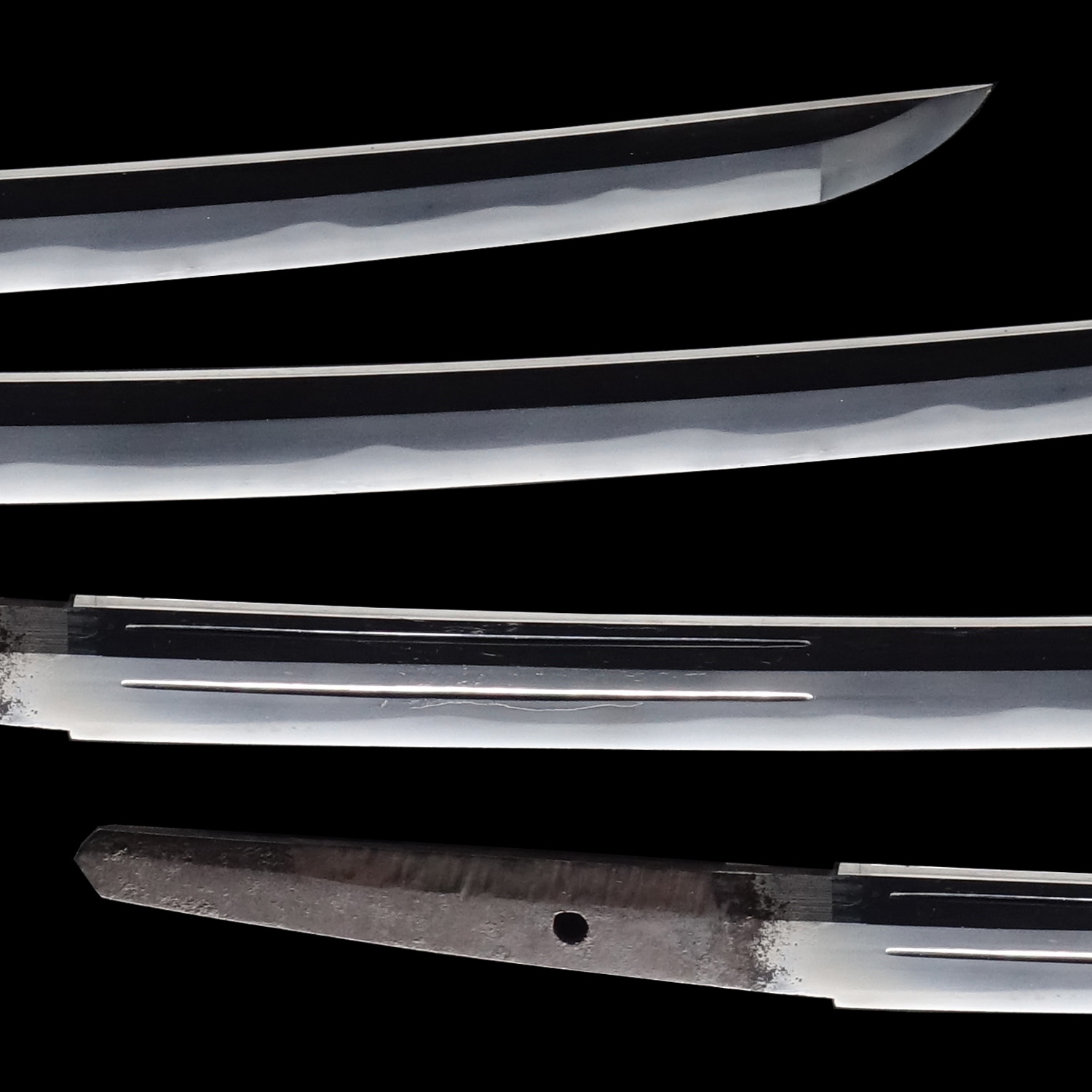
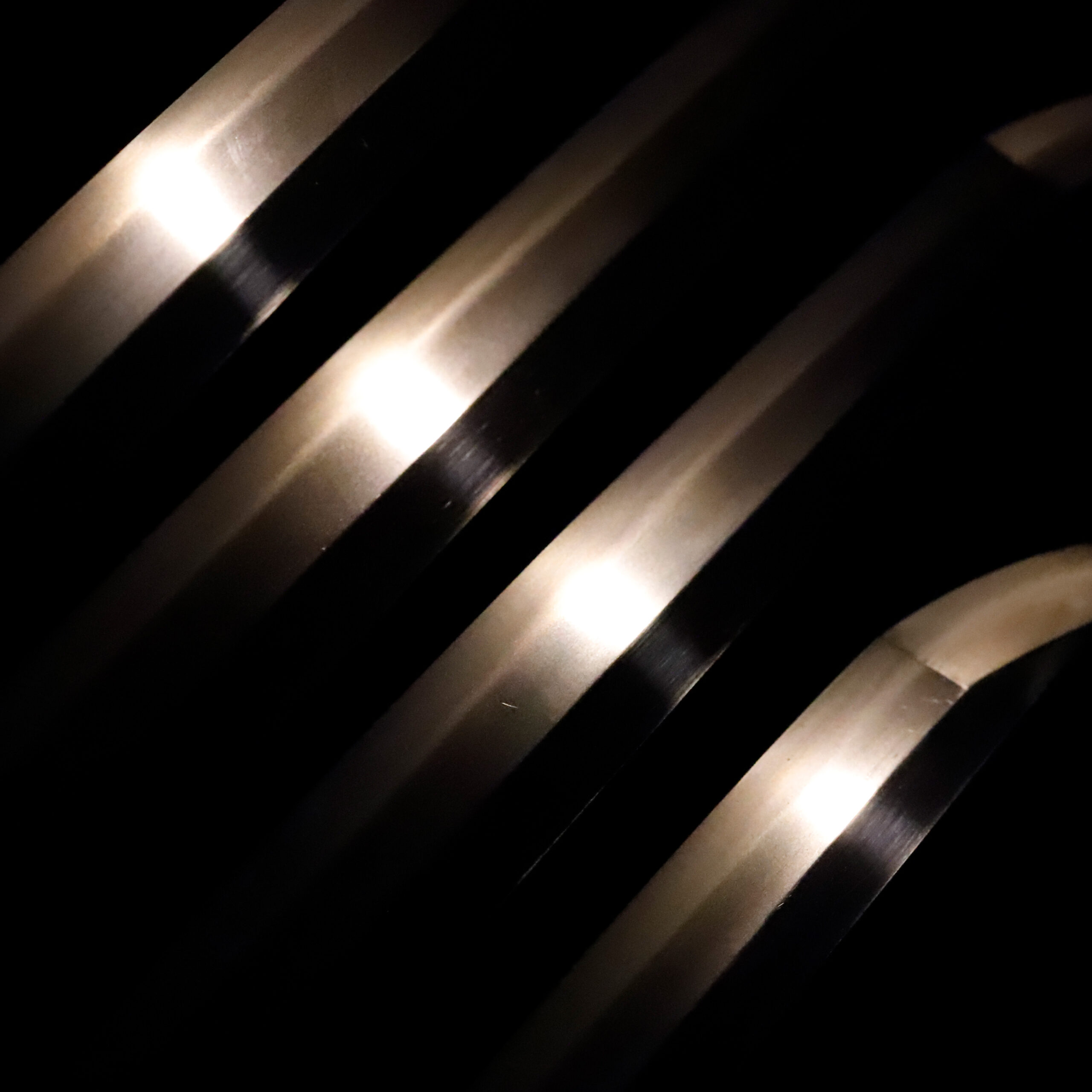
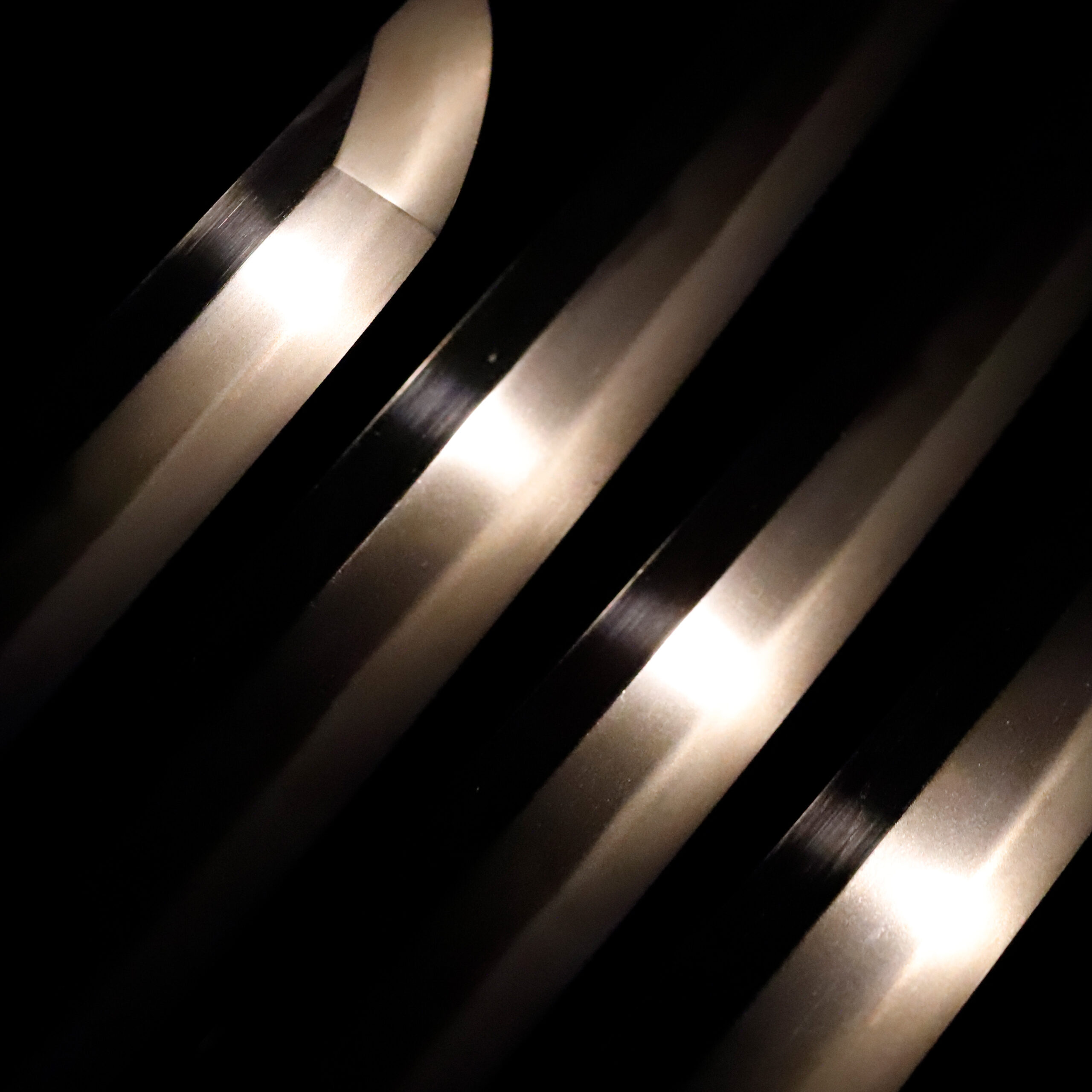

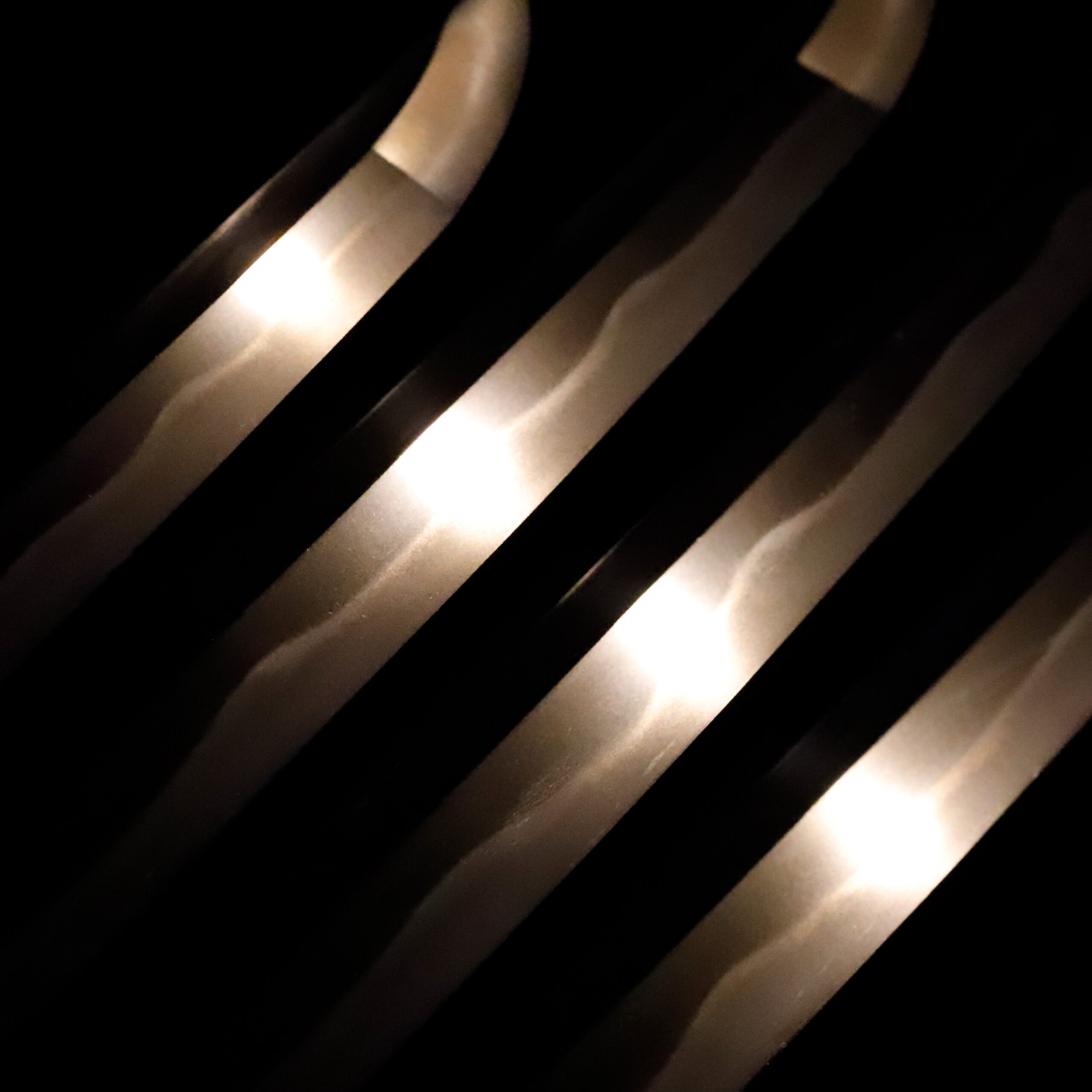
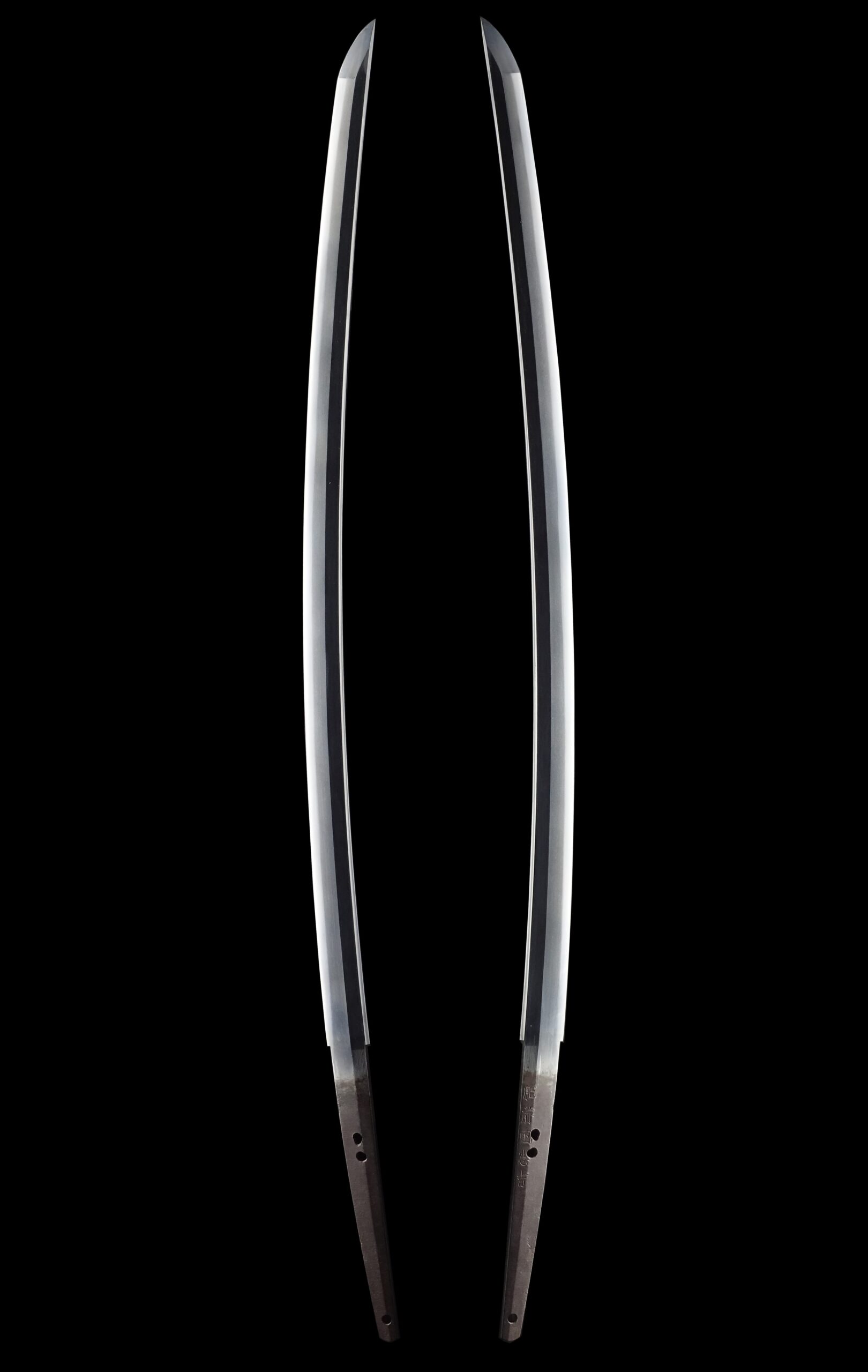
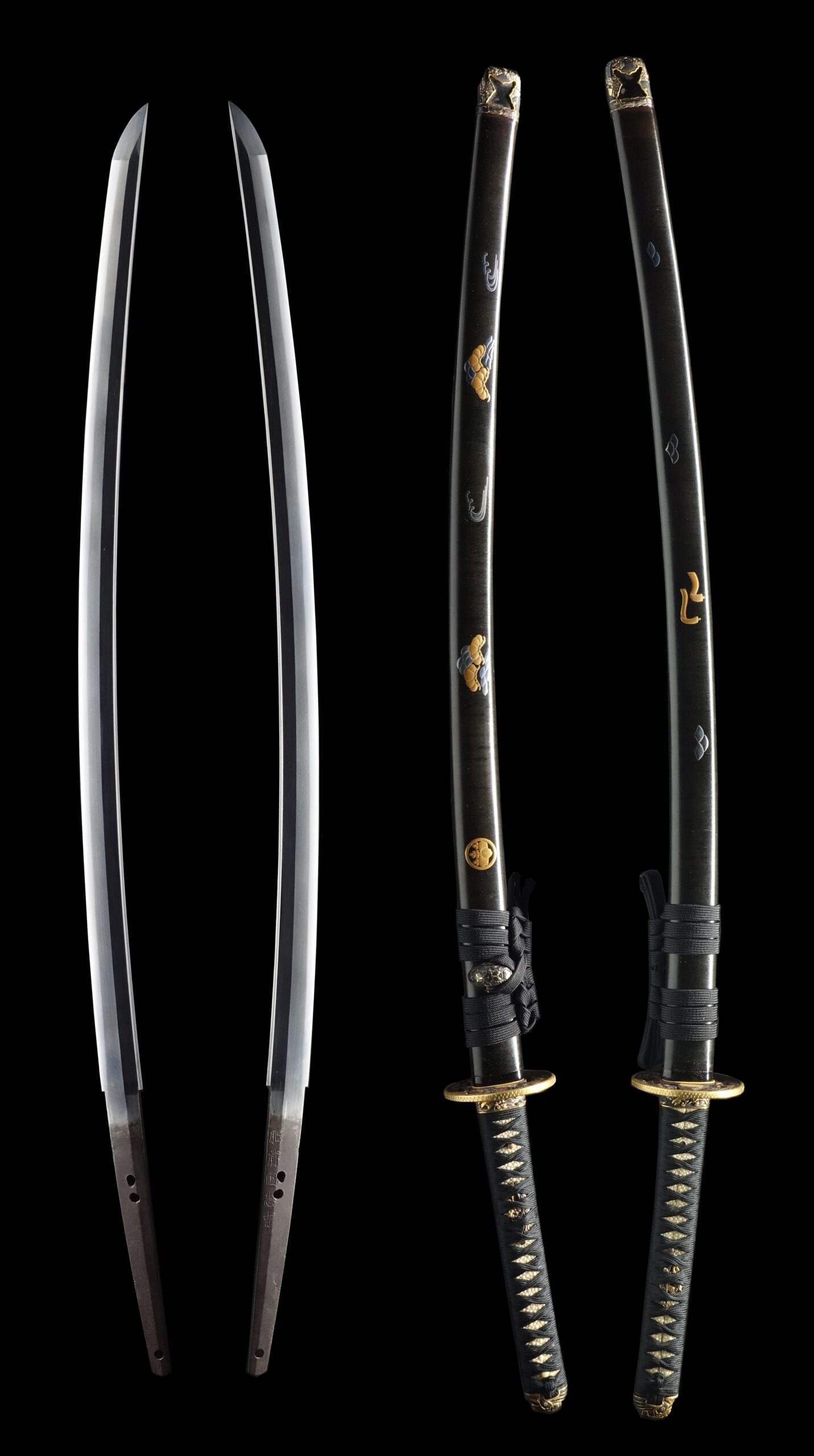
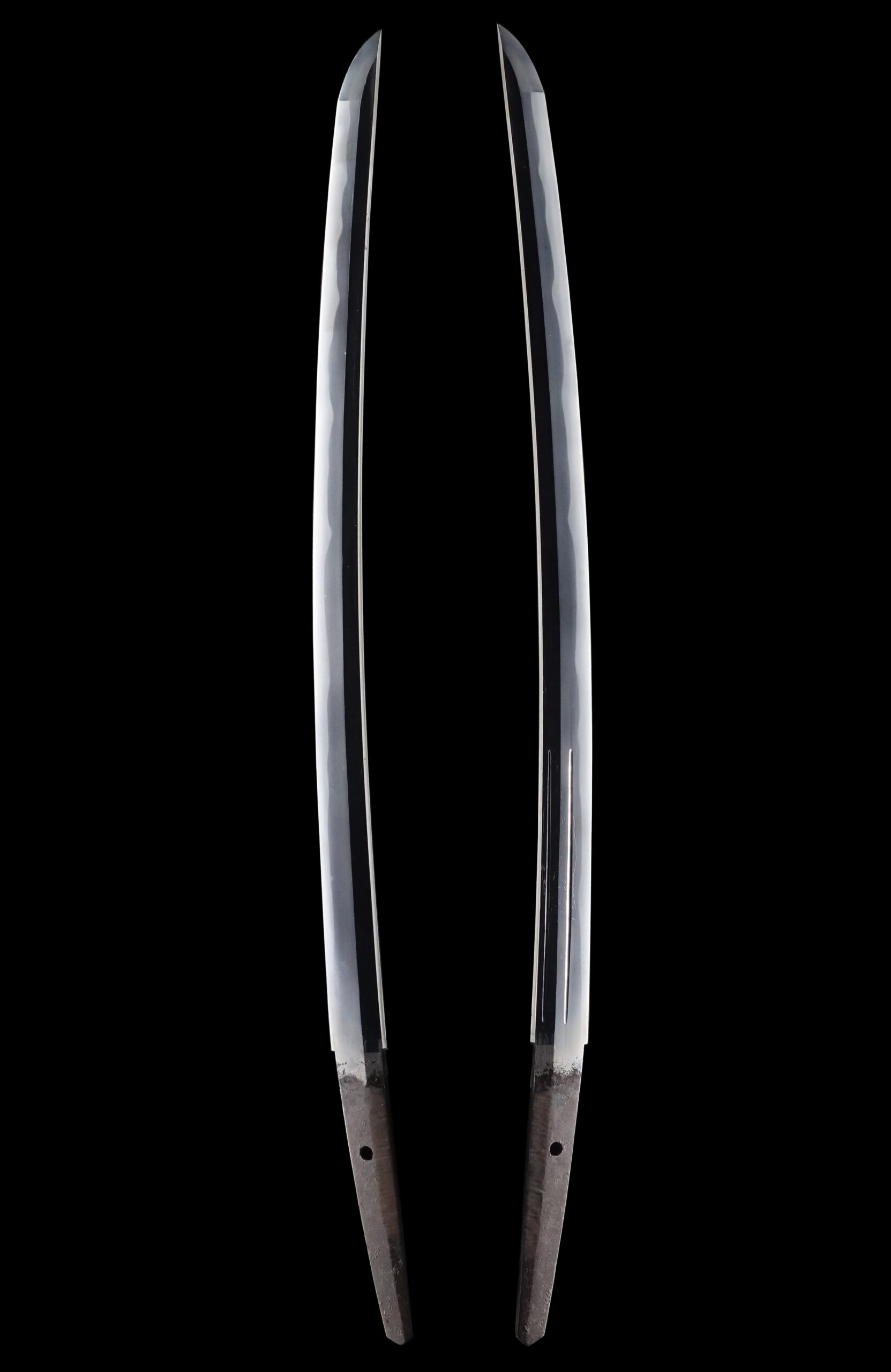
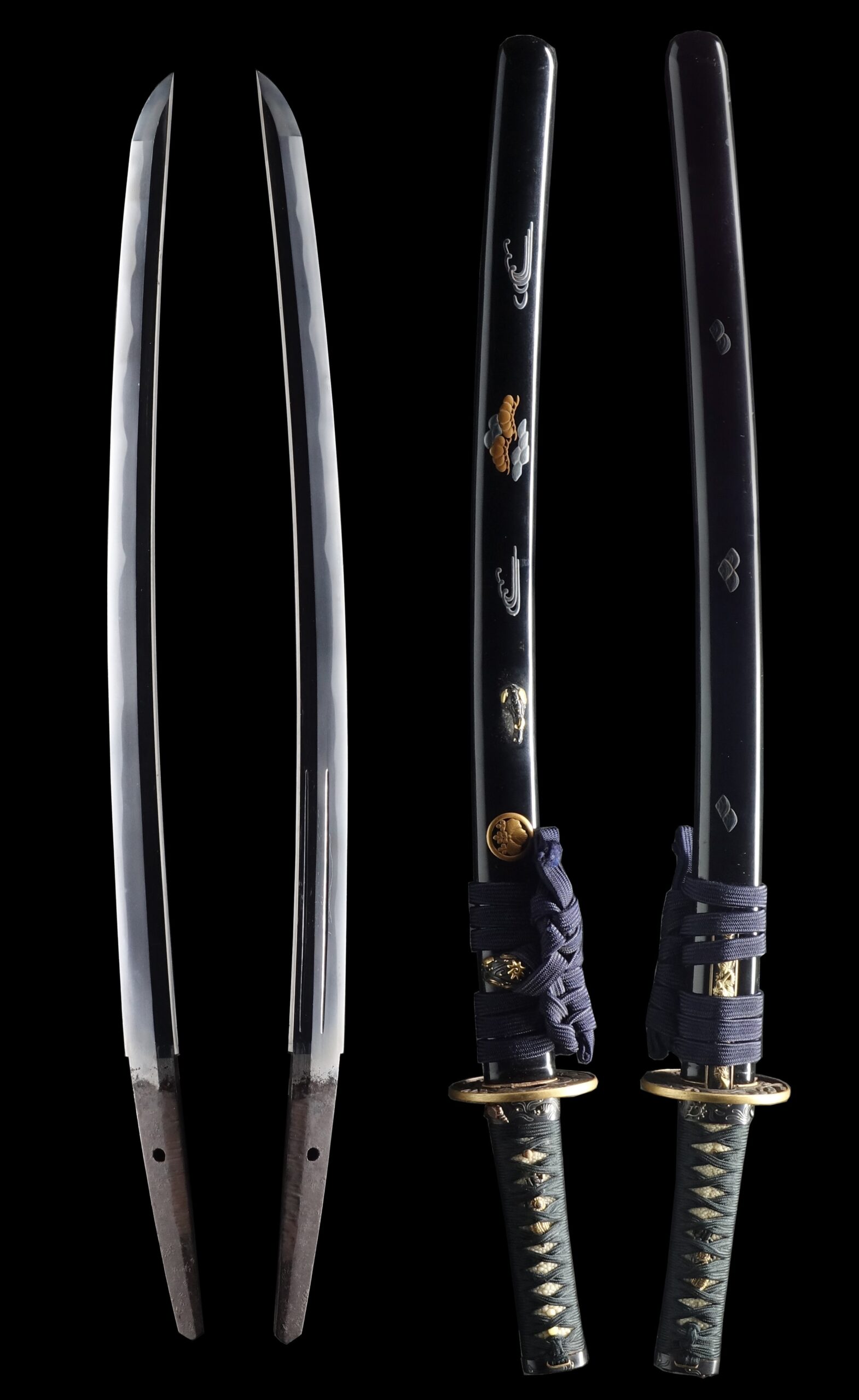
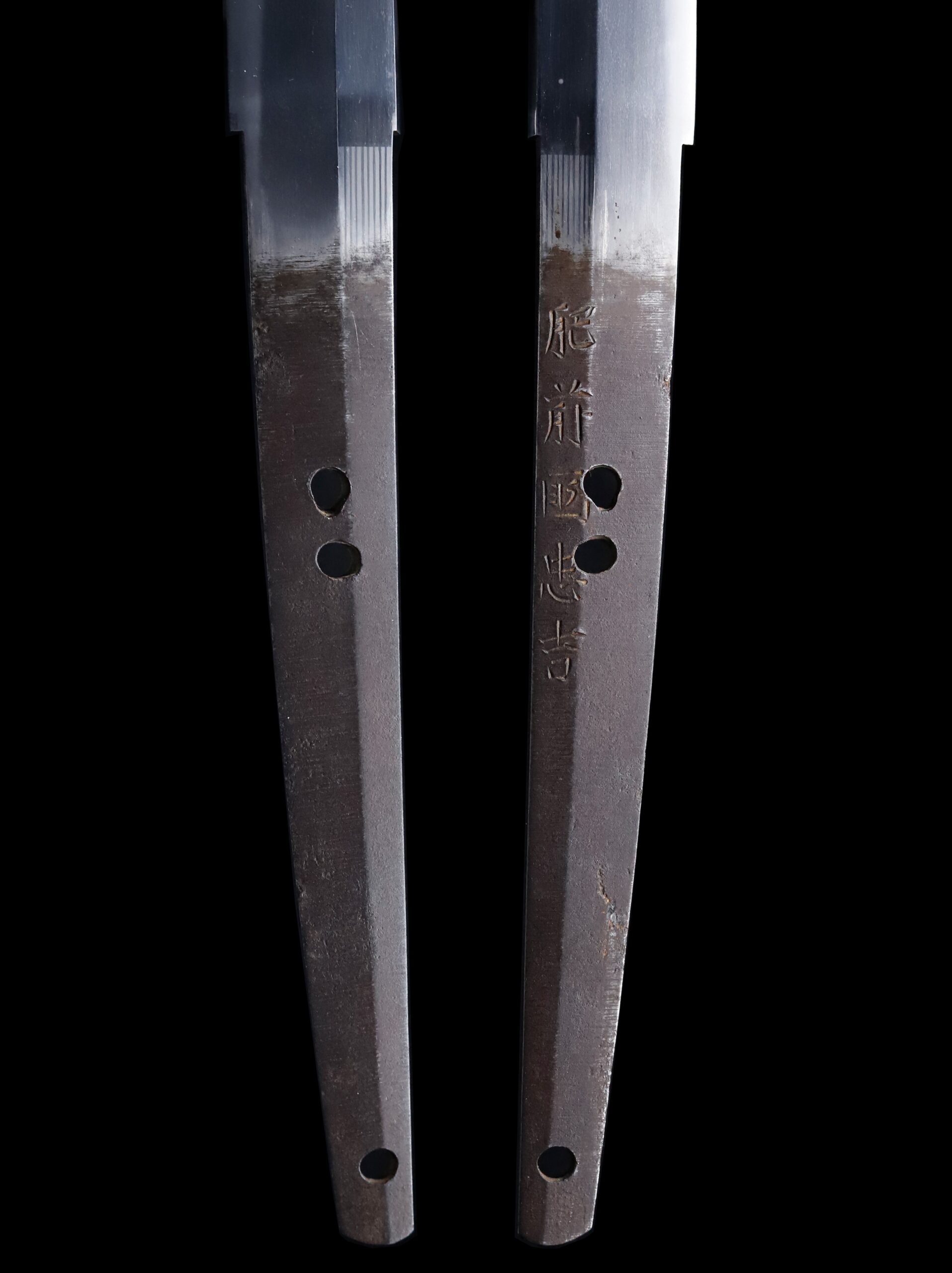
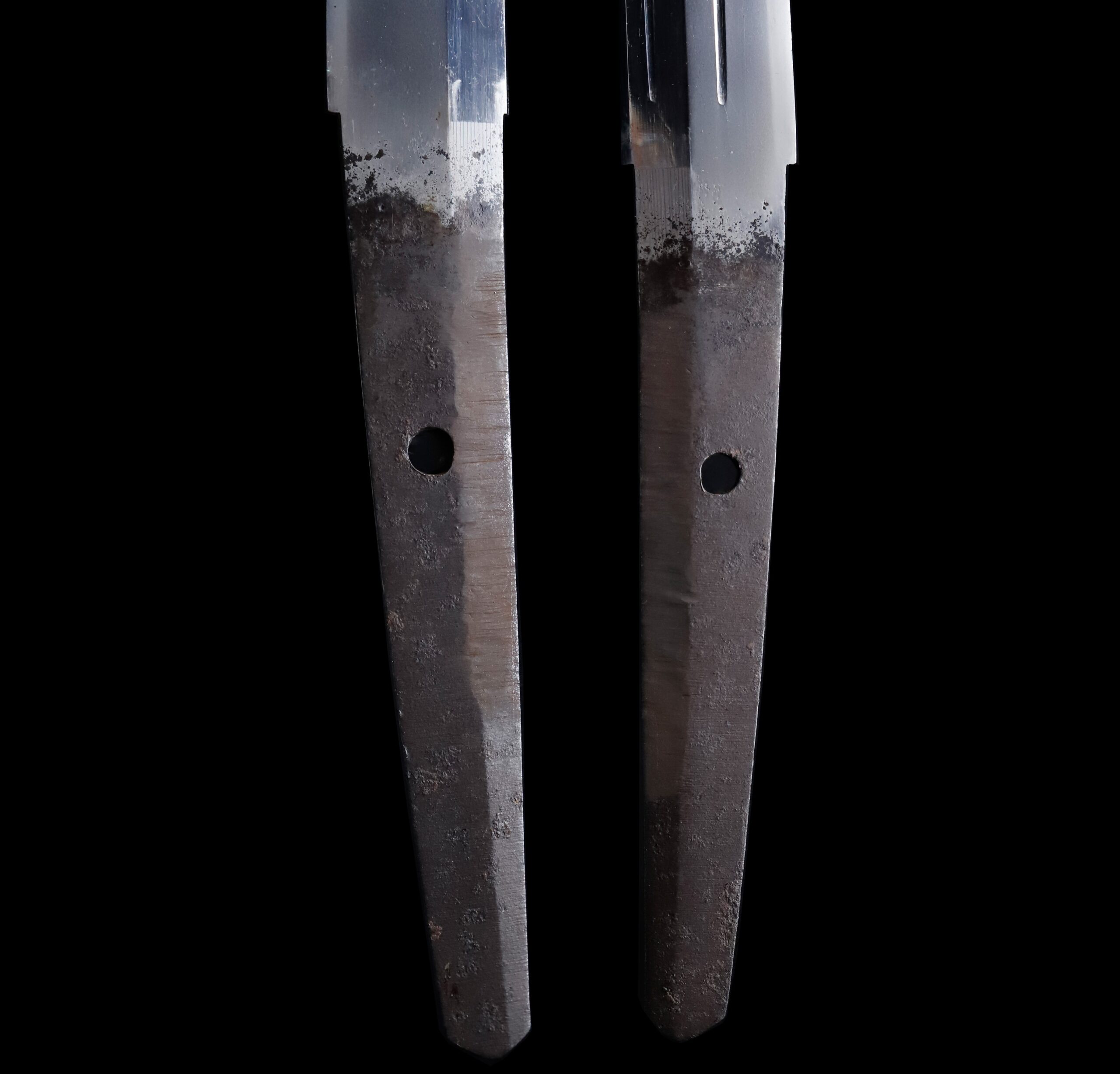
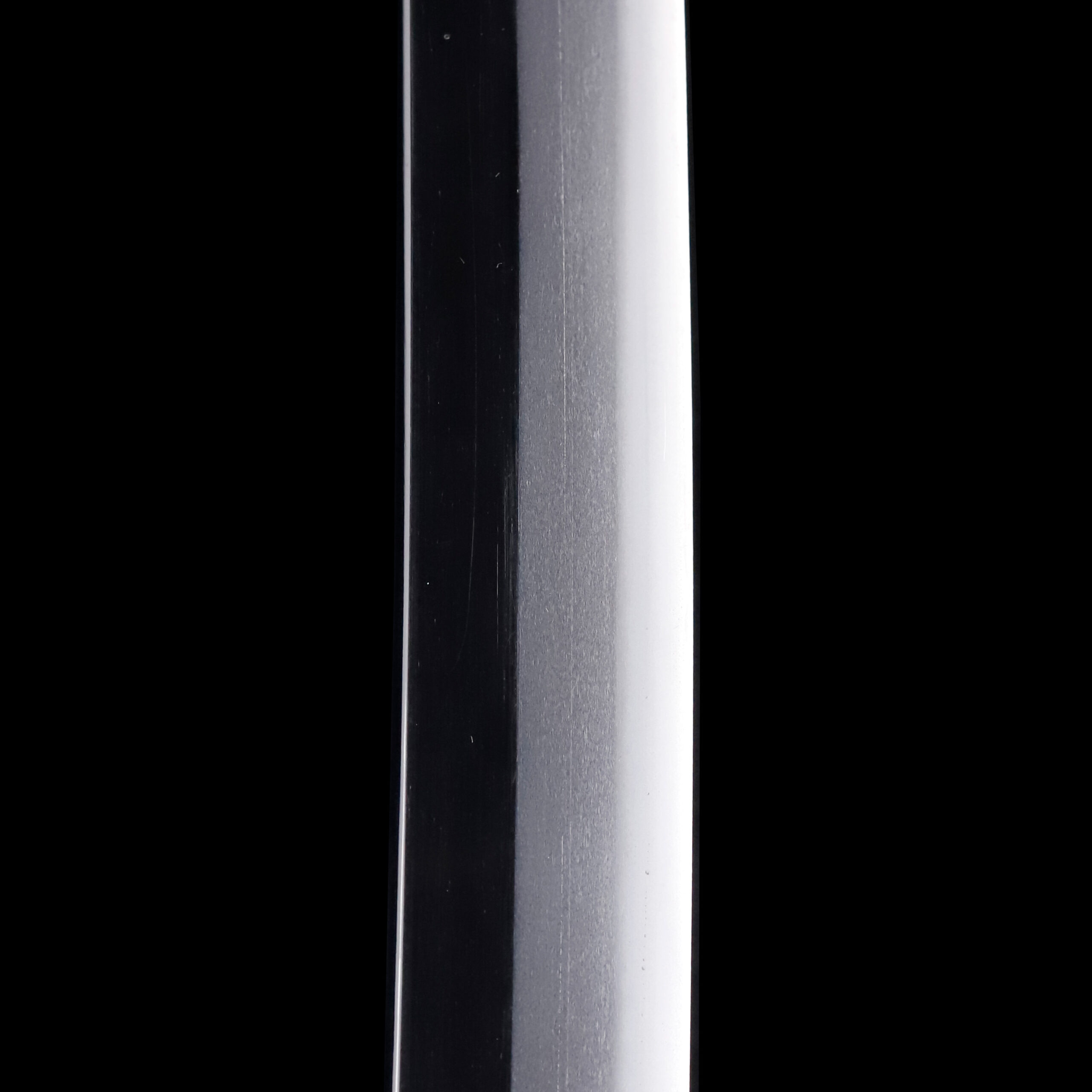
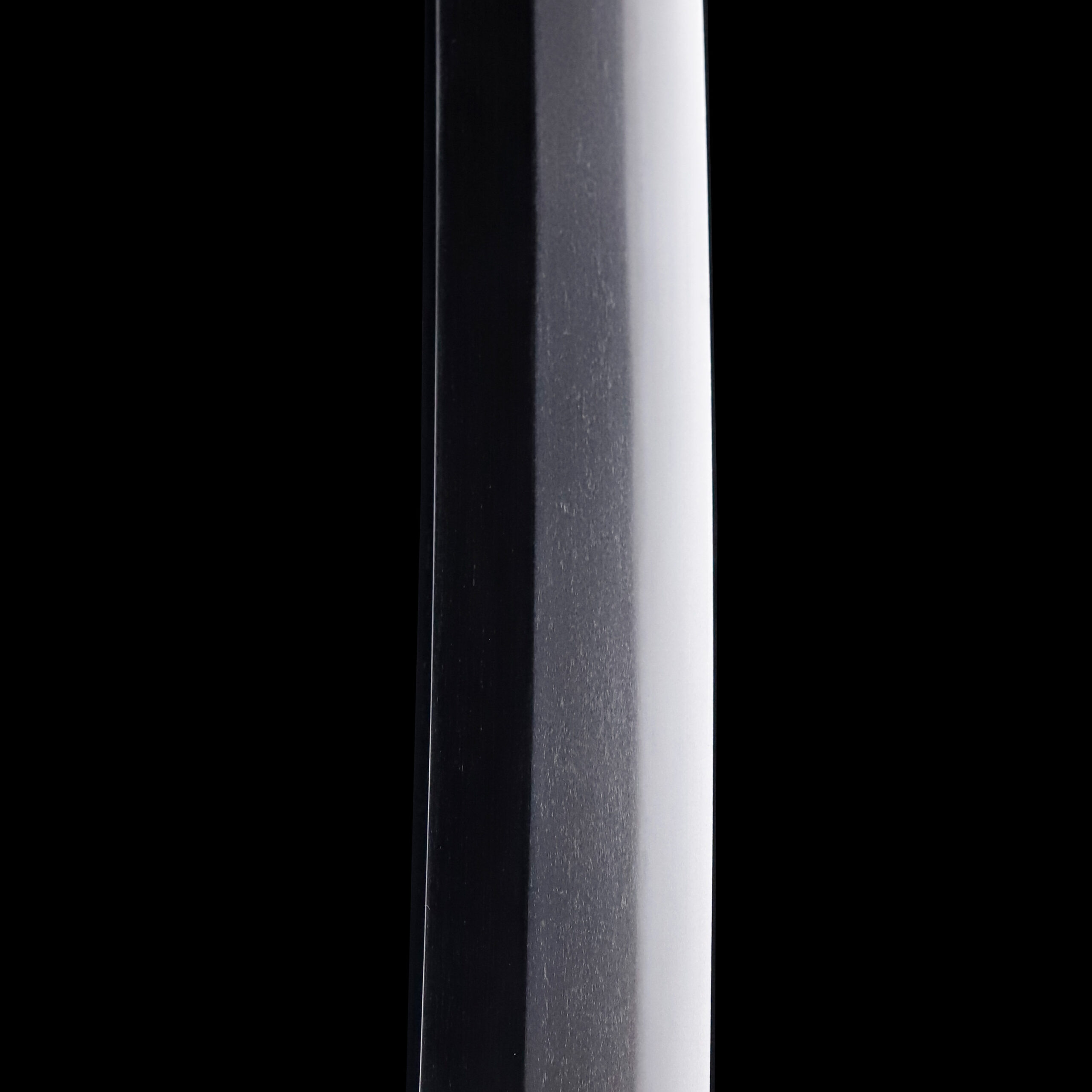
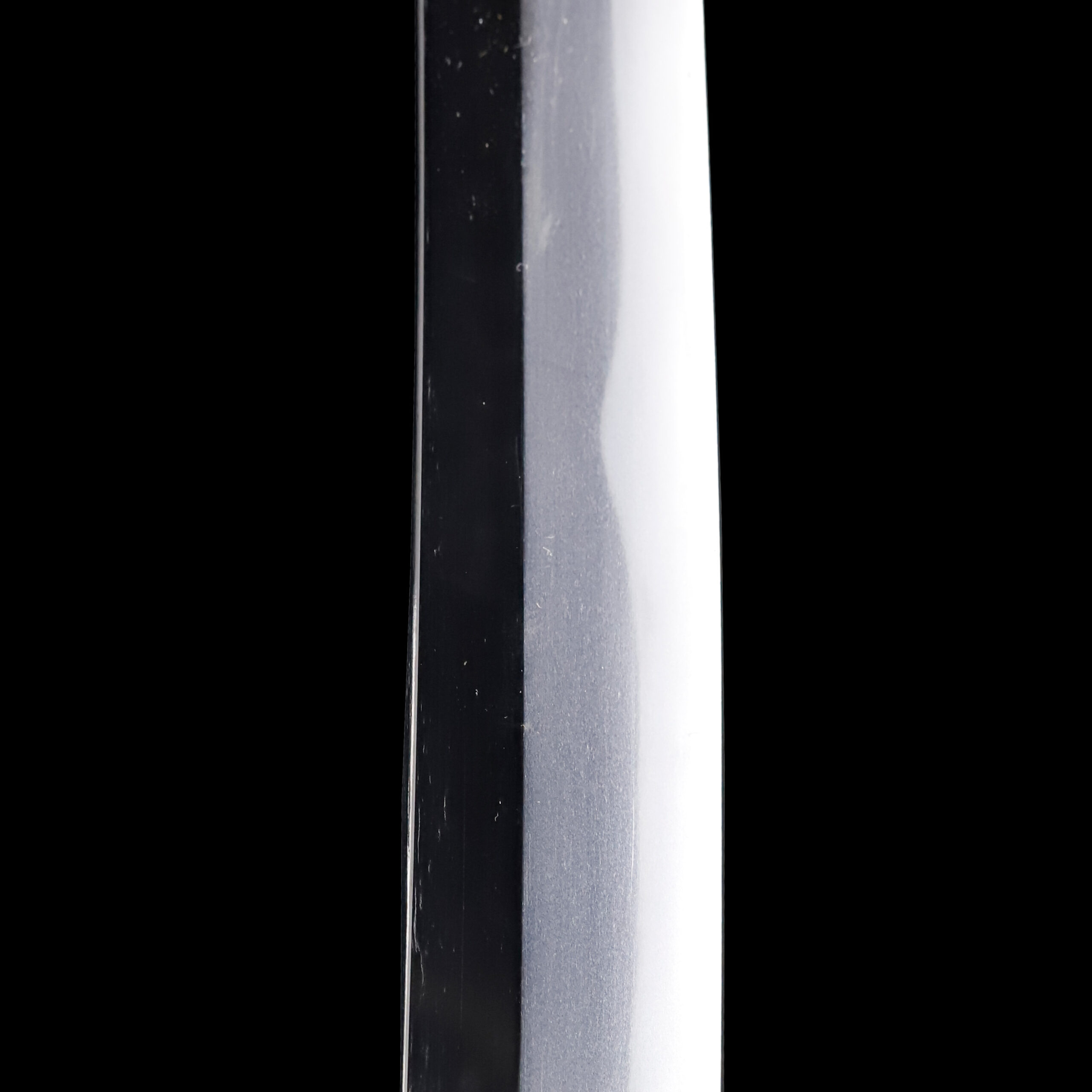
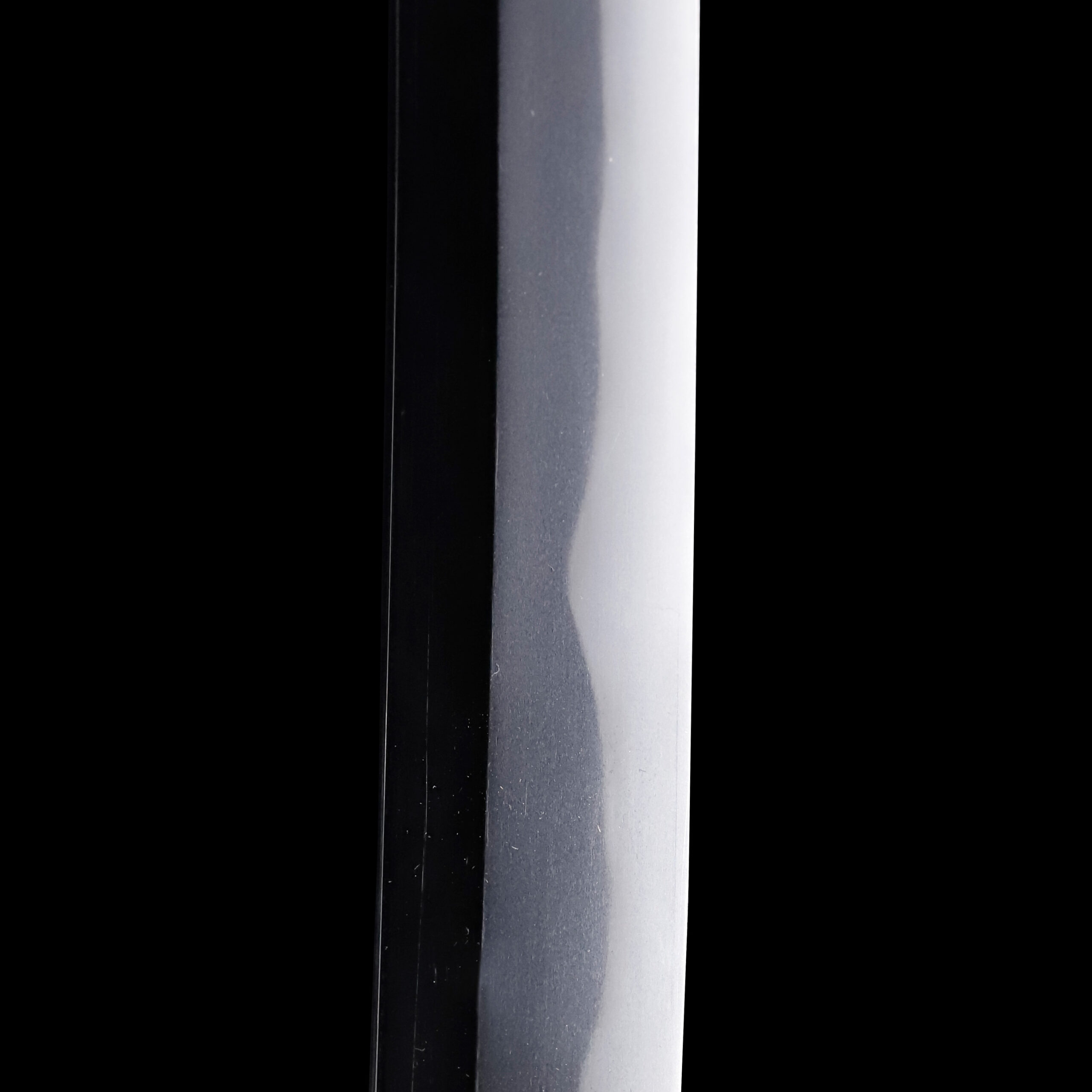
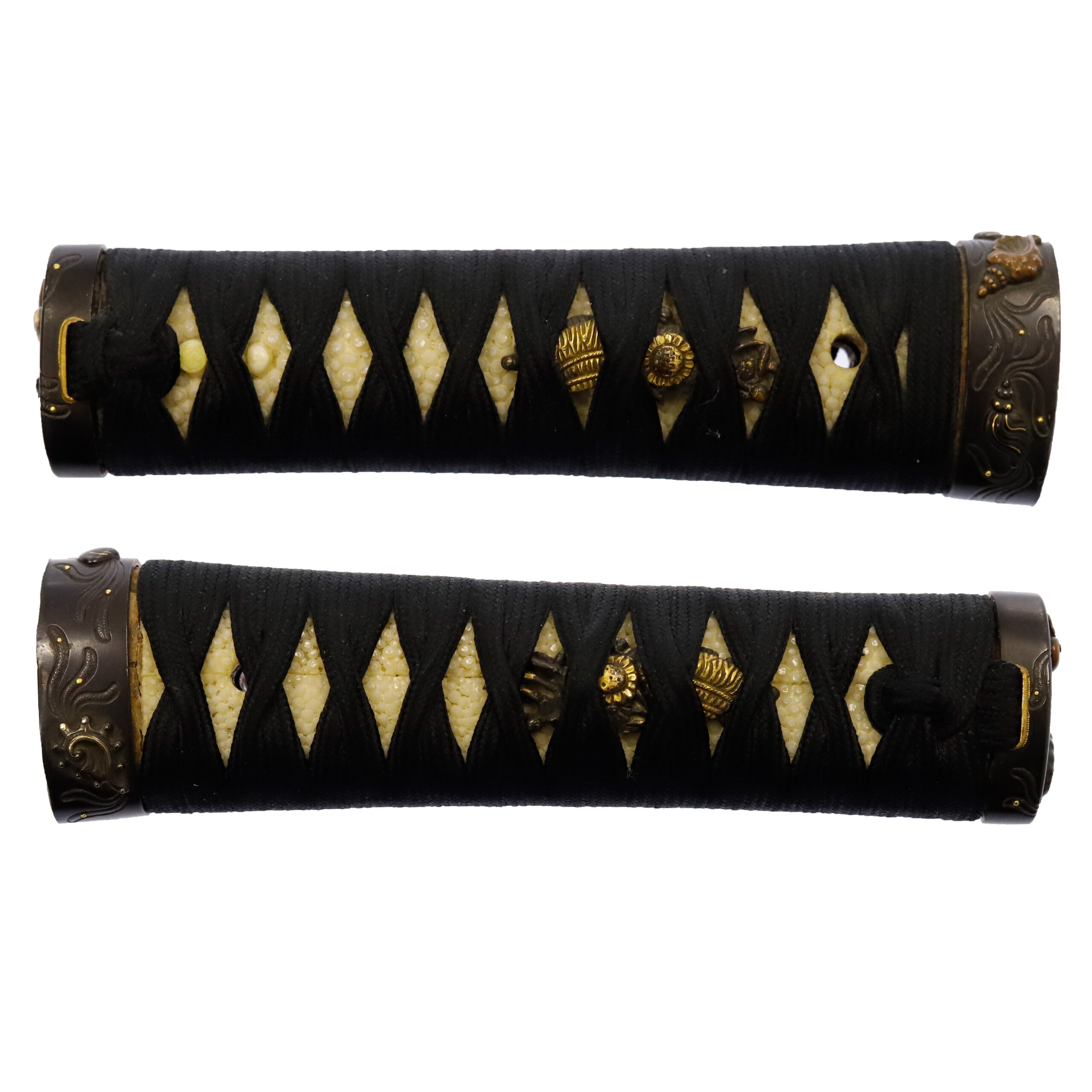
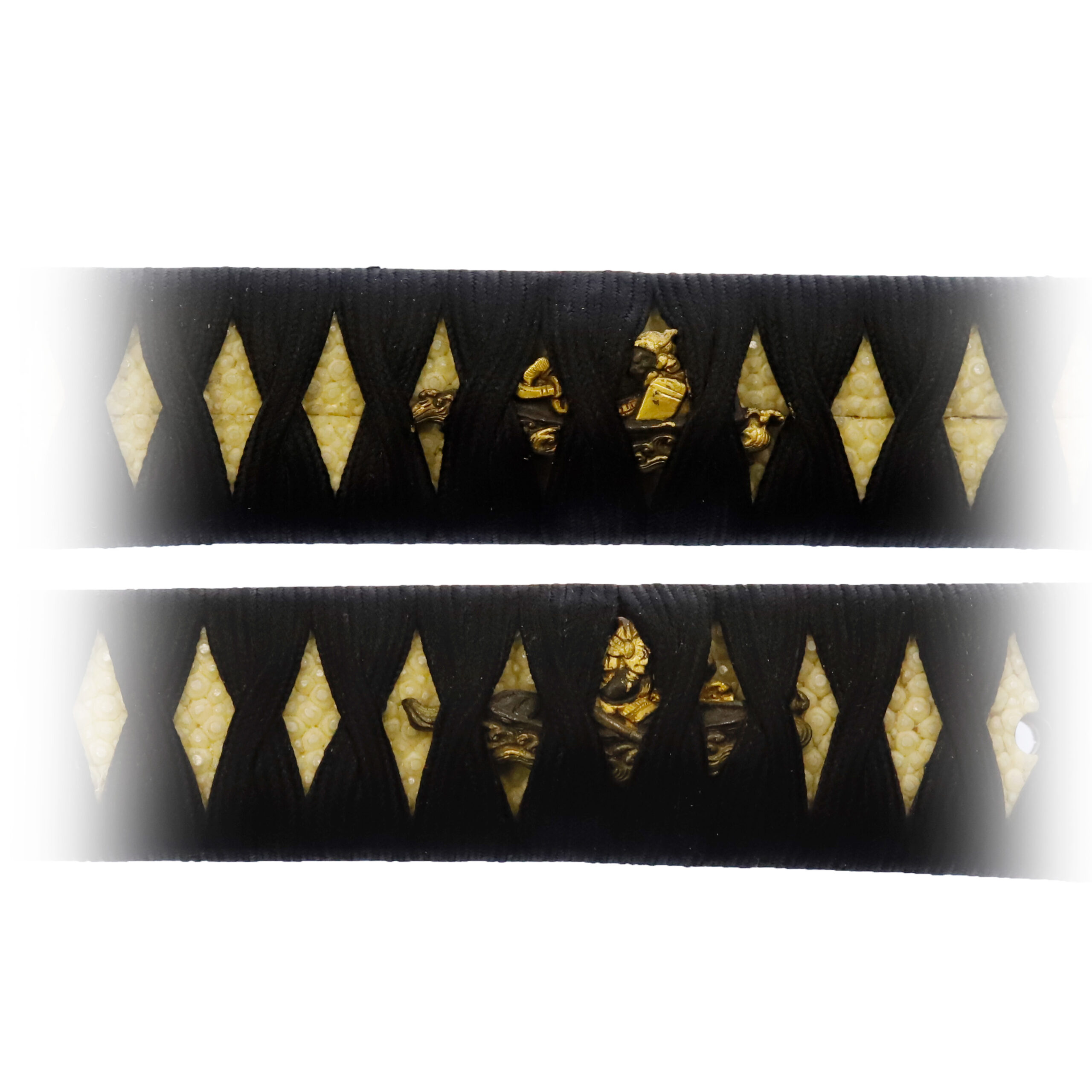
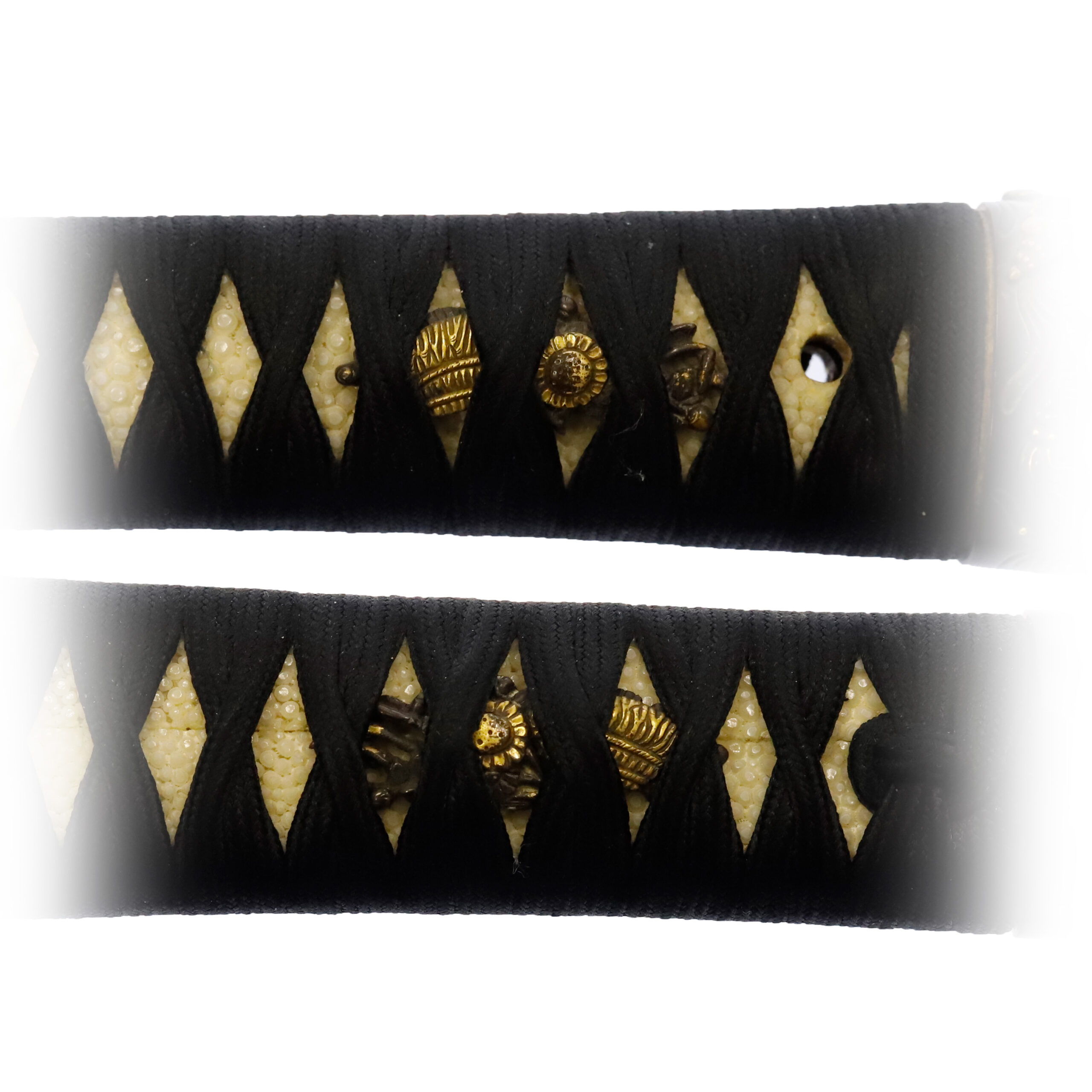
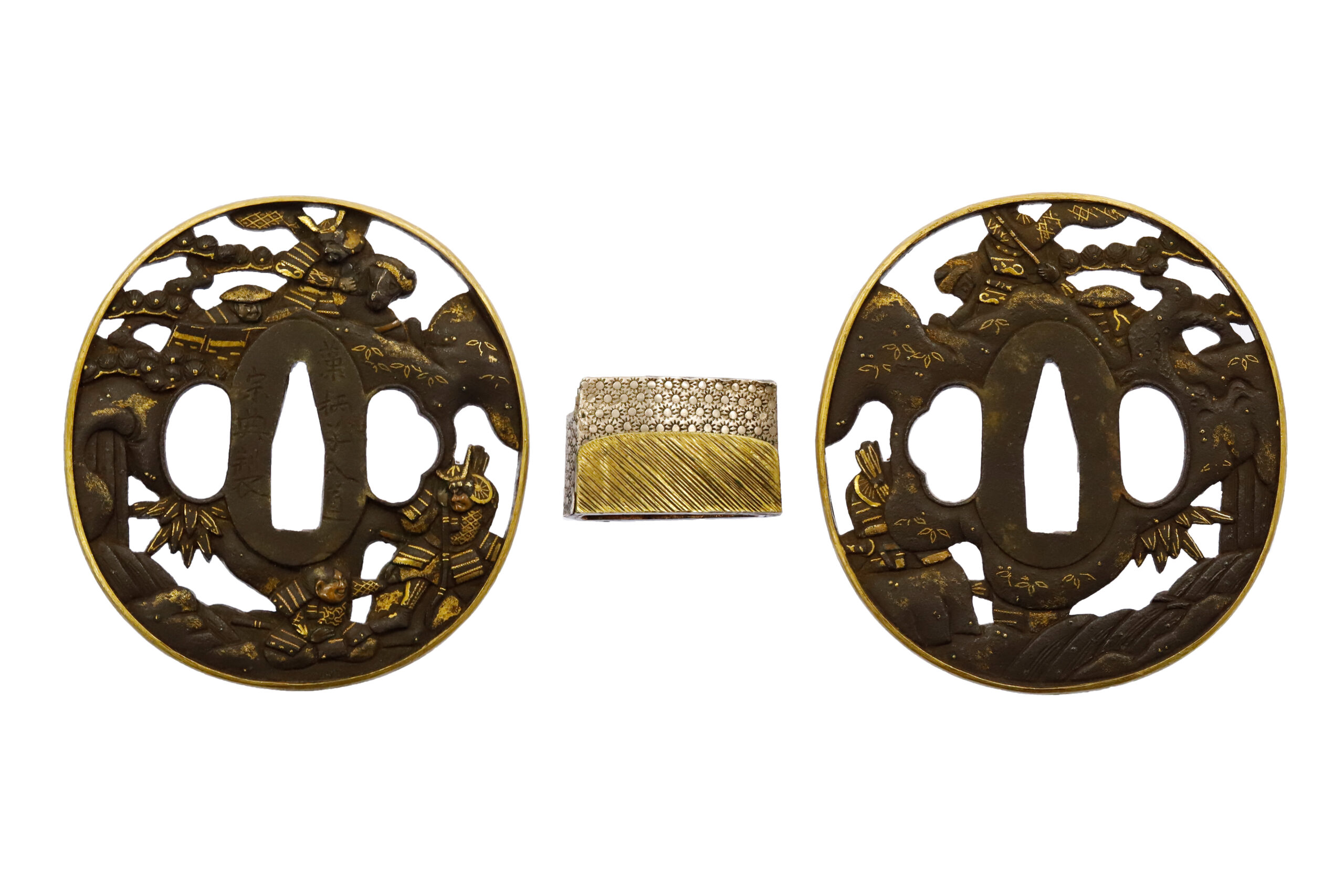
Shinto · Hizen · around 1830-1844
Fujishiro Chu-jo saku · Tōken Taikan top 76%
4 pieces on the market now
Shinto · Hizen
105 pieces on the market now
The Hizen school began with a single domain commission. In Keicho 1 (1596) the Nabeshima of Hizen ordered Hashimoto Shinzaemon, the smith who would sign Tadayoshi, up to Kyoto with the carver Munenaga; there he entered the gate of Umetada Myoju and studied forging while Munenaga learned the chisel. The two returned to the province in Keicho 3 (1598), and Tadayoshi settled in the castle town below Saga, where under the domain's patronage the line grew into the dominant sword-making house of Kyushu. His own work runs from Keicho 5 (1600) to his death in Kan'ei 9 (1632); in Genna 10 (1624) he received the court title Musashi Daijo, changed his name to Tadahiro, and shifted his clan name from Minamoto to Fujiwara, so that the late Musashi Daijo blades are the founder under a second name. From him the house became a true generational institution: his son the second-generation Omi Daijo Tadahiro carried it forward as its most prolific hand, the third-generation Mutsu no Kami Tadayoshi returned its highest finish, and a Tosa no Kami branch took the founder's signature when he set it aside. Around this main line grew a circle of disciples and collateral hands, the waki-Hizen or Soba-Hizen smiths, several of them, like Yoshiie and Hironori, working as daisaku substitute makers whose own signed pieces are therefore scarce. The school's signature is its steel. Over a ko-itame forged so tightly it shows no slackness, fine ji-nie gathers in minute particles until the surface takes on the rice-bran konuka-hada (also written komenuka-hada) that no other school produces, fine chikei entering throughout and the ji notably clear and bright.
The orthodox temper laid upon it is a chu-suguha or hiro-suguha, sometimes tinged with a shallow notare and ko-gunome, the nioiguchi deep with finely clustered ko-nie and tightened to a bright clarity, the boshi running straight to a quiet ko-maru. The founder aimed this suguha toward the Rai school yet departed from it, his nioiguchi tighter and his forging carrying more vigor; the third generation refined it to what the published sources call the strongest and most precise hand of the first three generations. Against that calm register the house also worked a showier one, the Hizen choji-midare mixing gunome, long ashi, kinsuji and sunagashi, a manner the published sources already find more often in the founder's late Musashi Daijo work than in his Tadayoshi years, and one the second generation made his own. The branches pushed further from the suguha standard: Tadakuni of the Ogi domain ran sunagashi more conspicuously than any other Hizen hand and reached toward old Ichimonji in his o-choji; Masahiro and Yukihiro favored a flamboyant long-ashi choji over the calm main line; and the Iyo no Jo Munetsugu line worked apart in the Soshu-den, building a midareba on notare with a pointed togariba and a jihada that tends to stand and tone slightly blackish. A collector seeks Hizen-to first for that steel, and reads it the same way the appraiser does: a bright suguha lying over a clear, tight konuka-hada identifies the school before the signature is consulted, and the quiet ko-maru boshi on the ura-signed tang confirms the main-line practice. Generation and branch are then told within that frame, the third generation's powerful sugata recalling not his father but his grandfather, the waki-Hizen hands set apart by their irregular temper, their sujikai file marks and a sashi-ura signature, the Munetsugu line by its Soshu togari. The main line, made in real numbers across so long a span, reaches the market more readily than any Kamakura master, so a papered example is within reach of a patient collector, while the founder's own work and the finest konuka-suguha of the third generation come to open hands only from time to time. Provenance runs back through the house the school served, blades recorded to Nabeshima Katsushige and Nabeshima Naomoto and passing onward to the Owari Tokugawa, the Satake and the Imperial families; documentary inscriptions sharpen the picture further, a Myoju soemei attesting the founder's discipleship, Umetada carving adding flowers to brocade on his late blades, and the gold-inlaid cutting tests of Yamano Kanjuro and Yamano Ka'emon, rare on Hizen work, naming the edge as well as the hand. Learn more →
| Smith | Era | Designated |
|---|---|---|
| Tadayoshi忠吉 | 1596-1632 | 155 |
| Tadayoshi忠吉 | 1660-1686 | 61 |
| Tadahiro忠廣 | 1633-1693 | 133 |
| Masahiro正廣 | 1624-1655 | 30 |
| Tadakuni忠國 | 1648-1652 | 32 |
Hizen: a domain enterprise
Hizen swords were a domain enterprise: the Nabeshima sent Tadayoshi to study under Umetada Myōju around 1596, then built a licensed school around him. Nine generations carried its famously consistent konuka-hada work into the Meiji era.
The NTHK’s principal certificate, issued for a blade of considerable quality. It confirms a genuine signature, or, for an unsigned (mumei) work, records the judges’ attribution to a smith or school. The paper carries a detailed worksheet with a numerical point score.
The NTHK (Nihon Tōken Hozon Kai, the Society for the Preservation of the Japanese Sword) is the oldest of Japan’s sword-appraisal bodies, founded in 1910, decades before the NBTHK. After the death of its long-serving head it divided into two successor societies, the NTHK and the NTHK-NPO, both of which continue to hold shinsa. NTHK blade certificates are known for a detailed worksheet that records a numerical point score alongside the judges’ written opinion (fitting papers carry the judges’ opinion without a point score), and the society is especially respected for its attribution of unsigned (mumei) work.
Returns/exchanges limited to defects caused by shipping (except willful misconduct or gross negligence by the company); customers must contact within 72 hours of receiving the product.