NihontoWatch MonNihontoWatch
Market
Encyclopedia
Kantei
NihontoWatch MonNihontoWatch
Market
Encyclopedia
Kantei

Description

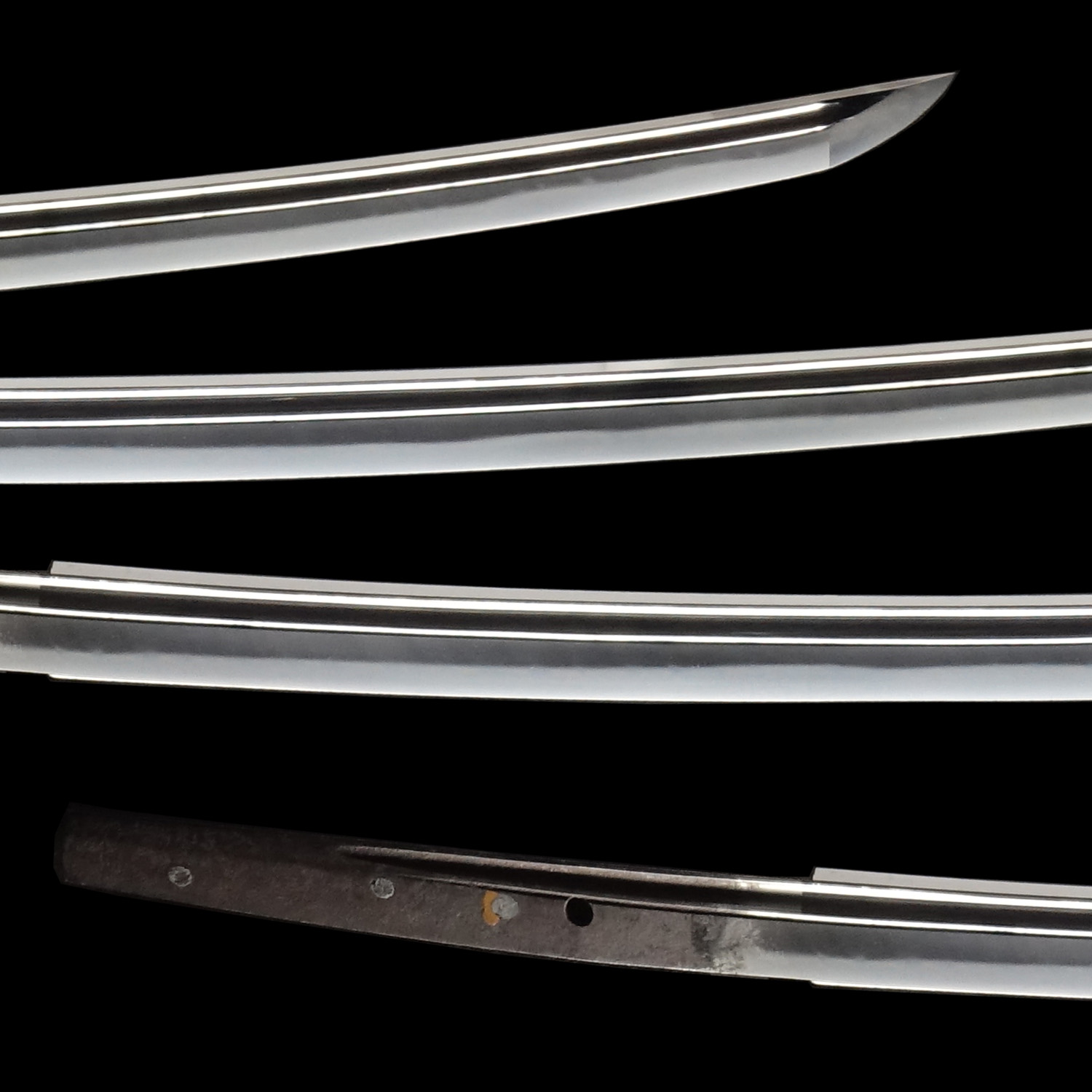
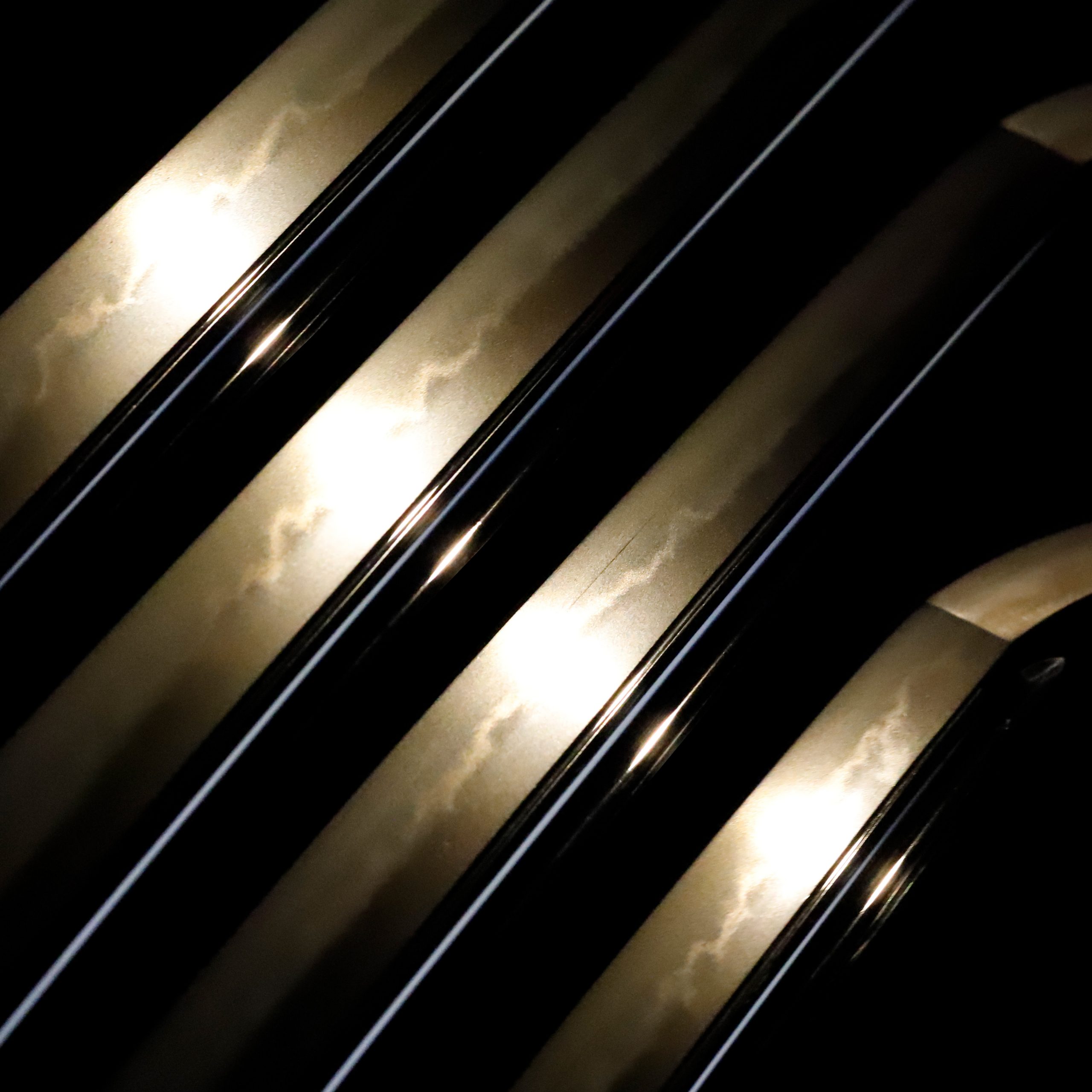
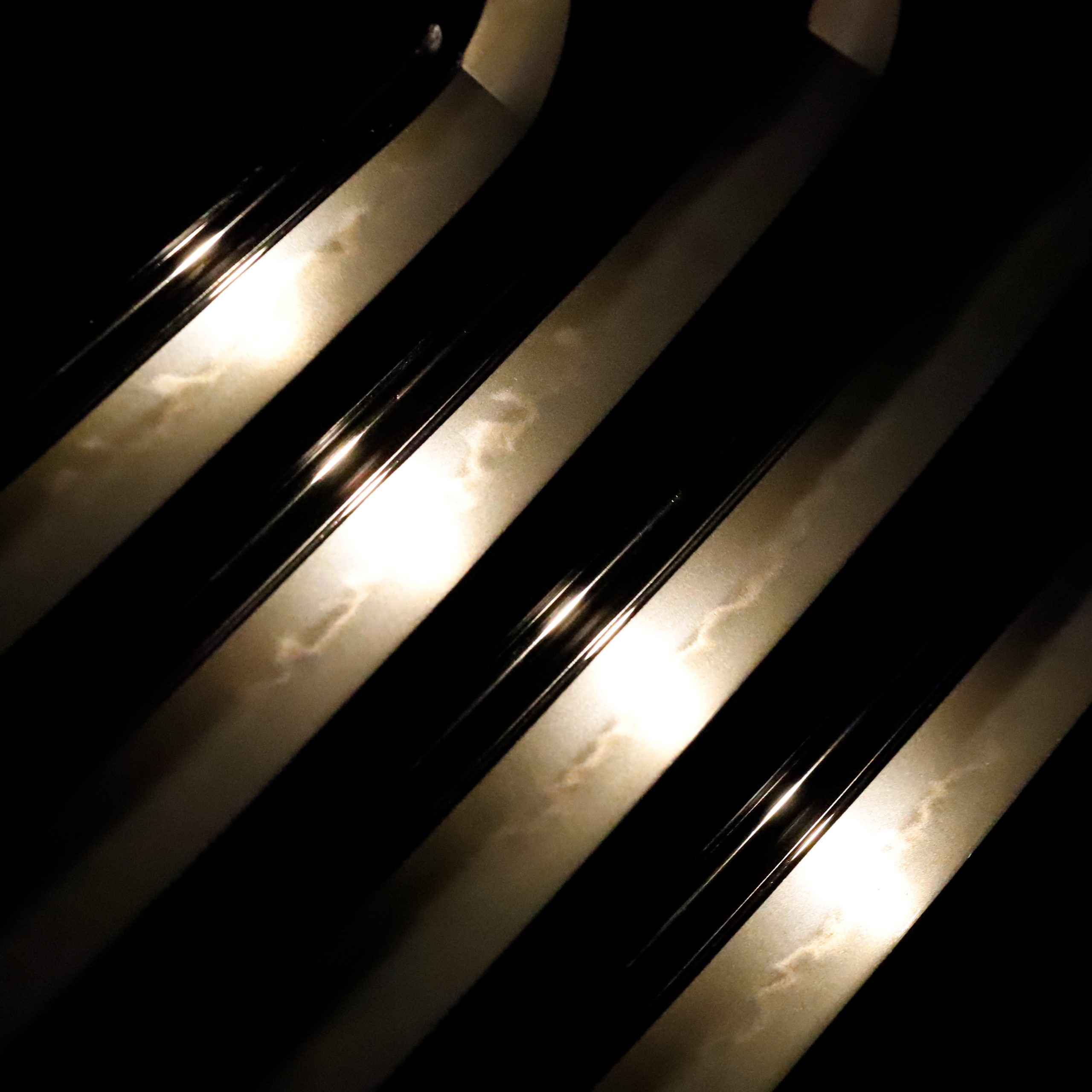
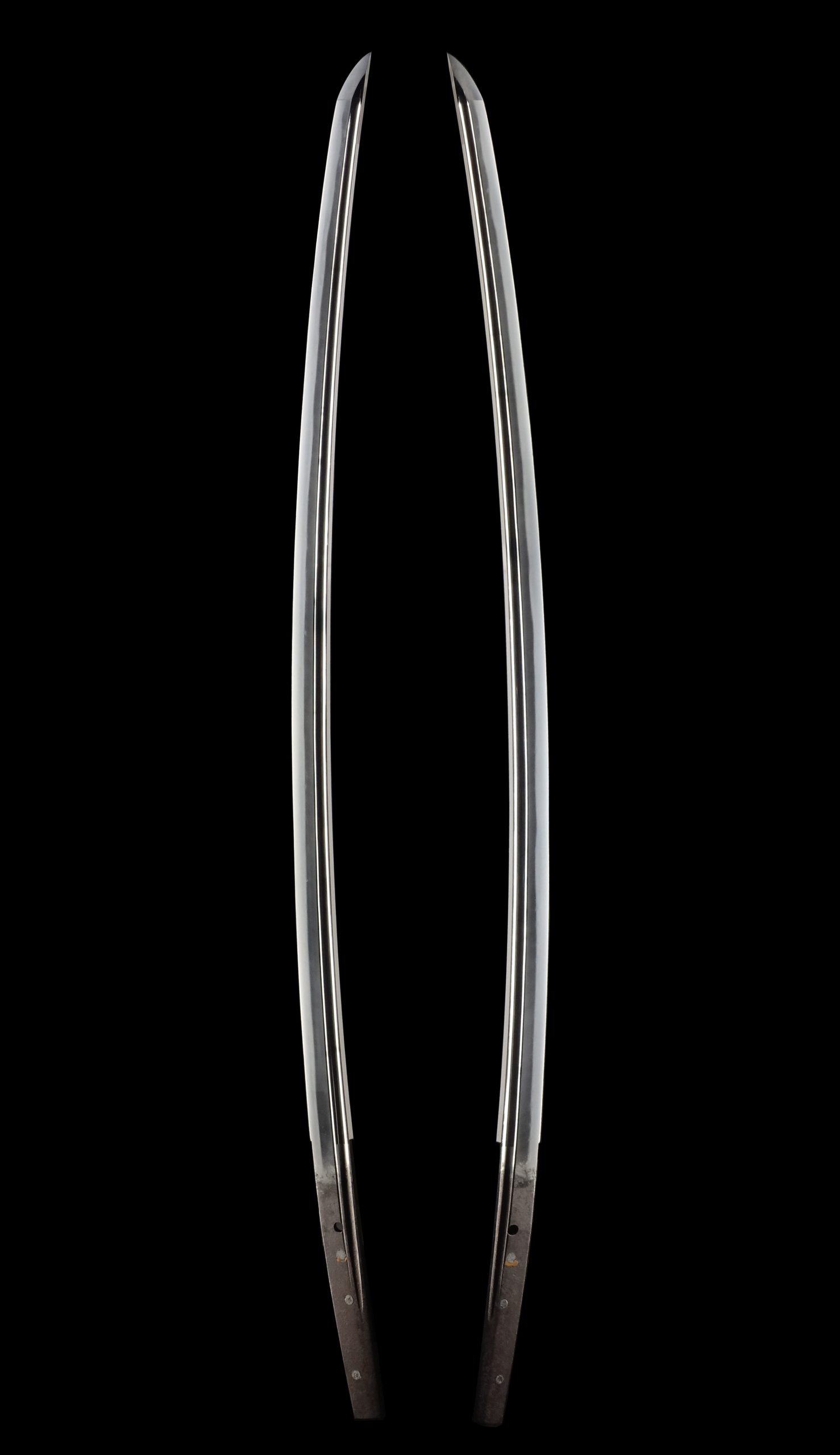
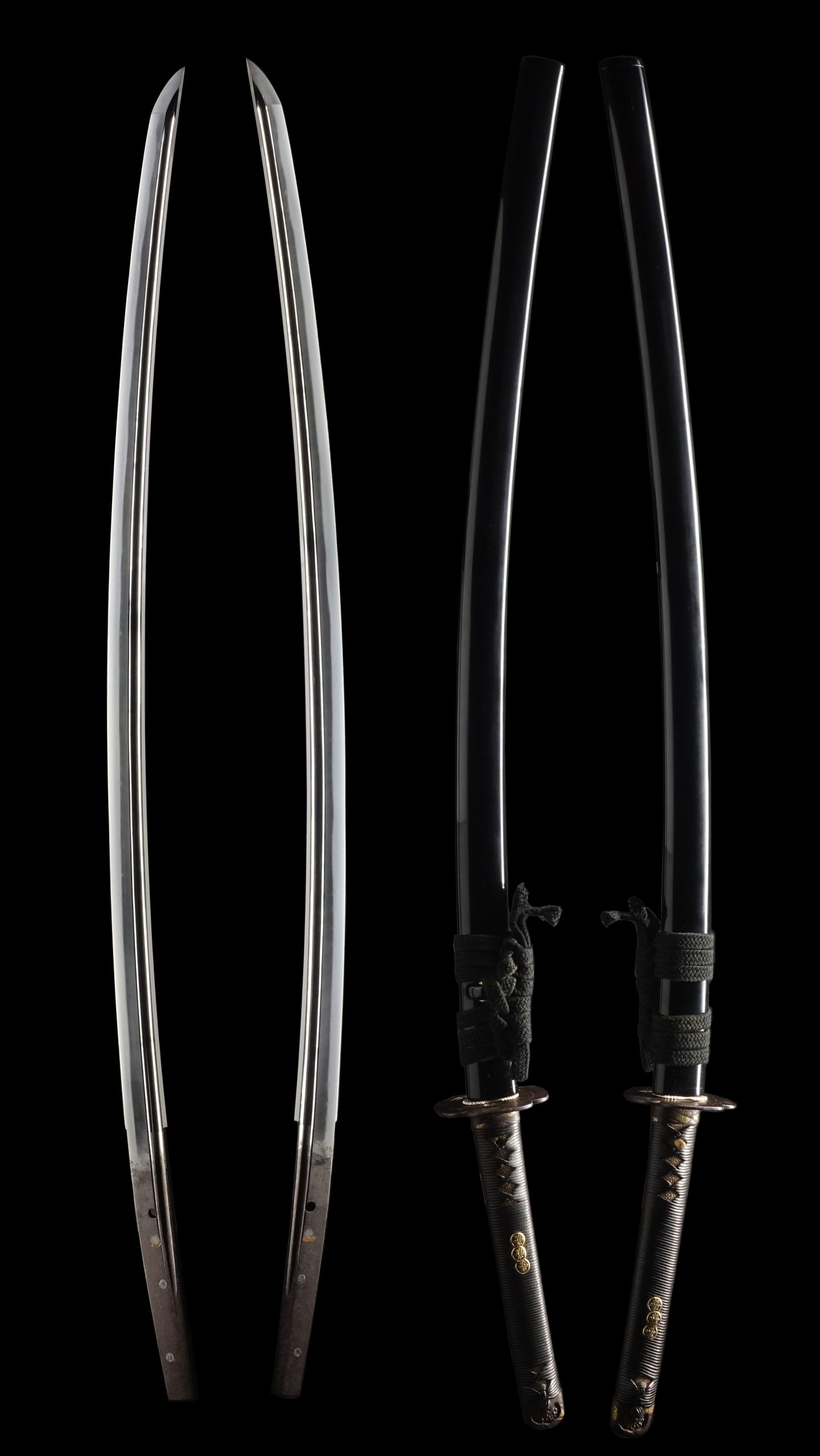
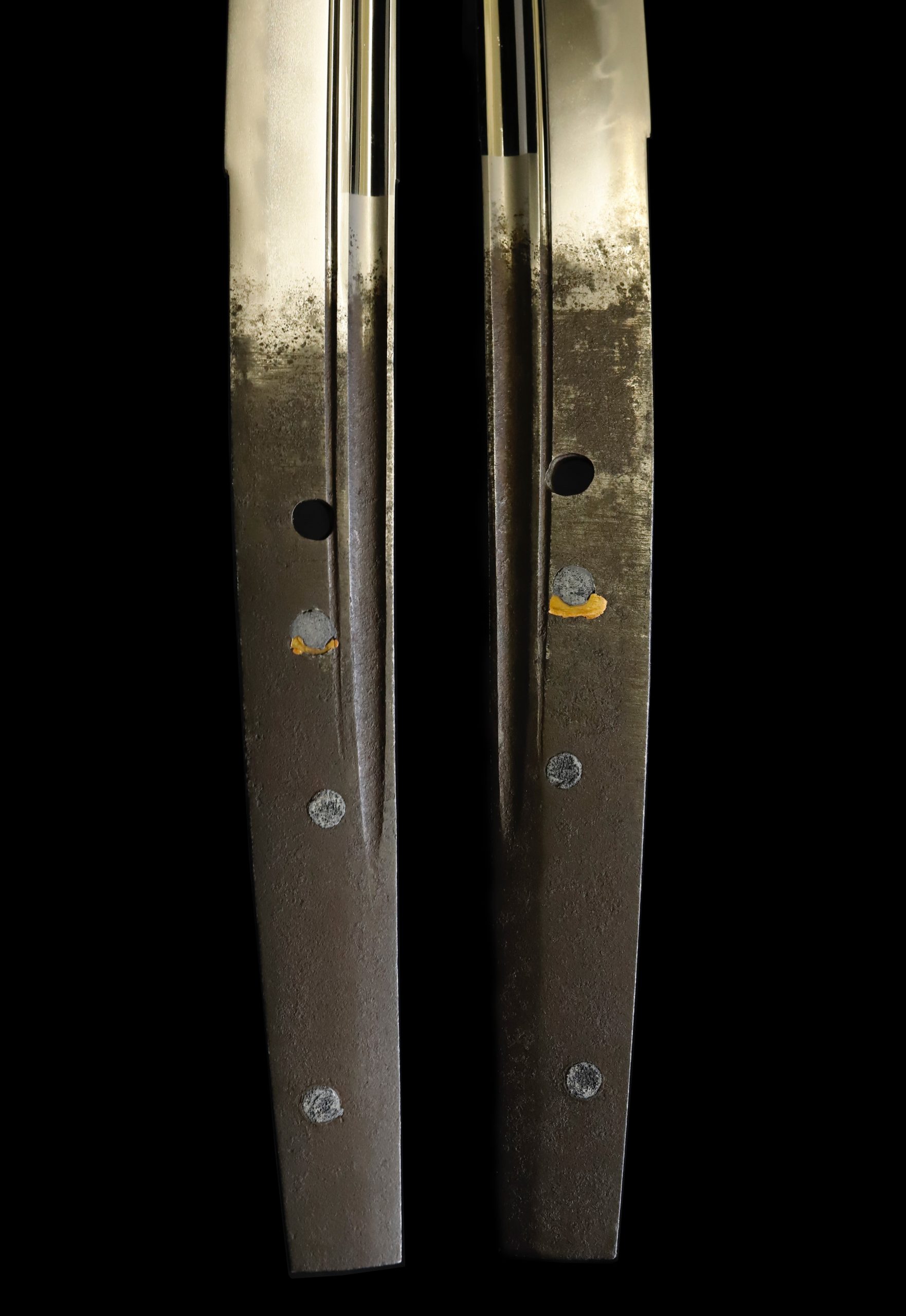
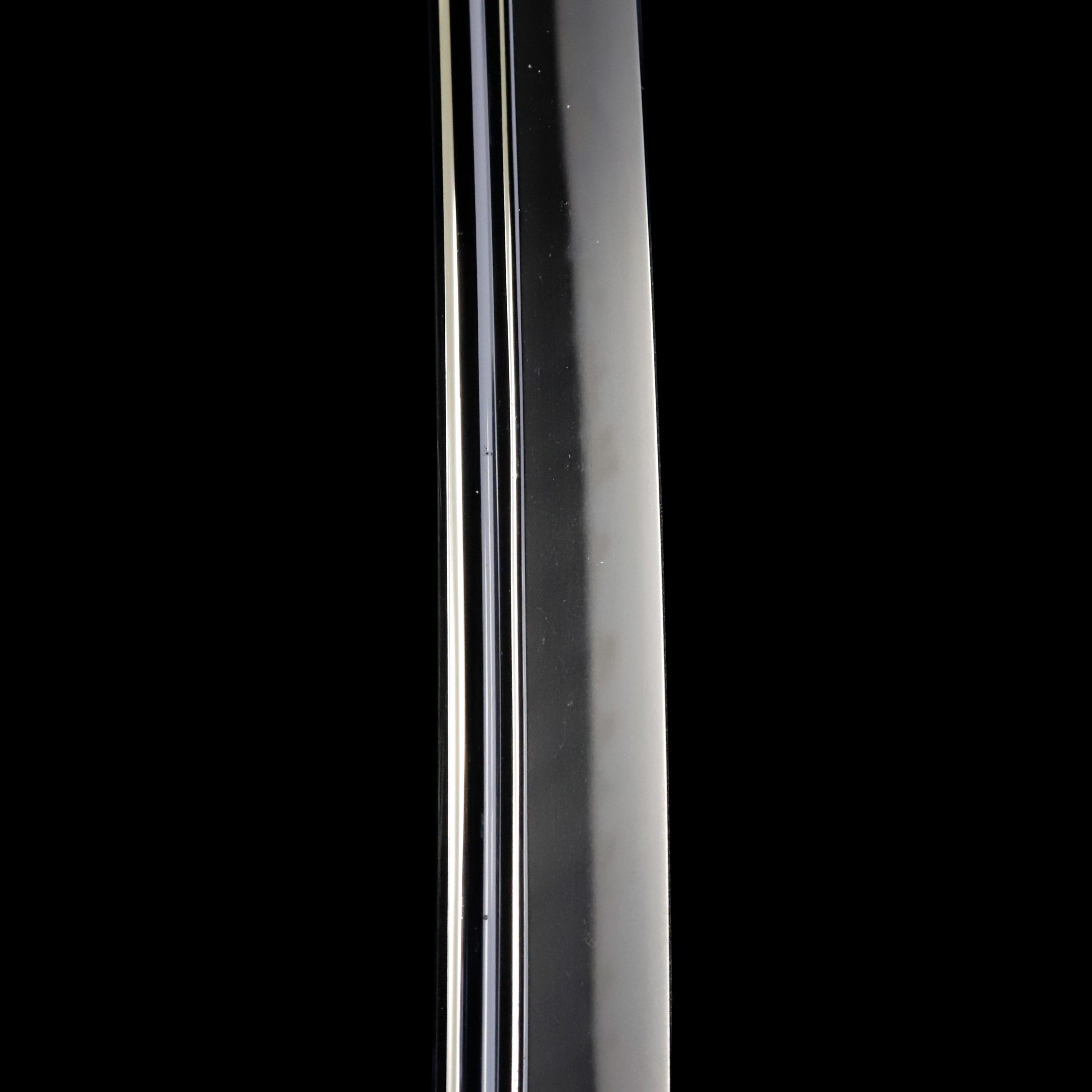
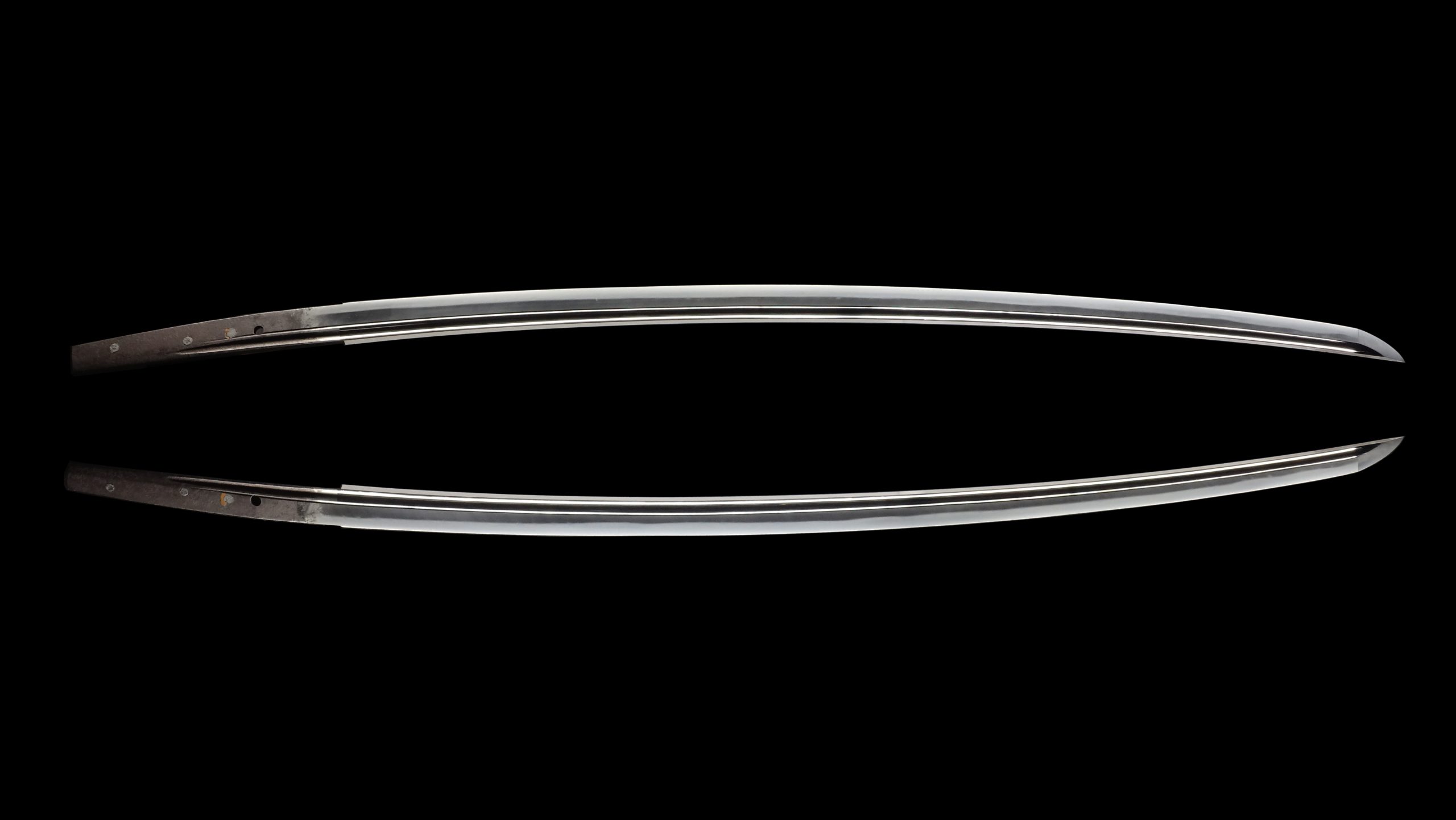
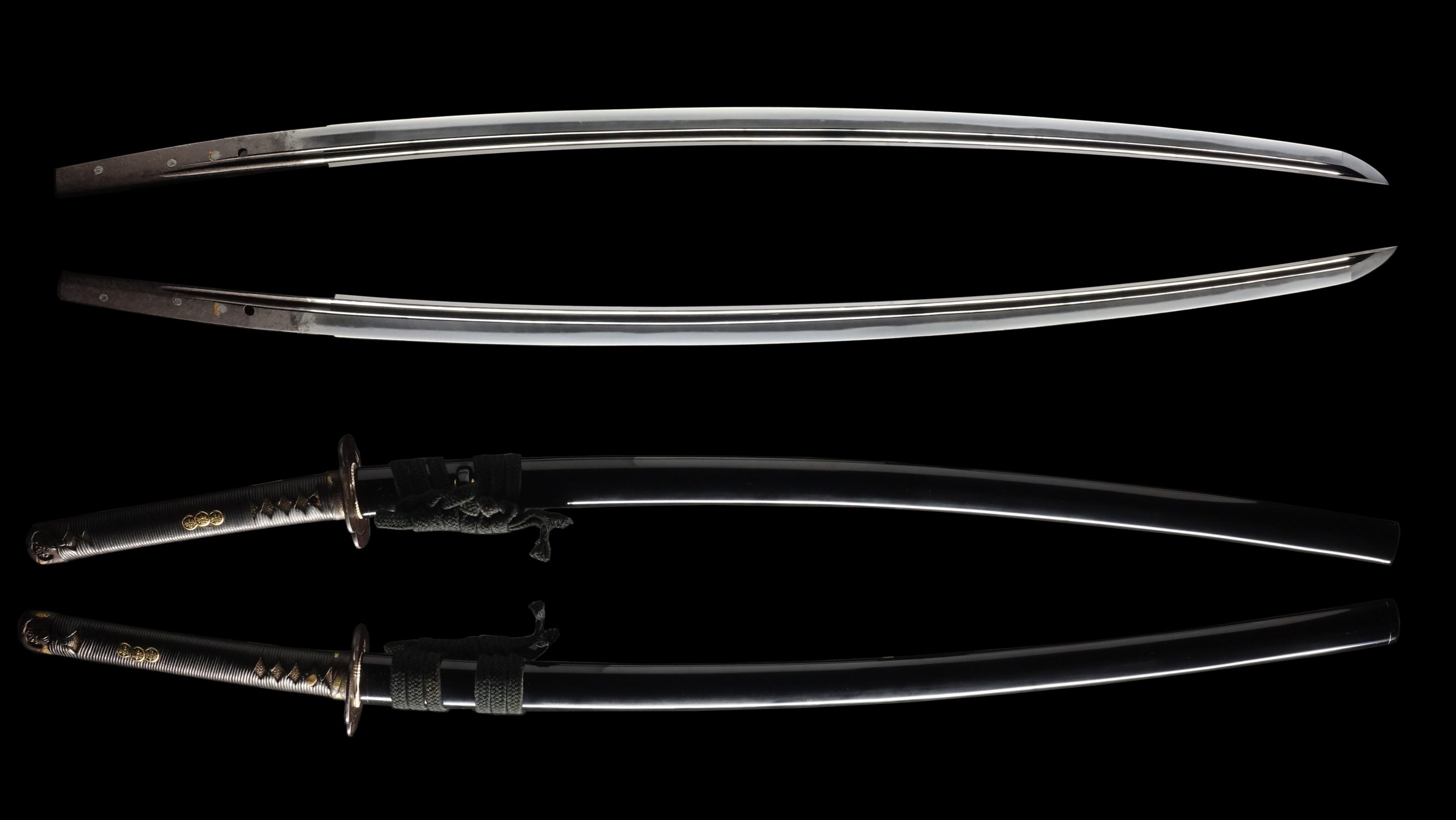
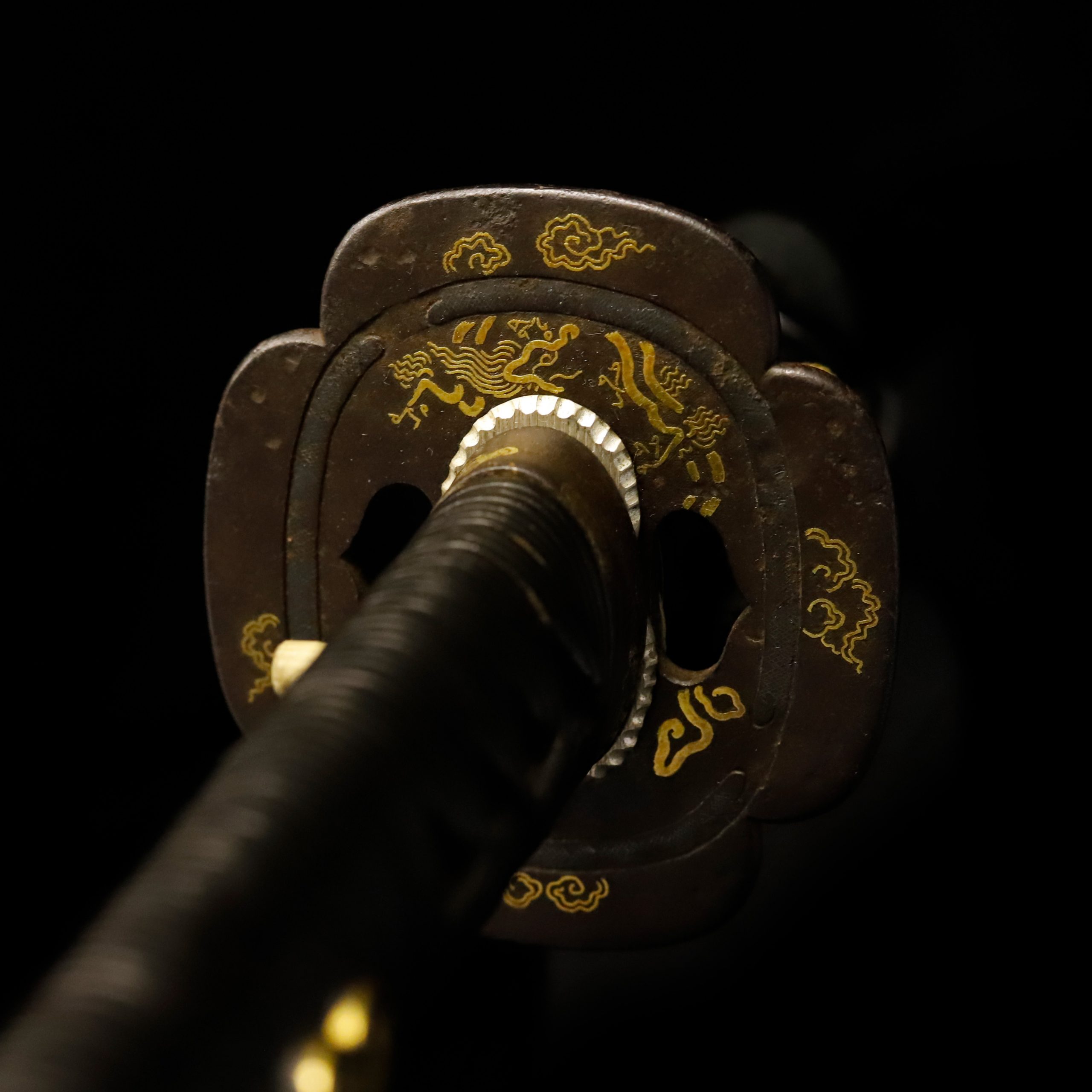
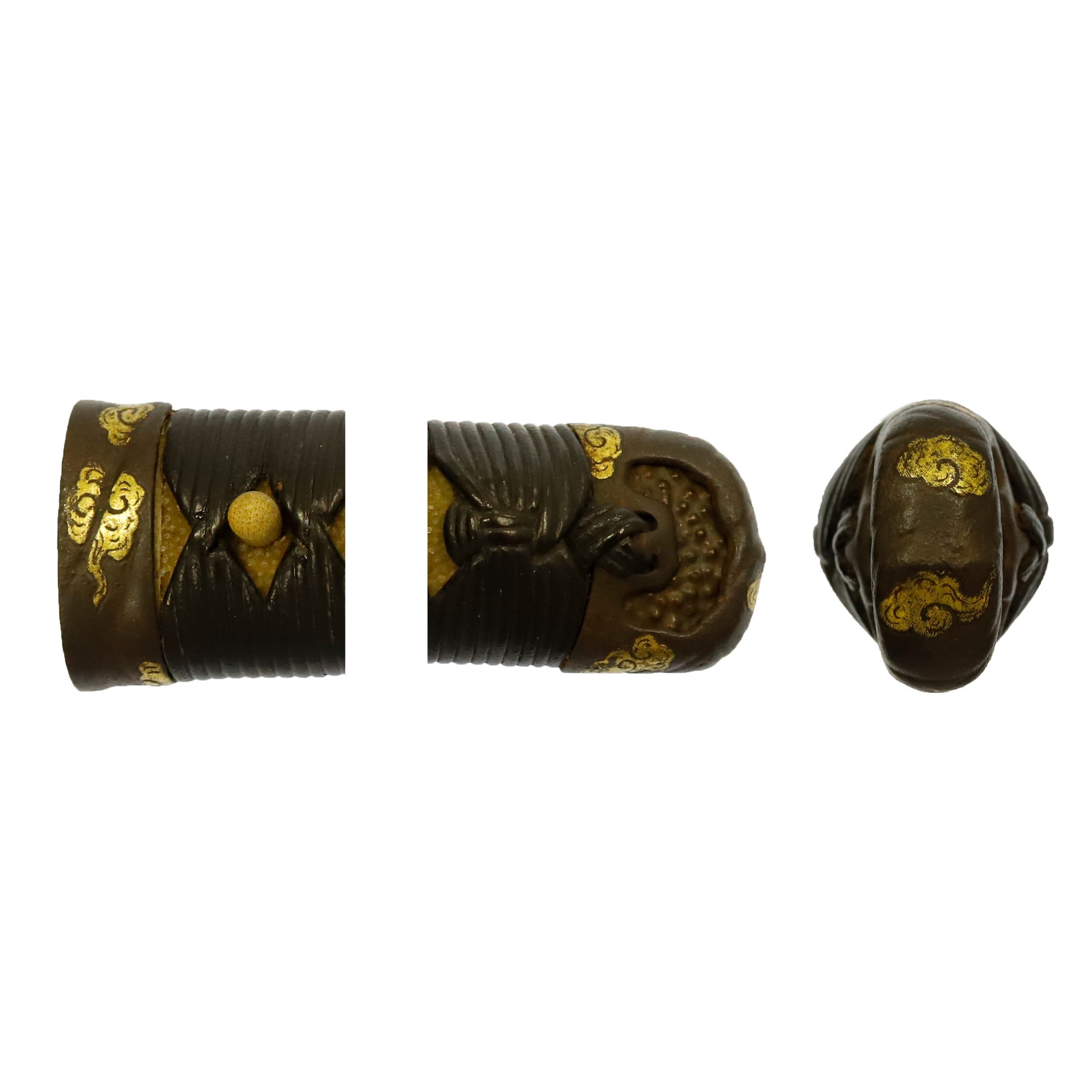
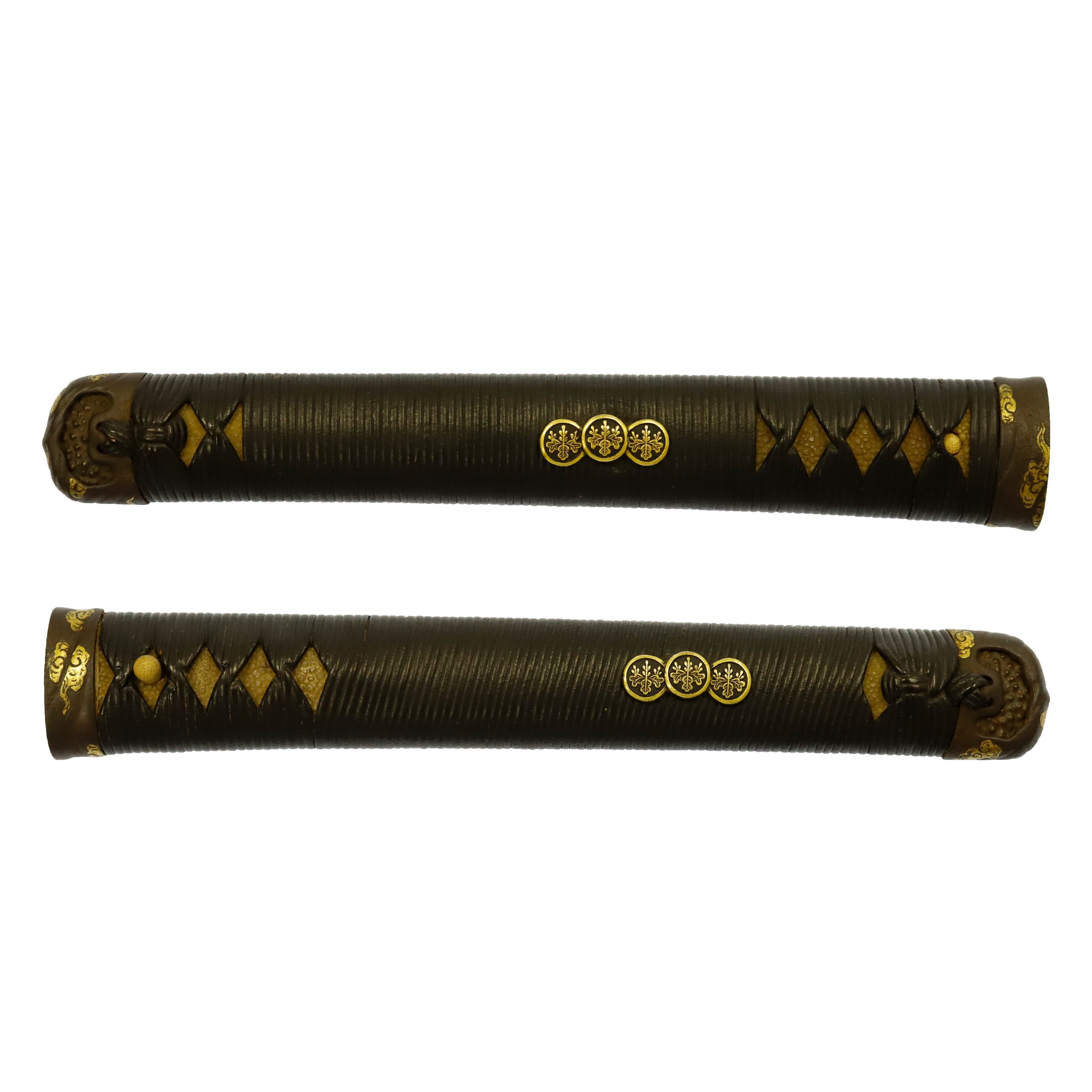
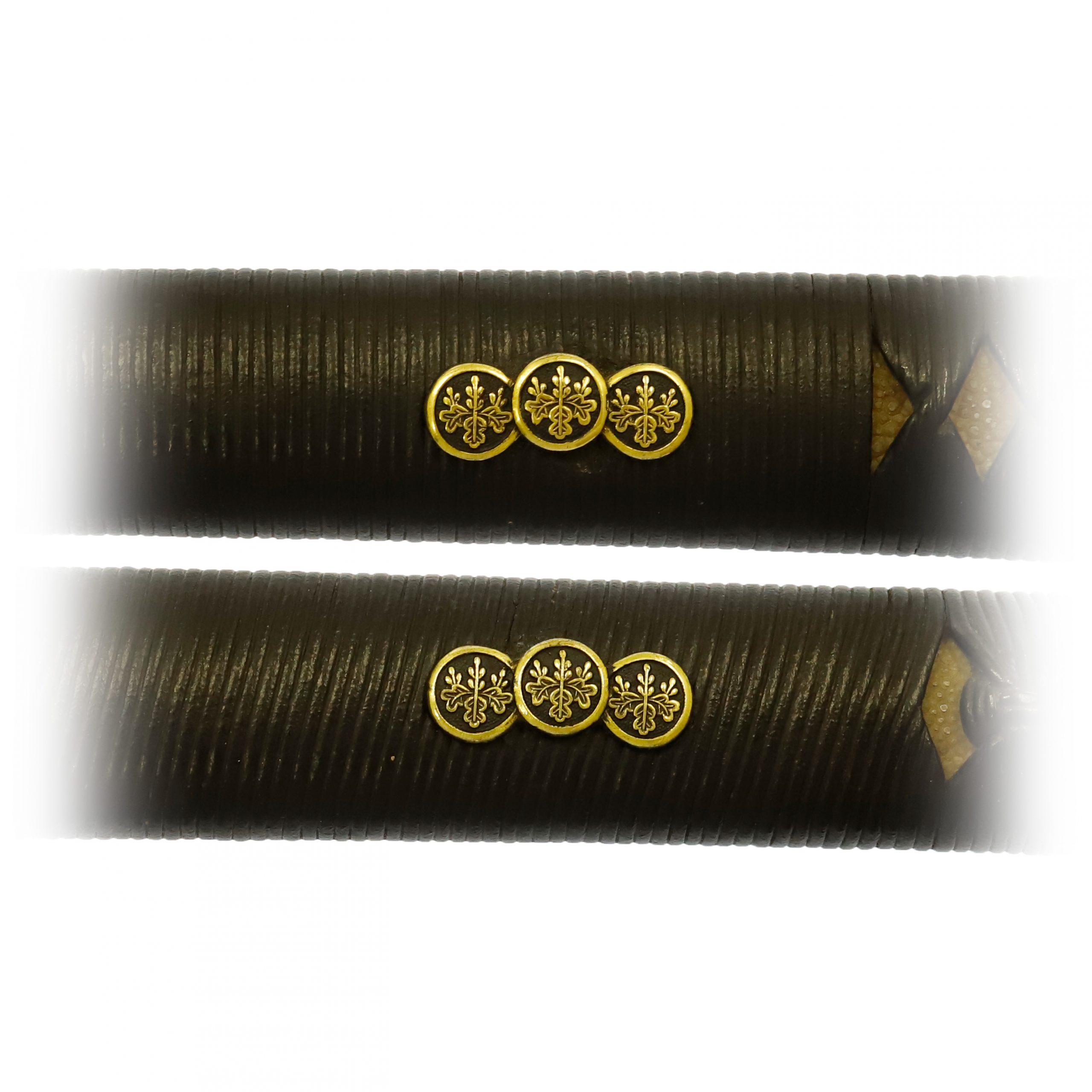
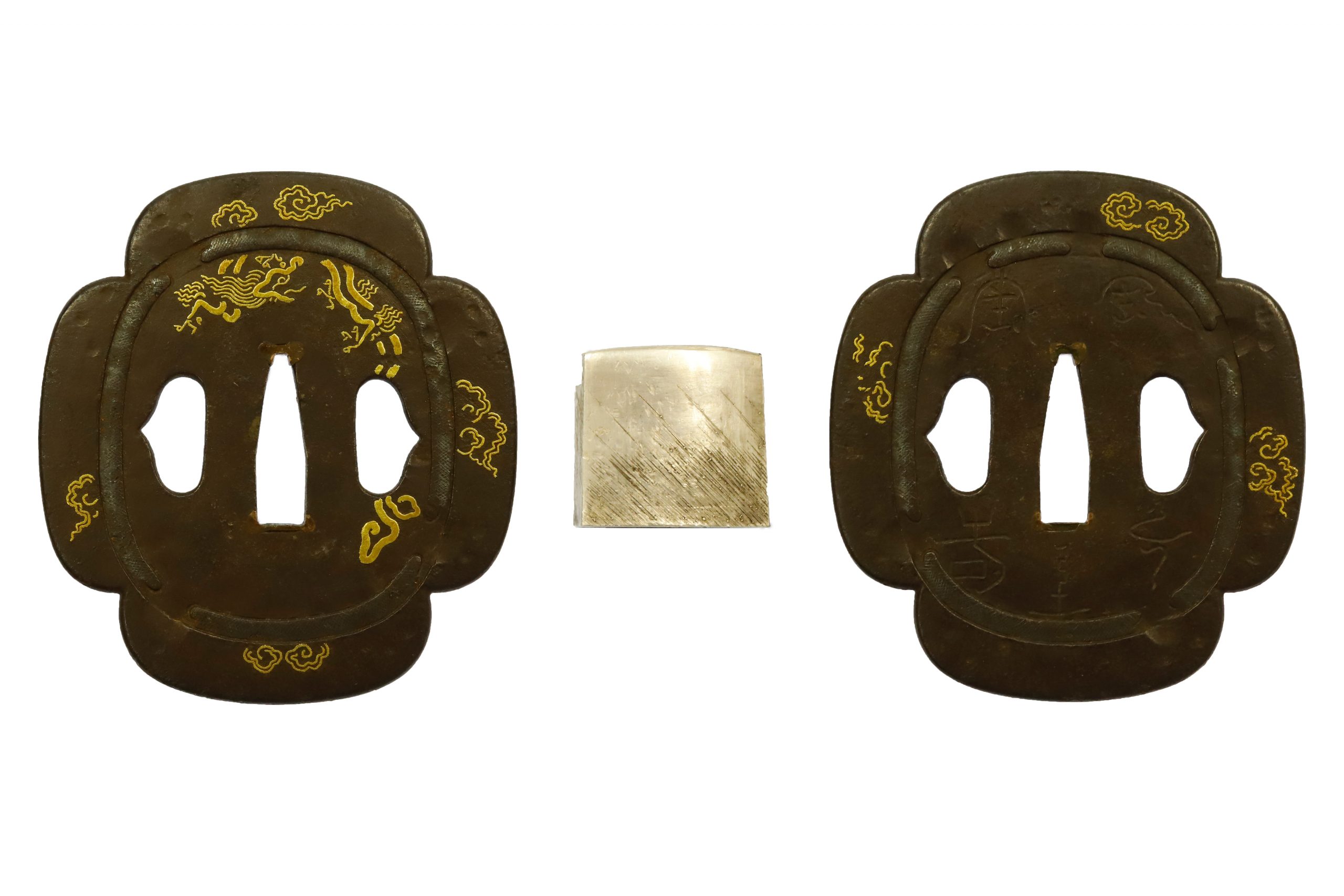
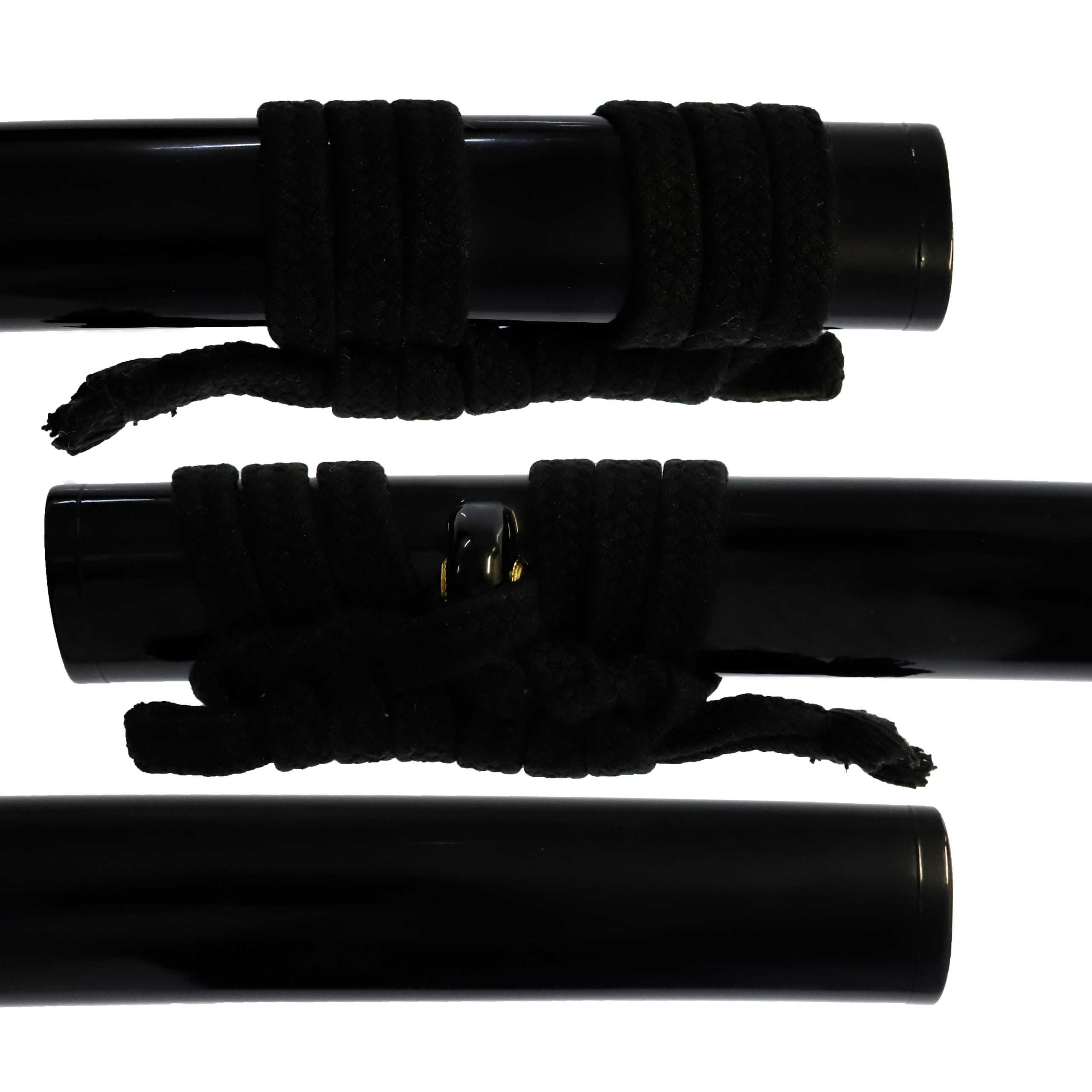
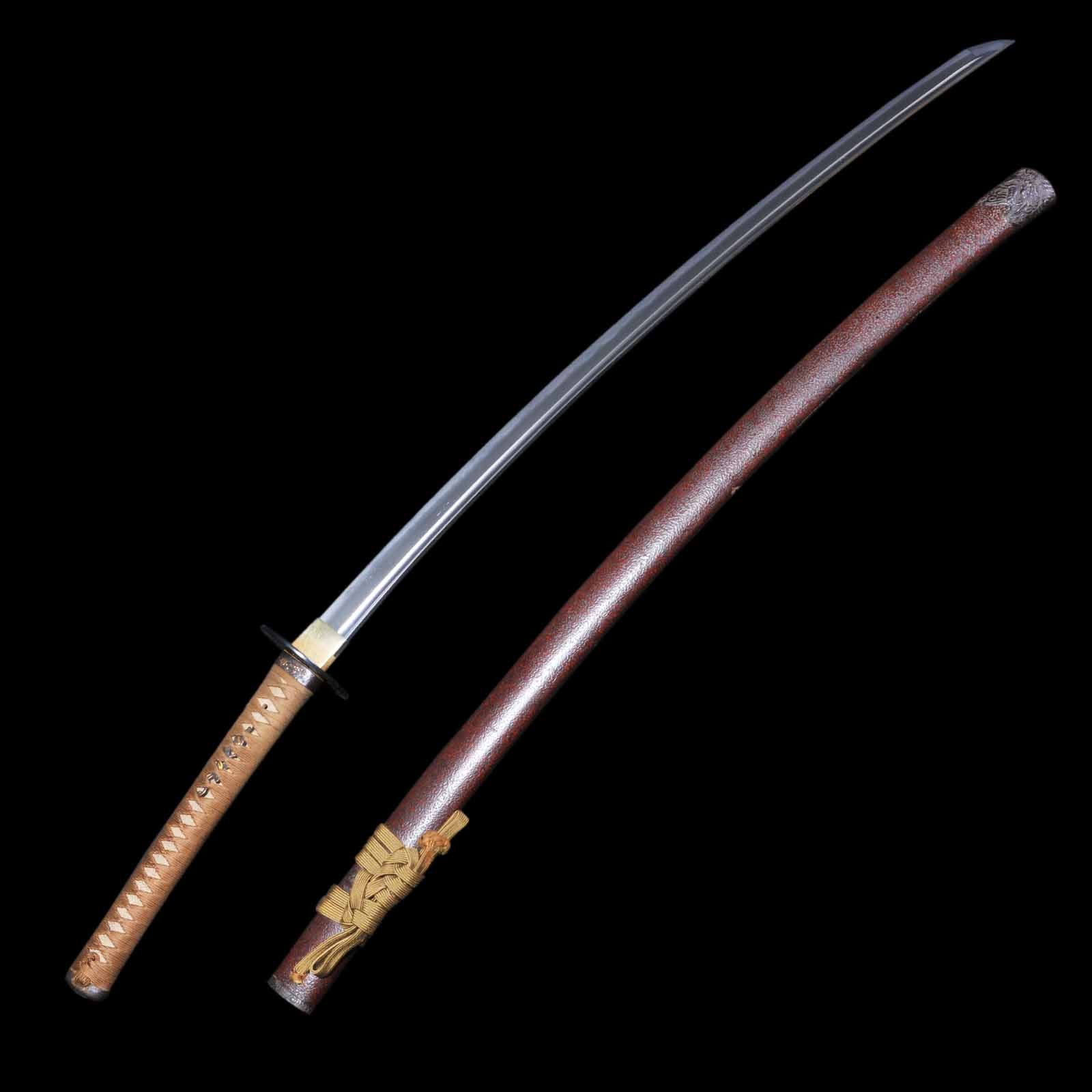
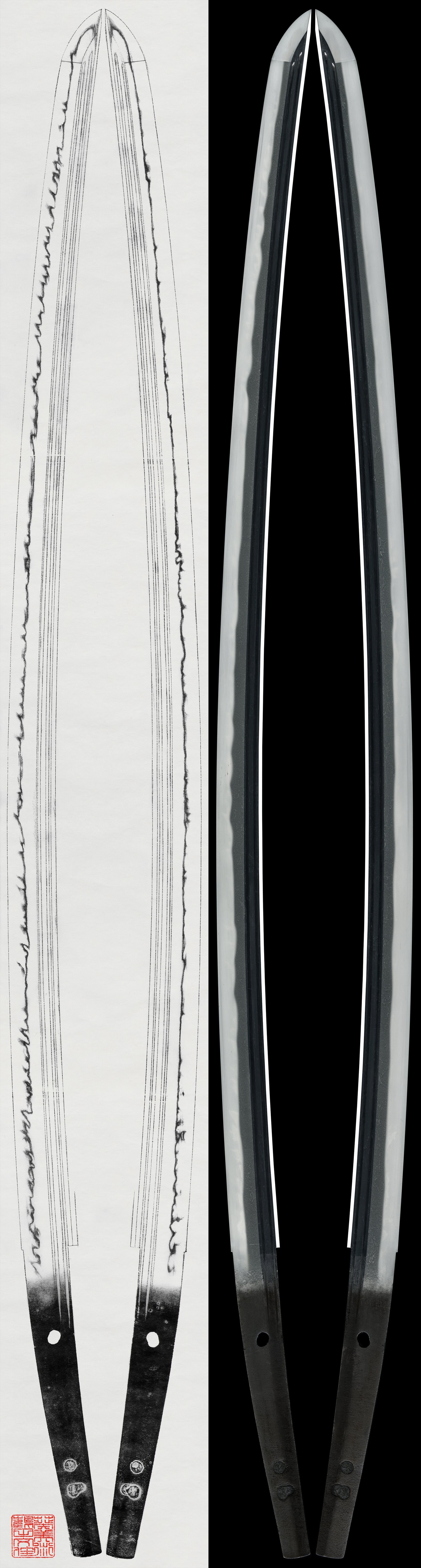
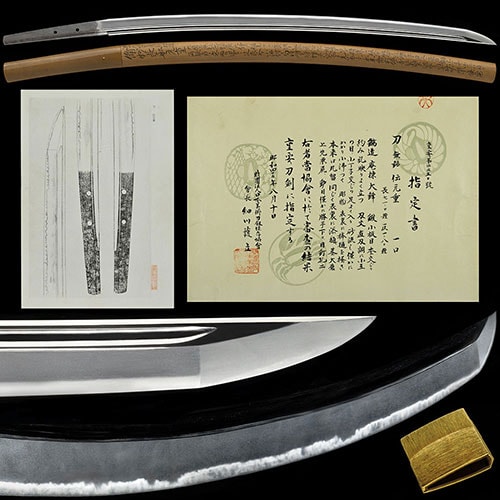
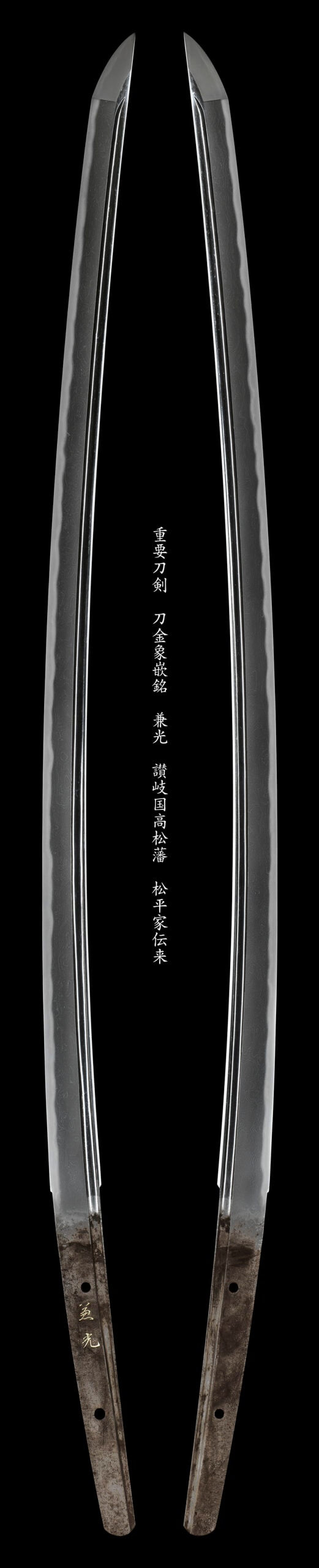
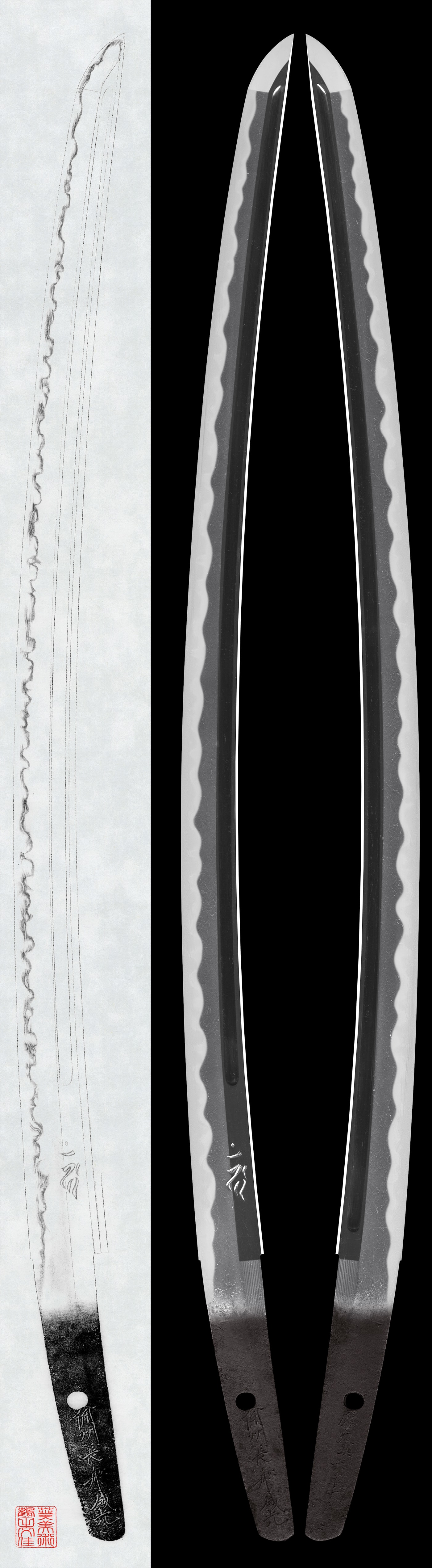
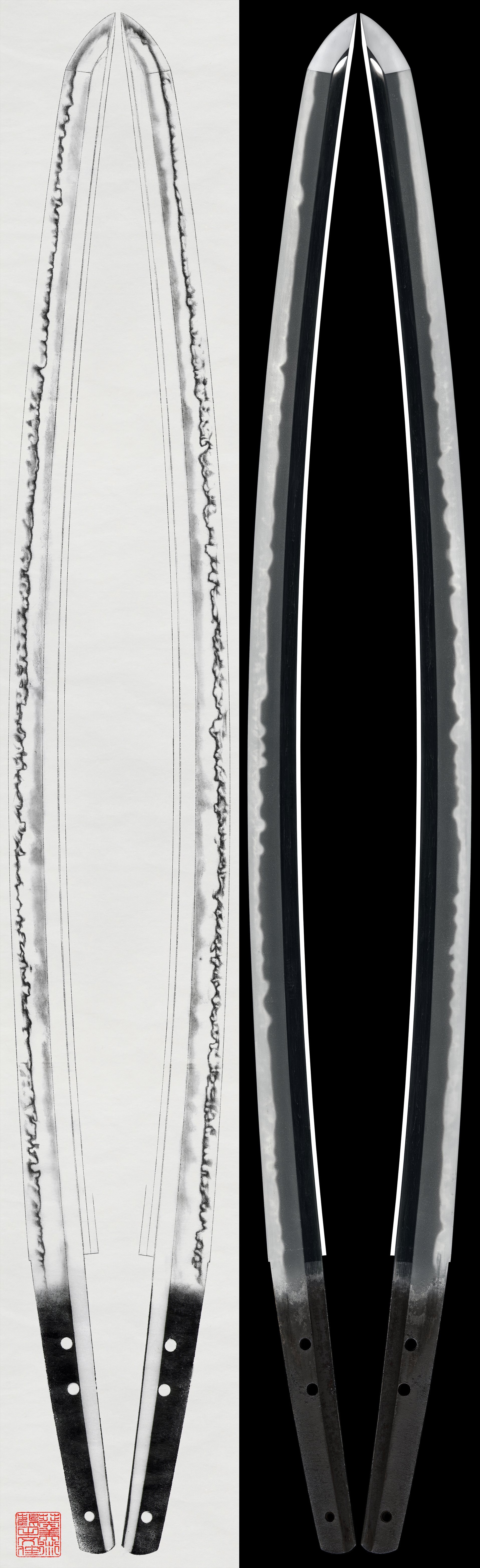
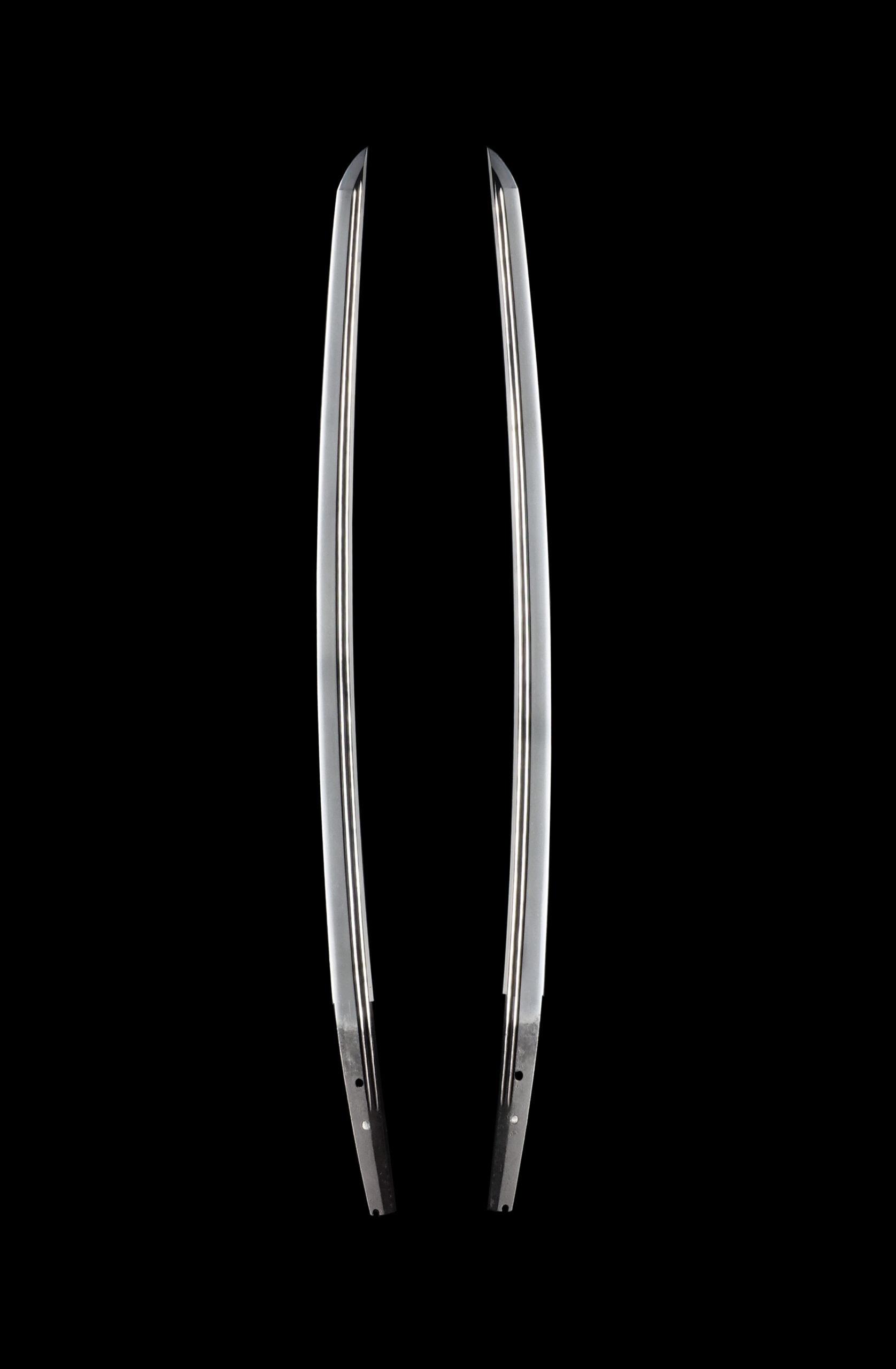
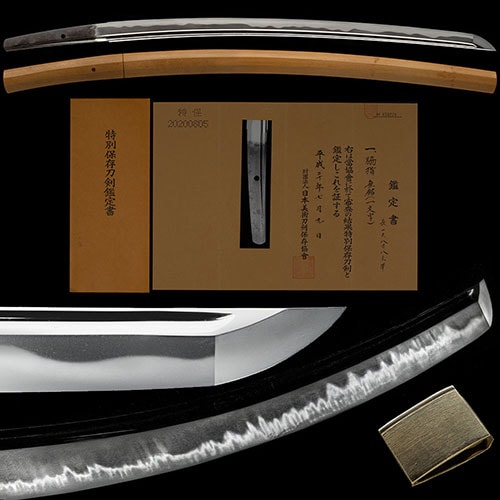
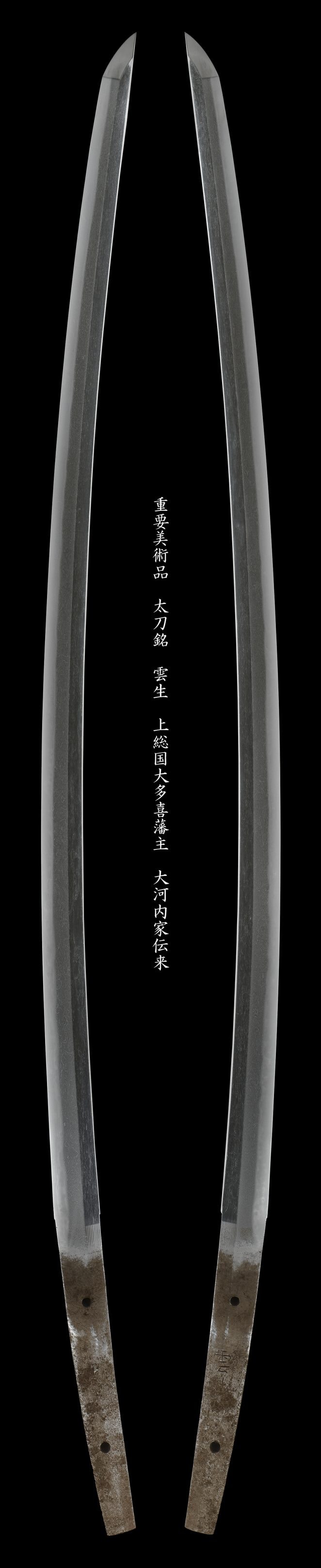
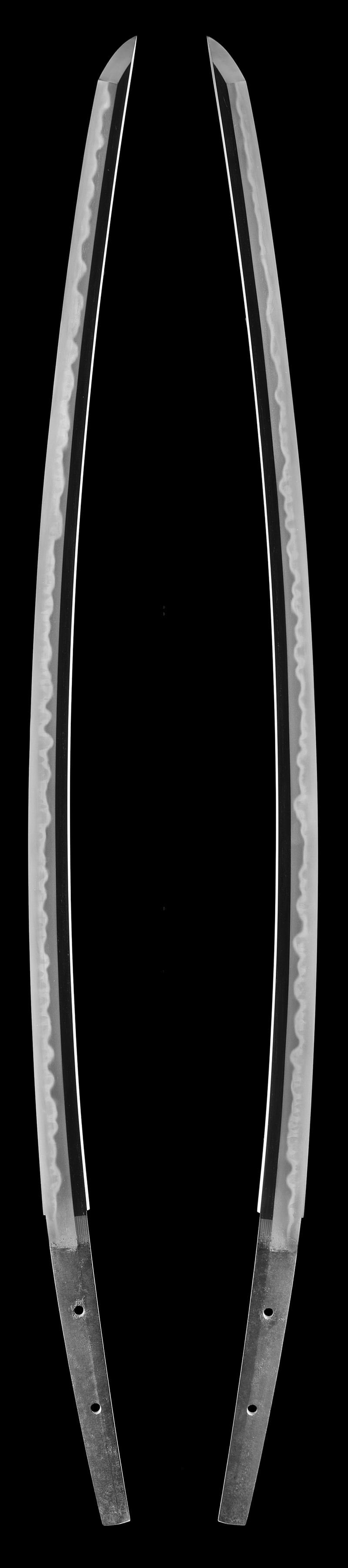
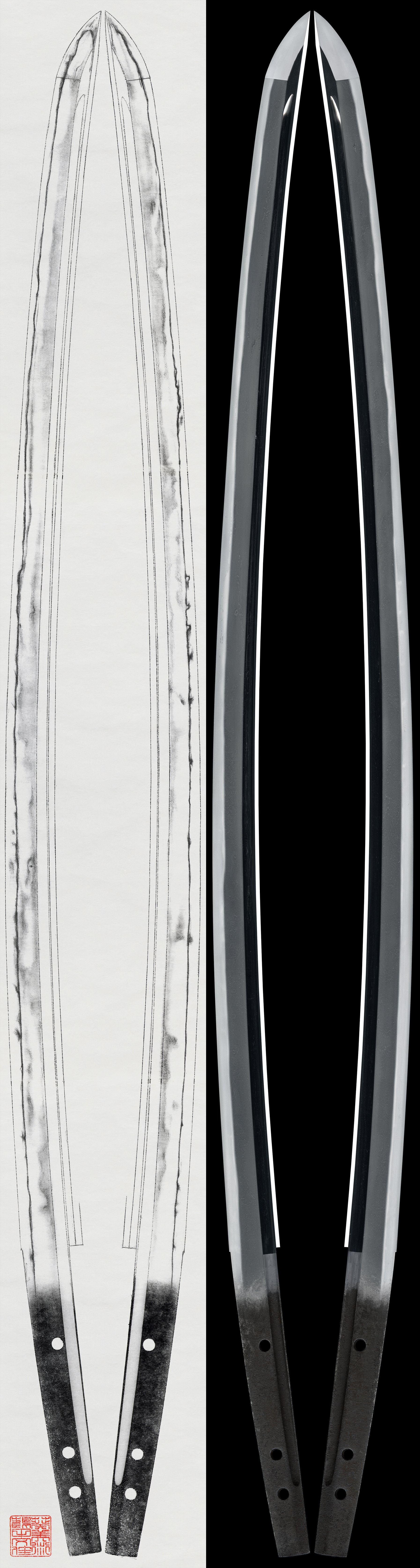
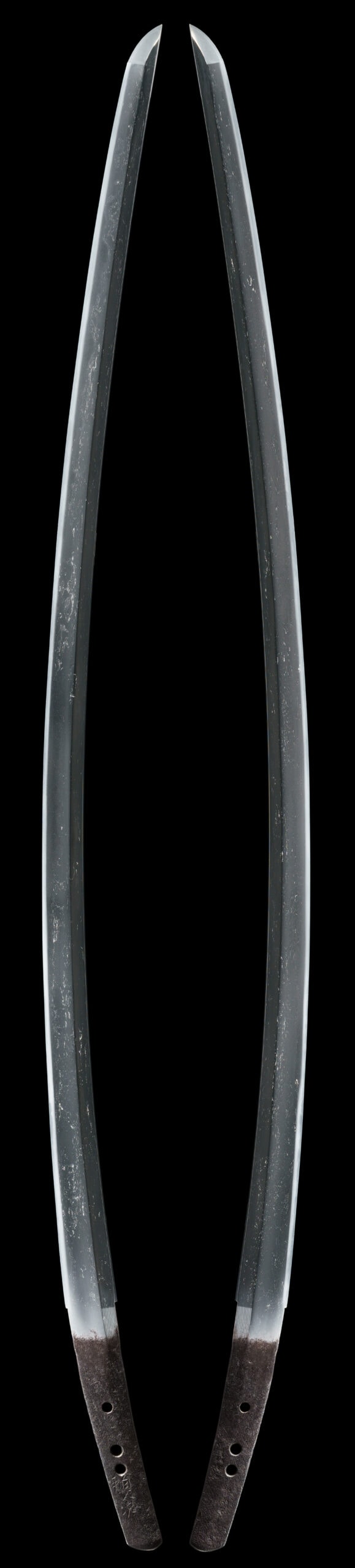
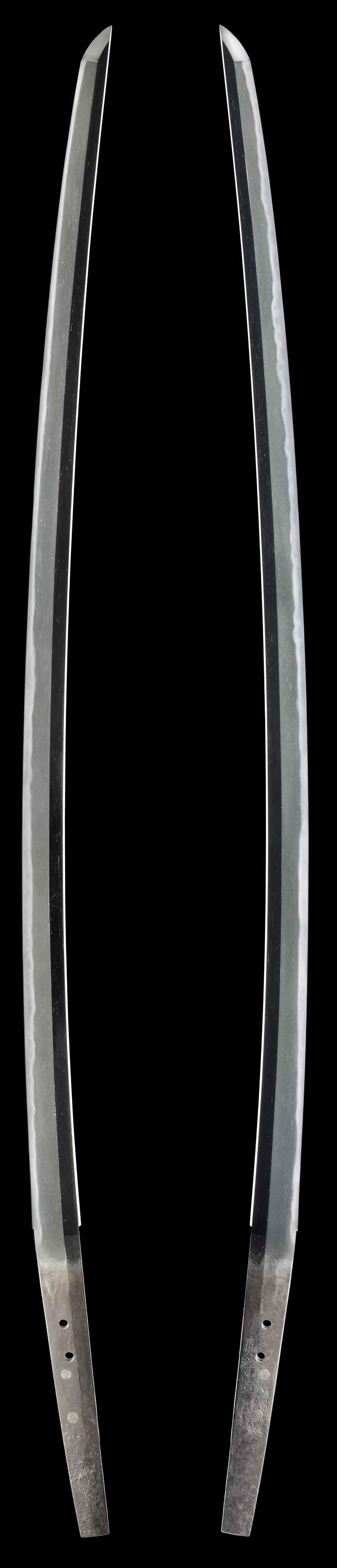
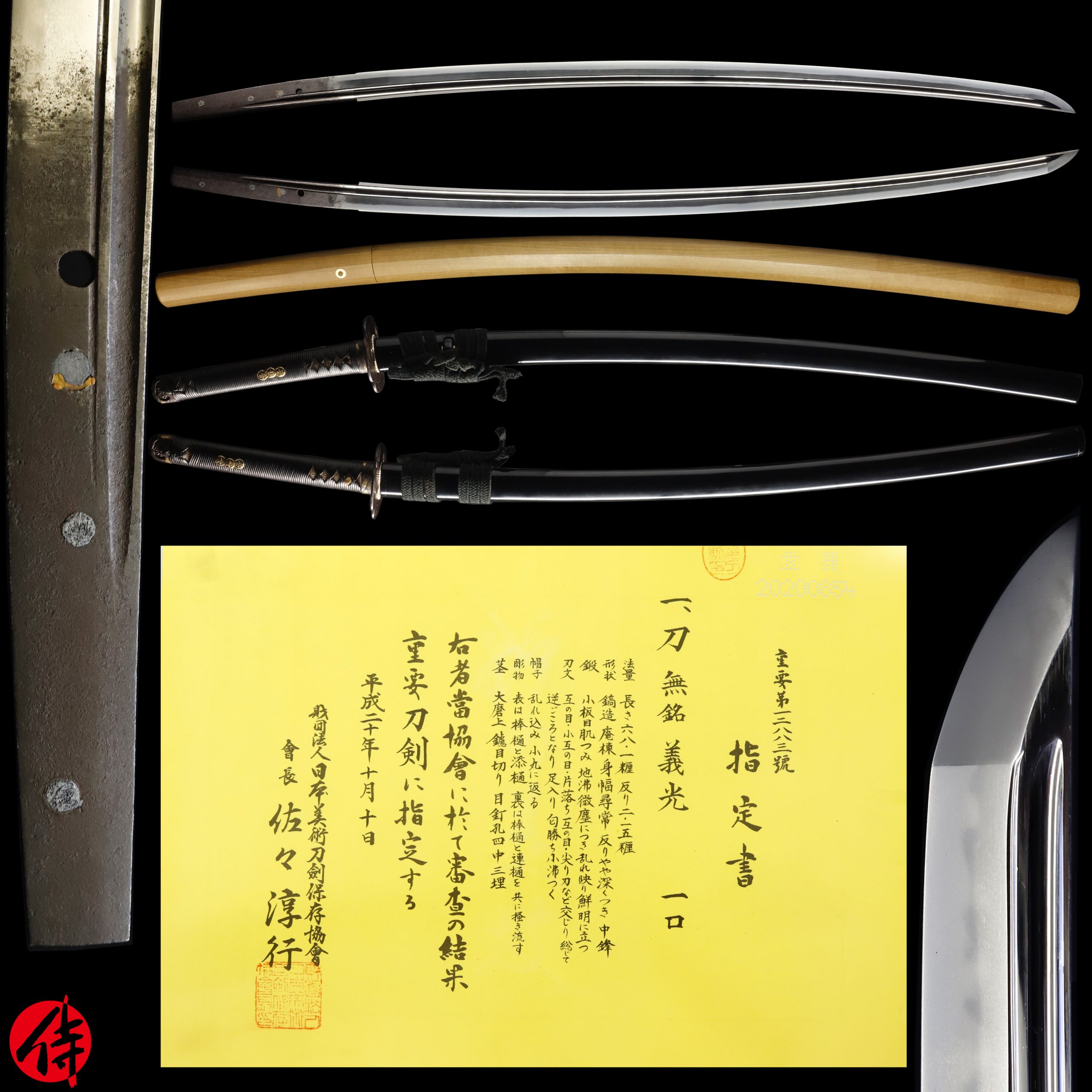
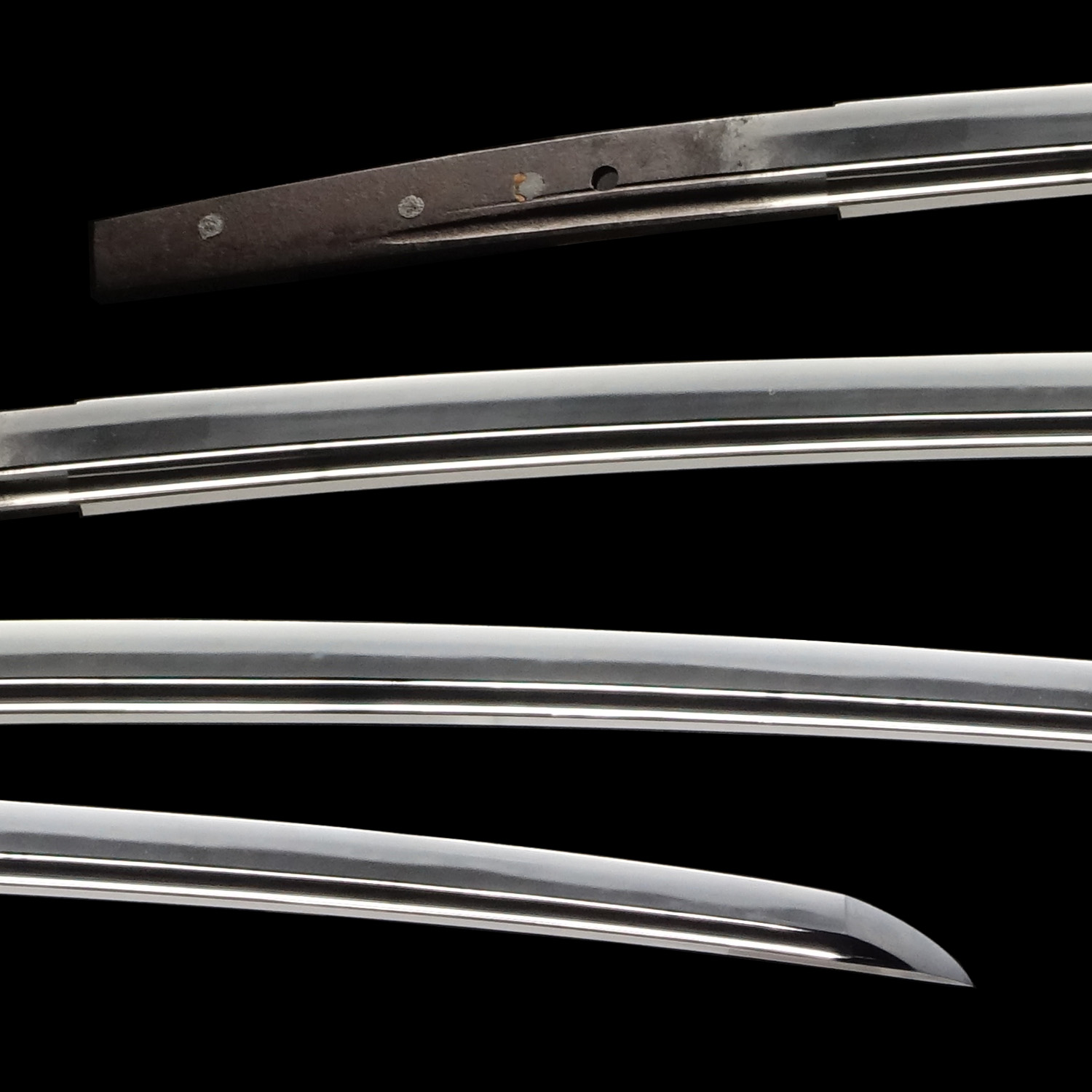
This antique katana is attributed to Yoshimitsu, a smith of the Osafune school in Bizen province, active during the late Kamakura to Nanbokucho period. It is accompanied by an NBTHK Juyo Token certificate, indicating its exceptional quality and historical value. The blade features a Hamon with Gunome and Kogunome patterns, and comes with a shirasaya and koshirae.

NBTHK Setsumei

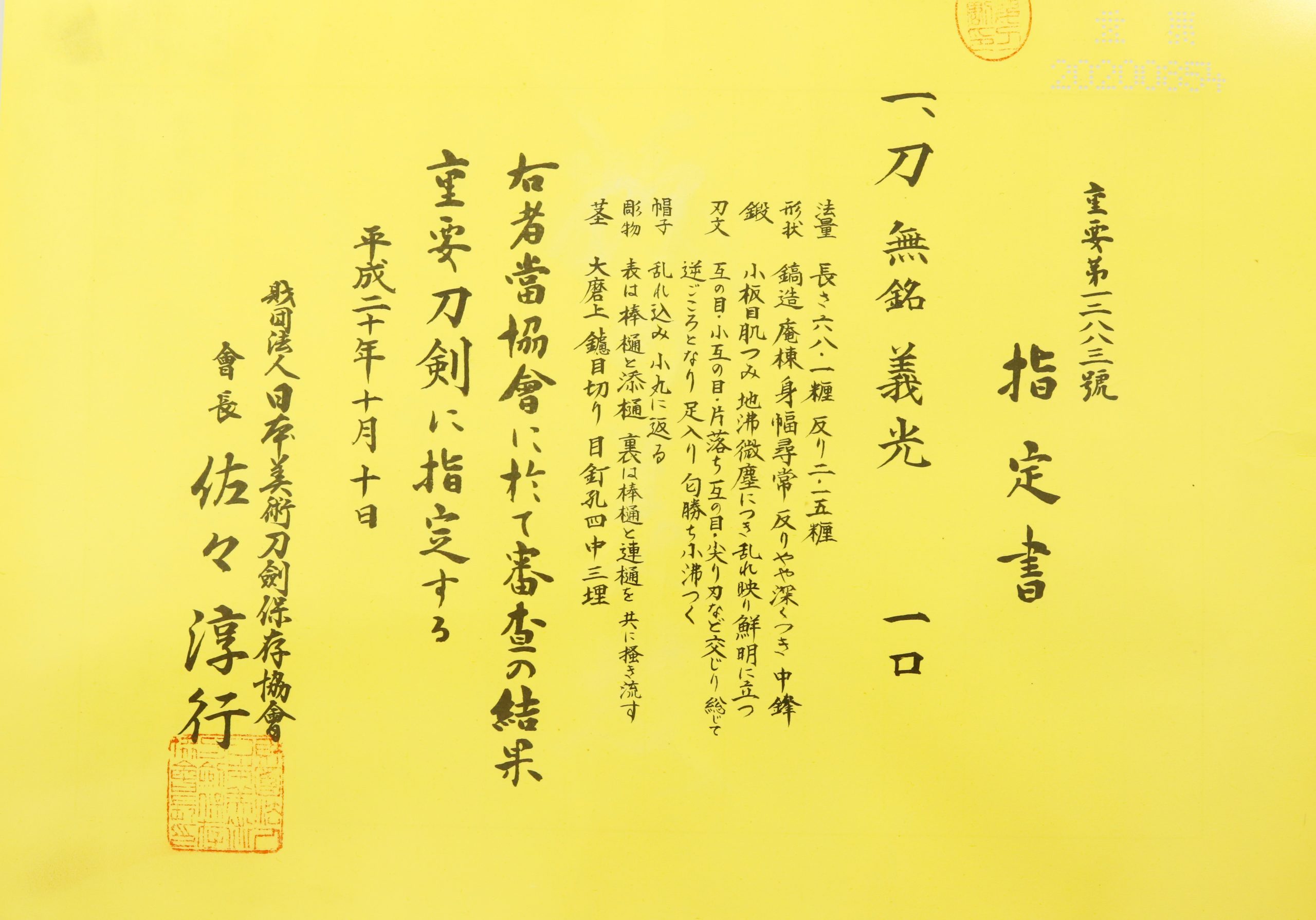
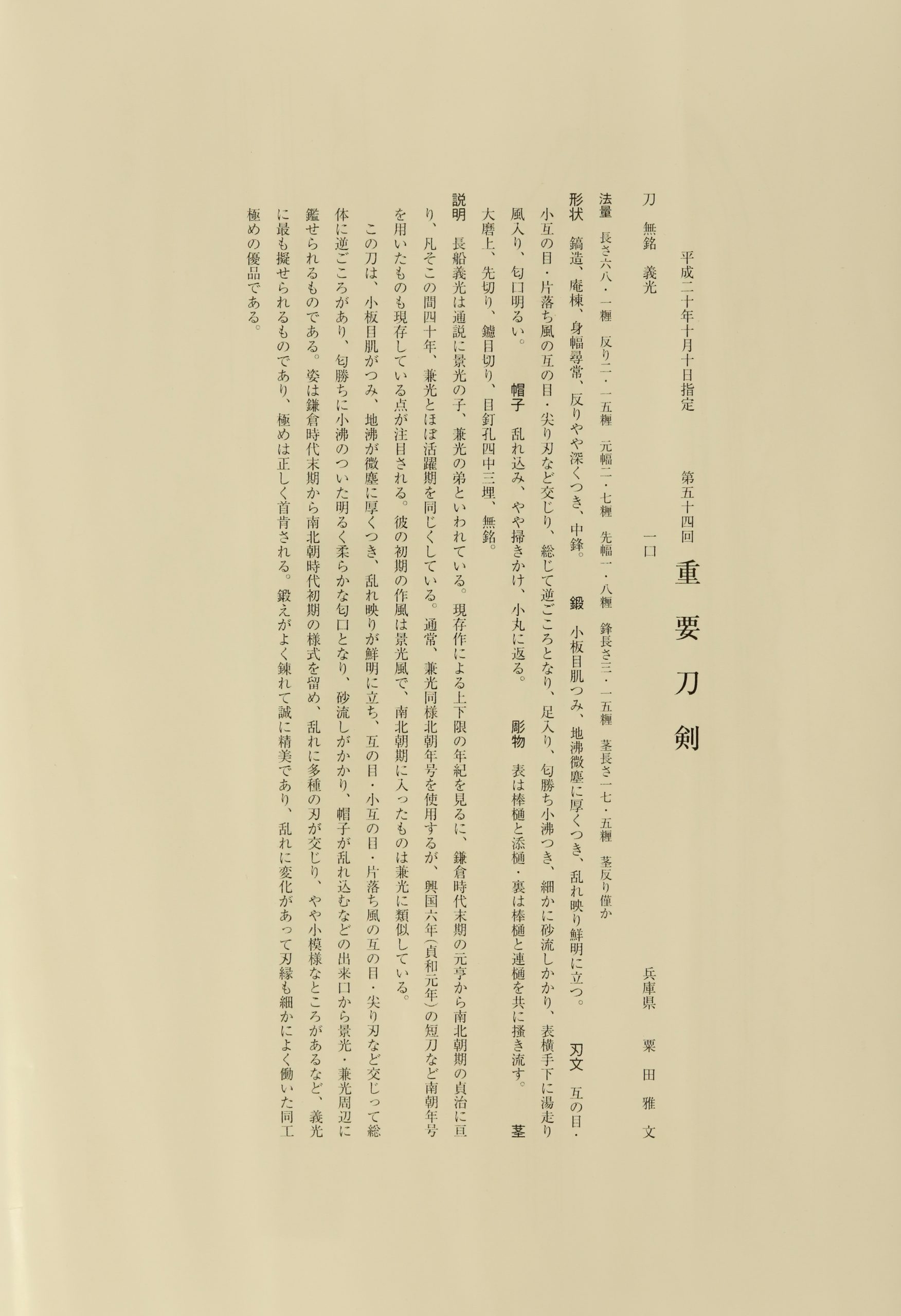
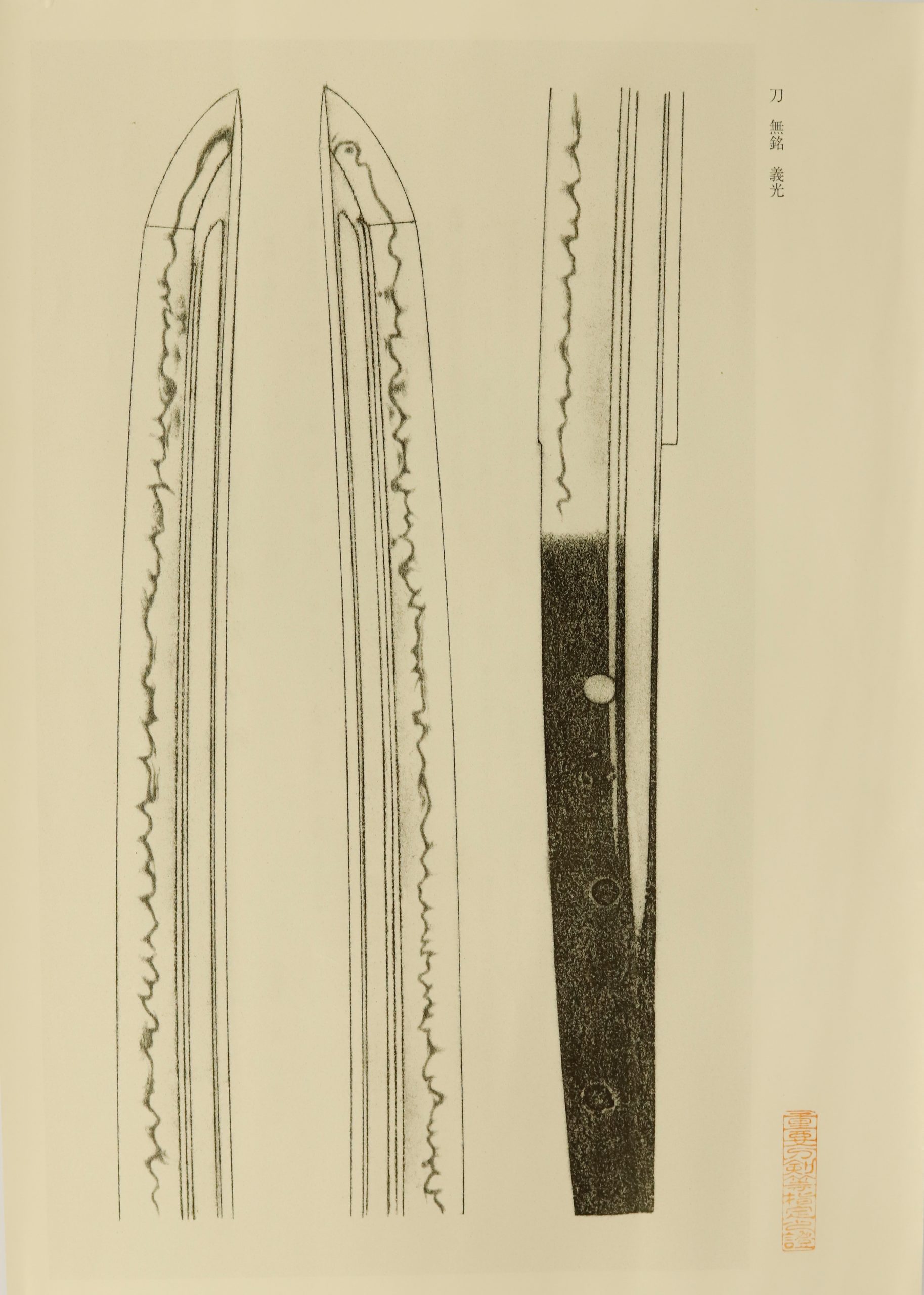
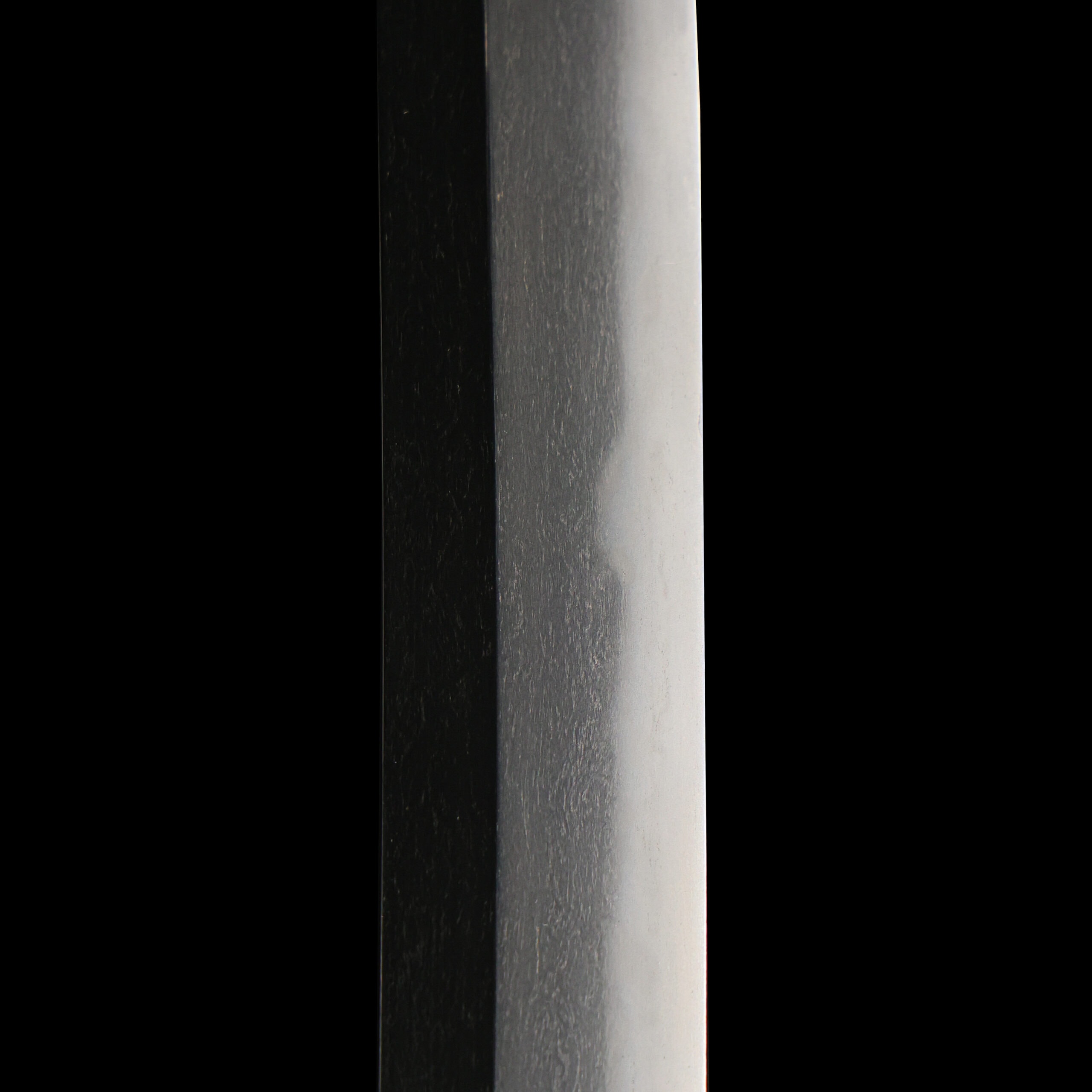
Jūyō-Tōken, 54th Session — Designated October 10, 2008 Katana, mumei: Yoshimitsu (義光) Measurements Nagasa 68.1 cm, sori 2.15 cm, motohaba 2.7 cm, sakihaba 1.8 cm, kissaki-nagasa 3.15 cm, nakago-nagasa 17.5 cm, nakago-sori slight Description Keijō: shinogi-zukuri, iori-mune; standard mihaba; somewhat deep sori; chū-kissaki. Kitae: Dense ko-itame-hada; very fine ji-nie adheres thickly; midare-utsuri appears with striking clarity. Hamon: Mixed gunome, ko-gunome, kataochi-like gunome, and togariba; overall showing a saka-gokoro (reverse-tendency); with ashi; nioi-dominant with attached ko-nie; fine sunagashi; on the omote below the yokote there enters a yubashiri-like feature; the nioiguchi is bright. Bōshi: midare-komi, slightly hakikake, turning back in ko-maru. Horimono: Omote: bō-hi with soe-hi, kaki-nagashi; ura: bō-hi with tsure-hi, kaki-nagashi. Nakago: ō-suriage; sakikiri; file marks kiri; four mekugi-ana (three filled); unsigned. Artisan Osafune Yoshimitsu (長船義光) Era Late Kamakura to early Nanbokuchō period Explanation According to the commonly accepted view, Osafune Yoshimitsu is said to have been a son of Kagemitsu and a younger brother of Kanemitsu. If one surveys the earliest and latest dated examples among extant works, his activity extends from the Genkō era at the end of the Kamakura period through the Jōji era in the Nanbokuchō period—a span of roughly forty years—largely overlapping the active period of Kanemitsu. Ordinarily, like Kanemitsu, he used Northern Court era names; however, it is noteworthy that extant works also include pieces employing Southern Court era names, such as a tantō dated Kōkoku 6 (which corresponds to the first year of Jōwa). In terms of style, his early works tend toward the manner of Kagemitsu, while those made after the onset of the Nanbokuchō period resemble Kanemitsu. This katana shows a tightly packed ko-itame forging with very fine ji-nie adhering thickly, and a vivid, clearly standing midare-utsuri. The hamon mixes gunome, ko-gunome, kataochi-like gunome, and togariba, and in overall effect has a saka-gokoro; it is nioi-dominant with ko-nie and presents a bright, soft nioiguchi, with sunagashi applied, and a bōshi that enters in midare-komi. From these workmanship features, it may be appraised in the sphere of Kagemitsu and Kanemitsu. The sugata retains the style of the late Kamakura through early Nanbokuchō periods. Moreover, the midare incorporates multiple types of ha and shows areas of somewhat small-patterned modulation; in these respects it is most appropriately compared to Yoshimitsu. The attribution is therefore correctly affirmed. The forging is well refined and truly exquisite, and the varied midare displays finely wrought activity along the habuchi; this is an excellent work representative of this smith-attribution.

NihontoWatch MonNihontoWatch
MarketEncyclopediaKantei
Swords›Bizen-den›Osafune›Sōden-Bizen›Yoshimitsu›Katana: Attributed to Yoshimitsu - NBTHK Juyo Token Certificate
katanaJūyō
Osafune Yoshimitsu

Katana: Attributed to Yoshimitsu - NBTHK Juyo Token Certificate

mumei · Osafune · Nanbokucho · nagasa 68.1cm · sori 2.1cm

SOLD
Osafune Yoshimitsu (義光) · Osafune · NanbokuchoView artist page →
KatanaJūyō
Could you name the smith from the blade alone? Today’s kantei →
Osafune Yoshimitsu — 1 of 21
Osafune Yoshimitsu — 2 of 21
Osafune Yoshimitsu — 3 of 21
Osafune Yoshimitsu — 4 of 21
Osafune Yoshimitsu — 5 of 21
Osafune Yoshimitsu — 6 of 21
Osafune Yoshimitsu — 7 of 21
Osafune Yoshimitsu — 8 of 21
Osafune Yoshimitsu — 9 of 21
Osafune Yoshimitsu — 10 of 21
Osafune Yoshimitsu — 11 of 21
Osafune Yoshimitsu — 12 of 21
Osafune Yoshimitsu — 13 of 21
Osafune Yoshimitsu — 14 of 21
Osafune Yoshimitsu — 15 of 21
Osafune Yoshimitsu — 16 of 21
Osafune Yoshimitsu — 17 of 21
Osafune Yoshimitsu — 18 of 21
Osafune Yoshimitsu — 19 of 21
Osafune Yoshimitsu — 20 of 21
Osafune Yoshimitsu — 21 of 21
1 / 21
1 / 21
Osafune Yoshimitsu — 1 of 21Osafune Yoshimitsu — 2 of 21Osafune Yoshimitsu — 3 of 21Osafune Yoshimitsu — 4 of 21Osafune Yoshimitsu — 5 of 21Osafune Yoshimitsu — 6 of 21Osafune Yoshimitsu — 7 of 21Osafune Yoshimitsu — 8 of 21Osafune Yoshimitsu — 9 of 21Osafune Yoshimitsu — 10 of 21Osafune Yoshimitsu — 11 of 21Osafune Yoshimitsu — 12 of 21Osafune Yoshimitsu — 13 of 21Osafune Yoshimitsu — 14 of 21Osafune Yoshimitsu — 15 of 21Osafune Yoshimitsu — 16 of 21Osafune Yoshimitsu — 17 of 21Osafune Yoshimitsu — 18 of 21Osafune Yoshimitsu — 19 of 21Osafune Yoshimitsu — 20 of 21Osafune Yoshimitsu — 21 of 21
Osafune Yoshimitsu (義光) · Osafune · NanbokuchoView artist page →
KatanaJūyō
Could you name the smith from the blade alone? Today’s kantei →
Measurements & details
Smith
Osafune Yoshimitsu
Type
Katana
School
Osafune
Period
Around 1334–1349(Kenmu ND)
Province
Bizen
Signature
Unsigned(37% of this smith's designated works are signed)
Measurements
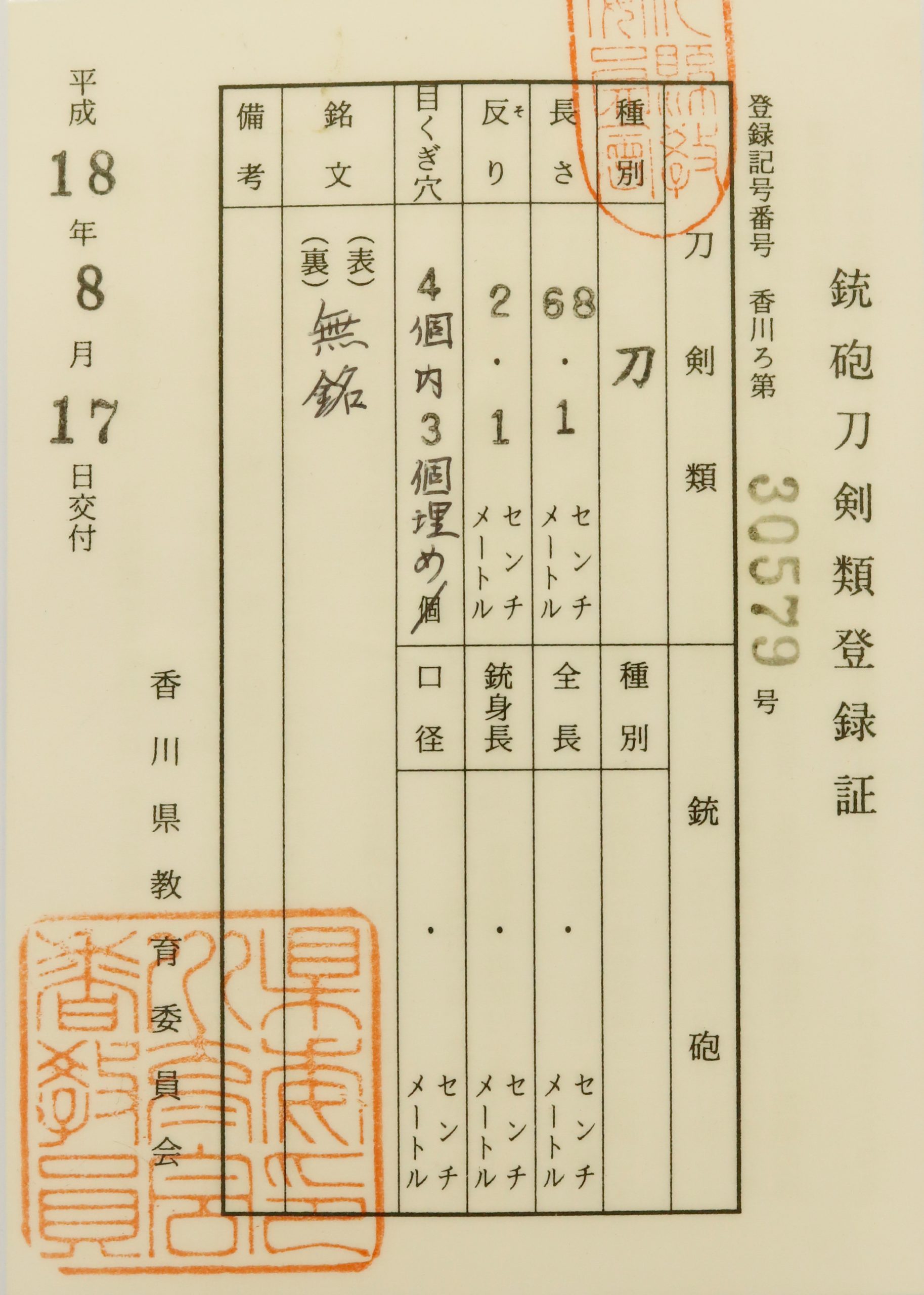
Nagasa 68.1cmSori 2.1cm
Description

This antique katana is attributed to Yoshimitsu, a smith of the Osafune school in Bizen province, active during the late Kamakura to Nanbokucho period. It is accompanied by an NBTHK Juyo Token certificate, indicating its exceptional quality and historical value. The blade features a Hamon with Gunome and Kogunome patterns, and comes with a shirasaya and koshirae.

NBTHK Zufu Commentary

Juyo #54

AI translation — may contain errors

-, 54th Session — Designated October 10, 2008

, : Yoshimitsu (義光)

Measurements 68.1 cm, 2.15 cm, 2.7 cm, 1.8 cm, 3.15 cm, 17.5 cm, slight

Description Keijō: , ; standard ; somewhat deep ; . : Dense ; very fine adheres thickly; appears with striking clarity. : Mixed , , -like , and ; overall showing a (reverse-tendency); with ; -dominant with attached ; fine ; on the below the there enters a -like feature; the is bright. : , slightly , turning back in . : : with , kaki-nagashi; : with , kaki-nagashi. : ; ; file marks ; four (three filled); unsigned.

Artisan Yoshimitsu (長船義光)

Era Late to early period

Explanation According to the commonly accepted view, Yoshimitsu is said to have been a son of Kagemitsu and a younger brother of Kanemitsu. If one surveys the earliest and latest dated examples among extant works, his activity extends from the Genkō era at the end of the period through the Jōji era in the period—a span of roughly forty years—largely overlapping the active period of Kanemitsu. Ordinarily, like Kanemitsu, he used Northern Court era names; however, it is noteworthy that extant works also include pieces employing Southern Court era names, such as a dated 6 (which corresponds to the first year of Jōwa). In terms of style, his early works tend toward the manner of Kagemitsu, while those made after the onset of the period resemble Kanemitsu.

This shows a tightly packed forging with very fine adhering thickly, and a vivid, clearly standing . The mixes , , -like , and , and in overall effect has a ; it is -dominant with and presents a bright, soft , with applied, and a that enters in . From these workmanship features, it may be appraised in the sphere of Kagemitsu and Kanemitsu.

The retains the style of the late through early periods. Moreover, the incorporates multiple types of and shows areas of somewhat small-patterned modulation; in these respects it is most appropriately compared to Yoshimitsu. The attribution is therefore correctly affirmed. The forging is well refined and truly exquisite, and the varied displays finely wrought activity along the ; this is an excellent work representative of this smith-attribution.

About the maker

Yoshimitsu

義光

Bizen Osafune (Kanemitsu lineage) · Bizen · around 1334-1349

Fujishiro Jo-jo saku · Tōken Taikan top 10%

›

A tachi dated Kōei 2 (1343), eighth month, signed in full Bizen no Kuni Osafune Yoshimitsu, is among the firmest documents of this smith. Yoshimitsu was a swordsmith of the Bizen Osafune school of the late Kamakura into the Nanbokuchō period, by the prevailing tradition a son of Kagemitsu and the younger brother of Kanemitsu, with one account placing the first generation in the Nagamitsu line. His dated works run from Genkō at the close of Kamakura through Jōji, roughly forty years that almost exactly parallel Kanemitsu, and the sword reference books distinguish a first generation, following his father, from a second that more nearly resembles his brother. Like Kanemitsu he commonly used Northern Court era names, although a tantō dated Kōkoku 6, a Southern Court name, also survives. He belongs to the central Osafune workshop at the moment it turned from the classicism of Kagemitsu toward the broad Nanbokuchō manner of Kanemitsu, and his record is read on the seam between the two.

His recognition turns on a single axis the judges restate on nearly every blade: his is the manner of the Kanemitsu group, but the irregularity is composed in a smaller pattern. Over an itame jigane that stands a little, often mixed with nagare and mokume, he tempers an angular gunome and kataochi-style gunome, with ko-gunome, ko-chōji and pointed elements intermixed, the whole resolving into a small-scale midare, in places running reversed, with ashi and yō entering, the nioiguchi nioi-dominant with ko-nie, and fine sunagashi and kinsuji through the line. The kataochi and the angular gunome carry over from his father Kagemitsu, while the crowding of many different edge-forms inside the irregularity is named as his own hand. On one signed tachi the published sources put it plainly, that 'compared with his elder brother Kanemitsu the irregularity is of smaller motifs, and the inclusion of pointed elements within the tempered edge is readily perceived as a hallmark of Yoshimitsu'[[c:1]].

The jigane is the constant beneath that edge. The itame carries ji-nie, fine chikei enter, and a vivid midare-utsuri stands clearly, the bright Osafune reflection he shares with the school but renders well-defined; on the tightest-forged pieces the steel packs into ko-itame and the utsuri only sharpens, and one signed tachi mixes a jifu-toned texture into the jigane. His earliest dated tachi stand apart from this prime manner. They are slender, high in koshizori with funbari, forged in tight ko-itame with a bō-utsuri or a straight utsuri, and tempered not in gunome at all but in a calm suguha with slight ko-ashi, nioi-dominant with ko-nie, a register the judges read as following Kagemitsu rather than Kanemitsu.

The profile thus divides in three. The early dated tachi, in the Kagemitsu suguha, anchor the chronology, and of the Kōei 2 piece the published sources note that it is 'extremely similar to a Kanemitsu tachi dated Kōei 3, sixth month'[[c:2]], an Important Art Object, the two hands documented working side by side. The prime, the kataochi and angular gunome in their smaller midare, is the body of the record. A third, smaller register pushes toward strong nie in the soden Bizen feeling the period prized: a naginata-naoshi wakizashi the judges call a deliberate stressing of Sōshū-den, with abundant ji-nie, yubashiri, sunagashi and kinsuji, and a wide ō-kissaki katana that turns blackish in the steel and adds yahazu-ba, of which the published sources write that, weighing the excellence of its nie and the activity along the edge, it 'shows workmanship of upper-rank soden Bizen worthy of Yoshimitsu and his circle'[[c:3]]. The first-and-second-generation question is left open across the Genkō-to-Jōji span, and is the central scholarly matter around him.

What sets him apart from his neighbours is exactly what the judges name, and it is drawn from his own work rather than from theirs. Against Kanemitsu his midare is the smaller and calmer, the cutting edge quieter; against his father Kagemitsu his prime carries more nie and the Sōshū-touched activity of his late hand. On one ō-suriage mumei katana the published commentary records that, the sugata and jiba at first suggesting the circle around Kanemitsu, it is precisely because 'the irregularity, set against Kanemitsu's broad openness, presents somewhat smaller-scale features that the blade is to be judged Yoshimitsu'[[c:4]], and on a Jūyō katana that 'the way many different edge-forms intermix within the irregularity displays the character of Yoshimitsu'[[c:5]]. He stands as the quieter, more closely worked hand of the great mid-Osafune workshop, the brother who held to the small-patterned midare while Kanemitsu opened the line outward.

For the collector he is a documented but uncommon Osafune name. Fujishiro grades him Jō-jō saku. He has no National Treasures; his record runs instead through an Important Cultural Property, two Tokubetsu Jūyō tachi and some thirty-two Jūyō blades, and signed work is genuinely scarce, only about a dozen of the surviving pieces bearing a signature against a far larger body of ō-suriage mumei katana. The Important Cultural Property, a signed and dated tachi, is preserved at Kameoka Hachiman-gū in Miyagi. The named provenance of his blades is daimyō: the Kōei 2 tachi passed from Tokugawa Yorinobu of Kishū to the Saijō Matsudaira house in 1667 and stayed there; a Kenmu-era signed tachi was held near Torigoe Shrine in Asakusa and is said to have been a wearing sword of the shogun Ienari. With only a couple of blades in the Tokubetsu Jūyō tier and the rest at Jūyō, a signed and dated Yoshimitsu reaches the market only seldom, and a privately held example, especially an ubu dated tachi, is a notable thing for a collector to encounter, a document of how the Kanemitsu line was carried in a quieter key.

Historical importance

Where Yoshimitsu stands among comparable artisans: across all of nihontō, and within tradition, era, and period. The tiers (Foremost · Leading · Major · Notable) weigh official designations from the NBTHK and Japan's Agency for Cultural Affairs, together with historical honors of lasting repute such as the Sansaku and Meibutsu-chō.

随一
Foremost
屈指
Leading
有数
Major
著名
Notable

Select a lens to see how it's measured.

Designation record
35 designated works
Jūyō Bunkazai
1
Tokubetsu Jūyō
2
Jūyō
32
Yoshimitsu — full profileBizen Osafune (Kanemitsu lineage) school

Dated Works

Years he was demonstrably active, proven by signed-and-dated blades

Active period
1334–1349
4 of 12 designated works carry a date
1330
1340
1350

Study this maker →

About the school

Osafune

長船

Bizen-den · Bizen

237 pieces on the market now

›

No single workshop in the history of Japanese swordmaking grew larger or lasted longer than Osafune, the riverside village in Bizen Province whose name became, across three centuries, a byword for the province's mainline. Its de facto founder was Mitsutada (光忠), working at Osafune in the middle Kamakura period; tradition makes him the son of Chikatada, and the genealogies derive his line from the Ko-Bizen Masatsune group already settled in the village. His blades, bold and imposing with a jigane so refined the sources say it can at a glance suggest Kyoto work, were treasured from old as the swords of commanders, and from his hand the school spread immediately: his sons Nagamitsu (長光) and Sanenaga (眞長), his grandson Kagemitsu (景光), and outward through pupils and collaterals until, by the late Kamakura years, Osafune was less a family than an industry. The line is conventionally read as a three-generation spine, Mitsutada founding it, Nagamitsu setting its classical standard, Kagemitsu bringing both temper and forging to their finished form before handing the manner to his pupil Chikakage (近景), whose echo of the master is so close that signed Kagemitsu blades are sometimes read as Chikakage daimei. What binds the membership is a shared steel before any shared temper. The forging is itame mixed with mokume, tightening on the finest blades into a dense ko-itame; fine ji-nie adheres, chikei enter, and over all of it stands the midare-utsuri that anchors even the most Kyoto-like jigane back to Bizen. On that floor the founding generation tempers a flamboyant choji-midare mixed with gunome: Mitsutada's tadpole-headed kawazuko-choji, Nagamitsu's round-topped plump choji, the deep nioi with ko-nie, the bright nioiguchi. From here the school divides by hand and by era. Sanenaga draws the calm pole, a gentle chu-suguha of tightened nioiguchi; Kagemitsu completes the slanting, square-shouldered kataochi-gunome over a suguha base, the family's last great Kamakura invention, carried on by his close kinsman Kagemasa (景政). The Nanbokucho generation then turns toward Soshu-den: Kanemitsu (兼光), fourth master of the mainline, pioneers a broad notare and is read, with Chogi (長義), as the head of Soden-Bizen, the Bizen wing that worked Soshu nie into a jigane that still throws a Bizen utsuri.

Chogi is called the most un-Bizen of Bizen smiths, his ear-shaped mimigata his tell; around him Nagashige (長重), Yoshikage (義景), Tomomitsu (倫光) and Kanenaga (兼長) press the Soshu side by degrees, while Motoshige (元重), of a separate Hatakeda descent, carries an Aoe-tinged squared, slanting ha. Two generations later the Oei revival returns to Kamakura: Yasumitsu (康光) and Morimitsu (盛光), the twin pillars of Oei-Bizen, revive the tachi shape and the choji temper over a wide-waisted koshibiraki-gunome, both finishing in the pointed rosoku-no-shin (candle-wick) boshi that gives the late date away. For the collector the school is a school of discriminations, and to kantei it is to read those fine partitions. The constant midare-utsuri over a bright ko-itame fixes the province; the boshi then sorts the maker, Mitsutada's pointed midare-komi against Nagamitsu's composed ko-maru Sansaku turn, Kagemitsu's contained return, the candle-wick tongue of Oei. Within a single phase the calls turn on a half-step: Nagamitsu's plump crests against Sanenaga's cooler nioiguchi, Kagemasa's freer play against Kagemitsu's tighter order, Nagashige read out of Chogi by a nie that surpasses his brother's. The standing of the best is matched by their patrimony. Mitsutada, Nagamitsu and Kagemitsu each hold National Treasures and stand at the head of Fujishiro's Sai-jo saku; their named blades, the Daihannya Nagamitsu, the Kogaryu Kagemitsu, the O-Kanemitsu, passed through Nobunaga, Ieyasu, Uesugi Kenshin and the great daimyo houses. Because Nagamitsu and the Nanbokucho masters signed and survived in number, Osafune offers what most peerage names cannot, a deep field of Tokubetsu Juyo and Juyo work that a patient collector may still realistically hold. Through every register the same hand declares itself: the bright steel, the vivid reflection, and a temper that runs, across three centuries, as the spine of Bizen. Learn more →

113 recorded smiths2013 designated works
Leading smiths
SmithEraDesignated
Mitsutada光忠1238-123960
Nagamitsu長光1274-1304244
Kagemitsu景光1303-1336143
Kanemitsu兼光1323-1370231
Sanenaga眞長1299-130964
Explore the Osafune school →

Historical context

Bizen in the Nanbokuchō period

›

Sixty years of war between two courts drove blades long and broad, and Osafune met the demand: Kanemitsu and Chōgi led forges serving the provincial warriors who did the fighting, while Sōshū influence arrived with the armies to create Sōden-Bizen.

Bizen in the Nanbokuchō period →

NBTHK Certificate
Jūyō Tōken重要刀剣
Important Sword
›

A blade of top-grade workmanship and condition, formally judged to rank with a nationally recognized Important Art Object (Jūyō Bijutsuhin). Awarded only at the NBTHK’s competitive annual examination.

Of Japan’s roughly 2.5 million registered swords, only 12,307 (about 1 in 203) have ever attained Jūyō.

About the NBTHK›

The NBTHK (Nihon Bijutsu Tōken Hozon Kyōkai, the Society for the Preservation of Japanese Art Swords) is a public-interest incorporated foundation founded in 1948 and supervised by Japan’s Agency for Cultural Affairs (Bunkachō); it is based at the Japanese Sword Museum in Tokyo. Its expert panels physically examine each submitted work (shinsa) and issue a certificate (kanteishō) ranking it by artistic and historical merit. NBTHK papers are the most widely recognized standard of authentication for Japanese swords and fittings.

NBTHK official site→
Seller
S
Samurai Museum
🇯🇵Ships from Japan
›
✓Verified dealersamuraimuseum.jp
✓Ships worldwide✓English supportPayPalCredit card
Return policy

Returns/exchanges limited to defects caused by shipping (except willful misconduct or gross negligence by the company); customers must contact within 72 hours of receiving the product.

View all of Samurai Museum’s listings→View this item on the dealer’s site→

Previously sold by Osafune Yoshimitsu

View all →
Tozando
Jūyō
Katana - Jūyō - by Osafune Yoshimitsu - YoshimitsuKatana - Jūyō - by Osafune Yoshimitsu - Yoshimitsu
Sold

Katana

ByOsafune Yoshimitsu
SOLD
Giheiya
Tokuho
Katana - Tokuho - by Osafune Yoshimitsu - Attributed to Bishu Osafune Yoshimitsu, O-suriage MumeiKatana - Tokuho - by Osafune Yoshimitsu - Attributed to Bishu Osafune Yoshimitsu, O-suriage Mumei
Sold

Katana

ByOsafune Yoshimitsu
SOLD
Tokka Biz
Tokuho
Katana - Tokuho - by Osafune Yoshimitsu - Mumei Osafune YoshimitsuKatana - Tokuho - by Osafune Yoshimitsu - Mumei Osafune Yoshimitsu
Sold

Katana

ByOsafune Yoshimitsu
SOLD
World Seiyudo
Jūyō
Katana - Jūyō - by Osafune Yoshimitsu - Mumei (Attributed to Yoshimitsu) - NBTHK Juyo TokenKatana - Jūyō - by Osafune Yoshimitsu - Mumei (Attributed to Yoshimitsu) - NBTHK Juyo Token
Sold

Katana

ByOsafune Yoshimitsu
SOLD

More Sōden-Bizen works

View all →
Aoi Art
Jūyō
Katana - Jūyō - by Osafune Shigezane - Mumei (Attributed to Shigezane) - 27th NBTHK Juyo TokenKatana - Jūyō - by Osafune Shigezane - Mumei (Attributed to Shigezane) - 27th NBTHK Juyo Token

Katana

ByOsafune Shigezane
Starting Bid¥4,600,000
Eirakudo
Jūyō
Katana - Jūyō - by Motoshige - Motoshige - Juyo TokenKatana - Jūyō - by Motoshige - Motoshige - Juyo Token

Katana

ByMotoshige
¥6,000,000
Samurai Museum
Katana - by Osafune Kanemitsu - Attributed to Den Osafune Kanemitsu - NTHK Yushu Saku Kanteisho CertificateKatana - by Osafune Kanemitsu - Attributed to Den Osafune Kanemitsu - NTHK Yushu Saku Kanteisho Certificate

Katana

ByOsafune Kanemitsu
¥4,300,000
Goushuya
Jūyō
Katana - Jūyō - by Osafune Kanemitsu - Kanemitsu with Gold Inlay InscriptionKatana - Jūyō - by Osafune Kanemitsu - Kanemitsu with Gold Inlay Inscription

Katana

ByOsafune Kanemitsu
Ask
Aoi Art
Tokuho
Katana - Tokuho - by Osafune Shigezane - Mumei (Osafune Shigezane) - NBTHK Tokubetsu Hozon TokenKatana - Tokuho - by Osafune Shigezane - Mumei (Osafune Shigezane) - NBTHK Tokubetsu Hozon Token

Katana

ByOsafune Shigezane
¥1,650,000
Choshuya
Jūyō
Tachi - Jūyō - by Osafune Masamitsu - Bishu Osafune (Ika-kire Masamitsu) Meitoku 3 nen 8 gatsu (Ika-kire)Tachi - Jūyō - by Osafune Masamitsu - Bishu Osafune (Ika-kire Masamitsu) Meitoku 3 nen 8 gatsu (Ika-kire)

Tachi

ByOsafune Masamitsu
¥4,300,000
Nihonto Australia
Tokujū
Katana - Tokuju - by Chogi Yoshikage - A Tokubetsu Juyo Masterpiece Yoshikage KatanaKatana - Tokuju - by Chogi Yoshikage - A Tokubetsu Juyo Masterpiece Yoshikage Katana

Katana

ByChogi Yoshikage
Ask
Tsuruginoya
Jūyō
Tachi - Jūyō - by Osafune Masamitsu - Bizen Osafune MasamitsuTachi - Jūyō - by Osafune Masamitsu - Bizen Osafune Masamitsu

Tachi

ByOsafune Masamitsu
¥4,800,000

More from the Osafune school

View all →
Aoi Art
Tokuho
Wakizashi - Tokuho - by Oei-Bizen Morimitsu - Bishū Osafune Morimitsu, dated Ōei 26 (1419) - NBTHK Tokubetsu Hozon TokenWakizashi - Tokuho - by Oei-Bizen Morimitsu - Bishū Osafune Morimitsu, dated Ōei 26 (1419) - NBTHK Tokubetsu Hozon Token

Wakizashi

ByOei-Bizen Morimitsu
Starting Bid¥1,500,000
Aoi Art
Jūyō Bijutsuhin
Daisho - Jubi - by Osafune Nagamitsu - Dai Sho: Katana (Important Art Object): Mumei (Attributed to Nagamitsu) / Wakizashi: Mumei (Attributed to Sekishu Naotsuna)Daisho - Jubi - by Osafune Nagamitsu - Dai Sho: Katana (Important Art Object): Mumei (Attributed to Nagamitsu) / Wakizashi: Mumei (Attributed to Sekishu Naotsuna)

Daishō

ByOsafune Nagamitsu
Ask
Samurai Museum
Tokuho
Wakizashi - Tokuho - by Osafune Kagemitsu - Antique Japanese Sword Wakizashi Attributed to Den Osafune Kagemitsu NBTHK Tokubetsu Hozon CertificateWakizashi - Tokuho - by Osafune Kagemitsu - Antique Japanese Sword Wakizashi Attributed to Den Osafune Kagemitsu NBTHK Tokubetsu Hozon Certificate

Wakizashi

ByOsafune Kagemitsu
¥3,200,000
Nihonto.com
Jūyō
Tanto - Jūyō - by Osafune Kagemitsu - Juyo Tanto by Bizen KagemitsuTanto - Jūyō - by Osafune Kagemitsu - Juyo Tanto by Bizen Kagemitsu

Tantō

ByOsafune Kagemitsu
¥89,500
Touken Matsumoto
Tokuho
Katana - Tokuho - by Sukesada School - Bishu Osafune SukesadaKatana - Tokuho - by Sukesada School - Bishu Osafune Sukesada

Katana

BySukesada School
¥650,000
Hyozaemon
Tokuho
Tachi - Tokuho - by Osafune School - Mumei (Osafune Shigezane) - Tokubetsu HozonTachi - Tokuho - by Osafune School - Mumei (Osafune Shigezane) - Tokubetsu Hozon

Tachi

ByOsafune School
¥1,250,000
Goushuya
Tokujū
Tachi - Tokuju - by Oei-Bizen Morimitsu - Morimitsu - Tokubetsu Juyo TokenTachi - Tokuju - by Oei-Bizen Morimitsu - Morimitsu - Tokubetsu Juyo Token

Tachi

ByOei-Bizen Morimitsu
Ask
Nipponto
Tokuho
Wakizashi - Tokuho - by Oei-Bizen Yasumitsu - Japanese Sword: Bishu Osafune Yasumitsu, Oei 33rd Year, February (O-wazamono) - WakizashiWakizashi - Tokuho - by Oei-Bizen Yasumitsu - Japanese Sword: Bishu Osafune Yasumitsu, Oei 33rd Year, February (O-wazamono) - Wakizashi

Wakizashi

ByOei-Bizen Yasumitsu
¥1,200,000

More from the Bizen tradition

View all →
Hyozaemon
Tokuho
Tokuho - by Fukuoka Ichimonji Yoshifusa - Naginata Naoshi Wakizashi by Fukuoka Ichimonji Yoshifusa, a Master of IchimonjiTokuho - by Fukuoka Ichimonji Yoshifusa - Naginata Naoshi Wakizashi by Fukuoka Ichimonji Yoshifusa, a Master of Ichimonji

Naginata Naoshi Wakizashi by Fukuoka Ichimonji Yoshifusa, a Master of Ichimonji

ByFukuoka Ichimonji Yoshifusa
Ask
Eirakudo
Tokuho
Katana - Tokuho - by Katayama Ichimonji School - Katayama Ichimonji - Tokubetsu Hozon TokenKatana - Tokuho - by Katayama Ichimonji School - Katayama Ichimonji - Tokubetsu Hozon Token

Katana

ByKatayama Ichimonji School
¥4,500,000
Eirakudo
Tokuho
Wakizashi - Tokuho - by Ichimonji School - Fukuoka Ichimonji Wakizashi Tokubetsu Hozon TokenWakizashi - Tokuho - by Ichimonji School - Fukuoka Ichimonji Wakizashi Tokubetsu Hozon Token

Wakizashi

ByIchimonji School
¥3,500,000
Goushuya
Jūyō Bijutsuhin
Tachi - Jubi - by Ukai Unsho - Kumoio - From the collection of the Okouchi family, lord of Otaki Domain, Kazusa ProvinceTachi - Jubi - by Ukai Unsho - Kumoio - From the collection of the Okouchi family, lord of Otaki Domain, Kazusa Province

Tachi

ByUkai Unsho
Ask
Tsuruginoya
Jūyō
Katana - Jūyō - by Fukuoka Ichimonji School - Mumei Fukuoka IchimonjiKatana - Jūyō - by Fukuoka Ichimonji School - Mumei Fukuoka Ichimonji

Katana

ByFukuoka Ichimonji School
Ask
Aoi Art
Jūyō
Katana - Jūyō - by Aoe School - Mumei (Aoe school)Katana - Jūyō - by Aoe School - Mumei (Aoe school)

Katana

ByAoe School
¥3,200,000
Hyozaemon
Tokuho
Tachi - Tokuho - by Ko-Aoe Yoritsugu - Ko-Aoe YoritsuguTachi - Tokuho - by Ko-Aoe Yoritsugu - Ko-Aoe Yoritsugu

Tachi

ByKo-Aoe Yoritsugu
¥5,800,000
Tsuruginoya
Jūyō
Tachi - Jūyō - by Hatakeda Sanemori - Hatakeda Sanemori - Formerly owned by General Sadao ArakiTachi - Jūyō - by Hatakeda Sanemori - Hatakeda Sanemori - Formerly owned by General Sadao Araki

Tachi

ByHatakeda Sanemori
¥14,500,000

Swords

  • Katana
  • Wakizashi
  • Tantō
  • Tachi
  • Naginata
  • Yari
  • Japanese Swords
  • Samurai Swords

Fittings

  • Tsuba
  • Fuchi-Kashira
  • Kozuka
  • Menuki
  • Sword Guards (Tsuba)

Armor

  • Kabuto
  • Samurai Armor
  • All Samurai Armor

By Certification

  • Tokujū
  • Jūyō
  • Tokuho
  • Hozon

Resources

  • Dealer Directory
  • Artist Directory
  • The Daily Kantei
  • Glossary
  • Browse All
Nihontowatch© 2026
TermsPrivacyCookiesAbout
Sold

Description

This antique katana is attributed to Yoshimitsu, a smith of the Osafune school in Bizen province, active during the late Kamakura to Nanbokucho period. It is accompanied by an NBTHK Juyo Token certificate, indicating its exceptional quality and historical value. The blade features a Hamon with Gunome and Kogunome patterns, and comes with a shirasaya and koshirae.

NBTHK Setsumei

Jūyō-Tōken, 54th Session — Designated October 10, 2008 Katana, mumei: Yoshimitsu (義光) Measurements Nagasa 68.1 cm, sori 2.15 cm, motohaba 2.7 cm, sakihaba 1.8 cm, kissaki-nagasa 3.15 cm, nakago-nagasa 17.5 cm, nakago-sori slight Description Keijō: shinogi-zukuri, iori-mune; standard mihaba; somewhat deep sori; chū-kissaki. Kitae: Dense ko-itame-hada; very fine ji-nie adheres thickly; midare-utsuri appears with striking clarity. Hamon: Mixed gunome, ko-gunome, kataochi-like gunome, and togariba; overall showing a saka-gokoro (reverse-tendency); with ashi; nioi-dominant with attached ko-nie; fine sunagashi; on the omote below the yokote there enters a yubashiri-like feature; the nioiguchi is bright. Bōshi: midare-komi, slightly hakikake, turning back in ko-maru. Horimono: Omote: bō-hi with soe-hi, kaki-nagashi; ura: bō-hi with tsure-hi, kaki-nagashi. Nakago: ō-suriage; sakikiri; file marks kiri; four mekugi-ana (three filled); unsigned. Artisan Osafune Yoshimitsu (長船義光) Era Late Kamakura to early Nanbokuchō period Explanation According to the commonly accepted view, Osafune Yoshimitsu is said to have been a son of Kagemitsu and a younger brother of Kanemitsu. If one surveys the earliest and latest dated examples among extant works, his activity extends from the Genkō era at the end of the Kamakura period through the Jōji era in the Nanbokuchō period—a span of roughly forty years—largely overlapping the active period of Kanemitsu. Ordinarily, like Kanemitsu, he used Northern Court era names; however, it is noteworthy that extant works also include pieces employing Southern Court era names, such as a tantō dated Kōkoku 6 (which corresponds to the first year of Jōwa). In terms of style, his early works tend toward the manner of Kagemitsu, while those made after the onset of the Nanbokuchō period resemble Kanemitsu. This katana shows a tightly packed ko-itame forging with very fine ji-nie adhering thickly, and a vivid, clearly standing midare-utsuri. The hamon mixes gunome, ko-gunome, kataochi-like gunome, and togariba, and in overall effect has a saka-gokoro; it is nioi-dominant with ko-nie and presents a bright, soft nioiguchi, with sunagashi applied, and a bōshi that enters in midare-komi. From these workmanship features, it may be appraised in the sphere of Kagemitsu and Kanemitsu. The sugata retains the style of the late Kamakura through early Nanbokuchō periods. Moreover, the midare incorporates multiple types of ha and shows areas of somewhat small-patterned modulation; in these respects it is most appropriately compared to Yoshimitsu. The attribution is therefore correctly affirmed. The forging is well refined and truly exquisite, and the varied midare displays finely wrought activity along the habuchi; this is an excellent work representative of this smith-attribution.

NihontoWatch MonNihontoWatch
MarketEncyclopediaKantei
Swords›Bizen-den›Osafune›Sōden-Bizen›Yoshimitsu›Katana: Attributed to Yoshimitsu - NBTHK Juyo Token Certificate
katanaJūyō
Osafune Yoshimitsu

Katana: Attributed to Yoshimitsu - NBTHK Juyo Token Certificate

mumei · Osafune · Nanbokucho · nagasa 68.1cm · sori 2.1cm

SOLD
Osafune Yoshimitsu (義光) · Osafune · NanbokuchoView artist page →
KatanaJūyō
Could you name the smith from the blade alone? Today’s kantei →
Osafune Yoshimitsu — 1 of 21
Osafune Yoshimitsu — 2 of 21
Osafune Yoshimitsu — 3 of 21
Osafune Yoshimitsu — 4 of 21
Osafune Yoshimitsu — 5 of 21
Osafune Yoshimitsu — 6 of 21
Osafune Yoshimitsu — 7 of 21
Osafune Yoshimitsu — 8 of 21
Osafune Yoshimitsu — 9 of 21
Osafune Yoshimitsu — 10 of 21
Osafune Yoshimitsu — 11 of 21
Osafune Yoshimitsu — 12 of 21
Osafune Yoshimitsu — 13 of 21
Osafune Yoshimitsu — 14 of 21
Osafune Yoshimitsu — 15 of 21
Osafune Yoshimitsu — 16 of 21
Osafune Yoshimitsu — 17 of 21
Osafune Yoshimitsu — 18 of 21
Osafune Yoshimitsu — 19 of 21
Osafune Yoshimitsu — 20 of 21
Osafune Yoshimitsu — 21 of 21
1 / 21
1 / 21
Osafune Yoshimitsu — 1 of 21Osafune Yoshimitsu — 2 of 21Osafune Yoshimitsu — 3 of 21Osafune Yoshimitsu — 4 of 21Osafune Yoshimitsu — 5 of 21Osafune Yoshimitsu — 6 of 21Osafune Yoshimitsu — 7 of 21Osafune Yoshimitsu — 8 of 21Osafune Yoshimitsu — 9 of 21Osafune Yoshimitsu — 10 of 21Osafune Yoshimitsu — 11 of 21Osafune Yoshimitsu — 12 of 21Osafune Yoshimitsu — 13 of 21Osafune Yoshimitsu — 14 of 21Osafune Yoshimitsu — 15 of 21Osafune Yoshimitsu — 16 of 21Osafune Yoshimitsu — 17 of 21Osafune Yoshimitsu — 18 of 21Osafune Yoshimitsu — 19 of 21Osafune Yoshimitsu — 20 of 21Osafune Yoshimitsu — 21 of 21
Osafune Yoshimitsu (義光) · Osafune · NanbokuchoView artist page →
KatanaJūyō
Could you name the smith from the blade alone? Today’s kantei →
Measurements & details
Smith
Osafune Yoshimitsu
Type
Katana
School
Osafune
Period
Around 1334–1349(Kenmu ND)
Province
Bizen
Signature
Unsigned(37% of this smith's designated works are signed)
Measurements
Nagasa 68.1cmSori 2.1cm
Description

This antique katana is attributed to Yoshimitsu, a smith of the Osafune school in Bizen province, active during the late Kamakura to Nanbokucho period. It is accompanied by an NBTHK Juyo Token certificate, indicating its exceptional quality and historical value. The blade features a Hamon with Gunome and Kogunome patterns, and comes with a shirasaya and koshirae.

NBTHK Zufu Commentary

Juyo #54

AI translation — may contain errors

-, 54th Session — Designated October 10, 2008

, : Yoshimitsu (義光)

Measurements 68.1 cm, 2.15 cm, 2.7 cm, 1.8 cm, 3.15 cm, 17.5 cm, slight

Description Keijō: , ; standard ; somewhat deep ; . : Dense ; very fine adheres thickly; appears with striking clarity. : Mixed , , -like , and ; overall showing a (reverse-tendency); with ; -dominant with attached ; fine ; on the below the there enters a -like feature; the is bright. : , slightly , turning back in . : : with , kaki-nagashi; : with , kaki-nagashi. : ; ; file marks ; four (three filled); unsigned.

Artisan Yoshimitsu (長船義光)

Era Late to early period

Explanation According to the commonly accepted view, Yoshimitsu is said to have been a son of Kagemitsu and a younger brother of Kanemitsu. If one surveys the earliest and latest dated examples among extant works, his activity extends from the Genkō era at the end of the period through the Jōji era in the period—a span of roughly forty years—largely overlapping the active period of Kanemitsu. Ordinarily, like Kanemitsu, he used Northern Court era names; however, it is noteworthy that extant works also include pieces employing Southern Court era names, such as a dated 6 (which corresponds to the first year of Jōwa). In terms of style, his early works tend toward the manner of Kagemitsu, while those made after the onset of the period resemble Kanemitsu.

This shows a tightly packed forging with very fine adhering thickly, and a vivid, clearly standing . The mixes , , -like , and , and in overall effect has a ; it is -dominant with and presents a bright, soft , with applied, and a that enters in . From these workmanship features, it may be appraised in the sphere of Kagemitsu and Kanemitsu.

The retains the style of the late through early periods. Moreover, the incorporates multiple types of and shows areas of somewhat small-patterned modulation; in these respects it is most appropriately compared to Yoshimitsu. The attribution is therefore correctly affirmed. The forging is well refined and truly exquisite, and the varied displays finely wrought activity along the ; this is an excellent work representative of this smith-attribution.

About the maker

Yoshimitsu

義光

Bizen Osafune (Kanemitsu lineage) · Bizen · around 1334-1349

Fujishiro Jo-jo saku · Tōken Taikan top 10%

›

A tachi dated Kōei 2 (1343), eighth month, signed in full Bizen no Kuni Osafune Yoshimitsu, is among the firmest documents of this smith. Yoshimitsu was a swordsmith of the Bizen Osafune school of the late Kamakura into the Nanbokuchō period, by the prevailing tradition a son of Kagemitsu and the younger brother of Kanemitsu, with one account placing the first generation in the Nagamitsu line. His dated works run from Genkō at the close of Kamakura through Jōji, roughly forty years that almost exactly parallel Kanemitsu, and the sword reference books distinguish a first generation, following his father, from a second that more nearly resembles his brother. Like Kanemitsu he commonly used Northern Court era names, although a tantō dated Kōkoku 6, a Southern Court name, also survives. He belongs to the central Osafune workshop at the moment it turned from the classicism of Kagemitsu toward the broad Nanbokuchō manner of Kanemitsu, and his record is read on the seam between the two.

His recognition turns on a single axis the judges restate on nearly every blade: his is the manner of the Kanemitsu group, but the irregularity is composed in a smaller pattern. Over an itame jigane that stands a little, often mixed with nagare and mokume, he tempers an angular gunome and kataochi-style gunome, with ko-gunome, ko-chōji and pointed elements intermixed, the whole resolving into a small-scale midare, in places running reversed, with ashi and yō entering, the nioiguchi nioi-dominant with ko-nie, and fine sunagashi and kinsuji through the line. The kataochi and the angular gunome carry over from his father Kagemitsu, while the crowding of many different edge-forms inside the irregularity is named as his own hand. On one signed tachi the published sources put it plainly, that 'compared with his elder brother Kanemitsu the irregularity is of smaller motifs, and the inclusion of pointed elements within the tempered edge is readily perceived as a hallmark of Yoshimitsu'[[c:1]].

The jigane is the constant beneath that edge. The itame carries ji-nie, fine chikei enter, and a vivid midare-utsuri stands clearly, the bright Osafune reflection he shares with the school but renders well-defined; on the tightest-forged pieces the steel packs into ko-itame and the utsuri only sharpens, and one signed tachi mixes a jifu-toned texture into the jigane. His earliest dated tachi stand apart from this prime manner. They are slender, high in koshizori with funbari, forged in tight ko-itame with a bō-utsuri or a straight utsuri, and tempered not in gunome at all but in a calm suguha with slight ko-ashi, nioi-dominant with ko-nie, a register the judges read as following Kagemitsu rather than Kanemitsu.

The profile thus divides in three. The early dated tachi, in the Kagemitsu suguha, anchor the chronology, and of the Kōei 2 piece the published sources note that it is 'extremely similar to a Kanemitsu tachi dated Kōei 3, sixth month'[[c:2]], an Important Art Object, the two hands documented working side by side. The prime, the kataochi and angular gunome in their smaller midare, is the body of the record. A third, smaller register pushes toward strong nie in the soden Bizen feeling the period prized: a naginata-naoshi wakizashi the judges call a deliberate stressing of Sōshū-den, with abundant ji-nie, yubashiri, sunagashi and kinsuji, and a wide ō-kissaki katana that turns blackish in the steel and adds yahazu-ba, of which the published sources write that, weighing the excellence of its nie and the activity along the edge, it 'shows workmanship of upper-rank soden Bizen worthy of Yoshimitsu and his circle'[[c:3]]. The first-and-second-generation question is left open across the Genkō-to-Jōji span, and is the central scholarly matter around him.

What sets him apart from his neighbours is exactly what the judges name, and it is drawn from his own work rather than from theirs. Against Kanemitsu his midare is the smaller and calmer, the cutting edge quieter; against his father Kagemitsu his prime carries more nie and the Sōshū-touched activity of his late hand. On one ō-suriage mumei katana the published commentary records that, the sugata and jiba at first suggesting the circle around Kanemitsu, it is precisely because 'the irregularity, set against Kanemitsu's broad openness, presents somewhat smaller-scale features that the blade is to be judged Yoshimitsu'[[c:4]], and on a Jūyō katana that 'the way many different edge-forms intermix within the irregularity displays the character of Yoshimitsu'[[c:5]]. He stands as the quieter, more closely worked hand of the great mid-Osafune workshop, the brother who held to the small-patterned midare while Kanemitsu opened the line outward.

For the collector he is a documented but uncommon Osafune name. Fujishiro grades him Jō-jō saku. He has no National Treasures; his record runs instead through an Important Cultural Property, two Tokubetsu Jūyō tachi and some thirty-two Jūyō blades, and signed work is genuinely scarce, only about a dozen of the surviving pieces bearing a signature against a far larger body of ō-suriage mumei katana. The Important Cultural Property, a signed and dated tachi, is preserved at Kameoka Hachiman-gū in Miyagi. The named provenance of his blades is daimyō: the Kōei 2 tachi passed from Tokugawa Yorinobu of Kishū to the Saijō Matsudaira house in 1667 and stayed there; a Kenmu-era signed tachi was held near Torigoe Shrine in Asakusa and is said to have been a wearing sword of the shogun Ienari. With only a couple of blades in the Tokubetsu Jūyō tier and the rest at Jūyō, a signed and dated Yoshimitsu reaches the market only seldom, and a privately held example, especially an ubu dated tachi, is a notable thing for a collector to encounter, a document of how the Kanemitsu line was carried in a quieter key.
Historical importance

Where Yoshimitsu stands among comparable artisans: across all of nihontō, and within tradition, era, and period. The tiers (Foremost · Leading · Major · Notable) weigh official designations from the NBTHK and Japan's Agency for Cultural Affairs, together with historical honors of lasting repute such as the Sansaku and Meibutsu-chō.

随一
Foremost
屈指
Leading
有数
Major
著名
Notable

Select a lens to see how it's measured.

Designation record
35 designated works
Jūyō Bunkazai
1
Tokubetsu Jūyō
2
Jūyō
32
Yoshimitsu — full profileBizen Osafune (Kanemitsu lineage) school

Dated Works

Years he was demonstrably active, proven by signed-and-dated blades

Active period
1334–1349
4 of 12 designated works carry a date
1330
1340
1350

Study this maker →

About the school

Osafune

長船

Bizen-den · Bizen

237 pieces on the market now

›

No single workshop in the history of Japanese swordmaking grew larger or lasted longer than Osafune, the riverside village in Bizen Province whose name became, across three centuries, a byword for the province's mainline. Its de facto founder was Mitsutada (光忠), working at Osafune in the middle Kamakura period; tradition makes him the son of Chikatada, and the genealogies derive his line from the Ko-Bizen Masatsune group already settled in the village. His blades, bold and imposing with a jigane so refined the sources say it can at a glance suggest Kyoto work, were treasured from old as the swords of commanders, and from his hand the school spread immediately: his sons Nagamitsu (長光) and Sanenaga (眞長), his grandson Kagemitsu (景光), and outward through pupils and collaterals until, by the late Kamakura years, Osafune was less a family than an industry. The line is conventionally read as a three-generation spine, Mitsutada founding it, Nagamitsu setting its classical standard, Kagemitsu bringing both temper and forging to their finished form before handing the manner to his pupil Chikakage (近景), whose echo of the master is so close that signed Kagemitsu blades are sometimes read as Chikakage daimei. What binds the membership is a shared steel before any shared temper. The forging is itame mixed with mokume, tightening on the finest blades into a dense ko-itame; fine ji-nie adheres, chikei enter, and over all of it stands the midare-utsuri that anchors even the most Kyoto-like jigane back to Bizen. On that floor the founding generation tempers a flamboyant choji-midare mixed with gunome: Mitsutada's tadpole-headed kawazuko-choji, Nagamitsu's round-topped plump choji, the deep nioi with ko-nie, the bright nioiguchi. From here the school divides by hand and by era. Sanenaga draws the calm pole, a gentle chu-suguha of tightened nioiguchi; Kagemitsu completes the slanting, square-shouldered kataochi-gunome over a suguha base, the family's last great Kamakura invention, carried on by his close kinsman Kagemasa (景政). The Nanbokucho generation then turns toward Soshu-den: Kanemitsu (兼光), fourth master of the mainline, pioneers a broad notare and is read, with Chogi (長義), as the head of Soden-Bizen, the Bizen wing that worked Soshu nie into a jigane that still throws a Bizen utsuri.
Chogi is called the most un-Bizen of Bizen smiths, his ear-shaped mimigata his tell; around him Nagashige (長重), Yoshikage (義景), Tomomitsu (倫光) and Kanenaga (兼長) press the Soshu side by degrees, while Motoshige (元重), of a separate Hatakeda descent, carries an Aoe-tinged squared, slanting ha. Two generations later the Oei revival returns to Kamakura: Yasumitsu (康光) and Morimitsu (盛光), the twin pillars of Oei-Bizen, revive the tachi shape and the choji temper over a wide-waisted koshibiraki-gunome, both finishing in the pointed rosoku-no-shin (candle-wick) boshi that gives the late date away. For the collector the school is a school of discriminations, and to kantei it is to read those fine partitions. The constant midare-utsuri over a bright ko-itame fixes the province; the boshi then sorts the maker, Mitsutada's pointed midare-komi against Nagamitsu's composed ko-maru Sansaku turn, Kagemitsu's contained return, the candle-wick tongue of Oei. Within a single phase the calls turn on a half-step: Nagamitsu's plump crests against Sanenaga's cooler nioiguchi, Kagemasa's freer play against Kagemitsu's tighter order, Nagashige read out of Chogi by a nie that surpasses his brother's. The standing of the best is matched by their patrimony. Mitsutada, Nagamitsu and Kagemitsu each hold National Treasures and stand at the head of Fujishiro's Sai-jo saku; their named blades, the Daihannya Nagamitsu, the Kogaryu Kagemitsu, the O-Kanemitsu, passed through Nobunaga, Ieyasu, Uesugi Kenshin and the great daimyo houses. Because Nagamitsu and the Nanbokucho masters signed and survived in number, Osafune offers what most peerage names cannot, a deep field of Tokubetsu Juyo and Juyo work that a patient collector may still realistically hold. Through every register the same hand declares itself: the bright steel, the vivid reflection, and a temper that runs, across three centuries, as the spine of Bizen. Learn more →

113 recorded smiths2013 designated works
Leading smiths
SmithEraDesignated
Mitsutada光忠1238-123960
Nagamitsu長光1274-1304244
Kagemitsu景光1303-1336143
Kanemitsu兼光1323-1370231
Sanenaga眞長1299-130964
Explore the Osafune school →

Historical context

Bizen in the Nanbokuchō period

›

Sixty years of war between two courts drove blades long and broad, and Osafune met the demand: Kanemitsu and Chōgi led forges serving the provincial warriors who did the fighting, while Sōshū influence arrived with the armies to create Sōden-Bizen.

Bizen in the Nanbokuchō period →

NBTHK Certificate
Jūyō Tōken重要刀剣
Important Sword
›

A blade of top-grade workmanship and condition, formally judged to rank with a nationally recognized Important Art Object (Jūyō Bijutsuhin). Awarded only at the NBTHK’s competitive annual examination.

Of Japan’s roughly 2.5 million registered swords, only 12,307 (about 1 in 203) have ever attained Jūyō.

About the NBTHK›

The NBTHK (Nihon Bijutsu Tōken Hozon Kyōkai, the Society for the Preservation of Japanese Art Swords) is a public-interest incorporated foundation founded in 1948 and supervised by Japan’s Agency for Cultural Affairs (Bunkachō); it is based at the Japanese Sword Museum in Tokyo. Its expert panels physically examine each submitted work (shinsa) and issue a certificate (kanteishō) ranking it by artistic and historical merit. NBTHK papers are the most widely recognized standard of authentication for Japanese swords and fittings.

NBTHK official site→
Seller
S
Samurai Museum
🇯🇵Ships from Japan
›
✓Verified dealersamuraimuseum.jp
✓Ships worldwide✓English supportPayPalCredit card
Return policy

Returns/exchanges limited to defects caused by shipping (except willful misconduct or gross negligence by the company); customers must contact within 72 hours of receiving the product.

View all of Samurai Museum’s listings→View this item on the dealer’s site→

Previously sold by Osafune Yoshimitsu

View all →
Tozando
Jūyō
Katana - Jūyō - by Osafune Yoshimitsu - YoshimitsuKatana - Jūyō - by Osafune Yoshimitsu - Yoshimitsu
Sold

Katana

ByOsafune Yoshimitsu
SOLD
Giheiya
Tokuho
Katana - Tokuho - by Osafune Yoshimitsu - Attributed to Bishu Osafune Yoshimitsu, O-suriage MumeiKatana - Tokuho - by Osafune Yoshimitsu - Attributed to Bishu Osafune Yoshimitsu, O-suriage Mumei
Sold

Katana

ByOsafune Yoshimitsu
SOLD
Tokka Biz
Tokuho
Katana - Tokuho - by Osafune Yoshimitsu - Mumei Osafune YoshimitsuKatana - Tokuho - by Osafune Yoshimitsu - Mumei Osafune Yoshimitsu
Sold

Katana

ByOsafune Yoshimitsu
SOLD
World Seiyudo
Jūyō
Katana - Jūyō - by Osafune Yoshimitsu - Mumei (Attributed to Yoshimitsu) - NBTHK Juyo TokenKatana - Jūyō - by Osafune Yoshimitsu - Mumei (Attributed to Yoshimitsu) - NBTHK Juyo Token
Sold

Katana

ByOsafune Yoshimitsu
SOLD

More Sōden-Bizen works

View all →
Aoi Art
Jūyō
Katana - Jūyō - by Osafune Shigezane - Mumei (Attributed to Shigezane) - 27th NBTHK Juyo TokenKatana - Jūyō - by Osafune Shigezane - Mumei (Attributed to Shigezane) - 27th NBTHK Juyo Token

Katana

ByOsafune Shigezane
Starting Bid¥4,600,000
Eirakudo
Jūyō
Katana - Jūyō - by Motoshige - Motoshige - Juyo TokenKatana - Jūyō - by Motoshige - Motoshige - Juyo Token

Katana

ByMotoshige
¥6,000,000
Samurai Museum
Katana - by Osafune Kanemitsu - Attributed to Den Osafune Kanemitsu - NTHK Yushu Saku Kanteisho CertificateKatana - by Osafune Kanemitsu - Attributed to Den Osafune Kanemitsu - NTHK Yushu Saku Kanteisho Certificate

Katana

ByOsafune Kanemitsu
¥4,300,000
Goushuya
Jūyō
Katana - Jūyō - by Osafune Kanemitsu - Kanemitsu with Gold Inlay InscriptionKatana - Jūyō - by Osafune Kanemitsu - Kanemitsu with Gold Inlay Inscription

Katana

ByOsafune Kanemitsu
Ask
Aoi Art
Tokuho
Katana - Tokuho - by Osafune Shigezane - Mumei (Osafune Shigezane) - NBTHK Tokubetsu Hozon TokenKatana - Tokuho - by Osafune Shigezane - Mumei (Osafune Shigezane) - NBTHK Tokubetsu Hozon Token

Katana

ByOsafune Shigezane
¥1,650,000
Choshuya
Jūyō
Tachi - Jūyō - by Osafune Masamitsu - Bishu Osafune (Ika-kire Masamitsu) Meitoku 3 nen 8 gatsu (Ika-kire)Tachi - Jūyō - by Osafune Masamitsu - Bishu Osafune (Ika-kire Masamitsu) Meitoku 3 nen 8 gatsu (Ika-kire)

Tachi

ByOsafune Masamitsu
¥4,300,000
Nihonto Australia
Tokujū
Katana - Tokuju - by Chogi Yoshikage - A Tokubetsu Juyo Masterpiece Yoshikage KatanaKatana - Tokuju - by Chogi Yoshikage - A Tokubetsu Juyo Masterpiece Yoshikage Katana

Katana

ByChogi Yoshikage
Ask
Tsuruginoya
Jūyō
Tachi - Jūyō - by Osafune Masamitsu - Bizen Osafune MasamitsuTachi - Jūyō - by Osafune Masamitsu - Bizen Osafune Masamitsu

Tachi

ByOsafune Masamitsu
¥4,800,000

More from the Osafune school

View all →
Aoi Art
Tokuho
Wakizashi - Tokuho - by Oei-Bizen Morimitsu - Bishū Osafune Morimitsu, dated Ōei 26 (1419) - NBTHK Tokubetsu Hozon TokenWakizashi - Tokuho - by Oei-Bizen Morimitsu - Bishū Osafune Morimitsu, dated Ōei 26 (1419) - NBTHK Tokubetsu Hozon Token

Wakizashi

ByOei-Bizen Morimitsu
Starting Bid¥1,500,000
Aoi Art
Jūyō Bijutsuhin
Daisho - Jubi - by Osafune Nagamitsu - Dai Sho: Katana (Important Art Object): Mumei (Attributed to Nagamitsu) / Wakizashi: Mumei (Attributed to Sekishu Naotsuna)Daisho - Jubi - by Osafune Nagamitsu - Dai Sho: Katana (Important Art Object): Mumei (Attributed to Nagamitsu) / Wakizashi: Mumei (Attributed to Sekishu Naotsuna)

Daishō

ByOsafune Nagamitsu
Ask
Samurai Museum
Tokuho
Wakizashi - Tokuho - by Osafune Kagemitsu - Antique Japanese Sword Wakizashi Attributed to Den Osafune Kagemitsu NBTHK Tokubetsu Hozon CertificateWakizashi - Tokuho - by Osafune Kagemitsu - Antique Japanese Sword Wakizashi Attributed to Den Osafune Kagemitsu NBTHK Tokubetsu Hozon Certificate

Wakizashi

ByOsafune Kagemitsu
¥3,200,000
Nihonto.com
Jūyō
Tanto - Jūyō - by Osafune Kagemitsu - Juyo Tanto by Bizen KagemitsuTanto - Jūyō - by Osafune Kagemitsu - Juyo Tanto by Bizen Kagemitsu

Tantō

ByOsafune Kagemitsu
¥89,500
Touken Matsumoto
Tokuho
Katana - Tokuho - by Sukesada School - Bishu Osafune SukesadaKatana - Tokuho - by Sukesada School - Bishu Osafune Sukesada

Katana

BySukesada School
¥650,000
Hyozaemon
Tokuho
Tachi - Tokuho - by Osafune School - Mumei (Osafune Shigezane) - Tokubetsu HozonTachi - Tokuho - by Osafune School - Mumei (Osafune Shigezane) - Tokubetsu Hozon

Tachi

ByOsafune School
¥1,250,000
Goushuya
Tokujū
Tachi - Tokuju - by Oei-Bizen Morimitsu - Morimitsu - Tokubetsu Juyo TokenTachi - Tokuju - by Oei-Bizen Morimitsu - Morimitsu - Tokubetsu Juyo Token

Tachi

ByOei-Bizen Morimitsu
Ask
Nipponto
Tokuho
Wakizashi - Tokuho - by Oei-Bizen Yasumitsu - Japanese Sword: Bishu Osafune Yasumitsu, Oei 33rd Year, February (O-wazamono) - WakizashiWakizashi - Tokuho - by Oei-Bizen Yasumitsu - Japanese Sword: Bishu Osafune Yasumitsu, Oei 33rd Year, February (O-wazamono) - Wakizashi

Wakizashi

ByOei-Bizen Yasumitsu
¥1,200,000

More from the Bizen tradition

View all →
Hyozaemon
Tokuho
Tokuho - by Fukuoka Ichimonji Yoshifusa - Naginata Naoshi Wakizashi by Fukuoka Ichimonji Yoshifusa, a Master of IchimonjiTokuho - by Fukuoka Ichimonji Yoshifusa - Naginata Naoshi Wakizashi by Fukuoka Ichimonji Yoshifusa, a Master of Ichimonji

Naginata Naoshi Wakizashi by Fukuoka Ichimonji Yoshifusa, a Master of Ichimonji

ByFukuoka Ichimonji Yoshifusa
Ask
Eirakudo
Tokuho
Katana - Tokuho - by Katayama Ichimonji School - Katayama Ichimonji - Tokubetsu Hozon TokenKatana - Tokuho - by Katayama Ichimonji School - Katayama Ichimonji - Tokubetsu Hozon Token

Katana

ByKatayama Ichimonji School
¥4,500,000
Eirakudo
Tokuho
Wakizashi - Tokuho - by Ichimonji School - Fukuoka Ichimonji Wakizashi Tokubetsu Hozon TokenWakizashi - Tokuho - by Ichimonji School - Fukuoka Ichimonji Wakizashi Tokubetsu Hozon Token

Wakizashi

ByIchimonji School
¥3,500,000
Goushuya
Jūyō Bijutsuhin
Tachi - Jubi - by Ukai Unsho - Kumoio - From the collection of the Okouchi family, lord of Otaki Domain, Kazusa ProvinceTachi - Jubi - by Ukai Unsho - Kumoio - From the collection of the Okouchi family, lord of Otaki Domain, Kazusa Province

Tachi

ByUkai Unsho
Ask
Tsuruginoya
Jūyō
Katana - Jūyō - by Fukuoka Ichimonji School - Mumei Fukuoka IchimonjiKatana - Jūyō - by Fukuoka Ichimonji School - Mumei Fukuoka Ichimonji

Katana

ByFukuoka Ichimonji School
Ask
Aoi Art
Jūyō
Katana - Jūyō - by Aoe School - Mumei (Aoe school)Katana - Jūyō - by Aoe School - Mumei (Aoe school)

Katana

ByAoe School
¥3,200,000
Hyozaemon
Tokuho
Tachi - Tokuho - by Ko-Aoe Yoritsugu - Ko-Aoe YoritsuguTachi - Tokuho - by Ko-Aoe Yoritsugu - Ko-Aoe Yoritsugu

Tachi

ByKo-Aoe Yoritsugu
¥5,800,000
Tsuruginoya
Jūyō
Tachi - Jūyō - by Hatakeda Sanemori - Hatakeda Sanemori - Formerly owned by General Sadao ArakiTachi - Jūyō - by Hatakeda Sanemori - Hatakeda Sanemori - Formerly owned by General Sadao Araki

Tachi

ByHatakeda Sanemori
¥14,500,000

Swords

  • Katana
  • Wakizashi
  • Tantō
  • Tachi
  • Naginata
  • Yari
  • Japanese Swords
  • Samurai Swords

Fittings

  • Tsuba
  • Fuchi-Kashira
  • Kozuka
  • Menuki
  • Sword Guards (Tsuba)

Armor

  • Kabuto
  • Samurai Armor
  • All Samurai Armor

By Certification

  • Tokujū
  • Jūyō
  • Tokuho
  • Hozon

Resources

  • Dealer Directory
  • Artist Directory
  • The Daily Kantei
  • Glossary
  • Browse All
Nihontowatch© 2026
TermsPrivacyCookiesAbout
Sold
NihontoWatch MonNihontoWatch
Market
Encyclopedia
Kantei
NihontoWatch MonNihontoWatch
Market
Encyclopedia
Kantei