Summary
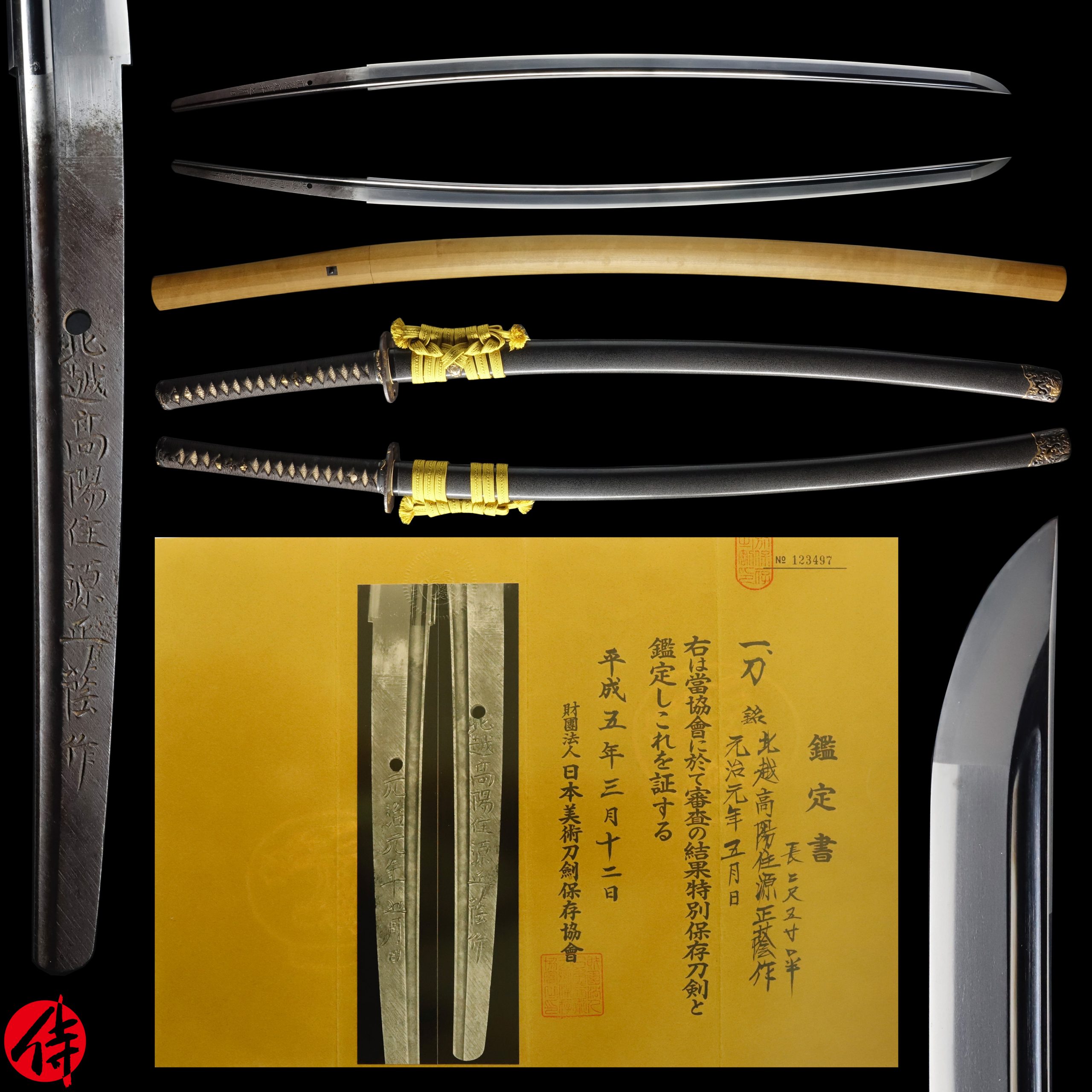
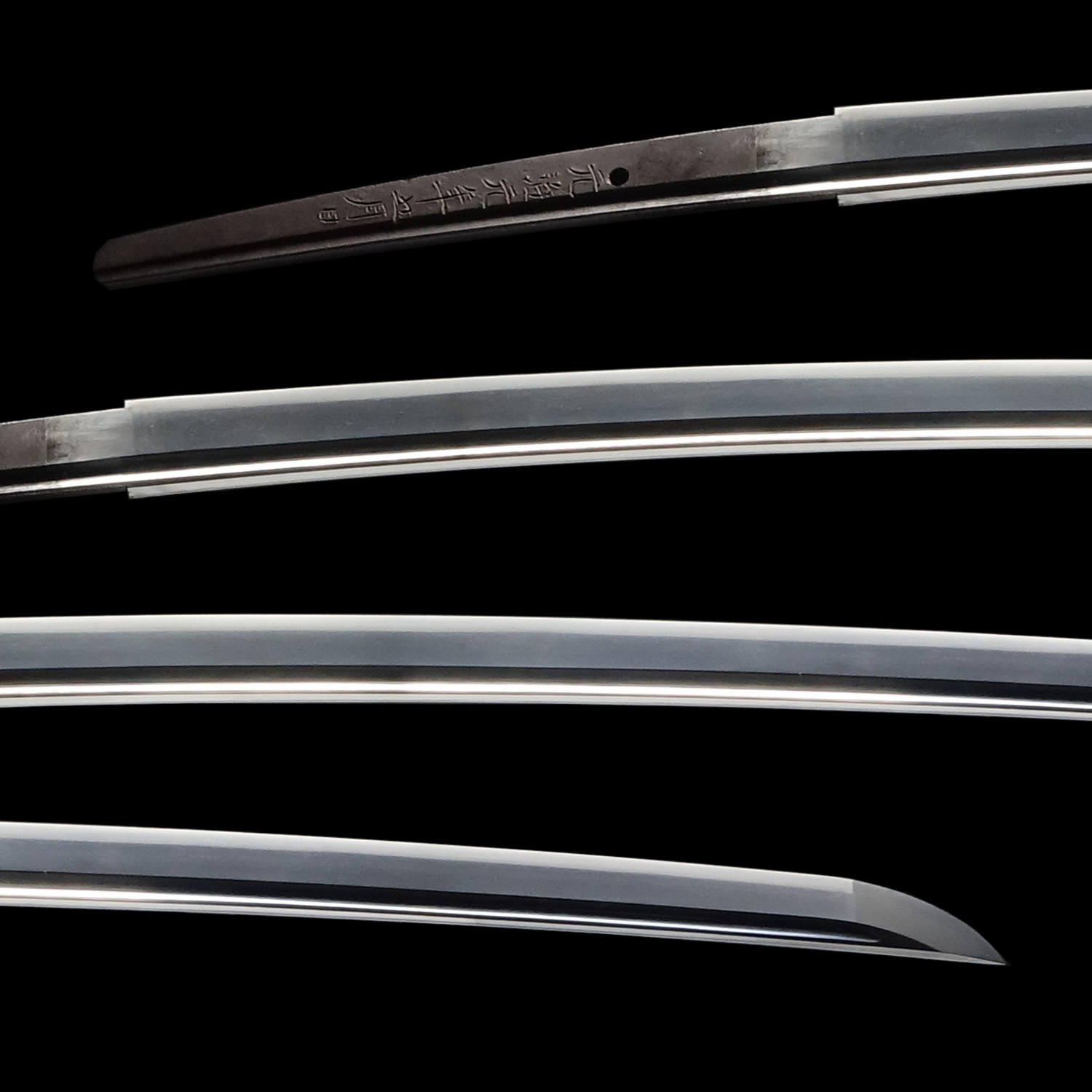
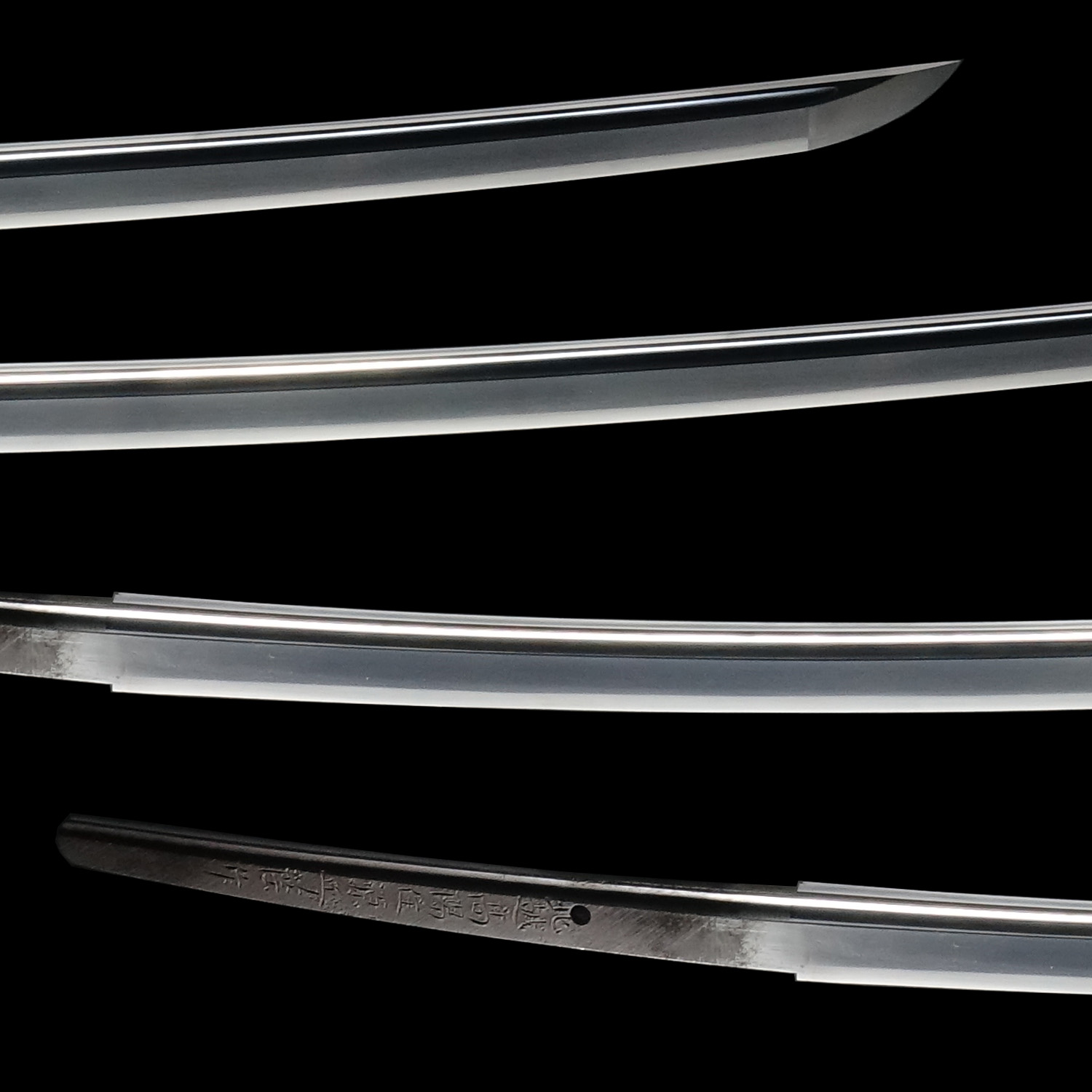
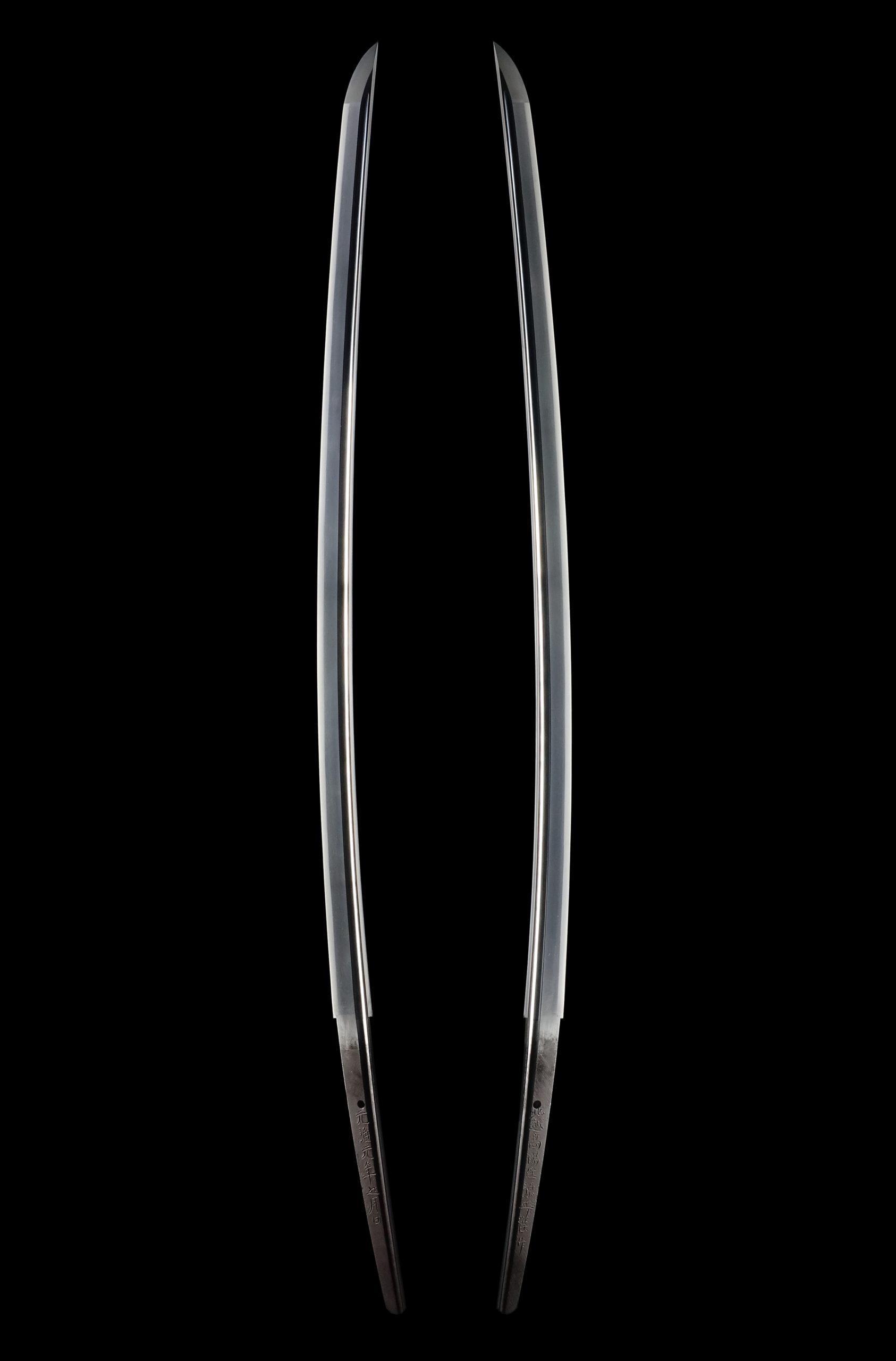
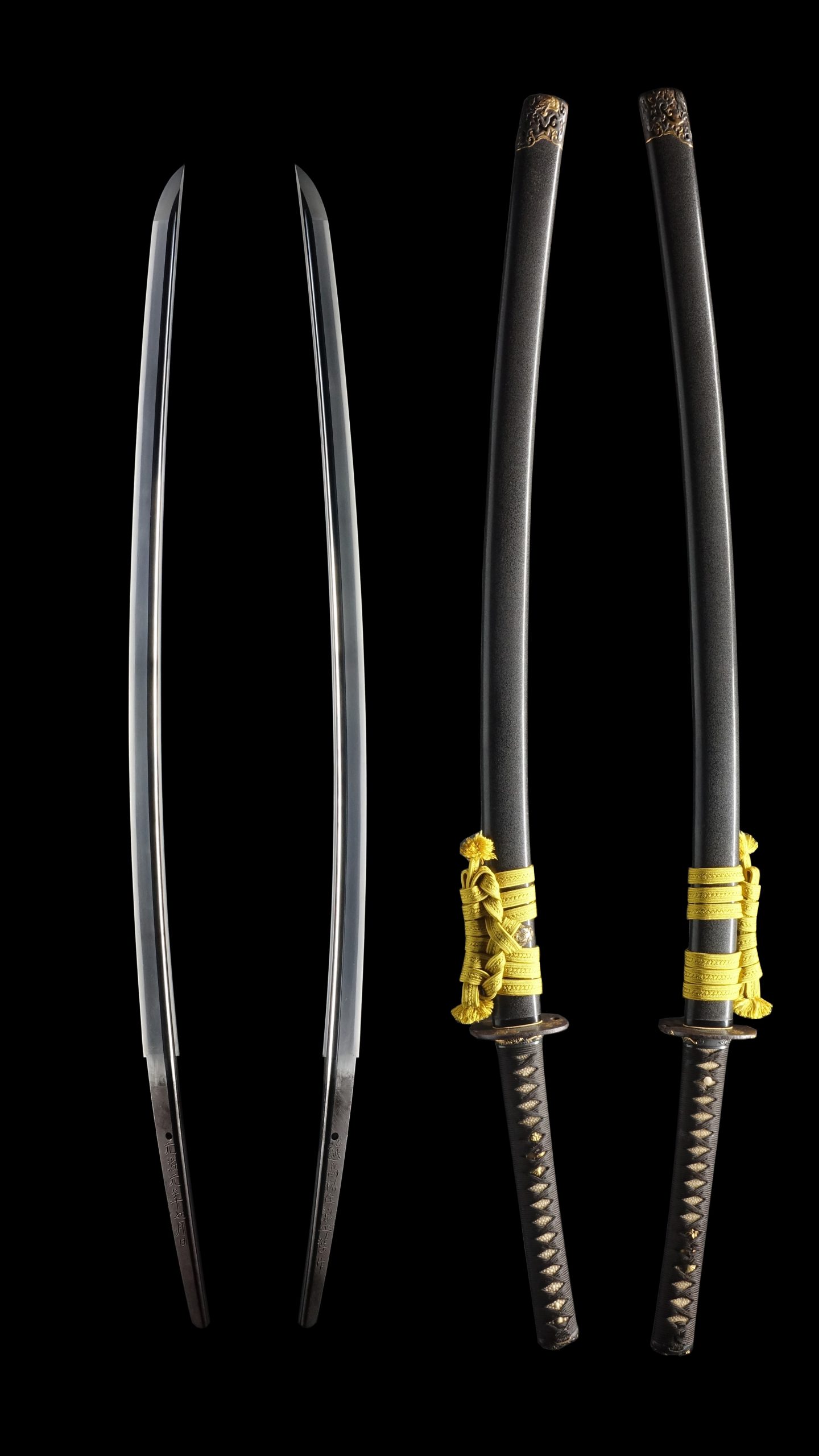
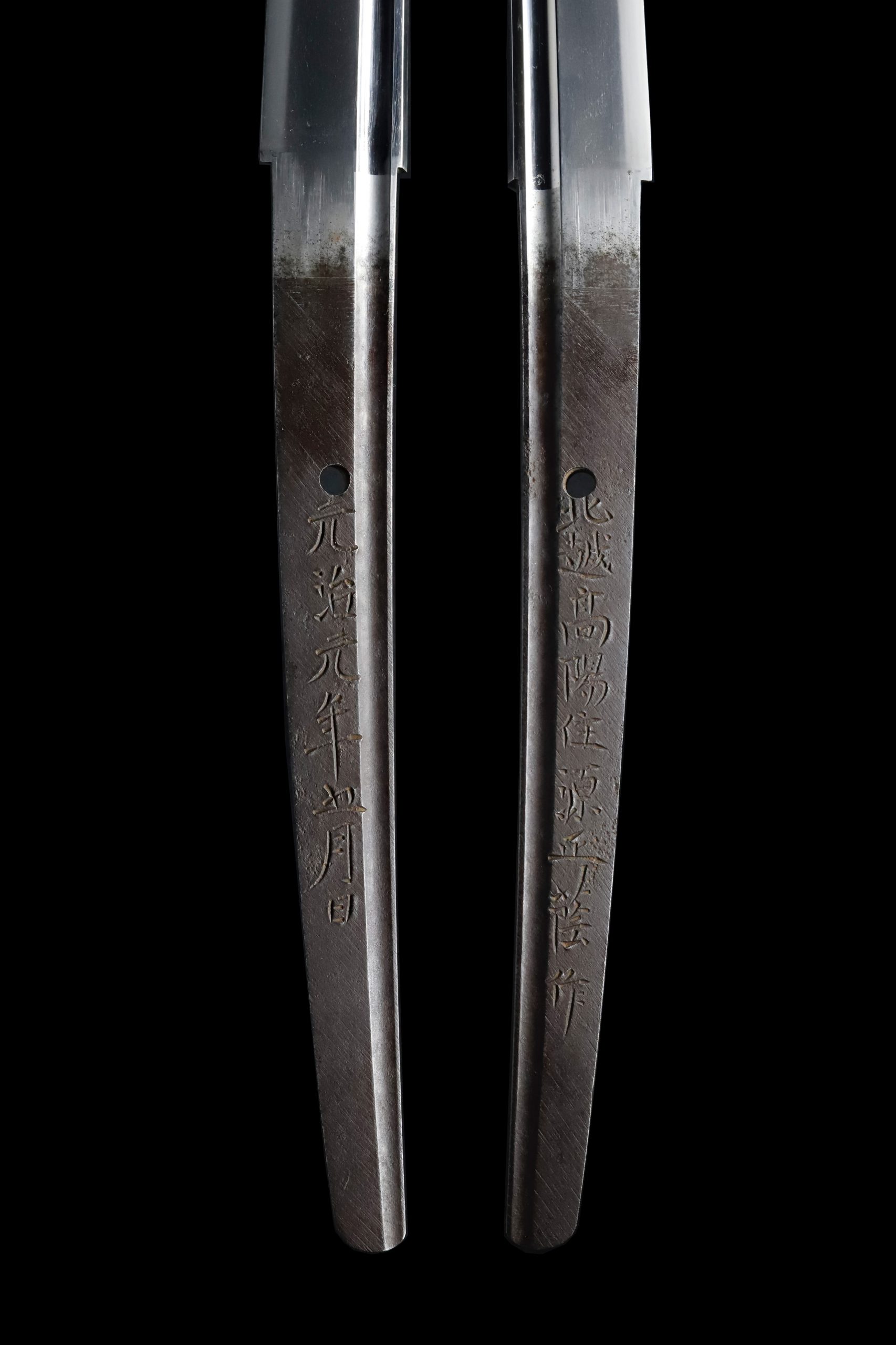
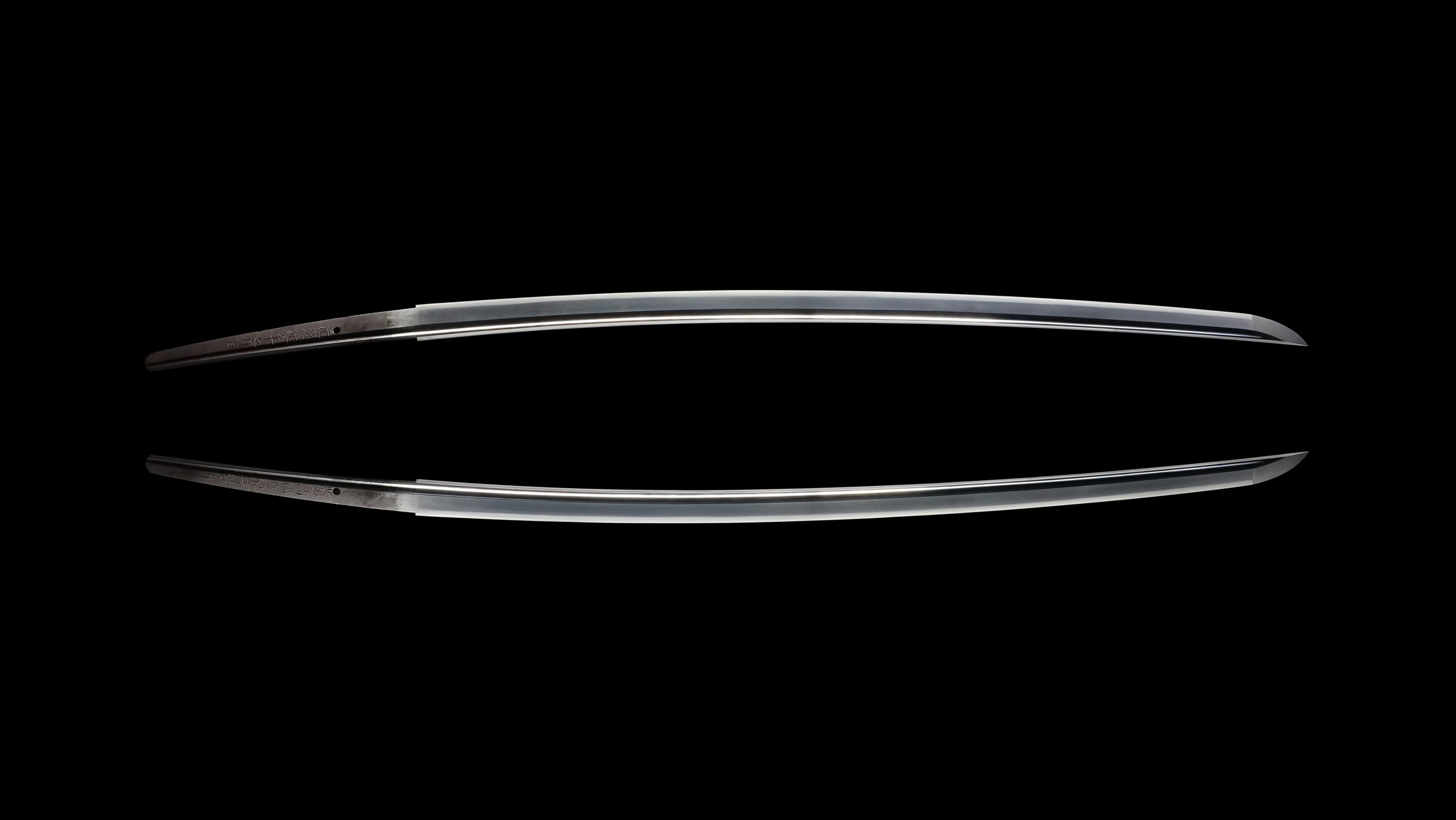
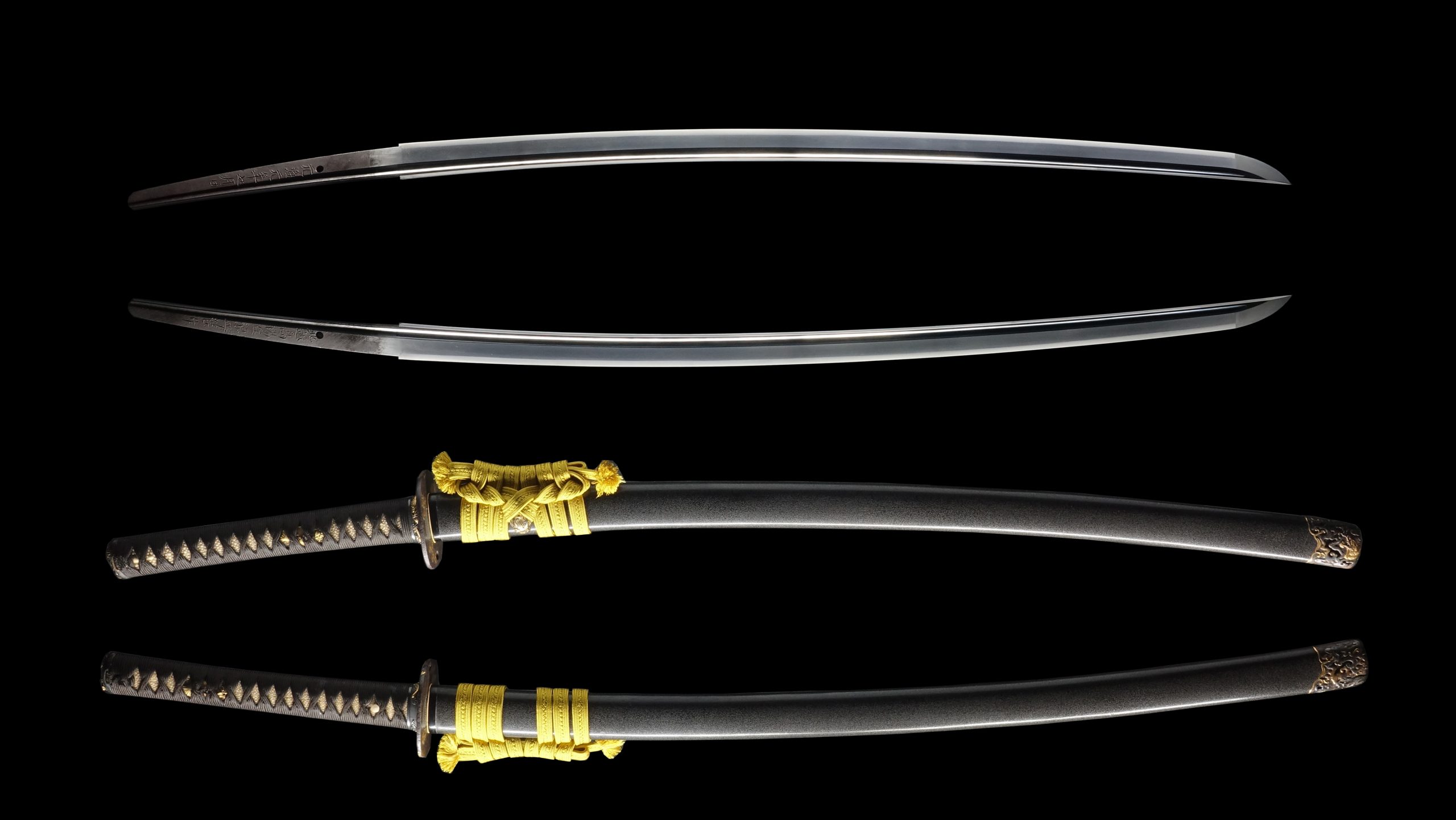
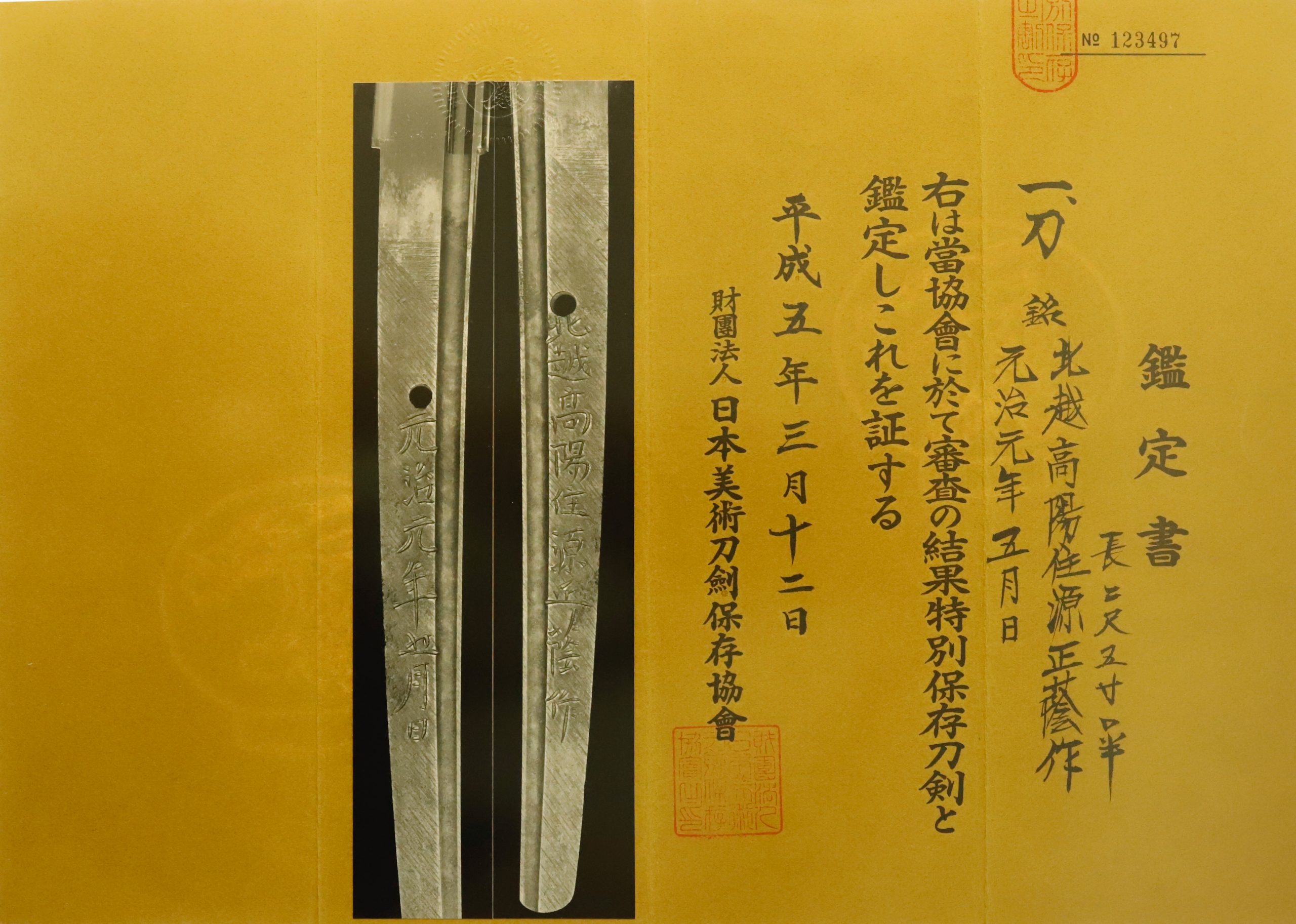
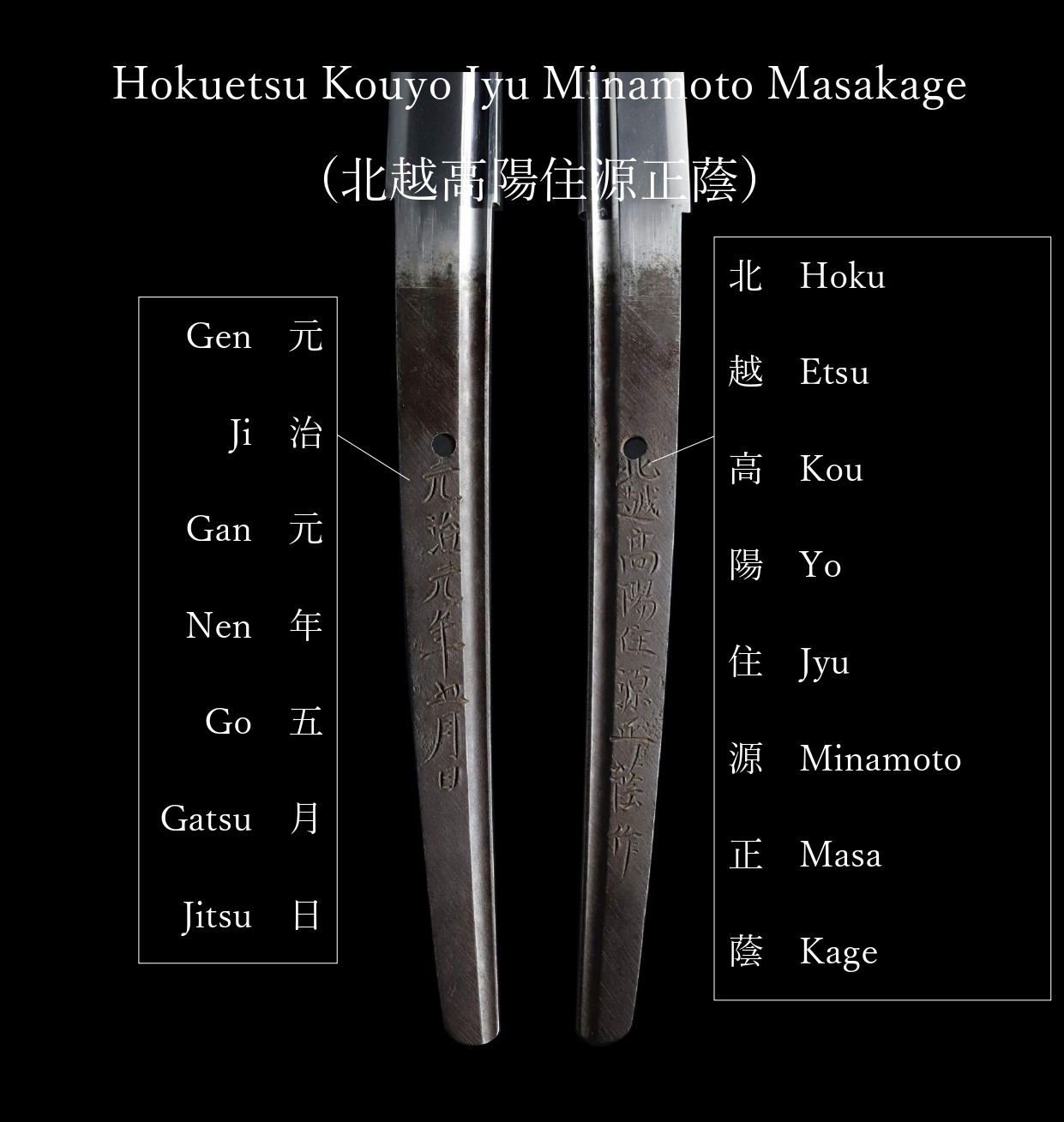
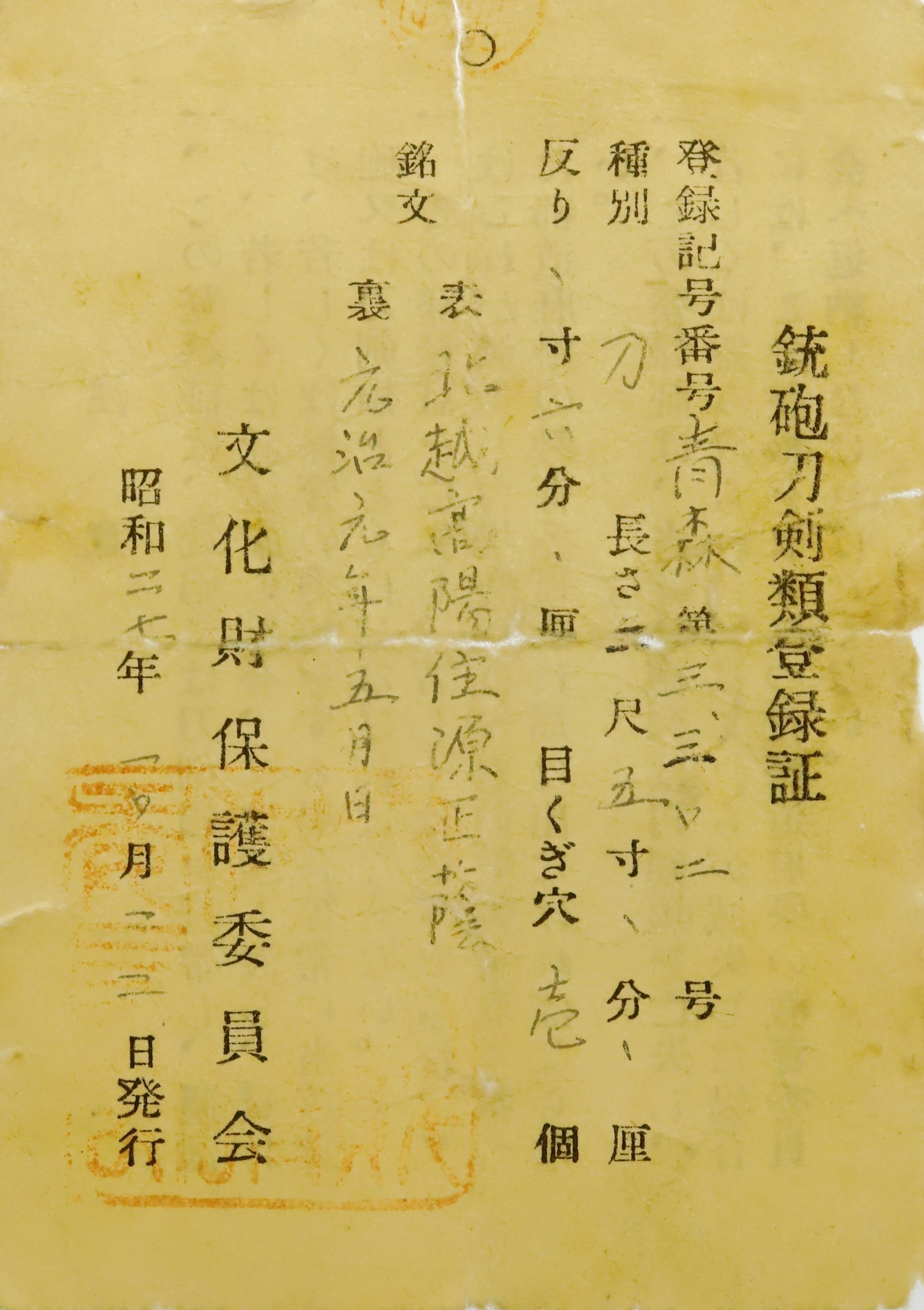
This blade was signed by Hokuetsu Kouyo Jyu Minamoto Masakage (北越高陽住源正蔭) in May, the first year of the Genji era (1864: The end of the Edo period). Hokuetsu Kouyo is the name of the province where he resided when he forged this blade. It was common for swordsmiths to sign where he lived alongside his signature.
He was born in Toyama domain in Etchu province, and his birth name was Goshima Koisuke (五島鯉介). He mainly lived in today’s Nigata prefecture in his career.
He belonged to Yamaura school, founded by Minamoto Kiyomaro (源清麿), one of the most famous swordsmiths at the end of the Edo period (mid-late 19th century). Masakage received an honorable title Gyokushinsai(玉心斎), often adding this title before his signature.
Masakage mostly learned sword-forging techniques from Minamoto Masao, another renowned swordsmith who was a member of Yamaura school and the first apprentice of Kiyomaro. Later in his career, Masakage also worked for Suishinshi Masatsugu, the first son of the second-gen Suishinshi Masahide. The first-gen Suishinshi Masahide’s fame was as nationwide as Minamoto Kiyomaro.
Soshu Den and Bizen Den are two of the five traditional Japanese sword-forging techniques called Gokaden passed down for generations. The other three are Mino DEN, Yamato Den, and Yamashiro DEN. It is said that Masakage mastered Soshu DEN by being an apprentice of Minamoto Masao and Bizen DEN from Suishinshi Masatsugu.
The Background History
Japan enjoyed a relatively peaceful time from the early Edo period to the mid-Edo period(the 1600s-1760s) because of the stable economy and the powerful government run by Tokugawa Shogun. Samurai didn’t have many opportunities to utilize his Katana sword in public or on battlefields during this time. Thus, they carried their swords more as a symbol of their social status. The demand for weapons decreased accordingly compared to the previous Warring state period called Sengoku Jidai. (1467-1600)
However, toward the end of the Edo period(1764-1876), the Japanese sword’s role changed dramatically. With the poverty spreading in Japan, there were so many riots initiated by the civilians. Japanese sword started to play an essential role in maintaining public safety.
Pressure from foreign countries to open Japanese borders also forced Samurai to order strong-looking swords to survive this tumultuous time. We believe many swordsmiths, including Masakage, made great efforts to forge high-quality, practical blades for their masters to prepare for battles. This blade has strong looking and must have been practical to use in that demanding time.
There was a civil war between Tokugawa’s Shogunate government and the new Meiji imperial government at the end of the Edo period. That means the original owner of this Katana might have seen the moment when Samurai’s life changed forever. After this battle, Tokugawa Shogunate was ousted, and the imperial government gained control.
It is appraised as a Tokubetsu Hozon Token(特別保存刀剣) issued by NBTHK(Nihon Bijutsu Touken Hozon Kyokai:日本美術刀剣保存協会).
Fuchi-Kashira
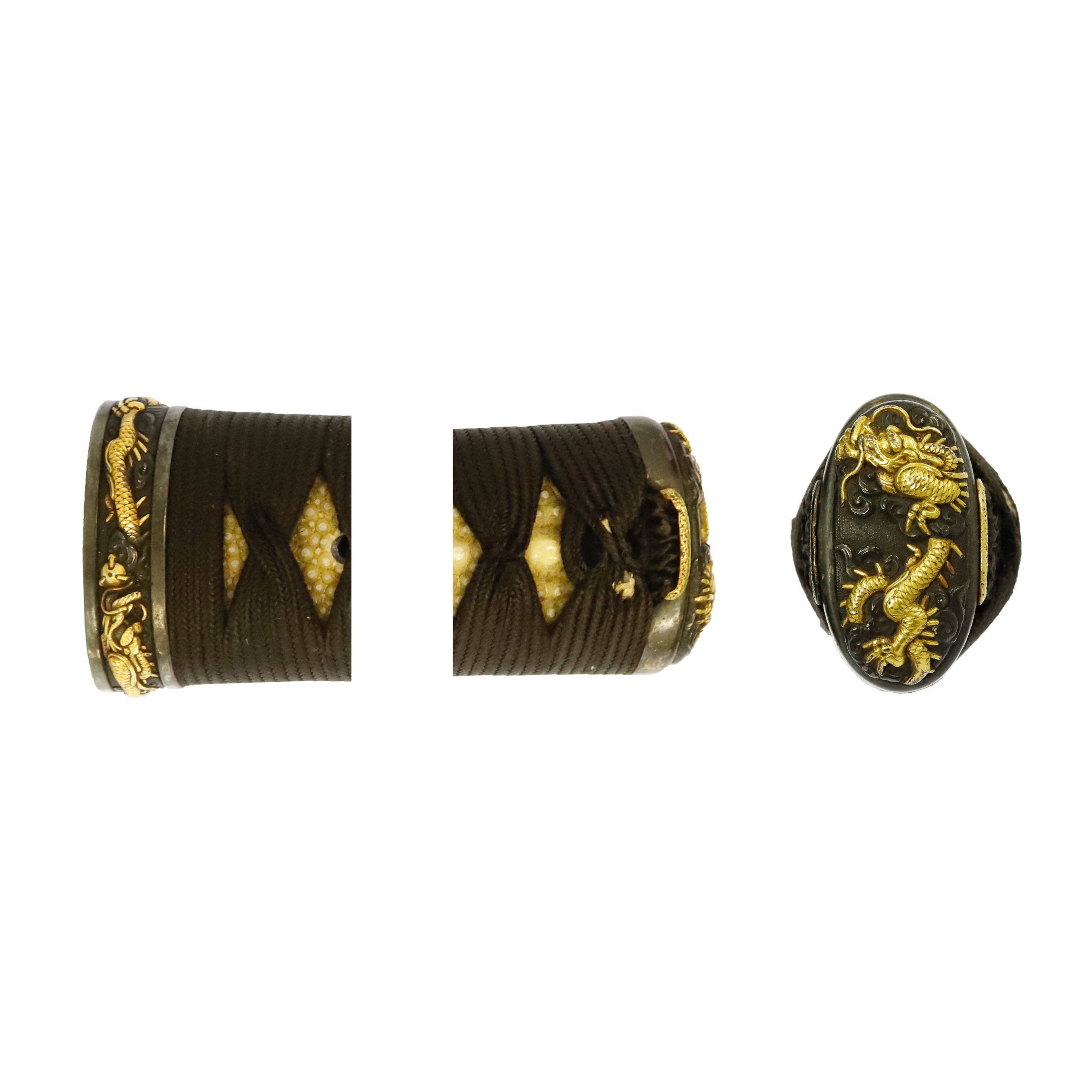
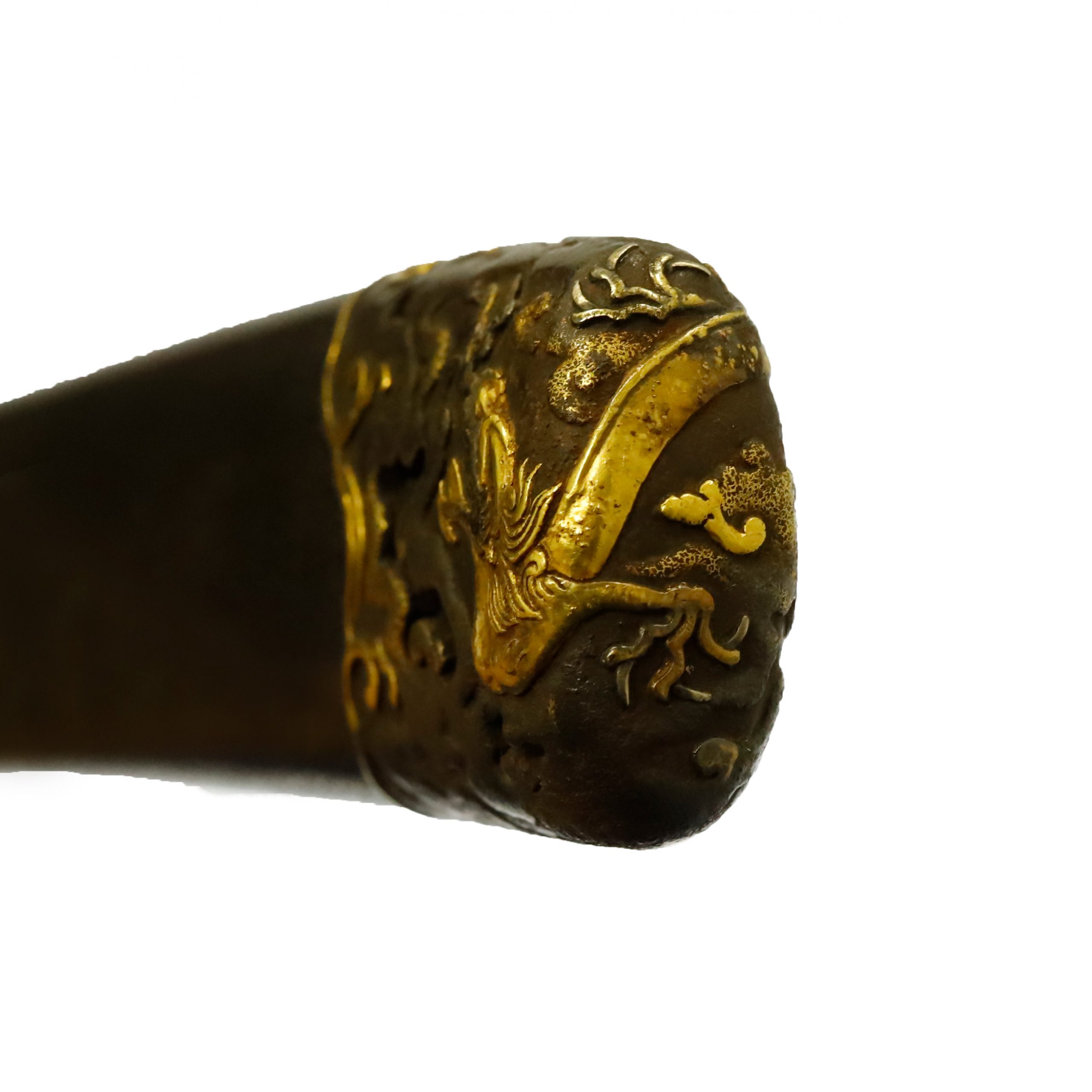
Dragons are designed for this Fuchi Kashira. Golden paint is applied to dragons and adds decorativeness to this work. Clouds are also engraved and cover these dragons’ bodies. If you focus on the Fuchi part, you will find that a dragon brings a ball-shaped object in its hand. It is the Nyoi Houju (如意宝珠, Cintāmaṇi); a fantasy jewel that fulfills any desire and gives out treasure, clothes, food, and drinks. Moreover, it heals illness and suffering, removes evils, purifies muddy water, and prevents disasters. It is said this magical item is taken from the brain of the dragon king.
Initially, the dragon was an imaginary creature found in ancient foreign traditions or myths. Furthermore, it is regarded as a symbolic beast of auspicious signs. Its body is likened to nine animals: antlers are deer, the head is a camel, eyes are demons, the neck is a snake, belly is the Mizuchi (蛟, a mythical animal in Japan that looks like a snake and has a horn and four legs), scales are fish, claws are falcons, palms are tigers, and ears are cows. It was thought that the dragon would reign at the top of all animals because of its odd-looking appearance.
Tsuka and Menuki
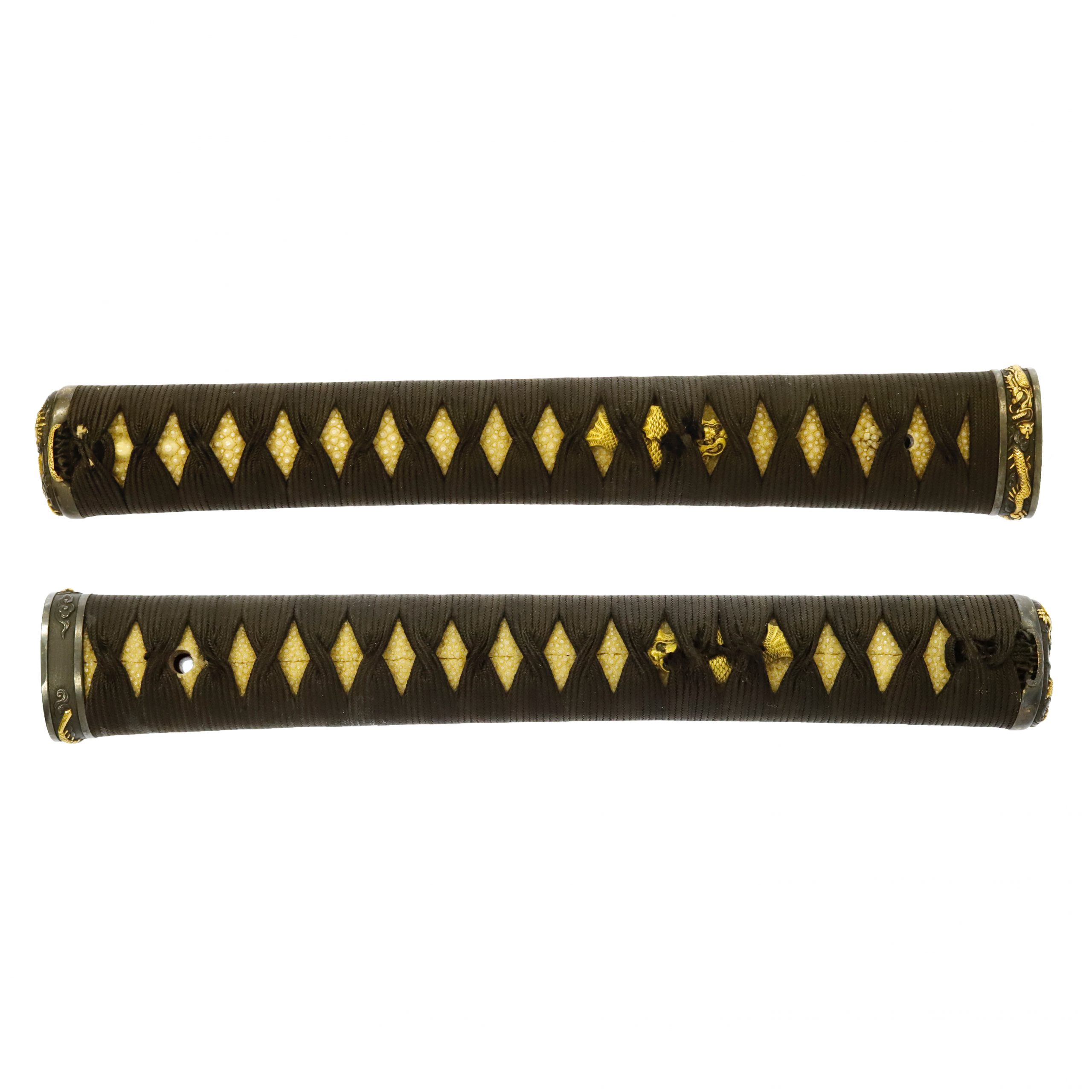
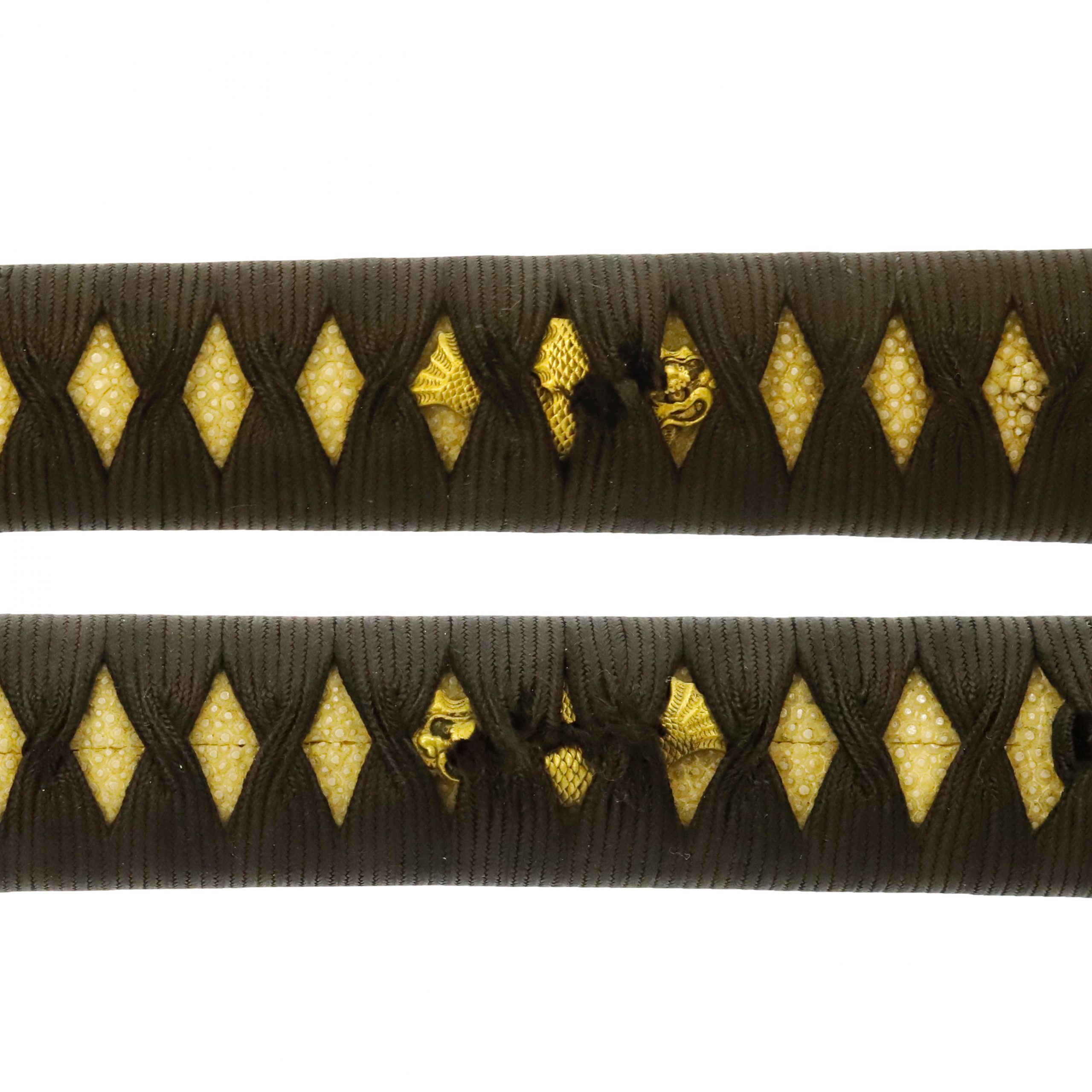
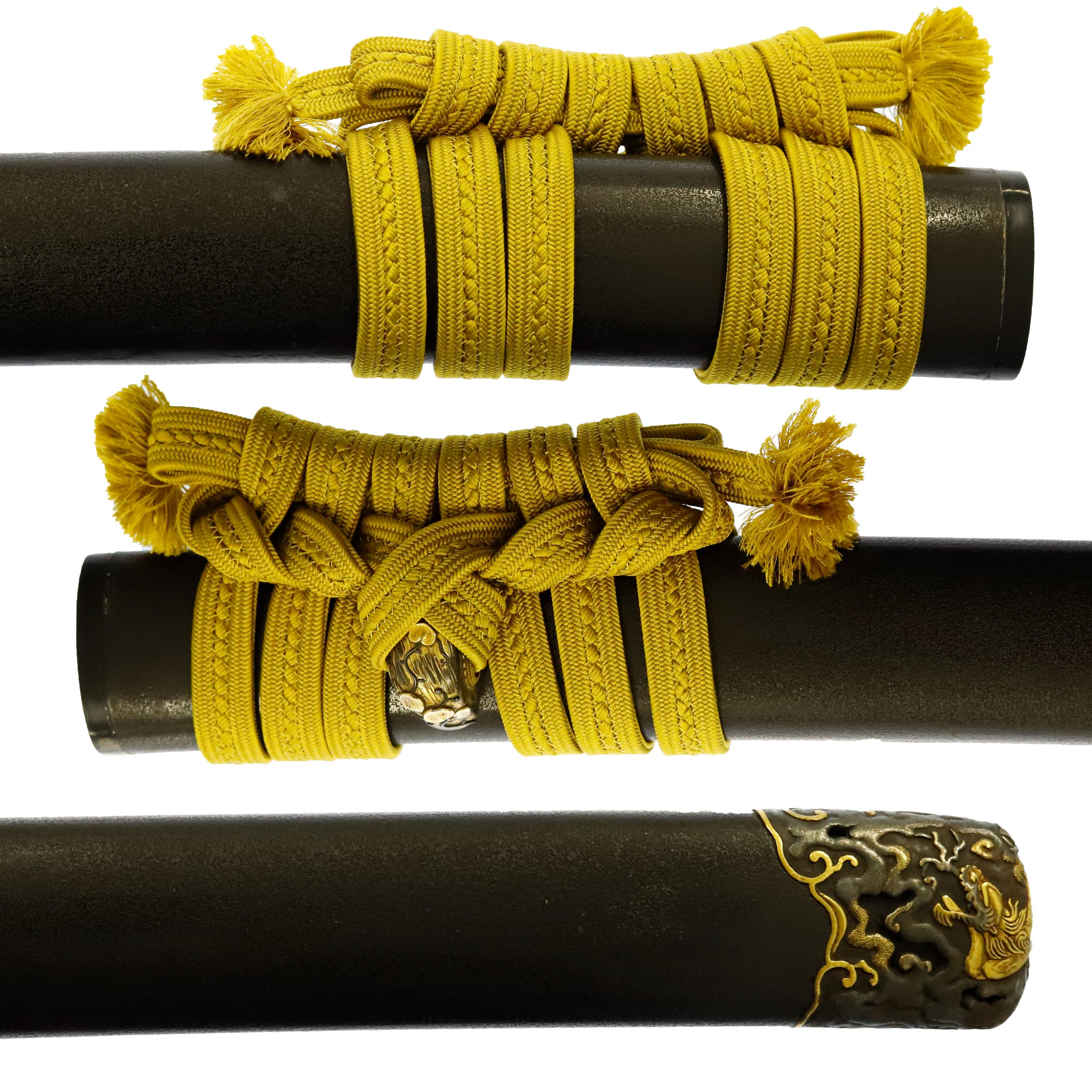
We could assume that a kind of fish is the motif of this Menuki. We think it is probably the Shachihoko (しゃちほこ). The Shachihoko is a decoration used for the roofs of castle towers and watchtowers. The Shachi (鯱) is an imaginary creature, and it is said it has a dragon or tiger’s head, and its body is a fish. Its tail bends toward the sky, and people associate its figure with the Hoko (鉾, an ancient form of Japanese long weapon). That is why this animal was named the Shachihoko. According to a theory, the Shachihoko would spit water out of its mouth when a building catches fire. Therefore, it has been put on the roof of many castles and temples in Japan. Since the fire was a big worry for wooden structures, this Menuki’s maker might have prayed for safety by applying such a design.
Tsuba and Habaki
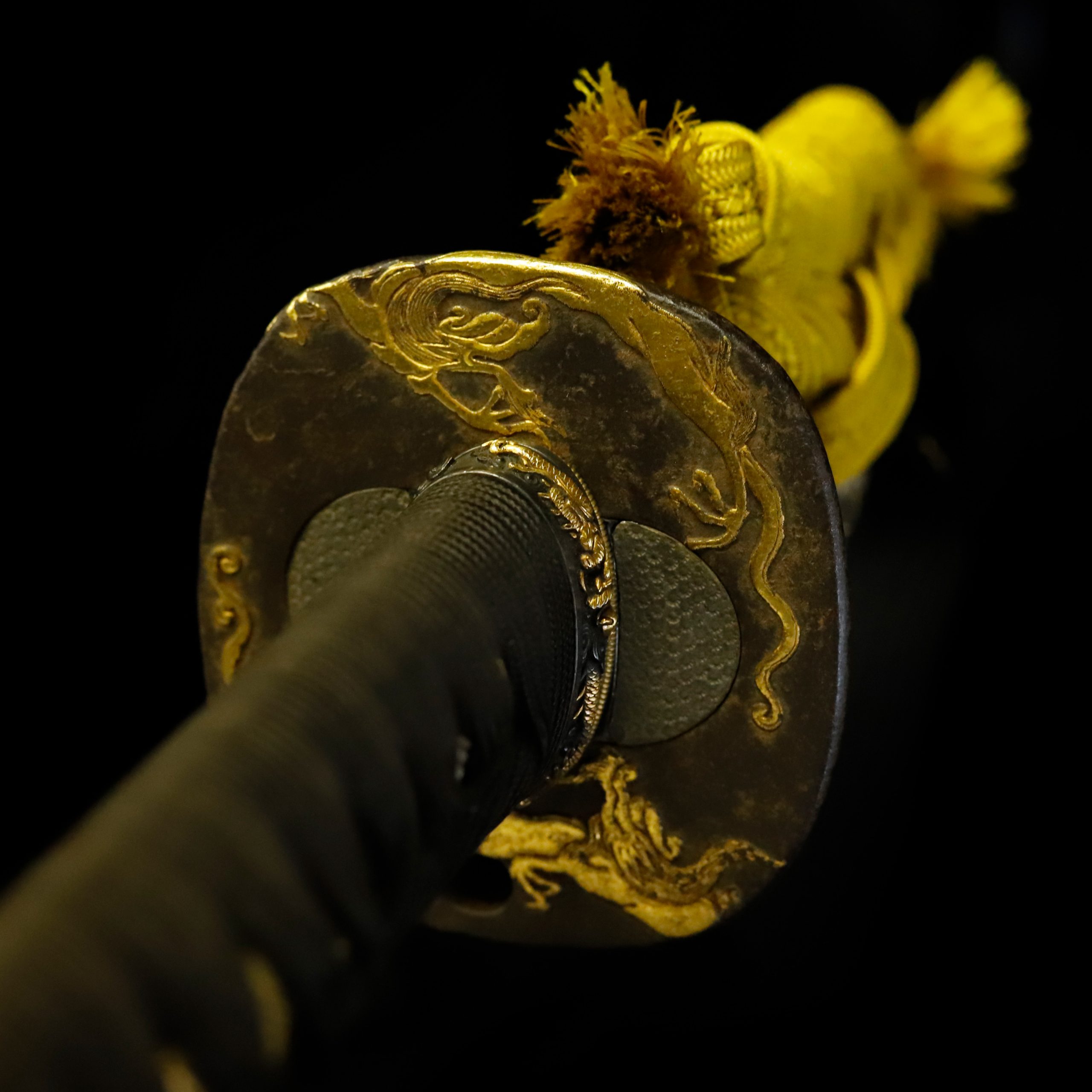
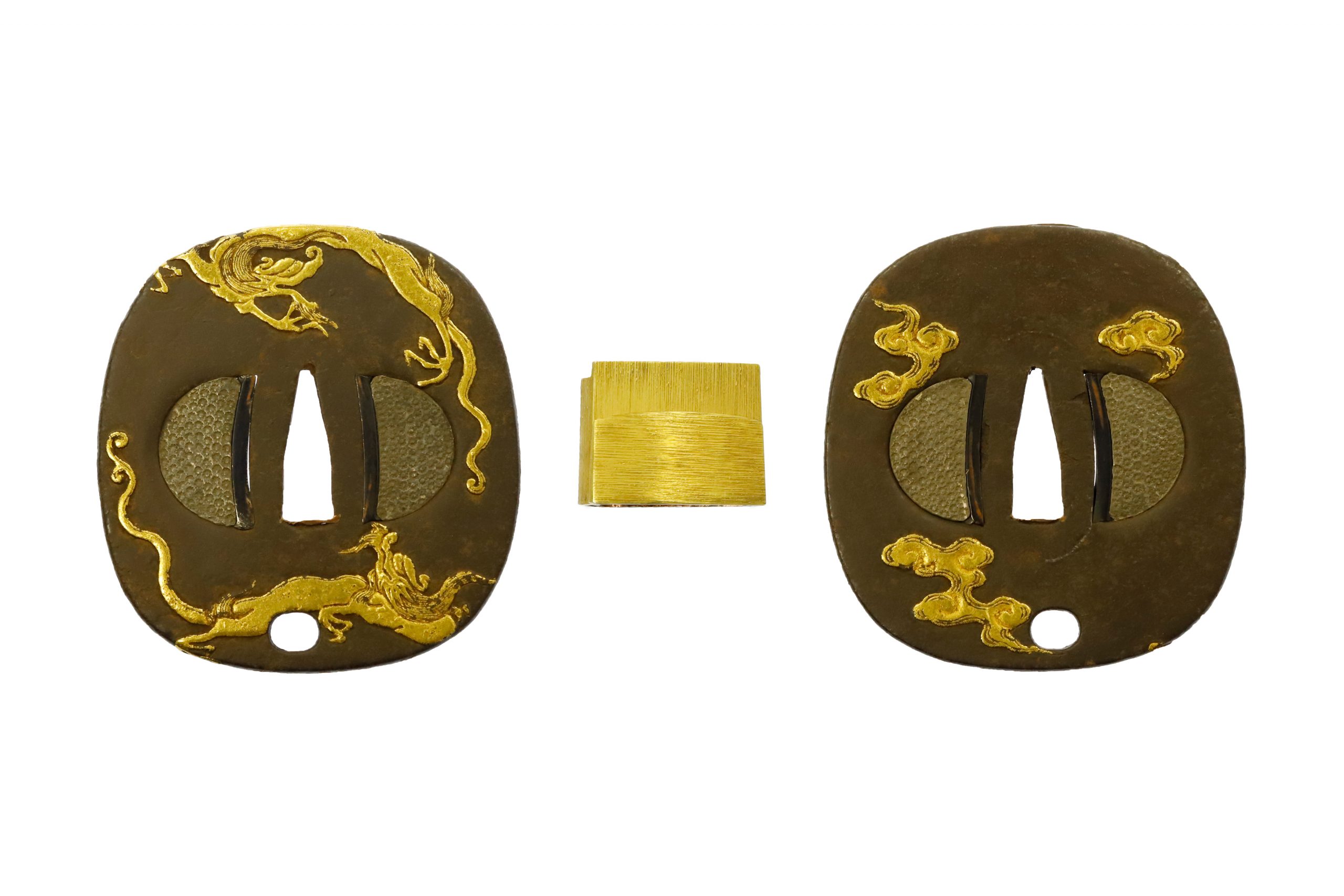
Same as the Fuchi Kashira, this Tsuba is also decorated with dragon and cloud designs. This combination is often seen in sword mountings. We think a possibility that it is related to religion in Japan. There is a belief that worships the dragon as a water god. Since rice cultivation has flourished in this country, water is always an essential resource. Also, clouds bring rain and snow, and their movements significantly affect the weather of the day. Due to its supernatural power, a theory says that gods, spirits, and dragons dwell in the clouds. Therefore, we assume that the dragon motif has been familiar to Japanese people since long ago.
Authentication Paper
They authenticated the blade on March 12th in the 5th year of Heisei (1993). They appraised it as Tokubetsu Hozon Touken, the blade especially worth preserving for Japanese society.

 NihontoWatch