 NihontoWatchNihontoWatch
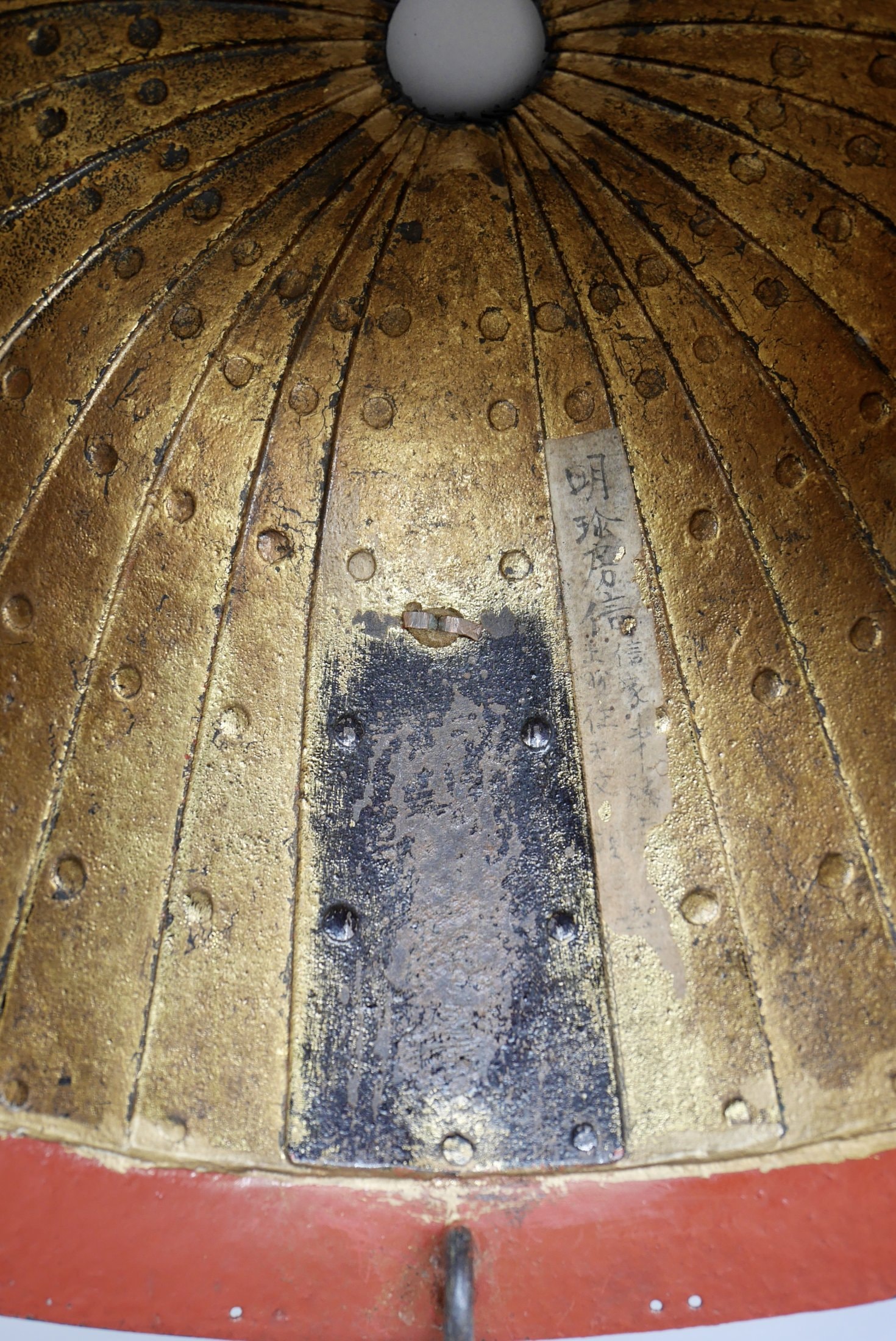
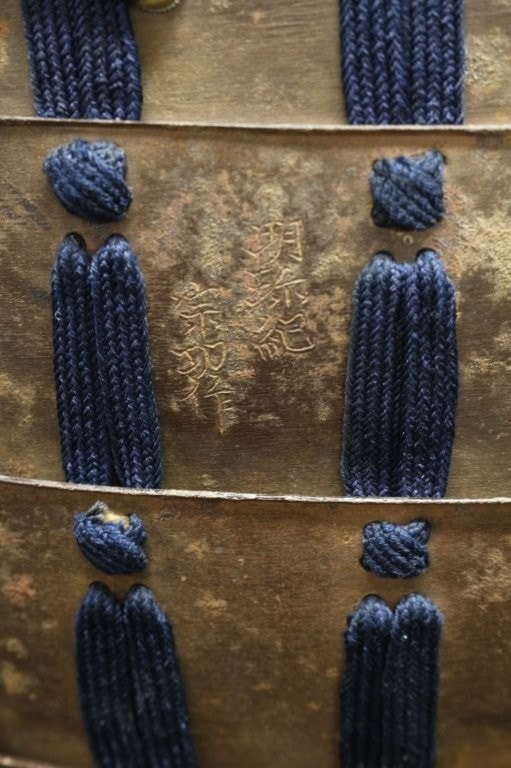
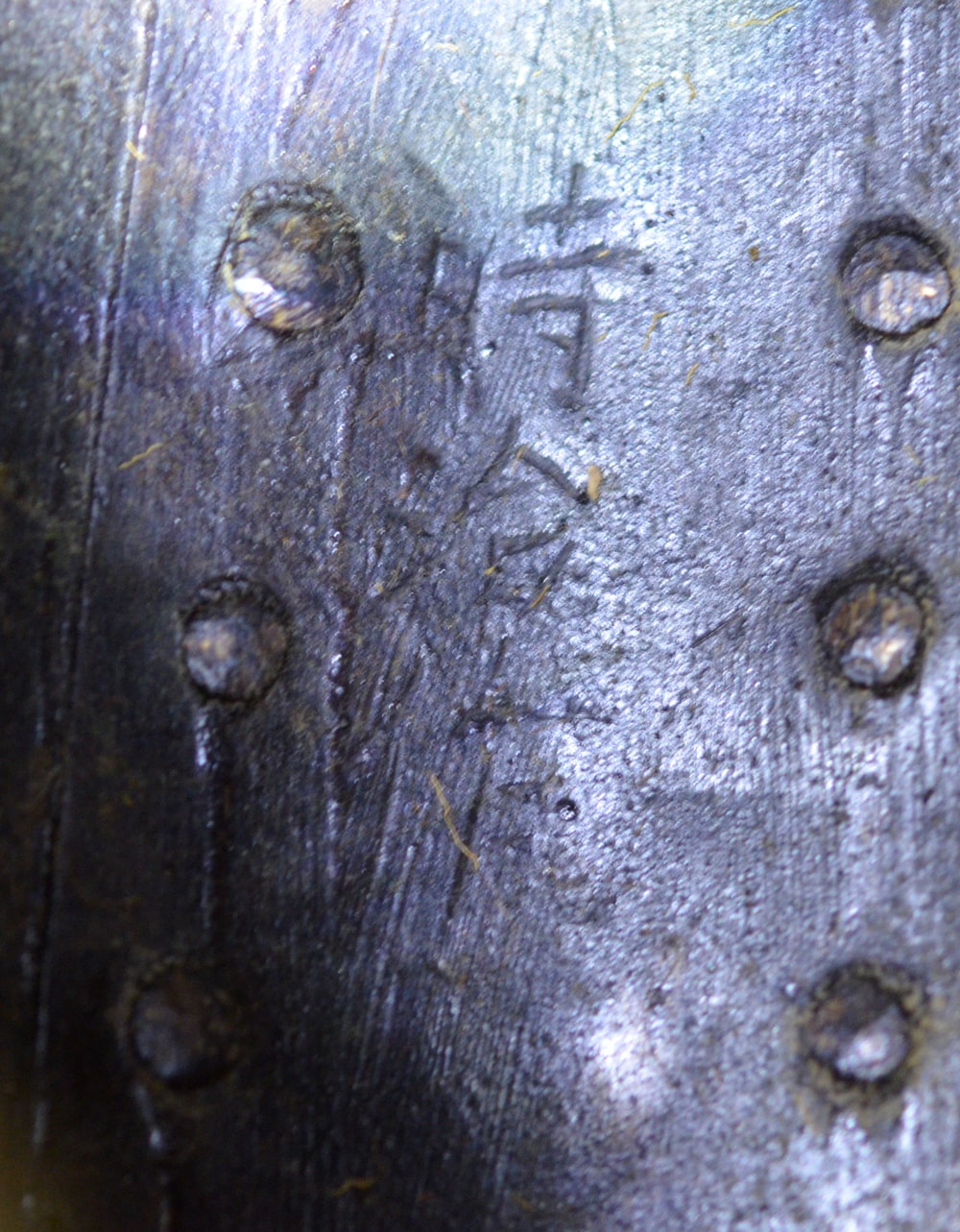
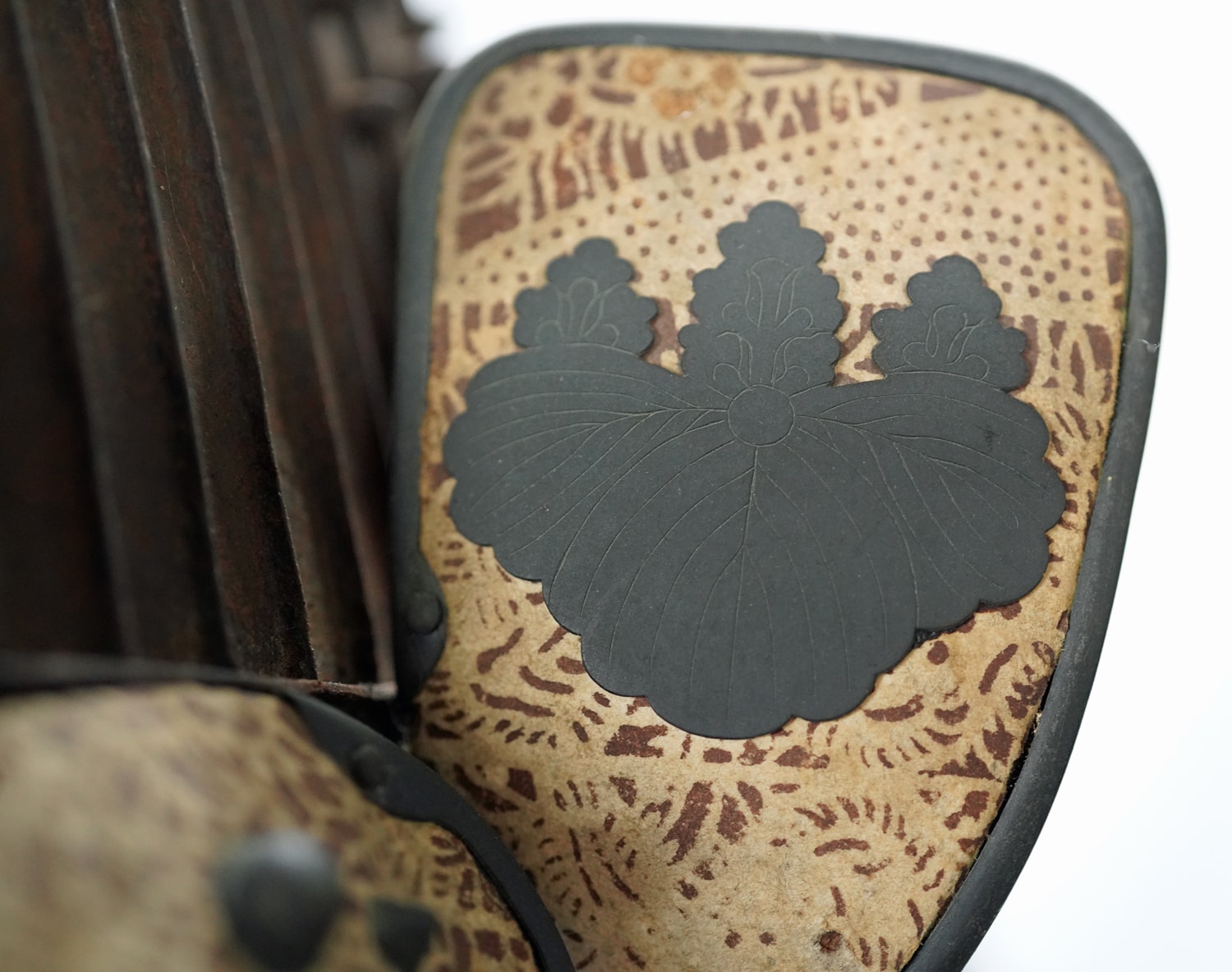
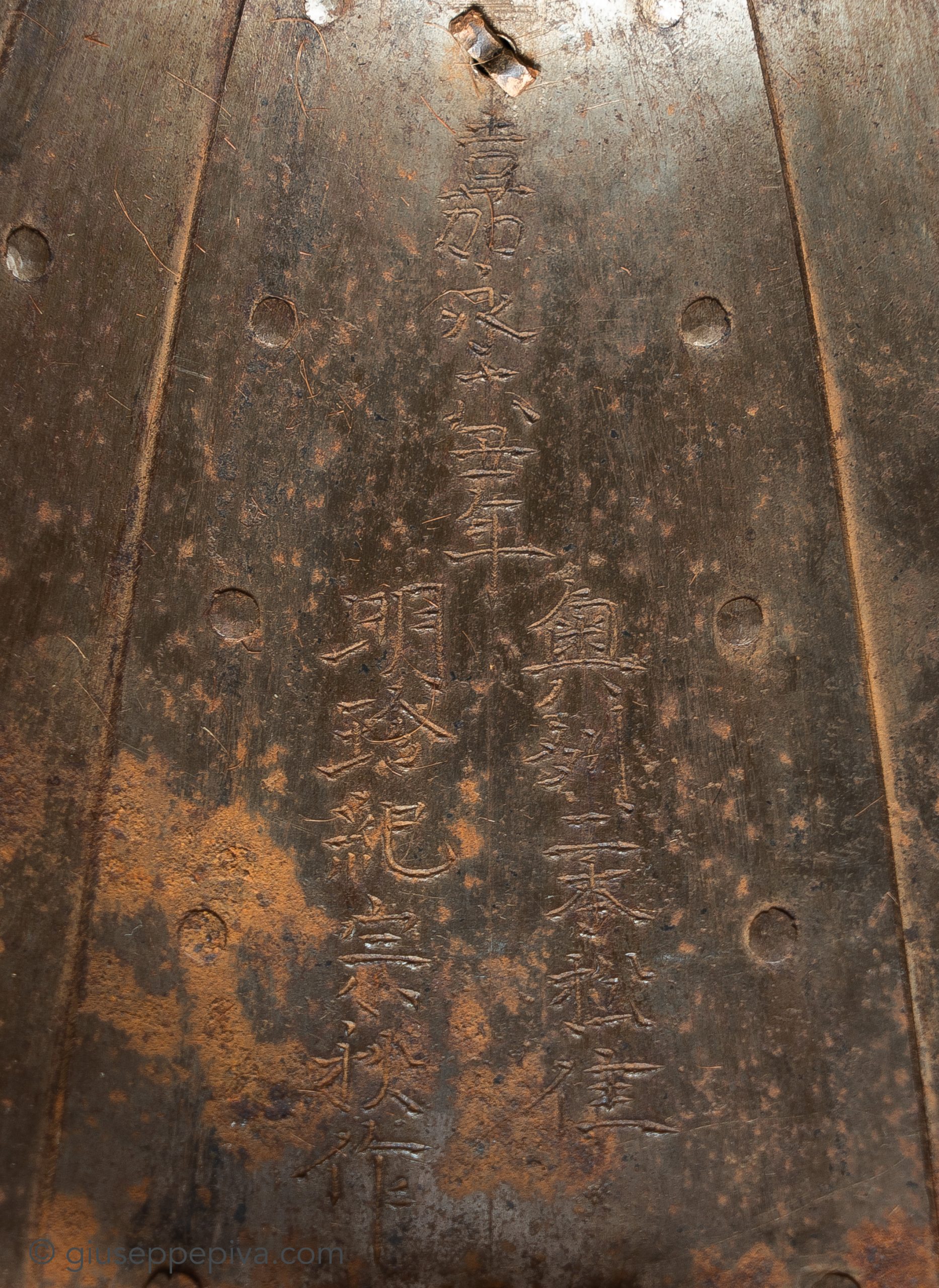
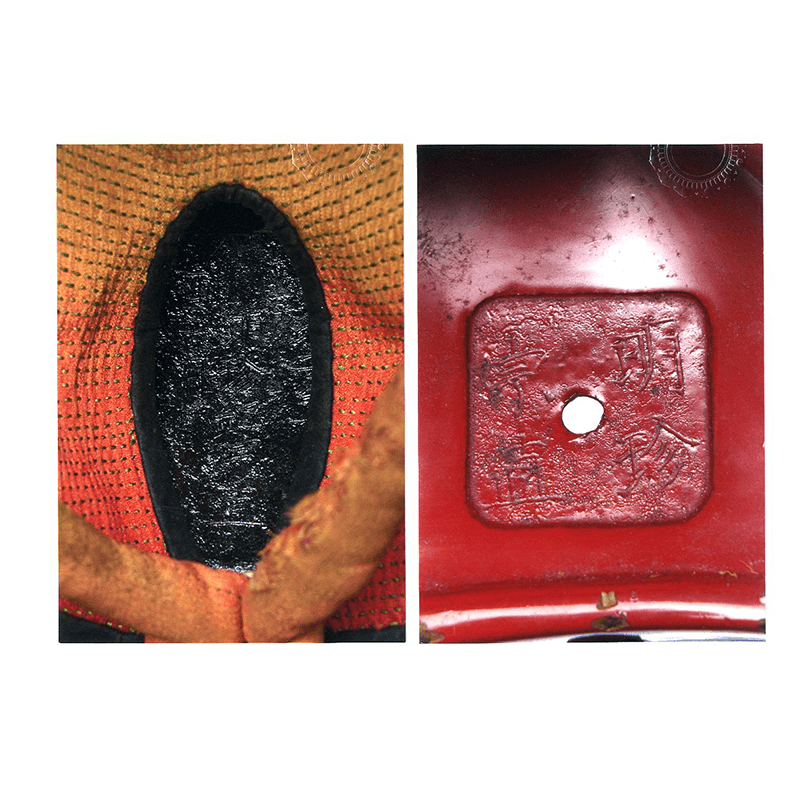
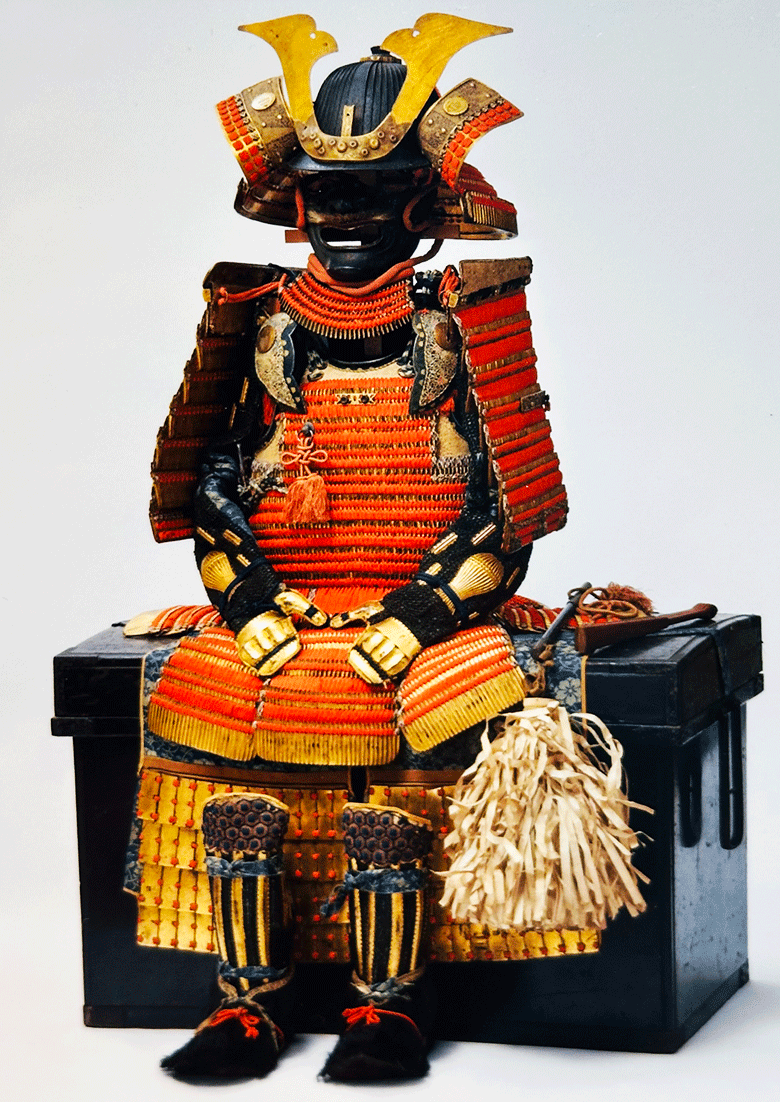
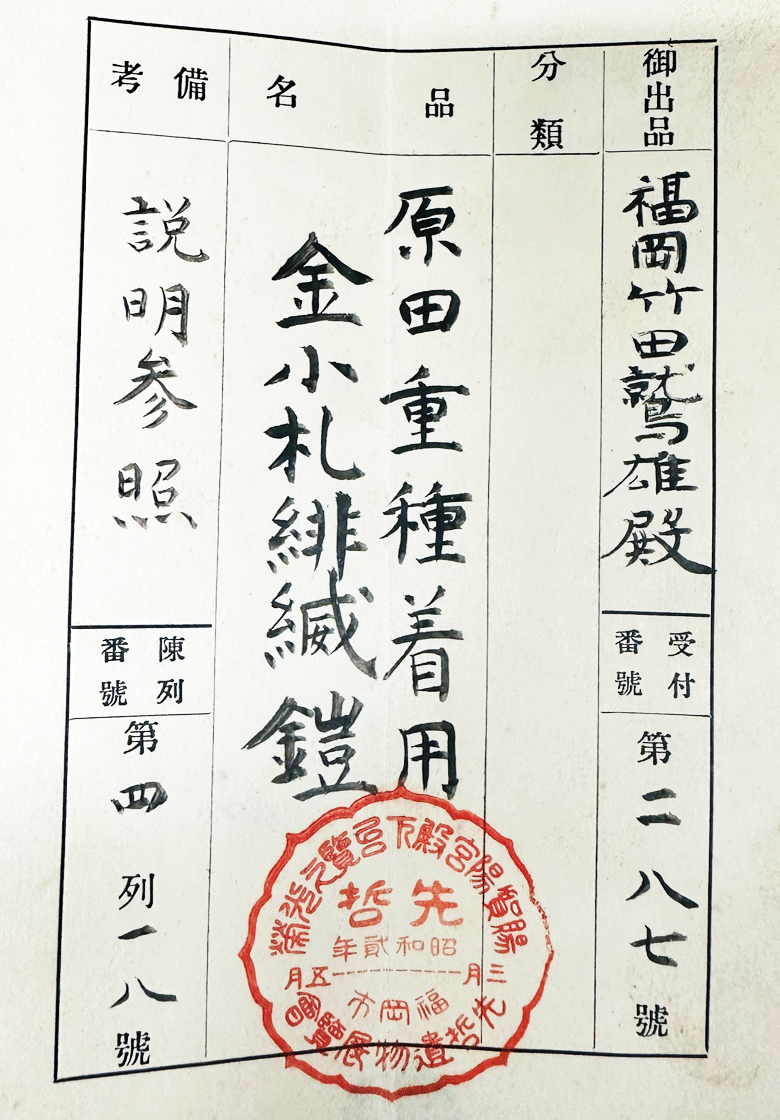
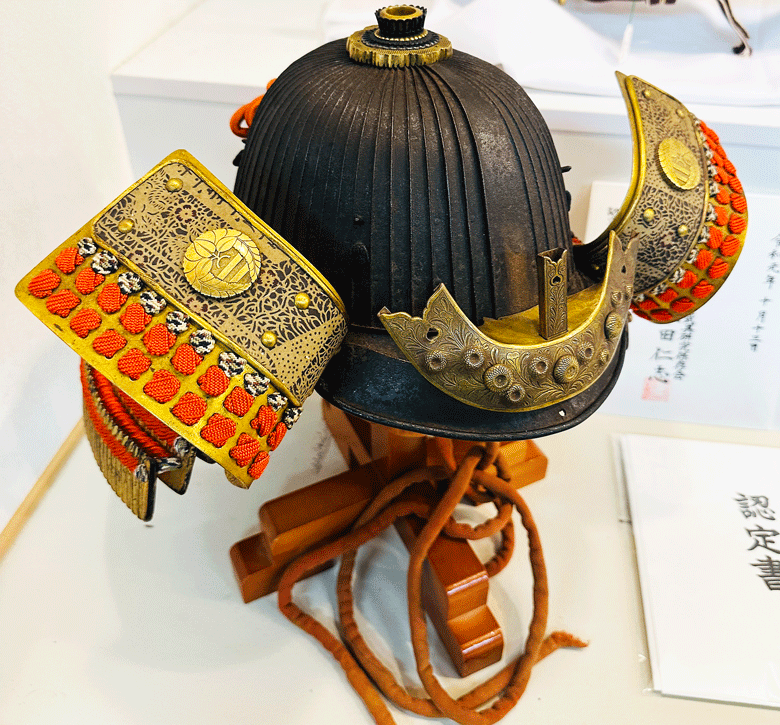
Kabuto (Late Muromachi) mei: Yoshihisa saku, Tenbun 3 nen [blank] gatsu hi This is a denrai of the Harada family (the main lineage of the Okura clan), who were Sengoku period busho and lords of Koso-yama Castle in Chikuzen Province. The wearer was Harada Shigetane, who became a retainer of the Kuroda family; he was the great-grandson of Tanemasu, the uncle of the 76th Harada family head, Harada Takanane. Furthermore, Tanemasu's son, Fujitane, successfully defended Koso Castle against the famously renowned generals Betsugi Dosetsu, Takahashi Joun, and Shiga Michiteru during the Second Battle of Ikino-matsubara in Tensho 7. This is a wonderful gusoku used by a family of truly high military renown. The kabuto of this gusoku bears the precious mei of "Tenbun 3 nen" and "Yoshihisa saku," commonly referred to as "Joshu Myochin," indicating it is a kabuto manufactured by an armorer of the Myochin school who resided near Fuchu in Hitachi Province (present-day Ishioka City, Ibaraki Prefecture). The origin of Joshu Myochin began when armorers from Kamakura moved to this region, presumably anticipating demand from the Satake, Edo, and Oda clans of Hitachi Province. Around the end of the Muromachi period, it was an era where the Daijo clan in Hitachi Fuchu and the Edo clan in Mito competed for power, while the Satake clan in Hitachi Ota and the Sugaya clan (retainers of the Oda clan) in Tsuchiura watched for an opportunity to seize the top position. However, when Satake Yoshinobu rose to power after siding with Toyotomi Hideyoshi during the Odawara Campaign in Tensho 18 (1590), Fuchu, including Mito, became the territory of the Satake clan. Consequently, the Joshu Myochin produced many works under the patronage of the Satake clan. The style of Joshu Myochin lies above all in the quality of the kitae; the shape of the hachi is elegant with a rounded teppen, the sujidate are high and powerful, and the mabizashi is made of the same iron, projecting slightly forward and primarily featuring a haraidate. Overall, the high quality of the deki is reflected in the excellent tetsu-aji, making it truly a world-class masterpiece.
NihontoWatchOffered by Hyozaemon
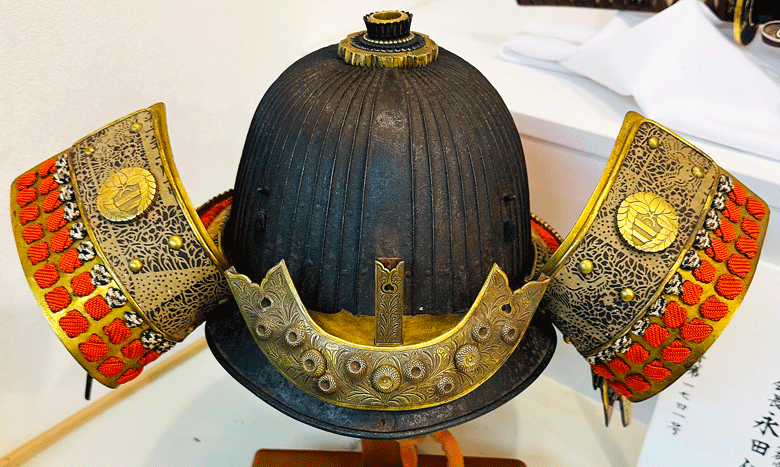
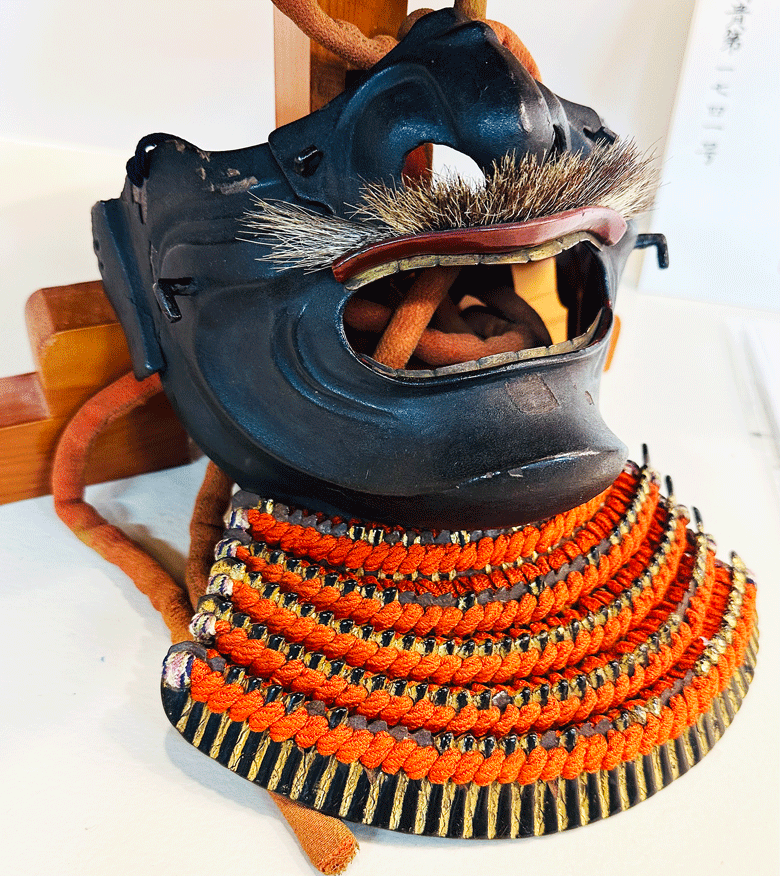
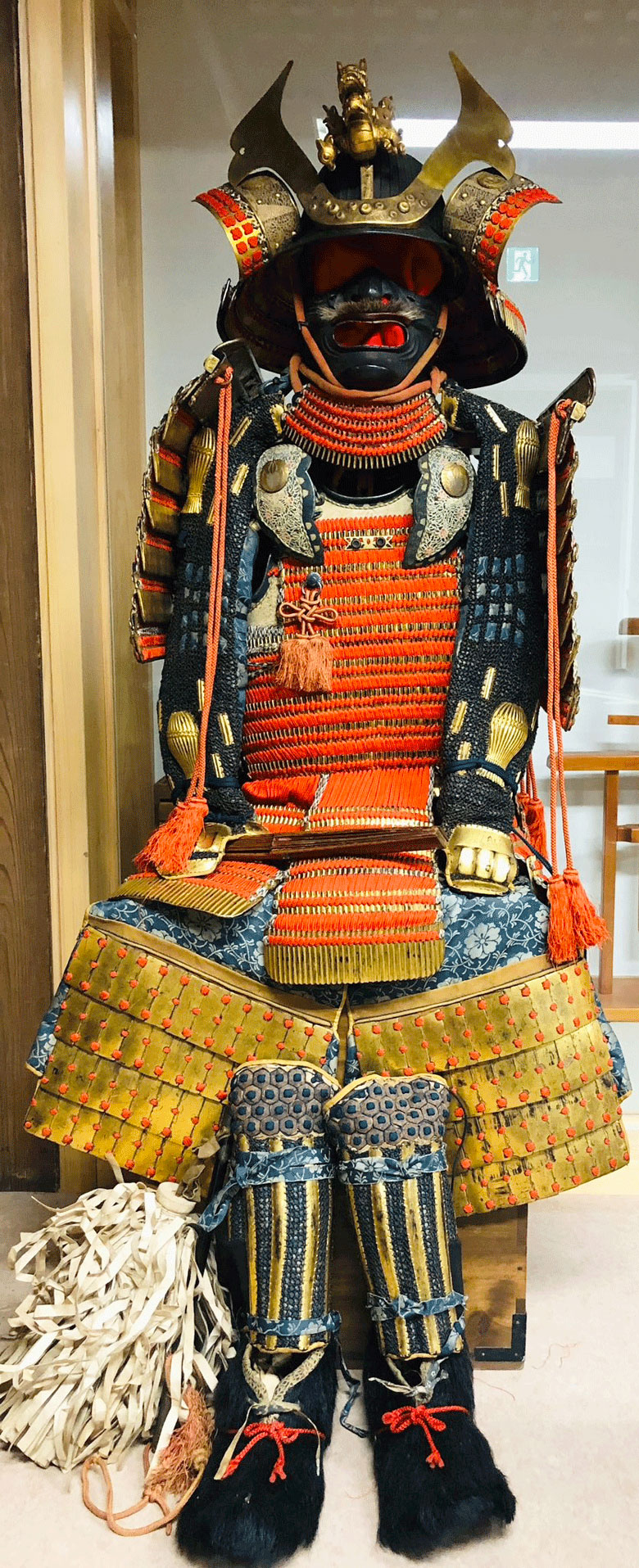
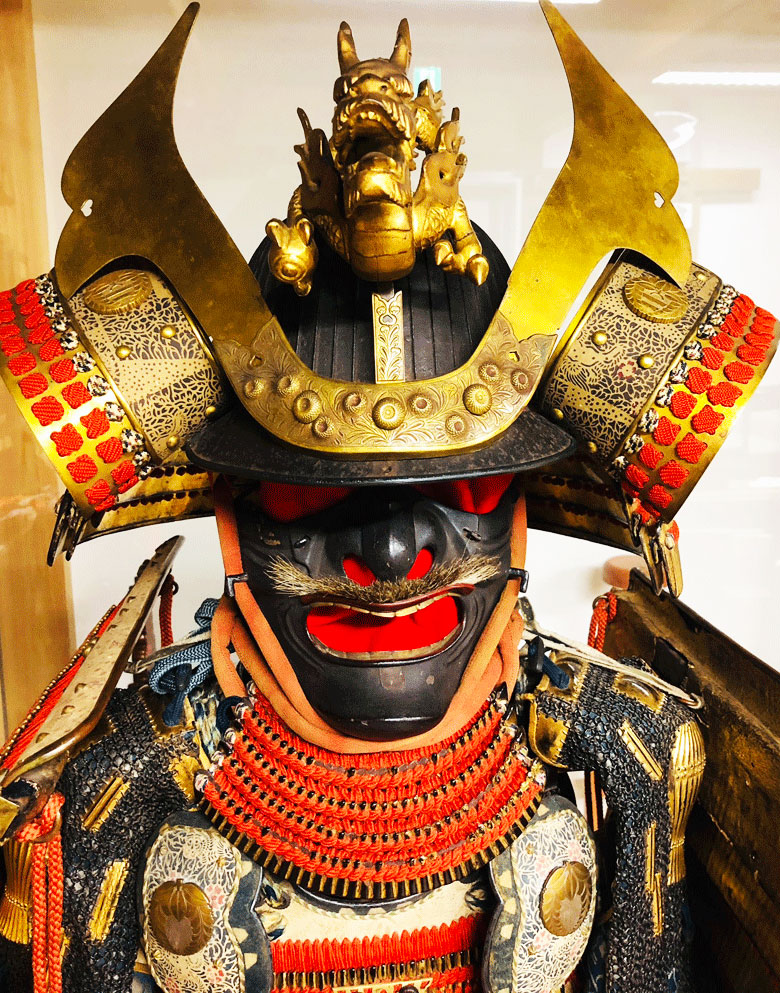
Tosei-gusoku · Nimai-dō
Full gusoku (complete suit)
Suji-bachi
Myochin
吉久 (Yoshihisa)
Signed · On the kabuto bowl
Kebiki-odoshi · Aka (red)
Muromachi
Harada
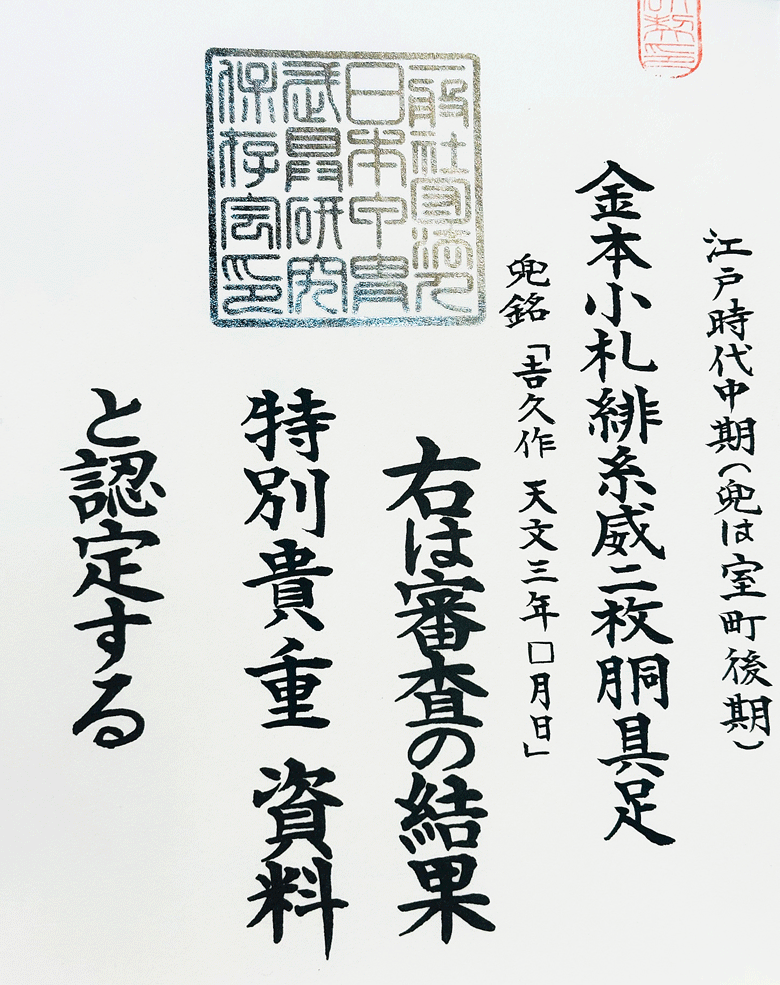
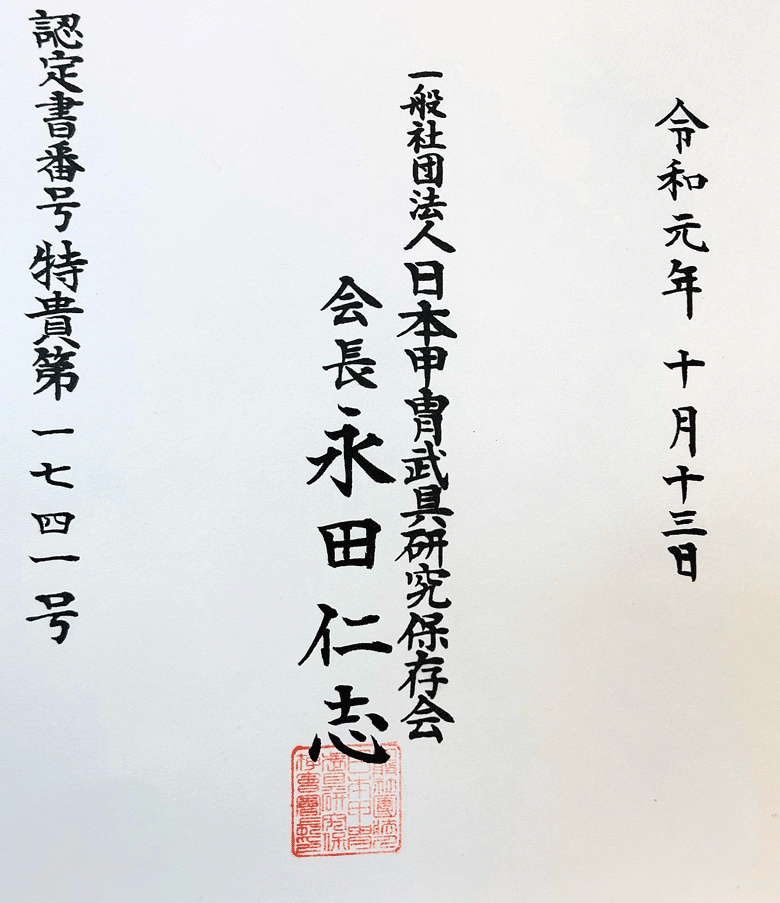
Tokubetsu Kichō Shiryō · Nihon Katchū Bugu Kenkyū Hozon Kai
As written by the shop
Machine translation from the shop's Japanese · may contain errors ·
Especially valuable armour of notably superior workmanship and condition, the third of the five ranks.
Japanese armour is not certified by the NBTHK. The Nihon Katchū Bugu Kenkyū Hozon Kai (the Association for the Research and Preservation of Japanese Helmets and Armour), founded in 1961, is the principal body for armour. Its shinsa grades a piece as 資料 (shiryō, "reference material") across five ascending ranks: Hozon, Kichō, Tokubetsu Kichō, Kōshū Tokubetsu Kichō, and the highest, Jūyō Bunka Shiryō. The 資料 framing reflects the society’s purpose of preserving armour as cultural and historical reference, distinct from the NBTHK’s sword paper tiers.
Within one week of the item's arrival (cooling-off is available within Japan only). If the returned item's condition differs from the time of sale, or the item has been used, no refund can be given. For defects that differ from the purchase conditions, we accept the return and refund the payment. (A defect means something that impairs the item's proper use, such as a hagire (crack in the edge), a re-tempered blade (saiba) or a forgery; items described as having a hagire, a saiba or as a forgery are excluded.) For overseas customers, please consult us separately.
Price on request