War at home and trade abroad made Muromachi Bizen the busiest forge region in Japan: a century of Sengoku demand after the Ōnin War, and export missions to Ming China carrying blades by the tens of thousands.
 NihontoWatchNihontoWatch
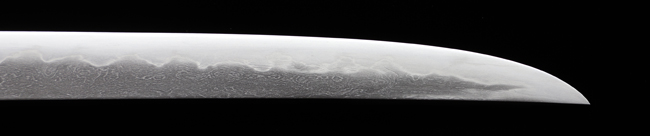
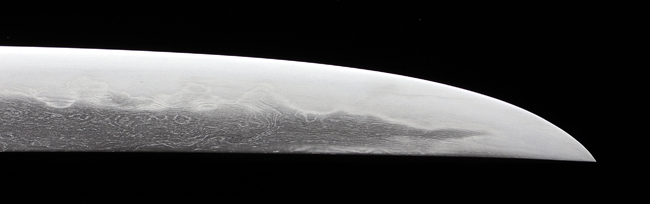
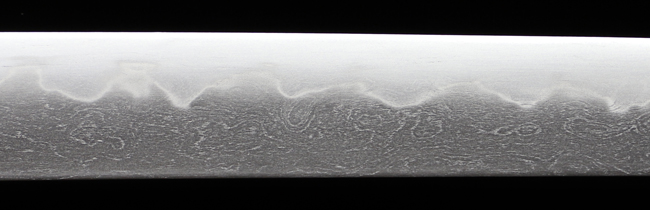
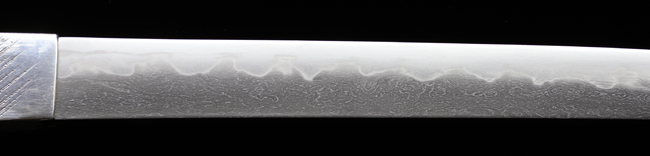
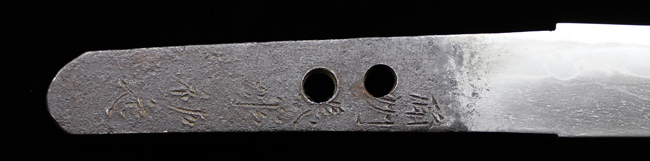
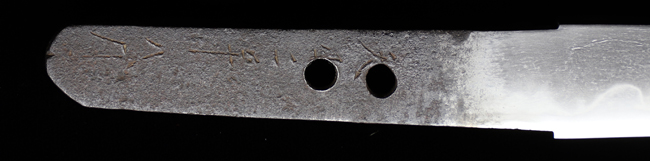
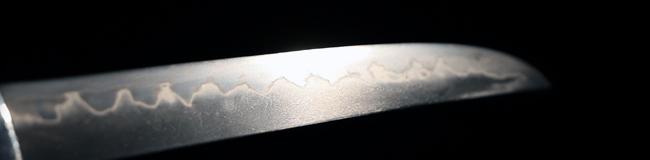
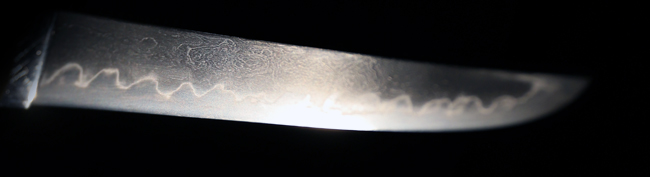
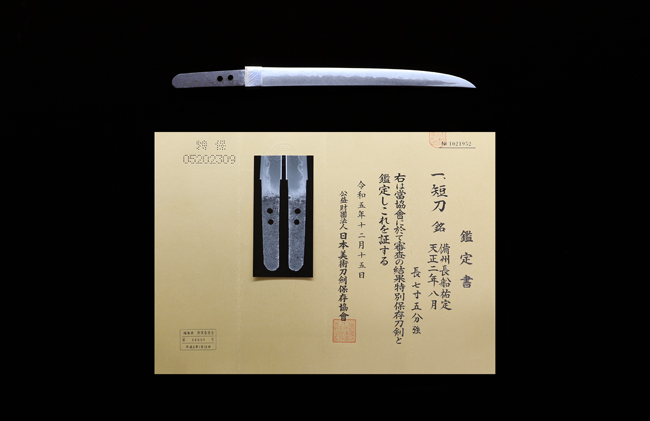
Sukesada is widely known as a major school representing the Bizen smithing world of the late Muromachi period, reaching its peak especially from Bunmei and Meio through the Tenbun era. Swordmakers signing with the Sukesada mei flourished over several generations, and their style, while rich in practicality, demonstrated a flamboyant finish, being greatly prized since ancient times in response to the demands of the samurai class. Characterized by the moist jigane unique to Bizen-den and a bright, flamboyant hamon, the Sukesada lineage possessed particularly high skill even among the Sue-Bizen smiths, and remains a prestigious school extremely popular among sword lovers today. This work is a tanto that well demonstrates the typical style of Bishu Osafune Sukesada. Sugata: hira-zukuri, iori-mune, mihaba is ordinary, kasane is thick, and the form is extremely handsome. Kitae: itame-hada is well-kneaded with ji-nie, chikei enters finely, presenting a moist jigane characteristic of Bizen-mono. Hamon: based on gunome-midare mixed with choji, the nioiguchi is bright and clear, konie is well-attached with frequent ashi and yo, sunagashi and kinsuji are present, showing a flamboyant and spirited workmanship. Boshi: the omote is notare-komi with a sharp pointed kaeri; the ura is midare-komi with a pointed kaeri in komaru style. Nakago: ubu, yasurime are shallow katte-sagari, kurijiri. Overall, this sword is an excellent piece that combines the flamboyant hamon characteristic of the Sue-Bizen Sukesada school with the beauty of a moist jigane. Despite being a tanto, the activities in the ji and ha are abundant, allowing one to fully enjoy the bright and magnificent atmosphere unique to Bizen-den. The state of preservation is also good, possessing the dignity and healthiness unique to koto that have passed through the ages, and it holds a charm that one never tires of even when held in the palm. As a superior work of Bizen Osafune Sukesada, it is a truly desirable tanto suitable for long-term cherished possession as well as appreciation.
Certificate reading — 銘 備州長船祐定 天正二年八月
NihontoWatchOffered by Seikeido
54 on the market



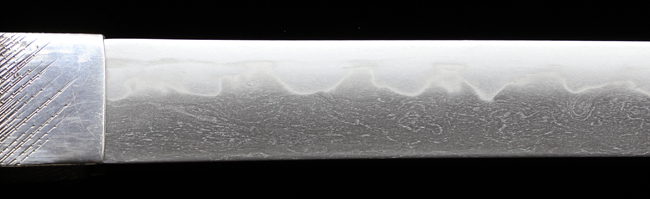
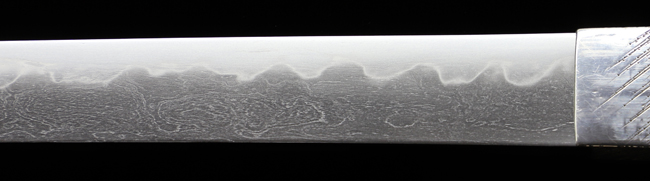
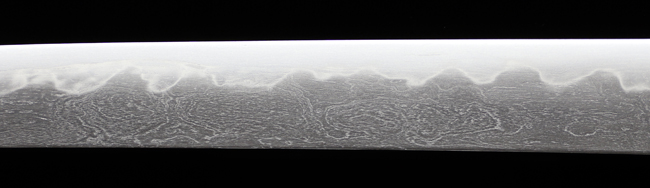
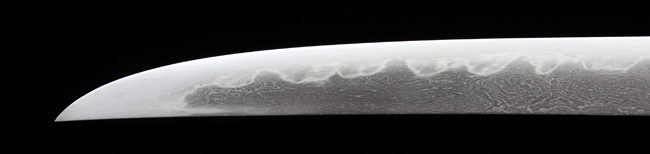
As written by the shop
Machine translation from the shop's Japanese · may contain errors ·
Bizen-den · Bizen
54 pieces on the market now
Sukesada (祐定) is the great name of late-Muromachi Osafune, the most prosperous of the Bizen forges that scholars group together as Sue-Bizen. The signature was carried by a body of smiths so large that the early-modern reference Hayami-dashi lists as many as twenty-one who appended a zokumyo (common name) to distinguish themselves, and the published commentary is blunt that of all the late-Osafune families the Sukesada line was the largest and most productive. Two registers of work issue from this single name. At the top stand the masters identified by their common-name titles, Yosozaemon-no-jo, Hikobei-no-jo, Genbei-no-jo, and Hikozaemon-no-jo, whose custom commissions (chumon-uchi) the sources distinguish sharply from the mass run; beneath them lies the great body of kazu-uchi-mono, the bulk production signed plainly Sukesada with no personal name, dated and placed to the house by era and quality. Hikobei-no-jo is recorded as the father of Yosozaemon-no-jo, who in turn heads the most distinguished branch, born in Onin 1 by back-count from a tanto inscribed at age seventy-one in Tenbun 6; the name then runs in same-signature generations down through the Eiroku and Tensho years. The shared vocabulary of the school is the temper the late Bizen workshops made their own. Over a jigane of tightly packed ko-itame, fine ji-nie settling like dust, chikei woven through, and a faint midare-utsuri rising near the shinogi (the thinned last trace of the bright reflection that filled the Osafune prime), the smiths build an open-waisted koshi-biraki gunome that develops into the doubled, compound fukushiki structure marking a Sue-Bizen blade above all else. Mixed into it run choji, ko-gunome, and pointed togariba, in places gathering into the double-flower juka and the crab's-claw formation called kani-no-tsume; the hamon is nioi-based with ko-nie adhering, ashi and yo entering richly, kinsuji and sunagashi trailing, the nioiguchi bright and clear. A second pole answers this flamboyance, the quiet hiro-suguha, broad and shallowly undulating with ko-gunome folded in, of which Genbei-no-jo in particular was the master, while a livelier hitatsura climbs the body with frequent tobiyaki and muneyaki on certain tanto, often in moroha-zukuri.
The blades take the robust late-Muromachi uchigatana form, wide in body with little taper, thick in kasane, deep in sori with sakizori and an extended chu-kissaki. The divergence between the masters and the general production is one of care rather than kind: Yosozaemon's bright, well-packed ko-itame and his command of all three registers, gunome, suguha, and hitatsura, set his typical work apart from the coarser bulk, and the commentary states plainly that it is precisely because such chumon-uchi exist that the Sue-Bizen name carries its high standing. To kantei a Sukesada blade is first to read the signature register, then the manner. A named master signs a long mei on the omote with the date on the ura, often over two columns and frequently with carving (bo-hi, a Kurikara dragon, a bonji, or the invocation Namu Hachiman Daibosatsu); the bulk kazu-uchi-mono sign Sukesada alone and are judged to the house by era and the Bizen-den keynote of koshi-biraki gunome on bright ko-itame. Yosozaemon-no-jo leads the name in renown and breadth, ranked beside the late-Osafune Kiyomitsu among the two great hands of the workshop's closing age, his blades transmitted in daimyo houses grounded in their own provenance, the Hachisuka, the Mori, and the Ii, with a wakizashi recorded to the warrior Yamanaka Shikanosuke and others in Honma's inventory of the Imperial collection. Genbei-no-jo and Hikobei-no-jo follow, their custom blades often carrying an owner inscription beside the date, and Hikozaemon-no-jo offers the approachable end of a famous name. The Sukesada cutting reputation runs through the whole body, the heavy sakizori uchigatana made to be worn and used two-handed as the tachi fell from use. For the collector this is the most attainable of the great Bizen names, never common at its summit yet, in a signed and dated example with the open-waisted gunome reading clearly down its edge, the surest single document of how Osafune worked in its last great generation. Learn more →
| Smith | Era | Designated |
|---|---|---|
| Sukesada祐定 | 1504-1551 | 72 |
| Sukesada祐定 | 1532-1583 | 18 |
| Sukesada祐定 | 1547-1592 | 8 |
| Sukesada祐定 | 1487-1521 | 5 |
| Sukesada祐定 | 1532-1573 | 3 |
Bizen in the Muromachi period
War at home and trade abroad made Muromachi Bizen the busiest forge region in Japan: a century of Sengoku demand after the Ōnin War, and export missions to Ming China carrying blades by the tens of thousands.
A Hozon-certified blade judged to show notably superior workmanship and a better state of preservation. The bar is higher: re-tempered blades and most unsigned Muromachi/Edo works are excluded.
The NBTHK (Nihon Bijutsu Tōken Hozon Kyōkai, the Society for the Preservation of Japanese Art Swords) is a public-interest incorporated foundation founded in 1948 and supervised by Japan’s Agency for Cultural Affairs (Bunkachō); it is based at the Japanese Sword Museum in Tokyo. Its expert panels physically examine each submitted work (shinsa) and issue a certificate (kanteishō) ranking it by artistic and historical merit. NBTHK papers are the most widely recognized standard of authentication for Japanese swords and fittings.
NBTHK official siteWe accept returns within 3 days counted from the item's arrival date. Items that have been altered cannot be handled. Return shipping is the customer's responsibility. If the destination is overseas, returns are as a rule not possible.
Price on request