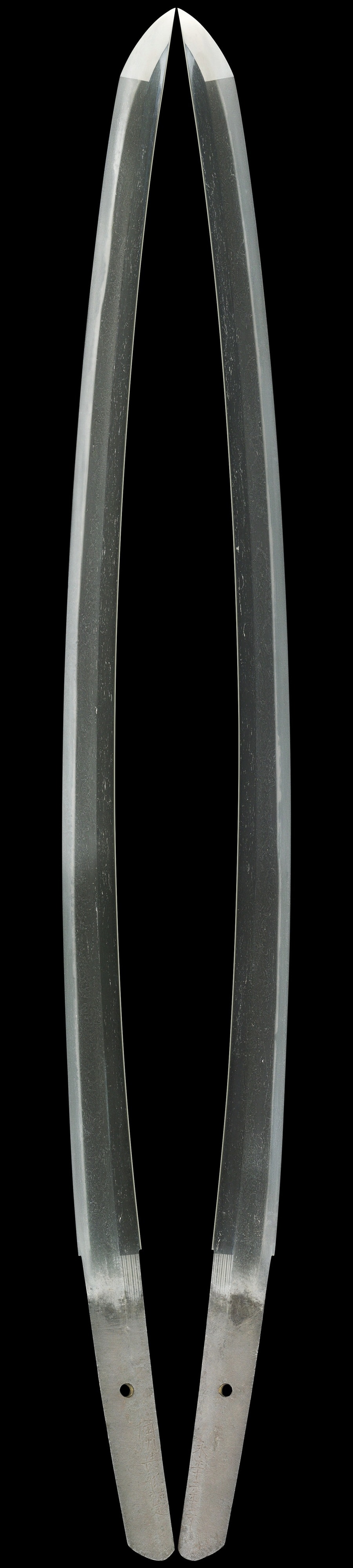
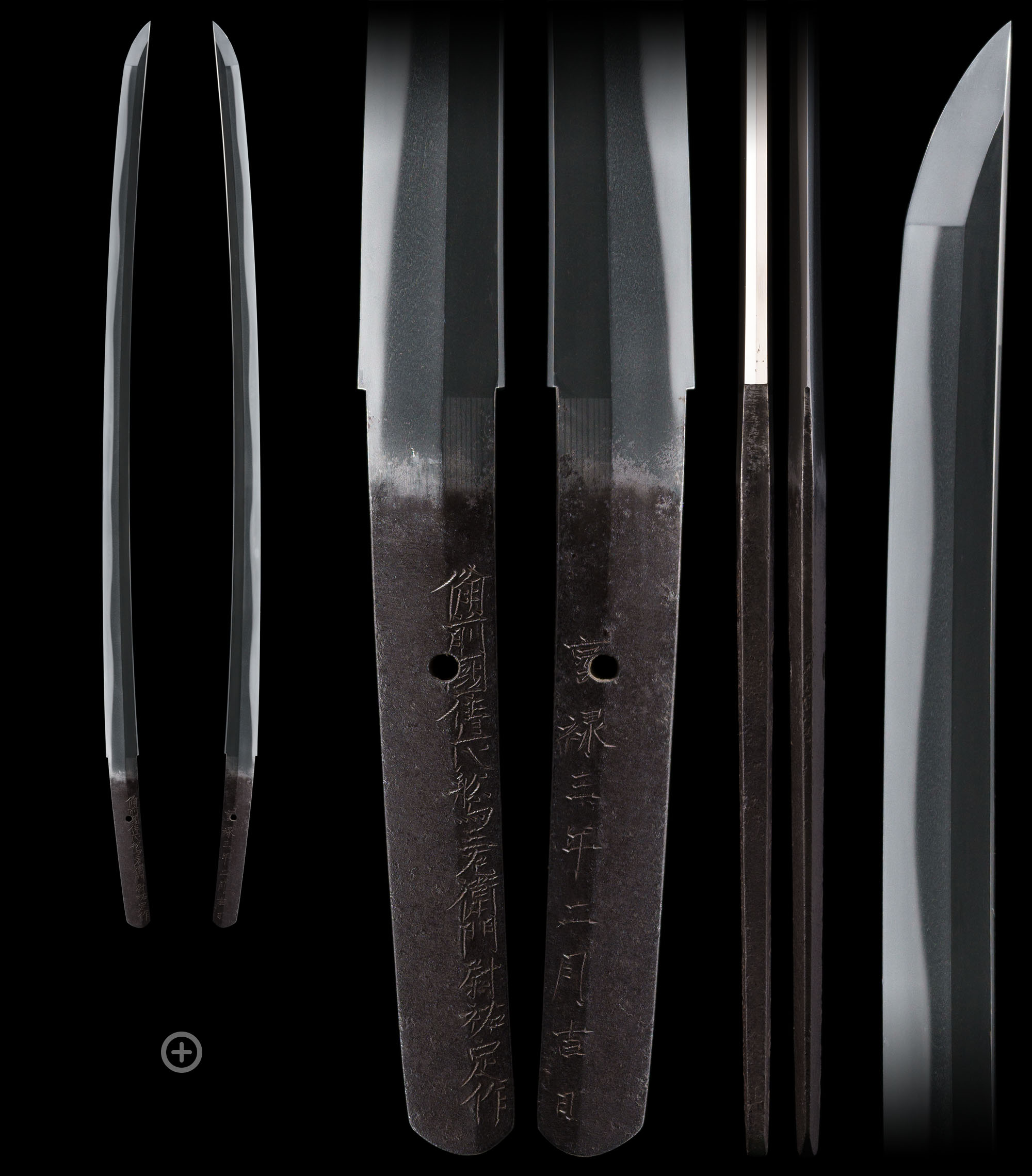
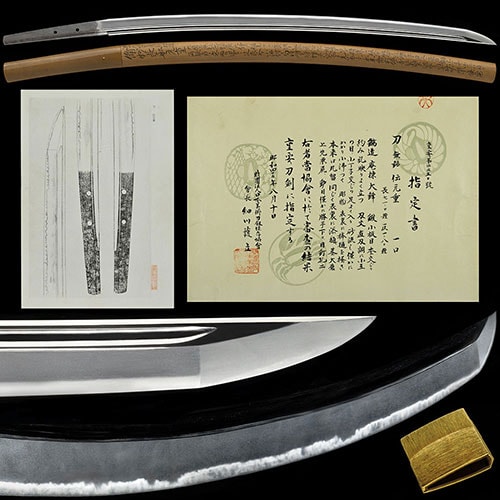
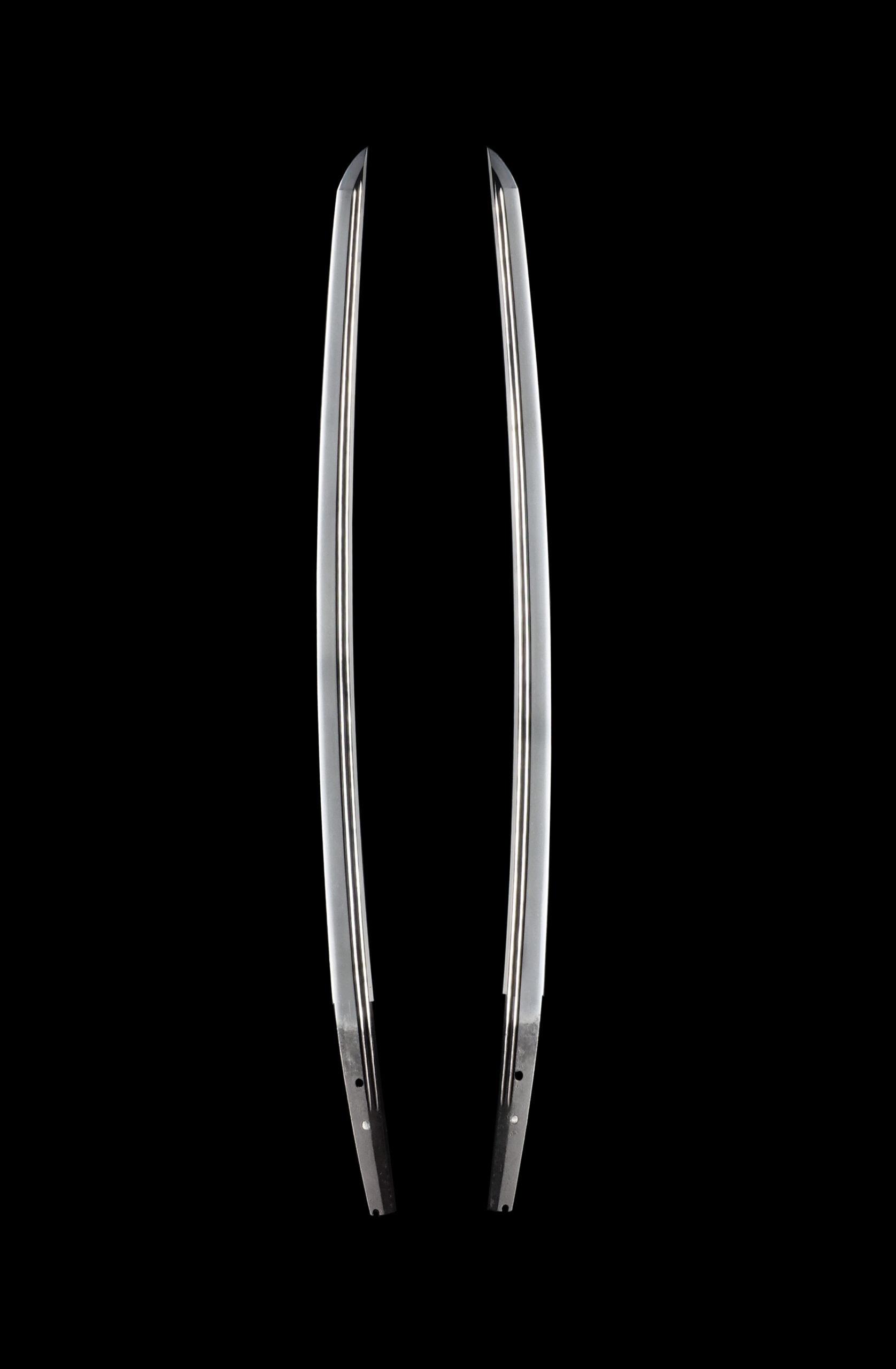
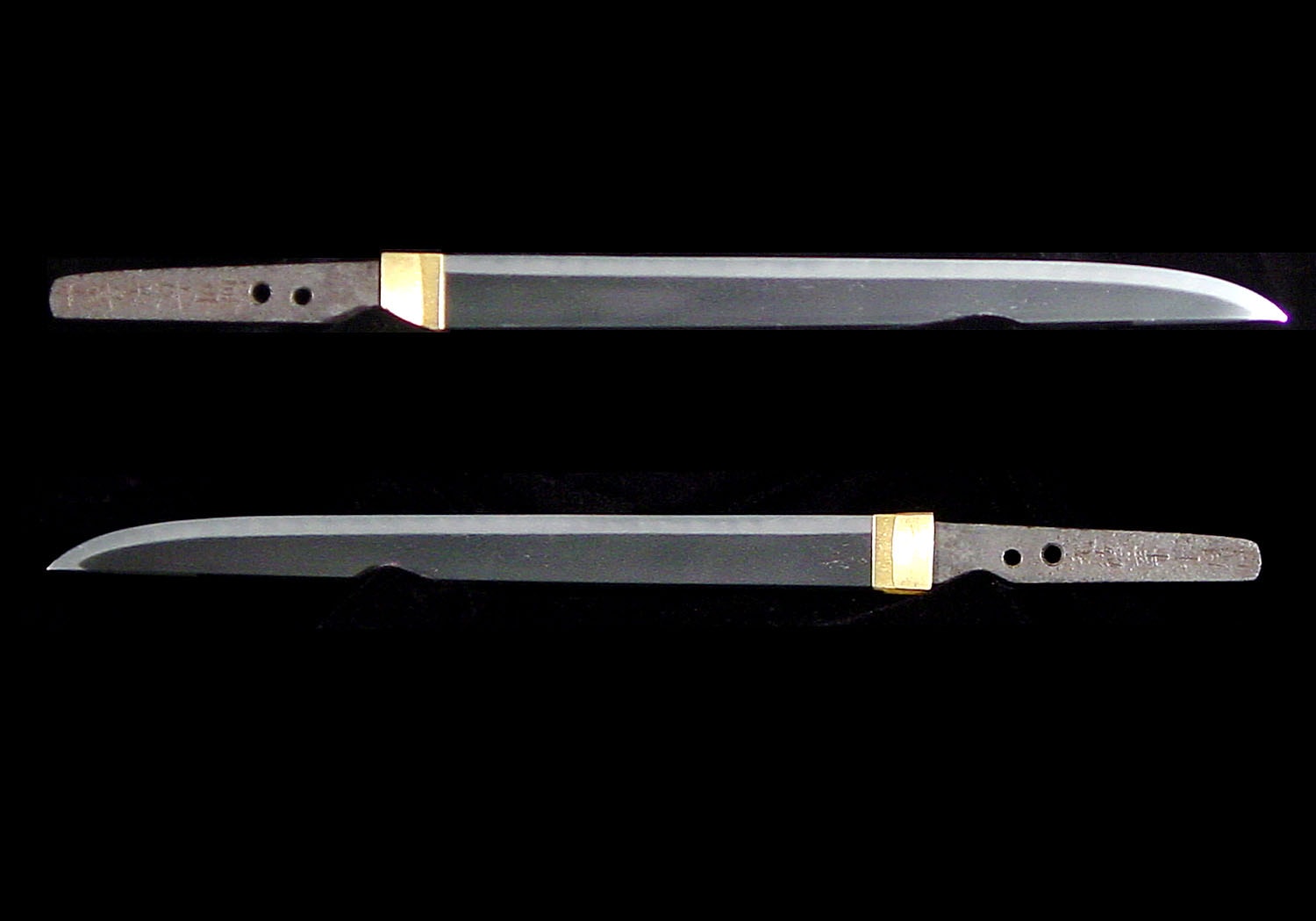
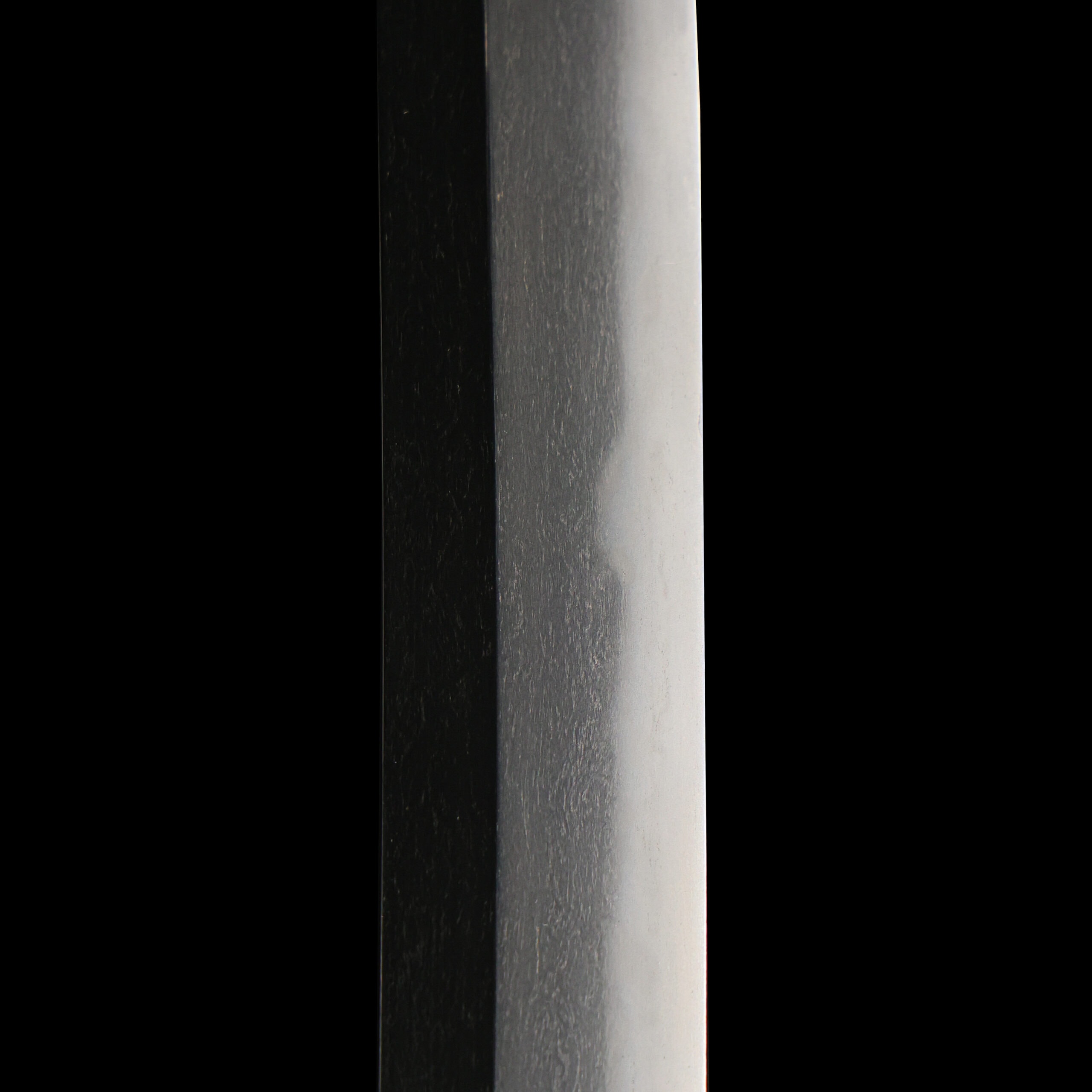
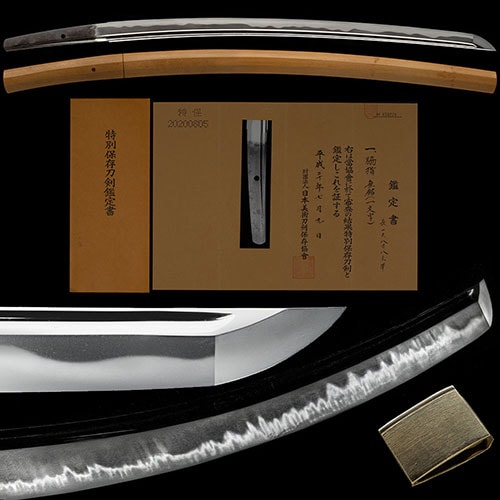
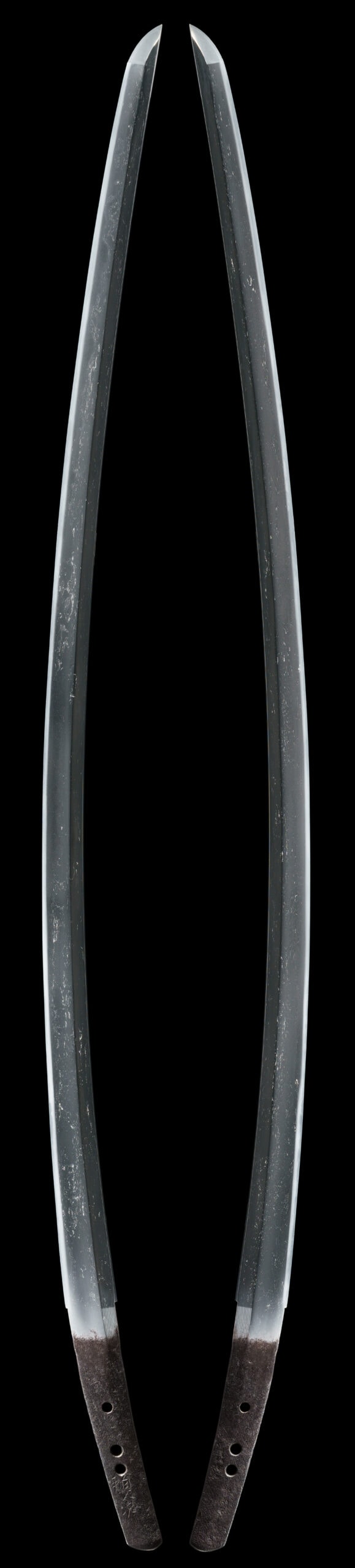
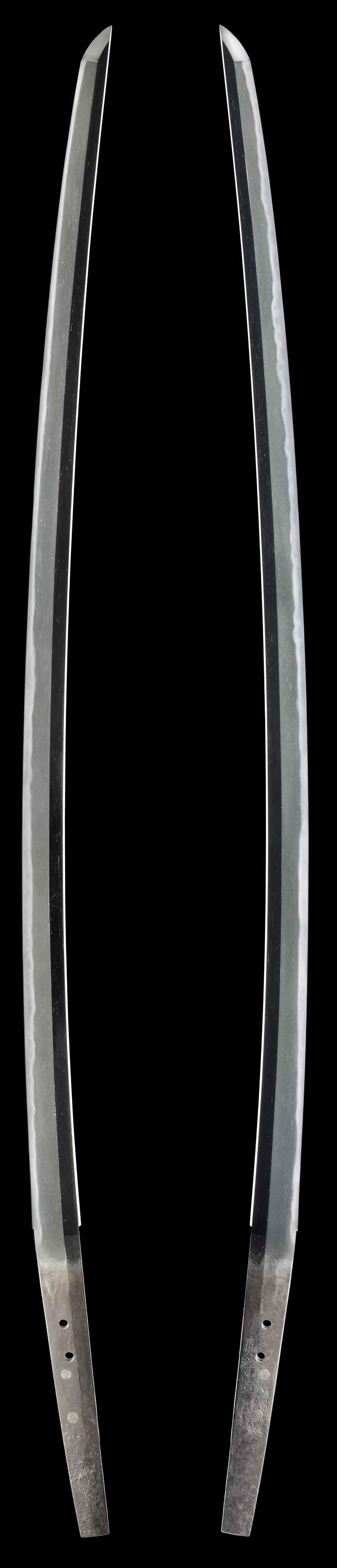
Genbei-no-jō Sukesada is one of the foremost personal-name hands of the late- house collectively called , the branch of the great Sukesada family identified not by the name alone but by a pair of qualities the published sources name again and again. Sukesada was the most prosperous of the late forges, signed by dozens of smiths, and the published commentary repeatedly draws the short list out of that crowd: among the many who took the name, those who added the titles Yosozaemon-no-jō, Hikobei-no-jō and this Genbei-no-jō are the most accomplished. Within that three, Genbei-no-jō is the calm and exacting hand. His earliest dated work falls in the Tenbun years and his production continues to the closing years of Tenshō, and the swordbooks separate the name into two generations a generation apart, the first placed in the Eishō era and the second carrying the signature through Eiroku, Genki and Tenshō. He is the master of the ordered, single, carefully made blade in an age otherwise given over to mass production.
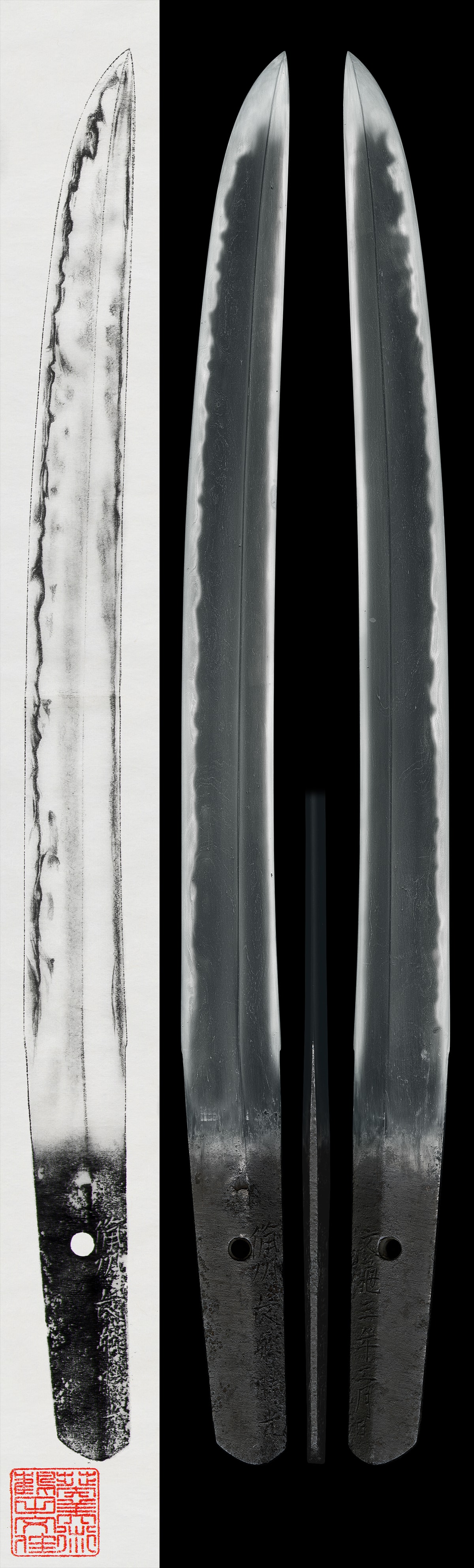
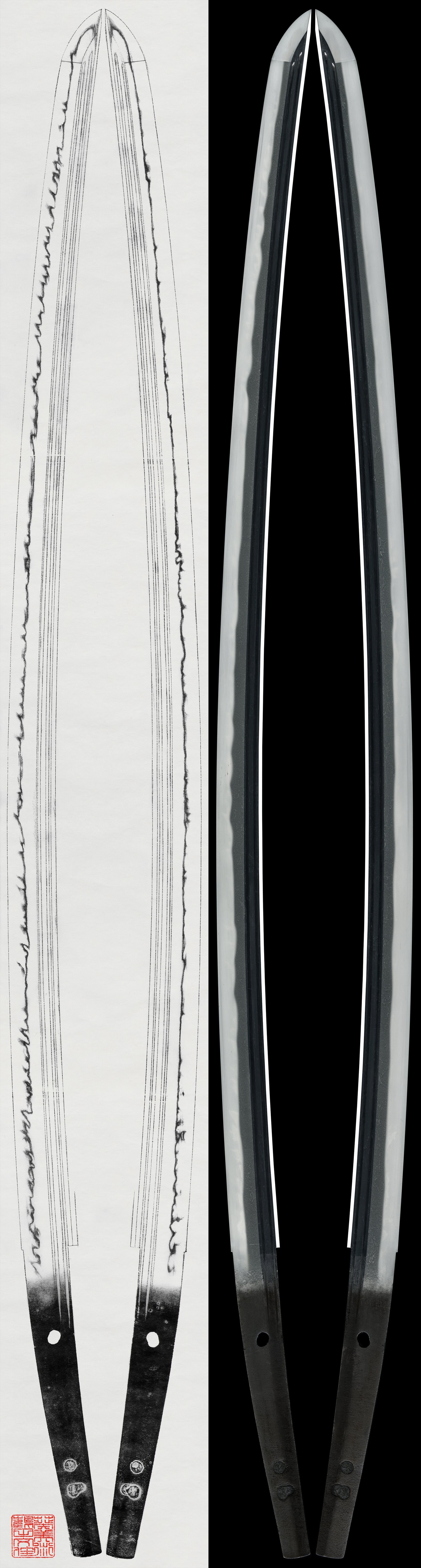
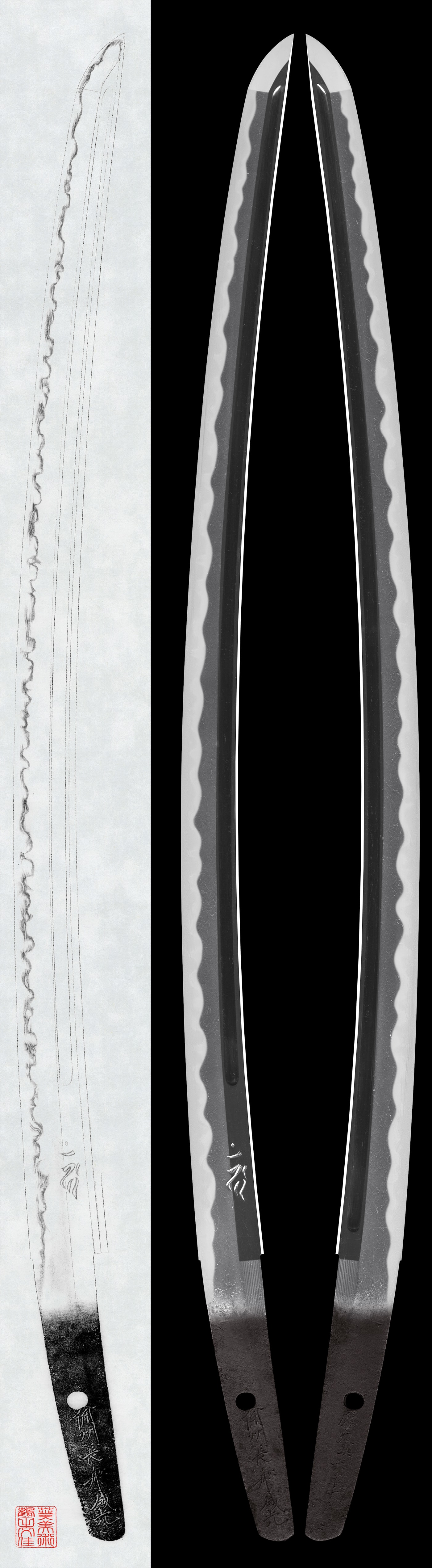
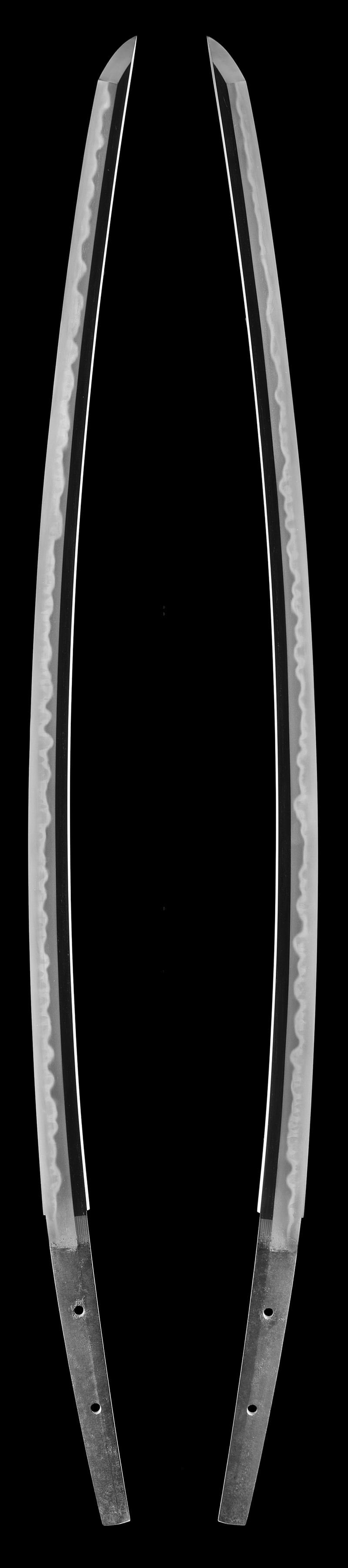
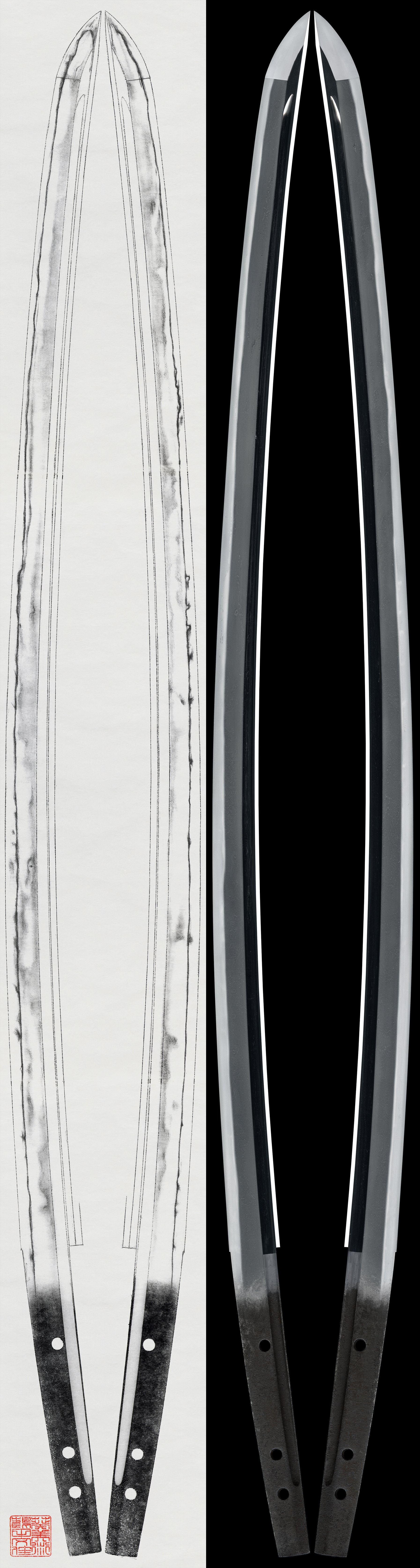
The published sources fix him by two marks, and both are worth taking in his own words. The first is his forging: of him they write that he 「鍛錬の優れている事で定評があり」, "he has a long-established reputation for the excellence of his forging," and elsewhere that he is robust and that 「一般に豪壮で地がねがよく、直刃調の出来を得意としている」, "in general his blades are powerful, his is good, and he excels at -toned workmanship." The second mark is that . His characteristic temper is a bright, broad , -toned and shallowly undulating, into which he mixes , with and entering richly and adhering, the tightening or running bright and clear, and trailing through it and at times . It is the quiet face of , the foil to the open-waisted flamboyance of his senior Yosozaemon, and the published sources call the he was 「直刃調の刃文を得意とする」, the temper he made his specialty.
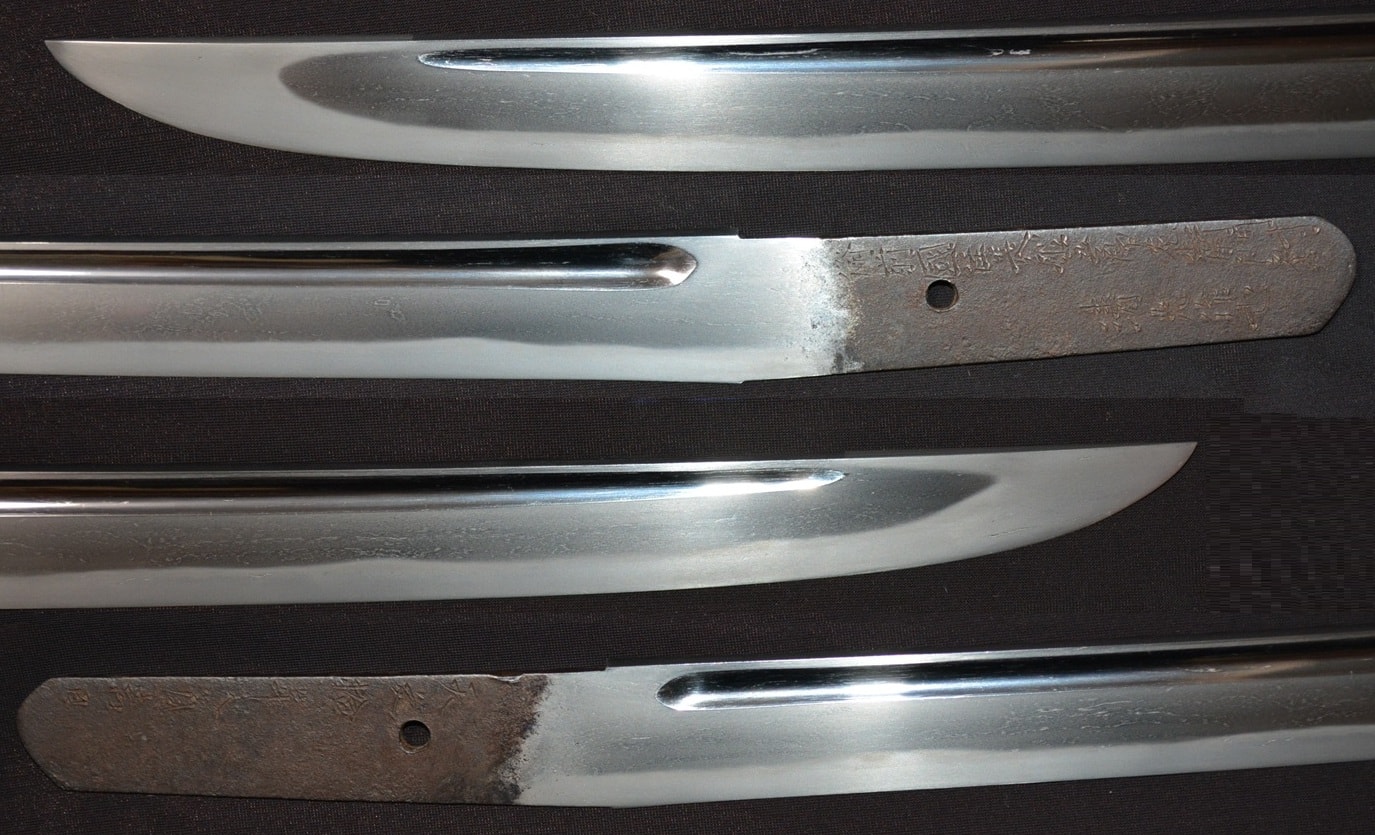
The is the constant beneath that temper, and it is the second half of his reputation made visible. He forges a well-packed , often within a broader , with fine settling in like dust, woven through, and frequently a faint standing near the ; on some blades a rises below the and the steel runs bright and clear. This is the forging the published sources call beautiful as his reputation would have it, the refinement that separates a custom-ordered Genbei-no-jō blade from the coarse run of the late forges. His blades are robust late- of the Eiroku and Tenshō type: lengthened well beyond the mid- norm, wide in body with little taper from base to point, thick in , deep in with and an extended , the tang made long for two-handed use. The runs straight or into a , deeply tempered, often with and a long turnback.
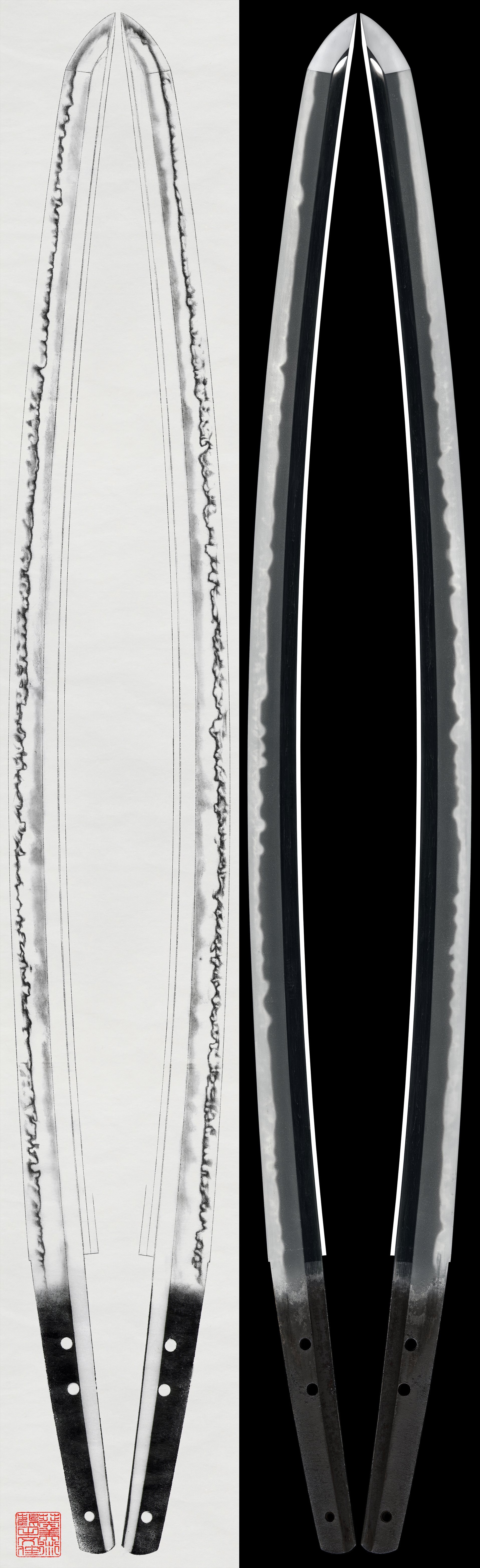
Against that calm prime stands a livelier register the published sources are careful to flag as exceptional. On a handful of his blades, and most often on the double-edged that the sources say are frequent in , he raises a high, varied temper built on a and double-structured , mixing and angular elements, and entering, with frequent and some that break the upper body into a partial , the bright. The judges note that is his usual manner, yet they hold that even when he tempers such a -flavored he does so with skill, the and alike bright and clear. The of Eiroku 1 shows the two faces at once: a broad base whose lower half breaks into , and a -like impression, an archaic flavor the published sources suggest he drew from older and Unrui work, so that it conveys depth even among his own pieces. Of this blade the commentary says 「源兵衛尉祐定の見どころが総体によく表出している」, "the points of interest of Genbei-no-jō Sukesada are well manifested throughout."
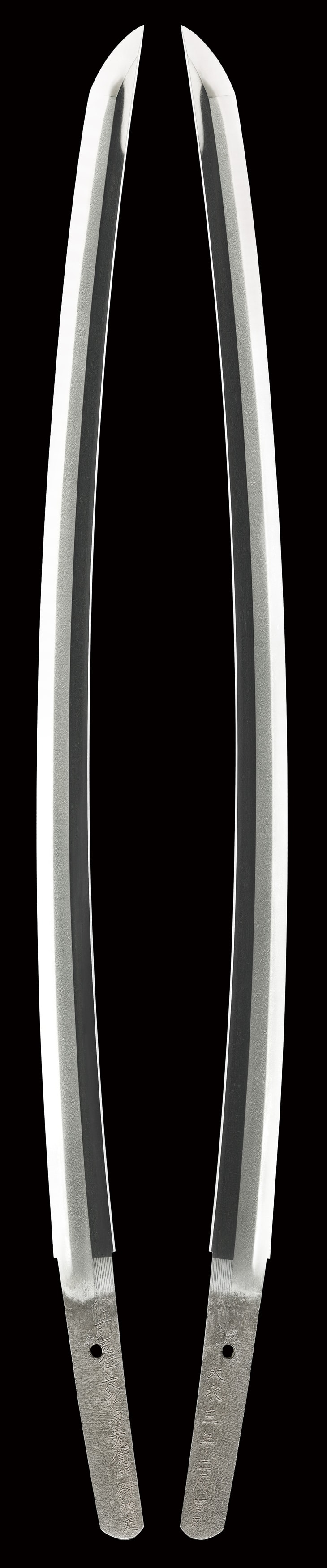
What sets him apart within the house is exactly this division of labour. Yosozaemon-no-jō leads the name in renown and breadth and is read by the open-waisted, double-structured that defines ; Genbei-no-jō stands just below, ranked beside Hikobei-no-jō, and is read instead by his bright and the refinement of his , which the published sources hold equal to the best of the name. He is also a smith of the documented, ordered blade. A notable share of his work bears an owner inscription beside the date, the or chūmon-uchi custom orders the published sources distinguish sharply from ordinary kazu-uchi-mono: such blades, they write, are executed with a care not comparable to the mass run, so that the workmanship of both and is superior, and the commentary is plain that 「かかる作刀があるからこそ、世上末備前の名声が高い」, that it is precisely because works of this kind exist that the name has earned its high esteem.
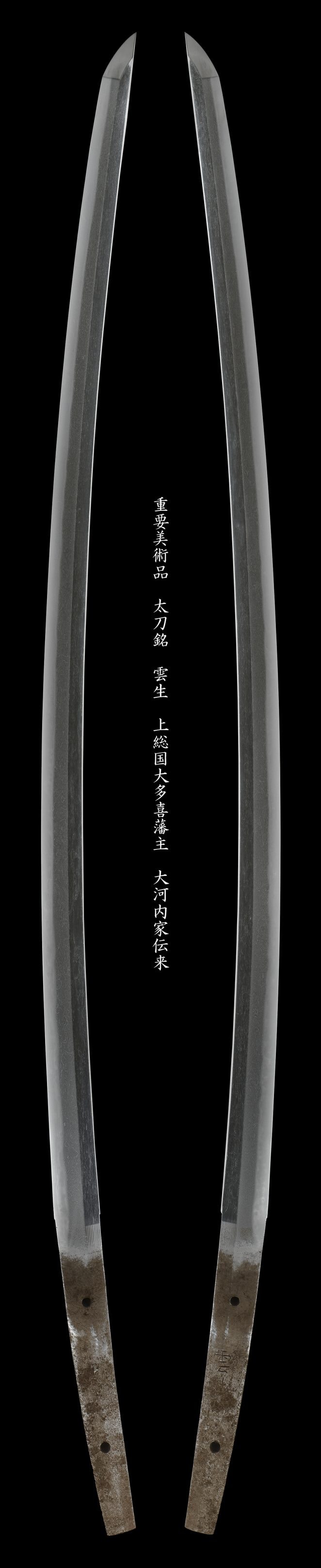
For the collector, Genbei-no-jō is a name one can actually study and, with patience, acquire. Fujishiro grades him Jō-jō . He has no National Treasures and no Important Cultural Properties; his record runs instead through the tier, where he is well represented, with a single and a prewar Jūyō Bijutsuhin at the top of it, some seventeen blades in the and tiers on this record. His blades carry their own provenance in their inscriptions rather than through famous houses: the Tenbun 23 bears the ownership name Koremune Tadayori, others the patrons Hara Yohei-no-jō and Miki Yoichibei, and the Jūyō Bijutsuhin was certified to Okano Tarōmatsu of Okayama in 1949. Because his dated, signed survive in fair number, a privately held example comes to market from time to time rather than once in a generation, and the commentary marks the finest of them in its own words, calling one the 「数ある源兵衛尉祐定中の屈指の優品」, "a peerless fine work among the many by Genbei-no-jō Sukesada." He is the rare late- name a serious collector can pursue with real hope of holding a signed, dated blade by a documented master hand.